Free printable worksheets · India
UKG Matching Worksheets (Ages 5–6)
UKG matching worksheets are practice sheets for children aged 5–6 in Upper Kindergarten (Senior KG) in India. Matching is finding and pairing items that are identical, related or belong to the same category, from among several printed options. The sheets on this page cover identifying identical pairs, matching an object to its category, matching uppercase letters to lowercase and matching a numeral to a quantity.
Upper Kindergarten shifts from recognising symbols to using them: children blend letter sounds into words, write short sentences, and solve small addition and subtraction sums instead of only counting objects. Numbers extend to fifty, and the plus and minus signs appear on the page for the first time. Five-year-olds read the items they match. Sheets pair a three-letter word with its picture, an addition sum with its answer, a number with the ten frame that shows it, a picture with its ending sound, and opposites such as hot and cold. The line-drawing is now easy, so the value lies entirely in the content, which lets the child practice reading and sums without much writing. Eight to twelve shuffled pairs is a fair length.
461+ worksheets · free PDF download · print on A4 or Letter
UKG Matching Worksheets to print
Browse all worksheets for ages 5–6
Pronoun Power: Matching Worksheet for Young Learners
Matching sentences and words to their correct pronoun type helps children see that pronouns like 'he,' 'her,' or 'mine' stand in for specific nouns, a concept that makes both their speech and their reading noticeably smoother once it clicks. For ages four to six, sorting pronouns by type also builds early grammatical categorization, a skill they'll rely on throughout their reading and writing years.

Family Words Cut and Paste Worksheet for Early Readers
Reading a simple CVC word and matching it to its picture teaches children ages 4-6 to blend individual sounds into a whole word and then connect that word to its meaning, a core decoding skill for early readers. Because CVC words follow a consistent consonant-vowel-consonant pattern, practicing them builds a reliable phonics foundation that transfers to reading many other simple words.

Vowel Sounds Worksheet: Identify and Circle the Correct Vowel!
Children ages 4-6 practice identifying vowel sounds within words by looking at a picture, saying its name aloud, and figuring out which vowel they hear, a specific phonics skill that builds toward independent reading and spelling. Isolating the vowel sound in a word is often trickier for children than identifying beginning consonant sounds, making this a meaningful next step in phonics.

Read and Match: Sentence Reading Worksheet for Early Learners
This worksheet has 4-6 year olds read a full sentence aloud and then identify which picture actually matches its meaning by coloring the circle beside it, building reading comprehension in a format that requires understanding the whole sentence rather than picking out a single keyword. Because more than one picture on the page may share surface similarities, your child has to genuinely process what the sentence says, which is a stronger comprehension check than simple word-picture matching.

Sense Organs Worksheet: Circle the Objects We Use!
Children ages 4-6 practice connecting each of the five senses to real objects and experiences, like identifying what they might see, hear, smell, taste, or touch. This builds early science vocabulary and body awareness while reinforcing that different body parts are used to experience the world in different ways.
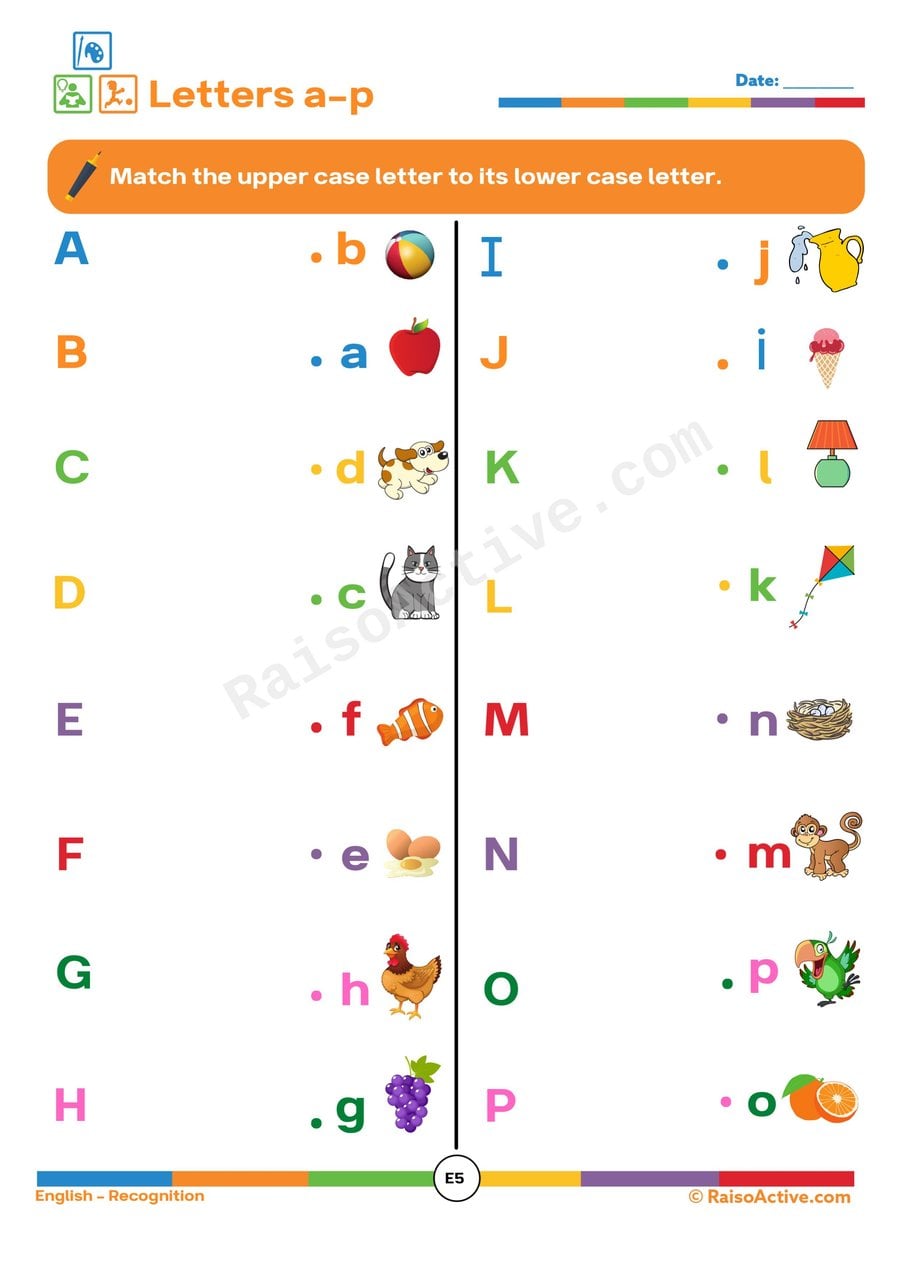
Match the Uppercase Letters: a-p Worksheet
This worksheet helps children ages 4-6 practice matching uppercase letters to their corresponding lowercase forms across the first half of the alphabet, letters A through P. Recognizing that an uppercase and lowercase letter, even ones that look quite different like G and g, represent the same letter is an essential skill for reading printed text, which mixes both cases constantly. Covering a larger range of letters than a single-letter worksheet also builds broader alphabet fluency in one sitting.

Life Cycle Match: Frog, Snake, Ladybug, Butterfly, and Fish Worksheet
This matching worksheet helps children ages 4-6 compare life cycle stages across five very different animals: frogs, snakes, ladybugs, butterflies, and fish. By matching each animal to its correct stage picture, children start to notice that not all animals grow the same way — some hatch from eggs looking like miniature adults, while others go through dramatic transformations like metamorphosis. This comparative thinking builds a deeper foundation in life science than studying just one animal alone.
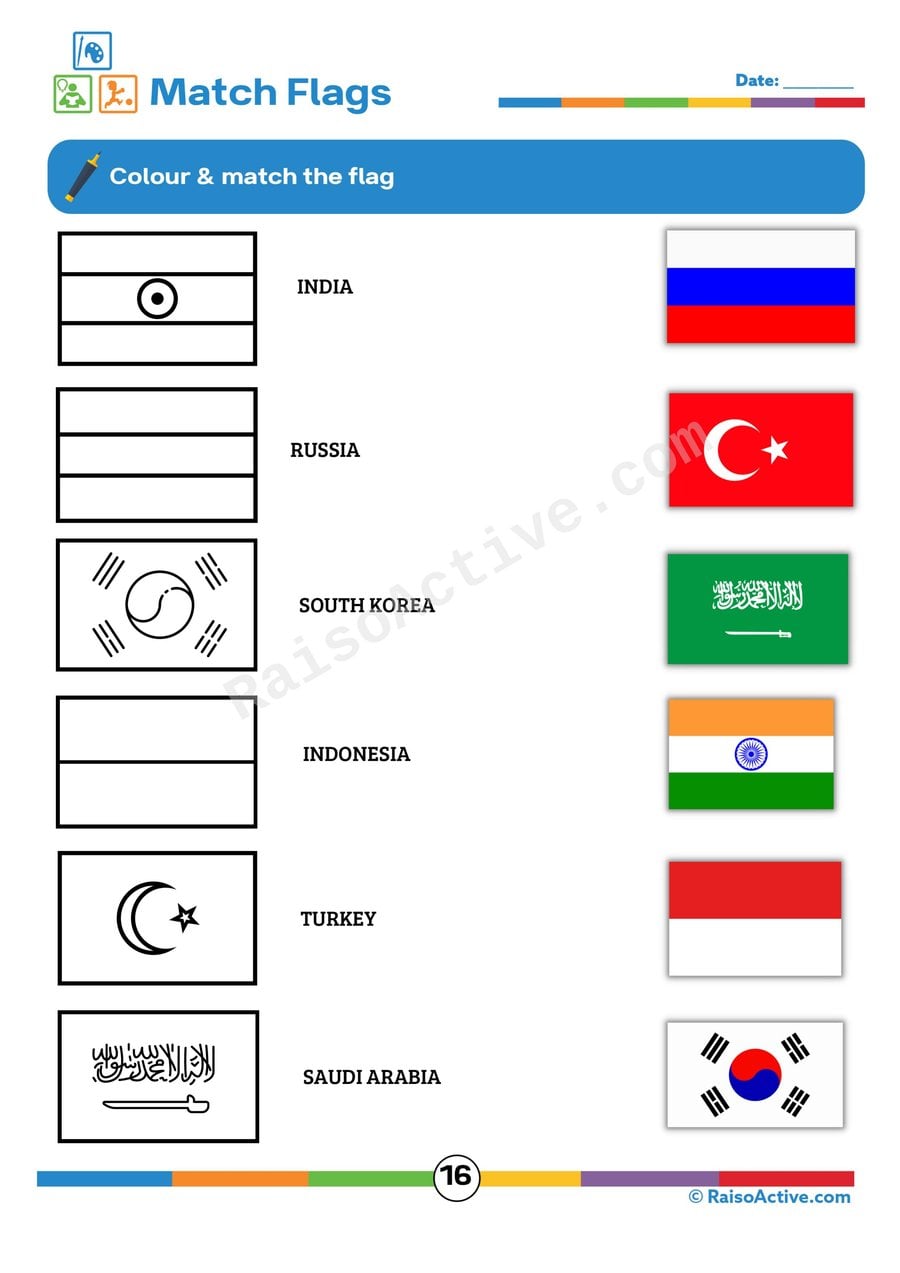
Match the Flags Worksheet for Kids
Children ages 4-6 build flag recognition by matching a set of country flags to their correct names, continuing to strengthen geography vocabulary and visual discrimination through this final flag-focused worksheet. Working with flags is an especially effective way to build visual memory in young children, since each one is a distinct, colorful pattern they can learn to recognize quickly.

Blend Words Matching Worksheet: Read and Circle the Picture!
This worksheet gives children ages 4-6 further practice reading consonant blend words and connecting them to their matching picture, this time by circling rather than cutting and pasting, which keeps the focus purely on reading and visual scanning. Repeated blend practice across different formats — matching, circling, and later independent writing — helps these two-consonant sounds become automatic rather than something a child has to sound out every time.
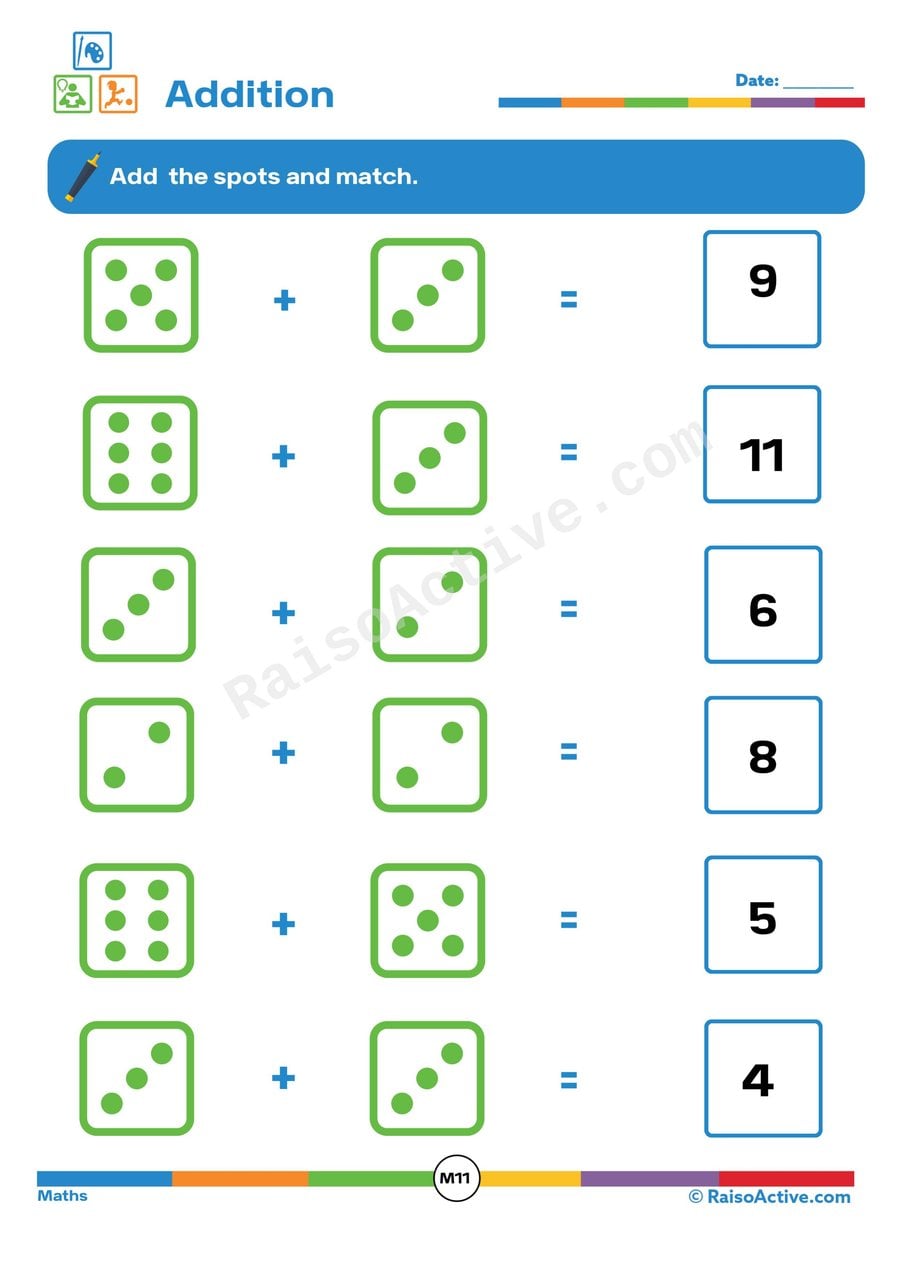
Dice Addition Worksheet: Add the Spots and Match!
This worksheet builds basic addition fluency by having children count the dots on two dice, add the totals together, and match the resulting sum to the correct number. For four- to six-year-olds, using dice as the counting tool adds a layer of subitizing practice — the ability to recognize a small quantity of dots at a glance without counting one by one — which speeds up addition over time.

Landforms Worksheet: Identify and Circle the Correct Answer!
Reading a short description and circling the matching landform picture asks children ages 4-6 to connect written or spoken language directly to a visual feature of the natural world, strengthening both reading comprehension and early geography vocabulary. Because landforms like deserts, hills, and mountains can look somewhat similar in simple illustrations, this task also sharpens careful reading and visual comparison rather than quick guessing. Understanding these terms gives children language to describe landscapes they see in books, on trips, or in nature.

Consonant Sounds: Match the Objects! L & R Sounds Worksheet
Distinguishing between 'l' and 'r' is one of the trickier auditory discriminations in early phonics, since the two sounds are formed with similar tongue positions and are frequently confused by young English learners. This worksheet gives children ages 4-6 focused practice listening for the difference at the start of familiar object names, then matching each picture to its correct consonant. Strengthening this specific sound contrast supports both clearer speech and more accurate spelling later on.

Safety Signs Matching Worksheet for Early Learners
This worksheet has children ages 4-6 cut and paste safety signs to match their correct descriptions and fill in blanks identifying travel and safety symbols, deepening the recognition skill of reading signs by their shape, color, and symbol rather than by words alone. Building fluency in reading safety signs is a genuinely practical life skill that supports children's growing independence as pedestrians.

Long Vowel Sounds: Matching Objects to Sounds - A & E Worksheet
This worksheet asks children ages 4-6 to listen for and match objects whose names contain the long 'a' sound, as in 'cake,' or the long 'e' sound, as in 'bee,' sharpening their ability to distinguish between vowel sounds that look and sound similar to a beginning reader. Practicing long vowels alongside short vowels builds the fuller phonics picture children need to decode a wider range of words as their reading vocabulary grows.
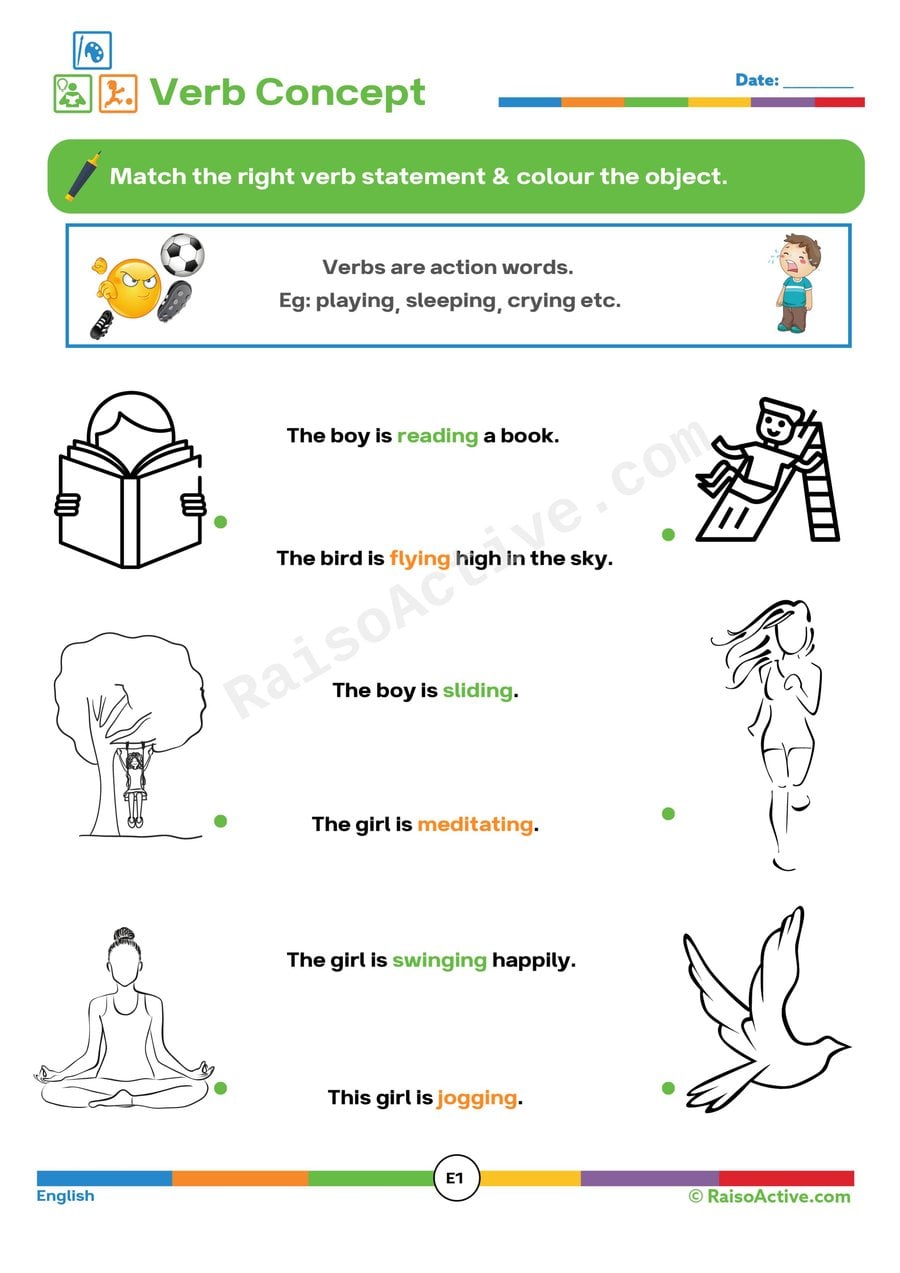
Action Verbs Worksheet: Match and Color!
This worksheet has 4-6 year olds read a short sentence, pick out the action word inside it, and match that sentence to the picture showing the action happening — a skill that bridges early reading with grammar. Identifying the verb specifically (rather than just understanding the sentence generally) is a more advanced task than simple picture-word matching, since children have to isolate one word's job within a whole sentence. Coloring the matched picture afterward gives an easy, low-pressure way to confirm the match was correct.
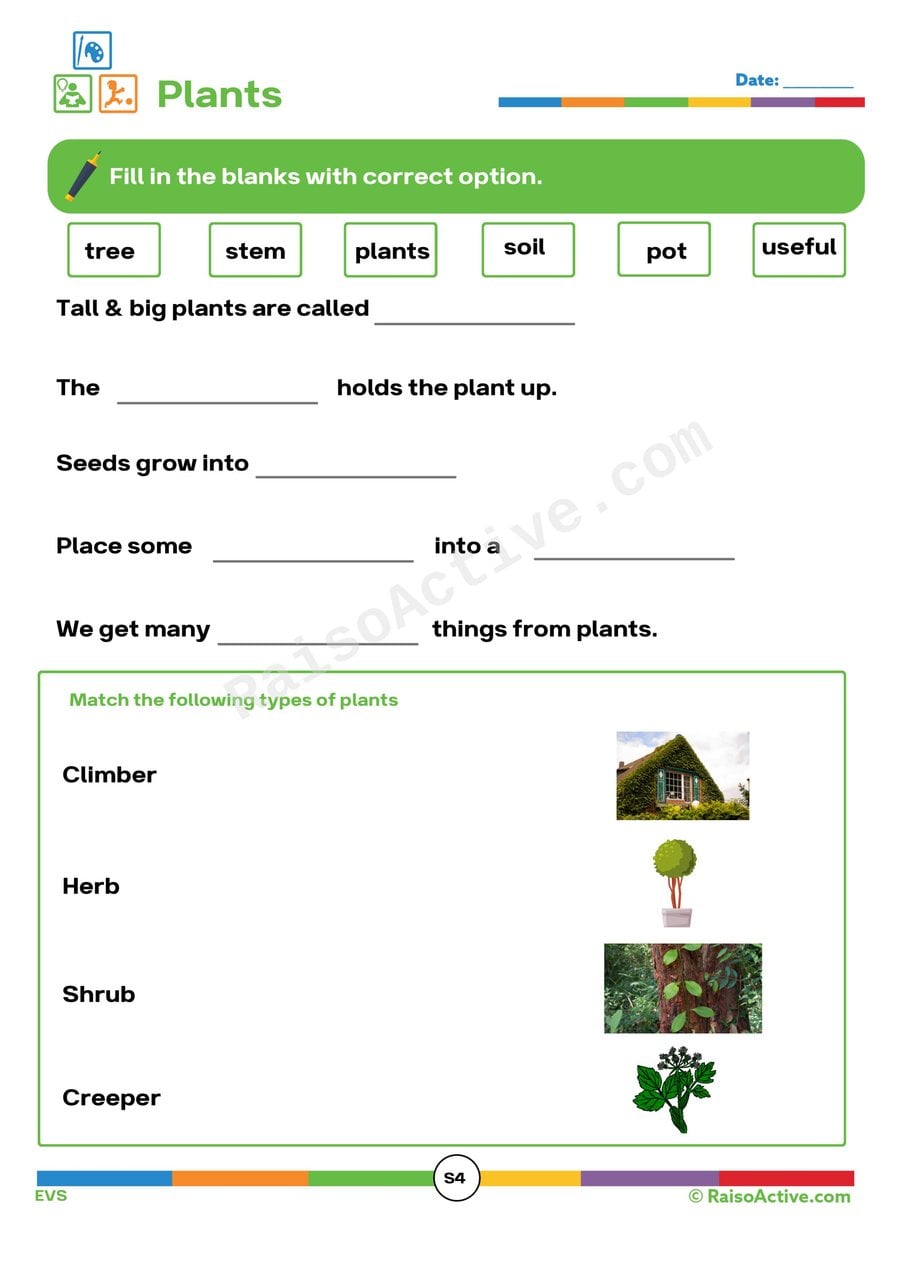
Plant Parts Worksheet for Preschoolers
This worksheet introduces 4-6 year olds to plant anatomy — roots, stem, leaves, and flower — and asks them to connect each part's name to its function, while a separate matching section links different plant types to their pictures. Learning that plants have parts with specific jobs (roots drink water, leaves make food from sunlight) is an early building block of life science, and naming these parts gives your child vocabulary they'll keep reusing throughout school science lessons.

CVC 'an' Family Matching Worksheet for Early Readers
This worksheet strengthens phonics skills in children ages 4-6 by having them read, color, and match CVC words from the 'an' family, such as 'can', 'man', and 'fan'. Practicing an entire word family together helps children notice the shared 'an' pattern, an efficient shortcut that lets them decode a whole group of new words once they master just one.

Alphabet Adventures: Complete the Vocabulary Table!
This worksheet helps children ages 4-6 strengthen letter-picture-word associations by filling in missing letters, finding matching pictures for each letter, and pasting them into a vocabulary table. Combining letter recall, picture matching, and gluing into one multi-step task pushes children beyond simple letter recognition into actively building and organizing vocabulary, an important step toward independent reading and writing.

Family Words Worksheet: Picture Matching and Word Recognition
Children ages 4-6 practice recognizing and reading words from the 'family' word group, like 'candle' becoming 'candle-family' patterns or similar word-family endings, by matching written words to their corresponding pictures. Word family practice builds phonics pattern recognition, helping children read new words faster by spotting familiar chunks within them.

Number Names Worksheet: Unscramble, Match, and Write Numbers!
This worksheet layers three literacy and numeracy skills together: unscrambling jumbled letters to spell out number names, writing the corresponding numeral, and matching numbers to their written names. For ages 4-6, connecting a numeral like '5' to its written word 'five' bridges math and reading skills, reinforcing that numbers can be represented in more than one way.

Addition Fun: Add and Match the Numbers! (Worksheet)
Children ages 4-6 practice basic addition by counting two groups of pictured objects, finding their total, and then matching that sum to the correct number, combining counting, addition, and visual matching in a single activity. Drawing a line to connect an answer to its number reinforces that a math sentence and a numeral represent exactly the same quantity.
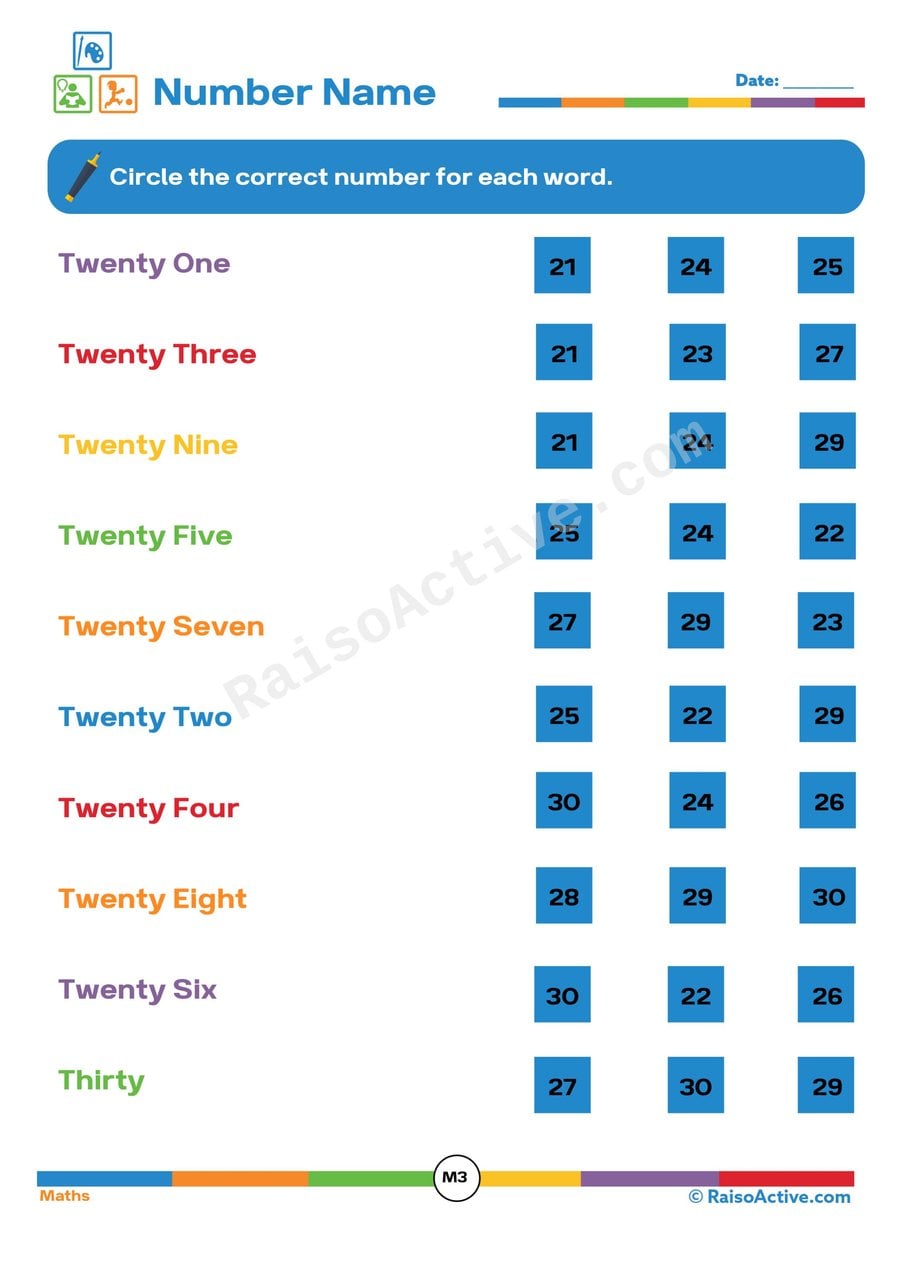
Number Names Matching Worksheet for Kids
This worksheet helps children ages 4-6 connect written number words, like 'five' or 'nine,' to their numeral form by reading each word and circling the matching digit. Recognizing number names in text is a skill separate from counting objects, and it becomes important as soon as children start encountering numbers written out in books, signs, or math word problems.
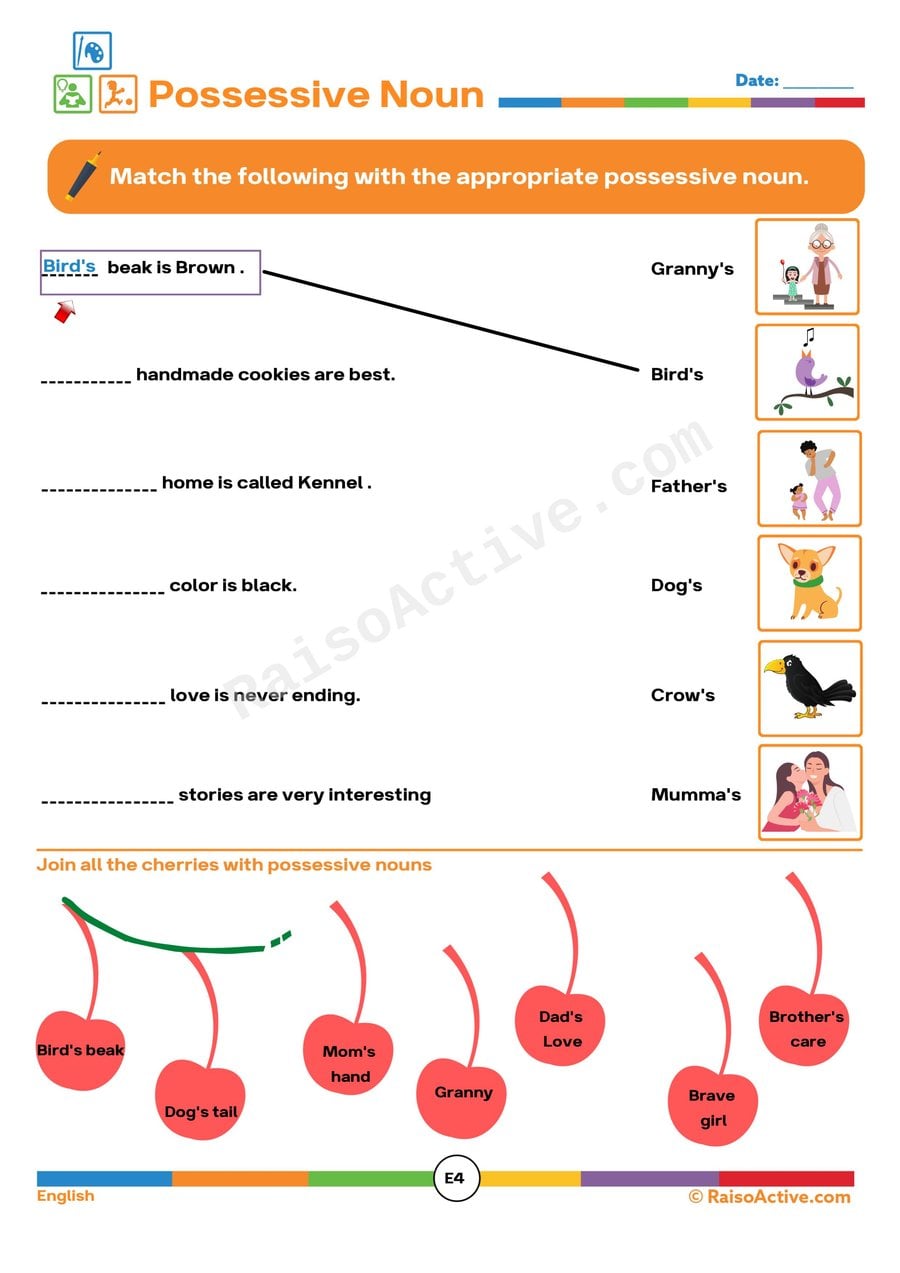
Possessive Noun Matching Worksheet for Kids
Children ages 4-6 learn to identify possessive nouns, like 'the dog's bone' or 'Mia's book', which show ownership using an apostrophe and 's'. Matching possessive phrases to their meaning builds early grammar awareness that will later support correct sentence writing and reading comprehension. The cherry-connecting activity adds a playful visual-tracking layer to reinforce the matching skill.
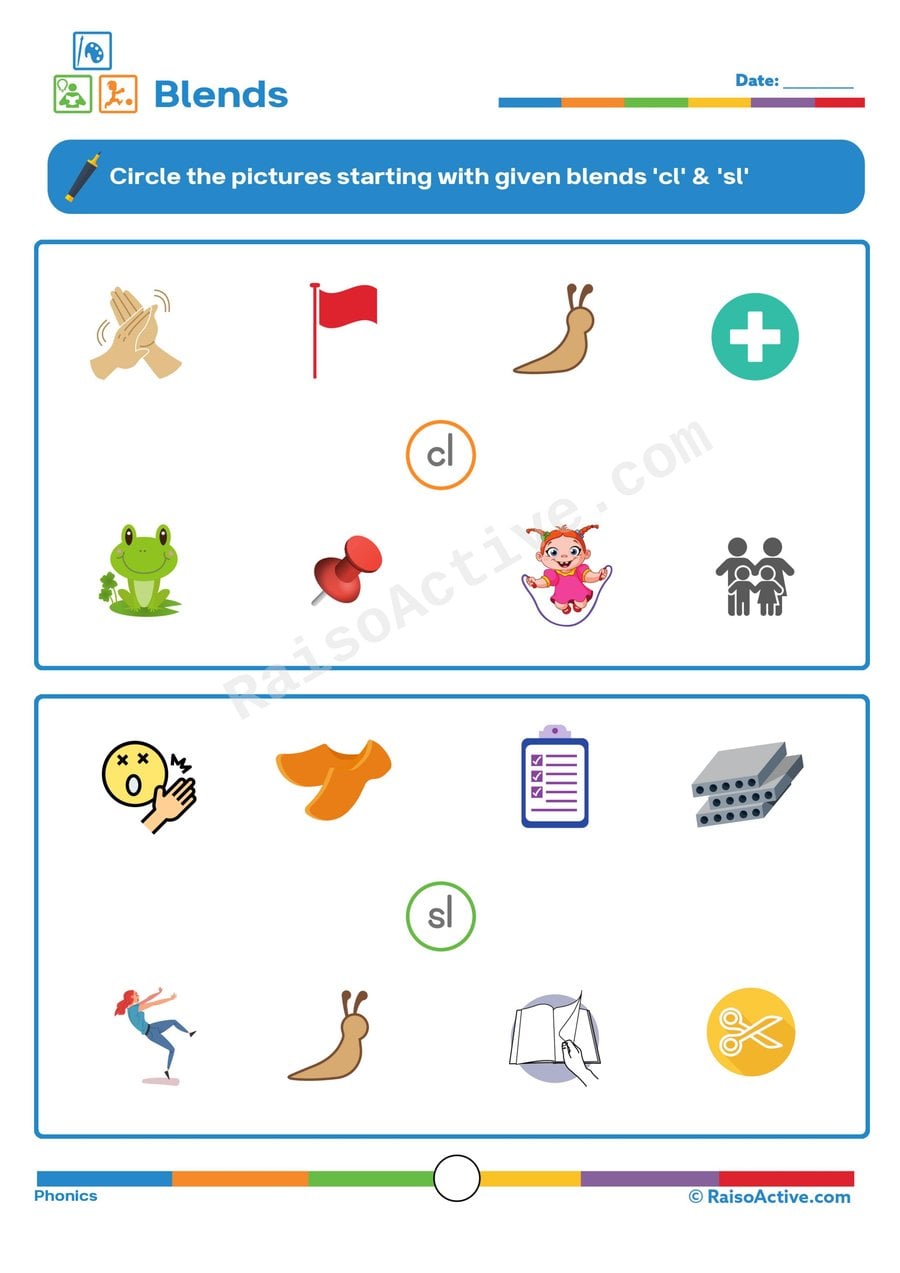
Circle the 'cl' and 'sl' Blends Worksheet
This worksheet trains children ages 4-6 to recognize the 'cl' and 'sl' consonant blends at the start of words, an auditory discrimination skill that lays groundwork for blending sounds when reading. Because 'cl' and 'sl' sound similar, distinguishing them requires careful listening to the very first consonant in the blend, sharpening phonemic precision beyond simple beginning-sound identification. This kind of blend practice is a direct precursor to decoding longer, more complex words.
What UKG matching worksheets cover
Five-year-olds read the items they match. Sheets pair a three-letter word with its picture, an addition sum with its answer, a number with the ten frame that shows it, a picture with its ending sound, and opposites such as hot and cold. The line-drawing is now easy, so the value lies entirely in the content, which lets the child practice reading and sums without much writing. Eight to twelve shuffled pairs is a fair length.
- Match a three-letter word such as dog to its picture
- Draw lines from addition sums to their answers within 10
- Pair opposites such as hot and cold, up and down
- Match a numeral to the ten frame showing that many
- Connect a picture to the letter it ends with
How to use these worksheets at home or in class
Two short sheets a day, roughly fifteen to twenty minutes altogether, keeps a five-year-old moving without overload. Alternate an English page with a maths page so neither subject stalls, and let your child attempt the first few items before stepping in.
Start with the sheet that matches what your child can already do, then move one step up. Keep finished sheets in a folder: UKG teachers often ask for evidence of practice, and children like seeing their own progress.
Is your child ready for UKG matching work?
Before this stage a child should write most capital letters from memory, know the sound each letter makes, count objects accurately to twenty, and sit through a full worksheet without needing a break halfway through.
Frequently asked questions
Are matching worksheets too easy for a five-year-old?
The format is easy, and that is the point: it lets a child practice reading words or checking sums without the effort of writing them out. What changes at five is the content. If a sheet is finished in a minute without a single error, keep the format but move the content on, for example from word-to-picture pairs to sum-to-answer pairs, or shuffle the columns and add more pairs.
What should a UKG child be able to do in matching?
Five-year-olds read the items they match. Sheets pair a three-letter word with its picture, an addition sum with its answer, a number with the ten frame that shows it, a picture with its ending sound, and opposites such as hot and cold. The line-drawing is now easy, so the value lies entirely in the content, which lets the child practice reading and sums without much writing. Eight to twelve shuffled pairs is a fair length. Before this stage a child should write most capital letters from memory, know the sound each letter makes, count objects accurately to twenty, and sit through a full worksheet without needing a break halfway through.
Do these worksheets follow the UKG curriculum?
The sheets cover identifying identical pairs, matching an object to its category, matching uppercase letters to lowercase and matching a numeral to a quantity, which sit inside the NEP 2020 Foundational Stage (NCF-FS 2022) outcomes for UKG. Kindergarten (US), Reception / Year 1 (UK) use the same skills at this age, so the sheets also fit families following those programmes.
Are the UKG matching worksheets free to download?
Yes. Every sheet on this page can be downloaded free as a watermarked PDF after creating an account, up to five downloads a day. The annual membership (₹1000) removes the watermark and the daily limit across the full library of more than 1,000 worksheets and all activity packs.

Written by
Hemsweta Jain · Teacher Cheena
MBA and Early Childhood Educator, teaching since 2014 · Founder of RaisoActive, Mumbai
Written and reviewed by Hemsweta Jain (Teacher Cheena), who designs every RaisoActive worksheet.
Last reviewed
Printable packs for ages 5–6
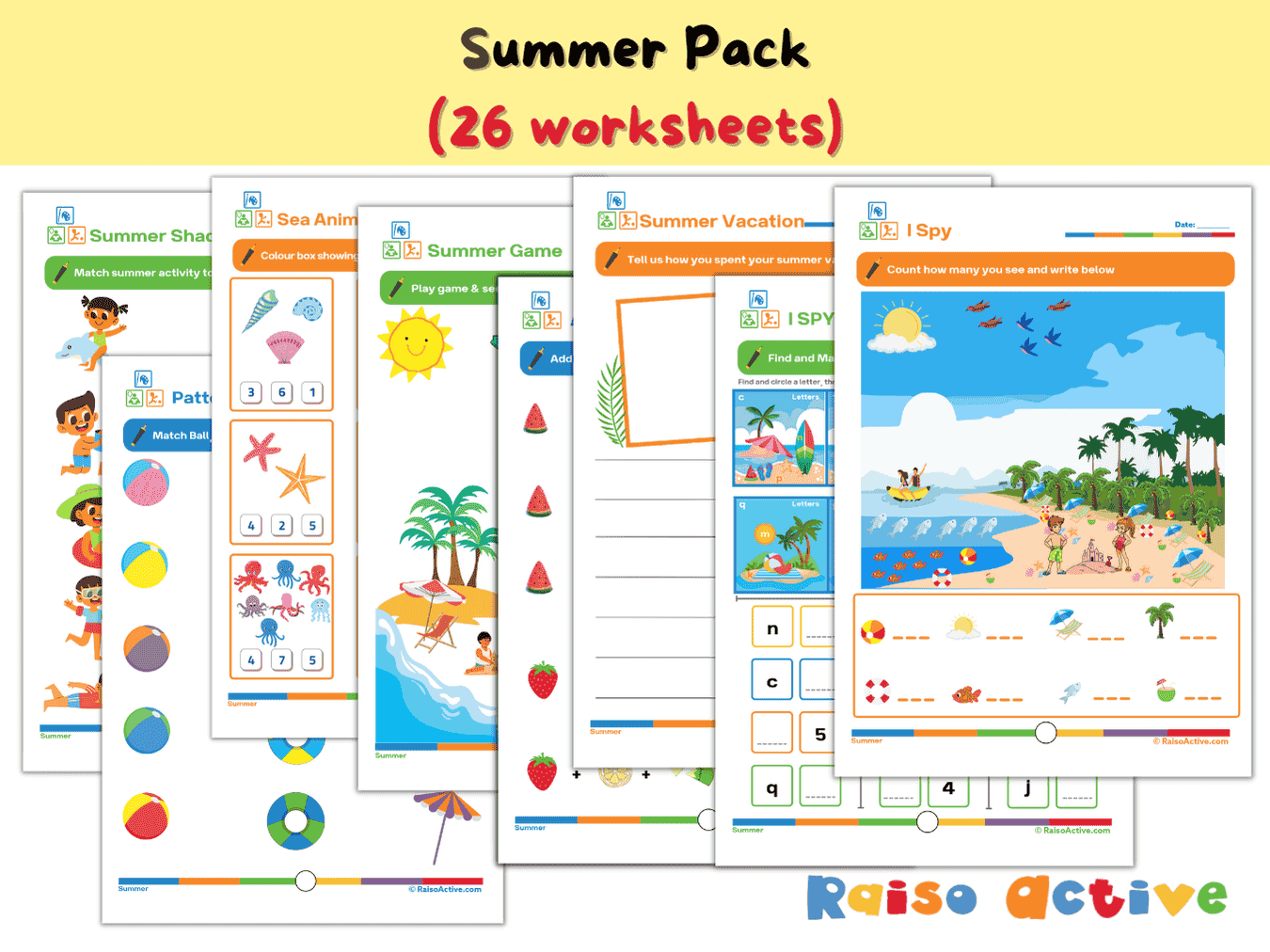
Summer Activity Pack: Math, Literacy, Puzzles & More for Preschool & Kindergarten
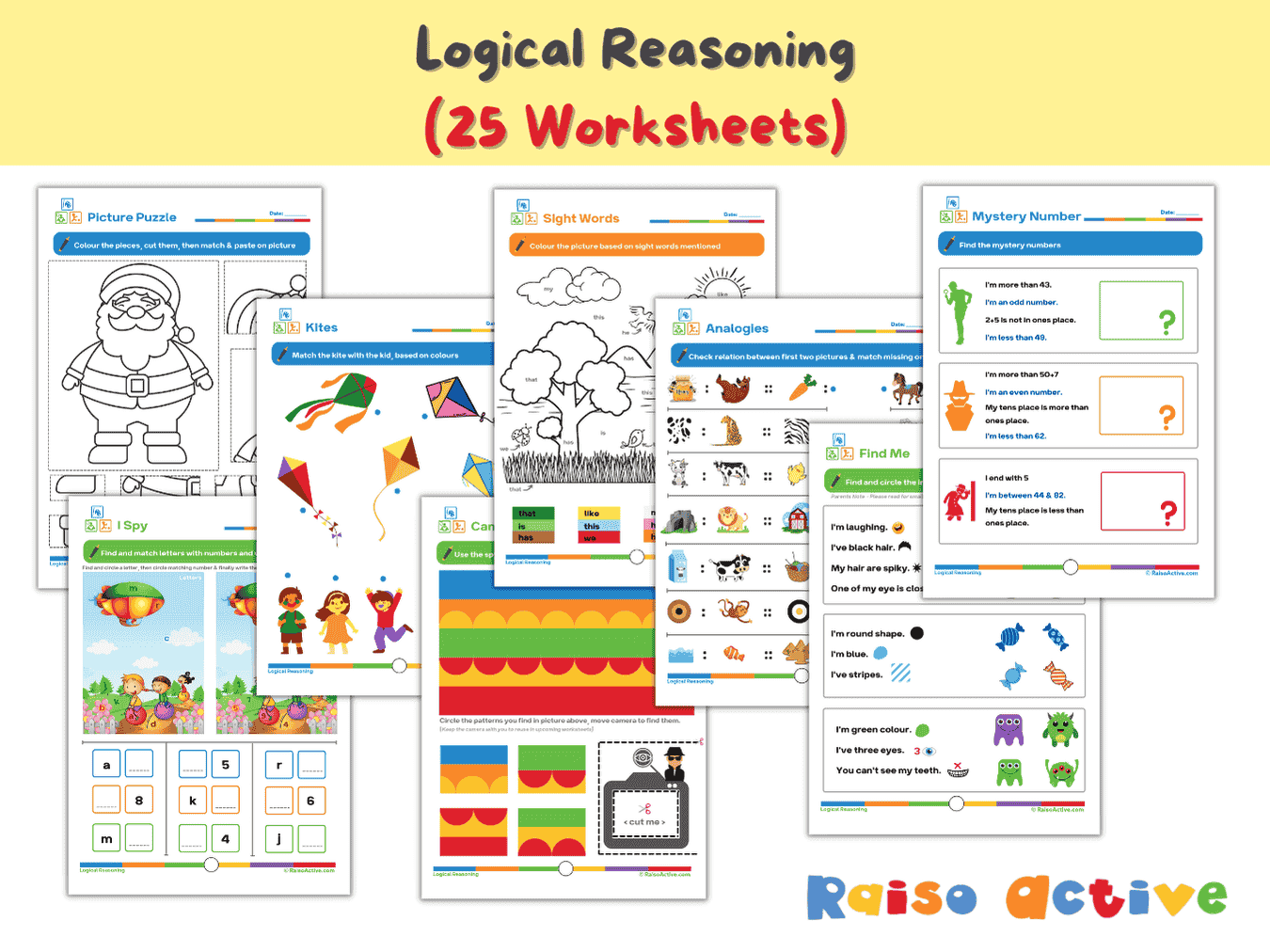
Logical Reasoning Activity Book for Preschool & Kindergarten | Patterns, Puzzles & Analogies
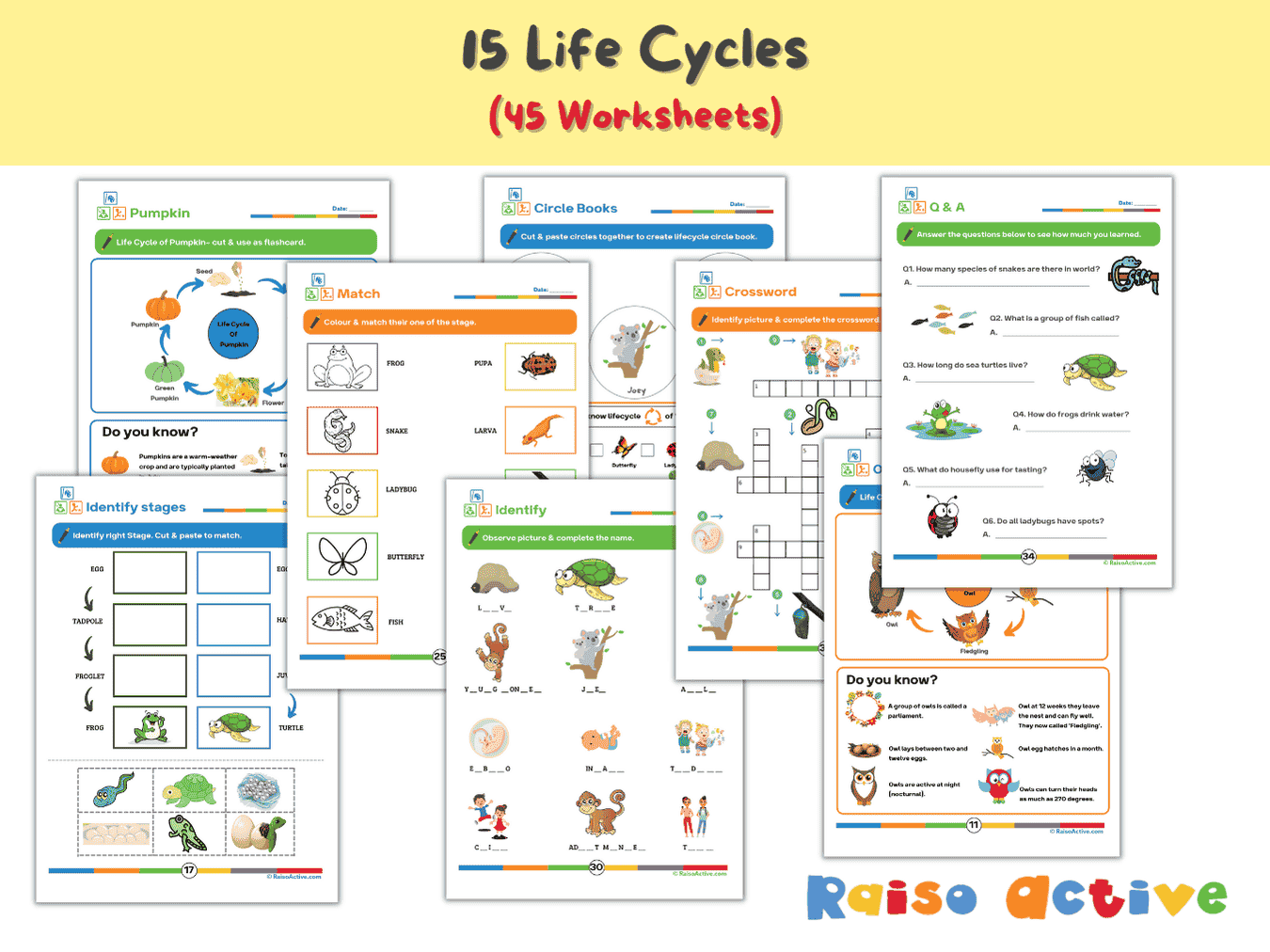
Lifecycles Activity Book & Flashcards for Preschool & Early Elementary
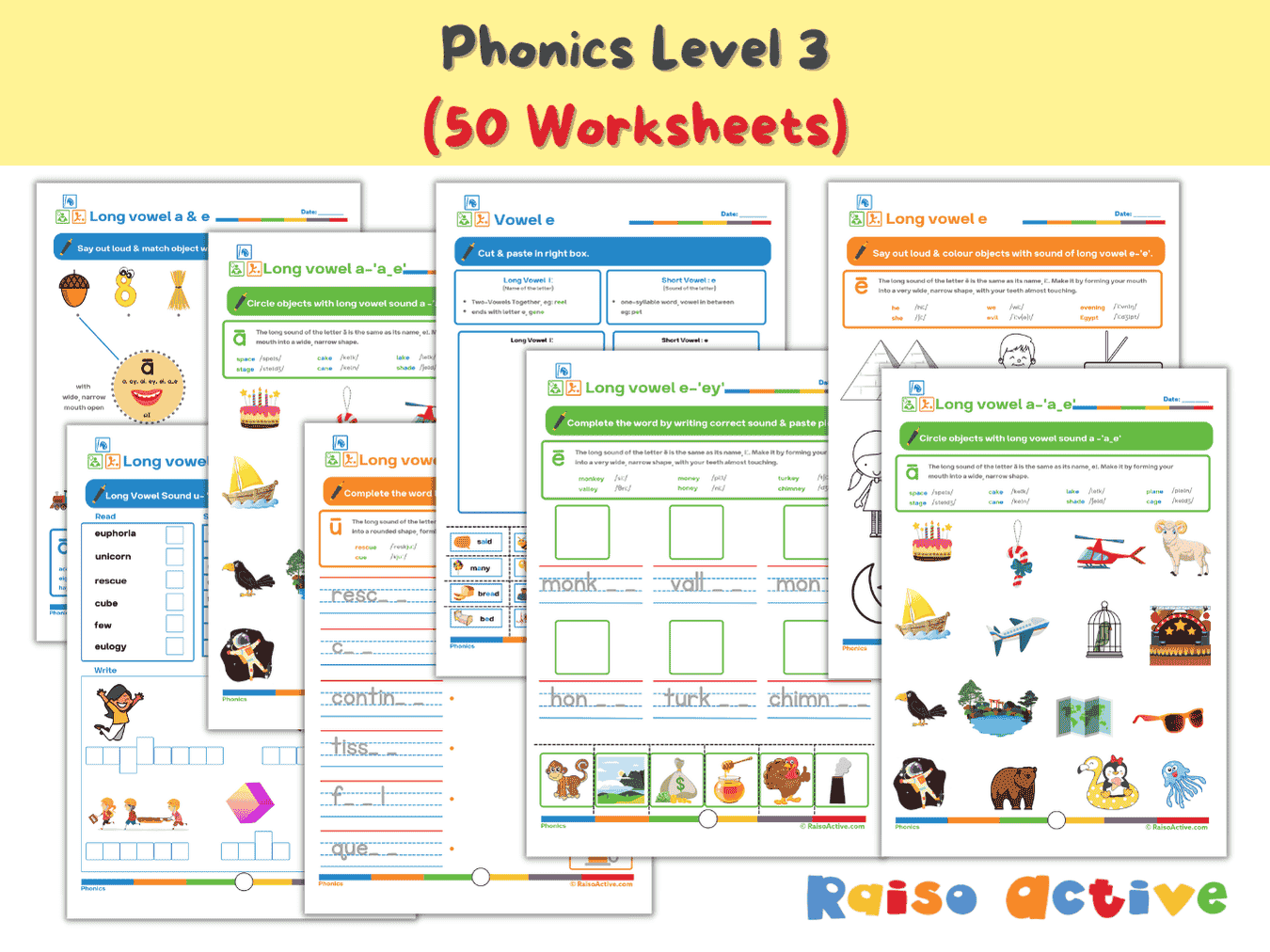
Phonics Level 3 Long Vowels Activity Book for Kindergarten & 1st Grade
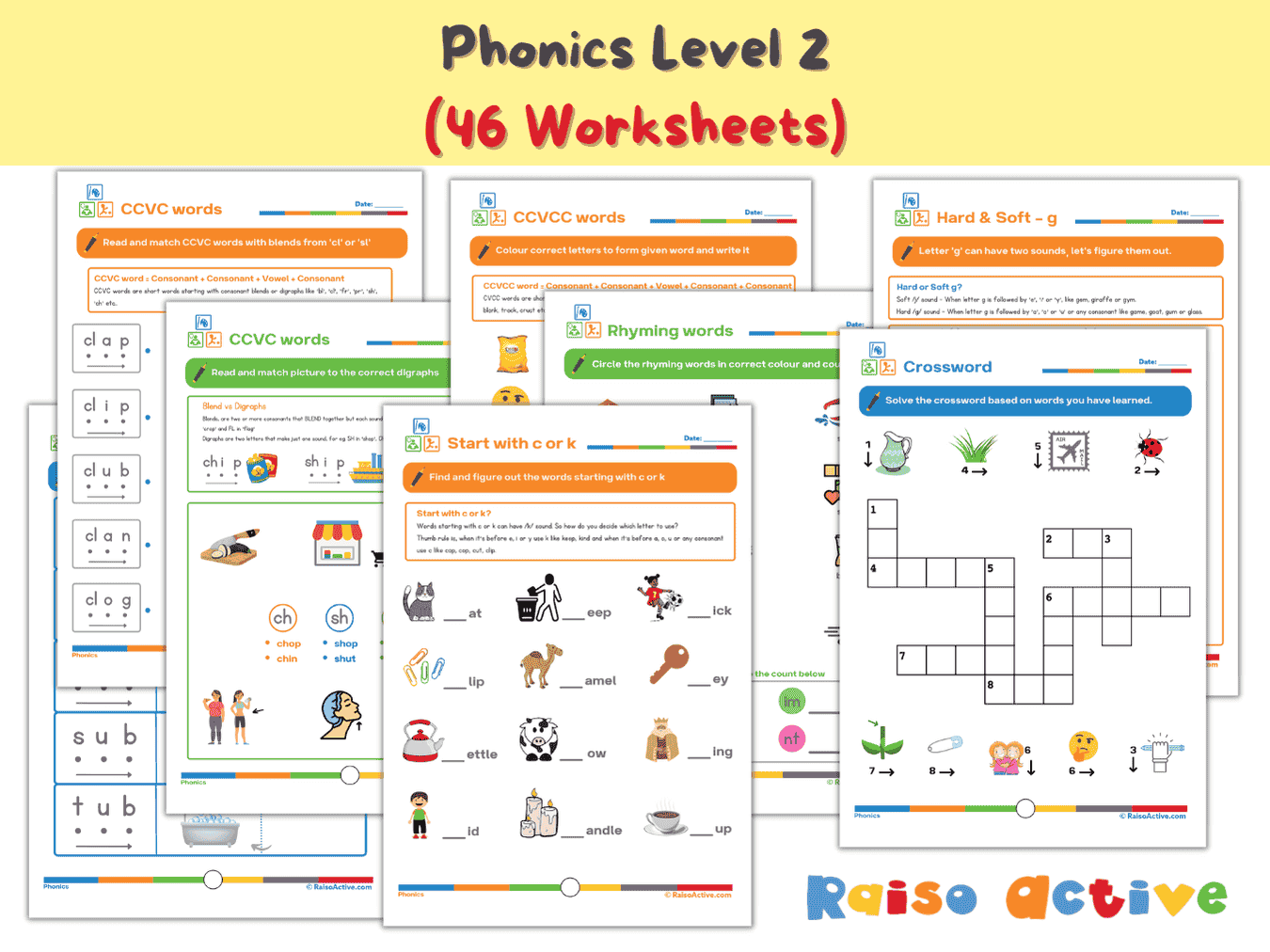
Phonics Level 2 Worksheets: CVC, CCVC, CVCC Word Families & Blends for Early Readers (Ages 4-7)
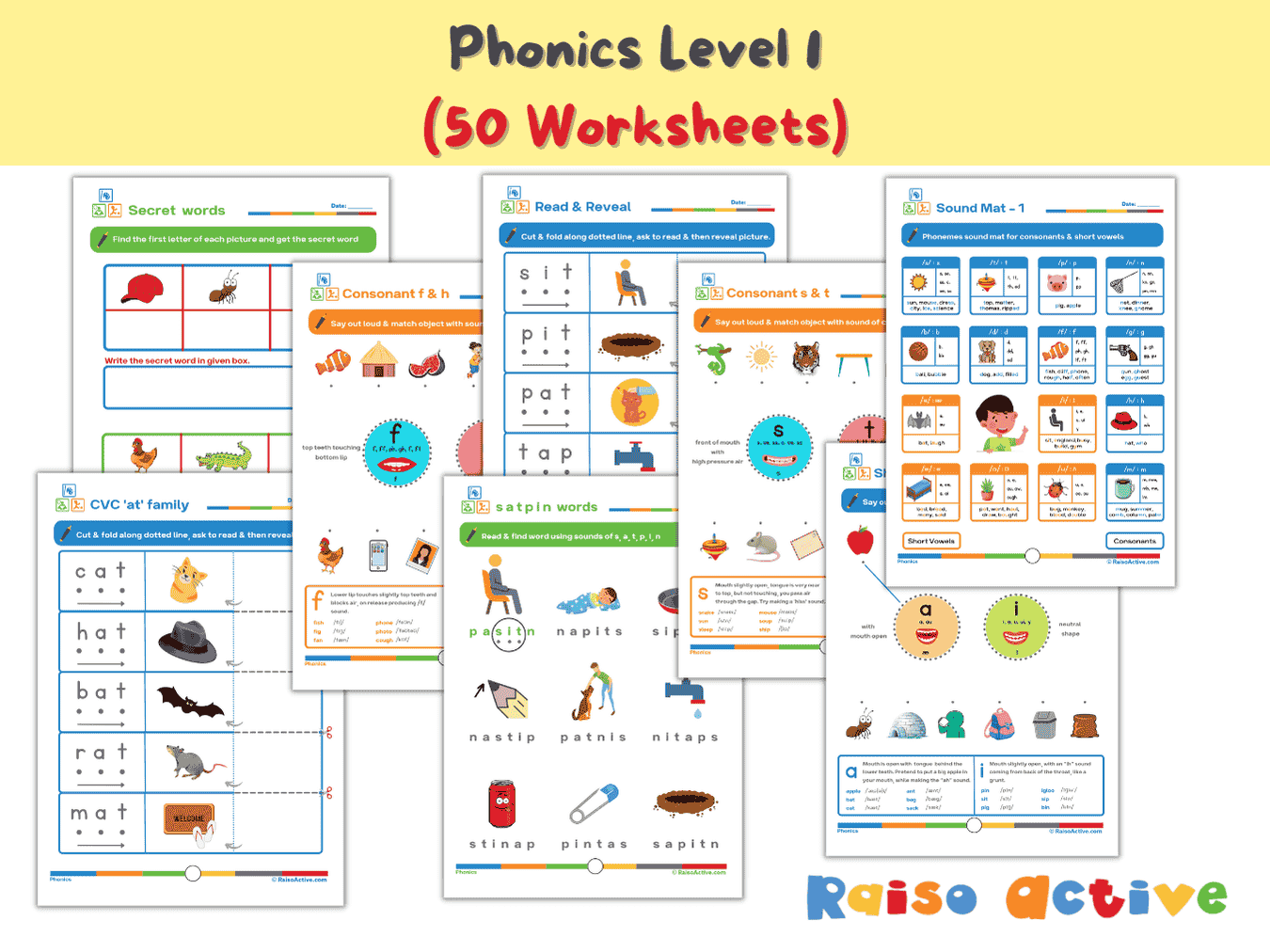
Phonics Level 1 Activity Book: Letter Sounds, Blending & CVC Words for Preschool & Kindergarten
Guides for parents and teachers
See all guides →Best Worksheets for 3-Year-Olds: What Works and What to Avoid
What works on worksheets for 3-year-olds: short sessions, crayons, tracing lines, matching, cutting, a free weekly plan, and signs one is too advanced.
Age-Appropriate Problem-Solving Activities: Building Critical Thinkers from the Ground Up
Discover fun, age-appropriate problem-solving activities for children ages 1-8. Build critical thinking, logic, and reasoning skills through play-based learning.
Critical Thinking Activities That Actually Work for Young Children: Building Tomorrow's Thinkers Today
Discover proven critical thinking activities for young children. Age-wise logic games, questioning techniques, and hands-on ideas to build thinking skills at home.
Coding Activities for Preschoolers: Building Tomorrow's Thinkers Today
Discover 15+ unplugged and screen-based coding activities for preschoolers that build sequencing, logic, and problem-solving skills through play. NEP 2020 aligned.