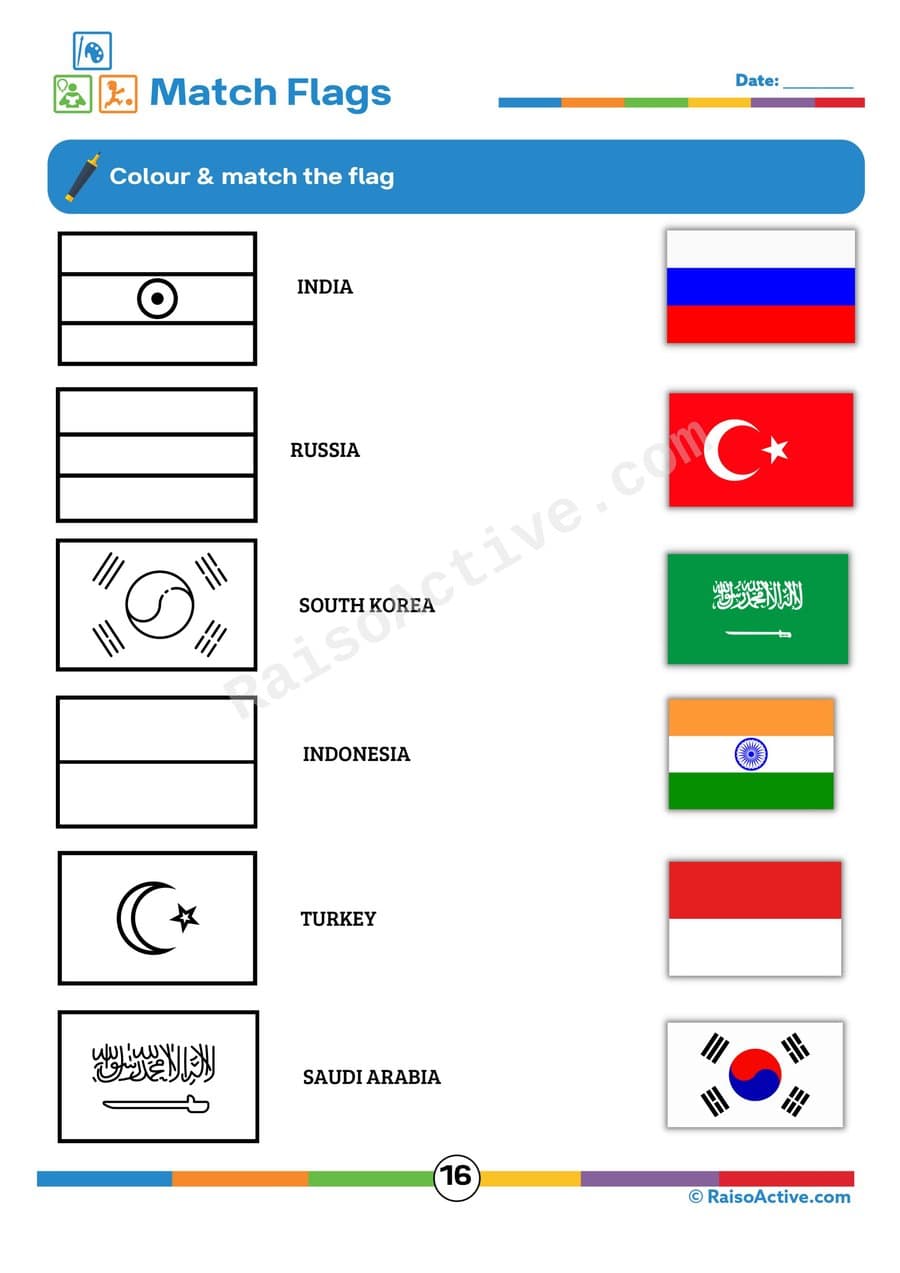
Match the Flags Worksheet for Kids
Children ages 4-6 build flag recognition by matching a set of country flags to their correct names, continuing to strengthen geography vocabulary and visual discrimination through this final flag-focused worksheet. Working with flags is an especially effective way to build visual memory in young children, since each one is a distinct, colorful pattern they can learn to recognize quickly.
Curriculum
How to use this worksheet
Look at the flags on the right side of the page together and name any your child already recognizes. Have them match each flag to the correct country name listed on the left side, drawing a line to connect the pair. Once the matches are complete, let your child color each flag using its real colors if known. Review the finished page together, reading each country name and describing its flag.
Materials needed
- Pencil
- Crayons
Extension activities
- •Research facts about the countries represented on the worksheet.
- •Draw your own flag and explain what the colors and symbols represent.
- •Create a simple flag quiz, showing just the flag and asking your child to name the country.
- •Find each country on a globe or map and talk about how far away it is.
- •Make a small 'passport' book and stamp a page for each country covered across all the flag worksheets.
Tips for parents and teachers
Encourage children to discuss what they know about the countries and their cultures, extending the activity beyond simple visual matching. If your child has now completed several flag-matching worksheets, take a moment to quiz them on flags from earlier pages to check retention. Keep the tone light and curious — building genuine interest in different countries matters more than memorizing every flag perfectly.

Written by
Hemsweta Jain · Teacher Cheena
MBA and Early Childhood Educator, teaching since 2014 · Founder of RaisoActive, Mumbai
Every RaisoActive worksheet is designed and checked by the founder before publishing.
Published · Last reviewed
Related worksheets

Clothing Pattern Match Worksheet for Preschoolers
This worksheet has children ages 3-5 study repeating patterns on clothing items — stripes, polka dots, or checks — and match each item to its identical twin, building visual discrimination and early pattern-sequencing skills. Distinguishing between similar-looking patterns also sharpens attention to detail, a skill that later supports letter and word recognition.
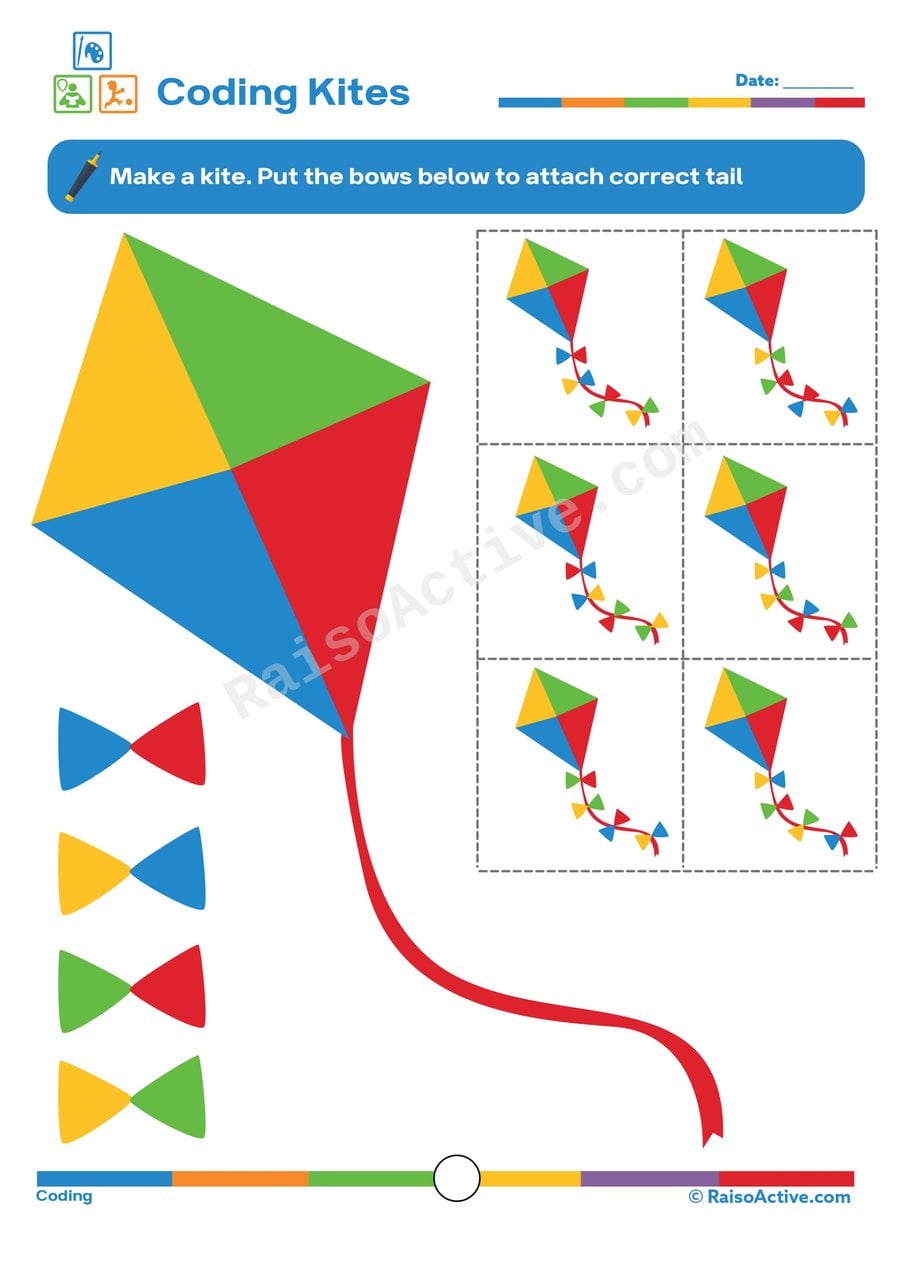
Coding Kites Worksheet: Match the Bows!
This activity sharpens visual observation in children ages 3-5 as they compare color sequences on each kite to a set of loose bows and find the exact match. Careful, systematic comparison — checking each color in order rather than glancing quickly — builds an attention-to-detail habit that transfers directly to early reading and number work.

Stick Man Emotions Worksheet: Happy, Sad, Angry, and Surprised!
Children ages 4-6 practice reading facial expressions on this worksheet, matching stick-figure faces to their correct emotion labels by noticing details like mouth shape and eyebrow position. This strengthens emotional literacy — the ability to name and recognize feelings in others — which supports empathy and smoother social interactions as children move into more group play and classroom settings.

Lock and Key Matching Worksheet for Preschoolers
Matching each key to the lock sharing the same letter helps children ages 3-5 practice letter recognition in a playful, puzzle-like context rather than rote drilling. Because each key must be checked against several similar-looking locks before finding the right match, this worksheet also builds visual scanning and careful comparison skills that support problem-solving.

Balloon Pattern Matching Worksheet for Preschoolers
Children ages 3-5 build early pattern-recognition skills on this worksheet by studying a sequence of colored balloons and finding the matching set to complete it. Recognizing and continuing a repeating sequence is a foundational pre-math skill that later supports understanding of number patterns, skip counting, and simple algebraic thinking.

Clothing Pattern Matching Worksheet for Preschoolers
By comparing clothing items and connecting each one to its pattern match, children ages 3-5 build visual discrimination skills, learning to notice fine differences in stripes, dots, or repeated shapes. This close-looking practice supports the same attention-to-detail children will later need to tell similar-looking letters and numbers apart.

Balloon Pattern Matching Worksheet for Preschoolers
This worksheet strengthens pattern recognition in children ages 3-5 by having them study a repeating sequence of colored balloons and locate the matching arrangement elsewhere on the page. Recognizing and reproducing a pattern is an early pre-algebra skill, laying groundwork for later number patterns and logical sequencing.
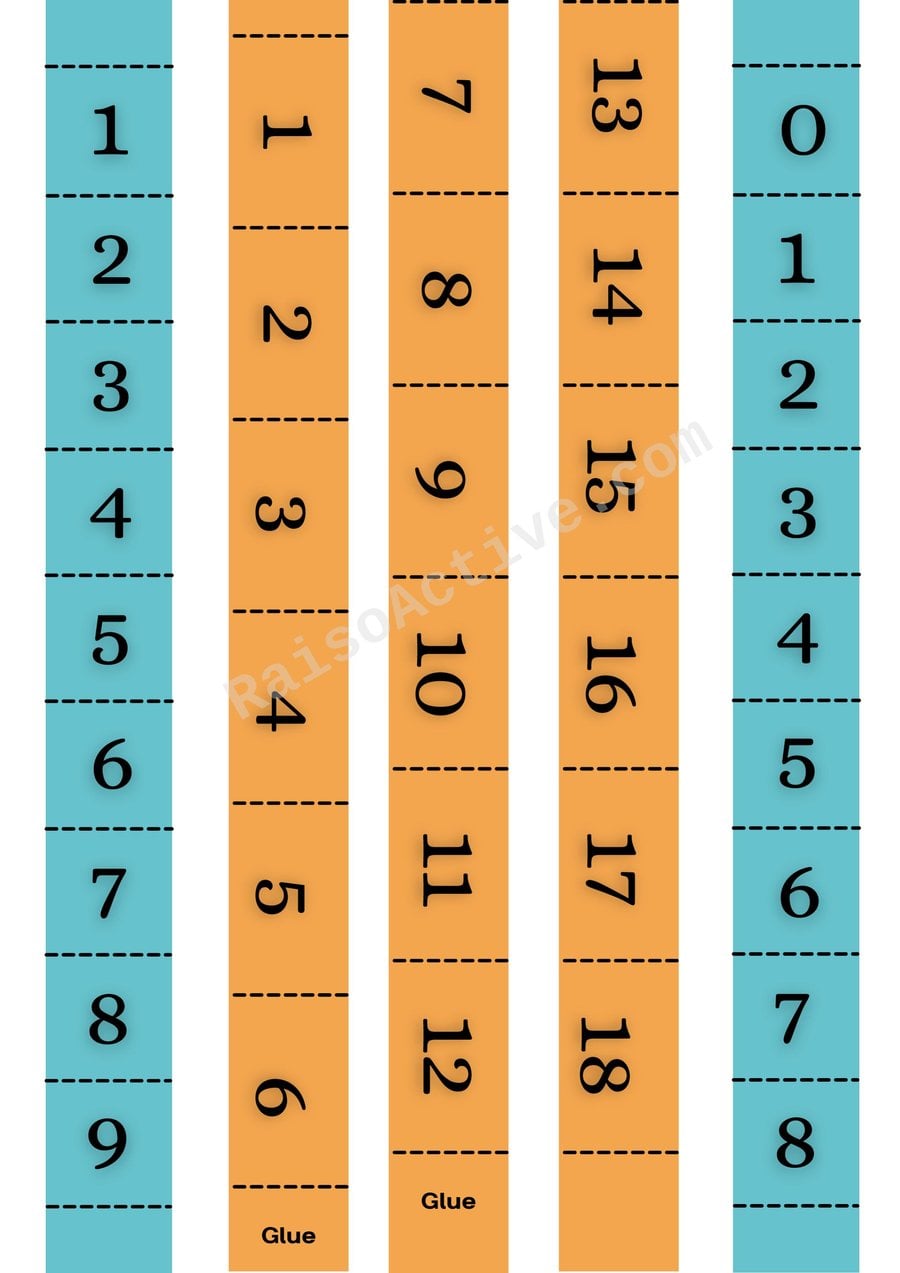
Number Matching Worksheet: 0-18
This activity strengthens numeral recognition for children ages 3-5 by having them find and pair matching numbers from 0 to 18 printed on separate strips. Because the numbers are scattered rather than in order, children must recognize each digit shape on its own rather than relying on counting sequence, which builds true number recognition instead of rote list-reciting.
Guides for this topic
Best Worksheets for 3-Year-Olds: What Works and What to Avoid
What works on worksheets for 3-year-olds: short sessions, crayons, tracing lines, matching, cutting, a free weekly plan, and signs one is too advanced.
Celebrating Diversity: How to Incorporate Cultural Awareness in Learning Activities for Young Children
Practical cultural awareness activities for young children aged 2-8. Explore Indian festivals, world cultures, food, music, and crafts to teach diversity and inclusion.
Building Future Citizens: How to Teach Social Studies to Young Children Through Creative Exploration
Practical ideas to teach social studies to kids ages 2-8: community helpers, Indian states, maps, festivals, and cultural diversity through play-based learning.
Reviews
Every worksheet for ages 4–6, no watermark
Members download the full library of 1,000+ worksheets and every activity pack without watermarks or daily limits. One year costs ₹1,000 in India or $20 elsewhere.
See membership plansOr download any worksheet free with a watermark (5 a day).