Free printable worksheets · India
Nursery Matching Worksheets (Ages 3–4)
Nursery matching worksheets are practice sheets for children aged 3–4 in Nursery in India. Matching is finding and pairing items that are identical, related or belong to the same category, from among several printed options. The sheets on this page cover identifying identical pairs, matching an object to its category, matching uppercase letters to lowercase and matching a numeral to a quantity.
Nursery marks the first year an Indian child sits at a table with a pencil rather than only playing with one. Grip is still developing, so schools expect pre-writing strokes, colouring within a bold outline, matching identical pictures and counting small groups rather than any letter writing. Attention rarely holds past a few minutes at a stretch. Three-year-olds move from identical pictures to pairs that go together for a reason: a coloured animal and its black shadow, the two halves of a cut-apart picture, a bird and its nest, a toothbrush and toothpaste. Most can now draw a wobbly line between partners placed opposite each other in two columns. Keep four to six pairs per sheet. Shuffled columns and letter or number pairs are still a year away.
461+ worksheets · free PDF download · print on A4 or Letter
Nursery Matching Worksheets to print
Browse all worksheets for ages 3–4
Clothing Pattern Match Worksheet for Preschoolers
This worksheet has children ages 3-5 study repeating patterns on clothing items — stripes, polka dots, or checks — and match each item to its identical twin, building visual discrimination and early pattern-sequencing skills. Distinguishing between similar-looking patterns also sharpens attention to detail, a skill that later supports letter and word recognition.

Match the Flags! A Fun Coloring Worksheet for Kids
This worksheet combines coloring with flag recognition, helping children ages 3-5 practice fine motor control while learning to match a colored flag to its correct blank outline. Coloring the flags first, then matching them, adds an extra layer of visual processing as children must recall the colors they just used to complete the matching step.

Easter Egg Match: Add and Find the Matching Designs!
This worksheet blends early addition with visual matching as children ages 3-5 combine two separate shape groups and then search for the Easter egg design that shows the same total. Because the 'answer' is a picture rather than a written number, children practice quantity comparison and pattern-matching without needing to know written numerals yet.

Find the Matching Image: A Fun Logical Reasoning Worksheet for Kids
Reading or listening to a short description and circling the image that matches it teaches children ages 3-5 to translate spoken or written language into a mental picture, then compare that picture against several visual options. This kind of description-to-image matching builds listening comprehension and logical reasoning, since children must hold multiple details in mind, like color, size, or action, before deciding which image fits all of them. It's a step up from simple visual matching because it requires connecting language to an image rather than comparing two pictures directly.
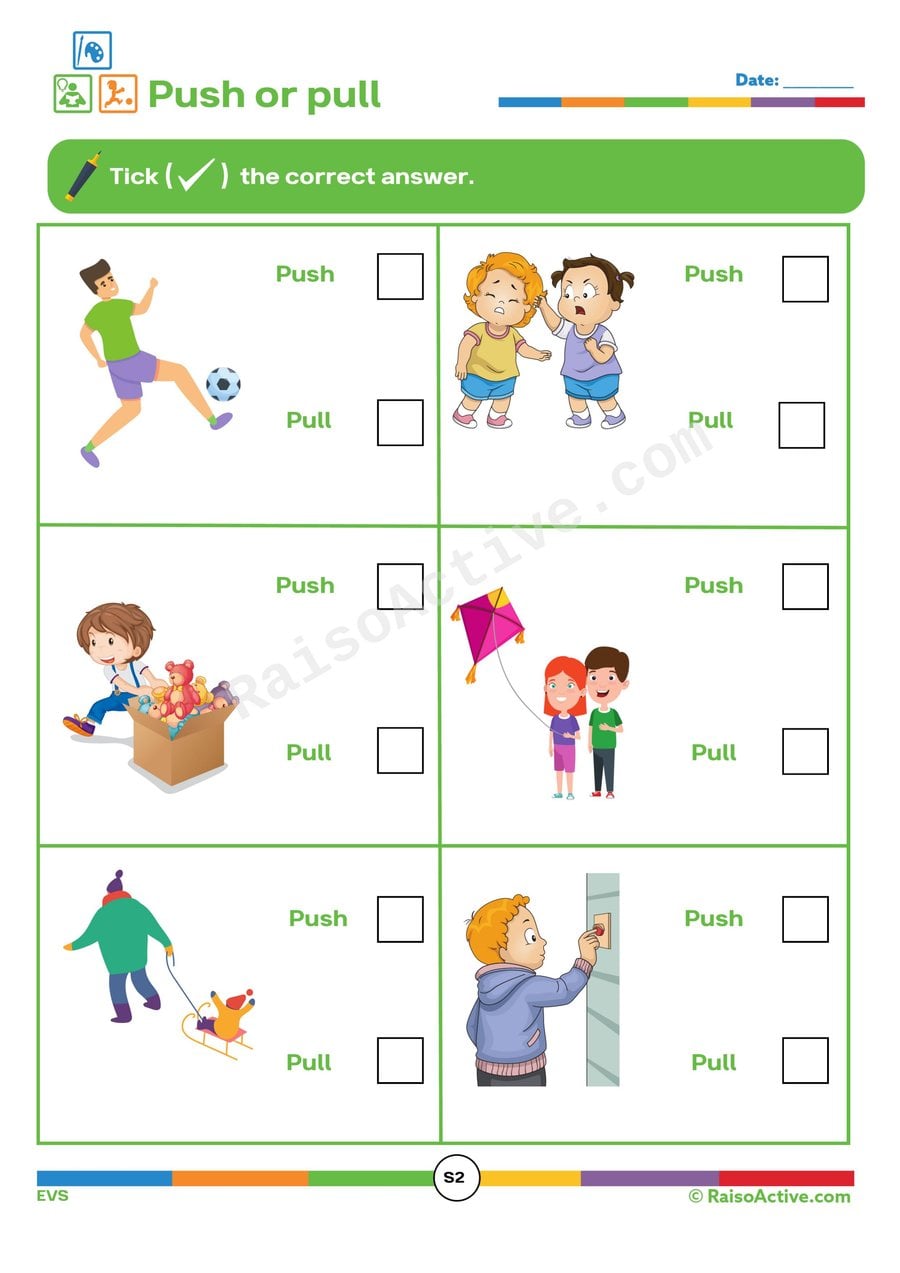
Push or Pull Worksheet: Identify Actions!
Deciding whether an action shown in a picture is a push or a pull introduces children ages 3-5 to a basic physics concept, force and motion, by having them classify everyday actions like opening a door or pulling a wagon. This early science reasoning requires children to picture the direction an object is moving relative to the person acting on it, which builds spatial thinking alongside scientific vocabulary. Learning to categorize actions this way is a first step toward understanding cause and effect in the physical world.

Rainy Day Fun: Circle the Rainy Season Items Worksheet
This worksheet helps children ages 3-5 identify items commonly used during the rainy season, like umbrellas, boots, and raincoats, by looking at a mixed set of pictures and circling only the ones that belong to rainy weather. Sorting relevant from irrelevant items this way builds early categorization and observation skills.

Material Properties Worksheet for Kids: Matching and Identifying
This early science worksheet introduces children ages 3-5 to the idea that materials have distinct physical properties — like hardness, brittleness, or elasticity — and that everyday objects can be grouped based on how they look, feel, or behave. Matching objects to their correct property builds observational and classification skills, which are foundational scientific thinking tools long before formal science instruction begins. Talking through why a rubber band stretches while a plate breaks helps children start noticing cause-and-effect patterns in the physical world around them.
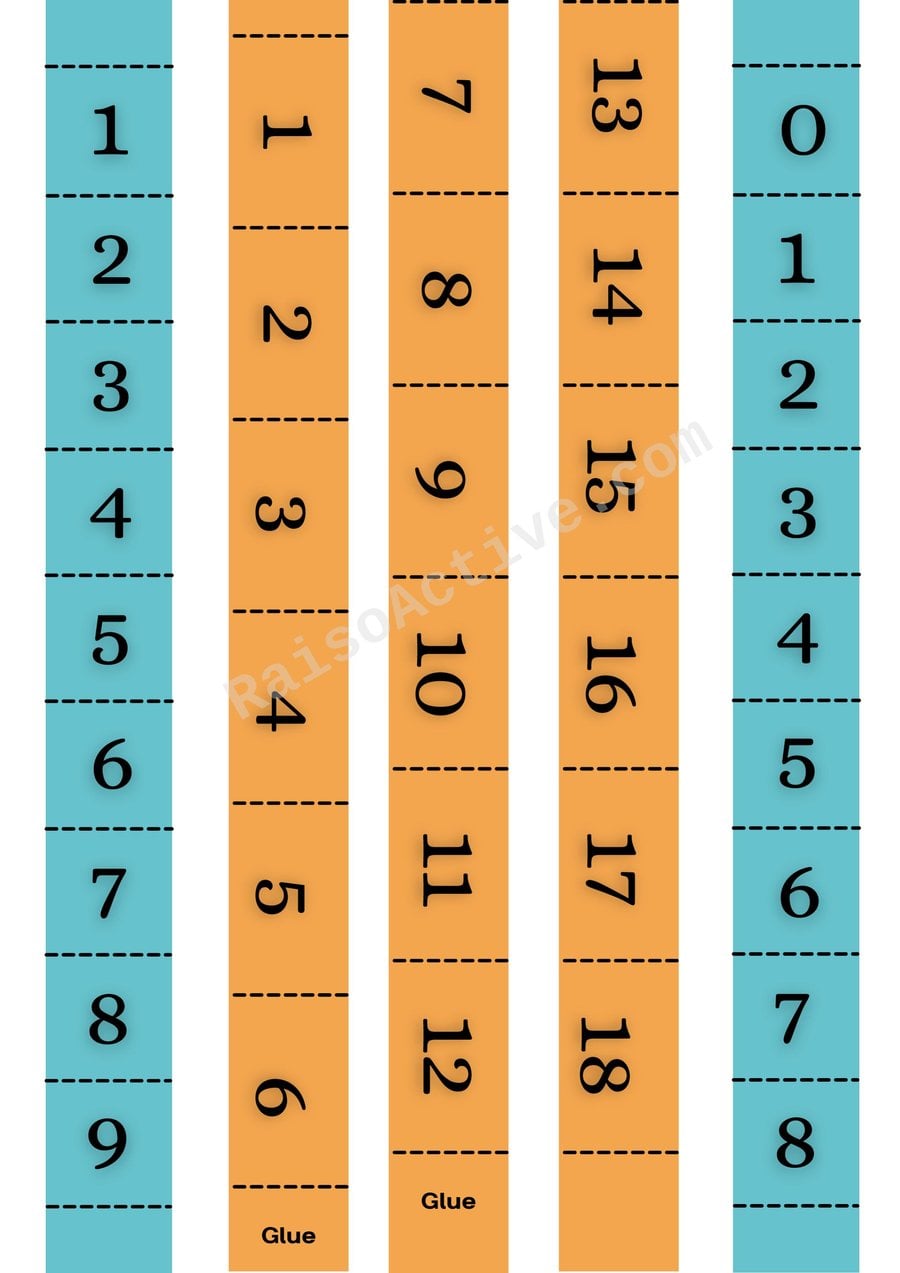
Number Matching Worksheet: 0-18
This activity strengthens numeral recognition for children ages 3-5 by having them find and pair matching numbers from 0 to 18 printed on separate strips. Because the numbers are scattered rather than in order, children must recognize each digit shape on its own rather than relying on counting sequence, which builds true number recognition instead of rote list-reciting.
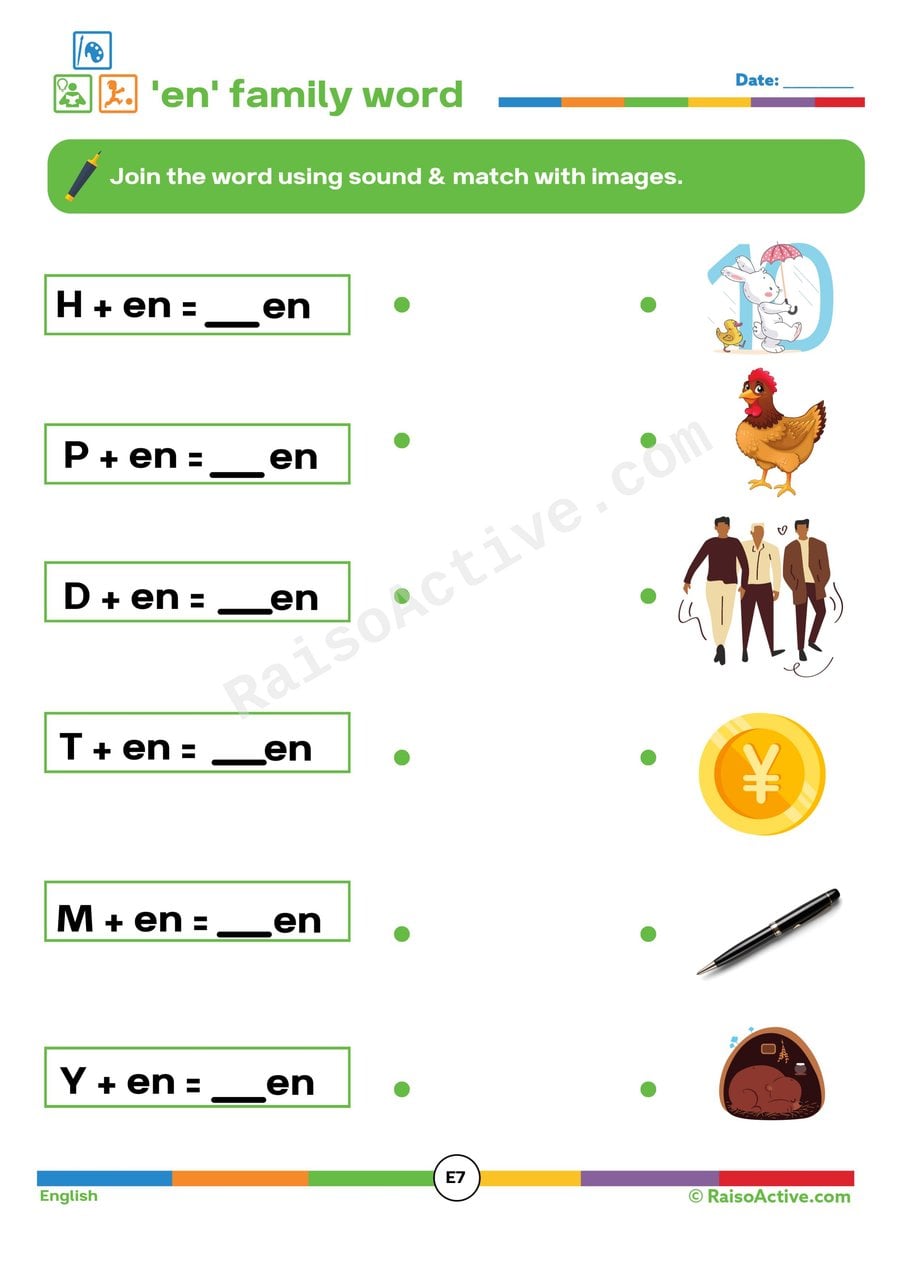
Fun 'en' Family Word Worksheet for Preschoolers
This worksheet introduces 3-5 year olds to the 'en' word family — pen, hen, ten — teaching them that once they know one ending pattern, they can read a whole group of words just by changing the beginning sound. That's a big efficiency gain in early phonics: instead of memorizing each word individually, your child learns to blend a new beginning sound onto a familiar chunk, which is exactly how fluent word-family reading develops.

Weather Words Worksheet for Preschoolers: Match & Learn!
This worksheet helps children ages 3-5 build weather-related vocabulary by matching pictures like clouds, rain, or sunshine to their correct written words. Weather is something children experience daily, so connecting familiar sights to new vocabulary words gives this matching task an unusually strong real-world anchor that helps the words stick.
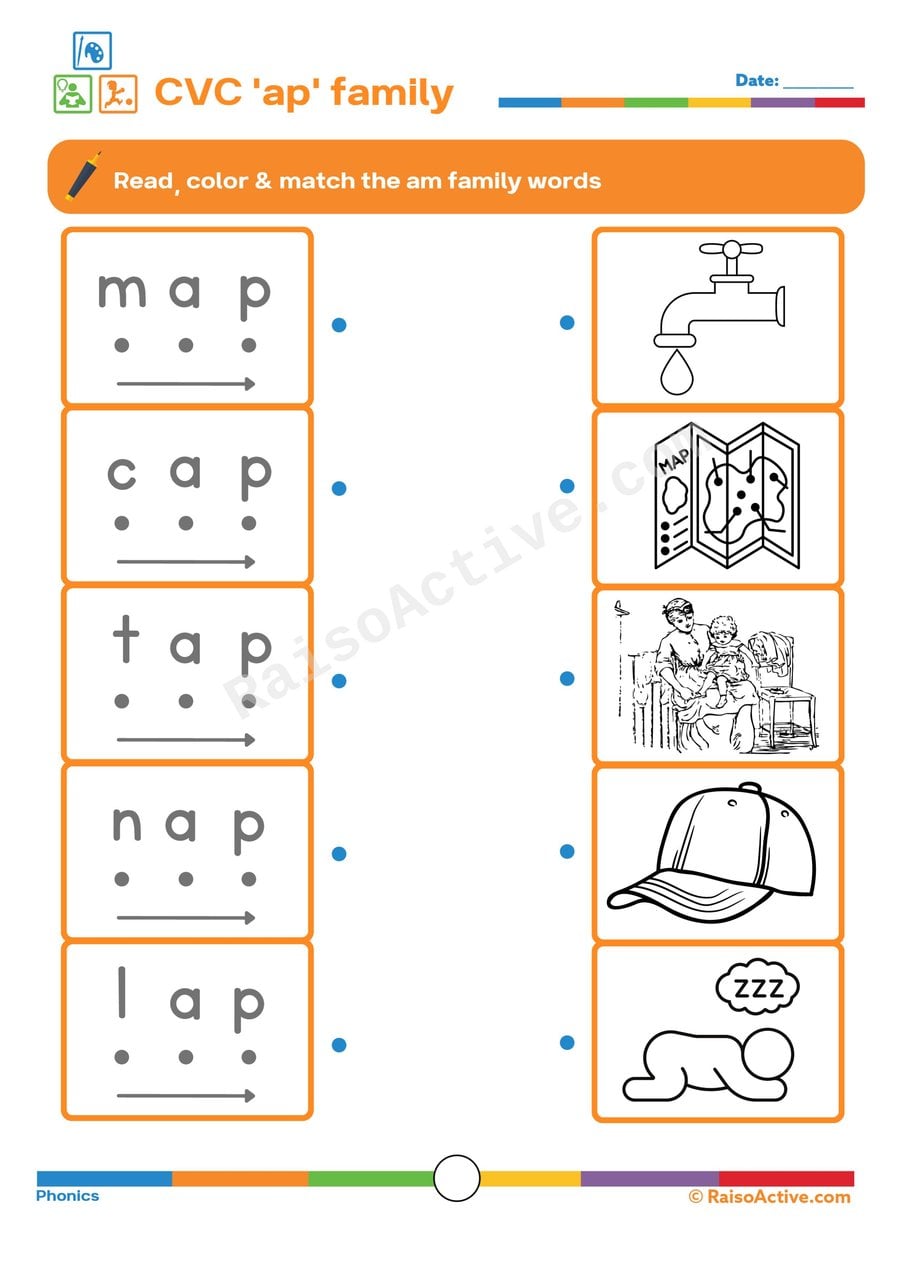
CVC 'ap' Family Worksheet: Read, Color & Match!
This colorful take on the 'ap' word family (cap, map, nap) lets children ages 3-5 combine phonics practice with a coloring activity, which helps younger or more reluctant readers stay engaged through repeated decoding practice. Reading each word before coloring its matching picture reinforces that the printed word carries meaning, an important early concept for pre-readers. Drawing the connecting line between word and picture afterward adds a matching and visual-tracking layer on top of the phonics work.
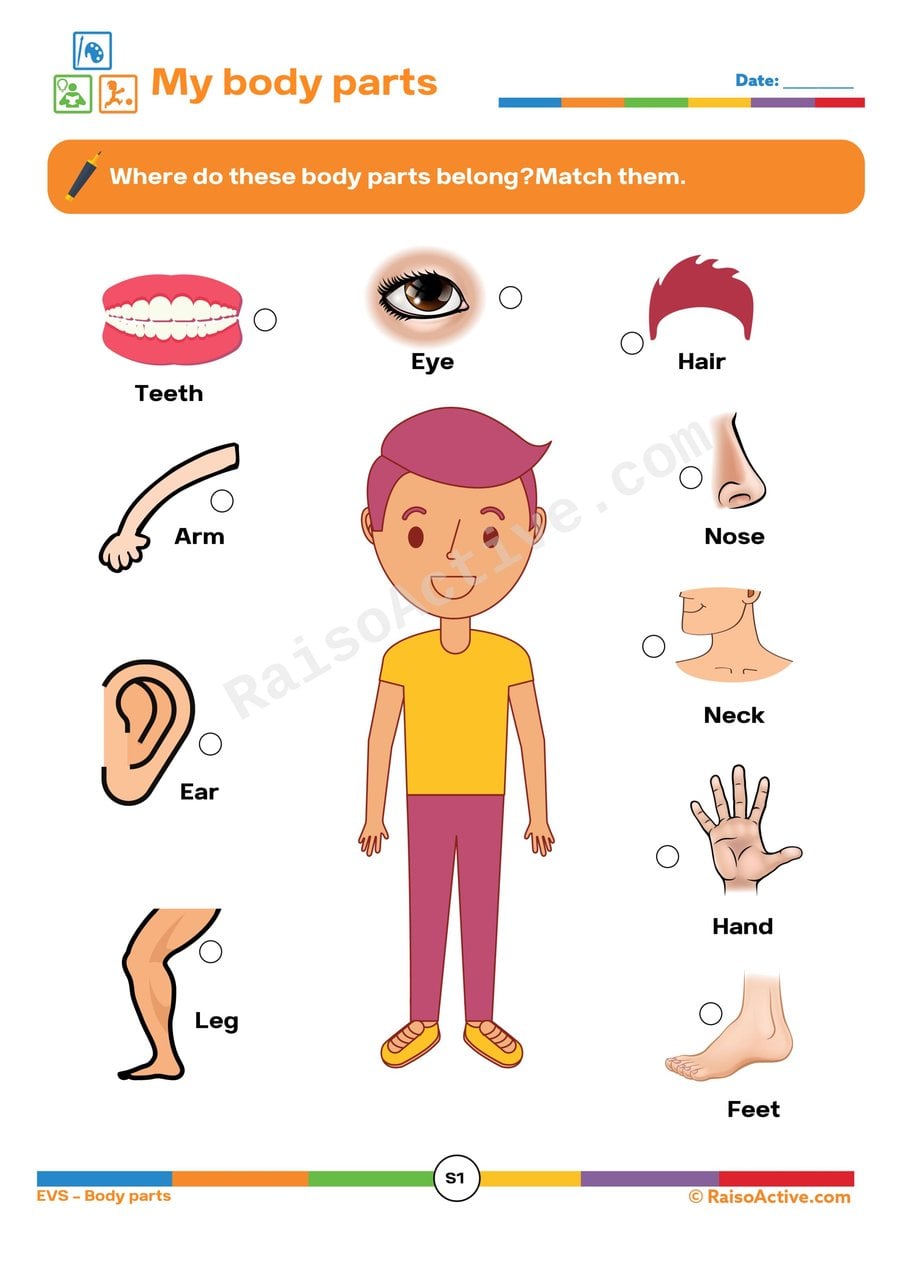
Match the Body Parts! A Fun Worksheet for Kids
Drawing lines from body part pictures to their correct location on a human figure helps children ages 3-5 build vocabulary for parts of the body, like arms, legs, and ears, while practicing visual-spatial matching between a small picture and its larger corresponding location. This worksheet strengthens the link between a spoken body part name and its physical location, a skill children also use constantly in daily routines like getting dressed or washing up. Matching pictures to a full-body diagram, rather than just naming parts in isolation, builds a more complete mental map of the body.

Cleanliness Worksheet: Match Body Parts to Cleaning Tools!
This matching worksheet builds hygiene awareness by asking 3-5 year olds to connect specific body parts — teeth, hands, hair — to the correct cleaning tool for each one, like a toothbrush, soap, or shampoo. That pairing goes beyond simply naming hygiene items; it requires your child to reason about which tool actually does the job for which body part, which is the beginning of understanding personal care routines rather than just memorizing object names.

Christmas Shadow Matching Worksheet for Preschoolers
This shadow-matching worksheet sharpens visual discrimination in children ages 3-5 by asking them to match colorful Christmas images — like a tree, stocking, or ornament — to their black silhouette shadows. Because shadows strip away color and detail, children must focus on overall shape and outline, a skill that supports later letter and number recognition where shape distinctions matter. The seasonal theme also builds vocabulary connected to a holiday children are likely already excited about.
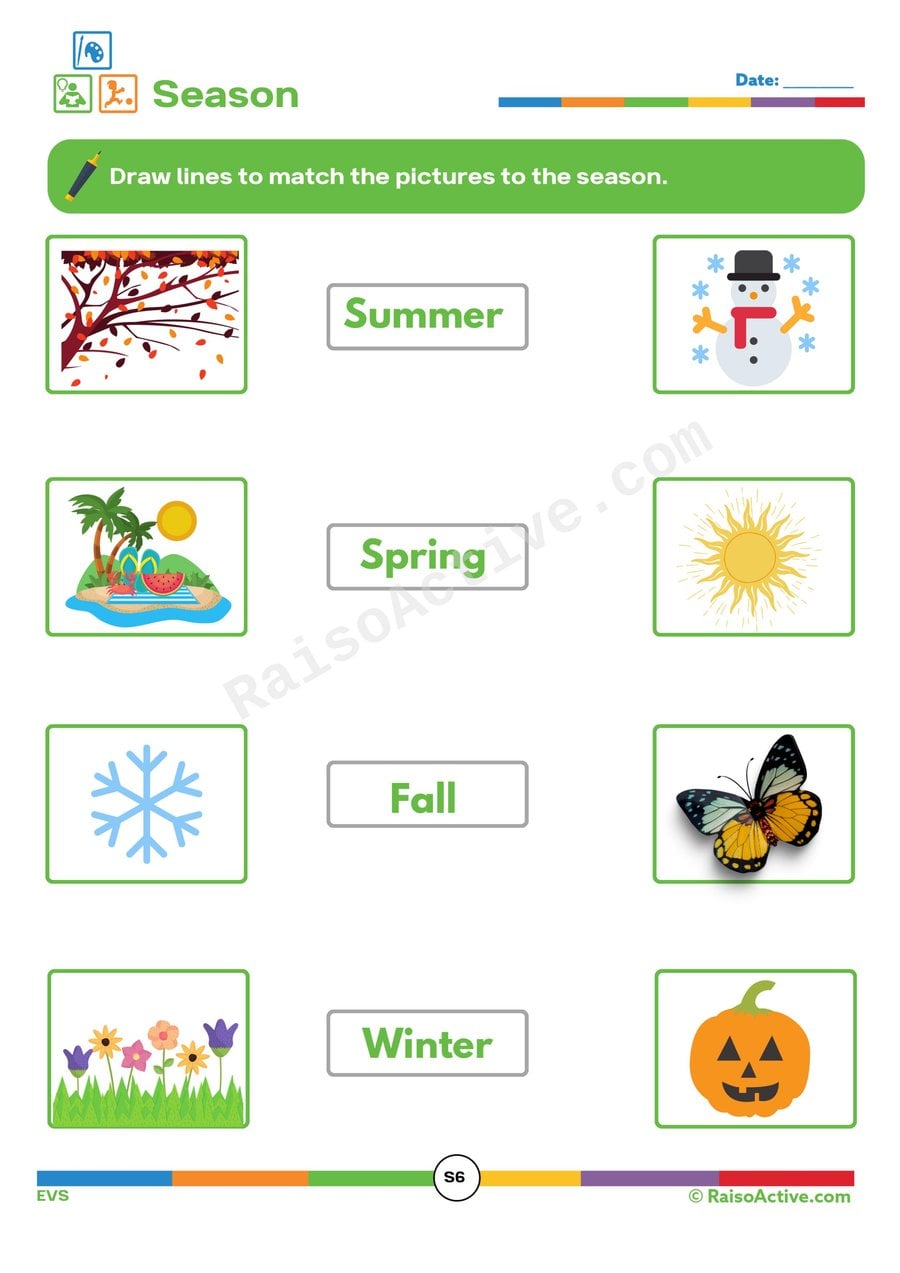
Seasons Matching Worksheet for Preschoolers
This worksheet helps children ages 3-5 learn to recognize the four seasons — summer, fall, winter, and spring — and match seasonal pictures, like snow or falling leaves, to the correct season name. Understanding that weather and nature change in a predictable yearly cycle is an early science concept that also connects naturally to a child's own experience of holidays and clothing changes throughout the year.
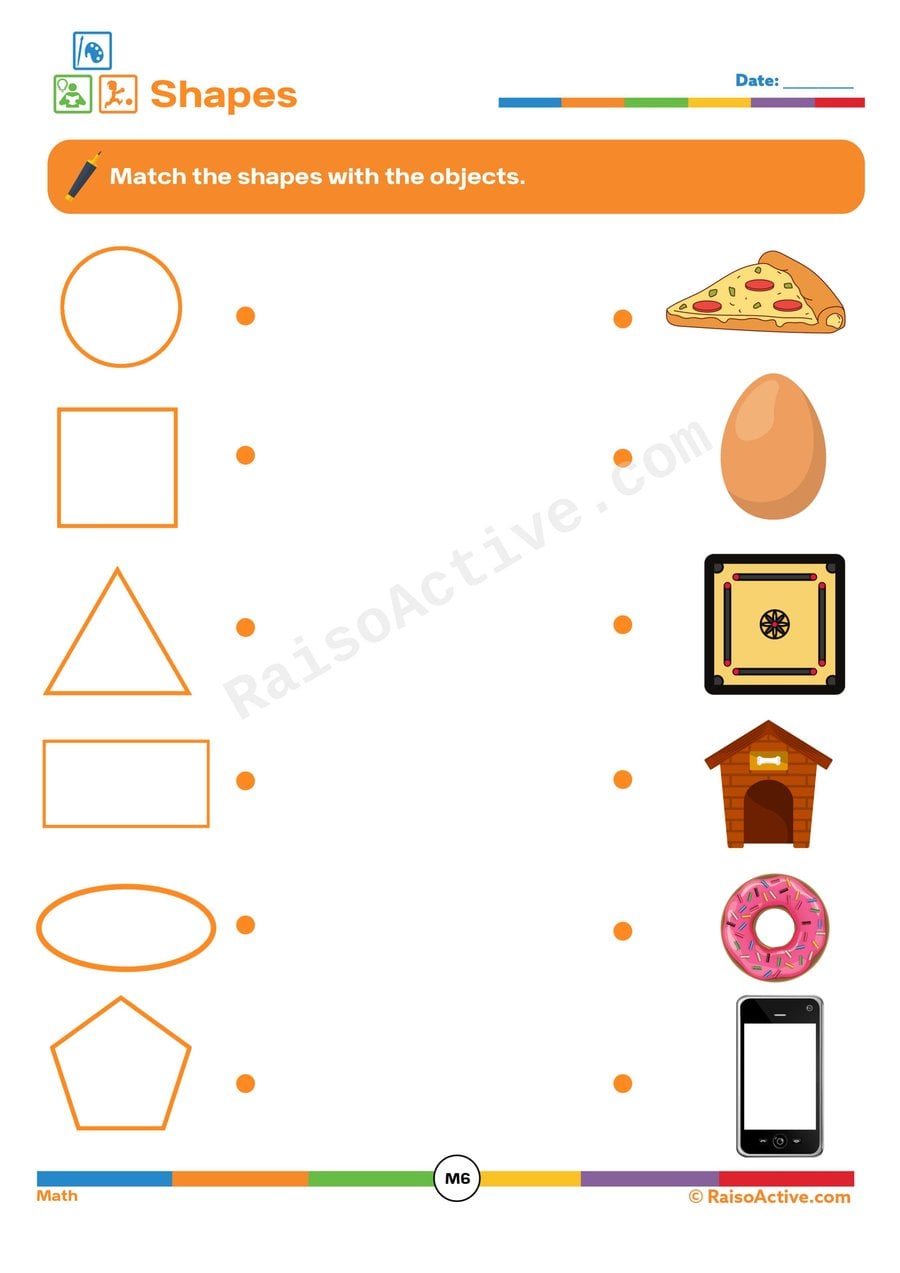
Shape Matching Worksheet for Preschoolers
This worksheet strengthens shape recognition for children ages 3-5 by asking them to connect abstract shape outlines to the real-world objects that share that same shape. Recognizing that a shape like a circle or rectangle can apply to very different objects, such as a clock and a door, helps children generalize shape concepts beyond a single example. Drawing the connecting line between matched pairs also reinforces visual tracking and pencil control.
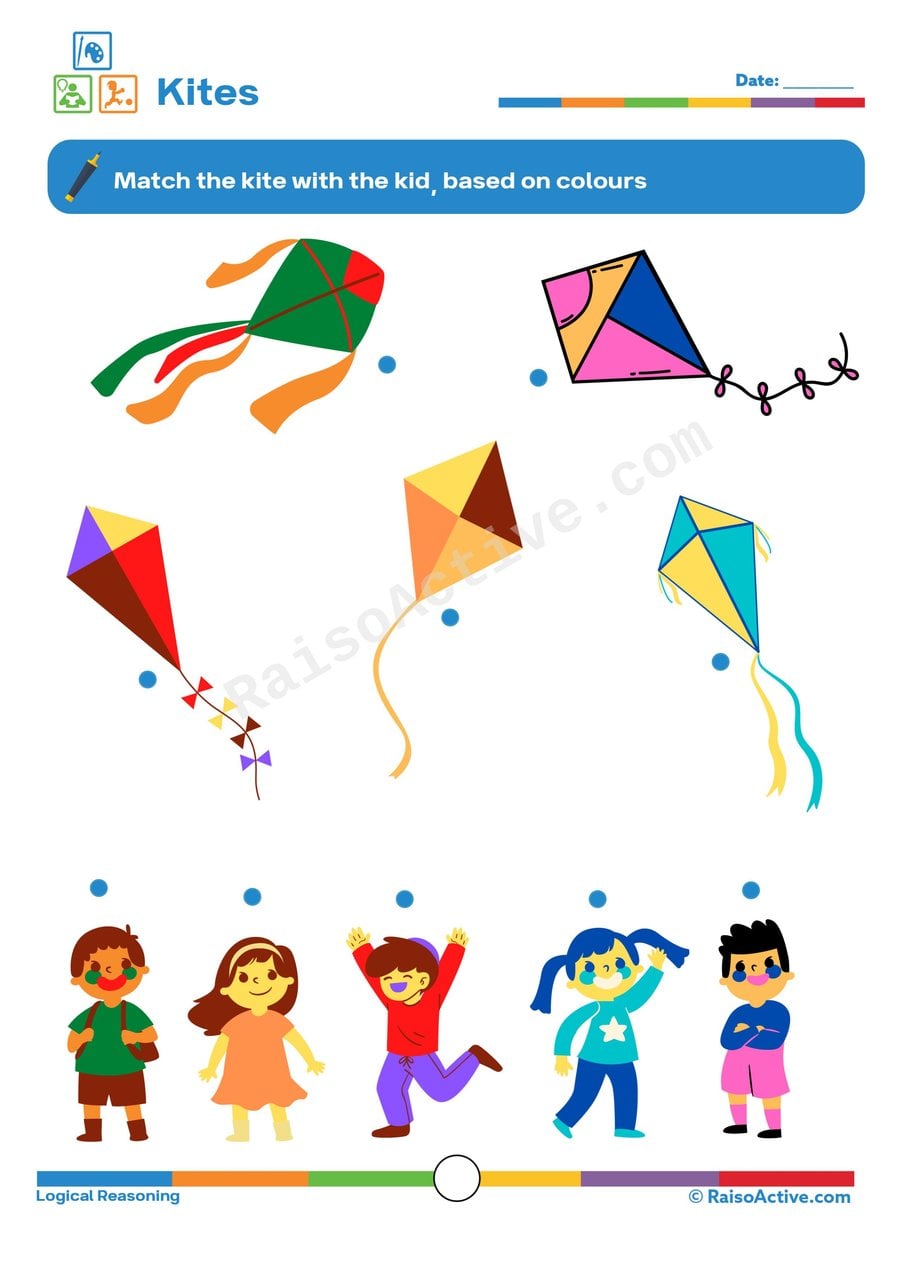
Kite Color Matching Worksheet for Preschoolers
This color-matching worksheet asks children ages 3-5 to connect each kite to the child flying a matching-colored kite, reinforcing color recognition and visual discrimination as they scan multiple color options across the page. Because children must compare several colors at once rather than matching a single pair, the task demands more sustained visual attention than a simple two-item match. Practicing color vocabulary in a playful, seasonal context also keeps repetition from feeling like rote drilling.

Balloon Pattern Matching Worksheet for Preschoolers
Children ages 3-5 build early pattern-recognition skills on this worksheet by studying a sequence of colored balloons and finding the matching set to complete it. Recognizing and continuing a repeating sequence is a foundational pre-math skill that later supports understanding of number patterns, skip counting, and simple algebraic thinking.
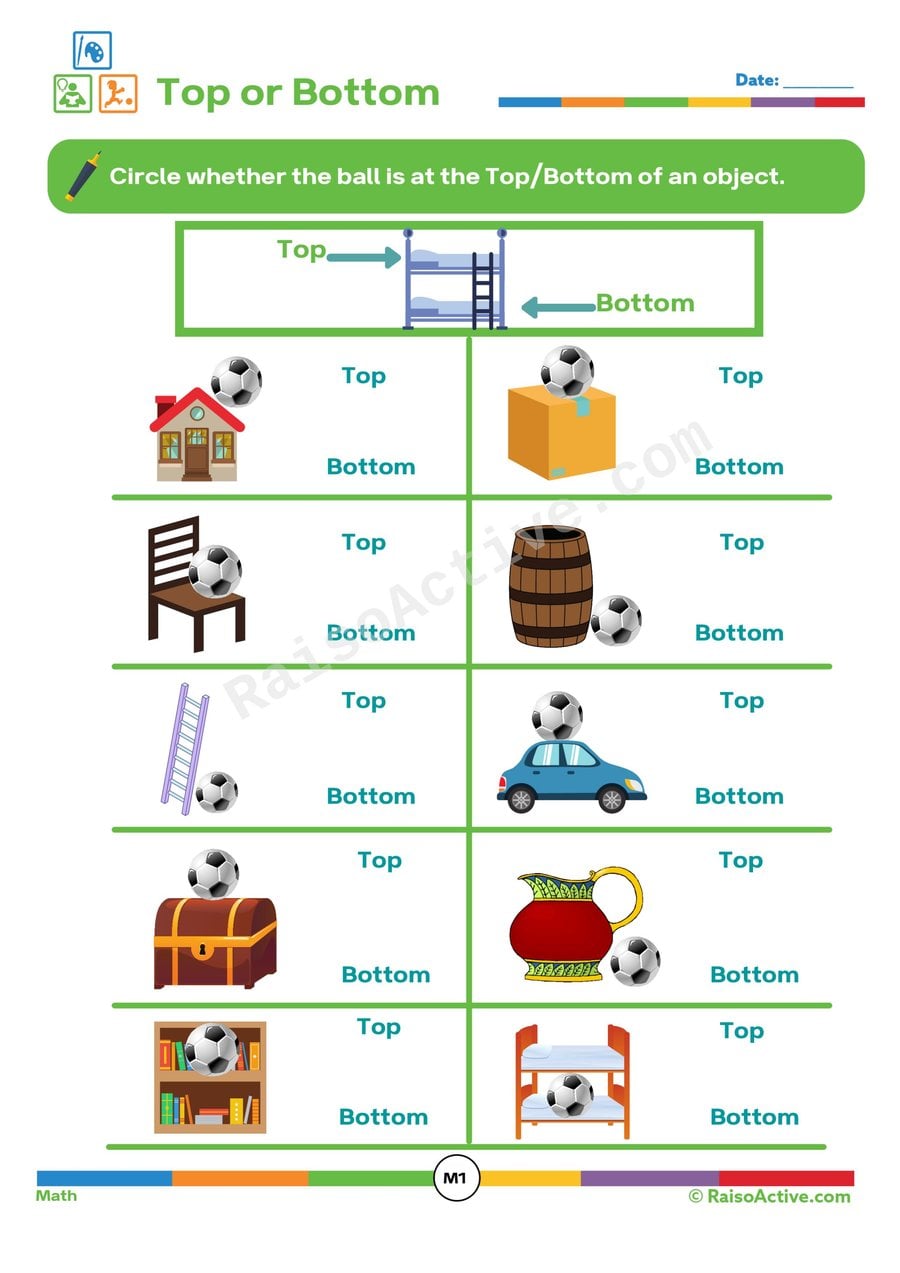
Top or Bottom? Fun Worksheet for Kids!
Deciding whether a ball is positioned at the top or bottom of another object teaches children ages 3-5 the spatial concepts of 'top' and 'bottom,' foundational positional vocabulary that supports later skills like reading a page from top to bottom or following multi-step directions. This worksheet asks children to look carefully at a picture and make a judgment about relative position, which strengthens visual-spatial reasoning alongside vocabulary development. Positional words like these are often first understood through pictures before children can reliably use them in their own speech.

Animal Needs Worksheet for Kids: Matching and Identifying
This worksheet helps children ages 3-5 understand and articulate the basic survival needs of animals — food, water, air, shelter — by completing sentences with the correct need word and then circling matching pictures. Requiring both a writing and a circling response means children practice the vocabulary in two different formats, reinforcing recall from multiple angles. This groundwork in animal needs also supports later, more complex science concepts about habitats and ecosystems.

Duckling's Number Path: Connect the Dots Worksheet
Children ages 3-5 practice number sequencing and counting up to 30 as they connect numbered dots in order to draw the duckling's path back to its mother, reinforcing number recognition while completing a satisfying, story-driven picture. Following numbers in strict order without skipping builds the counting fluency children need before tackling addition and more advanced number work.

Long Vowel 'O' Matching Worksheet for Preschoolers
This worksheet asks children ages 3-5 to match pictures of objects with words that share the long 'o' sound, such as 'nose' or 'rope,' strengthening their ability to connect a spoken sound to its written word. Matching pictures to words at this age also builds early print awareness, helping children understand that written words represent real things and sounds they already know.

Consonant Sounds: Matching Objects to 'p' and 'n' Sounds Worksheet
This worksheet gives children ages 3-5 practice identifying the beginning sounds 'p' and 'n' and matching them to the correct pictures, an early step in connecting spoken sounds to written letters. At this age, distinguishing between consonant sounds that use different parts of the mouth (lips for 'p', tongue and nose for 'n') helps children build a mental map of how sounds are produced, which supports both listening and eventual spelling. Matching objects to sounds also reinforces vocabulary alongside phonics.

Match the Word! A Fun Phonics Worksheet for Early Readers
Early readers ages 3-5 practice two connected skills here: recognizing a whole written word that matches a picture, and identifying the missing letter needed to complete a related word. Circling a matching word builds sight recognition and picture-word association, while filling in a missing letter requires active sound analysis rather than passive reading. Combining both tasks on one page gives children practice moving fluidly between reading and early spelling, which are two sides of the same phonics coin.
What Nursery matching worksheets cover
Three-year-olds move from identical pictures to pairs that go together for a reason: a coloured animal and its black shadow, the two halves of a cut-apart picture, a bird and its nest, a toothbrush and toothpaste. Most can now draw a wobbly line between partners placed opposite each other in two columns. Keep four to six pairs per sheet. Shuffled columns and letter or number pairs are still a year away.
- Draw a line from each animal to its black shadow
- Join the two halves of a picture that was cut apart
- Match each animal to the place where it lives
- Pair an object with the thing it is used with
- Find the one picture that does not belong among four
How to use these worksheets at home or in class
A single sheet a day, five to ten minutes, suits a three-year-old best. Sit alongside your child rather than opposite, demonstrate one stroke, then let them attempt it themselves, praising the try rather than the neatness of the line.
Start with the sheet that matches what your child can already do, then move one step up. Keep finished sheets in a folder: Nursery teachers often ask for evidence of practice, and children like seeing their own progress.
Is your child ready for Nursery matching work?
Readiness shows up as a proper crayon grip with fingers instead of a fist, purposeful scribbling, sitting through a short task and following one spoken instruction such as pointing to a colour. Without these, stick to sticker play and large colouring pages for now.
Frequently asked questions
How many pairs should be on a matching sheet for a three-year-old?
Four to six, laid out in two columns with each partner directly opposite, is about right at this age. More pairs than that turn the sheet into a visual search, which most three-year-olds cannot yet do systematically, and the lines start crossing. Once a child completes a six-pair sheet without help, keep the count the same and shuffle the second column before adding more pairs.
What should a Nursery child be able to do in matching?
Three-year-olds move from identical pictures to pairs that go together for a reason: a coloured animal and its black shadow, the two halves of a cut-apart picture, a bird and its nest, a toothbrush and toothpaste. Most can now draw a wobbly line between partners placed opposite each other in two columns. Keep four to six pairs per sheet. Shuffled columns and letter or number pairs are still a year away. Readiness shows up as a proper crayon grip with fingers instead of a fist, purposeful scribbling, sitting through a short task and following one spoken instruction such as pointing to a colour. Without these, stick to sticker play and large colouring pages for now.
Do these worksheets follow the Nursery curriculum?
The sheets cover identifying identical pairs, matching an object to its category, matching uppercase letters to lowercase and matching a numeral to a quantity, which sit inside the NEP 2020 Foundational Stage (NCF-FS 2022) outcomes for Nursery. Preschool (US), Nursery (UK) use the same skills at this age, so the sheets also fit families following those programmes.
Are the Nursery matching worksheets free to download?
Yes. Every sheet on this page can be downloaded free as a watermarked PDF after creating an account, up to five downloads a day. The annual membership (₹1000) removes the watermark and the daily limit across the full library of more than 1,000 worksheets and all activity packs.

Written by
Hemsweta Jain · Teacher Cheena
MBA and Early Childhood Educator, teaching since 2014 · Founder of RaisoActive, Mumbai
Written and reviewed by Hemsweta Jain (Teacher Cheena), who designs every RaisoActive worksheet.
Last reviewed
Printable packs for ages 3–4
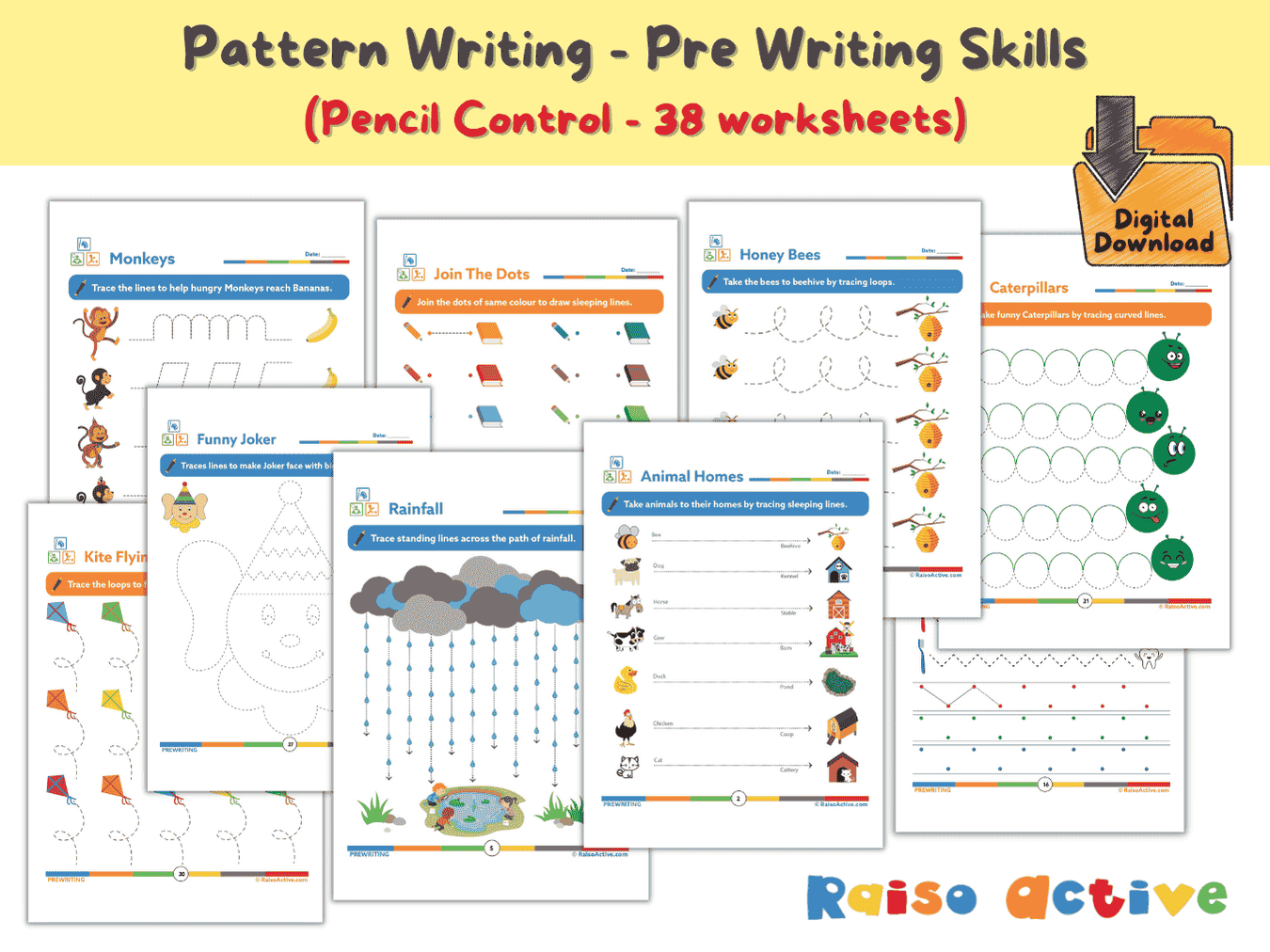
Pattern Writing Pre-writing Skills Activity Book for 3-4 Year Olds
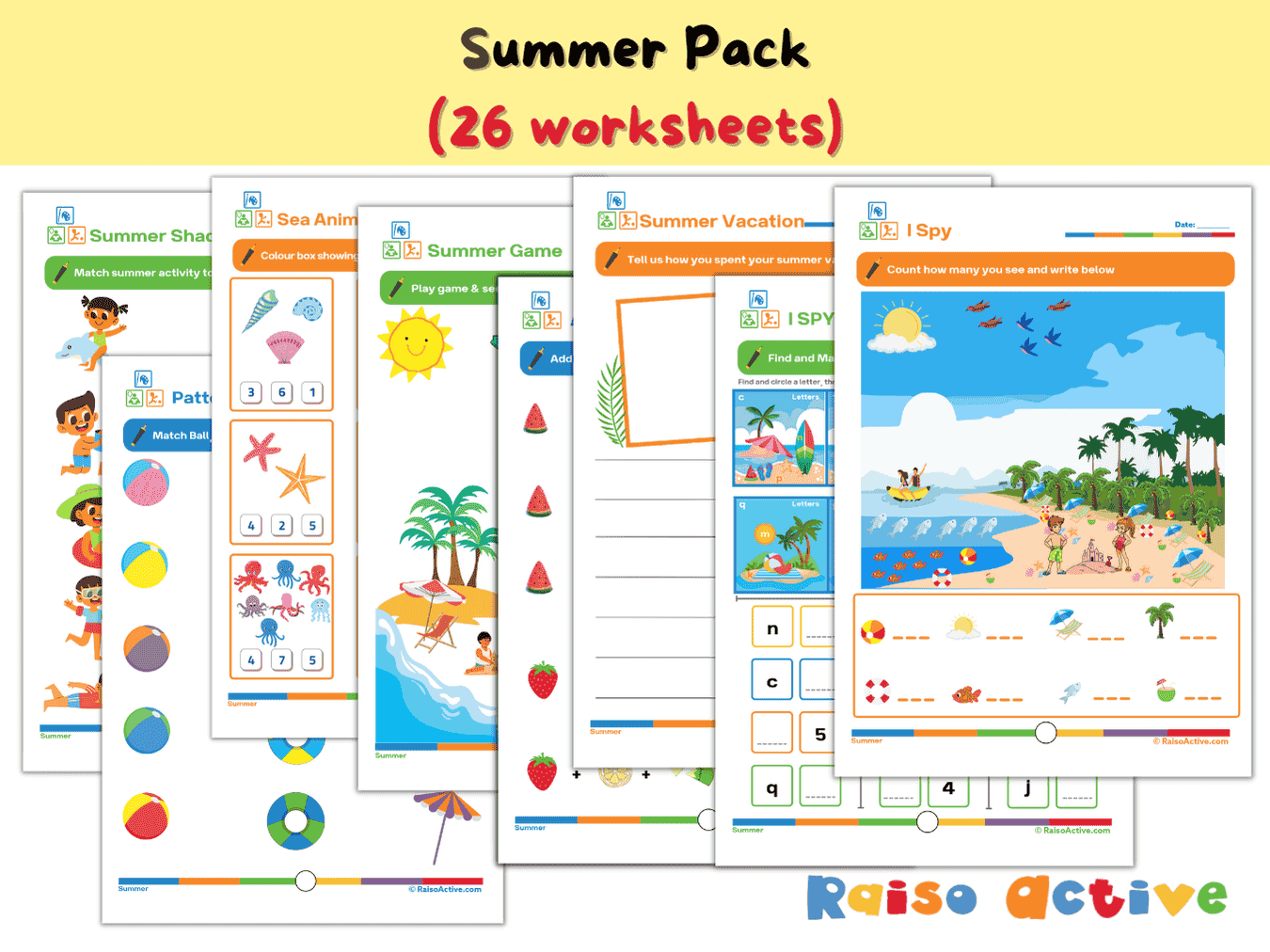
Summer Activity Pack: Math, Literacy, Puzzles & More for Preschool & Kindergarten
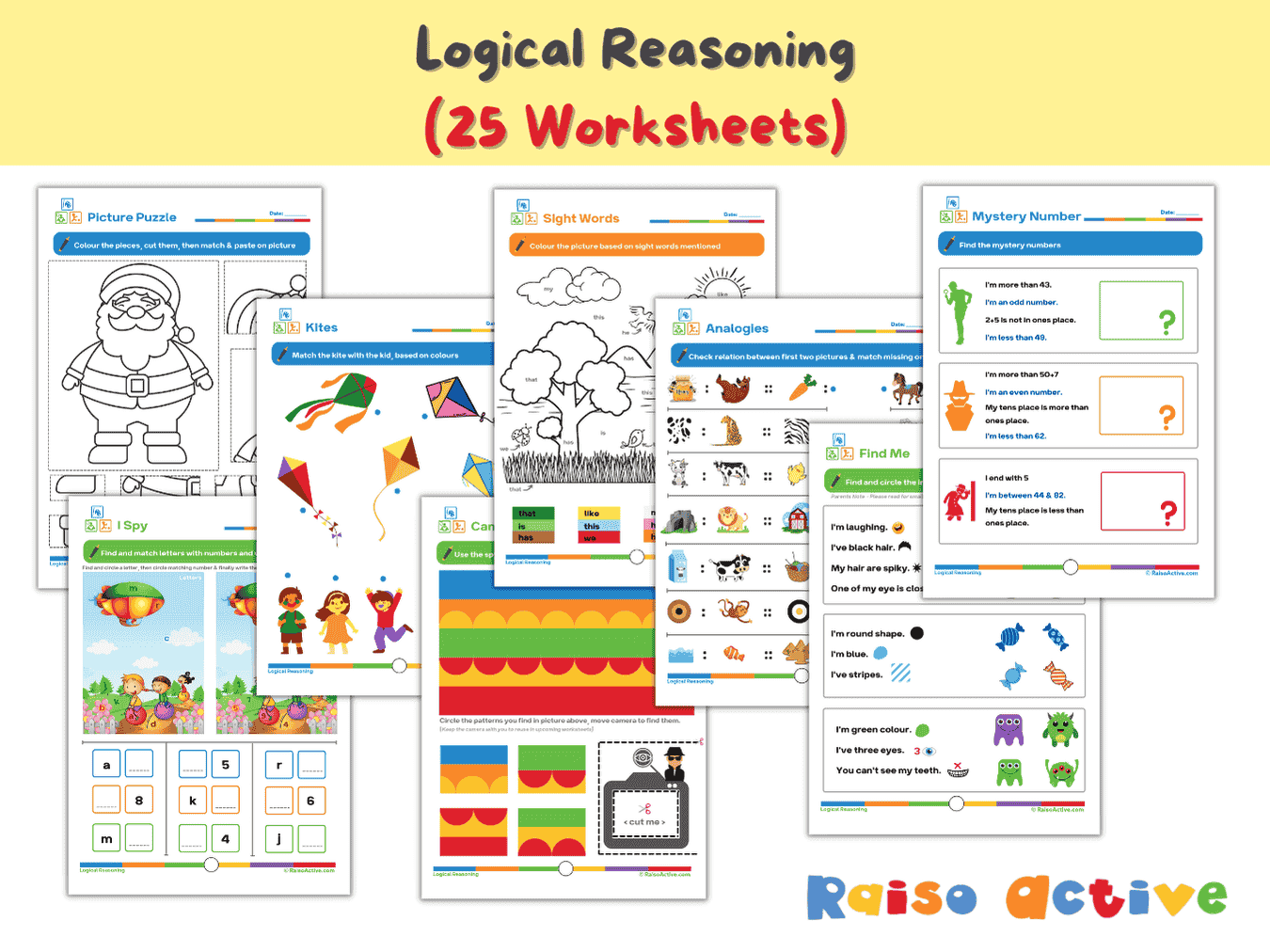
Logical Reasoning Activity Book for Preschool & Kindergarten | Patterns, Puzzles & Analogies
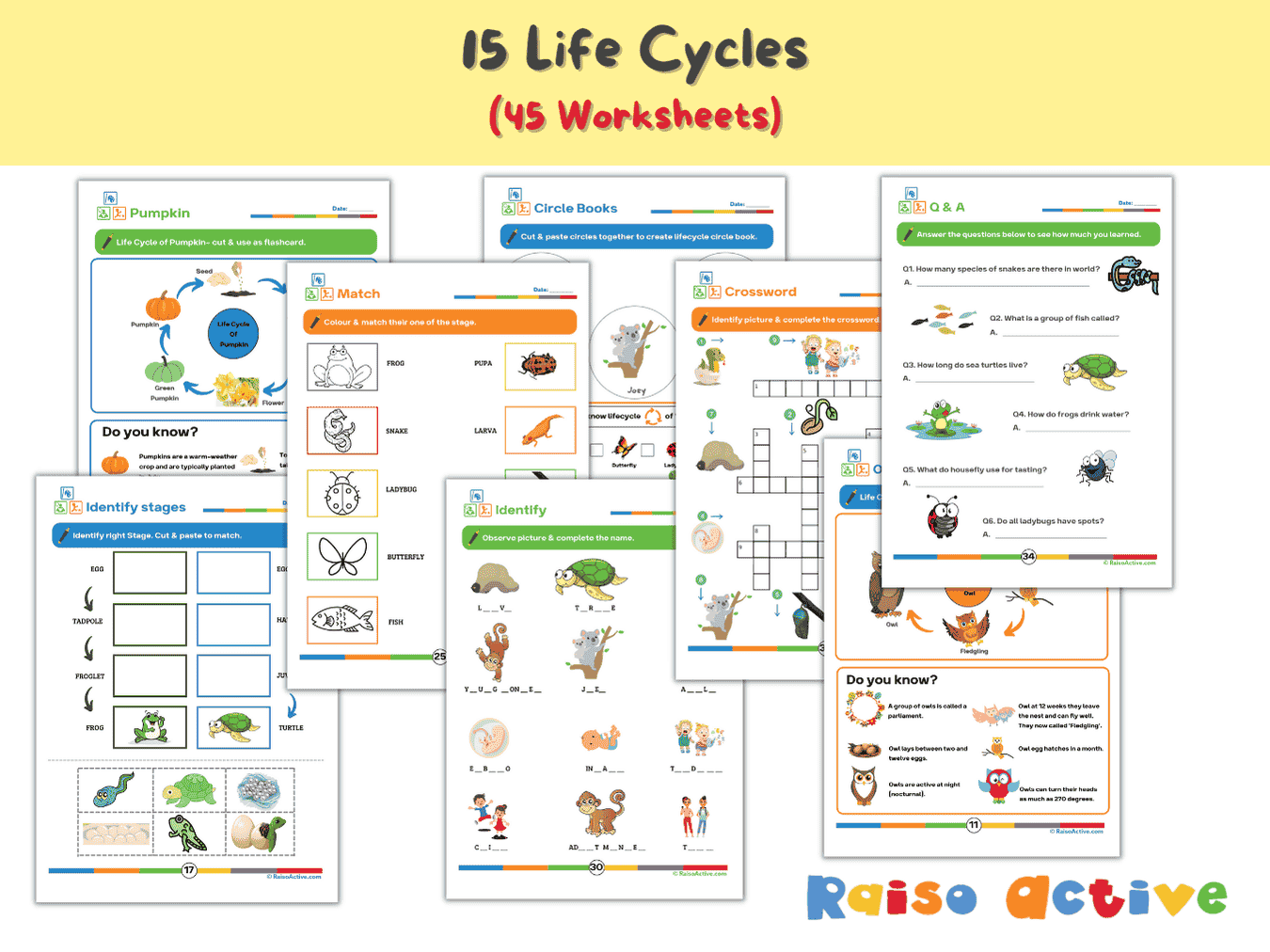
Lifecycles Activity Book & Flashcards for Preschool & Early Elementary
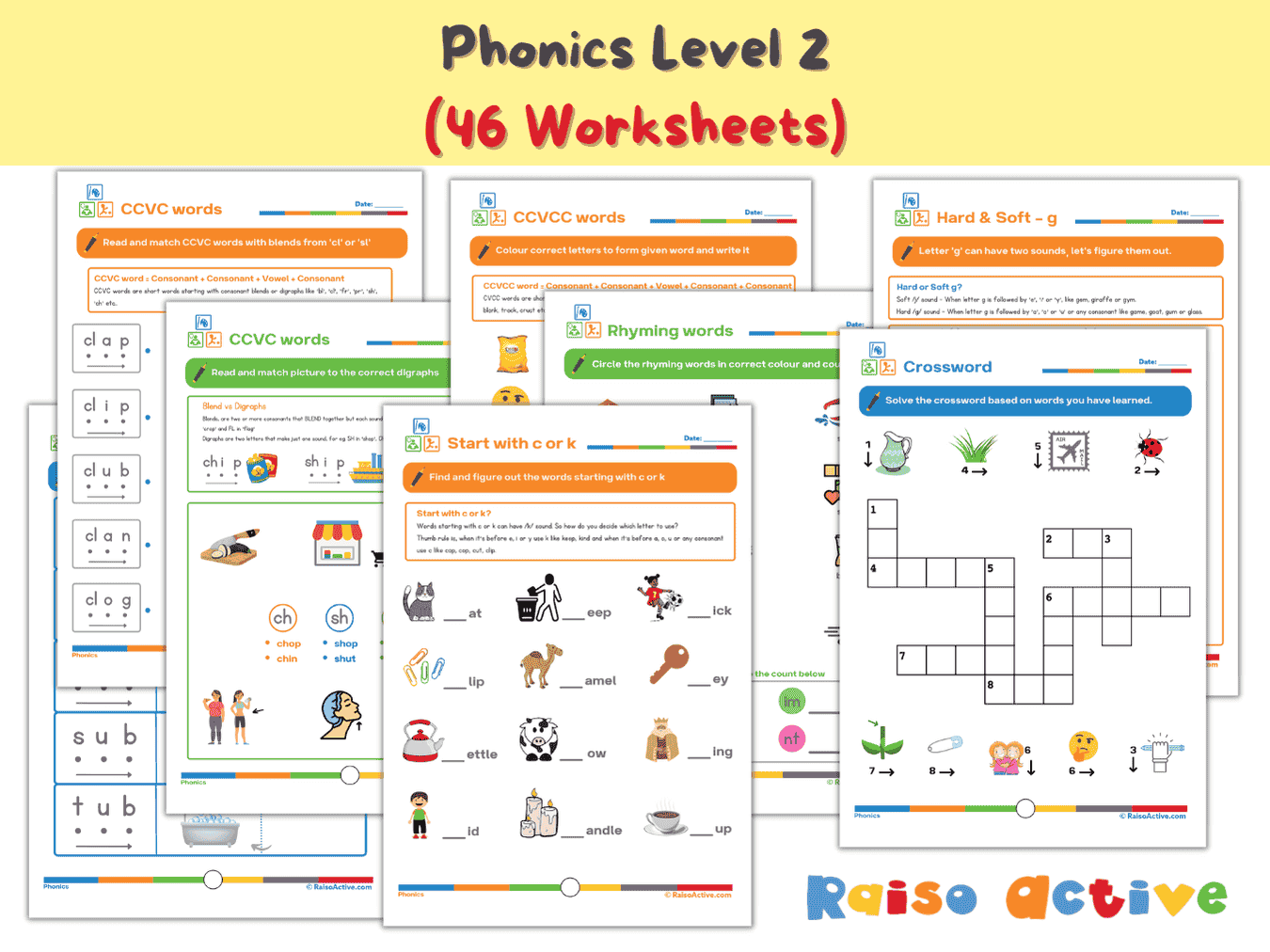
Phonics Level 2 Worksheets: CVC, CCVC, CVCC Word Families & Blends for Early Readers (Ages 4-7)
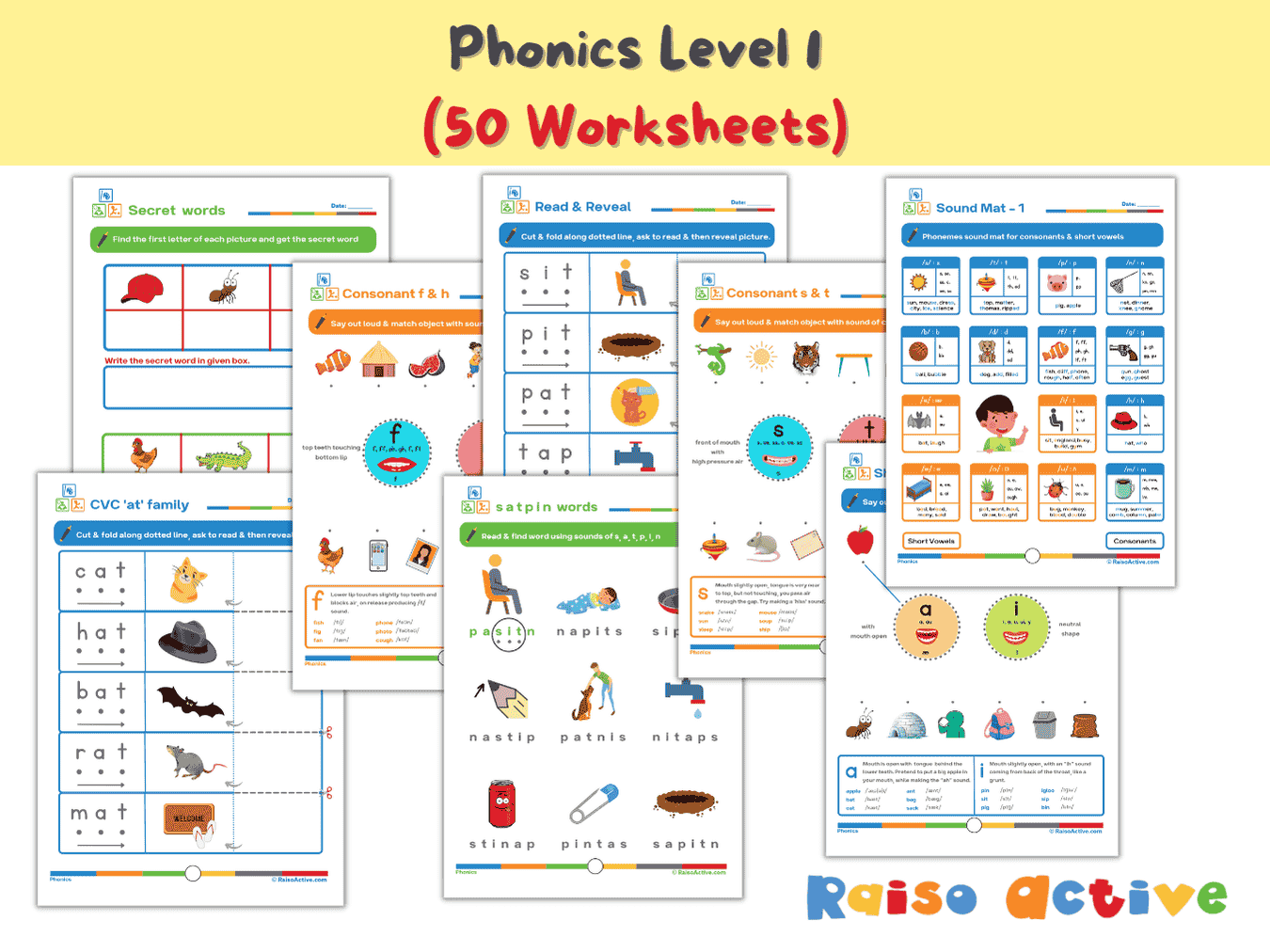
Phonics Level 1 Activity Book: Letter Sounds, Blending & CVC Words for Preschool & Kindergarten
Guides for parents and teachers
See all guides →Best Worksheets for 3-Year-Olds: What Works and What to Avoid
What works on worksheets for 3-year-olds: short sessions, crayons, tracing lines, matching, cutting, a free weekly plan, and signs one is too advanced.
Age-Appropriate Problem-Solving Activities: Building Critical Thinkers from the Ground Up
Discover fun, age-appropriate problem-solving activities for children ages 1-8. Build critical thinking, logic, and reasoning skills through play-based learning.
Critical Thinking Activities That Actually Work for Young Children: Building Tomorrow's Thinkers Today
Discover proven critical thinking activities for young children. Age-wise logic games, questioning techniques, and hands-on ideas to build thinking skills at home.
Coding Activities for Preschoolers: Building Tomorrow's Thinkers Today
Discover 15+ unplugged and screen-based coding activities for preschoolers that build sequencing, logic, and problem-solving skills through play. NEP 2020 aligned.
Canonical: https://raisoactive.com/worksheets/nursery-matching