Young and Old Animals Worksheet: Circle the Correct Ones!
Distinguishing between young and old animals introduces children ages 3-5 to basic life cycle concepts and comparative observation, asking them to notice visual cues like size and features that indicate an animal's age. This worksheet has children first sort animals by age category and then match young animals to their adult counterparts, layering categorization practice on top of matching skills. Understanding that a puppy grows into a dog or a chick grows into a hen also lays early groundwork for later science topics like animal life cycles and growth.
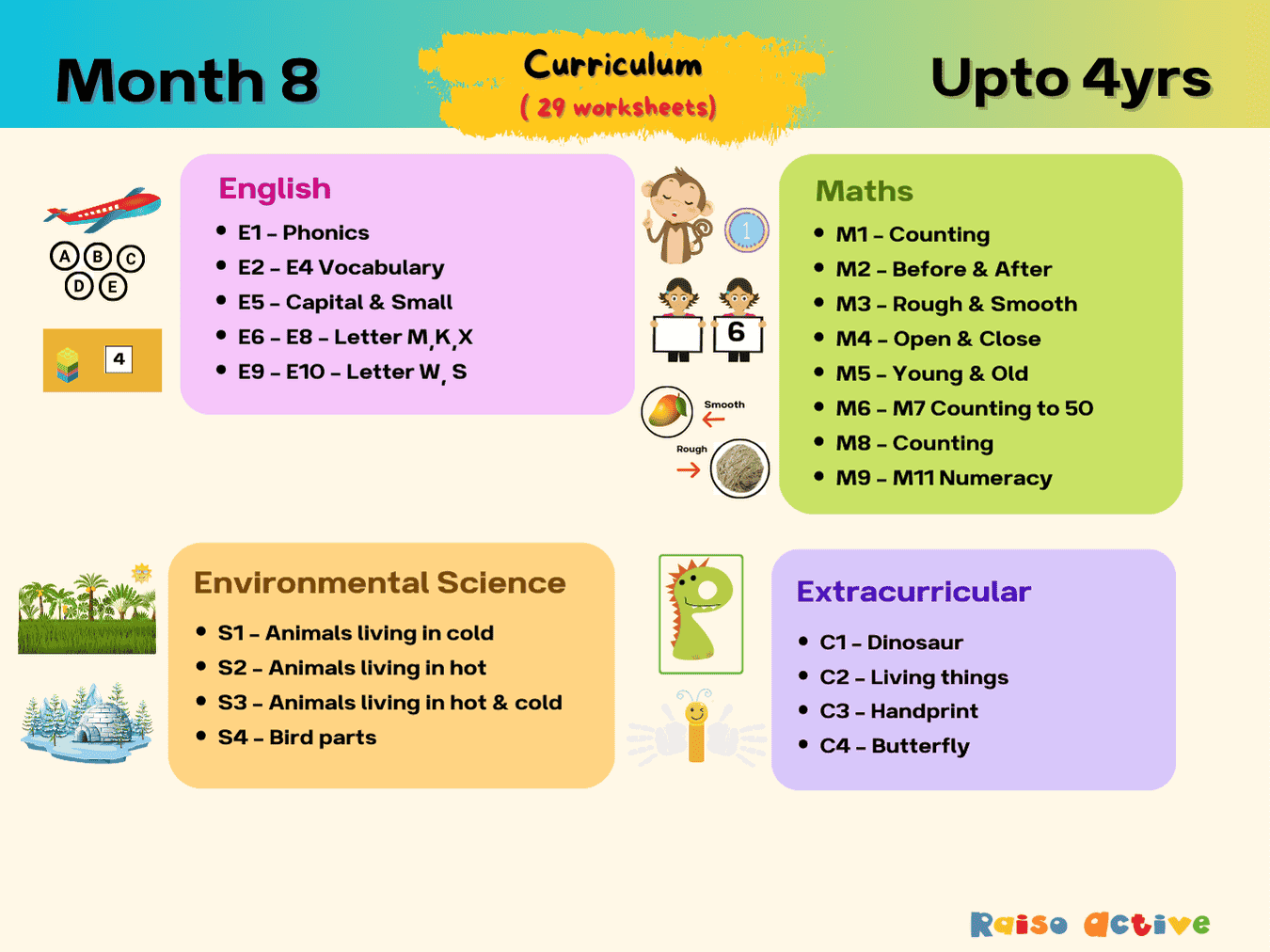
Part of the pack
Month 8: Phonics, Math, Science, Creativity | Ages Up to 4
This is page 18 of the pack. Ages 3-5 · Preschool–Pre-KAges 3-5 · Nursery–ReceptionAges 3-5 · Nursery–LKGAges 3-5

Made for your child
Counting to 10, made for your child
A maths pack with your child's name in it: pictures that explain, practice at three levels, puzzles and story sums about them. Print a new set whenever they finish.
Make a maths packFree preview · free for members
Curriculum
- Living Things - Animals > Animals & Habitats
How to use this worksheet
Look at the first section of animal pictures together and ask your child to circle the ones that appear to be young, like a puppy or a chick. Move to the second section and have them circle the animals that appear to be fully grown or old. Then ask your child to match each young animal to its correct adult counterpart by drawing a connecting line. Talk through a couple of their choices together, discussing what visual clues helped them decide.
Materials needed
- Pencil
- Crayons
Extension activities
- 1Discuss the life cycles of a few of the animals shown, like how a caterpillar becomes a butterfly or a tadpole becomes a frog.
- 2Draw pictures of other young and old animals not included on the worksheet, like a lamb and a sheep.
- 3Create a matching game with animal picture cards, mixing baby and adult versions to sort and pair.
- 4Visit a farm, zoo, or pet store together and look for examples of young and adult animals in real life.

Written by
Hemsweta Jain · Teacher Cheena
MBA and Early Childhood Educator, teaching since 2014 · Founder of RaisoActive, Mumbai
Every RaisoActive worksheet is designed and checked by the founder before publishing.
Published · Last reviewed
More from Month 8: Phonics, Math, Science, Creativity | Ages Up to 4
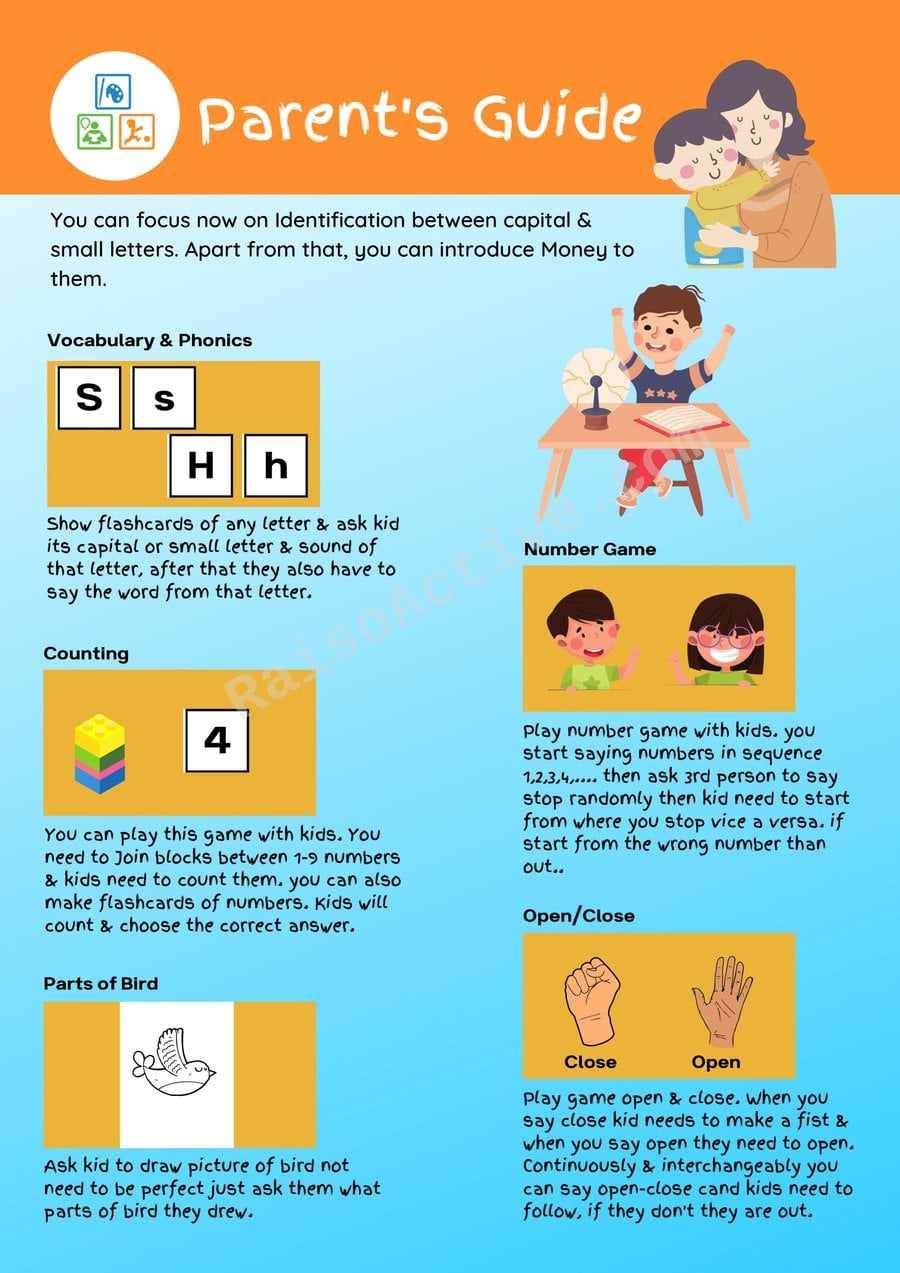
Parent's Guide: Learning Letters, Numbers, and More!
Ages 3-5 · Preschool–Pre-KAges 3-5 · Nursery–ReceptionAges 3-5 · Nursery–LKGAges 3-5
This parent guide brings together three foundational early-learning concepts for children ages 3-5 — capital and lowercase letter identification, basic counting, and the spatial concepts of open and close — into one set of simple, no-prep activities. Rather than a traditional fill-in worksheet, it gives parents a structured way to practice these skills through conversation and hands-on play, which suits the attention span and learning style of preschool-age children particularly well. Covering letters, numbers, and spatial vocabulary together in one sitting also shows children how different areas of early learning connect to everyday objects around them.

Living Things: Color the Smiles! A Fun Sorting Worksheet
Ages 3-5 · Preschool–Pre-KAges 3-5 · Nursery–ReceptionAges 3-5 · Nursery–LKGAges 3-5
Preschoolers ages 3-5 build foundational science classification skills by distinguishing living things from non-living things, indicated by coloring a smiley face only on the items that are alive. This concept requires children to think beyond appearance and consider whether something grows, breathes, or needs food, an abstract but essential early science idea. The playful smiley-face format keeps a genuinely tricky classification concept approachable and fun.

Animals in Cold Climates Cut and Paste Worksheet for Kids
Ages 3-5 · Preschool–Pre-KAges 3-5 · Nursery–ReceptionAges 3-5 · Nursery–LKGAges 3-5
Sorting animals into the cold-climate habitats where they actually live introduces preschoolers to the idea that different animals are adapted to survive in different environments, an early building block for later lessons in ecosystems and animal science. The cutting and pasting also reinforces fine motor control while giving children a reason to look closely at each animal picture and recall what they know about it.

Caterpillar Counting Adventure: Connect the Dots Worksheet
Ages 4-6 · Pre-K–KindergartenAges 4-6 · Reception–Year 1Ages 4-6 · LKG–UKGAges 4-6
Ages 4-6 practice counting in sequence up to 50 by connecting numbered dots that form a caterpillar shape, combining number recognition with fine motor line control. Counting this high in order builds confidence with larger numbers beyond the more common 1-20 range most preschool worksheets cover. The connect-the-dots format also rewards persistence, since the picture only fully forms once every number has been found correctly.

Bird Parts Cut and Paste Worksheet for Preschoolers
Ages 3-5 · Preschool–Pre-KAges 3-5 · Nursery–ReceptionAges 3-5 · Nursery–LKGAges 3-5
Children ages 3-5 learn the names of specific bird body parts — such as wings, beak, tail, and feathers — by cutting out labels and pasting them next to the correct part of a bird illustration. This activity builds early scientific vocabulary and observational skills, teaching children to notice distinct features rather than viewing an animal as one shape. The cutting and pasting also develops the scissor control and hand-eye coordination needed for fine motor growth.

Count the Sweet Treats! A Fun Counting Worksheet for Preschoolers
Ages 3-5 · Preschool–Pre-KAges 3-5 · Nursery–ReceptionAges 3-5 · Nursery–LKGAges 3-5
Preschoolers ages 3-5 practice one-to-one correspondence by counting groups of sweet treats, like cupcakes or candies, and writing the total number for each group. Counting appealing, familiar objects like treats keeps motivation high while reinforcing the core skill of matching each counted item to exactly one number word. Writing the resulting number afterward connects the counting process to number symbol recognition.
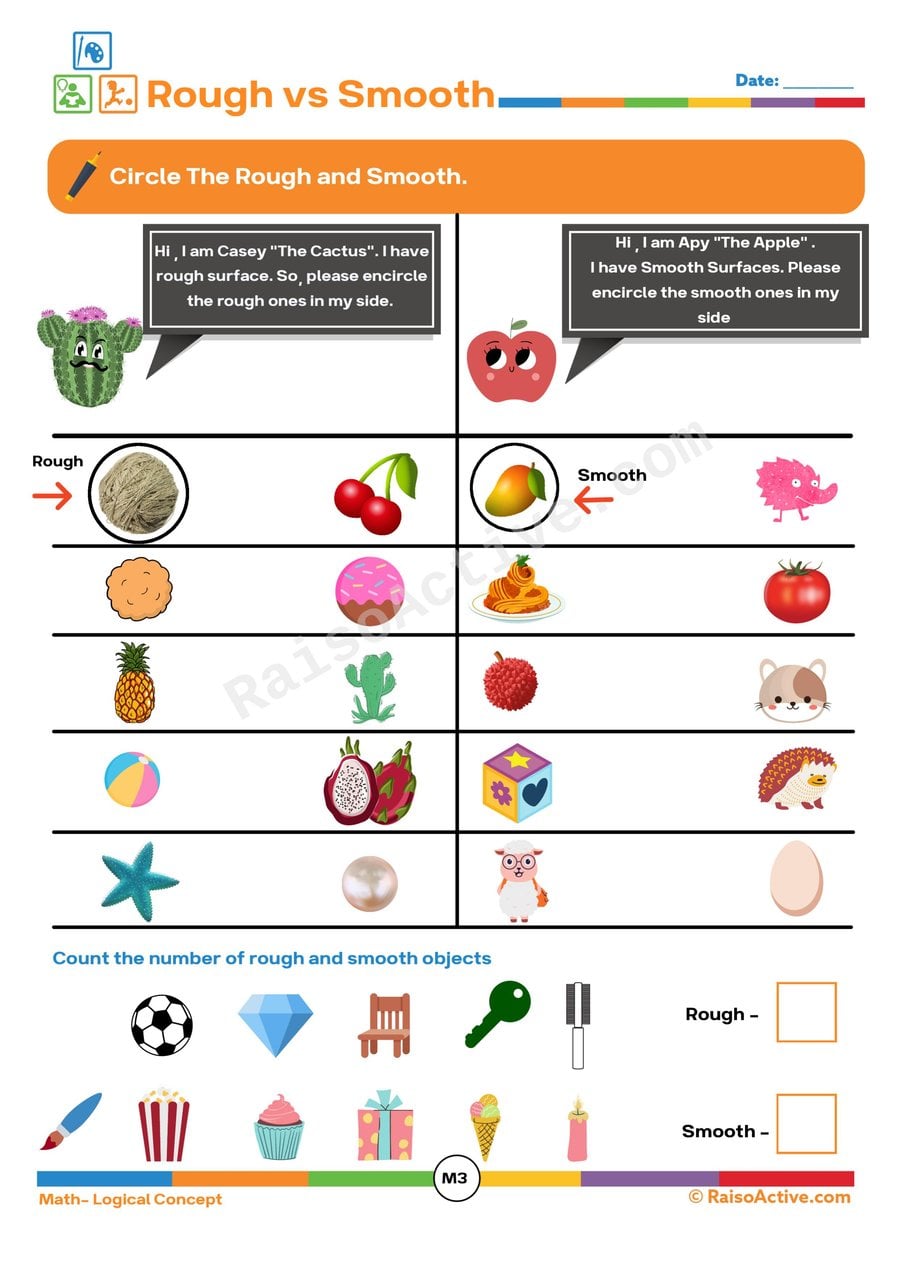
Rough vs. Smooth Worksheet: Circle and Count!
Ages 3-5 · Preschool–Pre-KAges 3-5 · Nursery–ReceptionAges 3-5 · Nursery–LKGAges 3-5
Preschoolers ages 3-5 build early scientific observation by identifying and comparing rough versus smooth textures among a set of pictured objects, engaging their sense of touch conceptually even through a visual worksheet. Counting the rough and smooth objects afterward links this sensory classification to basic number practice. Learning to sort by texture is an early step toward broader material-properties understanding in science.

Open and Close Worksheet: Circle the Open and Closed Objects!
Ages 3-5 · Preschool–Pre-KAges 3-5 · Nursery–ReceptionAges 3-5 · Nursery–LKGAges 3-5
Children ages 3-5 build early categorization skills by identifying whether pictured objects, like a door, a box, or a jar, are open or closed. This concept requires observing a physical state and applying a descriptive word correctly, an important early step in building descriptive vocabulary. Recognizing open versus closed also has practical safety value, connecting worksheet learning to real-world awareness.
Related worksheets
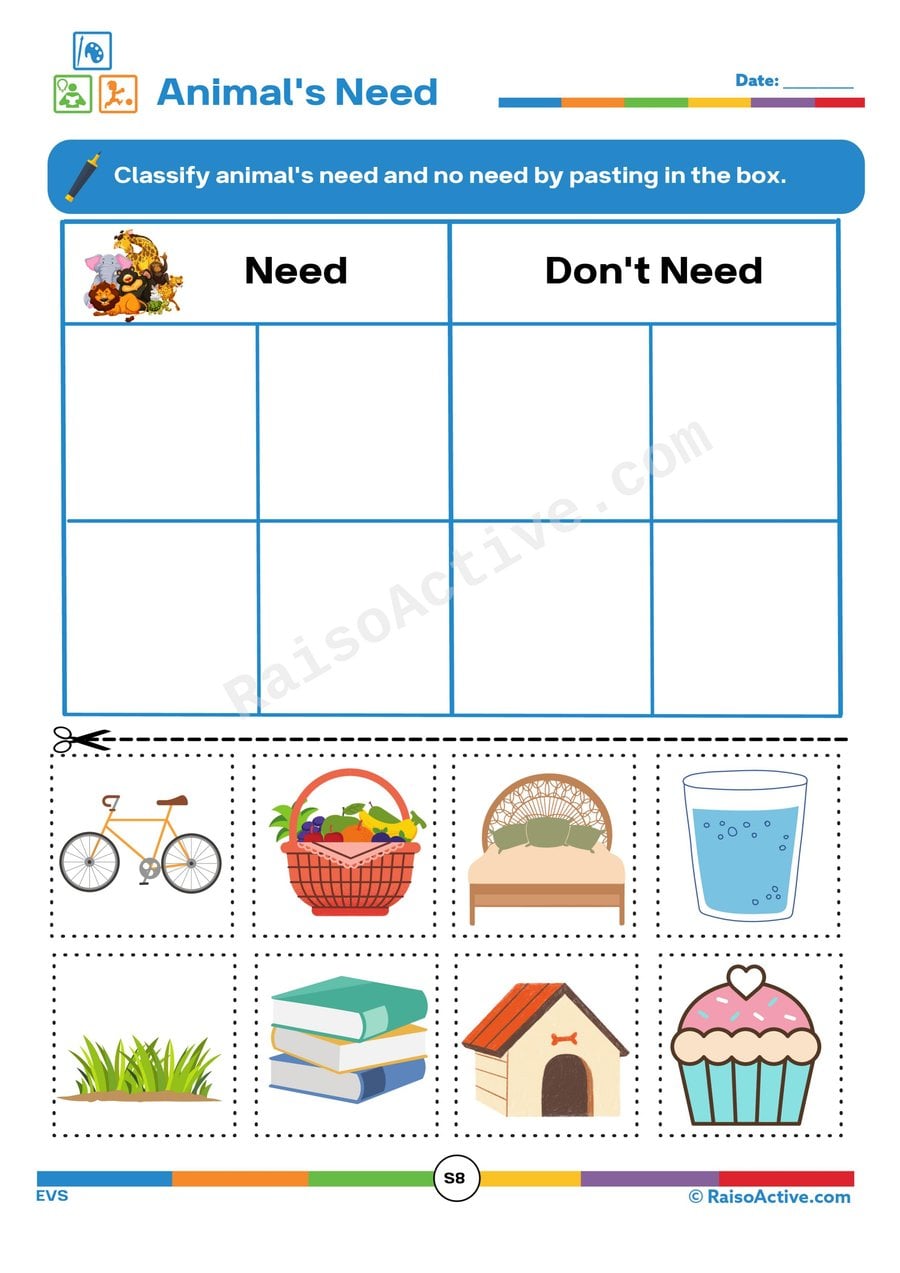
Animal Needs Sorting Worksheet for Preschoolers
Ages 3-5 · Preschool–Pre-KAges 3-5 · Nursery–ReceptionAges 3-5 · Nursery–LKGAges 3-5
This sorting activity helps children ages 3-5 understand that animals have specific survival needs — food, water, shelter, air — by cutting out picture cards and classifying each one as something an animal 'needs' or 'doesn't need.' Making this distinction requires children to reason about cause and effect in a simple form: what happens to an animal without food or water. This early exposure to classification and survival needs lays groundwork for more formal life science concepts children will encounter in later grades.

Animal Homes Cut and Paste Worksheet for Preschoolers
Ages 3-5 · Preschool–Pre-KAges 3-5 · Nursery–ReceptionAges 3-5 · Nursery–LKGAges 3-5
Cutting out animal home pictures and pasting each one next to its matching animal teaches children ages 3-5 to connect an animal with where it lives, building categorization skills alongside new vocabulary like nest, den, or kennel. This hands-on matching also strengthens fine motor control through repeated cutting and pasting.

Animal Dice: Fun Movement Activity Worksheet for Kids
Ages 3-5 · Preschool–Pre-KAges 3-5 · Nursery–ReceptionAges 3-5 · Nursery–LKGAges 3-5
This hands-on activity combines craft-making with imaginative movement for children ages 3-5, having them build a paper dice and then act out the animal that lands face-up on each roll. Assembling the cube itself builds fine motor and spatial skills, since folding a flat template into a three-dimensional shape requires understanding how the sides connect. The movement portion that follows then builds gross motor skills, body awareness, and imaginative play as children physically embody different animals' distinctive movements, like hopping like a frog or slithering like a snake.

Animal Action Cards: Fun Movement Worksheet for Kids!
Ages 3-5 · Preschool–Pre-KAges 3-5 · Nursery–ReceptionAges 3-5 · Nursery–LKGAges 3-5
These animal action cards get children ages 3-5 moving as they follow simple instructions, like hopping like a rabbit or slithering like a snake, combining gross motor development with listening and instruction-following skills. Because each card requires reading or recalling a specific action tied to a specific animal, children also reinforce animal vocabulary and movement-based descriptive language. Turning learning into physical movement is especially valuable for this age group, whose attention and retention often improve dramatically when a body movement is involved.

Animal Sorting Worksheet: Wild vs. Domestic Animals
Ages 3-5 · Preschool–Pre-KAges 3-5 · Nursery–ReceptionAges 3-5 · Nursery–LKGAges 3-5
Sorting animal pictures into wild and domestic categories teaches children ages 3-5 an early form of classification, deciding where an animal belongs based on how it lives rather than its size or appearance alone. Cutting and pasting the animals also builds fine motor precision while reinforcing new animal vocabulary along the way.

Animal's World: Sorting Animals by Land, Water, and Air - Printable Worksheet
Ages 4-6 · Pre-K–KindergartenAges 4-6 · Reception–Year 1Ages 4-6 · LKG–UKGAges 4-6
This sorting worksheet teaches children ages 4-6 to classify animals into three habitat categories — land, water, and air — based on where each animal naturally lives and moves. Classifying by habitat rather than by appearance alone encourages children to think about an animal's features, like fins, wings, or legs, and connect them to function. This three-way sort is more complex than a simple two-category sort, building more advanced categorization skills.

Animal Babies Matching Worksheet for Preschoolers
Ages 3-5 · Preschool–Pre-KAges 3-5 · Nursery–ReceptionAges 3-5 · Nursery–LKGAges 3-5
Children ages 3-5 practice matching adult animals to their correct babies, like a cow to a calf or a dog to a puppy, building early animal vocabulary and reinforcing the concept that animal babies often have entirely different names from their parents. This kind of family-relationship matching also strengthens visual comparison and reasoning skills.
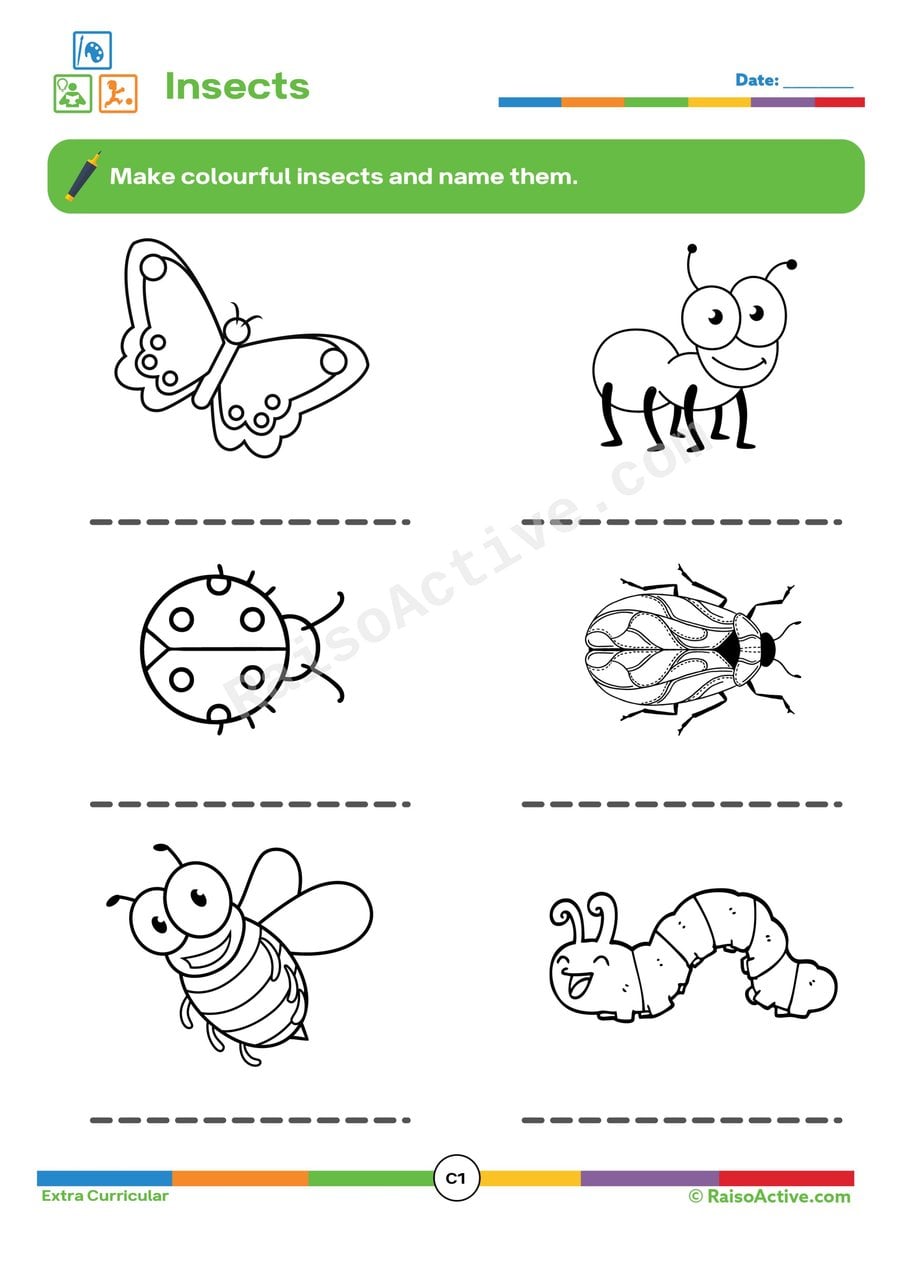
Color the Insects Worksheet for Preschoolers
Ages 3-5 · Preschool–Pre-KAges 3-5 · Nursery–ReceptionAges 3-5 · Nursery–LKGAges 3-5
Coloring a set of insects and writing their names afterward helps children ages 3-5 build insect vocabulary while practicing fine motor coloring control and connecting a picture to its written word. This combination of art and labeling reinforces new vocabulary more effectively than looking at pictures alone.
Guides for this topic

Best Worksheets for 3-Year-Olds: What Works and What to Avoid
What works on worksheets for 3-year-olds: short sessions, crayons, tracing lines, matching, cutting, a free weekly plan, and signs one is too advanced.

Age-Appropriate Problem-Solving Activities: Building Critical Thinkers from the Ground Up
Discover fun, age-appropriate problem-solving activities for children ages 1-8. Build critical thinking, logic, and reasoning skills through play-based learning.
Critical Thinking Activities That Actually Work for Young Children: Building Tomorrow's Thinkers Today
Discover proven critical thinking activities for young children. Age-wise logic games, questioning techniques, and hands-on ideas to build thinking skills at home.
Reviews
Every worksheet for ages 3–5, no watermark
Members download the full library of 1,000+ worksheets and every activity pack without watermarks or daily limits. One year costs ₹999 in India or $20 elsewhere.
See membership plansOr download any worksheet free with a watermark (5 a day).