Free printable worksheets · India
Nursery Letter Tracing Worksheets (Ages 3–4)
Nursery letter tracing worksheets are practice sheets for children aged 3–4 in Nursery in India. Letter tracing is following the dotted outline of a printed letter with a pencil, in the correct stroke order, to learn how it is formed. The sheets on this page cover uppercase letter formation, lowercase letter formation, starting points and stroke direction and spacing between letters.
Nursery marks the first year an Indian child sits at a table with a pencil rather than only playing with one. Grip is still developing, so schools expect pre-writing strokes, colouring within a bold outline, matching identical pictures and counting small groups rather than any letter writing. Attention rarely holds past a few minutes at a stretch. Letter tracing at three starts small: the first letter of the child's own name, traced in a large capital with a starting dot and an arrow. A worksheet should keep to one or two letters at a time rather than the full alphabet, use thick dotted lines, and let the child say the letter's name while tracing it. Recognizing the letter matters more here than forming it neatly, and lowercase shapes are not part of this stage.
578+ worksheets · free PDF download · print on A4 or Letter
Nursery Letter Tracing Worksheets to print
Browse all worksheets for ages 3–4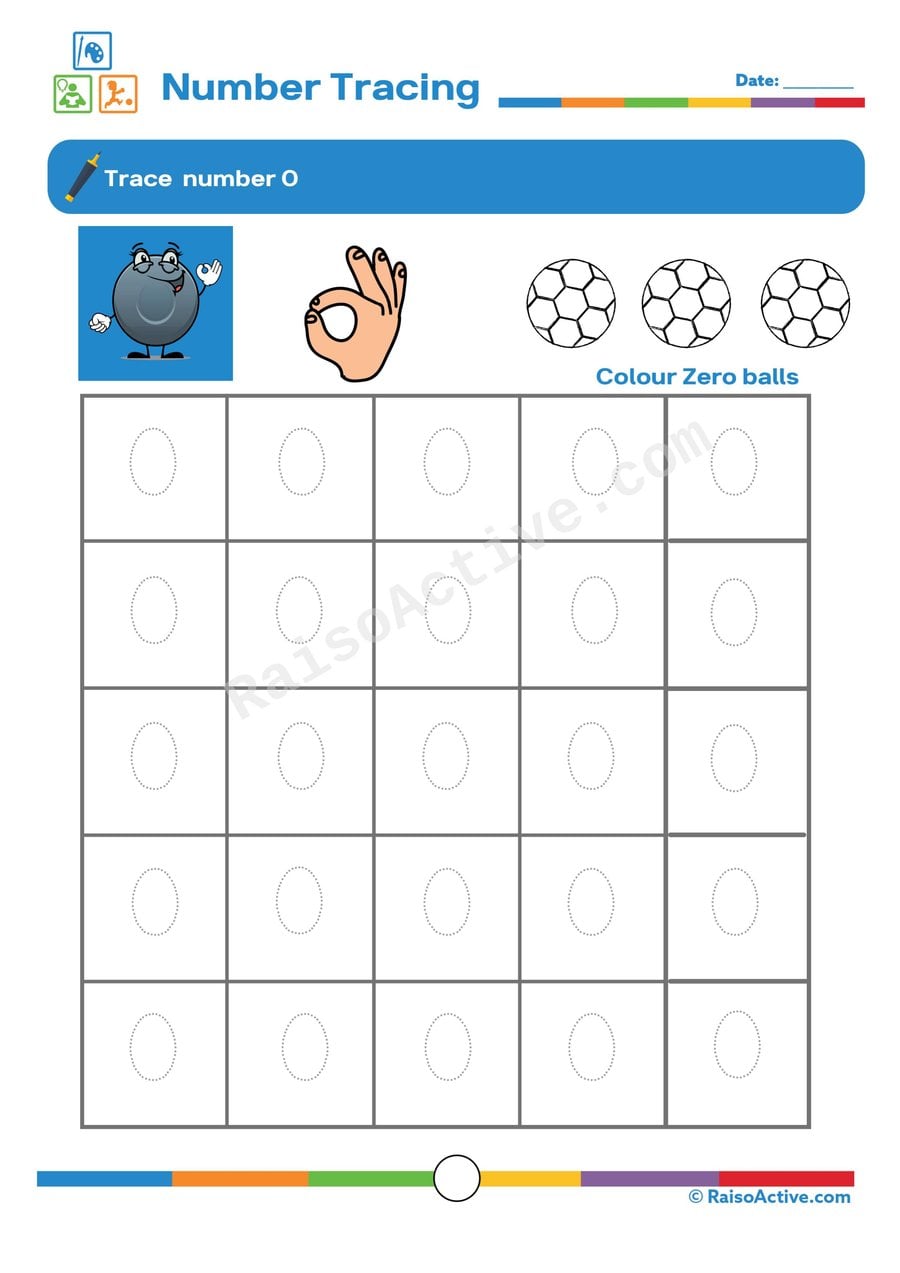
Trace the Number 0 Worksheet for Preschoolers
This worksheet introduces children ages 3-5 to the number 0, an abstract and often confusing concept since it represents the absence of a quantity rather than a countable group of objects. Tracing the closed loop of 0 builds the same round pencil control practiced with letters like O, while the coloring task, which asks children to color zero balls, gently introduces the idea that zero means none at all. This early exposure to zero as a real number lays groundwork for understanding it fully in later math.

Learn to Draw: Teddy Bear Worksheet for Preschoolers
Following numbered steps to draw a teddy bear teaches children ages 3-5 that complex pictures can be broken down into simple shapes like circles, building both sequencing skills and hand-eye coordination. This step-by-step approach to drawing also builds confidence for children who feel intimidated by open-ended drawing tasks.
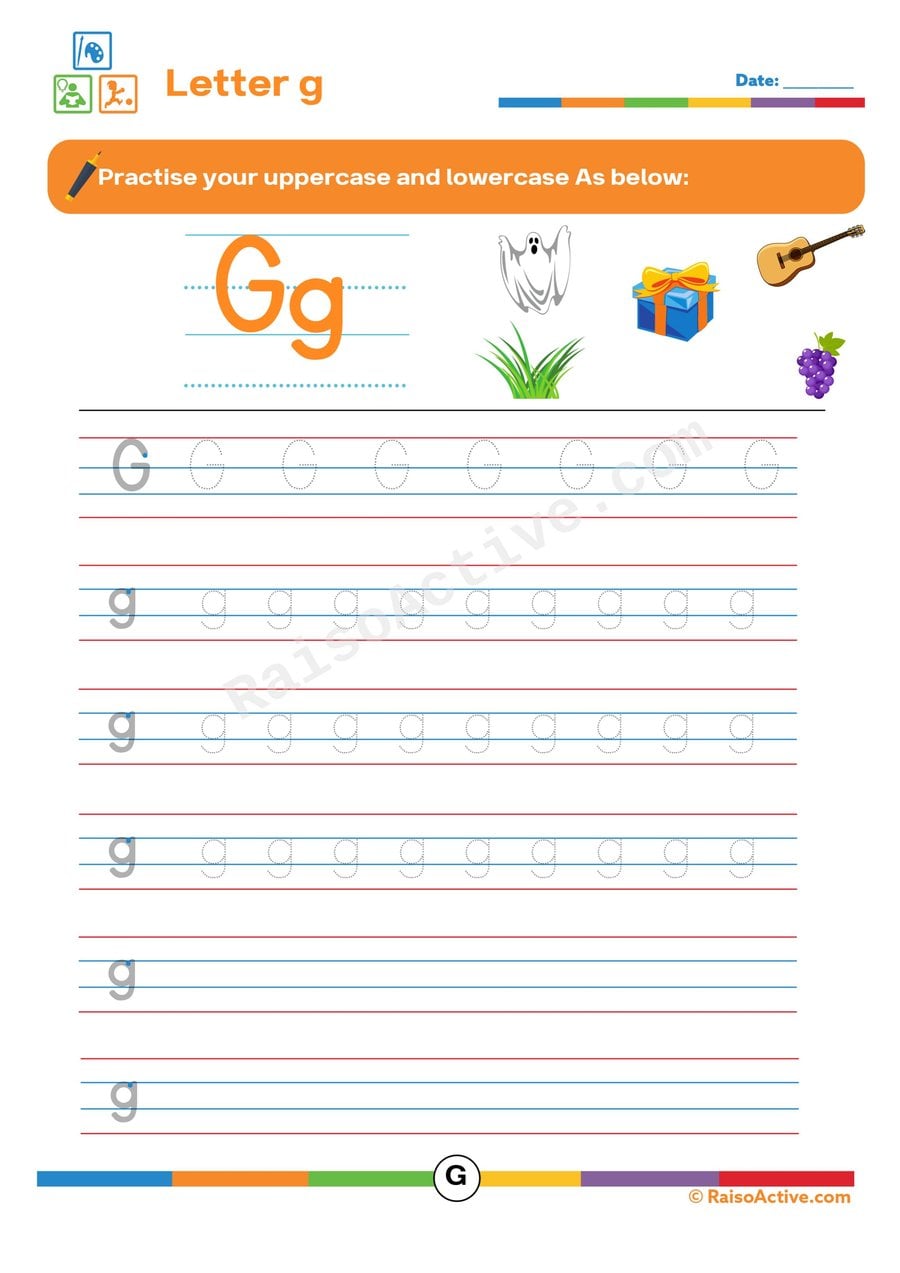
Trace the Letter G Worksheet for Preschoolers
Lowercase g is one of the more complex letters preschoolers encounter, combining a curved top with a descending tail that dips below the writing line — tracing it at ages 3-5 introduces the idea that some letters extend both above and below the main line, a concept that will matter for letters like j, p, and y too. Practicing the simpler capital G alongside it builds confidence before tackling the trickier lowercase form.

Letter K Tracing Worksheet: Practice Uppercase and Lowercase!
K combines a straight vertical line with two diagonal strokes meeting at a point partway down, making it one of the more structurally complex letters a preschooler will trace, similar in difficulty to R. Practicing both uppercase K and lowercase k at ages 3-5 builds precision in judging where diagonal lines should meet the vertical stroke, a skill that carries over to other angled letters.

Phases of the Moon Worksheet: Trace, Color, and Learn!
This worksheet introduces children ages 3-5 to the changing shapes of the moon by having them trace each phase's outline, say its name aloud, and color it in, connecting a science concept to hands-on tracing practice. Drawing and labeling the phases in a circle afterward reinforces that the moon moves through this same cycle in a repeating, predictable order.

Number 9 Tracing Worksheet: Learn to Trace and Count!
This worksheet has children ages 3-5 trace the number 9, formed from a small loop at the top connected to a straight or slightly curved line down, and then count and color nine circles to reinforce the specific quantity nine represents. Because 9 shares its top loop with numbers like 6, tracing it helps children notice similarities between numerals rather than treating each one as completely unrelated. This worksheet also pushes counting practice right up to the edge of the single-digit range, just before 10.
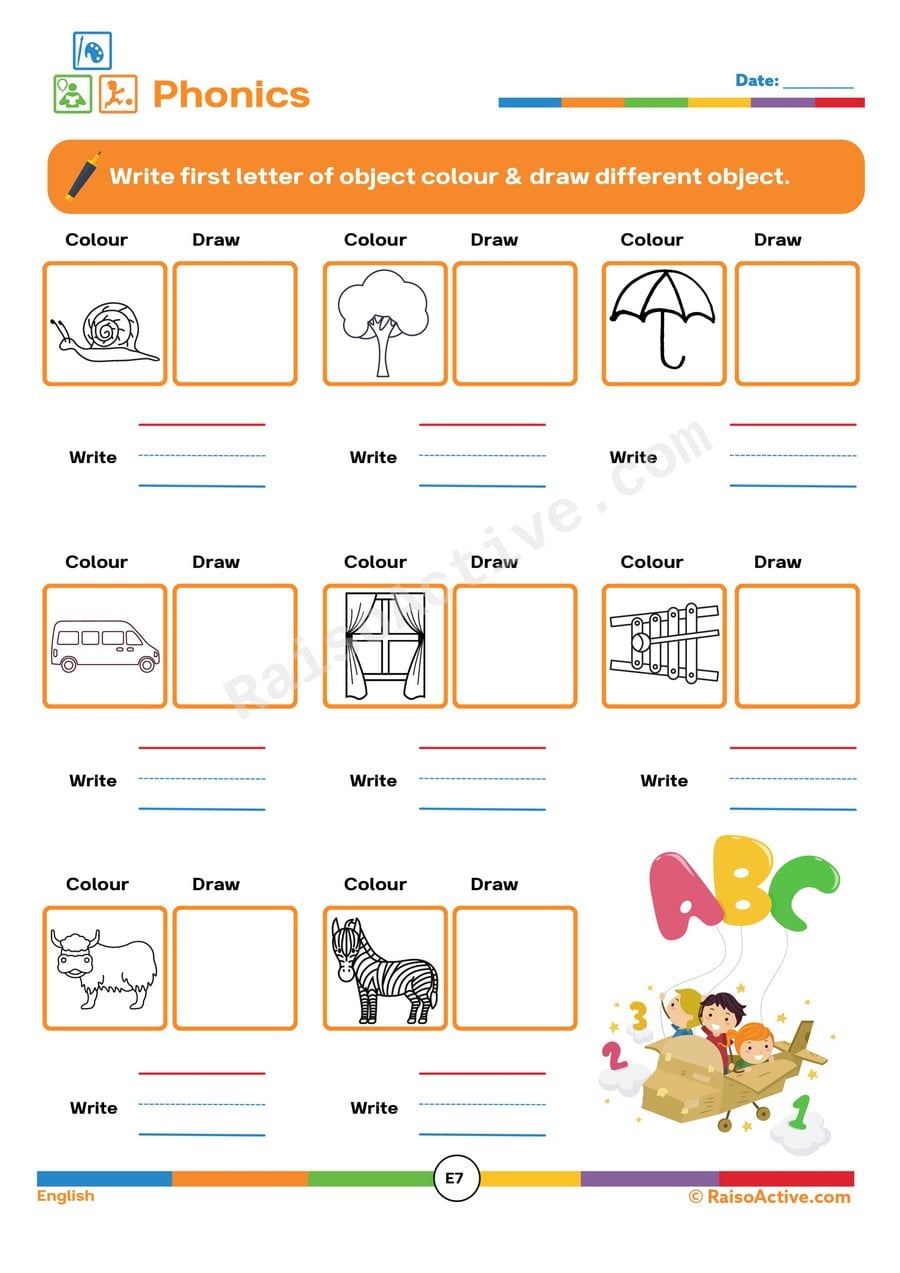
Phonics Fun: Color, Draw, and Write! (Ages 3-5)
Coloring a picture, drawing a related object, and writing its first letter combines three literacy-building tasks in one activity for children ages 3-5 — visual recognition, creative expression, and beginning-sound identification.

Trace and Write the Letter W Worksheet for Preschoolers
This worksheet has children ages 3-5 trace the uppercase letter W, made of four connected diagonal lines forming two Vs side by side, one of the more visually complex letters to trace accurately. Practicing W builds on the diagonal-stroke control introduced by simpler letters like V, while adding the extra challenge of maintaining even width and height across all four strokes. The page also reinforces the /w/ sound in words like 'water,' 'worm,' and 'window.'
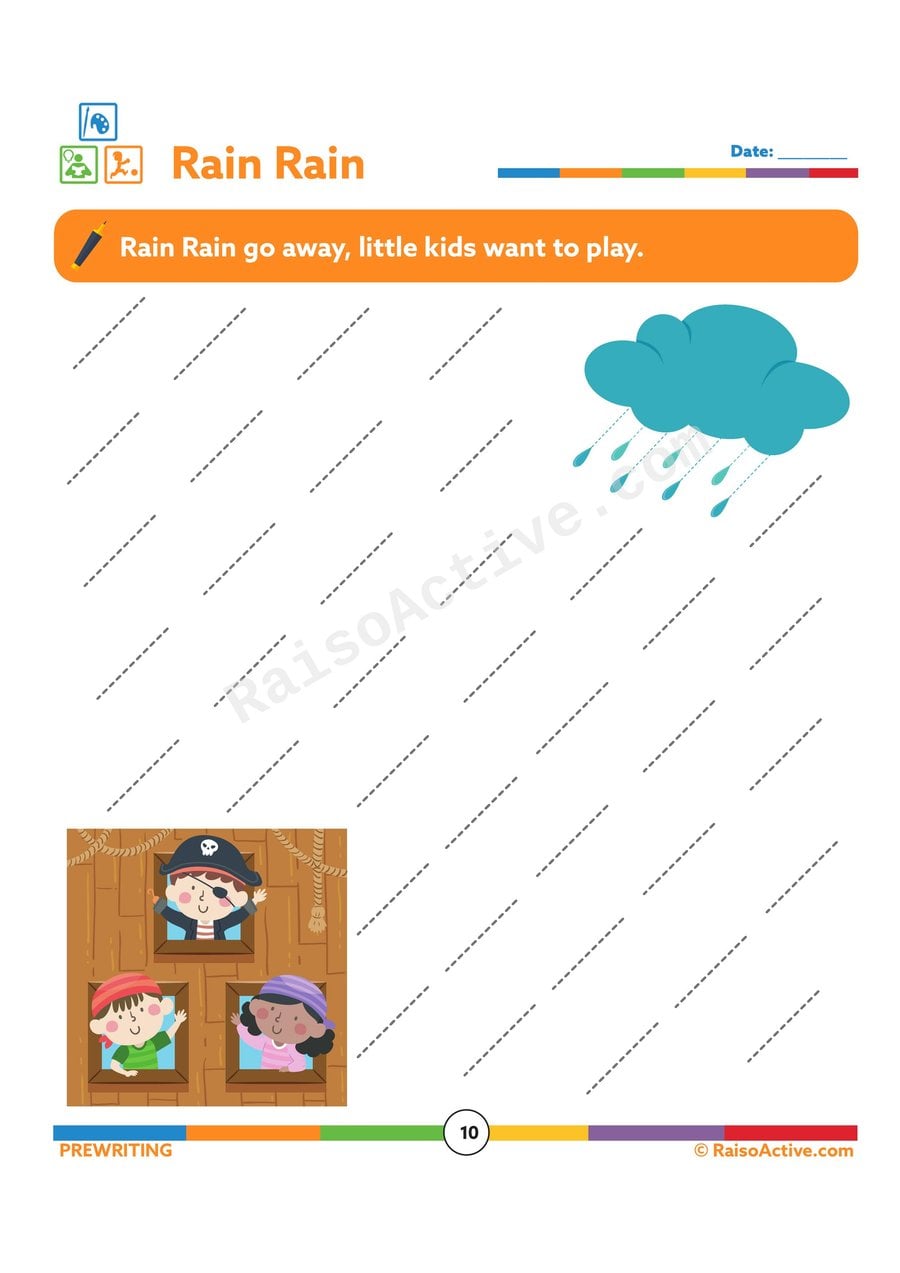
Rain Rain Tracing Worksheet for Preschoolers
Tracing rain-themed curved or drip-shaped lines gives children ages 3-5 practice with the smooth, flowing pencil motion used in curved letters, while the weather theme introduces simple vocabulary about rain and rain clouds. Tying the tracing motion to something children have actually seen, rain falling outside, helps make an abstract curved line feel like a familiar, recognizable shape.

Trace the Letter T Worksheet: Practice Writing & Coloring Fun!
This worksheet builds recognition and formation of the letter T through guided tracing and by identifying pictures of words that start with T, like 'tiger' or 'turtle.' For three- to five-year-olds, the letter T's simple cross-shaped stroke — one straight line down, one straight line across — makes it a good letter for practicing controlled, confident pencil strokes.

Secret Words Worksheet: Find the First Letter! (Ages 3-5)
Identifying the first sound in a spoken word is one of the earliest phonemic awareness skills children develop, and this 'Secret Words' worksheet turns that skill into a mini puzzle for ages 3-5. By listening for the beginning sound of each pictured object and writing its letter, children practice connecting spoken sounds to written symbols — the foundation of phonics-based reading. Assembling those letters into a hidden word adds a satisfying payoff that keeps young children motivated through several rounds of sound isolation.

Trace the Penguin: A Fun Pre-Writing Worksheet for Kids!
Tracing the rounded outline of a penguin gives children ages 3-5 practice with curved strokes that form a whole recognizable animal shape rather than an abstract line, which helps the tracing feel purposeful and connected to something familiar from books or videos. The cold-climate theme also introduces simple vocabulary about penguins and their environment, a small science connection layered onto the fine motor practice.

Beginning Sounds Worksheet: Identify and Color Rhyming Words!
This worksheet combines two early literacy skills for children ages 3-5: identifying and writing the beginning sound of a picture, and recognizing which words rhyme with 'dog'. Beginning-sound awareness is one of the first steps toward spelling, while rhyme recognition builds the auditory pattern-spotting that later supports word families. Practicing both together helps children notice that words can be related by their starting sound or by their ending sound.

Sight Word 'Said' Worksheet for Preschoolers: Tracing, Reading, and Writing Fun!
The word 'said' appears constantly in early readers, especially in dialogue, but its spelling doesn't match how it sounds, which makes it a classic sight word that children ages 3-5 must memorize by sight rather than decode. This worksheet reinforces that memorization through multiple formats — coloring, searching, tracing, filling in blanks, and even a dot-to-dot — giving the word repeated exposure in different contexts. Building instant recognition of high-frequency words like 'said' is one of the most efficient ways to boost a young reader's fluency.

Join the Dots: Standing Lines Worksheet for Preschoolers
This dot-to-dot worksheet asks children ages 3-5 to connect dots forming vertical lines, sometimes called 'standing lines' because they stand upright, building the bottom-to-top or top-to-bottom pencil control needed for letters like l, t, and i. Connecting dots precisely, rather than simply tracing a continuous line, adds an extra layer of accuracy practice on top of the basic straight-line motion.

Learn to Read: Sight Word 'Hear' Worksheet for Preschoolers
'Hear' is a sight word children ages 3-5 encounter often in early books, and its spelling doesn't clearly match its sound, so children need repeated exposure to recognize it instantly rather than sound it out each time. This worksheet reinforces the word through five different activities — coloring, searching, tracing, sentence completion, and cut-and-paste spelling — which research on early literacy shows builds much stronger retention than repeating a single format. Because 'hear' is often confused with the similar-sounding word 'here,' practicing it in full sentences also helps children start to notice the meaning difference between the two.

Number 5 Tracing Worksheet for Preschoolers: Trace, Count, and Color!
This worksheet has children ages 3-5 trace the number 5, a shape combining a straight line, a curve, and a short horizontal stroke, one of the more complex early numerals to form correctly. Counting and coloring exactly five apples reinforces the specific quantity the numeral 5 represents while also introducing the idea of counting a full hand's worth of objects, since five matches the fingers on one hand. This worksheet's trace-count-trace structure also builds the habit of returning to check work after a counting task.
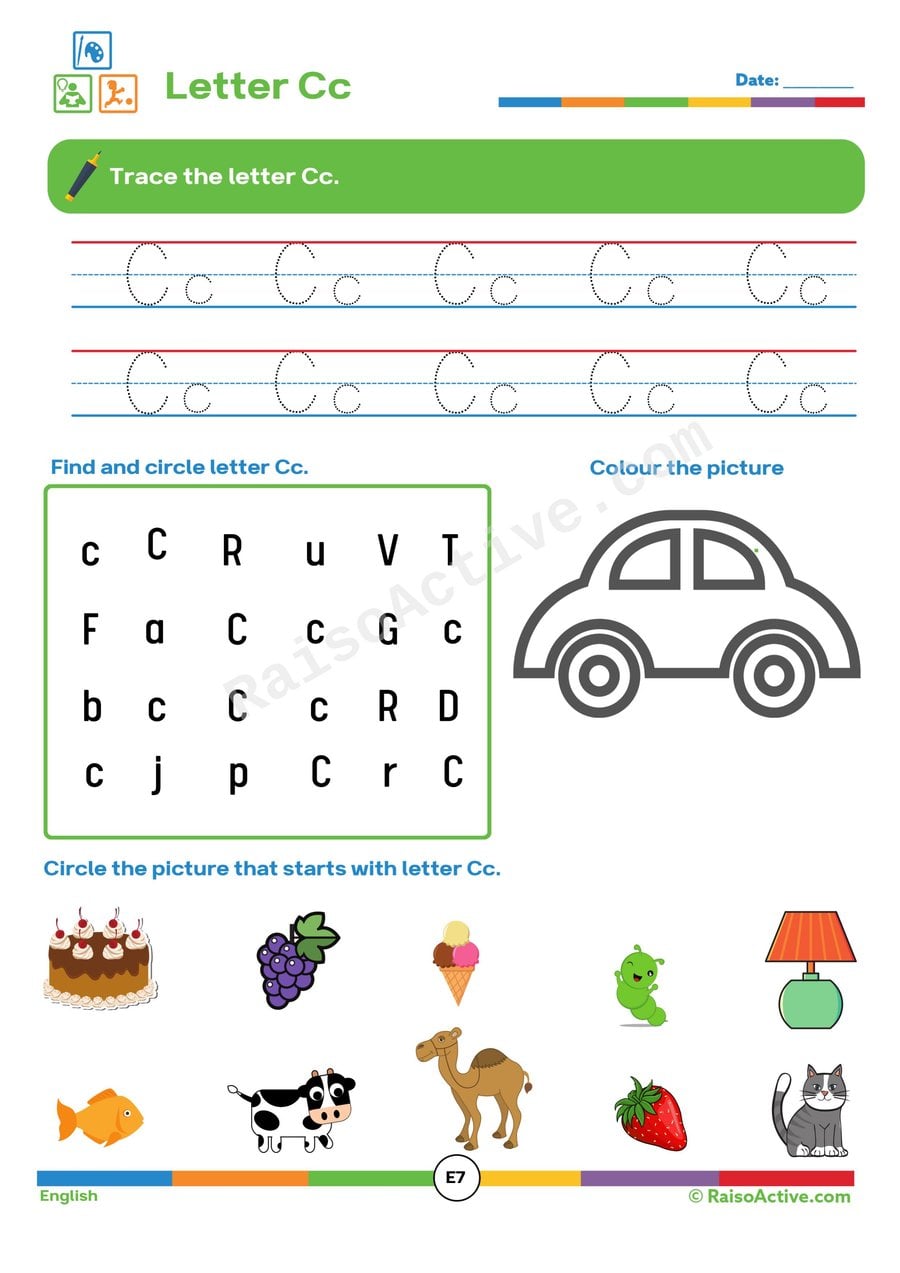
Letter Cc Worksheet: Trace, Find, and Color!
This worksheet has children ages 3-5 trace the letter Cc, search a grid to find and circle every instance of it, then color a picture of a car and identify other pictures that start with C. Layering tracing, visual search, and picture-sound matching in one worksheet gives repeated exposure to the same letter in several different formats, which builds stronger recognition than any single task alone.
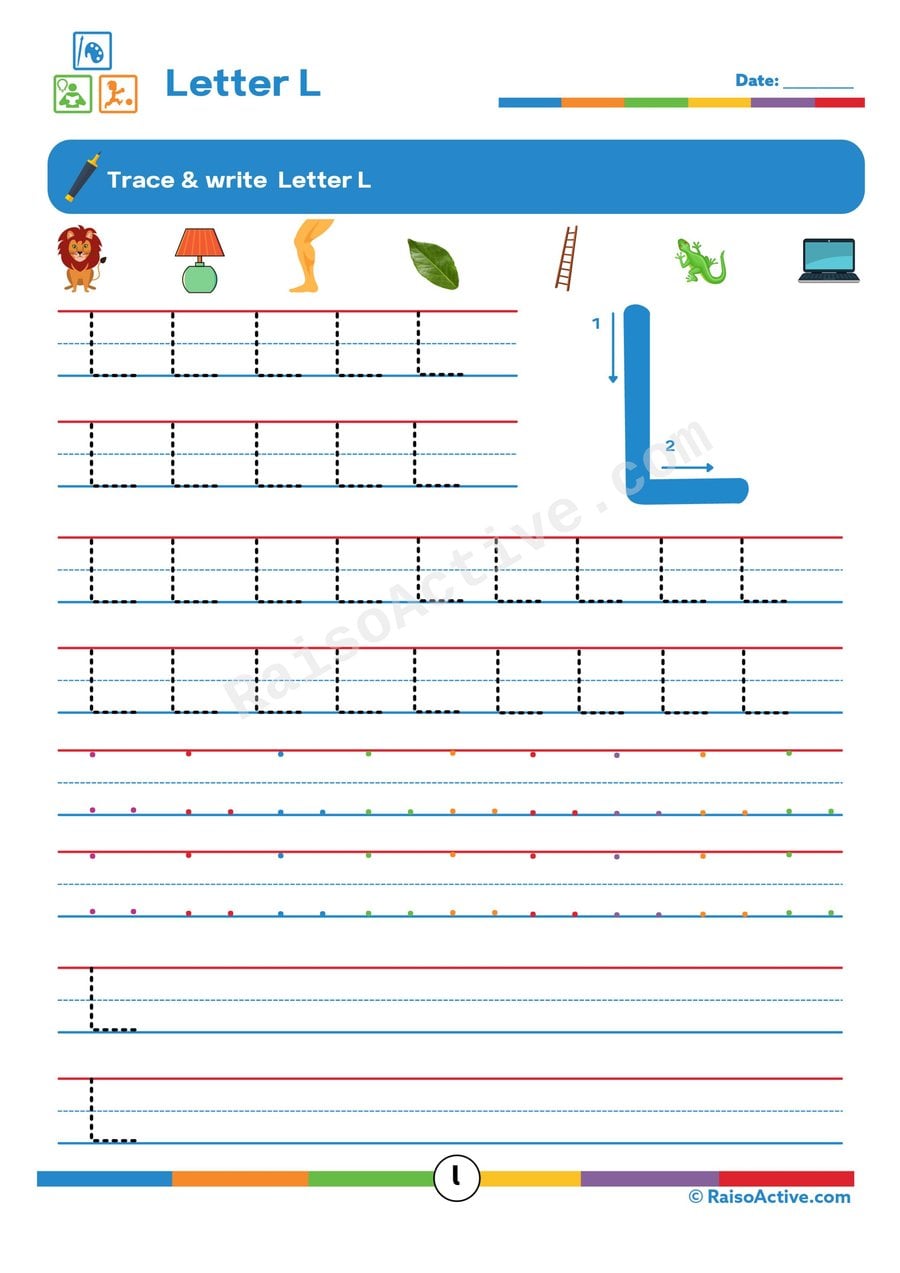
Letter L Tracing Worksheet for Preschoolers
This worksheet gives focused, repeated practice on just the uppercase L — a single vertical line and a single horizontal line meeting at a clean right angle — which makes it one of the more approachable capital letters for 3-5 year olds to master fully in one sitting. Practicing it in isolation helps build the sharp-corner precision that other 'L-shaped' letters partly rely on.

Letter V Tracing and Coloring Worksheet for Preschoolers
This worksheet builds recognition and formation of the letter V, both uppercase and lowercase, while practicing fine motor skills through tracing and coloring pictures of V words like 'van' or 'volcano.' For three- to five-year-olds, practicing both letter cases together helps children see that uppercase and lowercase V share the same basic shape, which isn't true of every letter and makes V a good confidence-builder.

Trace and Write the Letter X Worksheet for Preschoolers
This worksheet has children ages 3-5 trace the uppercase letter X, practicing two diagonal lines that cross in the middle, a stroke pattern that requires more precise pencil control than straight or curved letters alone. Because relatively few common words start with X, this page also introduces the idea that a letter's position within a word, not just the beginning, matters for reading, since children may know X best from words like 'box' or 'fox.' Mastering this crossing stroke also supports other skills like drawing intersecting lines in later math and geometry work.

Letter S Tracing Worksheet for Preschoolers
Tracing the letter S gives 3-5 year olds practice with a single flowing curve that changes direction twice, a genuinely different challenge from straight-line letters and one that builds the smooth hand control needed for cursive-style writing later on. This page pairs the tracing practice with a picture to color, reinforcing the letter through a second, playful channel.
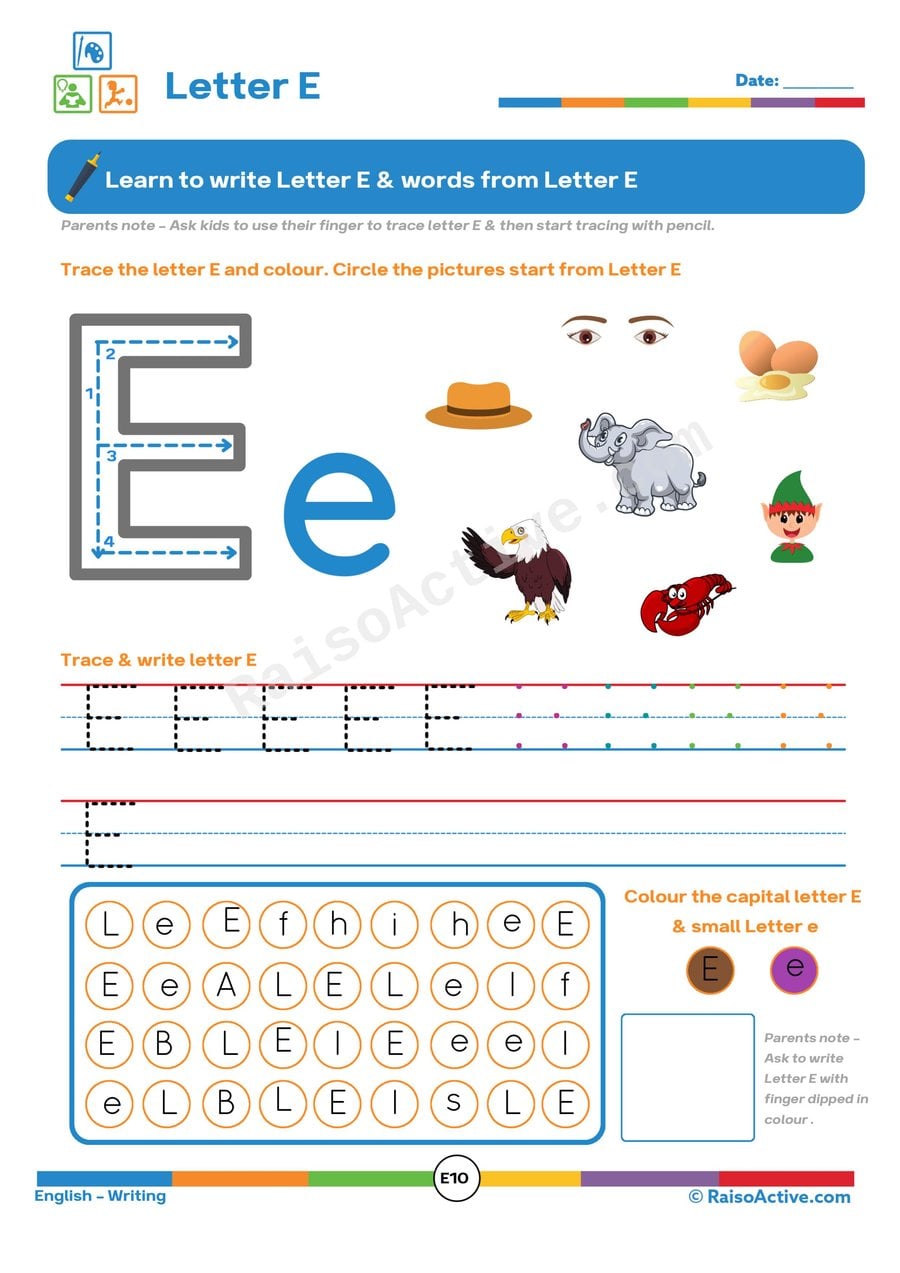
Letter E Fun: Trace, Color, and Learn!
Tracing and writing the letter E gives children ages 3-5 practice with one vertical stroke and three horizontal strokes, a slightly more complex letter shape than single-curve letters, which builds precision in stopping and starting a pencil at the right point. Alongside the physical writing practice, coloring and simple recognition activities reinforce that this shape and sound go together, an early step toward connecting letters with the words they start.
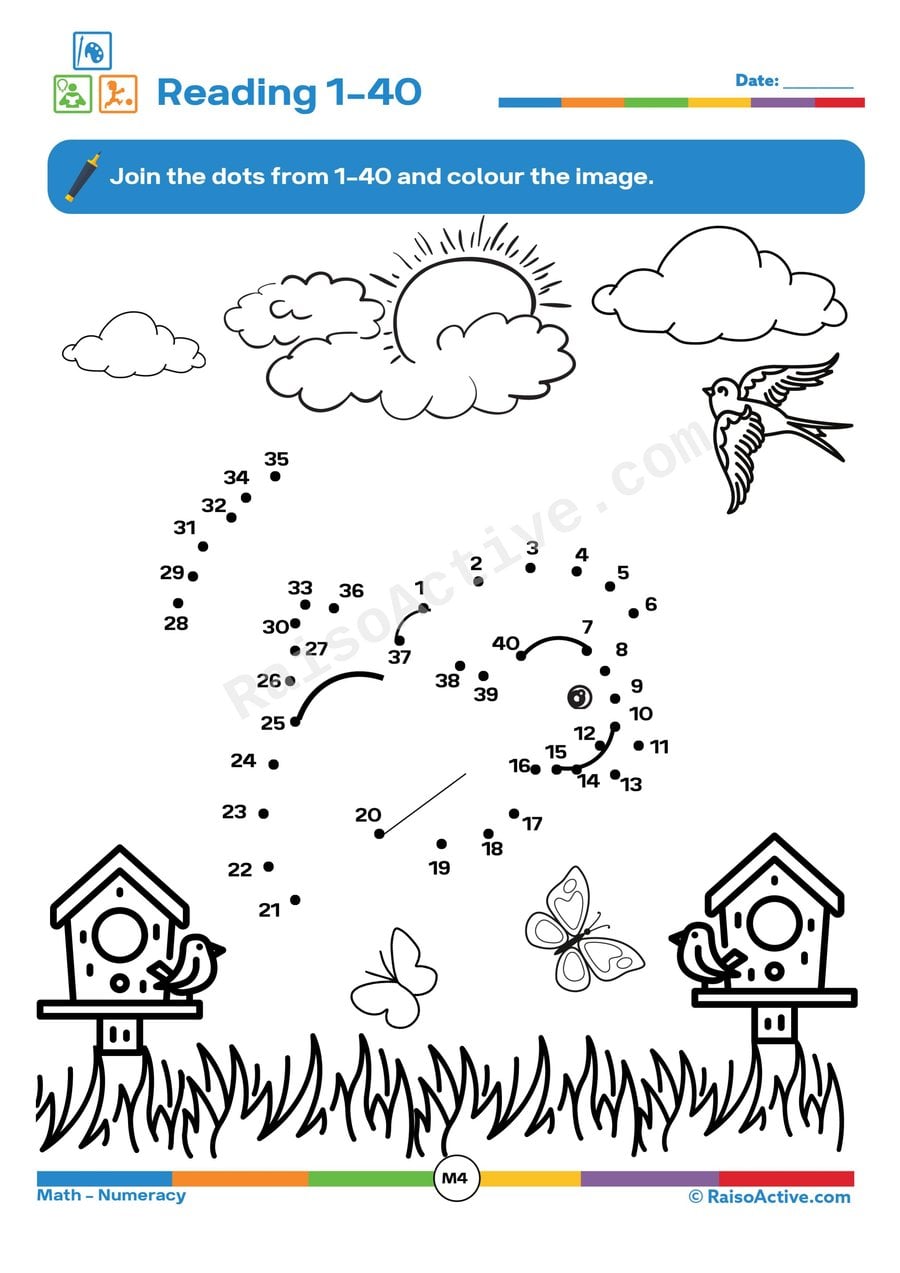
Connect the Dots: Sunny Day Picture Worksheet
Connecting the dots from 1 to 40 gives 3-5 year olds real practice with number sequencing well beyond the basic 1-10 range most preschool materials cover, while the physical act of drawing a line from dot to dot builds the same pencil control needed for handwriting. Because the picture only appears once every number has been found and connected in order, it also rewards sustained attention — your child has to keep track of where they are in the sequence across a fairly long worksheet, which is a real stretch at this age.
What Nursery letter tracing worksheets cover
Letter tracing at three starts small: the first letter of the child's own name, traced in a large capital with a starting dot and an arrow. A worksheet should keep to one or two letters at a time rather than the full alphabet, use thick dotted lines, and let the child say the letter's name while tracing it. Recognizing the letter matters more here than forming it neatly, and lowercase shapes are not part of this stage.
- Trace the first letter of a name across a full row
- Say the letter name aloud while tracing each stroke
- Trace one or two capital letters per worksheet, not the alphabet
- Point to the traced letter when it is named
How to use these worksheets at home or in class
A single sheet a day, five to ten minutes, suits a three-year-old best. Sit alongside your child rather than opposite, demonstrate one stroke, then let them attempt it themselves, praising the try rather than the neatness of the line.
Start with the sheet that matches what your child can already do, then move one step up. Keep finished sheets in a folder: Nursery teachers often ask for evidence of practice, and children like seeing their own progress.
Is your child ready for Nursery letter tracing work?
Readiness shows up as a proper crayon grip with fingers instead of a fist, purposeful scribbling, sitting through a short task and following one spoken instruction such as pointing to a colour. Without these, stick to sticker play and large colouring pages for now.
Frequently asked questions
Which letters should a three-year-old trace first?
The letters in the child's own name, starting with the first one, since those are the letters a child is most motivated to recognise and most likely to see repeated. After the name is secure, add a few letters from words the child already says often, such as the family pet's name. There is no need to work through the alphabet in order at this age; frequency and interest matter more than sequence.
What should a Nursery child be able to do in letter tracing?
Letter tracing at three starts small: the first letter of the child's own name, traced in a large capital with a starting dot and an arrow. A worksheet should keep to one or two letters at a time rather than the full alphabet, use thick dotted lines, and let the child say the letter's name while tracing it. Recognizing the letter matters more here than forming it neatly, and lowercase shapes are not part of this stage. Readiness shows up as a proper crayon grip with fingers instead of a fist, purposeful scribbling, sitting through a short task and following one spoken instruction such as pointing to a colour. Without these, stick to sticker play and large colouring pages for now.
Do these worksheets follow the Nursery curriculum?
The sheets cover uppercase letter formation, lowercase letter formation, starting points and stroke direction and spacing between letters, which sit inside the NEP 2020 Foundational Stage (NCF-FS 2022) outcomes for Nursery. Preschool (US), Nursery (UK) use the same skills at this age, so the sheets also fit families following those programmes.
Are the Nursery letter tracing worksheets free to download?
Yes. Every sheet on this page can be downloaded free as a watermarked PDF after creating an account, up to five downloads a day. The annual membership (₹1000) removes the watermark and the daily limit across the full library of more than 1,000 worksheets and all activity packs.

Written by
Hemsweta Jain · Teacher Cheena
MBA and Early Childhood Educator, teaching since 2014 · Founder of RaisoActive, Mumbai
Written and reviewed by Hemsweta Jain (Teacher Cheena), who designs every RaisoActive worksheet.
Last reviewed
Printable packs for ages 3–4
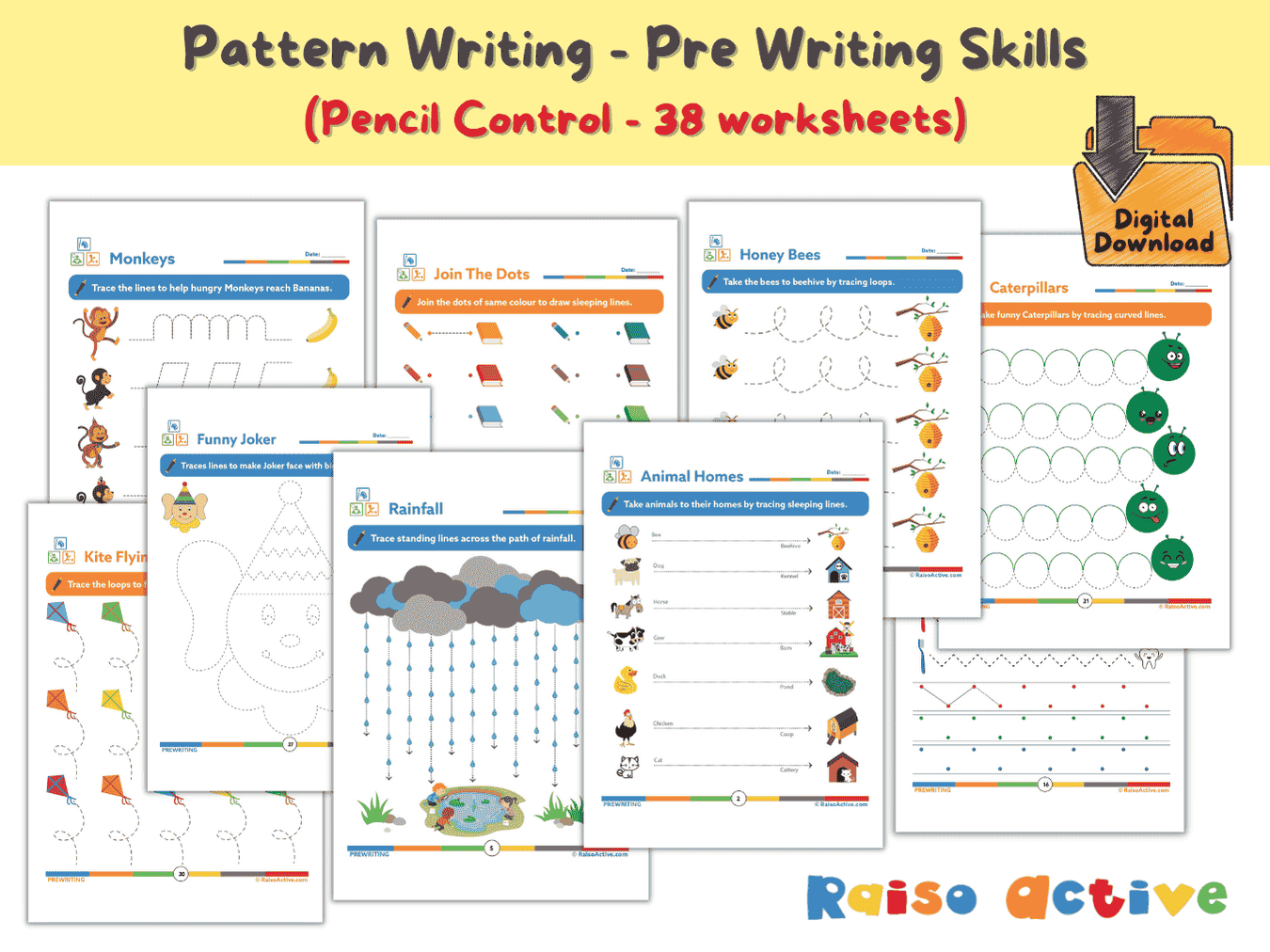
Pattern Writing Pre-writing Skills Activity Book for 3-4 Year Olds
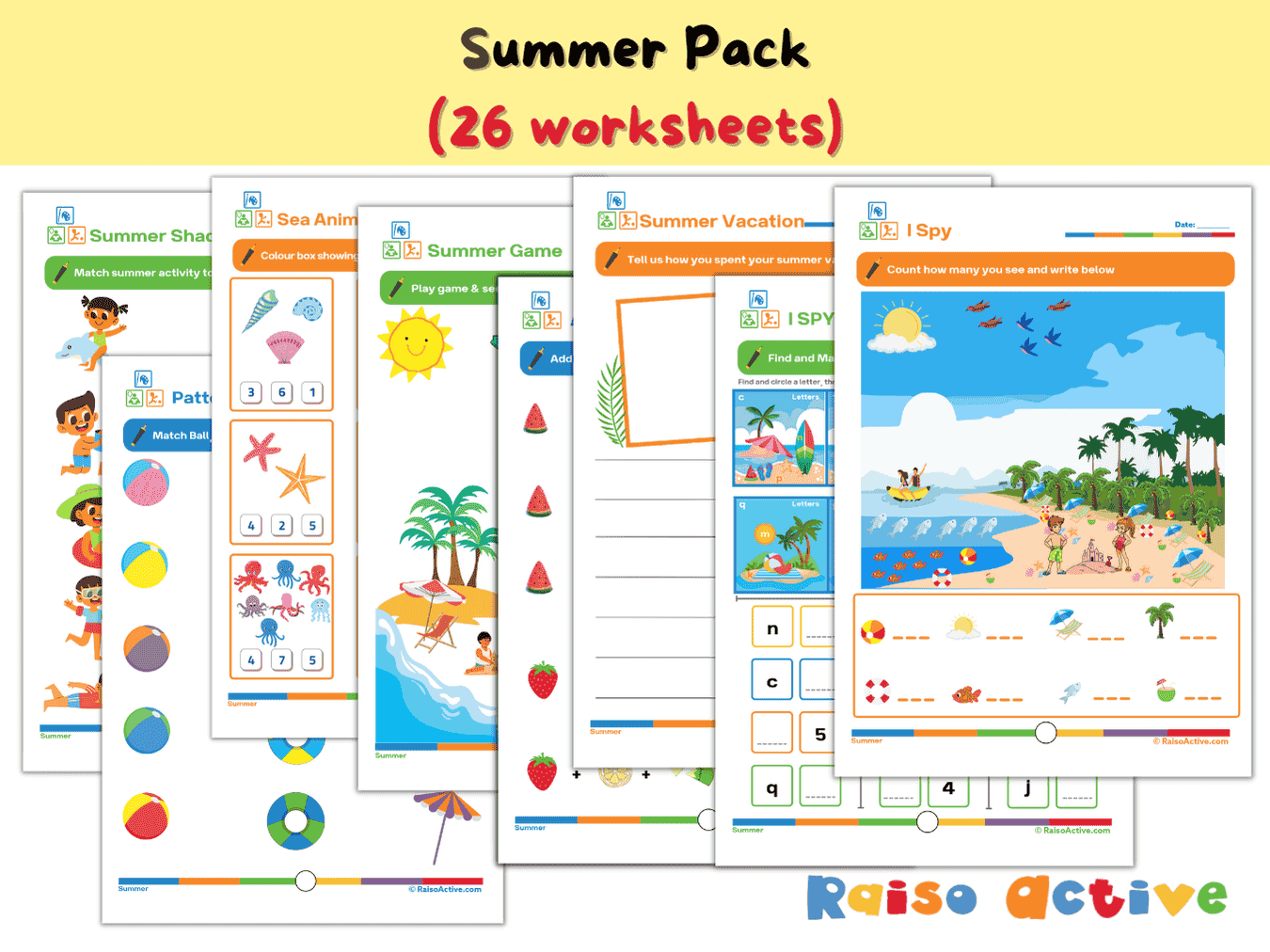
Summer Activity Pack: Math, Literacy, Puzzles & More for Preschool & Kindergarten
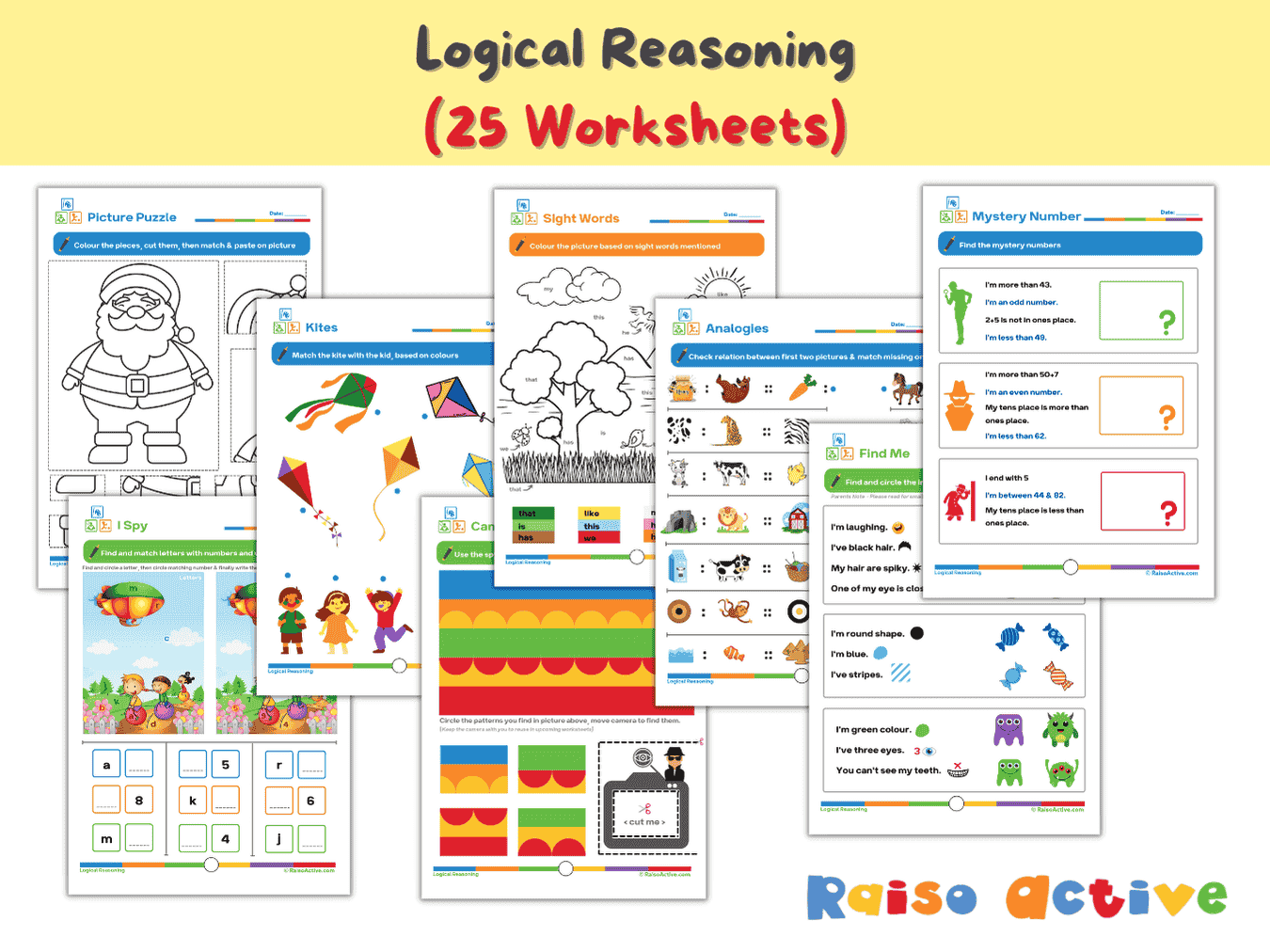
Logical Reasoning Activity Book for Preschool & Kindergarten | Patterns, Puzzles & Analogies
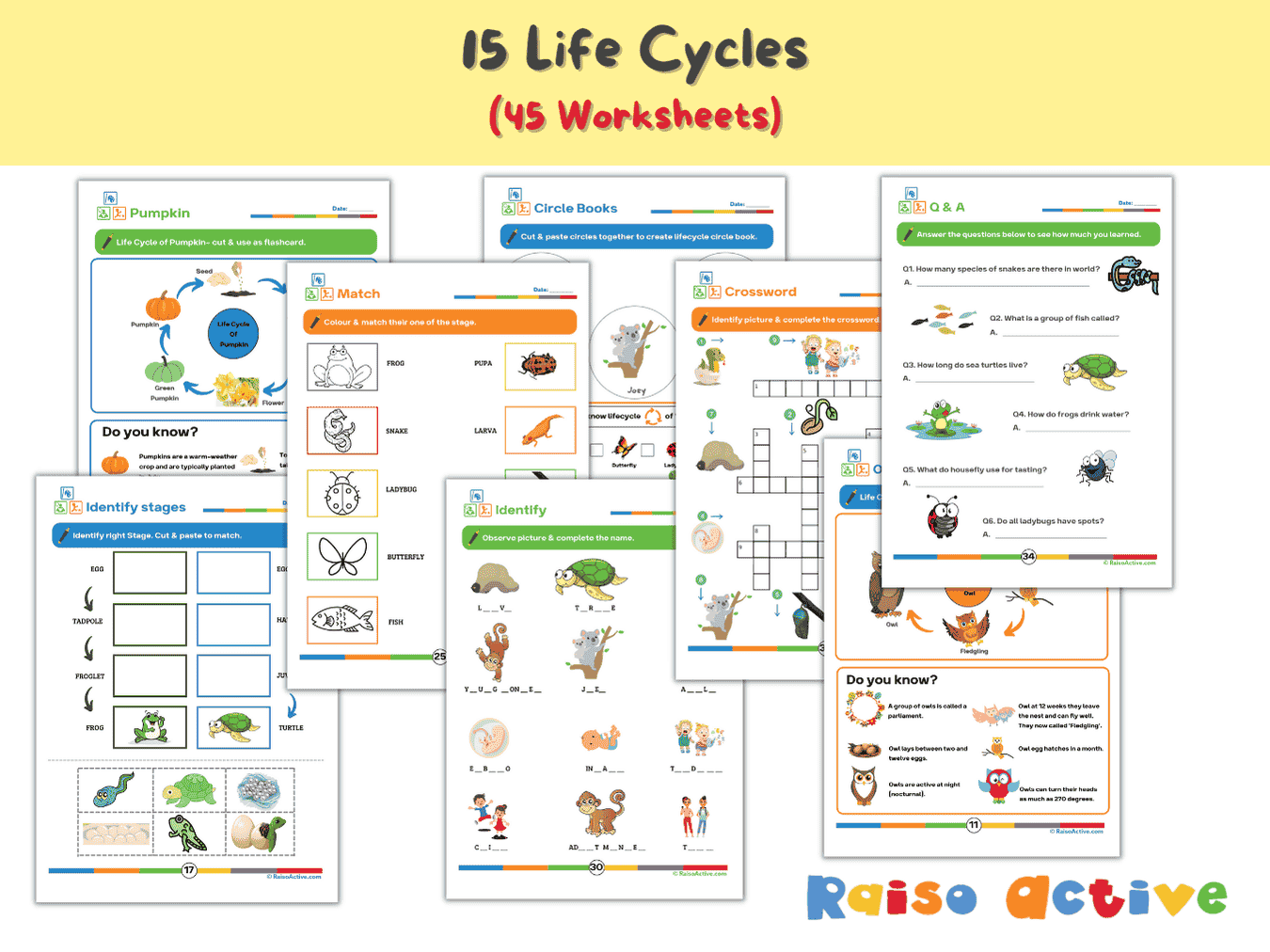
Lifecycles Activity Book & Flashcards for Preschool & Early Elementary
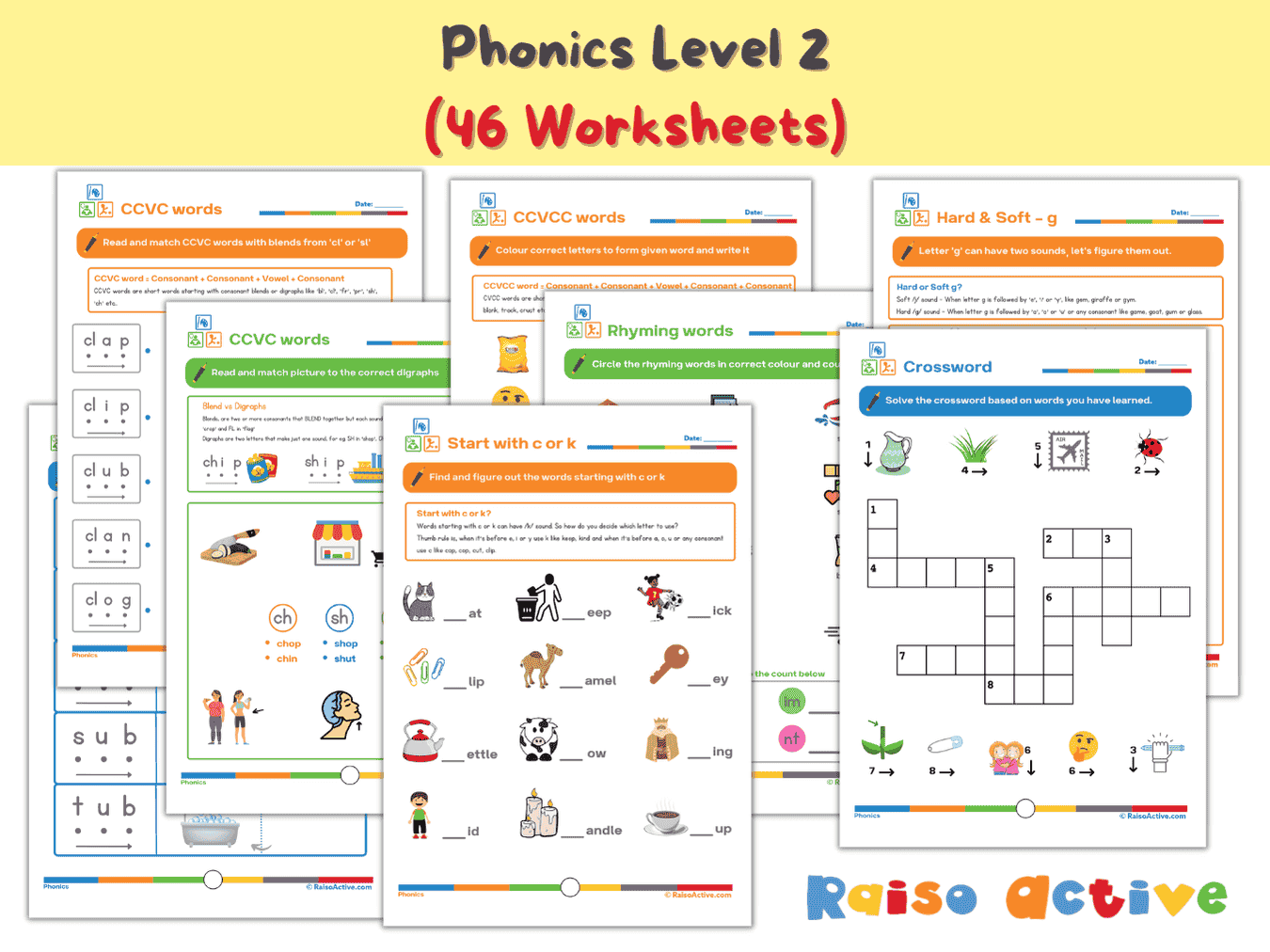
Phonics Level 2 Worksheets: CVC, CCVC, CVCC Word Families & Blends for Early Readers (Ages 4-7)
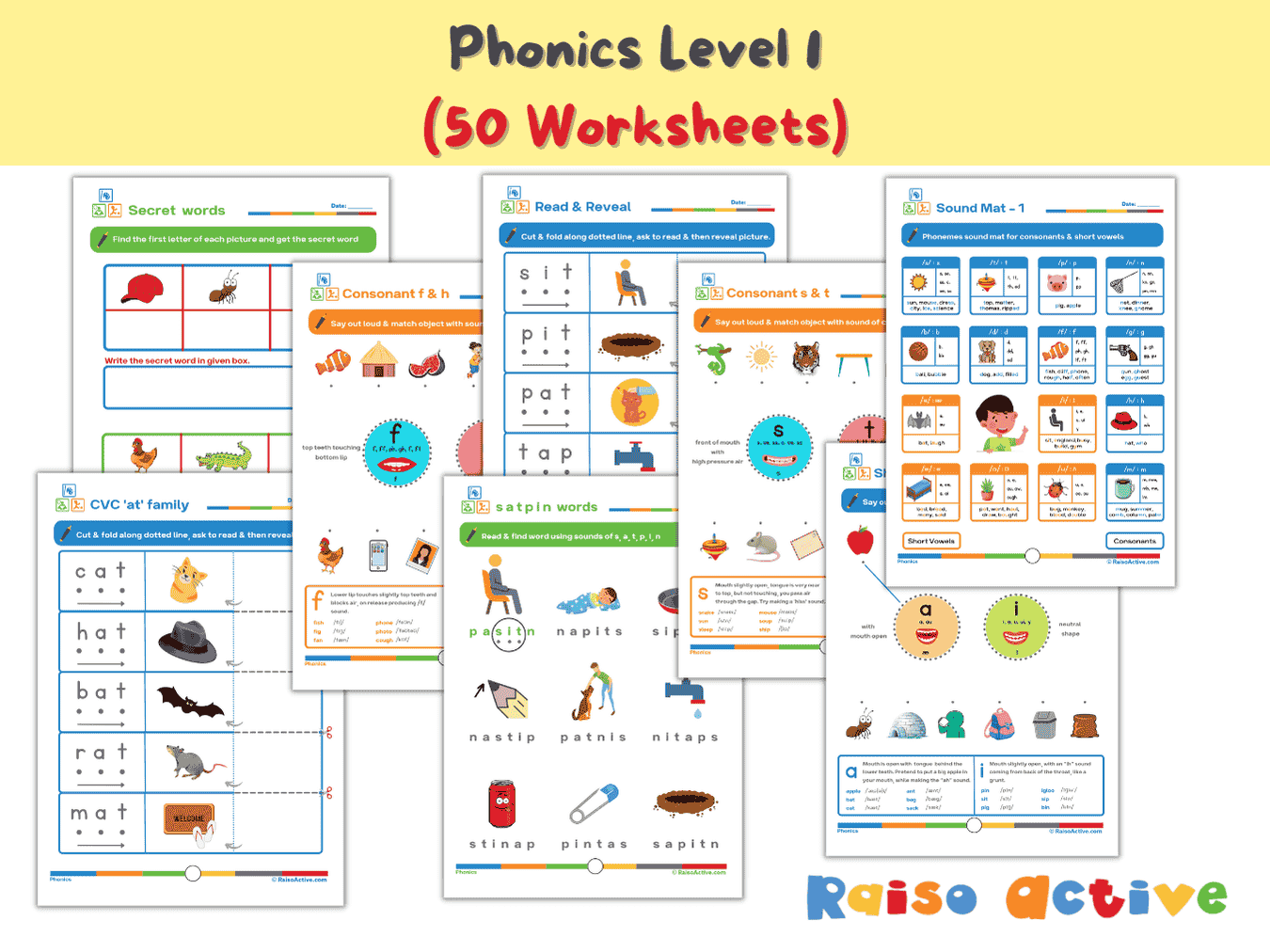
Phonics Level 1 Activity Book: Letter Sounds, Blending & CVC Words for Preschool & Kindergarten
Guides for parents and teachers
See all guides →Number Formation Rhymes 0–9 and How to Fix Reversals
Original number formation rhymes for 0–9, the correct stroke order for each digit, why 3, 5 and 7 get reversed most often, and multisensory fixes that work.
Pre-Writing Strokes in Order: From Standing Lines to Loops (With Printable Patterns)
The developmental order of pre-writing strokes, from vertical lines to loops, and why practicing them in sequence makes letter formation much easier to learn.
Kindergarten Readiness Checklist: 25 Skills to Practice Before the First Day
A kindergarten readiness checklist of 25 literacy, math, motor, self-regulation and self-help skills, with an 8-week summer plan and notes on when not to worry.
Best Worksheets for 3-Year-Olds: What Works and What to Avoid
What works on worksheets for 3-year-olds: short sessions, crayons, tracing lines, matching, cutting, a free weekly plan, and signs one is too advanced.
Reception Year Explained: EYFS Learning and How to Help at Home
A teacher's plain-English guide to the Reception Year: the seven areas of learning, Early Learning Goals, Phase 2/3 phonics, the RBA and home routines.
What Should a 4-Year-Old Know Before LKG? A Readiness Checklist
A calm, teacher-written LKG readiness checklist for 4-year-olds: language, pattern writing, numbers to 10, self-help and social skills, plus a 6-week plan.
Canonical: https://raisoactive.com/worksheets/nursery-letter-tracing