Free printable worksheets · India
Nursery Alphabet Worksheets (Ages 3–4)
Nursery alphabet worksheets are practice sheets for children aged 3–4 in Nursery in India. Alphabet worksheets build recognition of the 26 letters, their names and order, and the difference between uppercase and lowercase forms. The sheets on this page cover letter recognition A–Z, letter names versus letter sounds, sequencing letters in order and matching uppercase to lowercase.
Nursery marks the first year an Indian child sits at a table with a pencil rather than only playing with one. Grip is still developing, so schools expect pre-writing strokes, colouring within a bold outline, matching identical pictures and counting small groups rather than any letter writing. Attention rarely holds past a few minutes at a stretch. Three-year-olds build a small working set of letters, usually starting with the ones in their name and reaching eight to ten capitals by the end of the year. A worksheet should ask the child to find a named letter among two or three lookalikes, circle every instance of one letter on a busy page, and say the first few letters of the alphabet in order. Full A-to-Z sequencing, lowercase forms, and matching letters to sounds belong to the year after.
1051+ worksheets · free PDF download · print on A4 or Letter
Nursery Alphabet Worksheets to print
Browse all worksheets for ages 3–4
Clothing Pattern Match Worksheet for Preschoolers
This worksheet has children ages 3-5 study repeating patterns on clothing items — stripes, polka dots, or checks — and match each item to its identical twin, building visual discrimination and early pattern-sequencing skills. Distinguishing between similar-looking patterns also sharpens attention to detail, a skill that later supports letter and word recognition.

Tall and Short Worksheet for Preschoolers: Identifying Sizes
This worksheet builds children ages 3-5's understanding of relative height by having them identify which of two objects is tall and which is short across several picture sets. Comparing height is one of the earliest forms of measurement reasoning children encounter, and practicing it with varied, unrelated objects helps the concept generalize beyond just the specific pictures shown.

Learn the Letter 'V': Tracing, Matching, and Coloring Worksheet
Tracing, matching, and coloring the letter 'V' gives children ages 3-5 focused repetition on a letter formed entirely from two diagonal strokes, a different motor pattern than the curves and verticals used in many other letters. Matching pictures like a violin or a van to the letter builds the sound-symbol connection for the /v/ sound, which can be tricky to distinguish from /f/ or /b/ for young learners. Highlighting the lowercase 'v' within a letter grid to help a character find an object adds a game-like search element that keeps attention on the task.
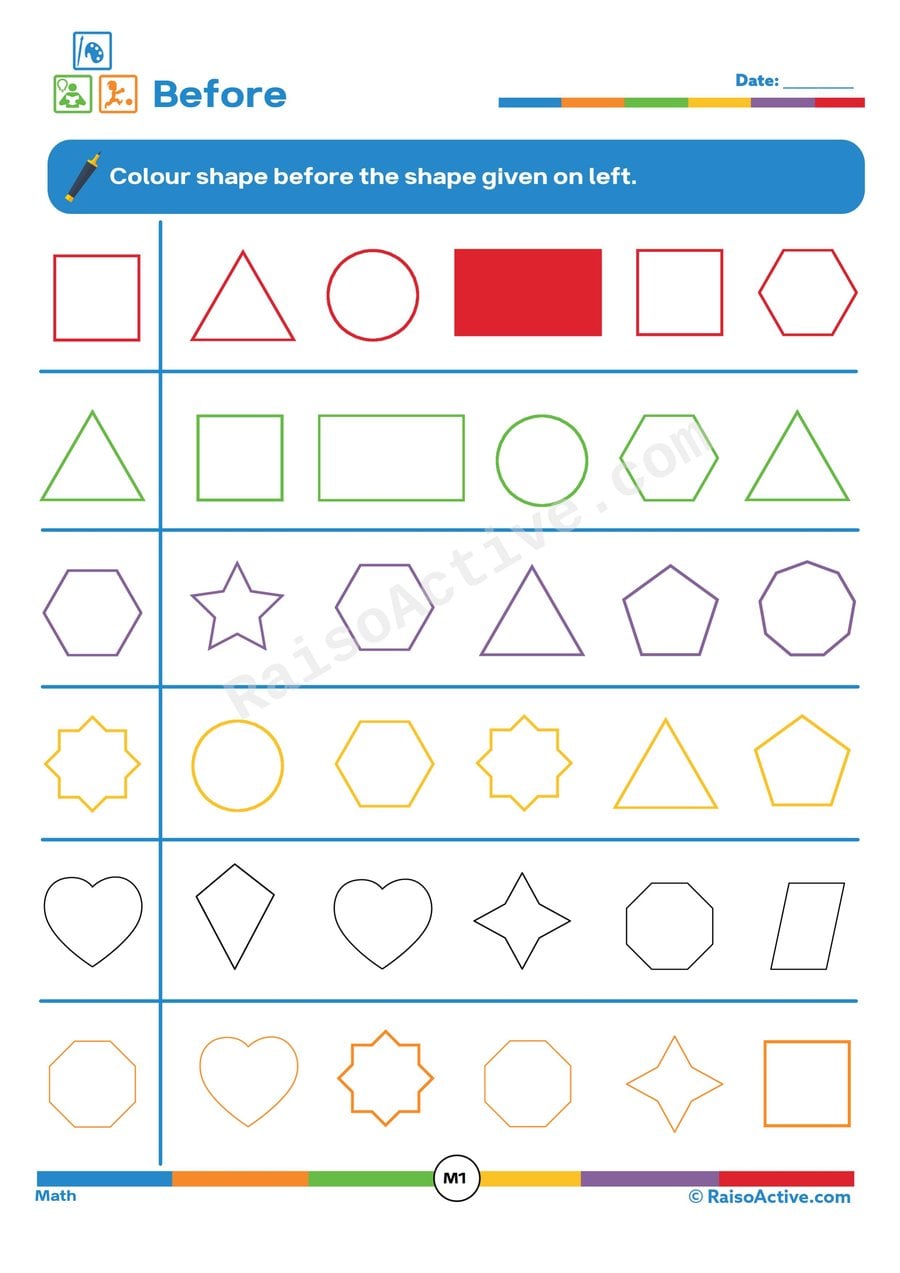
Shape Coloring Worksheet: Before the Shape!
This worksheet combines shape recognition with sequencing by asking children to identify which shape comes before a given shape in a row, requiring them to understand order as well as shape names. For ages three to five, thinking about what comes 'before' something visually is a gentle introduction to ordinal reasoning that will later apply to numbers and letters as well as shapes.
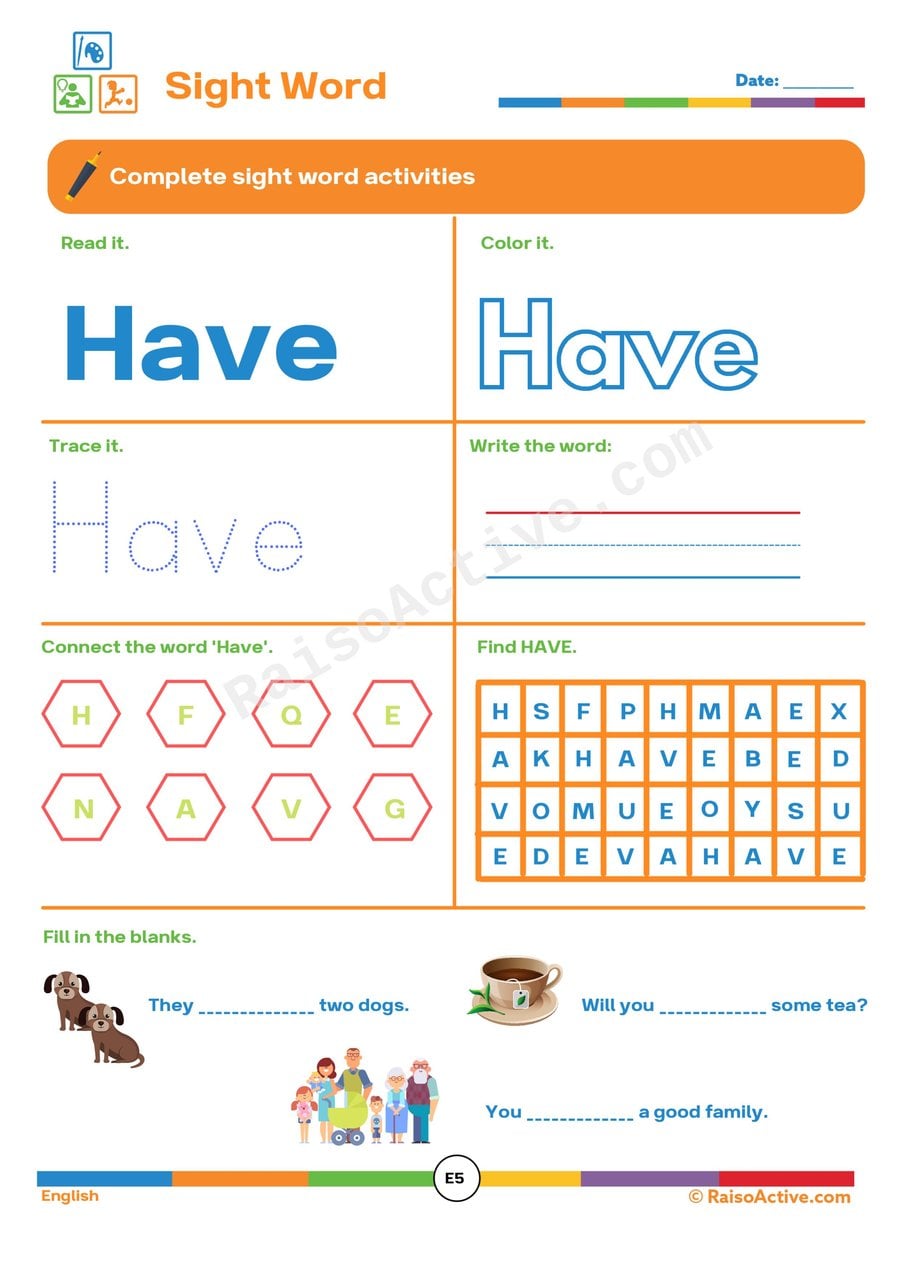
Sight Word 'Have' Worksheet for Preschoolers
This multi-step worksheet builds deep familiarity with the sight word 'have' for children ages 3-5 by having them read, color, trace, write, and search for the word in several different formats. Repeating the same word across varied tasks — rather than practicing it once — is exactly how high-frequency sight words become instantly recognizable to early readers.

Rhyming Words Worksheet for Preschoolers: Fun with Sounds!
This worksheet develops phonological awareness in children ages 3-5 by having them color groups of rhyming word bubbles and then tap, spell, and circle a matching rhyme. Recognizing that words like 'cat', 'hat', and 'bat' share an ending sound is one of the earliest and most reliable predictors of later reading success, because it teaches children to hear words as strings of sound parts rather than single units.

Summer Word Unscramble Worksheet for Preschoolers
This worksheet has children ages 3-5 unscramble jumbled letters to spell summer-themed words, practicing early phonics and spelling by sounding out letters and considering how they might combine into a familiar word. Because the letters are already given but out of order, children focus specifically on sequencing and sound-blending rather than recalling spelling from scratch, making this an accessible entry point into word-building. Writing the corrected word afterward reinforces handwriting alongside the phonics practice.

Sight Word 'This' Worksheet: Trace, Write, and Identify!
This worksheet helps children ages 3-5 learn to recognize, write, and use the sight word 'this' in sentences, building automatic recognition of a word that appears constantly in early reading but doesn't sound out easily. Cutting and pasting letters to spell the word adds a hands-on layer that reinforces letter order alongside whole-word recognition.
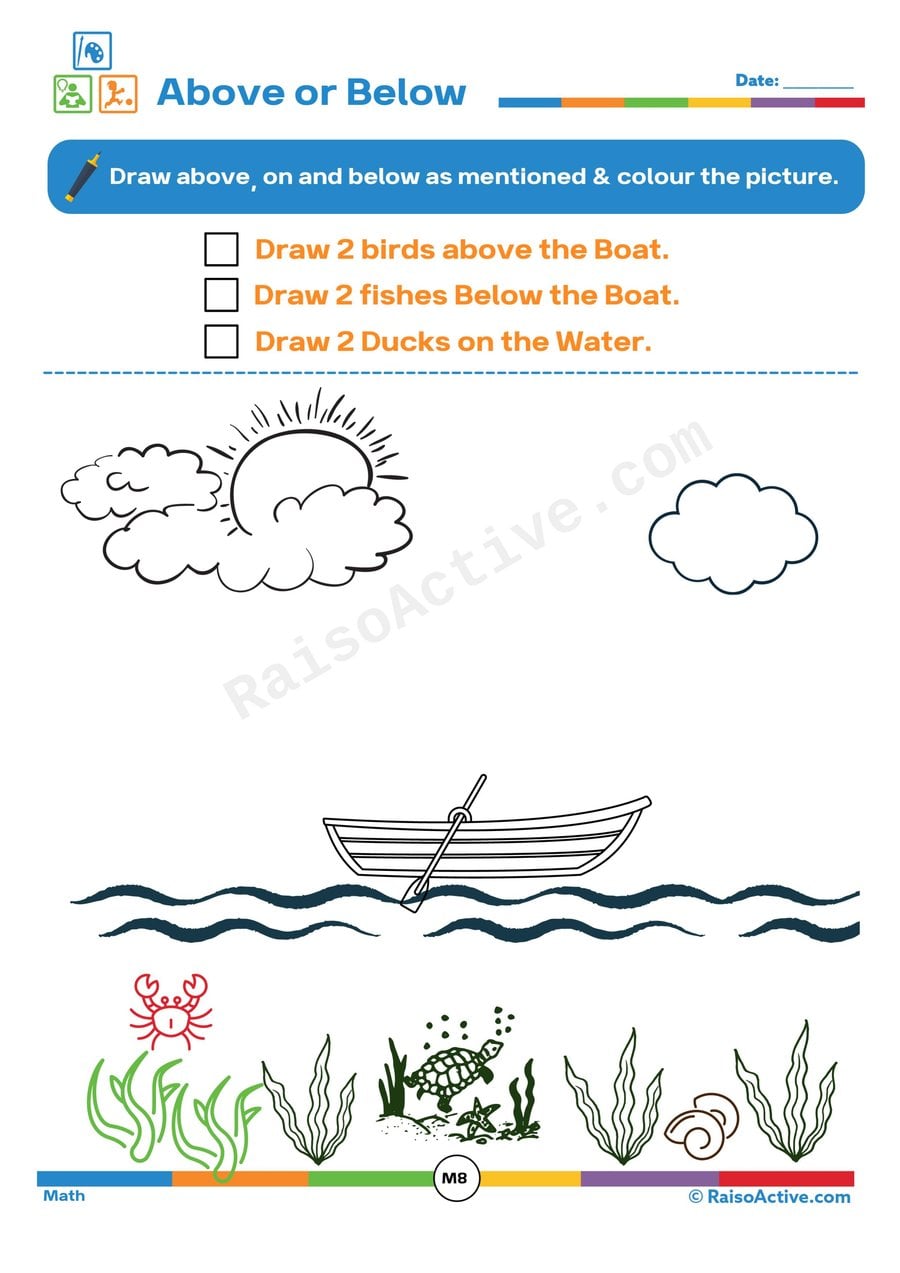
Above or Below Worksheet: Draw and Color!
This worksheet asks children ages 3-5 to apply the positional concepts of 'above,' 'below,' and 'on' by actively drawing new objects into a scene rather than simply pointing or circling. Drawing an item in a specific spatial position, like a bird above a boat, requires children to translate a verbal instruction into an accurate visual placement, which is a more demanding test of spatial understanding than passive matching. Coloring the finished scene afterward adds a satisfying creative finish to the activity.
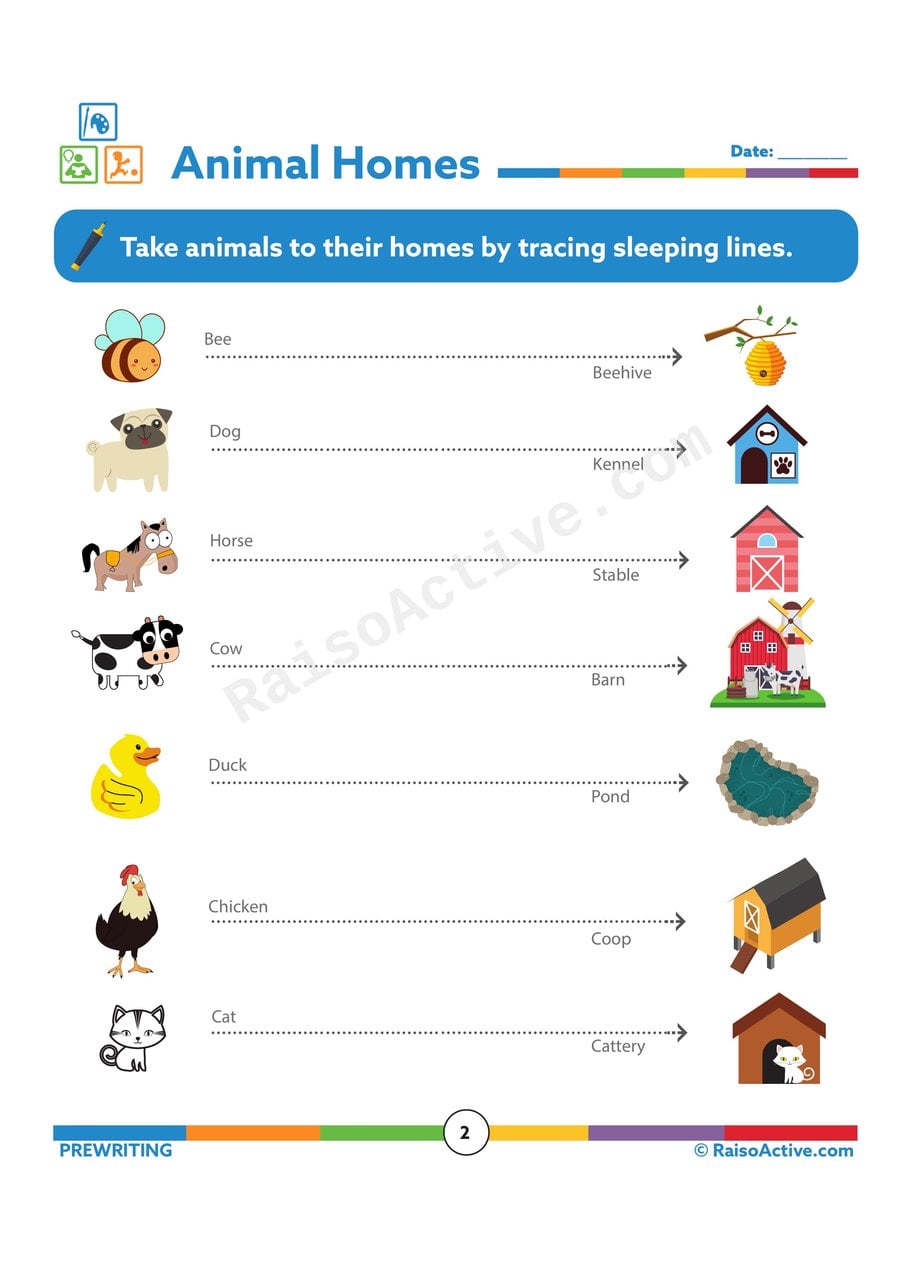
Animal Homes Tracing Worksheet for Preschoolers
Tracing a line from each animal to its home helps children ages 3-5 build pencil control while also introducing an early science concept: that different animals live in different kinds of homes, like a bird's nest or a dog's kennel. Saying the animal and its home aloud while tracing connects the physical tracing motion to new vocabulary, reinforcing both skills at once.
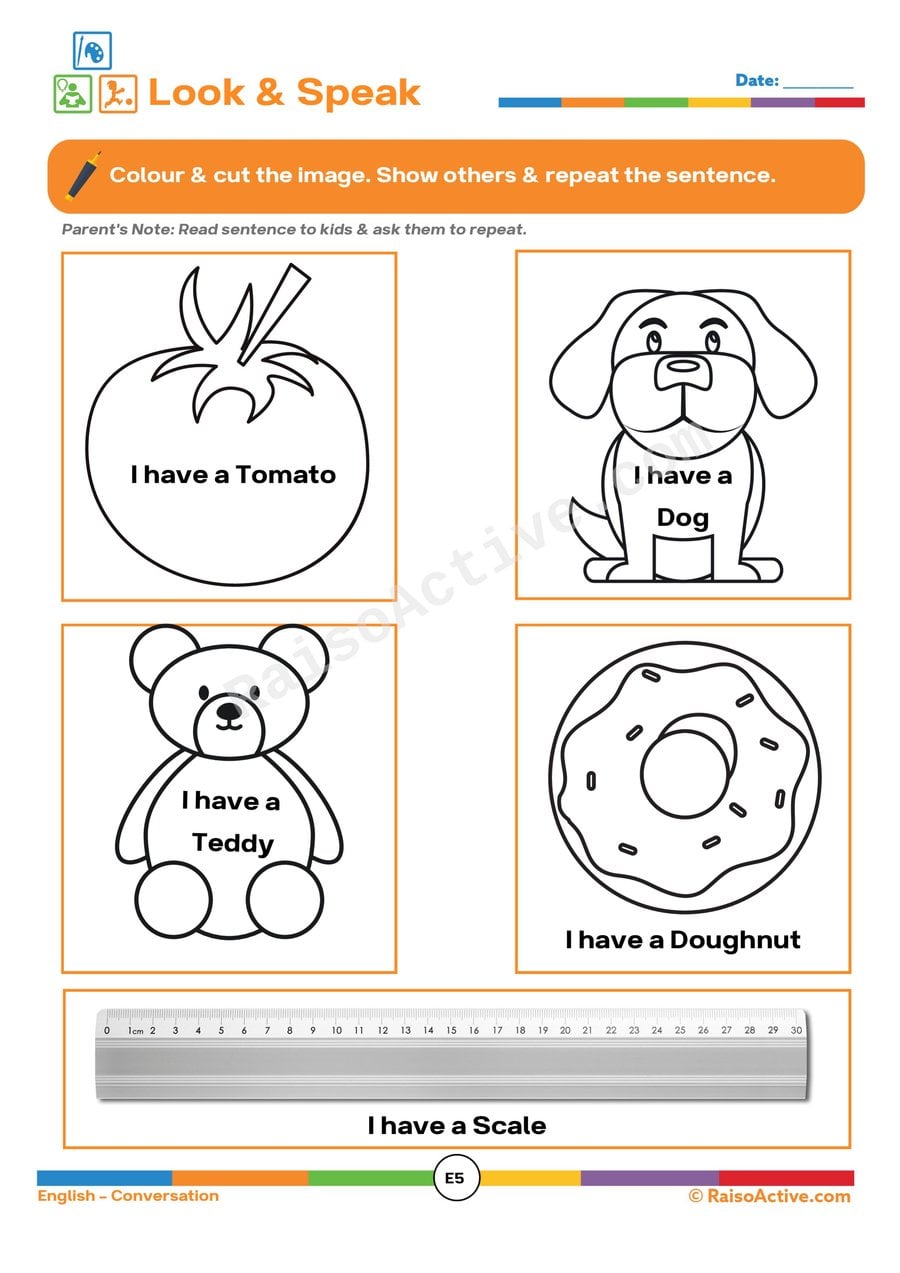
Look & Speak: Color and Repeat the Words Worksheet
This worksheet builds early vocabulary and oral language skills by having children color familiar images and then read and repeat a simple sentence describing each one aloud. For ages 3-5, the combination of coloring, reading, and speaking reinforces new words through multiple senses, helping vocabulary stick more effectively than reading alone.

Trace and Color the Letter S Worksheet for Preschoolers
Tracing and writing the letter S gives children ages 3-5 practice with a continuous, flowing curved stroke that changes direction partway through, making it one of the more demanding letters to control smoothly compared to straight-line letters. Because the S shape doesn't lift the pencil mid-stroke, this worksheet specifically builds sustained curve control in a single motion.

Color by Number Snowman Worksheet for Preschoolers
This color-by-number worksheet helps children ages 3-5 practice number recognition and color matching simultaneously, using a snowman picture divided into numbered sections. Reading a number key and applying it consistently across an entire picture builds sustained attention and careful visual tracking, since a single mistake can be spotted easily against the intended design. This combination of numeracy and following directions makes color-by-number activities a favorite bridge between math and art.
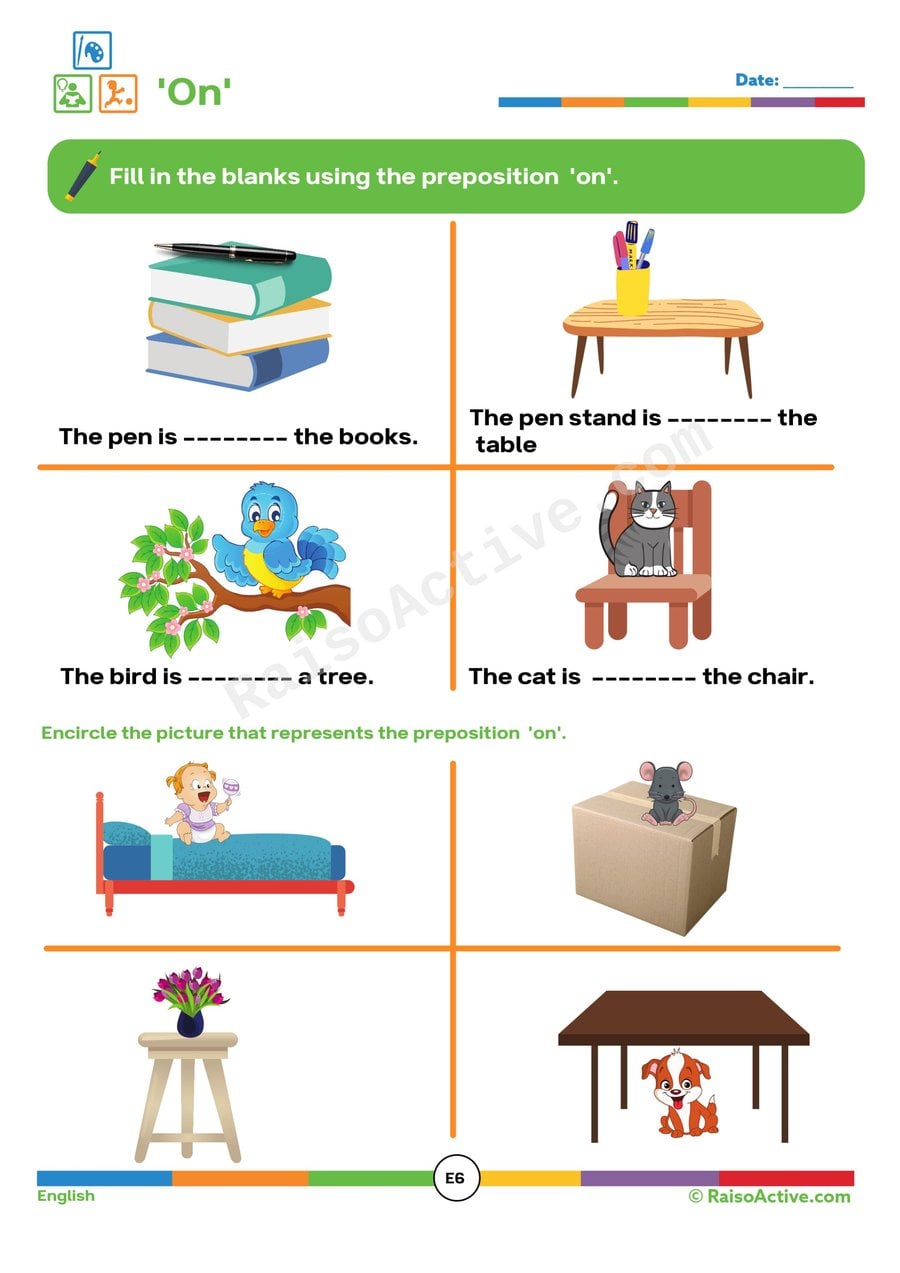
Preposition Fun: 'On' Worksheet for Early Learners
Practicing the preposition 'on' teaches children ages 3-5 how a small function word can precisely describe where one object sits in relation to another, an early and important step in building more complex, descriptive sentences. Filling in the blank with 'on' repeatedly across different sentences helps the word become automatic rather than something they have to think hard about each time. Circling the picture that correctly shows something 'on' another object also checks that your child truly understands the spatial meaning, not just the spelling of the word.

Count and Match! Number Recognition Worksheet for Preschoolers
This worksheet has preschoolers ages 3-5 practice one-to-one correspondence — touching or pointing to each object exactly once while counting — before writing the total and matching it to the correct numeral in a circle. Counting accurately requires more coordination than it looks like at this age, since children must track which objects they've already counted while saying numbers in the right order. Adding the final matching step reinforces that a written numeral represents a specific, countable quantity rather than just a symbol to memorize.

CVC 'am' Family Words Matching Worksheet for Preschoolers
This worksheet gives children ages 3-5 practice reading 'am' family CVC words and matching them to their corresponding pictures through coloring and line-drawing. Repetition with a single word family — sam, ham, jam, ram — helps children internalize the pattern quickly, building the foundation for tackling new word families with growing independence.

Letter E Tracing Worksheet for Preschoolers: Learn to Write!
Children ages 3-5 use this worksheet to build the specific motor pattern for capital E — three horizontal strokes branching off one vertical line — while reinforcing the /e/ sound through picture recognition. Repeated tracing in a dashed-box format also trains children to keep letters a consistent size, an important pre-writing skill before they move to unlined paper.

Weather Color by Number Worksheet for Preschoolers
This color-by-number activity has children ages 3-5 practice matching numerals to a color key while completing a weather-themed picture, combining number recognition with color recognition and the fine motor control needed for careful, contained coloring. Because each numbered section must be colored correctly for the picture to look right, children get immediate visual feedback on whether their number identification was accurate. The weather theme also gives a natural opportunity to talk about the picture's subject once it's revealed.

Animal Sounds Matching Worksheet for Preschoolers
This worksheet builds vocabulary and auditory memory by asking children to match each animal picture to the sound it makes, such as connecting a cow to 'moo' or a duck to 'quack.' For three- to five-year-olds, linking an animal's appearance to its sound strengthens both early science knowledge and the kind of associative memory that supports vocabulary growth.

Trace the Penguin: A Fun Pre-Writing Worksheet for Kids!
Tracing the rounded outline of a penguin gives children ages 3-5 practice with curved strokes that form a whole recognizable animal shape rather than an abstract line, which helps the tracing feel purposeful and connected to something familiar from books or videos. The cold-climate theme also introduces simple vocabulary about penguins and their environment, a small science connection layered onto the fine motor practice.

Learn the Sight Word 'Can' - Fun Tracing and Coloring Worksheet
This worksheet gives children ages 3-5 repeated, multi-format practice with the sight word 'can,' a common verb that appears frequently in early reading, through tracing, coloring, and a cut-and-paste spelling activity. Because 'can' is a short, high-frequency word that shows up constantly in beginning readers, building instant recognition of it now pays off across nearly every book your child picks up next.
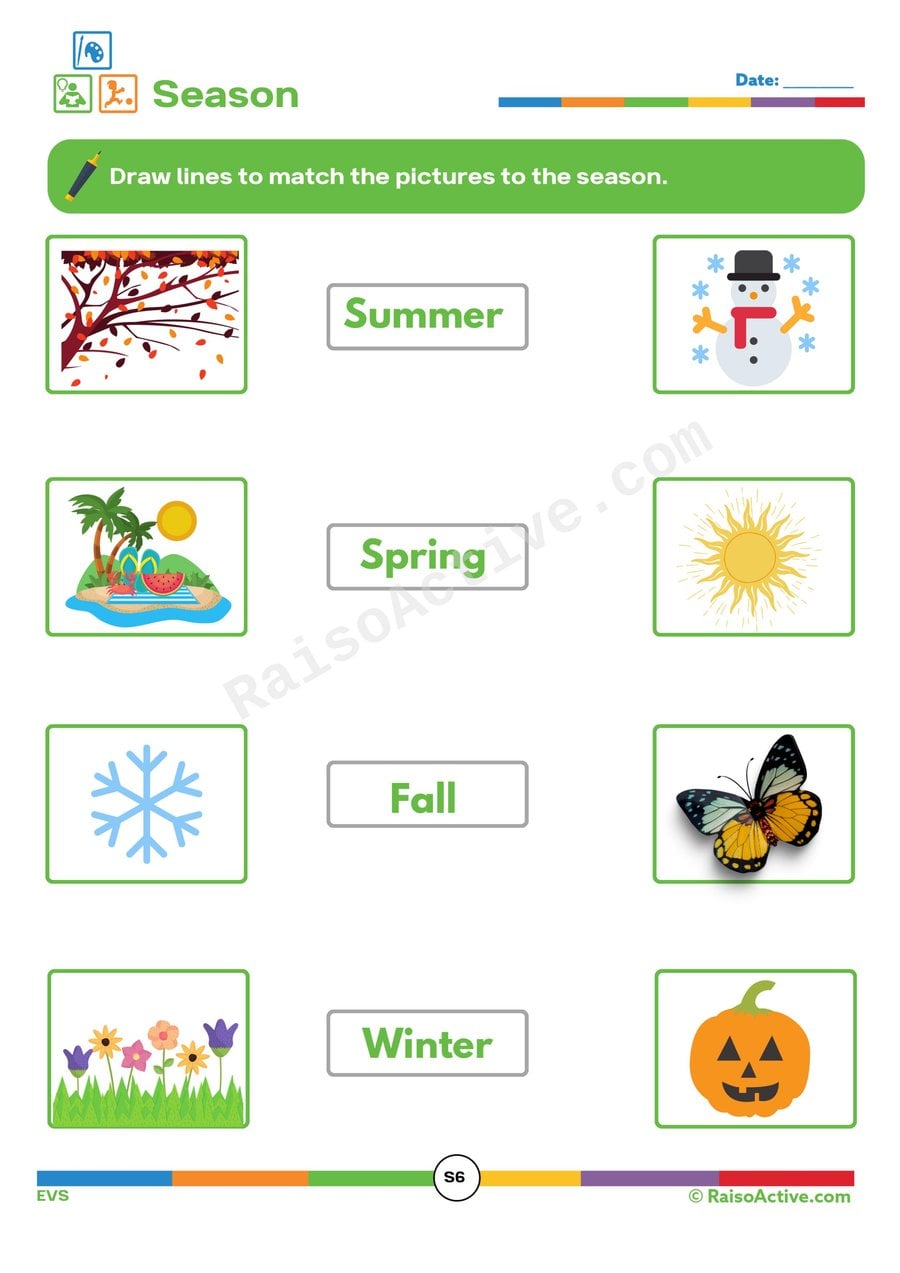
Seasons Matching Worksheet for Preschoolers
This worksheet helps children ages 3-5 learn to recognize the four seasons — summer, fall, winter, and spring — and match seasonal pictures, like snow or falling leaves, to the correct season name. Understanding that weather and nature change in a predictable yearly cycle is an early science concept that also connects naturally to a child's own experience of holidays and clothing changes throughout the year.

Letter Hh Tracing and Matching Worksheet for Preschoolers
Children ages 3-5 build letter recognition and handwriting readiness as they trace uppercase and lowercase Hh, identify the letter among different fonts, and match it to pictures of objects that start with the Hh sound. Practicing the letter across tracing, spotting, and sound-matching formats helps cement both its shape and its 'huh' sound more thoroughly than repetition of just one activity.

Colorful Seasons: Dot-to-Dot Tree Leaves Worksheet for Kids
This worksheet introduces children ages 3-5 to the four seasons through a hands-on painting activity, using cotton buds to dab colorful 'leaves' onto tree outlines and matching each tree's colors to the correct season. Connecting a season to its visual cues, like green leaves for spring or bare branches for winter, builds early science vocabulary and observation skills. The dabbing motion with cotton buds also strengthens the pincer grip children need for holding pencils and other tools later on.
What Nursery alphabet worksheets cover
Three-year-olds build a small working set of letters, usually starting with the ones in their name and reaching eight to ten capitals by the end of the year. A worksheet should ask the child to find a named letter among two or three lookalikes, circle every instance of one letter on a busy page, and say the first few letters of the alphabet in order. Full A-to-Z sequencing, lowercase forms, and matching letters to sounds belong to the year after.
- Find a named capital letter among two or three choices
- Circle every instance of one letter on a busy page
- Recite the first few letters of the alphabet in order
- Name letters found in a familiar first name
How to use these worksheets at home or in class
A single sheet a day, five to ten minutes, suits a three-year-old best. Sit alongside your child rather than opposite, demonstrate one stroke, then let them attempt it themselves, praising the try rather than the neatness of the line.
Start with the sheet that matches what your child can already do, then move one step up. Keep finished sheets in a folder: Nursery teachers often ask for evidence of practice, and children like seeing their own progress.
Is your child ready for Nursery alphabet work?
Readiness shows up as a proper crayon grip with fingers instead of a fist, purposeful scribbling, sitting through a short task and following one spoken instruction such as pointing to a colour. Without these, stick to sticker play and large colouring pages for now.
Frequently asked questions
How many letters should a three-year-old recognise?
Eight to ten capital letters by four is a reasonable range, usually the letters in the child's name plus a few seen often elsewhere. Being able to recite the alphabet song is not the same thing as recognizing letters out of order, so check recognition by pointing to a letter on a page and asking for its name, not by listening to the song. A child who knows fewer than that is not behind; interest and repetition vary widely.
What should a Nursery child be able to do in alphabet?
Three-year-olds build a small working set of letters, usually starting with the ones in their name and reaching eight to ten capitals by the end of the year. A worksheet should ask the child to find a named letter among two or three lookalikes, circle every instance of one letter on a busy page, and say the first few letters of the alphabet in order. Full A-to-Z sequencing, lowercase forms, and matching letters to sounds belong to the year after. Readiness shows up as a proper crayon grip with fingers instead of a fist, purposeful scribbling, sitting through a short task and following one spoken instruction such as pointing to a colour. Without these, stick to sticker play and large colouring pages for now.
Do these worksheets follow the Nursery curriculum?
The sheets cover letter recognition A–Z, letter names versus letter sounds, sequencing letters in order and matching uppercase to lowercase, which sit inside the NEP 2020 Foundational Stage (NCF-FS 2022) outcomes for Nursery. Preschool (US), Nursery (UK) use the same skills at this age, so the sheets also fit families following those programmes.
Are the Nursery alphabet worksheets free to download?
Yes. Every sheet on this page can be downloaded free as a watermarked PDF after creating an account, up to five downloads a day. The annual membership (₹1000) removes the watermark and the daily limit across the full library of more than 1,000 worksheets and all activity packs.

Written by
Hemsweta Jain · Teacher Cheena
MBA and Early Childhood Educator, teaching since 2014 · Founder of RaisoActive, Mumbai
Written and reviewed by Hemsweta Jain (Teacher Cheena), who designs every RaisoActive worksheet.
Last reviewed
Printable packs for ages 3–4
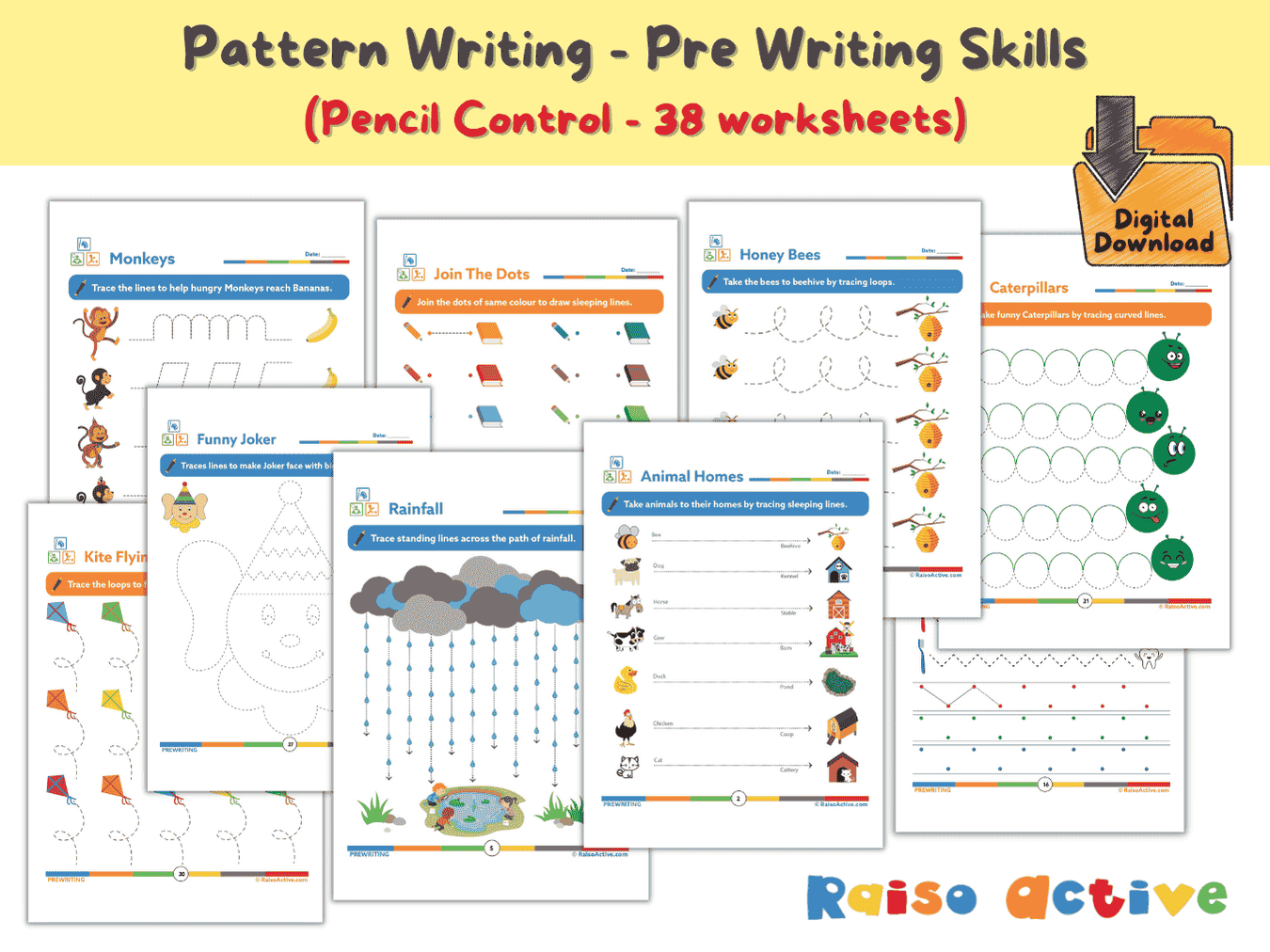
Pattern Writing Pre-writing Skills Activity Book for 3-4 Year Olds
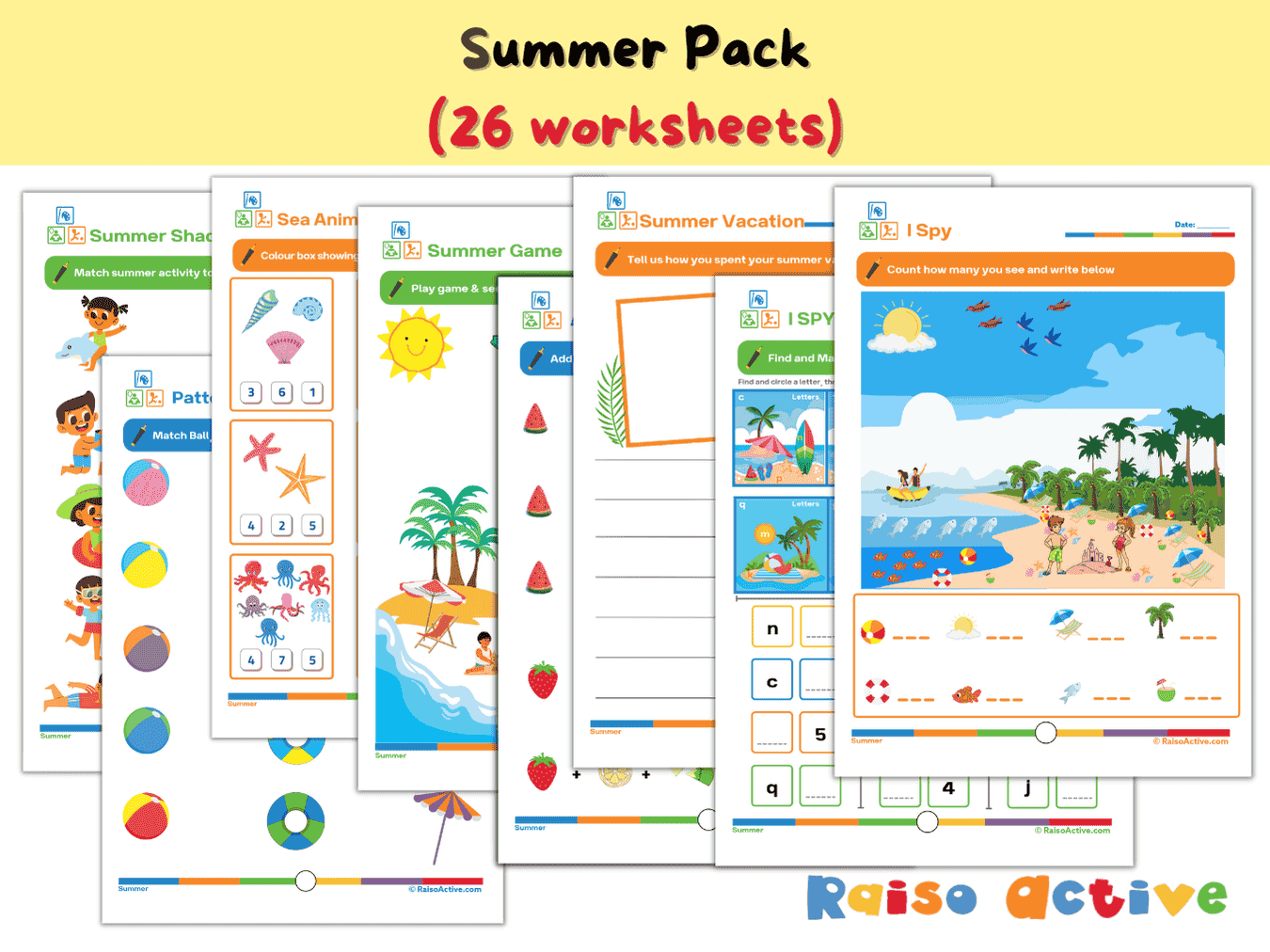
Summer Activity Pack: Math, Literacy, Puzzles & More for Preschool & Kindergarten
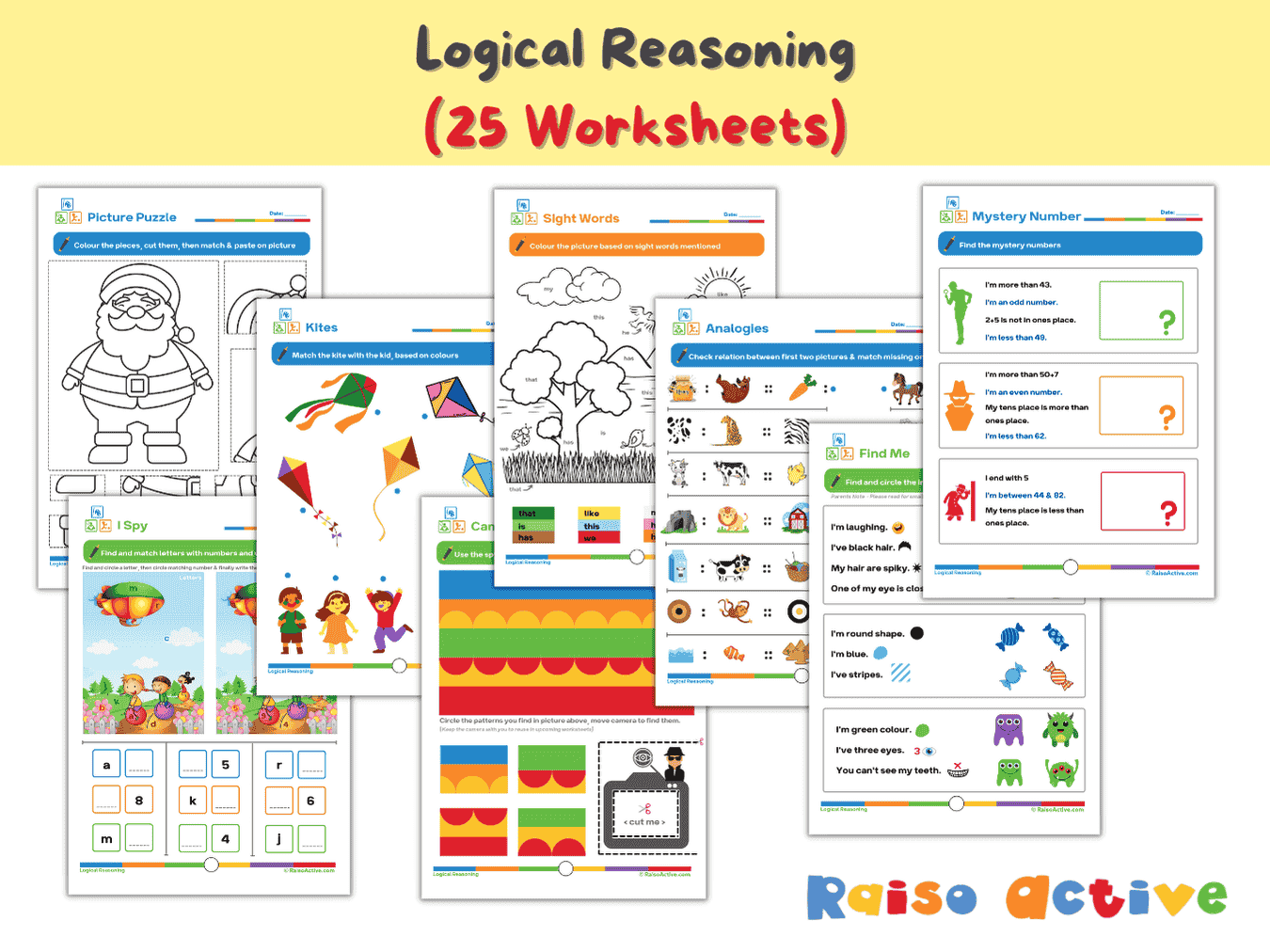
Logical Reasoning Activity Book for Preschool & Kindergarten | Patterns, Puzzles & Analogies
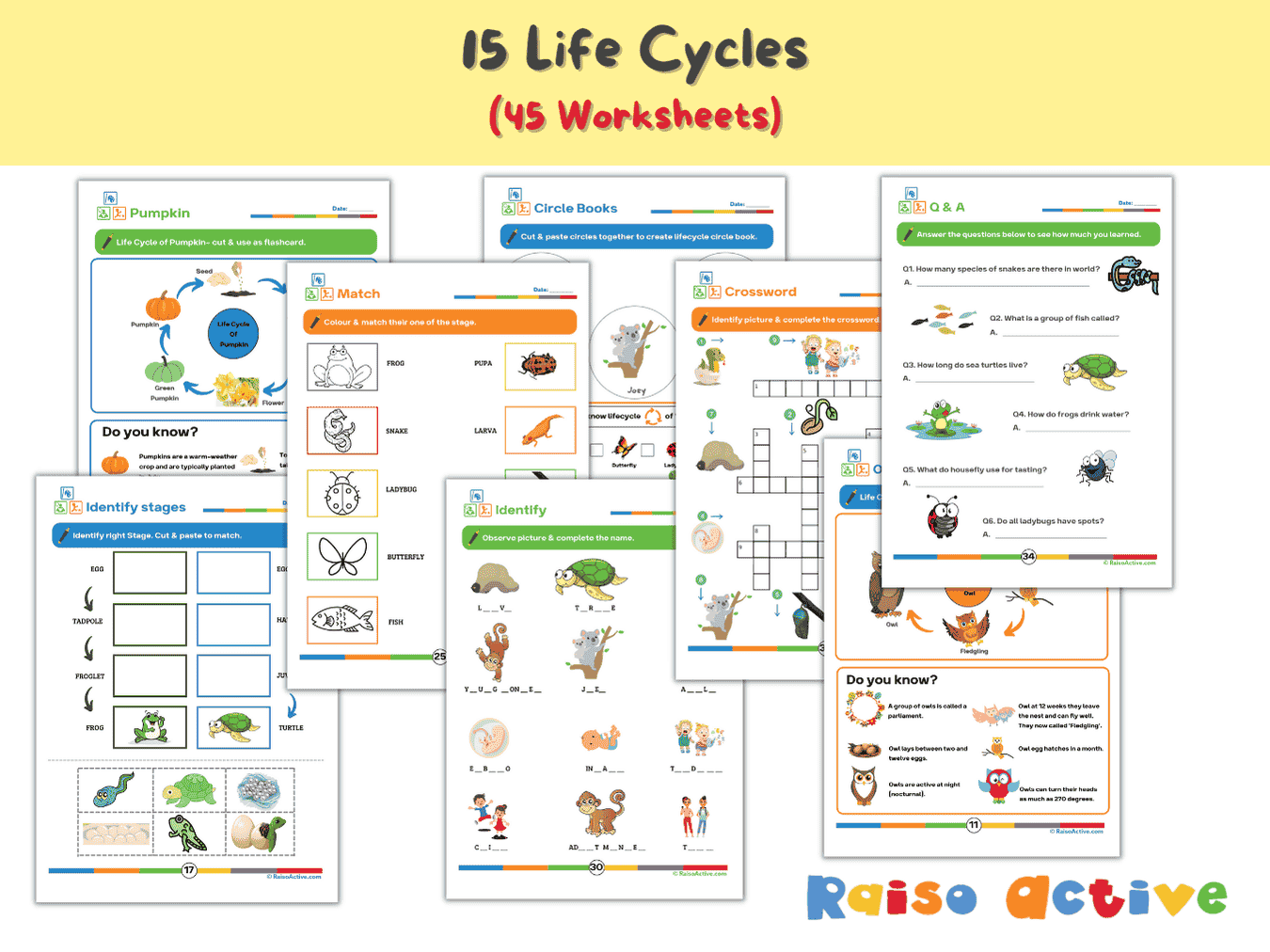
Lifecycles Activity Book & Flashcards for Preschool & Early Elementary
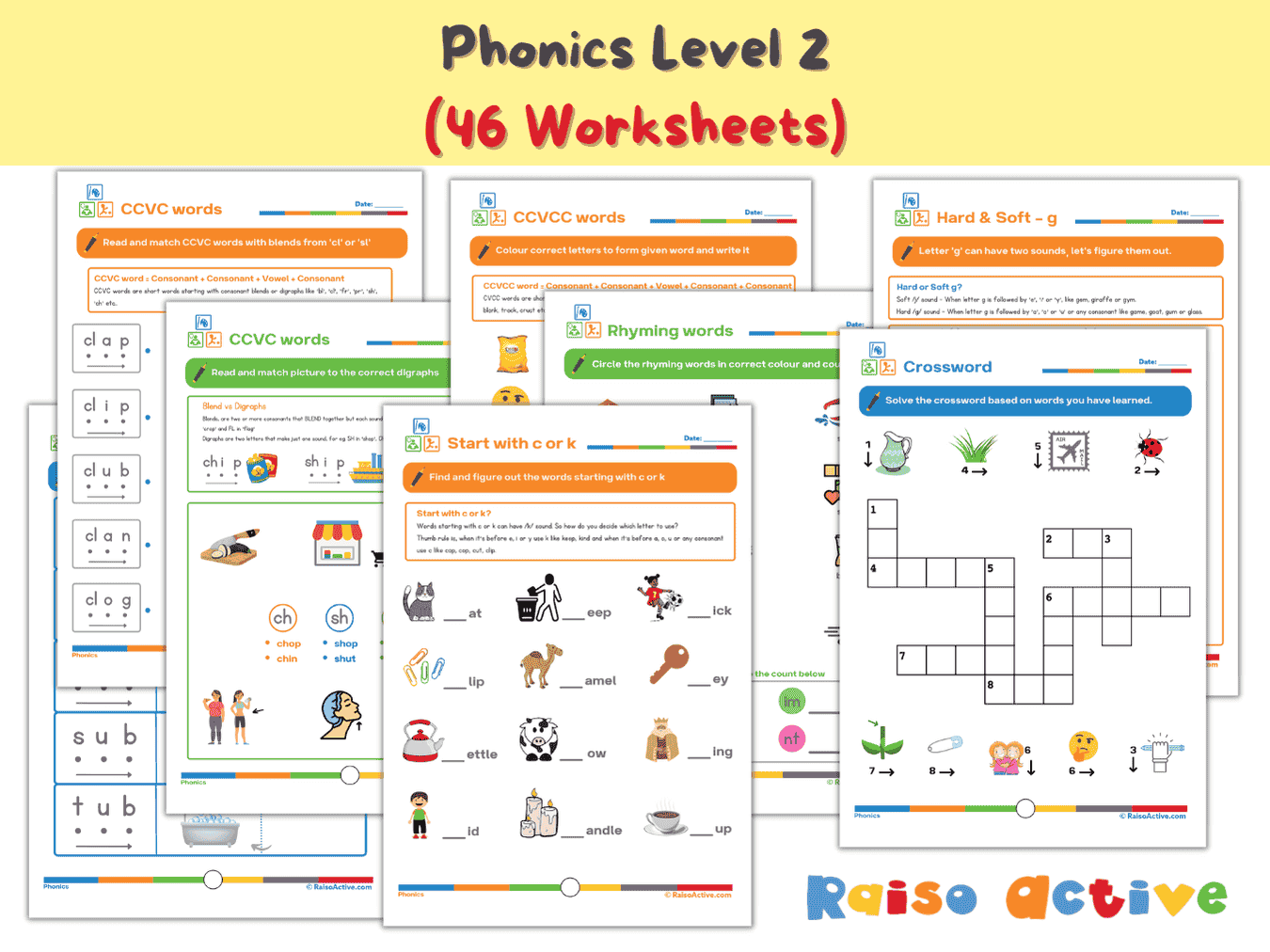
Phonics Level 2 Worksheets: CVC, CCVC, CVCC Word Families & Blends for Early Readers (Ages 4-7)
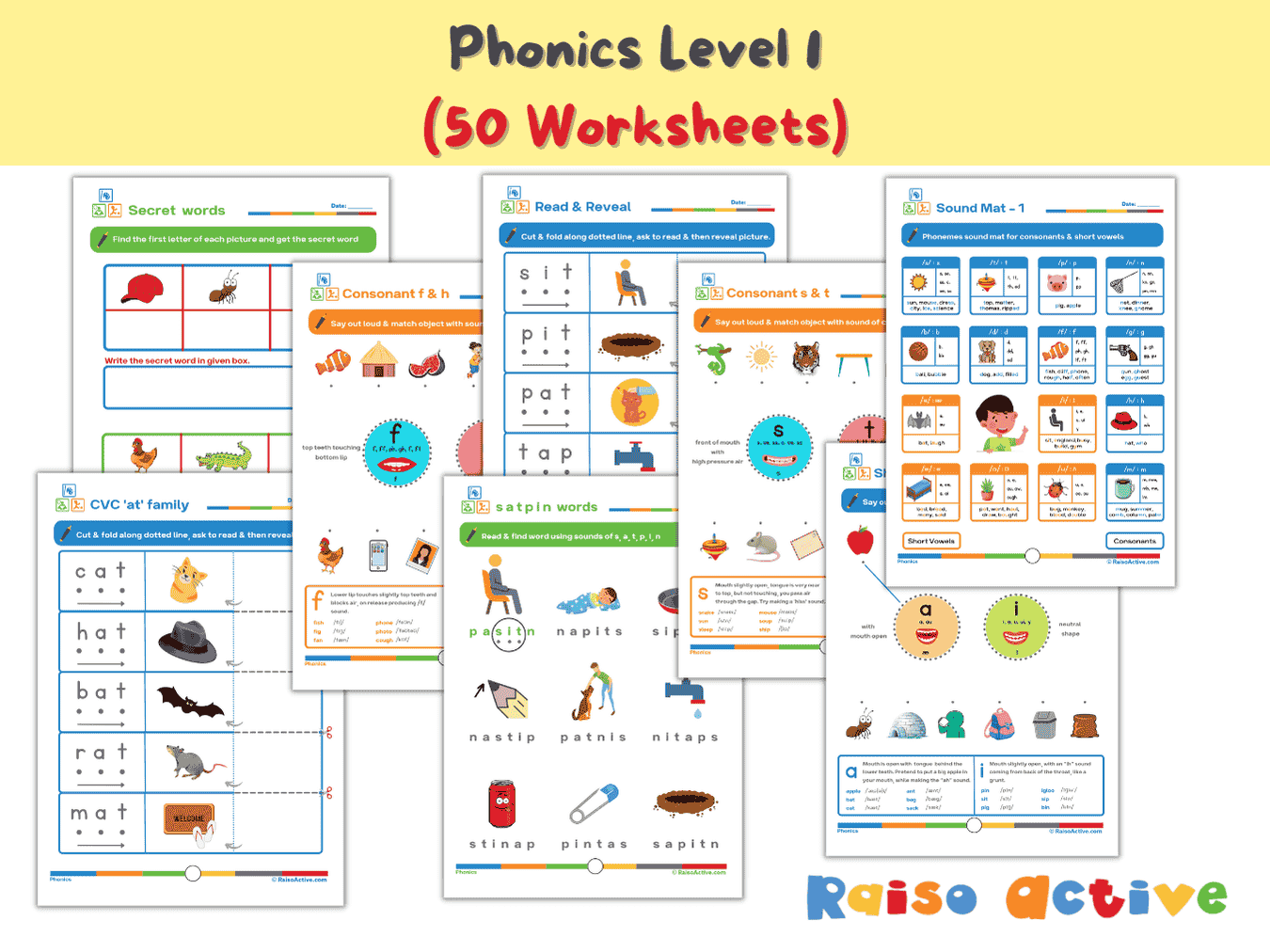
Phonics Level 1 Activity Book: Letter Sounds, Blending & CVC Words for Preschool & Kindergarten
Guides for parents and teachers
See all guides →Kindergarten Readiness Checklist: 25 Skills to Practice Before the First Day
A kindergarten readiness checklist of 25 literacy, math, motor, self-regulation and self-help skills, with an 8-week summer plan and notes on when not to worry.
Phase 2 Phonics at Home: Sound Order, Blending Games, Worksheets
Phase 2 phonics at home: the five sound sets in order, oral blending, tricky words, a two-week routine, common mistakes, and free worksheets.
Reception Year Explained: EYFS Learning and How to Help at Home
A teacher's plain-English guide to the Reception Year: the seven areas of learning, Early Learning Goals, Phase 2/3 phonics, the RBA and home routines.
What Should a 4-Year-Old Know Before LKG? A Readiness Checklist
A calm, teacher-written LKG readiness checklist for 4-year-olds: language, pattern writing, numbers to 10, self-help and social skills, plus a 6-week plan.
Bridging Two Worlds: A Complete Guide to Teaching Heritage Languages Alongside English
A practical guide to raising bilingual children who speak both their heritage language and English with confidence. Research-backed strategies, activities, and tips for Indian families.
How to Help Your Child with Letter Reversals: A Complete Guide for Parents and Teachers
Letter reversals are normal until age 7-8. Learn the best multisensory strategies, anchor letter tricks, and activities to help children write b, d, p, and q correctly.
Canonical: https://raisoactive.com/worksheets/nursery-alphabet