Free printable worksheets · India
UKG Alphabet Worksheets (Ages 5–6)
UKG alphabet worksheets are practice sheets for children aged 5–6 in Upper Kindergarten (Senior KG) in India. Alphabet worksheets build recognition of the 26 letters, their names and order, and the difference between uppercase and lowercase forms. The sheets on this page cover letter recognition A–Z, letter names versus letter sounds, sequencing letters in order and matching uppercase to lowercase.
Upper Kindergarten shifts from recognising symbols to using them: children blend letter sounds into words, write short sentences, and solve small addition and subtraction sums instead of only counting objects. Numbers extend to fifty, and the plus and minus signs appear on the page for the first time. Five-year-olds recite and recognise the full alphabet in both cases and start using letter order for a purpose: putting three words in alphabetical order by their first letter, filling several missing letters in a sequence, or finding where a new letter would go. Worksheets should mix uppercase and lowercase freely, since a child this age should read either without help, and include short alphabetizing tasks with familiar words. Second-letter alphabetizing is not expected yet.
1053+ worksheets · free PDF download · print on A4 or Letter
UKG Alphabet Worksheets to print
Browse all worksheets for ages 5–6
Sun Safety Worksheet for Kids: Learn About Staying Safe in the Sun!
This worksheet has children ages 4-7 answer questions about sun safety, such as why sunscreen and hats matter, building early health literacy alongside writing practice as they put their understanding into their own words. Because the questions ask children to reason about why certain sun-safety habits matter rather than just label a picture, this worksheet develops early explanatory thinking, a step up from simple factual recall. Practicing writing full answers, even short ones, also builds sentence-forming skills appropriate for this age range.
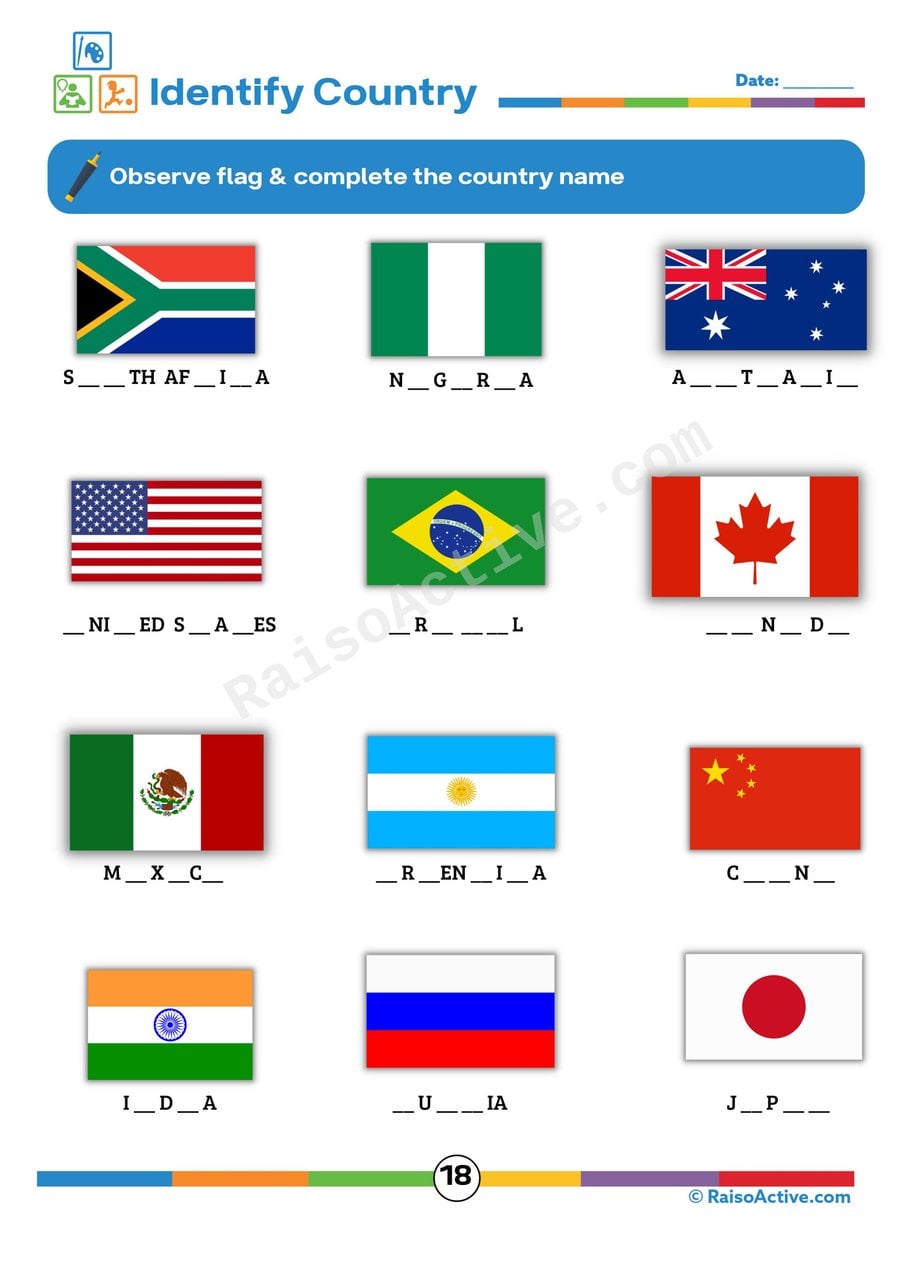
Identify the Country: Flag Matching Worksheet
Filling in the missing letters of each country's name while studying its flag gives children ages 4-7 practice with letter-sound correspondence and spelling patterns, since they must sound out the word and recall which letters are already provided as clues. It also builds early geography knowledge, helping children connect a visual symbol (the flag) to a country's name for the first time. This dual practice of decoding and world knowledge lays groundwork for both literacy and social studies skills.

G and J Sound Worksheet: Find and Figure Out the /j/ Sound!
This worksheet tackles a genuinely tricky phonics rule for children ages 4-6: that both the letters 'g' and 'j' can make the same /j/ sound, depending on the word, as in 'giraffe' and 'jump.' Learning to fill in the correct letter based on context and word-specific spelling (rather than a fixed rule) builds early spelling flexibility and prepares children for the reality that English spelling often requires memorization alongside phonics logic. This kind of targeted practice on a specific, commonly confused sound-letter relationship fills an important gap that general phonics worksheets tend to skip.

Body Parts Worksheet: Identify and Paste the Correct Organ!
Reading a clue about a body part's function and finding the matching organ builds science vocabulary and reading comprehension for children ages 4-6, linking what a body part does to its correct name.
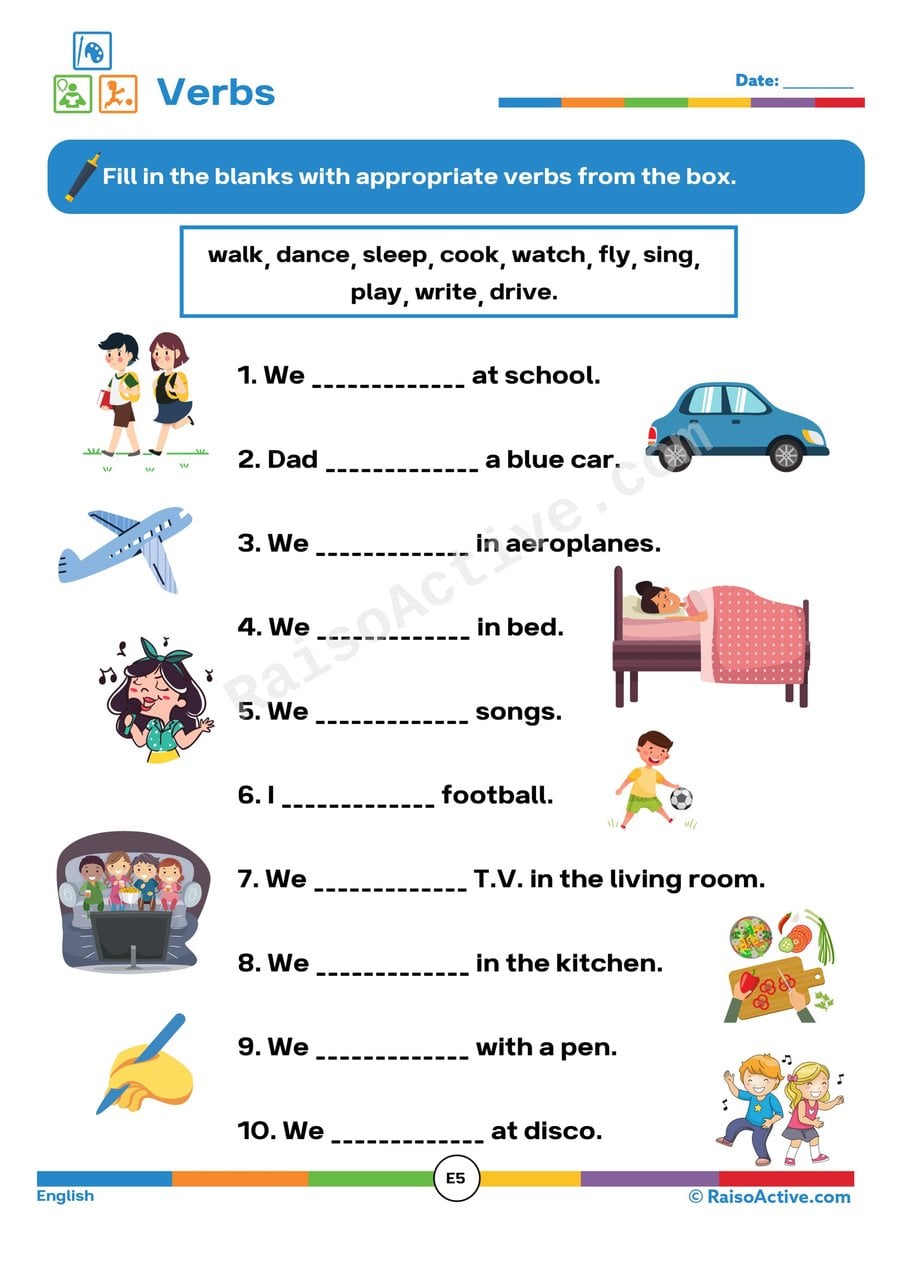
Action Verbs Worksheet: Fill in the Blanks!
This worksheet moves 4-6 year olds a step beyond matching verbs to pictures — now they have to read a full sentence, understand its meaning, choose the correct verb from a word box, and write it into the blank themselves. That combination of reading comprehension, vocabulary selection, and handwriting makes this noticeably more demanding than earlier action-word worksheets, and it's exactly the kind of sentence-completion task children will meet again in early elementary grammar lessons.

Long Vowel 'i-igh' Worksheet: Circle and Write the Words!
The 'igh' spelling pattern (as in 'light' and 'night') is a less intuitive way to represent the long 'i' sound compared to the silent-e pattern, so this worksheet gives children ages 4-6 dedicated practice recognizing and writing words that use this specific, slightly trickier spelling. Identifying pictures with the 'igh' sound and then writing the matching word builds both auditory discrimination and spelling accuracy for a pattern that doesn't follow the more common rules children may have already learned. Since 'igh' words are common in early reading books, this focused practice pays off quickly in reading fluency.

Family Words Cut and Paste Worksheet for Early Readers
Reading a simple CVC word and matching it to its picture teaches children ages 4-6 to blend individual sounds into a whole word and then connect that word to its meaning, a core decoding skill for early readers. Because CVC words follow a consistent consonant-vowel-consonant pattern, practicing them builds a reliable phonics foundation that transfers to reading many other simple words.
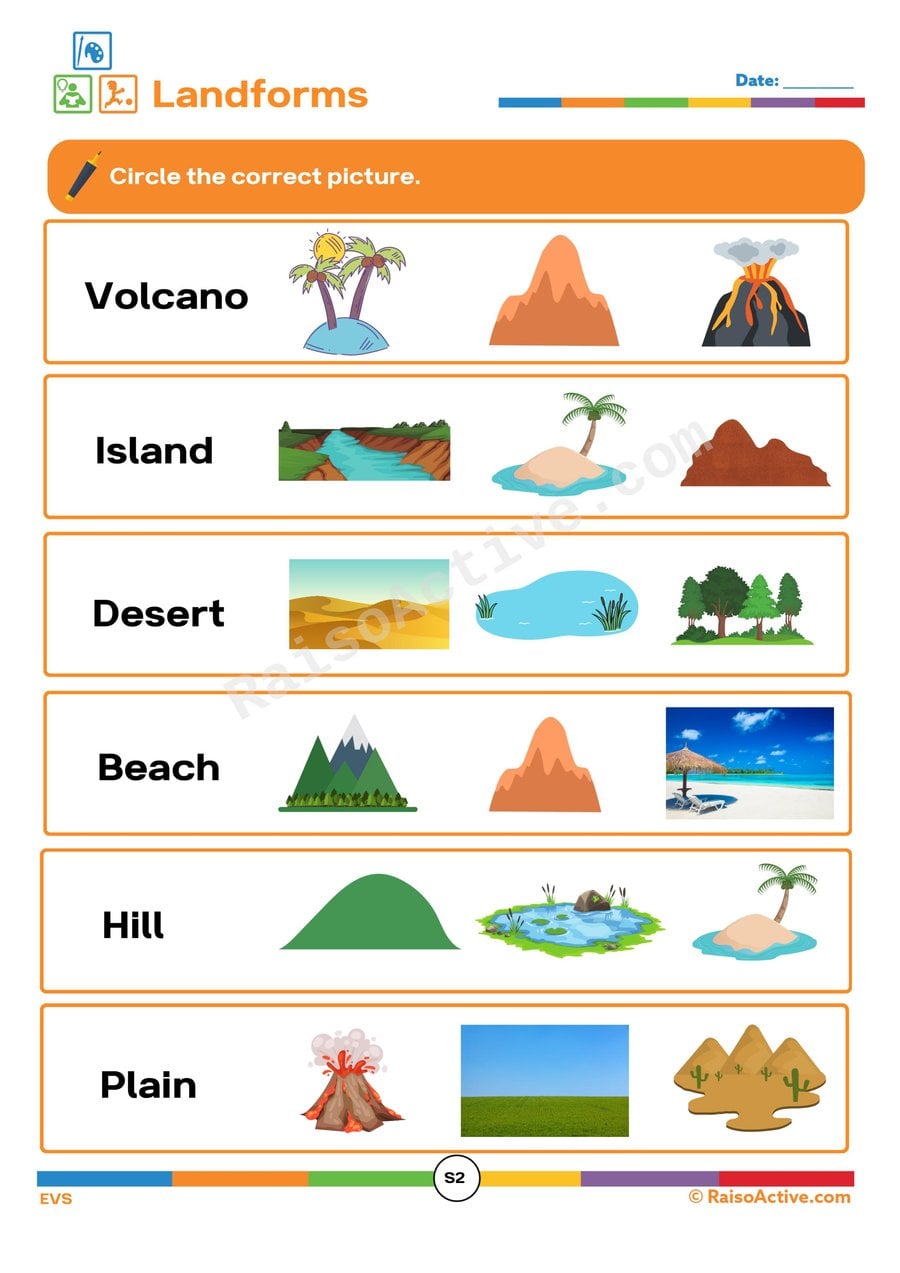
Landforms Worksheet: Circle the Correct Picture!
This worksheet introduces children ages 4-6 to basic landform vocabulary — words like mountain, valley, island, or river — by asking them to read or hear a landform's name and circle the picture that matches it. Connecting a geography term to its correct visual representation builds early science and social studies vocabulary well before children can read complex nonfiction text on their own. This kind of word-to-picture matching also reinforces observational skills, since children must notice the distinguishing visual features that make one landform different from another.
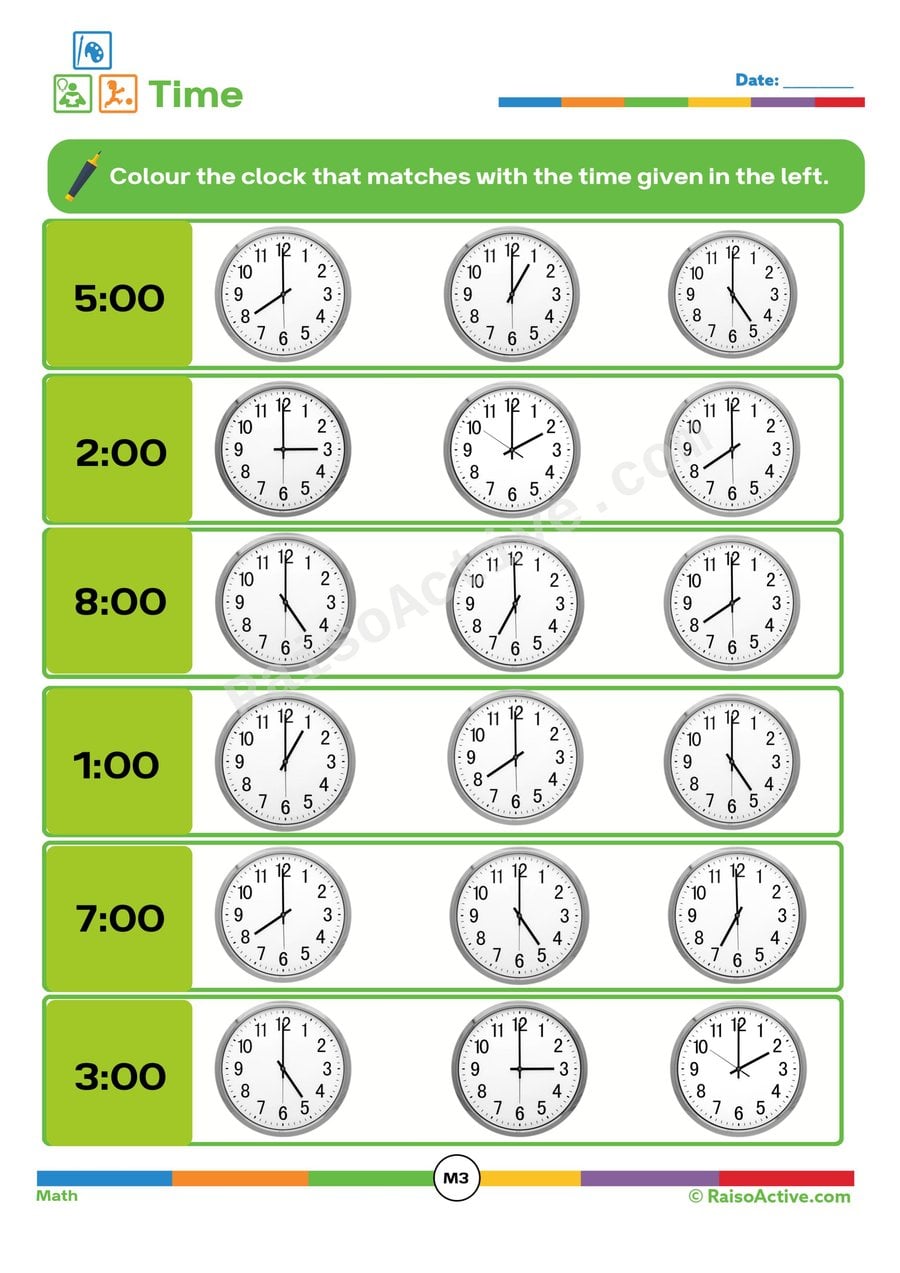
Time Matching Worksheet: Color the Clock!
Matching a written or digital time to the analog clock showing the same time builds clock-reading skills for children ages 4-6, requiring them to translate between two different ways of representing the same moment.
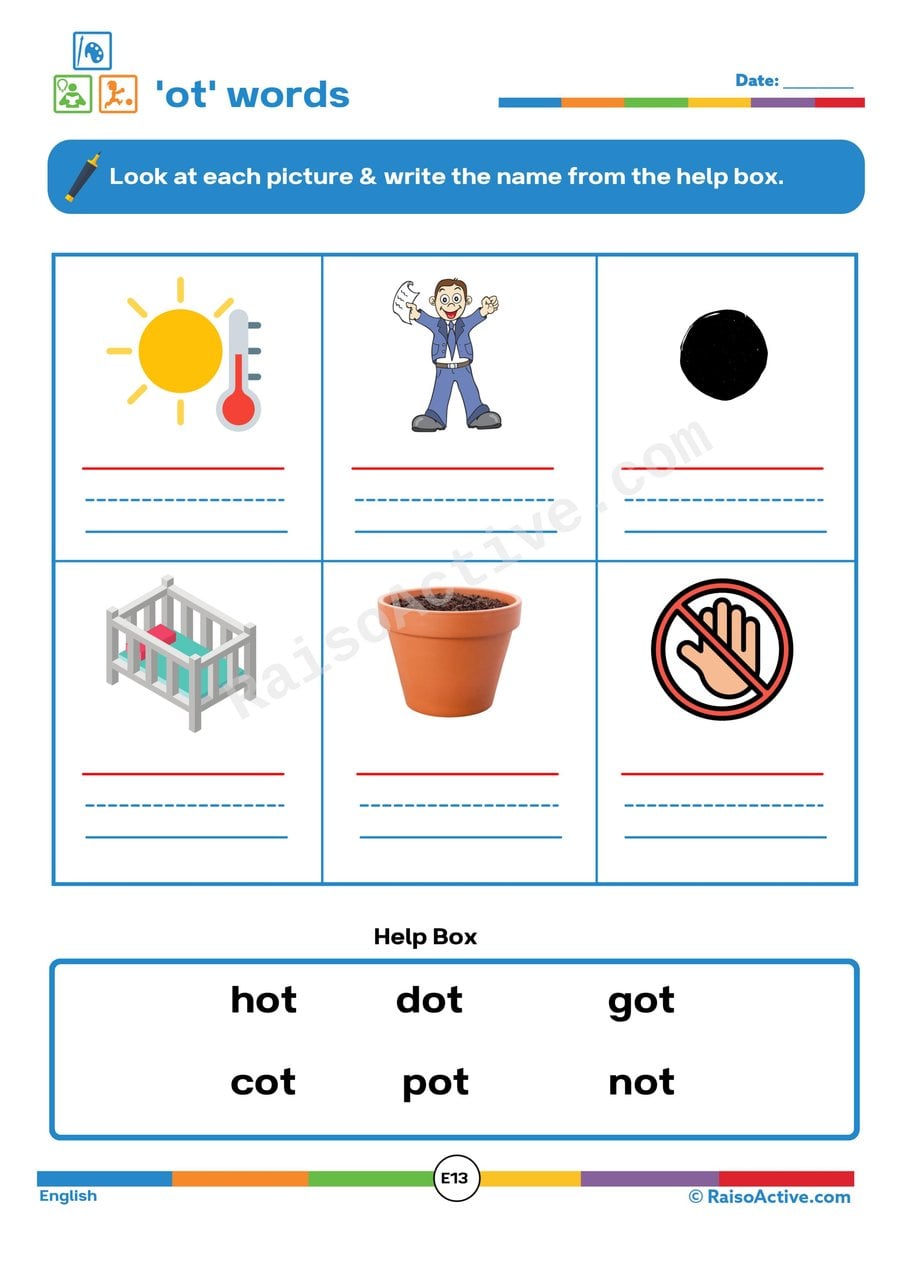
Ot Word Fun: 'ot' Word Worksheet for Early Readers
Children ages 4-6 build phonics fluency by reading and writing CVC words in the 'ot' family, like 'pot', 'dot', and 'hot'. Recognizing this consistent letter pattern teaches early readers that groups of letters make predictable sounds, a key strategy for decoding unfamiliar words independently. Writing the words afterward reinforces the sound-to-letter connection needed for spelling.

Pronoun Power: Complete the Sentences Worksheet for Kids
This worksheet gives children ages 4-6 practice choosing the correct pronoun — like 'he', 'she', 'it', or 'they' — to complete simple sentences, reinforcing an early grammar skill that makes spoken and written language flow more naturally. Learning to replace a repeated noun with the right pronoun is a subtle but important step toward writing sentences that sound natural rather than repetitive.

Addition Fun: Add and Match the Numbers! (Worksheet)
Children ages 4-6 practice basic addition by counting two groups of pictured objects, finding their total, and then matching that sum to the correct number, combining counting, addition, and visual matching in a single activity. Drawing a line to connect an answer to its number reinforces that a math sentence and a numeral represent exactly the same quantity.

Life Cycle Stages Worksheet: Identify and Sequence!
This worksheet asks children ages 4-6 to identify what life-cycle stage is shown in each individual picture and then number a whole set of pictures into the correct growth sequence, moving beyond simple matching into independent ordering and logical reasoning. Because the worksheet likely mixes several different animals' or plants' stages, it also asks children to recognize what type of life cycle a picture belongs to before sequencing it.

Vowel Sounds Worksheet: Identify and Circle the Correct Vowel!
Children ages 4-6 practice identifying vowel sounds within words by looking at a picture, saying its name aloud, and figuring out which vowel they hear, a specific phonics skill that builds toward independent reading and spelling. Isolating the vowel sound in a word is often trickier for children than identifying beginning consonant sounds, making this a meaningful next step in phonics.

Color Mixing Worksheet for Preschoolers: Learn Primary and Secondary Colors!
Identifying primary colors and predicting which two combine to create each secondary color introduces children ages 4-6 to basic color theory, an early scientific concept about how colors interact. This worksheet builds the vocabulary and reasoning skills needed to understand color mixing before testing it out with real paint or crayons.

Possessive Noun Worksheet for Kids: Practice with Apostrophes!
Children ages 4-6 practice forming possessive nouns by choosing the correct apostrophe-s form to complete a sentence, building an understanding that an apostrophe signals ownership ('the dog's bone' rather than 'the dogs bone'). This is an early but important punctuation skill that sets the foundation for more advanced grammar and writing clarity later on.

Trace and Write Numbers 11-15: Counting and Writing Worksheet
This worksheet helps children ages 4-6 practice tracing and writing the number words from eleven to fifteen, moving beyond single-digit numbers into the trickier teen range where number names don't always follow an obvious pattern. Matching the number of dots on dice to the correct written number name also reinforces that these longer number words still represent a specific countable quantity.
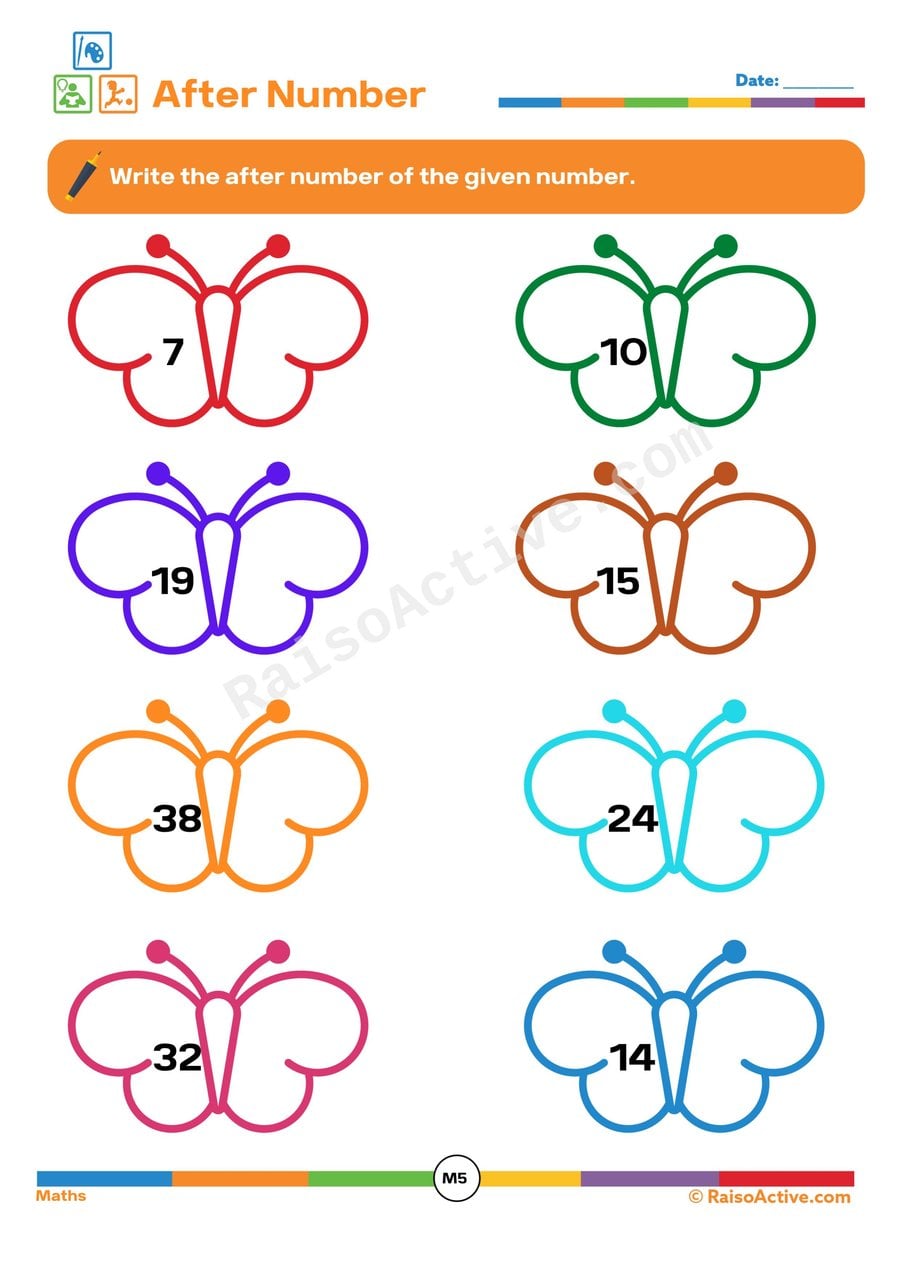
After Number Worksheet: Butterfly Fun!
This worksheet targets a specific early-numeracy milestone: understanding that every number has a number that comes immediately after it in sequence. For ages 4-6, practicing 'what comes next' strengthens the mental number line children rely on for later addition, since knowing that 7 comes after 6 is the foundation of counting on.

Punctuation Fun: Practice Using Punctuation Marks!
Choosing the correct punctuation mark to complete a sentence teaches children ages 4-6 that periods, question marks, and other marks change how a sentence should be read and understood, not just how it looks on paper. Matching sentences to their correct punctuation marks reinforces this by requiring children to recognize the tone or purpose of a sentence, whether it's a statement, a question, or an exclamation. This early grammar practice builds the foundation for reading with expression and writing complete, correctly punctuated sentences later on.

Spooky Vocabulary Worksheet: Fill in the Missing Letters!
This worksheet has children ages 4-6 look at a Halloween picture and fill in the missing letters of its matching word, building phonics skills and reinforcing correct spelling patterns for seasonal vocabulary. Because only some letters are missing rather than the whole word, children practice using partial information and sound-based reasoning to complete each word correctly.

Number Names Worksheet: Write the Missing Letters!
This worksheet builds early spelling and number-word recognition as children ages 4-6 look at a numeral and fill in the missing letters to complete its written name, such as turning 'f_ve' into 'five.' Connecting the numeral, the spoken word, and its written spelling all in one task strengthens both literacy and numeracy at the same time.

Long Vowel U Worksheet: Complete the Words and Match!
Rounding out the five long vowel sounds, this worksheet has children ages 4-6 complete words containing the long 'u' sound and then match each one to its picture, reinforcing both spelling recall and word meaning together. The long 'u' sound is often trickier than other long vowels since it can sound like 'oo' in some words and like 'yoo' in others, so focused, repeated practice really helps here. Completing this worksheet means your child will have now practiced identifying and spelling all five long vowel patterns, a major milestone in decoding independence.

Duckling Number Fun: Coloring Numbers 0-20 Worksheet
This worksheet helps children ages 4-6 practice recognizing numerals from 0 to 20 in sequence as they color a path of boxes to help a duck reach its ducklings, turning number recognition into a purposeful, story-driven task. Coloring the boxes in strict numerical order also reinforces the idea that numbers build one after another, supporting later skip-counting and number-line skills.
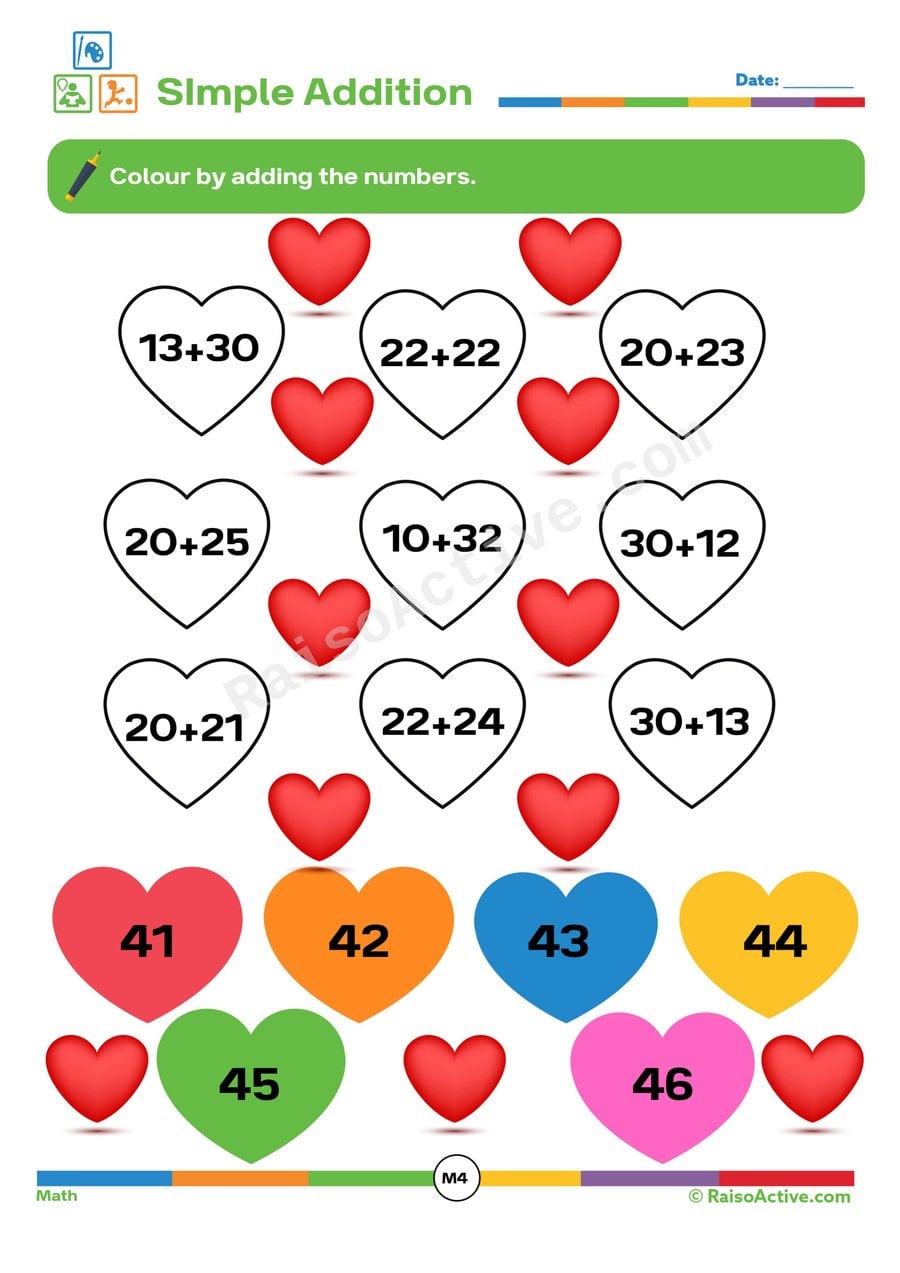
Simple Addition Worksheet: Color by Sums!
Children ages 4-6 practice quick single-digit addition facts while also following a color key, combining early math fluency with visual attention to detail. Solving each problem before coloring gives an immediate, satisfying way to check their own accuracy as the picture comes together.
What UKG alphabet worksheets cover
Five-year-olds recite and recognise the full alphabet in both cases and start using letter order for a purpose: putting three words in alphabetical order by their first letter, filling several missing letters in a sequence, or finding where a new letter would go. Worksheets should mix uppercase and lowercase freely, since a child this age should read either without help, and include short alphabetizing tasks with familiar words. Second-letter alphabetizing is not expected yet.
- Recite and recognise the alphabet in uppercase and lowercase
- Put three familiar words in order by their first letter
- Fill several missing letters in a scrambled short sequence
- Find a letter's alphabet position without counting from A
How to use these worksheets at home or in class
Two short sheets a day, roughly fifteen to twenty minutes altogether, keeps a five-year-old moving without overload. Alternate an English page with a maths page so neither subject stalls, and let your child attempt the first few items before stepping in.
Start with the sheet that matches what your child can already do, then move one step up. Keep finished sheets in a folder: UKG teachers often ask for evidence of practice, and children like seeing their own progress.
Is your child ready for UKG alphabet work?
Before this stage a child should write most capital letters from memory, know the sound each letter makes, count objects accurately to twenty, and sit through a full worksheet without needing a break halfway through.
Frequently asked questions
What does alphabetical order teach a five-year-old besides the alphabet?
It gives letter knowledge a job to do. Sorting three words by their first letter uses the same recognition and sequencing a child already has, but adds the idea that order has a use, which shows up again in dictionaries, indexes and class name lists. Keep the word lists short and familiar, three or four words with clearly different first letters, and save alphabetizing by the second letter for when the first-letter version is easy.
What should a UKG child be able to do in alphabet?
Five-year-olds recite and recognise the full alphabet in both cases and start using letter order for a purpose: putting three words in alphabetical order by their first letter, filling several missing letters in a sequence, or finding where a new letter would go. Worksheets should mix uppercase and lowercase freely, since a child this age should read either without help, and include short alphabetizing tasks with familiar words. Second-letter alphabetizing is not expected yet. Before this stage a child should write most capital letters from memory, know the sound each letter makes, count objects accurately to twenty, and sit through a full worksheet without needing a break halfway through.
Do these worksheets follow the UKG curriculum?
The sheets cover letter recognition A–Z, letter names versus letter sounds, sequencing letters in order and matching uppercase to lowercase, which sit inside the NEP 2020 Foundational Stage (NCF-FS 2022) outcomes for UKG. Kindergarten (US), Reception / Year 1 (UK) use the same skills at this age, so the sheets also fit families following those programmes.
Are the UKG alphabet worksheets free to download?
Yes. Every sheet on this page can be downloaded free as a watermarked PDF after creating an account, up to five downloads a day. The annual membership (₹1000) removes the watermark and the daily limit across the full library of more than 1,000 worksheets and all activity packs.

Written by
Hemsweta Jain · Teacher Cheena
MBA and Early Childhood Educator, teaching since 2014 · Founder of RaisoActive, Mumbai
Written and reviewed by Hemsweta Jain (Teacher Cheena), who designs every RaisoActive worksheet.
Last reviewed
Printable packs for ages 5–6
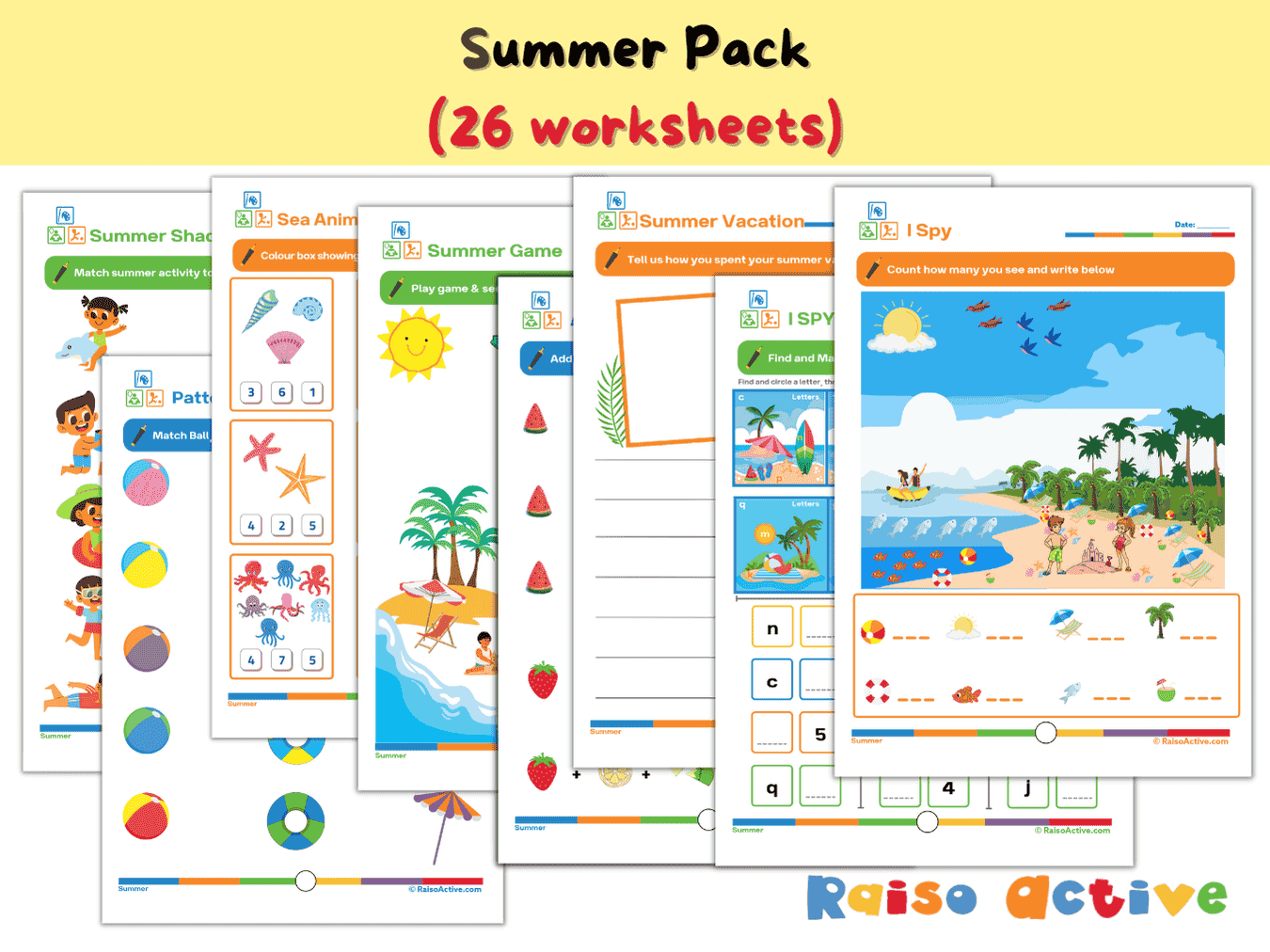
Summer Activity Pack: Math, Literacy, Puzzles & More for Preschool & Kindergarten
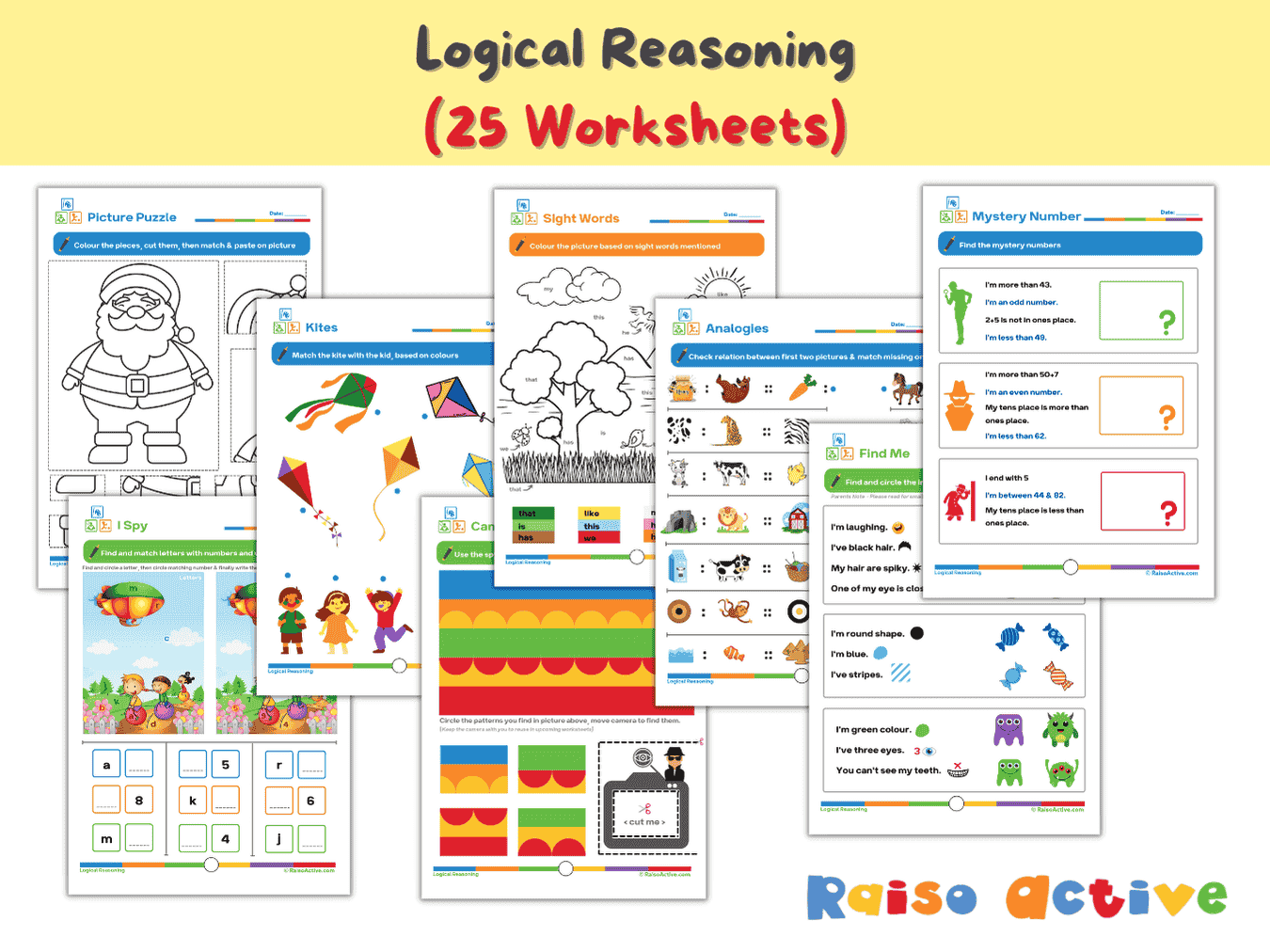
Logical Reasoning Activity Book for Preschool & Kindergarten | Patterns, Puzzles & Analogies
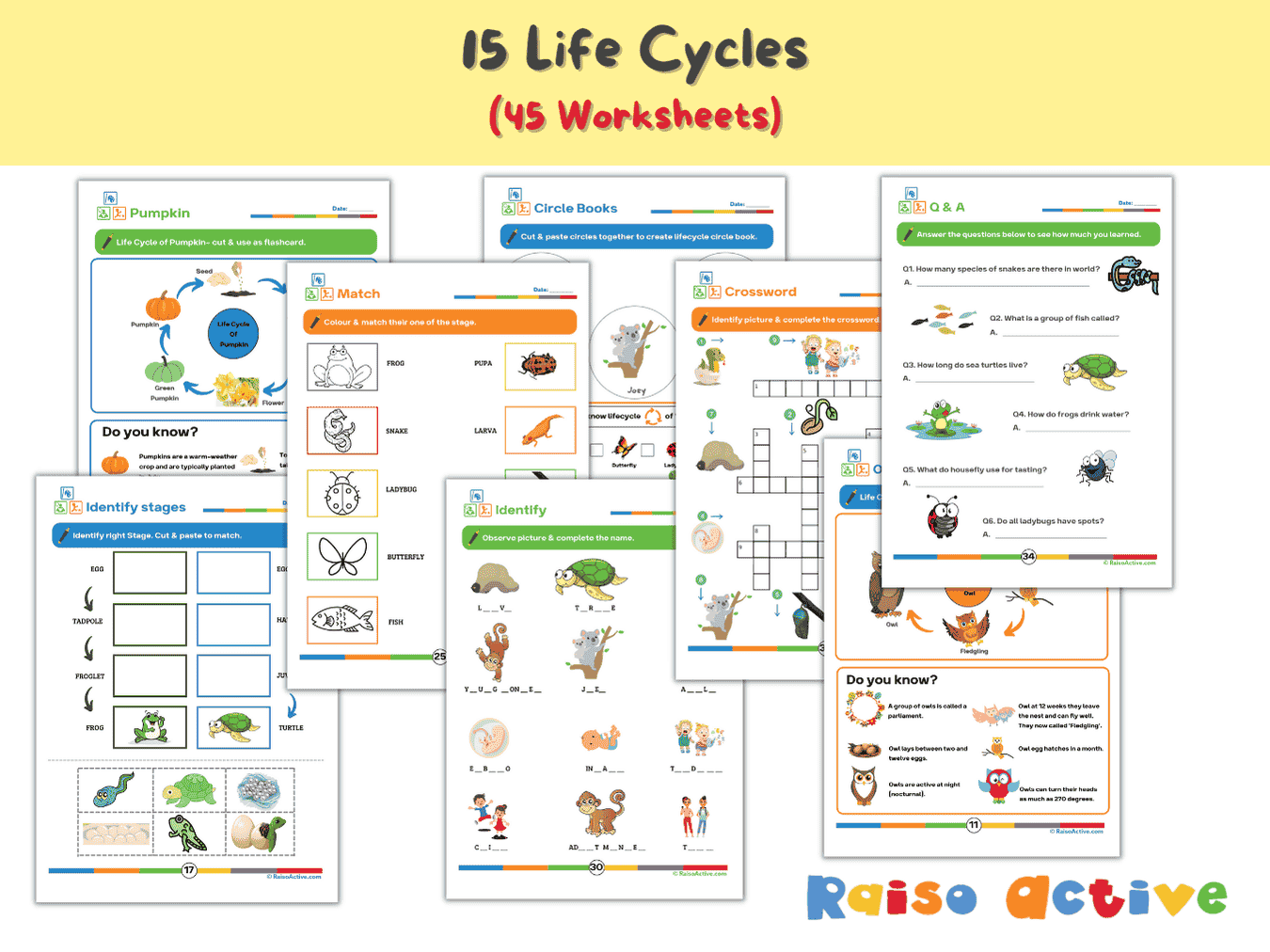
Lifecycles Activity Book & Flashcards for Preschool & Early Elementary
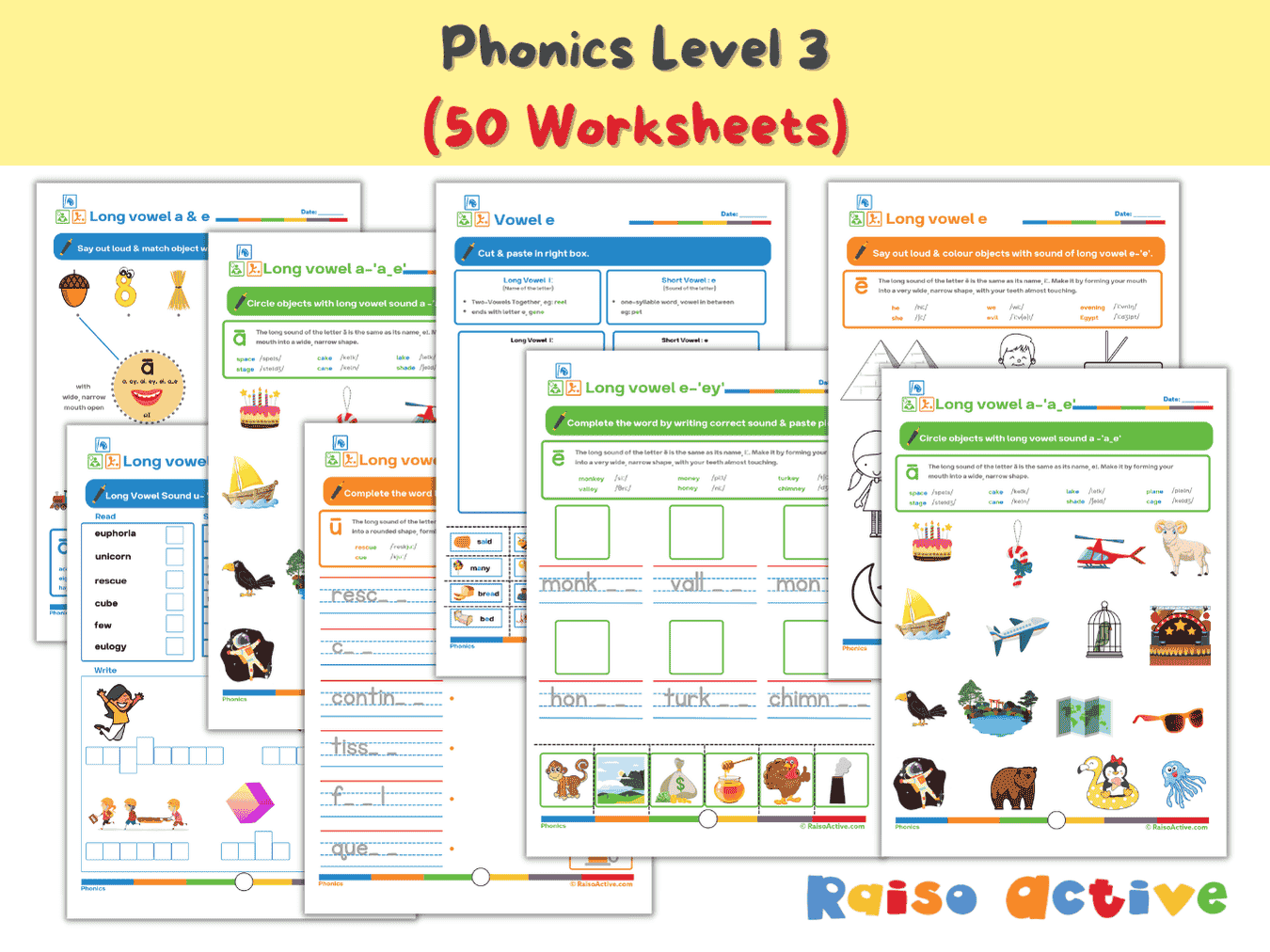
Phonics Level 3 Long Vowels Activity Book for Kindergarten & 1st Grade
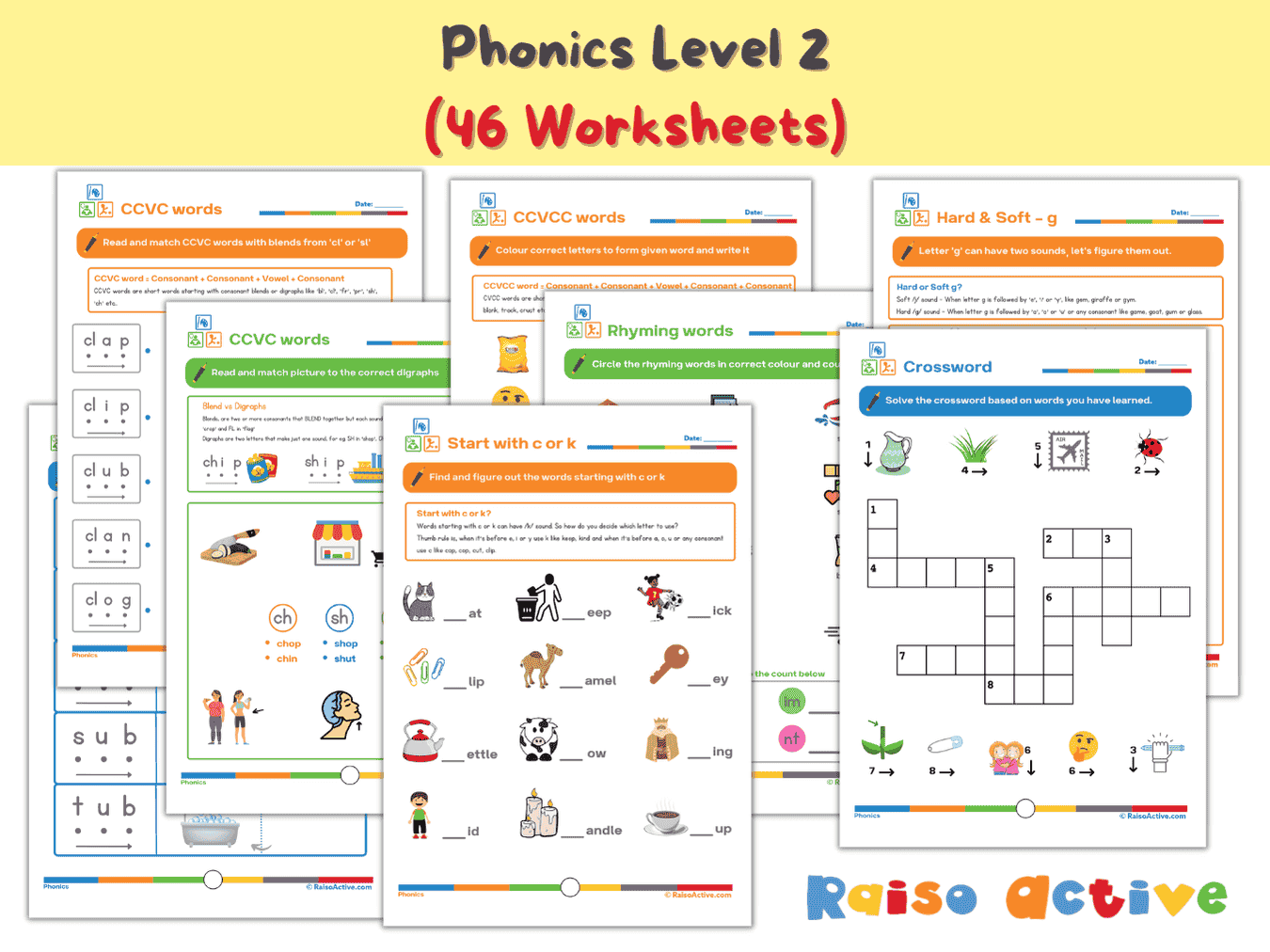
Phonics Level 2 Worksheets: CVC, CCVC, CVCC Word Families & Blends for Early Readers (Ages 4-7)
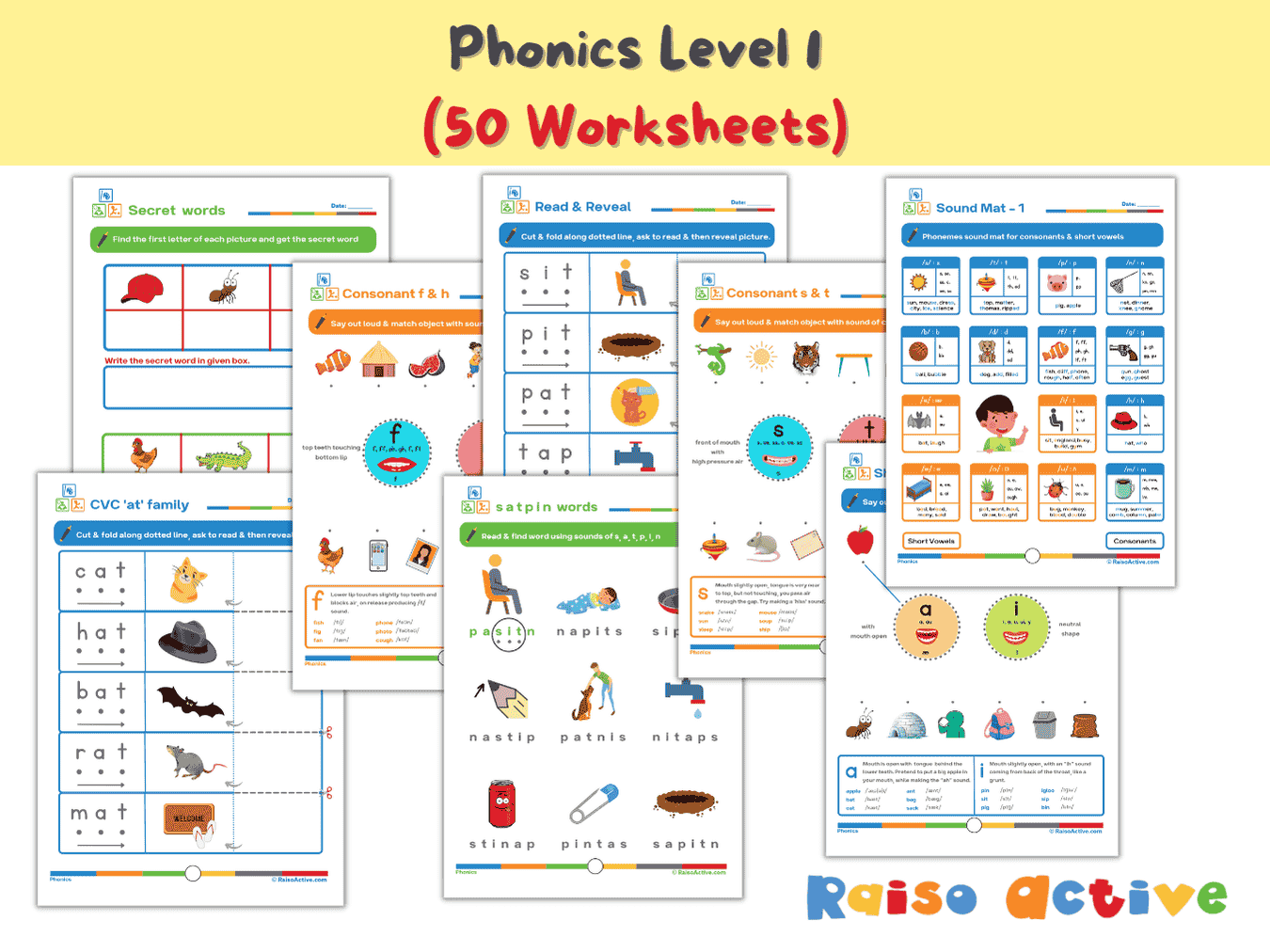
Phonics Level 1 Activity Book: Letter Sounds, Blending & CVC Words for Preschool & Kindergarten
Guides for parents and teachers
See all guides →Kindergarten Readiness Checklist: 25 Skills to Practice Before the First Day
A kindergarten readiness checklist of 25 literacy, math, motor, self-regulation and self-help skills, with an 8-week summer plan and notes on when not to worry.
Phase 2 Phonics at Home: Sound Order, Blending Games, Worksheets
Phase 2 phonics at home: the five sound sets in order, oral blending, tricky words, a two-week routine, common mistakes, and free worksheets.
Reception Year Explained: EYFS Learning and How to Help at Home
A teacher's plain-English guide to the Reception Year: the seven areas of learning, Early Learning Goals, Phase 2/3 phonics, the RBA and home routines.
What Should a 4-Year-Old Know Before LKG? A Readiness Checklist
A calm, teacher-written LKG readiness checklist for 4-year-olds: language, pattern writing, numbers to 10, self-help and social skills, plus a 6-week plan.
Bridging Two Worlds: A Complete Guide to Teaching Heritage Languages Alongside English
A practical guide to raising bilingual children who speak both their heritage language and English with confidence. Research-backed strategies, activities, and tips for Indian families.
How to Help Your Child with Letter Reversals: A Complete Guide for Parents and Teachers
Letter reversals are normal until age 7-8. Learn the best multisensory strategies, anchor letter tricks, and activities to help children write b, d, p, and q correctly.