Animal Needs Worksheet for Kids: Matching and Identifying
This worksheet helps children ages 3-5 understand and articulate the basic survival needs of animals — food, water, air, shelter — by completing sentences with the correct need word and then circling matching pictures. Requiring both a writing and a circling response means children practice the vocabulary in two different formats, reinforcing recall from multiple angles. This groundwork in animal needs also supports later, more complex science concepts about habitats and ecosystems.
Part of the pack
Month 1: Learning & Development | Ages 6-7
This is page 21 of the pack. Ages 6-7 · Grade 1Ages 6-7 · Year 2Ages 6-7 · Class 1Ages 6-7
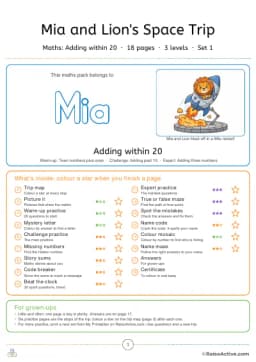
Made for your child
Counting to 10, made for your child
A maths pack with your child's name in it: pictures that explain, practice at three levels, puzzles and story sums about them. Print a new set whenever they finish.
Make a maths packFree preview · free for members
Curriculum
- Living Things - Animals > Animals & Habitats
How to use this worksheet
Read each sentence starter together and figure out which need word completes it correctly, such as 'Animals need ___ to drink.' Have your child write the correct word in the blank space provided. Then look through the pictures on the page and circle the ones that show things animals need to survive. Review the completed sentences and circled pictures together, discussing why each item matters for an animal's survival.
Materials needed
- Pencil
- Crayons
Extension activities
- 1Draw your favorite animal and label what it needs to survive.
- 2Discuss different animals and their specific needs, like a fish needing water to breathe.
- 3Visit a pet store, zoo, or backyard to observe how real animals get their needs met.
- 4Create a simple poster listing all the things animals need to survive.
- 5Compare animal needs to human needs and discuss what's the same and different.

Written by
Hemsweta Jain · Teacher Cheena
MBA and Early Childhood Educator, teaching since 2014 · Founder of RaisoActive, Mumbai
Every RaisoActive worksheet is designed and checked by the founder before publishing.
Published · Last reviewed
More from Month 1: Learning & Development | Ages 6-7
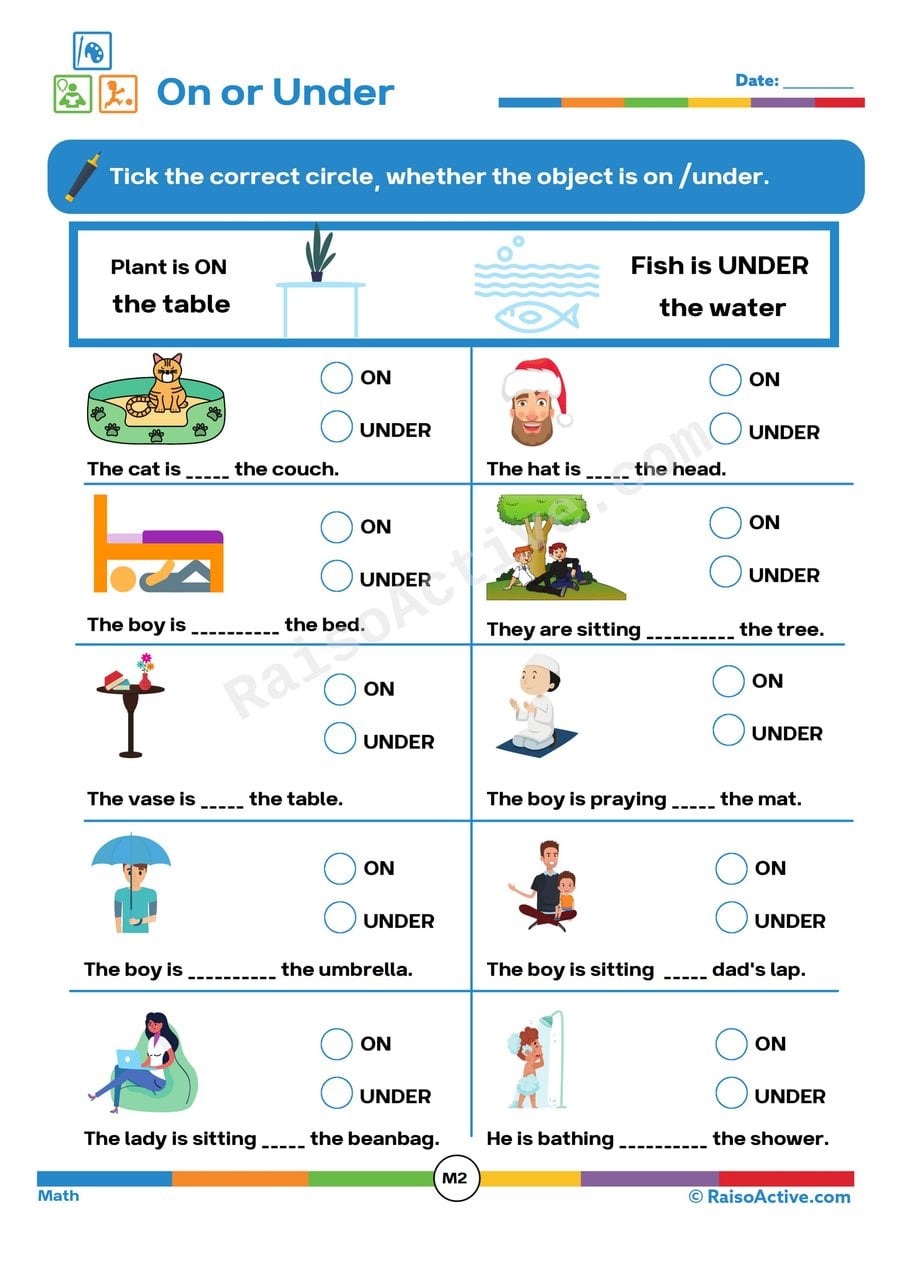
On or Under Worksheet: Where is the Object?
Ages 3-5 · Preschool–Pre-KAges 3-5 · Nursery–ReceptionAges 3-5 · Nursery–LKGAges 3-5
Reading a short sentence describing an object's location and then ticking the picture that matches teaches children ages 3-5 to connect spoken or written prepositions, 'on' and 'under,' to a visual representation, strengthening both listening comprehension and spatial vocabulary. This worksheet requires children to hold a sentence in mind and compare it against a picture, which is a slightly more advanced skill than simply naming a position they can already see. Understanding prepositions like these supports later reading comprehension, since so many simple stories depend on describing where things are.
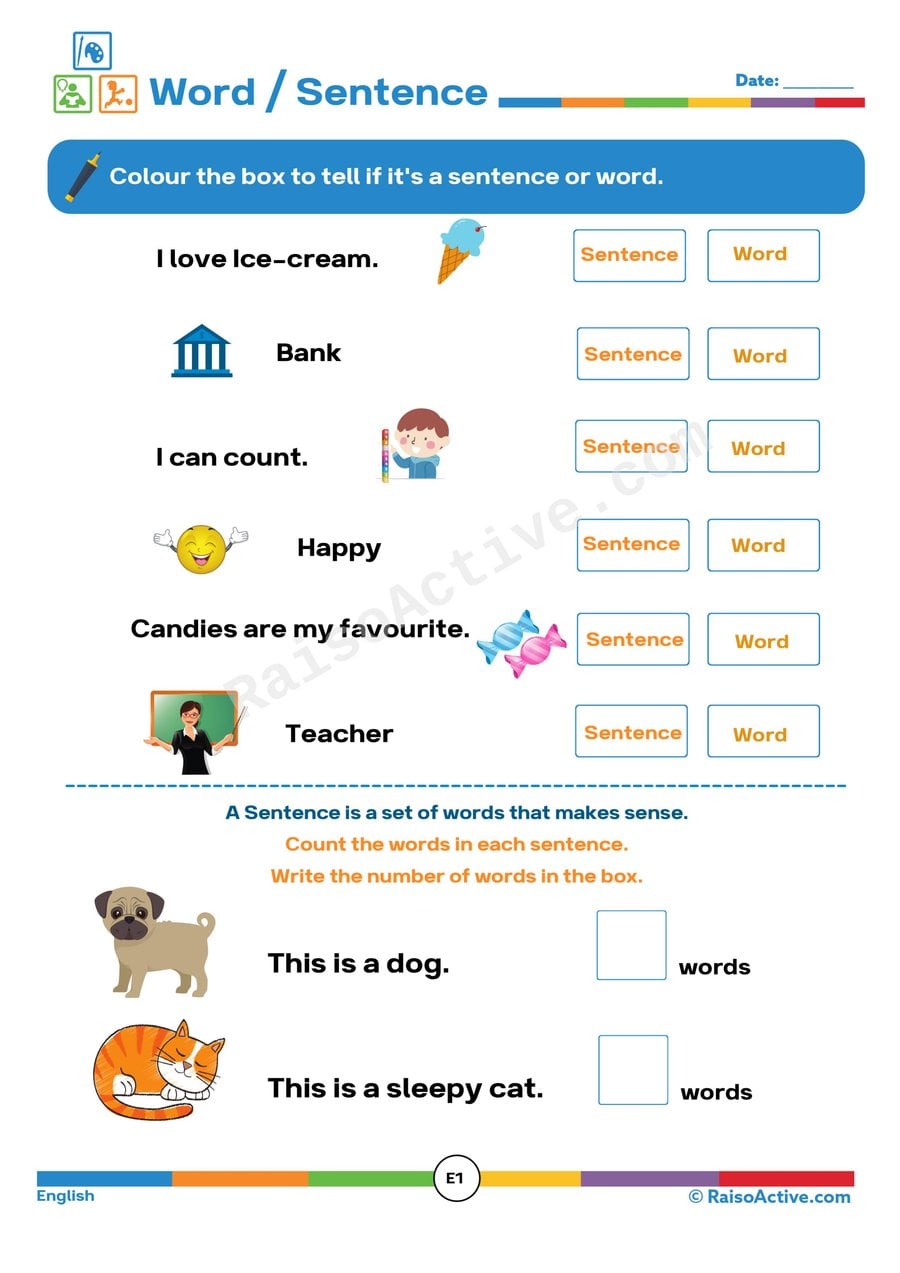
Month 1: Learning & Development | Ages 6-7 - Page 4
Ages 6-7 · Grade 1Ages 6-7 · Year 2Ages 6-7 · Class 1Ages 6-7
This overview page maps out everything covered in Month 1 of the ages 6-7 learning program, giving both children and parents a clear picture of what skills, from reading comprehension to number work to critical thinking, will be practiced across the month. Previewing a table of contents like this helps children ages 6-7 build early organizational awareness, understanding that learning happens in a structured sequence rather than as one-off, disconnected activities. Knowing what's coming also builds anticipation and motivation heading into each week's worksheets.

Punctuation Practice Worksheet for Early Learners
Ages 4-6 · Pre-K–KindergartenAges 4-6 · Reception–Year 1Ages 4-6 · LKG–UKGAges 4-6
Children ages 4-6 learn to distinguish between statements and questions by deciding whether each sentence needs a period or a question mark, an early step in understanding how punctuation changes meaning and tone. Recognizing the difference between a question and a statement also supports reading fluency, since readers naturally use rising or falling intonation depending on the punctuation at the end of a sentence.

Keeping Our Environment Clean Worksheet for Kids
Ages 3-5 · Preschool–Pre-KAges 3-5 · Nursery–ReceptionAges 3-5 · Nursery–LKGAges 3-5
This worksheet builds early environmental awareness in children ages 3-5 by having them evaluate pictured actions — like throwing litter in a bin versus littering on the ground — and mark each one as good or bad for the environment. Making this judgment call requires children to connect a specific action to a broader consequence, an early form of cause-and-effect reasoning applied to environmental responsibility. Introducing this concept young helps normalize caring for shared spaces as a natural part of daily behavior rather than an abstract adult concern.
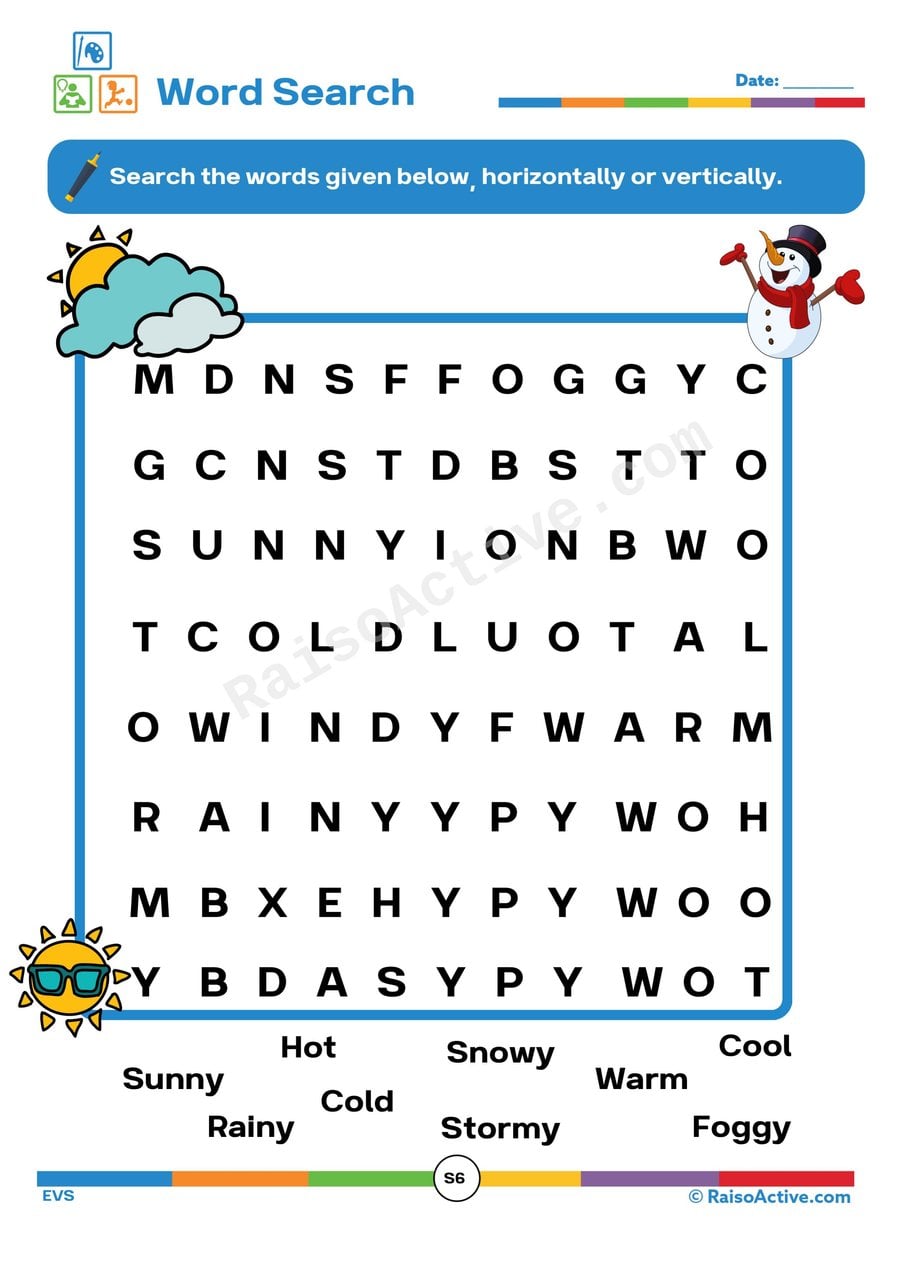
Weather Word Search Worksheet for Kids
Ages 4-6 · Pre-K–KindergartenAges 4-6 · Reception–Year 1Ages 4-6 · LKG–UKGAges 4-6
This word search strengthens children's visual scanning and spelling recognition for ages 4-6 by having them locate weather-related vocabulary — like rain, wind, or cloud — hidden horizontally and vertically within a letter grid. Searching for words in more than one direction adds an extra layer of challenge beyond a simple left-to-right search, training children's eyes to scan more flexibly across a grid. Pairing this puzzle-solving with familiar weather vocabulary also reinforces words children already use to describe daily conditions.

Subject and Predicate Sorting Worksheet for Preschoolers
Ages 4-5 · Pre-KAges 4-5 · ReceptionAges 4-5 · LKGAges 4-5
This worksheet introduces children ages 4-5 to a basic building block of sentence grammar, teaching them that every sentence has a subject — who or what it's about — and a predicate — what that subject does or is. Sorting sentence fragments into these two categories helps children start to notice sentence structure, which supports both reading comprehension and their own sentence writing later on. This early grammar awareness lays groundwork for more formal sentence study in kindergarten and beyond.

Near or Far Worksheet: Following Instructions for Preschoolers
Ages 3-5 · Preschool–Pre-KAges 3-5 · Nursery–ReceptionAges 3-5 · Nursery–LKGAges 3-5
Reading an instruction and circling the object that is either near or far teaches children ages 3-5 relative distance vocabulary, helping them understand that 'near' and 'far' describe a relationship between two things rather than a fixed property of a single object. Following a written or spoken instruction to complete each picture also builds listening comprehension and the ability to carry out a one-step direction independently. This combination of spatial concept and instruction-following prepares children for the kind of directions they'll regularly encounter in a classroom setting.
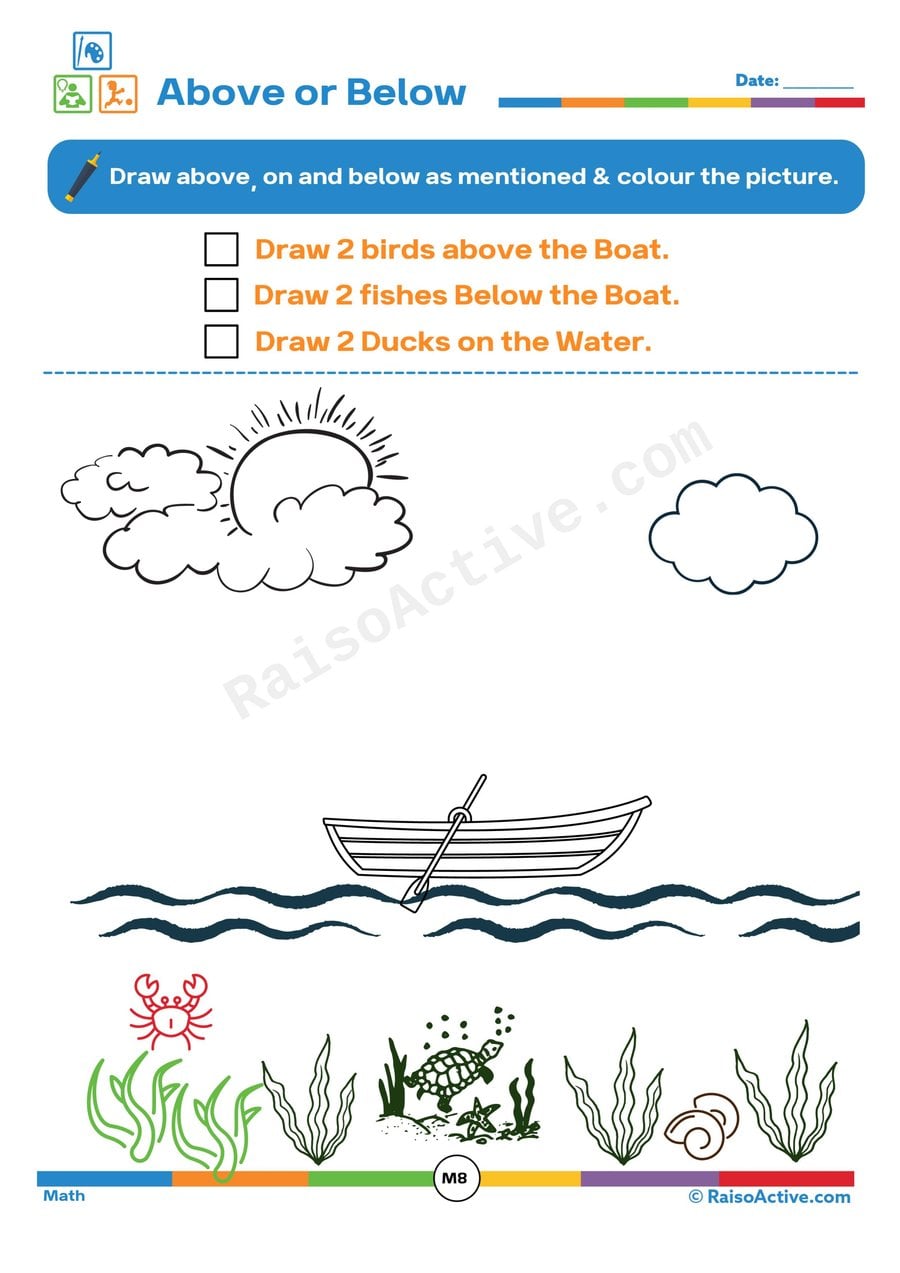
Above or Below Worksheet: Draw and Color!
Ages 3-5 · Preschool–Pre-KAges 3-5 · Nursery–ReceptionAges 3-5 · Nursery–LKGAges 3-5
This worksheet asks children ages 3-5 to apply the positional concepts of 'above,' 'below,' and 'on' by actively drawing new objects into a scene rather than simply pointing or circling. Drawing an item in a specific spatial position, like a bird above a boat, requires children to translate a verbal instruction into an accurate visual placement, which is a more demanding test of spatial understanding than passive matching. Coloring the finished scene afterward adds a satisfying creative finish to the activity.
Related worksheets

Animal Food Matching Worksheet for Preschoolers
Ages 3-5 · Preschool–Pre-KAges 3-5 · Nursery–ReceptionAges 3-5 · Nursery–LKGAges 3-5
This worksheet teaches children ages 3-5 which foods different animals eat by matching each animal to its correct food, building early classification skills and expanding their vocabulary around animals and diets. Learning that a rabbit eats carrots while a bird eats worms also introduces the idea that living things have different needs, a first step toward basic life-science thinking.
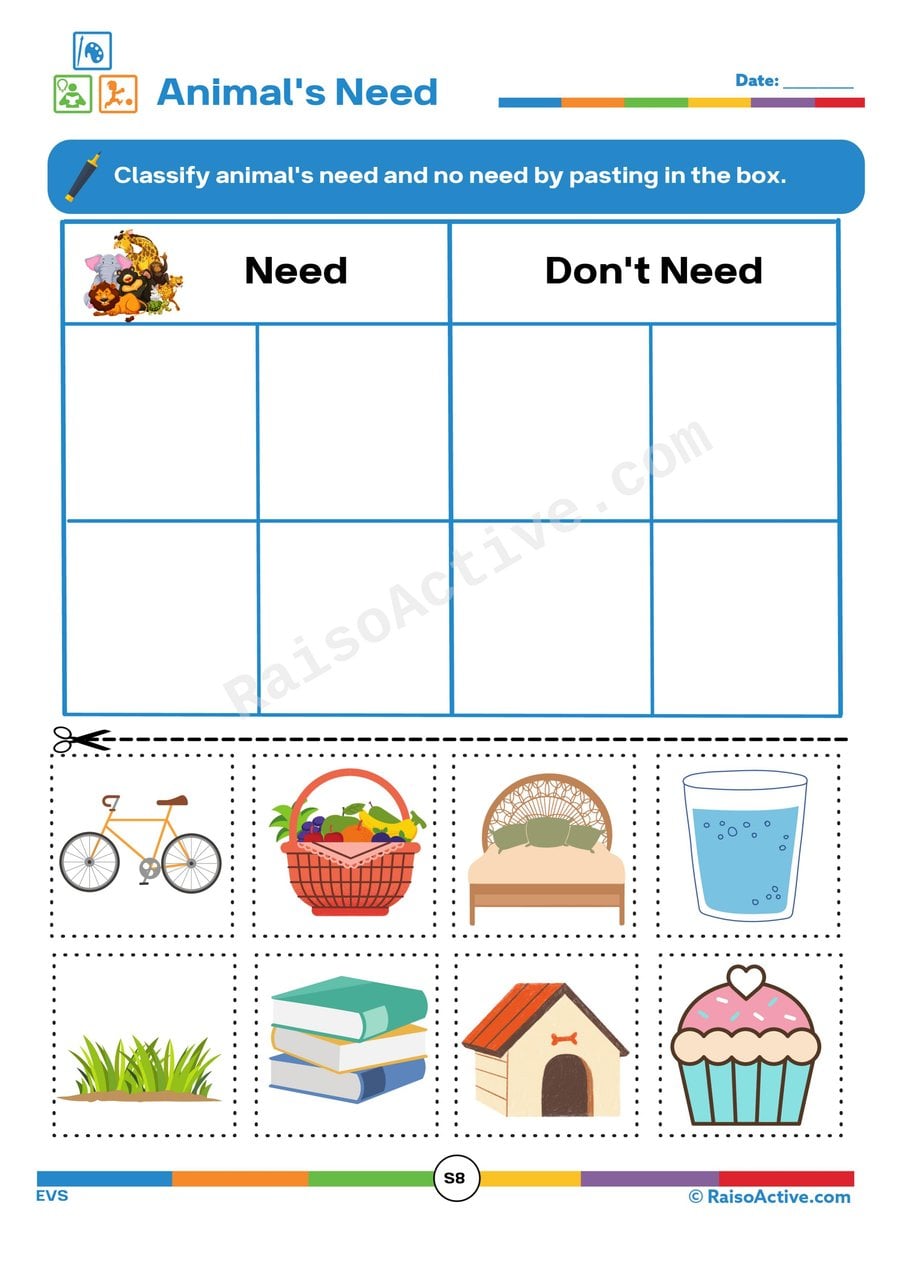
Animal Needs Sorting Worksheet for Preschoolers
Ages 3-5 · Preschool–Pre-KAges 3-5 · Nursery–ReceptionAges 3-5 · Nursery–LKGAges 3-5
This sorting activity helps children ages 3-5 understand that animals have specific survival needs — food, water, shelter, air — by cutting out picture cards and classifying each one as something an animal 'needs' or 'doesn't need.' Making this distinction requires children to reason about cause and effect in a simple form: what happens to an animal without food or water. This early exposure to classification and survival needs lays groundwork for more formal life science concepts children will encounter in later grades.

Animals in Cold Climates Cut and Paste Worksheet for Kids
Ages 3-5 · Preschool–Pre-KAges 3-5 · Nursery–ReceptionAges 3-5 · Nursery–LKGAges 3-5
Sorting animals into the cold-climate habitats where they actually live introduces preschoolers to the idea that different animals are adapted to survive in different environments, an early building block for later lessons in ecosystems and animal science. The cutting and pasting also reinforces fine motor control while giving children a reason to look closely at each animal picture and recall what they know about it.

Animals in Hot Climate Cut and Paste Worksheet for Preschoolers
Ages 3-5 · Preschool–Pre-KAges 3-5 · Nursery–ReceptionAges 3-5 · Nursery–LKGAges 3-5
Preschoolers ages 3-5 learn which animals are adapted to live in hot climates, like camels or lions, by cutting them out and pasting them into a matching habitat scene. This activity builds early science understanding of how animals are suited to their environments, connecting a visual habitat cue to specific animal knowledge. The scissor and glue work also continues developing the fine motor precision needed for later handwriting tasks.

Animal Sounds Worksheet: Circle the Correct Sound!
Ages 3-5 · Preschool–Pre-KAges 3-5 · Nursery–ReceptionAges 3-5 · Nursery–LKGAges 3-5
This worksheet strengthens vocabulary and reading readiness for children ages 3-5 by asking them to match each animal picture to the word describing the sound it makes, such as 'moo' for a cow or 'quack' for a duck. Connecting a familiar sound to its written word form is an early step toward reading, since it links spoken vocabulary your child already knows to print they are just beginning to recognize.

Domestic Animals Worksheet for Preschoolers: Circle the Animals!
Ages 3-5 · Preschool–Pre-KAges 3-5 · Nursery–ReceptionAges 3-5 · Nursery–LKGAges 3-5
Circling only the domestic animals among a mixed group teaches children ages 3-5 to apply a category rule to unfamiliar examples, an early reasoning skill that goes beyond simply naming animals they recognize. This visual discrimination task also builds vocabulary as children practice identifying each animal before deciding whether it belongs.

Animal Babies Matching Worksheet for Preschoolers
Ages 3-5 · Preschool–Pre-KAges 3-5 · Nursery–ReceptionAges 3-5 · Nursery–LKGAges 3-5
Children ages 3-5 practice matching adult animals to their correct babies, like a cow to a calf or a dog to a puppy, building early animal vocabulary and reinforcing the concept that animal babies often have entirely different names from their parents. This kind of family-relationship matching also strengthens visual comparison and reasoning skills.
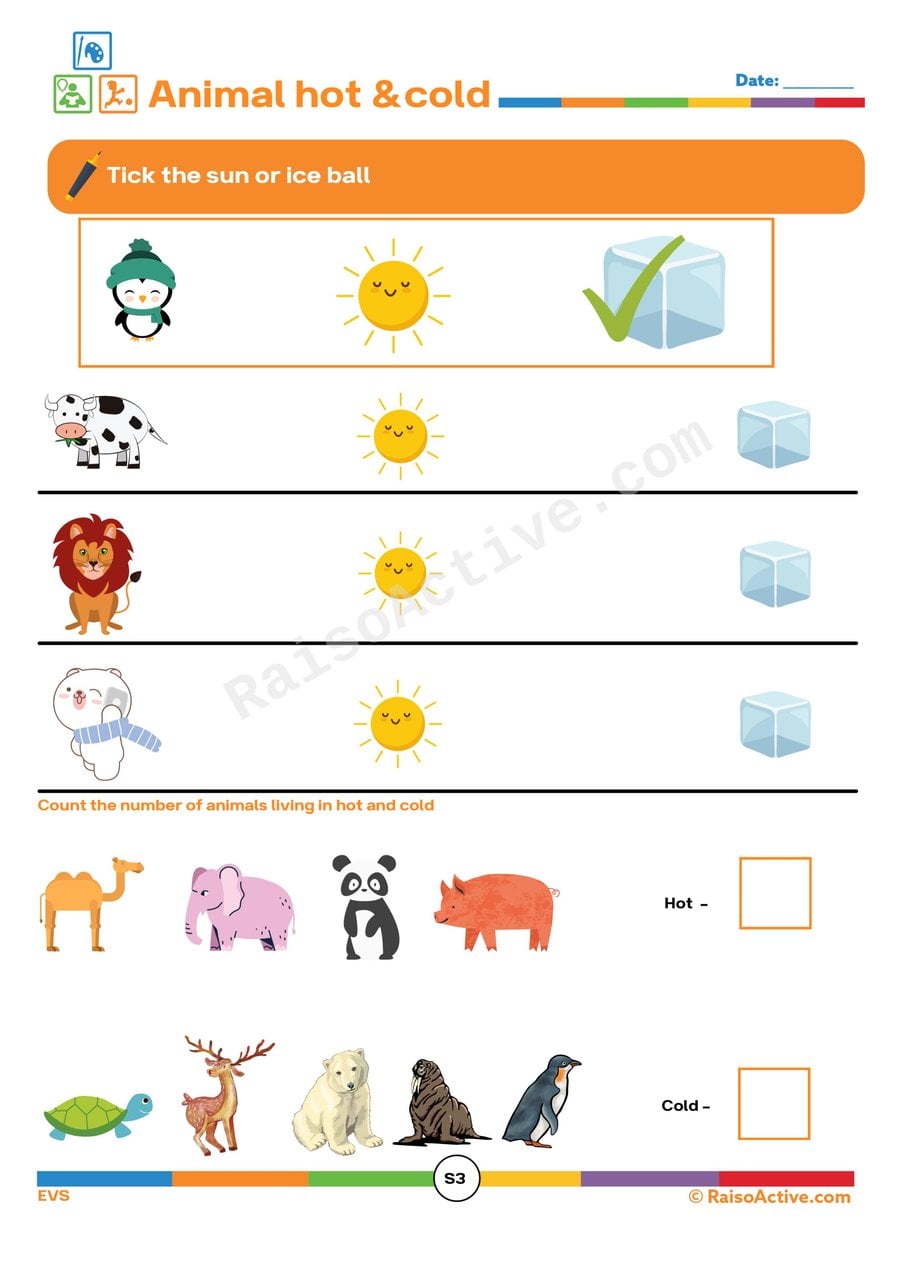
Animal Hot and Cold Worksheet for Preschoolers
Ages 3-5 · Preschool–Pre-KAges 3-5 · Nursery–ReceptionAges 3-5 · Nursery–LKGAges 3-5
This worksheet asks children to reason about which environment, hot or cold, best suits a given animal, then apply a counting task on top of that sorting decision. Combining habitat reasoning with counting practice keeps two important skill areas, science classification and numeracy, active in the same activity, which helps preschoolers see connections across subjects rather than treating them separately.
Guides for this topic

Best Worksheets for 3-Year-Olds: What Works and What to Avoid
What works on worksheets for 3-year-olds: short sessions, crayons, tracing lines, matching, cutting, a free weekly plan, and signs one is too advanced.

Age-Appropriate Problem-Solving Activities: Building Critical Thinkers from the Ground Up
Discover fun, age-appropriate problem-solving activities for children ages 1-8. Build critical thinking, logic, and reasoning skills through play-based learning.
Critical Thinking Activities That Actually Work for Young Children: Building Tomorrow's Thinkers Today
Discover proven critical thinking activities for young children. Age-wise logic games, questioning techniques, and hands-on ideas to build thinking skills at home.
Reviews
Every worksheet for ages 3–5, no watermark
Members download the full library of 1,000+ worksheets and every activity pack without watermarks or daily limits. One year costs ₹999 in India or $20 elsewhere.
See membership plansOr download any worksheet free with a watermark (5 a day).