Animal Food Matching Worksheet for Preschoolers
This worksheet teaches children ages 3-5 which foods different animals eat by matching each animal to its correct food, building early classification skills and expanding their vocabulary around animals and diets. Learning that a rabbit eats carrots while a bird eats worms also introduces the idea that living things have different needs, a first step toward basic life-science thinking.
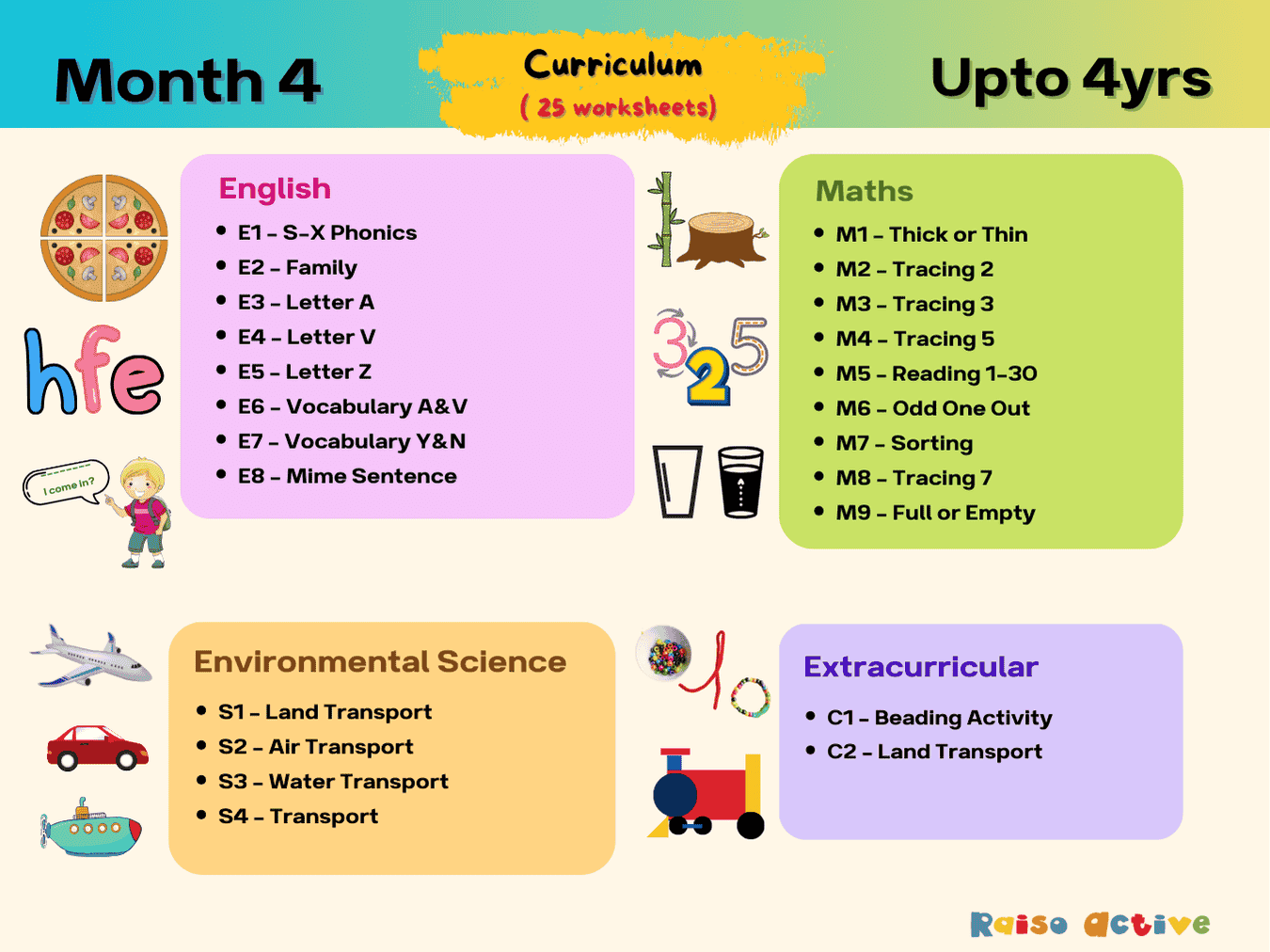
Part of the pack
Month 4: Learning & Development | Ages Up to 4
This is page 22 of the pack. Ages 2-4 · PreschoolAges 2-4 · NurseryAges 2-4

Made for your child
Counting to 10, made for your child
A maths pack with your child's name in it: pictures that explain, practice at three levels, puzzles and story sums about them. Print a new set whenever they finish.
Make a maths packFree preview · free for members
Curriculum
- Living Things - Animals > Animals & Habitats
How to use this worksheet
Look at each animal picture together and talk about what you already know about it. Have your child cut out the food pictures from the page. For each animal, ask 'what does this animal like to eat?' before letting your child choose and glue the matching food picture next to it. Read the animal and food names aloud together once everything is glued.
Materials needed
- Scissors
- Glue
- Pencil
Extension activities
- 1Visit a pet store or farm and ask what each animal there eats.
- 2Sort pretend play food into piles by which animal would eat it.
- 3Read a picture book about animal diets and pause to guess what each animal eats before turning the page.
- 4Draw a picture of your child's favorite animal enjoying its favorite food.

Written by
Hemsweta Jain · Teacher Cheena
MBA and Early Childhood Educator, teaching since 2014 · Founder of RaisoActive, Mumbai
Every RaisoActive worksheet is designed and checked by the founder before publishing.
Published · Last reviewed
More from Month 4: Learning & Development | Ages Up to 4
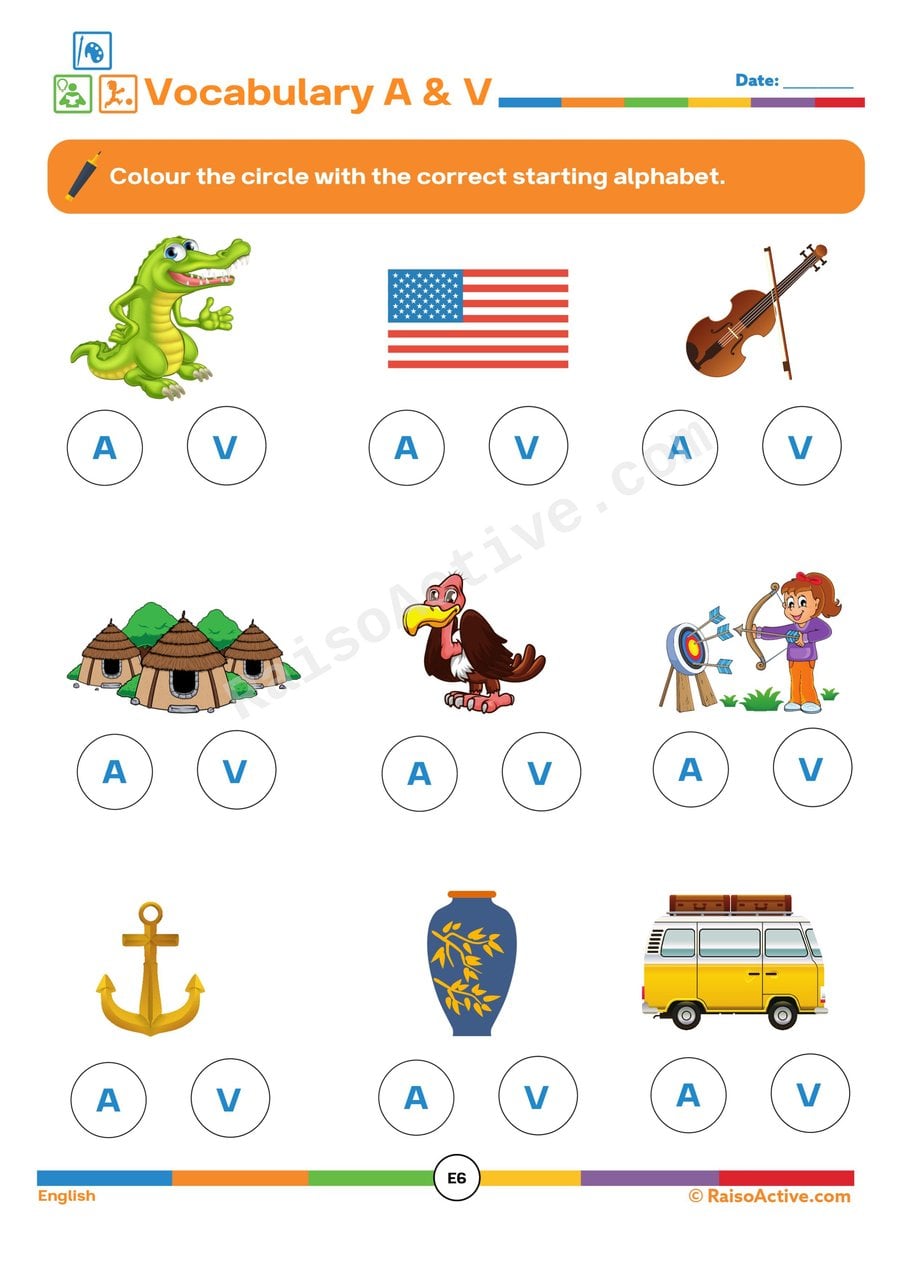
A & V Alphabet Worksheet: Color the Correct Letter!
Ages 3-5 · Preschool–Pre-KAges 3-5 · Nursery–ReceptionAges 3-5 · Nursery–LKGAges 3-5
Deciding whether a pictured word starts with A or V teaches children ages 3-5 to discriminate between two beginning sounds that can seem similar to a new listener, sharpening phonemic awareness in the process. Coloring the correct circle rather than just circling it adds an extra layer of engagement while still reinforcing the letter-sound match.

Wild Animals Cut and Paste Worksheet for Preschoolers
Ages 3-5 · Preschool–Pre-KAges 3-5 · Nursery–ReceptionAges 3-5 · Nursery–LKGAges 3-5
Children ages 3-5 practice scissor control and glue placement while learning to identify wild animals and place them into a jungle habitat, connecting the idea that specific animals belong to specific environments. This activity builds fine motor precision — cutting along a line and centering an object with glue — while introducing early habitat vocabulary like jungle, forest floor, and trees.
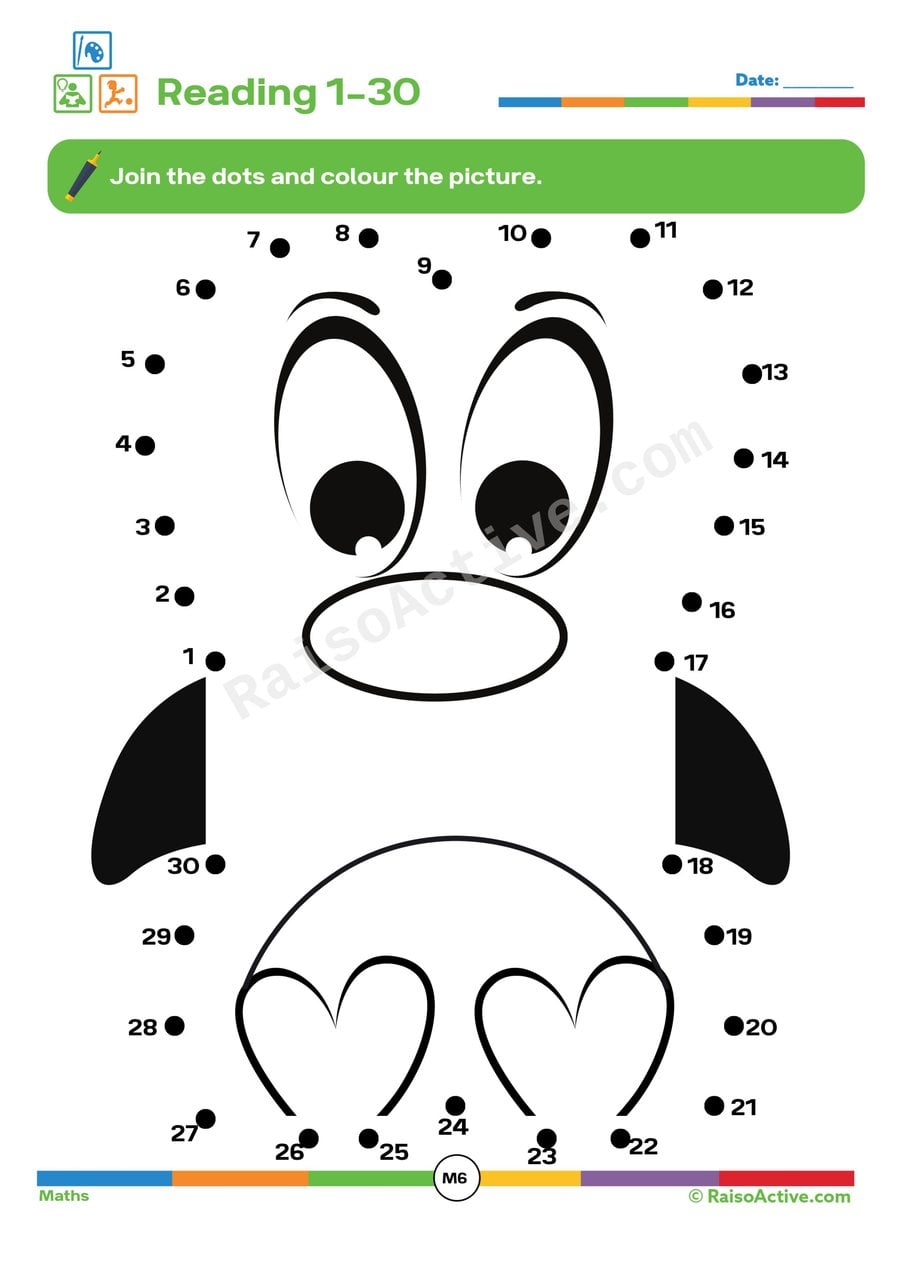
Connect the Dots Penguin Worksheet for Kids
Ages 3-5 · Preschool–Pre-KAges 3-5 · Nursery–ReceptionAges 3-5 · Nursery–LKGAges 3-5
Connecting numbered dots in order to reveal a penguin picture helps children ages 3-5 practice counting in sequence while building the fine motor control needed to draw a steady connecting line. The surprise of watching a recognizable picture emerge gives extra motivation to count carefully all the way to the end.
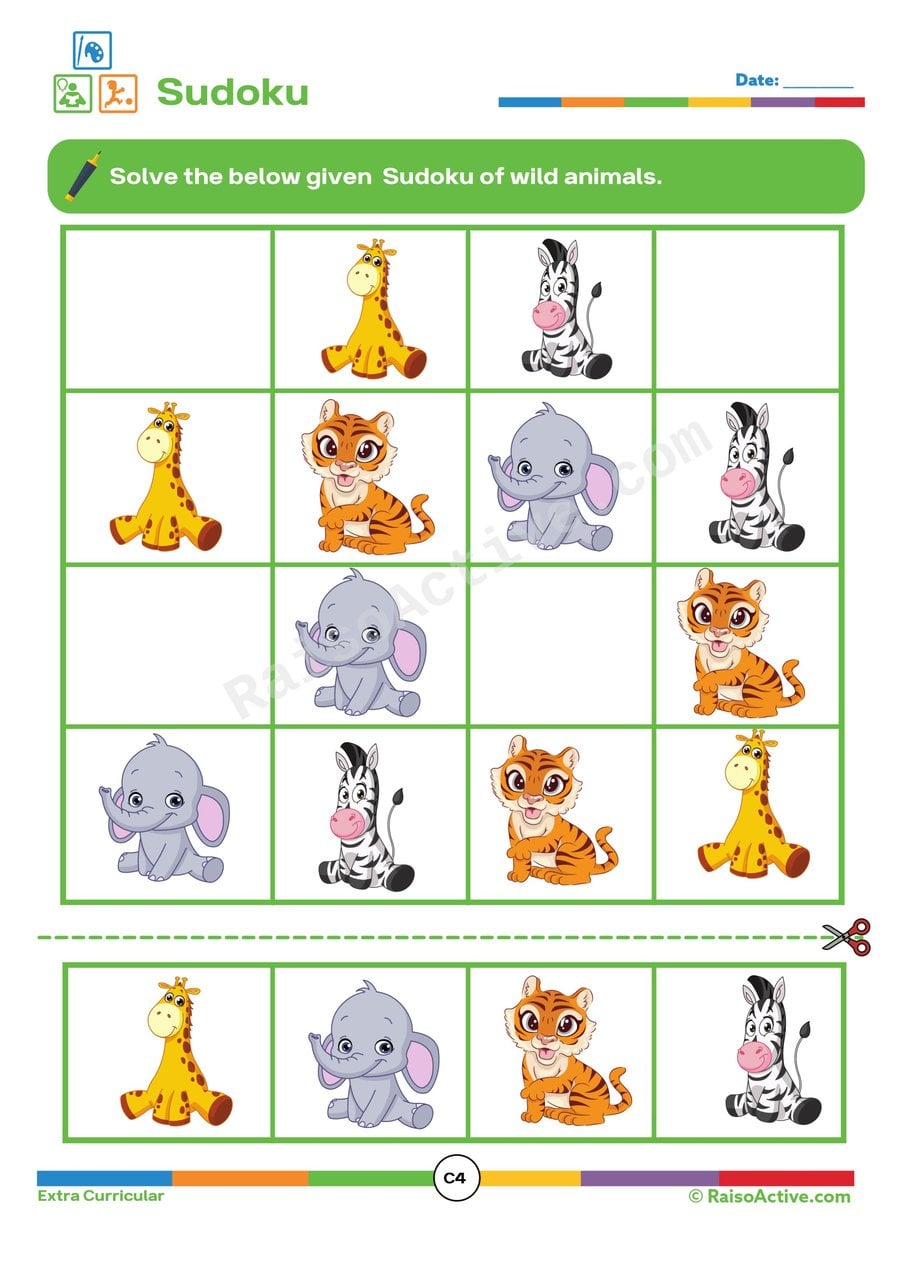
Wild Animals Sudoku Worksheet for Kids
Ages 4-6 · Pre-K–KindergartenAges 4-6 · Reception–Year 1Ages 4-6 · LKG–UKGAges 4-6
Solving a picture sudoku with wild animals introduces children ages 4-6 to early logical reasoning, since each animal can only appear once in every row, column, and small grid, requiring careful process of elimination. This puzzle format builds problem-solving stamina and visual discrimination in a format that feels like play rather than a typical worksheet.

Phonics Fun: Connect the Letters S-X with Starting Sounds Worksheet
Ages 4-6 · Pre-K–KindergartenAges 4-6 · Reception–Year 1Ages 4-6 · LKG–UKGAges 4-6
Connecting pictures to their correct beginning letter across the range S through X helps children ages 4-6 extend their phonics practice beyond the most common early letters, building broader letter-sound matching skills. This wider range also introduces children to less frequently practiced sounds, rounding out their overall phonemic awareness.
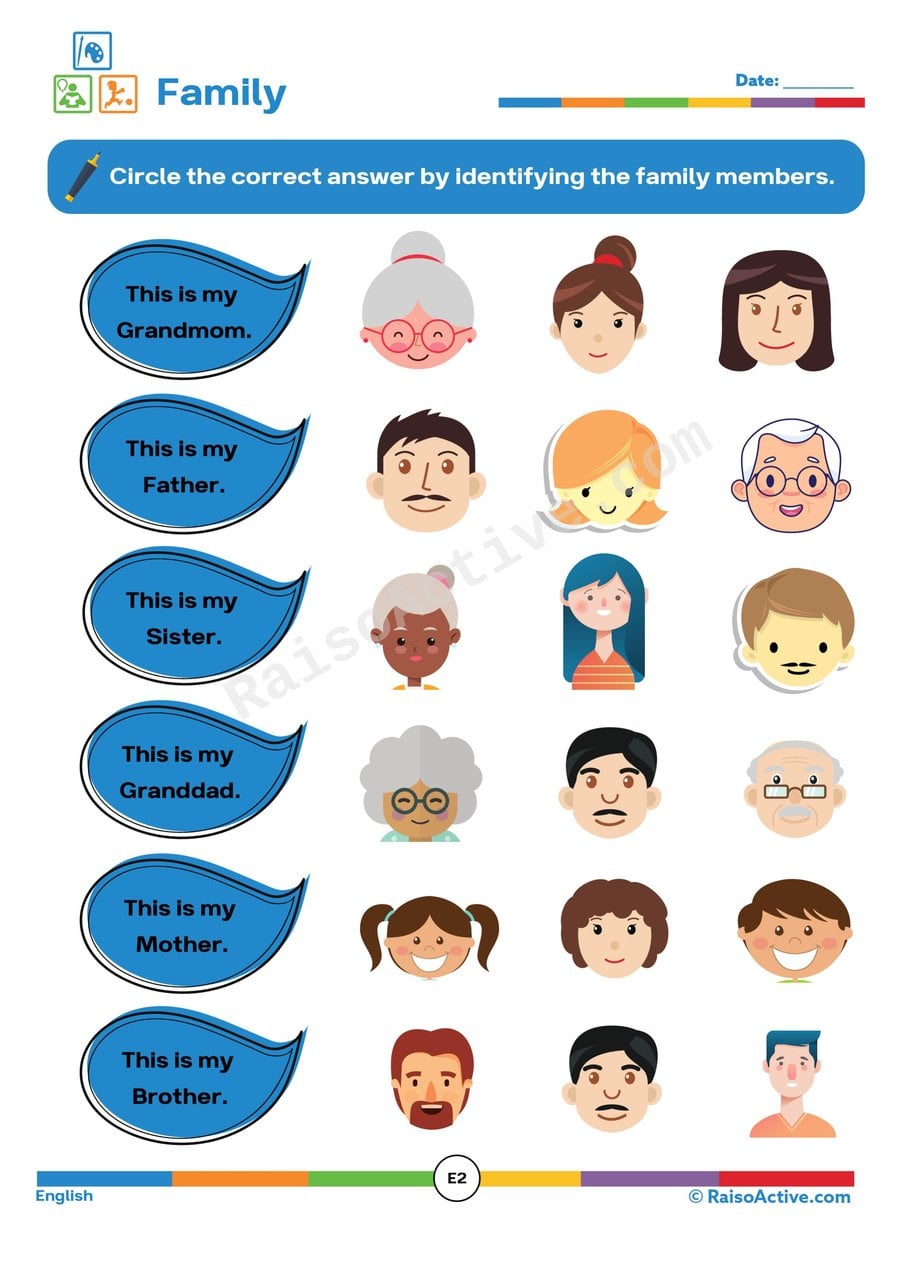
Family Members Worksheet: Identify and Circle!
Ages 3-5 · Preschool–Pre-KAges 3-5 · Nursery–ReceptionAges 3-5 · Nursery–LKGAges 3-5
Reading a sentence describing a family member and circling the matching picture teaches children ages 3-5 to connect written description to a specific person, combining early reading comprehension with family vocabulary. This task also builds the habit of checking text carefully rather than guessing from the picture alone.

Clean or Dirty Sorting Worksheet for Preschoolers
Ages 3-5 · Preschool–Pre-KAges 3-5 · Nursery–ReceptionAges 3-5 · Nursery–LKGAges 3-5
Sorting pictures into clean and dirty categories teaches children ages 3-5 to make observational judgments and apply reasoning about hygiene, rather than simply naming what they see. Drawing a happy or sad face for each choice also adds an element of emotional expression to what is otherwise a straightforward sorting task.

Domestic Animals Worksheet for Preschoolers: Circle the Animals!
Ages 3-5 · Preschool–Pre-KAges 3-5 · Nursery–ReceptionAges 3-5 · Nursery–LKGAges 3-5
Circling only the domestic animals among a mixed group teaches children ages 3-5 to apply a category rule to unfamiliar examples, an early reasoning skill that goes beyond simply naming animals they recognize. This visual discrimination task also builds vocabulary as children practice identifying each animal before deciding whether it belongs.
Related worksheets

Wild or Domestic? Animal Sorting Worksheet for Kids
Ages 3-5 · Preschool–Pre-KAges 3-5 · Nursery–ReceptionAges 3-5 · Nursery–LKGAges 3-5
Preschoolers ages 3-5 practice classifying animals into wild and domestic categories, an early science skill that builds understanding of how living things relate to their environment and to humans. Cutting, sorting, and labeling each animal with 'W' or 'D' reinforces the vocabulary of the two categories while strengthening fine motor skills through scissor and glue work. This classification task is a foundational step toward broader scientific thinking about categories and groups.

Young and Old Animals Worksheet: Circle the Correct Ones!
Ages 3-5 · Preschool–Pre-KAges 3-5 · Nursery–ReceptionAges 3-5 · Nursery–LKGAges 3-5
Distinguishing between young and old animals introduces children ages 3-5 to basic life cycle concepts and comparative observation, asking them to notice visual cues like size and features that indicate an animal's age. This worksheet has children first sort animals by age category and then match young animals to their adult counterparts, layering categorization practice on top of matching skills. Understanding that a puppy grows into a dog or a chick grows into a hen also lays early groundwork for later science topics like animal life cycles and growth.
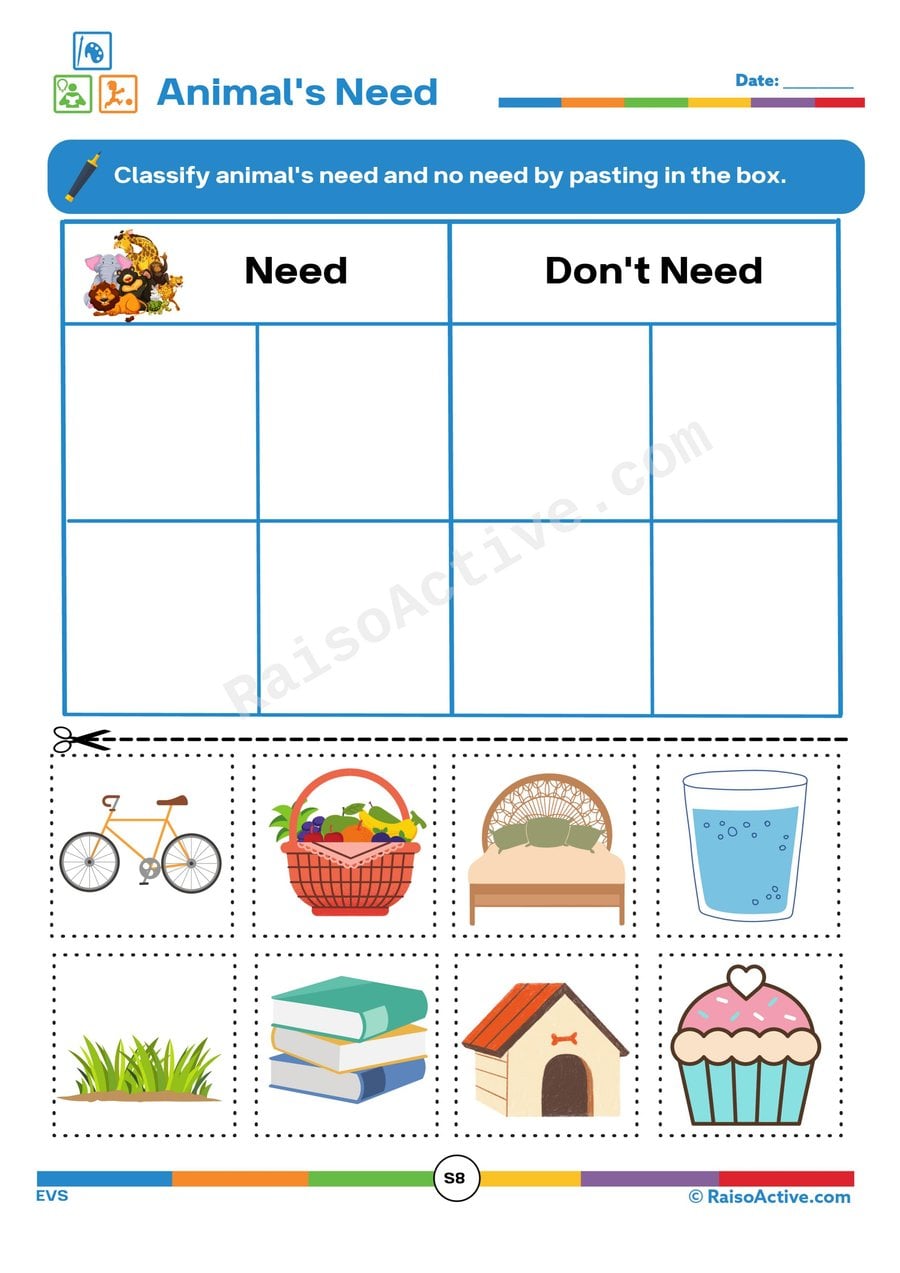
Animal Needs Sorting Worksheet for Preschoolers
Ages 3-5 · Preschool–Pre-KAges 3-5 · Nursery–ReceptionAges 3-5 · Nursery–LKGAges 3-5
This sorting activity helps children ages 3-5 understand that animals have specific survival needs — food, water, shelter, air — by cutting out picture cards and classifying each one as something an animal 'needs' or 'doesn't need.' Making this distinction requires children to reason about cause and effect in a simple form: what happens to an animal without food or water. This early exposure to classification and survival needs lays groundwork for more formal life science concepts children will encounter in later grades.

Animal Needs Worksheet for Kids: Matching and Identifying
Ages 3-5 · Preschool–Pre-KAges 3-5 · Nursery–ReceptionAges 3-5 · Nursery–LKGAges 3-5
This worksheet helps children ages 3-5 understand and articulate the basic survival needs of animals — food, water, air, shelter — by completing sentences with the correct need word and then circling matching pictures. Requiring both a writing and a circling response means children practice the vocabulary in two different formats, reinforcing recall from multiple angles. This groundwork in animal needs also supports later, more complex science concepts about habitats and ecosystems.

Peacock Coloring Worksheet for Kids: Fun Facts and Colors!
Ages 3-5 · Preschool–Pre-KAges 3-5 · Nursery–ReceptionAges 3-5 · Nursery–LKGAges 3-5
This worksheet combines creative coloring practice with early science learning for children ages 3-5, as they color a detailed peacock illustration and then read fun facts about this colorful bird. Beyond fine motor and color skills, exposure to real animal facts in a low-pressure, playful format builds curiosity and early nonfiction reading interest.

Animal Sounds Matching Worksheet for Preschoolers
Ages 3-5 · Preschool–Pre-KAges 3-5 · Nursery–ReceptionAges 3-5 · Nursery–LKGAges 3-5
This worksheet strengthens vocabulary and auditory-visual association in children ages 3-5 as they connect each animal picture to the written word for the sound it makes, like 'moo' or 'quack.' Matching sounds to animals also supports early literacy by pairing a familiar spoken word with its printed form, giving children an early, low-pressure introduction to reading words in context.

Animal Sorting Worksheet: Wild, Domestic, and Sea Animals!
Ages 3-5 · Preschool–Pre-KAges 3-5 · Nursery–ReceptionAges 3-5 · Nursery–LKGAges 3-5
This worksheet asks children ages 3-5 to classify animals into three categories - wild, domestic, and sea animals - based on where and how each one lives, building early categorization skills alongside animal and habitat vocabulary. Learning to sort by a shared characteristic, like habitat, is foundational scientific thinking that children will use again and again as they group and compare other things in the world around them.

Animals in Hot Climate Cut and Paste Worksheet for Preschoolers
Ages 3-5 · Preschool–Pre-KAges 3-5 · Nursery–ReceptionAges 3-5 · Nursery–LKGAges 3-5
Preschoolers ages 3-5 learn which animals are adapted to live in hot climates, like camels or lions, by cutting them out and pasting them into a matching habitat scene. This activity builds early science understanding of how animals are suited to their environments, connecting a visual habitat cue to specific animal knowledge. The scissor and glue work also continues developing the fine motor precision needed for later handwriting tasks.
Guides for this topic

Best Worksheets for 3-Year-Olds: What Works and What to Avoid
What works on worksheets for 3-year-olds: short sessions, crayons, tracing lines, matching, cutting, a free weekly plan, and signs one is too advanced.

Age-Appropriate Problem-Solving Activities: Building Critical Thinkers from the Ground Up
Discover fun, age-appropriate problem-solving activities for children ages 1-8. Build critical thinking, logic, and reasoning skills through play-based learning.
Critical Thinking Activities That Actually Work for Young Children: Building Tomorrow's Thinkers Today
Discover proven critical thinking activities for young children. Age-wise logic games, questioning techniques, and hands-on ideas to build thinking skills at home.
Reviews
Every worksheet for ages 3–5, no watermark
Members download the full library of 1,000+ worksheets and every activity pack without watermarks or daily limits. One year costs ₹999 in India or $20 elsewhere.
See membership plansOr download any worksheet free with a watermark (5 a day).