Free printable worksheets · United Kingdom
EYFS Matching Worksheets (Ages 3–5)
EYFS matching worksheets are practice sheets for children aged 3–5 in Early Years Foundation Stage in the UK. Matching is finding and pairing items that are identical, related or belong to the same category, from among several printed options. The sheets on this page cover identifying identical pairs, matching an object to its category, matching uppercase letters to lowercase and matching a numeral to a quantity.
The Early Years Foundation Stage spans Nursery and Reception and treats a worksheet as a small supplement to play rather than the main event. Mark making, matching and sorting dominate the Nursery year; Reception adds letter formation, sound matching and counting to ten as phonics teaching begins in earnest. Three-year-olds move from identical pictures to pairs that go together for a reason: a coloured animal and its black shadow, the two halves of a cut-apart picture, a bird and its nest, a toothbrush and toothpaste. Most can now draw a wobbly line between partners placed opposite each other in two columns. Keep four to six pairs per sheet. Shuffled columns and letter or number pairs are still a year away.
461+ worksheets · free PDF download · print on A4 or Letter
EYFS Matching Worksheets to print
Browse all worksheets for ages 3–5
Clothing Pattern Match Worksheet for Preschoolers
This worksheet has children ages 3-5 study repeating patterns on clothing items — stripes, polka dots, or checks — and match each item to its identical twin, building visual discrimination and early pattern-sequencing skills. Distinguishing between similar-looking patterns also sharpens attention to detail, a skill that later supports letter and word recognition.

Halloween Shadow Match Worksheet for Preschoolers
This shadow-matching worksheet sharpens visual discrimination in children ages 3-5 as they compare the outline of each Halloween object to its silhouette and identify the correct match. Because shadows strip away color and detail, children must focus purely on shape, which builds a skill that transfers directly to letter and shape recognition later on.

Days of the Week Sequencing Worksheet for Preschoolers
This worksheet builds sequencing skills for children ages 3-5 as they work with the days of the week in order, first filling in a missing day and then cutting and gluing days into the correct sequence. Understanding that days follow a fixed, repeating order is an early step toward time concepts like yesterday, today, and tomorrow, and this hands-on repetition helps cement a sequence that isn't visually obvious the way counting objects is.

Find the Similar Objects Worksheet for Preschoolers
Comparing a row of objects to find the ones that match and identify the one that's different builds visual discrimination skills for children ages 3-5, an early foundation for noticing the subtle differences between similar-looking letters later in reading.
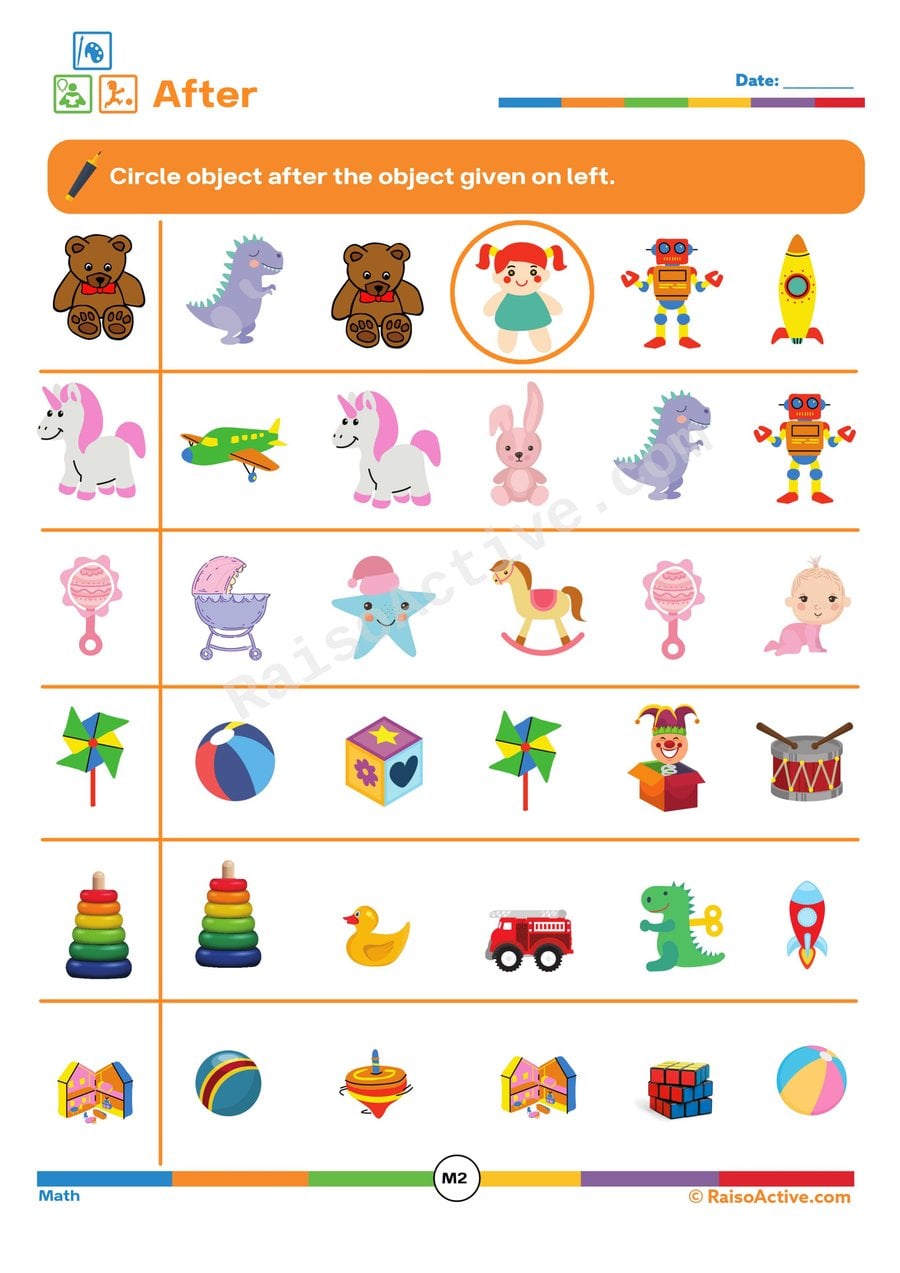
Object Sequencing Worksheet: What Comes After?
Preschoolers ages 3-5 build sequencing and pattern-recognition skills by identifying what object logically comes next after a given item. Predicting what comes next requires observing a pattern or relationship and applying that logic forward, an early form of the reasoning used in later math and science. Circling the correct answer among several options also sharpens careful visual comparison and decision-making.
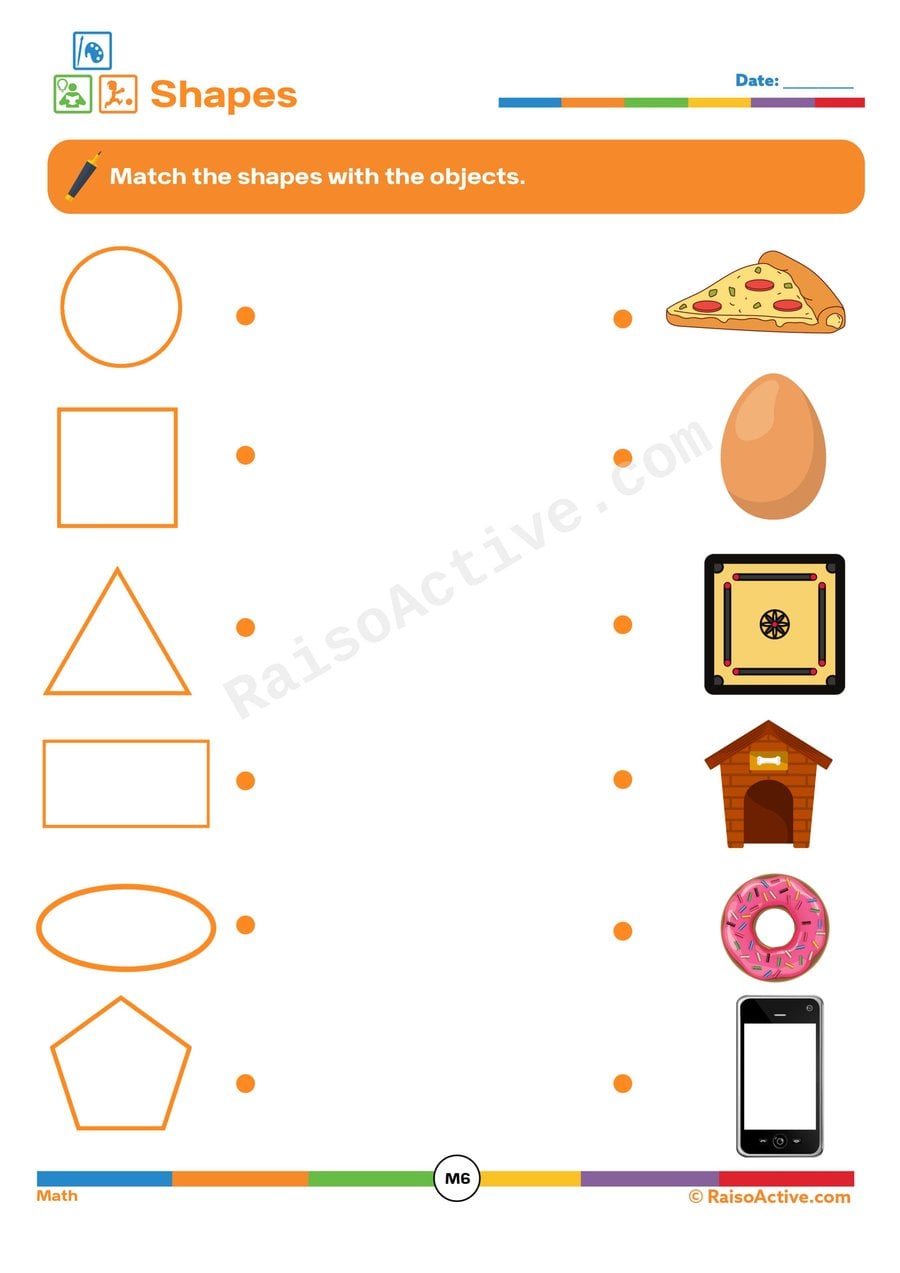
Shape Matching Worksheet for Preschoolers
This worksheet strengthens shape recognition for children ages 3-5 by asking them to connect abstract shape outlines to the real-world objects that share that same shape. Recognizing that a shape like a circle or rectangle can apply to very different objects, such as a clock and a door, helps children generalize shape concepts beyond a single example. Drawing the connecting line between matched pairs also reinforces visual tracking and pencil control.

Match and Write: Fun Phonics Worksheet for Preschoolers
This worksheet combines letter-sound matching with early writing practice, asking children ages 3-5 to connect beginning letters to words and then confirm their choice by circling the matching picture. Working through both a matching and a writing step reinforces the same phonics knowledge in two different formats, which helps concepts stick more firmly than repeating the identical task once. The combination also builds fine motor control through letter writing alongside the phonemic awareness skill of hearing beginning sounds.

Read and Match: Fun Reading Worksheet for Preschoolers
Reading a simple sentence and matching it to its corresponding picture builds early reading comprehension for children ages 3-5, teaching them that written words carry meaning that connects to real images and ideas.

Match the Flags Worksheet: Fun Flag Matching Activity for Kids!
This flag-matching worksheet strengthens visual scanning and word recognition as children ages 3-5 compare printed country names on one side of the page to flag images on the other and connect the correct pairs. Because they must scan back and forth between two columns, it also builds the left-to-right tracking skills that support early reading.
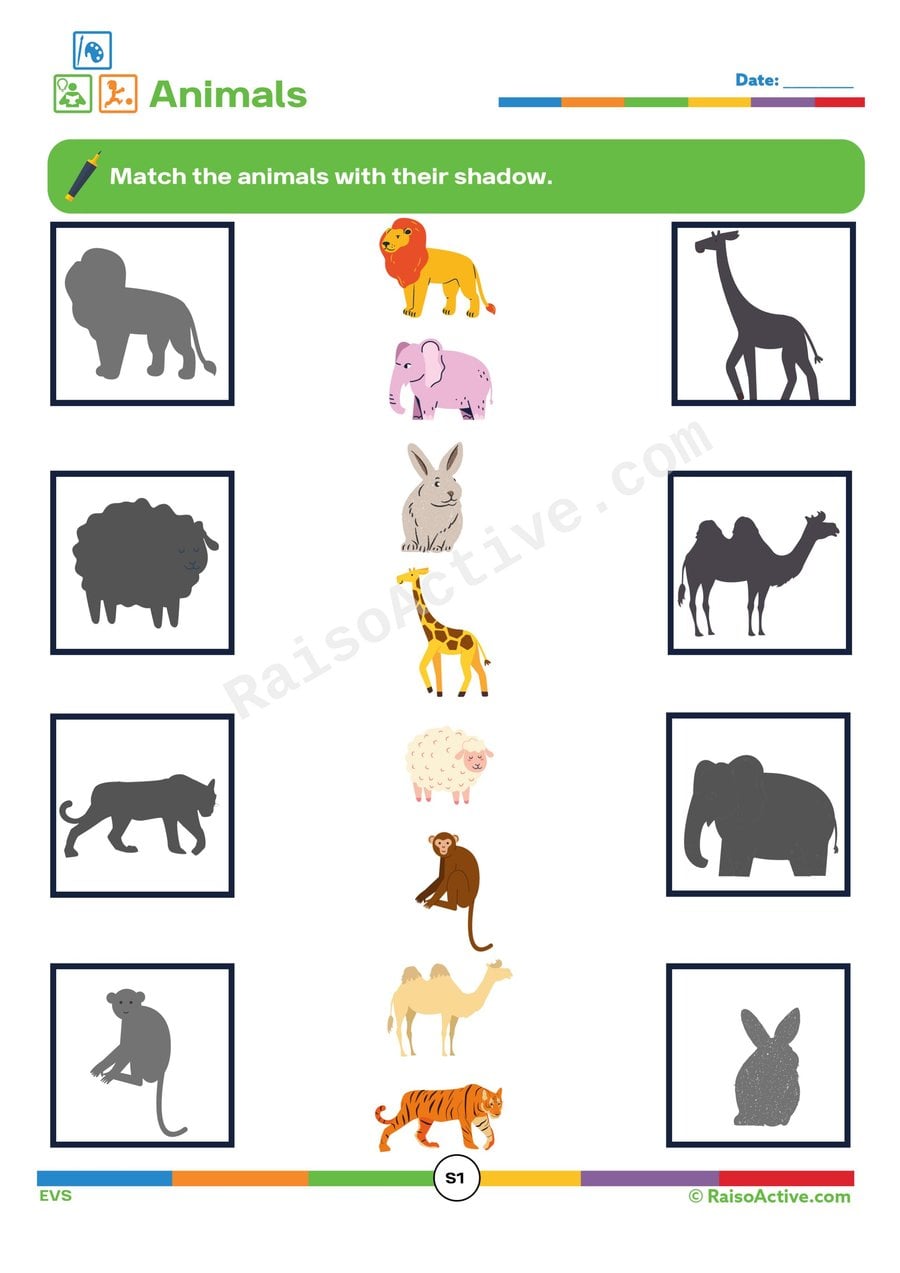
Animal Shadow Match Worksheet for Preschoolers
This worksheet builds visual discrimination skills for children ages 3-5 by having them match each animal to its correct silhouette or shadow shape. Because a shadow strips away color and detail, leaving only outline and proportion, this task requires more careful visual analysis than typical picture matching, sharpening the kind of attention to shape and form that supports later letter and word recognition.

Duckling's Number Path: Connect the Dots Worksheet
Children ages 3-5 practice number sequencing and counting up to 30 as they connect numbered dots in order to draw the duckling's path back to its mother, reinforcing number recognition while completing a satisfying, story-driven picture. Following numbers in strict order without skipping builds the counting fluency children need before tackling addition and more advanced number work.

Full and Empty Worksheet: Matching Activity for Preschoolers
This matching worksheet has children ages 3-5 draw lines connecting pictures to the labels 'Full' or 'Empty,' building comparative vocabulary around volume and quantity that goes beyond counting into descriptive reasoning about how much of something is present. Understanding full and empty as opposites is an early step toward later concepts like more, less, and measurement.

Diamond Shape Counting and Matching Worksheet for Preschoolers
This diamond-themed worksheet helps 3-5 year olds tell a diamond apart from squares, circles, and triangles by its four slanted sides and pointed top and bottom, a shape many preschoolers find trickier than rounder or more symmetrical ones. Counting the diamonds one at a time builds one-to-one correspondence, and matching same-sized diamonds strengthens visual discrimination, the skill of spotting small differences between similar-looking shapes.
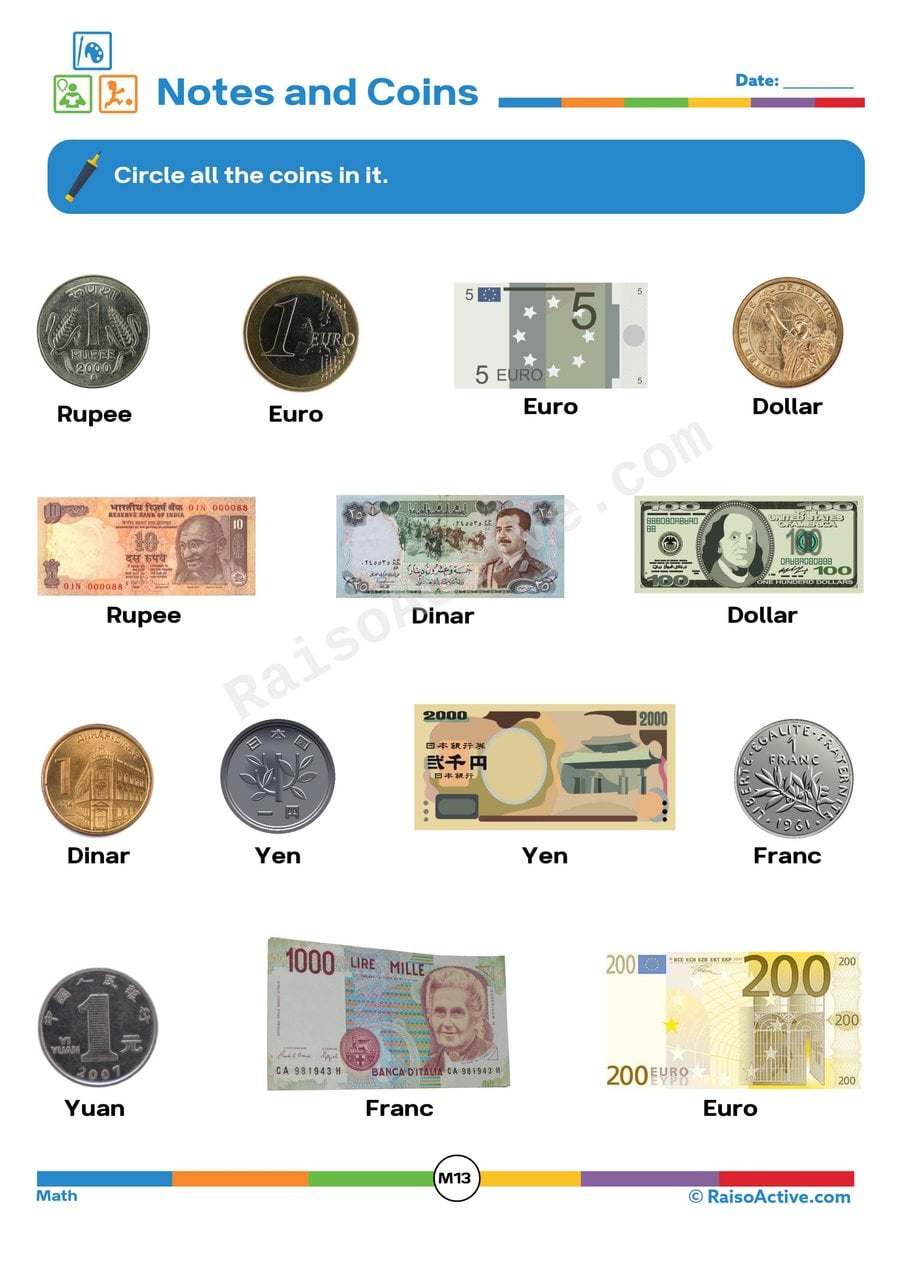
Coin Spotting Fun: Circle the Coins!
This worksheet asks children ages 3-5 to scan a page of mixed images and circle every coin they can find, building early visual discrimination and introducing the concept of money as a distinct category of object. Learning to recognize coins by their round shape and shiny appearance lays early groundwork for later skills like counting money and understanding value.

Rainy Day Fun: Circle the Rainy Season Items Worksheet
This worksheet helps children ages 3-5 identify items commonly used during the rainy season, like umbrellas, boots, and raincoats, by looking at a mixed set of pictures and circling only the ones that belong to rainy weather. Sorting relevant from irrelevant items this way builds early categorization and observation skills.

Number Names Matching Worksheet for Preschoolers
This worksheet helps children ages 3-5 connect written number words — like 'three' or 'seven' — to their matching numerals, an important step beyond simple numeral recognition toward full number literacy. Drawing a line from a number name to the numeral it stands for requires children to read or recall the word and hold it in mind while scanning for its match, which builds working memory alongside early reading and number skills.

2D Shape Sort Worksheet for Preschoolers: Matching Shapes!
This worksheet connects a shape's visual form to its written name, asking 3-5 year olds to match circles, squares, triangles, and rectangles on one side of the page to their names on the other. That word-to-shape link builds early reading vocabulary alongside geometry, since shape names are often a child's first exposure to reading multi-letter words that describe something they can see and touch. The follow-up questions at the bottom add a light counting or identification check to confirm the matching was done with real understanding.

Young and Old Animals Worksheet: Circle the Correct Ones!
Distinguishing between young and old animals introduces children ages 3-5 to basic life cycle concepts and comparative observation, asking them to notice visual cues like size and features that indicate an animal's age. This worksheet has children first sort animals by age category and then match young animals to their adult counterparts, layering categorization practice on top of matching skills. Understanding that a puppy grows into a dog or a chick grows into a hen also lays early groundwork for later science topics like animal life cycles and growth.

Light Energy Worksheet: Connect the Sun to Light Sources!
Connecting the sun to other objects that produce light builds early science reasoning for children ages 3-5, introducing the concept that light comes from specific sources rather than simply existing everywhere.
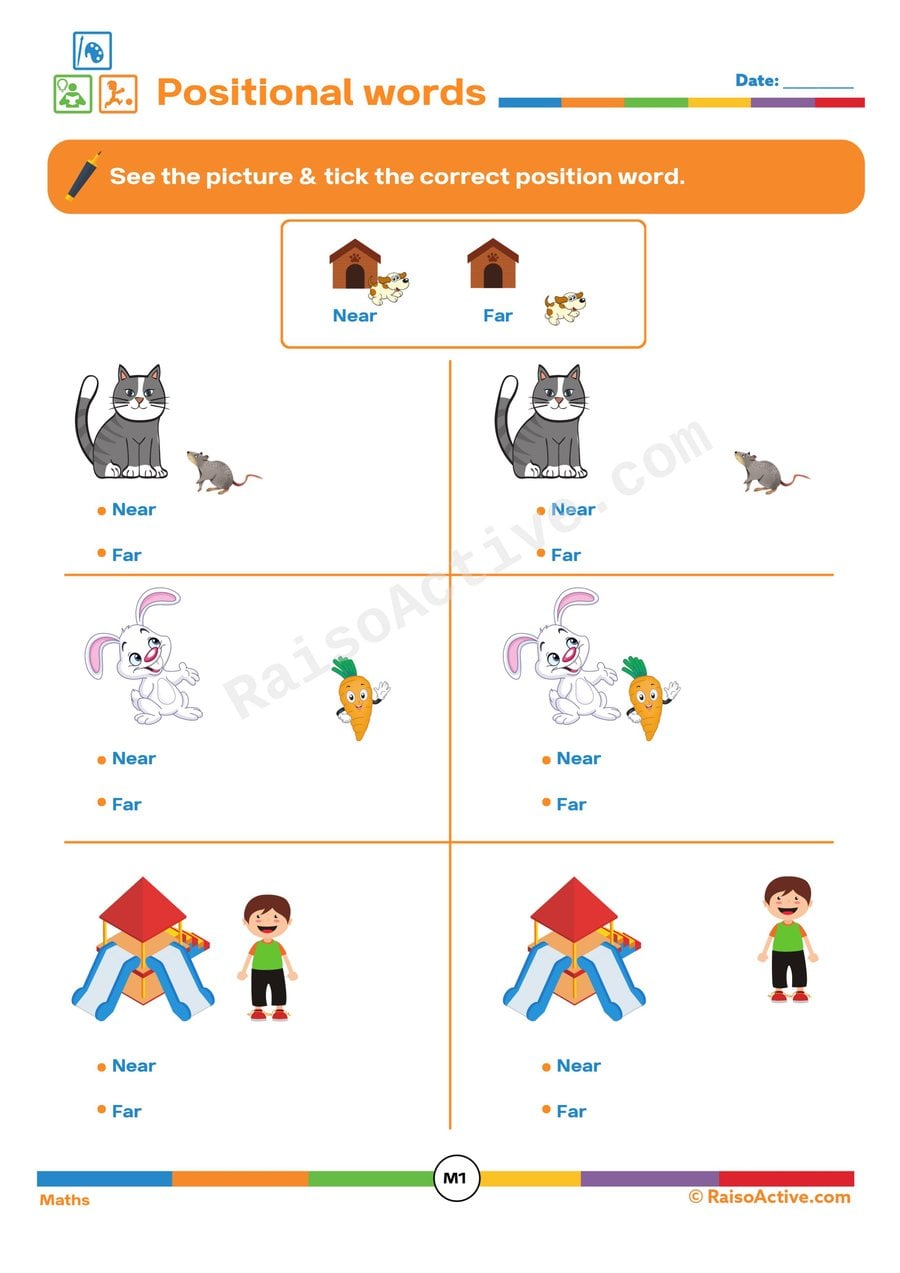
Positional Words Worksheet: Near and Far
This worksheet introduces children ages 3-5 to the positional concepts of 'near' and 'far,' asking them to look at a picture and tick the word that correctly describes an object's distance from a reference point. Positional vocabulary like this is an important building block for spatial reasoning and later geometry and direction-following skills. Because near and far are relative concepts rather than fixed labels, this practice also builds flexible thinking about how position depends on comparison.

Treasure Hunt: Alphabetical Order Worksheet for Preschoolers
This connect-the-letters worksheet has children ages 3-5 trace a path from A to Z in strict alphabetical order to help a character find hidden treasure, combining full alphabet sequencing practice with sustained fine motor control as they draw one long connected line. Successfully sequencing the entire alphabet in order, rather than just naming letters individually, is a meaningful milestone in early literacy.
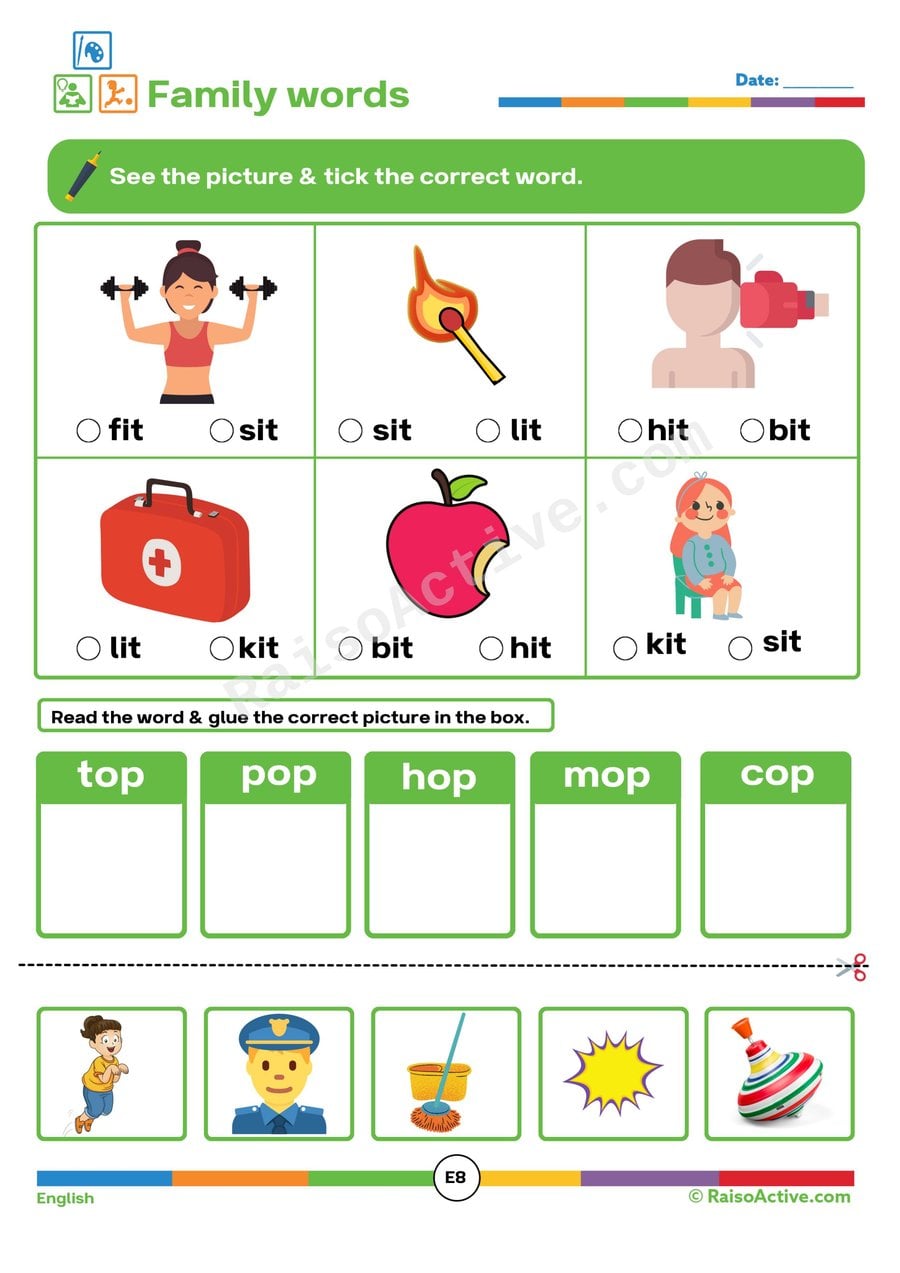
Family Words Worksheet: See, Tick, and Glue!
Children ages 3-5 practice recognizing family-member words and connecting them to pictures through a tick-and-glue format that combines quick visual checking with a hands-on cutting task. Doing the same type of match twice in different formats — once by ticking, once by pasting — gives extra repetition of the same small set of words, which is exactly what builds recognition at this age.

CVC 'am' Family Words Matching Worksheet for Preschoolers
This worksheet gives children ages 3-5 practice reading 'am' family CVC words and matching them to their corresponding pictures through coloring and line-drawing. Repetition with a single word family — sam, ham, jam, ram — helps children internalize the pattern quickly, building the foundation for tackling new word families with growing independence.
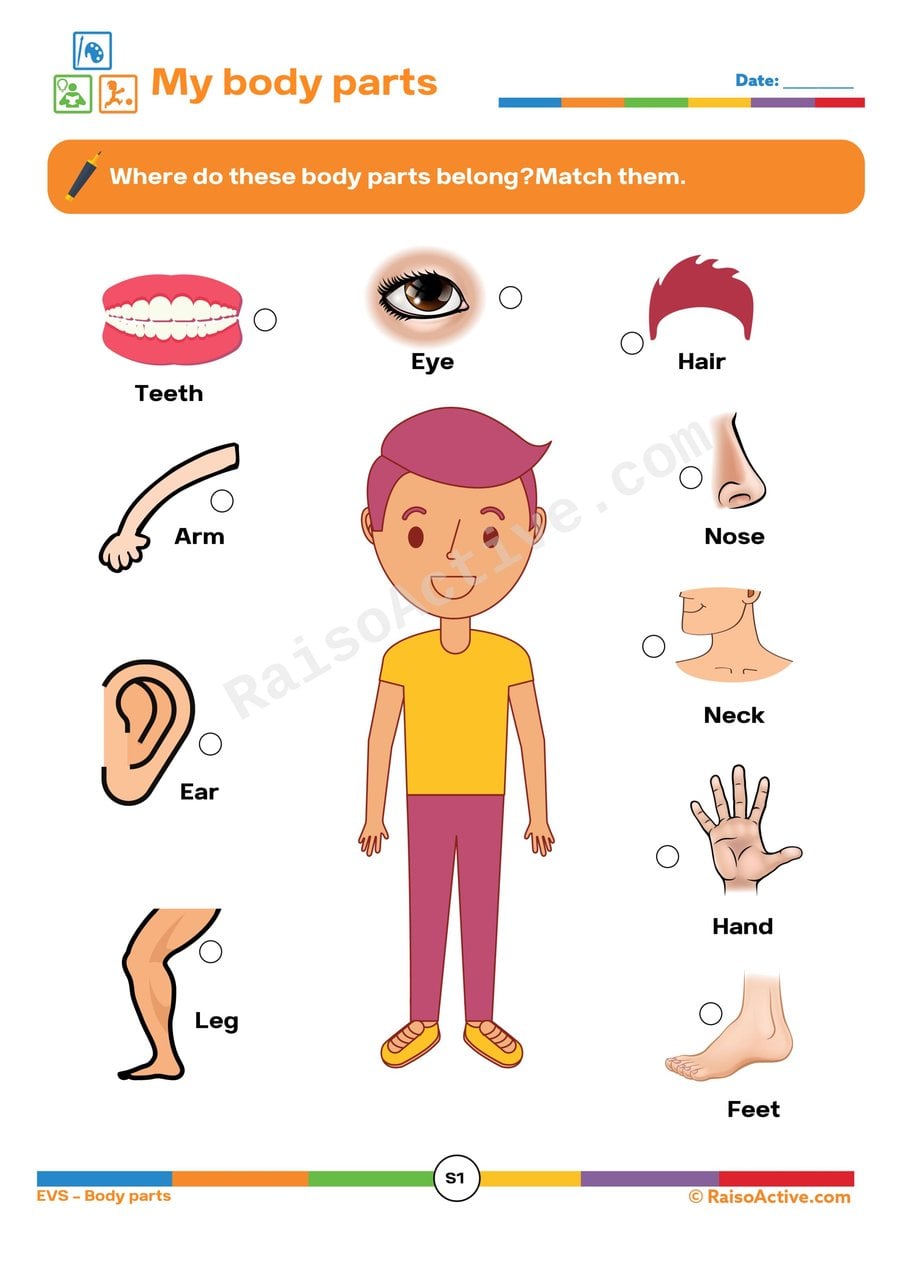
Match the Body Parts! A Fun Worksheet for Kids
Drawing lines from body part pictures to their correct location on a human figure helps children ages 3-5 build vocabulary for parts of the body, like arms, legs, and ears, while practicing visual-spatial matching between a small picture and its larger corresponding location. This worksheet strengthens the link between a spoken body part name and its physical location, a skill children also use constantly in daily routines like getting dressed or washing up. Matching pictures to a full-body diagram, rather than just naming parts in isolation, builds a more complete mental map of the body.
What EYFS matching worksheets cover
Three-year-olds move from identical pictures to pairs that go together for a reason: a coloured animal and its black shadow, the two halves of a cut-apart picture, a bird and its nest, a toothbrush and toothpaste. Most can now draw a wobbly line between partners placed opposite each other in two columns. Keep four to six pairs per sheet. Shuffled columns and letter or number pairs are still a year away.
- Draw a line from each animal to its black shadow
- Join the two halves of a picture that was cut apart
- Match each animal to the place where it lives
- Pair an object with the thing it is used with
- Find the one picture that does not belong among four
How to use these worksheets at home or in class
Five to ten minutes at a table, with an adult alongside to talk through the sheet, is enough at any point in this stage. Use a worksheet to echo something already met through play that week rather than to introduce a brand new idea.
Start with the sheet that matches what your child can already do, then move one step up. Keep finished sheets in a folder: EYFS teachers often ask for evidence of practice, and children like seeing their own progress.
Is your child ready for EYFS matching work?
Look for a child who can make deliberate marks with a crayon, sit briefly at a table, follow a one-step spoken instruction and show curiosity about letters or numbers seen around the house or classroom.
- Draw a line from each capital letter to its lowercase partner
- Match numerals 1 to 10 with groups of dots
- Pair each shape with a real object of the same shape
Frequently asked questions
How many pairs should be on a matching sheet for a three-year-old?
Four to six, laid out in two columns with each partner directly opposite, is about right at this age. More pairs than that turn the sheet into a visual search, which most three-year-olds cannot yet do systematically, and the lines start crossing. Once a child completes a six-pair sheet without help, keep the count the same and shuffle the second column before adding more pairs.
What should a EYFS child be able to do in matching?
Three-year-olds move from identical pictures to pairs that go together for a reason: a coloured animal and its black shadow, the two halves of a cut-apart picture, a bird and its nest, a toothbrush and toothpaste. Most can now draw a wobbly line between partners placed opposite each other in two columns. Keep four to six pairs per sheet. Shuffled columns and letter or number pairs are still a year away. Look for a child who can make deliberate marks with a crayon, sit briefly at a table, follow a one-step spoken instruction and show curiosity about letters or numbers seen around the house or classroom.
Do these worksheets follow the EYFS curriculum?
The sheets cover identifying identical pairs, matching an object to its category, matching uppercase letters to lowercase and matching a numeral to a quantity, which sit inside the EYFS Early Learning Goals (Statutory Framework) outcomes for EYFS. Preschool and Pre-K (US), Nursery and LKG (India) use the same skills at this age, so the sheets also fit families following those programmes.
Are these EYFS matching worksheets free?
Yes. Each worksheet downloads free as a watermarked PDF once you create an account, with a limit of five a day. An annual membership ($20) removes the watermark and the limit for the whole library of over 1,000 worksheets and every printable pack.

Written by
Hemsweta Jain · Teacher Cheena
MBA and Early Childhood Educator, teaching since 2014 · Founder of RaisoActive, Mumbai
Written and reviewed by Hemsweta Jain (Teacher Cheena), who designs every RaisoActive worksheet.
Last reviewed
Printable packs for ages 3–5
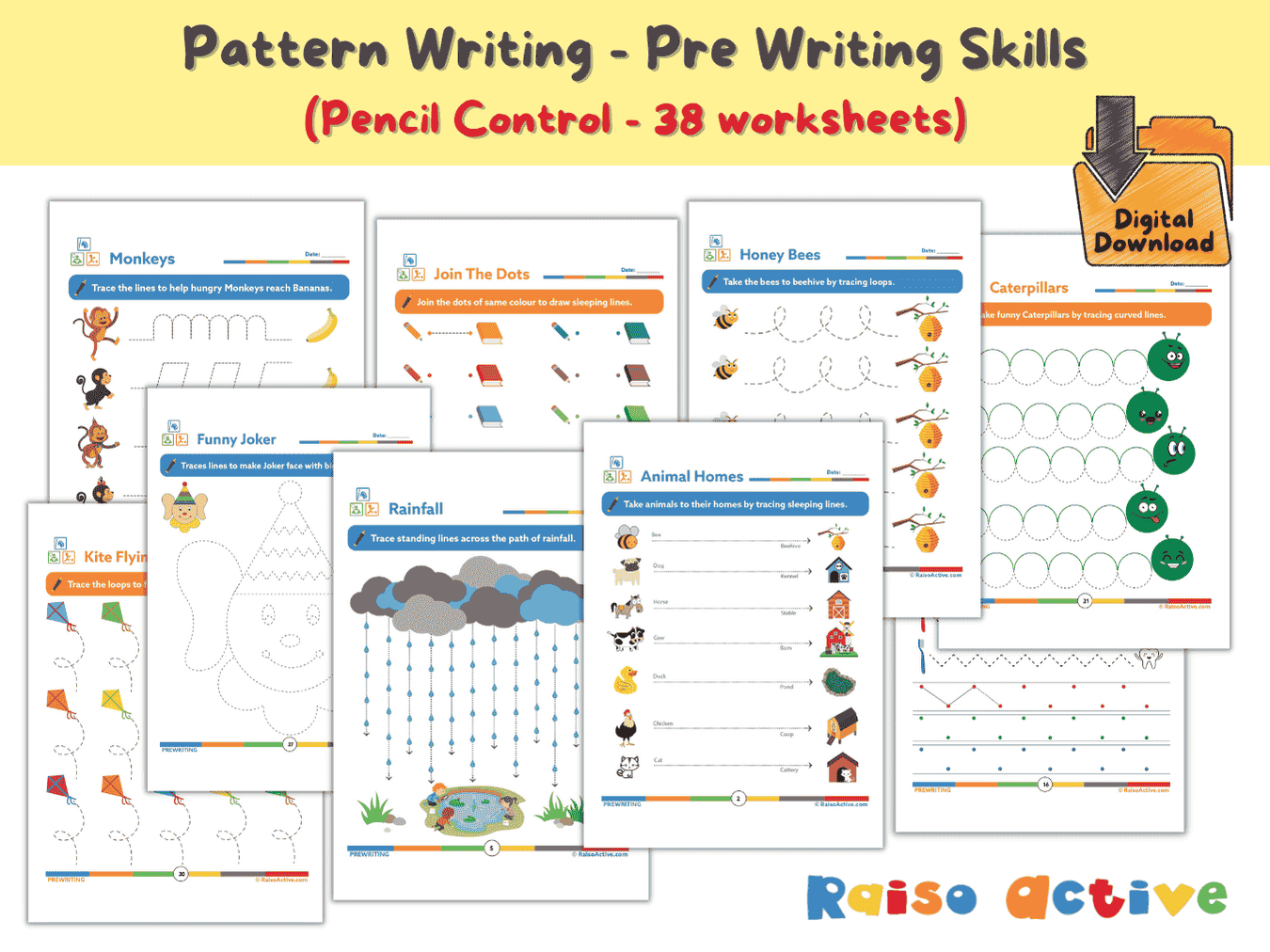
Pattern Writing Pre-writing Skills Activity Book for 3-4 Year Olds
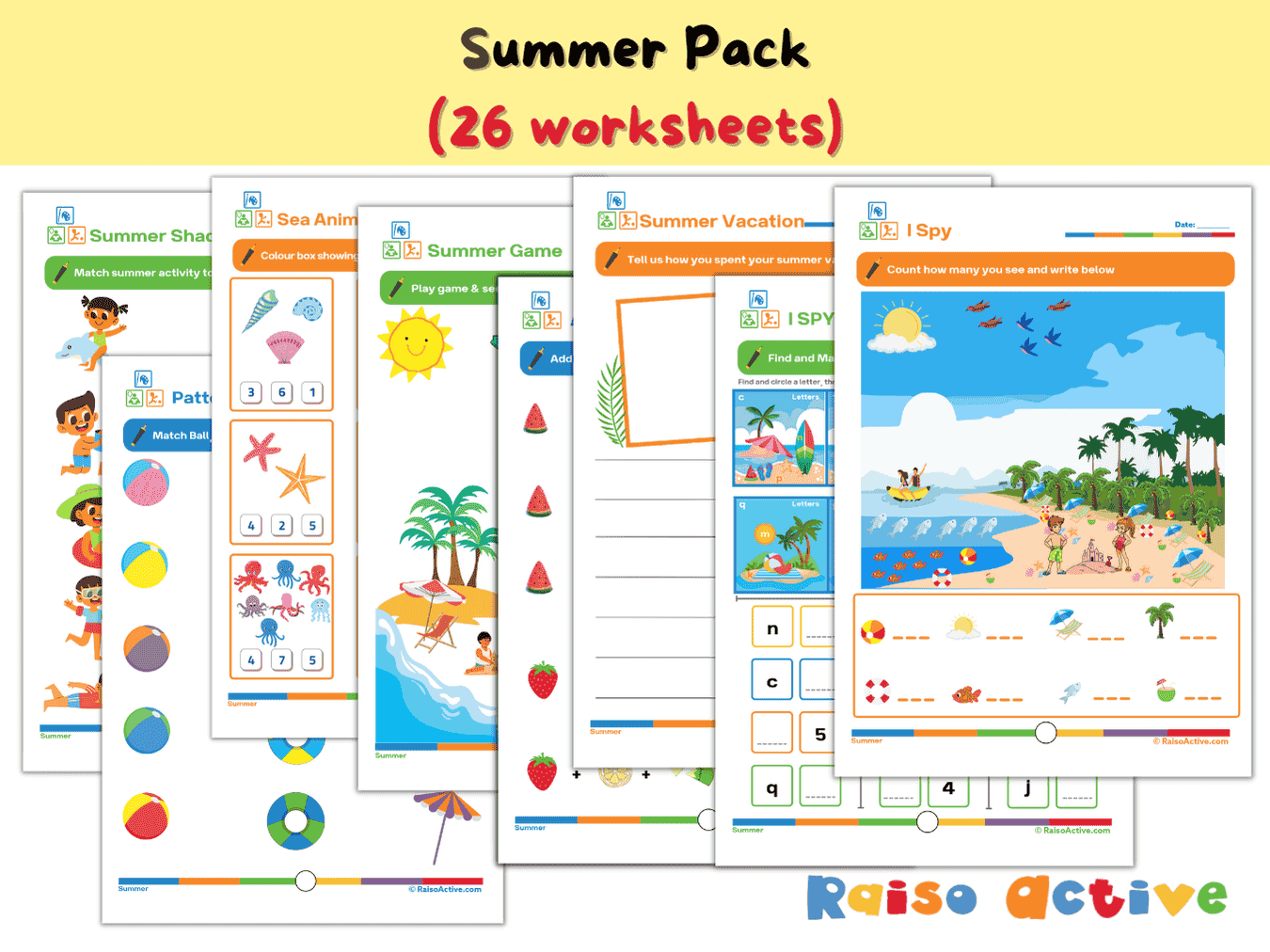
Summer Activity Pack: Math, Literacy, Puzzles & More for Preschool & Kindergarten
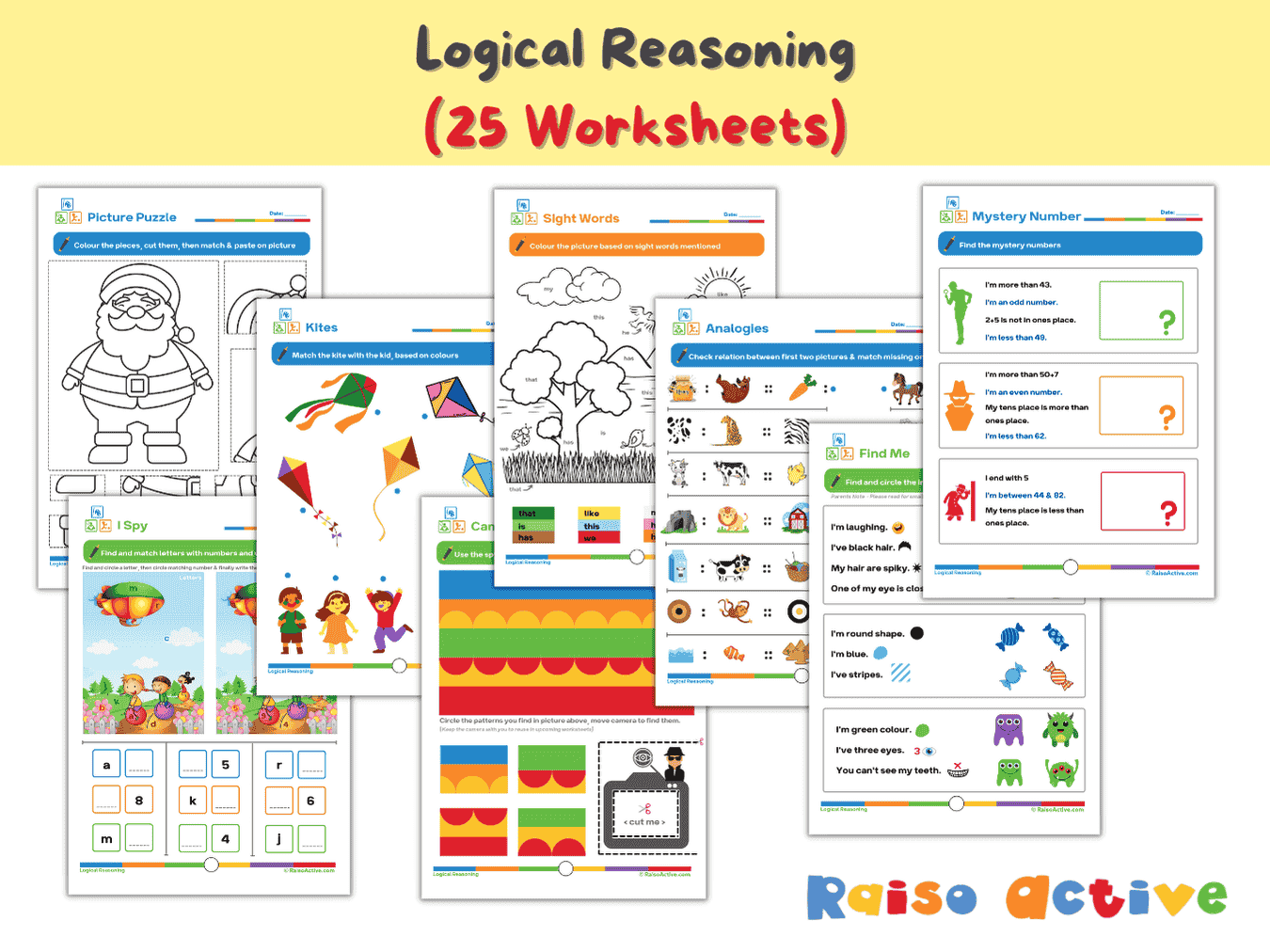
Logical Reasoning Activity Book for Preschool & Kindergarten | Patterns, Puzzles & Analogies
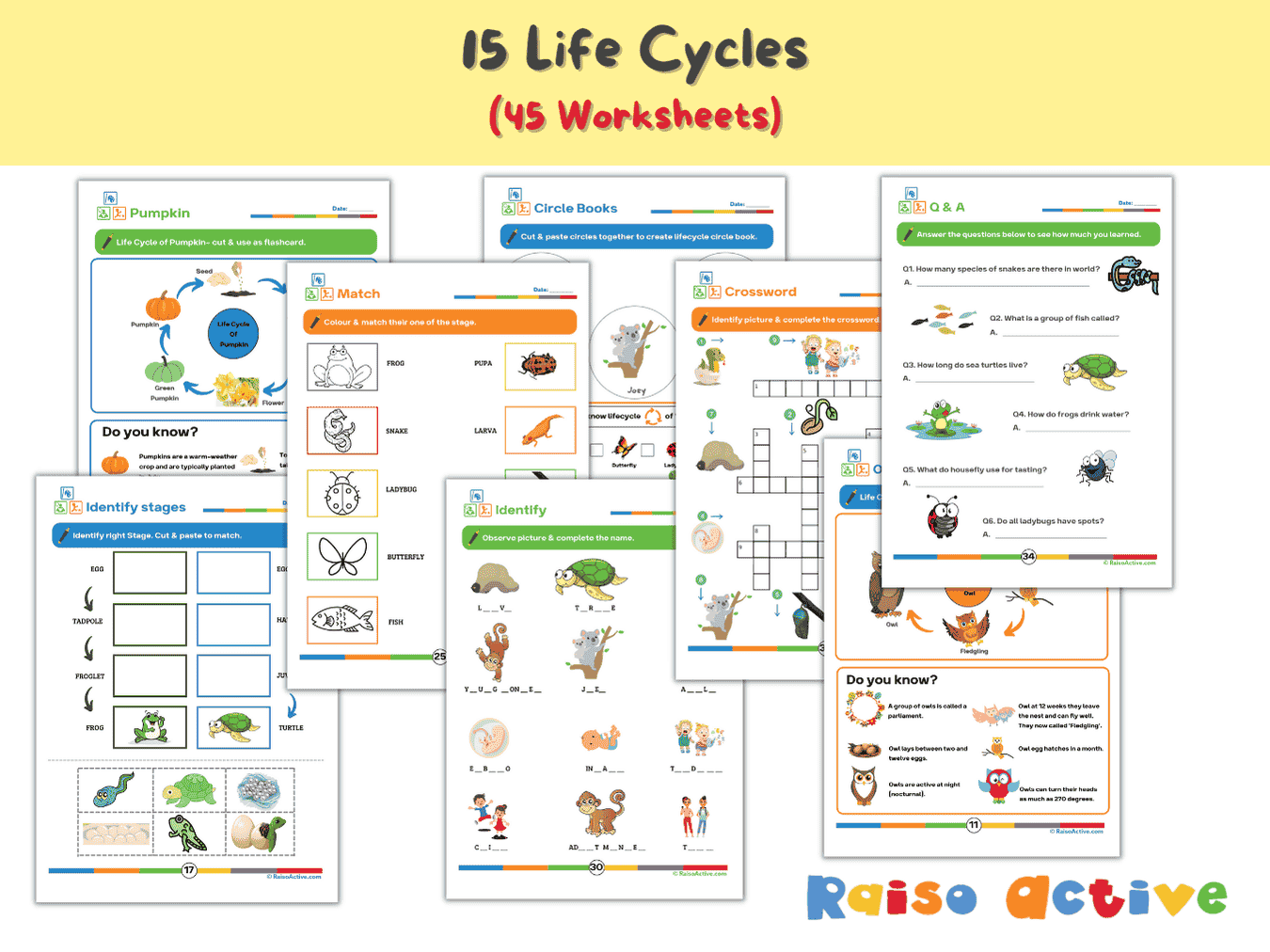
Lifecycles Activity Book & Flashcards for Preschool & Early Elementary
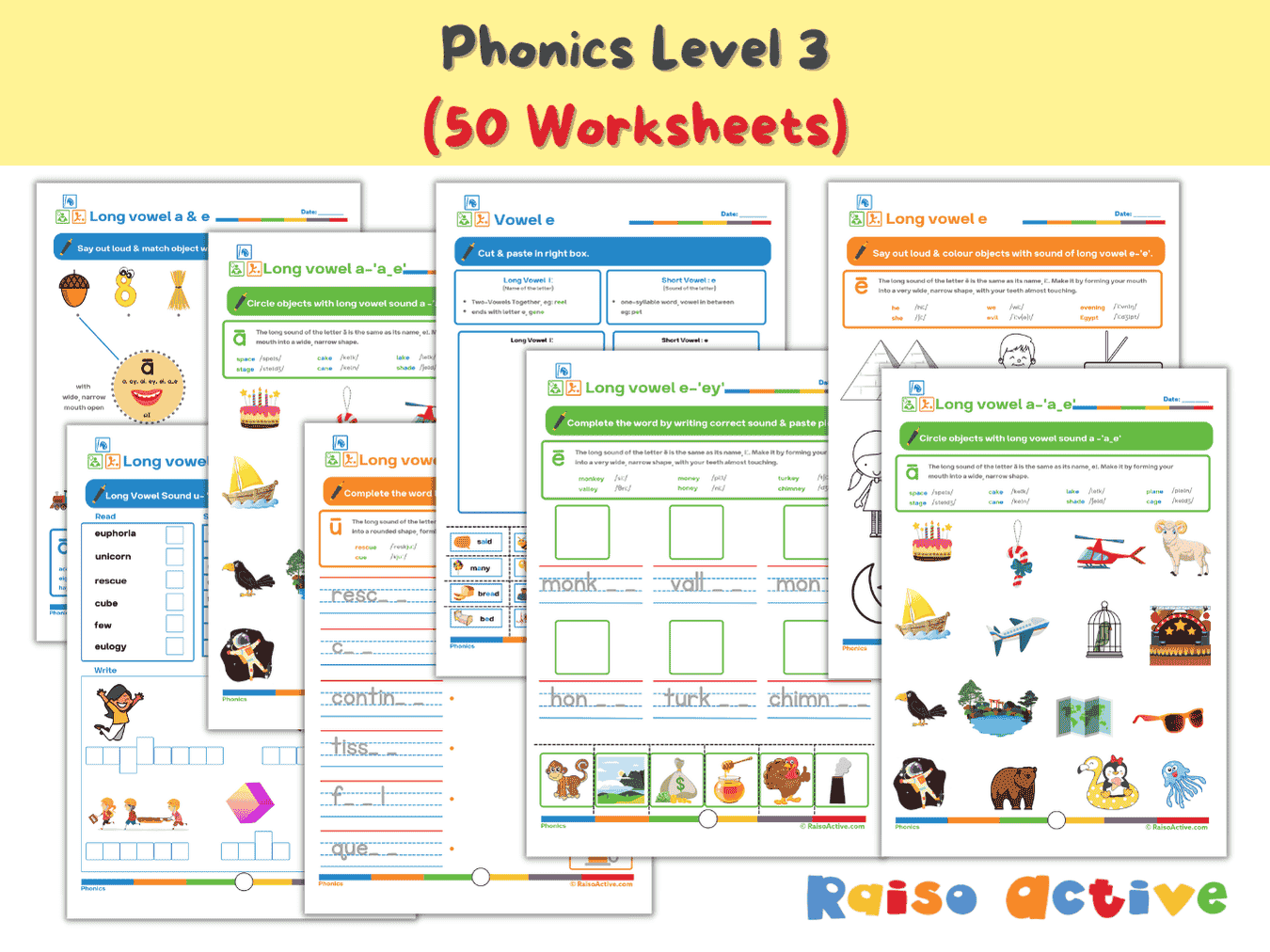
Phonics Level 3 Long Vowels Activity Book for Kindergarten & 1st Grade
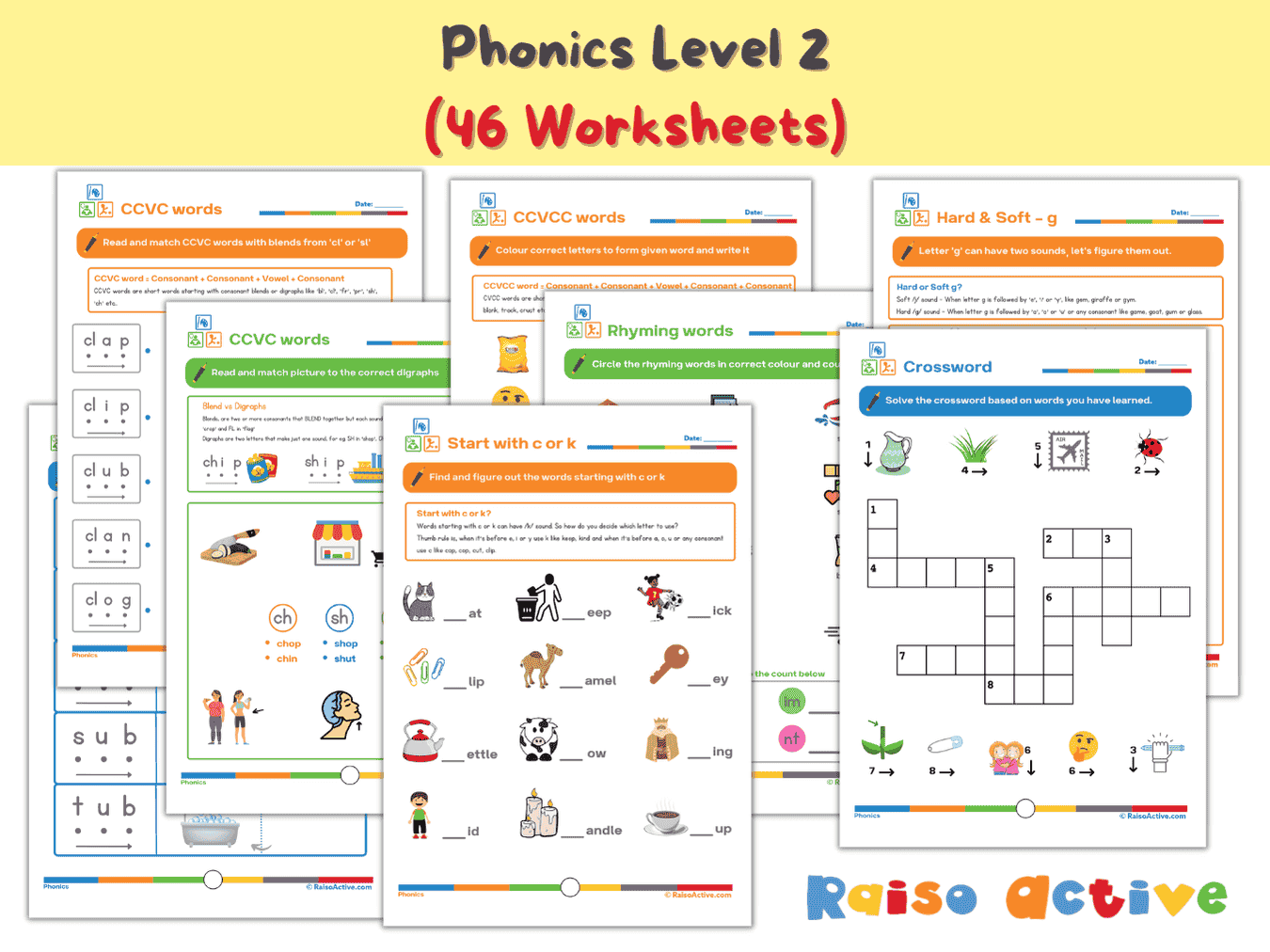
Phonics Level 2 Worksheets: CVC, CCVC, CVCC Word Families & Blends for Early Readers (Ages 4-7)
Guides for parents and teachers
See all guides →Best Worksheets for 3-Year-Olds: What Works and What to Avoid
What works on worksheets for 3-year-olds: short sessions, crayons, tracing lines, matching, cutting, a free weekly plan, and signs one is too advanced.
Age-Appropriate Problem-Solving Activities: Building Critical Thinkers from the Ground Up
Discover fun, age-appropriate problem-solving activities for children ages 1-8. Build critical thinking, logic, and reasoning skills through play-based learning.
Critical Thinking Activities That Actually Work for Young Children: Building Tomorrow's Thinkers Today
Discover proven critical thinking activities for young children. Age-wise logic games, questioning techniques, and hands-on ideas to build thinking skills at home.
Coding Activities for Preschoolers: Building Tomorrow's Thinkers Today
Discover 15+ unplugged and screen-based coding activities for preschoolers that build sequencing, logic, and problem-solving skills through play. NEP 2020 aligned.