Free printable worksheets · United Kingdom
EYFS Letter Tracing Worksheets (Ages 3–5)
EYFS letter tracing worksheets are practice sheets for children aged 3–5 in Early Years Foundation Stage in the UK. Letter tracing is following the dotted outline of a printed letter with a pencil, in the correct stroke order, to learn how it is formed. The sheets on this page cover uppercase letter formation, lowercase letter formation, starting points and stroke direction and spacing between letters.
The Early Years Foundation Stage spans Nursery and Reception and treats a worksheet as a small supplement to play rather than the main event. Mark making, matching and sorting dominate the Nursery year; Reception adds letter formation, sound matching and counting to ten as phonics teaching begins in earnest. Letter tracing at three starts small: the first letter of the child's own name, traced in a large capital with a starting dot and an arrow. A worksheet should keep to one or two letters at a time rather than the full alphabet, use thick dotted lines, and let the child say the letter's name while tracing it. Recognizing the letter matters more here than forming it neatly, and lowercase shapes are not part of this stage.
579+ worksheets · free PDF download · print on A4 or Letter
EYFS Letter Tracing Worksheets to print
Browse all worksheets for ages 3–5
Letter C Tracing and Coloring Worksheet for Preschoolers
This worksheet builds handwriting readiness by having children trace the letter C multiple times, while the coloring and picture-matching elements connect the letter's shape to its sound through familiar C words. For ages 3-5, repeating the same letter across tracing and picture activities on one page reinforces recognition from multiple angles in a single sitting.

First Letter Fun: Identify and Write! A Worksheet for Young Learners
This worksheet gives 3-5 year olds focused practice isolating the very first sound in a spoken word and writing the matching letter, building the same phonemic awareness skill that underlies spelling later on. Saying each picture's name aloud before writing forces your child to actively listen for the sound rather than guess at a letter from memory, which is what makes this different from copying pre-written letters.

Trace the Standing Lines to Reach the Ice Cream! A Pre-Writing Worksheet
This worksheet builds pencil control in children ages 3-5 by having them trace vertical, 'standing' lines connecting children to their ice cream cones, a companion skill to horizontal line tracing that together forms the basis for writing many letters and numbers. Vertical strokes require a different hand motion than horizontal ones, so practicing both directions gives children a fuller foundation for handwriting readiness.
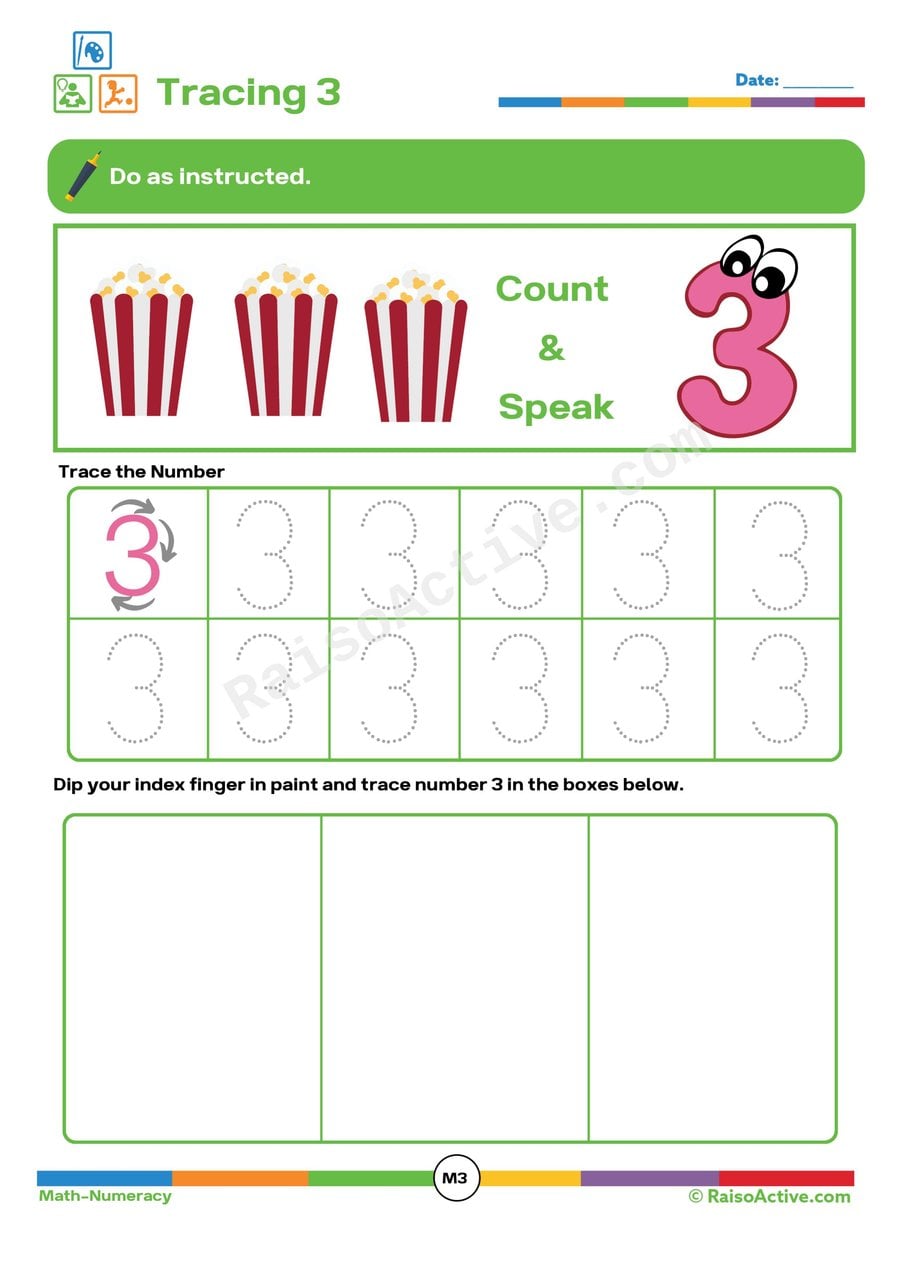
Tracing the Number 3 Worksheet for Preschoolers
This worksheet gives children ages 3-5 repeated practice forming the numeral 3, first with a pencil and then with a fingerpaint-dipped finger, using the curved double-bump stroke that makes 3 tricky for many young writers. Practicing the same numeral through two different tactile methods — pencil and paint — reinforces the motor memory of the shape through varied sensory experience.

Number Writing Worksheet: Trace, Write, Count, and Paste Numbers!
This multi-step worksheet strengthens number formation, counting, and one-to-one correspondence all in one activity, as children ages 3-5 trace and write numerals, then count a group of objects and paste the matching quantity in a box. Combining writing with hands-on counting and cutting helps children connect the written symbol to the actual amount it represents, a key milestone in early numeracy.

Learn the Letter U! Tracing, Matching, and Coloring Worksheet
Children ages 3-5 practice forming the letter U in both its capital and lowercase shapes, while also learning to spot U words among other pictures, building both handwriting control and letter-sound recognition together. The matching component adds a layer of visual scanning practice, since children must compare each picture's beginning sound against the target letter.

Number Tracing Worksheet 1-20: Practice Writing Numbers!
This worksheet gives children ages 3-5 a second full pass at tracing every number from 1 to 20, repeating the entire sequence to build the muscle memory that comes only from writing each numeral more than once. Revisiting the complete range reinforces both the shape of each number and their order in the counting sequence, helping children internalize the pattern rather than relying on the worksheet as a one-time reference. This repetition matters especially for the trickier two-digit numbers in the teens, which often need more practice than single digits.
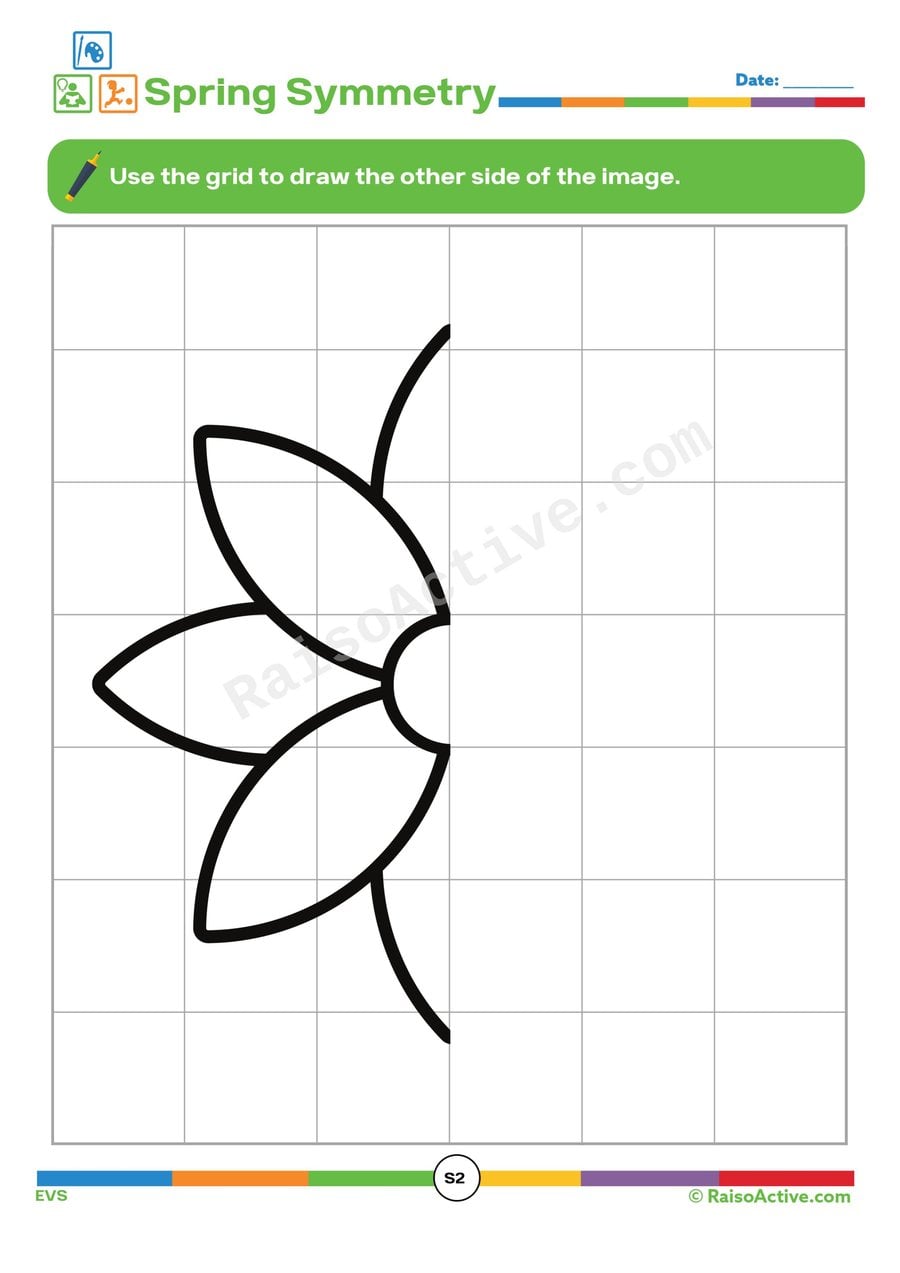
Spring Symmetry Worksheet: Draw the Other Half!
This worksheet introduces children ages 3-5 to the concept of symmetry by having them draw the missing half of a flower using a grid as a visual guide. Replicating a shape on the opposite side of a center line builds spatial reasoning and careful observation, while the drawing itself strengthens pencil control and hand-eye coordination in a way that's more open-ended than simple tracing.
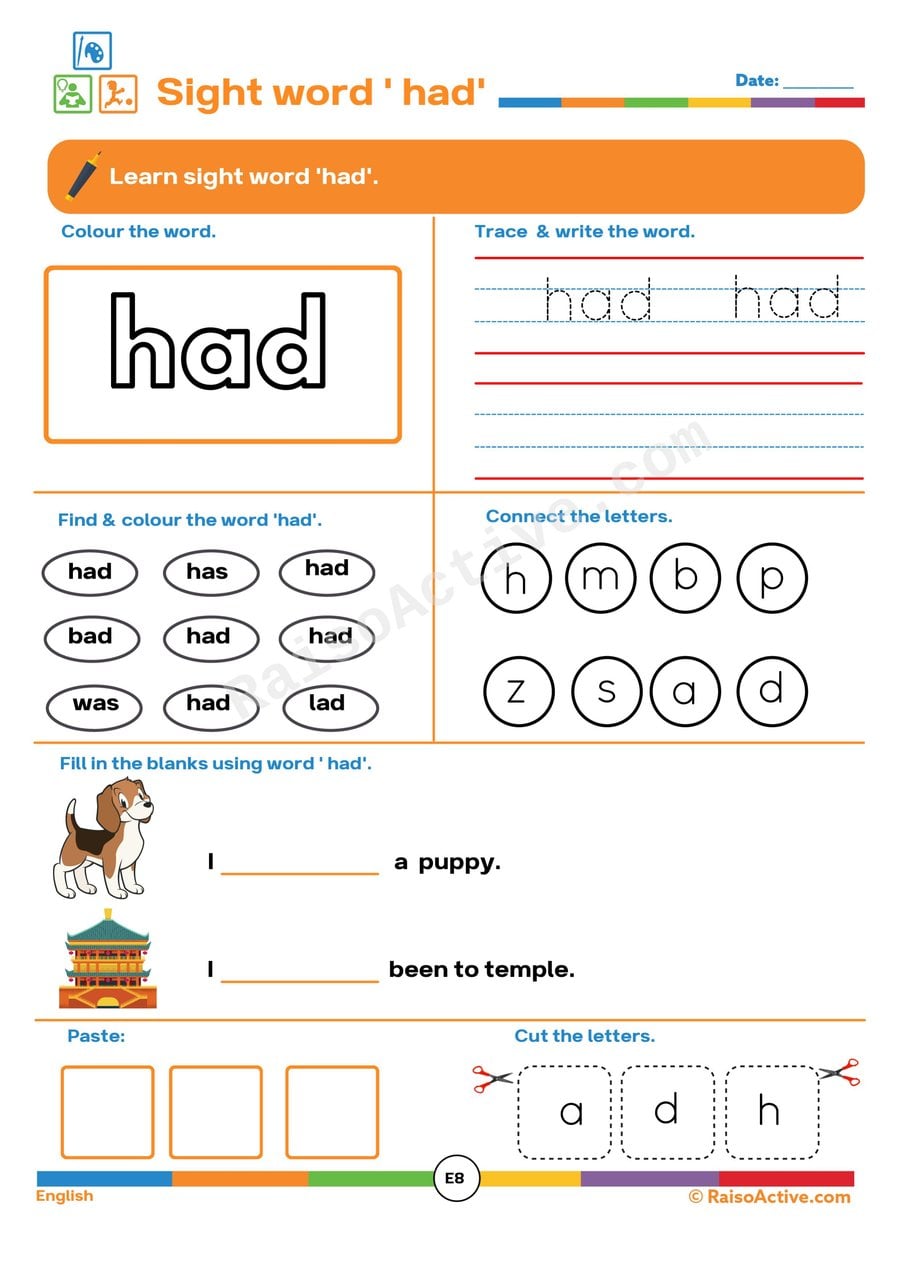
Sight Word 'had' Worksheet: Trace, Find, and Write!
This worksheet builds sight word recognition for the common word 'had' through multiple activities, tracing, finding it among similar words, connecting letters, and cutting and pasting, giving children repeated, varied exposure to the same high-frequency word. For ages 3-5, 'had' doesn't sound out in an entirely predictable way for beginning readers, so repeated whole-word recognition practice like this is especially valuable.

Phonics Fun: Write the First Letter and Draw! (Ages 3-5)
This worksheet asks children ages 3-5 to identify a picture's beginning sound and write the matching letter, then draw their own picture for extra practice, combining phonemic awareness with early letter formation. Writing the letter by hand, rather than just circling it, demands more fine motor control and reinforces the sound-symbol link more deeply than recognition alone. The open-ended drawing task also lets children apply the same beginning sound to a word of their own choosing.

Letter J Tracing Worksheet: Learn to Write and Color!
Tracing and writing the letter 'J' gives children ages 3-5 practice with a less common stroke pattern — a top hook that curves down and to the left — building fine motor control for letters that don't follow the more familiar straight-line or circular shapes. Coloring pictures that start with 'J' reinforces the connection between the letter's shape and its sound, strengthening early phonics alongside handwriting.

Letter I Tracing Worksheet: Learn to Trace and Identify Words
This worksheet builds recognition and formation of the letter I, both uppercase and lowercase, through tracing practice and identifying pictures of words that start with I, like 'igloo' or 'insect.' For three- to five-year-olds, uppercase I is one of the simplest letter shapes to form, making it a good confidence-building letter even as lowercase i, with its added dot, introduces a slightly trickier two-part stroke.
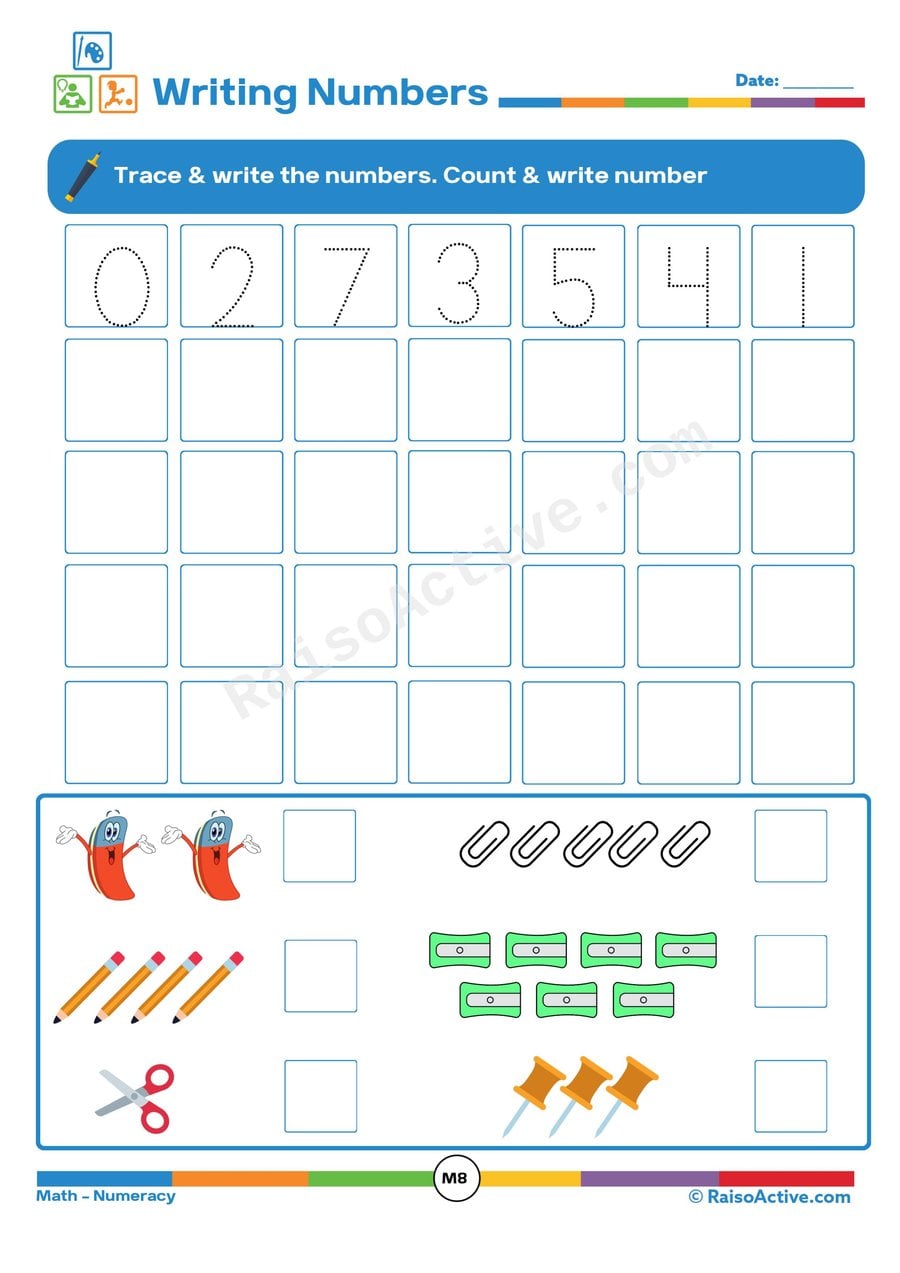
Trace and Write Numbers 0-5 Worksheet
Tracing and writing the numbers 0 through 5 builds the specific hand strokes needed to form each numeral correctly, a skill that develops separately from simply being able to count or recognize numbers by sight for children ages 3-5. Following the tracing with a counting-and-writing section, where children count objects and record the total themselves, connects the motor skill of writing numbers directly to their meaning as quantities. Practicing this small, foundational range first builds the confidence needed before tackling larger numbers later.
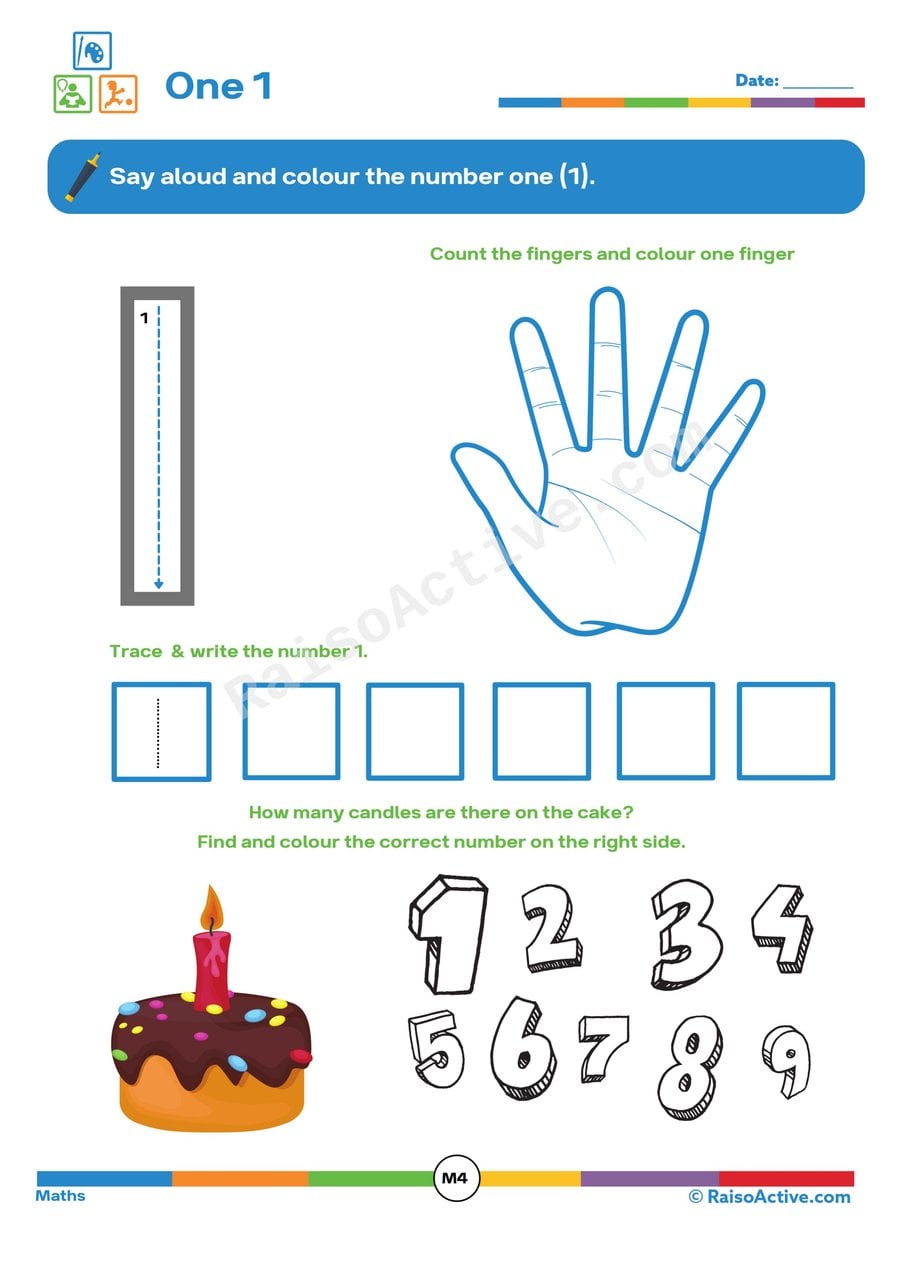
Number One Worksheet: Trace, Count, and Color!
Children ages 3-5 practice forming the number 1 through guided tracing while also reinforcing what the quantity 'one' represents by counting a single finger and a single candle. Linking the written symbol directly to a real quantity is a key early step in number sense before children move on to larger numbers.

Landforms Worksheet: Identify and Label the Pictures!
Writing the correct name for pictures of mountains, rivers, and other landforms from a word bank builds early science vocabulary and spelling practice for children ages 3-5, connecting a visual image to its written word.

Trace and Write the Letter W Worksheet for Preschoolers
This worksheet has children ages 3-5 trace the uppercase letter W, made of four connected diagonal lines forming two Vs side by side, one of the more visually complex letters to trace accurately. Practicing W builds on the diagonal-stroke control introduced by simpler letters like V, while adding the extra challenge of maintaining even width and height across all four strokes. The page also reinforces the /w/ sound in words like 'water,' 'worm,' and 'window.'

Adjective Adventure: Coloring and Sentence Fun Worksheet for Kids
Coloring only the adjectives in a set of words teaches children ages 3-5 to recognize descriptive words as their own grammatical category, distinct from naming words or action words, a foundational step toward understanding how sentences are built. Writing a sentence using a chosen adjective afterward pushes the recognition skill into active use, requiring children to apply what they identified rather than just spot it.

Learn to Draw: Teddy Bear Worksheet for Preschoolers
Following numbered steps to draw a teddy bear teaches children ages 3-5 that complex pictures can be broken down into simple shapes like circles, building both sequencing skills and hand-eye coordination. This step-by-step approach to drawing also builds confidence for children who feel intimidated by open-ended drawing tasks.

C or K? Beginning Sounds Worksheet for Preschoolers
This worksheet teaches children ages 3-5 an important early spelling rule: the /k/ sound at the beginning of a word can be spelled with either 'c' or 'k', and knowing which to use is one of the first spelling patterns young readers encounter. Children practice listening for the /k/ sound in each picture's name and then applying the rule to choose the correct letter. This bridges phonics awareness into functional spelling, since children are producing print, not just recognizing sounds.

Trace the Penguin: A Fun Pre-Writing Worksheet for Kids!
Tracing the rounded outline of a penguin gives children ages 3-5 practice with curved strokes that form a whole recognizable animal shape rather than an abstract line, which helps the tracing feel purposeful and connected to something familiar from books or videos. The cold-climate theme also introduces simple vocabulary about penguins and their environment, a small science connection layered onto the fine motor practice.

Trace and Write the Letter D Worksheet for Preschoolers
Focusing only on the uppercase D lets children build solid, repeated practice with its single straight line and large curve before adding the more visually similar lowercase d, which can otherwise get confused with b at this age. Tracing and then writing D independently at ages 3-5 moves a child from copying to recalling the letter shape from memory, an important step toward true handwriting.

Trace and Write the Letter Q Worksheet for Preschoolers
This letter Q worksheet has children ages 3-5 practice both the uppercase and lowercase forms, combining a closed loop similar to O with a small extra tail stroke that makes Q visually distinct. Because Q is one of the less frequently practiced letters, this page gives focused repetition on a shape children often see less often in early reading materials. It also introduces the unusual /kw/ sound Q typically makes, as in 'queen' and 'quilt.'
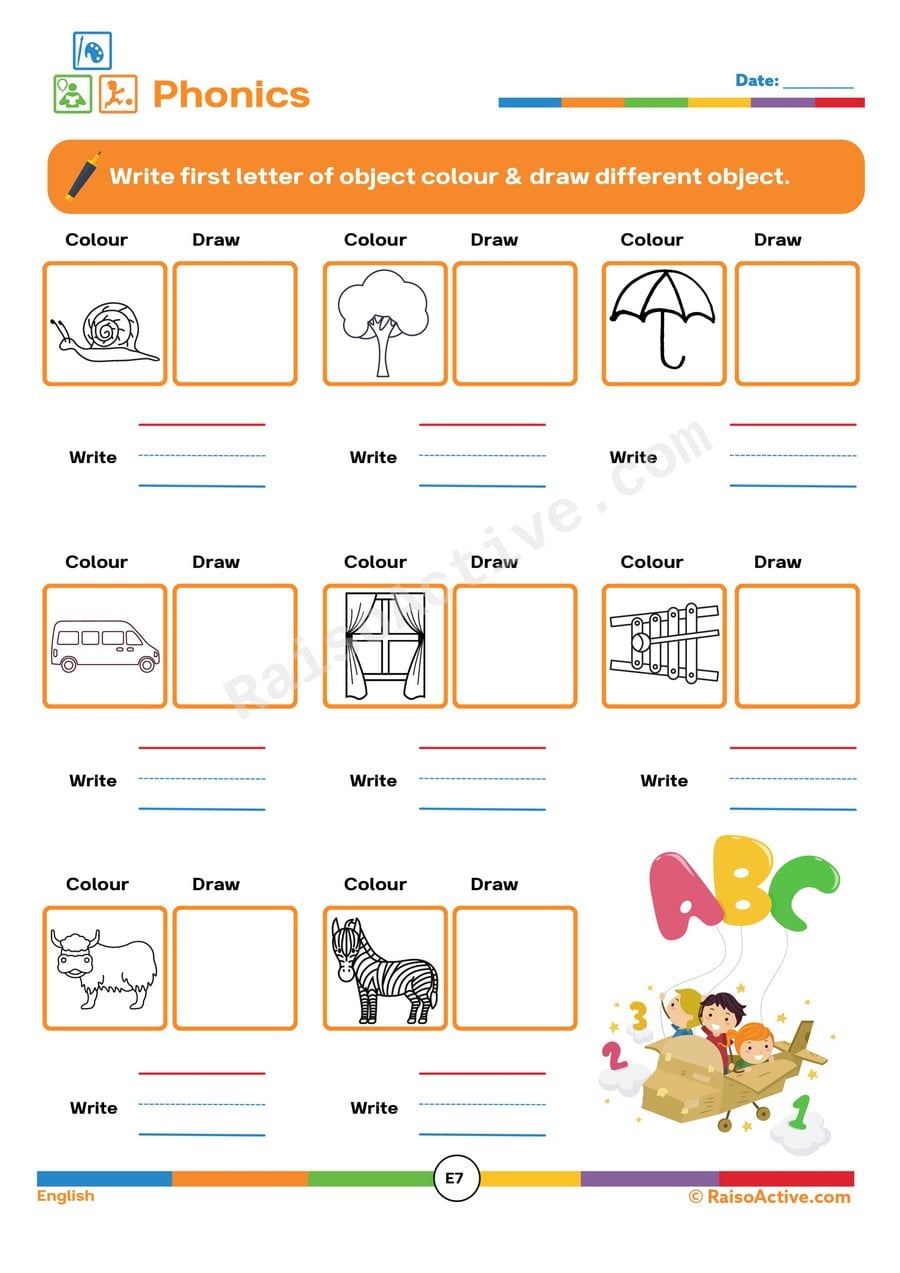
Phonics Fun: Color, Draw, and Write! (Ages 3-5)
Coloring a picture, drawing a related object, and writing its first letter combines three literacy-building tasks in one activity for children ages 3-5 — visual recognition, creative expression, and beginning-sound identification.

Tracing and Writing the Number 5 Worksheet for Preschoolers
This worksheet targets the specific pencil-control needed to form the numeral 5 correctly, while linking that written symbol to the quantity it represents through counting the apples on the page. Practicing number formation alongside counting at this age helps children connect the abstract symbol '5' to a concrete amount they can see and touch.
What EYFS letter tracing worksheets cover
Letter tracing at three starts small: the first letter of the child's own name, traced in a large capital with a starting dot and an arrow. A worksheet should keep to one or two letters at a time rather than the full alphabet, use thick dotted lines, and let the child say the letter's name while tracing it. Recognizing the letter matters more here than forming it neatly, and lowercase shapes are not part of this stage.
- Trace the first letter of a name across a full row
- Say the letter name aloud while tracing each stroke
- Trace one or two capital letters per worksheet, not the alphabet
- Point to the traced letter when it is named
How to use these worksheets at home or in class
Five to ten minutes at a table, with an adult alongside to talk through the sheet, is enough at any point in this stage. Use a worksheet to echo something already met through play that week rather than to introduce a brand new idea.
Start with the sheet that matches what your child can already do, then move one step up. Keep finished sheets in a folder: EYFS teachers often ask for evidence of practice, and children like seeing their own progress.
Is your child ready for EYFS letter tracing work?
Look for a child who can make deliberate marks with a crayon, sit briefly at a table, follow a one-step spoken instruction and show curiosity about letters or numbers seen around the house or classroom.
- Trace every uppercase letter following its numbered stroke arrows
- Keep traced letters close together without letting them touch
- Trace lowercase o, c and a starting at the top
Frequently asked questions
Which letters should a three-year-old trace first?
The letters in the child's own name, starting with the first one, since those are the letters a child is most motivated to recognise and most likely to see repeated. After the name is secure, add a few letters from words the child already says often, such as the family pet's name. There is no need to work through the alphabet in order at this age; frequency and interest matter more than sequence.
What should a EYFS child be able to do in letter tracing?
Letter tracing at three starts small: the first letter of the child's own name, traced in a large capital with a starting dot and an arrow. A worksheet should keep to one or two letters at a time rather than the full alphabet, use thick dotted lines, and let the child say the letter's name while tracing it. Recognizing the letter matters more here than forming it neatly, and lowercase shapes are not part of this stage. Look for a child who can make deliberate marks with a crayon, sit briefly at a table, follow a one-step spoken instruction and show curiosity about letters or numbers seen around the house or classroom.
Do these worksheets follow the EYFS curriculum?
The sheets cover uppercase letter formation, lowercase letter formation, starting points and stroke direction and spacing between letters, which sit inside the EYFS Early Learning Goals (Statutory Framework) outcomes for EYFS. Preschool and Pre-K (US), Nursery and LKG (India) use the same skills at this age, so the sheets also fit families following those programmes.
Are these EYFS letter tracing worksheets free?
Yes. Each worksheet downloads free as a watermarked PDF once you create an account, with a limit of five a day. An annual membership ($20) removes the watermark and the limit for the whole library of over 1,000 worksheets and every printable pack.

Written by
Hemsweta Jain · Teacher Cheena
MBA and Early Childhood Educator, teaching since 2014 · Founder of RaisoActive, Mumbai
Written and reviewed by Hemsweta Jain (Teacher Cheena), who designs every RaisoActive worksheet.
Last reviewed
Printable packs for ages 3–5
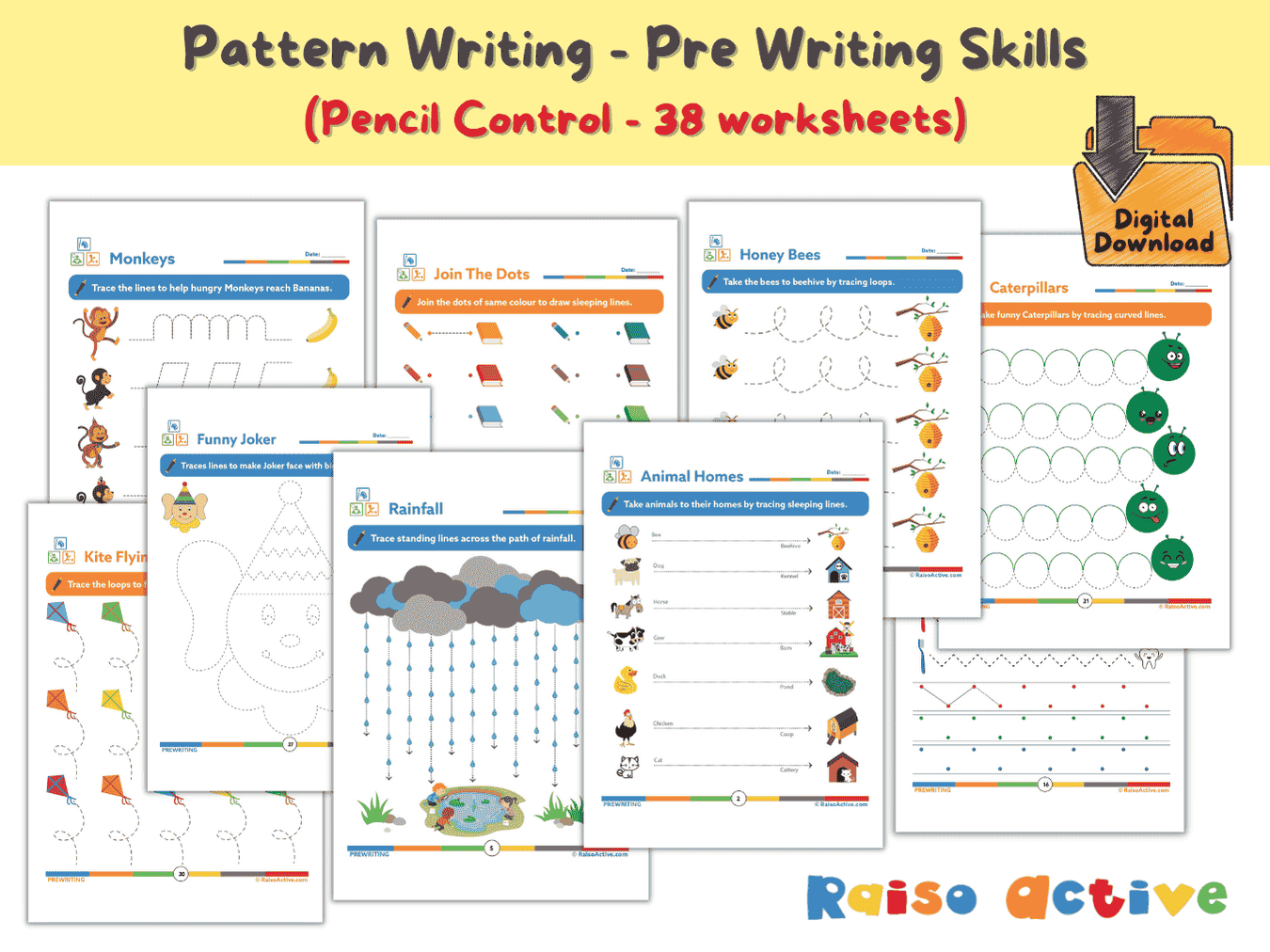
Pattern Writing Pre-writing Skills Activity Book for 3-4 Year Olds
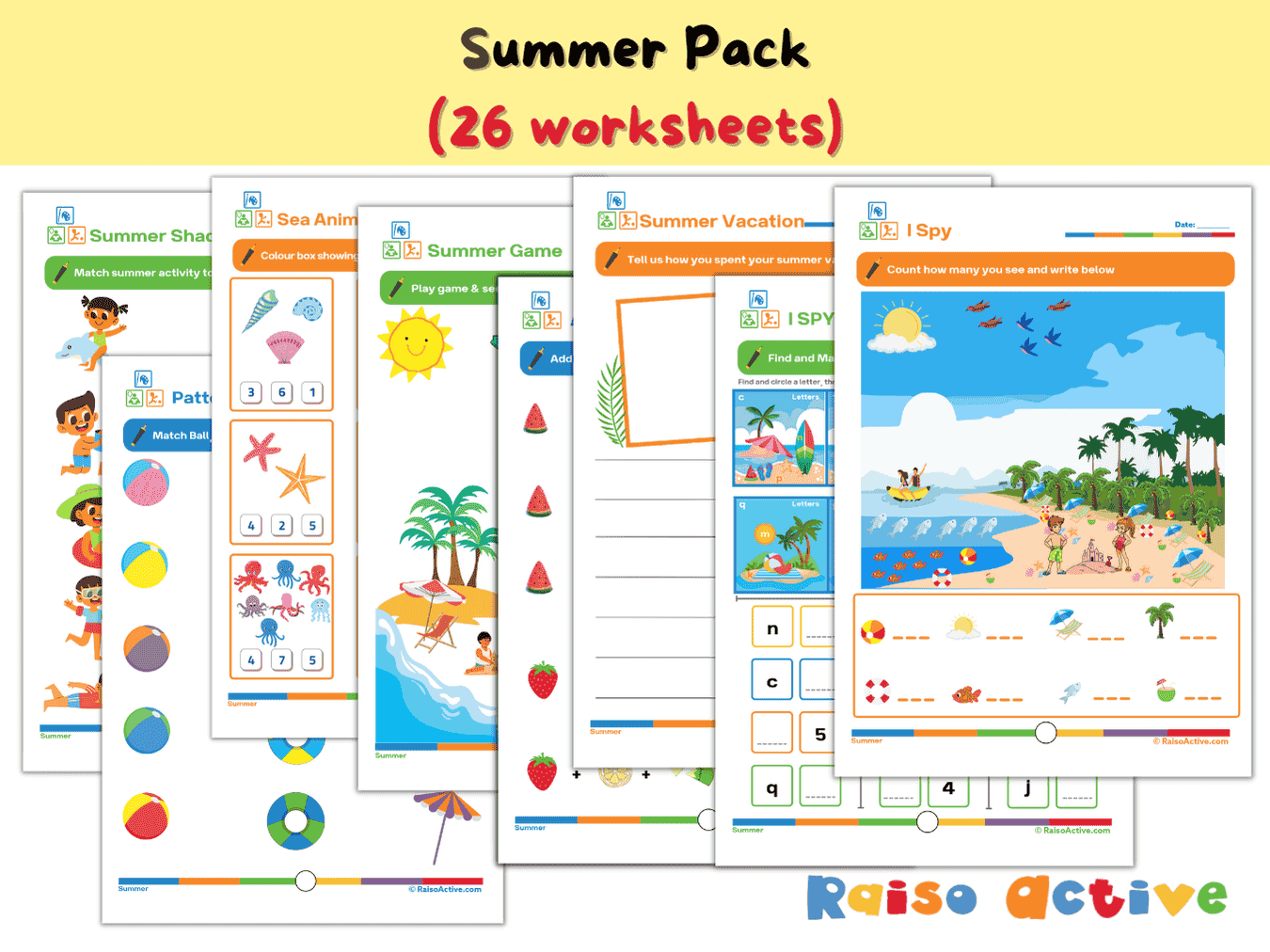
Summer Activity Pack: Math, Literacy, Puzzles & More for Preschool & Kindergarten
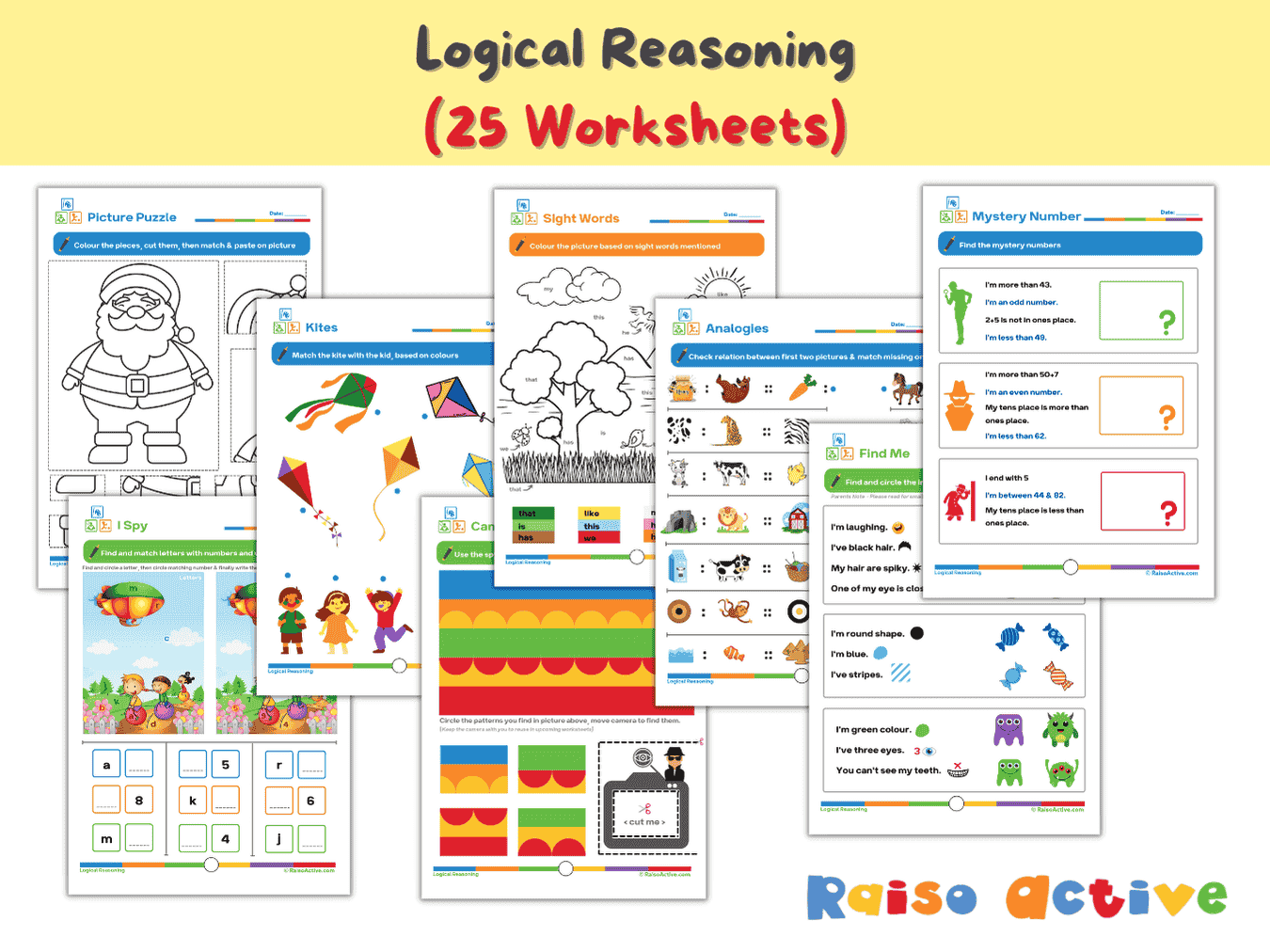
Logical Reasoning Activity Book for Preschool & Kindergarten | Patterns, Puzzles & Analogies
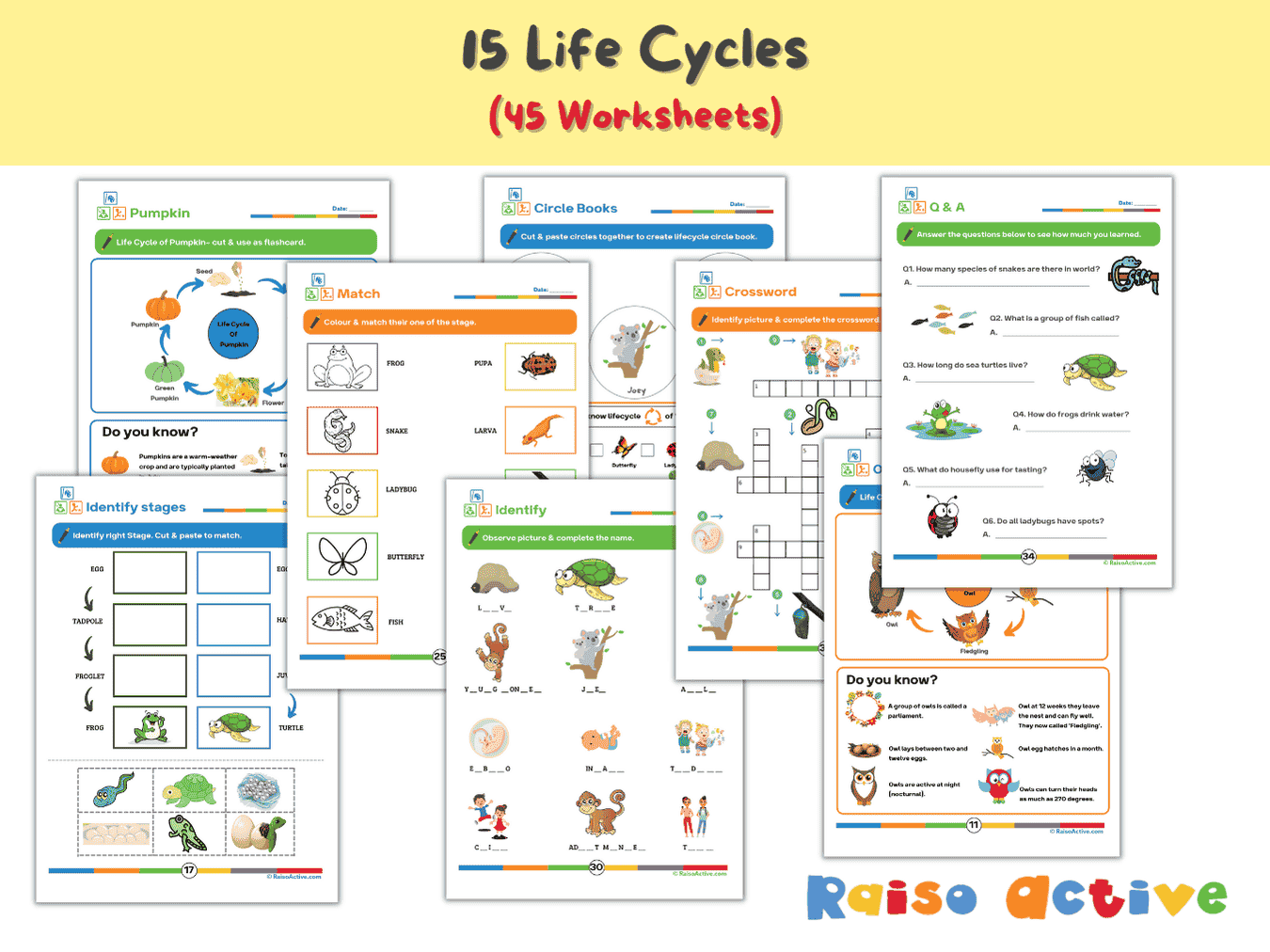
Lifecycles Activity Book & Flashcards for Preschool & Early Elementary
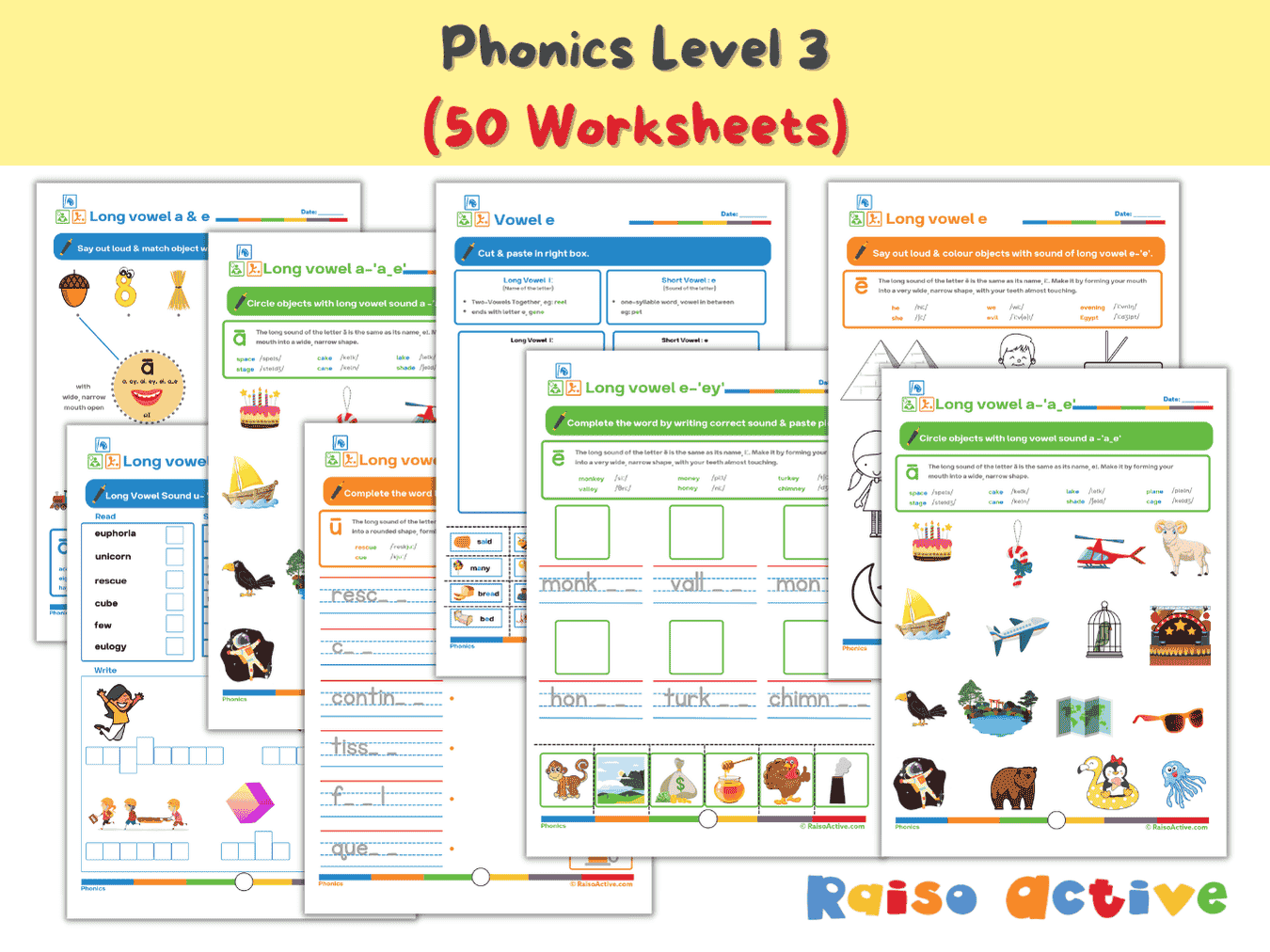
Phonics Level 3 Long Vowels Activity Book for Kindergarten & 1st Grade
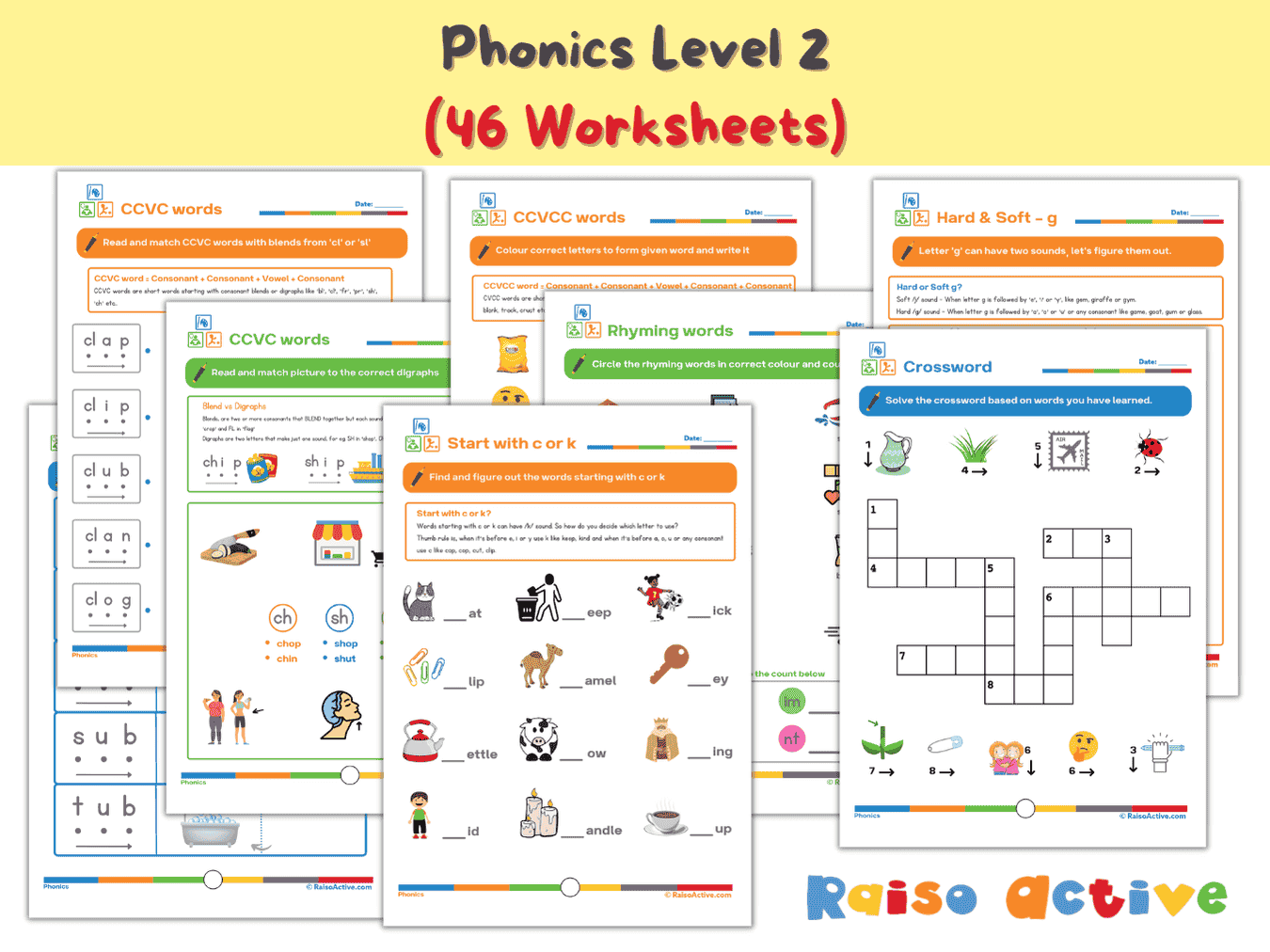
Phonics Level 2 Worksheets: CVC, CCVC, CVCC Word Families & Blends for Early Readers (Ages 4-7)
Guides for parents and teachers
See all guides →Number Formation Rhymes 0–9 and How to Fix Reversals
Original number formation rhymes for 0–9, the correct stroke order for each digit, why 3, 5 and 7 get reversed most often, and multisensory fixes that work.
Pre-Writing Strokes in Order: From Standing Lines to Loops (With Printable Patterns)
The developmental order of pre-writing strokes, from vertical lines to loops, and why practicing them in sequence makes letter formation much easier to learn.
Kindergarten Readiness Checklist: 25 Skills to Practice Before the First Day
A kindergarten readiness checklist of 25 literacy, math, motor, self-regulation and self-help skills, with an 8-week summer plan and notes on when not to worry.
Best Worksheets for 3-Year-Olds: What Works and What to Avoid
What works on worksheets for 3-year-olds: short sessions, crayons, tracing lines, matching, cutting, a free weekly plan, and signs one is too advanced.
Reception Year Explained: EYFS Learning and How to Help at Home
A teacher's plain-English guide to the Reception Year: the seven areas of learning, Early Learning Goals, Phase 2/3 phonics, the RBA and home routines.
What Should a 4-Year-Old Know Before LKG? A Readiness Checklist
A calm, teacher-written LKG readiness checklist for 4-year-olds: language, pattern writing, numbers to 10, self-help and social skills, plus a 6-week plan.
Canonical: https://raisoactive.com/worksheets/eyfs-letter-tracing