Free printable worksheets · United Kingdom
EYFS Alphabet Worksheets (Ages 3–5)
EYFS alphabet worksheets are practice sheets for children aged 3–5 in Early Years Foundation Stage in the UK. Alphabet worksheets build recognition of the 26 letters, their names and order, and the difference between uppercase and lowercase forms. The sheets on this page cover letter recognition A–Z, letter names versus letter sounds, sequencing letters in order and matching uppercase to lowercase.
The Early Years Foundation Stage spans Nursery and Reception and treats a worksheet as a small supplement to play rather than the main event. Mark making, matching and sorting dominate the Nursery year; Reception adds letter formation, sound matching and counting to ten as phonics teaching begins in earnest. Three-year-olds build a small working set of letters, usually starting with the ones in their name and reaching eight to ten capitals by the end of the year. A worksheet should ask the child to find a named letter among two or three lookalikes, circle every instance of one letter on a busy page, and say the first few letters of the alphabet in order. Full A-to-Z sequencing, lowercase forms, and matching letters to sounds belong to the year after.
1053+ worksheets · free PDF download · print on A4 or Letter
EYFS Alphabet Worksheets to print
Browse all worksheets for ages 3–5
Clothing Pattern Match Worksheet for Preschoolers
This worksheet has children ages 3-5 study repeating patterns on clothing items — stripes, polka dots, or checks — and match each item to its identical twin, building visual discrimination and early pattern-sequencing skills. Distinguishing between similar-looking patterns also sharpens attention to detail, a skill that later supports letter and word recognition.

Trace and Color the Letter S Worksheet for Preschoolers
Tracing and writing the letter S gives children ages 3-5 practice with a continuous, flowing curved stroke that changes direction partway through, making it one of the more demanding letters to control smoothly compared to straight-line letters. Because the S shape doesn't lift the pencil mid-stroke, this worksheet specifically builds sustained curve control in a single motion.

Letter Y Tracing and Recognition Worksheet for Preschoolers
This worksheet builds recognition and formation of the letter Y through guided tracing practice and by identifying pictures of words that start with Y, like 'yarn' or 'yo-yo.' For three- to five-year-olds, tracing first with a finger and then with a pencil builds the motor memory needed before a child can form the letter confidently on their own.
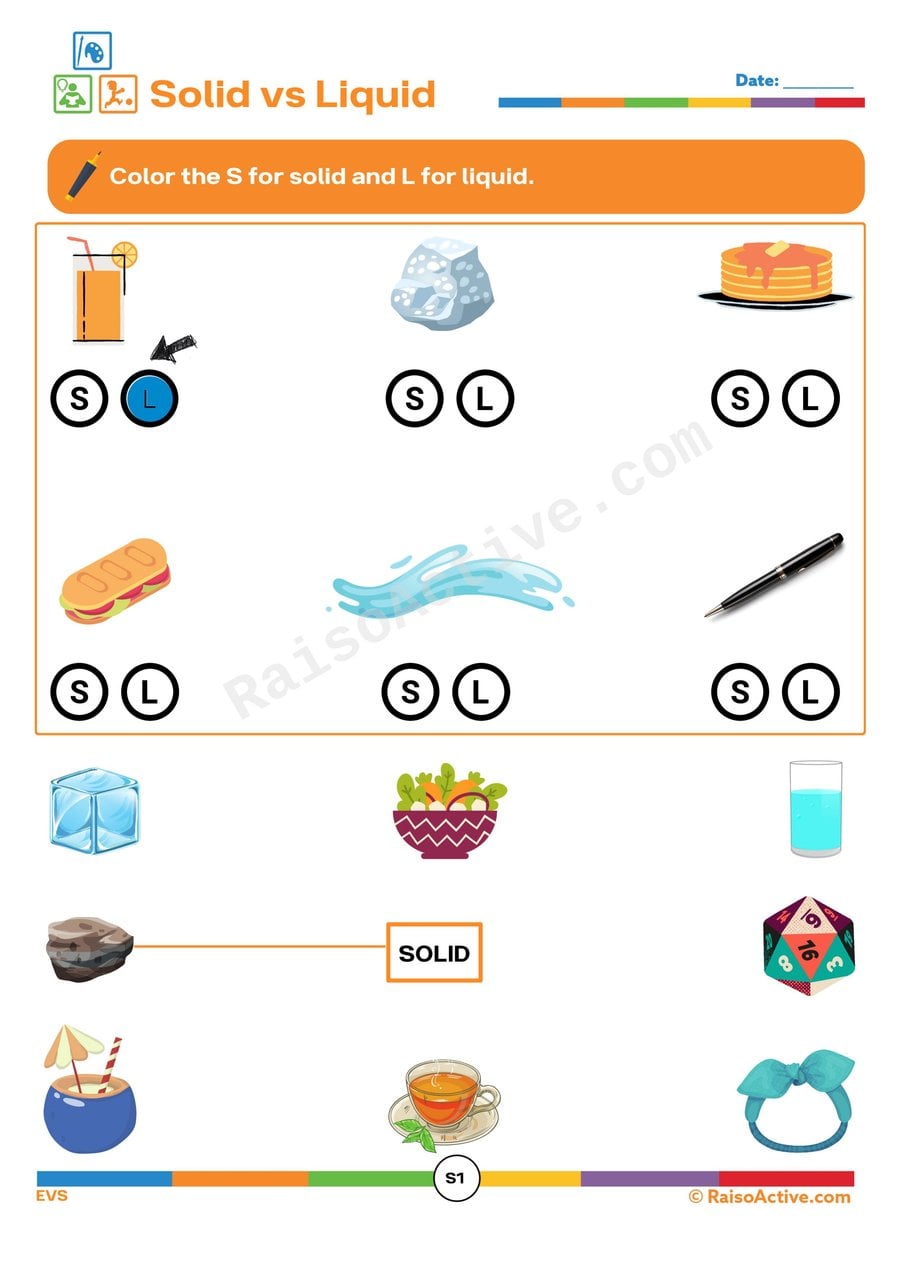
Solid vs. Liquid Worksheet: Color and Learn!
This worksheet introduces children ages 3-5 to the basic science concept of states of matter by having them sort pictured items into solids and liquids and color a corresponding letter, 'S' or 'L'. Early classification of the physical world — noticing that some things hold their shape while others flow and take the shape of their container — is an important first step in scientific thinking and observation.
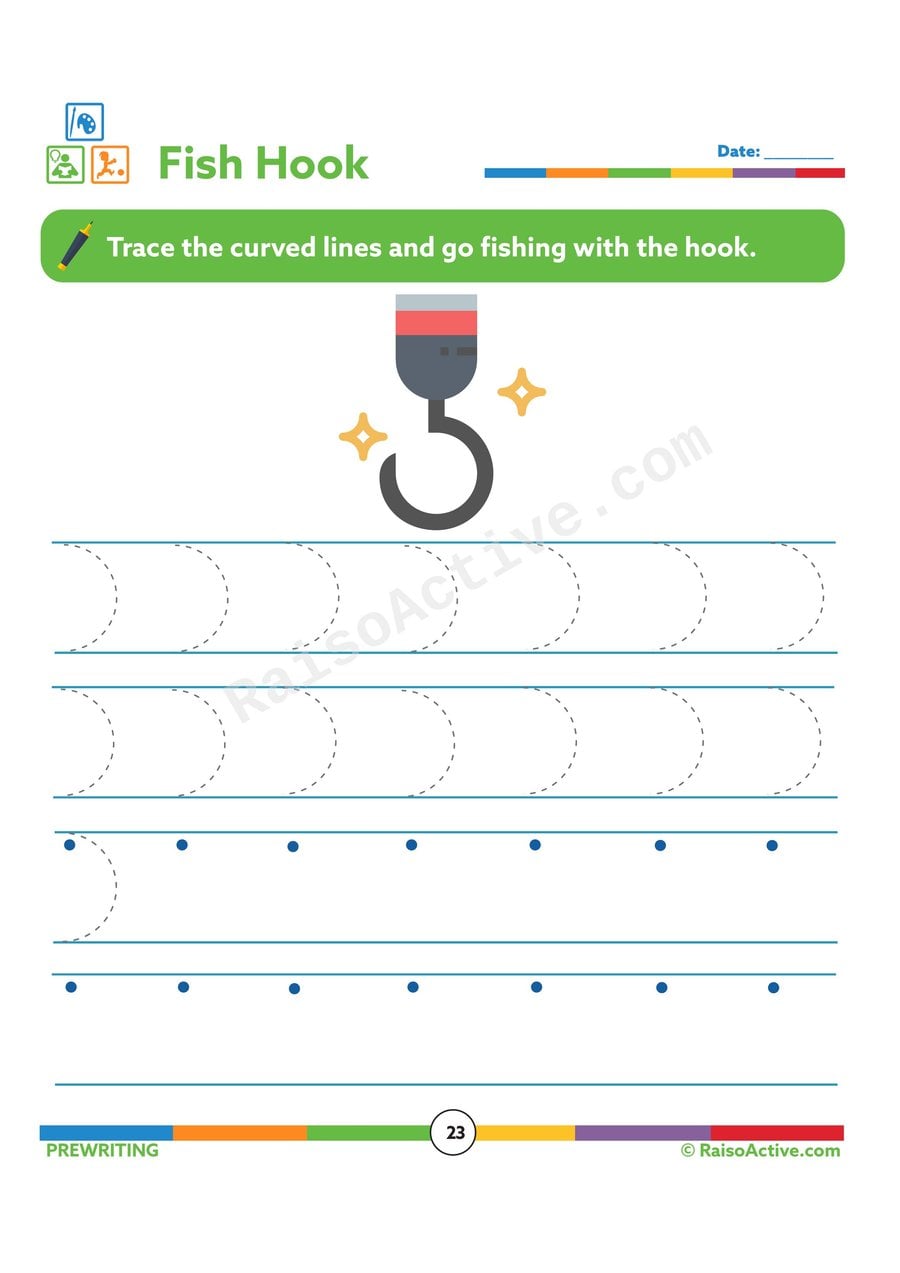
Fish Hook Tracing Worksheet for Preschoolers
Tracing a hook-shaped fishing line curve gives children ages 3-5 practice with a tight, small curved stroke, different from the wide, sweeping curves used in other worksheets, which builds fine control over shorter pencil motions. This particular curve shape is also an early building block for letters like j, which end in a small hook, making this good preparatory practice.

Flags Flash Cards: Learn About Countries and Their Flags!
This flashcard set introduces children ages 3-5 to a range of country flags along with each country's capital city, layering a second piece of geography vocabulary onto the visual flag recognition they're building. Learning that every country also has a capital city introduces the concept of important cities within a country, extending the geography lesson beyond flags alone.

Number Tracing Worksheet 1-20: Practice Writing Numbers!
This worksheet has children ages 3-5 trace every number from 1 to 20 in sequence, giving them a single, comprehensive review of number formation across the entire range they're expected to master before kindergarten. Practicing the full sequence in one sitting, rather than one number at a time, also reinforces the order of the counting sequence itself, since children see each number in its proper place relative to the ones before and after it. Following directional arrows throughout builds the habit of starting every numeral in the correct place.
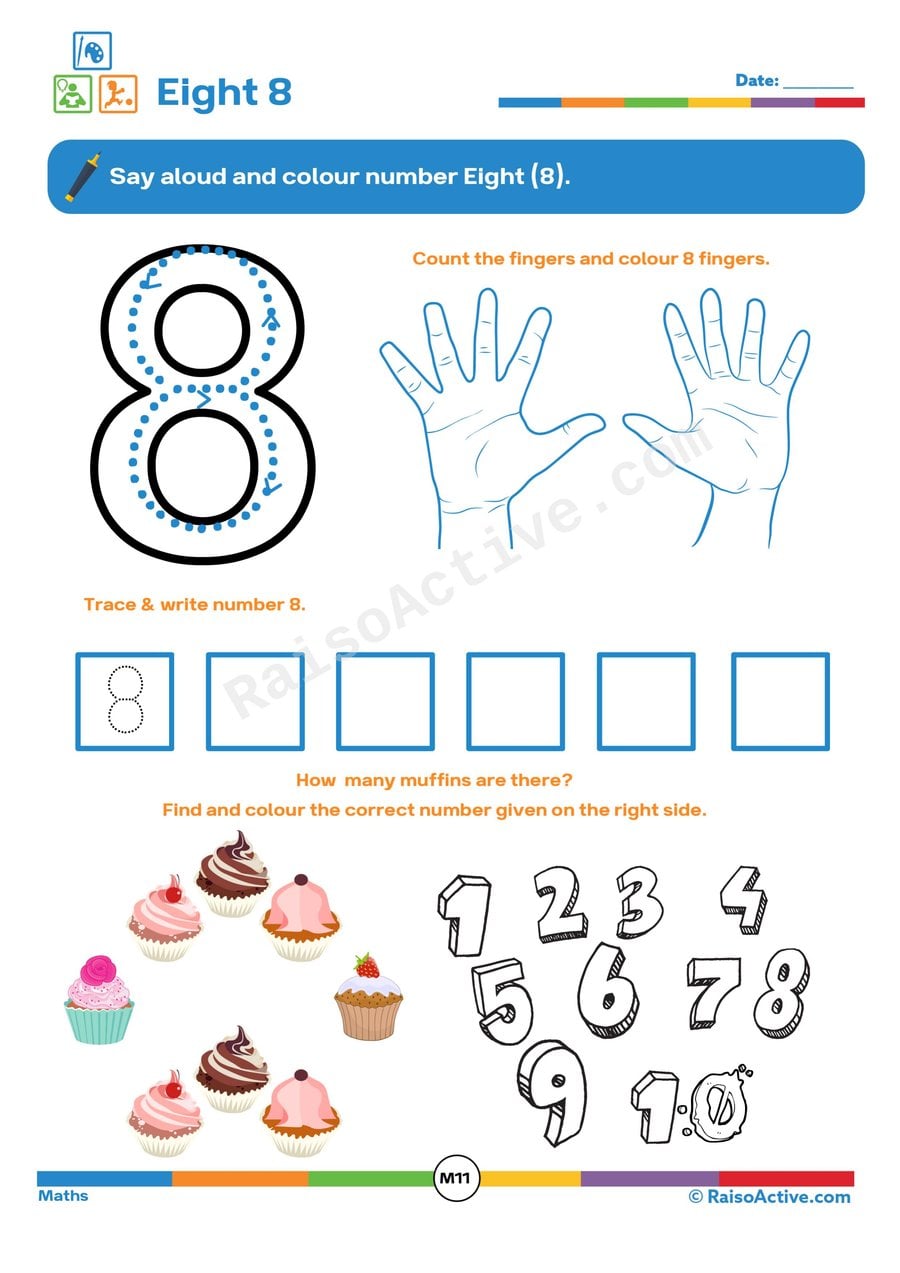
Number Eight (8) Worksheet: Trace, Count, and Color!
This worksheet helps children ages 3-5 learn to recognize, trace, and write the number 8 using its continuous curved stroke, while counting fingers and muffins reinforces one-to-one correspondence for the quantity eight. Circling the correct count among options also sharpens numeral recognition alongside handwriting practice.

Letter C Tracing and Coloring Worksheet for Preschoolers
This worksheet builds handwriting readiness by having children trace the letter C multiple times, while the coloring and picture-matching elements connect the letter's shape to its sound through familiar C words. For ages 3-5, repeating the same letter across tracing and picture activities on one page reinforces recognition from multiple angles in a single sitting.
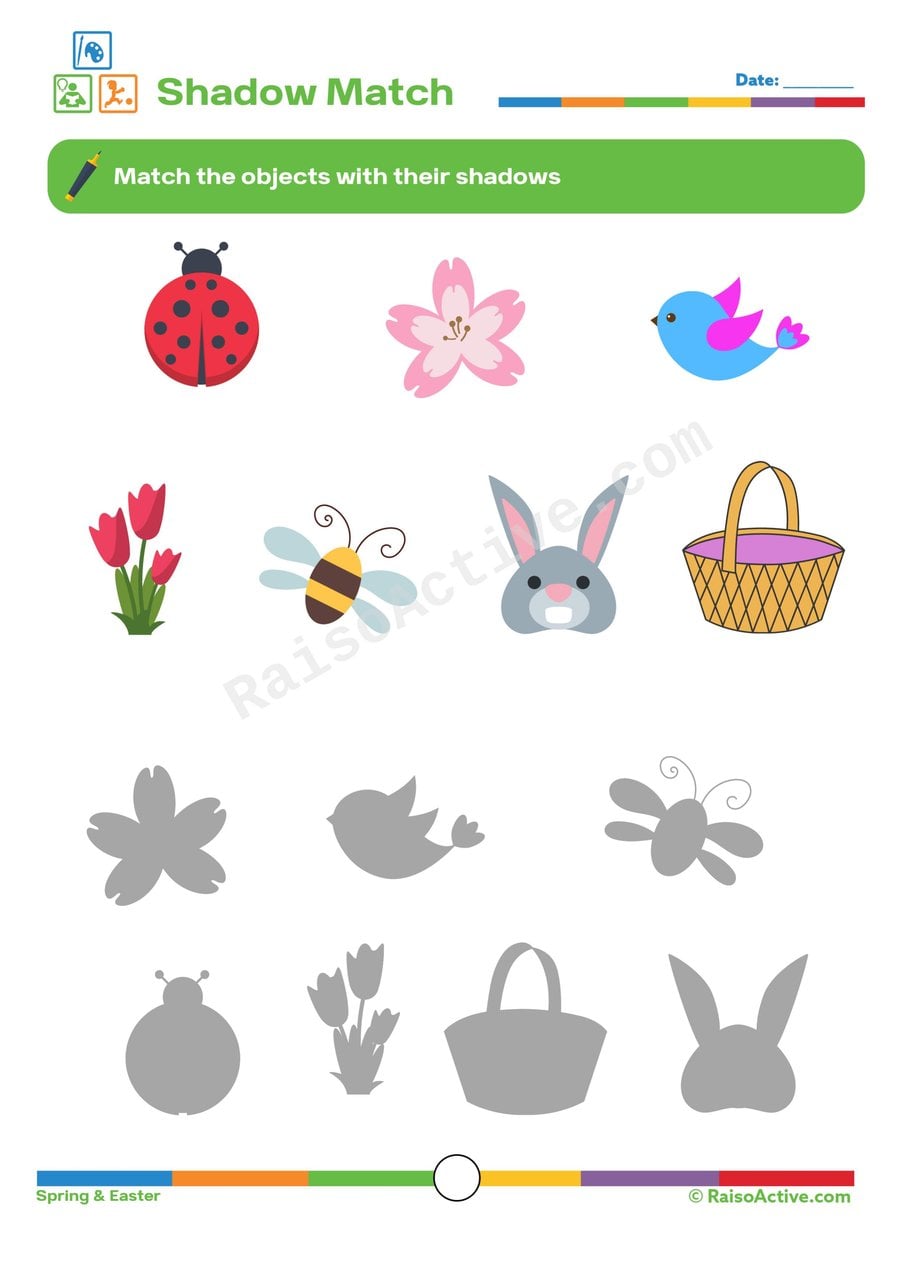
Spring Shadow Match Worksheet for Preschoolers
Children ages 3-5 practice visual discrimination by matching spring-themed objects to their correct silhouette shadows. Because shadows strip away color and detail, leaving only outline shape, this activity sharpens a child's ability to focus on form alone — a more advanced visual skill than matching by color or pattern.

Air Balloon Color by Sums Worksheet for Preschoolers
This color-by-sums worksheet combines basic addition practice with color-by-number skills, asking children ages 3-5 to solve simple addition problems within each section of an air balloon and then color that section according to a matching color key. Solving a math problem correctly before coloring turns each section into a small, self-checking task, since an incorrect sum would lead to the wrong color choice. This blend of math and art keeps repetitive addition practice feeling like a creative activity rather than a drill.
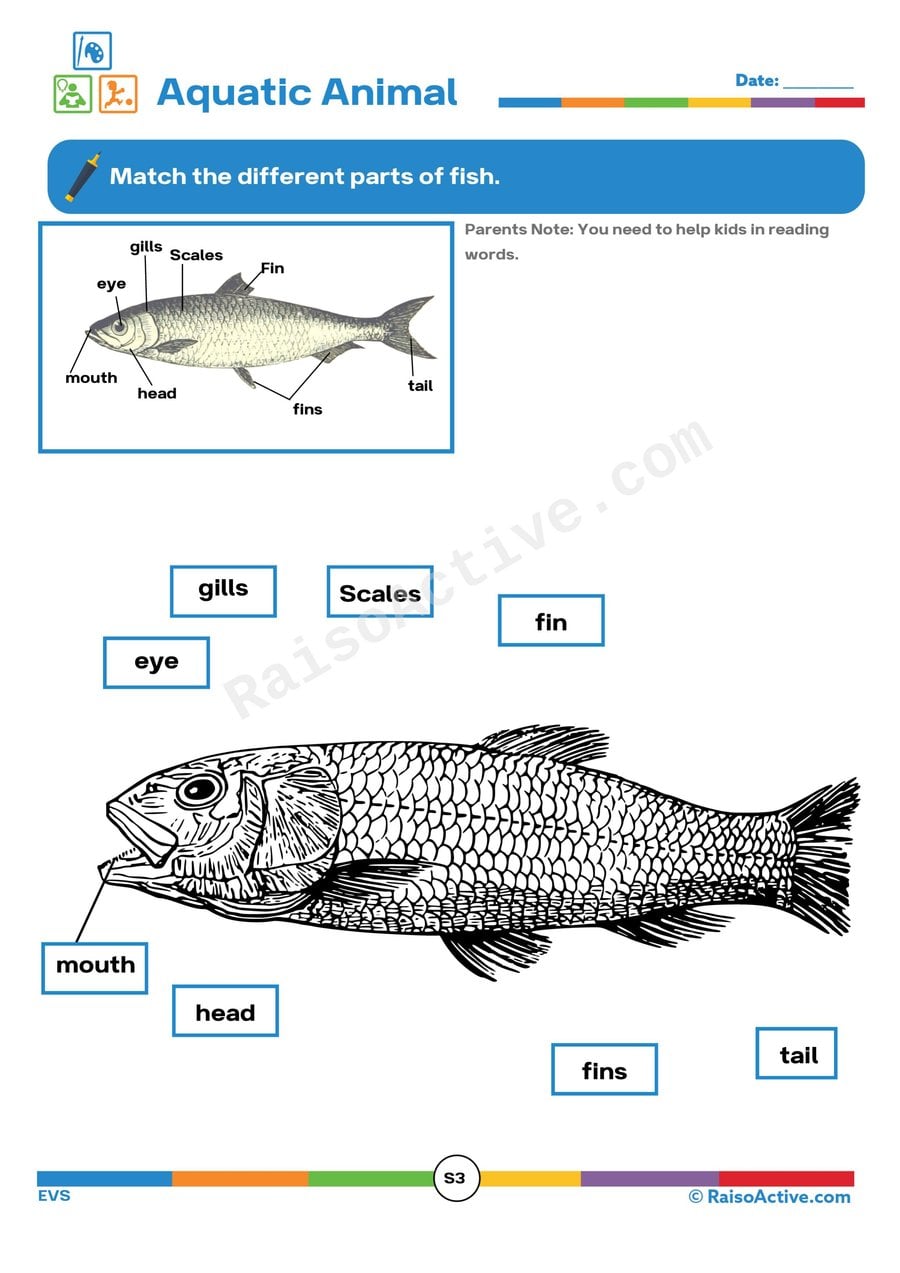
Fish Parts Matching Worksheet for Preschoolers
Preschoolers ages 3-5 learn the specific parts of a fish — like fins, gills, tail, and scales — by drawing lines connecting each written word to the correct location on a fish illustration. This vocabulary-focused matching task builds observational science skills, teaching children to see an animal's individual features rather than one general shape. It also reinforces early word recognition as children connect written labels to visual meaning.

Say My Sound: Beginning Letter Sounds Worksheet for Preschoolers
Saying a picture's name aloud and then circling the letter that matches its beginning sound builds phonemic awareness in children ages 3-5, teaching them to isolate the very first sound in a spoken word before connecting it to a printed letter. Because several letter options are given for each picture, this worksheet requires children to actively compare sounds rather than simply recognize a single correct letter by memory. This kind of applied letter-sound practice is one of the strongest early predictors of later reading success.

Color the Fruits Worksheet: Watermelon and Strawberry Fun!
Coloring a watermelon and a strawberry using specific colors in a specific order teaches children ages 3-5 to follow multi-step visual instructions rather than coloring freely, a skill that transfers directly to following classroom directions later on. Staying within the lines of curved fruit shapes also strengthens the fine motor control needed for handwriting, since the small hand movements required are similar. Observing and replicating real fruit coloring, like the red flesh and green rind of a watermelon, builds early observational skills too.

Halloween Match: Find and Color the Identical Objects!
This visual discrimination worksheet asks children ages 3-5 to scan a row of similar-looking Halloween objects and identify the two that are truly identical, sharpening their attention to small details like size, shading, and shape. Coloring the matched pair afterward gives a satisfying finishing step while reinforcing which items they correctly identified.

Animal Sounds Worksheet: Circle the Correct Sound!
This worksheet strengthens vocabulary and reading readiness for children ages 3-5 by asking them to match each animal picture to the word describing the sound it makes, such as 'moo' for a cow or 'quack' for a duck. Connecting a familiar sound to its written word form is an early step toward reading, since it links spoken vocabulary your child already knows to print they are just beginning to recognize.

Road Safety Signs Matching Worksheet for Preschoolers
Matching road safety signs teaches 3-5 year olds to recognize specific shapes, colors, and symbols and connect them to their real-world meaning — an early form of symbol literacy that matters well beyond the worksheet, since these are signs your child will actually encounter on walks and car rides. Coloring the signs first, then matching them, reinforces visual recognition through repetition before the matching task asks them to recall each sign's identity without color cues alone.
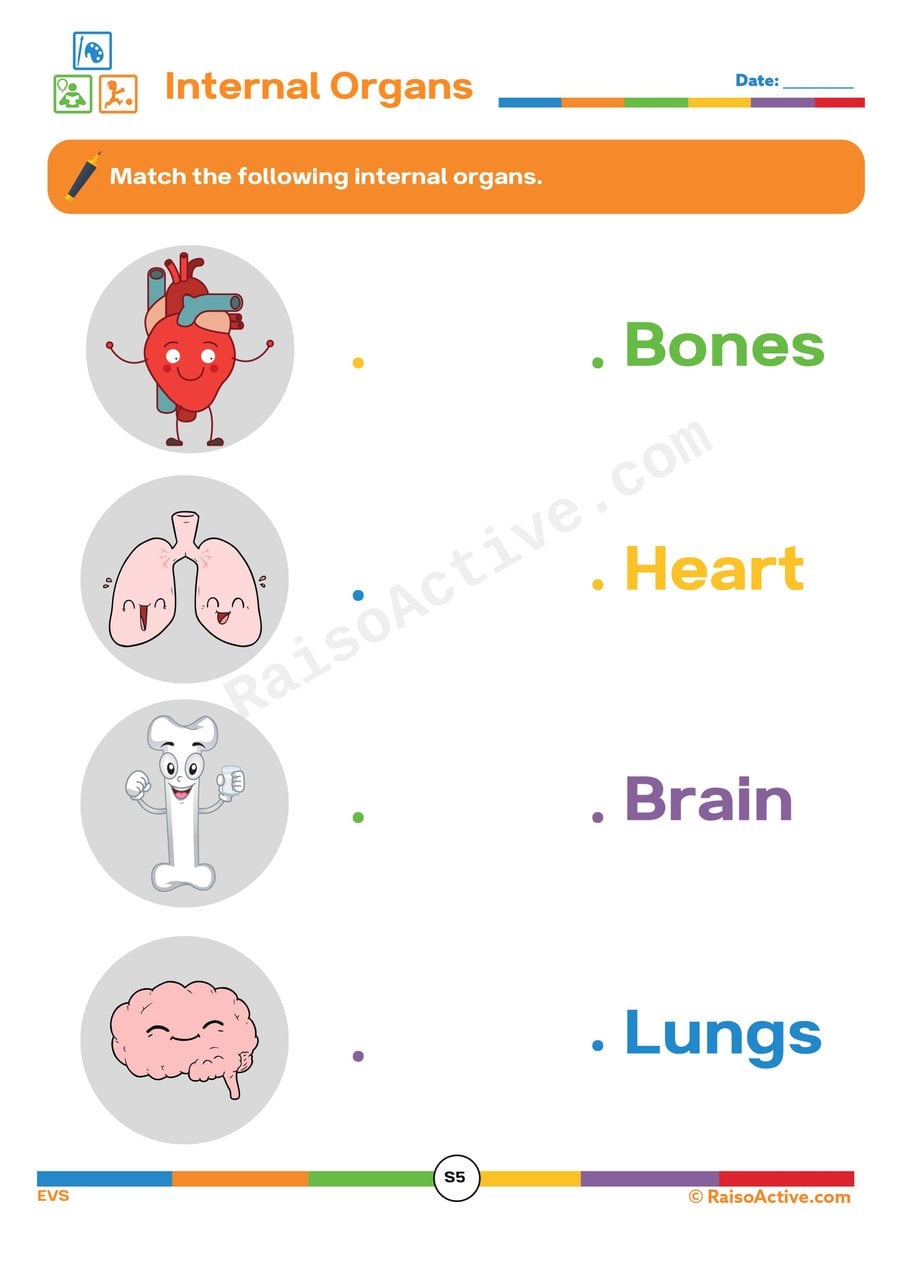
Match the Internal Organs Worksheet for Kids
Drawing lines to connect organ pictures to their correct names teaches children ages 3-5 an early introduction to human biology, helping them recognize that the body has specific parts inside it with their own names and jobs, beyond just the body parts they can see and touch. This matching task builds visual discrimination, since organs can look somewhat similar in simple illustrations, requiring children to look closely at shape and detail before connecting a picture to its label. Coloring the organs afterward adds a fine motor and creative finishing step to the science lesson.

Trace and Write the Letter O Worksheet for Preschoolers
This letter O worksheet has children ages 3-5 trace a full closed loop, a stroke that requires more control than a simple curve because the pencil must return to its starting point. Practicing this shape strengthens the fine motor skills needed for round letters and numbers, including O, Q, and 0. The page also reinforces the short /o/ sound found in words like 'octopus' and 'orange.'

First Letter Fun: Identify and Write! A Worksheet for Young Learners
Ages 3-5 are the prime window for phonemic awareness, and this worksheet targets one specific piece of it: isolating the very first sound in a spoken word and mapping it onto a written letter. Each picture forces your child to say the word, listen for the opening sound, and commit a symbol to paper, which is the exact skill that later becomes spelling. It also builds pencil control on single letters rather than whole words, which keeps the writing demand light while the listening demand stays high.

Letter D Tracing Worksheet: Practice Uppercase and Lowercase 'd'
D combines a straight vertical line with a single large curve on the right side, giving 3-5 year olds practice joining a straight stroke to a curved one in a single letter — a step up from the all-straight T or the all-curved C. Tracing both the uppercase D and lowercase d also helps children notice how the two forms are nearly mirror images of each other in shape.
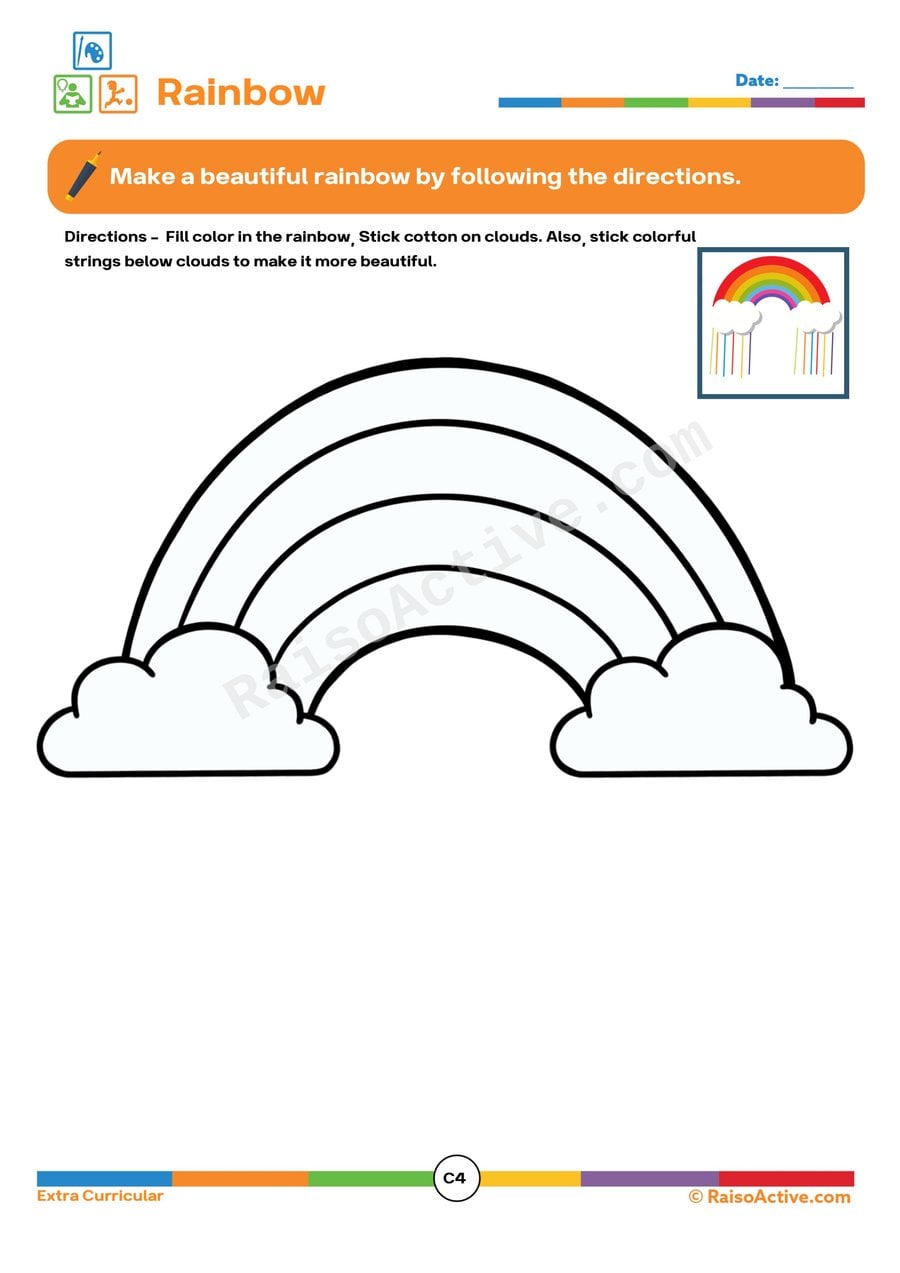
Rainbow Coloring Worksheet for Preschoolers
This multi-sensory worksheet helps children ages 3-5 practice color recognition and sequencing by coloring a rainbow in its correct color order, while also introducing texture through a cotton-ball cloud and string activity. Matching colors to a printed example teaches children to compare and follow a visual model precisely, an important pre-reading skill of left-to-right, top-to-bottom scanning. Adding cotton and string engages a different set of fine motor movements than coloring alone, like pinching and placing.

Pongal Pot Design and Coloring Worksheet for Kids
This worksheet helps children ages 3-5 practice instruction-following and creativity as they use a dice roll to determine random design elements for a Pongal pot, then color it in. Introducing an element of chance through dice-rolling adds a playful decision-making layer on top of the usual coloring practice, while still reinforcing fine motor control.

Trace and Build a Castle Worksheet for Preschoolers
Tracing the geometric shapes that form a castle, like triangles for turrets and rectangles for towers, gives children ages 3-5 practice with straight-line shape tracing while also introducing the idea that complex structures are made by combining simple shapes. This spatial reasoning, seeing how basic shapes stack and combine into something bigger, supports both early geometry understanding and imaginative building play.
What EYFS alphabet worksheets cover
Three-year-olds build a small working set of letters, usually starting with the ones in their name and reaching eight to ten capitals by the end of the year. A worksheet should ask the child to find a named letter among two or three lookalikes, circle every instance of one letter on a busy page, and say the first few letters of the alphabet in order. Full A-to-Z sequencing, lowercase forms, and matching letters to sounds belong to the year after.
- Find a named capital letter among two or three choices
- Circle every instance of one letter on a busy page
- Recite the first few letters of the alphabet in order
- Name letters found in a familiar first name
How to use these worksheets at home or in class
Five to ten minutes at a table, with an adult alongside to talk through the sheet, is enough at any point in this stage. Use a worksheet to echo something already met through play that week rather than to introduce a brand new idea.
Start with the sheet that matches what your child can already do, then move one step up. Keep finished sheets in a folder: EYFS teachers often ask for evidence of practice, and children like seeing their own progress.
Is your child ready for EYFS alphabet work?
Look for a child who can make deliberate marks with a crayon, sit briefly at a table, follow a one-step spoken instruction and show curiosity about letters or numbers seen around the house or classroom.
- Name all 26 uppercase letters shown in random order
- Fill in a missing letter in a short alphabet run
- Match each uppercase letter to its lowercase partner
Frequently asked questions
How many letters should a three-year-old recognise?
Eight to ten capital letters by four is a reasonable range, usually the letters in the child's name plus a few seen often elsewhere. Being able to recite the alphabet song is not the same thing as recognizing letters out of order, so check recognition by pointing to a letter on a page and asking for its name, not by listening to the song. A child who knows fewer than that is not behind; interest and repetition vary widely.
What should a EYFS child be able to do in alphabet?
Three-year-olds build a small working set of letters, usually starting with the ones in their name and reaching eight to ten capitals by the end of the year. A worksheet should ask the child to find a named letter among two or three lookalikes, circle every instance of one letter on a busy page, and say the first few letters of the alphabet in order. Full A-to-Z sequencing, lowercase forms, and matching letters to sounds belong to the year after. Look for a child who can make deliberate marks with a crayon, sit briefly at a table, follow a one-step spoken instruction and show curiosity about letters or numbers seen around the house or classroom.
Do these worksheets follow the EYFS curriculum?
The sheets cover letter recognition A–Z, letter names versus letter sounds, sequencing letters in order and matching uppercase to lowercase, which sit inside the EYFS Early Learning Goals (Statutory Framework) outcomes for EYFS. Preschool and Pre-K (US), Nursery and LKG (India) use the same skills at this age, so the sheets also fit families following those programmes.
Are these EYFS alphabet worksheets free?
Yes. Each worksheet downloads free as a watermarked PDF once you create an account, with a limit of five a day. An annual membership ($20) removes the watermark and the limit for the whole library of over 1,000 worksheets and every printable pack.

Written by
Hemsweta Jain · Teacher Cheena
MBA and Early Childhood Educator, teaching since 2014 · Founder of RaisoActive, Mumbai
Written and reviewed by Hemsweta Jain (Teacher Cheena), who designs every RaisoActive worksheet.
Last reviewed
Printable packs for ages 3–5
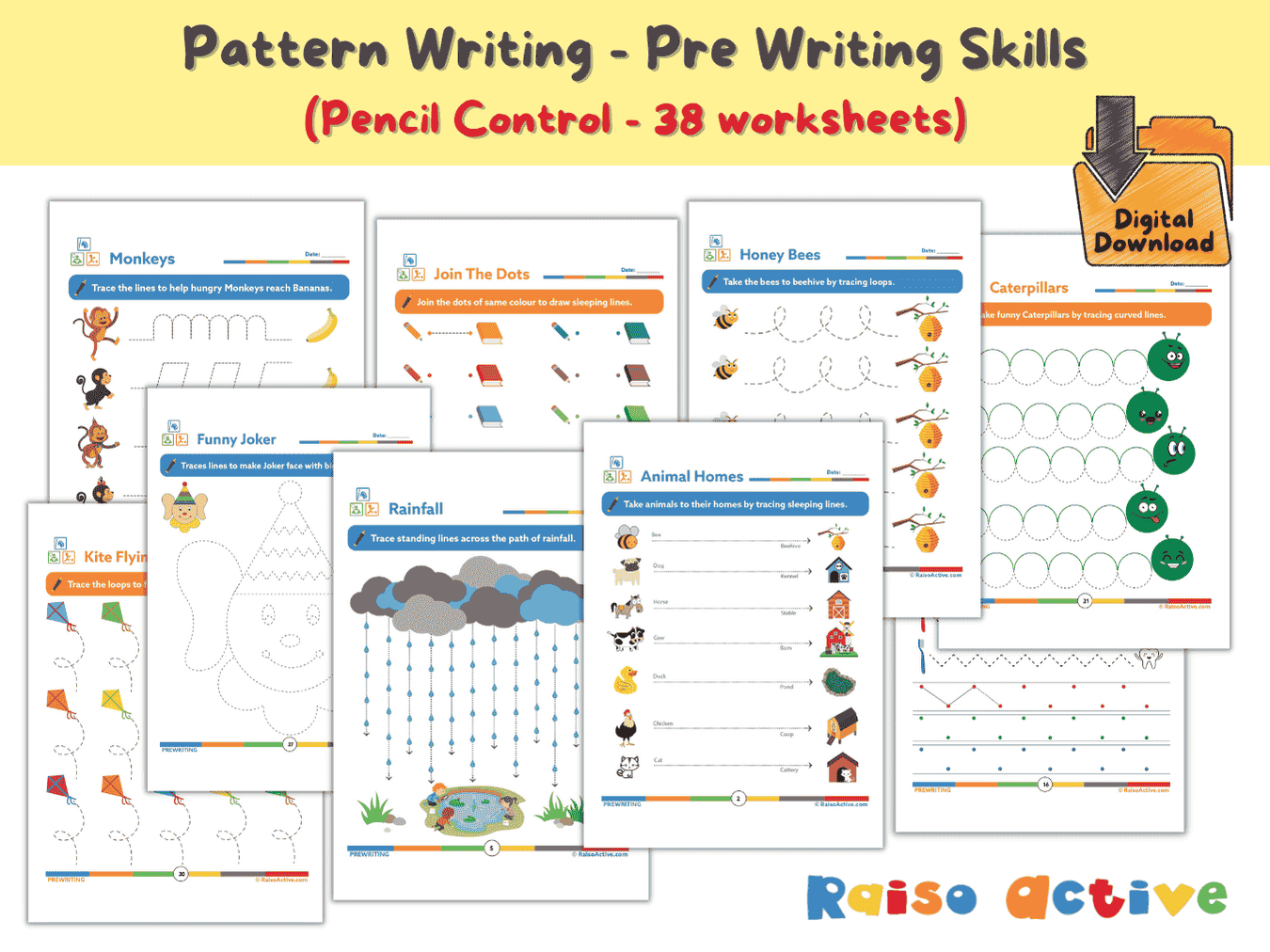
Pattern Writing Pre-writing Skills Activity Book for 3-4 Year Olds
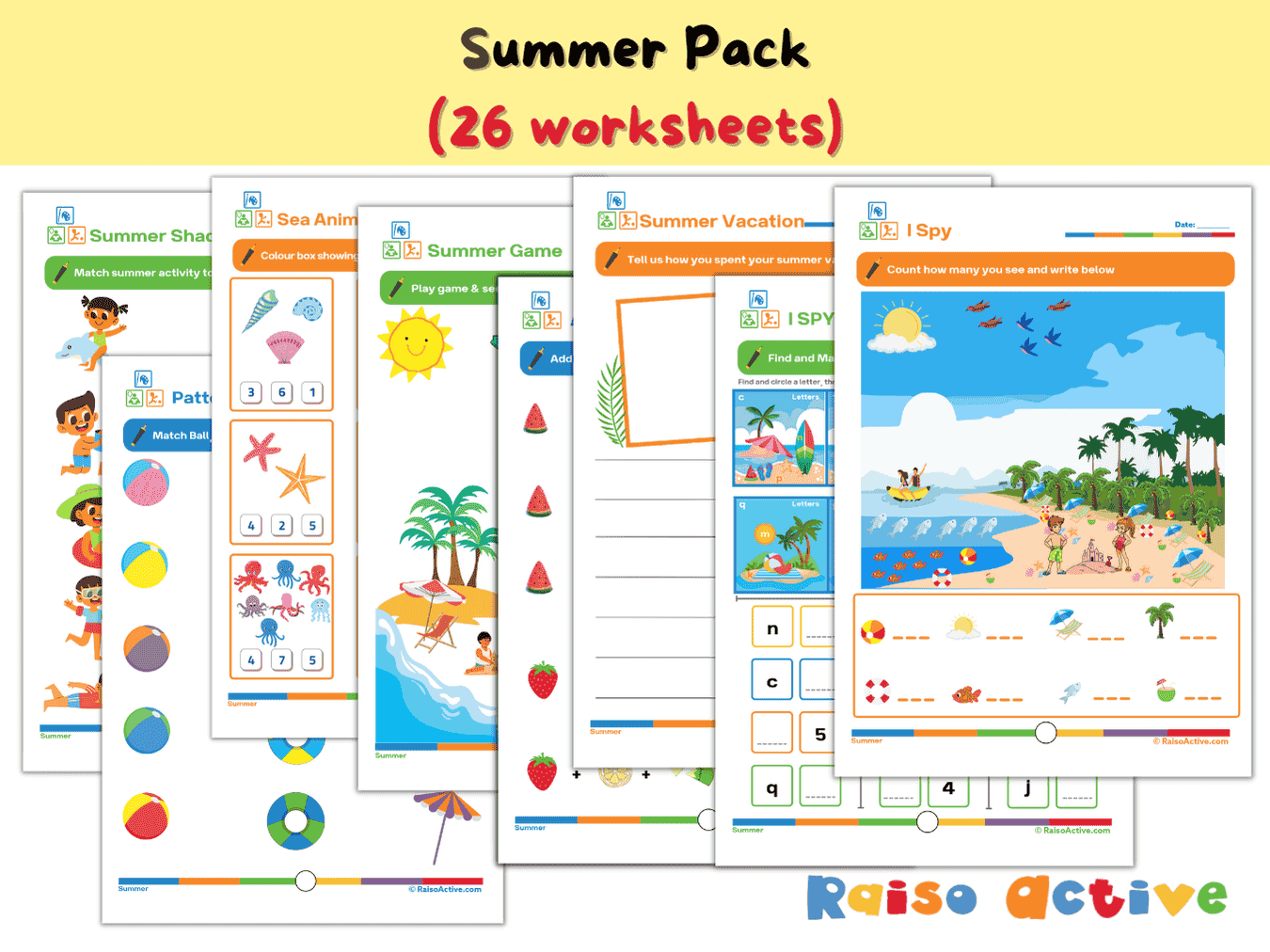
Summer Activity Pack: Math, Literacy, Puzzles & More for Preschool & Kindergarten
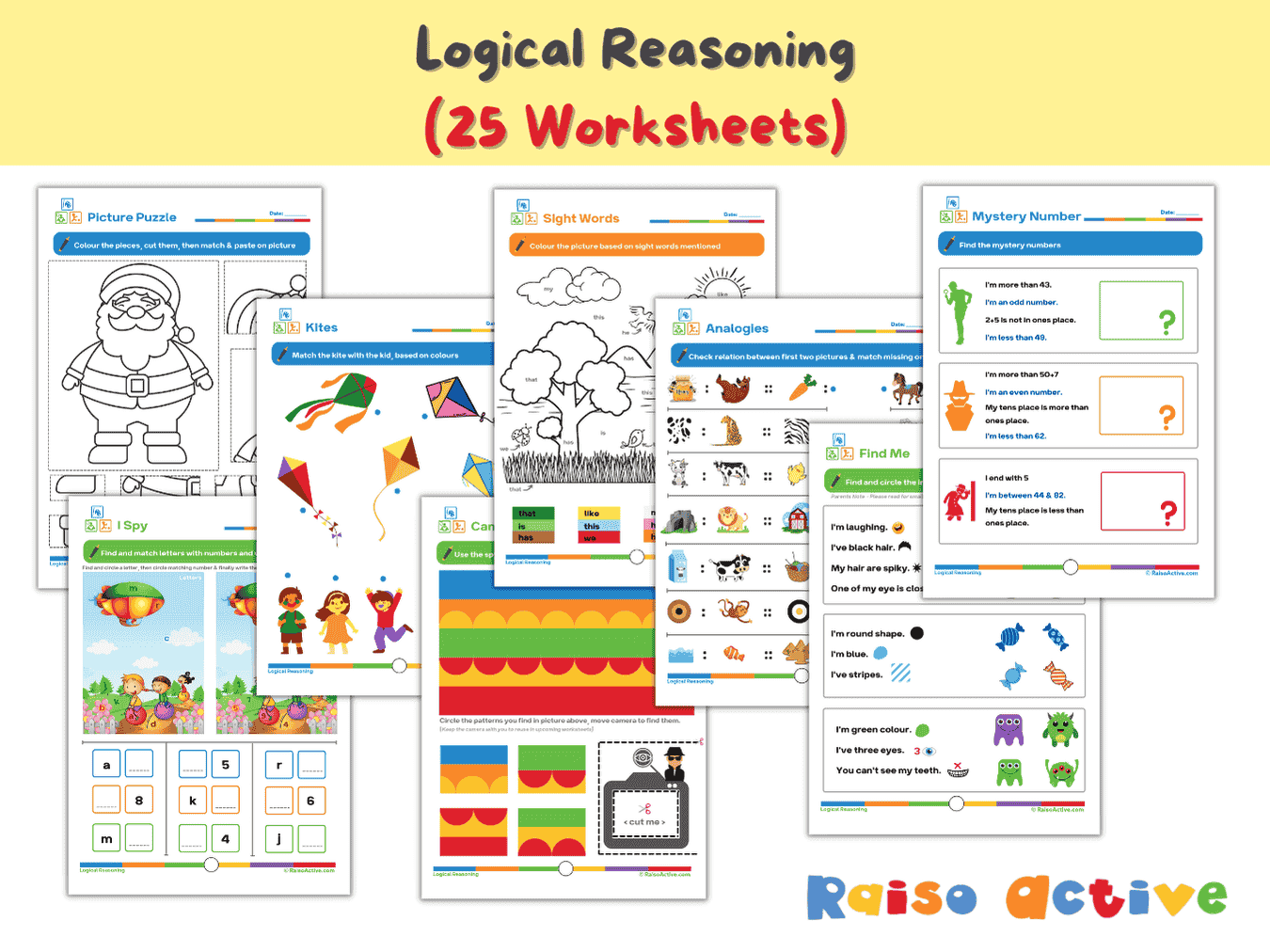
Logical Reasoning Activity Book for Preschool & Kindergarten | Patterns, Puzzles & Analogies
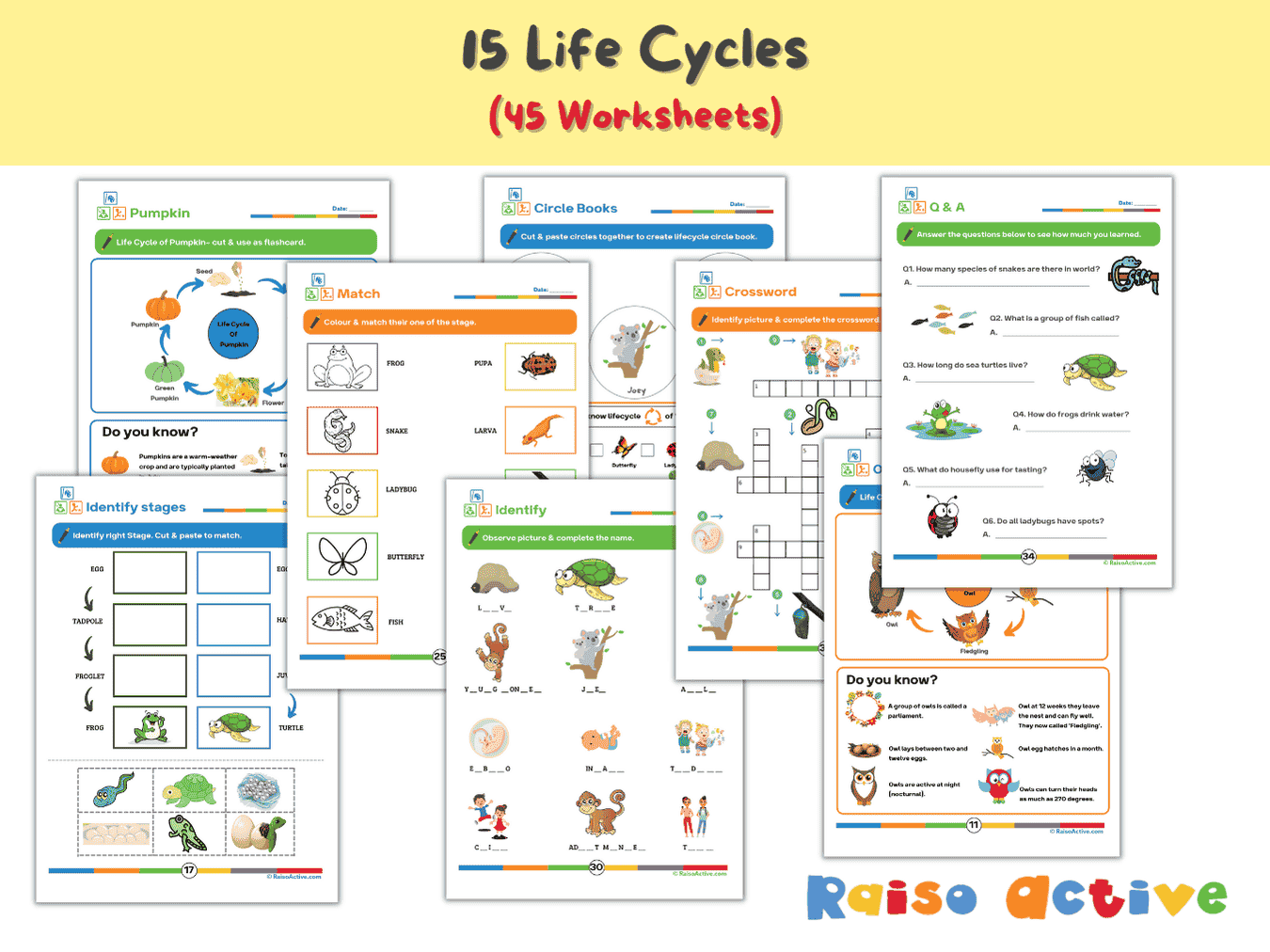
Lifecycles Activity Book & Flashcards for Preschool & Early Elementary
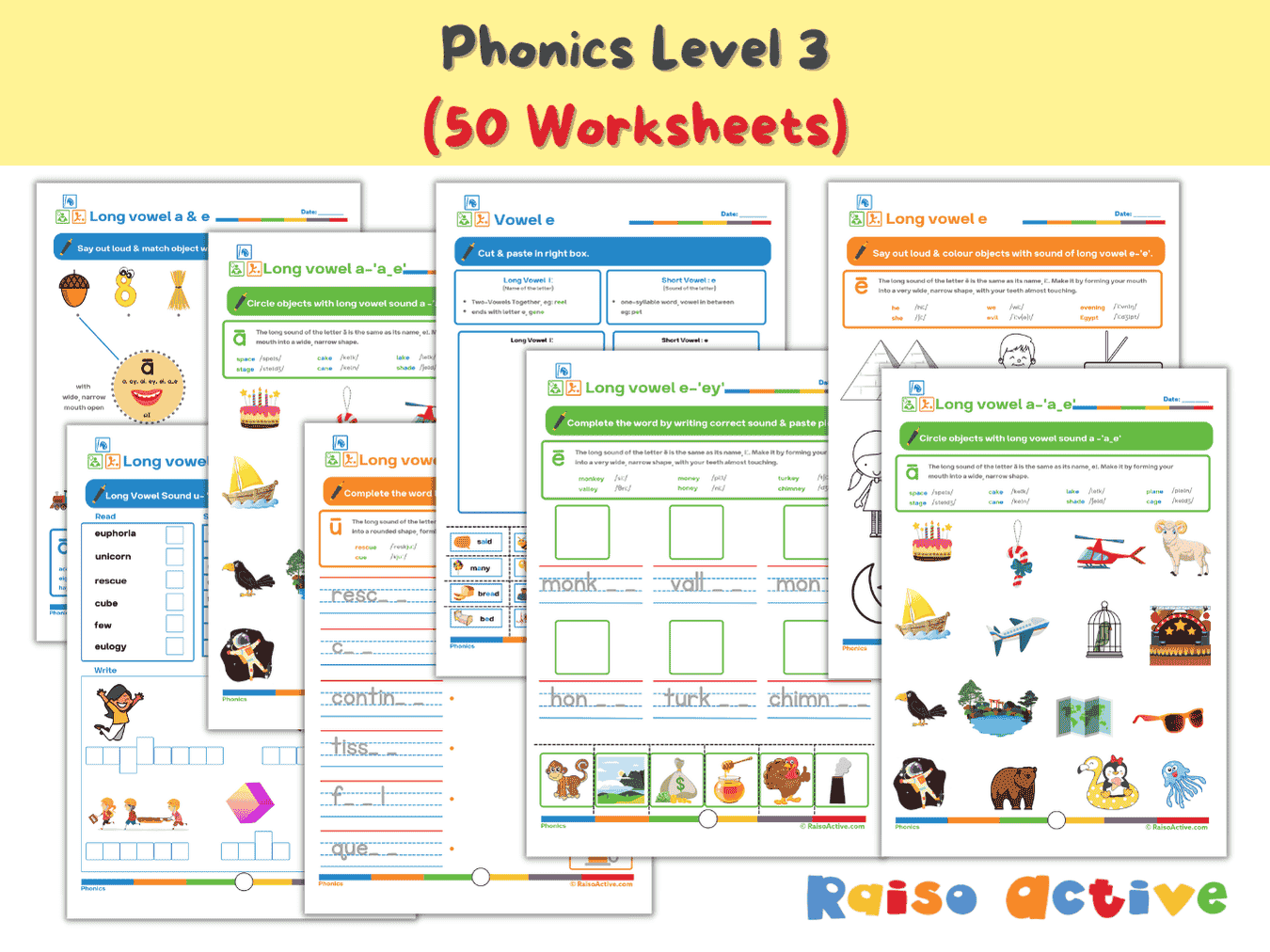
Phonics Level 3 Long Vowels Activity Book for Kindergarten & 1st Grade
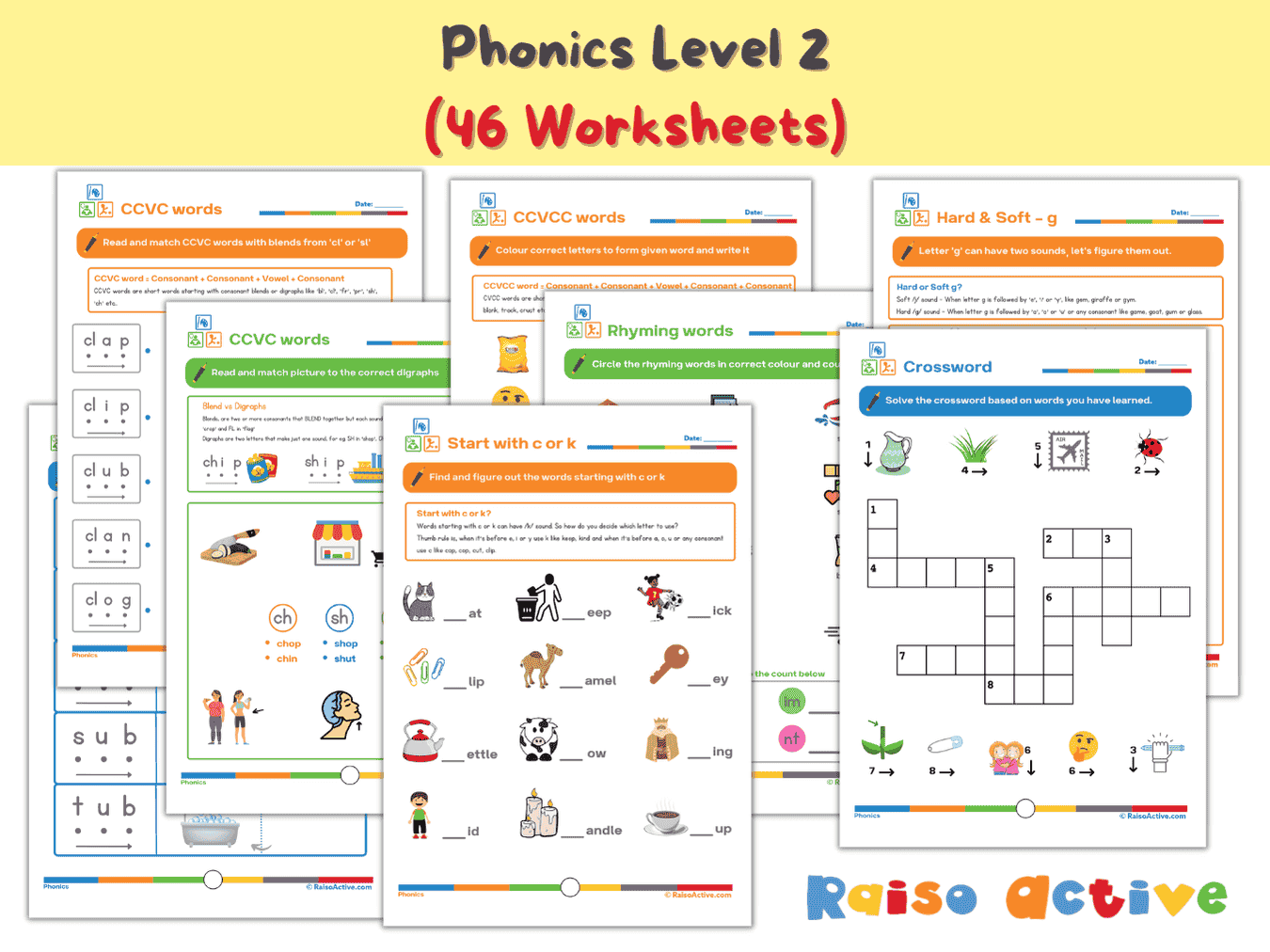
Phonics Level 2 Worksheets: CVC, CCVC, CVCC Word Families & Blends for Early Readers (Ages 4-7)
Guides for parents and teachers
See all guides →Kindergarten Readiness Checklist: 25 Skills to Practice Before the First Day
A kindergarten readiness checklist of 25 literacy, math, motor, self-regulation and self-help skills, with an 8-week summer plan and notes on when not to worry.
Phase 2 Phonics at Home: Sound Order, Blending Games, Worksheets
Phase 2 phonics at home: the five sound sets in order, oral blending, tricky words, a two-week routine, common mistakes, and free worksheets.
Reception Year Explained: EYFS Learning and How to Help at Home
A teacher's plain-English guide to the Reception Year: the seven areas of learning, Early Learning Goals, Phase 2/3 phonics, the RBA and home routines.
What Should a 4-Year-Old Know Before LKG? A Readiness Checklist
A calm, teacher-written LKG readiness checklist for 4-year-olds: language, pattern writing, numbers to 10, self-help and social skills, plus a 6-week plan.
Bridging Two Worlds: A Complete Guide to Teaching Heritage Languages Alongside English
A practical guide to raising bilingual children who speak both their heritage language and English with confidence. Research-backed strategies, activities, and tips for Indian families.
How to Help Your Child with Letter Reversals: A Complete Guide for Parents and Teachers
Letter reversals are normal until age 7-8. Learn the best multisensory strategies, anchor letter tricks, and activities to help children write b, d, p, and q correctly.