
First Letter Fun: Identify and Write! A Worksheet for Young Learners
Ages 3-5 are the prime window for phonemic awareness, and this worksheet targets one specific piece of it: isolating the very first sound in a spoken word and mapping it onto a written letter. Each picture forces your child to say the word, listen for the opening sound, and commit a symbol to paper, which is the exact skill that later becomes spelling. It also builds pencil control on single letters rather than whole words, which keeps the writing demand light while the listening demand stays high.
Curriculum
How to use this worksheet
Go through the pictures one at a time rather than letting your child rush ahead. Point to the picture and ask them to name it out loud, then ask, 'What sound do you hear first?' before they pick up the pencil. Have them say the sound again as they write the letter in the blank space, and check the letter formation before moving to the next picture. Finish by reading all the letters back in a row so your child hears the pattern they just created.
Materials needed
- Pencil
- Eraser
Extension activities
- •Play an 'I Spy' game around the house using only first sounds: 'I spy something that starts with the same sound as ball.'
- •Set out three or four small toys and sort them into piles by their first letter sound.
- •Give your child a magnetic letter and send them on a hunt for one object in the house that starts with that sound.
- •Make a simple 'letter scrapbook' by gluing magazine pictures onto pages labeled with a first letter.
- •Clap out the syllables of each worksheet word together before isolating just the first sound.
Tips for parents and teachers
Watch for children who confuse visually or acoustically similar sounds, like b/d or f/v — this is developmentally normal at this age and improves with repetition, not correction. If your child writes a letter reversed, gently model the correct direction rather than erasing their attempt. Keep the tone playful; the goal at this stage is sound awareness, not perfect handwriting.

Written by
Hemsweta Jain · Teacher Cheena
MBA and Early Childhood Educator, teaching since 2014 · Founder of RaisoActive, Mumbai
Every RaisoActive worksheet is designed and checked by the founder before publishing.
Published · Last reviewed
Related worksheets

Phonics Fun: Matching Letters and Words Worksheet for Preschoolers
Identifying the beginning sound of a pictured word and writing the matching letter teaches children ages 4-5 phonemic awareness, the ability to isolate individual sounds within spoken words, which is one of the strongest predictors of future reading success. Saying each word aloud after writing the letter reinforces the connection between the printed letter and its spoken sound, closing the loop between listening, writing, and speaking. This worksheet moves children from simply recognizing letters to actively applying letter-sound knowledge, a more advanced early literacy skill.
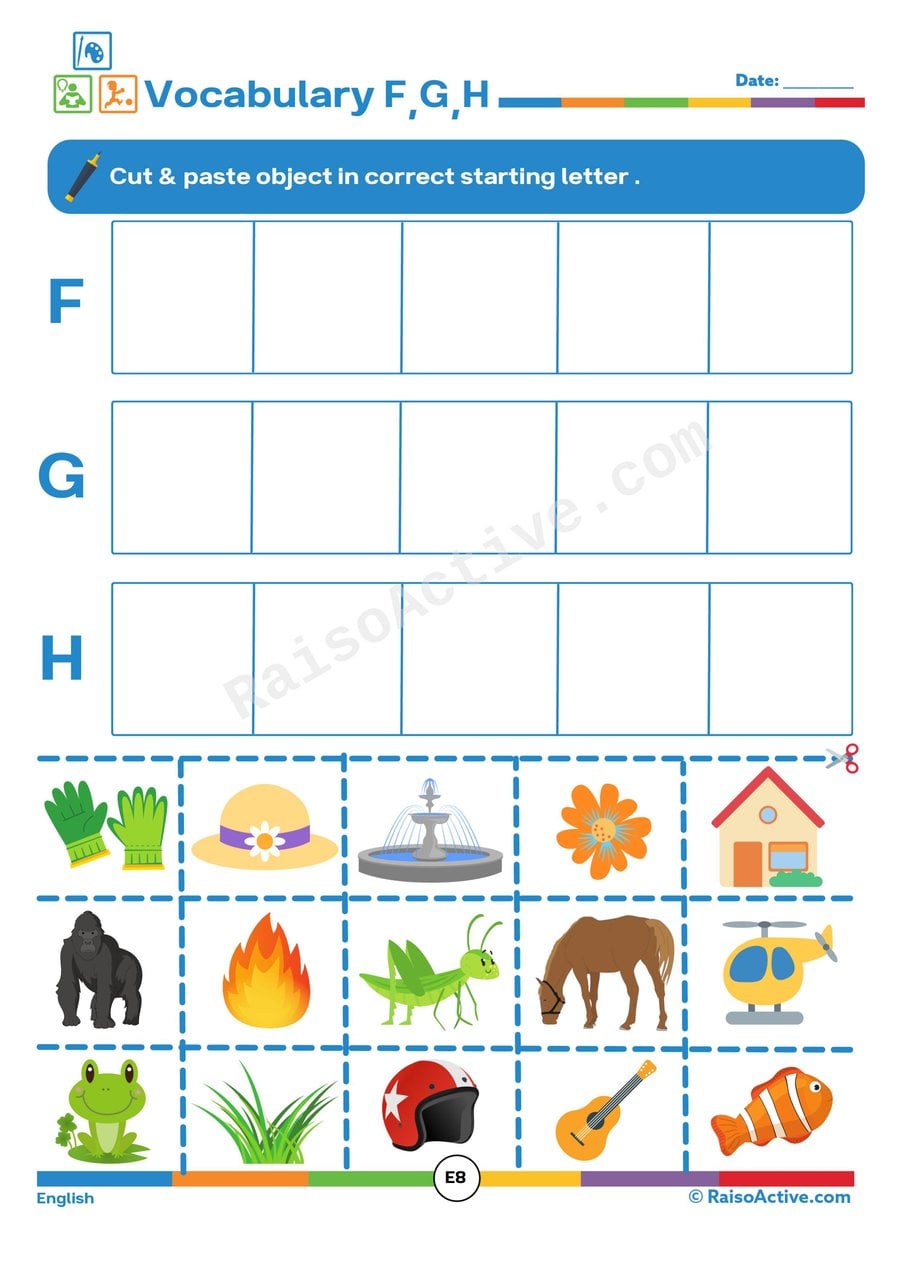
F, G, H Letter Sounds Cut and Paste Worksheet
This worksheet builds phonemic awareness in children ages 4-5 by asking them to isolate the beginning sound of each picture and sort it under the correct letter — F, G, or H. Sorting across three letters at once, rather than just one, requires children to hold multiple sound-letter associations in mind and choose between them, which is a step up in difficulty from single-letter worksheets. This kind of comparative sound-sorting strengthens the phonics foundation needed for early reading.
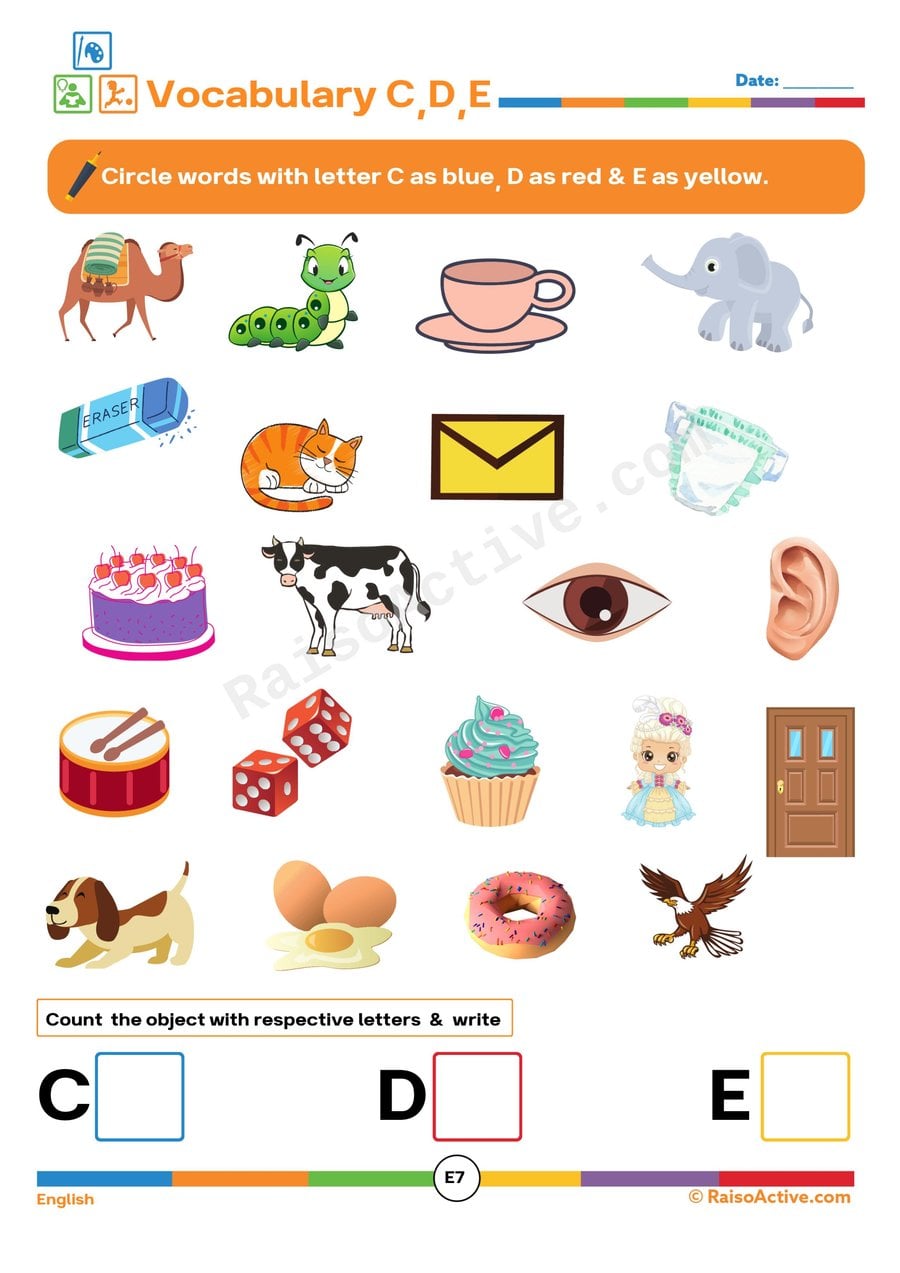
C, D, E Letter Sounds Worksheet: Circle and Count!
This activity gives children ages 3-5 focused practice recognizing the beginning sounds of the letters C, D, and E, asking them to circle matching pictures in different colors for each letter before counting the results. Combining phonics with counting means children practice two skills in one sitting: identifying initial letter sounds and recording a numeric total, both foundational for kindergarten readiness. Color-coding each letter also helps children visually organize the three sounds instead of mixing them together.

Alphabet Adventures: 'A' and 'B' Picture Sorting Worksheet
This worksheet strengthens phonemic awareness in children ages 4-5 by having them listen for and identify pictures whose names begin with the letters 'A' or 'B,' then sort them accordingly. Focusing on just two letters at a time, rather than the whole alphabet, gives children a manageable, focused way to practice isolating beginning sounds before tackling more letters.

Alphabet Adventures: Write the First Letter - A to T Worksheet
This worksheet builds early phonemic awareness in children ages 4-5 by asking them to identify a pictured object, say its name aloud, and isolate the very first sound to write as a letter. Practicing this across a wide range of letters, A through T, gives children repeated exposure to the letter-sound connection that underlies all future reading and spelling. It also strengthens letter formation as children physically write each capital letter.

Cut and Paste the First Letter: Fun Phonics Worksheet for Preschoolers
Children ages 4-5 practice identifying the beginning sound of a word and matching it to the correct letter, a core early phonics skill, while also building fine motor control through cutting and pasting. Connecting a picture's name to its first letter sound is one of the clearest building blocks toward independent reading.

Vocabulary Worksheet: Circle the Objects That Start with the Letter!
This worksheet reinforces letter-sound recognition for children ages 4-6 by presenting a target letter and asking them to identify which pictures in a row begin with that sound. Unlike single-picture beginning sound tasks, scanning an entire row of images and filtering for matches builds sustained visual attention alongside phonics, since children must reject several near-matches before finding the correct ones.
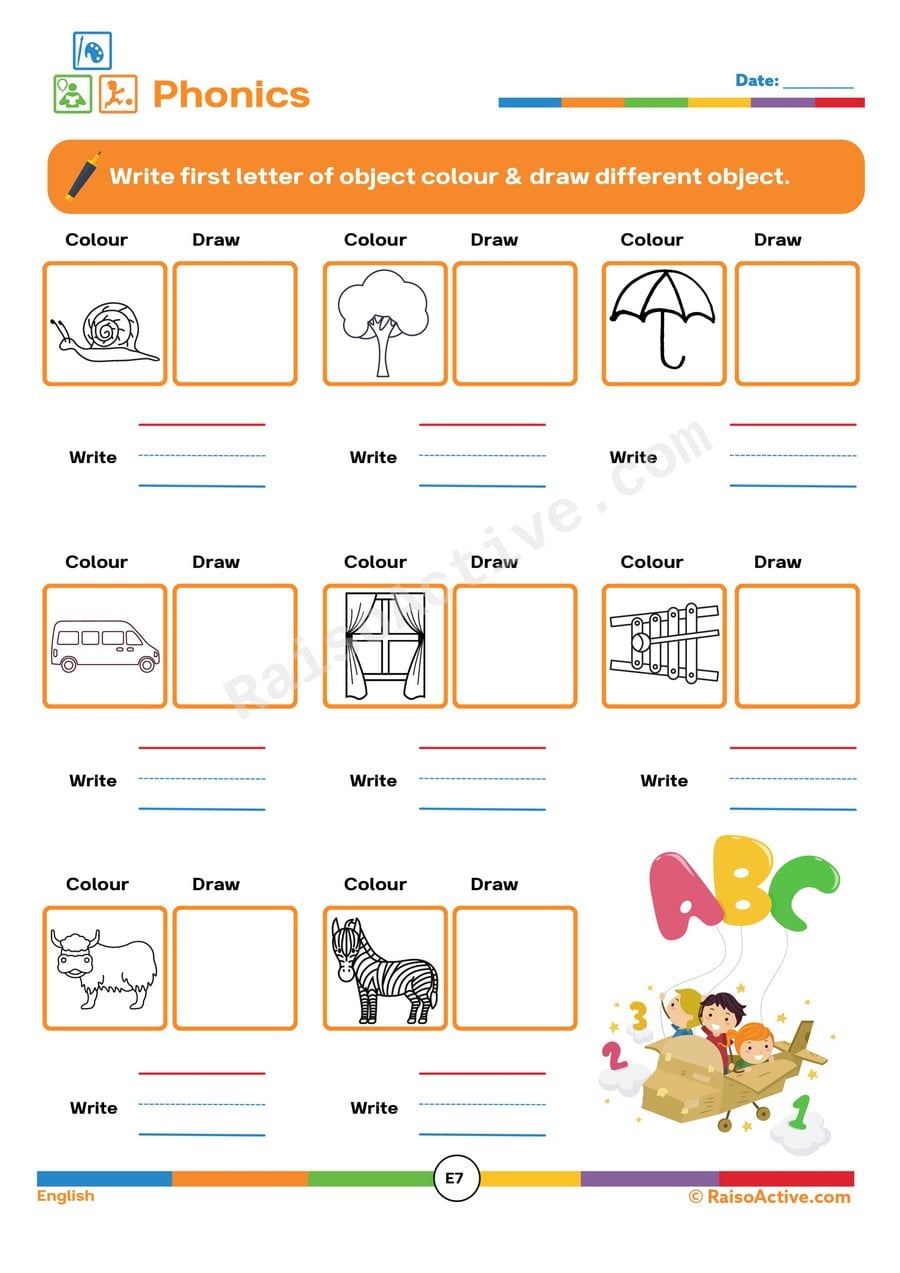
Phonics Fun: Color, Draw, and Write! (Ages 3-5)
Coloring a picture, drawing a related object, and writing its first letter combines three literacy-building tasks in one activity for children ages 3-5 — visual recognition, creative expression, and beginning-sound identification.
Guides for this topic
How to Teach CVC Blending: A Step-by-Step Method That Works in Two Weeks
A step-by-step method for teaching CVC blending, covering continuous sounds, word families, common errors, and a 14-day plan that most children finish reading CVC words.
Phase 2 Phonics at Home: Sound Order, Blending Games, Worksheets
Phase 2 phonics at home: the five sound sets in order, oral blending, tricky words, a two-week routine, common mistakes, and free worksheets.
Reception Year Explained: EYFS Learning and How to Help at Home
A teacher's plain-English guide to the Reception Year: the seven areas of learning, Early Learning Goals, Phase 2/3 phonics, the RBA and home routines.
Reviews
Every worksheet for ages 3–5, no watermark
Members download the full library of 1,000+ worksheets and every activity pack without watermarks or daily limits. One year costs ₹1,000 in India or $20 elsewhere.
See membership plansOr download any worksheet free with a watermark (5 a day).