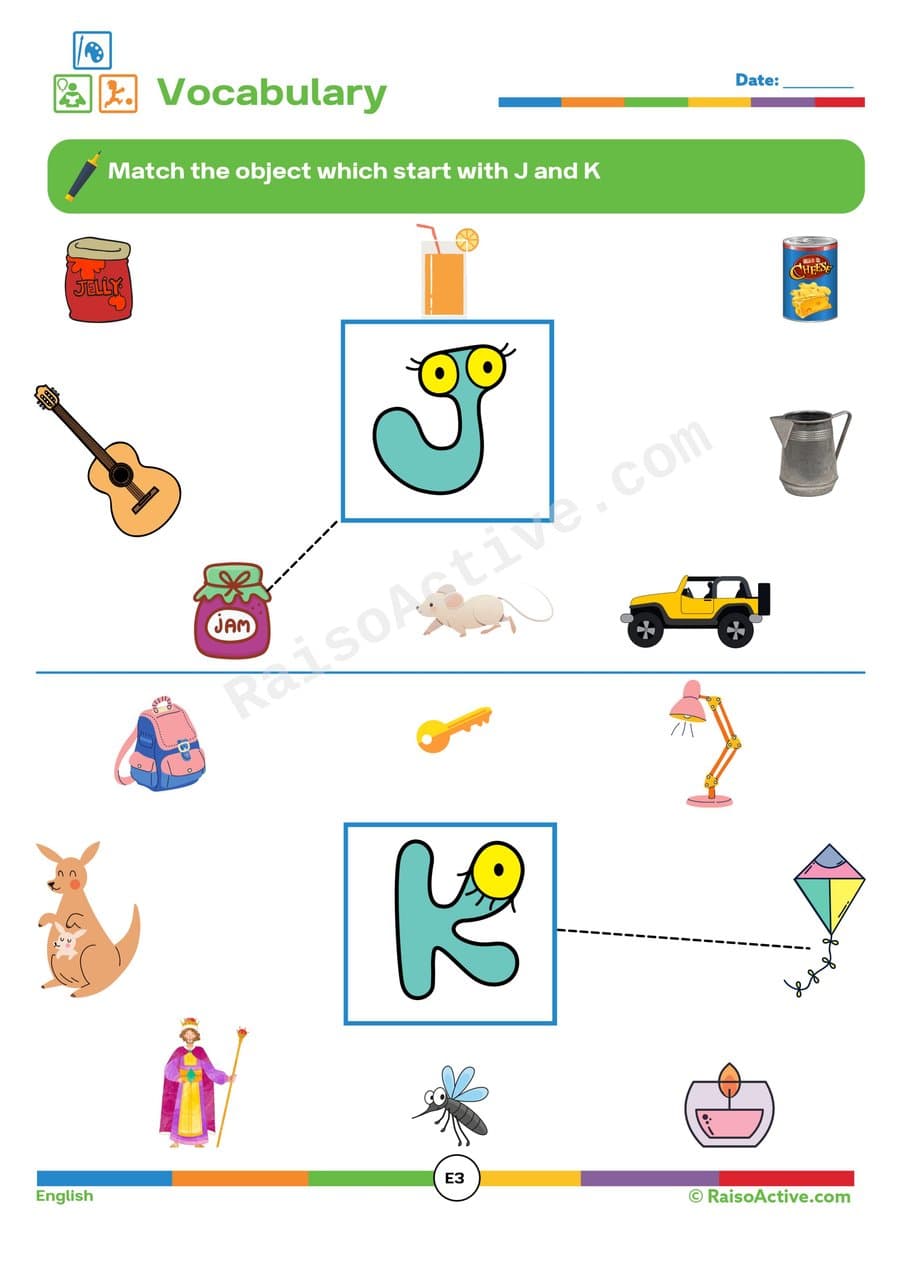
J and K Vocabulary Worksheet: Match the Objects!
This worksheet gives children ages 3-5 focused practice with the letters J and K, two consonants that don't come up as often in early vocabulary as letters like S or B, so dedicated practice like this helps round out full alphabet familiarity. Matching pictures to their correct beginning letter reinforces the sound-symbol connection while also building vocabulary for objects that start with these less common letters, like jars, jellyfish, kites, or kangaroos. This kind of targeted practice on less-frequent letters helps prevent gaps in alphabet knowledge that can otherwise show up later during reading.
Curriculum
How to use this worksheet
Look at each picture on the left side of the page together and say its name out loud. Ask your child to listen for the beginning sound and decide whether it starts with J or K. Have them draw a line connecting each picture to the correct letter on the right. Once all the pictures are matched, review the page together, sorting out loud which pictures belong to J and which belong to K.
Materials needed
- Pencil
- Crayons
Extension activities
- •Have the child name other objects that start with J and K, thinking as broadly as possible.
- •Color the pictures after matching them, and talk about each object as they color.
- •Create a simple J and K scrapbook page by drawing or cutting out pictures from magazines.
- •Play an alphabet scavenger hunt specifically searching for J and K objects around the house.
Tips for parents and teachers
Encourage your child to say the names of the objects aloud as they match them to reinforce letter sounds, since J and K can sometimes be confused with similar-sounding letters like G or C. If your child hasn't encountered many J or K words before, take a moment to explain any unfamiliar vocabulary, like 'jellyfish' or 'kangaroo,' before asking them to match the sound. This worksheet is a good opportunity to fill in gaps for letters that don't come up as often in daily conversation.

Written by
Hemsweta Jain · Teacher Cheena
MBA and Early Childhood Educator, teaching since 2014 · Founder of RaisoActive, Mumbai
Every RaisoActive worksheet is designed and checked by the founder before publishing.
Published · Last reviewed
Related worksheets

Phonics Fun: Matching Letters and Words Worksheet for Preschoolers
Identifying the beginning sound of a pictured word and writing the matching letter teaches children ages 4-5 phonemic awareness, the ability to isolate individual sounds within spoken words, which is one of the strongest predictors of future reading success. Saying each word aloud after writing the letter reinforces the connection between the printed letter and its spoken sound, closing the loop between listening, writing, and speaking. This worksheet moves children from simply recognizing letters to actively applying letter-sound knowledge, a more advanced early literacy skill.
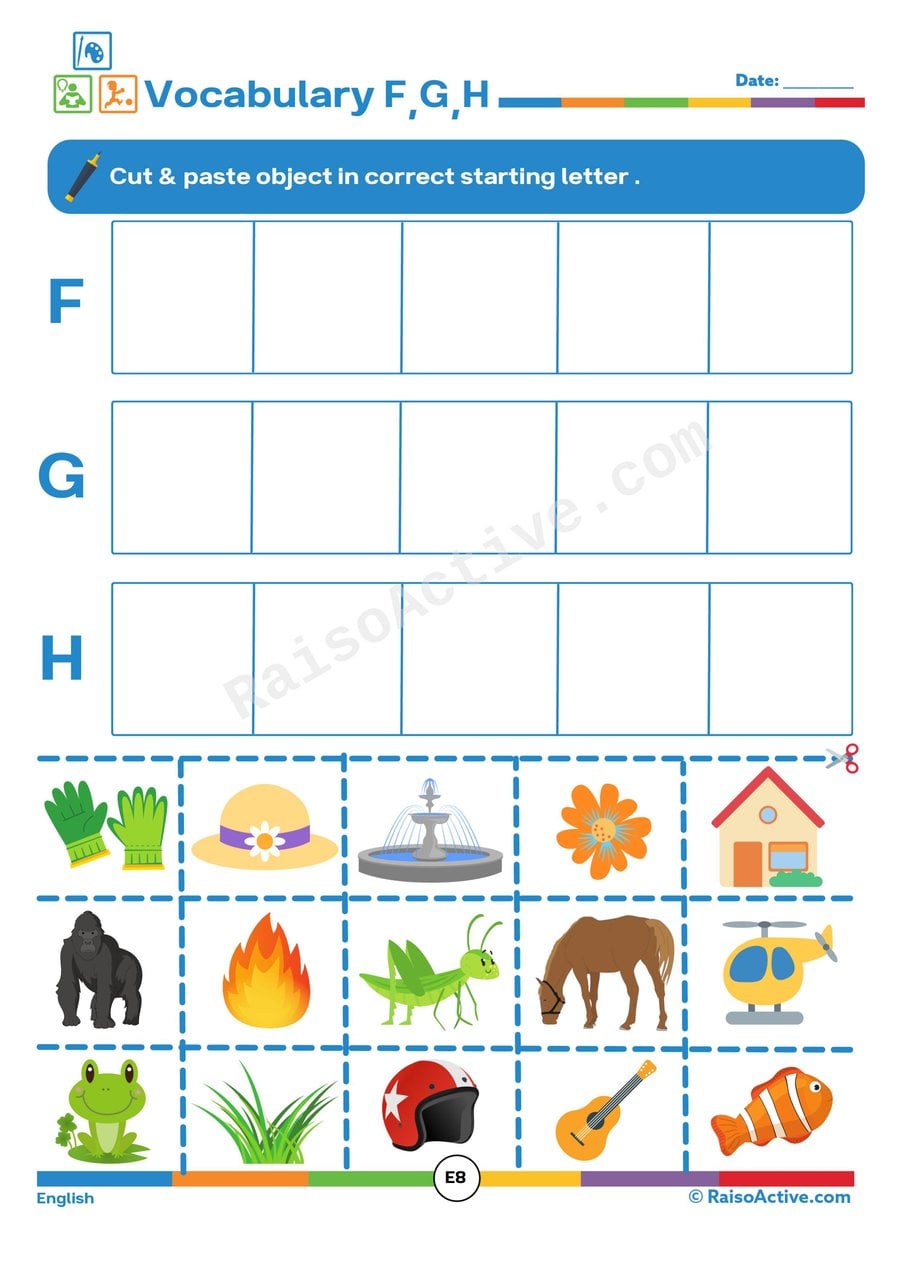
F, G, H Letter Sounds Cut and Paste Worksheet
This worksheet builds phonemic awareness in children ages 4-5 by asking them to isolate the beginning sound of each picture and sort it under the correct letter — F, G, or H. Sorting across three letters at once, rather than just one, requires children to hold multiple sound-letter associations in mind and choose between them, which is a step up in difficulty from single-letter worksheets. This kind of comparative sound-sorting strengthens the phonics foundation needed for early reading.
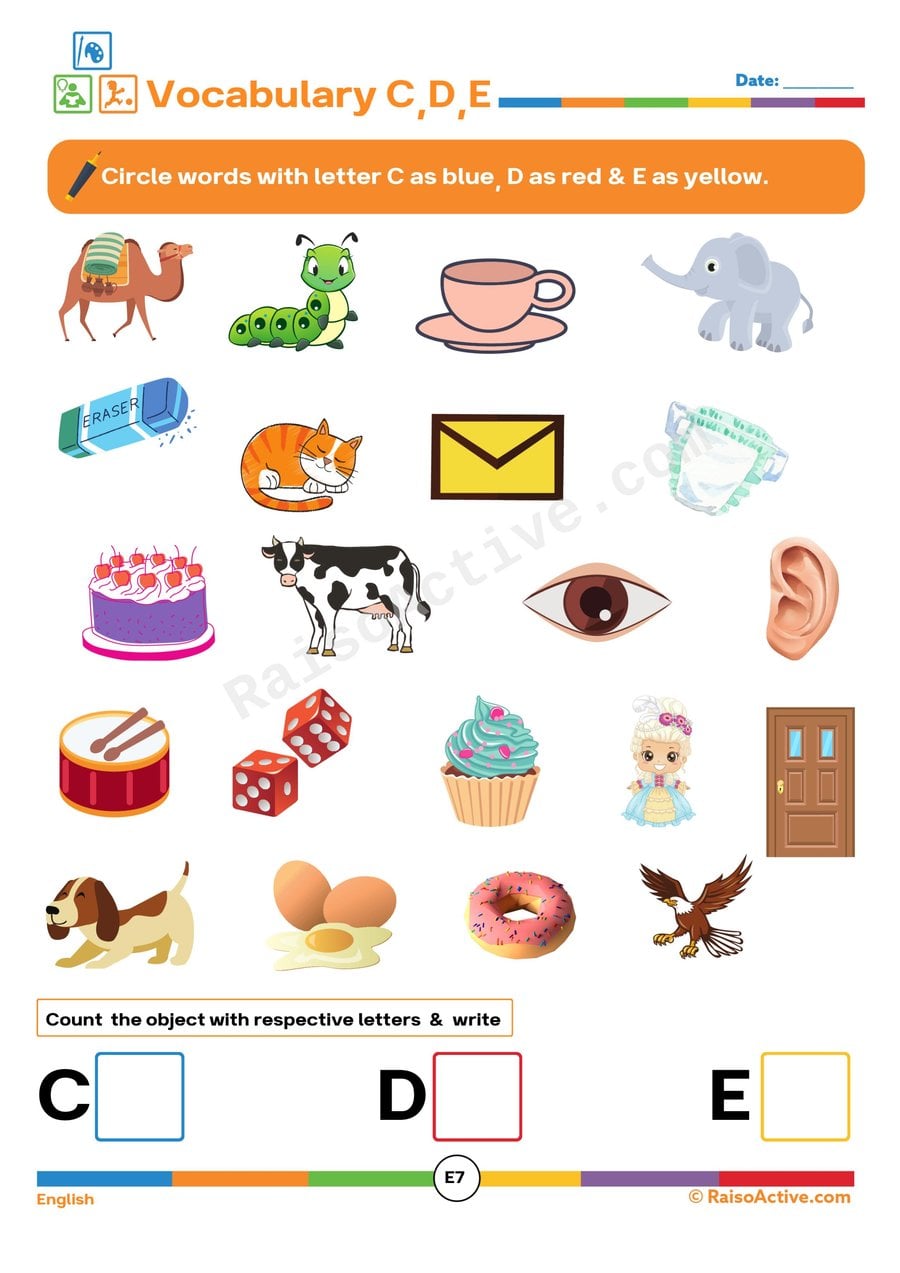
C, D, E Letter Sounds Worksheet: Circle and Count!
This activity gives children ages 3-5 focused practice recognizing the beginning sounds of the letters C, D, and E, asking them to circle matching pictures in different colors for each letter before counting the results. Combining phonics with counting means children practice two skills in one sitting: identifying initial letter sounds and recording a numeric total, both foundational for kindergarten readiness. Color-coding each letter also helps children visually organize the three sounds instead of mixing them together.

Alphabet Adventures: 'A' and 'B' Picture Sorting Worksheet
This worksheet strengthens phonemic awareness in children ages 4-5 by having them listen for and identify pictures whose names begin with the letters 'A' or 'B,' then sort them accordingly. Focusing on just two letters at a time, rather than the whole alphabet, gives children a manageable, focused way to practice isolating beginning sounds before tackling more letters.

Alphabet Adventures: Write the First Letter - A to T Worksheet
This worksheet builds early phonemic awareness in children ages 4-5 by asking them to identify a pictured object, say its name aloud, and isolate the very first sound to write as a letter. Practicing this across a wide range of letters, A through T, gives children repeated exposure to the letter-sound connection that underlies all future reading and spelling. It also strengthens letter formation as children physically write each capital letter.

Cut and Paste the First Letter: Fun Phonics Worksheet for Preschoolers
Children ages 4-5 practice identifying the beginning sound of a word and matching it to the correct letter, a core early phonics skill, while also building fine motor control through cutting and pasting. Connecting a picture's name to its first letter sound is one of the clearest building blocks toward independent reading.

Vocabulary Worksheet: Circle the Objects That Start with the Letter!
This worksheet reinforces letter-sound recognition for children ages 4-6 by presenting a target letter and asking them to identify which pictures in a row begin with that sound. Unlike single-picture beginning sound tasks, scanning an entire row of images and filtering for matches builds sustained visual attention alongside phonics, since children must reject several near-matches before finding the correct ones.
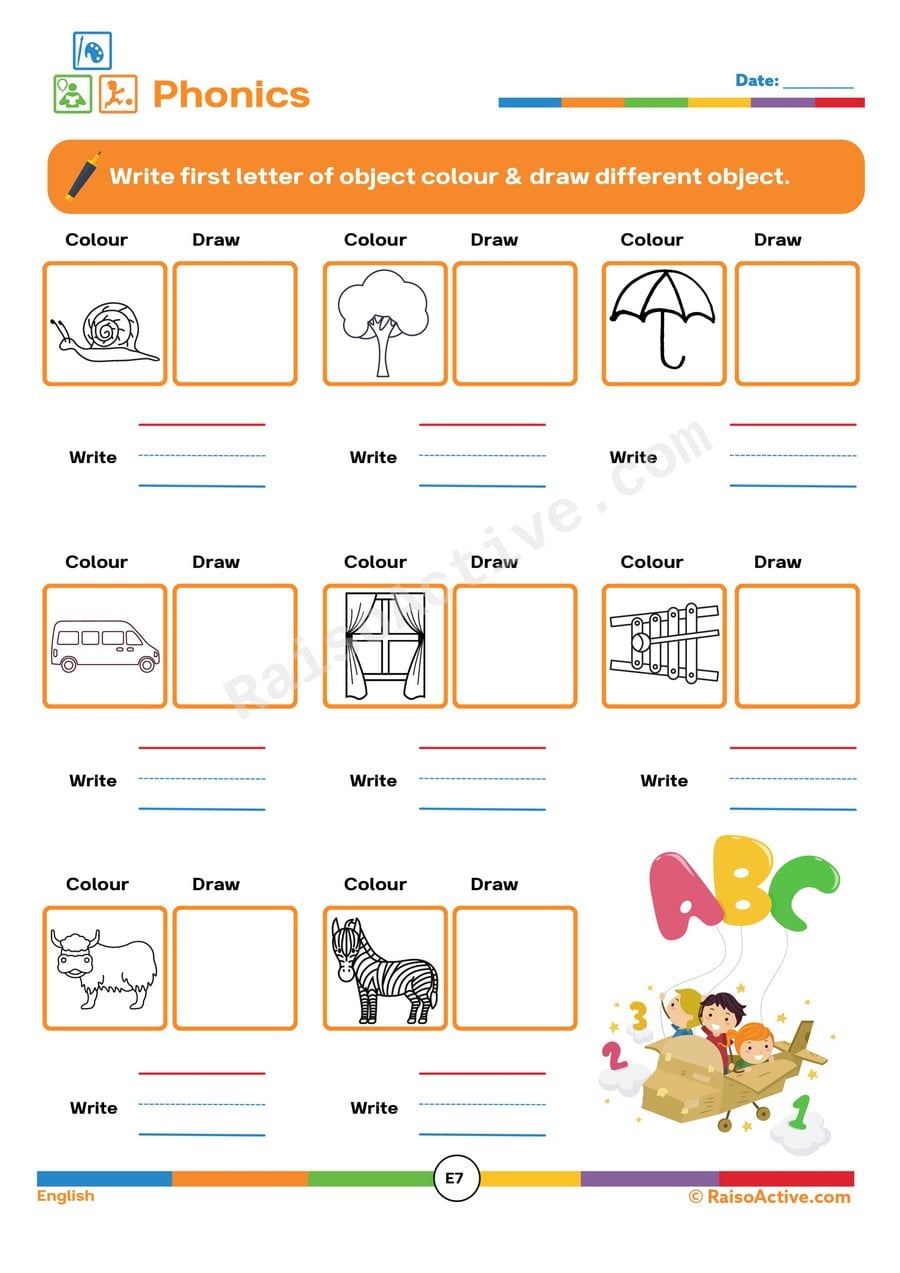
Phonics Fun: Color, Draw, and Write! (Ages 3-5)
Coloring a picture, drawing a related object, and writing its first letter combines three literacy-building tasks in one activity for children ages 3-5 — visual recognition, creative expression, and beginning-sound identification.
Guides for this topic
Sight Words by Age: The First 50 Words and How to Teach Them Without Flashcard Fatigue
Which sight words to teach first and why, the heart-word method, a read-trace-write-find routine, games, and a by-age table of typical sight-word progress.
How to Teach CVC Blending: A Step-by-Step Method That Works in Two Weeks
A step-by-step method for teaching CVC blending, covering continuous sounds, word families, common errors, and a 14-day plan that most children finish reading CVC words.
Kindergarten Readiness Checklist: 25 Skills to Practice Before the First Day
A kindergarten readiness checklist of 25 literacy, math, motor, self-regulation and self-help skills, with an 8-week summer plan and notes on when not to worry.
Reviews
Every worksheet for ages 3–5, no watermark
Members download the full library of 1,000+ worksheets and every activity pack without watermarks or daily limits. One year costs ₹1,000 in India or $20 elsewhere.
See membership plansOr download any worksheet free with a watermark (5 a day).