Parent's Guide: Fun Activities for Storytelling, Addition, and More!
This parent's guide walks through a set of hands-on activities that build storytelling and sequencing through puppet play, early addition through a simple 'addition house,' and sorting skills, giving children ages 3-5 practice across language, number, and reasoning in one sitting. Because the activities are play-based rather than worksheet-based, they let children absorb these concepts through natural exploration.
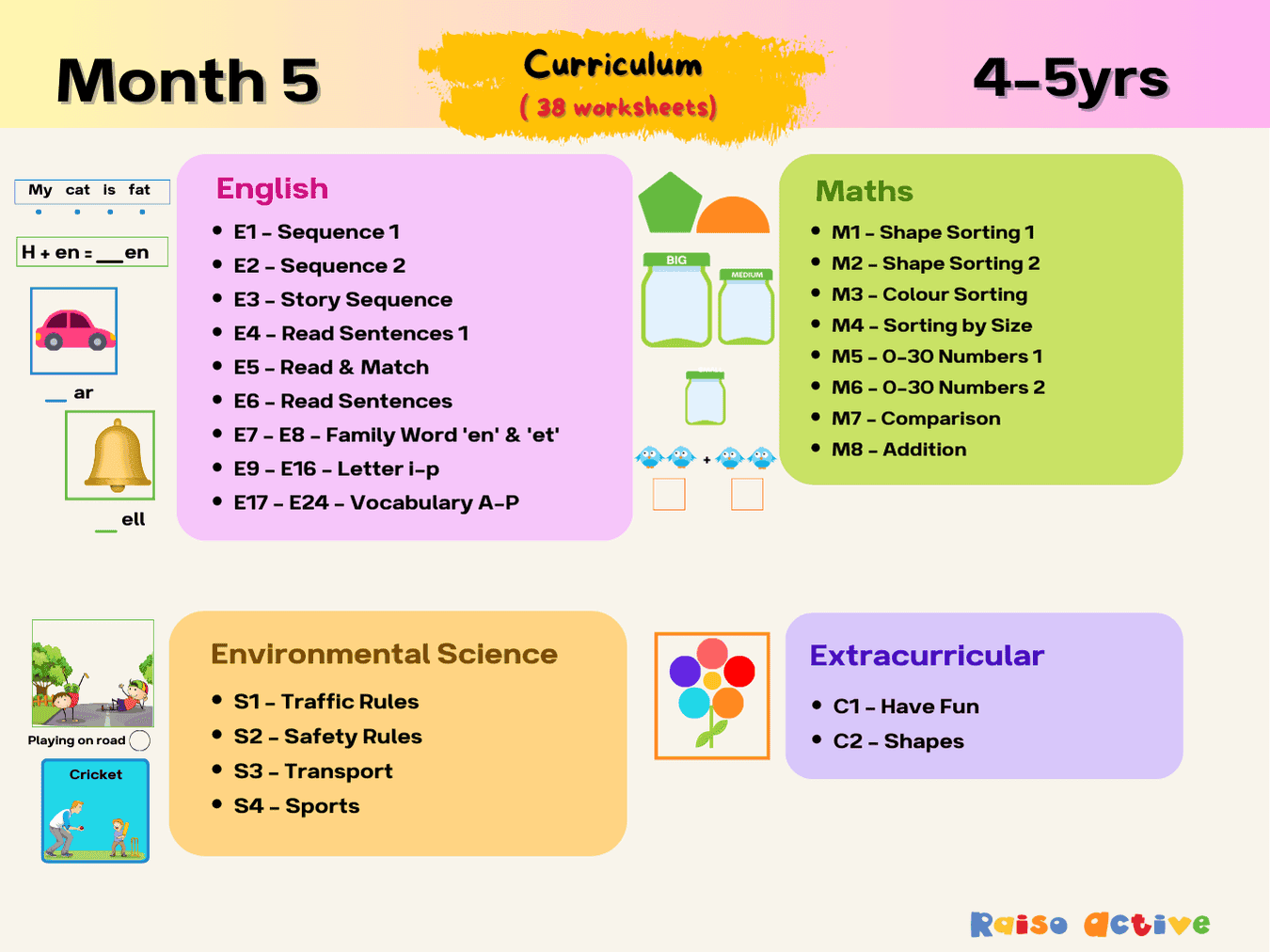
Part of the pack
Month 5: Literacy, Math, Environmental Science | Ages 4-5
This is page 2 of the pack. Ages 4-5 · Pre-KAges 4-5 · ReceptionAges 4-5 · LKGAges 4-5
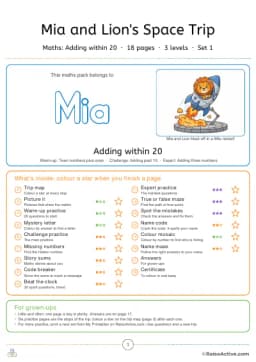
Made for your child
Adding within 10, made for your child
A maths pack with your child's name in it: pictures that explain, practice at three levels, puzzles and story sums about them. Print a new set whenever they finish.
Make a maths packFree preview · free for members
Curriculum
- Phonics - Letter Sounds > Beginning Sounds
How to use this worksheet
Read through each activity section first and gather the simple materials it calls for. Start with whichever activity best matches your child's current mood, such as puppet storytelling if they're feeling chatty or the addition house if they want to sit and count. Follow the guide's steps loosely, letting your child lead the pace, and move to the next activity once interest starts to fade.
Extension activities
- 1Make additional puppets from socks or paper bags and invent new stories together.
- 2Use different household objects, like buttons or pasta, for the sorting activity instead of the original items.
- 3Play simple addition games with the addition house using real coins or snacks instead of counters.
- 4Turn the puppet story into a short performance for another family member.
- 5Extend the sorting activity by adding a third category, like color, alongside the original two.

Written by
Hemsweta Jain · Teacher Cheena
MBA and Early Childhood Educator, teaching since 2014 · Founder of RaisoActive, Mumbai
Every RaisoActive worksheet is designed and checked by the founder before publishing.
Published · Last reviewed
More from Month 5: Literacy, Math, Environmental Science | Ages 4-5
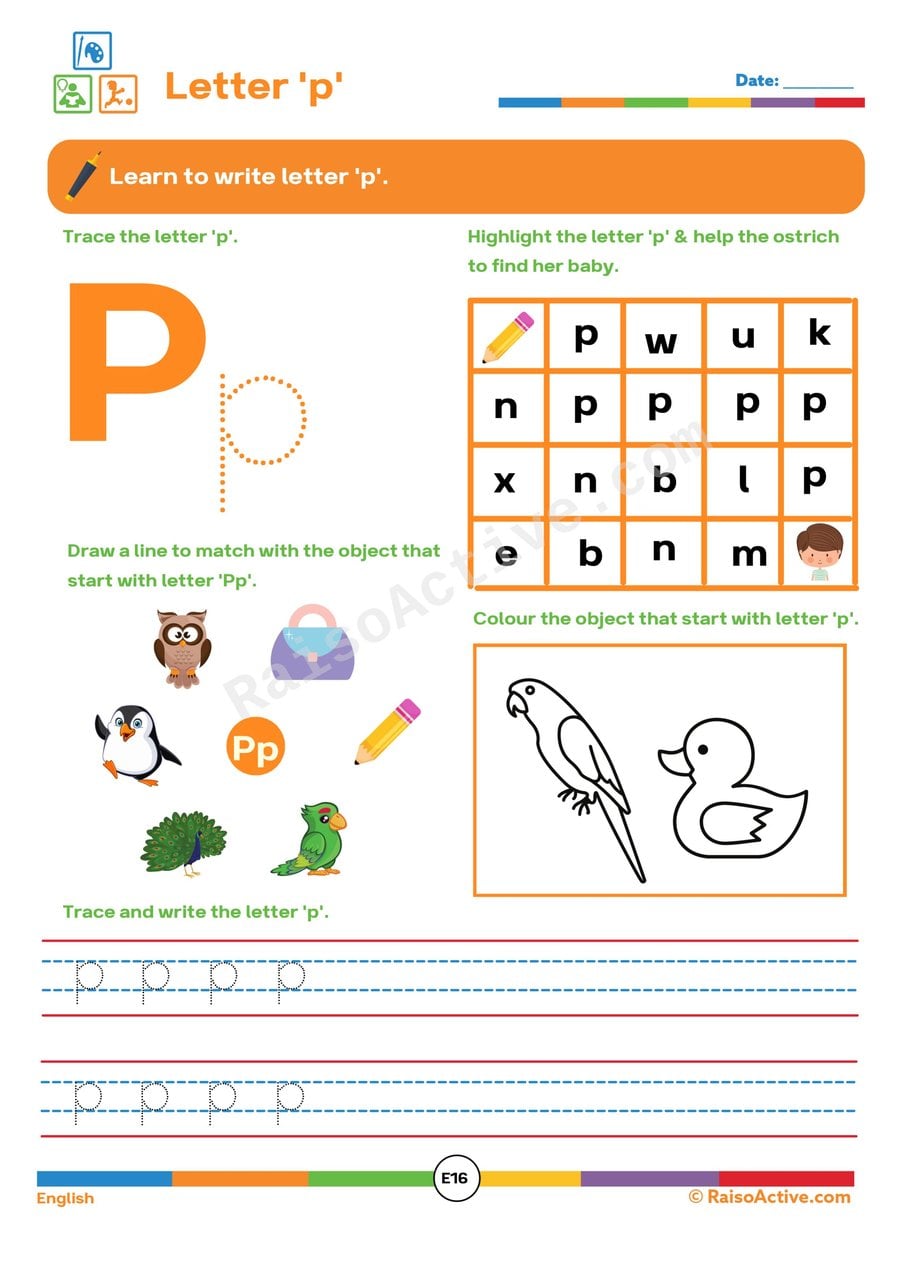
Letter 'p' Fun: Trace, Find, and Color the Letter 'p'!
Ages 3-5 · Preschool–Pre-KAges 3-5 · Nursery–ReceptionAges 3-5 · Nursery–LKGAges 3-5
Tracing both uppercase and lowercase 'p' builds handwriting muscle memory for children ages 3-5, while searching for the letter in a word search sharpens visual discrimination between similar letter shapes. Matching and coloring objects that start with 'p' rounds out the practice by linking the written letter to its spoken sound and real-world examples.

Read and Match: Fun Sentences and Pictures Worksheet for Kids!
Ages 4-6 · Pre-K–KindergartenAges 4-6 · Reception–Year 1Ages 4-6 · LKG–UKGAges 4-6
Reading simple sentences and matching them to the correct picture helps children ages 4-6 practice decoding text and checking their understanding against a visual clue, an important step in building true reading comprehension rather than picture-guessing. Coloring the pictures afterward adds a rewarding finishing touch that keeps young readers engaged through the whole page.
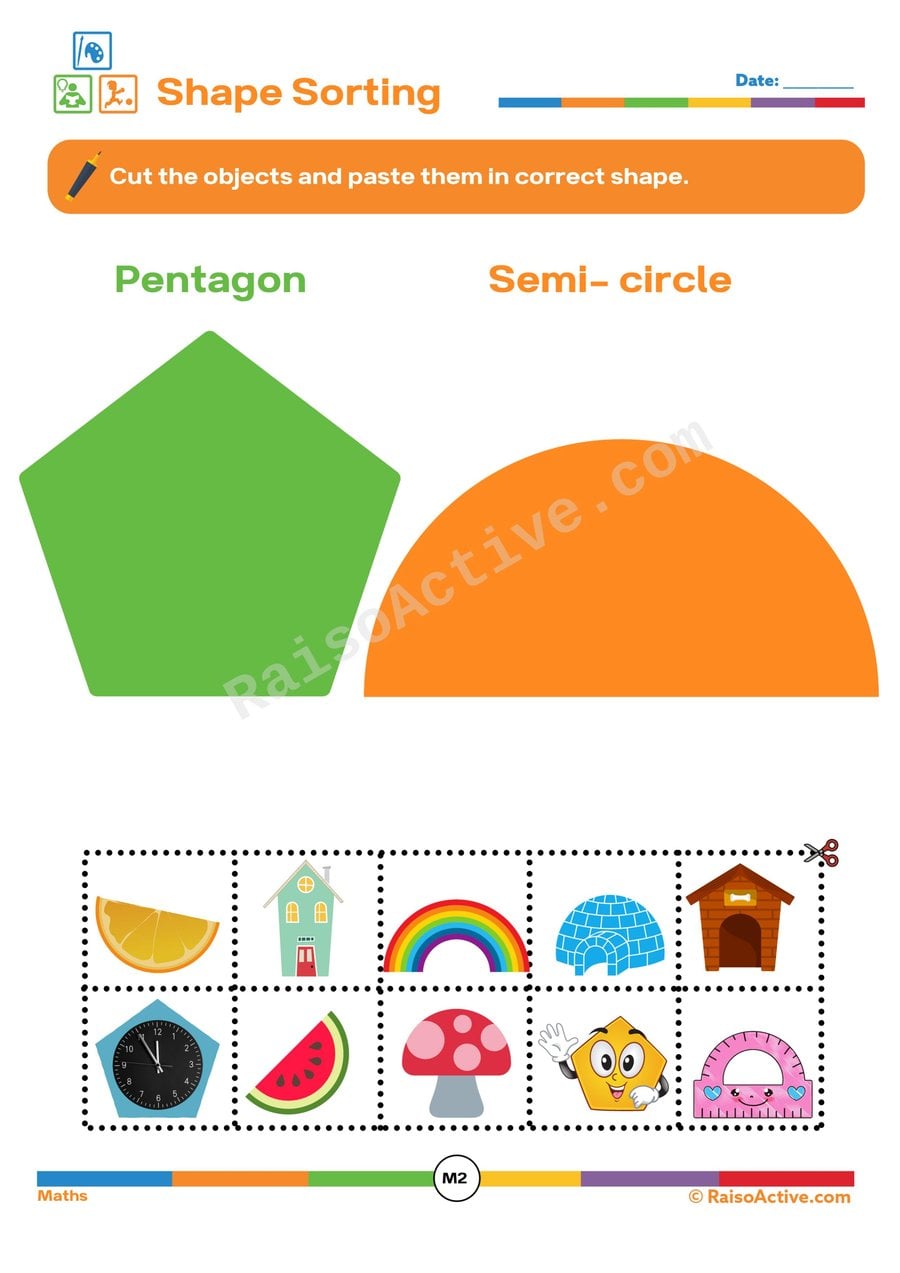
Shape Sorting Fun: Cut and Paste Shapes!
Ages 3-5 · Preschool–Pre-KAges 3-5 · Nursery–ReceptionAges 3-5 · Nursery–LKGAges 3-5
Cutting out shapes and pasting them into matching outlines teaches children ages 3-5 to recognize basic 2D shapes like circles, squares, and triangles by their defining features rather than just their color or size. The cutting and pasting also strengthens the fine motor coordination needed for handwriting later on.
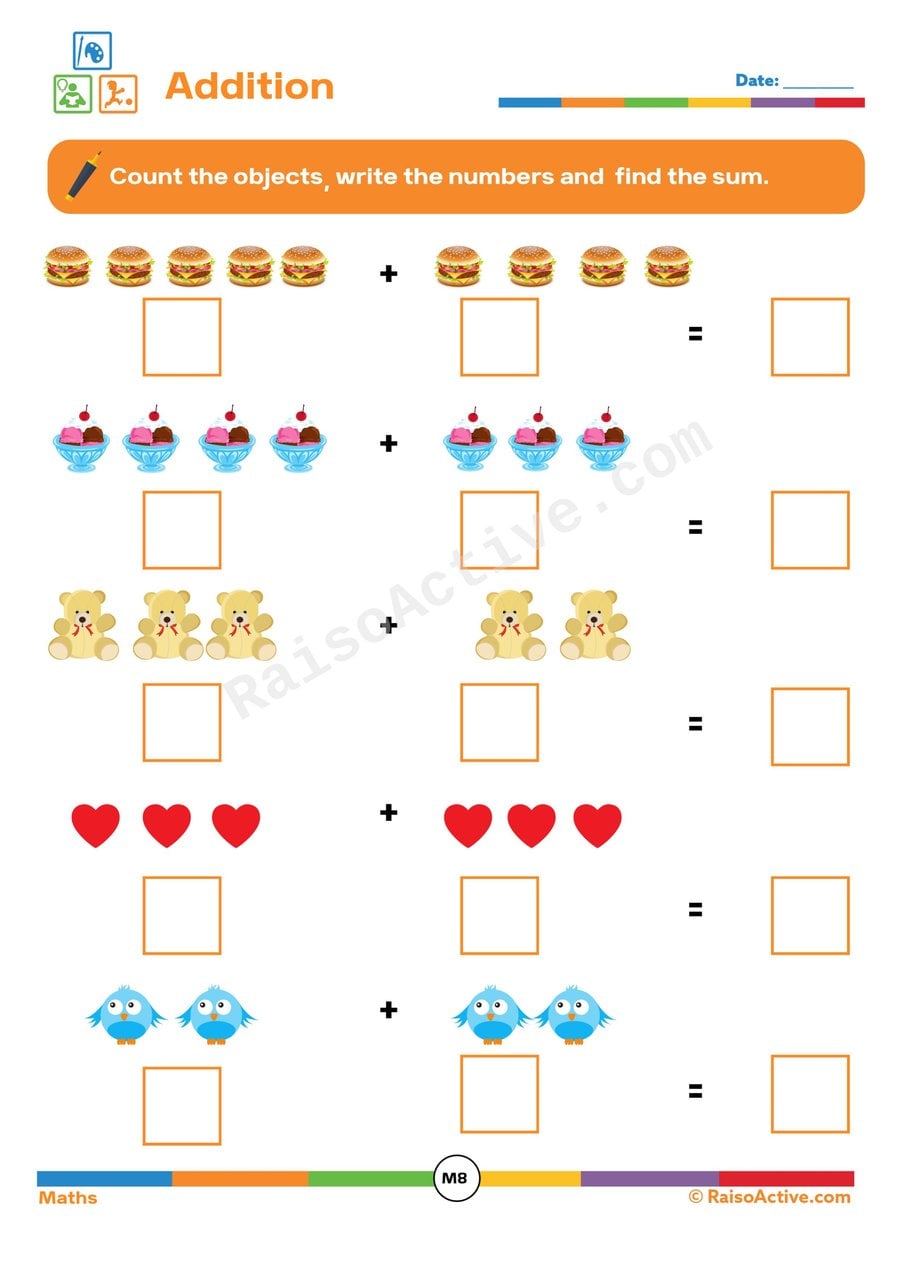
Addition Worksheet: Count and Add!
Ages 4-5 · Pre-KAges 4-5 · ReceptionAges 4-5 · LKGAges 4-5
Counting two separate groups of objects and writing the sum teaches children ages 4-5 the basic concept of addition as combining quantities, an essential foundation for all later arithmetic. Writing the number for each group before adding also reinforces accurate one-to-one counting, since an error there would carry through to the final sum.
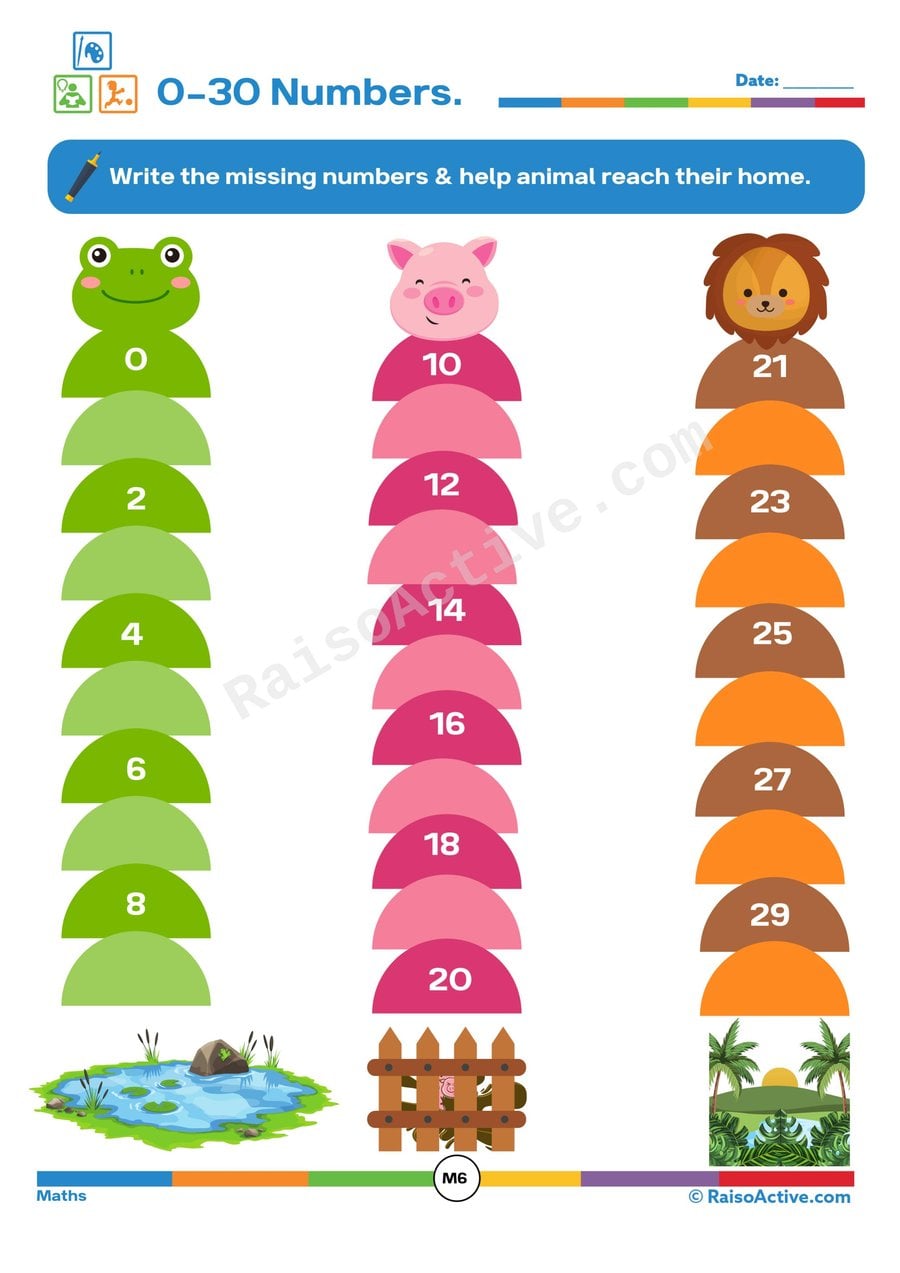
Number Fun: Missing Numbers Worksheet for Kids!
Ages 4-6 · Pre-K–KindergartenAges 4-6 · Reception–Year 1Ages 4-6 · LKG–UKGAges 4-6
Filling in missing numbers from a sequence up to 30 helps children ages 4-6 strengthen number recognition and counting-on, the skill of continuing a sequence without starting over from one each time. Completing the animal path adds a motivating storyline that encourages children to work through the full sequence.

Learn the Letter 'm' Worksheet: Tracing, Matching, and Coloring Fun!
Ages 3-5 · Preschool–Pre-KAges 3-5 · Nursery–ReceptionAges 3-5 · Nursery–LKGAges 3-5
This worksheet builds letter 'm' recognition through four connected tasks — tracing its shape, matching pictures that start with the Mm sound, navigating a highlight maze to help an Eskimo find an igloo, and coloring 'm' objects — which together reinforce the letter through touch, sight, and sound rather than a single repetitive drill. Multi-step worksheets like this also build a young child's ability to follow a sequence of instructions across an activity, which is its own developmental skill at ages 3-5.

Color Sorting Worksheet: Cut and Paste the Objects!
Ages 3-5 · Preschool–Pre-KAges 3-5 · Nursery–ReceptionAges 3-5 · Nursery–LKGAges 3-5
This cut-and-paste worksheet has 3-5 year olds identify the color of each pictured object and sort it into the matching color square — a task that requires accurate color recognition rather than guessing, since some colors (teal versus blue, or orange versus red) can be genuinely tricky to distinguish at this age. Cutting the pictures out along their edges and matching each to a labeled color square also builds fine motor control alongside the sorting logic.
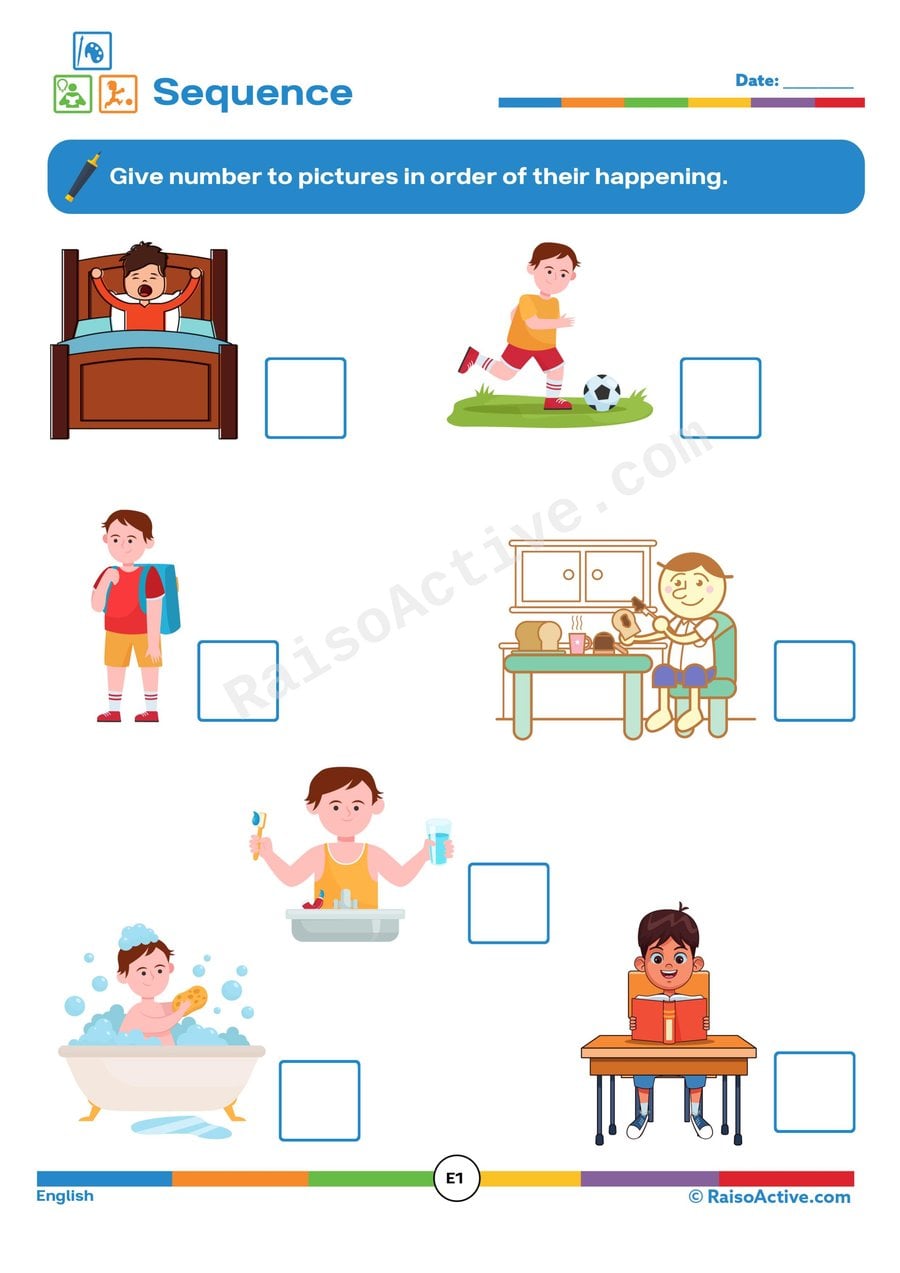
Daily Routine Sequencing Worksheet for Kids
Ages 3-5 · Preschool–Pre-KAges 3-5 · Nursery–ReceptionAges 3-5 · Nursery–LKGAges 3-5
Numbering pictures of daily activities in the order they happen teaches children ages 3-5 to reason about time and cause and effect, an early form of logical sequencing that also supports narrative skills used in storytelling. Recognizing routine events like waking up, eating breakfast, and going to bed helps children connect the worksheet to their own daily experience.
Related worksheets

Parent's Guide: Fun Activities for Blend Words, Addition, and More!
Ages 3-5 · Preschool–Pre-KAges 3-5 · Nursery–ReceptionAges 3-5 · Nursery–LKGAges 3-5
This parent's guide brings together several early-learning skill areas — blend words, addition and subtraction, plant parts, and landforms — into one set of hands-on activities designed for children ages 3-5, giving families a ready toolkit for reinforcing what's covered across the individual worksheets. Rather than another printable page, it offers concrete ways to extend learning through sensory play, flashcards, and conversation, which suits how young children absorb new concepts most naturally. Having a single reference guide also helps parents connect several worksheet topics into one cohesive home-learning routine.

Parent's Guide: Sight Words, Vowels, and Early Math Activities
Ages 3-5 · Preschool–Pre-KAges 3-5 · Nursery–ReceptionAges 3-5 · Nursery–LKGAges 3-5
This parent's guide combines sight word recognition, vowel puppet play, simple subtraction with blocks, and living-versus-non-living observation, giving children ages 3-5 broad exposure to early literacy, number sense, and basic science reasoning through varied hands-on activities. Because each section targets a different skill, the guide offers something to match whatever your child feels drawn to that day.

Parent's Guide: Building Vocabulary and Spatial Awareness Activities for Kids
Ages 3-5 · Preschool–Pre-KAges 3-5 · Nursery–ReceptionAges 3-5 · Nursery–LKGAges 3-5
This parent's guide offers a set of hands-on activities for children ages 3-5 that build vocabulary through naming and describing objects, alongside spatial awareness through positional words like under, over, and beside. Doing both together strengthens the language children need to describe where things are, a skill that supports everyday communication and later reading comprehension.
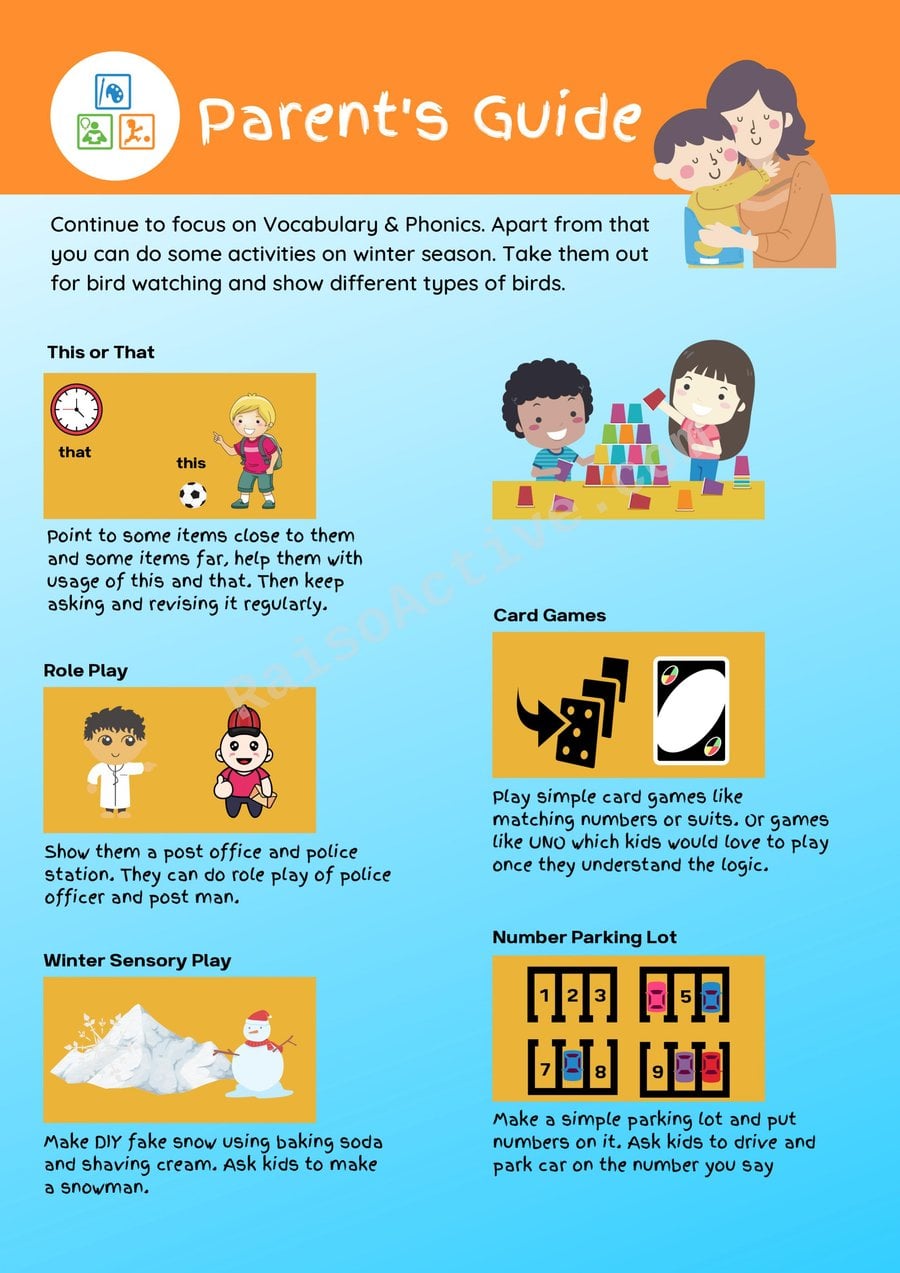
Winter Fun Activities for Kids: Parent's Guide
Ages 3-5 · Preschool–Pre-KAges 3-5 · Nursery–ReceptionAges 3-5 · Nursery–LKGAges 3-5
This parent's guide bundles several short winter-themed activities, from vocabulary games to sensory play, that build language skills, matching ability, and role-play confidence in one seasonal package. For ages 3-5, mixing modalities like talking, sorting, and hands-on sensory exploration keeps engagement high while reinforcing skills across different learning styles.

Parent's Guide: Fun Revision Activities for Early Learners!
Ages 3-5 · Preschool–Pre-KAges 3-5 · Nursery–ReceptionAges 3-5 · Nursery–LKGAges 3-5
This revision guide pulls together several previously learned concepts — the butterfly life cycle, shadow drawing, simple coding logic, and art and craft skills — giving children ages 3-5 a chance to revisit and strengthen ideas rather than encounter them for the first time. Spaced repetition like this is proven to help young children retain concepts longer than a single exposure. Mixing very different skill types in one guide also keeps the review sessions varied and engaging rather than repetitive.

Parent's Guide: Complex Sentences and Observation Activities Worksheet
Ages 3-5 · Preschool–Pre-KAges 3-5 · Nursery–ReceptionAges 3-5 · Nursery–LKGAges 3-5
This parent guide bundles activities around complex sentence structure, weight and capacity comparison, measuring duration, and demonstrative pronouns ('this,' 'that,' 'these,' 'those'), giving children exposure to several distinct language and science-reasoning skills through short, hands-on games rather than one worksheet. For ages three to five, rotating between grammar and observation-based tasks like this keeps engagement high while covering meaningfully different areas of development.

Fun Activities for Kids: Puppet Shows, Lemonade, and More!
Ages 3-5 · Preschool–Pre-KAges 3-5 · Nursery–ReceptionAges 3-5 · Nursery–LKGAges 3-5
This parent's guide offers a set of varied hands-on activities for children ages 3-5, including a puppet show, an eye-hand coordination game, and homemade lemonade, that together build sentence framing, listening comprehension, and physical coordination. Combining storytelling, a sensory cooking task, and a physical game keeps learning active and multi-sensory rather than confined to a worksheet.

Parent's Guide: Fun Activities for Early Learning!
Ages 3-5 · Preschool–Pre-KAges 3-5 · Nursery–ReceptionAges 3-5 · Nursery–LKGAges 3-5
This parent's guide compiles a set of short activities spanning early literacy, spatial reasoning, and problem-solving, giving caregivers ready-made ways to build foundational skills through everyday play. For ages 3-5, mixing activity types across one guide, like word games and puzzles, keeps a young child's attention while covering multiple developmental areas in a single session or across a week.
Guides for this topic

Documenting Learning Without Drowning in Data: A Practical Guide for Parents and Teachers
Learn practical ways to document your child's learning without overwhelm. Simple portfolios, observation tips, and printable trackers for ages 1-8.

Coding Activities for Preschoolers: Building Tomorrow's Thinkers Today
Discover 15+ unplugged and screen-based coding activities for preschoolers that build sequencing, logic, and problem-solving skills through play. NEP 2020 aligned.

When Should My Child Learn to Read? Is Kindergarten Too Early? A Complete Guide to Reading Readiness
Discover the research-backed optimal age for reading, key readiness signs, and why pushing too early can backfire. A complete guide for parents of children aged 3-8.
Reviews
Every worksheet for ages 3–5, no watermark
Members download the full library of 1,000+ worksheets and every activity pack without watermarks or daily limits. One year costs ₹999 in India or $20 elsewhere.
See membership plansOr download any worksheet free with a watermark (5 a day).