Parent's Guide: Building Vocabulary and Spatial Awareness Activities for Kids
This parent's guide offers a set of hands-on activities for children ages 3-5 that build vocabulary through naming and describing objects, alongside spatial awareness through positional words like under, over, and beside. Doing both together strengthens the language children need to describe where things are, a skill that supports everyday communication and later reading comprehension.
Part of the pack
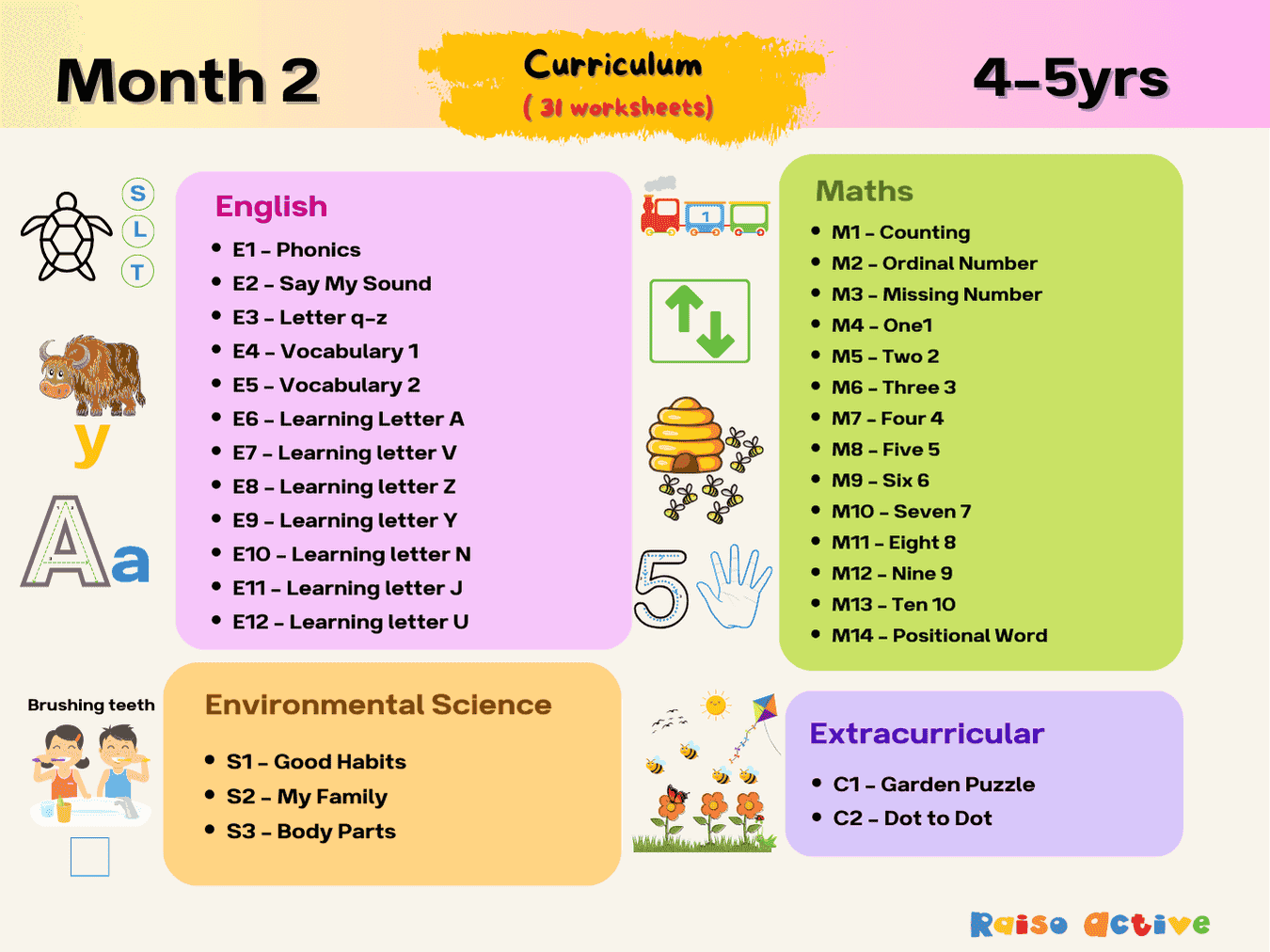
Month 2: Learning & Development | Ages 4-5
This is page 2 of the pack. Ages 4-5 · Pre-KAges 4-5 · ReceptionAges 4-5 · LKGAges 4-5
Made for your child
Spelling practice, made for your child
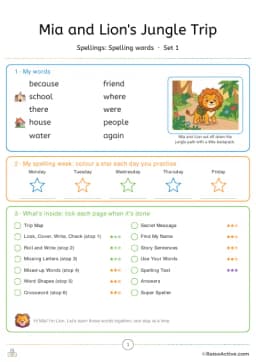
Their own spelling words turned into a pack: trace or look-cover-write-check, roll and write, a secret picture code, a word search, a crossword and a test, with their name in it.
Make a spelling packFree preview · free for members
Or start free: a word search with sight wordsCurriculum
- Phonics - Letter Sounds > Beginning Sounds
How to use this worksheet
Read through each activity section together and gather the simple household materials listed before starting. For the vocabulary activities, guide your child to name and describe objects clearly, expanding one-word answers into full sentences. For the spatial awareness activities, set up a small obstacle course or hide objects around a room and have your child describe or find them using positional words, adjusting the difficulty to match your child's confidence.
Materials needed
- Paper
- Pencil
- Objects for treasure hunt
- Flashcards or cards
- Chairs or boxes
- Toys
Extension activities
- 1Create a word wall together, adding a new word each day starting with a chosen letter.
- 2Play a hide-and-describe game where your child hides an object and gives spatial clues, like 'it's under the chair.'
- 3Set up chairs or boxes as an obstacle course and have your child narrate their movements using words like over, under, and through.
- 4Go on a treasure hunt around the house, describing each hiding spot with a positional word before your child searches.

Written by
Hemsweta Jain · Teacher Cheena
MBA and Early Childhood Educator, teaching since 2014 · Founder of RaisoActive, Mumbai
Every RaisoActive worksheet is designed and checked by the founder before publishing.
Published · Last reviewed
More from Month 2: Learning & Development | Ages 4-5

Good Habits Worksheet for Kids: Tick Good and Cross Bad!
Ages 3-5 · Preschool–Pre-KAges 3-5 · Nursery–ReceptionAges 3-5 · Nursery–LKGAges 3-5
This worksheet helps children ages 3-5 build early social-emotional understanding by looking at pictures of everyday behaviors and judging whether each one is a good habit or a bad habit. Making this distinction and marking it with a tick or a cross also introduces basic symbolic reasoning, since children must translate a judgment into a specific mark.
Number One Worksheet: Trace, Count, and Color!
Ages 3-5 · Preschool–Pre-KAges 3-5 · Nursery–ReceptionAges 3-5 · Nursery–LKGAges 3-5
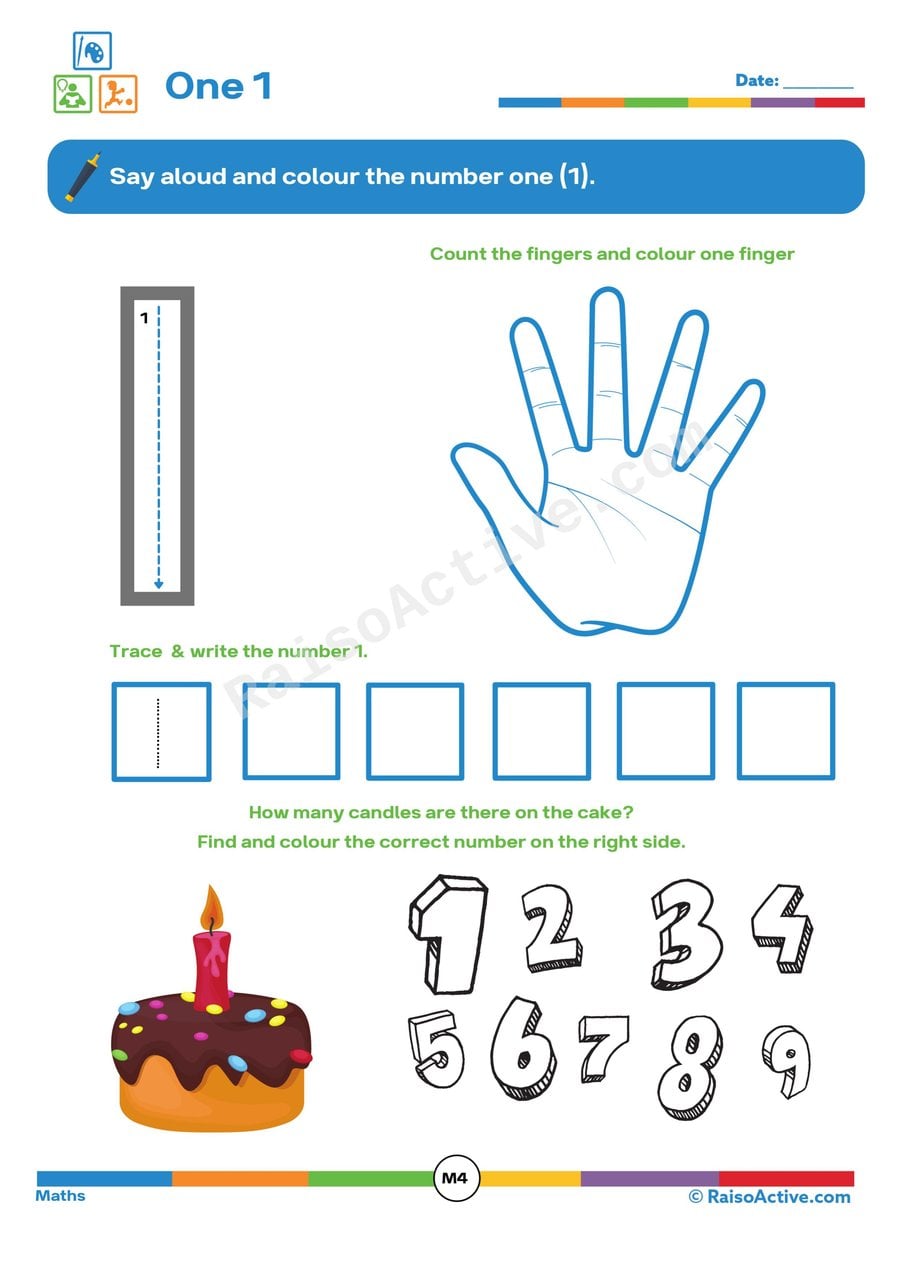
Children ages 3-5 practice forming the number 1 through guided tracing while also reinforcing what the quantity 'one' represents by counting a single finger and a single candle. Linking the written symbol directly to a real quantity is a key early step in number sense before children move on to larger numbers.

Body Parts Matching Worksheet for Preschoolers
Ages 3-5 · Preschool–Pre-KAges 3-5 · Nursery–ReceptionAges 3-5 · Nursery–LKGAges 3-5
Children ages 3-5 practice matching each body part to its specific function, like eyes to seeing or legs to walking, building early awareness of how their own body works. This connects body-part vocabulary to real-world purpose rather than just naming parts in isolation.

Tracing and Counting Worksheet: Learning the Number 3!
Ages 3-5 · Preschool–Pre-KAges 3-5 · Nursery–ReceptionAges 3-5 · Nursery–LKGAges 3-5
This worksheet helps children ages 3-5 learn to recognize, trace, and write the number 3 using its correct stroke pattern, while a hands-and-ducks counting activity reinforces that the numeral 3 represents exactly three objects. Combining tracing with counting connects the written symbol to its real quantity, which is central to early number sense.
Apple Dot-to-Dot Worksheet for Preschoolers
Ages 3-5 · Preschool–Pre-KAges 3-5 · Nursery–ReceptionAges 3-5 · Nursery–LKGAges 3-5
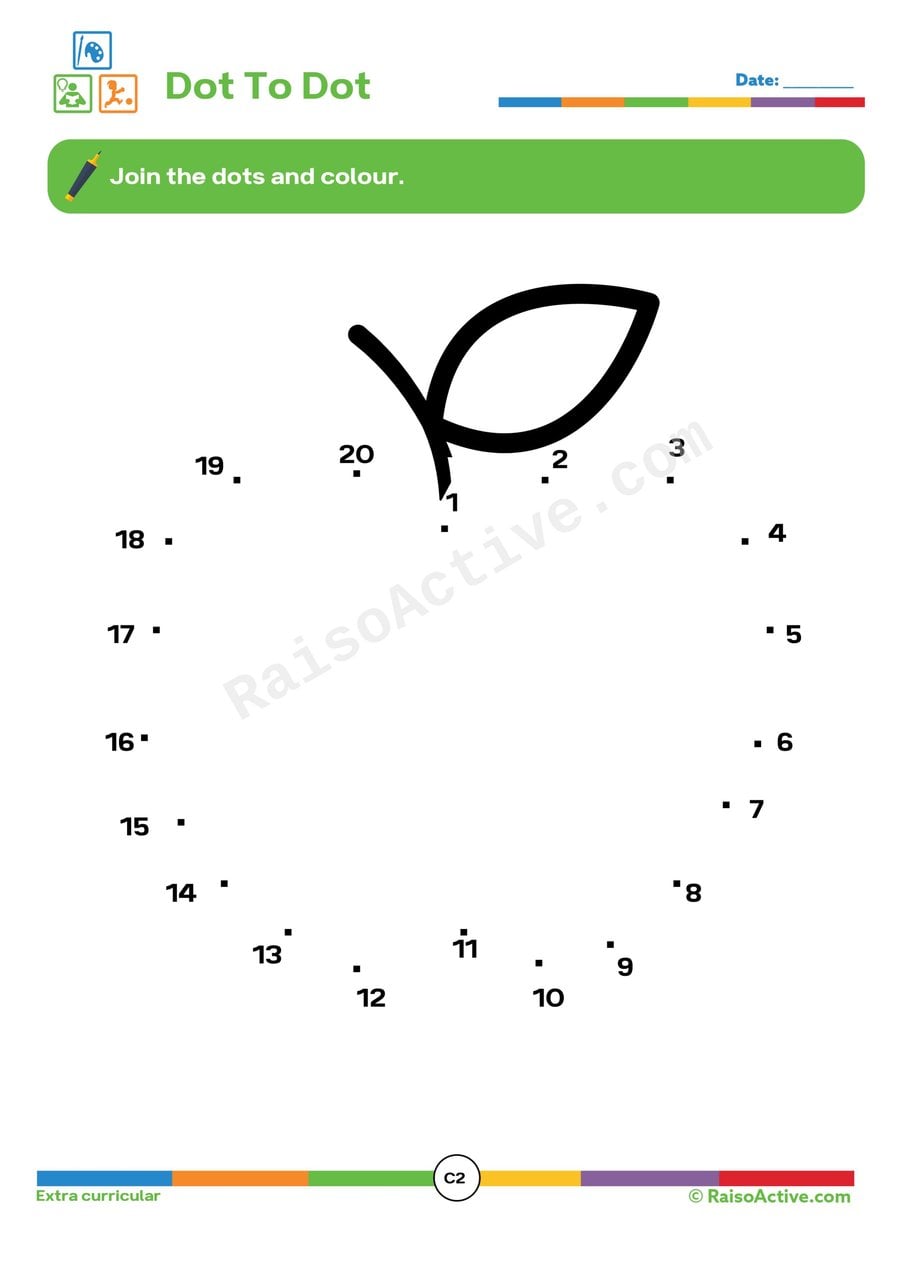
This dot-to-dot worksheet strengthens number sequencing and fine motor control for children ages 3-5 as they connect numbered dots in order to reveal the shape of an apple. Because each new line depends on finding the next correct number, this activity reinforces counting sequence while also training the pencil control and hand-eye coordination needed for careful, controlled drawing.

Ordinal Numbers Coloring Worksheet for Preschoolers
Ages 4-6 · Pre-K–KindergartenAges 4-6 · Reception–Year 1Ages 4-6 · LKG–UKGAges 4-6
This worksheet introduces children ages 4-6 to ordinal numbers from sixth to tenth, teaching them that position in a sequence, like 'which one is 6th,' is a different idea from counting how many items there are in total. Coloring the correctly positioned picture in each row also reinforces left-to-right tracking, an important pre-reading skill.

Counting Fun: Circle the Correct Number Worksheet
Ages 4-5 · Pre-KAges 4-5 · ReceptionAges 4-5 · LKGAges 4-5
This worksheet builds one-to-one correspondence in children ages 4-5 as they count a group of objects and then match that count to the correct written numeral among several choices. Choosing from multiple numeral options, rather than just writing a number, also sharpens numeral recognition since similar-looking numbers can be easy to confuse.

Say My Sound: Beginning Sounds Worksheet for Preschoolers
Ages 3-5 · Preschool–Pre-KAges 3-5 · Nursery–ReceptionAges 3-5 · Nursery–LKGAges 3-5
This worksheet helps children ages 3-5 identify the beginning sounds of familiar words and match them to the correct letters, an essential early phonics skill for sounding out words later. Coloring each picture after identifying its sound keeps the activity playful while still requiring focused listening.
Related worksheets

Parent's Guide: Fun Activities for Early Learning
Ages 3-5 · Preschool–Pre-KAges 3-5 · Nursery–ReceptionAges 3-5 · Nursery–LKGAges 3-5
This parent guide bundles four hands-on activities covering sentence building, subtraction, number comparison, and food sorting, designed for children ages 3-5 to practice early literacy and numeracy through tactile, real-world materials like natural loose parts and playdough. Rotating between language and math tasks in one sitting helps children see connections between counting, comparing, and describing the world around them, rather than treating each subject in isolation.
Parent's Guide: Verbs, Tenses, and Vocabulary Fun!
Ages 3-5 · Preschool–Pre-KAges 3-5 · Nursery–ReceptionAges 3-5 · Nursery–LKGAges 3-5
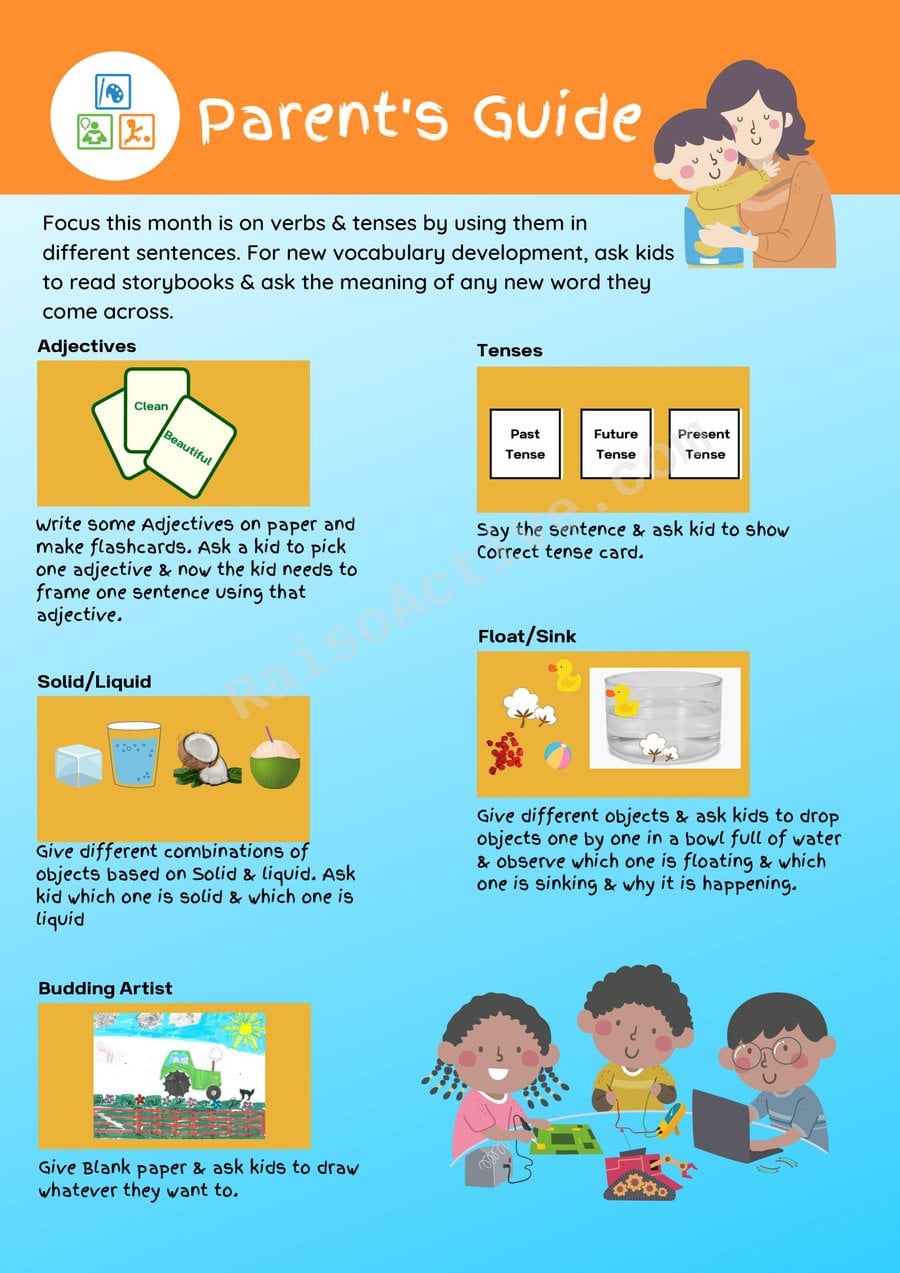
This guide strings together several short language activities - building adjective flashcards, identifying verb tenses, and running a simple sink-or-float experiment - to introduce children ages 3-5 to descriptive vocabulary and the idea that verbs change form depending on when an action happens. The hands-on water experiment doubles as a vocabulary builder, since children practice new describing words like 'floats' and 'sinks' while observing real cause and effect.

Fun Parent's Guide: Vocabulary, Phonics, and Animal Activities!
Ages 3-5 · Preschool–Pre-KAges 3-5 · Nursery–ReceptionAges 3-5 · Nursery–LKGAges 3-5
This parent's guide bundles together activities for vocabulary building, phonics practice, and animal-themed learning, giving children ages 3-5 varied exposure to language concepts like left and right, letter-object matching, and number sorting through hands-on play. Because the activities span several skill areas, the guide offers flexibility to match whatever your child is most interested in on a given day.

Parent's Guide: Fun Activities for Gross Motor Development and Emotional Learning
Ages 3-5 · Preschool–Pre-KAges 3-5 · Nursery–ReceptionAges 3-5 · Nursery–LKGAges 3-5
This parent guide equips caregivers of children ages 3-5 with activities spanning gross motor skills, emotional expression, family concepts, shape recognition, and calendar awareness, using role play, finger puppets, and simple games. Combining physical movement with emotional vocabulary practice, such as making different facial expressions, helps children build body awareness and feelings vocabulary side by side. Rotating through several distinct activity types in one guide also keeps a young child's attention across a longer play session.

Parent's Guide: Sight Words and CVC Words Activities
Ages 3-5 · Preschool–Pre-KAges 3-5 · Nursery–ReceptionAges 3-5 · Nursery–LKGAges 3-5
This parent's guide offers a set of hands-on activities for children ages 3-5 that build early reading skills through sight word and CVC (consonant-vowel-consonant) word practice, using letter blocks, storytelling, and even a color-mixing experiment to keep learning varied and engaging. Practicing sight words and simple three-letter words together builds the foundation for sounding out and recognizing whole words while reading.

Fun Activities for Kids: Blend Words, Reading, and Science Experiments!
Ages 3-5 · Preschool–Pre-KAges 3-5 · Nursery–ReceptionAges 3-5 · Nursery–LKGAges 3-5
This multi-activity guide introduces children ages 3-5 to blend words, simple story reading, and hands-on science experiments like making a chocolate shake and testing dissolving, all in one session. Moving between literacy and science tasks builds flexible thinking and shows children that reading and hands-on exploration are connected, reinforcing that new vocabulary can describe real, observable experiments.
Parent's Guide: Fun Activities for Early Learners
Ages 3-5 · Preschool–Pre-KAges 3-5 · Nursery–ReceptionAges 3-5 · Nursery–LKGAges 3-5
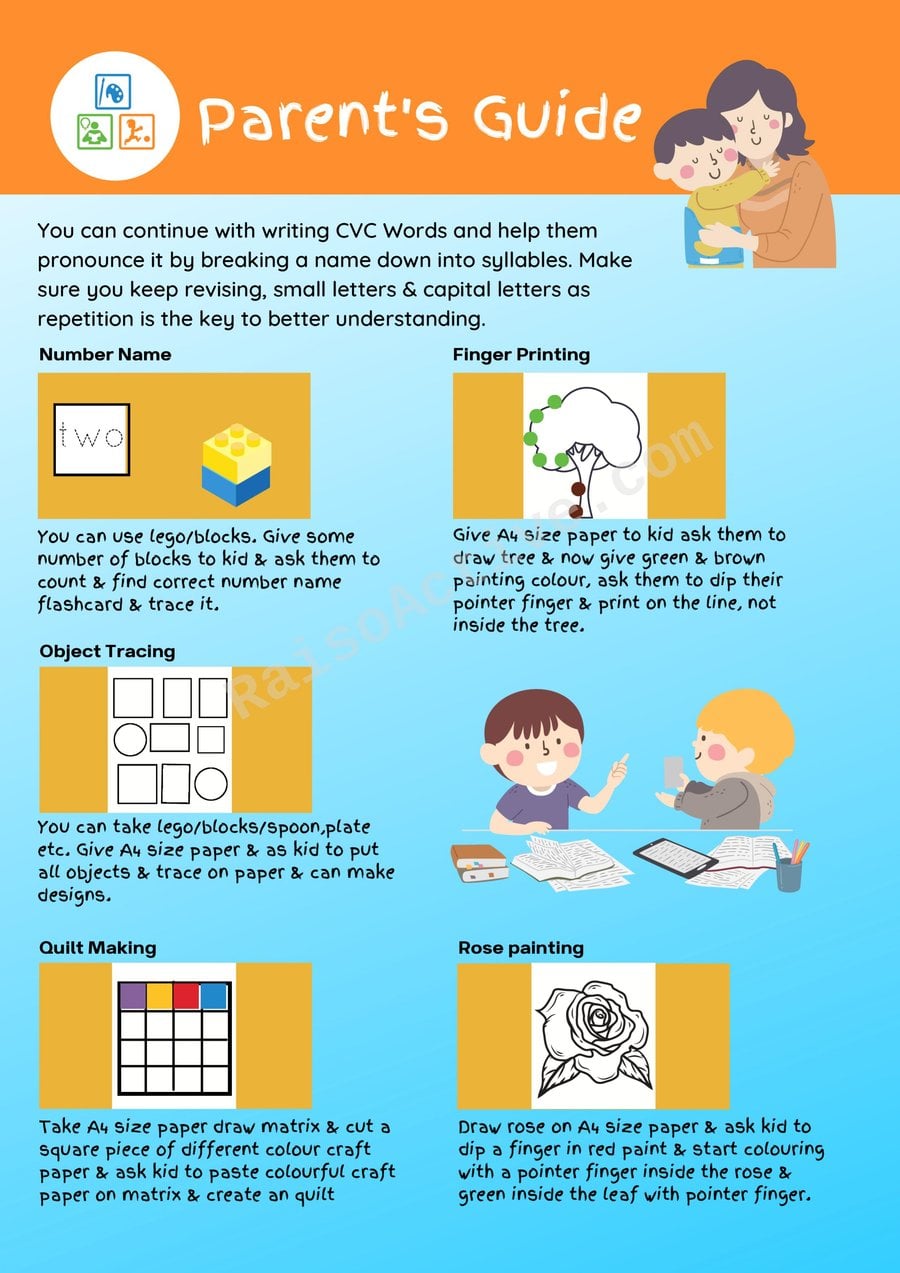
This parent's guide bundles several distinct early-learning activities — number recognition, finger painting, object tracing, simple quilt making, and rose painting — giving children ages 3-5 a varied menu of fine motor, creative, and cognitive practice in one place. Rotating through different activity types like this keeps engagement high while touching multiple developmental areas across a single session or week.

Parent's Guide: Fun Activities for Early Learners
Ages 3-5 · Preschool–Pre-KAges 3-5 · Nursery–ReceptionAges 3-5 · Nursery–LKGAges 3-5
This parent's guide offers a set of activities spanning literacy, sequencing, and early addition, giving caregivers several ready-to-use options for building foundational skills through everyday play. For ages 3-5, rotating between different skill areas, like rhyming games and simple math card games, keeps early learning varied and prevents any one skill from feeling repetitive or tedious.
Guides for this topic

Sight Words by Age: The First 50 Words and How to Teach Them Without Flashcard Fatigue
Which sight words to teach first and why, the heart-word method, a read-trace-write-find routine, games, and a by-age table of typical sight-word progress.
How to Teach CVC Blending: A Step-by-Step Method That Works in Two Weeks
A step-by-step method for teaching CVC blending, covering continuous sounds, word families, common errors, and a 14-day plan that most children finish reading CVC words.

Documenting Learning Without Drowning in Data: A Practical Guide for Parents and Teachers
Learn practical ways to document your child's learning without overwhelm. Simple portfolios, observation tips, and printable trackers for ages 1-8.
Reviews
Every worksheet for ages 3–5, no watermark
Members download the full library of 1,000+ worksheets and every activity pack without watermarks or daily limits. One year costs ₹999 in India or $20 elsewhere.
See membership plansOr download any worksheet free with a watermark (5 a day).