Parent's Guide: Sight Words, Vowels, and Early Math Activities
This parent's guide combines sight word recognition, vowel puppet play, simple subtraction with blocks, and living-versus-non-living observation, giving children ages 3-5 broad exposure to early literacy, number sense, and basic science reasoning through varied hands-on activities. Because each section targets a different skill, the guide offers something to match whatever your child feels drawn to that day.
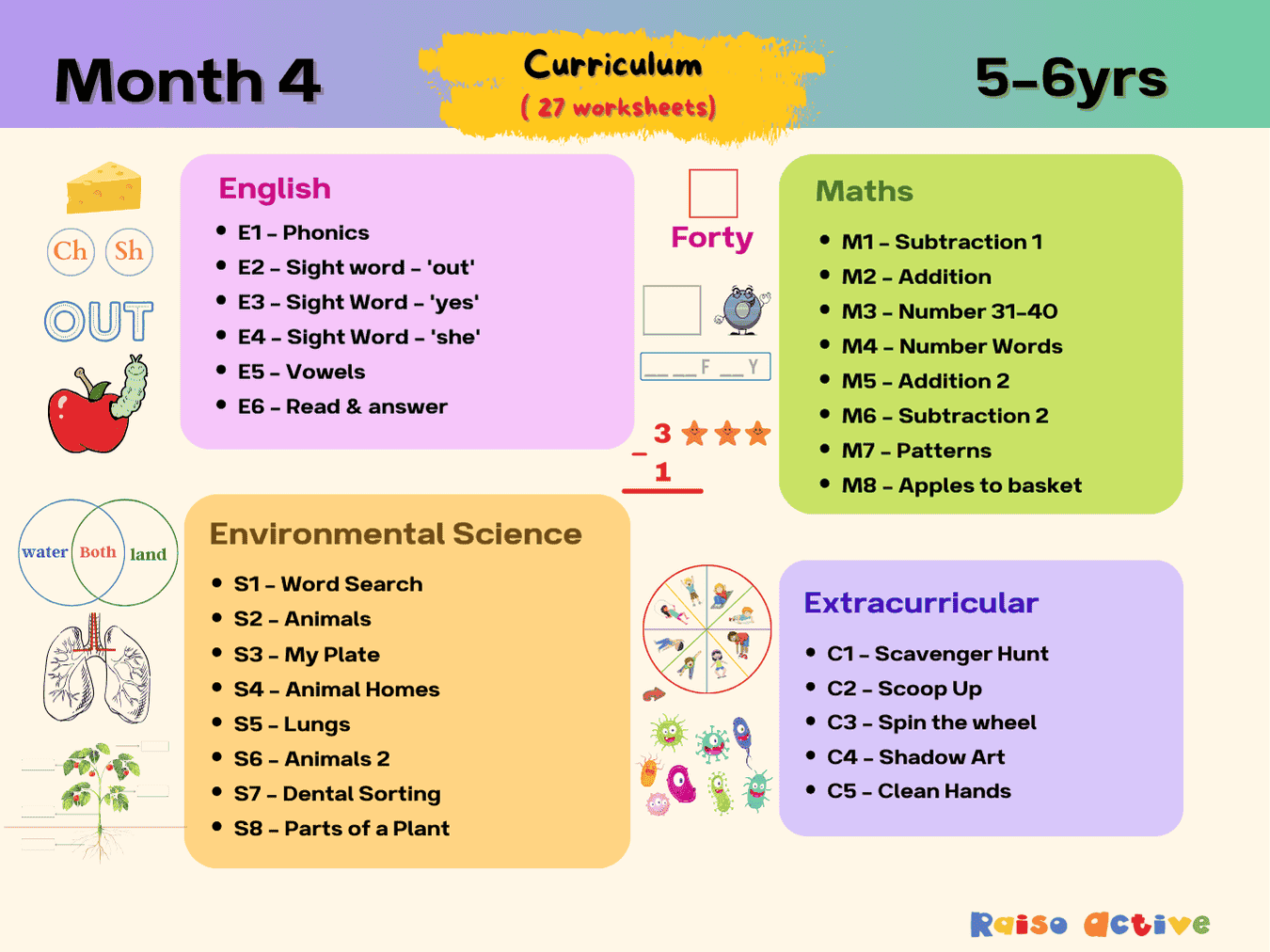
Part of the pack
Month 4: Learning & Development | Ages 5-6
This is page 2 of the pack. Ages 5-6 · KindergartenAges 5-6 · Year 1Ages 5-6 · UKGAges 5-6

Made for your child
Counting to 10, made for your child
A maths pack with your child's name in it: pictures that explain, practice at three levels, puzzles and story sums about them. Print a new set whenever they finish.
Make a maths packFree preview · free for members
Curriculum
- Fluency > Sight Words
How to use this worksheet
Read through the activity options first and pick one that fits your available materials and your child's mood. For the vowel section, help make simple puppets from popsicle sticks; for subtraction, use blocks to act out taking objects away; for the living and non-living activity, plant seeds in a pot with soil and observe over time. Let your child do as much of the hands-on work themselves as possible.
Materials needed
- Popsicle sticks
- Paper
- Pencil
- Storybooks
- Blocks
- Pot
- Soil
- Seeds
Extension activities
- 1Set up a pretend shop using real coins to practice both addition and subtraction.
- 2Observe and discuss the planted seeds' growth over the following days and weeks.
- 3Add new vowel puppets and use them to act out a silly short story.
- 4Sort household items into living and non-living groups as a follow-up game.
- 5Talk about the concept of currency using coins from the subtraction activity.

Written by
Hemsweta Jain · Teacher Cheena
MBA and Early Childhood Educator, teaching since 2014 · Founder of RaisoActive, Mumbai
Every RaisoActive worksheet is designed and checked by the founder before publishing.
Published · Last reviewed
More from Month 4: Learning & Development | Ages 5-6
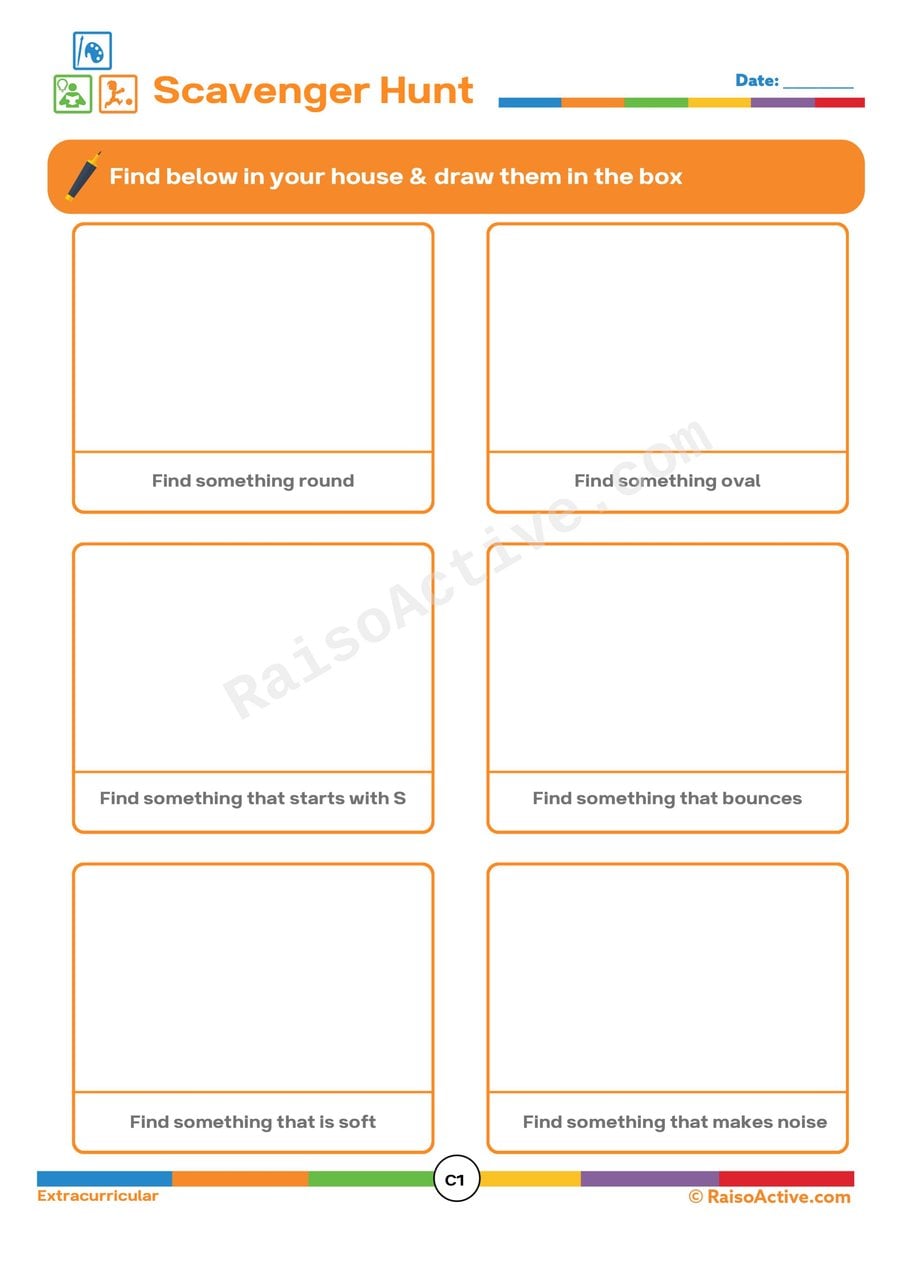
Scavenger Hunt Worksheet: Find & Draw!
Ages 3-5 · Preschool–Pre-KAges 3-5 · Nursery–ReceptionAges 3-5 · Nursery–LKGAges 3-5
This scavenger hunt worksheet asks children ages 3-5 to search their home for objects matching specific descriptions and draw what they find, building observation skills and the ability to translate a spoken or written clue into a real-world search. Drawing the found object afterward adds a fine motor and representational drawing component on top of the search itself.
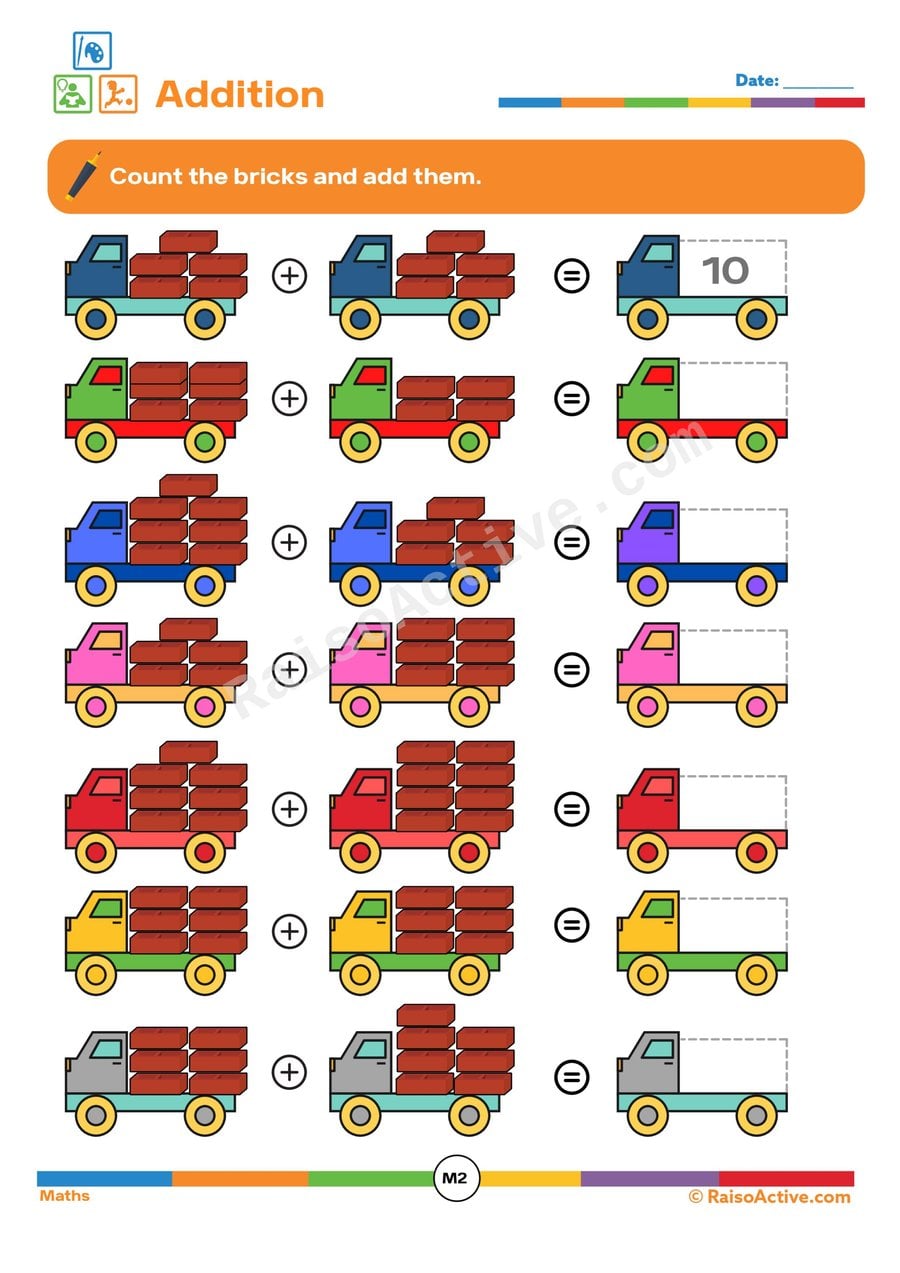
Truckload Addition Worksheet for Preschoolers
Ages 4-5 · Pre-KAges 4-5 · ReceptionAges 4-5 · LKGAges 4-5
Counting bricks loaded on two trucks and adding the totals together teaches children ages 4-5 basic addition through a playful, visual context that makes the abstract idea of combining quantities easier to grasp. This truck theme also keeps counting practice engaging for children who love vehicles, building both number sense and sustained attention.

Subtraction Worksheet: Counting and Subtracting for Preschoolers
Ages 4-5 · Pre-KAges 4-5 · ReceptionAges 4-5 · LKGAges 4-5
This worksheet introduces children ages 4-5 to the concept of subtraction as 'taking away' by having them count a group of objects, cross out the number indicated, and write how many remain. Building this concrete, visual understanding of subtraction before introducing abstract number sentences helps children grasp what the minus sign actually means rather than just memorizing a procedure.

Vowel Fun: Crossword and Word Fill-in Worksheet for Early Readers
Ages 4-6 · Pre-K–KindergartenAges 4-6 · Reception–Year 1Ages 4-6 · LKG–UKGAges 4-6
Solving a crossword and filling in sentence blanks gives children ages 4-6 practice spelling and reading simple words, while identifying the vowels in each completed word sharpens their awareness of these key building blocks of every syllable. Combining a puzzle format with vowel identification keeps the phonics practice feeling like a game rather than a drill.
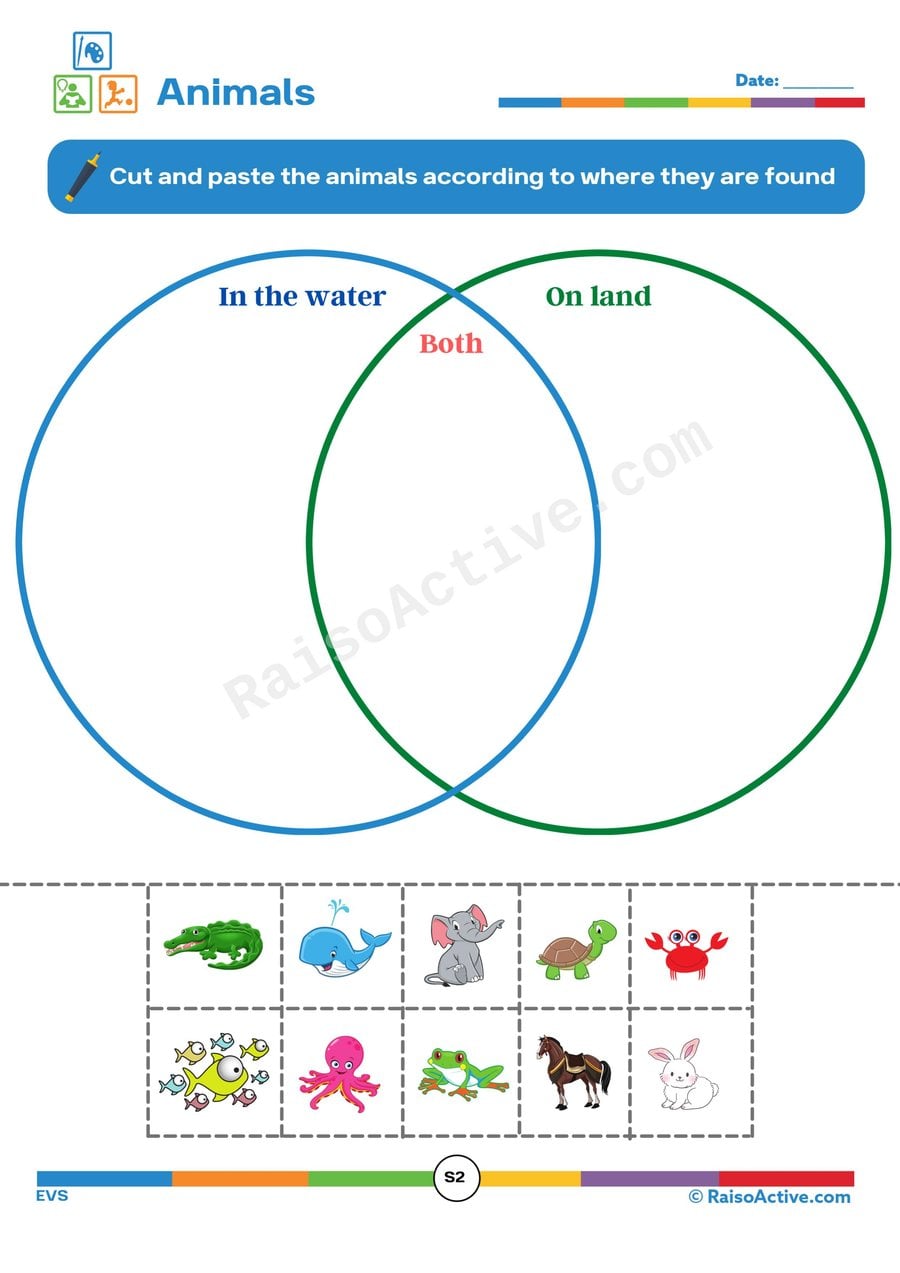
Animals: Sorting Worksheet for Preschoolers
Ages 3-5 · Preschool–Pre-KAges 3-5 · Nursery–ReceptionAges 3-5 · Nursery–LKGAges 3-5
This sorting worksheet has children ages 3-5 cut out animal pictures and paste each one into either a water or land habitat circle, building an early classification skill around where different animals naturally live. Sorting animals by habitat, rather than by type or size, introduces the idea that an animal's environment is a meaningful category on its own.
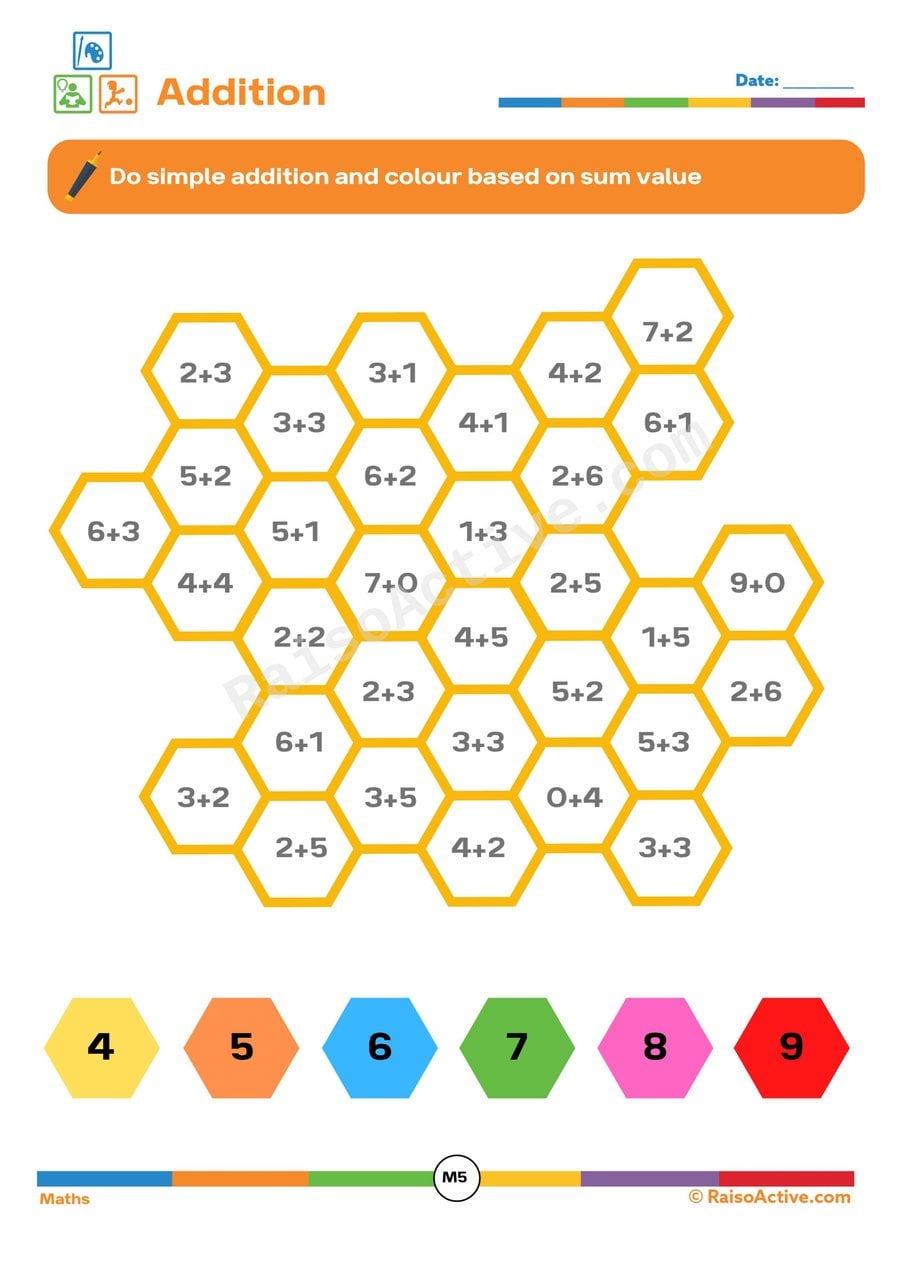
Addition Coloring Worksheet: Color by Sum!
Ages 4-6 · Pre-K–KindergartenAges 4-6 · Reception–Year 1Ages 4-6 · LKG–UKGAges 4-6
This worksheet combines addition practice with a color-by-number format, giving children ages 4-6 motivation to solve simple addition problems in each hexagon since the correct sum determines which color to use. Repeated, low-pressure practice adding small numbers builds fluency and speed, while the reveal of a colorful picture at the end rewards accurate calculation.
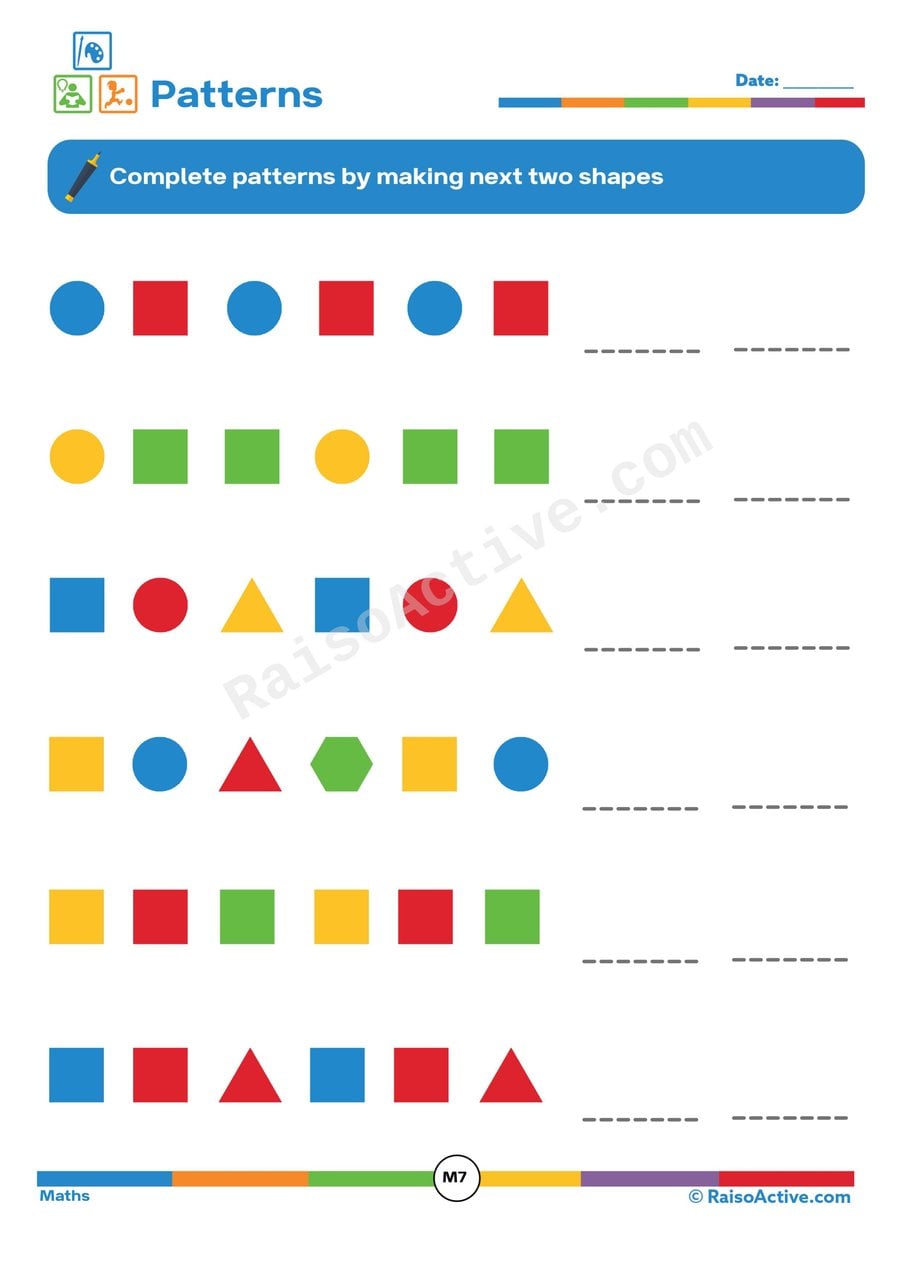
Shape Patterns Worksheet for Preschoolers
Ages 3-5 · Preschool–Pre-KAges 3-5 · Nursery–ReceptionAges 3-5 · Nursery–LKGAges 3-5
Children ages 3-5 build pattern recognition and shape identification together as they study a row of repeating 2D shapes and draw what comes next to continue the sequence. This combination trains visual analysis and prediction — skills that form the basis of algebraic thinking long before formal algebra is introduced.
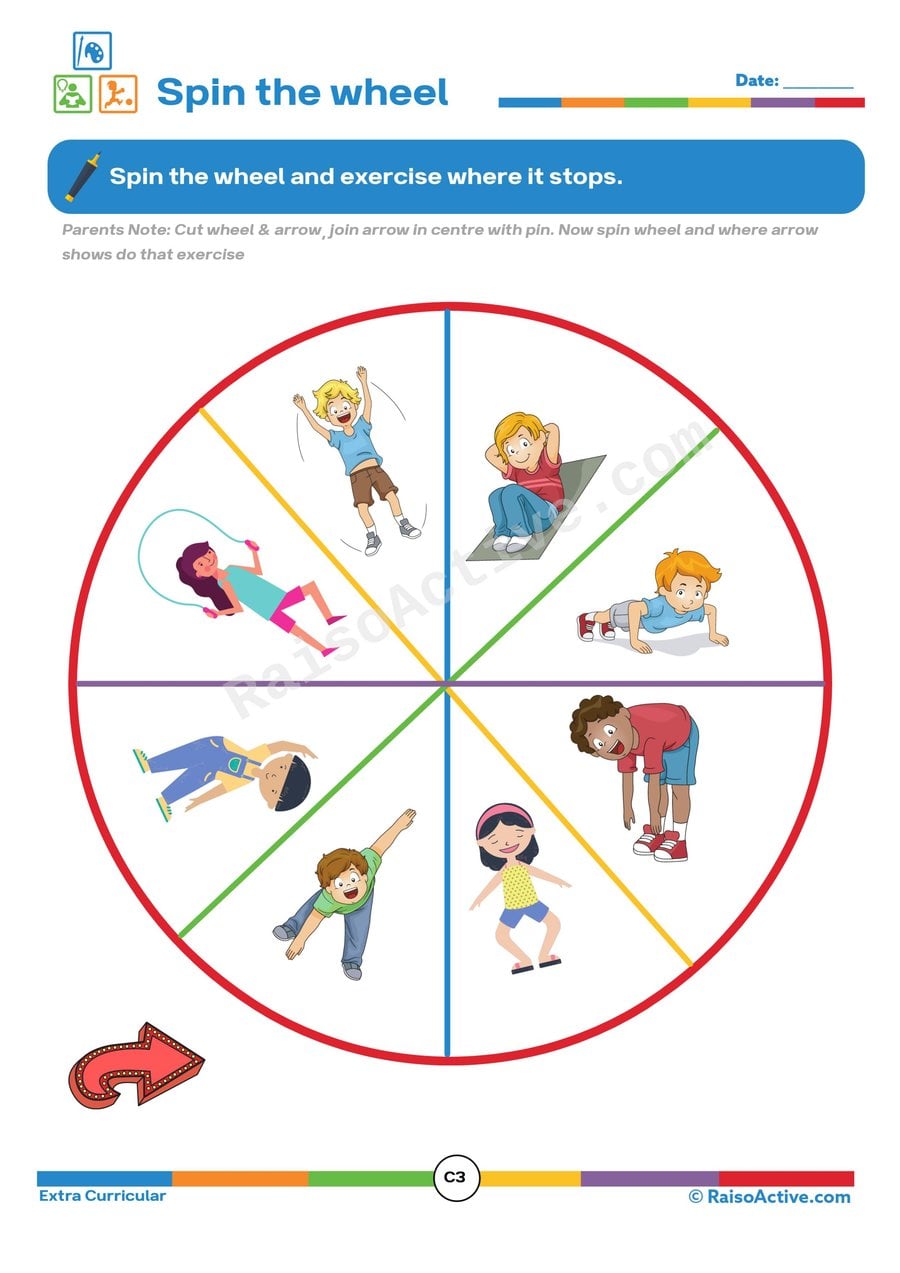
Spin the Wheel Exercise Worksheet for Kids
Ages 3-5 · Preschool–Pre-KAges 3-5 · Nursery–ReceptionAges 3-5 · Nursery–LKGAges 3-5
This spinner-based worksheet gets children ages 3-5 moving by having them build a simple spinning wheel, then perform whichever exercise the arrow lands on, combining following-directions practice with gross motor skill development like jumping, stretching, or hopping. Turning physical activity into a game with an element of chance also keeps young children more engaged than a straightforward list of exercises would.
Related worksheets

Fun Parent's Guide: Vocabulary, Phonics, and Animal Activities!
Ages 3-5 · Preschool–Pre-KAges 3-5 · Nursery–ReceptionAges 3-5 · Nursery–LKGAges 3-5
This parent's guide bundles together activities for vocabulary building, phonics practice, and animal-themed learning, giving children ages 3-5 varied exposure to language concepts like left and right, letter-object matching, and number sorting through hands-on play. Because the activities span several skill areas, the guide offers flexibility to match whatever your child is most interested in on a given day.

Parent's Guide: Fun Activities for Reading, Forces, and Movement!
Ages 3-5 · Preschool–Pre-KAges 3-5 · Nursery–ReceptionAges 3-5 · Nursery–LKGAges 3-5
This multi-part guide walks parents and children ages 3-5 through several linked activities in one sitting — practicing 3-letter words, arranging simple sentences, discussing cleanliness habits, and exploring forces and movement with magnets — giving a broad snapshot of early literacy and science skills in a single session. Covering reading and science side by side in one guide shows how everyday routines can double as learning moments.
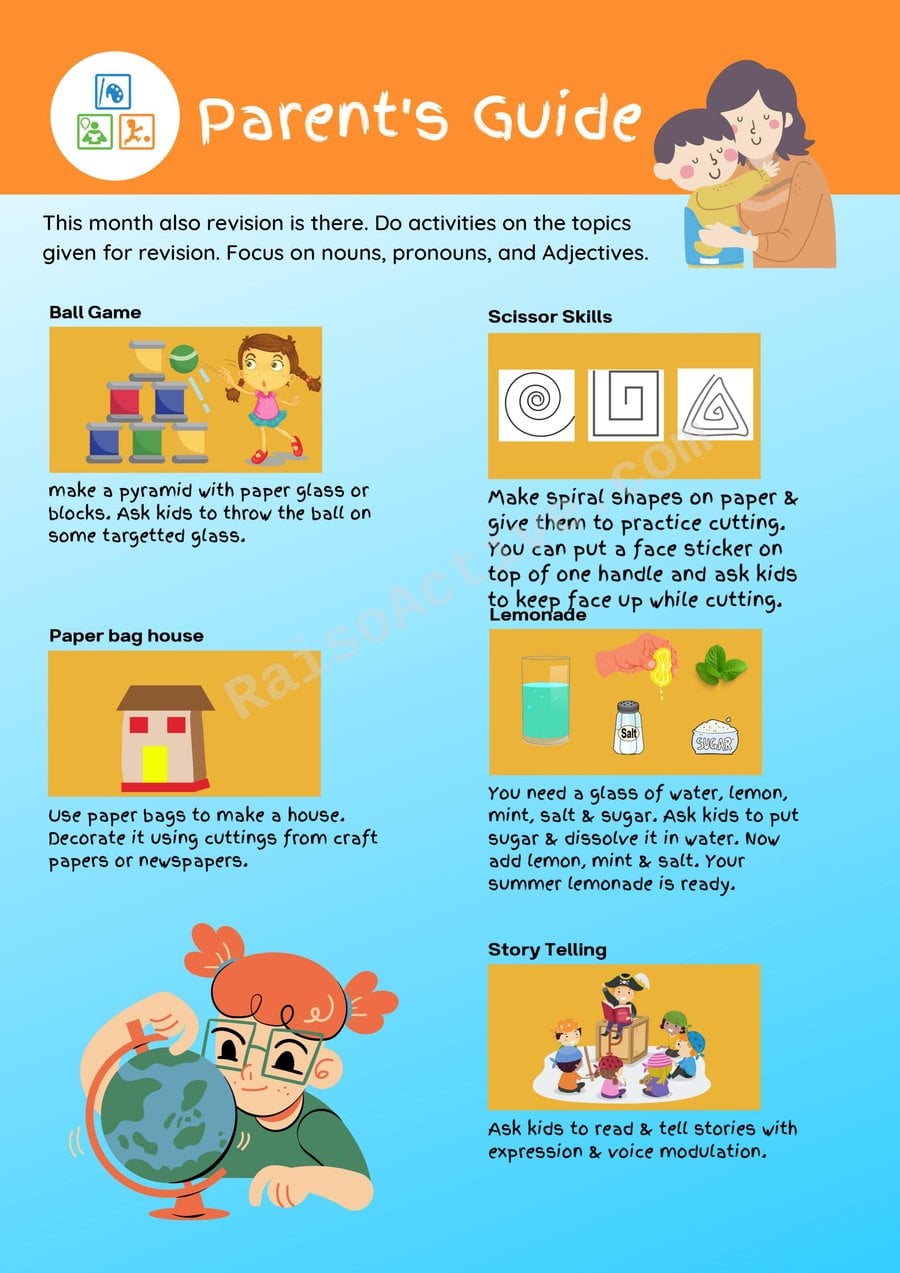
Parent's Guide: Fun Activities for Preschoolers!
Ages 3-5 · Preschool–Pre-KAges 3-5 · Nursery–ReceptionAges 3-5 · Nursery–LKGAges 3-5
This parent's guide offers a set of hands-on activities for children ages 3-5 that build early grammar awareness — recognizing nouns, pronouns, and adjectives — through play-based games and simple crafts rather than worksheets alone. Embedding grammar into games and sensory activities like lemonade-making keeps abstract language concepts concrete and memorable for young children.

Parent's Guide: Fun Activities for Early Learners
Ages 3-5 · Preschool–Pre-KAges 3-5 · Nursery–ReceptionAges 3-5 · Nursery–LKGAges 3-5
This parent's guide offers a set of activities spanning literacy, sequencing, and early addition, giving caregivers several ready-to-use options for building foundational skills through everyday play. For ages 3-5, rotating between different skill areas, like rhyming games and simple math card games, keeps early learning varied and prevents any one skill from feeling repetitive or tedious.
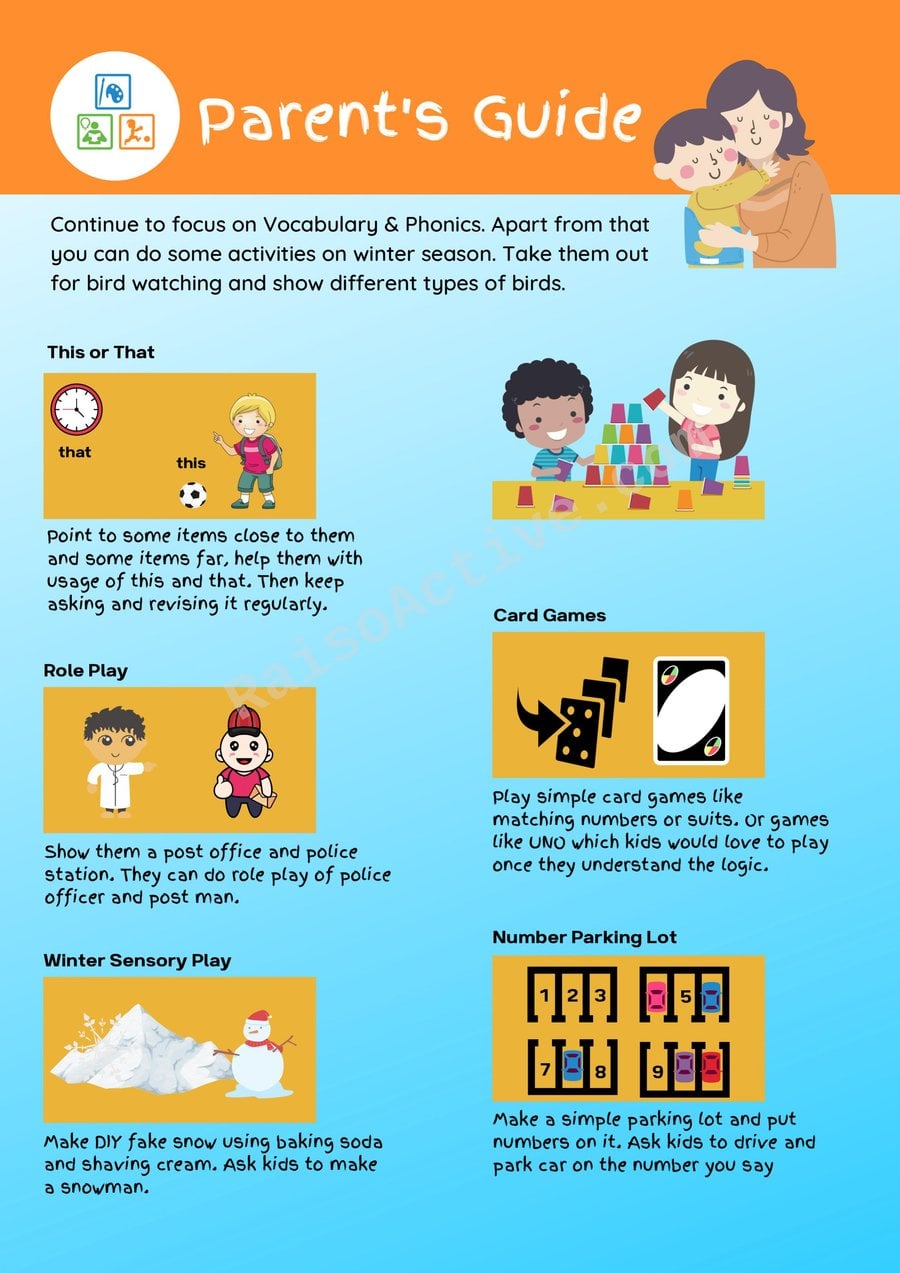
Winter Fun Activities for Kids: Parent's Guide
Ages 3-5 · Preschool–Pre-KAges 3-5 · Nursery–ReceptionAges 3-5 · Nursery–LKGAges 3-5
This parent's guide bundles several short winter-themed activities, from vocabulary games to sensory play, that build language skills, matching ability, and role-play confidence in one seasonal package. For ages 3-5, mixing modalities like talking, sorting, and hands-on sensory exploration keeps engagement high while reinforcing skills across different learning styles.

Parent's Guide: Fun Activities for Blend Words, Addition, and More!
Ages 3-5 · Preschool–Pre-KAges 3-5 · Nursery–ReceptionAges 3-5 · Nursery–LKGAges 3-5
This parent's guide brings together several early-learning skill areas — blend words, addition and subtraction, plant parts, and landforms — into one set of hands-on activities designed for children ages 3-5, giving families a ready toolkit for reinforcing what's covered across the individual worksheets. Rather than another printable page, it offers concrete ways to extend learning through sensory play, flashcards, and conversation, which suits how young children absorb new concepts most naturally. Having a single reference guide also helps parents connect several worksheet topics into one cohesive home-learning routine.

Parent's Guide: Fun Activities for Early Learning
Ages 3-5 · Preschool–Pre-KAges 3-5 · Nursery–ReceptionAges 3-5 · Nursery–LKGAges 3-5
This parent guide gathers hands-on activities around sentence building, creative art, and basic cooking skills, giving children practice with language, fine motor coordination, and following multi-step directions across very different, engaging contexts. Mixing sensory play like clay and painting with a simple cooking task keeps preschoolers motivated while quietly building vocabulary and sequencing skills.

Parent's Guide: Fun Activities for Gross Motor Development and Emotional Learning
Ages 3-5 · Preschool–Pre-KAges 3-5 · Nursery–ReceptionAges 3-5 · Nursery–LKGAges 3-5
This parent guide equips caregivers of children ages 3-5 with activities spanning gross motor skills, emotional expression, family concepts, shape recognition, and calendar awareness, using role play, finger puppets, and simple games. Combining physical movement with emotional vocabulary practice, such as making different facial expressions, helps children build body awareness and feelings vocabulary side by side. Rotating through several distinct activity types in one guide also keeps a young child's attention across a longer play session.
Guides for this topic

Sight Words by Age: The First 50 Words and How to Teach Them Without Flashcard Fatigue
Which sight words to teach first and why, the heart-word method, a read-trace-write-find routine, games, and a by-age table of typical sight-word progress.
How to Teach CVC Blending: A Step-by-Step Method That Works in Two Weeks
A step-by-step method for teaching CVC blending, covering continuous sounds, word families, common errors, and a 14-day plan that most children finish reading CVC words.
Phase 2 Phonics at Home: Sound Order, Blending Games, Worksheets
Phase 2 phonics at home: the five sound sets in order, oral blending, tricky words, a two-week routine, common mistakes, and free worksheets.
Reviews
Every worksheet for ages 3–5, no watermark
Members download the full library of 1,000+ worksheets and every activity pack without watermarks or daily limits. One year costs ₹999 in India or $20 elsewhere.
See membership plansOr download any worksheet free with a watermark (5 a day).