Truckload Addition Worksheet for Preschoolers
Counting bricks loaded on two trucks and adding the totals together teaches children ages 4-5 basic addition through a playful, visual context that makes the abstract idea of combining quantities easier to grasp. This truck theme also keeps counting practice engaging for children who love vehicles, building both number sense and sustained attention.
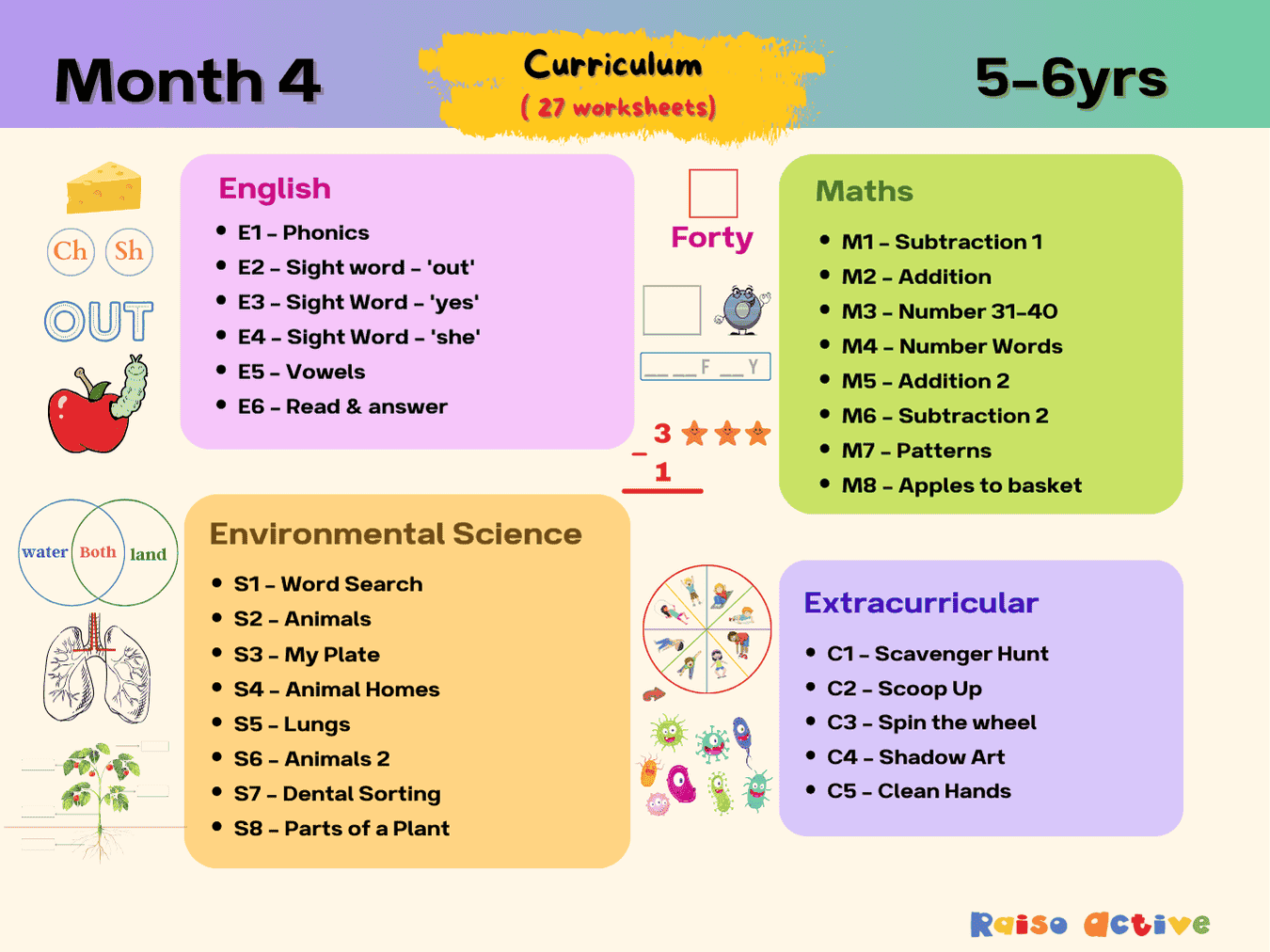
Part of the pack
Month 4: Learning & Development | Ages 5-6
This is page 11 of the pack. Ages 5-6 · KindergartenAges 5-6 · Year 1Ages 5-6 · UKGAges 5-6

Made for your child
Adding within 10, made for your child
A maths pack with your child's name in it: pictures that explain, practice at three levels, puzzles and story sums about them. Print a new set whenever they finish.
Make a maths packFree preview · free for members
Curriculum
- Addition > Addition Basics
How to use this worksheet
Have your child count the bricks on the first truck carefully, pointing to each one, and note the number. Then have them count the bricks on the second truck the same way. Ask them to add the two numbers together and write the total sum in the truck on the right side of the page, checking their answer by recounting if needed.
Materials needed
- Pencil
- Eraser
Extension activities
- 1Build small towers out of blocks and physically combine two towers to find the total.
- 2Use toy trucks and small objects to act out loading and adding bricks together.
- 3Draw your own two trucks with bricks and invite your child to create the addition problem.
- 4Roll two dice and add the numbers shown as a quick practice round.
- 5Play a pretend delivery game, adding up items loaded onto different vehicles.

Written by
Hemsweta Jain · Teacher Cheena
MBA and Early Childhood Educator, teaching since 2014 · Founder of RaisoActive, Mumbai
Every RaisoActive worksheet is designed and checked by the founder before publishing.
Published · Last reviewed
More from Month 4: Learning & Development | Ages 5-6
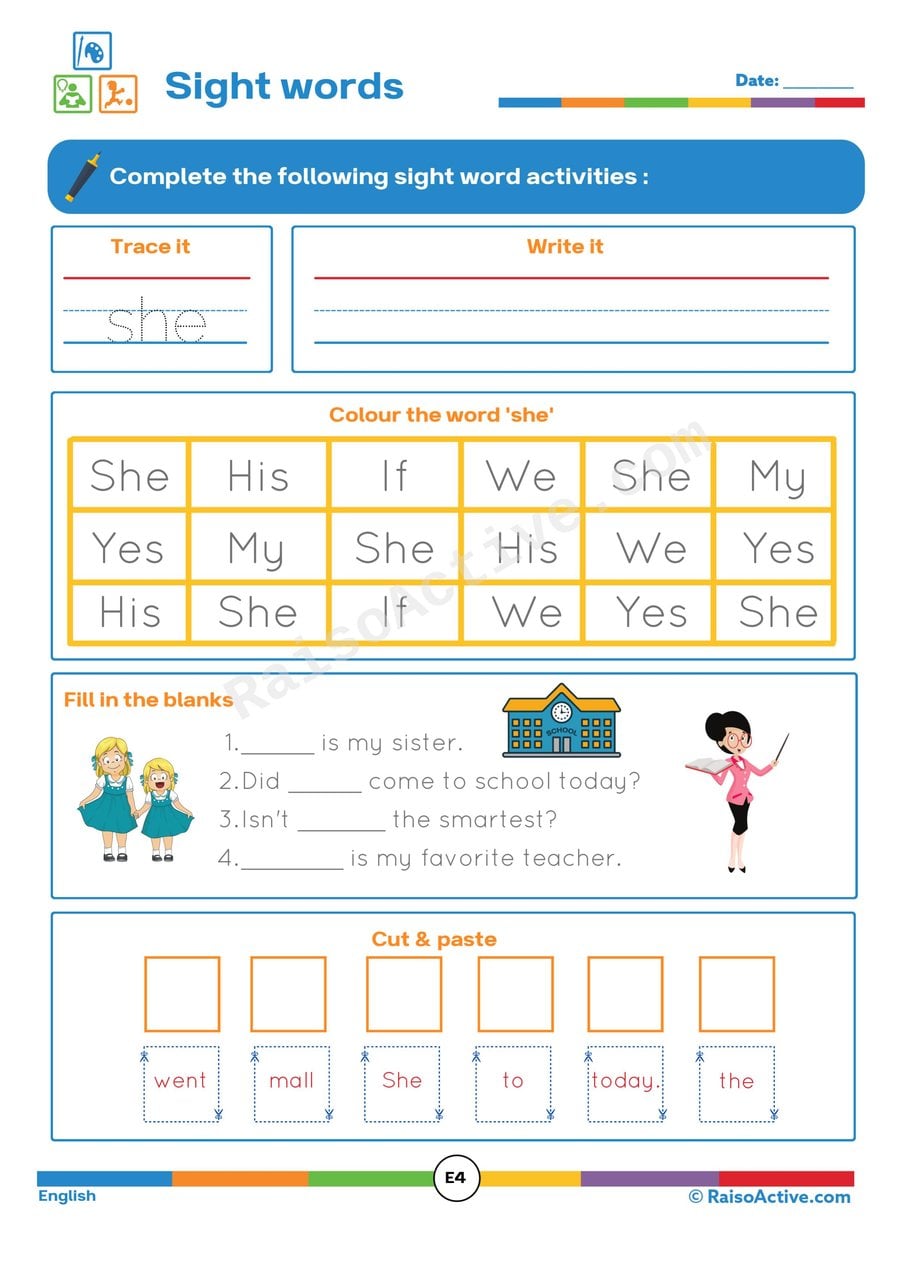
Sight Words Worksheet: Trace, Write, and Color 'She'!
Ages 4-6 · Pre-K–KindergartenAges 4-6 · Reception–Year 1Ages 4-6 · LKG–UKGAges 4-6
Tracing, writing, coloring, and completing sentences with the sight word 'she' gives children ages 4-6 repeated exposure to this common word across multiple activity types, which builds the instant recognition needed for reading fluency. The cut-and-paste sentence completion at the end adds sentence-level context, helping children see the word used meaningfully rather than in isolation.

Animal Homes Matching Worksheet for Preschoolers
Ages 3-5 · Preschool–Pre-KAges 3-5 · Nursery–ReceptionAges 3-5 · Nursery–LKGAges 3-5
This worksheet helps children ages 3-5 learn where different animals live by matching each animal to its correct home, such as a bird to a nest or a bear to a cave, then writing the home's name. Understanding that animals have specific habitats suited to their needs is an early life-science concept that also builds descriptive vocabulary.
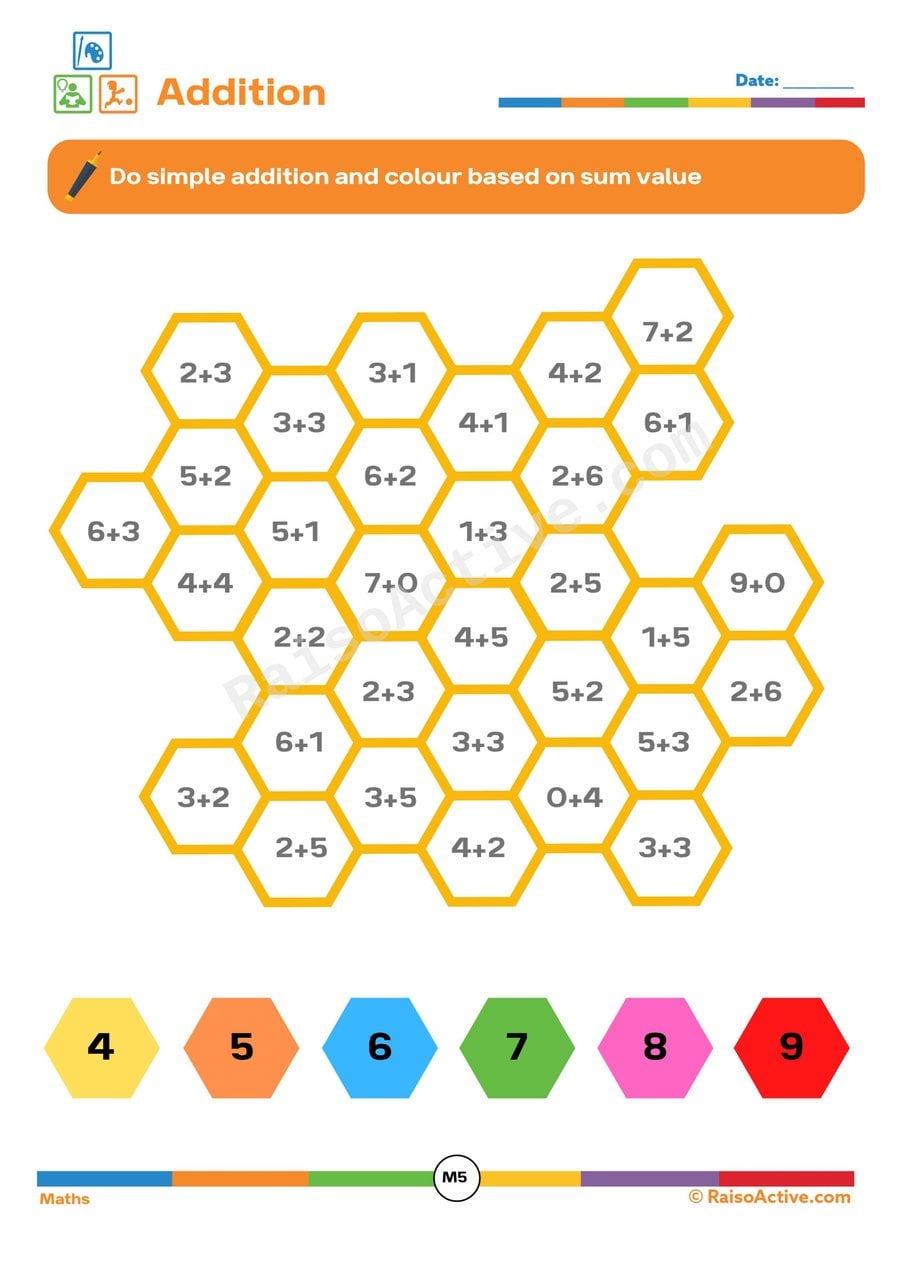
Addition Coloring Worksheet: Color by Sum!
Ages 4-6 · Pre-K–KindergartenAges 4-6 · Reception–Year 1Ages 4-6 · LKG–UKGAges 4-6
This worksheet combines addition practice with a color-by-number format, giving children ages 4-6 motivation to solve simple addition problems in each hexagon since the correct sum determines which color to use. Repeated, low-pressure practice adding small numbers builds fluency and speed, while the reveal of a colorful picture at the end rewards accurate calculation.

Happy or Sad Teeth: Dental Sorting Worksheet for Kids
Ages 3-5 · Preschool–Pre-KAges 3-5 · Nursery–ReceptionAges 3-5 · Nursery–LKGAges 3-5
This sorting worksheet has children ages 3-5 cut out pictures of foods and place them next to either a happy or sad tooth, teaching which foods support healthy teeth (like fruits, vegetables, and dairy) and which contribute to cavities (like candy and soda). Making the effects of food choices visible through a simple happy/sad symbol helps young children connect everyday eating decisions to a health outcome they can understand.
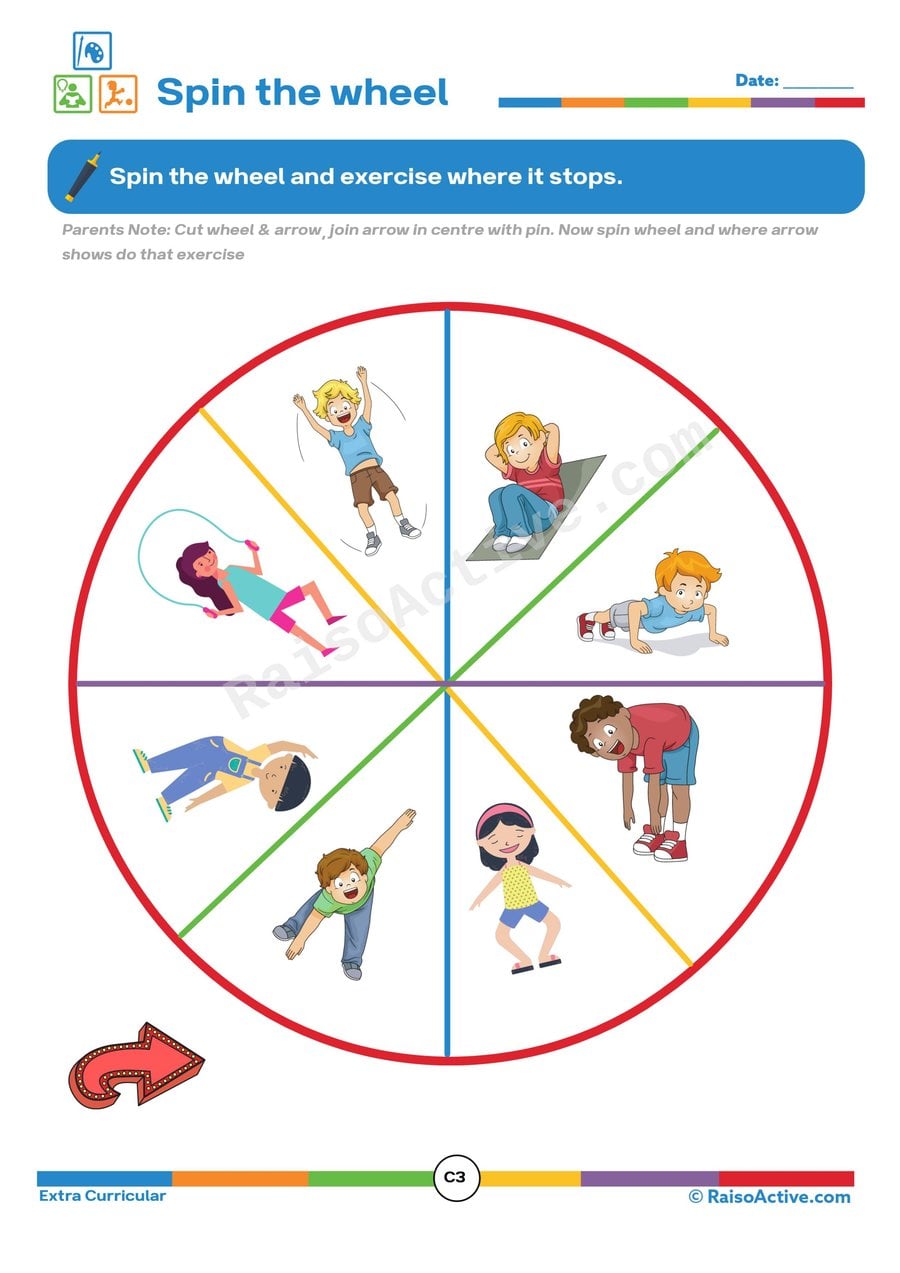
Spin the Wheel Exercise Worksheet for Kids
Ages 3-5 · Preschool–Pre-KAges 3-5 · Nursery–ReceptionAges 3-5 · Nursery–LKGAges 3-5
This spinner-based worksheet gets children ages 3-5 moving by having them build a simple spinning wheel, then perform whichever exercise the arrow lands on, combining following-directions practice with gross motor skill development like jumping, stretching, or hopping. Turning physical activity into a game with an element of chance also keeps young children more engaged than a straightforward list of exercises would.

Living and Non-Living Things Word Search Worksheet for Kids
Ages 4-6 · Pre-K–KindergartenAges 4-6 · Reception–Year 1Ages 4-6 · LKG–UKGAges 4-6
This word search worksheet has children ages 4-6 hunt for and identify living and non-living things, then sort them by color-coding — living things in red and non-living things in blue — building both spelling recognition and an early science classification skill. Distinguishing living from non-living is one of the foundational categories in early science education, underlying later lessons about biology and the natural world.
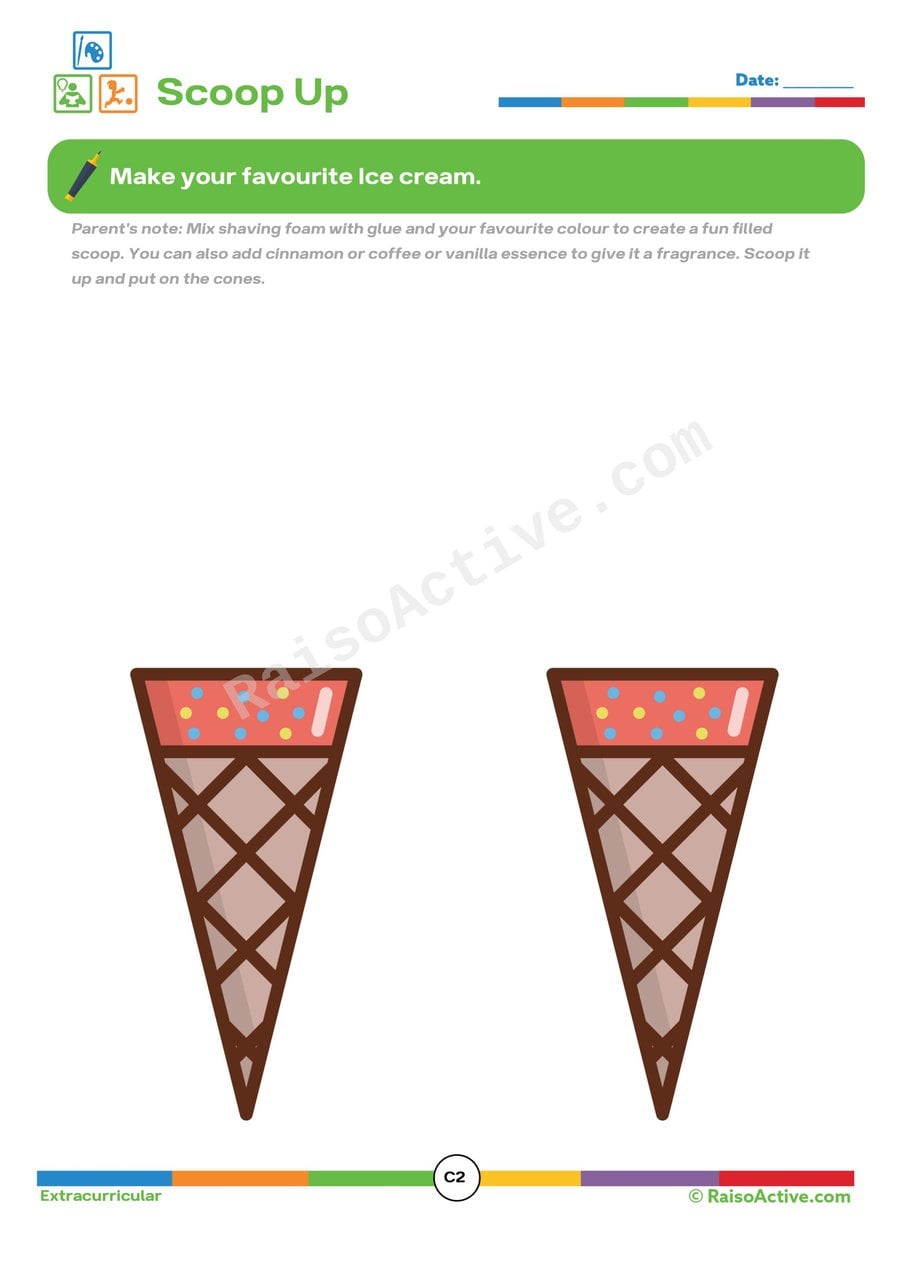
Make Your Own Ice Cream Worksheet for Kids
Ages 3-5 · Preschool–Pre-KAges 3-5 · Nursery–ReceptionAges 3-5 · Nursery–LKGAges 3-5
This sensory craft activity has children ages 3-5 follow a multi-step sequence — mixing shaving foam and glue with color, adding scent, and building an ice cream cone — building both the ability to follow sequential instructions and fine motor skill through mixing, spreading, and shaping the 'ice cream' scoop. Exploring an unusual texture like colored shaving foam also supports sensory development in a low-pressure, playful way.

Vowel Fun: Crossword and Word Fill-in Worksheet for Early Readers
Ages 4-6 · Pre-K–KindergartenAges 4-6 · Reception–Year 1Ages 4-6 · LKG–UKGAges 4-6
Solving a crossword and filling in sentence blanks gives children ages 4-6 practice spelling and reading simple words, while identifying the vowels in each completed word sharpens their awareness of these key building blocks of every syllable. Combining a puzzle format with vowel identification keeps the phonics practice feeling like a game rather than a drill.
Related worksheets
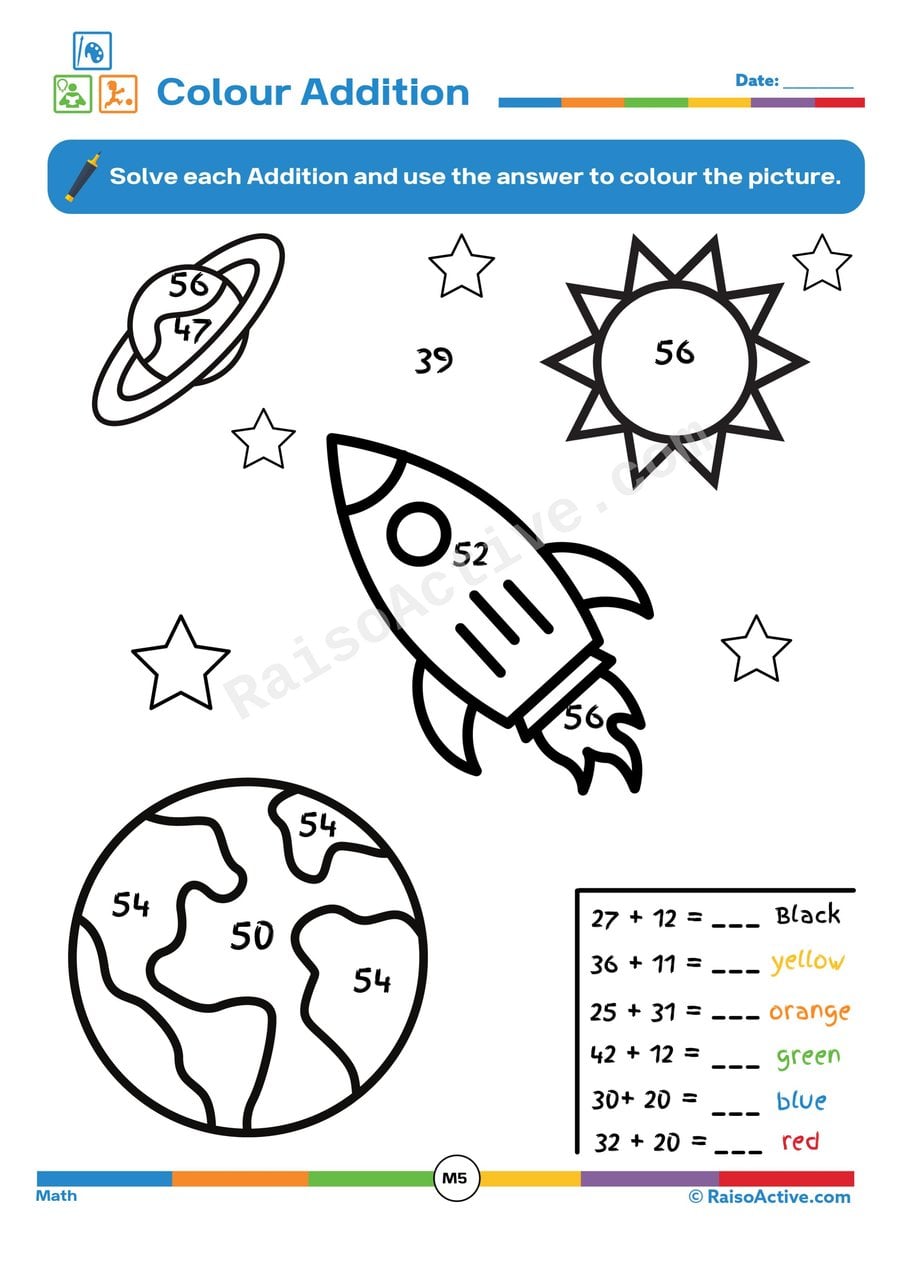
Color Addition Worksheet: Space Adventure!
Ages 5-7 · Kindergarten–Grade 1Ages 5-7 · Year 1–Year 2Ages 5-7 · UKG–Class 1Ages 5-7
This worksheet builds addition fluency by having children solve simple equations and then use each answer to determine which color to use in a corresponding section of a space-themed picture. For five- to seven-year-olds, this color-by-number format adds motivation to solve each problem accurately, since a wrong answer means the wrong color goes in the wrong spot and the final picture won't come together correctly.
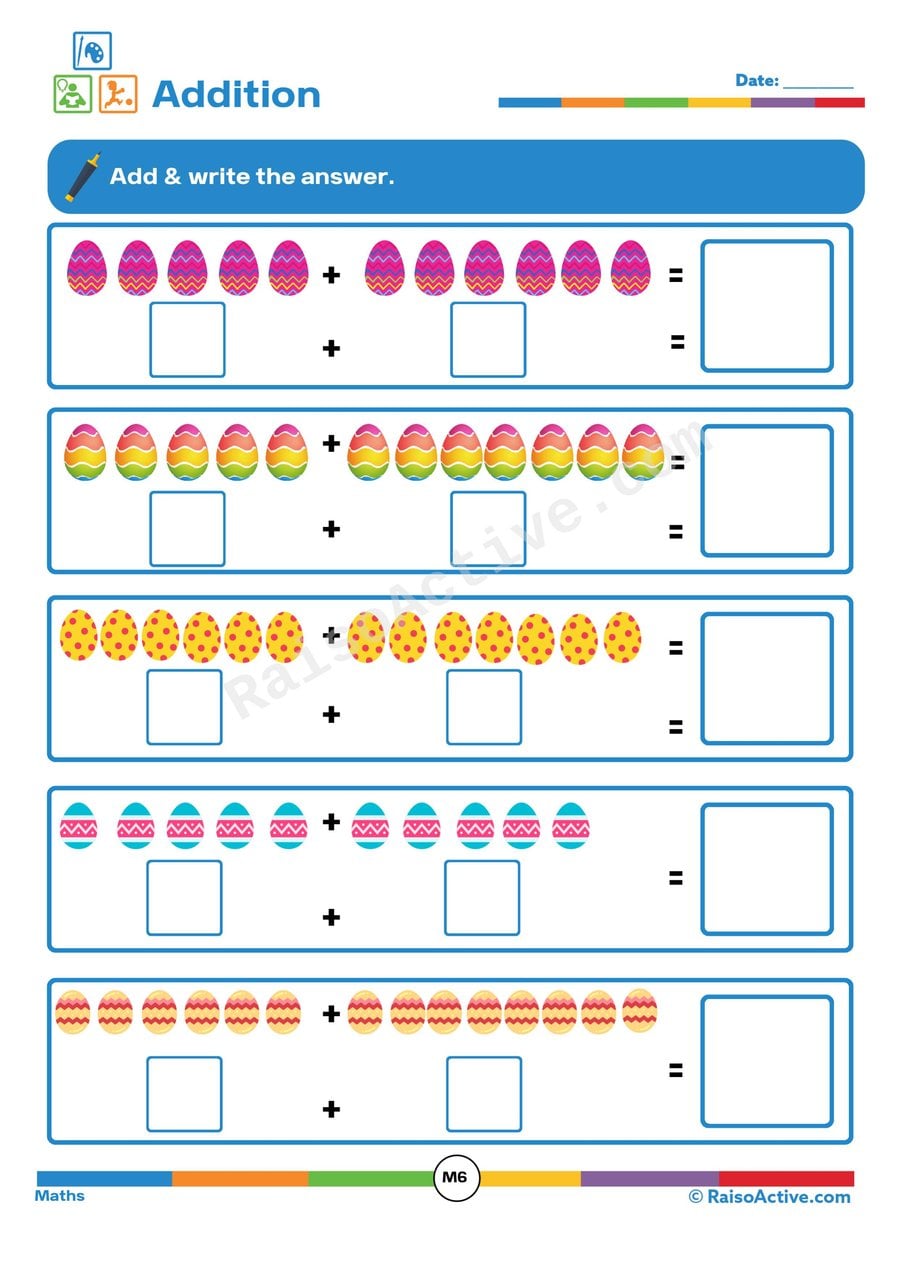
Easter Egg Addition Worksheet for Preschoolers
Ages 4-5 · Pre-KAges 4-5 · ReceptionAges 4-5 · LKGAges 4-5
Counting groups of Easter eggs and combining them builds early addition sense for children ages 4-5, showing that putting two smaller groups together creates one larger total. Because the eggs are grouped visually rather than shown as bare numerals, children practice one-to-one counting alongside the abstract addition symbol, connecting the concrete and written forms of the same idea.
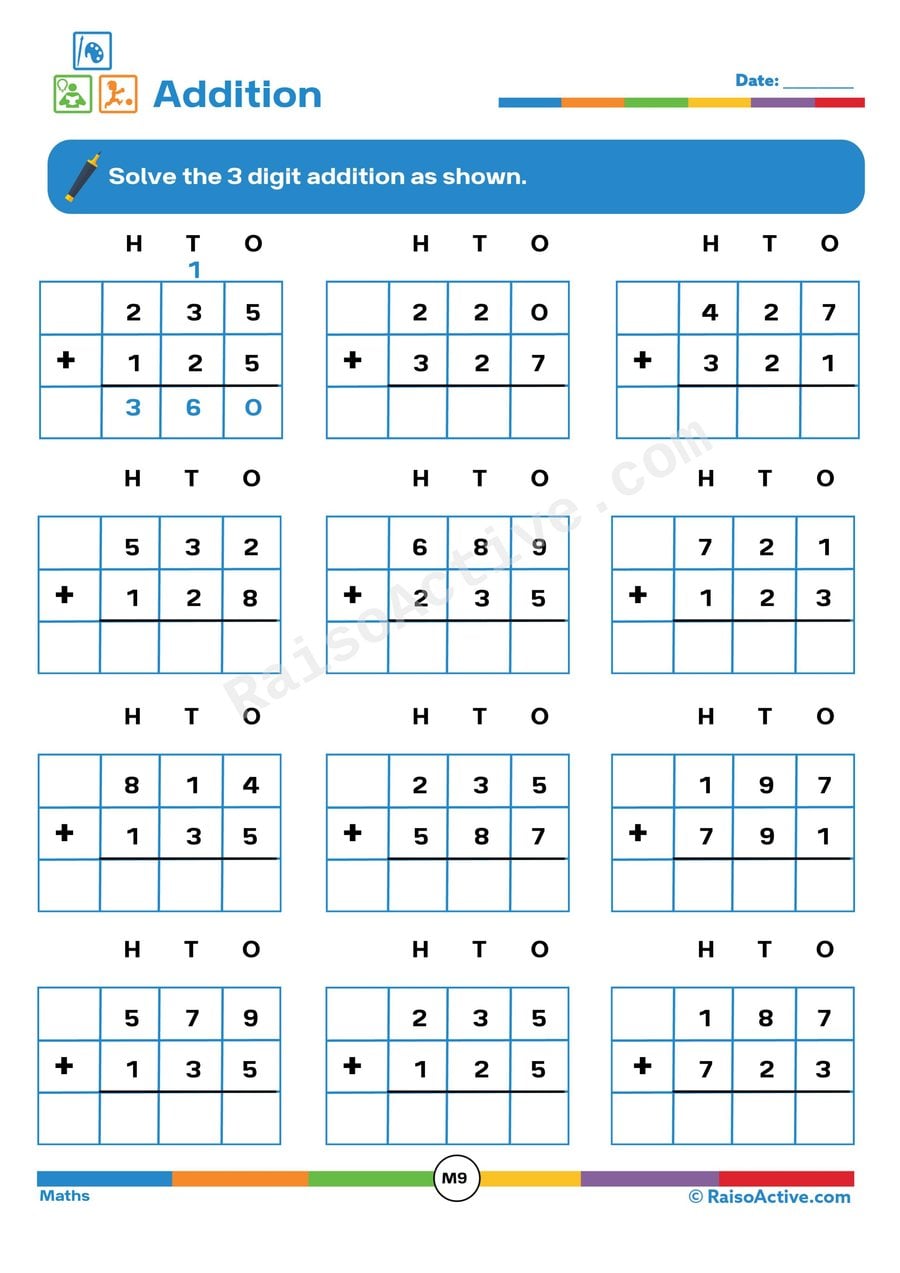
3-Digit Addition Worksheet for Kids
Ages 6-8 · Grade 1–Grade 2Ages 6-8 · Year 2–Year 3Ages 6-8 · Class 1–Class 2Ages 6-8
Adding two three-digit numbers requires children to work through the ones, tens, and hundreds columns in order and understand how a sum in one column can carry over into the next, a significant step up from single-digit addition. For ages six to eight, mastering this column-based process builds the procedural fluency needed for all future multi-digit arithmetic.
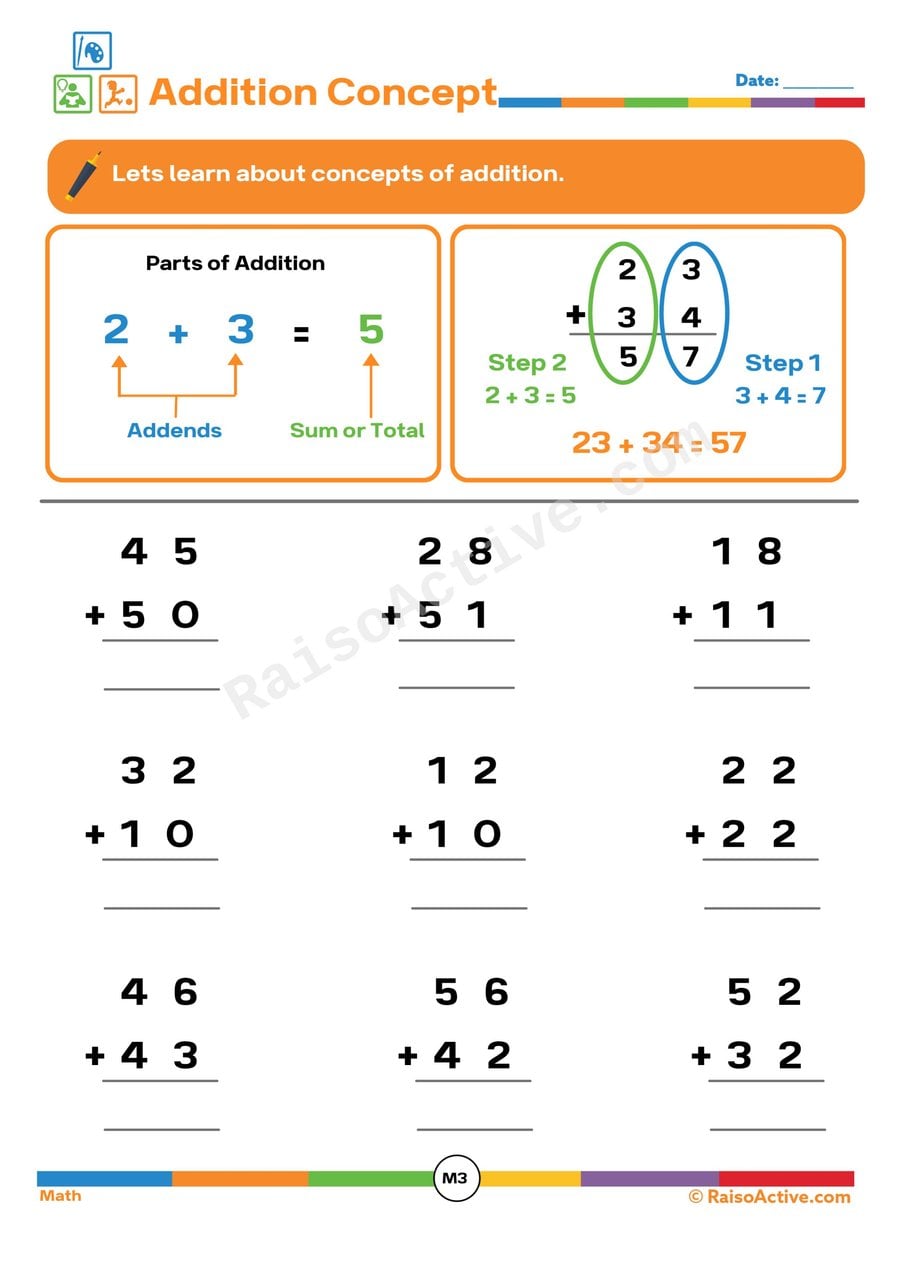
Addition Concepts Worksheet for Preschoolers
Ages 4-6 · Pre-K–KindergartenAges 4-6 · Reception–Year 1Ages 4-6 · LKG–UKGAges 4-6
Preschoolers ages 4-6 build early number sense by visually combining two small groups into one total, the concrete foundation every later addition fact depends on. Seeing objects physically joined together, rather than just numbers on a page, helps children grasp that addition means 'putting together' before they ever memorize a sum.
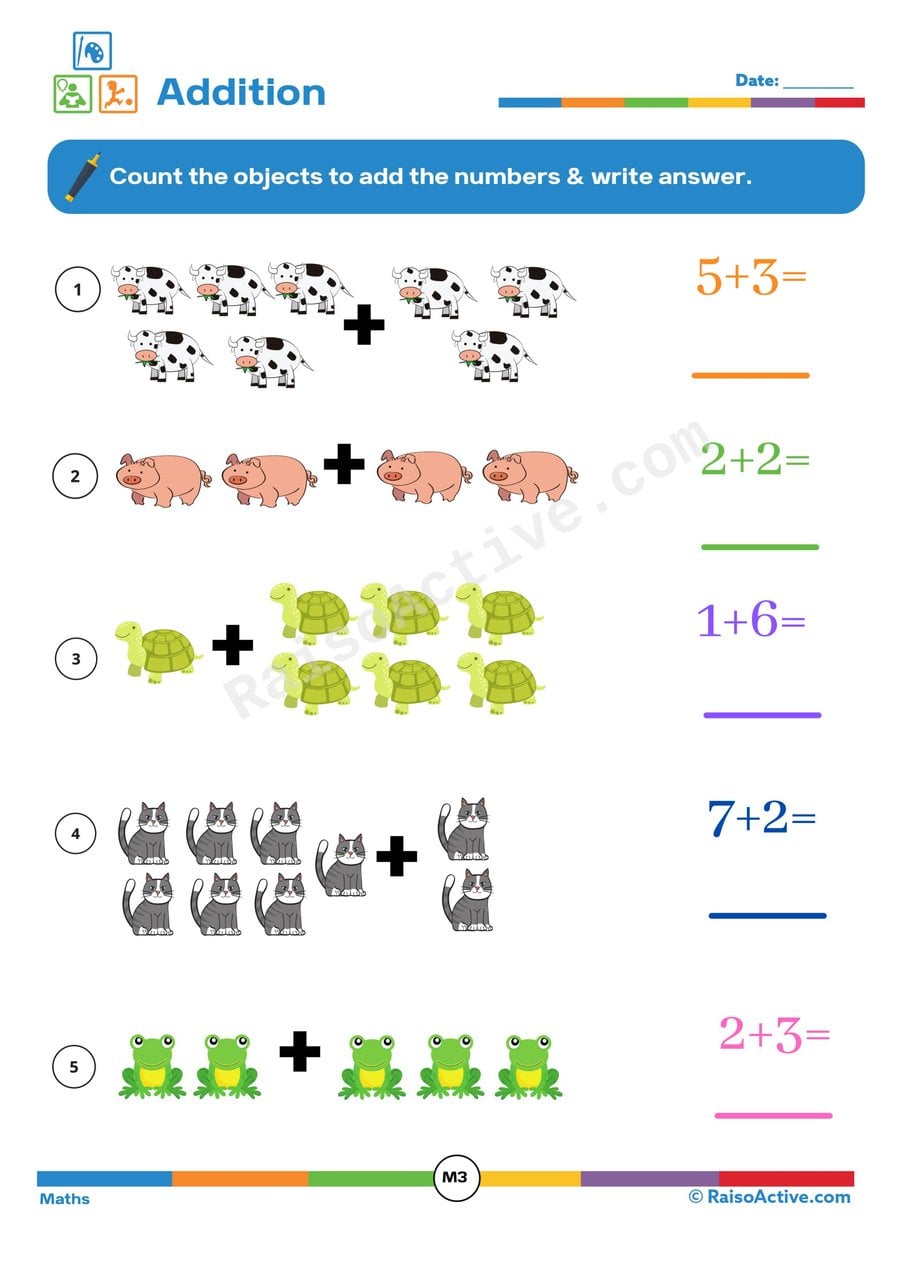
Addition Worksheet: Count and Add Objects!
Ages 4-6 · Pre-K–KindergartenAges 4-6 · Reception–Year 1Ages 4-6 · LKG–UKGAges 4-6
Counting two groups of pictured objects and writing their combined total introduces children ages 4-6 to addition as a concrete, visual process before they work with numbers alone. Because the objects are drawn out rather than represented only by digits, children can physically point and count to verify their answer, building confidence in early math reasoning. Repeated practice with this picture-based format helps children internalize what a plus sign means before they're expected to solve equations without visual support.

Mental Addition Worksheet for Kids: Practice Adding Numbers!
Ages 4-6 · Pre-K–KindergartenAges 4-6 · Reception–Year 1Ages 4-6 · LKG–UKGAges 4-6
This worksheet builds mental math fluency by asking children to solve simple addition problems in their heads rather than relying on counters or drawings, strengthening the internal number sense that supports faster, more confident arithmetic. For ages 4-6, moving from concrete counting toward mental calculation is a significant milestone that sets the foundation for later multi-digit addition.
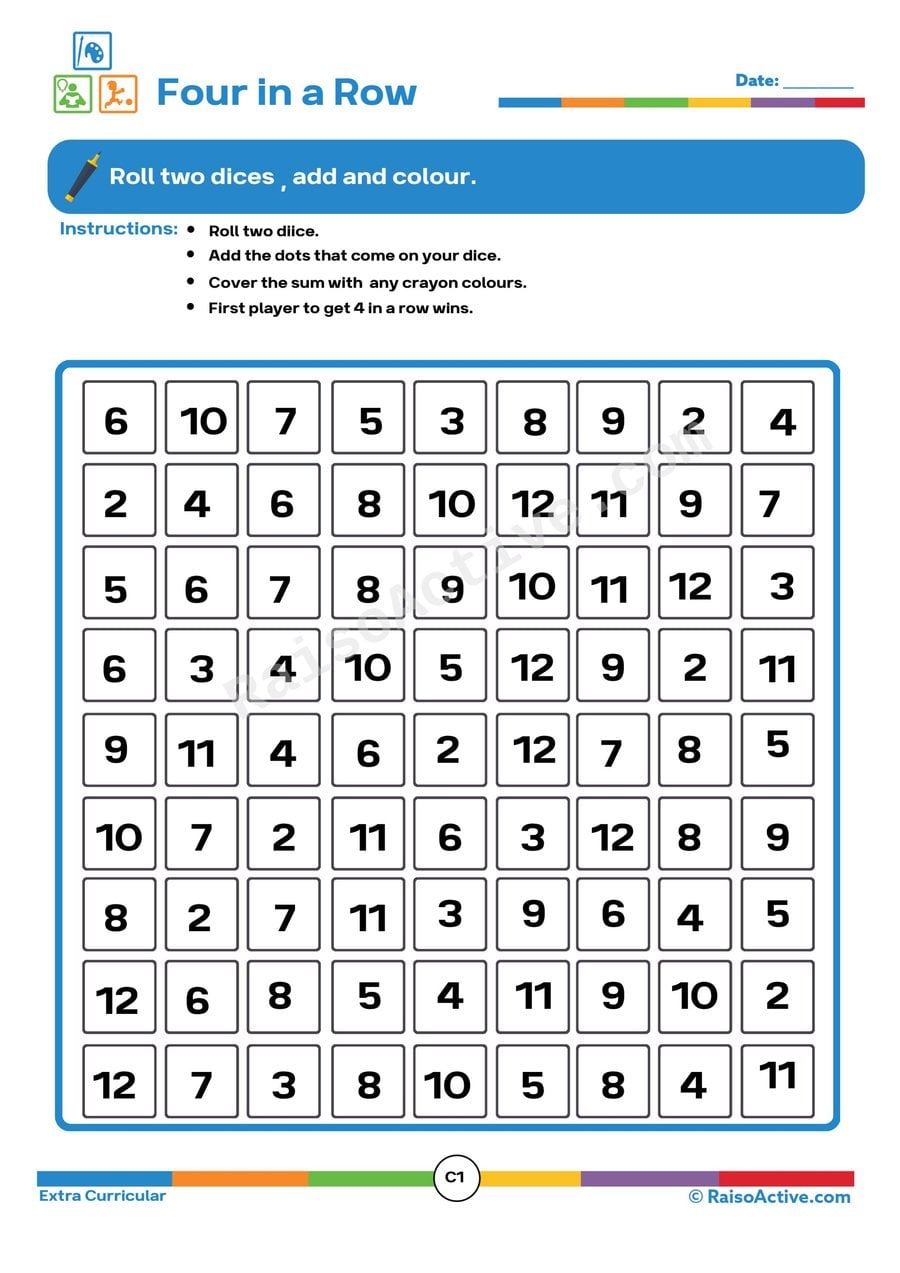
Four in a Row: Dice Game Worksheet for Kids
Ages 4-6 · Pre-K–KindergartenAges 4-6 · Reception–Year 1Ages 4-6 · LKG–UKGAges 4-6
Rolling two dice and adding the results together gives children ages 4-6 repeated, low-pressure practice with basic addition facts, since each turn presents a new combination to solve. Coloring the matching sum on a game grid turns arithmetic into an active, motivating game rather than a worksheet of isolated problems, and working toward four squares in a row adds a strategic element as children start to notice which sums appear more often. This game format also builds number recognition, since children must locate their calculated sum among many printed numbers on the grid.

Coloring Fun: Addition Worksheet for Preschoolers
Ages 4-6 · Pre-K–KindergartenAges 4-6 · Reception–Year 1Ages 4-6 · LKG–UKGAges 4-6
Solving each addition problem reinforces single-digit sums, while matching the answer to a color-by-number key trains children ages 4-6 to connect a symbol — the number — to a category — the color, an early bridge between arithmetic and following multi-step visual instructions.
Guides for this topic

Number Formation Rhymes 0–9 and How to Fix Reversals
Original number formation rhymes for 0–9, the correct stroke order for each digit, why 3, 5 and 7 get reversed most often, and multisensory fixes that work.

UKG Syllabus Explained: English, Maths and EVS Month by Month
What UKG classes typically cover in English, maths and EVS, month by month, aligned to NEP 2020, with ways to support at home and signs your child is behind.

Christmas and Winter Activities That Combine Fun and Learning: Creating Magical Educational Experiences
Discover Christmas and winter activities that combine festive fun with real learning. Crafts, counting, literacy, and printable worksheets for ages 2 to 8 — perfect for home and school.
Reviews
Every worksheet for ages 4–5, no watermark
Members download the full library of 1,000+ worksheets and every activity pack without watermarks or daily limits. One year costs ₹999 in India or $20 elsewhere.
See membership plansOr download any worksheet free with a watermark (5 a day).