
Make Your Own Ice Cream Worksheet for Kids
This sensory craft activity has children ages 3-5 follow a multi-step sequence — mixing shaving foam and glue with color, adding scent, and building an ice cream cone — building both the ability to follow sequential instructions and fine motor skill through mixing, spreading, and shaping the 'ice cream' scoop. Exploring an unusual texture like colored shaving foam also supports sensory development in a low-pressure, playful way.
Part of the pack
Month 4: Learning & Development | Ages 5-6Curriculum
How to use this worksheet
Set out the shaving foam, glue, and coloring materials on a covered surface to protect against mess. Guide your child to mix a small amount of shaving foam with glue and their chosen color until it forms a scoopable texture. If using cinnamon or vanilla essence, add a small amount and mix it in for scent. Help your child scoop the mixture onto a paper cone shape to complete their pretend ice cream.
Materials needed
- Shaving foam
- Glue
- Coloring materials (crayons, markers)
- Cinnamon or vanilla essence (optional)
Extension activities
- •Create different flavors of pretend ice cream using different colors and scents for each one.
- •Draw a picture of your favorite real ice cream flavor next to the finished craft.
- •Make a list of real ice cream ingredients and compare them to the craft materials used.
- •Set up a pretend ice cream shop at home, taking turns being the customer and the scooper.
- •Add texture toppings, like glued-on paper sprinkles or pompom 'cherries,' to the finished cone.
Tips for parents and teachers
Encourage children to be creative with their colors and toppings, since this activity is a great way to explore textures and scents rather than aiming for a realistic-looking ice cream. Protect surfaces and clothing beforehand, since shaving foam mixtures can be messy, and consider doing this activity outside or over an easy-to-wipe surface. Supervise closely if any small embellishments could be a choking hazard for younger siblings nearby.

Written by
Hemsweta Jain · Teacher Cheena
MBA and Early Childhood Educator, teaching since 2014 · Founder of RaisoActive, Mumbai
Every RaisoActive worksheet is designed and checked by the founder before publishing.
Published · Last reviewed
Related worksheets

Stick Man Emotions Worksheet: Happy, Sad, Angry, and Surprised!
Children ages 4-6 practice reading facial expressions on this worksheet, matching stick-figure faces to their correct emotion labels by noticing details like mouth shape and eyebrow position. This strengthens emotional literacy — the ability to name and recognize feelings in others — which supports empathy and smoother social interactions as children move into more group play and classroom settings.
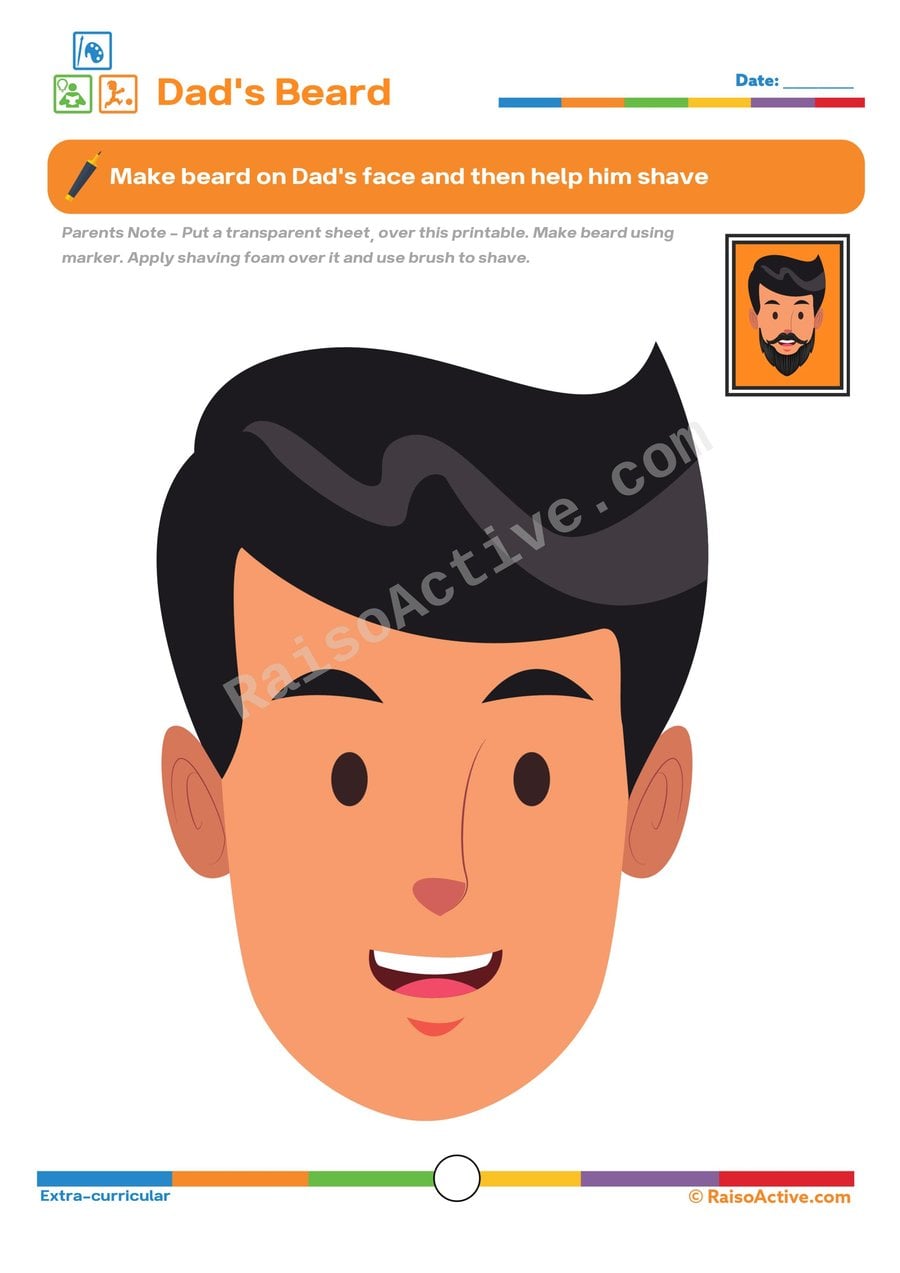
Dad's Beard: A Fun Shaving Activity for Kids!
This playful pretend-shaving activity builds fine motor control and bilateral coordination in children ages 3-5, as they draw a beard with a marker and then 'shave' it away using foam and a brush in careful, controlled strokes. It also introduces a simple science idea — that shaving foam can be applied and removed in layers — while giving children a hands-on, sensory way to imitate an everyday grown-up routine.

Soap & Pepper Science Experiment Worksheet for Preschoolers
This simple experiment introduces children ages 3-5 to the basic science of surface tension and how soap breaks it, using pepper flakes sprinkled on water as a visual demonstration. Watching the pepper scatter away the instant soap touches the water gives children a concrete, memorable example of cause and effect, an early building block for scientific thinking.
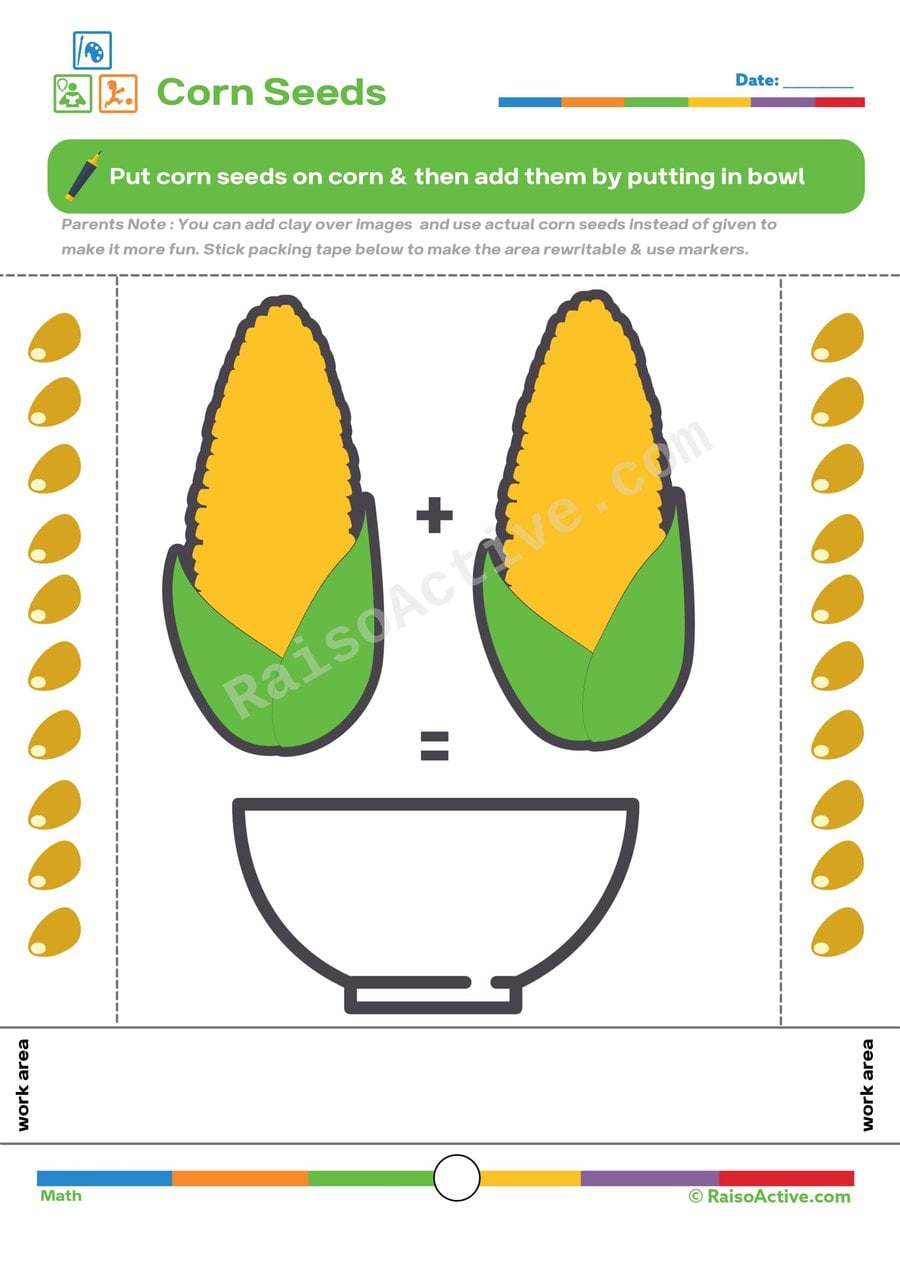
Corn Seed Addition Worksheet for Preschoolers
Counting corn seeds on two ears of corn and combining them into one total teaches children ages 3-5 the core concept of addition as joining groups together, using a concrete, countable image rather than abstract numerals alone. This worksheet also builds one-to-one correspondence, since accurate addition depends on touching or pointing to each seed exactly once while counting.

3D Shapes Worksheet: Explore and Learn with Playdough!
This worksheet teaches children ages 4-6 the basic components of 3D shapes — vertices, edges, and faces — by having them count each feature on shapes like cubes and cones, then build matching shapes out of playdough. Physically constructing a shape and counting its parts by hand builds a far deeper understanding of geometry than looking at flat pictures alone, since children can touch and rotate what they've made.
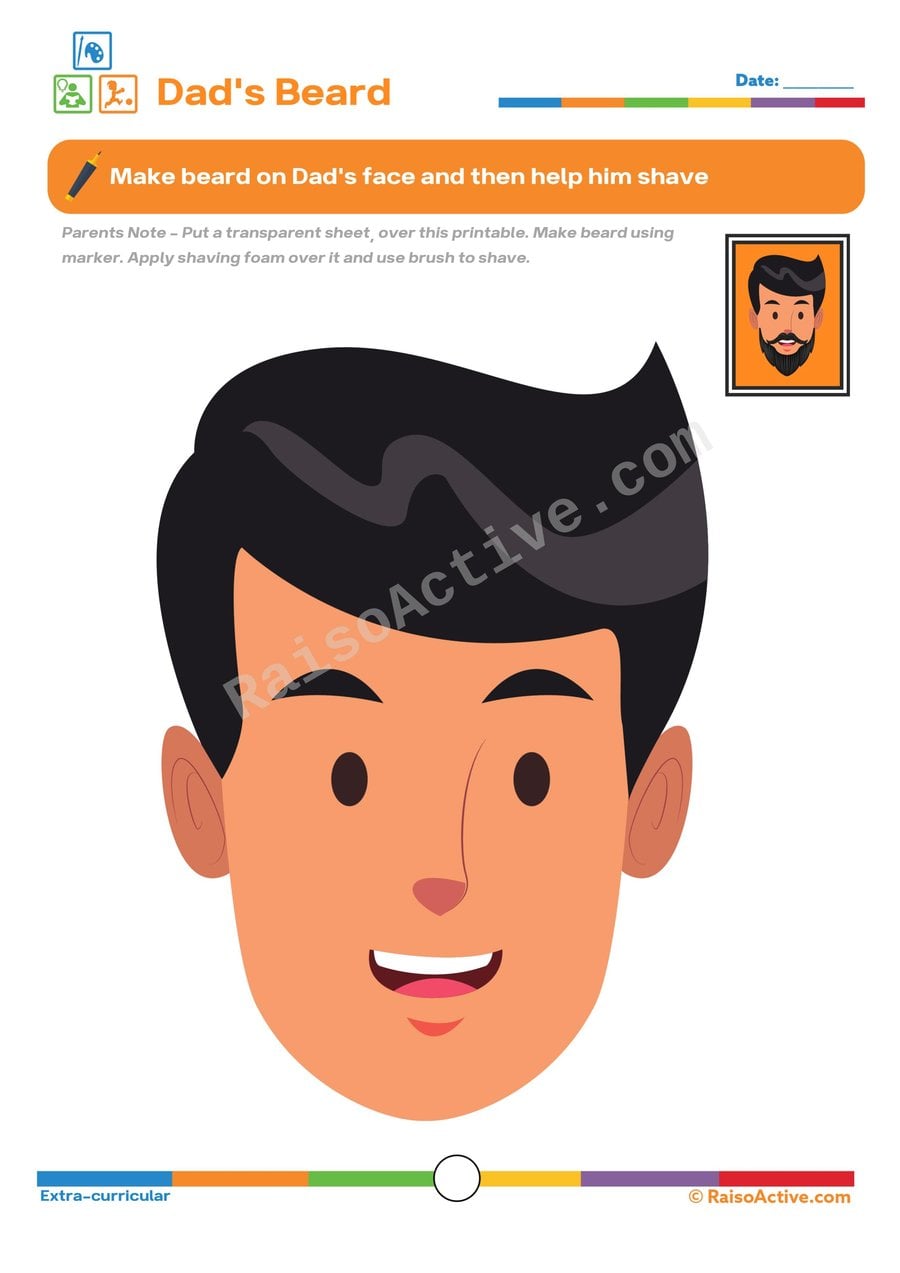
Dad's Beard: A Fun Shaving Activity for Kids!
This sensory pretend-shaving activity builds fine motor precision and hand control in children ages 3-5, as they draw a beard with a marker and then carefully brush away shaving foam in controlled strokes. Beyond motor skills, it gives children a playful, low-stakes way to imitate a grown-up grooming routine they've likely observed at home.

Soap & Pepper Science Experiment Worksheet for Preschoolers
This hands-on demonstration shows children ages 3-5 how soap disrupts water's surface tension, using floating pepper as a simple, visible indicator of the change. Because the reaction happens instantly and dramatically, it gives young children a strong, memorable first experience with predicting an outcome and then observing whether their prediction was right.

Happy Easter Coloring Card Worksheet for Preschoolers
Coloring the Easter egg and bunny images on this fold-into-a-card worksheet gives children ages 3-5 practice with controlled crayon strokes and color choice, while the act of turning their artwork into a card for someone else introduces an early sense of purpose and gift-giving. Because the finished piece becomes a keepsake rather than just a worksheet, children also build pride and motivation to complete their coloring carefully. This blends fine motor practice with a first taste of creating something meaningful for another person.
Guides for this topic
Number Formation Rhymes 0–9 and How to Fix Reversals
Original number formation rhymes for 0–9, the correct stroke order for each digit, why 3, 5 and 7 get reversed most often, and multisensory fixes that work.
Pre-Writing Strokes in Order: From Standing Lines to Loops (With Printable Patterns)
The developmental order of pre-writing strokes, from vertical lines to loops, and why practicing them in sequence makes letter formation much easier to learn.
Kindergarten Readiness Checklist: 25 Skills to Practice Before the First Day
A kindergarten readiness checklist of 25 literacy, math, motor, self-regulation and self-help skills, with an 8-week summer plan and notes on when not to worry.
Reviews
Every worksheet for ages 3–5, no watermark
Members download the full library of 1,000+ worksheets and every activity pack without watermarks or daily limits. One year costs ₹1,000 in India or $20 elsewhere.
See membership plansOr download any worksheet free with a watermark (5 a day).