Animal Homes Matching Worksheet for Preschoolers
This worksheet helps children ages 3-5 learn where different animals live by matching each animal to its correct home, such as a bird to a nest or a bear to a cave, then writing the home's name. Understanding that animals have specific habitats suited to their needs is an early life-science concept that also builds descriptive vocabulary.
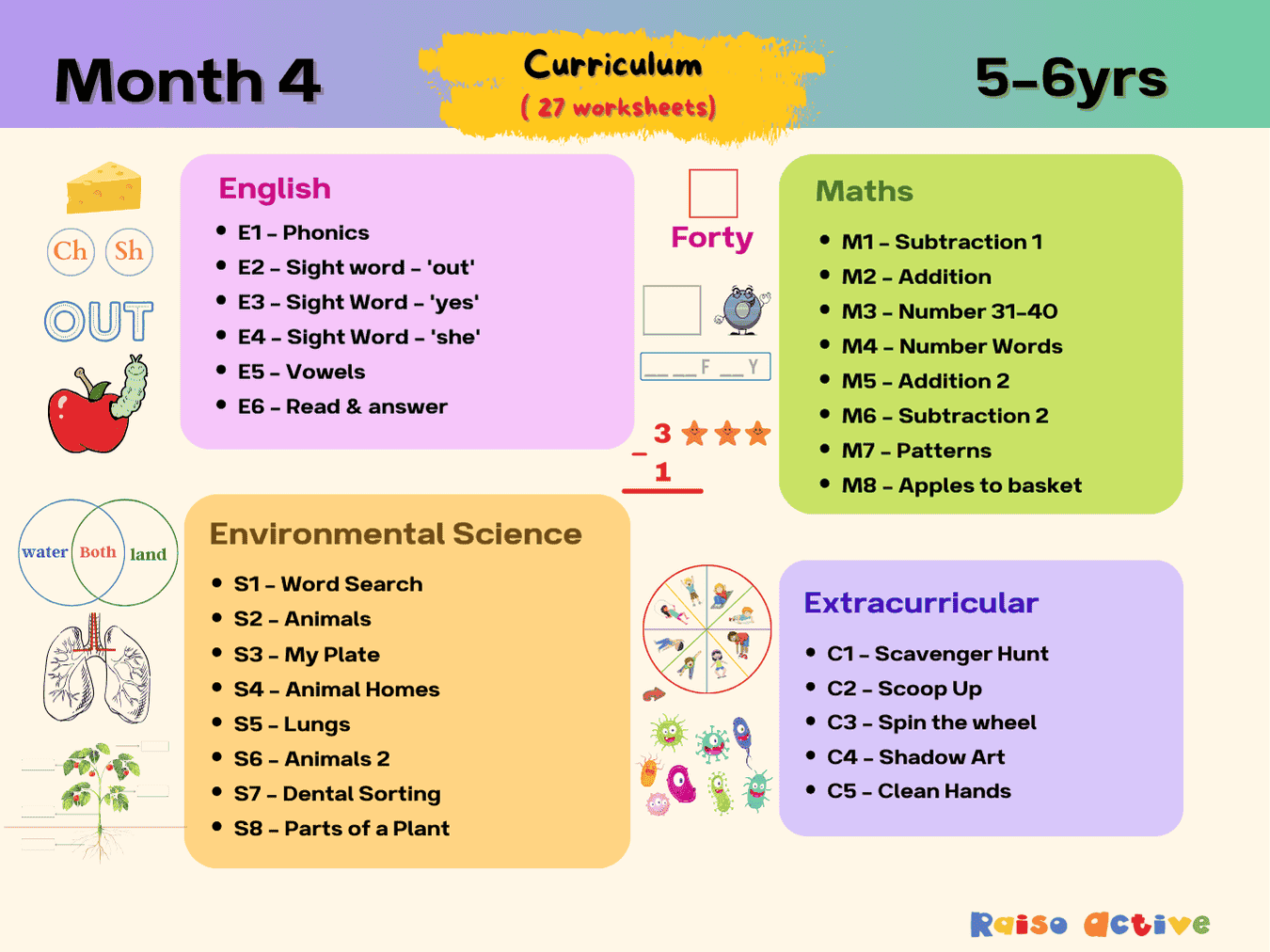
Part of the pack
Month 4: Learning & Development | Ages 5-6
This is page 21 of the pack. Ages 5-6 · KindergartenAges 5-6 · Year 1Ages 5-6 · UKGAges 5-6

Made for your child
Counting to 10, made for your child
A maths pack with your child's name in it: pictures that explain, practice at three levels, puzzles and story sums about them. Print a new set whenever they finish.
Make a maths packFree preview · free for members
Curriculum
- Living Things - Animals > Animals & Habitats
How to use this worksheet
Look at each animal on the page together and talk about what you already know about where it lives. Have your child draw a line connecting each animal to its correct home on the page. Once the lines are drawn, help your child write the name of each home on the blank line provided, sounding out the word together. Review all the matches at the end, naming each animal and its home aloud.
Materials needed
- Pencil
- Crayons
Extension activities
- 1Draw your child's favorite animal along with a picture of its home.
- 2Research one animal home in more detail together and create a simple poster about it.
- 3Build a pretend animal home using blocks, boxes, or natural materials like twigs and leaves.
- 4Read a book about animal habitats and spot the different types of homes mentioned.

Written by
Hemsweta Jain · Teacher Cheena
MBA and Early Childhood Educator, teaching since 2014 · Founder of RaisoActive, Mumbai
Every RaisoActive worksheet is designed and checked by the founder before publishing.
Published · Last reviewed
More from Month 4: Learning & Development | Ages 5-6
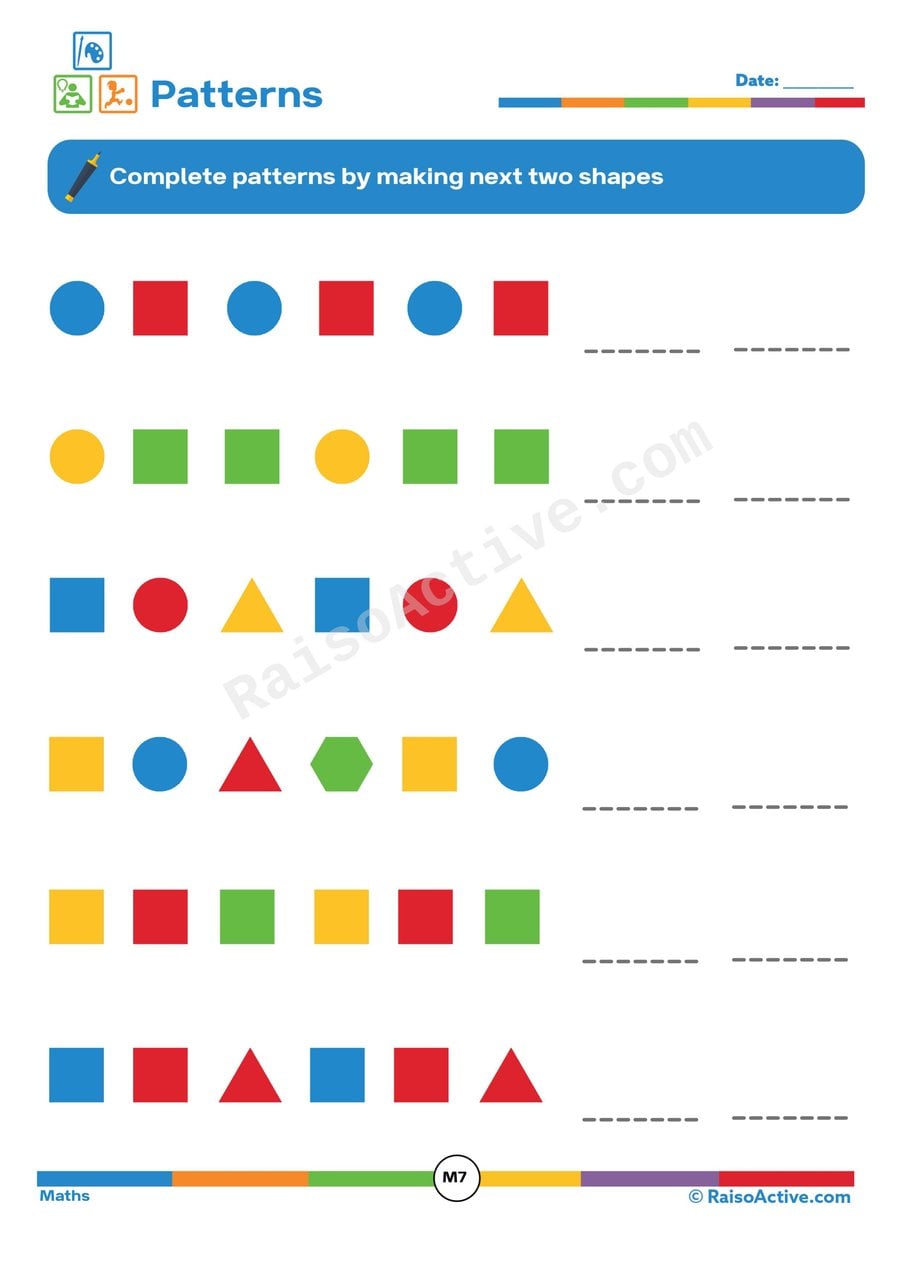
Shape Patterns Worksheet for Preschoolers
Ages 3-5 · Preschool–Pre-KAges 3-5 · Nursery–ReceptionAges 3-5 · Nursery–LKGAges 3-5
Children ages 3-5 build pattern recognition and shape identification together as they study a row of repeating 2D shapes and draw what comes next to continue the sequence. This combination trains visual analysis and prediction — skills that form the basis of algebraic thinking long before formal algebra is introduced.

Apples to Basket: Sorting Math Worksheet for Preschoolers
Ages 4-6 · Pre-K–KindergartenAges 4-6 · Reception–Year 1Ages 4-6 · LKG–UKGAges 4-6
This worksheet combines basic addition and subtraction practice with sorting skills as children ages 4-6 solve a math problem written on each apple, then decide which basket it belongs in based on whether the answer is more or less than a target number. Categorizing numbers by size after calculating them adds a layer of number-sense reasoning beyond simply finding the right answer.

Happy or Sad Teeth: Dental Sorting Worksheet for Kids
Ages 3-5 · Preschool–Pre-KAges 3-5 · Nursery–ReceptionAges 3-5 · Nursery–LKGAges 3-5
This sorting worksheet has children ages 3-5 cut out pictures of foods and place them next to either a happy or sad tooth, teaching which foods support healthy teeth (like fruits, vegetables, and dairy) and which contribute to cavities (like candy and soda). Making the effects of food choices visible through a simple happy/sad symbol helps young children connect everyday eating decisions to a health outcome they can understand.

Clean Hands Worksheet: Germs and Handwashing Experiment
Ages 4-6 · Pre-K–KindergartenAges 4-6 · Reception–Year 1Ages 4-6 · LKG–UKGAges 4-6
This worksheet teaches children ages 4-6 the science behind why handwashing matters through a simple, visual experiment demonstrating how germs (represented by something like glitter or oil) transfer between hands and spread easily, then how washing removes them. Seeing germs 'in action' makes an invisible concept concrete, helping children understand the real reason behind a daily hygiene habit rather than just following a rule.
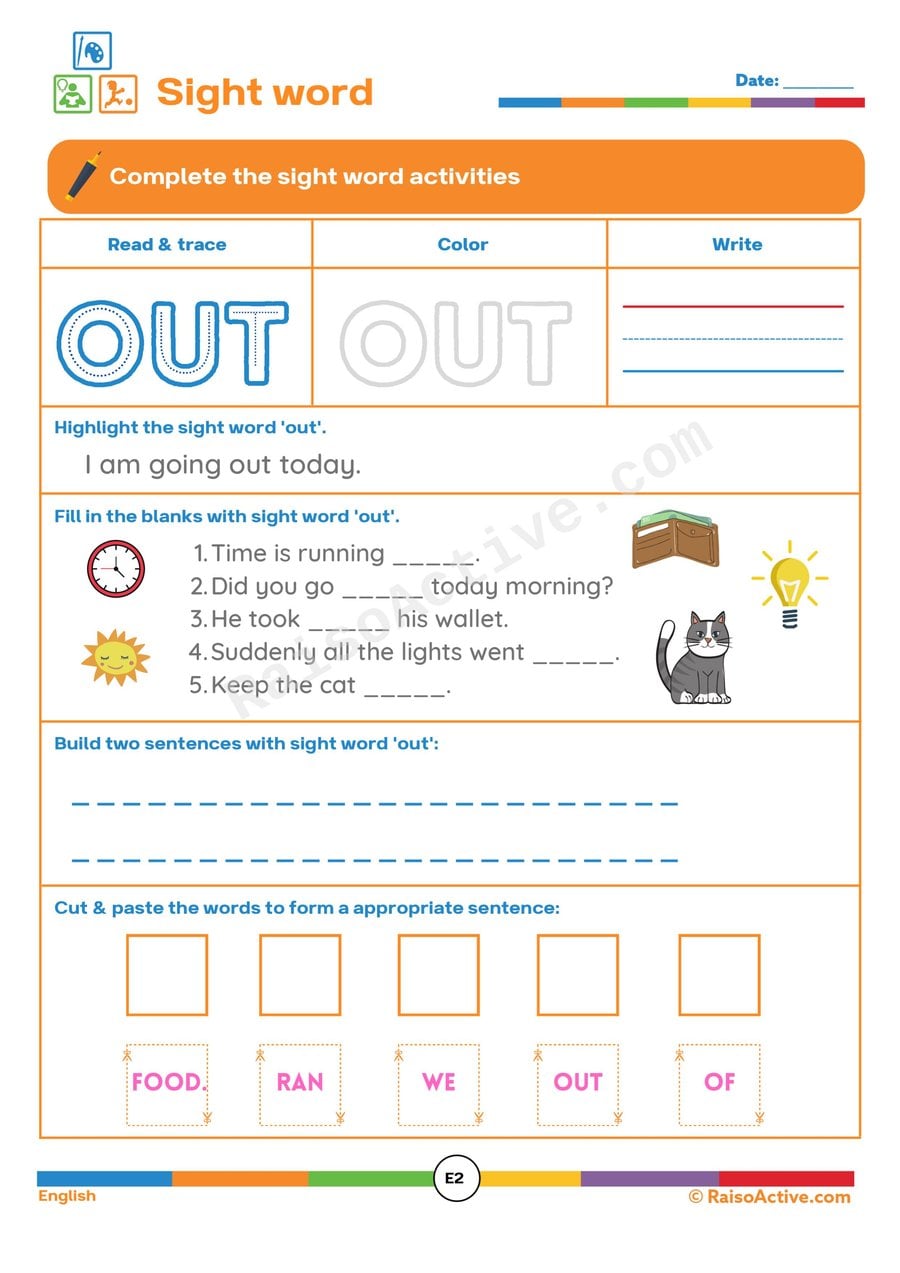
Sight Word 'Out' Worksheet: Read, Trace, and Write!
Ages 3-5 · Preschool–Pre-KAges 3-5 · Nursery–ReceptionAges 3-5 · Nursery–LKGAges 3-5
Reading fluency for young children depends on instantly recognizing common sight words that don't sound out easily, and this worksheet gives children ages 3-5 focused, repeated exposure to the word 'out' through tracing, coloring, and sentence practice. Seeing the word in context within simple sentences also helps children start connecting sight-word recognition to real reading comprehension.
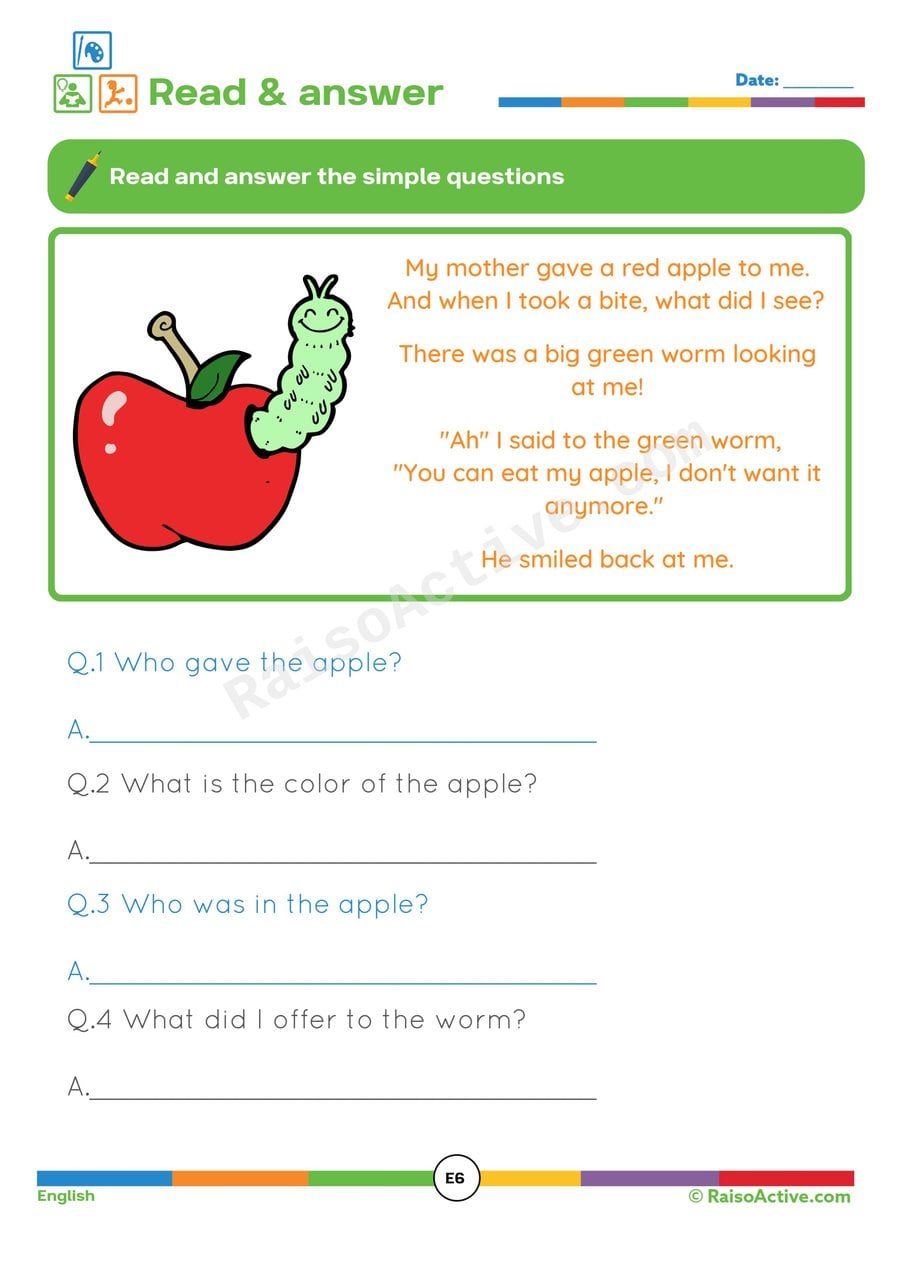
Read and Answer: The Red Apple Worksheet
Ages 3-5 · Preschool–Pre-KAges 3-5 · Nursery–ReceptionAges 3-5 · Nursery–LKGAges 3-5
Reading the short Red Apple story and answering questions afterward helps children ages 3-5 practice basic reading comprehension, recalling simple details from a story and expressing their understanding in writing. This early comprehension practice builds the habit of checking back with a text to support an answer, a skill that grows more important throughout school.

Parts of a Plant Cut and Paste Worksheet for Kids
Ages 3-5 · Preschool–Pre-KAges 3-5 · Nursery–ReceptionAges 3-5 · Nursery–LKGAges 3-5
This cut-and-paste worksheet teaches children ages 3-5 the names and locations of the main parts of a plant — roots, stem, leaves, flower, and fruit — by having them match labels to the correct spot on a plant diagram. Learning to label a diagram, rather than just naming parts verbally, is an early step toward the kind of labeled-illustration work children will do throughout their science education.

Subtraction Fun: Counting and Subtracting Worksheet for Kids
Ages 4-6 · Pre-K–KindergartenAges 4-6 · Reception–Year 1Ages 4-6 · LKG–UKGAges 4-6
This worksheet teaches children ages 4-6 the concept of subtraction by having them count a group of stars, cross out a specified number, and write how many remain — making the abstract idea of 'taking away' visible and countable rather than purely symbolic. Physically crossing out objects before writing the answer helps children understand subtraction as an action, which is more intuitive at this age than memorizing subtraction facts.
Related worksheets

Animal Homes Matching Worksheet for Preschoolers
Ages 3-5 · Preschool–Pre-KAges 3-5 · Nursery–ReceptionAges 3-5 · Nursery–LKGAges 3-5
By matching each animal to its home, children ages 3-5 build early classification skills and expand their vocabulary around habitats like nests, dens, hives, and burrows. This kind of cause-and-effect pairing — this animal lives in this particular place — lays groundwork for later science concepts about how living things depend on their environment.

Navratri Picture Cards: Cut-Out Memory Match Game
Ages 4-6 · Pre-K–KindergartenAges 4-6 · Reception–Year 1Ages 4-6 · LKG–UKGAges 4-6
Children learn six Navratri words, match each picture to its word and clue, and practise memory and cutting skills.

Harvests & New Years: One Harvest, Many Names Across India
Ages 4-8 · Pre-K–Grade 2Ages 4-8 · Reception–Year 3Ages 4-8 · LKG–Class 2Ages 4-8
Children learn that the same winter harvest is celebrated with different names across India, and that many states have their own New Year festival.

Festivals of Many Faiths: Places of Worship and Greetings
Ages 4-8 · Pre-K–Grade 2Ages 4-8 · Reception–Year 3Ages 4-8 · LKG–Class 2Ages 4-8
Children learn that India is home to many faiths, each with its own festivals, places of worship and festival greetings.

Feelings Faces Worksheet: Match, Trace and Circle the Happy Faces
Ages 4-6 · Pre-K–KindergartenAges 4-6 · Reception–Year 1Ages 4-6 · LKG–UKGAges 4-6
Children link everyday moments (bubbles, ice cream, blocks, a storm, a gift) to the face that shows the feeling, trace four feelings words and count happy faces.

Feelings Detective for Kids: Clue Cards, Story Order and Draw a Proud Moment
Ages 4-6 · Pre-K–KindergartenAges 4-6 · Reception–Year 1Ages 4-6 · LKG–UKGAges 4-6
Children use body clues (fists, a wobbly tummy, standing tall) and what happened to work out the feeling, put three pictures in order and talk about a proud moment.

Clothing Pattern Match Worksheet for Preschoolers
Ages 3-5 · Preschool–Pre-KAges 3-5 · Nursery–ReceptionAges 3-5 · Nursery–LKGAges 3-5
This worksheet has children ages 3-5 study repeating patterns on clothing items — stripes, polka dots, or checks — and match each item to its identical twin, building visual discrimination and early pattern-sequencing skills. Distinguishing between similar-looking patterns also sharpens attention to detail, a skill that later supports letter and word recognition.
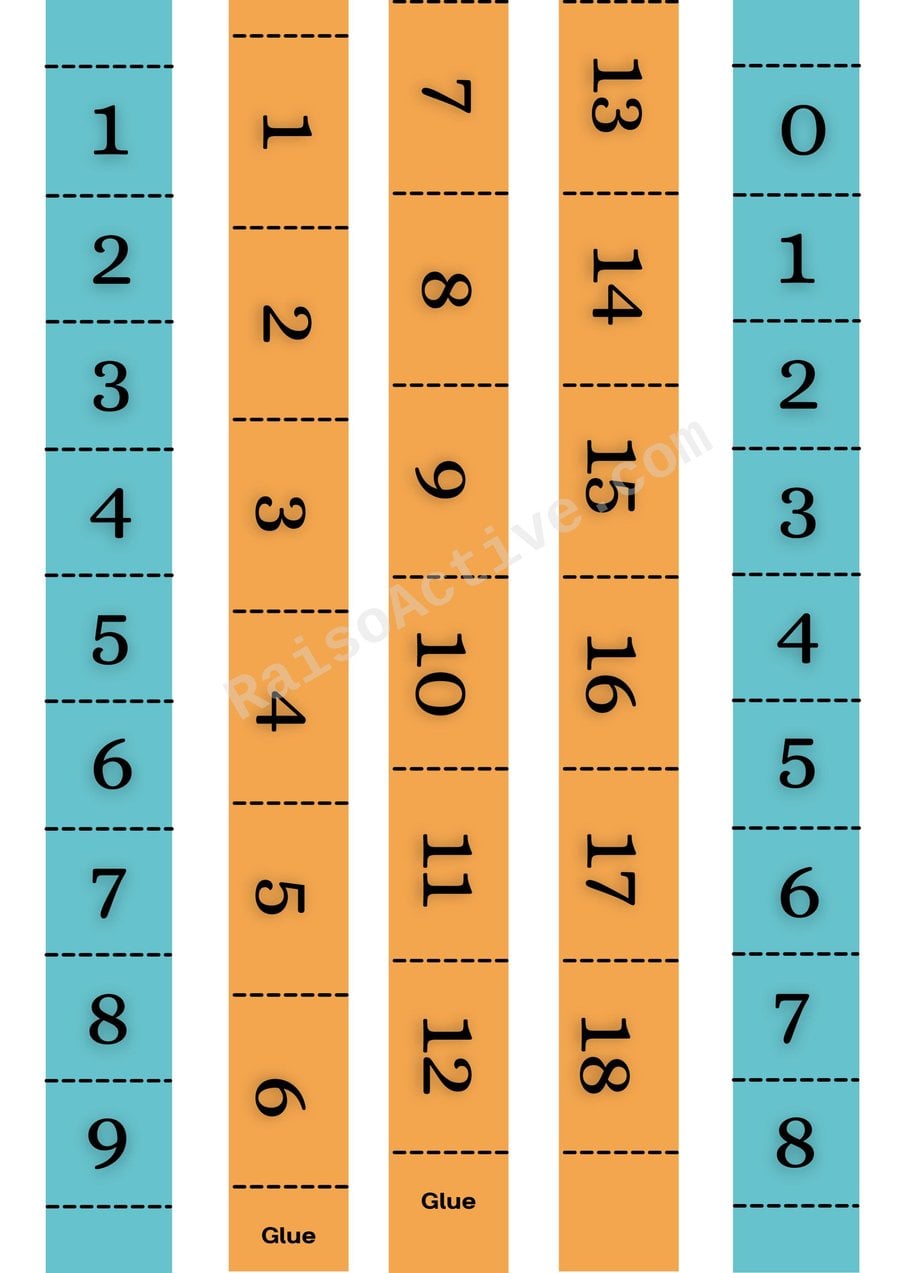
Number Matching Worksheet: 0-18
Ages 3-5 · Preschool–Pre-KAges 3-5 · Nursery–ReceptionAges 3-5 · Nursery–LKGAges 3-5
This activity strengthens numeral recognition for children ages 3-5 by having them find and pair matching numbers from 0 to 18 printed on separate strips. Because the numbers are scattered rather than in order, children must recognize each digit shape on its own rather than relying on counting sequence, which builds true number recognition instead of rote list-reciting.
Guides for this topic

Best Worksheets for 3-Year-Olds: What Works and What to Avoid
What works on worksheets for 3-year-olds: short sessions, crayons, tracing lines, matching, cutting, a free weekly plan, and signs one is too advanced.

Age-Appropriate Problem-Solving Activities: Building Critical Thinkers from the Ground Up
Discover fun, age-appropriate problem-solving activities for children ages 1-8. Build critical thinking, logic, and reasoning skills through play-based learning.
Critical Thinking Activities That Actually Work for Young Children: Building Tomorrow's Thinkers Today
Discover proven critical thinking activities for young children. Age-wise logic games, questioning techniques, and hands-on ideas to build thinking skills at home.
Reviews
Every worksheet for ages 3–5, no watermark
Members download the full library of 1,000+ worksheets and every activity pack without watermarks or daily limits. One year costs ₹999 in India or $20 elsewhere.
See membership plansOr download any worksheet free with a watermark (5 a day).