
Animal Homes Matching Worksheet for Preschoolers
By matching each animal to its home, children ages 3-5 build early classification skills and expand their vocabulary around habitats like nests, dens, hives, and burrows. This kind of cause-and-effect pairing — this animal lives in this particular place — lays groundwork for later science concepts about how living things depend on their environment.
Part of the pack
Month 7: Holistic Kindergarten Curriculum | Ages 5-6Curriculum
How to use this worksheet
Look over the animal and home pictures together first, naming each one aloud so your child knows what they're working with. Have them cut out the home pictures at the bottom of the page along the dotted lines. For each animal shown, ask your child to decide which home fits it and explain their thinking before gluing it into the matching box. Once every pair is glued down, review the finished page together, saying each animal-and-home pair as a full sentence, like 'The bird lives in a nest.'
Materials needed
- Scissors
- Glue
- Pencil
Extension activities
- •Visit a local park, zoo, or farm and point out real animal homes like burrows, nests, or hives when you see them.
- •Build a pretend animal home out of blocks, a shoebox, or twigs and have your child explain why it suits a particular animal.
- •Read a picture book about animal habitats and pause on each page to predict where the featured animal lives.
- •Play an animal-and-home matching memory game using small printed cards.
- •Draw a simple scene with several animals in the wrong homes and ask your child to spot and fix the mistakes.
Tips for parents and teachers
Encourage full-sentence answers ('The rabbit lives in a burrow') rather than one-word responses, since this builds both vocabulary and sentence structure. If a child is unsure why an animal lives somewhere, briefly explain what the home protects the animal from, such as weather or predators. Let them attempt the cutting independently first, stepping in only for tricky curves.

Written by
Hemsweta Jain · Teacher Cheena
MBA and Early Childhood Educator, teaching since 2014 · Founder of RaisoActive, Mumbai
Every RaisoActive worksheet is designed and checked by the founder before publishing.
Published · Last reviewed
Related worksheets

Animal Homes Worksheet: Cut and Paste Activity for Kids
This cut-and-paste worksheet teaches children ages 3-5 to match specific animals to their correct habitats — like a fish to water or a bird to a tree — building early understanding of how animals are suited to where they live. Sorting by habitat rather than by animal type (like farm versus wild) adds a layer of reasoning about why an environment fits a particular animal.

Animal Homes Matching Worksheet for Preschoolers
This worksheet helps children ages 3-5 learn where different animals live by matching each animal to its correct home, such as a bird to a nest or a bear to a cave, then writing the home's name. Understanding that animals have specific habitats suited to their needs is an early life-science concept that also builds descriptive vocabulary.
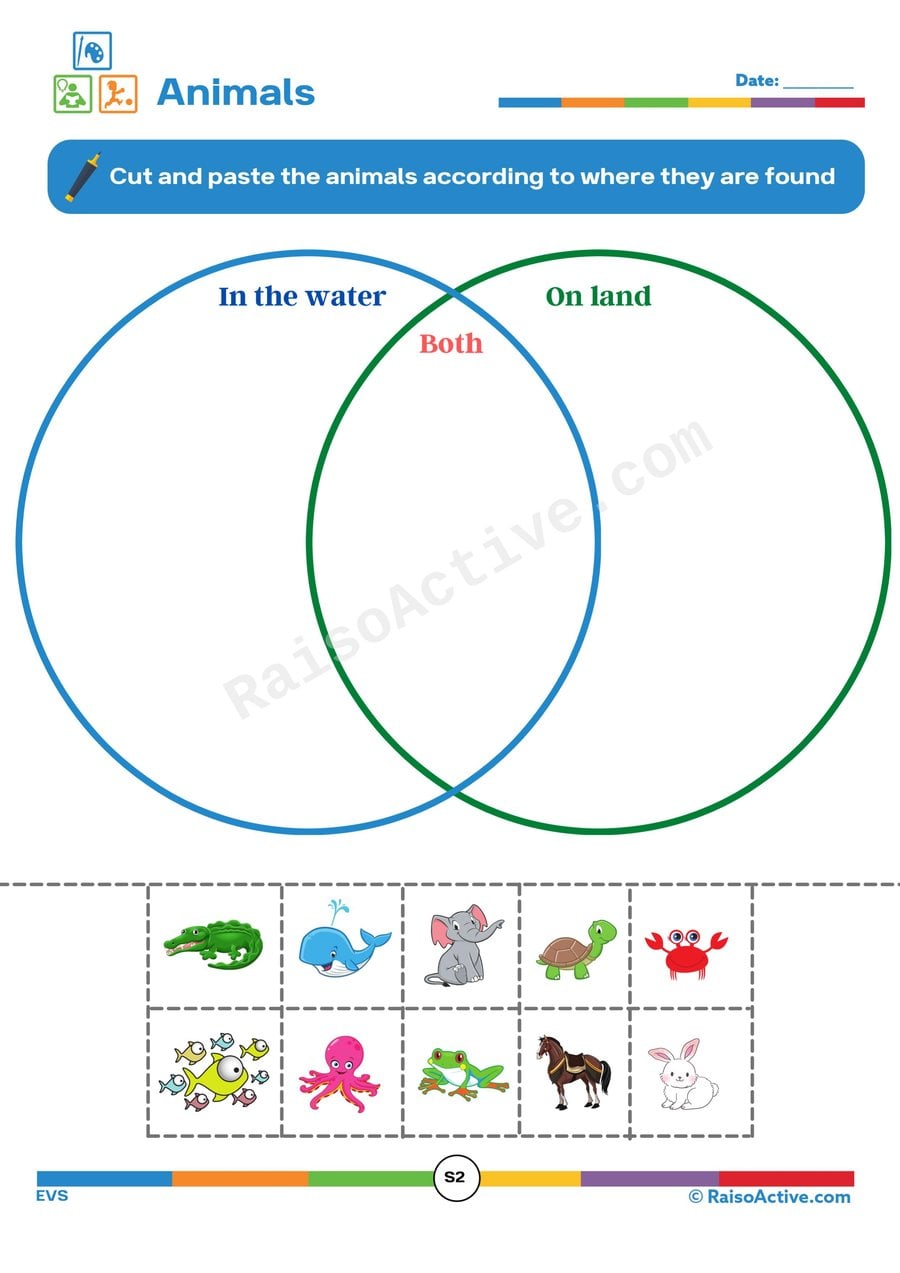
Animals: Sorting Worksheet for Preschoolers
This sorting worksheet has children ages 3-5 cut out animal pictures and paste each one into either a water or land habitat circle, building an early classification skill around where different animals naturally live. Sorting animals by habitat, rather than by type or size, introduces the idea that an animal's environment is a meaningful category on its own.

Clothing Pattern Match Worksheet for Preschoolers
This worksheet has children ages 3-5 study repeating patterns on clothing items — stripes, polka dots, or checks — and match each item to its identical twin, building visual discrimination and early pattern-sequencing skills. Distinguishing between similar-looking patterns also sharpens attention to detail, a skill that later supports letter and word recognition.
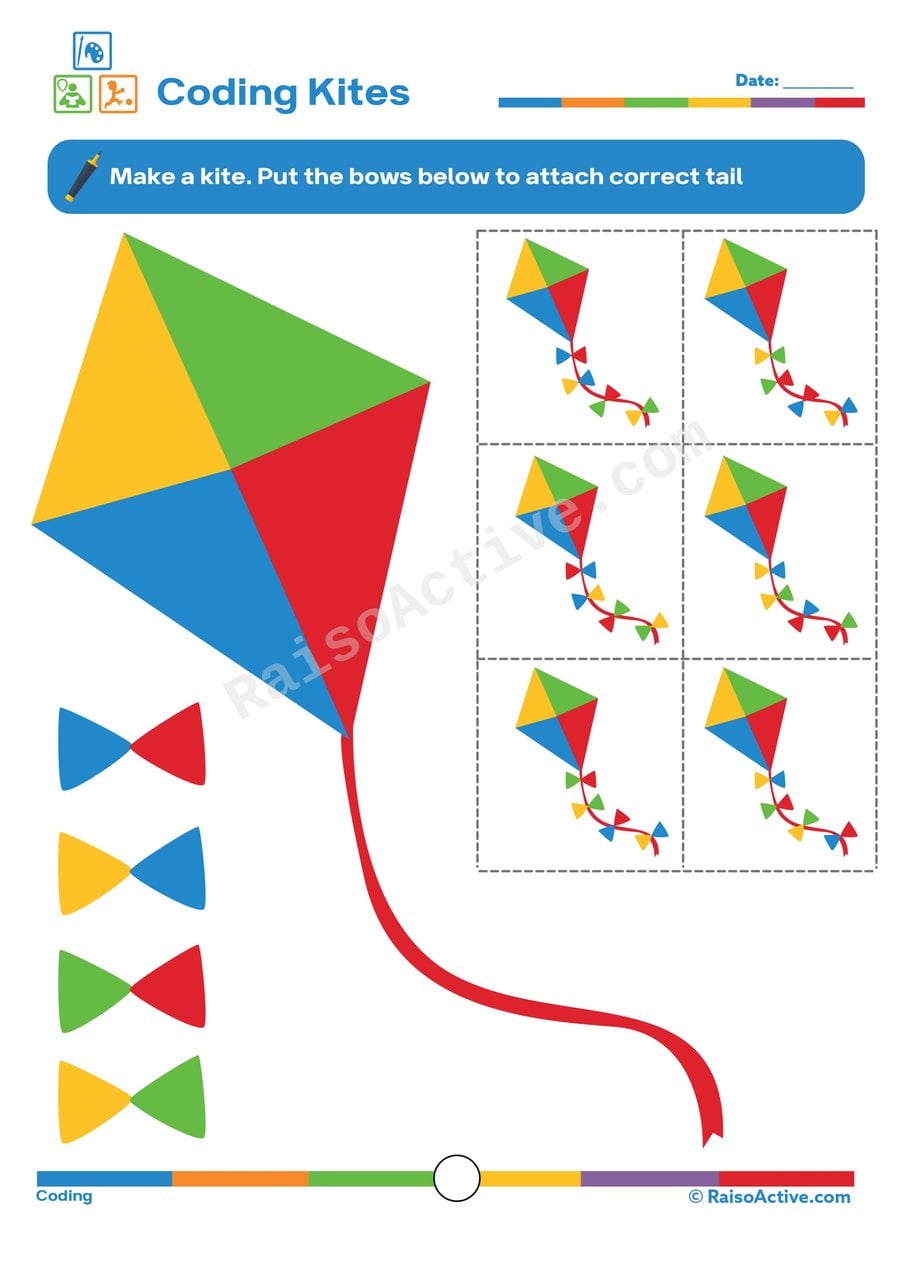
Coding Kites Worksheet: Match the Bows!
This activity sharpens visual observation in children ages 3-5 as they compare color sequences on each kite to a set of loose bows and find the exact match. Careful, systematic comparison — checking each color in order rather than glancing quickly — builds an attention-to-detail habit that transfers directly to early reading and number work.

Stick Man Emotions Worksheet: Happy, Sad, Angry, and Surprised!
Children ages 4-6 practice reading facial expressions on this worksheet, matching stick-figure faces to their correct emotion labels by noticing details like mouth shape and eyebrow position. This strengthens emotional literacy — the ability to name and recognize feelings in others — which supports empathy and smoother social interactions as children move into more group play and classroom settings.

Lock and Key Matching Worksheet for Preschoolers
Matching each key to the lock sharing the same letter helps children ages 3-5 practice letter recognition in a playful, puzzle-like context rather than rote drilling. Because each key must be checked against several similar-looking locks before finding the right match, this worksheet also builds visual scanning and careful comparison skills that support problem-solving.
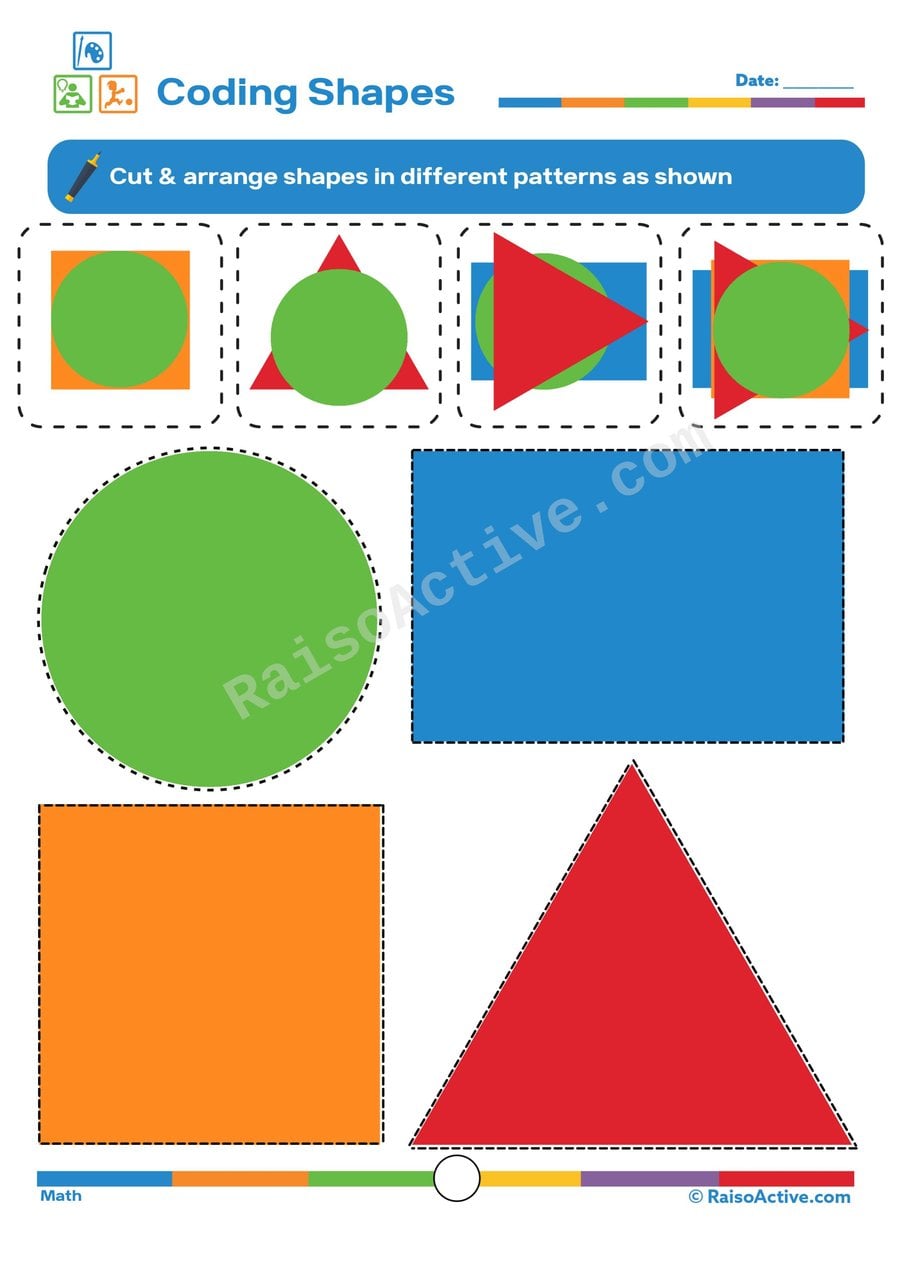
Coding Shapes Worksheet: Cut and Arrange Shapes!
This cut-and-paste worksheet has children ages 3-5 recreate example shape sequences by cutting out individual pieces and arranging them to match, combining shape recognition with the ordered, step-by-step thinking used in early coding and pattern logic. The physical act of cutting and precisely placing each piece also strengthens fine motor control and spatial planning.
Guides for this topic
Best Worksheets for 3-Year-Olds: What Works and What to Avoid
What works on worksheets for 3-year-olds: short sessions, crayons, tracing lines, matching, cutting, a free weekly plan, and signs one is too advanced.
Christmas and Winter Activities That Combine Fun and Learning: Creating Magical Educational Experiences
Discover Christmas and winter activities that combine festive fun with real learning. Crafts, counting, literacy, and printable worksheets for ages 2 to 8 — perfect for home and school.
Creating Engaging Themed Learning Units for Young Children: A Complete Guide to Integrated Learning
Discover how to create engaging themed learning units for young children that integrate literacy, maths, science, and art — with practical examples and free worksheets.
Reviews
Every worksheet for ages 3–5, no watermark
Members download the full library of 1,000+ worksheets and every activity pack without watermarks or daily limits. One year costs ₹1,000 in India or $20 elsewhere.
See membership plansOr download any worksheet free with a watermark (5 a day).