Preposition 'Under' Worksheet: Fun with Placement!
Practicing the preposition 'under' teaches children ages 3-5 to describe spatial relationships between objects, an early grammar concept closely tied to their developing understanding of physical space. Filling in the blank and then identifying pictures that show something under another object reinforces the word's meaning through both language and visual recognition.
Part of the pack
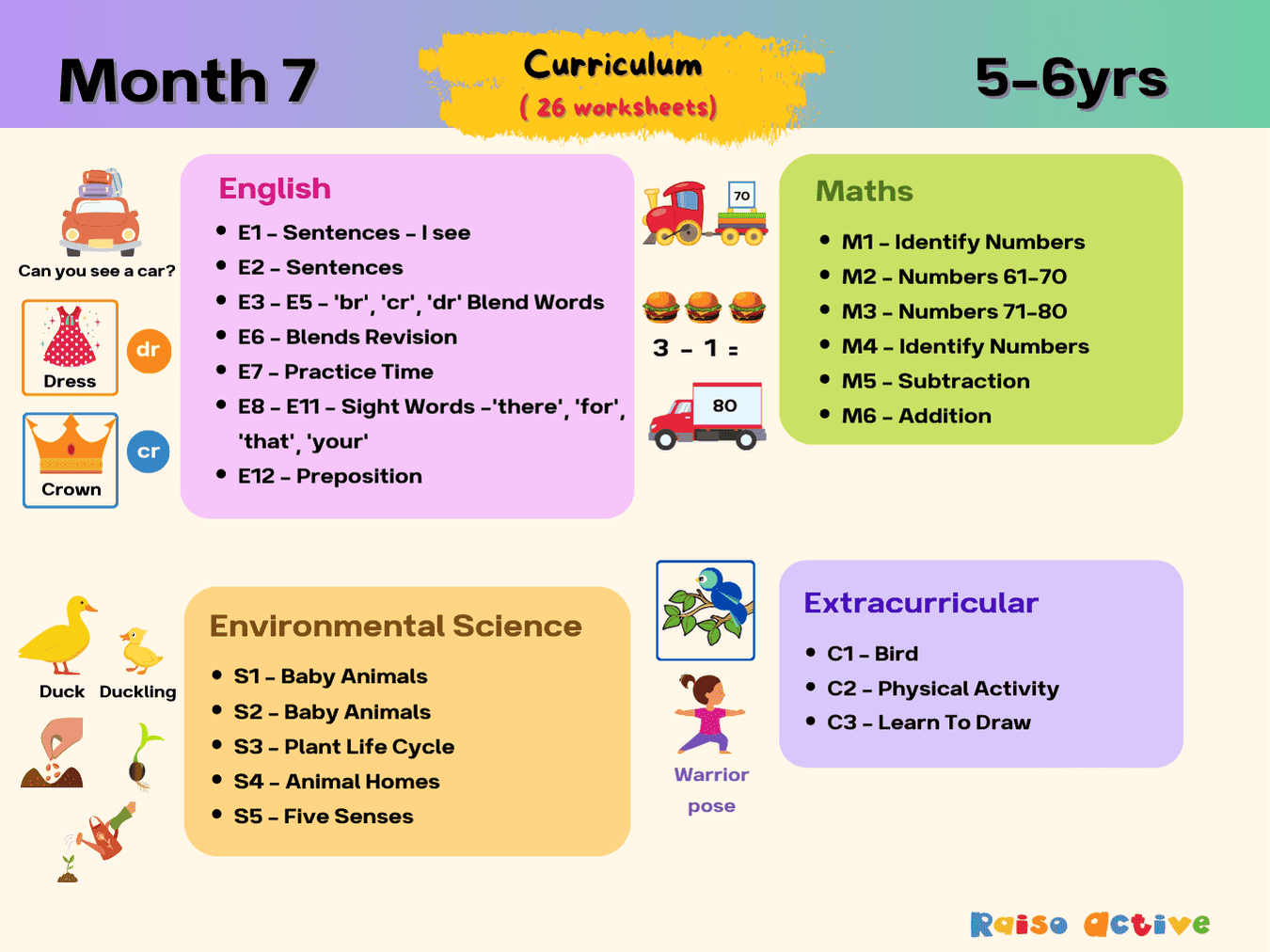
Month 7: Holistic Kindergarten Curriculum | Ages 5-6
This is page 15 of the pack. Ages 5-6 · KindergartenAges 5-6 · Year 1Ages 5-6 · UKGAges 5-6
Made for your child
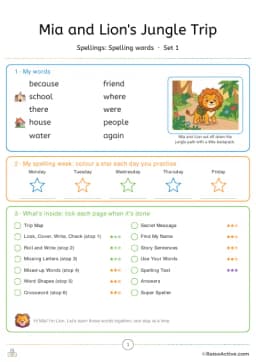
Spelling practice, made for your child
Their own spelling words turned into a pack: trace or look-cover-write-check, roll and write, a secret picture code, a word search, a crossword and a test, with their name in it.
Make a spelling packFree preview · free for members
Or start free: a word search with sight wordsCurriculum
- Grammar > Prepositions
How to use this worksheet
Read the first sentence aloud together, pausing at the blank space, and ask your child what word might describe where one object is compared to another. Guide them to write 'under' in the blank to complete the sentence correctly. Next, look at the picture options together and ask your child to find the one that actually shows something positioned under another object. Have them circle that picture, then repeat this fill-in-and-circle process for each remaining example on the page.
Materials needed
- Pencil
- Crayons
Extension activities
- 1Play a hide-and-seek style game, hiding a small toy under different household objects and describing its location using 'under.'
- 2Draw a simple picture showing one object under another and label it with a short sentence.
- 3Go on a scavenger hunt around the house finding real objects that are currently positioned under something else.
- 4Act out physically going under a table, chair, or blanket while saying the word 'under' aloud.
- 5Compare 'under' to its opposite, 'over,' by placing toys in both positions and naming the difference.

Written by
Hemsweta Jain · Teacher Cheena
MBA and Early Childhood Educator, teaching since 2014 · Founder of RaisoActive, Mumbai
Every RaisoActive worksheet is designed and checked by the founder before publishing.
Published · Last reviewed
More from Month 7: Holistic Kindergarten Curriculum | Ages 5-6

Learn to Draw a Duck: Step-by-Step Drawing Worksheet for Kids
Ages 3-5 · Preschool–Pre-KAges 3-5 · Nursery–ReceptionAges 3-5 · Nursery–LKGAges 3-5
Following numbered steps to draw a duck teaches children ages 3-5 to break a complex picture into simple shapes — circles, ovals, and lines — building both sequencing skills and early drawing confidence. Learning that any drawing can be built one small step at a time helps reduce the frustration many young children feel when facing a blank page.
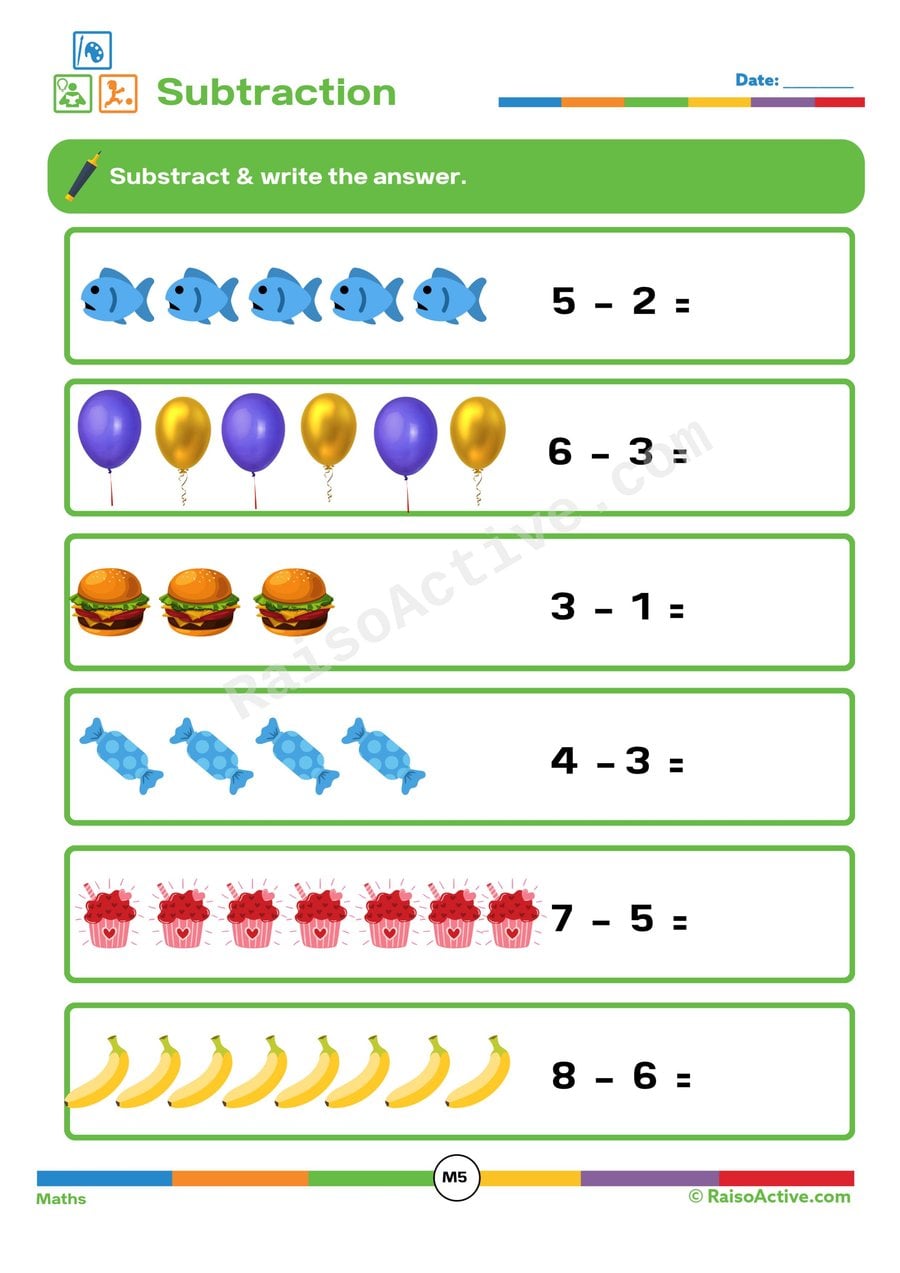
Subtraction Worksheet: Count and Subtract!
Ages 4-5 · Pre-KAges 4-5 · ReceptionAges 4-5 · LKGAges 4-5
This worksheet gives children ages 4-5 hands-on practice with subtraction as 'taking away' from a visible group, helping them understand that a number decreases when items are removed rather than treating subtraction as an abstract symbol on paper. Counting the starting group and then physically crossing out or covering objects before writing the difference builds the concrete number sense that later supports mental subtraction.
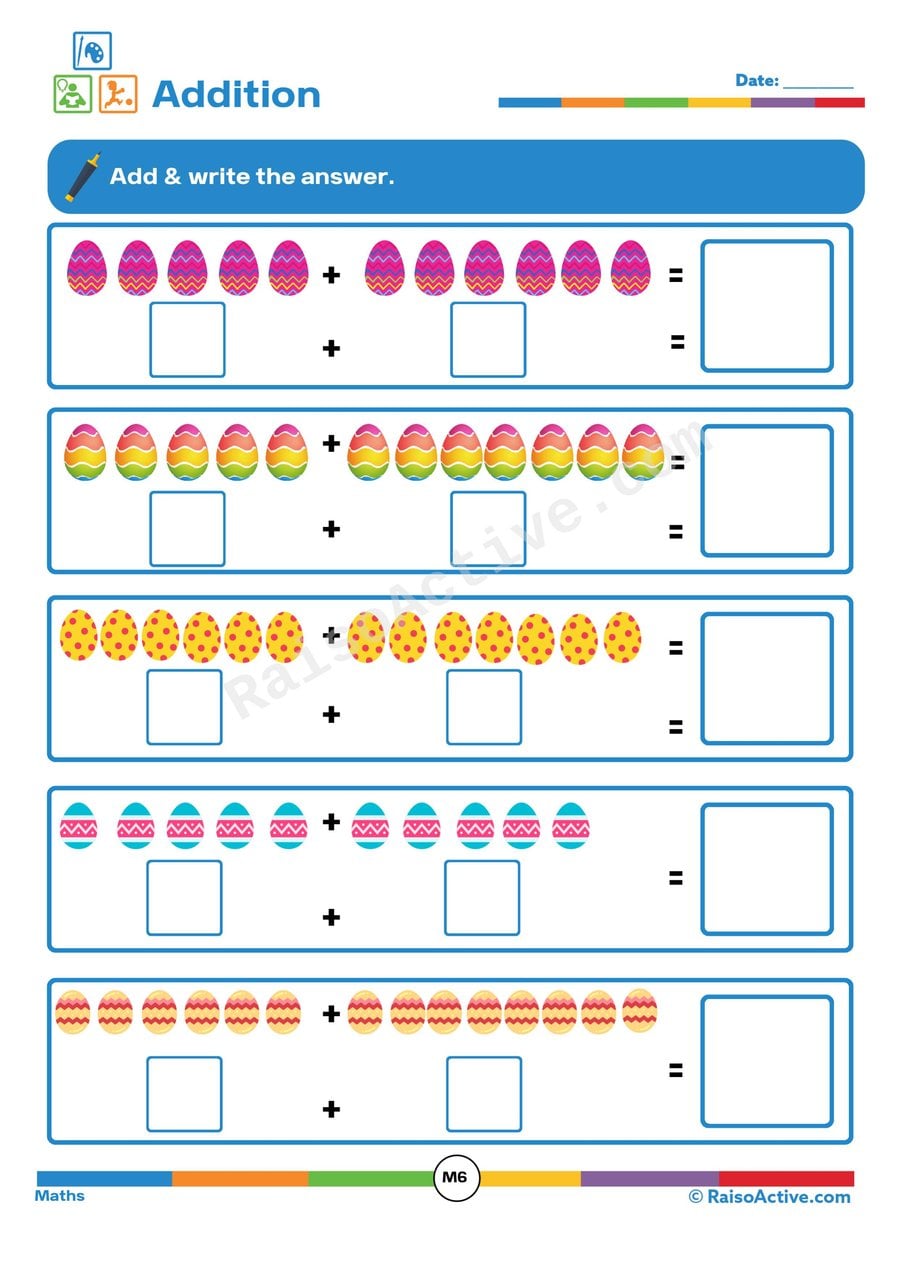
Easter Egg Addition Worksheet for Preschoolers
Ages 4-5 · Pre-KAges 4-5 · ReceptionAges 4-5 · LKGAges 4-5
Counting groups of Easter eggs and combining them builds early addition sense for children ages 4-5, showing that putting two smaller groups together creates one larger total. Because the eggs are grouped visually rather than shown as bare numerals, children practice one-to-one counting alongside the abstract addition symbol, connecting the concrete and written forms of the same idea.

Christmas Blend Words Coloring Worksheet for Preschoolers
Ages 4-5 · Pre-KAges 4-5 · ReceptionAges 4-5 · LKGAges 4-5
Coloring words by their beginning blend sound on a Christmas tree turns phonics practice into a festive, motivating activity for children ages 4-5, reinforcing that blends like 'br,' 'cl,' or 'sn' keep their combined sound even though they're made of two consonants. Because each color represents a different blend, children must listen carefully to each word before choosing a crayon, strengthening auditory discrimination alongside seasonal fun.

Read and Circle: 'br' Blend Words Worksheet for Preschoolers
Ages 3-5 · Preschool–Pre-KAges 3-5 · Nursery–ReceptionAges 3-5 · Nursery–LKGAges 3-5
This worksheet trains children to hear and recognize the 'br' consonant blend at the start of words like 'bread' or 'brush,' building on single-letter phonics toward the more complex blended sounds that make up much of early reading vocabulary. For ages three to five, matching a read word to its picture also reinforces that written letters correspond to real, specific meanings rather than abstract symbols.
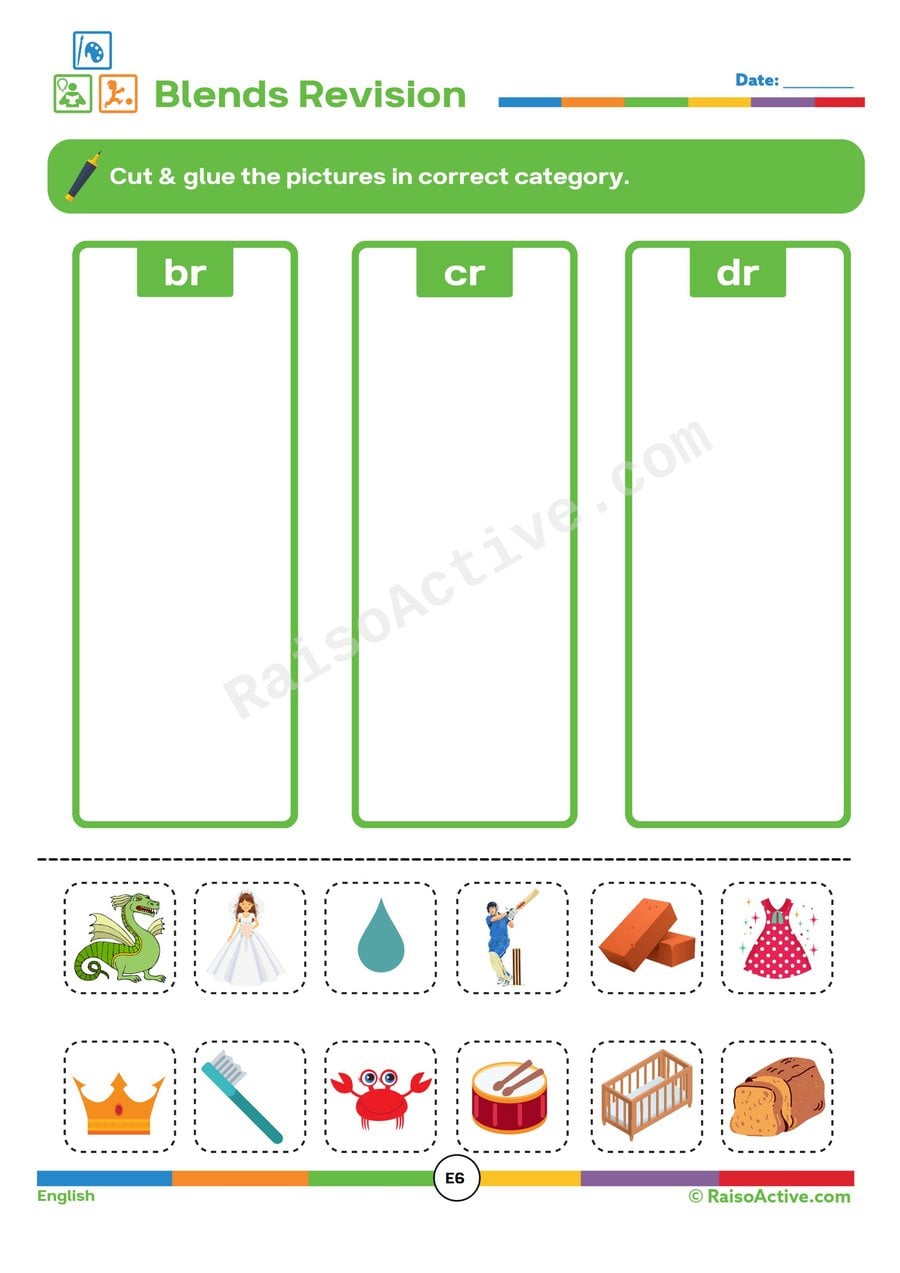
Blends Revision Worksheet: Cut and Glue!
Ages 4-5 · Pre-KAges 4-5 · ReceptionAges 4-5 · LKGAges 4-5
Sorting pictures by their beginning blend sound (br, cr, dr) sharpens phonemic awareness for children ages 4-5, teaching them that two consonants blended together still keep their own distinct sounds. This cut-and-glue format forces careful listening before pasting, since a picture can only go in one column, which builds the auditory discrimination that underlies early decoding.
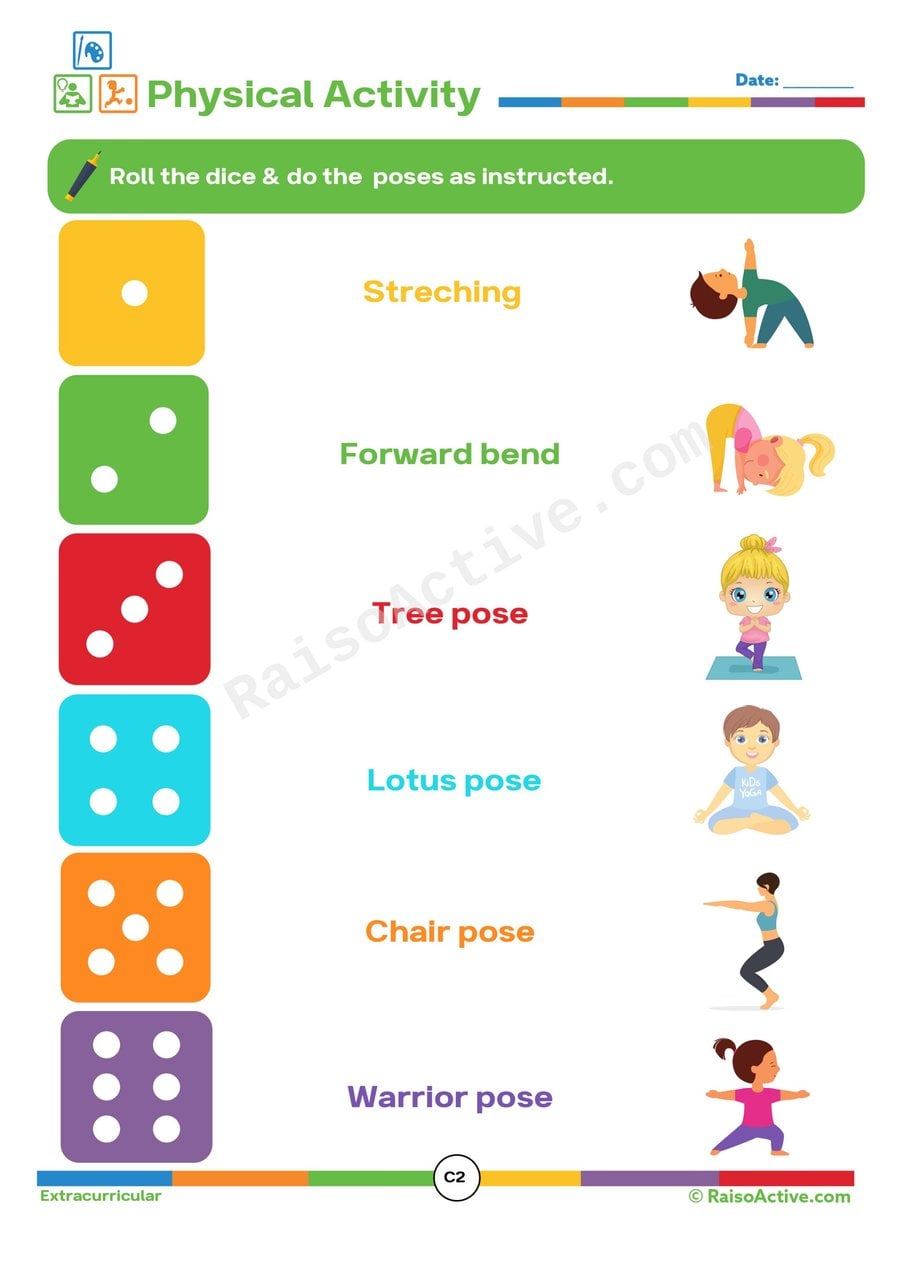
Physical Activity Dice Game: Yoga Poses for Kids!
Ages 3-5 · Preschool–Pre-KAges 3-5 · Nursery–ReceptionAges 3-5 · Nursery–LKGAges 3-5
Rolling a dice and matching the number to a yoga pose introduces children ages 3-5 to basic gross motor movement and body control in a playful, game-based format, while also reinforcing number recognition through the dice roll itself. Practicing simple yoga poses like this builds balance, body awareness, and an early habit of calm, mindful movement.

Match the Baby Animals Worksheet for Preschoolers
Ages 3-5 · Preschool–Pre-KAges 3-5 · Nursery–ReceptionAges 3-5 · Nursery–LKGAges 3-5
Connecting adult animals to their babies builds specific vocabulary for children ages 3-5, like puppy, kitten, and fawn, while training visual comparison skills as they look for matching features between each pair. This activity also introduces the early biology concept that offspring, though smaller and sometimes differently colored, belong to the same animal family as their parent.
Related worksheets
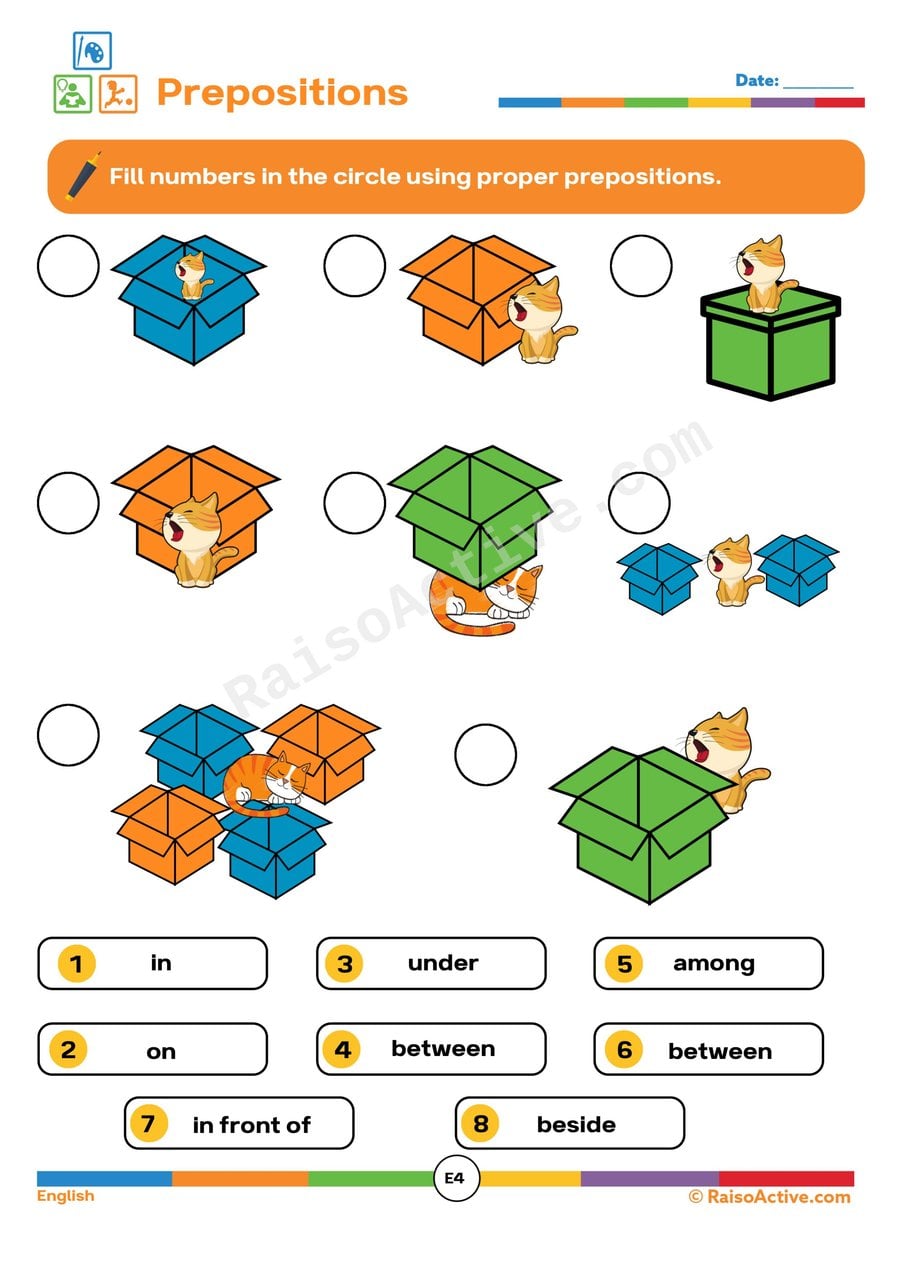
Prepositions Worksheet: Where Are the Cats?
Ages 3-5 · Preschool–Pre-KAges 3-5 · Nursery–ReceptionAges 3-5 · Nursery–LKGAges 3-5
This worksheet helps children ages 3-5 learn positional prepositions — words like 'under,' 'on,' 'behind,' and 'in' — by matching each word to a picture showing exactly where a cat is located. Understanding these small but essential words builds spatial vocabulary and comprehension skills that are used constantly in both everyday instructions and later reading comprehension.
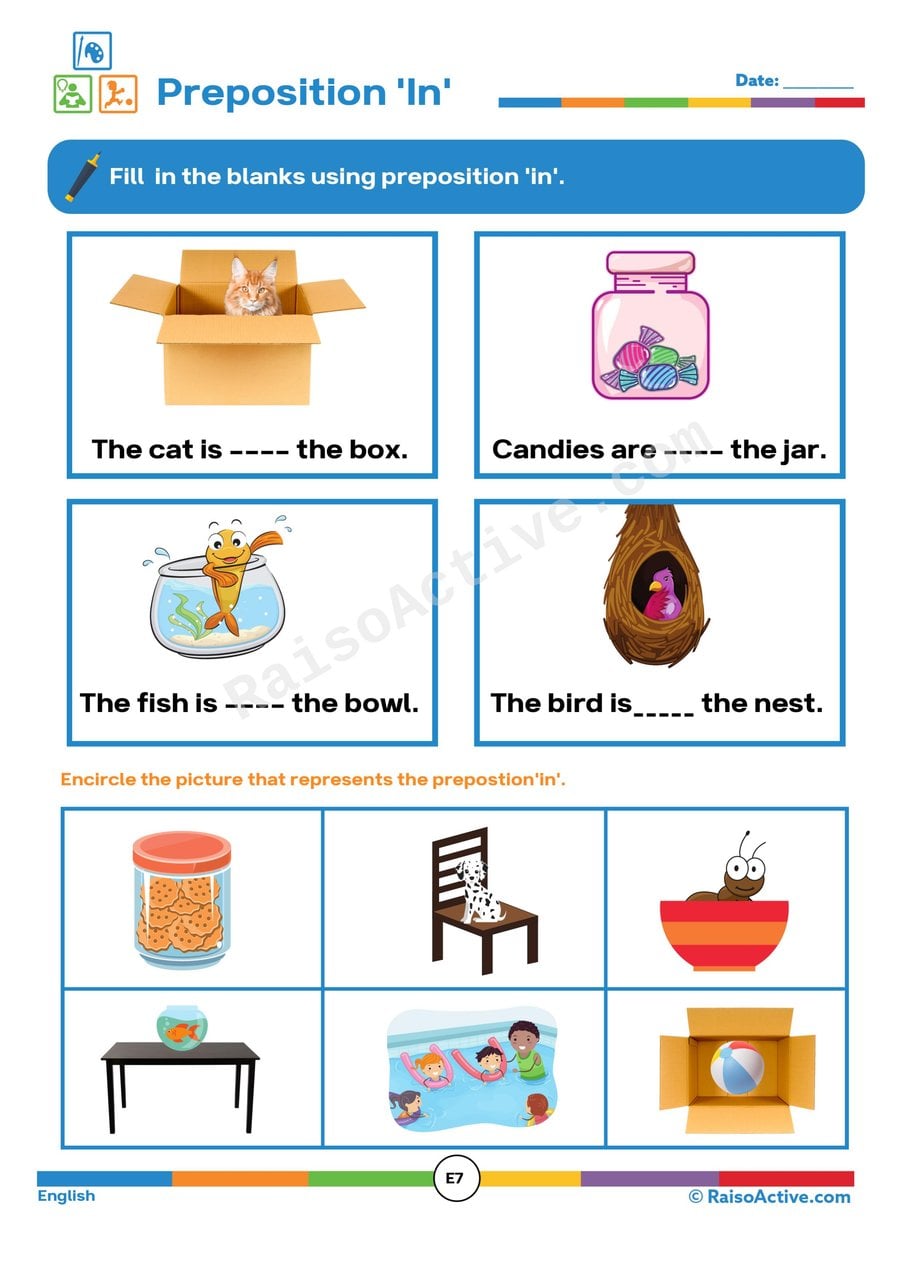
Preposition 'In' Worksheet: Fill-in-the-Blanks Fun!
Ages 4-6 · Pre-K–KindergartenAges 4-6 · Reception–Year 1Ages 4-6 · LKG–UKGAges 4-6
This worksheet introduces the preposition 'in' as a specific positional word describing something located inside another object, building both grammar knowledge and spatial vocabulary. For ages 4-6, understanding prepositions like 'in' is essential for constructing clear, descriptive sentences and following spatial directions in everyday life.

Preposition Worksheet: Circle the Correct Position!
Ages 3-5 · Preschool–Pre-KAges 3-5 · Nursery–ReceptionAges 3-5 · Nursery–LKGAges 3-5
Children ages 3-5 practice identifying prepositions like 'in,' 'on,' and 'under' by looking at a picture and circling the word that correctly describes where an object is positioned. This builds early spatial vocabulary that children use constantly in everyday communication, from describing where a toy is to following directions.

Preposition Worksheet: Identifying Where Things Are!
Ages 3-5 · Preschool–Pre-KAges 3-5 · Nursery–ReceptionAges 3-5 · Nursery–LKGAges 3-5
This worksheet asks children to identify the correct preposition, words like 'in,' 'on,' 'under,' or 'behind', that describes where an object is located in a picture, building spatial vocabulary that supports both everyday communication and following multi-step instructions. For ages three to five, prepositions are often used correctly in speech before children can identify them on paper, so this worksheet helps make that intuitive knowledge explicit.
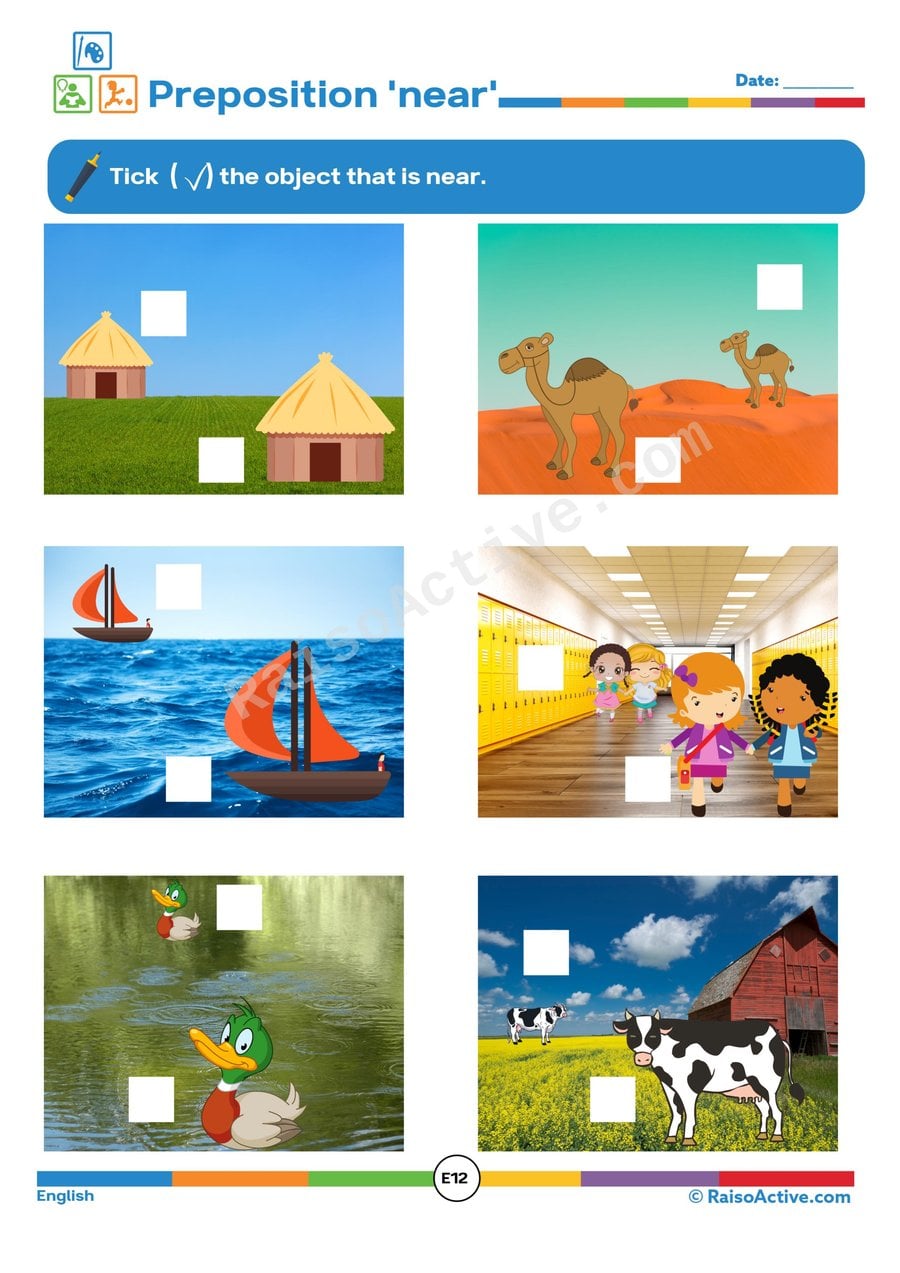
Near or Far? Preposition Worksheet for Kids
Ages 3-5 · Preschool–Pre-KAges 3-5 · Nursery–ReceptionAges 3-5 · Nursery–LKGAges 3-5
Preschoolers ages 3-5 build early spatial vocabulary by identifying which pictured object is positioned 'near' another, a comparative concept that requires judging relative distance between two things. Understanding 'near' versus 'far' lays groundwork for later spatial reasoning skills, like following directions and reading simple maps. Ticking the correct object also sharpens visual comparison and careful observation.
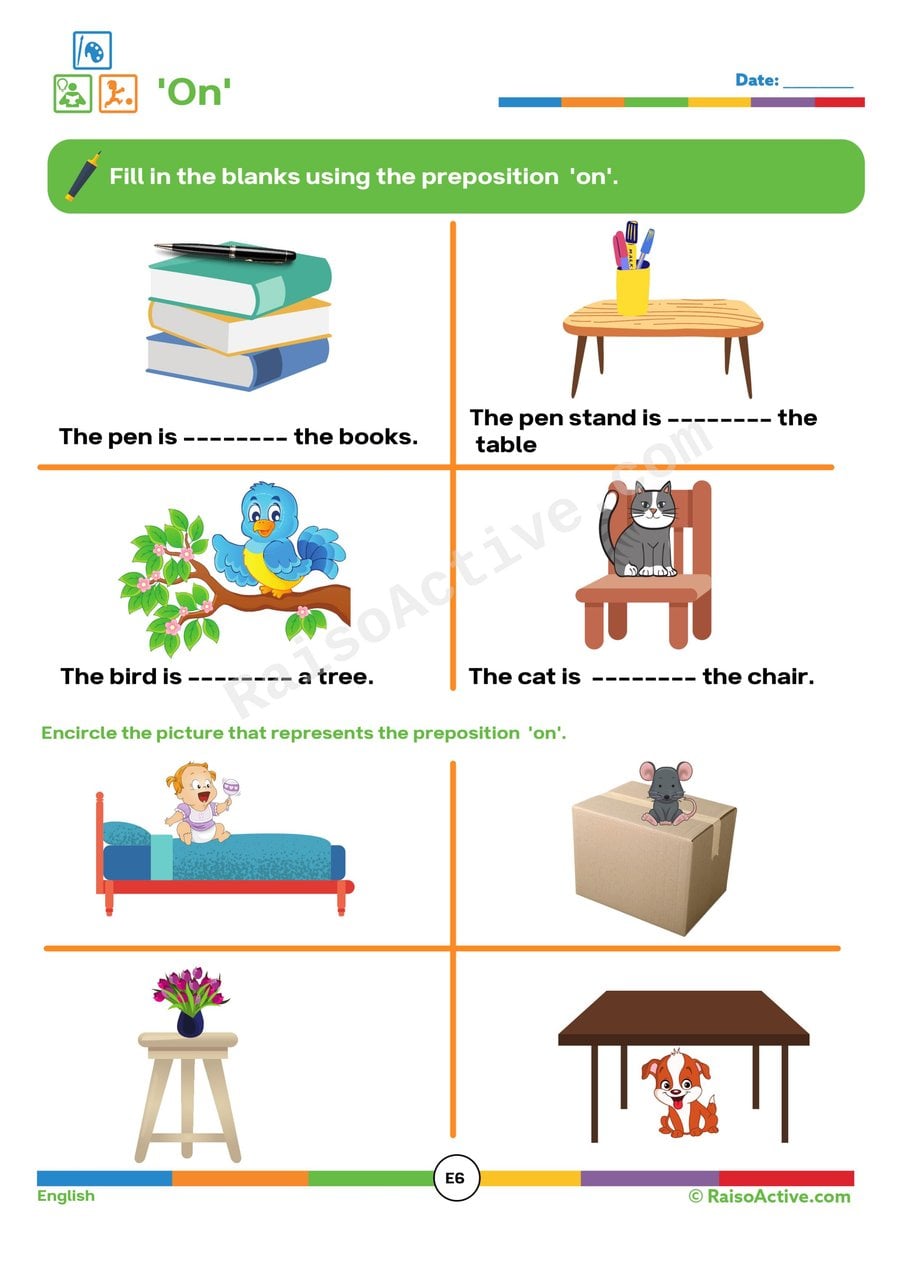
Preposition Fun: 'On' Worksheet for Early Learners
Ages 3-5 · Preschool–Pre-KAges 3-5 · Nursery–ReceptionAges 3-5 · Nursery–LKGAges 3-5
Practicing the preposition 'on' teaches children ages 3-5 how a small function word can precisely describe where one object sits in relation to another, an early and important step in building more complex, descriptive sentences. Filling in the blank with 'on' repeatedly across different sentences helps the word become automatic rather than something they have to think hard about each time. Circling the picture that correctly shows something 'on' another object also checks that your child truly understands the spatial meaning, not just the spelling of the word.

Elephant Shapes: Fun Sorting Worksheet for Preschoolers!
Ages 3-5 · Preschool–Pre-KAges 3-5 · Nursery–ReceptionAges 3-5 · Nursery–LKGAges 3-5
This playful sorting worksheet has children ages 3-5 use an elephant's 'trunk' (their own hand reaching through a cut circle) to pick and sort shapes, building both shape recognition and simple classification skills. Physically selecting and grouping shapes by type, rather than just naming them on sight, helps solidify the concept that shapes can share a category even when their size or color differs.
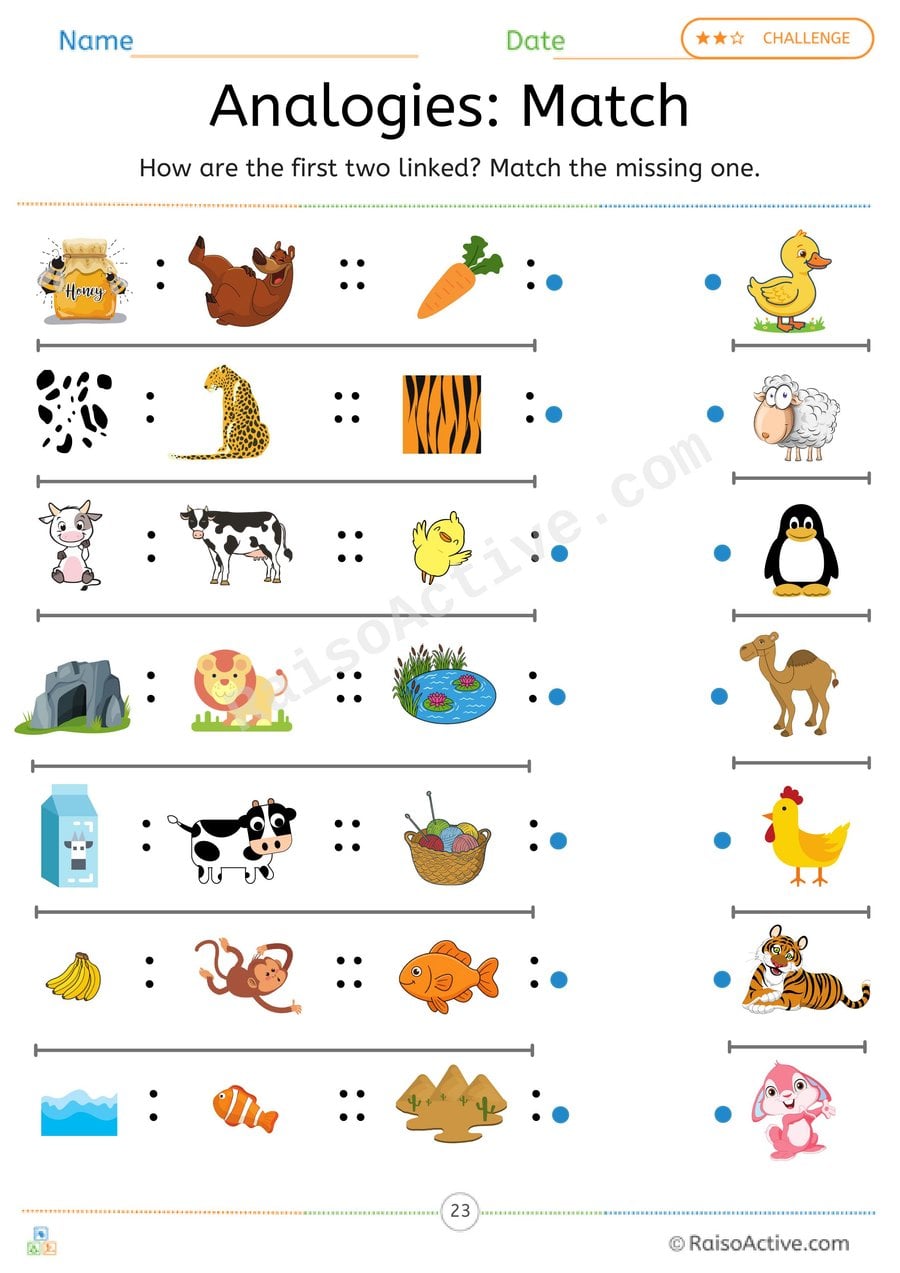
Picture Analogies Worksheet: Match What Goes Together
Ages 4-7 · Pre-K–Grade 1Ages 4-7 · Reception–Year 2Ages 4-7 · LKG–Class 1Ages 4-7
This worksheet helps children practice logical reasoning and visual discrimination by identifying relationships between pictures and completing analogies.
Guides for this topic

Documenting Learning Without Drowning in Data: A Practical Guide for Parents and Teachers
Learn practical ways to document your child's learning without overwhelm. Simple portfolios, observation tips, and printable trackers for ages 1-8.

Age-Appropriate Problem-Solving Activities: Building Critical Thinkers from the Ground Up
Discover fun, age-appropriate problem-solving activities for children ages 1-8. Build critical thinking, logic, and reasoning skills through play-based learning.
Critical Thinking Activities That Actually Work for Young Children: Building Tomorrow's Thinkers Today
Discover proven critical thinking activities for young children. Age-wise logic games, questioning techniques, and hands-on ideas to build thinking skills at home.
Reviews
Every worksheet for ages 3–5, no watermark
Members download the full library of 1,000+ worksheets and every activity pack without watermarks or daily limits. One year costs ₹999 in India or $20 elsewhere.
See membership plansOr download any worksheet free with a watermark (5 a day).