
Learn to Draw a Duck: Step-by-Step Drawing Worksheet for Kids
Following numbered steps to draw a duck teaches children ages 3-5 to break a complex picture into simple shapes — circles, ovals, and lines — building both sequencing skills and early drawing confidence. Learning that any drawing can be built one small step at a time helps reduce the frustration many young children feel when facing a blank page.
Part of the pack
Month 7: Holistic Kindergarten Curriculum | Ages 5-6Curriculum
How to use this worksheet
Look at the first drawing step together and identify the simple shape your child needs to draw, like a circle or curved line. Have them copy that shape onto their own paper or directly on the worksheet space provided. Move to the next numbered step, pointing out how the new shape connects to what's already drawn, and have your child add it in. Continue through all the steps until the duck is complete, then let your child color their finished drawing with crayons.
Materials needed
- Pencil
- Crayons
Extension activities
- •Try drawing another simple animal, like a fish or a bird, using the same break-it-into-shapes approach.
- •Color the finished duck with an unusual pattern, like stripes or polka dots, to add a creative twist.
- •Practice drawing the duck a second time from memory, without looking at the numbered steps.
- •Make a small book of duck drawings showing the duck doing different things, like swimming or waddling.
- •Turn the finished duck drawing into a puppet by cutting it out and gluing it to a craft stick.
Tips for parents and teachers
Let your child draw at their own pace and resist the urge to correct wobbly lines, since the goal is confidence and step-following, not a perfect picture. If a step feels tricky, model it once on a separate piece of paper before they try it themselves. Praise their willingness to attempt each new shape, and frame any mismatched proportions as part of their own artistic style rather than a mistake.

Written by
Hemsweta Jain · Teacher Cheena
MBA and Early Childhood Educator, teaching since 2014 · Founder of RaisoActive, Mumbai
Every RaisoActive worksheet is designed and checked by the founder before publishing.
Published · Last reviewed
Related worksheets

Draw a Penguin! Step-by-Step Drawing Worksheet for Kids
This worksheet builds drawing confidence and fine motor control by breaking down how to draw a penguin into simple, sequential steps that a young child can follow one at a time. For ages 3-5, step-by-step drawing teaches children that a complex image can be built from a series of simple shapes, an approach that transfers to drawing other subjects later on.

Draw a Turtle: Step-by-Step Drawing Worksheet for Kids
Following a sequence of simple shapes to build a recognizable picture teaches children ages 3-5 an early form of procedural thinking — breaking a bigger goal into smaller, ordered steps — while also strengthening pencil control and hand-eye coordination. Drawing a turtle from basic shapes like circles and ovals helps children see that complex-looking pictures are really just combinations of shapes they already know how to draw. This step-by-step approach also builds patience and sequencing skills that carry over into other multi-step tasks.

Trace the Numbers 1-9 Worksheet for Preschoolers
Tracing the numerals 1 through 9 gives children ages 3-5 repeated, guided practice with the specific pencil strokes each number requires, building the fine motor control and muscle memory needed for independent number writing. Because tracing follows a fixed, correct path, it also reinforces accurate numeral recognition, helping children tell visually similar digits apart.
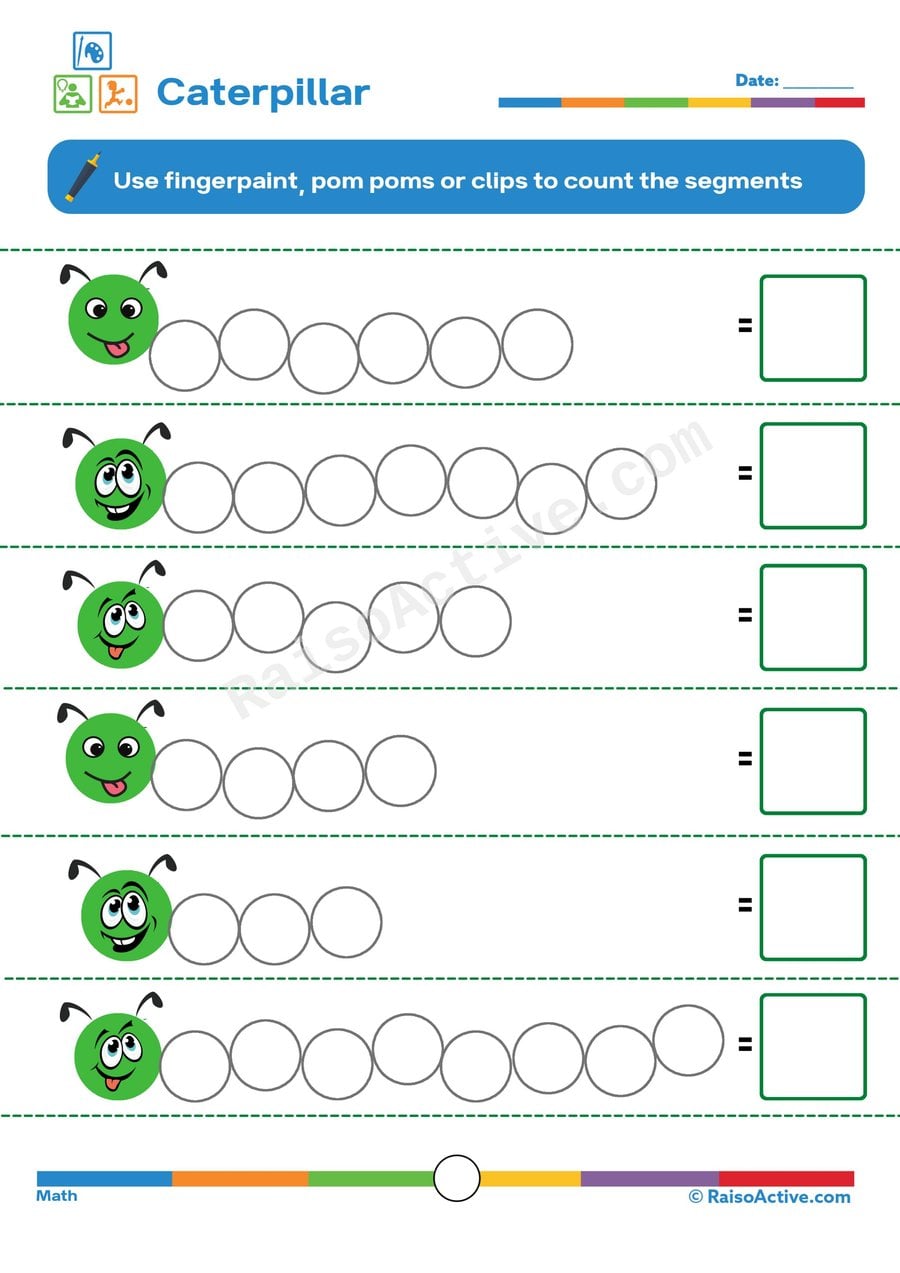
Caterpillar Counting Worksheet for Preschoolers
Counting the segments of each caterpillar teaches children ages 3-5 one-to-one correspondence — touching or marking each segment exactly once while saying a number — which is the core skill underlying accurate counting. Writing the final total in a box also connects the physical act of counting to its written numeral, reinforcing early number-writing practice.
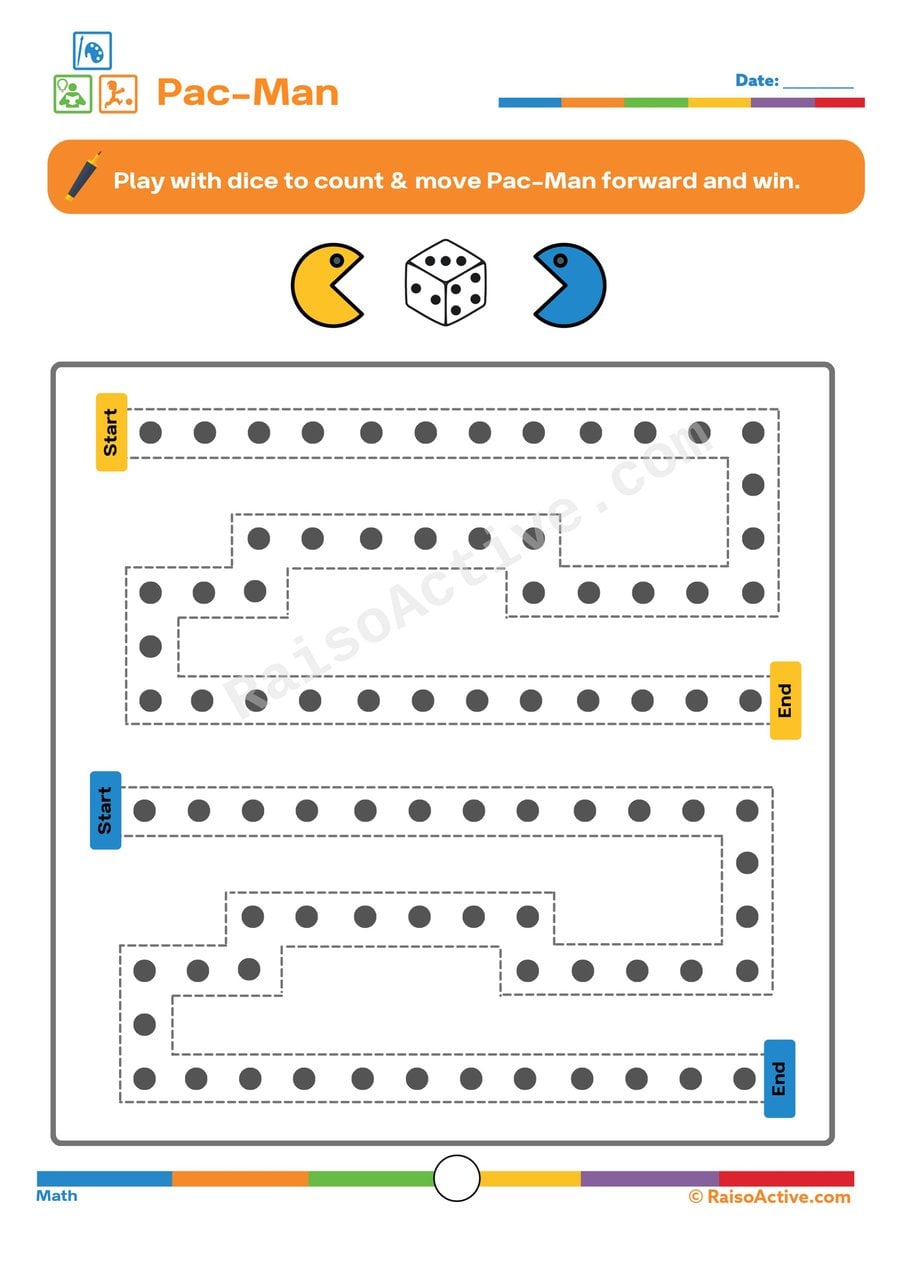
Pac-Man Maze Worksheet: Count and Move!
This dice-counting maze gives children ages 3-5 repeated practice matching a rolled number to the correct number of moves, reinforcing accurate counting under a bit of playful pressure. Tracking Pac-Man's current position after each roll also builds short-term spatial memory, since children must remember where they left off before moving again.

Stick Man Emotions Worksheet: Happy, Sad, Angry, and Surprised!
Children ages 4-6 practice reading facial expressions on this worksheet, matching stick-figure faces to their correct emotion labels by noticing details like mouth shape and eyebrow position. This strengthens emotional literacy — the ability to name and recognize feelings in others — which supports empathy and smoother social interactions as children move into more group play and classroom settings.
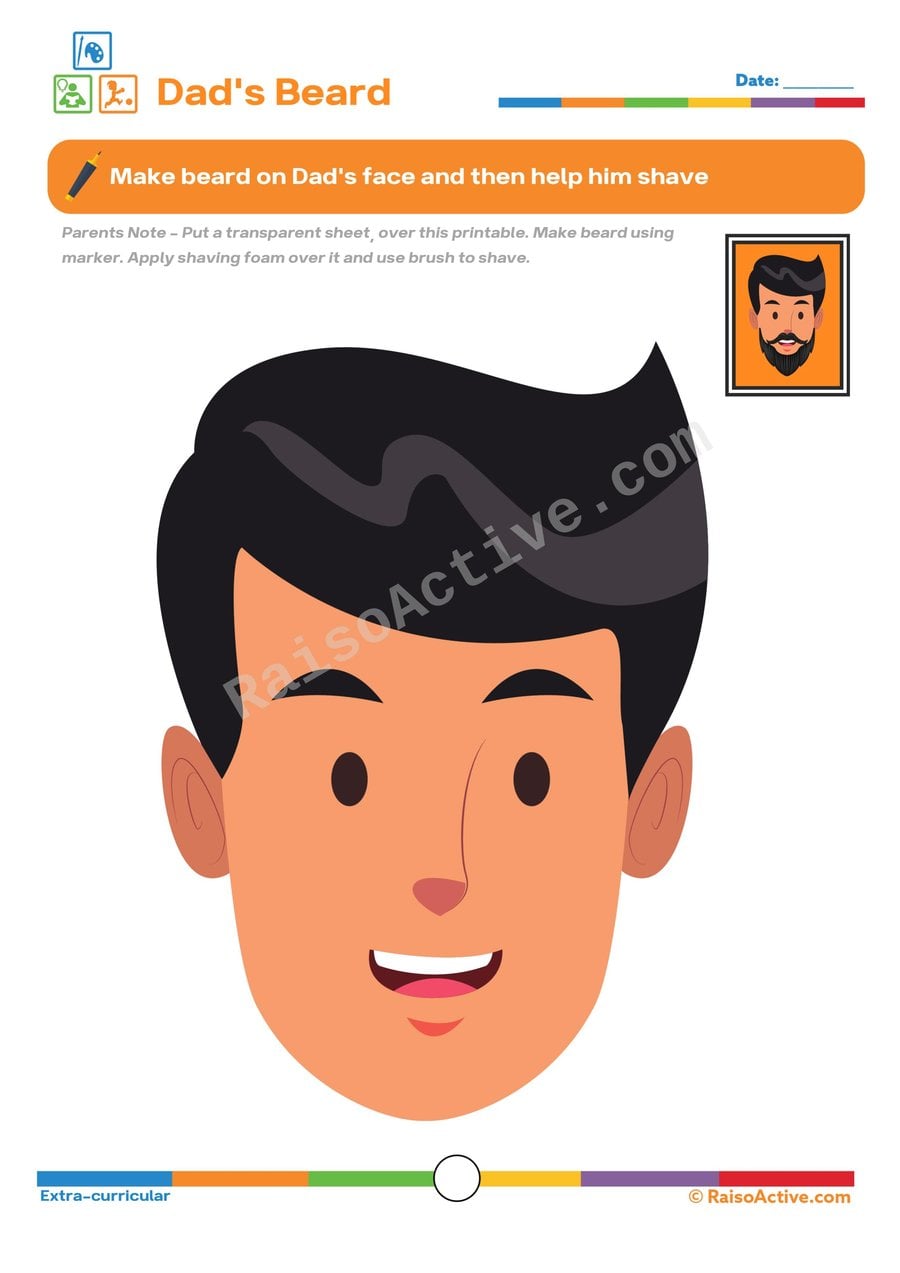
Dad's Beard: A Fun Shaving Activity for Kids!
This playful pretend-shaving activity builds fine motor control and bilateral coordination in children ages 3-5, as they draw a beard with a marker and then 'shave' it away using foam and a brush in careful, controlled strokes. It also introduces a simple science idea — that shaving foam can be applied and removed in layers — while giving children a hands-on, sensory way to imitate an everyday grown-up routine.

Soap & Pepper Science Experiment Worksheet for Preschoolers
This simple experiment introduces children ages 3-5 to the basic science of surface tension and how soap breaks it, using pepper flakes sprinkled on water as a visual demonstration. Watching the pepper scatter away the instant soap touches the water gives children a concrete, memorable example of cause and effect, an early building block for scientific thinking.
Guides for this topic
Age-Appropriate Problem-Solving Activities: Building Critical Thinkers from the Ground Up
Discover fun, age-appropriate problem-solving activities for children ages 1-8. Build critical thinking, logic, and reasoning skills through play-based learning.
Fostering Creativity in Structured Learning: The Perfect Balance for Young Minds
Learn how to blend creativity with structured learning for children ages 1-8. Practical strategies, activities, and printable worksheets for parents and teachers.
Critical Thinking Activities That Actually Work for Young Children: Building Tomorrow's Thinkers Today
Discover proven critical thinking activities for young children. Age-wise logic games, questioning techniques, and hands-on ideas to build thinking skills at home.
Reviews
Every worksheet for ages 3–5, no watermark
Members download the full library of 1,000+ worksheets and every activity pack without watermarks or daily limits. One year costs ₹1,000 in India or $20 elsewhere.
See membership plansOr download any worksheet free with a watermark (5 a day).