Blends Revision Worksheet: Cut and Glue!
Sorting pictures by their beginning blend sound (br, cr, dr) sharpens phonemic awareness for children ages 4-5, teaching them that two consonants blended together still keep their own distinct sounds. This cut-and-glue format forces careful listening before pasting, since a picture can only go in one column, which builds the auditory discrimination that underlies early decoding.
Part of the pack
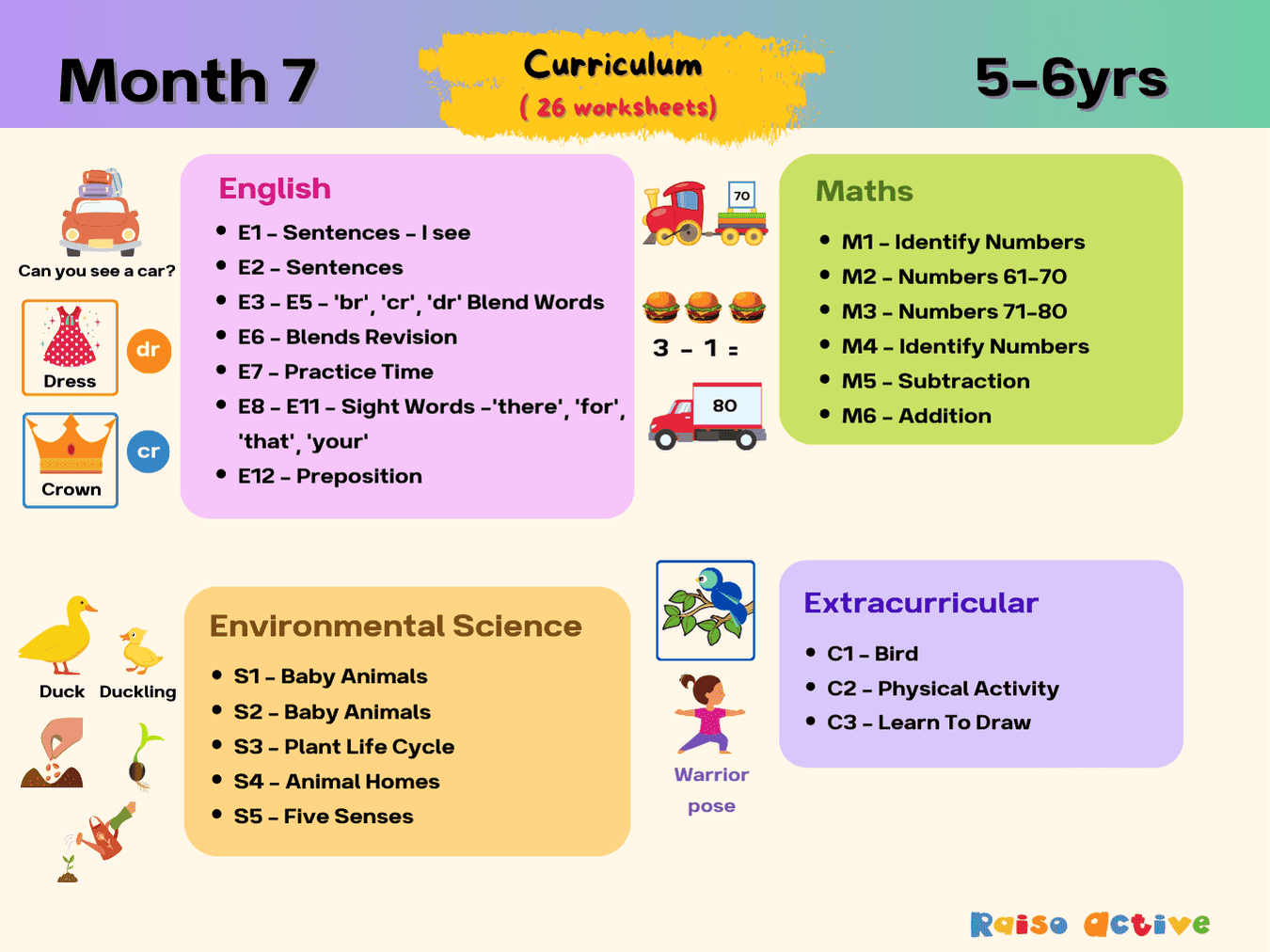
Month 7: Holistic Kindergarten Curriculum | Ages 5-6
This is page 9 of the pack. Ages 5-6 · KindergartenAges 5-6 · Year 1Ages 5-6 · UKGAges 5-6
Made for your child
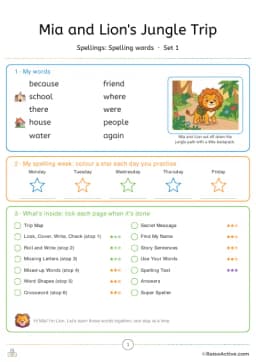
Spelling practice, made for your child
Their own spelling words turned into a pack: trace or look-cover-write-check, roll and write, a secret picture code, a word search, a crossword and a test, with their name in it.
Make a spelling packFree preview · free for members
Or start free: a word search with sight wordsCurriculum
- Phonics - Blends > Consonant Blends
How to use this worksheet
Start by naming each of the three blend columns aloud with your child (br, cr, dr) so they know the target sounds before cutting begins. Have them cut out the picture cards at the bottom of the page along the lines. For each picture, say its name slowly and stretch out the beginning sound, then decide together which column it belongs in. Once sorted correctly, glue each picture into its matching column, and finish by rereading each column top to bottom.
Materials needed
- Scissors
- Glue
- Pencil
Extension activities
- 1Go on a 'blend hunt' around the house, collecting or naming objects that start with br, cr, or dr sounds.
- 2Make a simple three-column chart on paper and challenge your child to draw one new picture for each blend.
- 3Play an oral sorting game: call out words and have your child clap once for br, twice for cr, three times for dr.
- 4Practice writing each blend at the top of a page, then brainstorm a list of words that start with it.
- 5Use alphabet magnets to build one word from each blend family and read the words together.

Written by
Hemsweta Jain · Teacher Cheena
MBA and Early Childhood Educator, teaching since 2014 · Founder of RaisoActive, Mumbai
Every RaisoActive worksheet is designed and checked by the founder before publishing.
Published · Last reviewed
More from Month 7: Holistic Kindergarten Curriculum | Ages 5-6
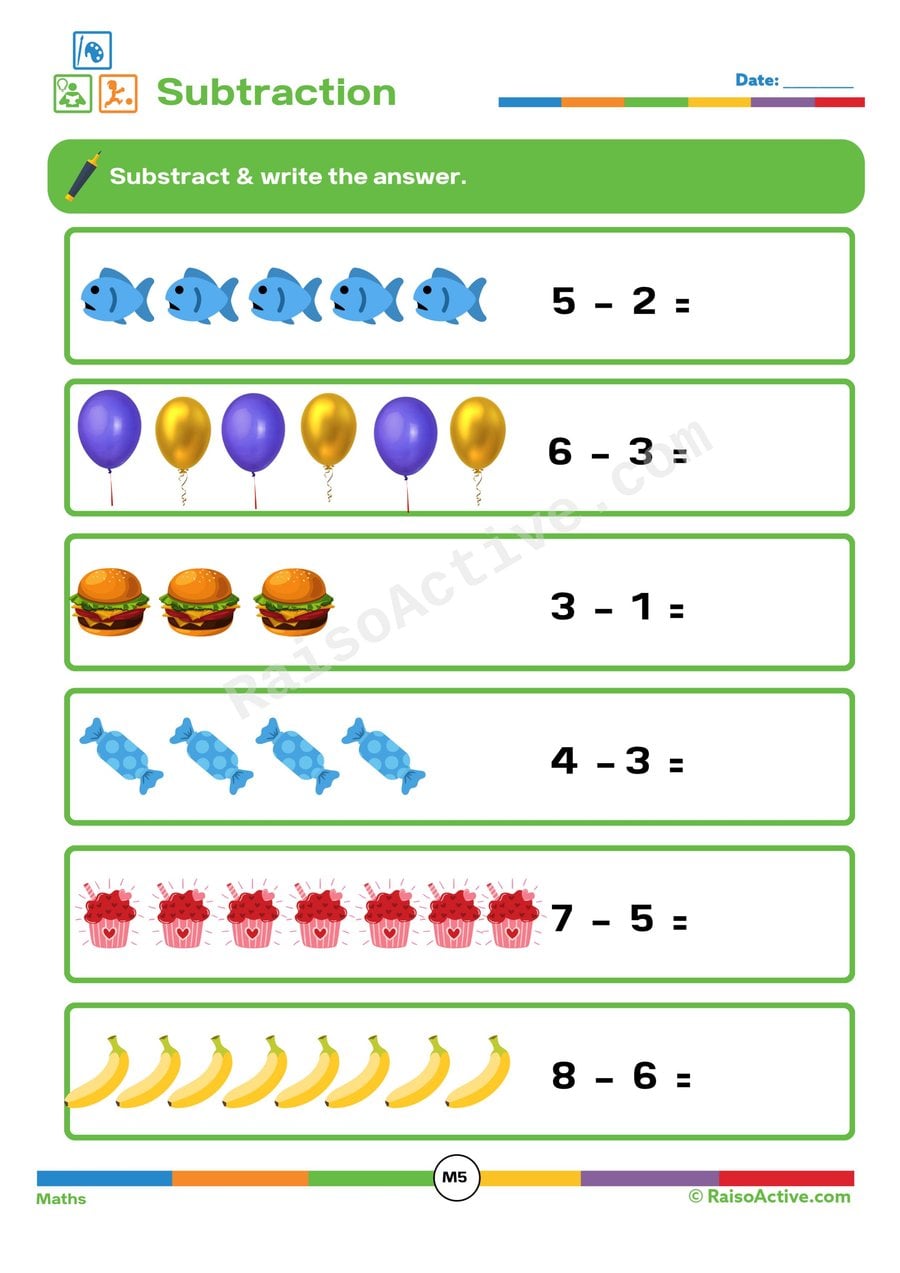
Subtraction Worksheet: Count and Subtract!
Ages 4-5 · Pre-KAges 4-5 · ReceptionAges 4-5 · LKGAges 4-5
This worksheet gives children ages 4-5 hands-on practice with subtraction as 'taking away' from a visible group, helping them understand that a number decreases when items are removed rather than treating subtraction as an abstract symbol on paper. Counting the starting group and then physically crossing out or covering objects before writing the difference builds the concrete number sense that later supports mental subtraction.

Match the Baby Animals Worksheet for Preschoolers
Ages 3-5 · Preschool–Pre-KAges 3-5 · Nursery–ReceptionAges 3-5 · Nursery–LKGAges 3-5
Connecting adult animals to their babies builds specific vocabulary for children ages 3-5, like puppy, kitten, and fawn, while training visual comparison skills as they look for matching features between each pair. This activity also introduces the early biology concept that offspring, though smaller and sometimes differently colored, belong to the same animal family as their parent.

Number Identification Worksheet: Highlight Numbers 61-70
Ages 4-6 · Pre-K–KindergartenAges 4-6 · Reception–Year 1Ages 4-6 · LKG–UKGAges 4-6
Finding and highlighting the numbers 61 through 70 in sequence within a larger number grid builds visual scanning skills alongside number recognition, since children must search among many similar-looking two-digit numbers to find the correct one in order. For ages four to six, working confidently in this higher number range extends counting fluency well beyond the more commonly practiced numbers up to 20 or 50.

Cr Blend Words Worksheet for Preschoolers: Read & Match!
Ages 3-5 · Preschool–Pre-KAges 3-5 · Nursery–ReceptionAges 3-5 · Nursery–LKGAges 3-5
This worksheet has children read words starting with the 'cr' blend, like 'crab' or 'crayon,' and then match each one to its picture, building both decoding skill and the vocabulary connection between a written word and a real object. For ages three to five, hearing and producing the blended 'cr' sound also improves overall speech clarity, since blended consonants are often among the later sounds children master.

Christmas Blend Words Coloring Worksheet for Preschoolers
Ages 4-5 · Pre-KAges 4-5 · ReceptionAges 4-5 · LKGAges 4-5
Coloring words by their beginning blend sound on a Christmas tree turns phonics practice into a festive, motivating activity for children ages 4-5, reinforcing that blends like 'br,' 'cl,' or 'sn' keep their combined sound even though they're made of two consonants. Because each color represents a different blend, children must listen carefully to each word before choosing a crayon, strengthening auditory discrimination alongside seasonal fun.

Sight Word 'There' Worksheet for Preschoolers: Tracing, Coloring, and Sentence Building
Ages 4-5 · Pre-KAges 4-5 · ReceptionAges 4-5 · LKGAges 4-5
Because 'there' can't be decoded using typical phonics rules and is easily confused with the similar-sounding 'their' and 'they're,' children ages 4-5 need repeated, varied exposure to memorize it as a sight word. Practicing it through coloring, tracing, searching, and sentence-building helps move the word from momentary recognition into automatic recall needed for fluent reading.

Sight Word 'Your' Worksheet: Tracing, Coloring, and Sentence Practice
Ages 4-5 · Pre-KAges 4-5 · ReceptionAges 4-5 · LKGAges 4-5
Children ages 4-5 build sight word automaticity for 'your' — a word that can't be sounded out with basic phonics rules and must instead be recognized instantly for fluent reading. Multiple exposure formats (coloring, tracing, searching, and using it in a sentence) help move the word from short-term recognition into long-term memory, a rehearsal strategy that is especially important for high-frequency 'trick' words.
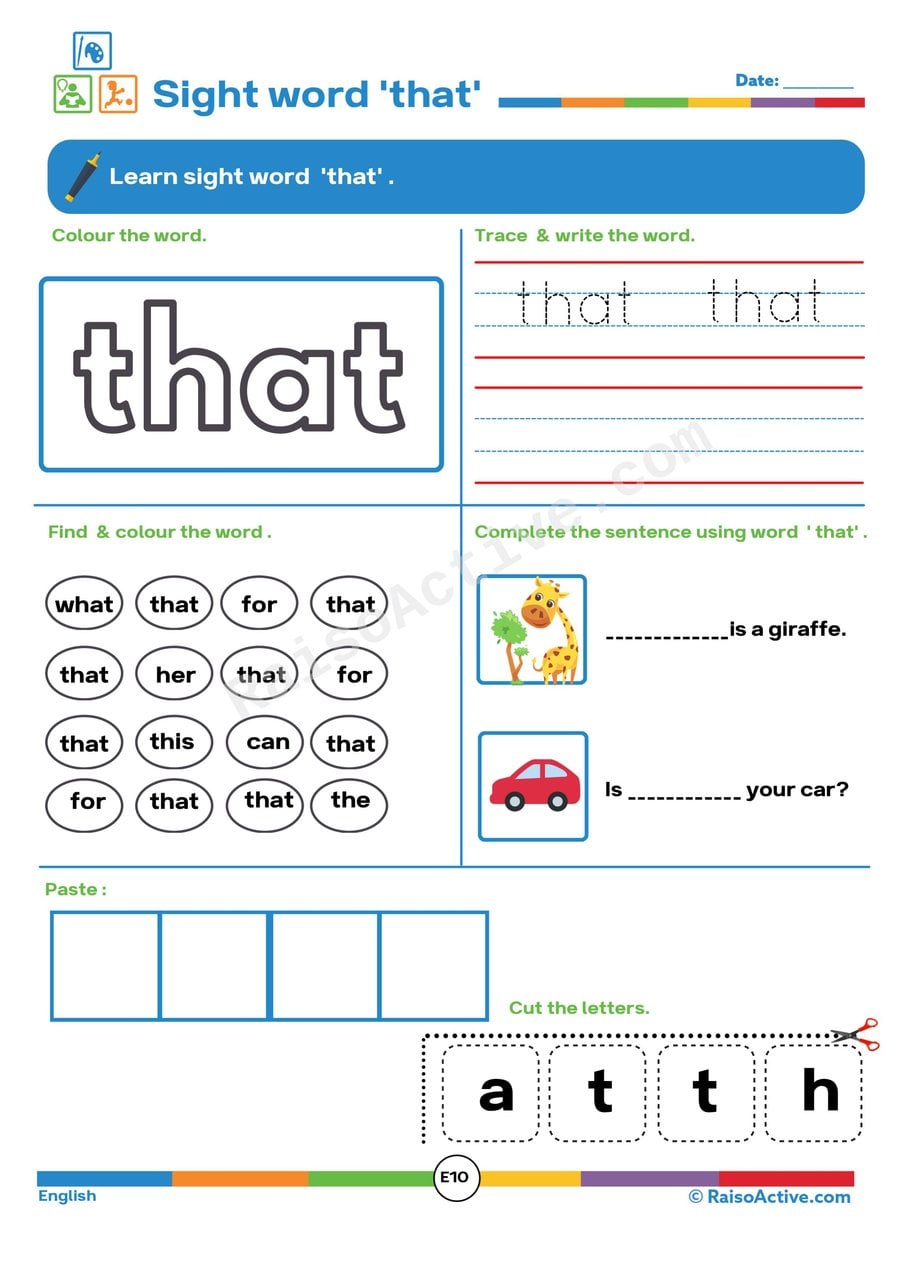
Sight Word 'That' Worksheet: Trace, Find, and Write!
Ages 4-5 · Pre-KAges 4-5 · ReceptionAges 4-5 · LKGAges 4-5
As one of the most frequently used words in early reading texts, 'that' needs to be recognized instantly rather than sounded out letter by letter, and this worksheet gives children ages 4-5 several different ways to practice that recognition. Combining tracing, visual searching, sentence completion, and cutting letters to spell the word reinforces the same target through multiple senses and formats, which strengthens memory retention for tricky sight words.
Related worksheets

Blend Words Worksheet: Fill in the Blanks with Beginning Blends!
Ages 4-6 · Pre-K–KindergartenAges 4-6 · Reception–Year 1Ages 4-6 · LKG–UKGAges 4-6
Similar to blend recognition but with an added layer of choice, this worksheet gives children ages 4-6 a bank of possible beginning blends to choose from as they complete each picture word, building both phonics recall and careful selection skills. Choosing the correct blend from several options requires your child to test each possibility mentally against the word they're trying to spell, which strengthens their ability to self-check and problem-solve rather than just guessing. This kind of active decision-making with phonics elements builds toward more independent spelling down the road.
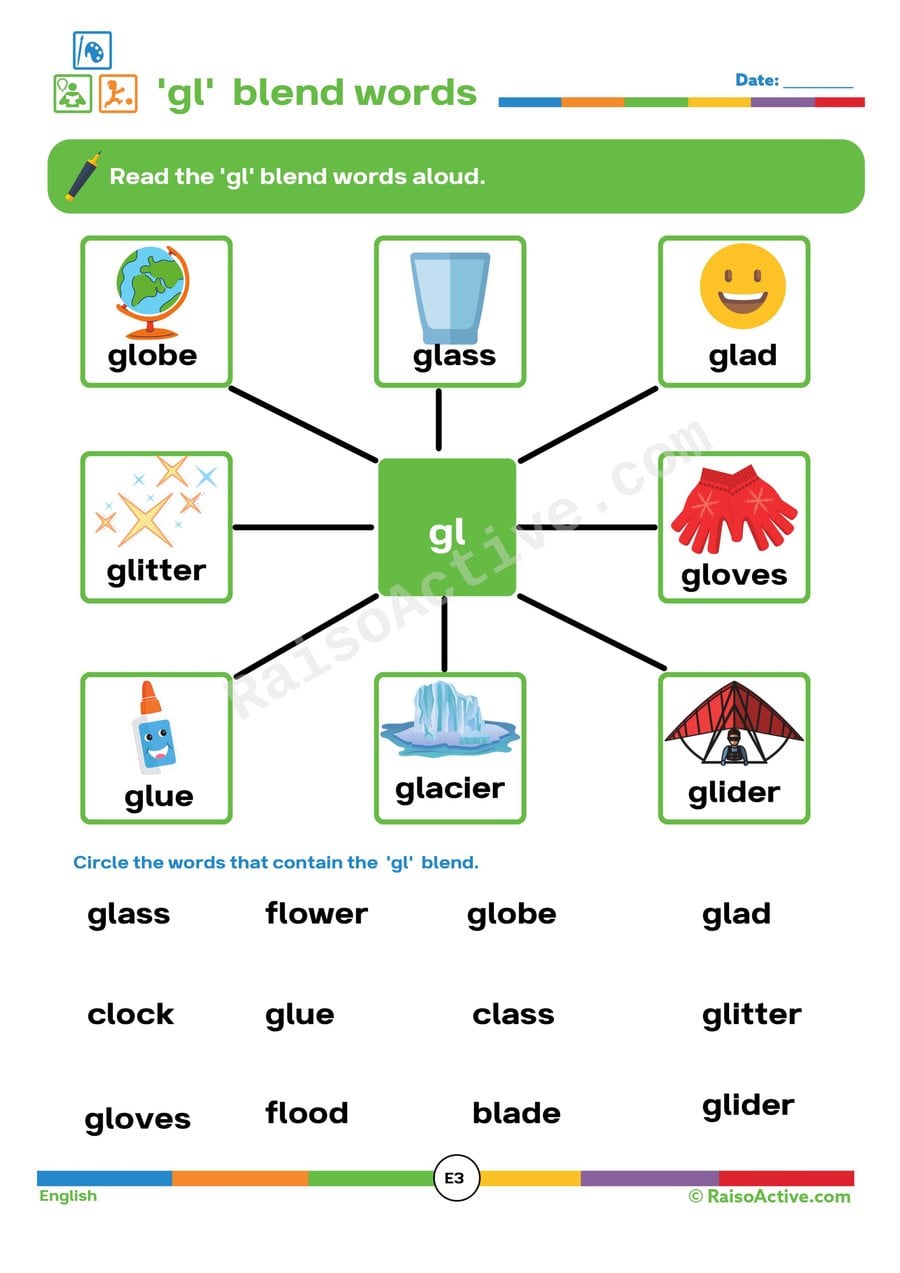
Gl Blend Words Worksheet: Read and Circle!
Ages 4-6 · Pre-K–KindergartenAges 4-6 · Reception–Year 1Ages 4-6 · LKG–UKGAges 4-6
This worksheet builds phonics skills around the 'gl' consonant blend, helping children recognize and read words like 'glass,' 'glue,' and 'glow' where the sounds of g and l combine at the start of a word. For ages 4-6, practicing blends like gl strengthens the sound-segmentation skills needed to decode increasingly complex words as reading develops.

Sl Blend Words Worksheet: Read, Identify, and Circle!
Ages 4-6 · Pre-K–KindergartenAges 4-6 · Reception–Year 1Ages 4-6 · LKG–UKGAges 4-6
Reading and circling words that begin with the 'sl' consonant blend helps children ages 4-6 hear that two consonants pressed together, like s and l, still form one connected sound at the start of a word. This is a more advanced phonics skill than single-letter sounds, since children must blend two consonants smoothly rather than separating them. Recognizing blends like 'sl' in words such as 'slide' or 'sled' builds the decoding fluency needed to read longer, less predictable words independently.

Blend Words Worksheet: Fill in the Blanks with Beginning Blends!
Ages 4-6 · Pre-K–KindergartenAges 4-6 · Reception–Year 1Ages 4-6 · LKG–UKGAges 4-6
Children ages 4-6 practice identifying and writing beginning consonant blends, like 'bl', 'cr', or 'st', by looking at pictures and completing the missing letters to form the full word. This task requires connecting a spoken sound to its written letter combination, deepening phonics skills beyond single-letter sounds into multi-letter blends. Successfully building these words strengthens both spelling and reading fluency.

Blend Words: Color the Correct Picture Worksheet for Preschoolers
Ages 4-5 · Pre-KAges 4-5 · ReceptionAges 4-5 · LKGAges 4-5
This worksheet gives children ages 4-5 practice reading consonant blend words — words that start with two consonant sounds blended together, like 'bl' or 'sn' — and coloring the picture that matches each one. Consonant blends are trickier to decode than single-letter sounds, so this focused, low-pressure coloring format lets children practice blending without the added challenge of writing at the same time.
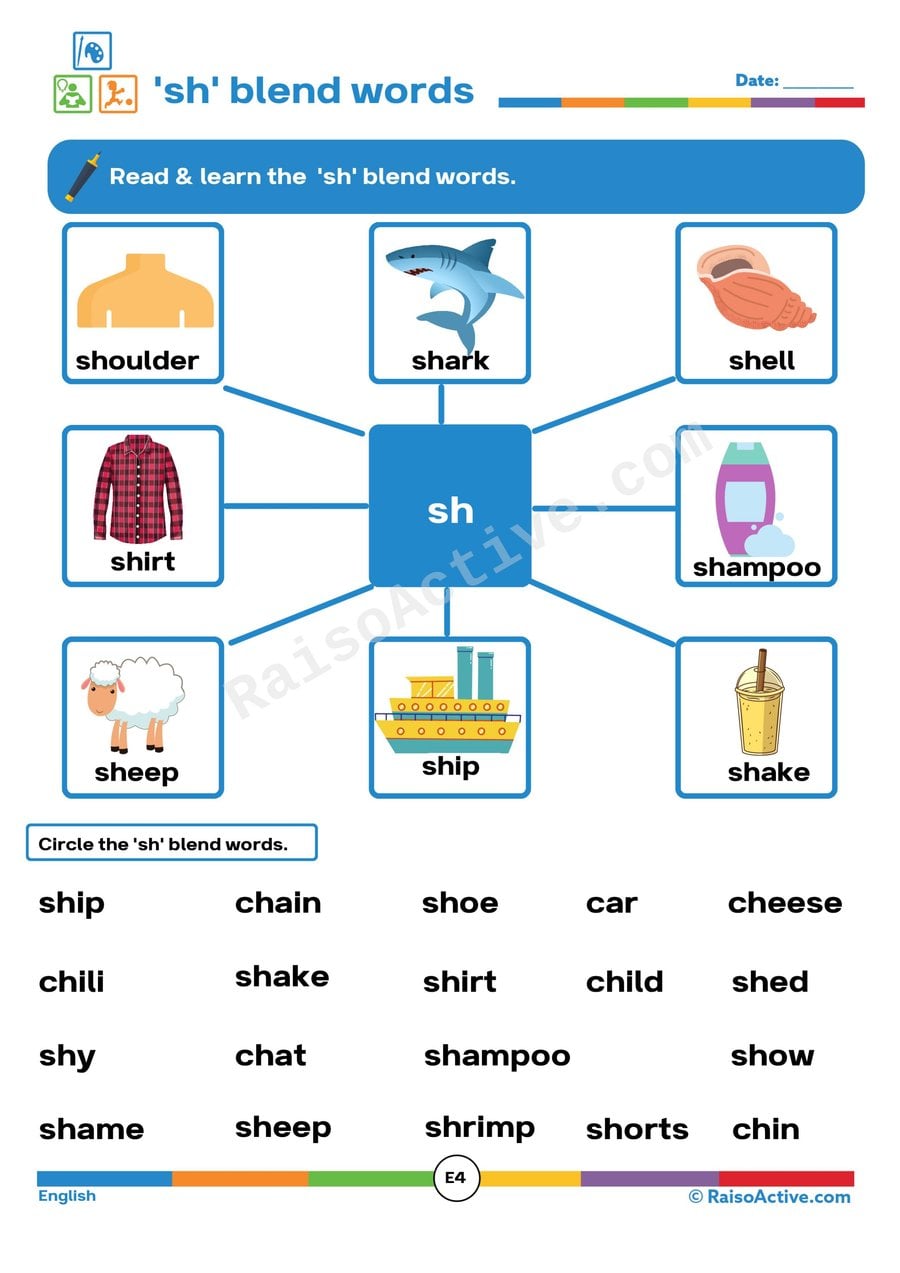
Sh Blend Words Worksheet: Read, Learn, and Circle!
Ages 4-6 · Pre-K–KindergartenAges 4-6 · Reception–Year 1Ages 4-6 · LKG–UKGAges 4-6
The 'sh' blend is one of the most common digraphs in early English words, appearing in everyday vocabulary like 'ship,' 'shell,' and 'shop,' which makes this worksheet especially useful for children ages 4-6 building toward independent reading. Recognizing that two letters, 's' and 'h,' combine to make one brand-new sound (rather than two separate sounds) is a key phonics milestone, since digraphs behave differently from regular consonant blends. Reading and then circling 'sh' words from a list reinforces both the sound and the specific letter pattern that represents it.

Blends Revision Worksheet: Circle the Correct Blend!
Ages 4-6 · Pre-K–KindergartenAges 4-6 · Reception–Year 1Ages 4-6 · LKG–UKGAges 4-6
Choosing the correct consonant blend to match a picture asks children ages 4-6 to compare two similar-sounding options, like 'bl' versus 'br,' and decide which one truly matches the word they hear, a sharper phonics skill than recognizing a single blend in isolation. This side-by-side comparison format catches confusion between commonly mixed-up blends that simple flashcards might miss. Building this discrimination skill helps children read multisyllabic and blended words more accurately and confidently.
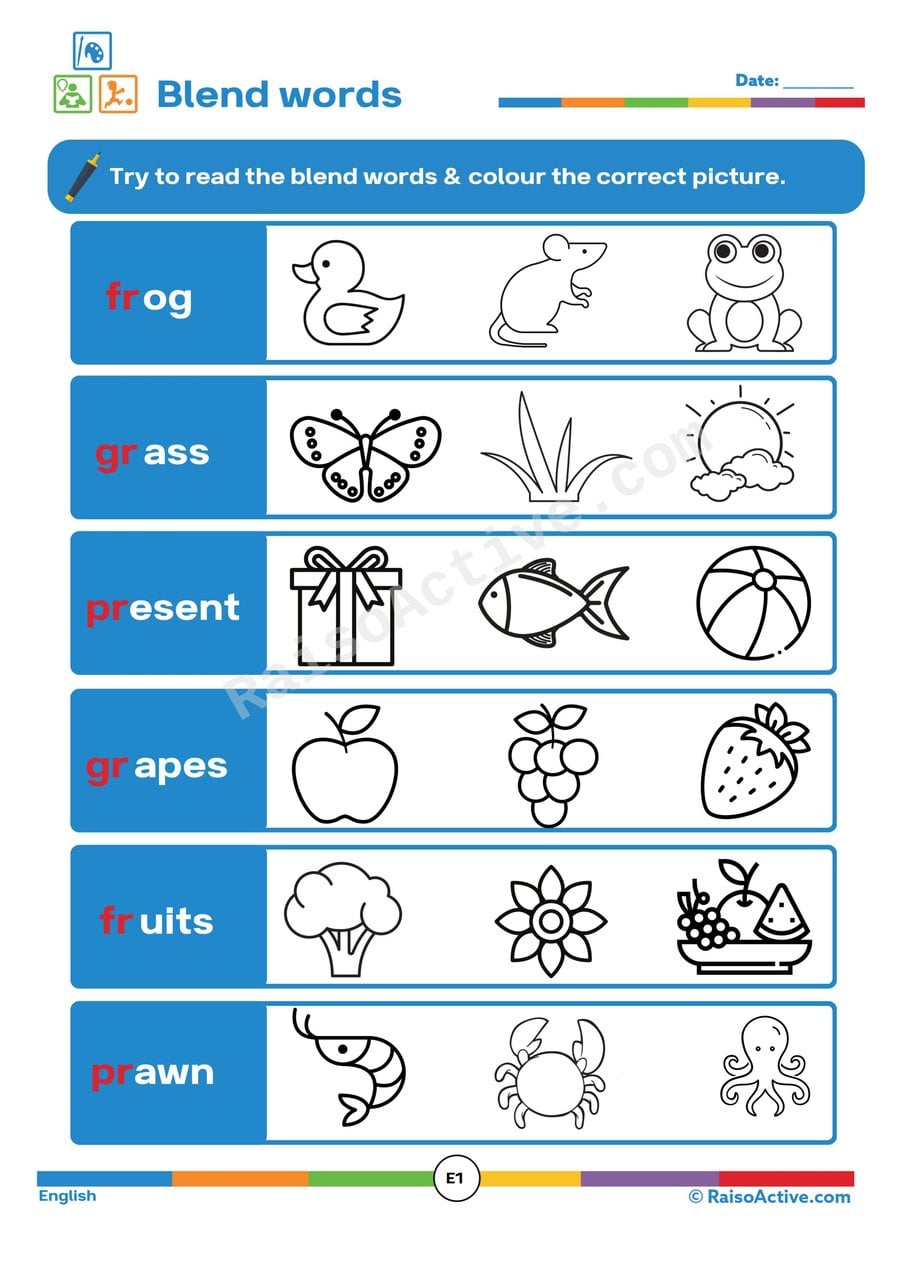
Blend Words Coloring Worksheet for Preschoolers
Ages 4-6 · Pre-K–KindergartenAges 4-6 · Reception–Year 1Ages 4-6 · LKG–UKGAges 4-6
Consonant blends, like 'bl,' 'st,' or 'fr,' require children ages 4-6 to read two consonant sounds together without a vowel between them, which is genuinely more demanding than single-consonant CVC words and represents an important next step in phonics progression. This worksheet asks children to read a blend word and then color the picture that matches it, giving an immediate visual check on whether they decoded the blend correctly. Because coloring is the reward for accurate reading, the activity keeps repeated blend practice feeling engaging rather than repetitive.
Guides for this topic

How to Teach CVC Blending: A Step-by-Step Method That Works in Two Weeks
A step-by-step method for teaching CVC blending, covering continuous sounds, word families, common errors, and a 14-day plan that most children finish reading CVC words.
Phase 2 Phonics at Home: Sound Order, Blending Games, Worksheets
Phase 2 phonics at home: the five sound sets in order, oral blending, tricky words, a two-week routine, common mistakes, and free worksheets.

Reception Year Explained: EYFS Learning and How to Help at Home
A teacher's plain-English guide to the Reception Year: the seven areas of learning, Early Learning Goals, Phase 2/3 phonics, the RBA and home routines.
Reviews
Every worksheet for ages 4–5, no watermark
Members download the full library of 1,000+ worksheets and every activity pack without watermarks or daily limits. One year costs ₹999 in India or $20 elsewhere.
See membership plansOr download any worksheet free with a watermark (5 a day).