Make Your Own Paper Bird Worksheet for Preschoolers
Cutting out shapes and assembling them into a paper bird helps children ages 3-5 build fine motor control and hand-eye coordination, since aligning several small pieces accurately requires more precision than a single cut-and-paste task. Following a reference image to guide assembly also strengthens visual sequencing and the ability to translate a picture instruction into a physical, step-by-step action.
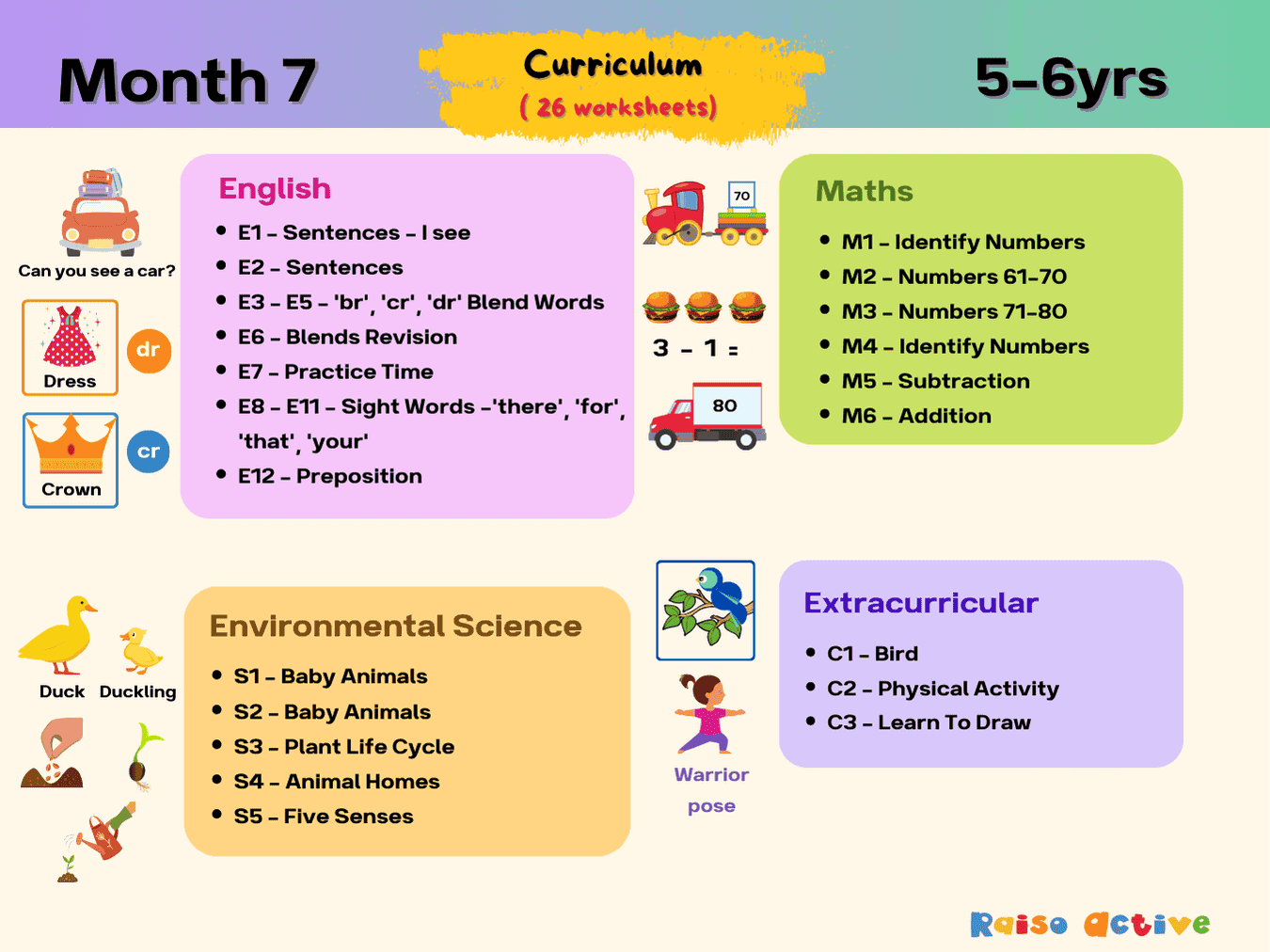
Part of the pack
Month 7: Holistic Kindergarten Curriculum | Ages 5-6
This is page 27 of the pack. Ages 5-6 · KindergartenAges 5-6 · Year 1Ages 5-6 · UKGAges 5-6
Curriculum
- Fine Motor > Scissor Skills & Cutting
How to use this worksheet
Look at the example picture of the finished paper bird together so your child knows what they're building toward. Have them cut out each provided shape carefully along the dotted lines, offering help with any tricky curves. Guide your child to arrange the pieces in the correct positions on a blank sheet, matching the reference image, before applying any glue. Once satisfied with the layout, have them glue each piece down firmly and let it dry before handling the finished bird.
Materials needed
- Scissors
- Glue
- Crayons or Markers (optional)
Extension activities
- 1Color the finished paper bird with bright patterns or add extra details like feathers using crayons.
- 2Create a simple background scene, like a tree branch or sky, for the paper bird to sit in.
- 3Make several paper birds in different sizes and colors and string them together into a hanging mobile.
- 4Go on a short walk outside to spot and listen to real birds, talking about their colors and features.
- 5Use the leftover paper scraps to design an entirely new, imaginary bird of your own.

Written by
Hemsweta Jain · Teacher Cheena
MBA and Early Childhood Educator, teaching since 2014 · Founder of RaisoActive, Mumbai
Every RaisoActive worksheet is designed and checked by the founder before publishing.
Published · Last reviewed
Related worksheets
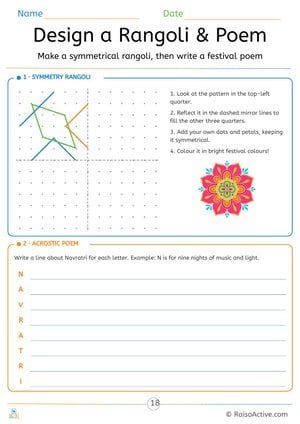
Navratri Symmetry Rangoli and Acrostic Poem
Ages 7-11 · Grade 2–Grade 3Ages 7-11 · Year 3–Year 4Ages 7-11 · Class 2–Class 3Ages 7-11
Children reflect a pattern in two mirror lines to complete a four-way symmetrical rangoli on a dot grid, add their own symmetrical details, and write an acrostic poem with one line for each letter of NAVRATRI.
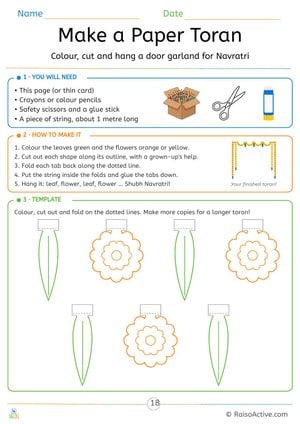
Make a Paper Toran: Navratri Craft Template
Ages 4-6 · Pre-K–KindergartenAges 4-6 · Reception–Year 1Ages 4-6 · LKG–UKGAges 4-6
Children follow step-by-step instructions to colour, cut, fold and glue a festival decoration, building scissor skills and fine motor control.

Stick Man Emotions Worksheet: Happy, Sad, Angry, and Surprised!
Ages 4-6 · Pre-K–KindergartenAges 4-6 · Reception–Year 1Ages 4-6 · LKG–UKGAges 4-6
Children ages 4-6 practice reading facial expressions on this worksheet, matching stick-figure faces to their correct emotion labels by noticing details like mouth shape and eyebrow position. This strengthens emotional literacy — the ability to name and recognize feelings in others — which supports empathy and smoother social interactions as children move into more group play and classroom settings.
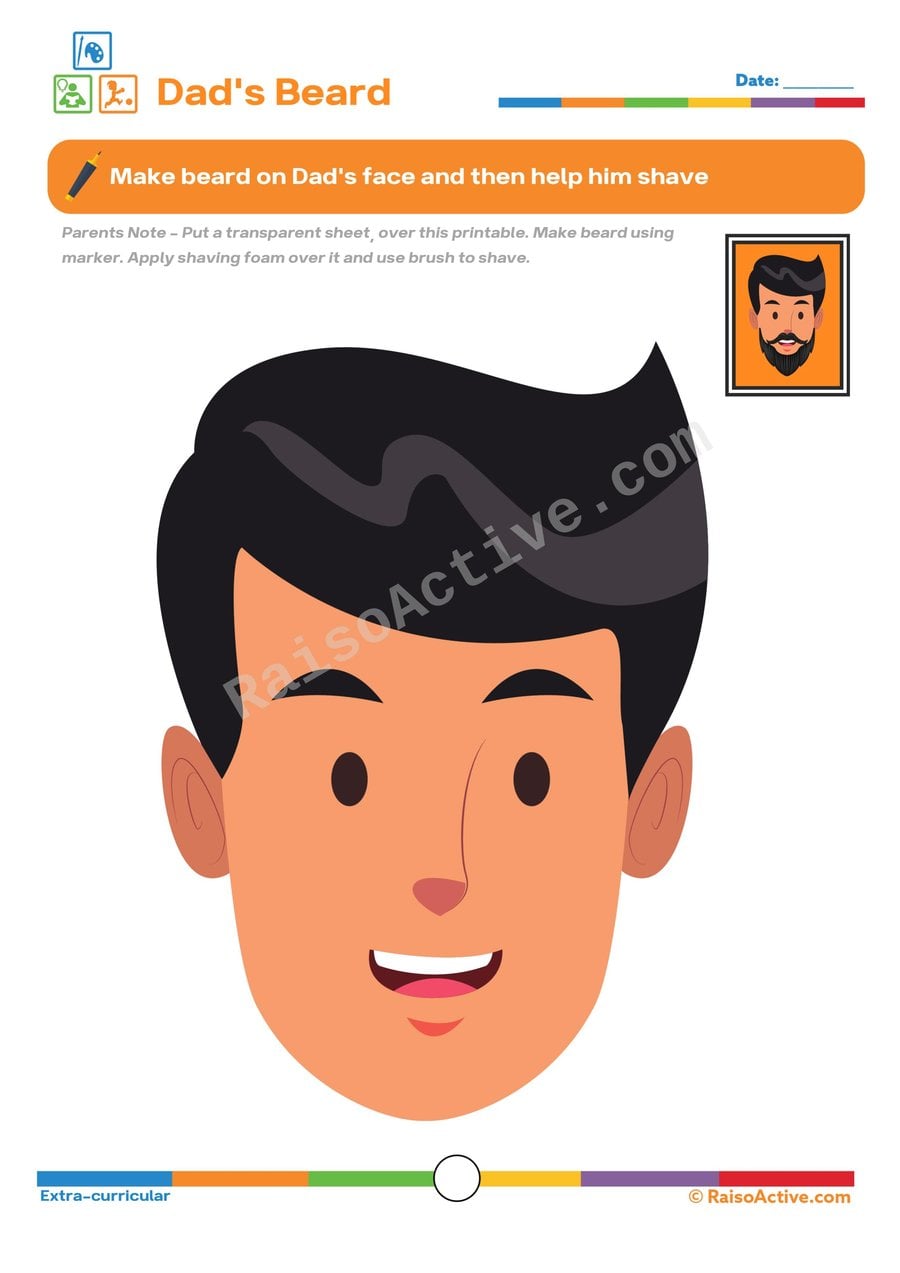
Dad's Beard: A Fun Shaving Activity for Kids!
Ages 3-5 · Preschool–Pre-KAges 3-5 · Nursery–ReceptionAges 3-5 · Nursery–LKGAges 3-5
This playful pretend-shaving activity builds fine motor control and bilateral coordination in children ages 3-5, as they draw a beard with a marker and then 'shave' it away using foam and a brush in careful, controlled strokes. It also introduces a simple science idea — that shaving foam can be applied and removed in layers — while giving children a hands-on, sensory way to imitate an everyday grown-up routine.
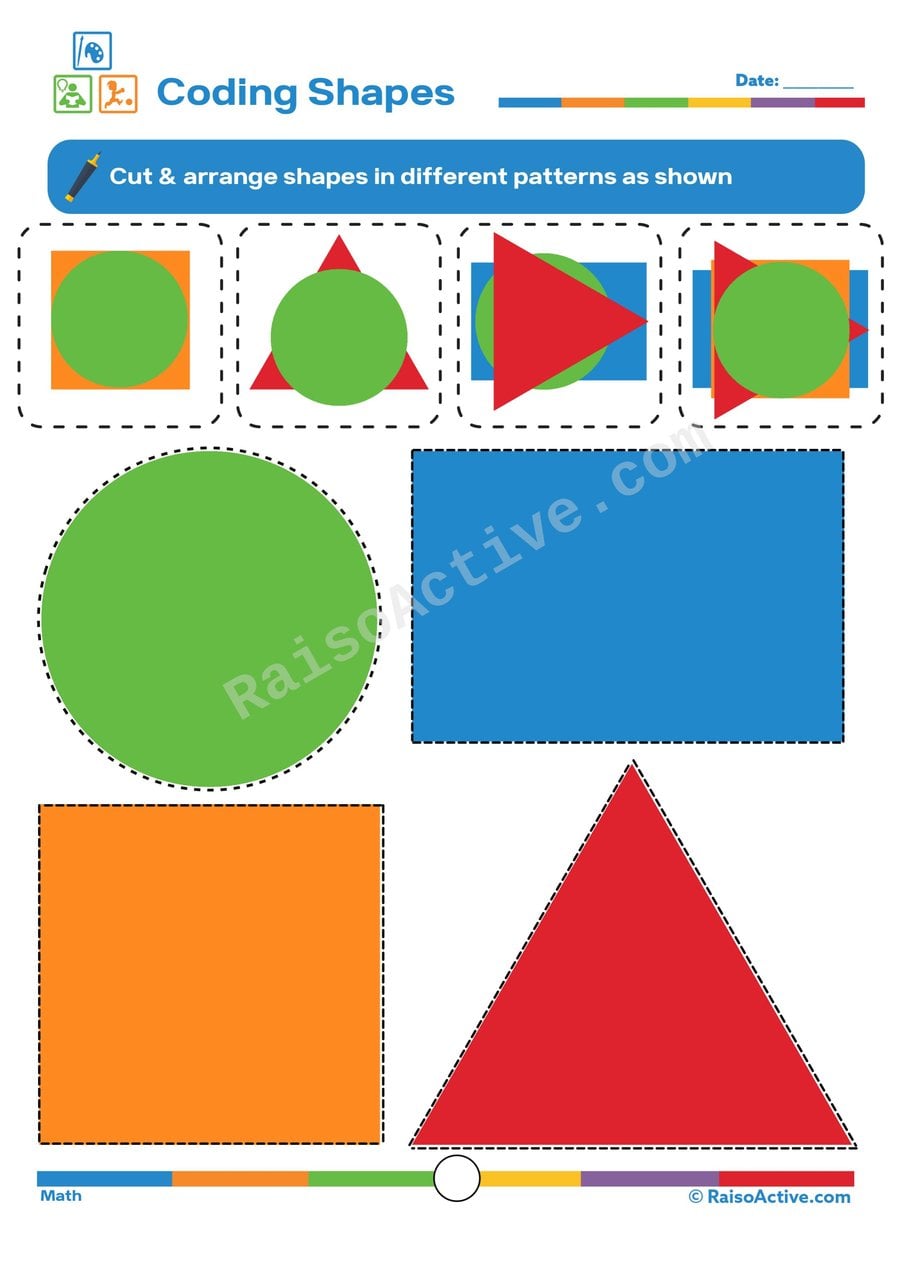
Coding Shapes Worksheet: Cut and Arrange Shapes!
Ages 3-5 · Preschool–Pre-KAges 3-5 · Nursery–ReceptionAges 3-5 · Nursery–LKGAges 3-5
This cut-and-paste worksheet has children ages 3-5 recreate example shape sequences by cutting out individual pieces and arranging them to match, combining shape recognition with the ordered, step-by-step thinking used in early coding and pattern logic. The physical act of cutting and precisely placing each piece also strengthens fine motor control and spatial planning.
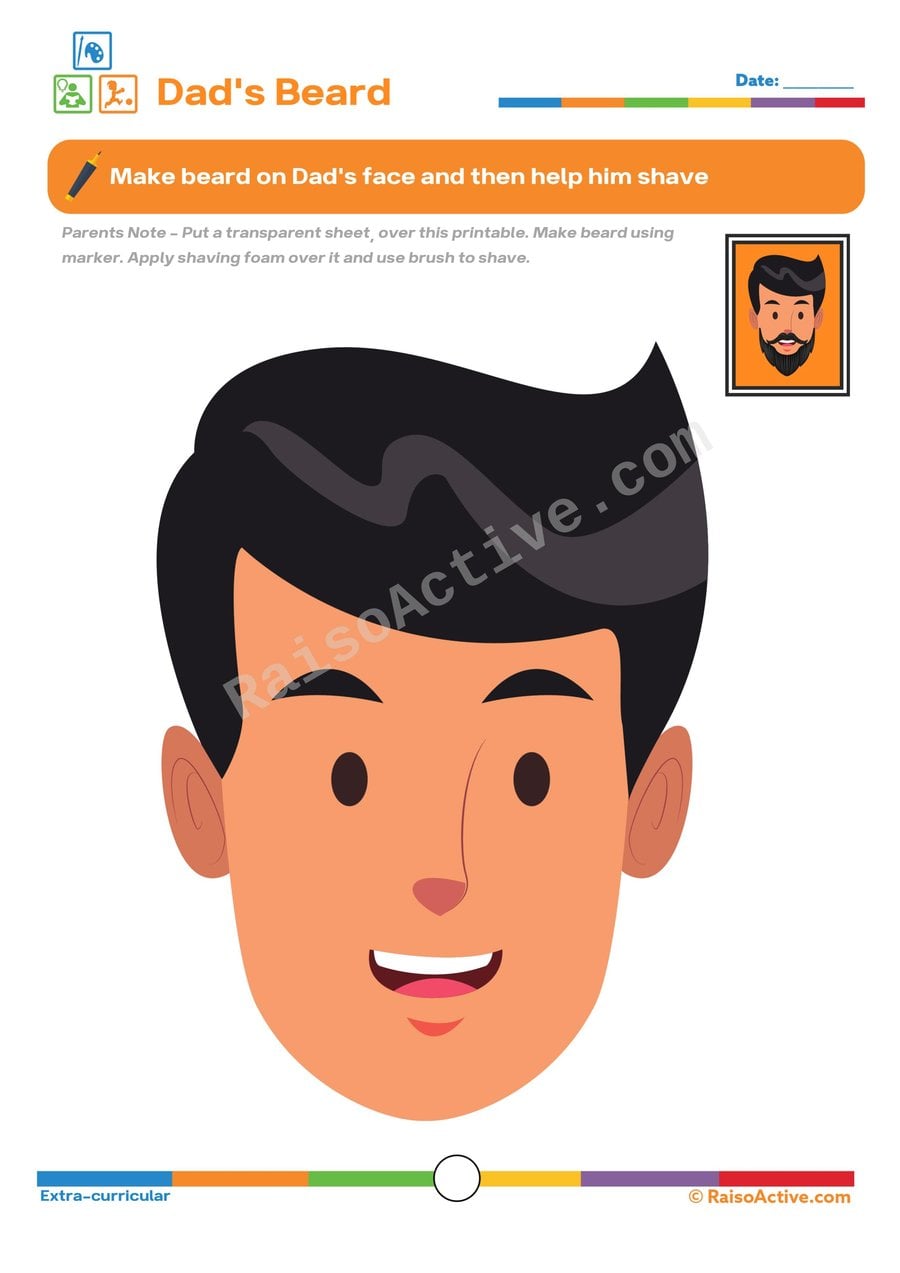
Dad's Beard: A Fun Shaving Activity for Kids!
Ages 3-5 · Preschool–Pre-KAges 3-5 · Nursery–ReceptionAges 3-5 · Nursery–LKGAges 3-5
This sensory pretend-shaving activity builds fine motor precision and hand control in children ages 3-5, as they draw a beard with a marker and then carefully brush away shaving foam in controlled strokes. Beyond motor skills, it gives children a playful, low-stakes way to imitate a grown-up grooming routine they've likely observed at home.

Coding Shapes Worksheet for Preschoolers: Cut and Paste Patterns
Ages 3-5 · Preschool–Pre-KAges 3-5 · Nursery–ReceptionAges 3-5 · Nursery–LKGAges 3-5
This cut-and-paste activity has children ages 3-5 recreate shape sequences shown in sample boxes, combining shape recognition with the same ordered, step-by-step thinking used in beginner coding concepts. Cutting out individual shapes and arranging them in the correct sequence also builds fine motor precision and spatial planning.

Christmas Cut and Paste Worksheet for Preschoolers
Ages 3-5 · Preschool–Pre-KAges 3-5 · Nursery–ReceptionAges 3-5 · Nursery–LKGAges 3-5
Cutting out a moon, snowman, gifts, and trees and arranging them inside a circle builds scissor precision and compositional thinking in children ages 3-5. Because there's no single 'correct' layout, children also practice early creative decision-making — choosing where each element belongs within a bordered space, which supports spatial awareness.
Guides for this topic

Celebrating Diversity: How to Incorporate Cultural Awareness in Learning Activities for Young Children
Practical cultural awareness activities for young children aged 2-8. Explore Indian festivals, world cultures, food, music, and crafts to teach diversity and inclusion.
How to Teach Cutting Skills to Your Preschooler: A Complete Guide for Parents and Teachers
Help your child master scissor skills safely. Expert guide covering readiness signs, scissor types, progression steps, pre-cutting exercises, and fun practice ideas for ages 2-6.
What Supplies Do You Need for Preschool Learning at Home: The Complete Essential Guide
Discover the essential supplies for preschool learning at home — from crayons and counting blocks to sensory bins. Affordable options available in India for ages 2–6.
Reviews
Every worksheet for ages 3–5, no watermark
Members download the full library of 1,000+ worksheets and every activity pack without watermarks or daily limits. One year costs ₹999 in India or $20 elsewhere.
See membership plansOr download any worksheet free with a watermark (5 a day).