Parts of a Plant Cut and Paste Worksheet for Kids
This cut-and-paste worksheet teaches children ages 3-5 the names and locations of the main parts of a plant — roots, stem, leaves, flower, and fruit — by having them match labels to the correct spot on a plant diagram. Learning to label a diagram, rather than just naming parts verbally, is an early step toward the kind of labeled-illustration work children will do throughout their science education.
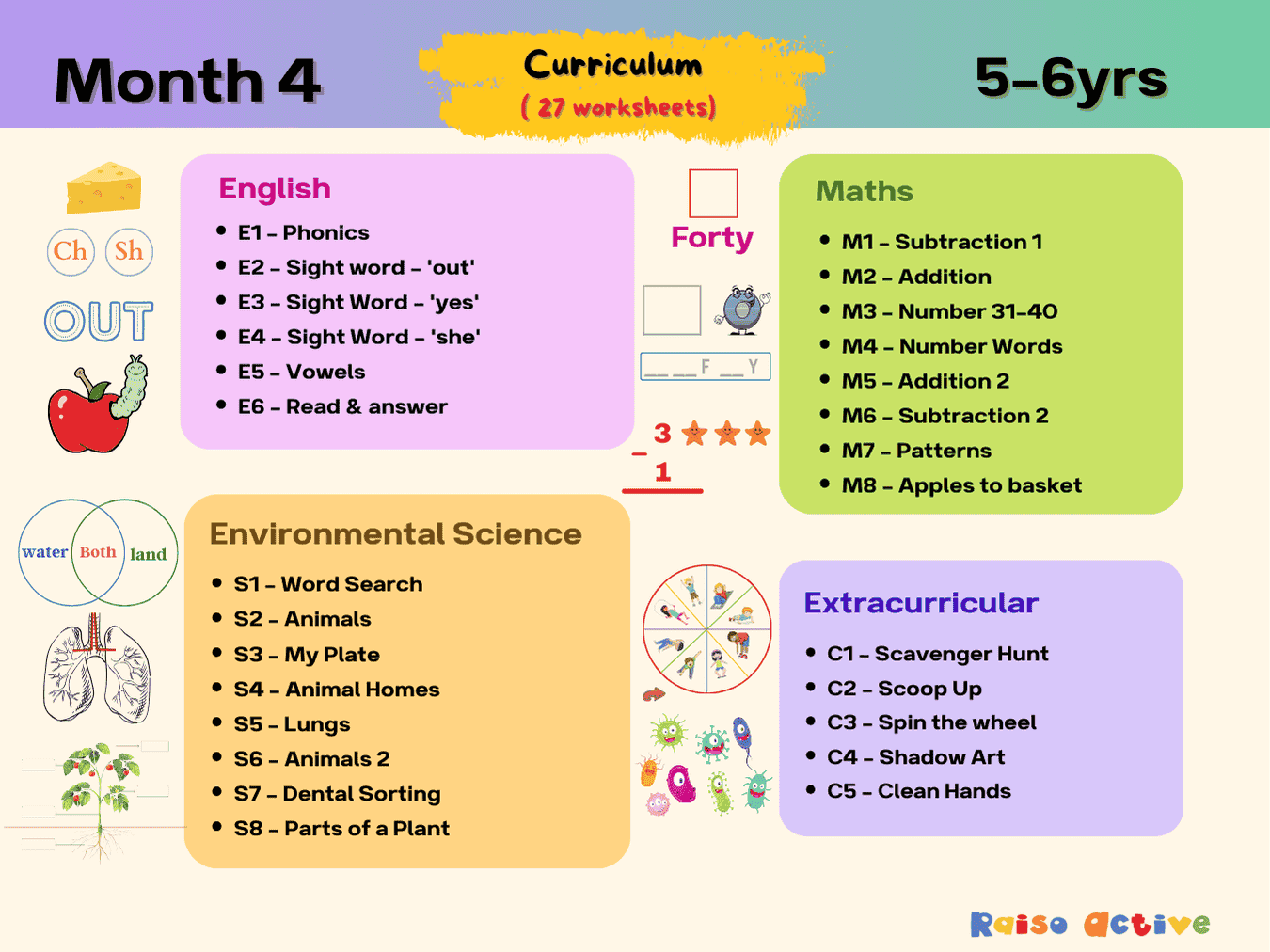
Part of the pack
Month 4: Learning & Development | Ages 5-6
This is page 25 of the pack. Ages 5-6 · KindergartenAges 5-6 · Year 1Ages 5-6 · UKGAges 5-6
Curriculum
- Living Things - Plants > Plant Science
How to use this worksheet
Look at the plant picture together and talk briefly about what each part might do — roots hold the plant in the ground, leaves catch sunlight, and so on. Have your child cut out the plant part labels at the bottom of the page. For each label, ask them to find the matching part on the plant diagram before gluing it into the correct box. Once every label is placed, review the finished diagram together, naming each part and its job.
Materials needed
- Scissors
- Glue
- Pencil
Extension activities
- 1Take a walk outside and identify the parts of real plants, pointing out roots, stems, leaves, and flowers where visible.
- 2Draw and label the parts of a plant in a notebook, copying from the completed worksheet.
- 3Plant a seed in a cup of soil and observe its growth over the coming weeks, checking in on new parts as they appear.
- 4Carefully pull up a weed (with permission) to see and touch its real root system.
- 5Make a plant part scavenger hunt using flowers, leaves, and stems found in the yard or a park.

Written by
Hemsweta Jain · Teacher Cheena
MBA and Early Childhood Educator, teaching since 2014 · Founder of RaisoActive, Mumbai
Every RaisoActive worksheet is designed and checked by the founder before publishing.
Published · Last reviewed
More from Month 4: Learning & Development | Ages 5-6
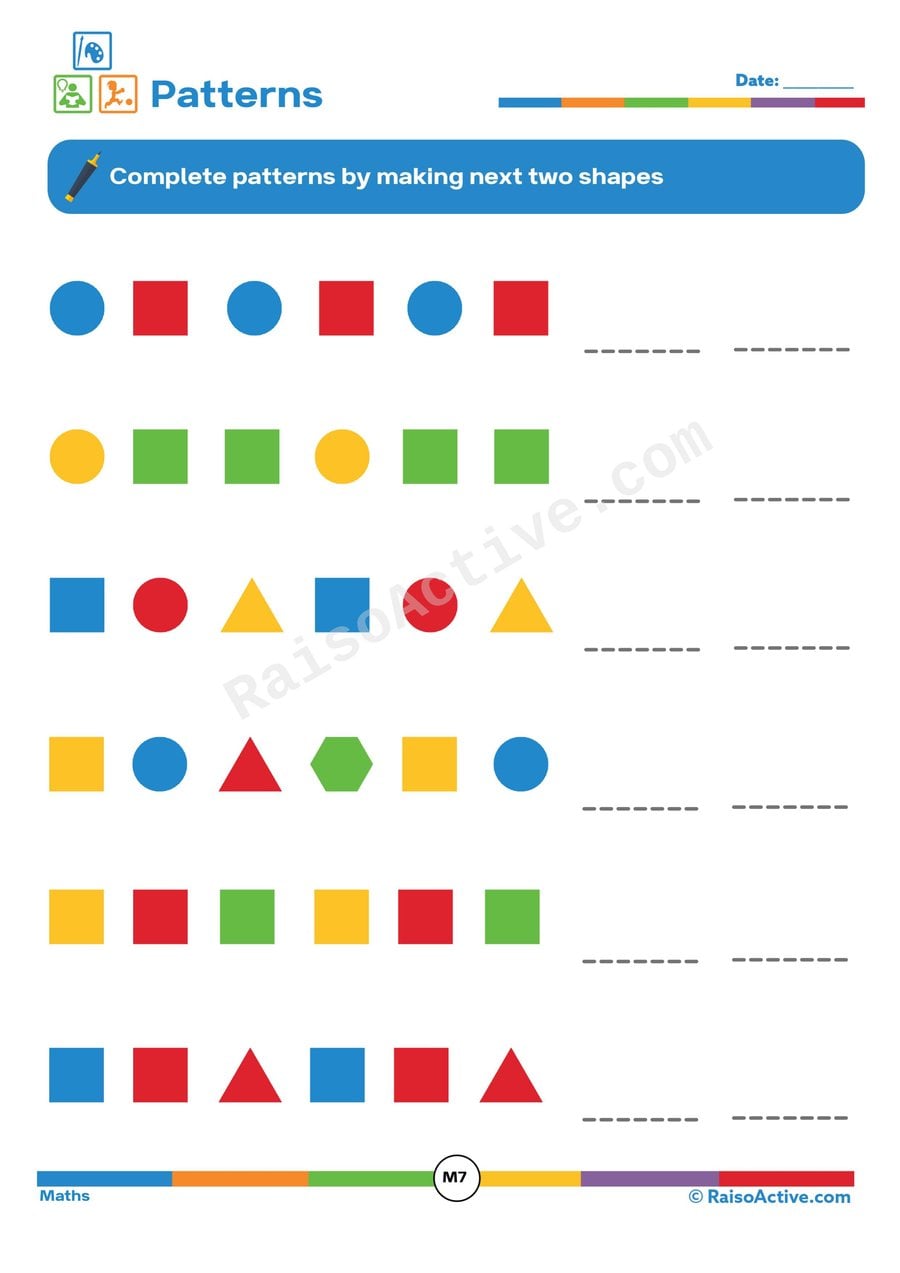
Shape Patterns Worksheet for Preschoolers
Ages 3-5 · Preschool–Pre-KAges 3-5 · Nursery–ReceptionAges 3-5 · Nursery–LKGAges 3-5
Children ages 3-5 build pattern recognition and shape identification together as they study a row of repeating 2D shapes and draw what comes next to continue the sequence. This combination trains visual analysis and prediction — skills that form the basis of algebraic thinking long before formal algebra is introduced.

Living and Non-Living Things Word Search Worksheet for Kids
Ages 4-6 · Pre-K–KindergartenAges 4-6 · Reception–Year 1Ages 4-6 · LKG–UKGAges 4-6
This word search worksheet has children ages 4-6 hunt for and identify living and non-living things, then sort them by color-coding — living things in red and non-living things in blue — building both spelling recognition and an early science classification skill. Distinguishing living from non-living is one of the foundational categories in early science education, underlying later lessons about biology and the natural world.
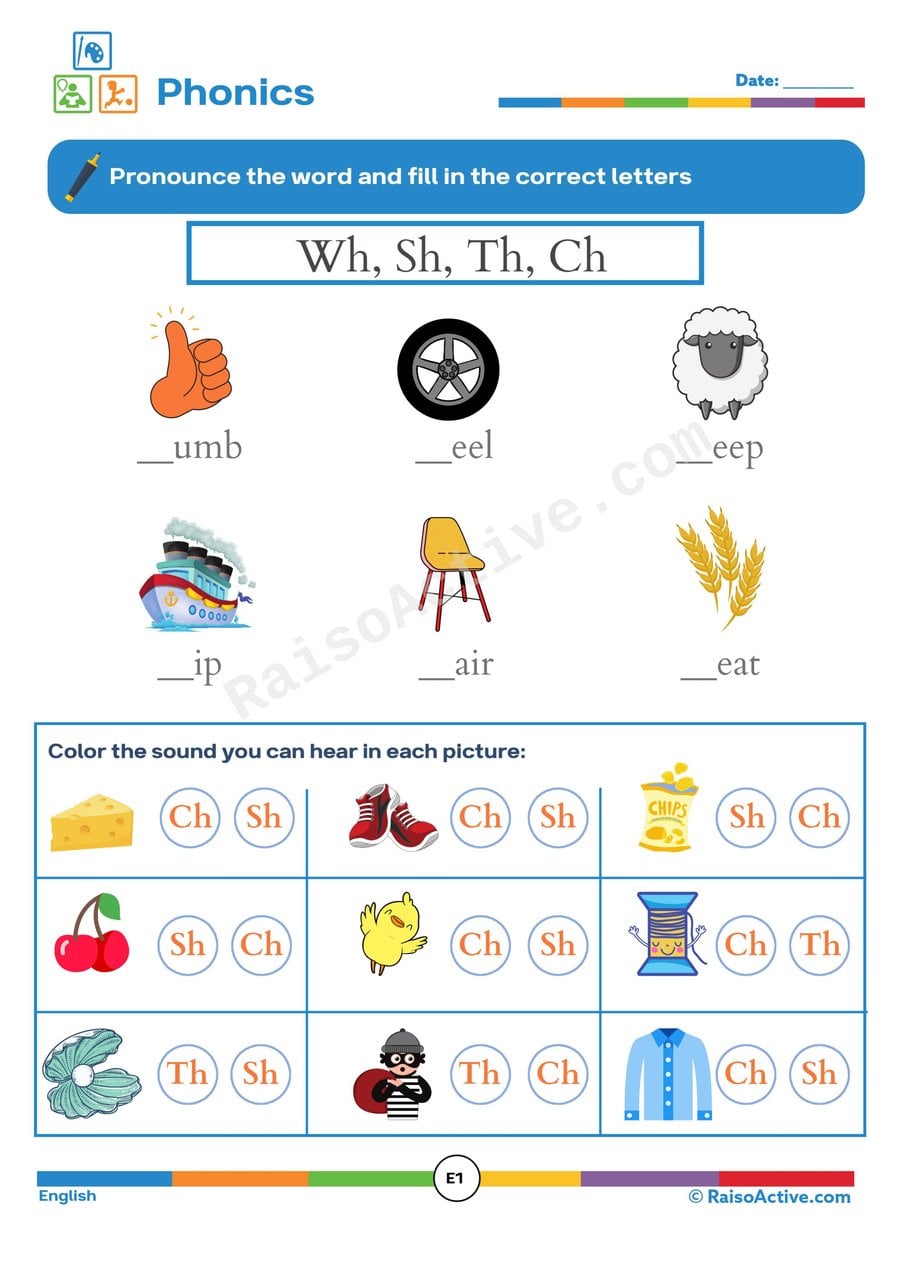
Wh, Sh, Th, Ch Sounds Worksheet for Preschoolers
Ages 4-5 · Pre-KAges 4-5 · ReceptionAges 4-5 · LKGAges 4-5
Filling in missing letters to complete words with the digraphs wh, sh, th, and ch teaches children ages 4-5 to recognize these blended consonant sounds, which behave differently from single letter sounds and require dedicated practice to master. Coloring the picture that matches the correct sound afterward reinforces the connection between the blended sound and its spelling.
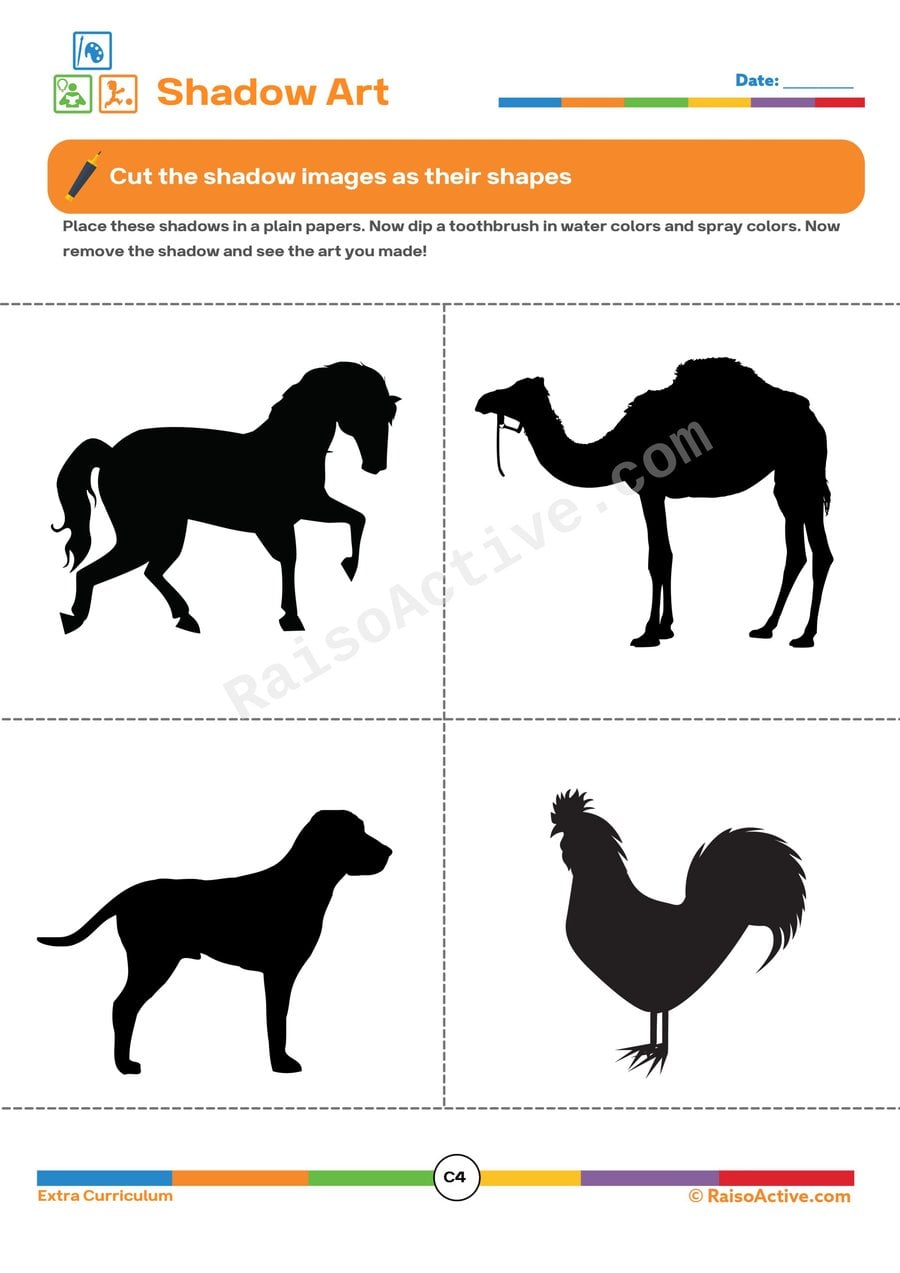
Shadow Art Fun: Cut and Create Animal Shapes!
Ages 3-5 · Preschool–Pre-KAges 3-5 · Nursery–ReceptionAges 3-5 · Nursery–LKGAges 3-5
This worksheet turns a science concept — how shadows block light — into a hands-on art project, as children ages 3-5 cut out animal silhouettes and use them to create splatter-paint shadow art. Beyond fine motor cutting practice, the activity introduces the early science idea that a solid shape stops color or light from reaching the paper beneath it, leaving a clean outline behind.

Sight Word Fun: 'Yes' Word Activities Worksheet for Preschoolers
Ages 3-5 · Preschool–Pre-KAges 3-5 · Nursery–ReceptionAges 3-5 · Nursery–LKGAges 3-5
Practicing the sight word 'yes' through tracing, writing, circling, and underlining gives children ages 3-5 several different ways to encounter the same high-frequency word, which builds the instant word recognition that supports early reading fluency. Repetition across different formats, rather than just one activity, helps the word move from a puzzle to be solved into a word recognized on sight.

Subtraction Worksheet: Counting and Subtracting for Preschoolers
Ages 4-5 · Pre-KAges 4-5 · ReceptionAges 4-5 · LKGAges 4-5
This worksheet introduces children ages 4-5 to the concept of subtraction as 'taking away' by having them count a group of objects, cross out the number indicated, and write how many remain. Building this concrete, visual understanding of subtraction before introducing abstract number sentences helps children grasp what the minus sign actually means rather than just memorizing a procedure.

Lungs Activity Worksheet for Kids: Color, Cut, and Learn!
Ages 3-5 · Preschool–Pre-KAges 3-5 · Nursery–ReceptionAges 3-5 · Nursery–LKGAges 3-5
This hands-on activity has children ages 3-5 color and cut out lung shapes, then build a simple working model using a straw and balloons to demonstrate how lungs expand and contract when we breathe. Watching a physical model move mimics a real body process, making an invisible internal organ's function suddenly visible and understandable.
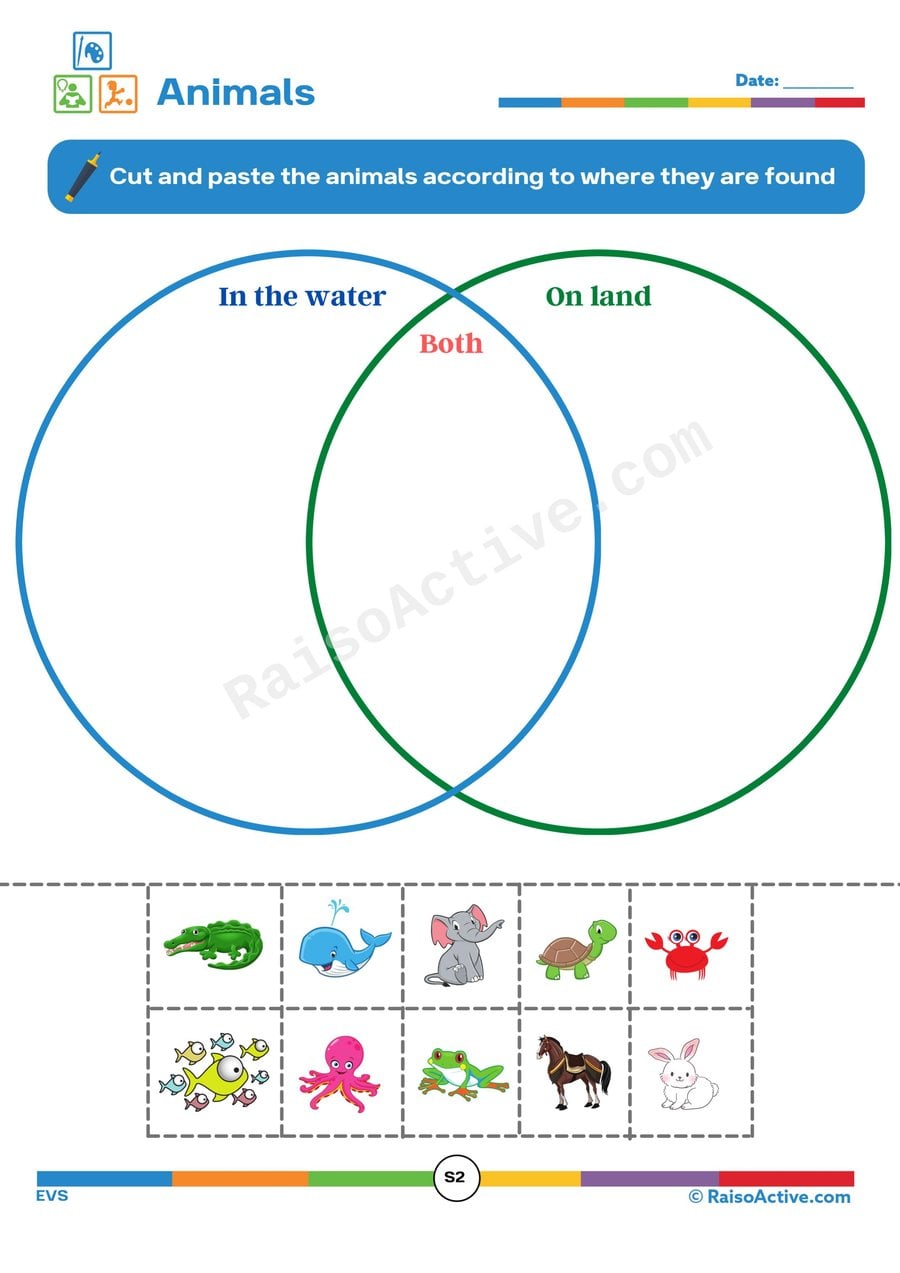
Animals: Sorting Worksheet for Preschoolers
Ages 3-5 · Preschool–Pre-KAges 3-5 · Nursery–ReceptionAges 3-5 · Nursery–LKGAges 3-5
This sorting worksheet has children ages 3-5 cut out animal pictures and paste each one into either a water or land habitat circle, building an early classification skill around where different animals naturally live. Sorting animals by habitat, rather than by type or size, introduces the idea that an animal's environment is a meaningful category on its own.
Related worksheets
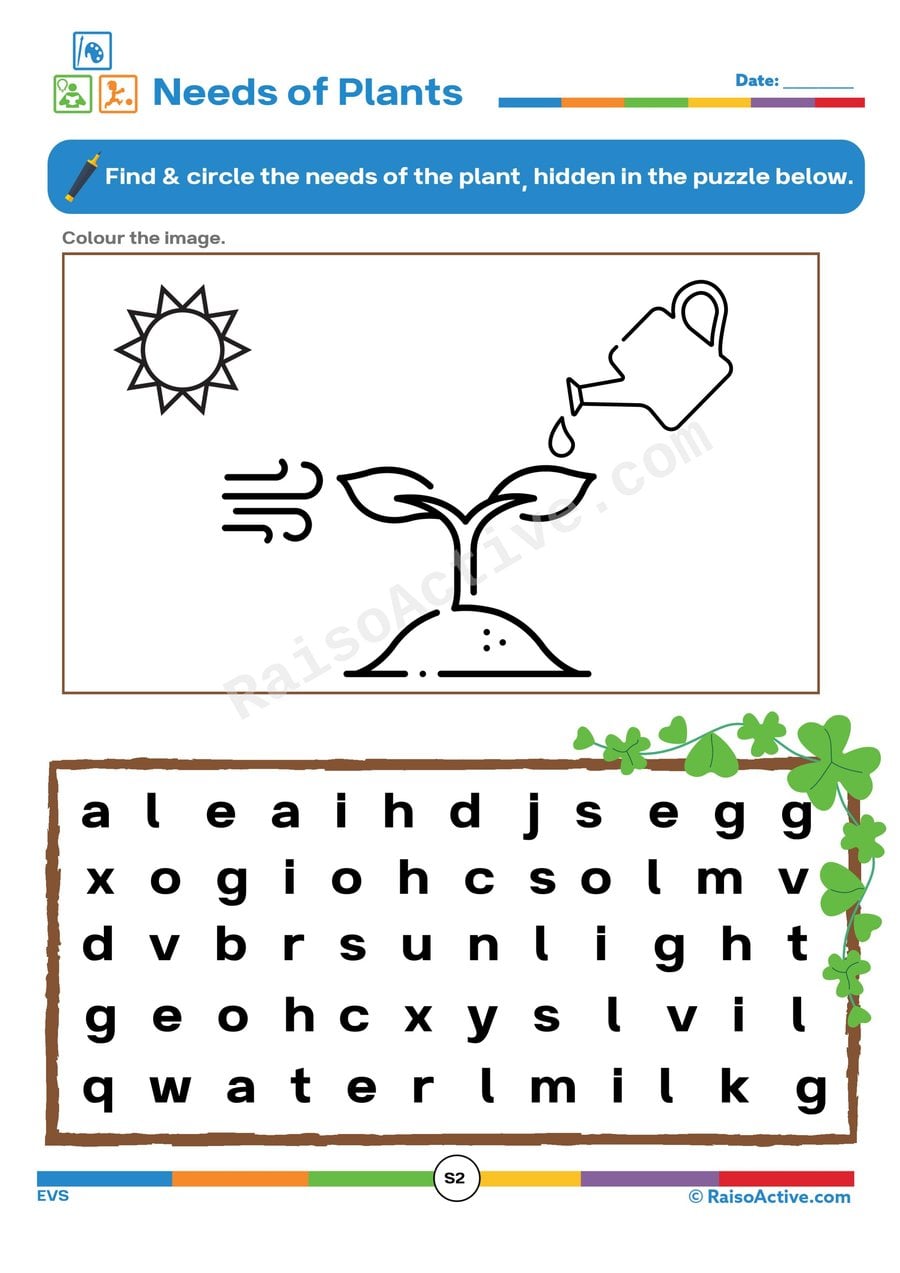
Plant Needs Word Search Worksheet for Kids
Ages 3-5 · Preschool–Pre-KAges 3-5 · Nursery–ReceptionAges 3-5 · Nursery–LKGAges 3-5
This word search introduces 3-5 year olds to the specific things plants need to survive — sunlight, water, soil, air — while building early reading skills through visual word scanning and letter recognition. Hunting for whole words hidden in a grid of letters is a genuinely different reading task than sounding out an isolated word, since your child has to recognize a word's overall letter pattern among distracting surrounding letters.

Plant Properties Worksheet for Preschoolers: Learn About Plants!
Ages 4-6 · Pre-K–KindergartenAges 4-6 · Reception–Year 1Ages 4-6 · LKG–UKGAges 4-6
Filling in the blanks about what plants need to survive and labeling their parts gives children ages 4-6 a more structured science lesson than a simple coloring page, requiring them to recall specific facts rather than just recognize pictures. This worksheet combines factual recall — like knowing plants need sunlight, water, and air — with visual labeling of plant anatomy, reinforcing the same content in two different formats. Understanding what plants need to grow also builds a foundation for later lessons on ecosystems, food chains, and basic biology.
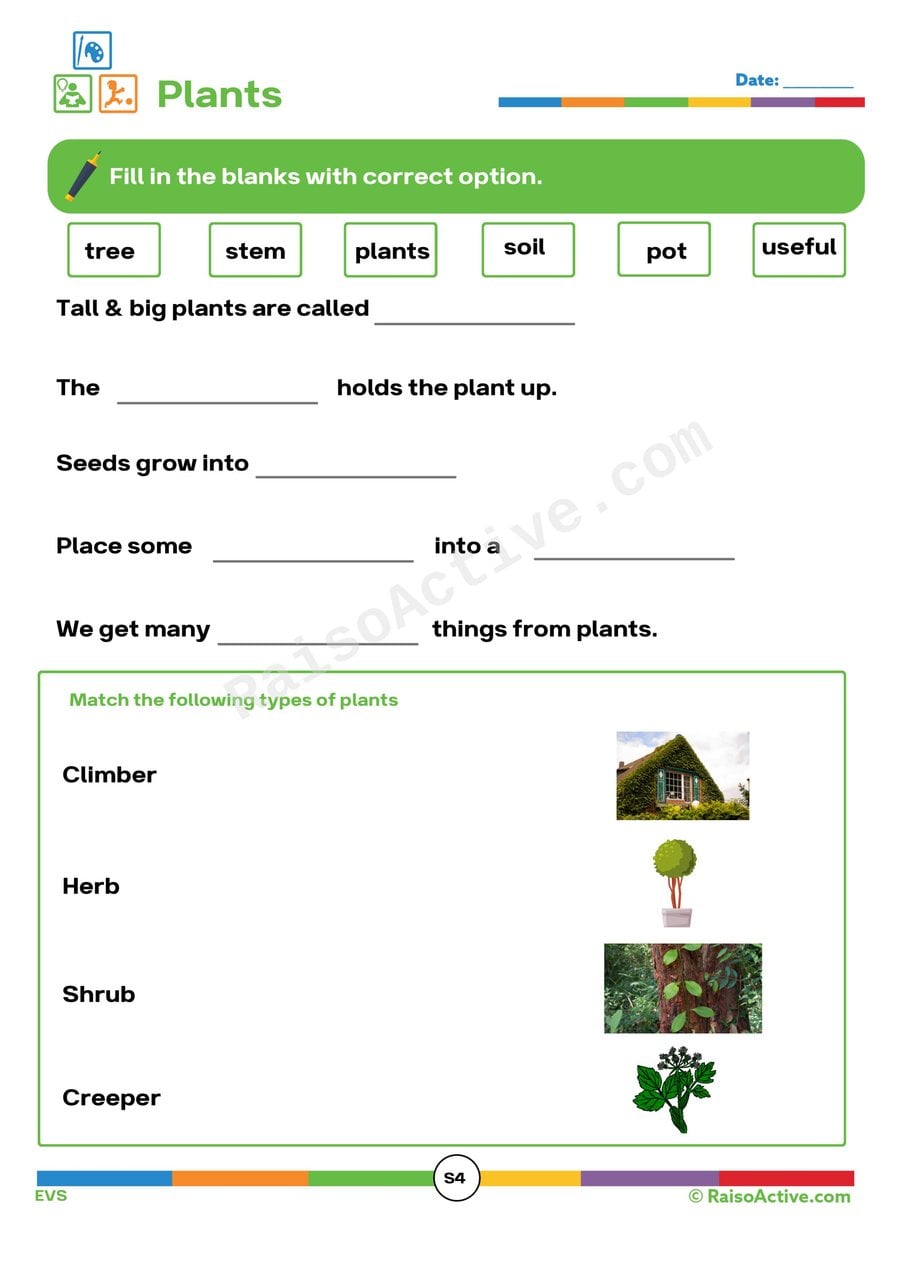
Plant Parts Worksheet for Preschoolers
Ages 4-6 · Pre-K–KindergartenAges 4-6 · Reception–Year 1Ages 4-6 · LKG–UKGAges 4-6
This worksheet introduces 4-6 year olds to plant anatomy — roots, stem, leaves, and flower — and asks them to connect each part's name to its function, while a separate matching section links different plant types to their pictures. Learning that plants have parts with specific jobs (roots drink water, leaves make food from sunlight) is an early building block of life science, and naming these parts gives your child vocabulary they'll keep reusing throughout school science lessons.
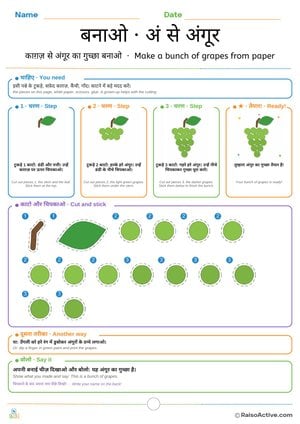
Make a Bunch of Paper Grapes: Hindi Letter अं (am) Cut and Stick Craft | बनाओ · अं से अंगूर
Ages 4-7 · Pre-K–Grade 1Ages 4-7 · Reception–Year 2Ages 4-7 · LKG–Class 1Ages 4-7
Children cut out the numbered pieces and stick them in order to make a bunch of grapes from light and dark green circles, then show it and say a full sentence about it. It links the letter अं with a real picture word, अंगूर, and practises scissor control and following steps.
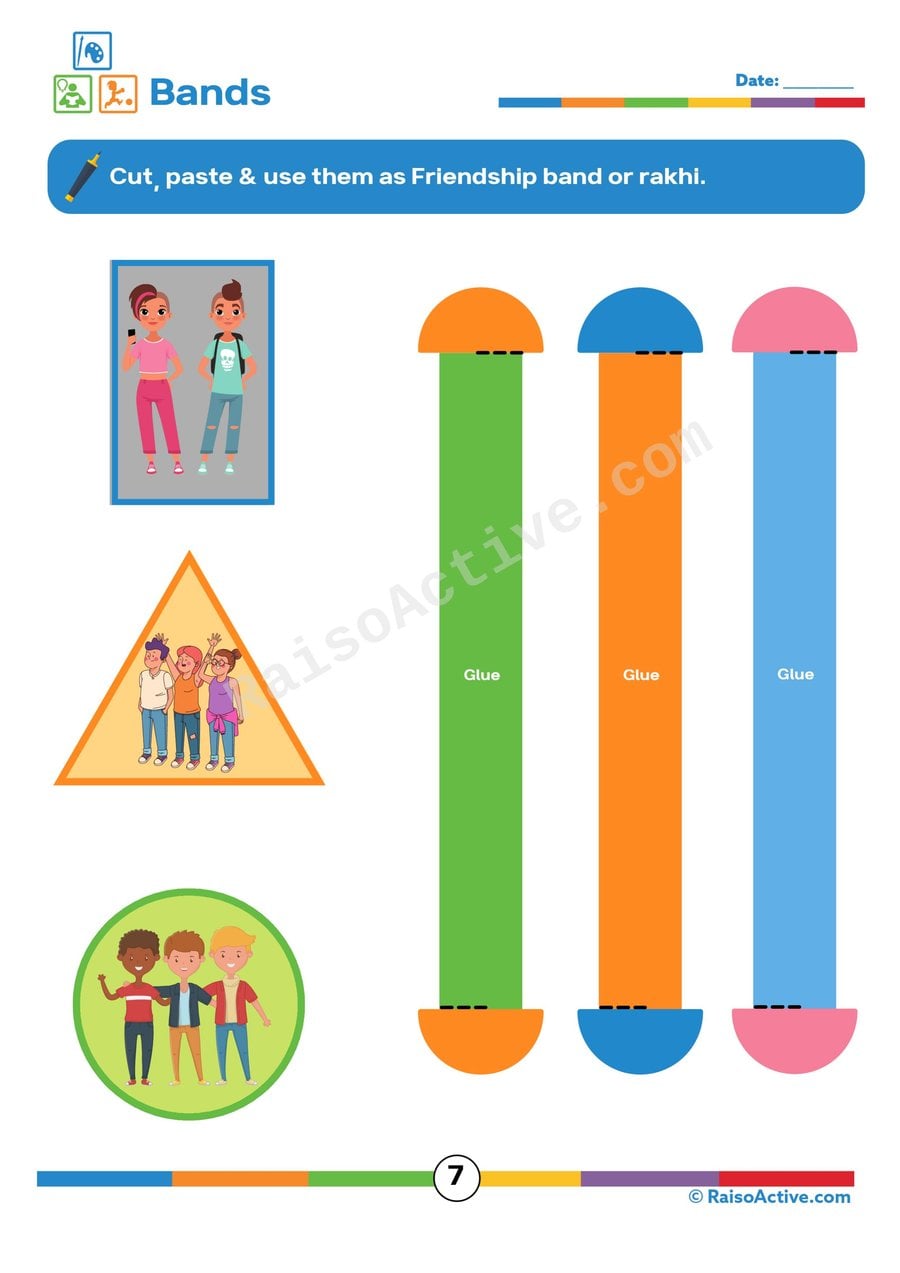
Friendship Band Craft Worksheet for Kids
Ages 3-5 · Preschool–Pre-KAges 3-5 · Nursery–ReceptionAges 3-5 · Nursery–LKGAges 3-5
Children ages 3-5 continue building scissor and gluing precision through this friendship band or rakhi craft, practicing the multi-step process of cutting a shape, forming a loop, and decorating the finished piece. Completing each construction step in the correct order reinforces sequencing skills alongside fine motor development.

Spring Sudoku Worksheet: Cut and Paste Puzzle for Kids
Ages 4-6 · Pre-K–KindergartenAges 4-6 · Reception–Year 1Ages 4-6 · LKG–UKGAges 4-6
Placing cut-out pictures into a sudoku-style grid so that no image repeats in any row, column, or box teaches children ages 4-6 early logical reasoning and systematic thinking, since they must check multiple directions before deciding where each piece belongs. Cutting out the small picture squares beforehand also builds scissor control and hand-eye coordination. Together, this combines a pre-math logic puzzle with fine motor practice in a single spring-themed activity.

Identify Flags Worksheet: Cut and Paste Matching Activity
Ages 4-6 · Pre-K–KindergartenAges 4-6 · Reception–Year 1Ages 4-6 · LKG–UKGAges 4-6
This worksheet gives children ages 4-6 further practice matching country flags to their names, reinforcing visual discrimination and geography vocabulary through repetition with a new set of flags. Repeated matching practice across different worksheets helps move flag recognition from short-term recall into more durable, lasting memory.
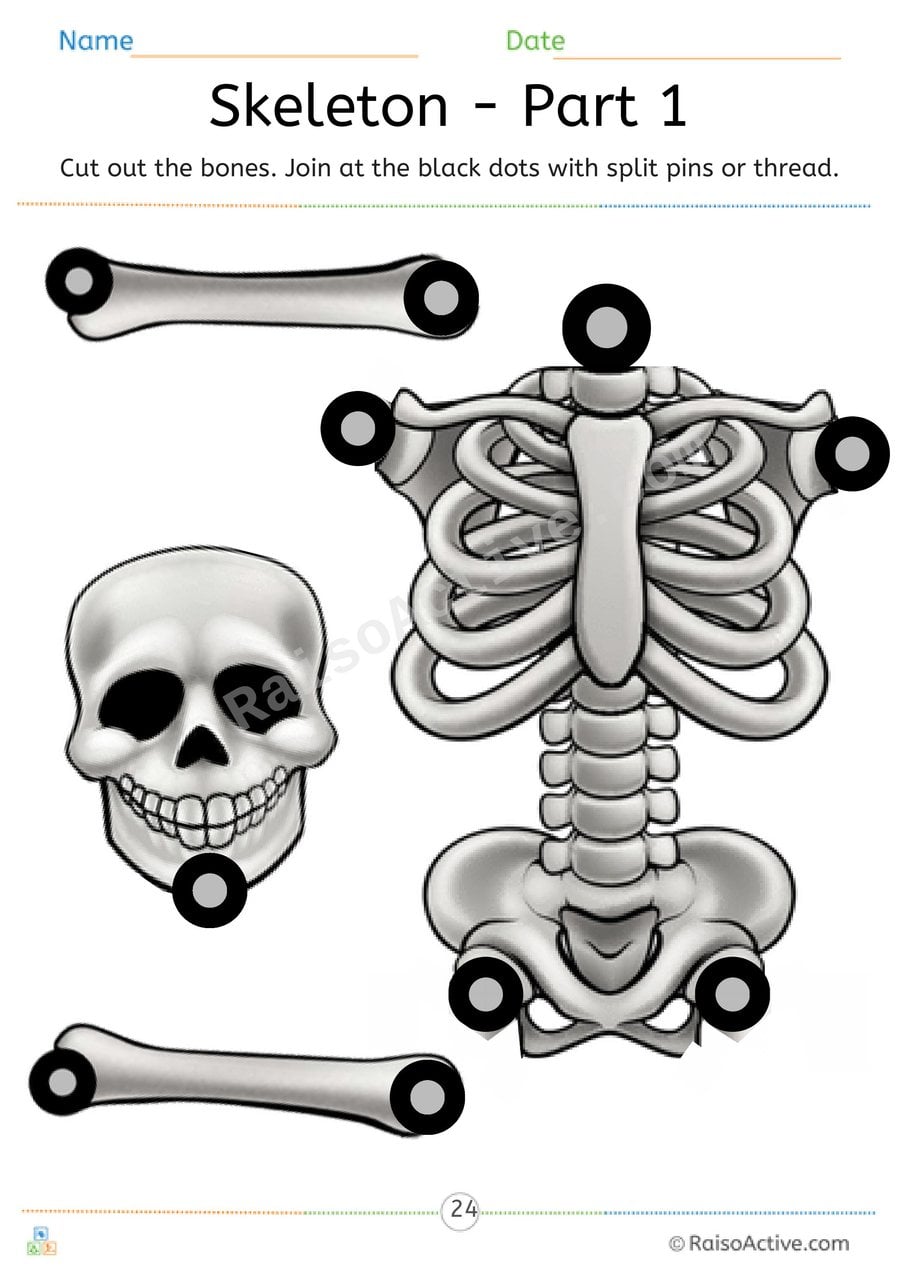
Skeleton Cut and Join Worksheet for Kids
Ages 3-5 · Preschool–Pre-KAges 3-5 · Nursery–ReceptionAges 3-5 · Nursery–LKGAges 3-5
This worksheet has children ages 3-5 cut out individual bone shapes and piece them together to assemble a skeleton, building scissor control and spatial reasoning as they figure out where each bone belongs relative to the others. Gluing the assembled bones onto a backing sheet also gives the activity a lasting, displayable result.
Guides for this topic

Growing Green Hearts: A Comprehensive Guide to Teaching Environmental Awareness to Preschoolers
Practical guide to teaching preschoolers ages 2-6 about nature, recycling, water conservation, and Earth Day with Indian context and simple home activities.

Christmas and Winter Activities That Combine Fun and Learning: Creating Magical Educational Experiences
Discover Christmas and winter activities that combine festive fun with real learning. Crafts, counting, literacy, and printable worksheets for ages 2 to 8 — perfect for home and school.
Age-Appropriate Halloween Learning Activities: Balancing Spooks and Skills for Young Learners
Discover fun, age-appropriate Halloween learning activities for young children. Spooky crafts, counting games, literacy ideas, and printable worksheets for ages 2 to 8.
Reviews
Every worksheet for ages 3–5, no watermark
Members download the full library of 1,000+ worksheets and every activity pack without watermarks or daily limits. One year costs ₹999 in India or $20 elsewhere.
See membership plansOr download any worksheet free with a watermark (5 a day).