Sight Word 'Out' Worksheet: Read, Trace, and Write!
Reading fluency for young children depends on instantly recognizing common sight words that don't sound out easily, and this worksheet gives children ages 3-5 focused, repeated exposure to the word 'out' through tracing, coloring, and sentence practice. Seeing the word in context within simple sentences also helps children start connecting sight-word recognition to real reading comprehension.
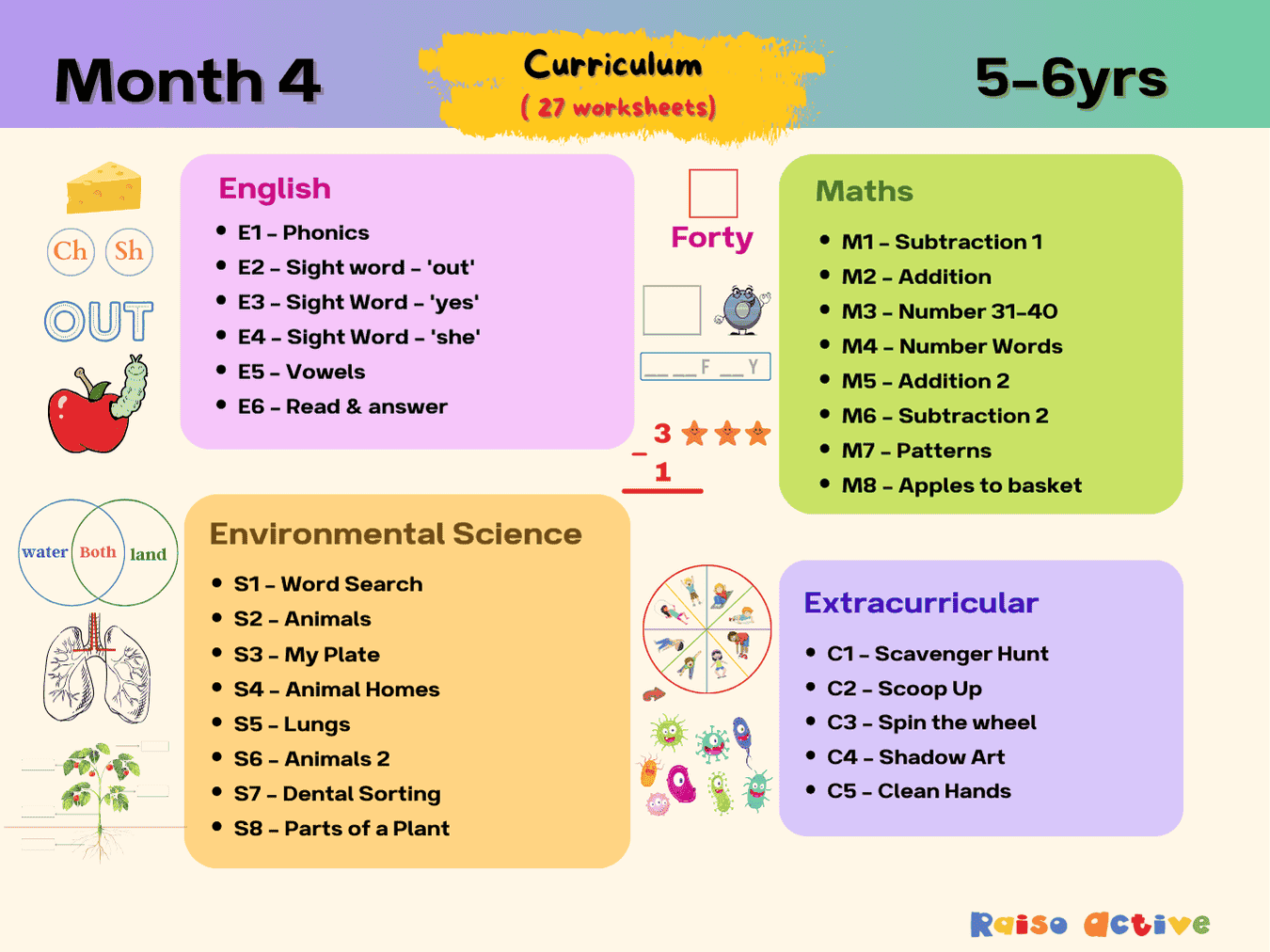
Part of the pack
Month 4: Learning & Development | Ages 5-6
This is page 5 of the pack. Ages 5-6 · KindergartenAges 5-6 · Year 1Ages 5-6 · UKGAges 5-6
Made for your child
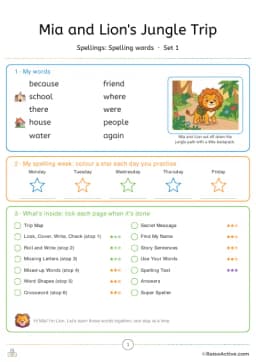
Spelling practice, made for your child
Their own spelling words turned into a pack: trace or look-cover-write-check, roll and write, a secret picture code, a word search, a crossword and a test, with their name in it.
Make a spelling packFree preview · free for members
Or start free: a word search with sight wordsCurriculum
- Fluency > Sight Words
How to use this worksheet
Begin by having your child trace the word 'out' several times with a pencil, saying the word aloud each time. Next, have them color the word wherever it appears on the page to reinforce visual recognition. Then work through the fill-in-the-blank sentences together, reading each one aloud and having your child write 'out' in the missing spot. Finish by having your child write one or two full sentences using the word on their own.
Materials needed
- Pencil
- Crayons
Extension activities
- 1Search for the word 'out' on cereal boxes, street signs, or storybooks during the day.
- 2Play a simple game of 'in and out,' hiding a toy and asking your child to say whether it's in or out of a box.
- 3Make flashcards with 'out' and a few other sight words and practice reading them quickly.
- 4Have your child draw a picture of something going 'out' the door and label it with a sentence.

Written by
Hemsweta Jain · Teacher Cheena
MBA and Early Childhood Educator, teaching since 2014 · Founder of RaisoActive, Mumbai
Every RaisoActive worksheet is designed and checked by the founder before publishing.
Published · Last reviewed
More from Month 4: Learning & Development | Ages 5-6

Animal Homes Matching Worksheet for Preschoolers
Ages 3-5 · Preschool–Pre-KAges 3-5 · Nursery–ReceptionAges 3-5 · Nursery–LKGAges 3-5
This worksheet helps children ages 3-5 learn where different animals live by matching each animal to its correct home, such as a bird to a nest or a bear to a cave, then writing the home's name. Understanding that animals have specific habitats suited to their needs is an early life-science concept that also builds descriptive vocabulary.

Clean Hands Worksheet: Germs and Handwashing Experiment
Ages 4-6 · Pre-K–KindergartenAges 4-6 · Reception–Year 1Ages 4-6 · LKG–UKGAges 4-6
This worksheet teaches children ages 4-6 the science behind why handwashing matters through a simple, visual experiment demonstrating how germs (represented by something like glitter or oil) transfer between hands and spread easily, then how washing removes them. Seeing germs 'in action' makes an invisible concept concrete, helping children understand the real reason behind a daily hygiene habit rather than just following a rule.
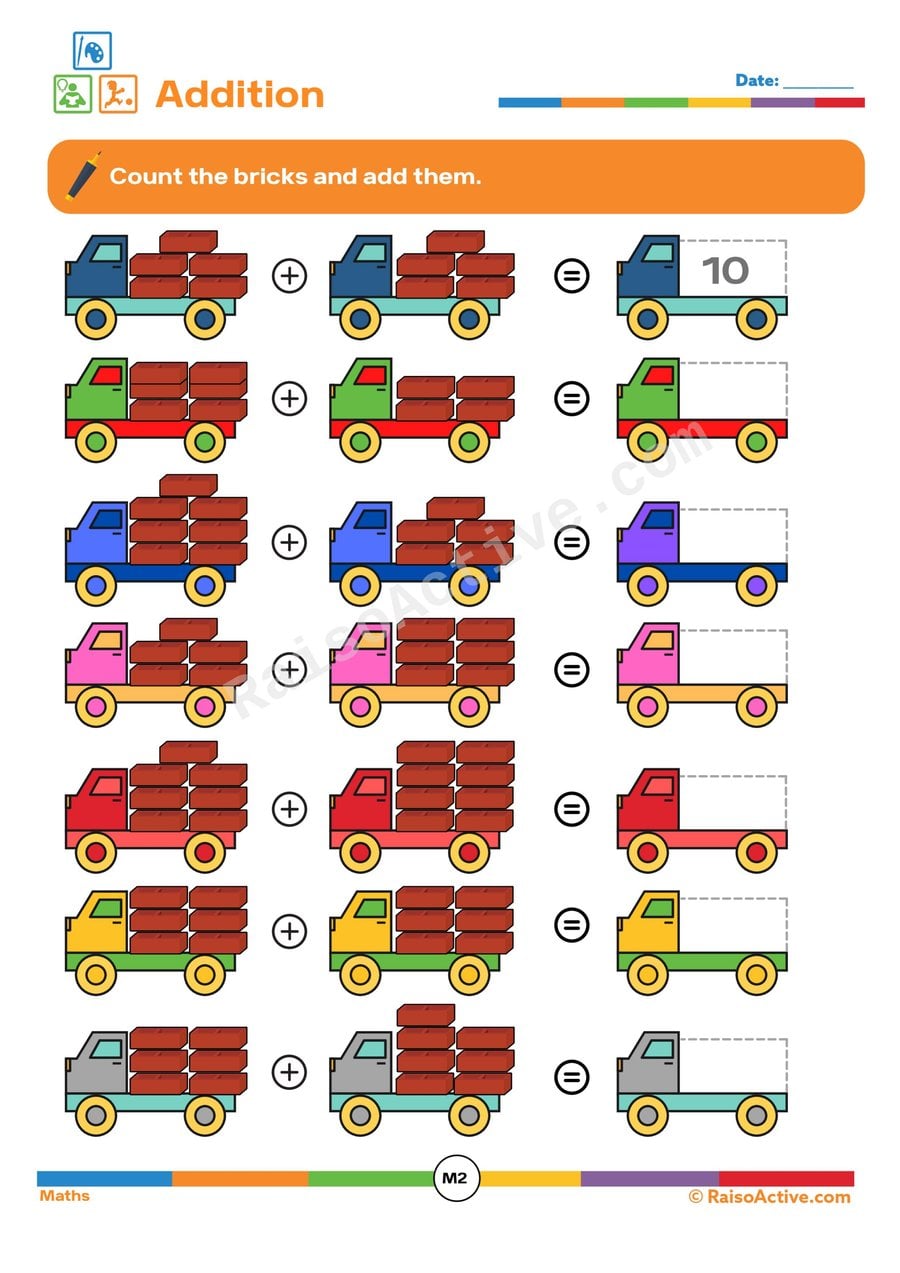
Truckload Addition Worksheet for Preschoolers
Ages 4-5 · Pre-KAges 4-5 · ReceptionAges 4-5 · LKGAges 4-5
Counting bricks loaded on two trucks and adding the totals together teaches children ages 4-5 basic addition through a playful, visual context that makes the abstract idea of combining quantities easier to grasp. This truck theme also keeps counting practice engaging for children who love vehicles, building both number sense and sustained attention.
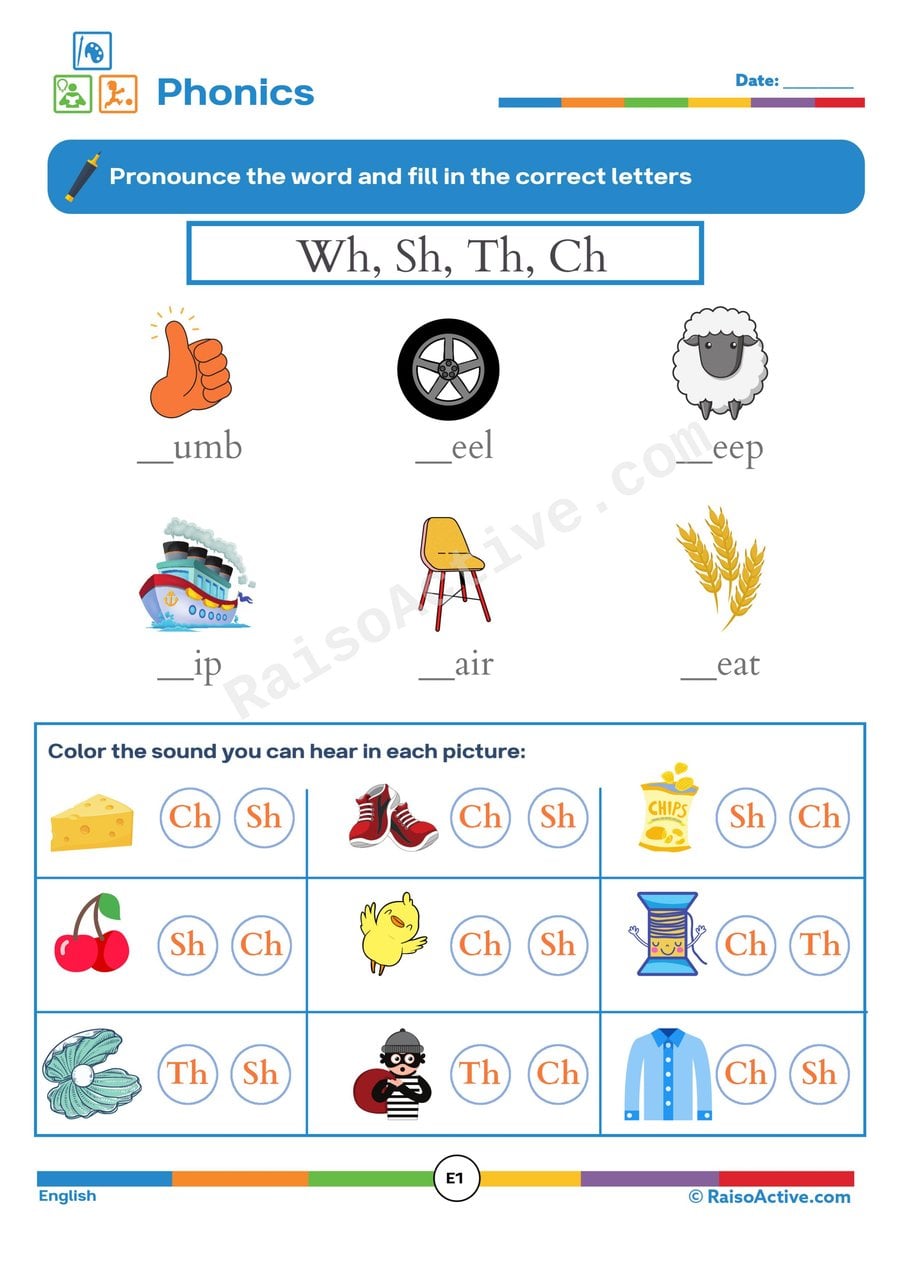
Wh, Sh, Th, Ch Sounds Worksheet for Preschoolers
Ages 4-5 · Pre-KAges 4-5 · ReceptionAges 4-5 · LKGAges 4-5
Filling in missing letters to complete words with the digraphs wh, sh, th, and ch teaches children ages 4-5 to recognize these blended consonant sounds, which behave differently from single letter sounds and require dedicated practice to master. Coloring the picture that matches the correct sound afterward reinforces the connection between the blended sound and its spelling.

Cut and Paste Number Matching Worksheet: Numbers 31-40
Ages 4-6 · Pre-K–KindergartenAges 4-6 · Reception–Year 1Ages 4-6 · LKG–UKGAges 4-6
Matching number words like thirty-one through forty to their correct numerals teaches children ages 4-6 to recognize larger two-digit numbers by both their written word form and their numeral form, extending number recognition well beyond the more familiar numbers under twenty. Cutting and pasting the matching numeral also reinforces careful visual comparison, since numbers in this range can look similar to one another.
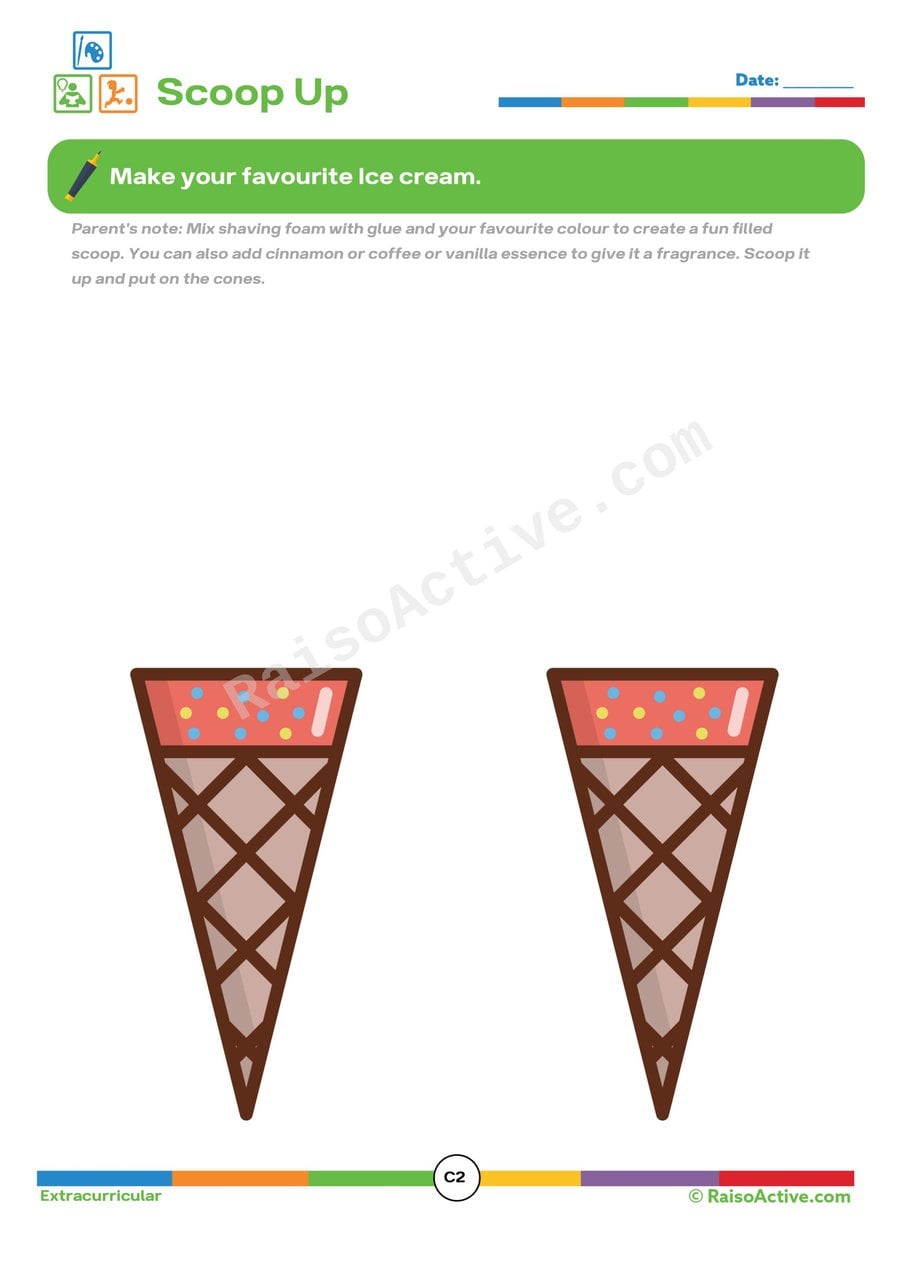
Make Your Own Ice Cream Worksheet for Kids
Ages 3-5 · Preschool–Pre-KAges 3-5 · Nursery–ReceptionAges 3-5 · Nursery–LKGAges 3-5
This sensory craft activity has children ages 3-5 follow a multi-step sequence — mixing shaving foam and glue with color, adding scent, and building an ice cream cone — building both the ability to follow sequential instructions and fine motor skill through mixing, spreading, and shaping the 'ice cream' scoop. Exploring an unusual texture like colored shaving foam also supports sensory development in a low-pressure, playful way.
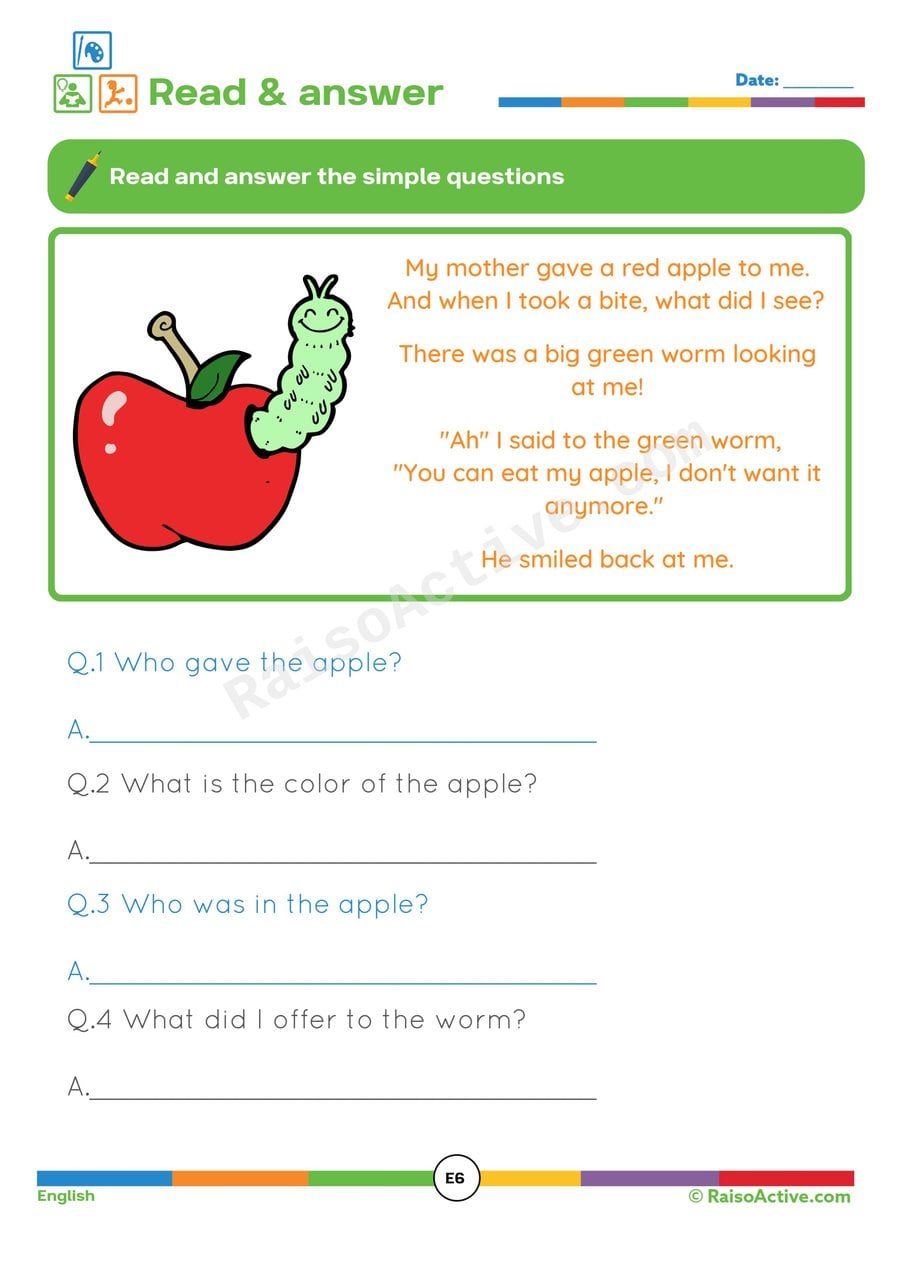
Read and Answer: The Red Apple Worksheet
Ages 3-5 · Preschool–Pre-KAges 3-5 · Nursery–ReceptionAges 3-5 · Nursery–LKGAges 3-5
Reading the short Red Apple story and answering questions afterward helps children ages 3-5 practice basic reading comprehension, recalling simple details from a story and expressing their understanding in writing. This early comprehension practice builds the habit of checking back with a text to support an answer, a skill that grows more important throughout school.

Parts of a Plant Cut and Paste Worksheet for Kids
Ages 3-5 · Preschool–Pre-KAges 3-5 · Nursery–ReceptionAges 3-5 · Nursery–LKGAges 3-5
This cut-and-paste worksheet teaches children ages 3-5 the names and locations of the main parts of a plant — roots, stem, leaves, flower, and fruit — by having them match labels to the correct spot on a plant diagram. Learning to label a diagram, rather than just naming parts verbally, is an early step toward the kind of labeled-illustration work children will do throughout their science education.
Related worksheets

Learn the Sight Word 'Has' - Fun Tracing and Matching Worksheet!
Ages 3-5 · Preschool–Pre-KAges 3-5 · Nursery–ReceptionAges 3-5 · Nursery–LKGAges 3-5
'Has' is a high-frequency verb that children ages 3-5 encounter constantly in early sentences describing possession, like 'the dog has a bone,' making it an important addition to their sight word vocabulary. This worksheet builds recognition of the word through coloring, tracing, word searching, and sentence completion, giving repeated exposure across formats that reinforces memory more effectively than a single repetition. Practicing 'has' inside complete sentences also helps children understand its grammatical role, connecting a subject to something it possesses.

Sight Word 'Your' Worksheet: Tracing, Coloring, and Sentence Practice
Ages 4-5 · Pre-KAges 4-5 · ReceptionAges 4-5 · LKGAges 4-5
Children ages 4-5 build sight word automaticity for 'your' — a word that can't be sounded out with basic phonics rules and must instead be recognized instantly for fluent reading. Multiple exposure formats (coloring, tracing, searching, and using it in a sentence) help move the word from short-term recognition into long-term memory, a rehearsal strategy that is especially important for high-frequency 'trick' words.

Read and Match: Sight Word Sentences Worksheet for Early Readers
Ages 4-5 · Pre-KAges 4-5 · ReceptionAges 4-5 · LKGAges 4-5
Children ages 4-5 practice reading simple sight-word sentences and matching them to the picture that shows their meaning, building early reading comprehension by connecting printed words directly to what they represent. This bridges the gap between recognizing individual sight words and understanding a full sentence's meaning.
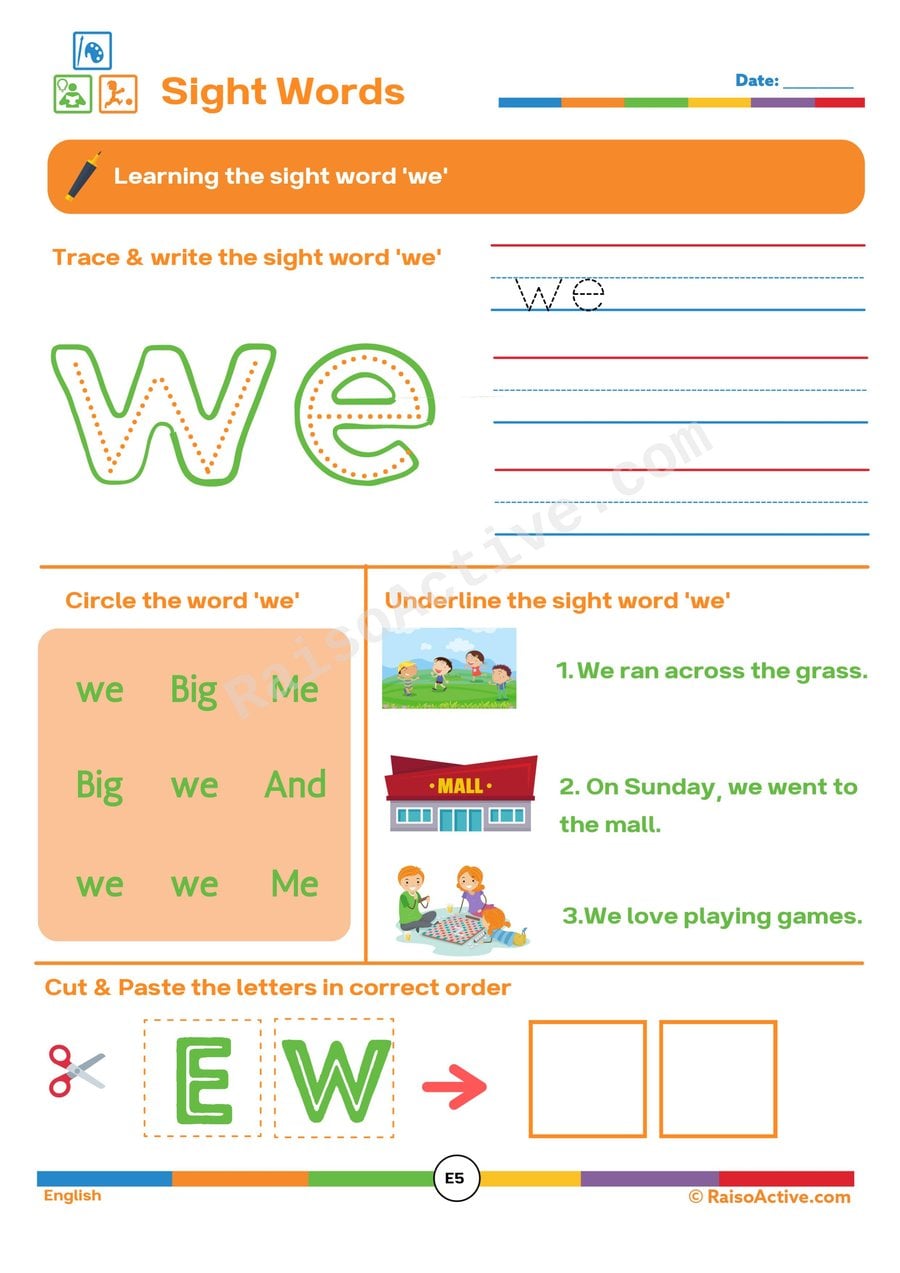
Sight Word 'We' Worksheet: Trace, Write, and Find!
Ages 3-5 · Preschool–Pre-KAges 3-5 · Nursery–ReceptionAges 3-5 · Nursery–LKGAges 3-5
This worksheet builds deep familiarity with the sight word 'we' in children ages 3-5 through four different practice formats — tracing, independent writing, circling, and finding the word within sentences — layered onto a single page. Repeating the same word across so many formats in one sitting is specifically designed to move 'we' from a word your child sounds out each time into one they recognize instantly on sight.

Learn the Sight Word 'Had' | Fun Reading Worksheet for Preschoolers
Ages 4-5 · Pre-KAges 4-5 · ReceptionAges 4-5 · LKGAges 4-5
Children ages 4-5 build instant recognition of the sight word 'had', another high-frequency word that resists standard phonics decoding and must be memorized visually. This worksheet layers coloring, tracing, writing, grid-searching, and fill-in-the-blank practice, giving the word multiple forms of repeated exposure that solidify memory. Completing sentences with 'had' also shows children how the word is used naturally in storytelling, especially when talking about the past.

Color the Sight Words! A Fun Coloring Worksheet for Preschoolers
Ages 3-5 · Preschool–Pre-KAges 3-5 · Nursery–ReceptionAges 3-5 · Nursery–LKGAges 3-5
This worksheet helps children ages 3-5 recognize common sight words by finding and coloring them within a brick-wall design according to a color key. Because sight words like 'the,' 'and,' or 'is' don't follow regular phonics rules, repeated visual exposure like this coloring task is one of the most effective ways for young children to memorize them by sight rather than sounding them out each time.

Color the Sight Words: 'She' and 'He' Worksheet for Preschoolers
Ages 3-5 · Preschool–Pre-KAges 3-5 · Nursery–ReceptionAges 3-5 · Nursery–LKGAges 3-5
This worksheet helps children ages 3-5 build instant sight-word recognition for the common pronouns 'she' and 'he' by having them scan a page and color each word according to a color code. Because sight words like these can't be sounded out easily, repeated visual exposure through an engaging coloring task helps children recognize them instantly by shape, which is essential for early reading fluency. Differentiating between two similar short words also sharpens visual discrimination.

Sight Word Fun: Fill-in-the-Blank Worksheet for Preschoolers
Ages 4-5 · Pre-KAges 4-5 · ReceptionAges 4-5 · LKGAges 4-5
Reading a sentence with a missing sight word and selecting the correct choice builds early reading fluency for children ages 4-5, since recognizing common sight words by sight — rather than sounding them out — speeds up overall reading comprehension.
Guides for this topic

Sight Words by Age: The First 50 Words and How to Teach Them Without Flashcard Fatigue
Which sight words to teach first and why, the heart-word method, a read-trace-write-find routine, games, and a by-age table of typical sight-word progress.
How to Teach CVC Blending: A Step-by-Step Method That Works in Two Weeks
A step-by-step method for teaching CVC blending, covering continuous sounds, word families, common errors, and a 14-day plan that most children finish reading CVC words.
Phase 2 Phonics at Home: Sound Order, Blending Games, Worksheets
Phase 2 phonics at home: the five sound sets in order, oral blending, tricky words, a two-week routine, common mistakes, and free worksheets.
Reviews
Every worksheet for ages 3–5, no watermark
Members download the full library of 1,000+ worksheets and every activity pack without watermarks or daily limits. One year costs ₹999 in India or $20 elsewhere.
See membership plansOr download any worksheet free with a watermark (5 a day).