Number Names Worksheet: Matching and Writing Numbers
This worksheet strengthens the connection between a written number name and its numeral for 4-6 year olds — first by circling the numeral that matches a given name, then by writing the number name out themselves, which adds a spelling and handwriting layer on top of simple recognition. Because number-name spelling doesn't always follow easy sound-out rules, this repeated practice with both reading and writing the words builds genuine sight-word familiarity with number vocabulary.
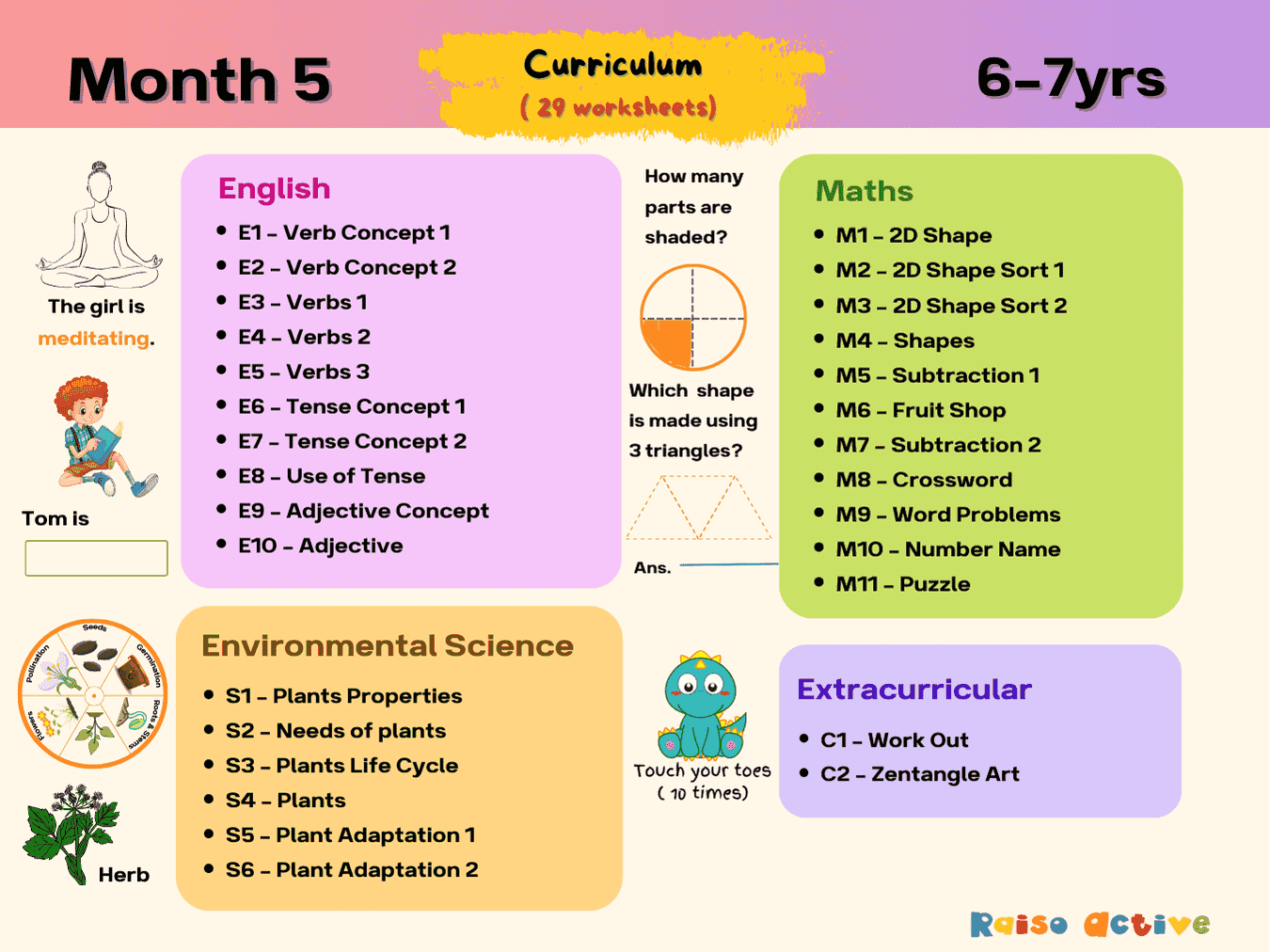
Part of the pack
Month 5: Essential English, Math, Science | Ages 6-7
This is page 23 of the pack. Ages 6-7 · Grade 1Ages 6-7 · Year 2Ages 6-7 · Class 1Ages 6-7

Made for your child
Counting to 10, made for your child
A maths pack with your child's name in it: pictures that explain, practice at three levels, puzzles and story sums about them. Print a new set whenever they finish.
Make a maths packFree preview · free for members
Curriculum
- Number Recognition > Number Names
How to use this worksheet
Read the first number name aloud together, sounding out any tricky parts. Have your child look at the numeral choices and circle the one that matches the name they just read. Once circled, have them write that same number name in the space provided, copying the spelling carefully. Move through each remaining number this way, rereading the full list of number names together at the end.
Materials needed
- Pencil
- Eraser
Extension activities
- 1Invent a simple number-name matching game using homemade cards.
- 2Use flashcards pairing number names and numerals for a few minutes of extra practice each day.
- 3Have your child write today's date using the number name instead of the numeral.
- 4Play a quick game where you say a numeral and your child has to say and then write its name.
- 5Read a counting book together and pause to spell out number names as they appear.

Written by
Hemsweta Jain · Teacher Cheena
MBA and Early Childhood Educator, teaching since 2014 · Founder of RaisoActive, Mumbai
Every RaisoActive worksheet is designed and checked by the founder before publishing.
Published · Last reviewed
More from Month 5: Essential English, Math, Science | Ages 6-7
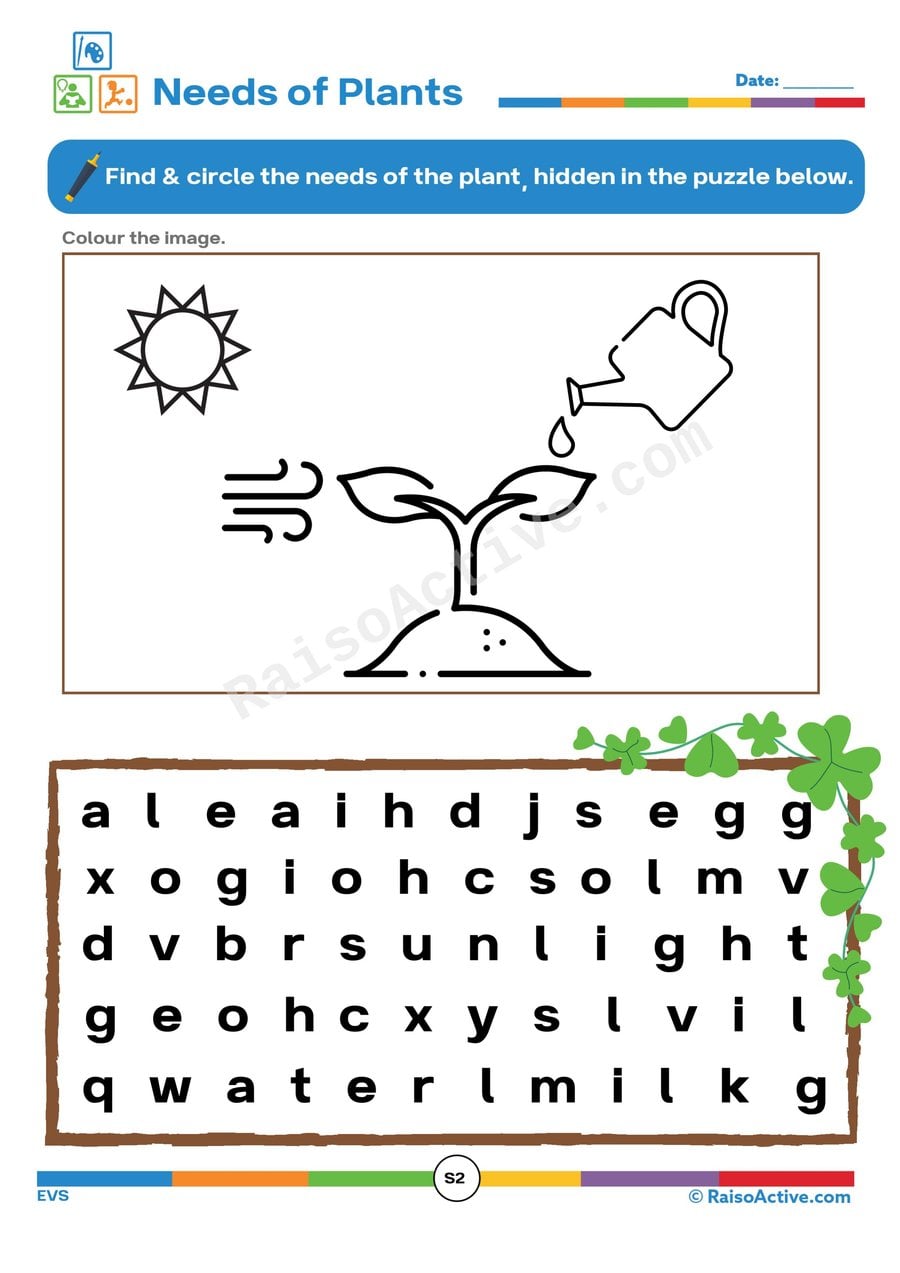
Plant Needs Word Search Worksheet for Kids
Ages 3-5 · Preschool–Pre-KAges 3-5 · Nursery–ReceptionAges 3-5 · Nursery–LKGAges 3-5
This word search introduces 3-5 year olds to the specific things plants need to survive — sunlight, water, soil, air — while building early reading skills through visual word scanning and letter recognition. Hunting for whole words hidden in a grid of letters is a genuinely different reading task than sounding out an isolated word, since your child has to recognize a word's overall letter pattern among distracting surrounding letters.

Subtraction Fun: Counting and Subtracting Worksheet for Kids
Ages 3-5 · Preschool–Pre-KAges 3-5 · Nursery–ReceptionAges 3-5 · Nursery–LKGAges 3-5
This worksheet gives 3-5 year olds direct practice subtracting the smaller number from the larger one, using accompanying pictures to make each subtraction problem visible and countable rather than purely abstract. Working through picture-supported subtraction repeatedly at this age builds the number sense needed before children can subtract using numerals alone, without a picture to lean on.
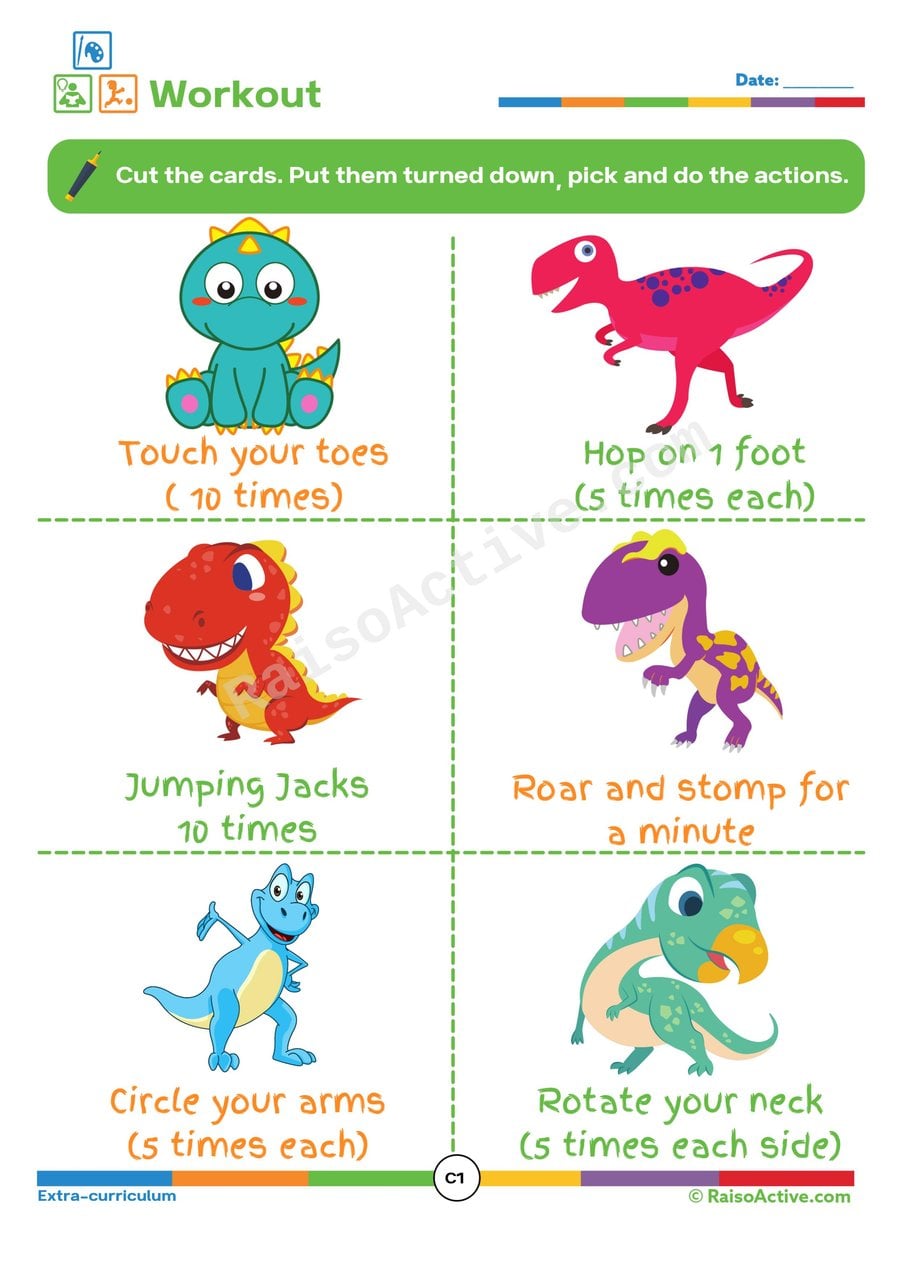
Dino Workout: Fun Exercise Worksheet for Kids!
Ages 3-5 · Preschool–Pre-KAges 3-5 · Nursery–ReceptionAges 3-5 · Nursery–LKGAges 3-5
This dinosaur-themed activity gets 3-5 year olds moving, which is exactly what this age group needs for developing gross motor skills, body awareness, and balance — abilities that don't come from sitting at a table. Following each exercise card as instructed also builds the ability to interpret a picture prompt and translate it into a physical action, a form of following directions that's harder than it sounds for young children still developing self-regulation.

Adjective Adventure: Cut and Paste Worksheet for Early Readers
Ages 4-6 · Pre-K–KindergartenAges 4-6 · Reception–Year 1Ages 4-6 · LKG–UKGAges 4-6
This cut-and-paste worksheet has 4-6 year olds fill in the blanks of a short story using adjectives, then reread the finished story to see how those descriptive words change and enrich the meaning — a more advanced application of adjective knowledge than isolated sentence work, since it shows how word choice affects a whole narrative. Choosing which cut-out adjective fits best in context also builds reading comprehension alongside vocabulary.
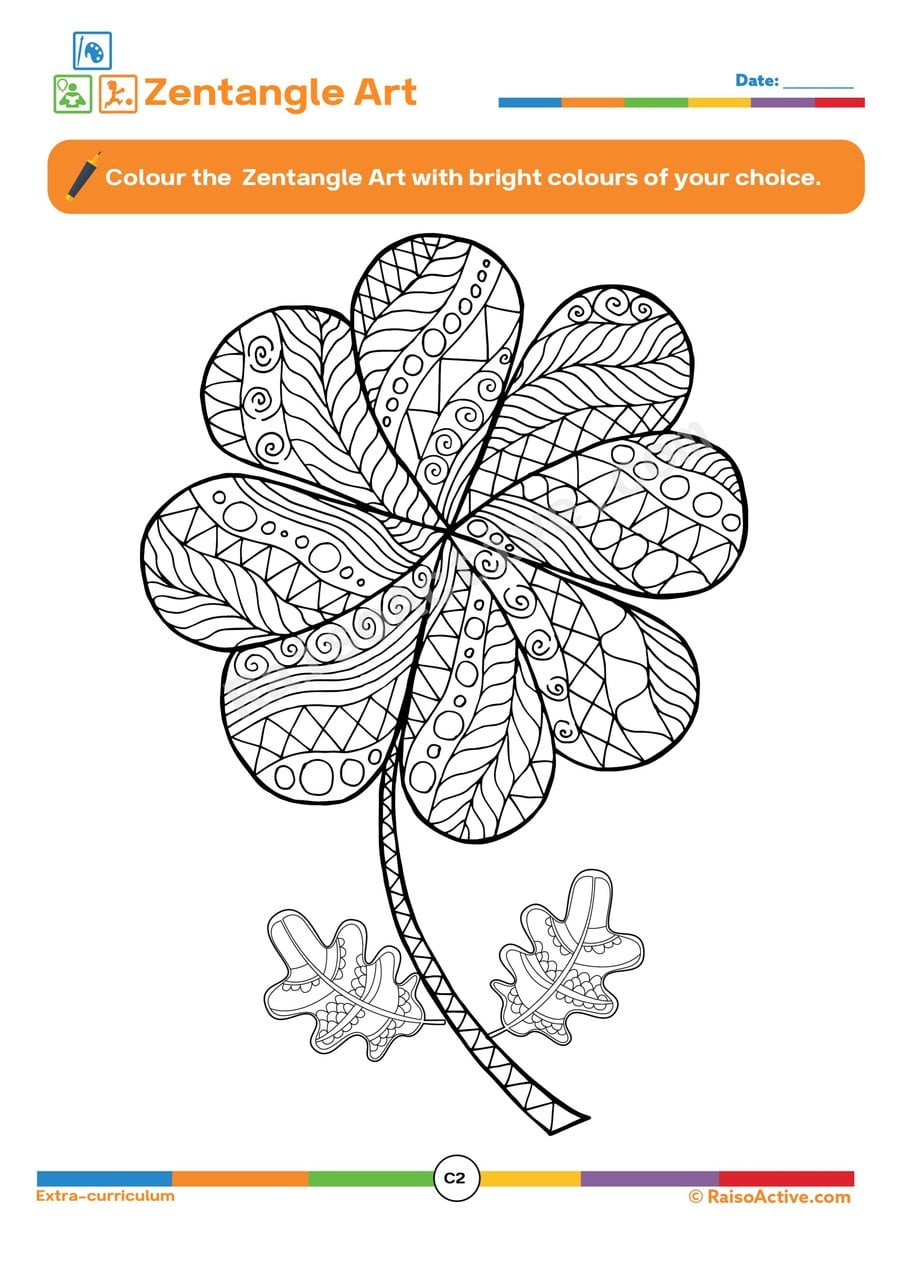
Color the Zentangle Art Worksheet for Kids
Ages 3-5 · Preschool–Pre-KAges 3-5 · Nursery–ReceptionAges 3-5 · Nursery–LKGAges 3-5
Coloring an intricate Zentangle-style pattern gives children ages 3-5 sustained practice with fine motor control in a lower-pressure format than a picture with a 'correct' outcome, since any color choice works within the repeating design. Staying within small, densely packed sections also builds the hand precision needed for later detailed handwriting and drawing tasks. Beyond the motor skill, this kind of open-ended, repetitive coloring supports focus and calm, giving children a chance to practice sustained attention on one task.

Crossword Math Worksheet: Fill in the Missing Numbers!
Ages 4-6 · Pre-K–KindergartenAges 4-6 · Reception–Year 1Ages 4-6 · LKG–UKGAges 4-6
This crossword-style worksheet has 4-6 year olds solve a series of subtraction equations to fill in missing numbers, then cross-check their answers by matching them across and down within the grid — a built-in accuracy check that regular subtraction worksheets don't offer. Because an answer has to be correct in both directions to complete the crossword properly, this format naturally encourages your child to double-check their subtraction rather than move on after a single attempt.
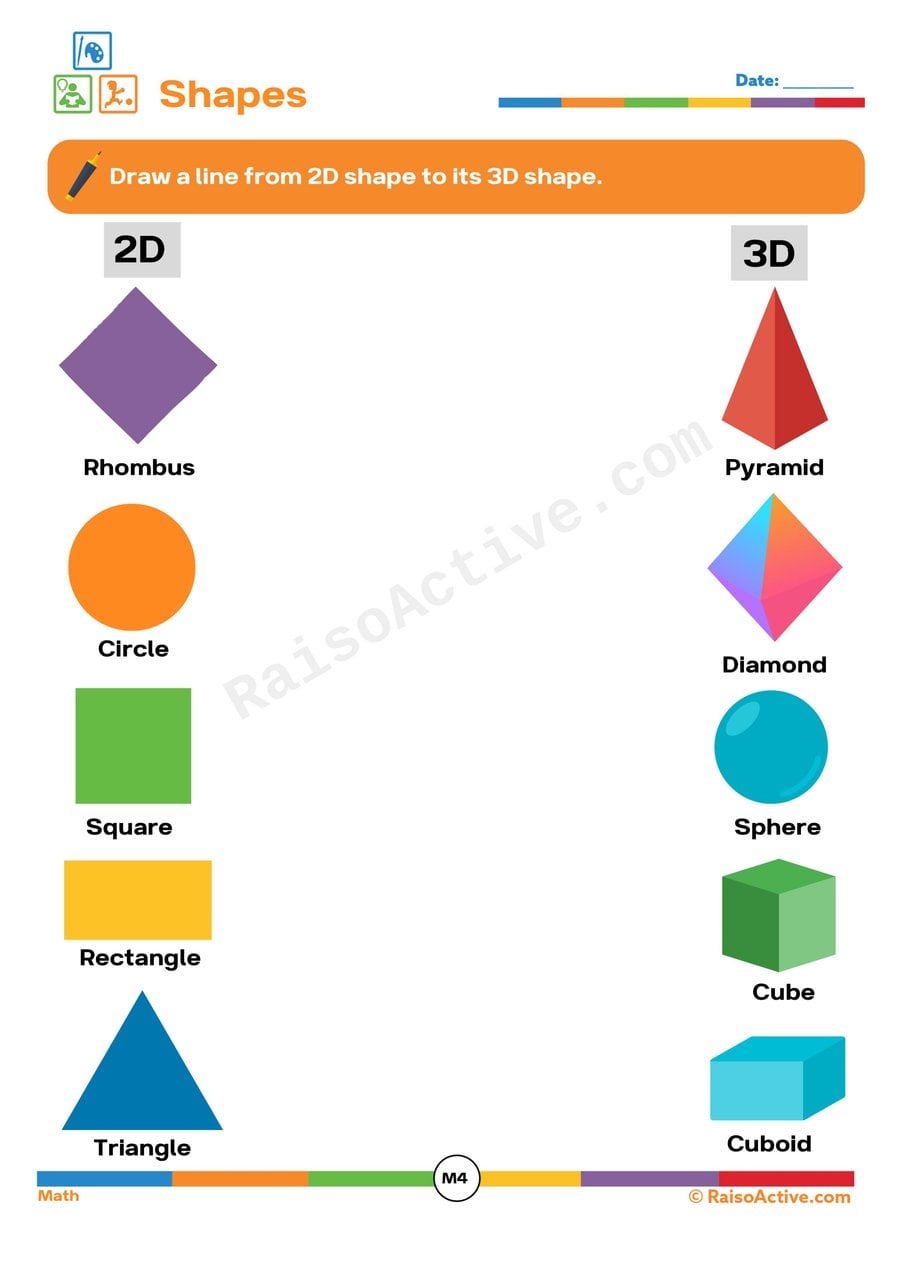
Shape Match: 2D to 3D Shapes Worksheet
Ages 4-6 · Pre-K–KindergartenAges 4-6 · Reception–Year 1Ages 4-6 · LKG–UKGAges 4-6
This worksheet introduces 4-6 year olds to the relationship between flat 2D shapes and solid 3D shapes — connecting a circle to a sphere, a square to a cube — which is an important spatial reasoning leap, since a 3D shape's flat 'face' is what actually corresponds to its related 2D shape. Making this connection explicit helps children understand that the shapes they've been learning aren't just flat pictures but also describe the surfaces of real, solid objects around them.

Action Verbs Worksheet: Identify and Color Verbs in the Picture
Ages 3-5 · Preschool–Pre-KAges 3-5 · Nursery–ReceptionAges 3-5 · Nursery–LKGAges 3-5
This worksheet asks 3-5 year olds to look closely at a busy picture and decide which action verbs are actually happening in it versus which ones aren't shown at all, using a color code (green for present, red for absent) to record their answer. That distinction — is this action really happening in the picture, or just a word I know? — pushes your child to observe carefully rather than simply recognize verb vocabulary in isolation.
Related worksheets

Number Path: Help the Boy Reach His House! (Numbers 41-50)
Ages 4-6 · Pre-K–KindergartenAges 4-6 · Reception–Year 1Ages 4-6 · LKG–UKGAges 4-6
This maze worksheet takes 4-6 year olds into two-digit number territory, asking them to recognize and sequence numbers 41 through 50 in order to trace a path — a step up in difficulty from single-digit counting since two-digit numbers are easy to reverse or confuse (41 versus 14). Tracing the connecting line also keeps pencil control and hand-eye coordination in play alongside the number work, and the payoff of guiding the boy home gives the counting task a clear, motivating goal.

Number Names Matching Worksheet for Preschoolers
Ages 3-5 · Preschool–Pre-KAges 3-5 · Nursery–ReceptionAges 3-5 · Nursery–LKGAges 3-5
This worksheet helps children ages 3-5 connect written number names, like 'three' or 'seven,' to the numeral they represent, an important step beyond simply recognizing digits since it introduces reading actual number words. Decoding a color clue to figure out and write each number name first adds an extra layer of visual attention before the matching step even begins.

Number Names Matching Worksheet for Preschoolers
Ages 4-5 · Pre-KAges 4-5 · ReceptionAges 4-5 · LKGAges 4-5
This worksheet layers two skills for children ages 4-5: unscrambling the letters of a number-name word and then matching that word to its correct numeral. Unscrambling requires children to recognize familiar letter sequences, an early word-recognition skill, while matching reinforces that written number words correspond to specific quantities. Together these tasks push number-word literacy a step further than simple copying or tracing.
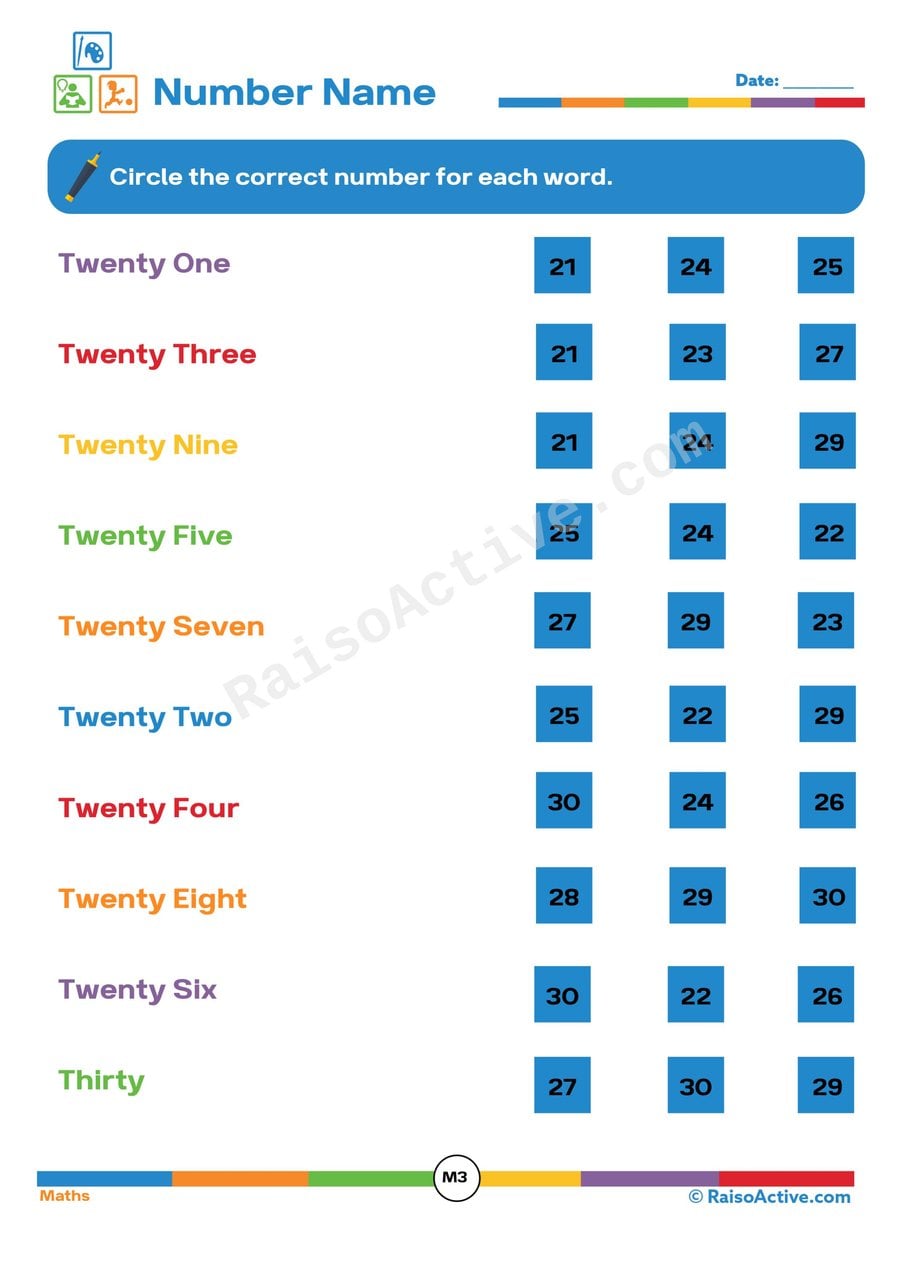
Number Names Matching Worksheet for Kids
Ages 4-6 · Pre-K–KindergartenAges 4-6 · Reception–Year 1Ages 4-6 · LKG–UKGAges 4-6
This worksheet helps children ages 4-6 connect written number words, like 'five' or 'nine,' to their numeral form by reading each word and circling the matching digit. Recognizing number names in text is a skill separate from counting objects, and it becomes important as soon as children start encountering numbers written out in books, signs, or math word problems.

Tens and Ones Counting Worksheet for Preschoolers
Ages 4-6 · Pre-K–KindergartenAges 4-6 · Reception–Year 1Ages 4-6 · LKG–UKGAges 4-6
Counting grouped tens and ones blocks introduces children ages 4-6 to place value, the idea that a two-digit number is really made up of groups of ten plus some leftover ones. This concept is foundational for understanding larger numbers and for later work with addition and subtraction that involves regrouping.
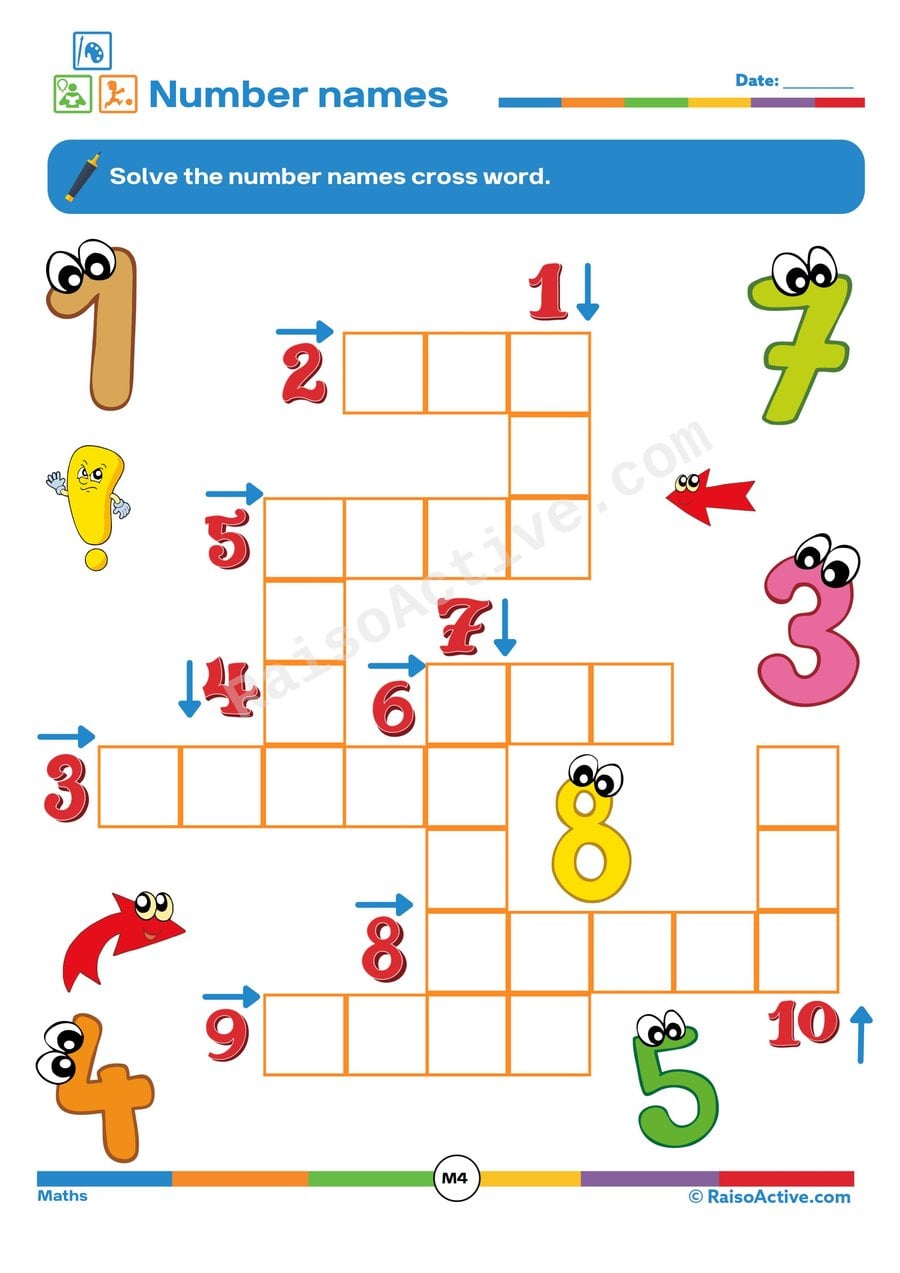
Number Names Crossword Worksheet for Kids
Ages 4-6 · Pre-K–KindergartenAges 4-6 · Reception–Year 1Ages 4-6 · LKG–UKGAges 4-6
Children ages 4-6 practice spelling number names — like 'five', 'twelve', or 'twenty' — by using numeral clues to fill in a crossword grid. This task bridges numeral recognition with word spelling, requiring children to think about both quantity and written vocabulary simultaneously. Fitting letters into the fixed crossword boxes also builds spatial planning and careful letter counting.

Number Names Worksheet: Writing and Matching Numbers 41-50
Ages 4-6 · Pre-K–KindergartenAges 4-6 · Reception–Year 1Ages 4-6 · LKG–UKGAges 4-6
Writing number names like 'forty-one' through 'fifty' next to their numerals helps children ages 4-6 connect the spoken word for a two-digit number to both its written word form and its digit form, deepening overall number sense in this specific range. This worksheet also revisits missing-number sequencing and color-coded boxes, reinforcing the same number range through several different, related tasks rather than one repetitive drill. Building fluency with number names in the 40s prepares children to confidently read numbers they encounter in daily life, from clocks to price tags.

Place Value Beads: Count and Fill the Numbers Worksheet
Ages 3-5 · Preschool–Pre-KAges 3-5 · Nursery–ReceptionAges 3-5 · Nursery–LKGAges 3-5
Counting beads on an abacus-style picture and writing the tens and ones totals teaches children ages 3-5 place value through a visual, hands-on representation rather than abstract numerals alone. Solving the final abacus total afterward reinforces that a two-digit number is really the sum of its tens and ones parts.
Guides for this topic

Number Formation Rhymes 0–9 and How to Fix Reversals
Original number formation rhymes for 0–9, the correct stroke order for each digit, why 3, 5 and 7 get reversed most often, and multisensory fixes that work.

Best Worksheets for 3-Year-Olds: What Works and What to Avoid
What works on worksheets for 3-year-olds: short sessions, crayons, tracing lines, matching, cutting, a free weekly plan, and signs one is too advanced.
Documenting Learning Without Drowning in Data: A Practical Guide for Parents and Teachers
Learn practical ways to document your child's learning without overwhelm. Simple portfolios, observation tips, and printable trackers for ages 1-8.
Reviews
Every worksheet for ages 4–6, no watermark
Members download the full library of 1,000+ worksheets and every activity pack without watermarks or daily limits. One year costs ₹999 in India or $20 elsewhere.
See membership plansOr download any worksheet free with a watermark (5 a day).