Frame Sentences Worksheet: Read and Tick the Correct Sentence!
This worksheet strengthens early grammar awareness in children ages 4-6 by having them compare two or more versions of a sentence and judge which one is written correctly. Spotting the difference between a correct and incorrect sentence builds the same skimming and comparing skills that support later spelling and editing work.
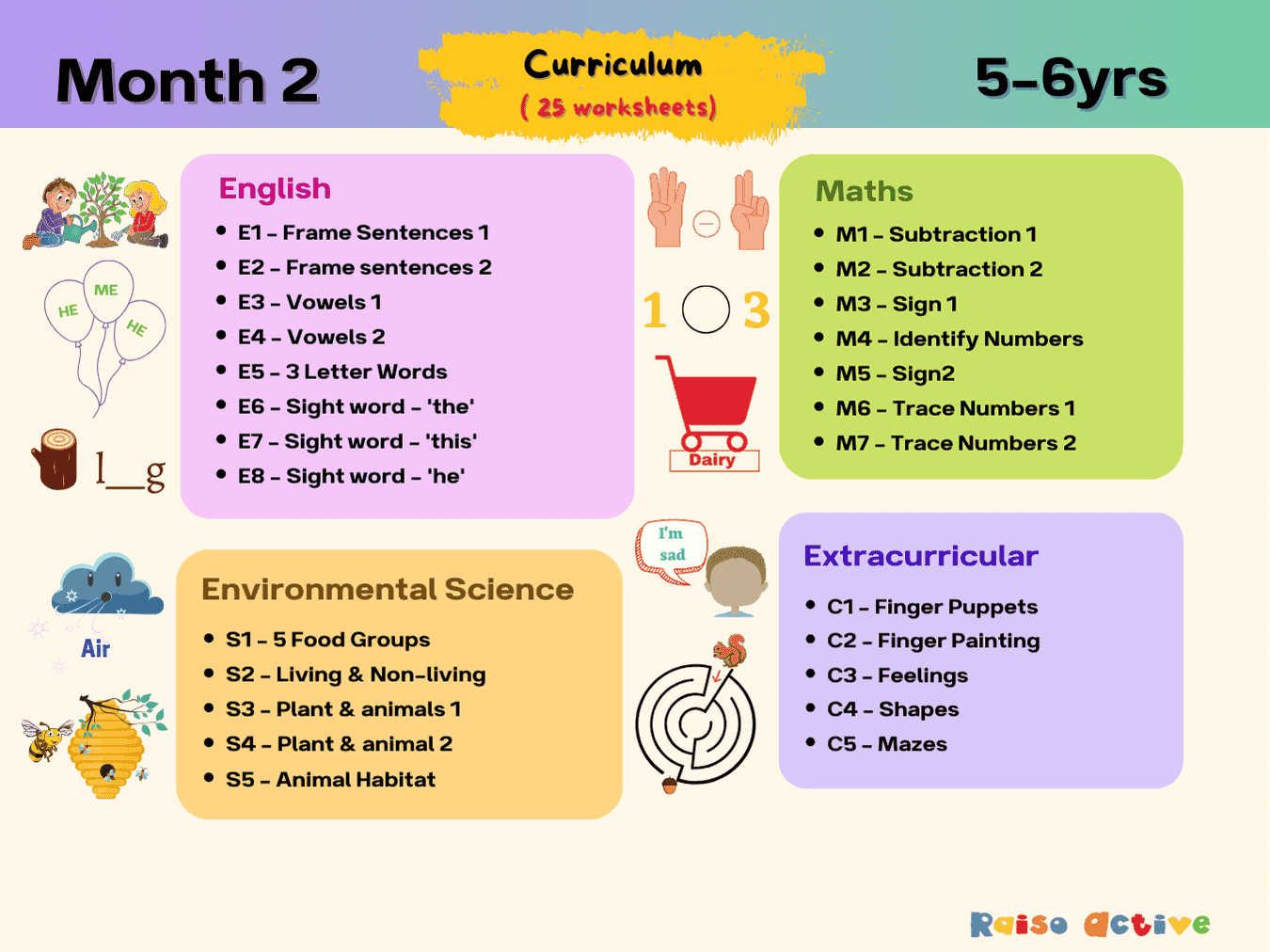
Part of the pack
Month 2: Learning & Development | Ages 5-6
This is page 4 of the pack. Ages 5-6 · KindergartenAges 5-6 · Year 1Ages 5-6 · UKGAges 5-6
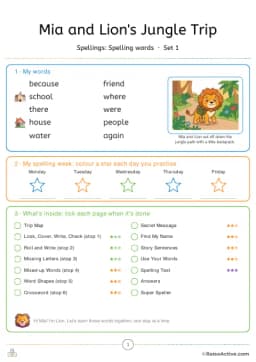
Made for your child
Spelling practice, made for your child
Their own spelling words turned into a pack: trace or look-cover-write-check, roll and write, a secret picture code, a word search, a crossword and a test, with their name in it.
Make a spelling packFree preview · free for members
Or start free: a word search with sight wordsCurriculum
- Fluency > Sentence Building
How to use this worksheet
Read the first set of sentences aloud slowly, emphasizing the words that differ between the options. Ask your child which sentence sounds right when spoken naturally, then have them look at the picture clue if one is provided to confirm the meaning matches. Once they've decided, have them tick the box beside the correct sentence. Continue through the remaining sets, encouraging your child to read along with you more independently as they gain confidence.
Materials needed
- Pencil
- Eraser
Extension activities
- 1Write two versions of a silly sentence yourself, one correct and one scrambled, and have your child pick the right one.
- 2Have your child dictate a sentence about their day while you write it down, then read it back together to check it makes sense.
- 3Play 'fix the sentence' out loud, saying a jumbled sentence and asking your child to say it correctly.
- 4Draw a picture to match one of the correct sentences from the worksheet.

Written by
Hemsweta Jain · Teacher Cheena
MBA and Early Childhood Educator, teaching since 2014 · Founder of RaisoActive, Mumbai
Every RaisoActive worksheet is designed and checked by the founder before publishing.
Published · Last reviewed
More from Month 2: Learning & Development | Ages 5-6

Trace and Write Numbers 11-15: Counting and Writing Worksheet
Ages 4-6 · Pre-K–KindergartenAges 4-6 · Reception–Year 1Ages 4-6 · LKG–UKGAges 4-6
This worksheet helps children ages 4-6 practice tracing and writing the number words from eleven to fifteen, moving beyond single-digit numbers into the trickier teen range where number names don't always follow an obvious pattern. Matching the number of dots on dice to the correct written number name also reinforces that these longer number words still represent a specific countable quantity.

Identify Numbers Worksheet: Matching Numbers and Words
Ages 4-6 · Pre-K–KindergartenAges 4-6 · Reception–Year 1Ages 4-6 · LKG–UKGAges 4-6
This worksheet builds number-word recognition by having children match written number names, like 'seven,' to their corresponding numeral, 7. For four- to six-year-olds, learning to read number words alongside numerals adds an important layer to early numeracy, since numbers appear in both written-word and symbol form in books, signs, and everyday life.

Sight Word 'HE' Worksheet: Trace, Color, and Practice!
Ages 3-5 · Preschool–Pre-KAges 3-5 · Nursery–ReceptionAges 3-5 · Nursery–LKGAges 3-5
This worksheet helps children ages 3-5 learn to recognize, write, and use the sight word 'HE' in simple sentences, giving repeated exposure to a short, high-frequency word that appears in nearly every early reader book. Practicing the word across six different formats, tracing, coloring, circling, writing, filling in, and cutting and pasting, builds recognition through many different types of practice in one sitting.

Sight Word 'This' Worksheet: Trace, Write, and Identify!
Ages 3-5 · Preschool–Pre-KAges 3-5 · Nursery–ReceptionAges 3-5 · Nursery–LKGAges 3-5
This worksheet helps children ages 3-5 learn to recognize, write, and use the sight word 'this' in sentences, building automatic recognition of a word that appears constantly in early reading but doesn't sound out easily. Cutting and pasting letters to spell the word adds a hands-on layer that reinforces letter order alongside whole-word recognition.

Parent's Guide: Fun Activities for Early Learning
Ages 3-5 · Preschool–Pre-KAges 3-5 · Nursery–ReceptionAges 3-5 · Nursery–LKGAges 3-5
This parent guide bundles four hands-on activities covering sentence building, subtraction, number comparison, and food sorting, designed for children ages 3-5 to practice early literacy and numeracy through tactile, real-world materials like natural loose parts and playdough. Rotating between language and math tasks in one sitting helps children see connections between counting, comparing, and describing the world around them, rather than treating each subject in isolation.
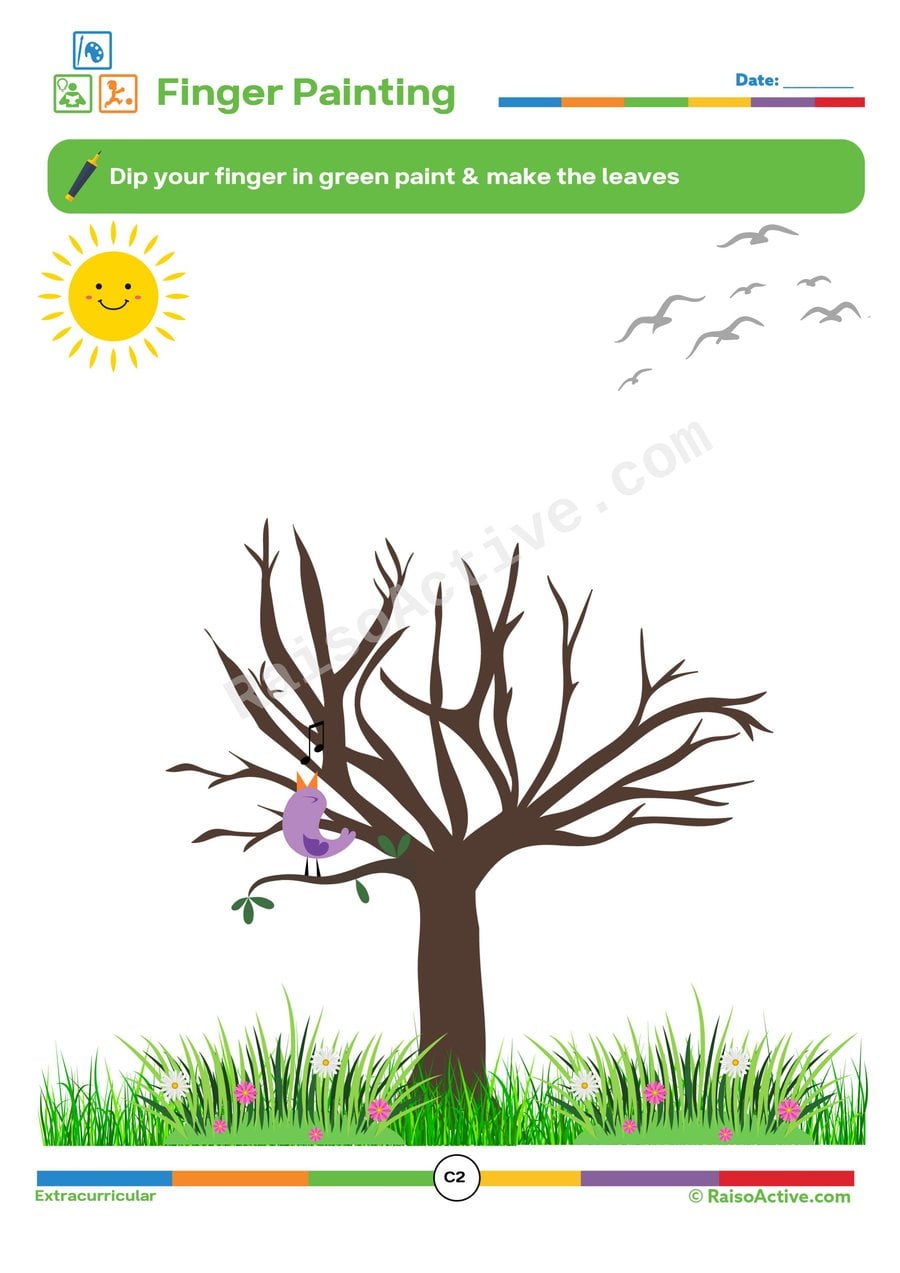
Finger Painting Fun: Make Leaves on the Tree!
Ages 3-5 · Preschool–Pre-KAges 3-5 · Nursery–ReceptionAges 3-5 · Nursery–LKGAges 3-5
This worksheet develops fine motor control and sensory creativity by having children use their fingertip, rather than a brush, to dab green paint onto tree branches to create leaves. For three- to five-year-olds, finger painting builds precise fingertip control in a low-pressure, playful way, and repeating the same dabbing motion across the page also reinforces the concept of filling a space with a repeated mark.

Sight Word 'THE' Worksheet: Trace, Write, and Identify!
Ages 4-5 · Pre-KAges 4-5 · ReceptionAges 4-5 · LKGAges 4-5
This worksheet builds automatic recognition of the sight word 'the,' one of the most frequently occurring words in English text, through repeated tracing, writing, and identification practice. For four- and five-year-olds, memorizing high-frequency sight words like 'the' by sight — rather than sounding them out each time — is essential for building reading fluency, since these words appear on nearly every page a child will read.
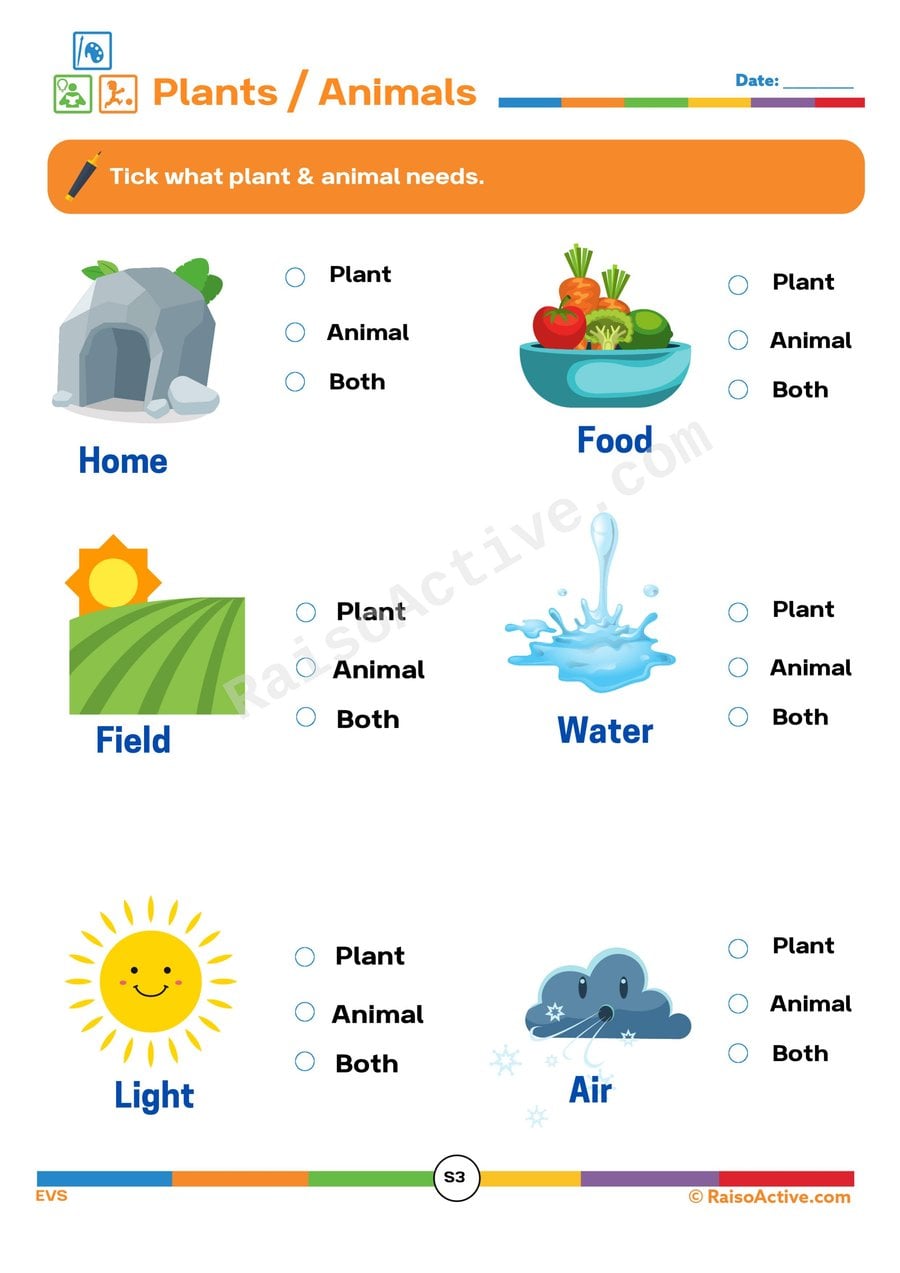
Plants and Animals Needs Worksheet for Kids
Ages 3-5 · Preschool–Pre-KAges 3-5 · Nursery–ReceptionAges 3-5 · Nursery–LKGAges 3-5
This worksheet introduces the basic science concept that living things — both plants and animals — share fundamental needs like food, water, air, and shelter to survive and grow. For three- to five-year-olds, sorting pictures by which need they represent builds early categorization skills while planting the foundation for later biology lessons about what makes something alive.
Related worksheets

Sentence Detective: Simple, Compound, or Complex Sentences Worksheet for Kids
Ages 4-6 · Pre-K–KindergartenAges 4-6 · Reception–Year 1Ages 4-6 · LKG–UKGAges 4-6
This worksheet introduces children to three different sentence structures, simple, compound, and complex, teaching them to notice how conjunctions and clause combinations change a sentence's complexity, a more advanced grammar concept appropriate for ages four to six who are already reading independently. Recognizing these structures also improves reading fluency, since children start to anticipate pauses and connections within longer sentences.

Simple Sentences Worksheet: Rewriting Sentences for Early Readers
Ages 4-6 · Pre-K–KindergartenAges 4-6 · Reception–Year 1Ages 4-6 · LKG–UKGAges 4-6
Children ages 4-6 practice sentence construction by rearranging scrambled words into a grammatically correct, meaningful sentence, building an understanding of proper word order in English. This hands-on rearranging task teaches children to recognize where a sentence's subject, action, and details belong, a skill they'll use in all future writing.

Complex or Compound Sentences Worksheet for Kids
Ages 4-6 · Pre-K–KindergartenAges 4-6 · Reception–Year 1Ages 4-6 · LKG–UKGAges 4-6
This worksheet narrows the focus to just two sentence types, compound and complex, asking children to tell them apart by identifying the connecting word that joins the clauses. For ages four to six, distinguishing these two structures specifically builds on earlier simple-sentence recognition and prepares them to eventually write more varied, interesting sentences of their own.

Abbreviations Worksheet: Matching and Writing Practice
Ages 4-6 · Pre-K–KindergartenAges 4-6 · Reception–Year 1Ages 4-6 · LKG–UKGAges 4-6
This worksheet introduces children ages 4-6 to common abbreviations — like Mr., Dr., or St. — by having them match each shortened form to the correct sentence context and then write it in correctly. Understanding that some words have a shortened written form is an important early literacy concept, since abbreviations appear constantly in books, signs, and everyday writing. Practicing both matching and writing reinforces the connection between recognizing an abbreviation and producing it correctly from memory.

Frame a Sentence Worksheet: Building Sentences with Cows!
Ages 4-6 · Pre-K–KindergartenAges 4-6 · Reception–Year 1Ages 4-6 · LKG–UKGAges 4-6
Arranging a set of given words into a complete, correctly ordered sentence teaches children ages 4-6 basic sentence structure, helping them understand that word order changes meaning and that sentences follow predictable patterns like subject before action. Remembering to start with a capital letter and end with a period also reinforces early writing conventions alongside the sentence-building itself. This combination of grammar and mechanics gives children practice with the full process of forming a proper written sentence, not just choosing words.

Sight Words Coloring Worksheet: 'His', 'My', and 'Her' Fun!
Ages 3-5 · Preschool–Pre-KAges 3-5 · Nursery–ReceptionAges 3-5 · Nursery–LKGAges 3-5
This coloring activity helps children ages 3-5 recognize and internalize the common sight words 'his,' 'my,' and 'her' by following a color-coded key, an approach that builds sight word memory through repeated visual association rather than isolated flashcard drilling. Because sight words like these don't sound out easily using phonics rules, repeated exposure in a fun context like coloring is one of the most effective ways for young children to memorize them. The activity also reinforces fine motor control as children carefully color within the lines of each labeled section.

Punctuation Practice Worksheet for Early Learners
Ages 4-6 · Pre-K–KindergartenAges 4-6 · Reception–Year 1Ages 4-6 · LKG–UKGAges 4-6
Children ages 4-6 learn to distinguish between statements and questions by deciding whether each sentence needs a period or a question mark, an early step in understanding how punctuation changes meaning and tone. Recognizing the difference between a question and a statement also supports reading fluency, since readers naturally use rising or falling intonation depending on the punctuation at the end of a sentence.

Capitalization Worksheet: Practice Writing Sentences Correctly!
Ages 4-6 · Pre-K–KindergartenAges 4-6 · Reception–Year 1Ages 4-6 · LKG–UKGAges 4-6
This worksheet teaches children ages 4-6 the rule that sentences begin with a capital letter, along with an introduction to capitalizing proper nouns like names and places. Rewriting sentences correctly, rather than just circling errors, gives children active practice applying the capitalization rule themselves, which builds the habit more effectively than passive correction exercises.
Guides for this topic

Documenting Learning Without Drowning in Data: A Practical Guide for Parents and Teachers
Learn practical ways to document your child's learning without overwhelm. Simple portfolios, observation tips, and printable trackers for ages 1-8.

When Should My Child Learn to Read? Is Kindergarten Too Early? A Complete Guide to Reading Readiness
Discover the research-backed optimal age for reading, key readiness signs, and why pushing too early can backfire. A complete guide for parents of children aged 3-8.
What Phonics Program Works Best for Homeschooling? A Complete Guide to Choosing the Right Approach
Compare top phonics programs for homeschooling — Jolly Phonics, Read Write Inc, Explode the Code — plus a DIY approach with worksheets. Find what works for your child.
Reviews
Every worksheet for ages 4–6, no watermark
Members download the full library of 1,000+ worksheets and every activity pack without watermarks or daily limits. One year costs ₹999 in India or $20 elsewhere.
See membership plansOr download any worksheet free with a watermark (5 a day).