What Phonics Program Works Best for Homeschooling? A Complete Guide to Choosing the Right Approach
Author
RaisoActive - Kids Activities and Fun Learning
Published
Updated
Reading Time
16 min read

- Phonics — teaching children the relationship between letters and sounds — is the most research-backed foundation for learning to read, far outperforming whole-language and look-say methods
- Popular programs like Jolly Phonics, Read Write Inc, and Explode the Code each have distinct strengths; the best choice depends on your child's learning style and your own teaching confidence
- Indian homeschooling families have unique considerations: English as a second or third language, accent differences, and the need to bridge between scripts — all manageable with the right approach
- You do not need to buy an expensive program — a consistent DIY sequence using free resources and quality printable worksheets produces excellent results for most children
- Daily phonics practice of just 15–20 minutes, done consistently, is more effective than sporadic hour-long sessions; structure and sequence matter more than any particular program
Why Phonics Is the Non-Negotiable Foundation of Reading
Every parent who has decided to homeschool their child eventually faces the same question: how do I actually teach my child to read? For many families — especially in India, where schooling has long relied on rote memorisation and whole-word recognition — phonics can feel like unfamiliar territory. Yet the research is remarkably clear. Systematic phonics instruction, where children learn the predictable relationships between letters and sounds and use that knowledge to decode words, is the single most effective method for teaching the majority of children to read.
The Science of Reading — a body of research accumulated over five decades across cognitive science, linguistics, and education — consistently shows that explicit, systematic phonics instruction produces better readers than whole-language approaches (which ask children to recognise words by sight) or balanced literacy approaches (which blend the two without a clear sequence). This is true across languages, socioeconomic backgrounds, and learning styles. Understanding why phonics works is the first step to choosing the right program — or building your own — for your homeschooling journey.
The English writing system is an alphabetic code: letters and letter combinations (graphemes) represent sounds (phonemes). Once a child understands this code and can apply it flexibly, they can decode almost any new word they encounter — even words they have never seen before. This is transformative. It means reading becomes genuinely independent rather than reliant on an adult pointing to words or a child making educated guesses from pictures. Phonics unlocks the door; everything else — vocabulary, comprehension, fluency, a love of books — follows naturally once that door is open.
Want free phonics worksheets for your homeschool?
Subscribe and get a weekly selection of printable phonics activities — letter sounds, blending, CVC words, digraphs, and more — sent straight to your inbox.
Structured Phonics vs Implicit Phonics: What Is the Difference?
Not all phonics instruction is the same. The crucial distinction is between structured (systematic) phonics and implicit (incidental) phonics. In a structured approach, sounds and letter patterns are introduced in a deliberate, logical sequence — from simple to complex — with each new concept building on what came before. Children practise each pattern thoroughly before moving on. In an implicit approach, phonics rules are pointed out as they arise during reading, without a predetermined sequence or cumulative structure.
For homeschooling families, structured phonics is almost always the better choice, particularly for children who are just beginning to read. The reason is simple: when you follow a sequence, there are no gaps. A child taught implicitly might learn the letter S one day, see the digraph SH weeks later without fully understanding why it makes a different sound, and then struggle to decode SHOP or FISH because the relationship was never explicitly taught. A structured program prevents these gaps by design.
Choose a program that teaches phonics *explicitly* and *systematically* — with a clear sequence from simple to complex — rather than one that introduces sounds incidentally as they appear in texts.
Explicit means the teacher (you!) directly explains the letter-sound relationship rather than hoping the child will infer it. Systematic means there is a logical scope and sequence, so nothing is left to chance. Both qualities are present in every program we recommend below.
The Most Popular Phonics Programs for Homeschooling: An Honest Comparison
There is no single "best" phonics program in the world. The best program for your family is the one that matches your child's learning style, your teaching confidence, and your budget. Here is an honest look at the programs most commonly used by homeschooling families, including many in India.
Jolly Phonics
Jolly Phonics (UK-based, widely used in India) is perhaps the most recognised phonics program in South Asian schools and homeschools. It introduces 42 letter sounds through songs, actions, and letter-formation guidance, grouped into seven sets of letters chosen for their frequency and utility (s, a, t, i, p, n first — because these letters combine to make many decodable words immediately). The multisensory approach — each sound has a dedicated action, like slithering for "s" or wiggling fingers for "i, i, i" — makes it particularly engaging for young learners aged 3–6.
Jolly Phonics workbooks are readily available in India (Navneet and other publishers stock them), making this a genuinely accessible program. Its strengths are its comprehensive teacher guide, its letter-formation instruction running alongside phonics, and its child-friendly materials. Its limitation is that it can feel slow for bright children who are ready to decode full sentences before the seven sets are complete — and the scripted teaching style suits some parents more than others.
Read Write Inc (RWI)
Read Write Inc (developed by Ruth Miskin, also UK-based) is a highly structured program that integrates phonics, reading, and writing from the very beginning. It uses a colour-coded system of "Fred Talk" (sounding out phonemes) and "Fred in your head" (blending silently) to scaffold the journey from individual sounds to reading fluent sentences. RWI has a very clear daily structure — approximately 20 minutes of phonics followed by reading practice — that suits homeschooling families who prefer a predictable routine.
The RWI materials are available online (the Ruth Miskin Training YouTube channel offers many free lessons) and physical books can be ordered internationally. For Indian homeschoolers, RWI's strong emphasis on blending — the core skill of pushing sounds together to read words — is particularly valuable, as many children in India are taught to recognise words whole without developing this foundational decoding skill.
Explode the Code
Explode the Code (US-based, by Nancy Hall) is a workbook-heavy program that suits children who enjoy sitting with a pen and practising independently. The series begins with Get Ready for the Code, Get Set for the Code, and Go for the Code for pre-readers, then moves through Books 1–8 covering short vowels, long vowels, blends, digraphs, and advanced patterns. The workbooks are available on Amazon India and are very affordably priced for digital editions. Explode the Code is beloved by homeschoolers who prefer a structured, self-directed approach, but it offers less oral and multisensory engagement than Jolly Phonics or RWI.
Bob Books
Bob Books are not a phonics program per se — they are a set of decodable readers that are best used alongside a phonics program. The first set introduces only a few phonemes at a time, meaning the earliest books (featuring characters named Mat and Sam) can be decoded by a child who has learned just four or five letter sounds. For Indian homeschooling families, Bob Books are an excellent first step into actual reading, because they provide the profound satisfaction of reading a real book very early in the phonics journey. Pair them with any of the programs above and they become enormously motivating.
No program is perfect — what matters is consistency and sequence. Pick one approach and follow it through rather than switching between programs every few weeks.
Many homeschooling families make the mistake of abandoning a program the moment their child hits a plateau. Plateaus are normal in phonics learning — they often precede a breakthrough. Give any program at least 6–8 weeks of consistent daily practice before evaluating whether it is working for your child.
What Indian Homeschooling Families Need to Consider
Homeschooling in India has its own particular context, and phonics instruction needs to account for it honestly. For most Indian children, English is a second, third, or sometimes fourth language — and this shapes how phonics should be approached. It does not make phonics less important; if anything, systematic decoding is more important for children whose oral vocabulary in English is still developing, because phonics gives them a reliable tool for accessing words they cannot recognise by sight alone.
Indian English accents differ from British or American pronunciations in specific, predictable ways. The short "a" in words like cat or bat sounds different in a Mumbai or Chennai classroom than in a London one — and that is perfectly fine. Phonics programs teach the relationship between graphemes and phonemes, not a specific accent. Teach the sounds as your child hears them in their natural environment, because the goal is for them to read in the language they actually speak, not to mimic a foreign accent.
- Build oral English vocabulary *alongside* phonics — children need to know what a word means when they decode it, otherwise reading feels pointless. Read aloud, watch quality English content, and narrate daily activities in English
- Use picture-supported worksheets heavily in the early stages so children can link decoded words to meaning instantly — a picture of a "cap" next to the word confirms comprehension
- Do not worry about accent differences when teaching individual phonemes — focus on whether the child can reliably associate the grapheme with the sound *as they say it*
- Many Indian children are phonologically aware in Hindi, Marathi, Tamil, or other home languages — explicitly celebrate this: "The sound at the start of *kaam* (work) — what is it? Just like the K in *kit*!"
Research by Hanna, Hanna, Hodges, and Rudorf (commissioned by the US Office of Education) found that the vast majority of English words follow predictable phonetic patterns. Teaching children to decode puts the overwhelming majority of the language within their reach — including words they have never seen or heard before.
Source: Hanna et al., Phoneme-Grapheme Correspondences as Cues to Spelling Improvement
You Do Not Need an Expensive Program: The DIY Phonics Approach
Here is the truth that many phonics program publishers would prefer you did not know: the research on phonics does not show that any particular commercial program is uniquely effective. What the research shows is that systematic, explicit teaching of phonics in a logical sequence produces strong readers — and you can deliver that yourself, without spending thousands of rupees on a boxed curriculum, using freely available resources and quality printable worksheets.
The key to a successful DIY approach is following a clear scope and sequence — a predetermined order for introducing phonics concepts. Without a sequence, it is easy to introduce things too early (blends before the child has mastered individual consonants), skip things (forgetting that long vowels need explicit teaching), or spend too long on mastered concepts while neglecting new ones. The sequence below is a reliable, research-aligned starting point.
The Phonics Sequence: From First Sounds to Fluent Decoding
The Core Phonics Sequence for Homeschooling
Stage 1: Consonants and Short Vowels
Begin with the most common consonants (s, m, t, p, n, c, d, b, f, g, h, j, k, l, r, w) and the five short vowel sounds (a as in "cat", e as in "bed", i as in "sit", o as in "pot", u as in "cup"). Introduce 2–3 letters per week, practising the sound with actions, songs, and tracing. Do not rush — confident individual sounds are the foundation for everything that follows.
Stage 2: CVC Words (Consonant-Vowel-Consonant)
Once your child knows at least 6–8 sounds including one short vowel, begin blending simple three-letter words: cat, sit, hop, mud, bed. Use word-building tiles or letter cards so children can physically manipulate the sounds. Decodable readers like Bob Books (Set 1) are perfect at this stage — your child can read actual sentences from real books.
Stage 3: Consonant Blends
Blends are two or three consonants that appear together, each still sounding separately: bl, cl, fl, gr, st, sp, tr, etc. Practise with word lists and worksheets focusing on one blend family at a time. Beginning blends (at the start of words) are typically easier than ending blends — introduce them first.
Stage 4: Digraphs
Digraphs are two letters that make a single new sound: ch (chair), sh (ship), th (this/thin), wh (when), ck (duck). These are a significant milestone — the child is now learning that two letters can work together as one grapheme. Use picture-based worksheets to build recognition of the digraph at the start, middle, and end of words.
Stage 5: Long Vowels and Vowel Patterns
Long vowels use their letter name (a as in "cake", e as in "see", i as in "bike", o as in "home", u as in "cube"). Introduce the common spelling patterns: silent e (CVCe: cake, like, home), vowel pairs (ai, ee, oa, ue), and the "bossy e" rule. This is often where reading really takes off — children begin to read chapter books independently within months of mastering long vowel patterns.
- **Minutes 1–3: Review** — Quickly flash 5–10 flashcards of previously learned sounds. Aim for immediate, confident responses. Do not move on if responses are hesitant — more review is needed.
- **Minutes 4–8: Teach** — Introduce or continue with the current phoneme or pattern. Use actions, songs, a whiteboard, and letter cards. Be enthusiastic — your energy sets the tone.
- **Minutes 9–14: Practise** — Complete one worksheet together: tracing, blending, word-building, or a picture-labelling activity focussed on the new sound.
- **Minutes 15–20: Read** — Spend the final 5 minutes reading from a decodable reader at your child's current level. This connects all the isolated phonics work to actual reading and is enormously motivating.
The 15–20 minute daily phonics session — review, teach, practise, read — is the single most effective structure you can use, whether you follow a formal program or design your own.
This four-part structure mirrors the most effective classroom phonics lessons documented in literacy research. Review builds automaticity; teaching introduces new knowledge; practice deepens encoding; reading provides meaningful application. Together, they create the complete learning loop that produces confident, independent readers.
- +Explicit teaching of each letter-sound relationship
- +Clear sequence from simple to complex patterns
- +Children can decode unfamiliar words independently
- +Works for most learners including struggling readers
- +Rapid progress — many children reading sentences within weeks
- +Supported by decades of reading science research
- -Letter-sound links introduced incidentally if at all
- -No predetermined scope and sequence
- -Children rely on guessing from context or picture clues
- -Leaves struggling readers without reliable strategies
- -Progress can be slow and uneven
- -Largely unsupported by controlled reading research
Literacy researcher Louisa Cook Moats, synthesising findings from the National Reading Panel and subsequent studies, found that all but approximately 5% of children — who may have significant neurological differences — can become proficient readers when taught with systematic, explicit phonics instruction from the start. The reading gap is largely an instruction gap.
Source: Moats, L. (2020). Teaching Reading Is Rocket Science. American Federation of Teachers.
How RaisoActive Phonics Worksheets Fit Into Any Program
Whether you choose Jolly Phonics, Read Write Inc, Explode the Code, or your own carefully sequenced DIY approach, printable worksheets serve an irreplaceable role in the daily phonics session. They provide the focused, independent practice that reinforces what has just been taught — the bridge between understanding a concept in theory and applying it automatically in reading. RaisoActive's phonics worksheet library is designed to slot directly into any program or sequence, giving you targeted practice pages for every stage of the phonics journey.
The worksheets cover every key stage: individual letter-sound correspondence, short and long vowel work, CVC word building, consonant blends, digraphs, and phoneme-level activities like segmenting (breaking a word into its sounds) and blending (pushing sounds together to read a word). Each worksheet is designed for Indian families and classrooms — the artwork, vocabulary, and design reflect the world your child actually lives in, making the content feel immediately relevant and engaging.
Get Your Free Phonics Worksheet Pack
Subscribe to RaisoActive and receive a curated phonics worksheet pack covering letter sounds, CVC words, blends, and digraphs — everything you need to get your homeschooler reading with confidence.
Frequently Asked Questions About Homeschool Phonics Programs
At what age should I start phonics with my child?
Is Jolly Phonics suitable for children learning English as a second language?
My child is 7 and still cannot read. Is phonics still the right approach?
How do I know if my child is making enough progress with phonics?
Can I teach phonics without buying any program at all?
Should I teach phonics in English and Hindi simultaneously?
Free worksheets for this topic
Browse all worksheets
Dussehra and First Letters: Vidyarambham Tracing and Letter Hunt
Ages 4-6 · Pre-K–KindergartenAges 4-6 · Reception–Year 1Ages 4-6 · LKG–UKGAges 4-6
Children learn about Vidyarambham, when little children write their first letters in rice on Vijayadashami, and about Dussehra, when Rama won against Ravana. They trace letters, sort things we use to learn, count to 10 and match letters to beginning sounds.
Navratri Festival Quest Answer Key for Grown-ups
Ages 7-11 · Grade 2–Grade 3Ages 7-11 · Year 3–Year 4Ages 7-11 · Class 2–Class 3Ages 7-11
Grown-ups can check every answer in the pack, with workings for the maths, grid positions for the word search, the logic grid and sudoku solutions, and the reasons behind the science results.
The Nine Nights: Durga and Mahishasura Reading Comprehension
Ages 7-11 · Grade 2–Grade 3Ages 7-11 · Year 3–Year 4Ages 7-11 · Class 2–Class 3Ages 7-11
Children read a retelling of the legend of Durga and Mahishasura, find facts in the text, answer inference questions about why things happened, and write their own opinion about staying calm and doing the right thing.
Navratri Fun Time Answer Key for Grown-ups
Ages 4-6 · Pre-K–KindergartenAges 4-6 · Reception–Year 1Ages 4-6 · LKG–UKGAges 4-6
Grown-ups can quickly check every answer in the Navratri Fun Time pack, page by page.

Written by
Hemsweta Jain · Teacher Cheena
MBA and Early Childhood Educator, teaching since 2014 · Founder of RaisoActive, Mumbai
Published · Last reviewed
Related Resources
Printable Resources(10)
View all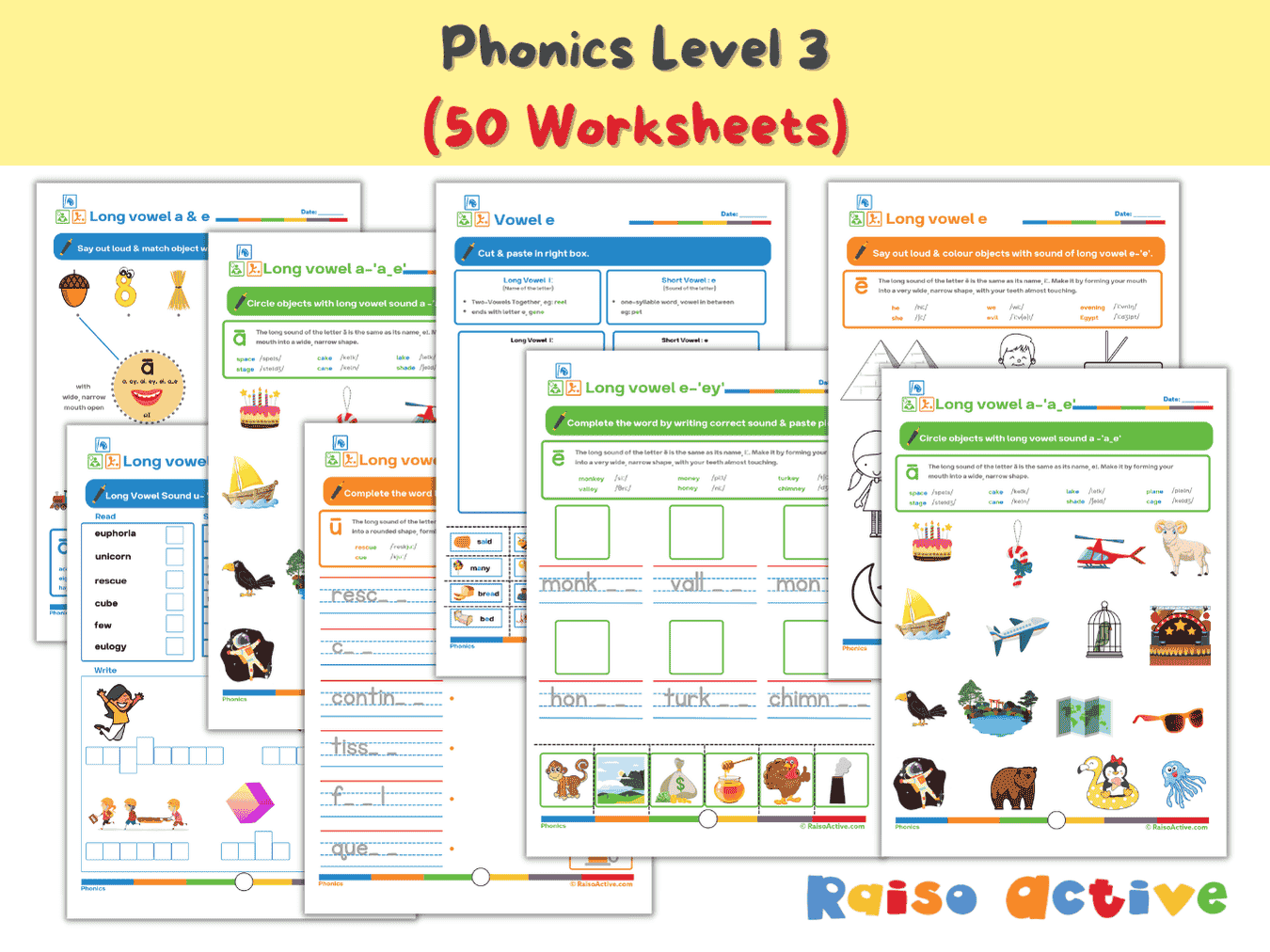

Phonics Level 3 Long Vowels Activity Book for Kindergarten & 1st Grade
Ages 5-7 · Kindergarten–Grade 1Ages 5-7 · Year 1–Year 2Ages 5-7 · UKG–Class 1Ages 5-7 · 51 pages
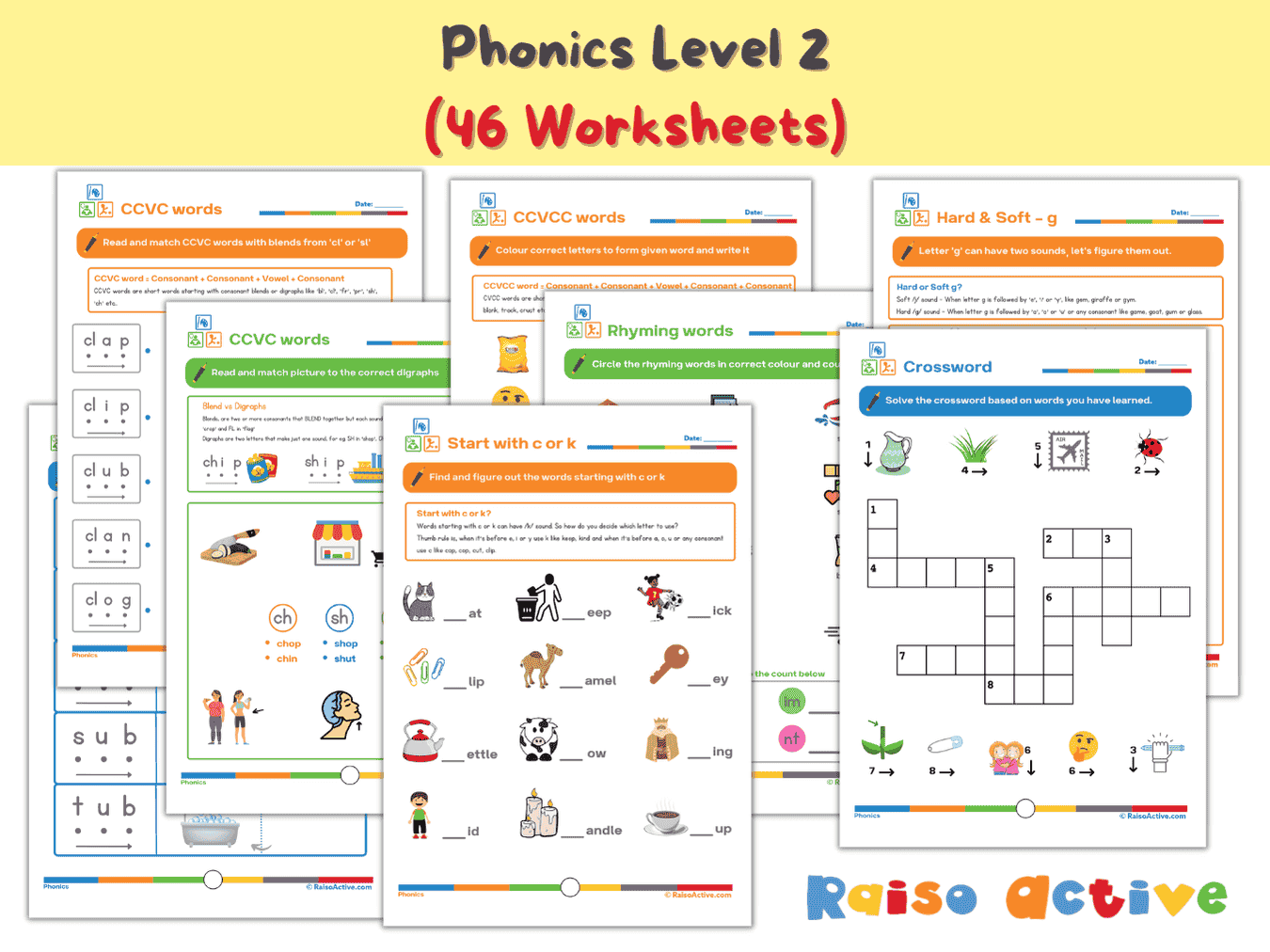
Phonics Level 2 Worksheets: CVC, CCVC, CVCC Word Families & Blends for Early Readers (Ages 4-7)
Ages 4-7 · Pre-K–Grade 1Ages 4-7 · Reception–Year 2Ages 4-7 · LKG–Class 1Ages 4-7 · 47 pages
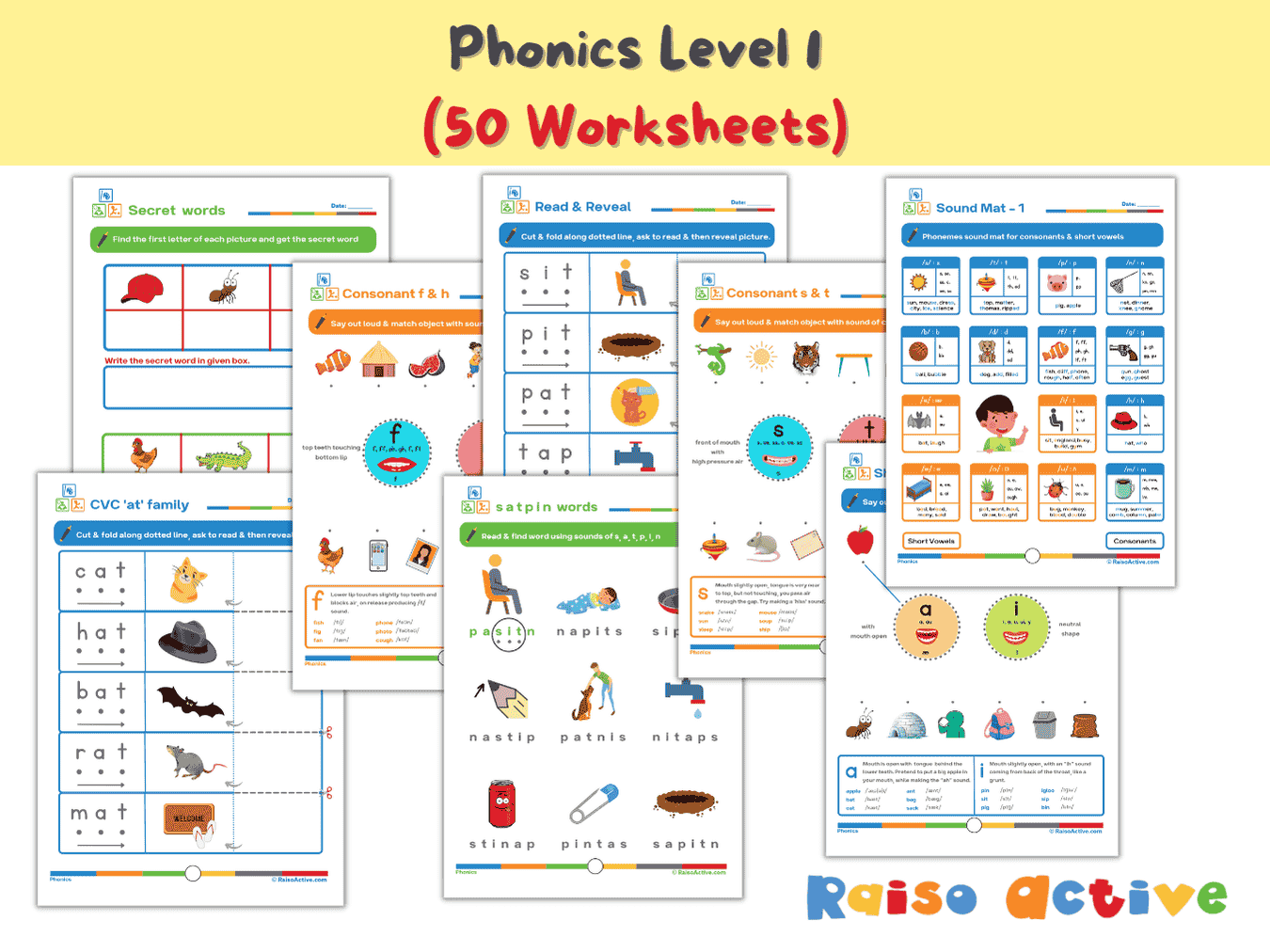
Phonics Level 1 Activity Book: Letter Sounds, Blending & CVC Words for Preschool & Kindergarten
Ages 3-6 · Preschool–KindergartenAges 3-6 · Nursery–Year 1Ages 3-6 · Nursery–UKGAges 3-6 · 60 pages
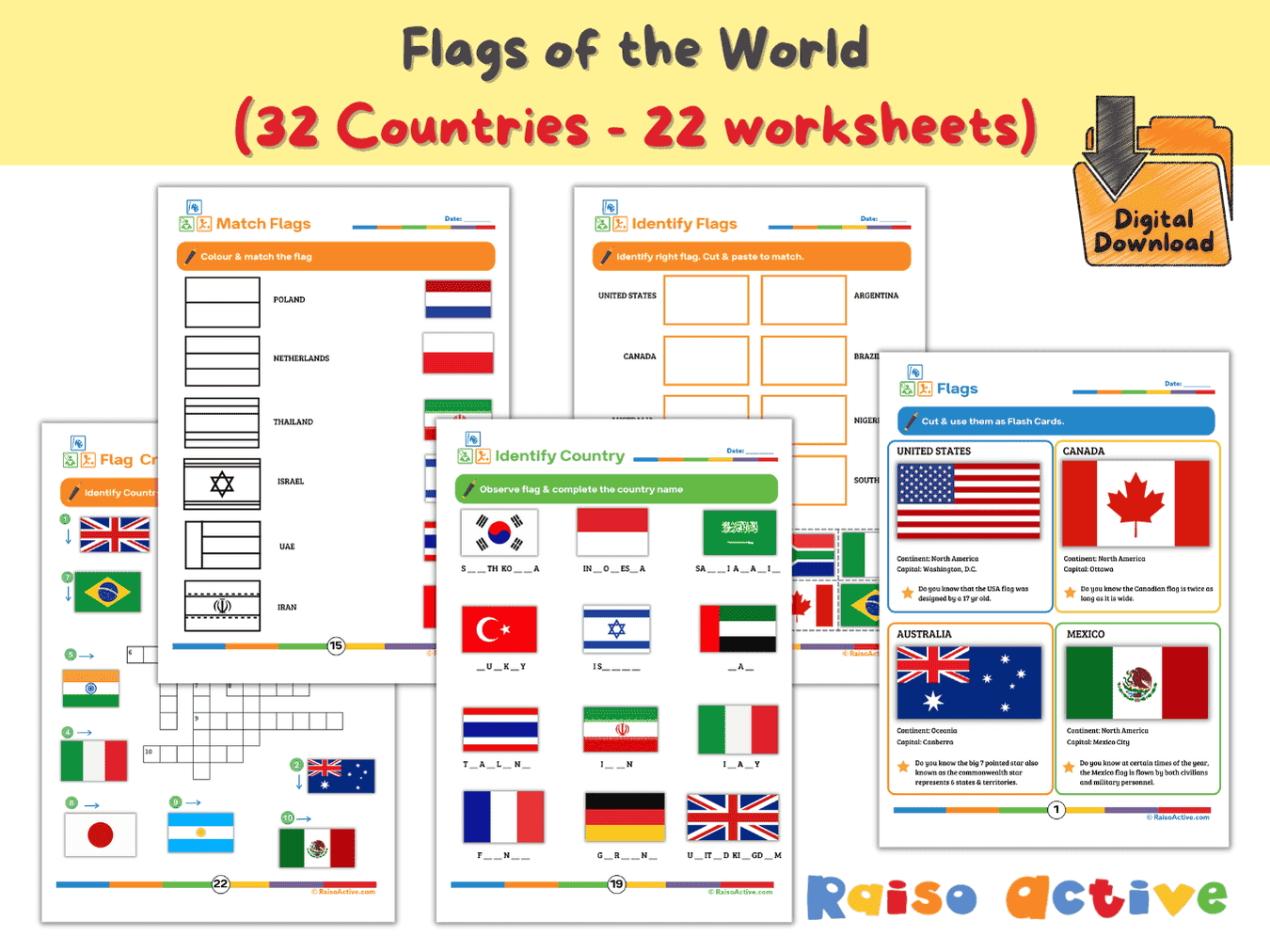

Flags of the World Activity Book & Flashcards for Kids (Ages 5-9)
Ages 5-8 · Kindergarten–Grade 2Ages 5-8 · Year 1–Year 3Ages 5-8 · UKG–Class 2Ages 5-8 · 23 pages
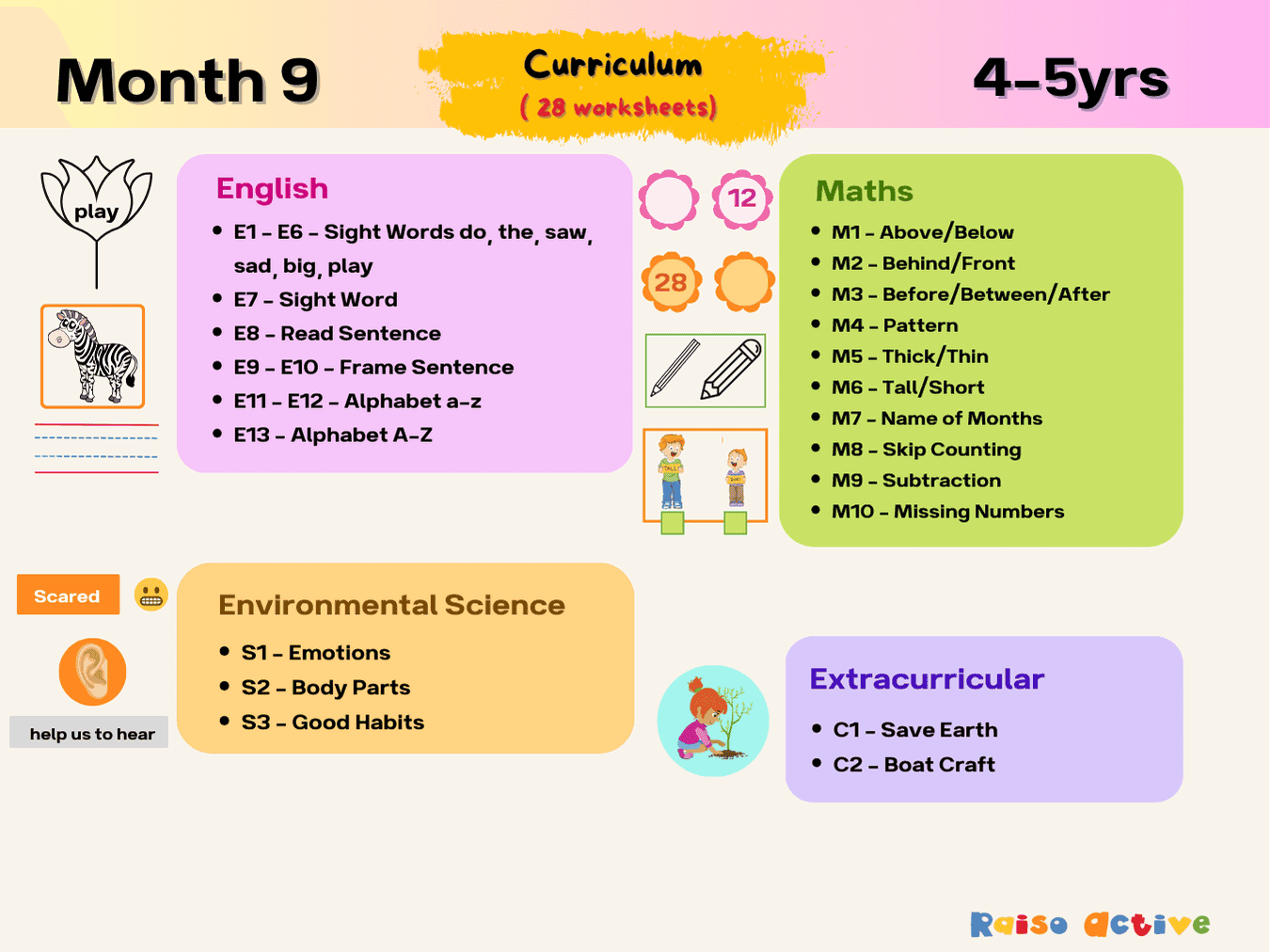

Month 9: Play-Based Preschool Foundational Skills | Ages 4-5
Ages 4-5 · Pre-KAges 4-5 · ReceptionAges 4-5 · LKGAges 4-5 · 31 pages
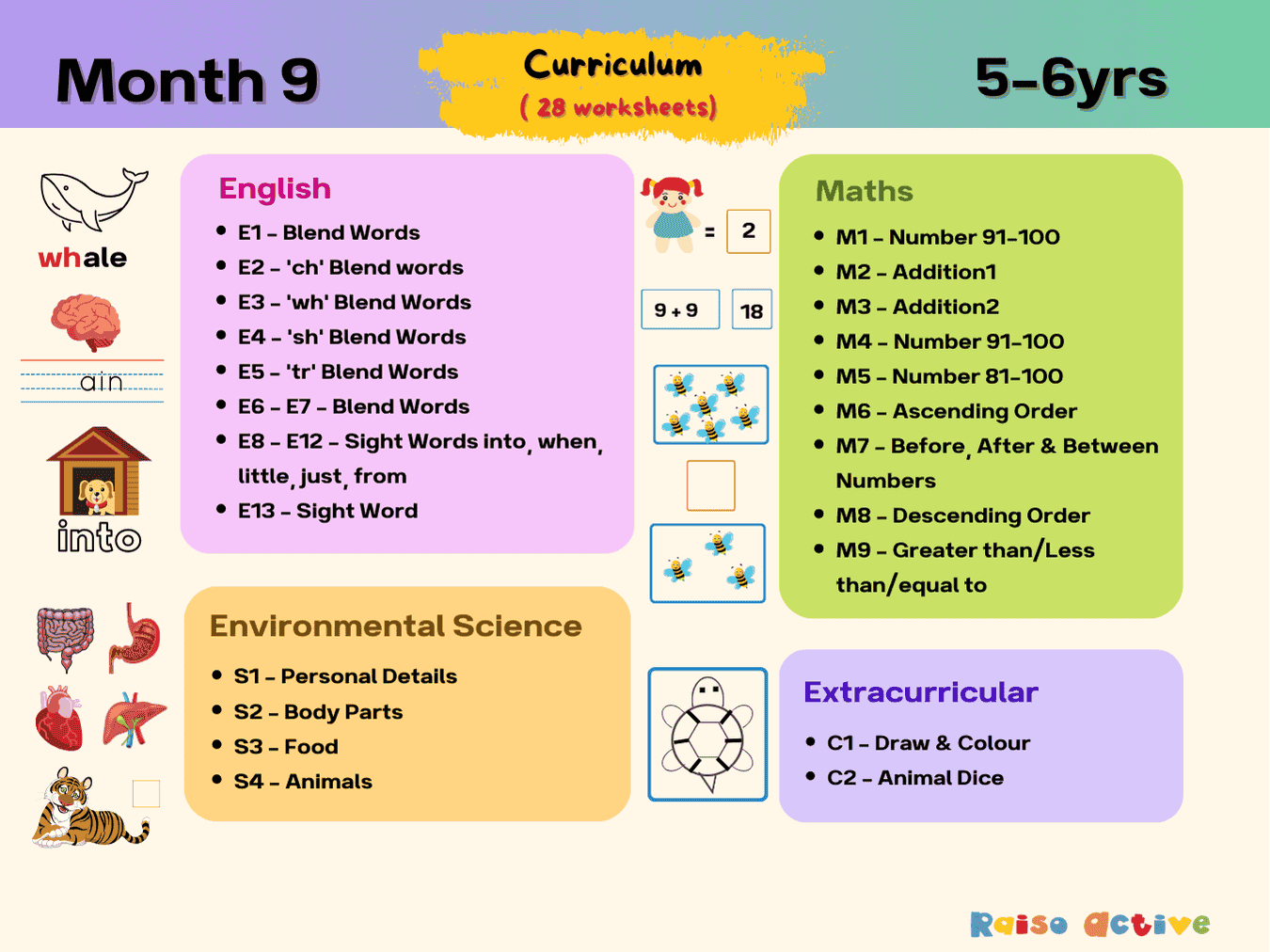
Month 9: Early Learning English Math Science | Ages 5-6
Ages 5-6 · KindergartenAges 5-6 · Year 1Ages 5-6 · UKGAges 5-6 · 31 pages
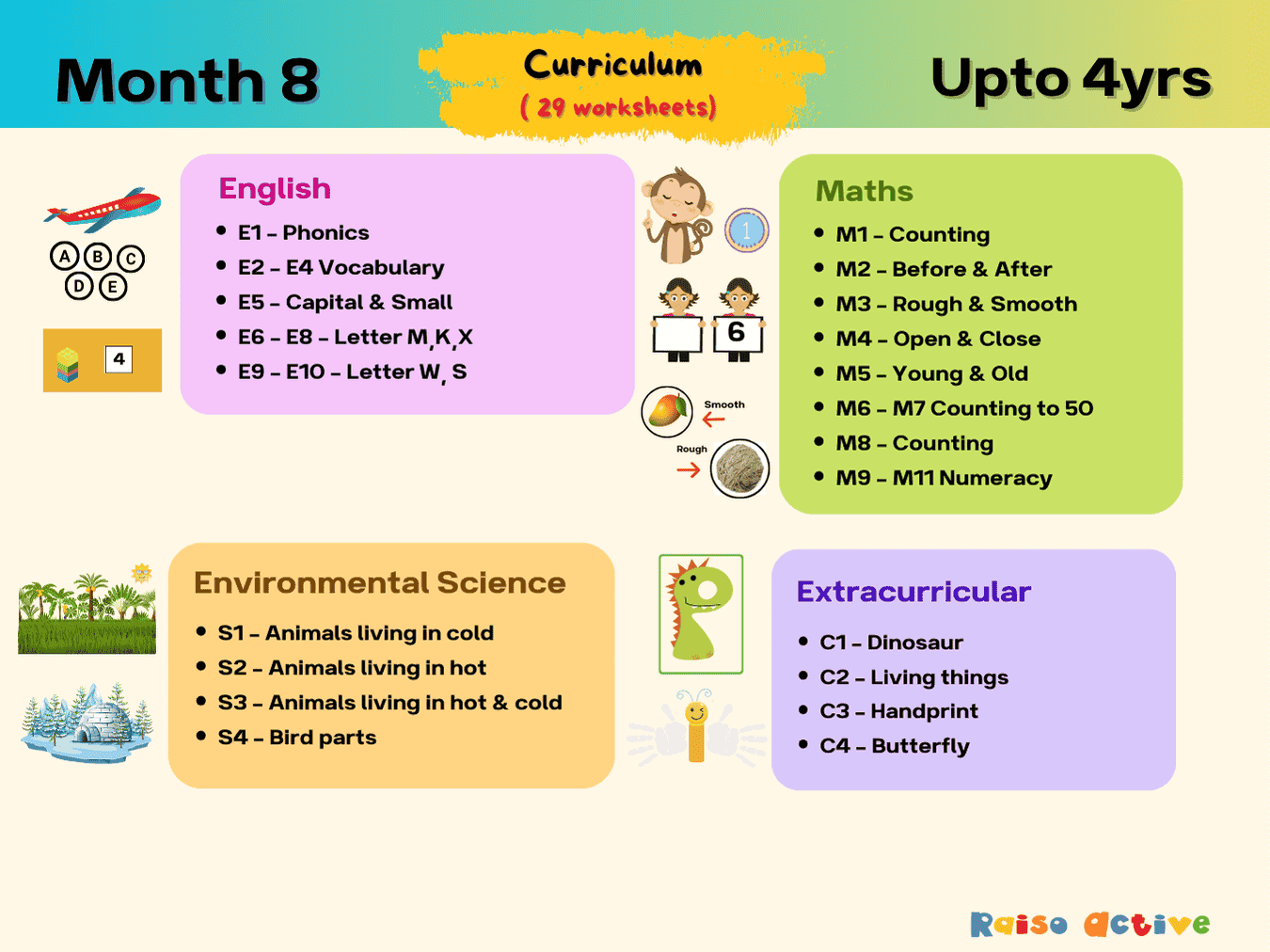
Month 8: Phonics, Math, Science, Creativity | Ages Up to 4
Ages 3-5 · Preschool–Pre-KAges 3-5 · Nursery–ReceptionAges 3-5 · Nursery–LKGAges 3-5 · 32 pages
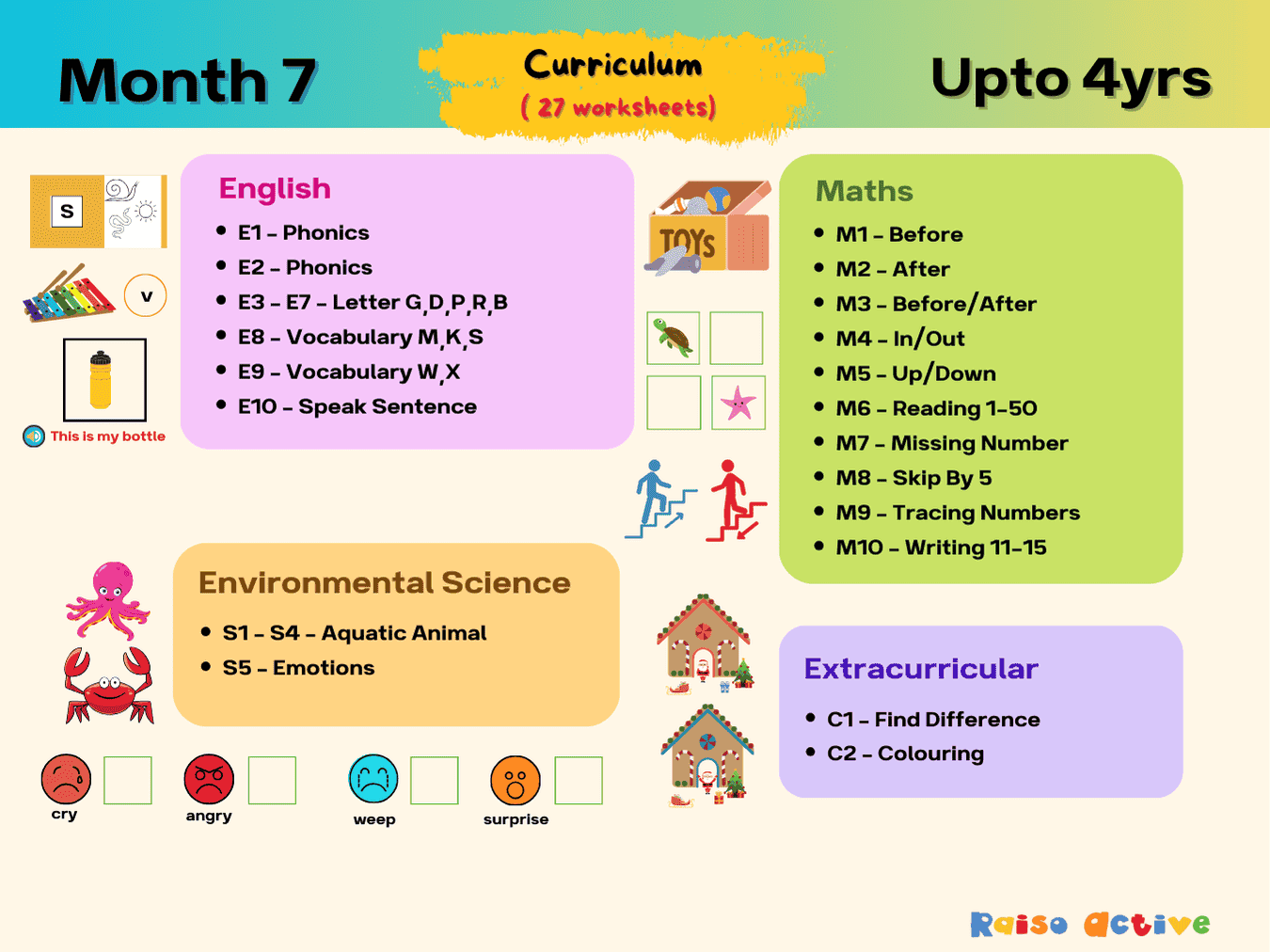
Month 7: Comprehensive preschool learning | Ages Up to 4
Ages 2-4 · PreschoolAges 2-4 · NurseryAges 2-4 · 30 pages
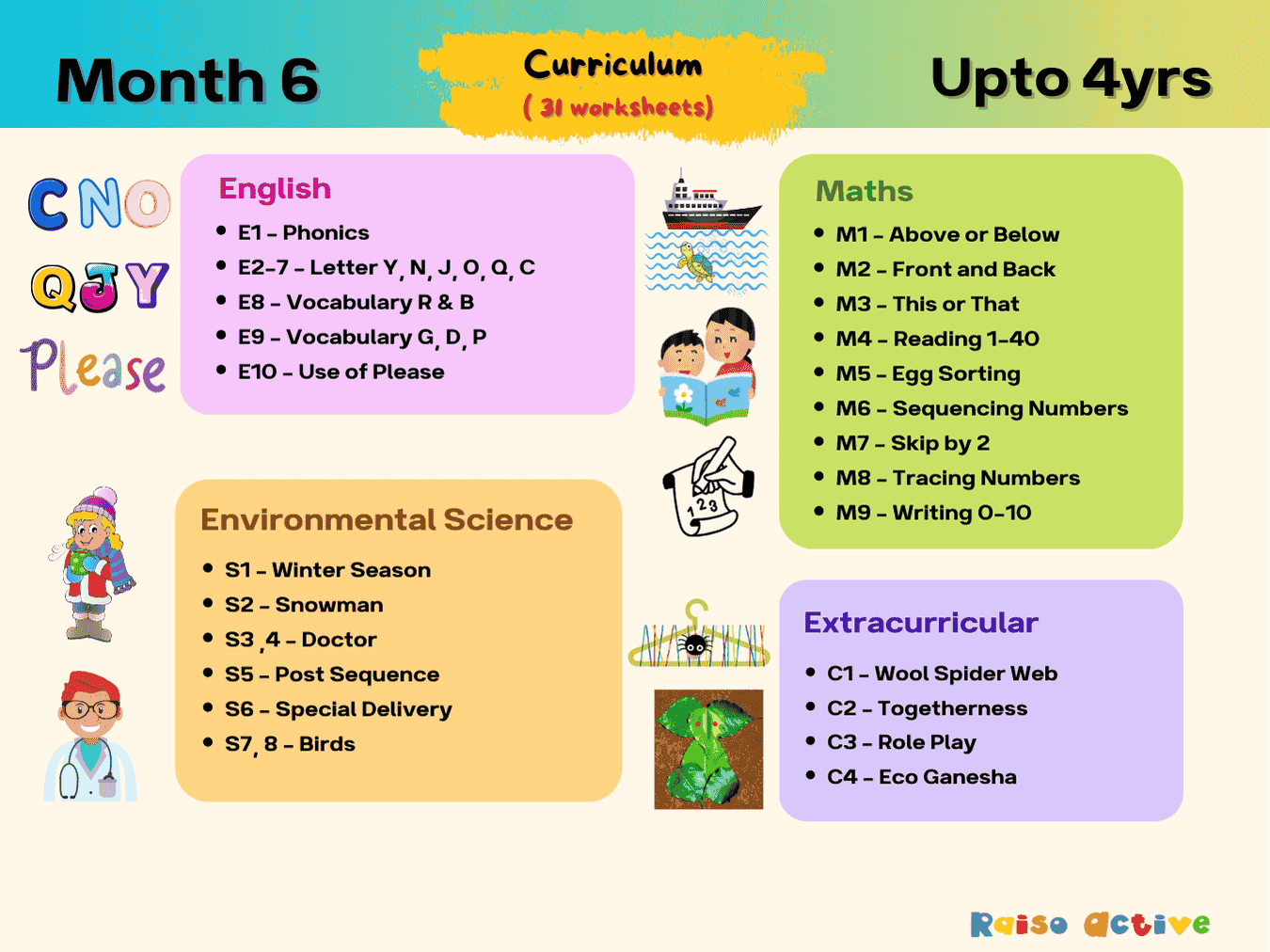
Month 6: Toddler Preschool Foundational Skills | Ages Up to 4
Ages 2-4 · PreschoolAges 2-4 · NurseryAges 2-4 · 34 pages
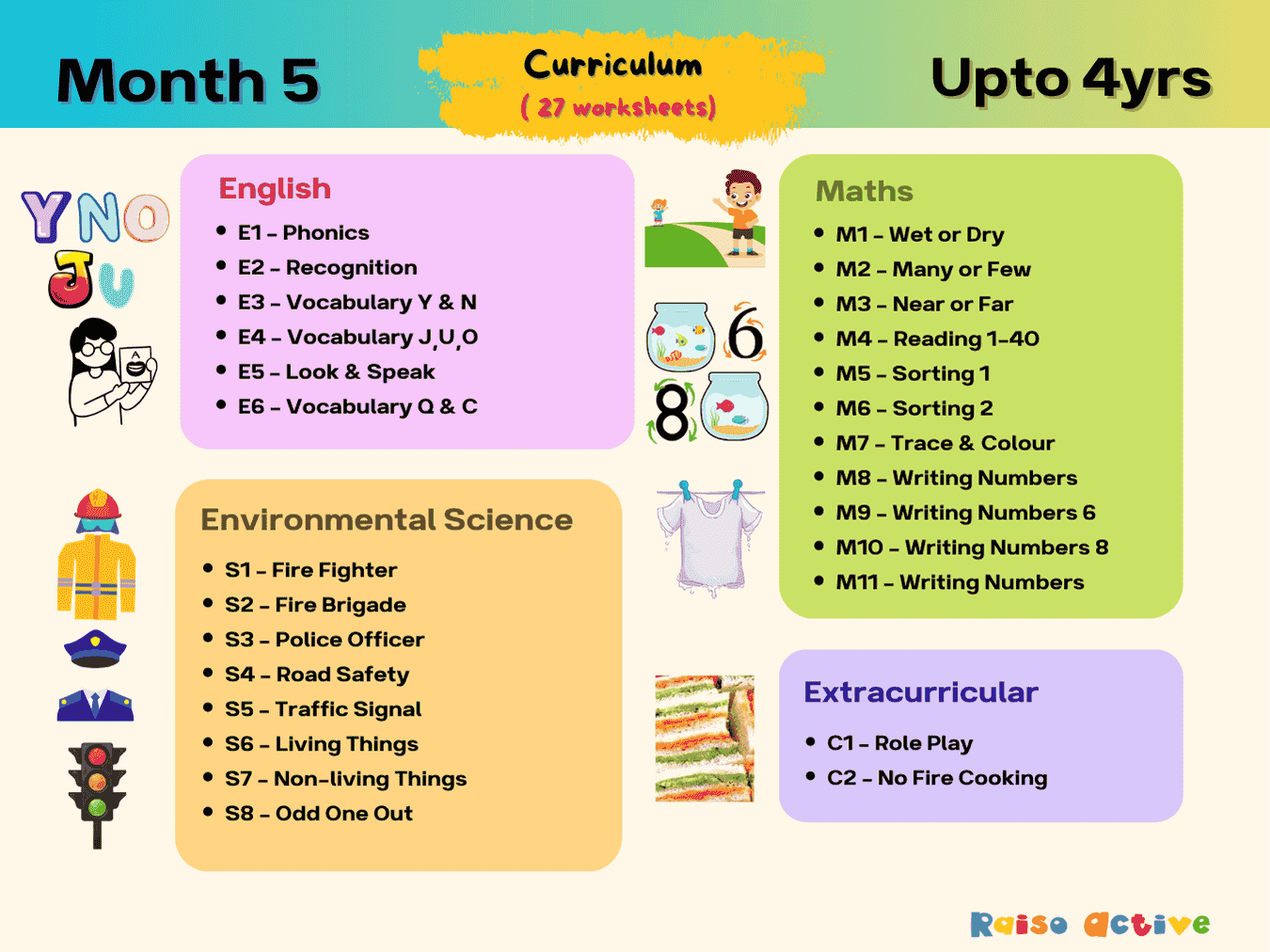
Month 5: Preschool Subjects and Play | Ages Up to 4
Ages 2-4 · PreschoolAges 2-4 · NurseryAges 2-4 · 30 pages