Free printable worksheets · India
Nursery English Worksheets (Ages 3–4)
Nursery english worksheets are practice sheets for children aged 3–4 in Nursery in India. English covers letter and sound recognition, reading, vocabulary, grammar and writing, building from spoken language toward independent sentences. The sheets on this page cover letter recognition and phonics, reading comprehension, sentence writing and vocabulary and grammar.
Nursery marks the first year an Indian child sits at a table with a pencil rather than only playing with one. Grip is still developing, so schools expect pre-writing strokes, colouring within a bold outline, matching identical pictures and counting small groups rather than any letter writing. Attention rarely holds past a few minutes at a stretch. Three-year-olds learn that letters have names and their name starts with one. A set should cover recognizing uppercase letters, beginning with the ones in the child's own name, hearing the first sound of familiar words, spotting two pictures that rhyme, building vocabulary through opposites and categories, and tracing thick lines, curves and a few capitals with a crayon. Listening to a story and pointing to what happened is comprehension at this age. Lowercase and blending wait.
1079+ worksheets · free PDF download · print on A4 or Letter
Nursery English Worksheets to print
Browse all worksheets for ages 3–4
Clothing Pattern Match Worksheet for Preschoolers
This worksheet has children ages 3-5 study repeating patterns on clothing items — stripes, polka dots, or checks — and match each item to its identical twin, building visual discrimination and early pattern-sequencing skills. Distinguishing between similar-looking patterns also sharpens attention to detail, a skill that later supports letter and word recognition.

Sight Word 'Did' Worksheet: Read, Trace, and Complete Sentences!
This worksheet strengthens sight-word recognition for children ages 3-5 through repeated exposure to the word 'did' — tracing it, writing it, completing sentences with it, and spelling it by cutting and pasting letters. Because 'did' is a past-tense helper word that doesn't sound out easily, this kind of varied repetition is exactly what builds the instant recognition needed for reading fluency.

Fun with Letter F: Tracing, Finding, and Coloring Worksheet
Children ages 3-5 reinforce letter recognition and pencil control as they trace the letter F, search for it among other letters, and identify a picture starting with the F sound. Working through the same letter in multiple formats — writing, spotting, and sound-matching — helps move the letter from simple recognition toward automatic recall, an important pre-reading skill.

Number Names Worksheet: Trace, Count, and Match Numbers 1-5!
Tracing, counting, and matching number names for 1 through 5 helps children ages 3-5 connect three different representations of the same quantity — the written word, the numeral, and a countable group of objects. Building this three-way connection early strengthens overall number sense and makes it easier to recognize numbers in whatever form they appear later, whether written as words or digits.
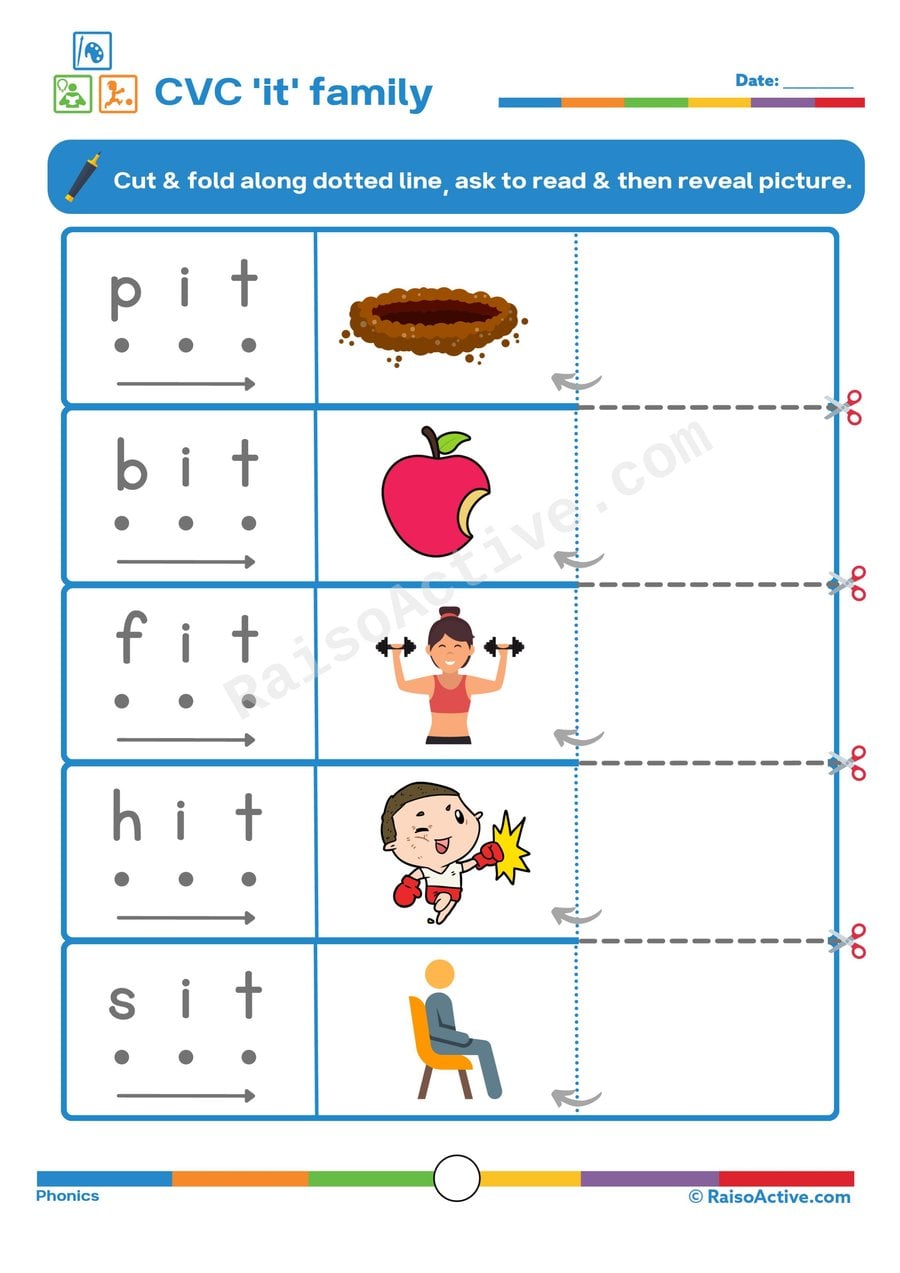
CVC 'it' Family Worksheet: Read, Cut, and Reveal!
The 'it' word family (sit, hit, bit) introduces children ages 3-5 to a short-vowel pattern using the letter i, giving them practice with a sound that's often trickier to hear than a/e because it's a shorter, less distinct vowel. Reading each word before revealing its hidden picture builds decoding confidence and gives an immediate self-check, which helps children trust their own reading rather than relying only on adult confirmation. Repeating the same ending across several words strengthens pattern recognition, a skill that speeds up reading fluency over time.

Secret Words Worksheet: Find the First Letter! (Ages 3-5)
Identifying the first sound in a spoken word is one of the earliest phonemic awareness skills children develop, and this 'Secret Words' worksheet turns that skill into a mini puzzle for ages 3-5. By listening for the beginning sound of each pictured object and writing its letter, children practice connecting spoken sounds to written symbols — the foundation of phonics-based reading. Assembling those letters into a hidden word adds a satisfying payoff that keeps young children motivated through several rounds of sound isolation.

Road Safety Signs Matching Worksheet for Preschoolers
Matching road safety signs teaches 3-5 year olds to recognize specific shapes, colors, and symbols and connect them to their real-world meaning — an early form of symbol literacy that matters well beyond the worksheet, since these are signs your child will actually encounter on walks and car rides. Coloring the signs first, then matching them, reinforces visual recognition through repetition before the matching task asks them to recall each sign's identity without color cues alone.
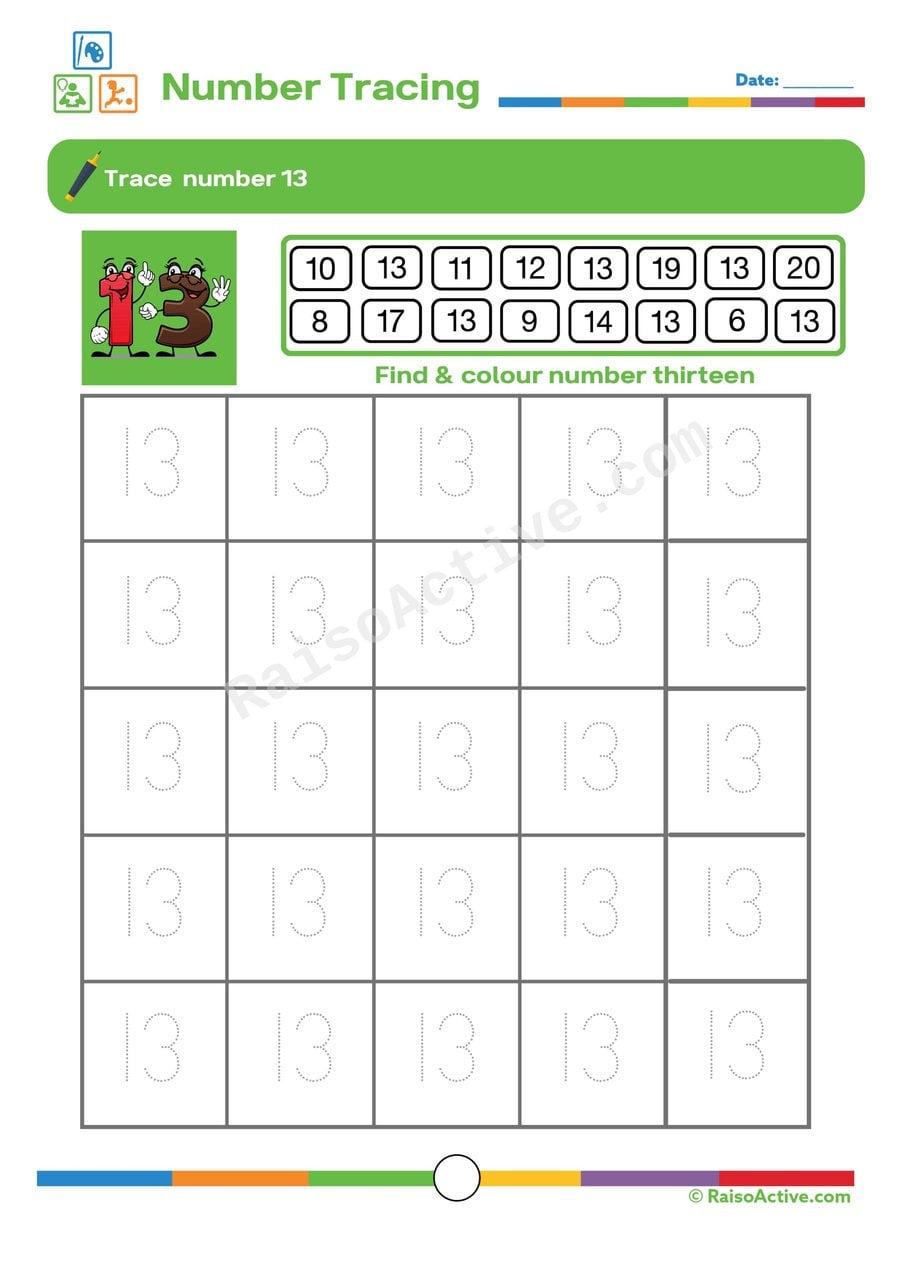
Trace Number 13 Worksheet for Preschoolers
This worksheet has children ages 3-5 trace the two-digit number 13 and then scan a grid to find and color every instance of it among other numbers, building visual discrimination alongside handwriting practice. Recognizing 13 in a mixed grid, rather than only in isolation, helps children understand that a number's identity stays the same across different positions and contexts. This searching task also strengthens sustained visual attention, since children must check each number in the grid carefully rather than glance quickly.

Summer T-Shirt Match: A Fun Matching Worksheet for Kids!
This worksheet has children ages 3-5 match fruit designs to summer t-shirts featuring the same pattern, building visual discrimination as they compare details like shape and arrangement across two separate pictures. Because the match depends on recognizing a specific fruit design repeated in a different context, children practice the transferable skill of identifying that two pictures represent the same thing even when shown in a different format. Naming the fruits along the way also builds vocabulary.
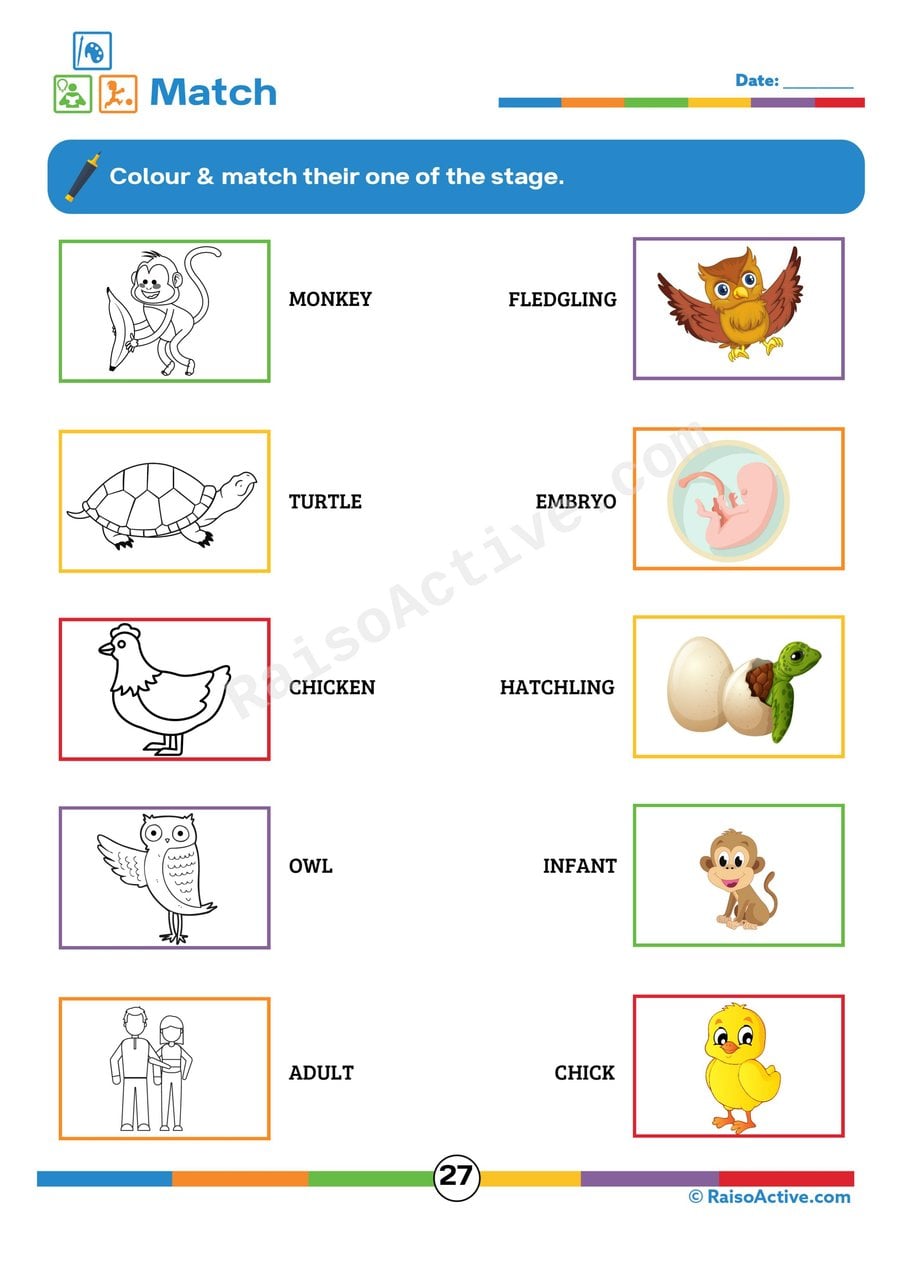
Match the Life Stages: A Fun Worksheet for Kids!
This worksheet has children ages 3-5 match a picture of an animal to the correct life stage shown on the opposite side of the page, reinforcing that living things look different depending on how old they are. Coloring the pictures after matching adds a fine motor component and gives children a reason to look closely at each image a second time.
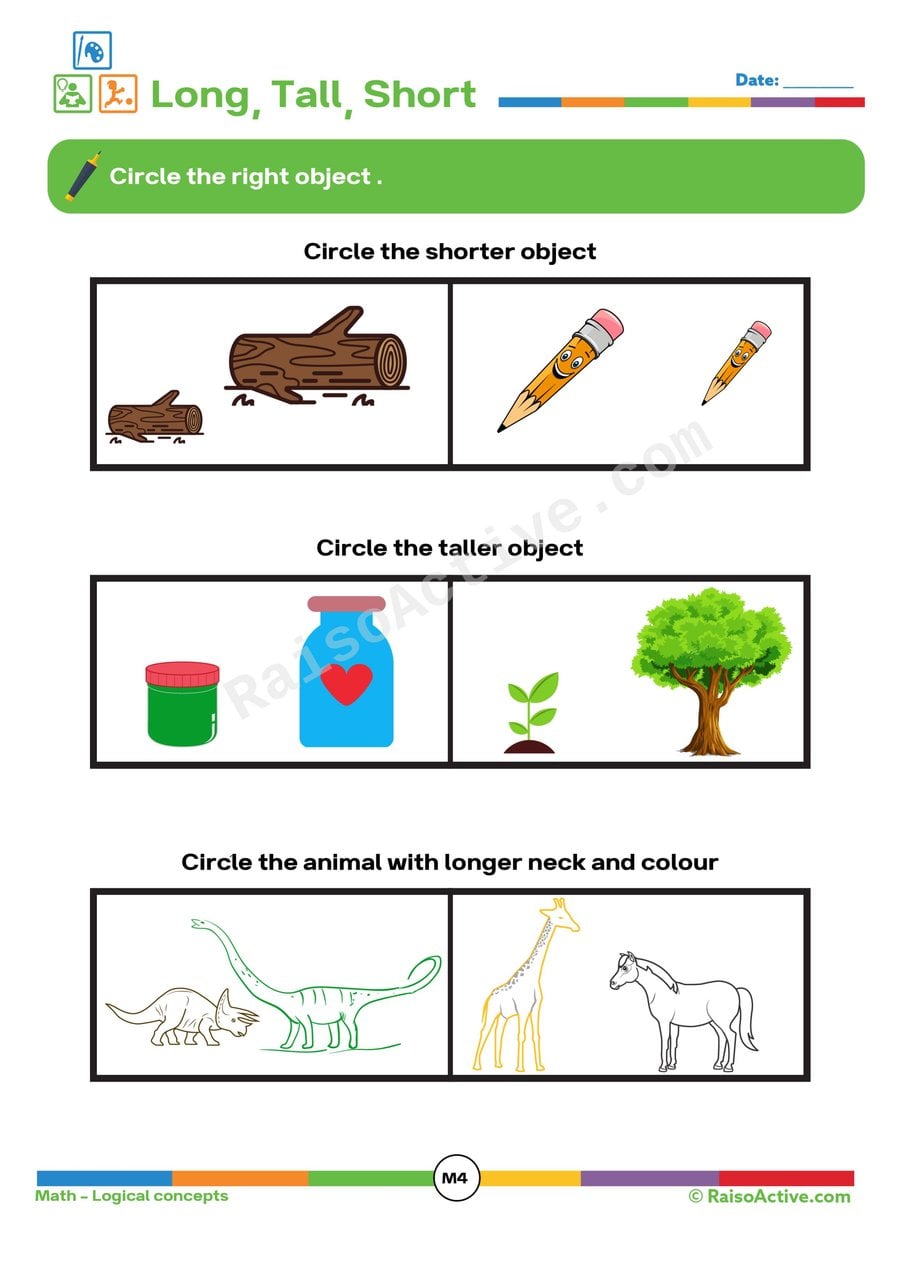
Long, Tall, Short Worksheet: Comparing Objects!
This worksheet guides your child in visually comparing objects based on their length and height, using terms like "long," "tall," and "short." By matching items with specific size descriptions, children aged 3-5 build essential observation skills and foundational pre-math understanding of attributes. This practice helps develop their vocabulary for describing the world around them and strengthens critical thinking as they distinguish subtle differences.

Consonant Sounds: Matching 'd' and 'g' Sounds Worksheet for Preschoolers
This worksheet has children ages 3-5 practice telling apart the beginning sounds of 'd' and 'g' — two consonants that are easy to confuse because they're made in a similar part of the mouth — by matching and circling pictures accordingly. Sharpening this kind of sound discrimination early helps prevent common early spelling confusions, like writing 'gog' for 'dog'.

Golden Words Worksheet: Practice Using 'Excuse Me', 'Please', 'Thank You', and 'Sorry'
This worksheet teaches children ages 3-5 when and how to use four essential polite phrases — 'Excuse Me,' 'Please,' 'Thank You,' and 'Sorry' — by choosing the correct one to complete everyday social scenarios. Learning to match the right polite phrase to the right situation, rather than just memorizing the words, builds real social communication skills that children use constantly in daily interactions.

Animal Food Matching Worksheet for Preschoolers
This worksheet teaches children ages 3-5 which foods different animals eat by matching each animal to its correct food, building early classification skills and expanding their vocabulary around animals and diets. Learning that a rabbit eats carrots while a bird eats worms also introduces the idea that living things have different needs, a first step toward basic life-science thinking.
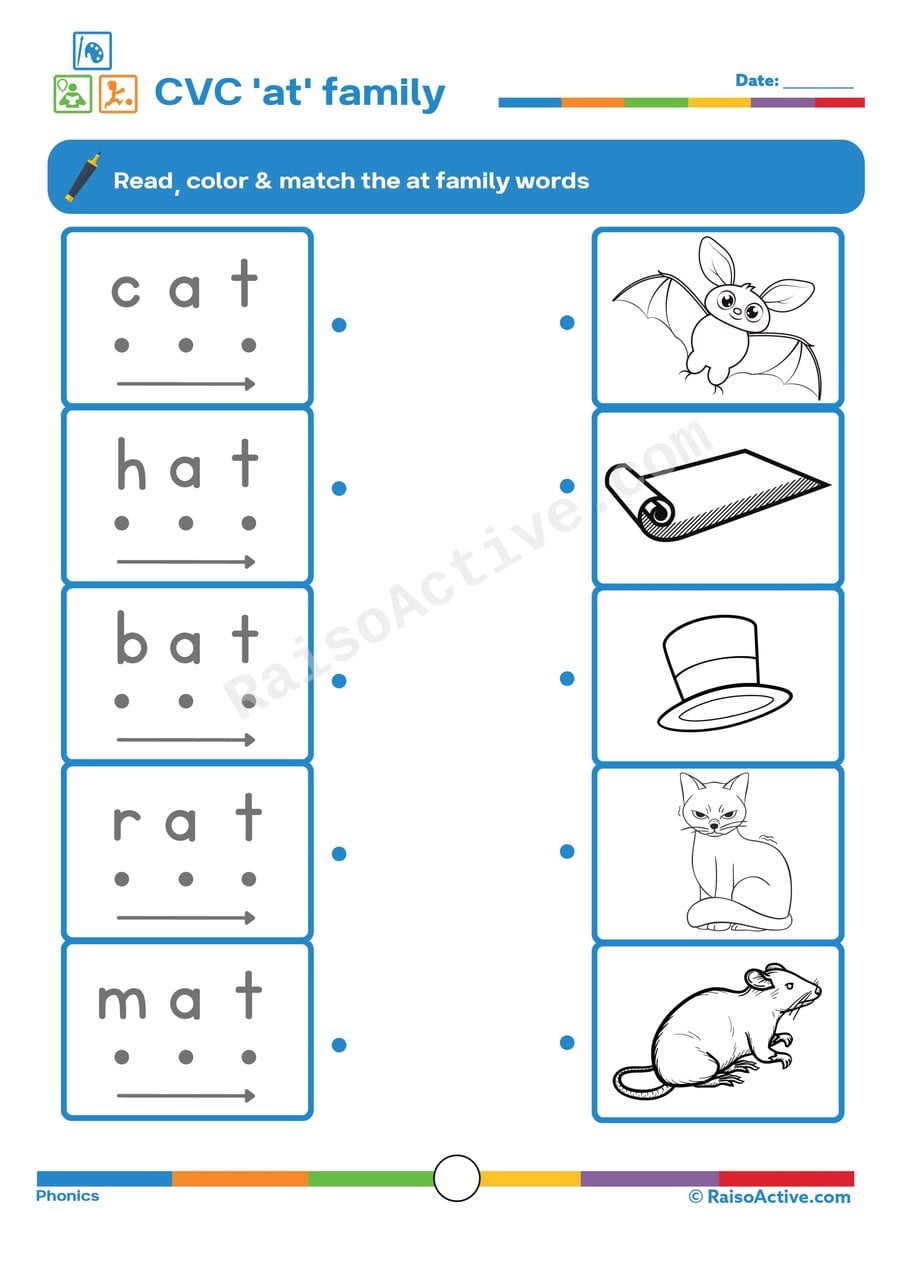
CVC 'at' Family Words Matching Worksheet for Kids
This worksheet introduces children ages 3-5 to the 'at' word family — cat, bat, hat, mat, and similar words that share the same ending sound — helping them notice that once they know how 'at' sounds, they can read many new words just by swapping the first letter. Word family practice is one of the most efficient ways young readers build a large sight vocabulary quickly, since the pattern transfers across dozens of words. Matching each word to its picture confirms real understanding, not just mechanical sounding-out.
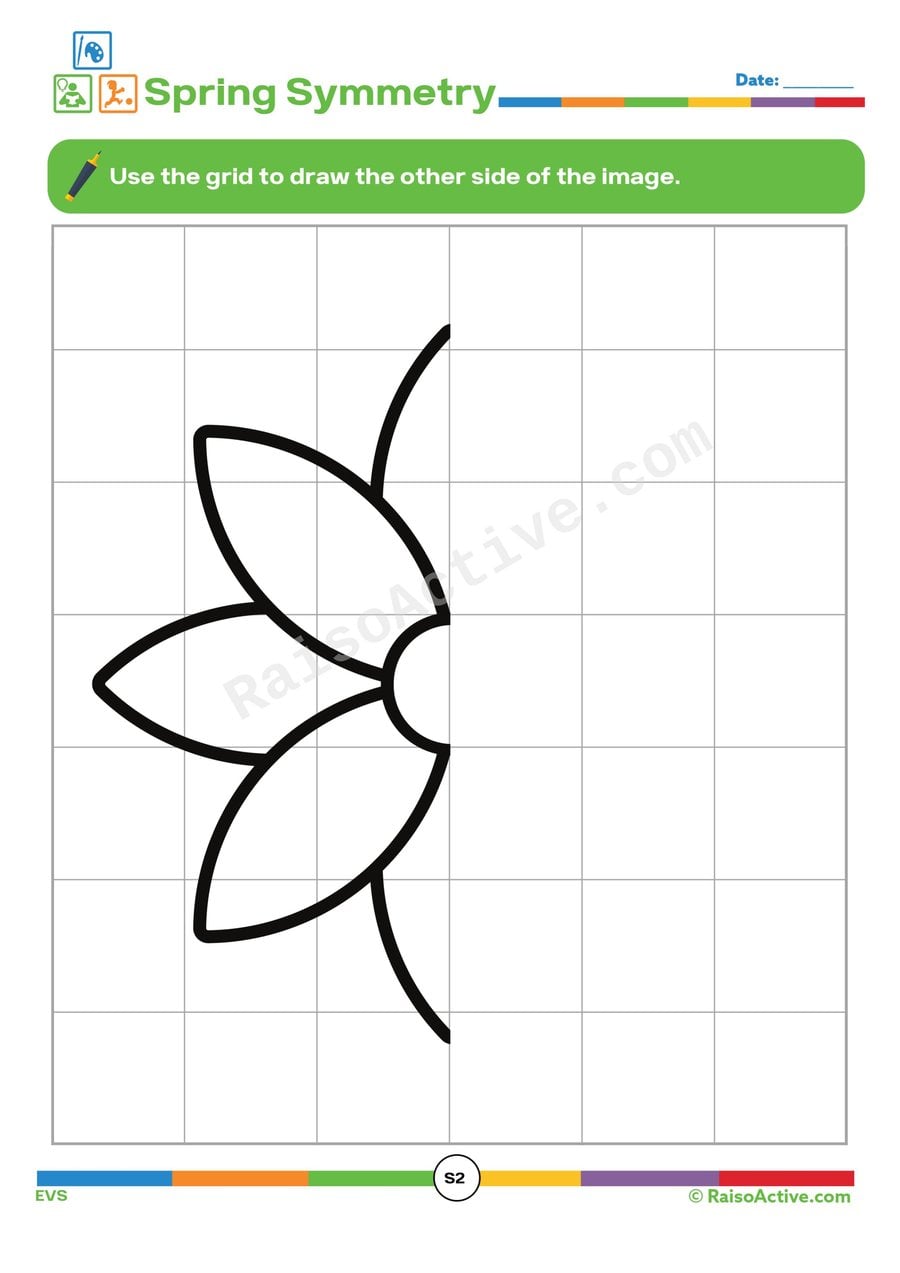
Spring Symmetry Worksheet: Draw the Other Half!
This worksheet introduces children ages 3-5 to the concept of symmetry by having them draw the missing half of a flower using a grid as a visual guide. Replicating a shape on the opposite side of a center line builds spatial reasoning and careful observation, while the drawing itself strengthens pencil control and hand-eye coordination in a way that's more open-ended than simple tracing.
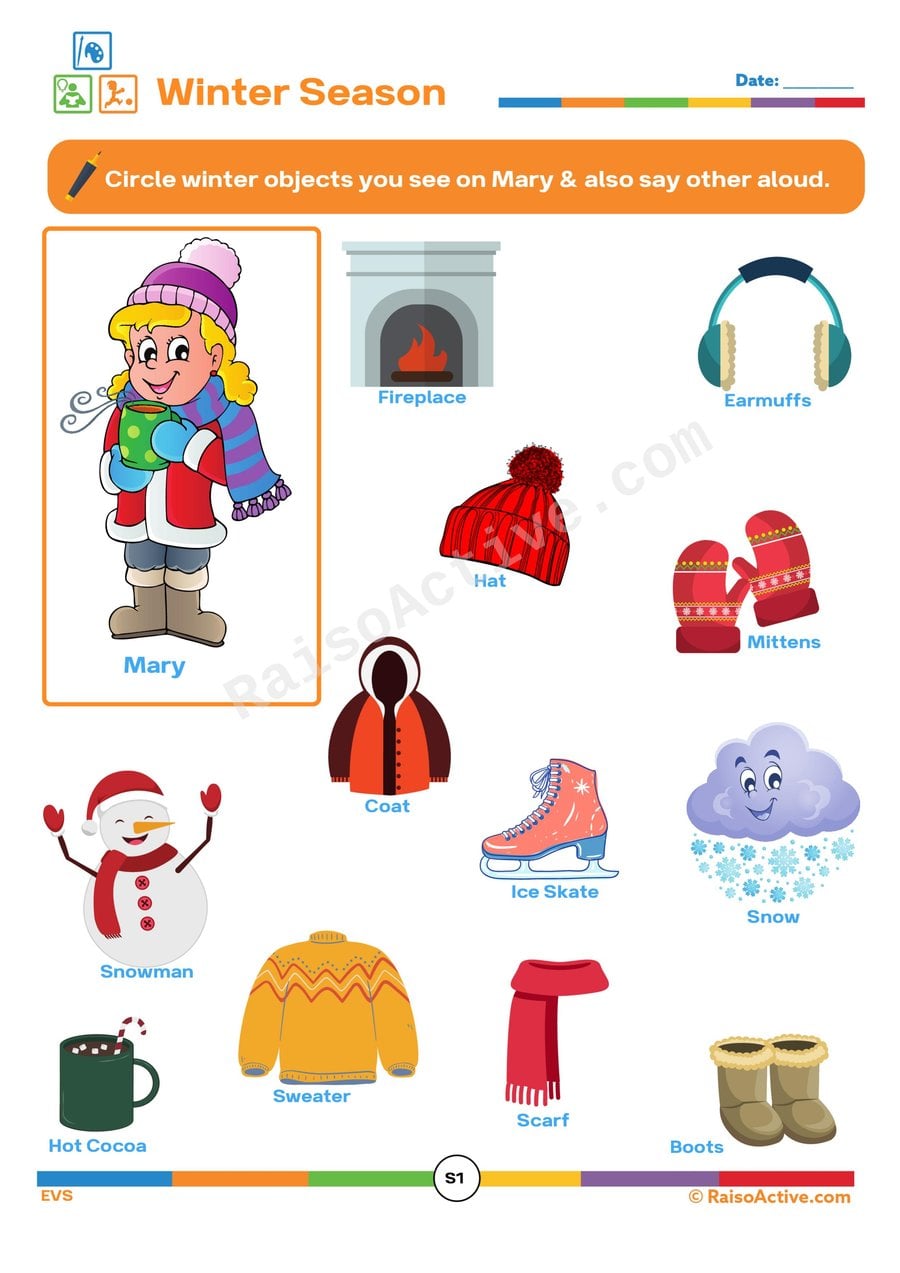
Winter Objects Worksheet: Circle and Say!
Identifying winter-related objects on this worksheet builds vocabulary and seasonal awareness for children ages 3-5, teaching them to associate specific items, like scarves, mittens, and snowflakes, with a particular time of year. Circling objects within a larger picture also sharpens visual scanning skills, requiring children to search carefully rather than glance at the whole image at once.

Number Names Matching Worksheet for Preschoolers
Matching numerals to their written number-word form, like connecting '5' to the word 'five,' teaches children ages 3-5 that numbers can be represented two different ways: as a symbol and as a spelled-out word. Searching for the correct number name within a word search grid also builds visual scanning and early sight-word recognition, since number words like 'one' or 'seven' don't always follow predictable spelling patterns. This dual practice strengthens both numeracy and literacy at the same time.

Letter E Tracing Worksheet for Preschoolers: Learn to Write!
Children ages 3-5 use this worksheet to build the specific motor pattern for capital E — three horizontal strokes branching off one vertical line — while reinforcing the /e/ sound through picture recognition. Repeated tracing in a dashed-box format also trains children to keep letters a consistent size, an important pre-writing skill before they move to unlined paper.

Learn to Write Letter L Worksheet for Preschoolers
This worksheet builds fine motor control and letter formation skills in children ages 3-5 as they trace and then independently write the capital letter L, while also identifying words that begin with the same letter. Practicing the simple two-stroke shape of L — a straight line down and a straight line across — is a good early letter for building confidence, since its strokes are more forgiving than curved letters. Coloring L-word pictures afterward reinforces the letter-sound connection alongside the shape practice.
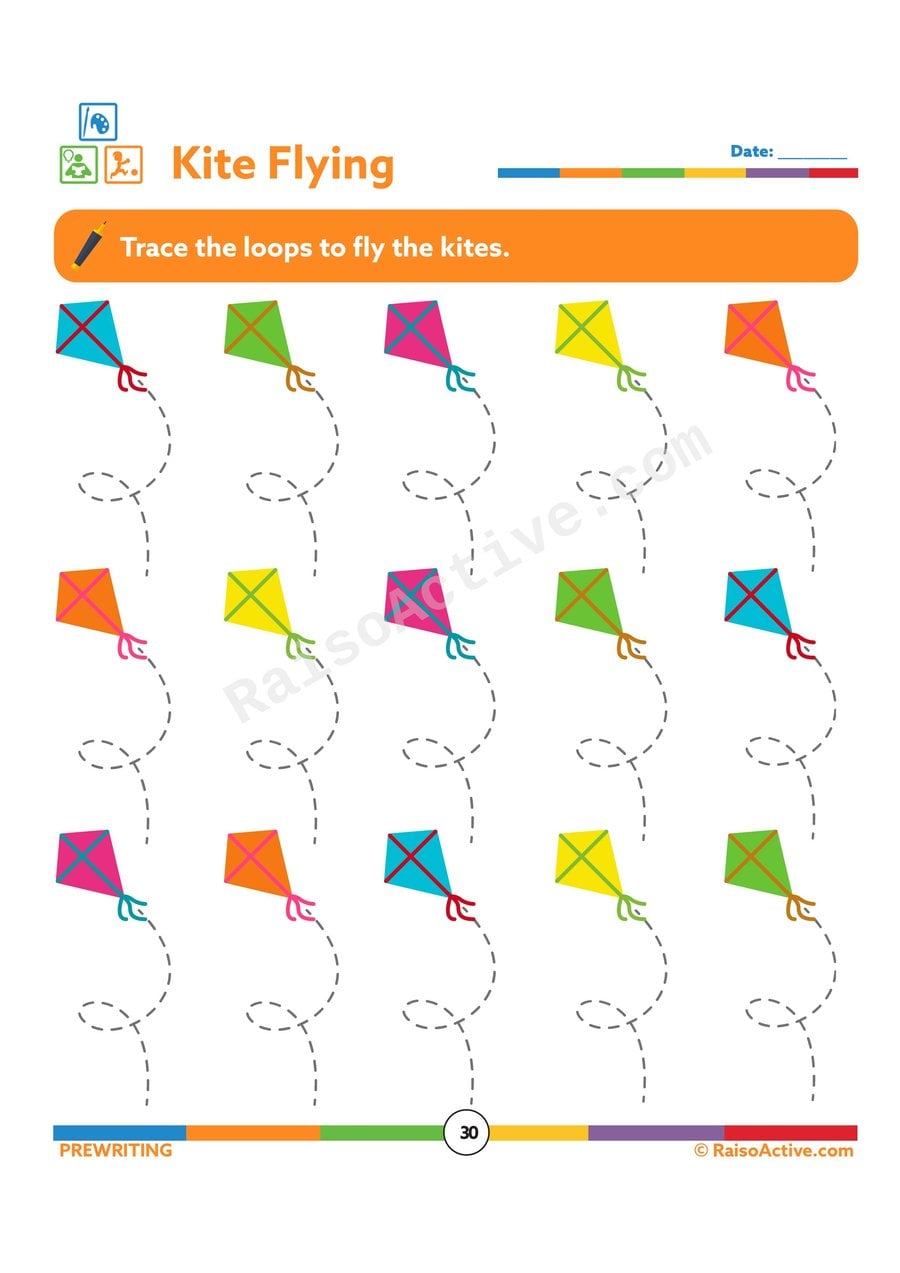
Kite Flying Tracing Worksheet for Preschoolers
Tracing a kite's string line gives children ages 3-5 practice with a long, often gently curving or diagonal stroke, while the theme introduces simple vocabulary about wind and flying. Because a kite string is usually drawn as one long, continuous line rather than a short repeated shape, this worksheet builds a child's ability to sustain a single controlled pencil motion over a longer distance.

Personal Pronouns Worksheet for Kids: Matching and Writing
Children ages 3-5 practice choosing and writing the correct personal pronoun — I, you, she, it, we, or they — for a picture or phrase, building an early grammar skill that makes their spoken and written sentences sound natural. Matching a pronoun to who or what it refers to also strengthens reading comprehension, since pronouns require tracking who is being talked about.

Tracing Number 2 Worksheet: Practice Writing & Counting!
This worksheet combines number formation practice for the numeral 2 with early counting skills, asking children ages 3-5 to trace the curved-then-flat stroke of a 2 and then apply that number by counting and circling matching groups of balloons. Connecting the written symbol to an actual quantity is a critical step in building number sense, not just handwriting.
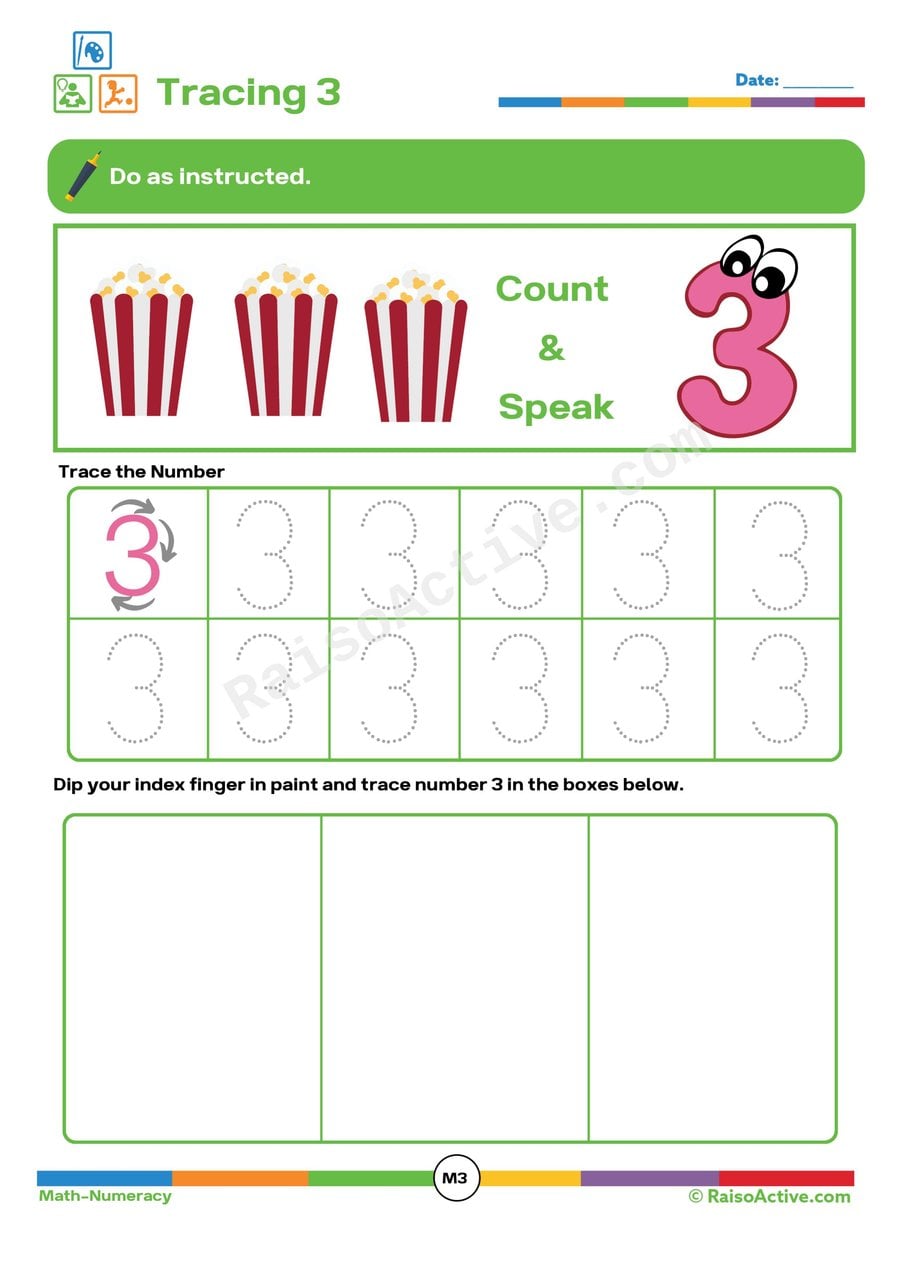
Tracing the Number 3 Worksheet for Preschoolers
This worksheet gives children ages 3-5 repeated practice forming the numeral 3, first with a pencil and then with a fingerpaint-dipped finger, using the curved double-bump stroke that makes 3 tricky for many young writers. Practicing the same numeral through two different tactile methods — pencil and paint — reinforces the motor memory of the shape through varied sensory experience.
What Nursery english worksheets cover
Three-year-olds learn that letters have names and their name starts with one. A set should cover recognizing uppercase letters, beginning with the ones in the child's own name, hearing the first sound of familiar words, spotting two pictures that rhyme, building vocabulary through opposites and categories, and tracing thick lines, curves and a few capitals with a crayon. Listening to a story and pointing to what happened is comprehension at this age. Lowercase and blending wait.
- Recognize uppercase letters, starting with those in the child's name
- Say the first sound of a familiar word, like m for mom
- Find two pictures whose names rhyme
- Trace thick lines, curves and a few capital letters
- Sort pictures into opposite pairs such as big and small
How to use these worksheets at home or in class
A single sheet a day, five to ten minutes, suits a three-year-old best. Sit alongside your child rather than opposite, demonstrate one stroke, then let them attempt it themselves, praising the try rather than the neatness of the line.
Start with the sheet that matches what your child can already do, then move one step up. Keep finished sheets in a folder: Nursery teachers often ask for evidence of practice, and children like seeing their own progress.
Is your child ready for Nursery english work?
Readiness shows up as a proper crayon grip with fingers instead of a fist, purposeful scribbling, sitting through a short task and following one spoken instruction such as pointing to a colour. Without these, stick to sticker play and large colouring pages for now.
Frequently asked questions
How many letters should a three-year-old know?
There is no fixed number. By four, many children recognise the letters in their own name and a handful of other capitals, and that is a fine target. Reciting the alphabet song is not the same as recognizing letters out of order. Work on eight to ten letters that matter to the child, one letter per sheet with pictures, and add the letter sound once the name is known.
What should a Nursery child be able to do in english?
Three-year-olds learn that letters have names and their name starts with one. A set should cover recognizing uppercase letters, beginning with the ones in the child's own name, hearing the first sound of familiar words, spotting two pictures that rhyme, building vocabulary through opposites and categories, and tracing thick lines, curves and a few capitals with a crayon. Listening to a story and pointing to what happened is comprehension at this age. Lowercase and blending wait. Readiness shows up as a proper crayon grip with fingers instead of a fist, purposeful scribbling, sitting through a short task and following one spoken instruction such as pointing to a colour. Without these, stick to sticker play and large colouring pages for now.
Do these worksheets follow the Nursery curriculum?
The sheets cover letter recognition and phonics, reading comprehension, sentence writing and vocabulary and grammar, which sit inside the NEP 2020 Foundational Stage (NCF-FS 2022) outcomes for Nursery. Preschool (US), Nursery (UK) use the same skills at this age, so the sheets also fit families following those programmes.
Are the Nursery english worksheets free to download?
Yes. Every sheet on this page can be downloaded free as a watermarked PDF after creating an account, up to five downloads a day. The annual membership (₹1000) removes the watermark and the daily limit across the full library of more than 1,000 worksheets and all activity packs.

Written by
Hemsweta Jain · Teacher Cheena
MBA and Early Childhood Educator, teaching since 2014 · Founder of RaisoActive, Mumbai
Written and reviewed by Hemsweta Jain (Teacher Cheena), who designs every RaisoActive worksheet.
Last reviewed
Printable packs for ages 3–4
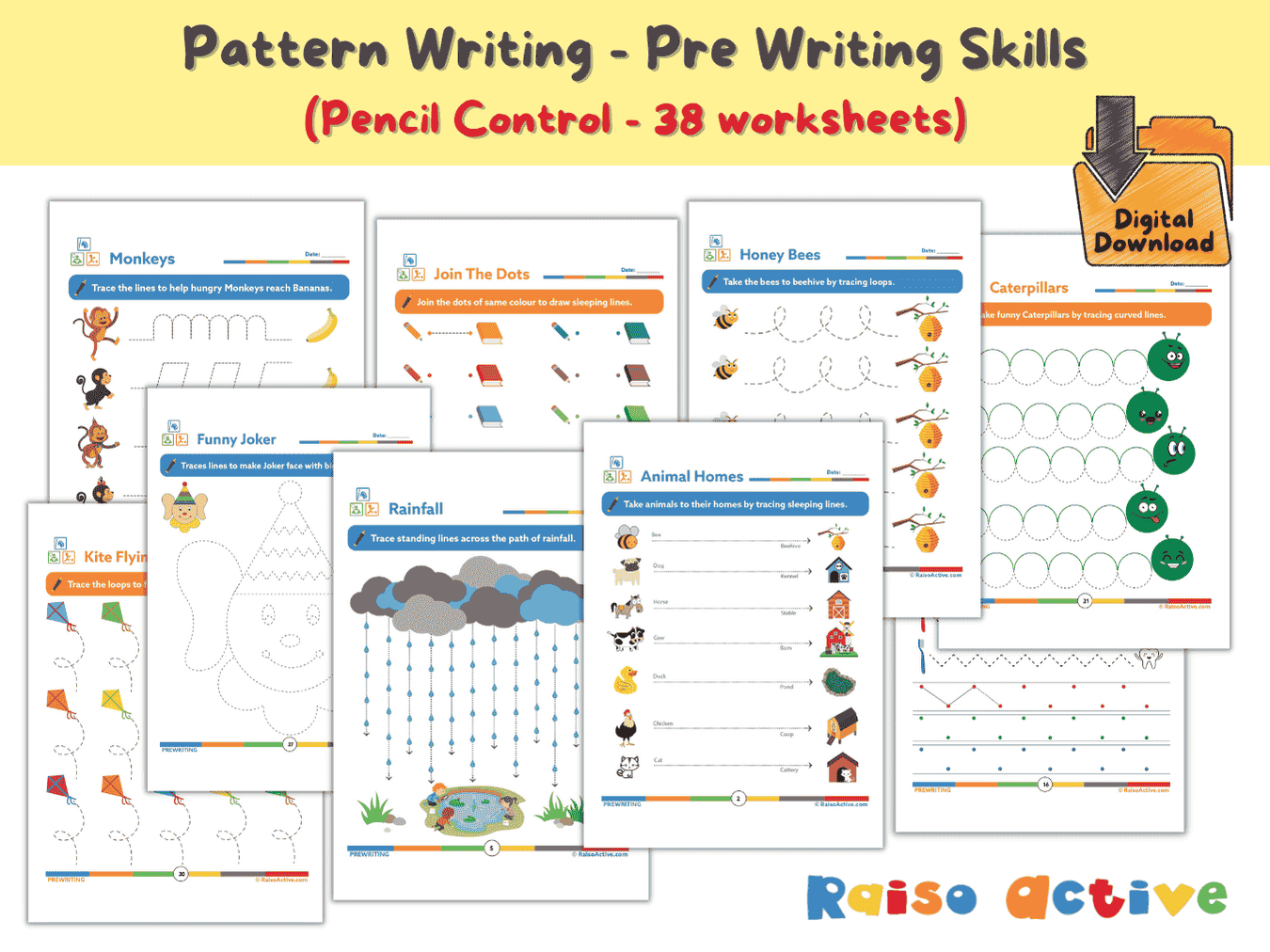
Pattern Writing Pre-writing Skills Activity Book for 3-4 Year Olds
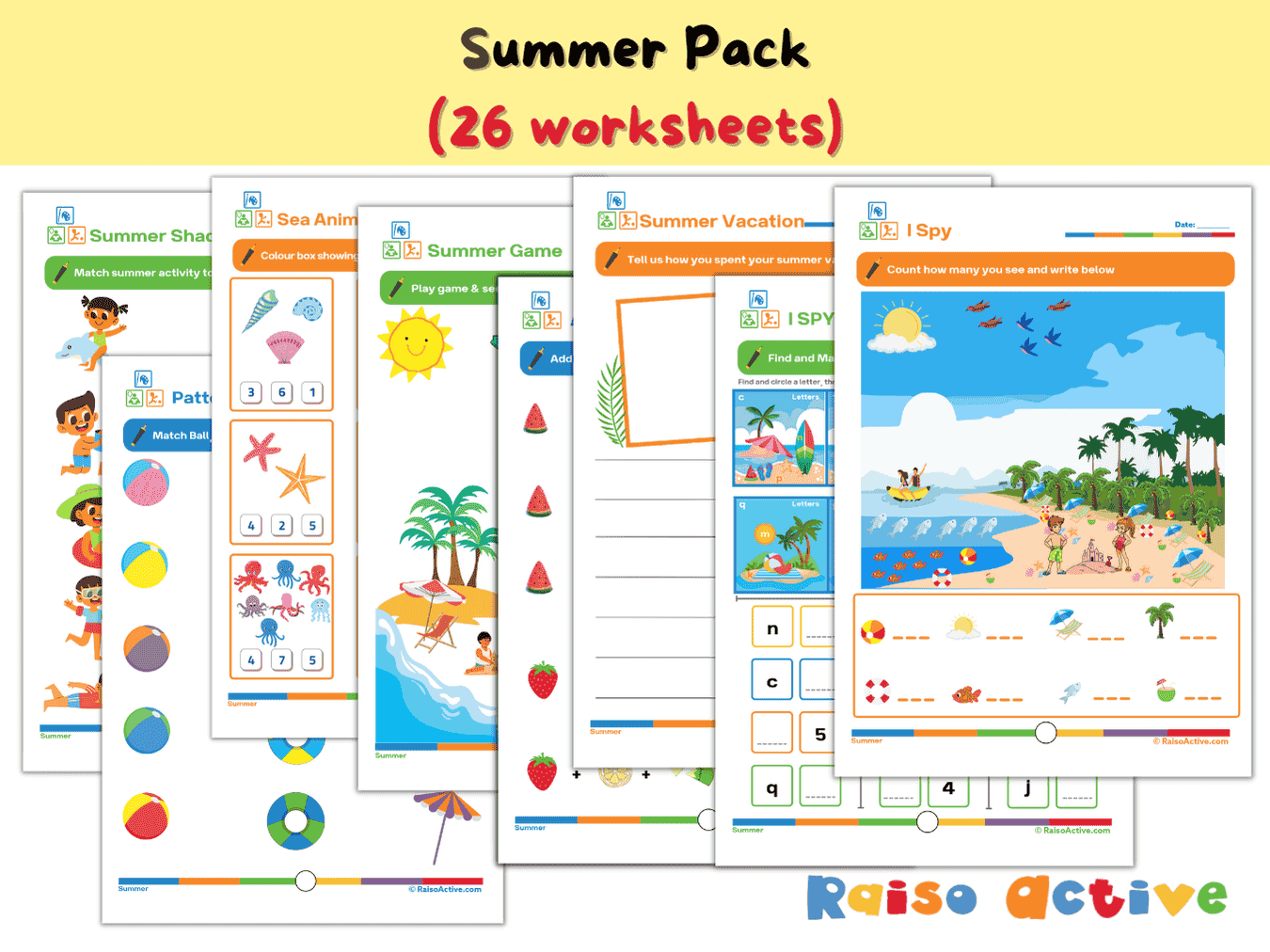
Summer Activity Pack: Math, Literacy, Puzzles & More for Preschool & Kindergarten
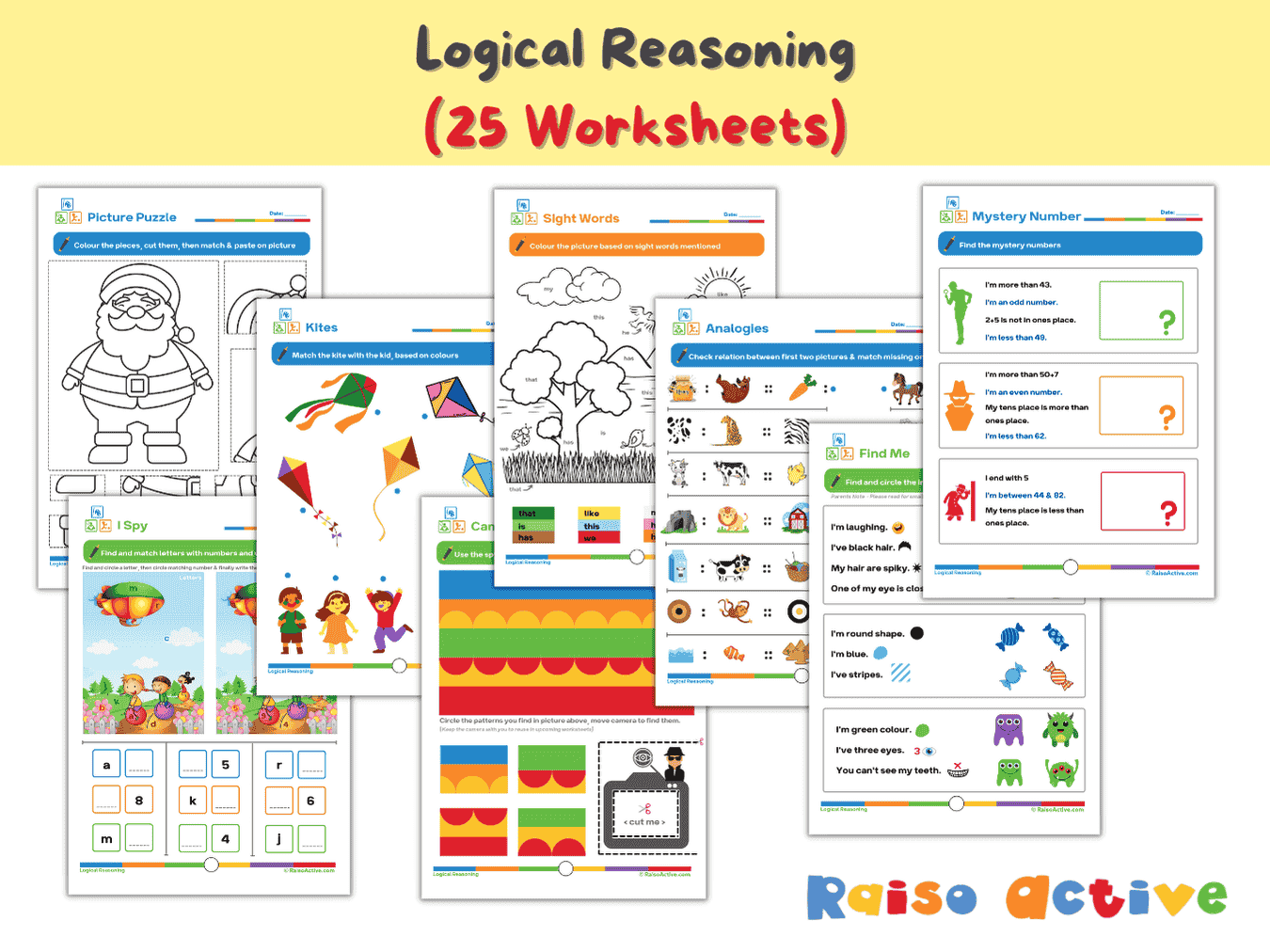
Logical Reasoning Activity Book for Preschool & Kindergarten | Patterns, Puzzles & Analogies
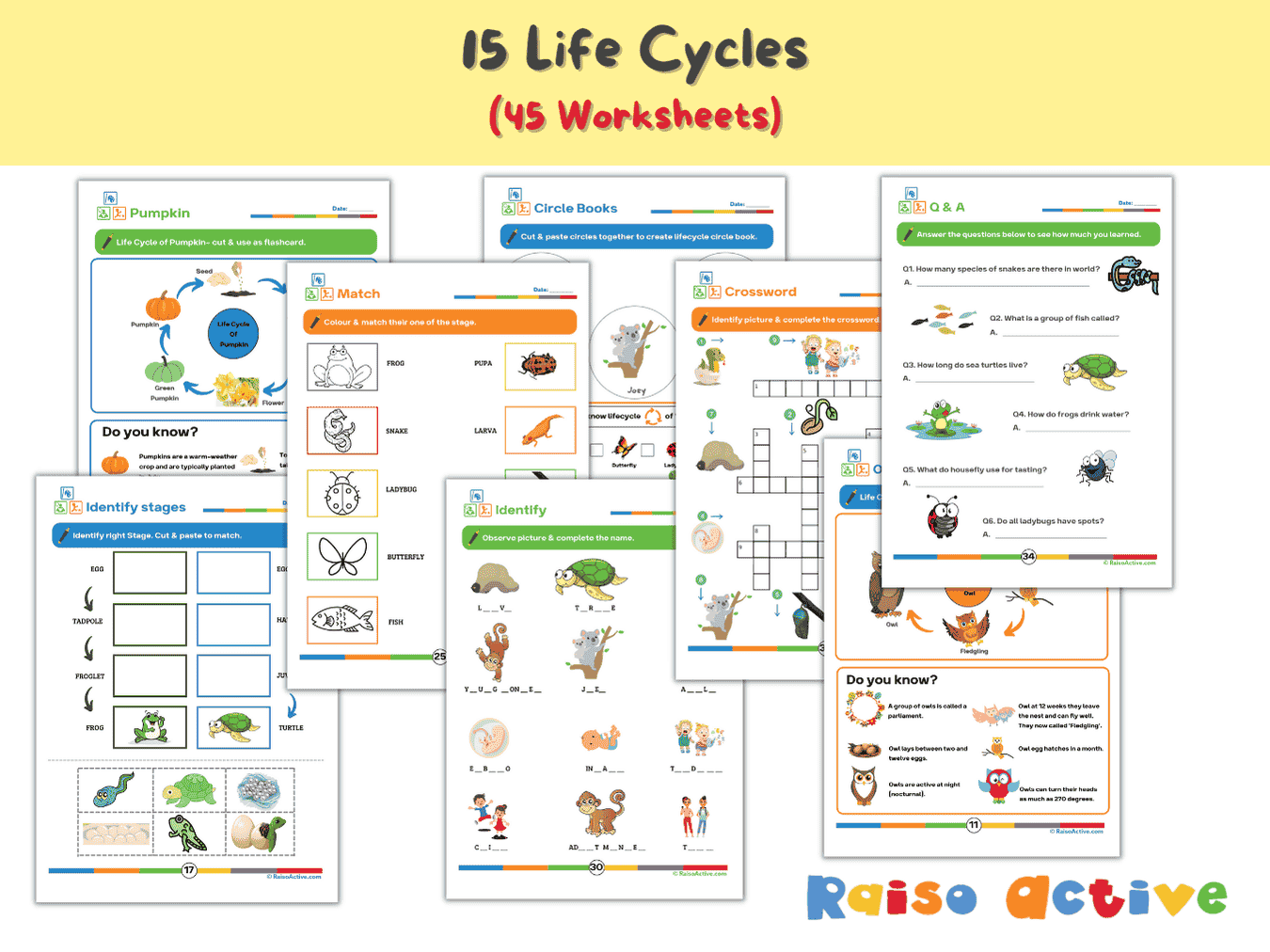
Lifecycles Activity Book & Flashcards for Preschool & Early Elementary
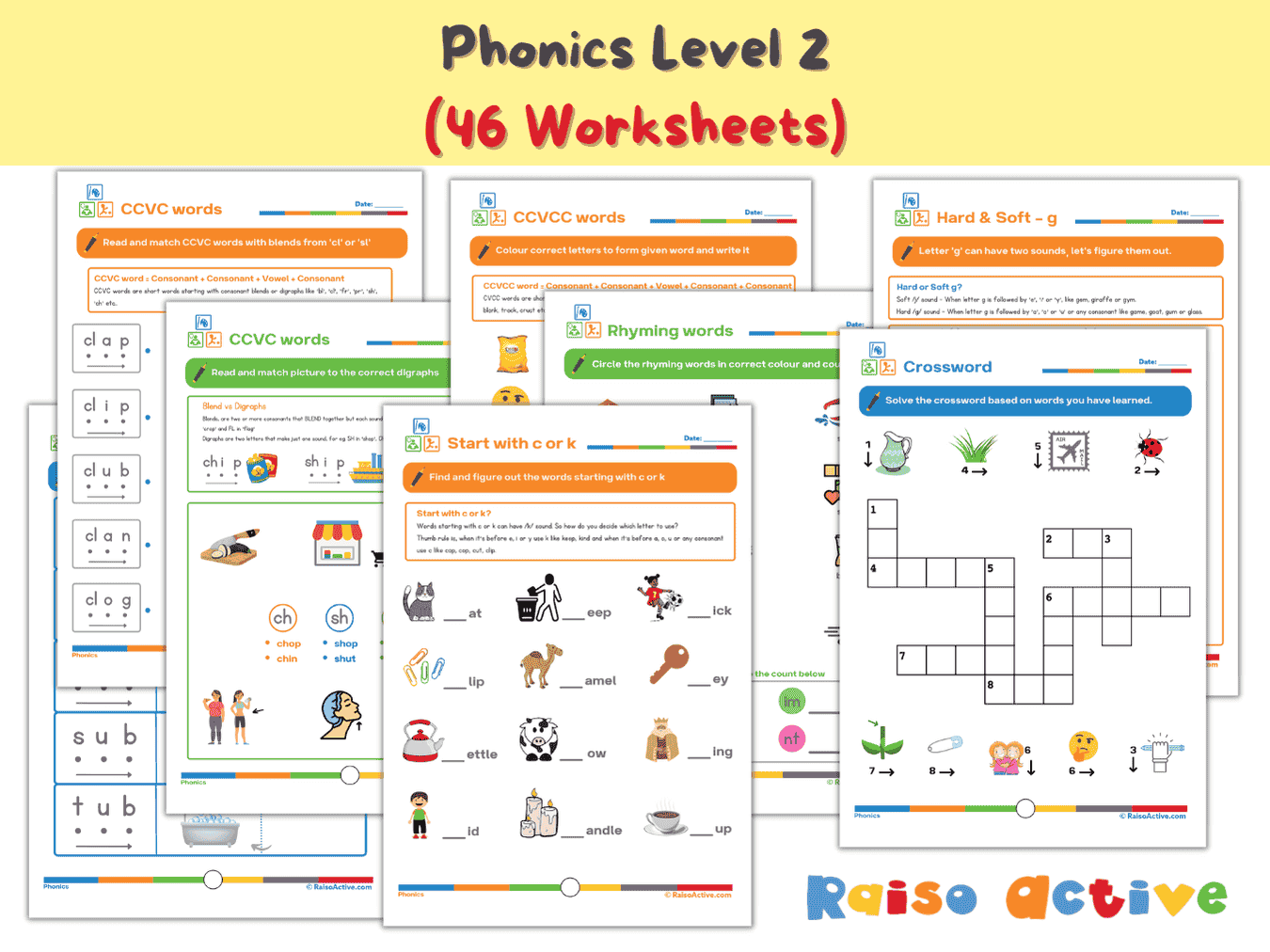
Phonics Level 2 Worksheets: CVC, CCVC, CVCC Word Families & Blends for Early Readers (Ages 4-7)
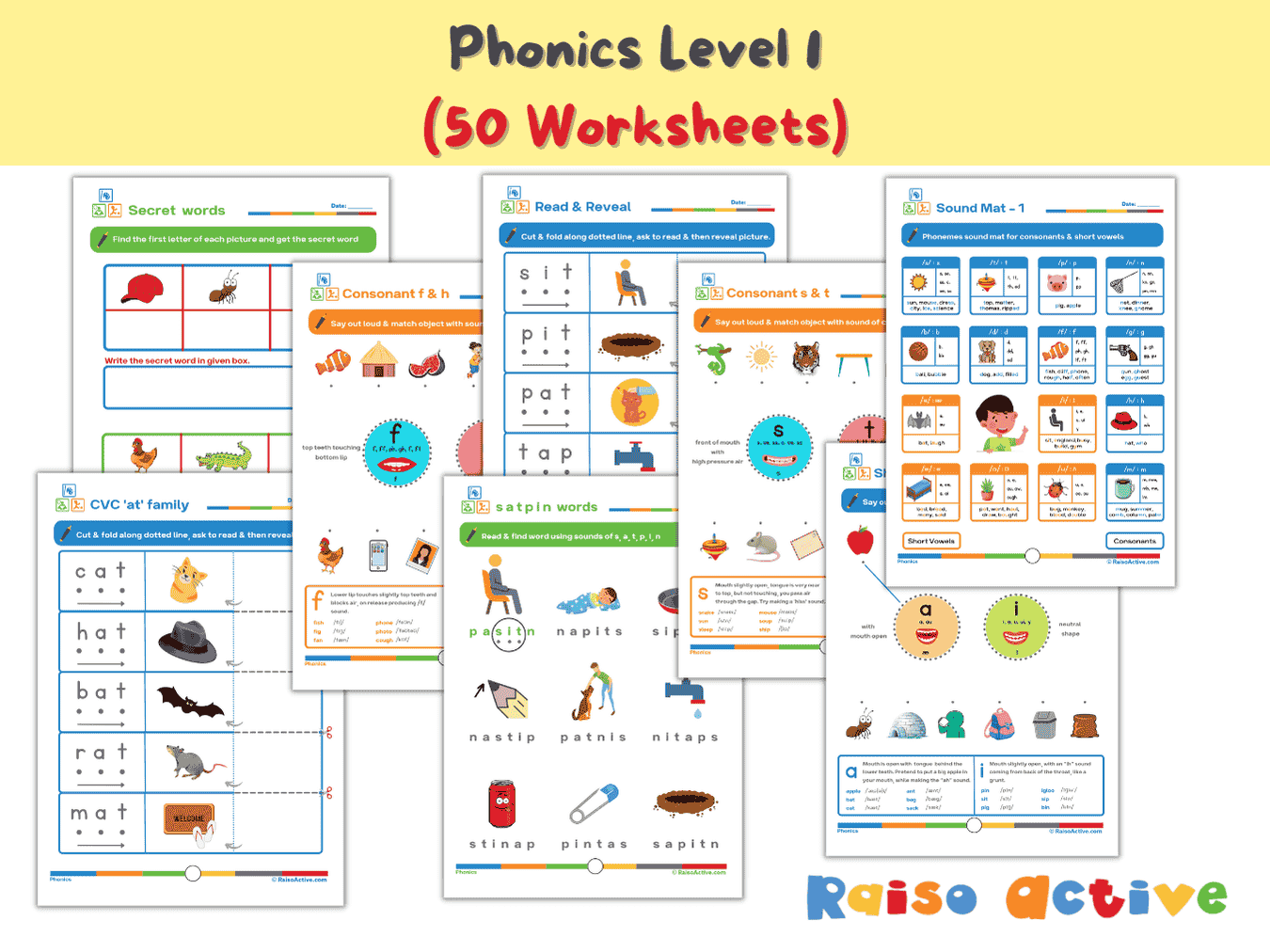
Phonics Level 1 Activity Book: Letter Sounds, Blending & CVC Words for Preschool & Kindergarten
Guides for parents and teachers
See all guides →Sight Words by Age: The First 50 Words and How to Teach Them Without Flashcard Fatigue
Which sight words to teach first and why, the heart-word method, a read-trace-write-find routine, games, and a by-age table of typical sight-word progress.
How to Teach CVC Blending: A Step-by-Step Method That Works in Two Weeks
A step-by-step method for teaching CVC blending, covering continuous sounds, word families, common errors, and a 14-day plan that most children finish reading CVC words.
Phase 2 Phonics at Home: Sound Order, Blending Games, Worksheets
Phase 2 phonics at home: the five sound sets in order, oral blending, tricky words, a two-week routine, common mistakes, and free worksheets.
Reception Year Explained: EYFS Learning and How to Help at Home
A teacher's plain-English guide to the Reception Year: the seven areas of learning, Early Learning Goals, Phase 2/3 phonics, the RBA and home routines.
UKG Syllabus Explained: English, Maths and EVS Month by Month
What UKG classes typically cover in English, maths and EVS, month by month, aligned to NEP 2020, with ways to support at home and signs your child is behind.
Bridging Two Worlds: A Complete Guide to Teaching Heritage Languages Alongside English
A practical guide to raising bilingual children who speak both their heritage language and English with confidence. Research-backed strategies, activities, and tips for Indian families.
Canonical: https://raisoactive.com/worksheets/nursery-english