Letter B Tracing and Identification Worksheet for Preschoolers
This worksheet helps children ages 3-5 practice tracing and writing the letter B, identifying B among other letters, and recognizing objects that start with the letter B. Circling the correct letter within a small group builds the visual scanning skill children need before they can read words fluently.
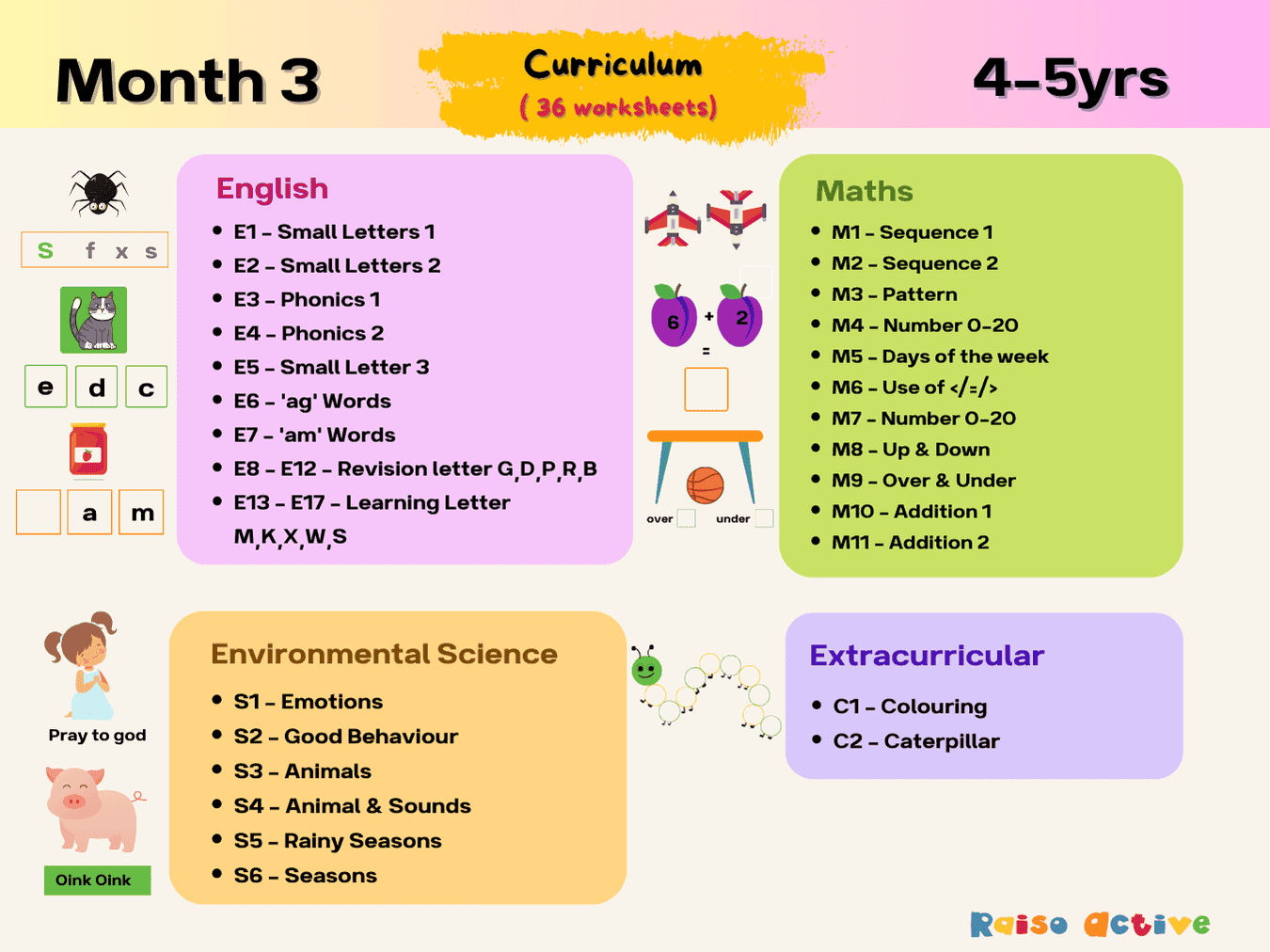
Part of the pack
Month 3: Learning & Development | Ages 4-5
This is page 15 of the pack. Ages 4-5 · Pre-KAges 4-5 · ReceptionAges 4-5 · LKGAges 4-5
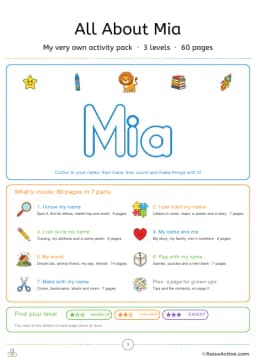
Made for your child
A whole activity pack made with their name
60 pages to spot, build, trace and write their own name, plus pages about their favourites, feelings and family. See a free preview with their name.
Make an All About Me packFree preview · free for members
Or start free: a name tracing sheet with their nameCurriculum
- Writing > Letter Tracing A-Z
How to use this worksheet
First, have your child trace the letter B along the dotted lines, noting its straight vertical line and two rounded bumps. Next, have them circle all the letter Bs in the provided box, comparing shapes carefully since B can resemble other rounded letters. Finally, have your child color the pictures that begin with the letter B, saying each picture's name aloud before coloring.
Materials needed
- Pencil
- Crayons
Extension activities
- 1Find objects around the house that start with the letter B, like a ball or a book.
- 2Practice writing the letter B on a whiteboard or in a notebook, comparing the capital and lowercase forms.
- 3Read a book that features the letter B prominently, like one about a bear or a butterfly.
- 4Bounce a ball while saying B words together, one word per bounce.

Written by
Hemsweta Jain · Teacher Cheena
MBA and Early Childhood Educator, teaching since 2014 · Founder of RaisoActive, Mumbai
Every RaisoActive worksheet is designed and checked by the founder before publishing.
Published · Last reviewed
More from Month 3: Learning & Development | Ages 4-5

Am Words Worksheet: Read, Match, and Fill-in the Blanks!
Ages 4-5 · Pre-KAges 4-5 · ReceptionAges 4-5 · LKGAges 4-5
This worksheet builds phonics skills within the 'am' word family — words like 'ham,' 'jam,' and 'Sam' — by having children read words aloud, match them to pictures, and fill in missing letters to complete them. For four- and five-year-olds, working within a single rime family like '-am' helps children generalize a decoding pattern they can apply to many new words, rather than sounding out every word from scratch.
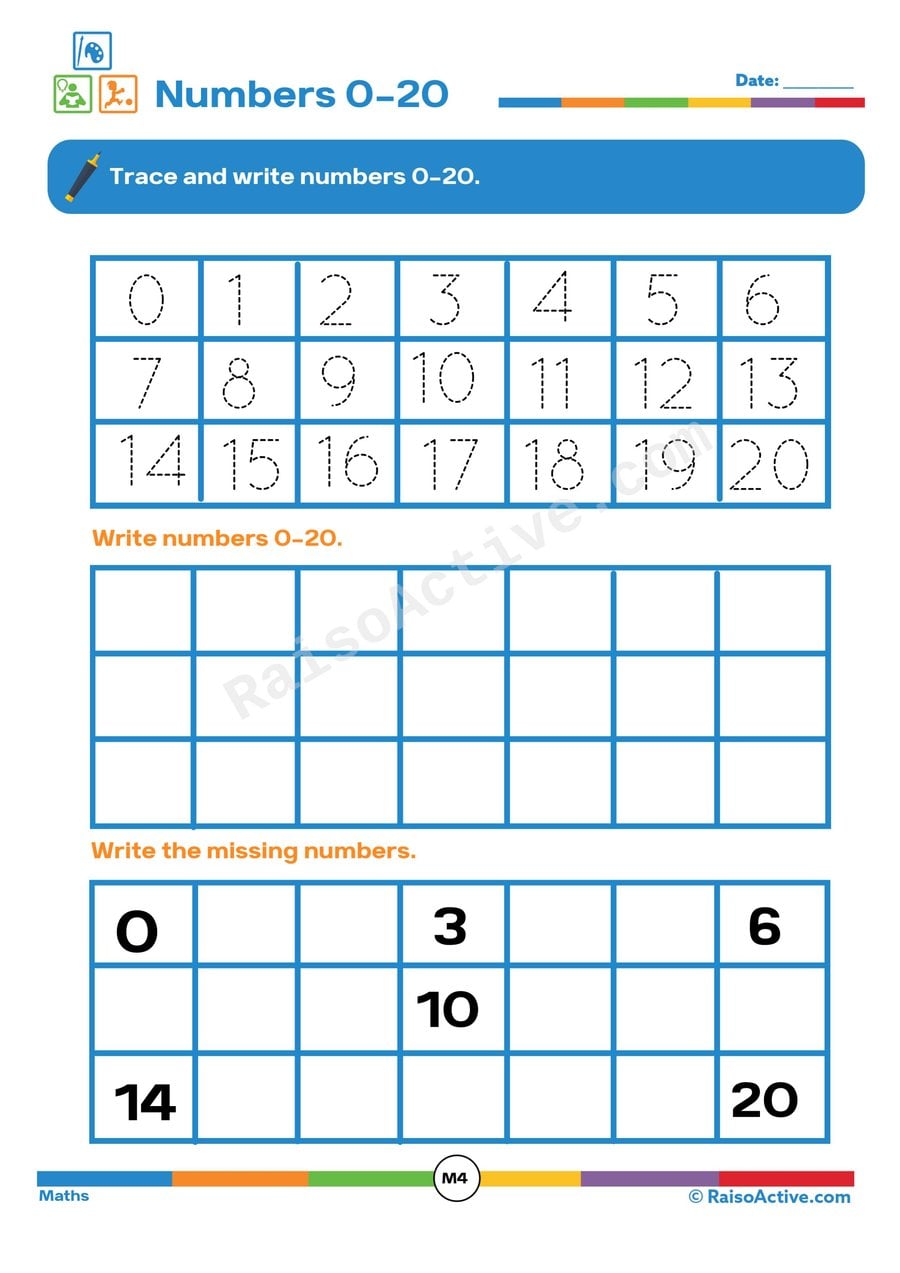
Trace and Write Numbers 0-20 Worksheet
Ages 4-6 · Pre-K–KindergartenAges 4-6 · Reception–Year 1Ages 4-6 · LKG–UKGAges 4-6
This worksheet extends number formation practice across the full range from 0 to 20, giving children repeated tracing and writing practice on both single-digit and two-digit numerals. For four- to six-year-olds, moving past 10 into the teens and twenties is an important milestone, since it introduces the idea that numbers can be built from combinations of digits rather than each needing its own unique symbol.

Letter X Worksheet: Trace, Write, and Color the Letter X!
Ages 3-5 · Preschool–Pre-KAges 3-5 · Nursery–ReceptionAges 3-5 · Nursery–LKGAges 3-5
This worksheet introduces the letter X, one of the trickier letters for young children since so few common words start with it, by pairing tracing practice with picture identification for words like 'x-ray' or 'xylophone.' For three- to five-year-olds, working through a less familiar letter like X builds persistence and completes their sense of mastering the full alphabet.

Lowercase Letter Matching Worksheet for Preschoolers
Ages 4-5 · Pre-KAges 4-5 · ReceptionAges 4-5 · LKGAges 4-5
This worksheet trains children ages 4-5 to connect an uppercase letter to its lowercase counterpart, a skill that's genuinely tricky since many lowercase letters look quite different from their capital form (like G and g, or Q and q). Matching cases correctly is essential groundwork for reading real books and sentences, which are written mostly in lowercase.
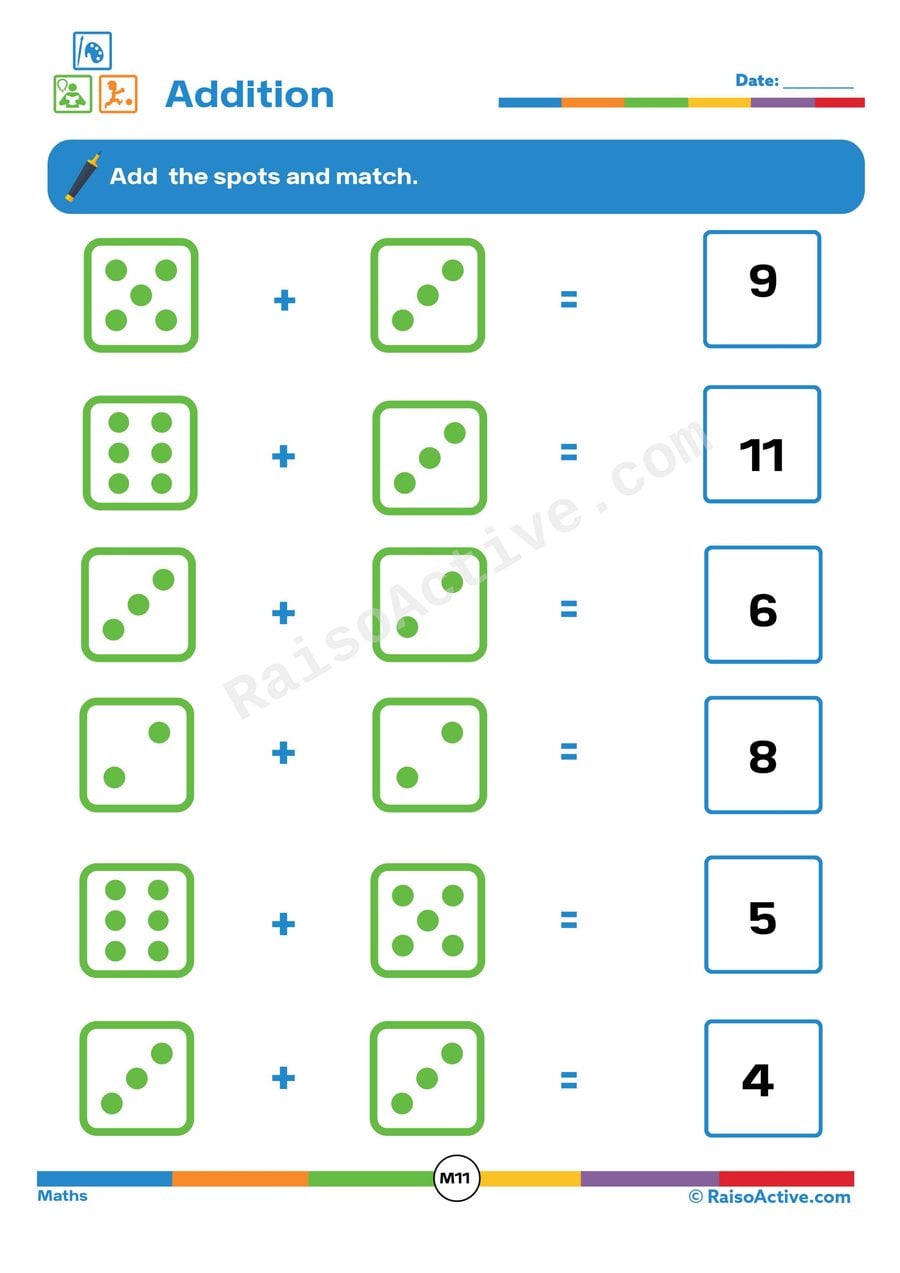
Dice Addition Worksheet: Add the Spots and Match!
Ages 4-6 · Pre-K–KindergartenAges 4-6 · Reception–Year 1Ages 4-6 · LKG–UKGAges 4-6
This worksheet builds basic addition fluency by having children count the dots on two dice, add the totals together, and match the resulting sum to the correct number. For four- to six-year-olds, using dice as the counting tool adds a layer of subitizing practice — the ability to recognize a small quantity of dots at a glance without counting one by one — which speeds up addition over time.

Animal Sounds Matching Worksheet for Preschoolers
Ages 3-5 · Preschool–Pre-KAges 3-5 · Nursery–ReceptionAges 3-5 · Nursery–LKGAges 3-5
This worksheet builds vocabulary and auditory memory by asking children to match each animal picture to the sound it makes, such as connecting a cow to 'moo' or a duck to 'quack.' For three- to five-year-olds, linking an animal's appearance to its sound strengthens both early science knowledge and the kind of associative memory that supports vocabulary growth.

Small Letter Matching Worksheet: Cut and Paste Fun!
Ages 3-5 · Preschool–Pre-KAges 3-5 · Nursery–ReceptionAges 3-5 · Nursery–LKGAges 3-5
This worksheet helps children ages 3-5 recognize and match lowercase letters to their corresponding capital letters, a skill children need before they can read text that mixes both letter cases fluently. The cut-and-paste format adds fine motor practice, since children must precisely place a small paper letter next to its match.

Shape Pattern Worksheet: Identify and Color the Next Shape!
Ages 3-5 · Preschool–Pre-KAges 3-5 · Nursery–ReceptionAges 3-5 · Nursery–LKGAges 3-5
This worksheet helps children ages 3-5 recognize and continue simple repeating shape patterns, an early form of the logical reasoning that later supports algebraic thinking. Coloring the shape that comes next also requires children to first identify each shape by name, reinforcing basic geometry vocabulary.
Related worksheets
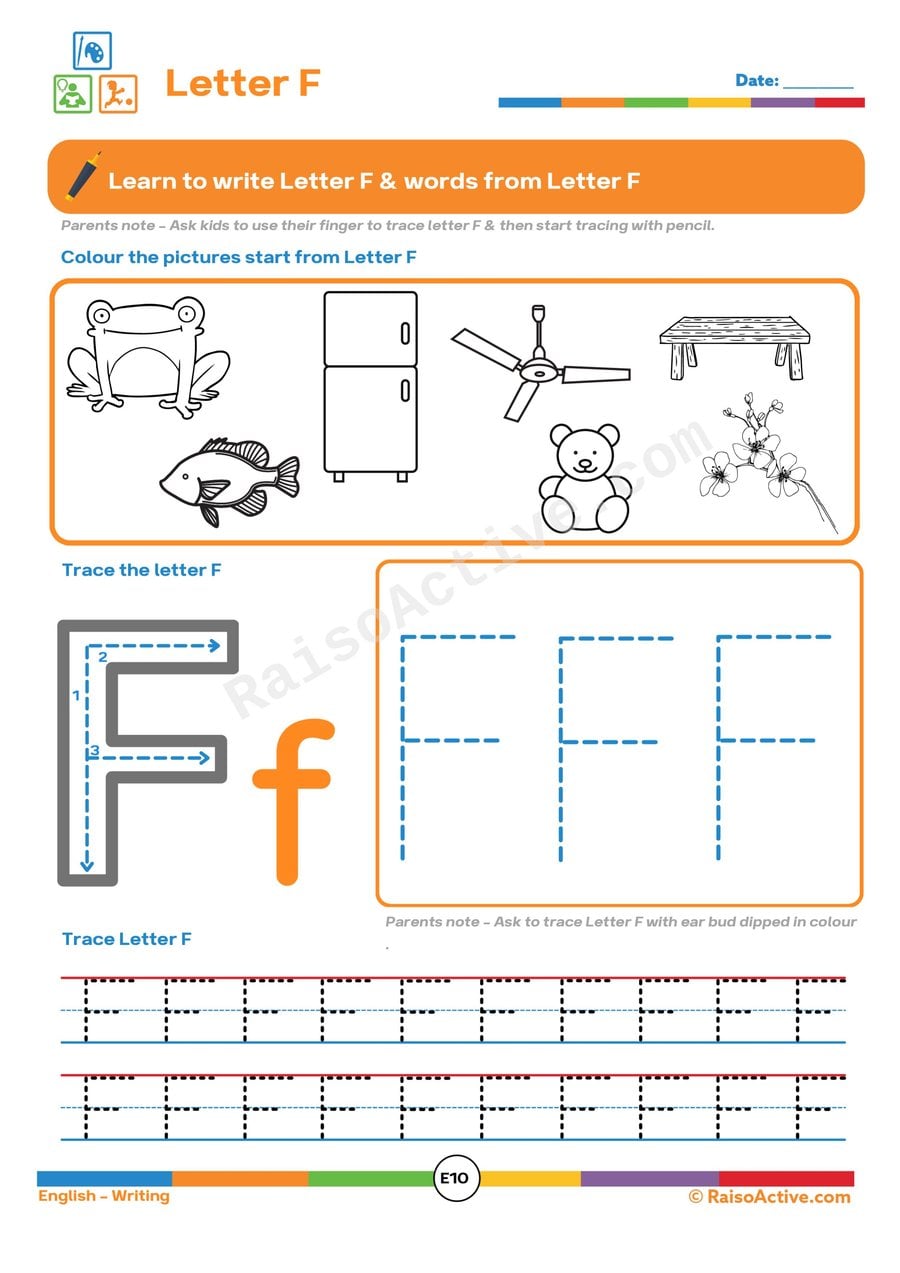
Letter F Worksheet: Trace, Color, and Learn!
Ages 3-5 · Preschool–Pre-KAges 3-5 · Nursery–ReceptionAges 3-5 · Nursery–LKGAges 3-5
This worksheet builds children's ability to reproduce capital F — a vertical line with two horizontal branches — through repeated tracing, while the matching coloring activity trains them to connect the letter shape to its beginning sound in real words. For 3-5 year olds, this dual practice of motor formation plus sound recognition is exactly the combination that prepares a child to write and read independently.
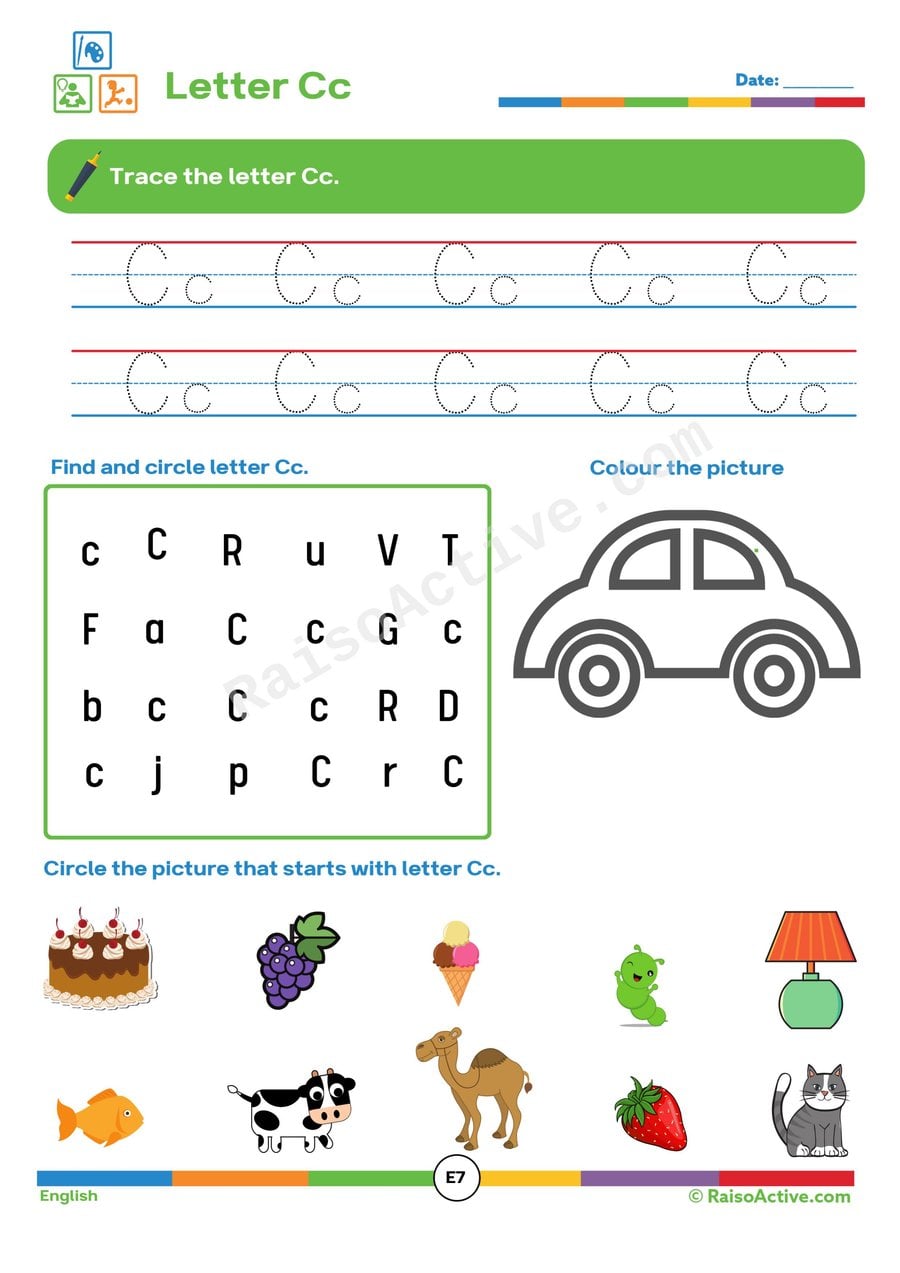
Letter Cc Worksheet: Trace, Find, and Color!
Ages 3-5 · Preschool–Pre-KAges 3-5 · Nursery–ReceptionAges 3-5 · Nursery–LKGAges 3-5
This worksheet has children ages 3-5 trace the letter Cc, search a grid to find and circle every instance of it, then color a picture of a car and identify other pictures that start with C. Layering tracing, visual search, and picture-sound matching in one worksheet gives repeated exposure to the same letter in several different formats, which builds stronger recognition than any single task alone.

Letter A Tracing and Coloring Worksheet for Preschoolers
Ages 3-5 · Preschool–Pre-KAges 3-5 · Nursery–ReceptionAges 3-5 · Nursery–LKGAges 3-5
Preschoolers ages 3-5 practice the specific pencil strokes needed to form the letter A, both uppercase and lowercase, while also connecting the letter to its sound through picture recognition. Tracing before free writing builds the fine motor muscle memory that makes independent letter formation possible.

Small Letters Worksheet: Practice Writing Lowercase Letters!
Ages 4-5 · Pre-KAges 4-5 · ReceptionAges 4-5 · LKGAges 4-5
Tracing and then independently writing lowercase letters helps children ages 4-5 move from guided hand motion to self-directed letter formation, a critical step toward legible, automatic handwriting. Pairing each letter with a picture also reinforces the letter-sound connection, so children are practicing both motor control and early phonics at the same time.
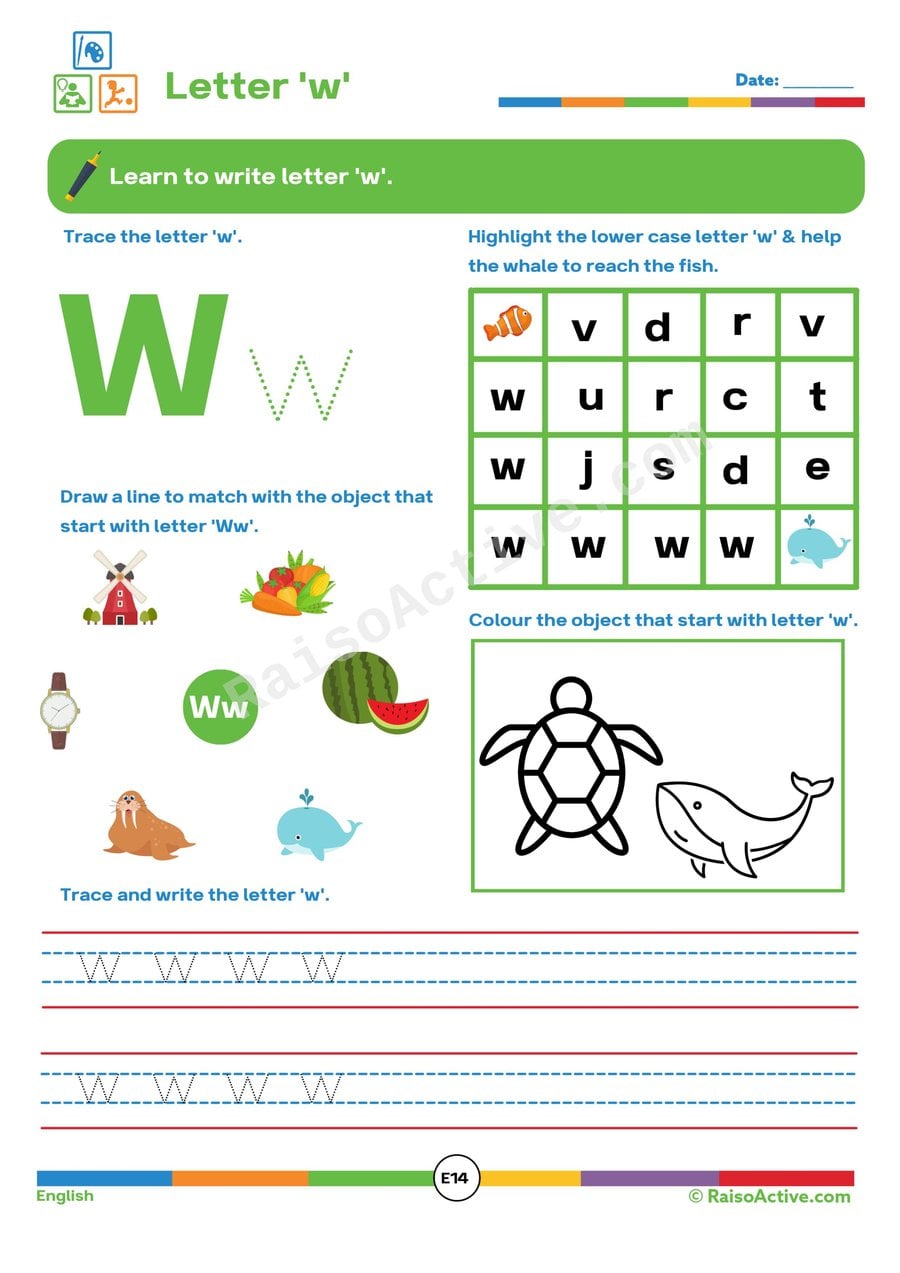
Letter 'w' Worksheet: Trace, Match, and Color!
Ages 3-5 · Preschool–Pre-KAges 3-5 · Nursery–ReceptionAges 3-5 · Nursery–LKGAges 3-5
Tracing, matching, and highlighting the letter 'w' gives children ages 3-5 practice with one of the more visually complex lowercase letters, made up of four connected diagonal strokes rather than a single simple shape. Matching pictures that start with 'w' to the letter reinforces the /w/ sound-to-symbol link, while scanning a letter grid to highlight every 'w' builds visual search skills alongside letter recognition. This combination of tracing, matching, searching, and coloring keeps the practice varied enough to hold a young child's attention across the full page.

Learn the Letter 'L': Tracing, Matching, and Coloring Worksheet for Preschoolers
Ages 3-5 · Preschool–Pre-KAges 3-5 · Nursery–ReceptionAges 3-5 · Nursery–LKGAges 3-5
This worksheet builds letter 'L' recognition through tracing, matching, a themed maze that highlights the letter while guiding a lion to its meat, and coloring — a four-part structure that keeps 3-5 year olds engaged across several formats while reinforcing the same letter each time. The maze section in particular adds a playful goal to what would otherwise be repetitive letter-spotting, motivating your child to scan carefully for every 'L' along the path.

Z is for Zebra! Letter Z Tracing and Coloring Worksheet
Ages 3-5 · Preschool–Pre-KAges 3-5 · Nursery–ReceptionAges 3-5 · Nursery–LKGAges 3-5
This letter Z worksheet gives children ages 3-5 focused practice recognizing and forming both the uppercase and lowercase versions of one of the trickiest letters to write, since its diagonal strokes differ from the curves and straight lines used in most other letters. Matching and coloring objects that start with 'z' also builds beginning-sound awareness, helping the letter's shape and sound become linked in memory.
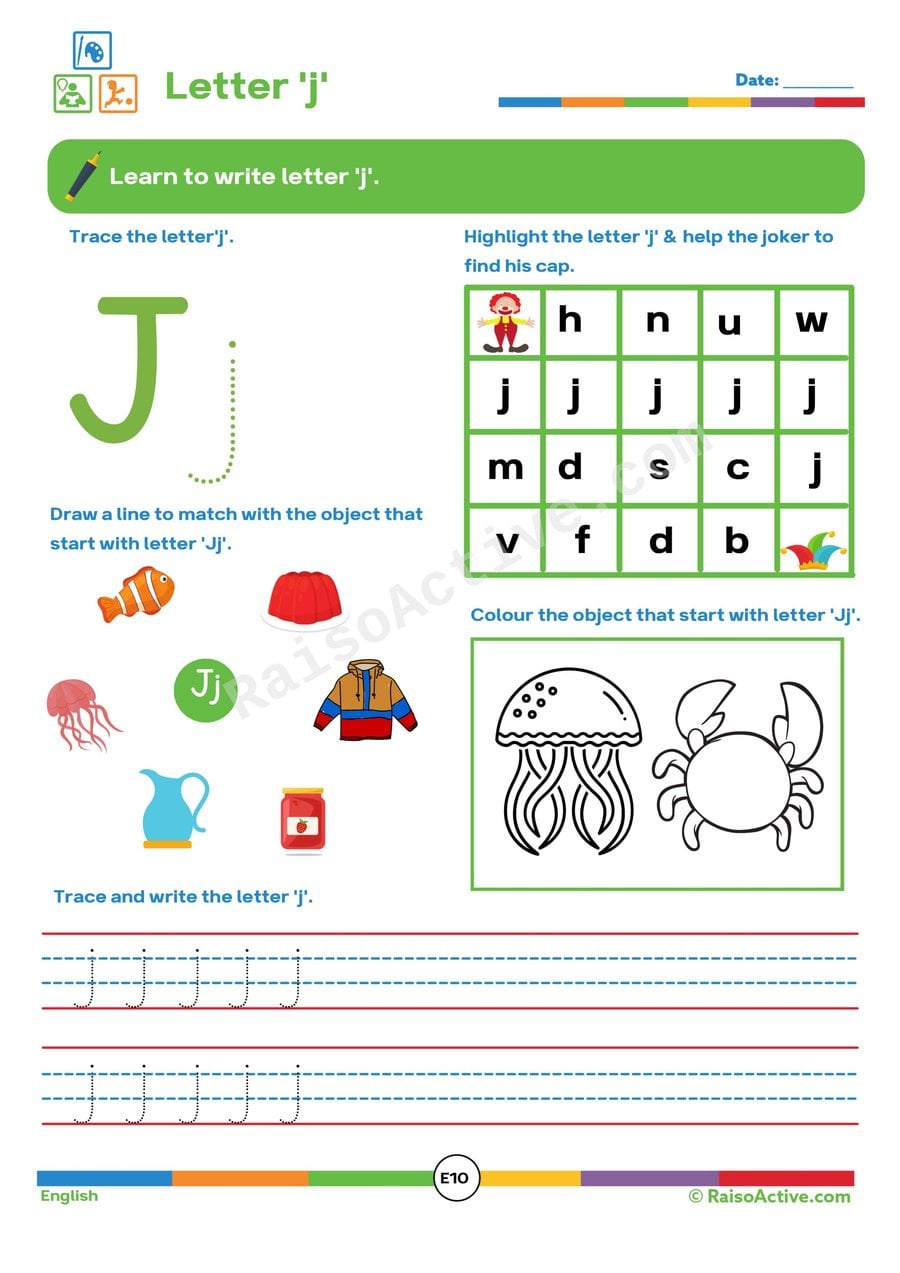
Letter 'j' Worksheet: Trace, Match, and Color!
Ages 3-5 · Preschool–Pre-KAges 3-5 · Nursery–ReceptionAges 3-5 · Nursery–LKGAges 3-5
Tracing the letter 'j' builds the fine motor control and stroke memory children ages 3-5 need for handwriting, while matching it to objects that start with the same sound connects the written letter to its spoken sound. Highlighting and coloring add extra practice recognizing the letter's shape among other letters and pictures.
Guides for this topic

Documenting Learning Without Drowning in Data: A Practical Guide for Parents and Teachers
Learn practical ways to document your child's learning without overwhelm. Simple portfolios, observation tips, and printable trackers for ages 1-8.

How to Help Your Child with Letter Reversals: A Complete Guide for Parents and Teachers
Letter reversals are normal until age 7-8. Learn the best multisensory strategies, anchor letter tricks, and activities to help children write b, d, p, and q correctly.

Activities That Help with Pencil Grip Development: A Complete Guide for Parents and Teachers
Discover fun, research-backed activities to develop pencil grip in young children. Age-wise exercises, play ideas, and expert tips for parents and teachers.
Reviews
Every worksheet for ages 3–5, no watermark
Members download the full library of 1,000+ worksheets and every activity pack without watermarks or daily limits. One year costs ₹999 in India or $20 elsewhere.
See membership plansOr download any worksheet free with a watermark (5 a day).