Free printable worksheets · India
LKG English Worksheets
LKG English worksheets are practice sheets for children aged 4 to 5 in Junior KG that build the reading and writing foundations set out for the Foundational Stage. They cover recognising and writing capital letters A to Z, introducing small letters, matching letters to their sounds, identifying beginning sounds, rhyming words and vocabulary grouped by theme.
In LKG English the alphabet stops being a song and becomes 26 shapes with 26 sounds. Most Indian schools teach capital letters first because straight lines are easier for a four-year-old hand, then introduce small letters in the last term. The sheets here follow that order and pair every letter with its sound and a picture, so tracing "B" always comes with "b for ball". Beginning-sound and rhyming sheets train the ear before blending starts in UKG. Vocabulary sheets are grouped the way LKG syllabi group them: fruits, vegetables, animals, body parts, colours, family. Ten minutes a day with one letter sheet and one sound or word sheet covers a typical LKG English year.
1058+ worksheets · free PDF download · print on A4 or Letter
LKG English Worksheets to print
Browse all worksheets for ages 4–5
Clothing Pattern Match Worksheet for Preschoolers
This worksheet has children ages 3-5 study repeating patterns on clothing items — stripes, polka dots, or checks — and match each item to its identical twin, building visual discrimination and early pattern-sequencing skills. Distinguishing between similar-looking patterns also sharpens attention to detail, a skill that later supports letter and word recognition.

Complete the Words: Identify the Animals Worksheet for Preschoolers
This worksheet helps children ages 3-5 practice early letter recognition and spelling by filling in missing letters to complete animal names using picture clues. Working from a picture to a partially completed word builds phonics skills gradually, since children only need to identify one or two missing sounds rather than spelling an entire word from scratch.

Trace and Count: Learning the Number Zero Worksheet
This worksheet introduces the more abstract concept of zero by having children trace the numeral and then identify pictures showing an empty or 'zero' quantity, like a basket with no fruit or a jar with no candies. For three- to five-year-olds, zero is often trickier to grasp than other numbers since it represents an absence rather than a countable group, so tracing it alongside visual examples of 'nothing there' helps make the idea concrete.

Tracing and Counting Worksheet: Learning the Number 3!
This worksheet helps children ages 3-5 learn to recognize, trace, and write the number 3 using its correct stroke pattern, while a hands-and-ducks counting activity reinforces that the numeral 3 represents exactly three objects. Combining tracing with counting connects the written symbol to its real quantity, which is central to early number sense.

Letter I Tracing and Coloring Worksheet for Preschoolers
This worksheet helps children ages 3-5 build fine motor skills and letter recognition by tracing both the uppercase and lowercase forms of the letter I, then applying that recognition in a coloring task and a letter-hunt word search. Practicing a short, simple letter like I builds early writing confidence, while the letter-hunt component adds a visual-scanning challenge that pushes recognition beyond just copying a shape. Coloring pictures that start with I connects the shape to its beginning sound.

Phases of the Moon Worksheet: Trace, Color, and Learn!
This worksheet introduces children ages 3-5 to the changing shapes of the moon by having them trace each phase's outline, say its name aloud, and color it in, connecting a science concept to hands-on tracing practice. Drawing and labeling the phases in a circle afterward reinforces that the moon moves through this same cycle in a repeating, predictable order.

Number 8 Worksheet: Trace, Count, and Color Butterflies!
Tracing the number 8 while counting and coloring eight butterflies helps children ages 3-5 connect the written numeral to the actual quantity it represents, reinforcing number sense alongside handwriting. The final step, drawing any eight objects of the child's choosing, moves beyond guided practice into independent application, checking whether the concept of 'eight' has truly transferred rather than just been copied. This progression from tracing to counting to free drawing builds a complete, layered understanding of one specific number.

Move the Cars! Pre-Writing Tracing Worksheet for Preschoolers
Tracing a road-shaped path for a car gives children ages 3-5 pencil control practice disguised as a familiar, motivating theme, since most young children have pushed a toy car along an imaginary road before. The winding or straight path on this worksheet builds the same steady, controlled pencil movement needed for handwriting, while the driving theme keeps attention high through an activity that might otherwise feel repetitive.

Trace and Write the Letter H Worksheet for Preschoolers
Focusing on uppercase H alone — two straight vertical lines connected by a horizontal bar — gives children clean, repeatable practice with a letter made entirely of straight strokes, a good confidence-builder positioned among trickier curved letters elsewhere in the alphabet. Writing it independently after tracing, rather than just copying, helps 3-5 year olds practice recalling a letter shape from memory.

Learn the Sight Word 'Do' - Tracing and Practice Worksheet
Sight words like 'do' can't be sounded out using regular phonics rules, so children ages 3-5 need repeated visual exposure and active practice to memorize them by sight — exactly what this multi-part worksheet provides through tracing, highlighting, filling blanks, and even dot-marking the word. Because sight words appear so frequently in early readers, automatic recognition of a word like 'do' removes a major stumbling block that would otherwise interrupt a child's reading flow on nearly every page. Practicing the same word in several different formats within one worksheet builds the strong repetition that sight-word memorization requires.

Letter S Tracing Worksheet: Learn to Write and Color!
Tracing the letter 'S' gives children ages 3-5 focused handwriting practice on a letter with a distinctive curved shape that's genuinely different from the straight lines and simple curves of letters like 'I' or 'C,' making it a good challenge for developing pencil control. Pairing the tracing with a search for objects that begin with 'S' reinforces the connection between the letter's shape, its sound, and real vocabulary, rather than treating handwriting and phonics as separate skills. This combined approach helps the letter S become more memorable than tracing alone would achieve.
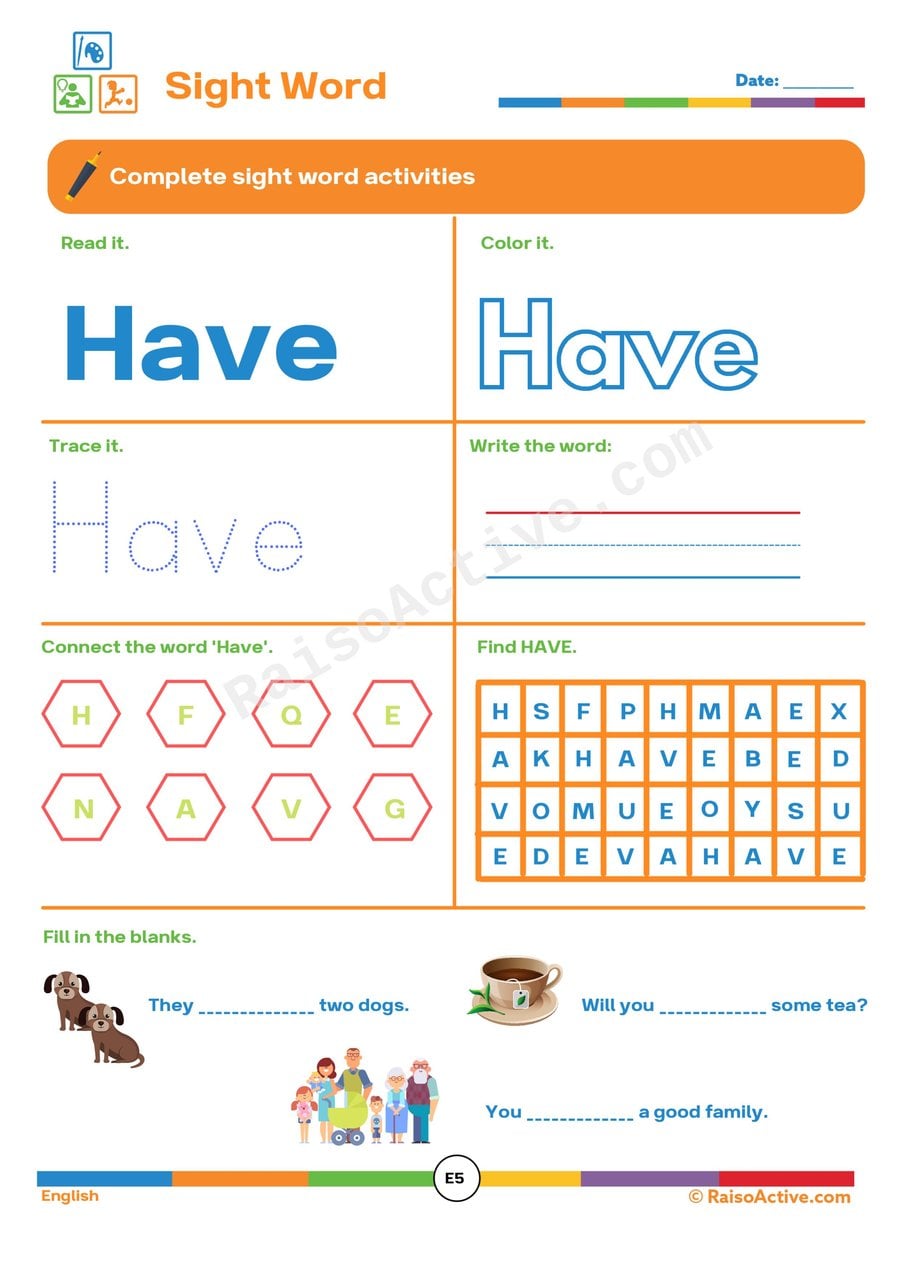
Sight Word 'Have' Worksheet for Preschoolers
This multi-step worksheet builds deep familiarity with the sight word 'have' for children ages 3-5 by having them read, color, trace, write, and search for the word in several different formats. Repeating the same word across varied tasks — rather than practicing it once — is exactly how high-frequency sight words become instantly recognizable to early readers.

Trace the Standing Lines to Reach the Ice Cream! A Pre-Writing Worksheet
This worksheet builds pencil control in children ages 3-5 by having them trace vertical, 'standing' lines connecting children to their ice cream cones, a companion skill to horizontal line tracing that together forms the basis for writing many letters and numbers. Vertical strokes require a different hand motion than horizontal ones, so practicing both directions gives children a fuller foundation for handwriting readiness.
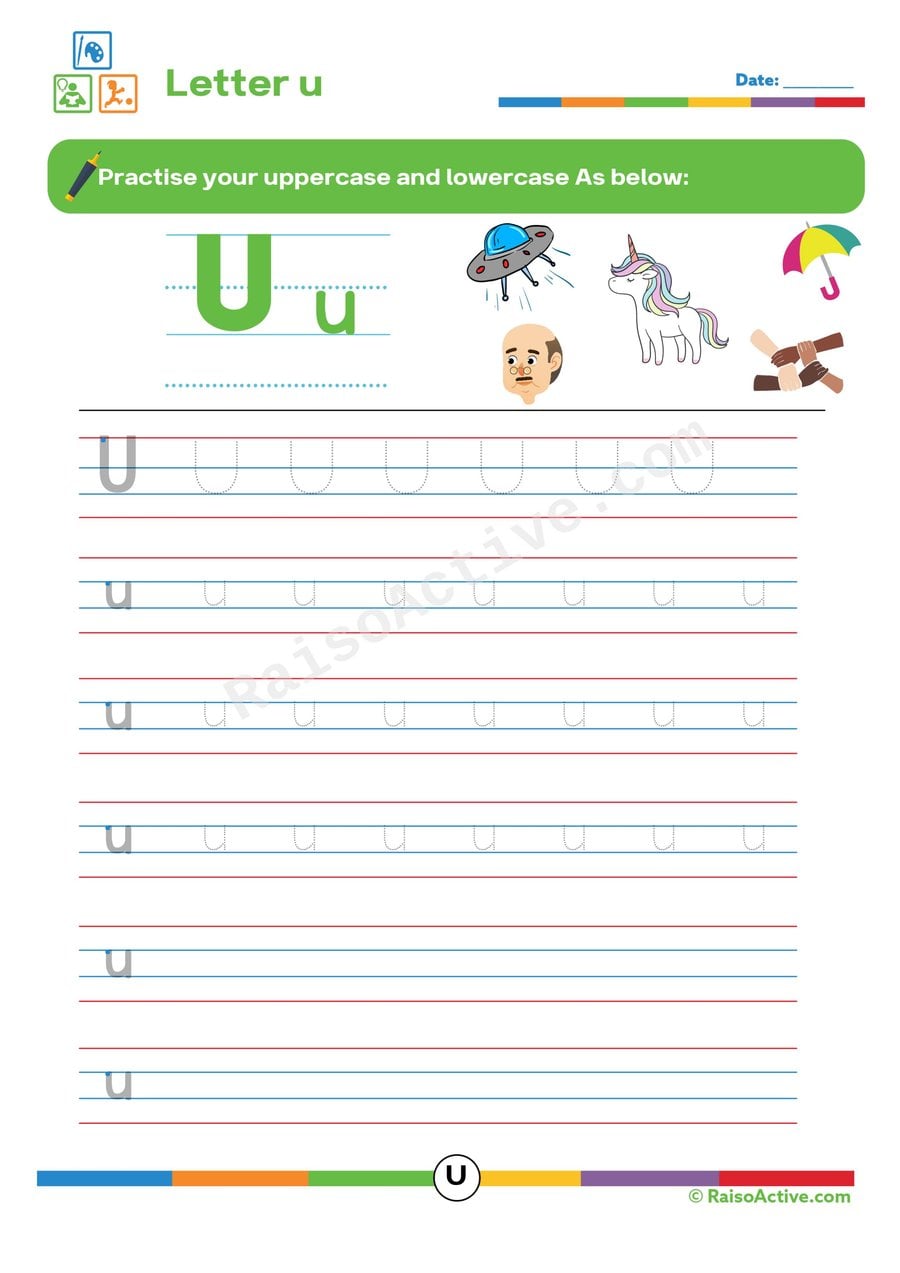
Letter U Tracing Worksheet for Preschoolers
U is a single smooth curve that dips down and back up, similar in motion to a shallow smile shape, giving 3-5 year olds continued practice with curved strokes after tackling letters like C and O. Tracing both uppercase U and lowercase u also shows children that, unlike many letters, U looks almost the same in both cases, just at a different size.

Secret Words Worksheet: Find the First Letter! (Ages 3-5)
This Secret Words worksheet gives children ages 3-5 another round of practice isolating beginning sounds and matching them to letters, a skill that needs many repetitions across different word sets before it becomes reliable. Spelling out a hidden word letter by letter also introduces the earliest form of encoding — turning sounds into written symbols — which is the flip side of the decoding skills used in reading. The reveal-at-the-end structure keeps the repetitive listening practice feeling like a game rather than a worksheet.
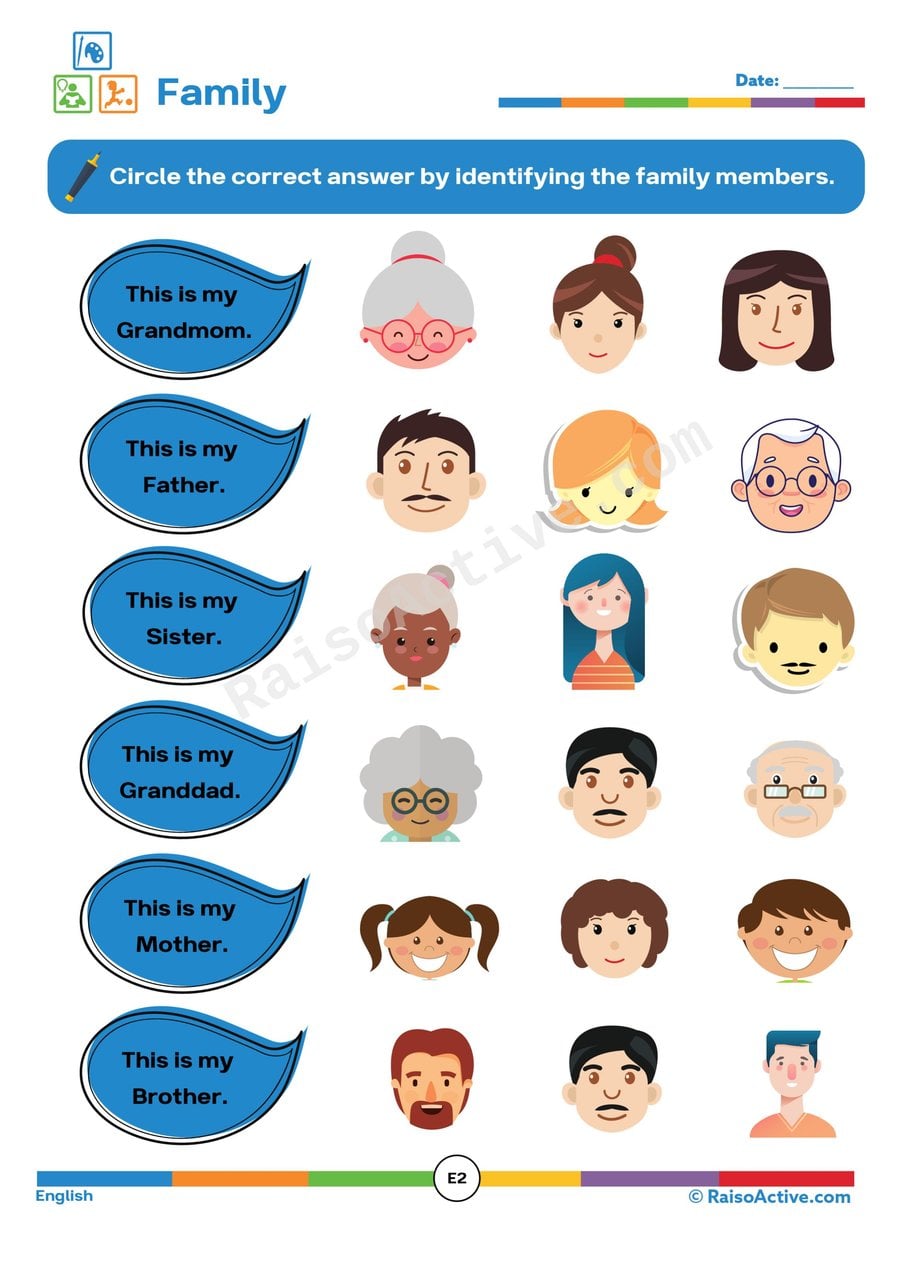
Family Members Worksheet: Identify and Circle!
Reading a sentence describing a family member and circling the matching picture teaches children ages 3-5 to connect written description to a specific person, combining early reading comprehension with family vocabulary. This task also builds the habit of checking text carefully rather than guessing from the picture alone.

Letter J Tracing Worksheet for Preschoolers: Practice Writing the Letter J!
J is a short vertical or curved line with a hook at the bottom and a dot on top for the uppercase form, combining features from both straight and curved letters in one relatively uncommon shape. Tracing J at ages 3-5 also introduces the idea of a letter that dips slightly below the writing line, similar to g and y, preparing children for that concept ahead of time.

Halloween Match: Find and Color the Identical Objects!
This visual discrimination worksheet asks children ages 3-5 to scan a row of similar-looking Halloween objects and identify the two that are truly identical, sharpening their attention to small details like size, shading, and shape. Coloring the matched pair afterward gives a satisfying finishing step while reinforcing which items they correctly identified.

Beehive Tracing Worksheet: Help the Bees Find Their Home!
Tracing a path from bees to their beehive gives children ages 3-5 pencil control practice while introducing simple vocabulary about bees and where they live, building on the same kind of animal-and-home concept found in other themed tracing worksheets, but with a specific and recognizable structure, the hive. Following a winding or curved path toward a clear destination also builds visual tracking, the ability to follow a line's direction with the eyes before the pencil catches up.

Long Vowel 'O' Matching Worksheet for Preschoolers
This worksheet asks children ages 3-5 to match pictures of objects with words that share the long 'o' sound, such as 'nose' or 'rope,' strengthening their ability to connect a spoken sound to its written word. Matching pictures to words at this age also builds early print awareness, helping children understand that written words represent real things and sounds they already know.

V and W Consonant Sounds Worksheet for Preschoolers
This worksheet helps children ages 3-5 tell apart the 'v' and 'w' sounds, two consonants that can sound similar to a young ear, by matching pictures to the correct starting letter. Because 'v' and 'w' involve different mouth and teeth positions (top teeth touching bottom lip for 'v', rounded lips for 'w'), this practice trains children to listen closely rather than guess. Matching, rather than writing, keeps the focus on the auditory skill for children who are still developing letter-writing control.

Animal Babies Matching Worksheet for Preschoolers
Children ages 3-5 practice matching adult animals to their correct babies, like a cow to a calf or a dog to a puppy, building early animal vocabulary and reinforcing the concept that animal babies often have entirely different names from their parents. This kind of family-relationship matching also strengthens visual comparison and reasoning skills.

Animal Match: Skin, Babies, Sounds, and Food Worksheet
This worksheet deepens children ages 3-5's animal knowledge across four different categories at once — matching animals to their skin or fur type, their babies, the sounds they make, and the food they eat. Covering several related facts about the same set of animals helps children build a richer, more connected understanding than a single-category matching worksheet would.

Letter I Tracing and Coloring Worksheet for Preschoolers
Tracing and writing the letter I introduces children ages 3-5 to one of the simplest letter shapes, a single vertical line, which makes it an ideal letter for building early confidence with pencil control before tackling multi-stroke letters. The coloring and recognition portions of the worksheet reinforce that this simple shape represents both a sound and, notably, a whole word on its own when capitalized as 'I.'
What your child learns in LKG English
By the end of LKG a child should recognise all capital letters in and out of order, write most of them from memory, recognise small letters, say the most common sound of each letter, pick out the first sound in a spoken word, find two words that rhyme, and name pictures across the everyday themes covered in class.
- Letter recognition: capital A–Z, then small a–z, in sequence and jumbled
- Letter writing: tracing with start dots, then copying, then writing from memory
- Letter sounds: one picture per sound, matching a letter to pictures that begin with it
- Phonological awareness: beginning sounds, rhyming pairs, clapping syllables
- Vocabulary: fruits, vegetables, animals, body parts, colours, family, classroom objects
How to use LKG English worksheets
Say the letter name and its sound before your child traces it, and have them repeat both. Do one letter sheet at a time rather than a whole row of the alphabet; four-year-olds learn letters better in small groups, and many teachers use the order S, A, T, P, I, N because it lets children build words quickly once blending starts.
Mix a sound-based sheet into every session: a beginning-sound matching page, or a rhyming page where the child circles the two pictures that rhyme. These oral skills predict reading success more than neat handwriting does, so give them equal time. Keep sessions to ten or fifteen minutes and finish with a favourite rhyme.
Signs of difficulty and what helps
If your child confuses b and d, or writes letters mirrored, that is typical at four and improves with tracing that starts from a marked dot. If they cannot hear the first sound of a word, spend a week on oral games (I spy with my little eye, something beginning with...) before returning to paper. If capital letters are secure but small letters are not, that is expected: small letters belong to the end of LKG and UKG.
Frequently asked questions
What is the LKG English syllabus?
LKG English in most CBSE and ICSE schools covers the capital alphabet A to Z with recognition, tracing and writing, an introduction to small letters, the sound of each letter with a picture, matching letters to pictures, rhyming words, vocabulary by theme, and listening to stories and rhymes. Reading of words and sentences is usually reserved for UKG.
What should an LKG child know in English by the end of the year?
By the end of LKG a child is generally expected to identify and write all capital letters, recognise most small letters, give the sound of each letter, identify the beginning sound of common words, match rhyming pictures, name objects across the themes taught and speak in short simple sentences in English. Reading three-letter words is a bonus, not a requirement.
Should LKG children learn capital or small letters first?
Most Indian schools teach capital letters first in LKG because they are made of simpler strokes and are easier to tell apart, then introduce small letters late in LKG or in UKG. Some schools, especially those following a phonics-first approach, begin with small letters because that is what children see in books. Either order works if sounds are taught alongside.
How do I teach letter sounds at home for LKG?
Say the pure sound, short and clipped, such as "sss" rather than "suh", and pair it with one consistent picture. Practise a few letters at a time, and play oral games: find things in the room that start with the sound, or sort picture cards by their first sound. The letter-sound matching sheets on this page give the same practice on paper.
How many English worksheets should an LKG child do daily?
One letter tracing or writing sheet plus one sound, rhyming or vocabulary sheet, about ten to fifteen minutes, is enough for a four-year-old. Repetition across days matters more than volume in one sitting. If the school already sends English homework, use these sheets on weekends to revise letters that were shaky during the week.
Are the LKG English worksheets free to download?
Yes. Each sheet downloads as a watermarked PDF at no cost after creating a free account, up to five downloads a day. An annual subscription removes the watermark and daily limit across the entire library, which suits teachers printing alphabet sets for a full LKG class.

Written by
Hemsweta Jain · Teacher Cheena
MBA and Early Childhood Educator, teaching since 2014 · Founder of RaisoActive, Mumbai
Written and reviewed by Hemsweta Jain (Teacher Cheena), who designs every RaisoActive worksheet.
Last reviewed
Printable packs for ages 4–5
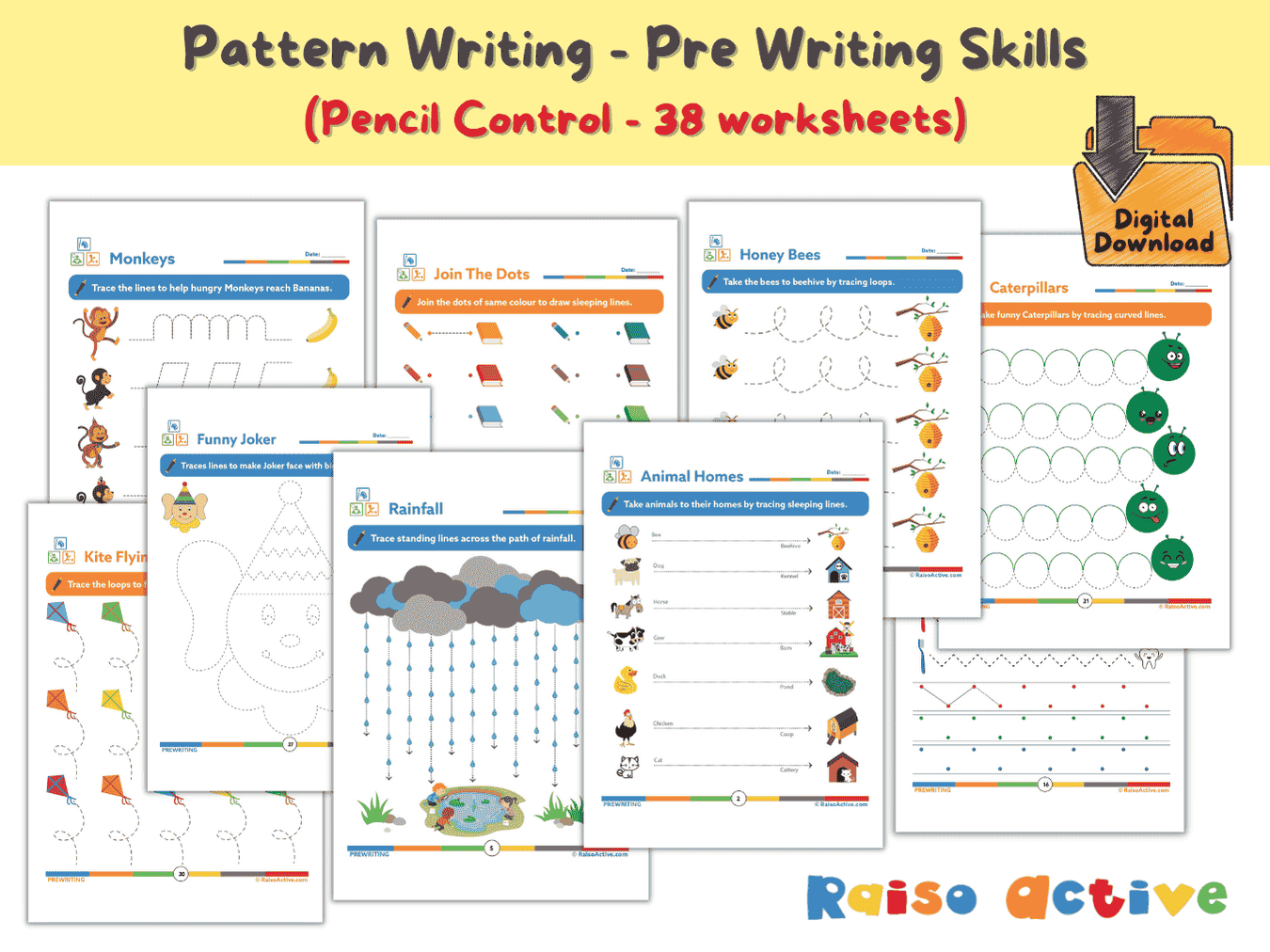
Pattern Writing Pre-writing Skills Activity Book for 3-4 Year Olds
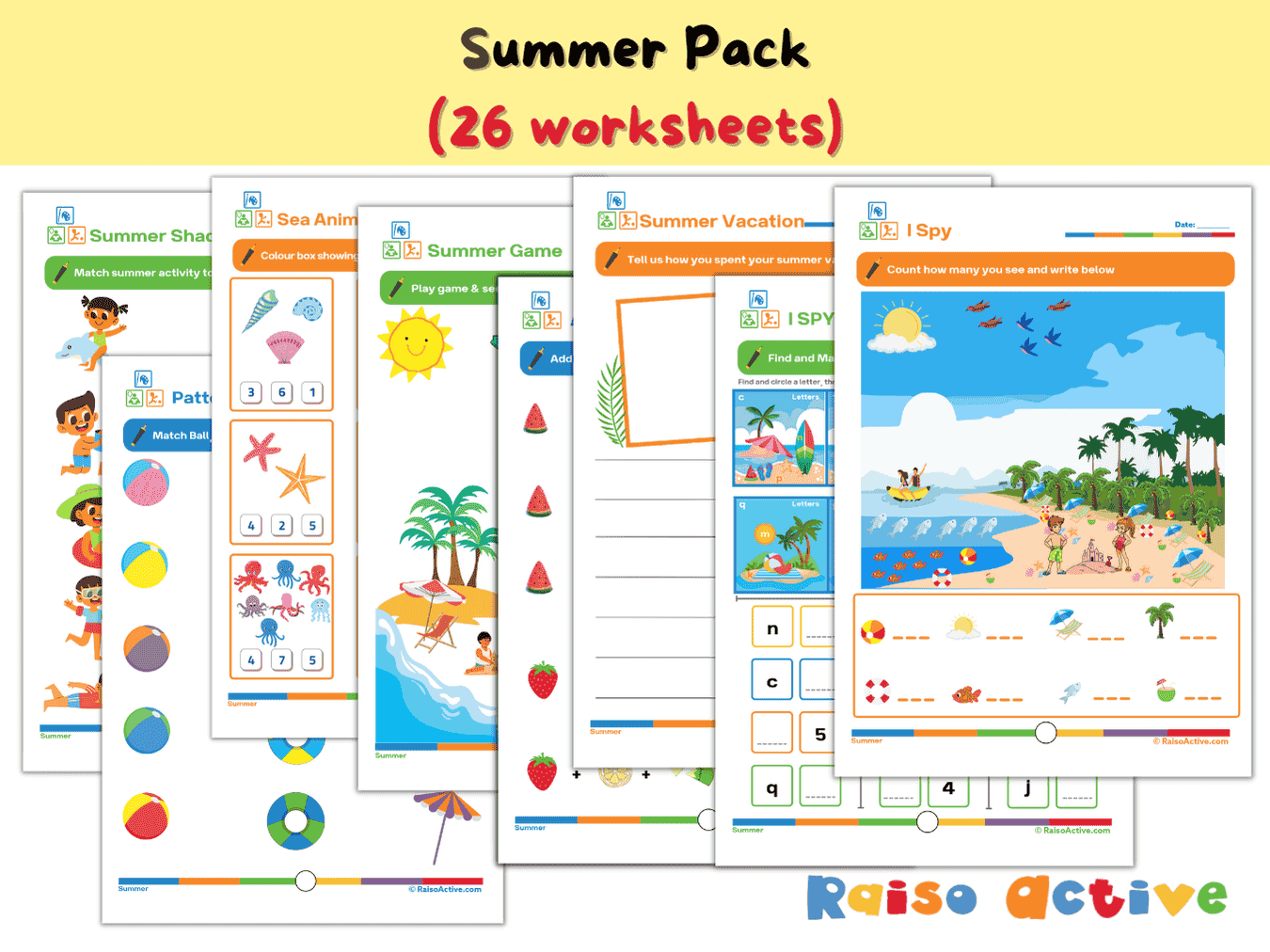
Summer Activity Pack: Math, Literacy, Puzzles & More for Preschool & Kindergarten
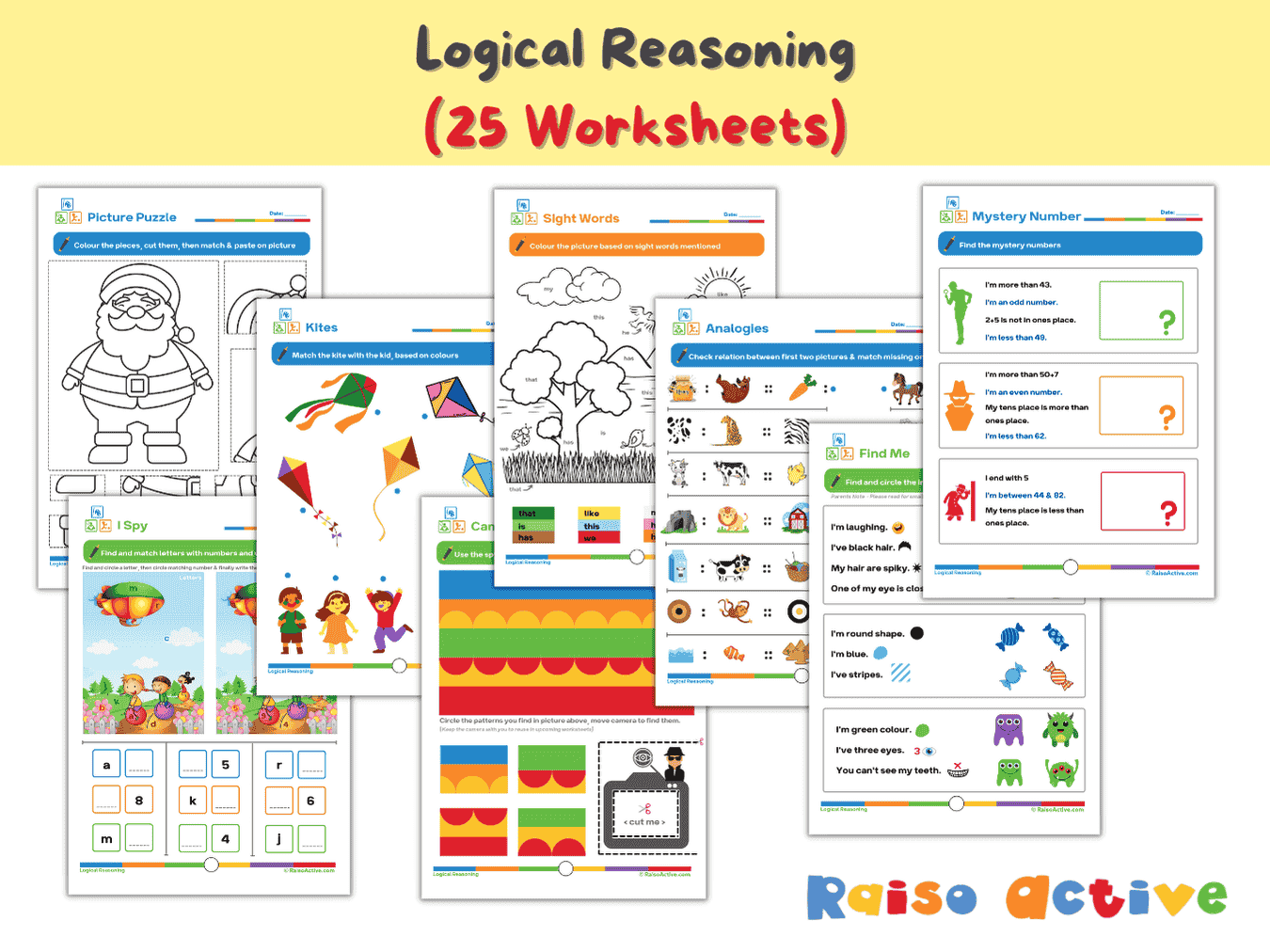
Logical Reasoning Activity Book for Preschool & Kindergarten | Patterns, Puzzles & Analogies
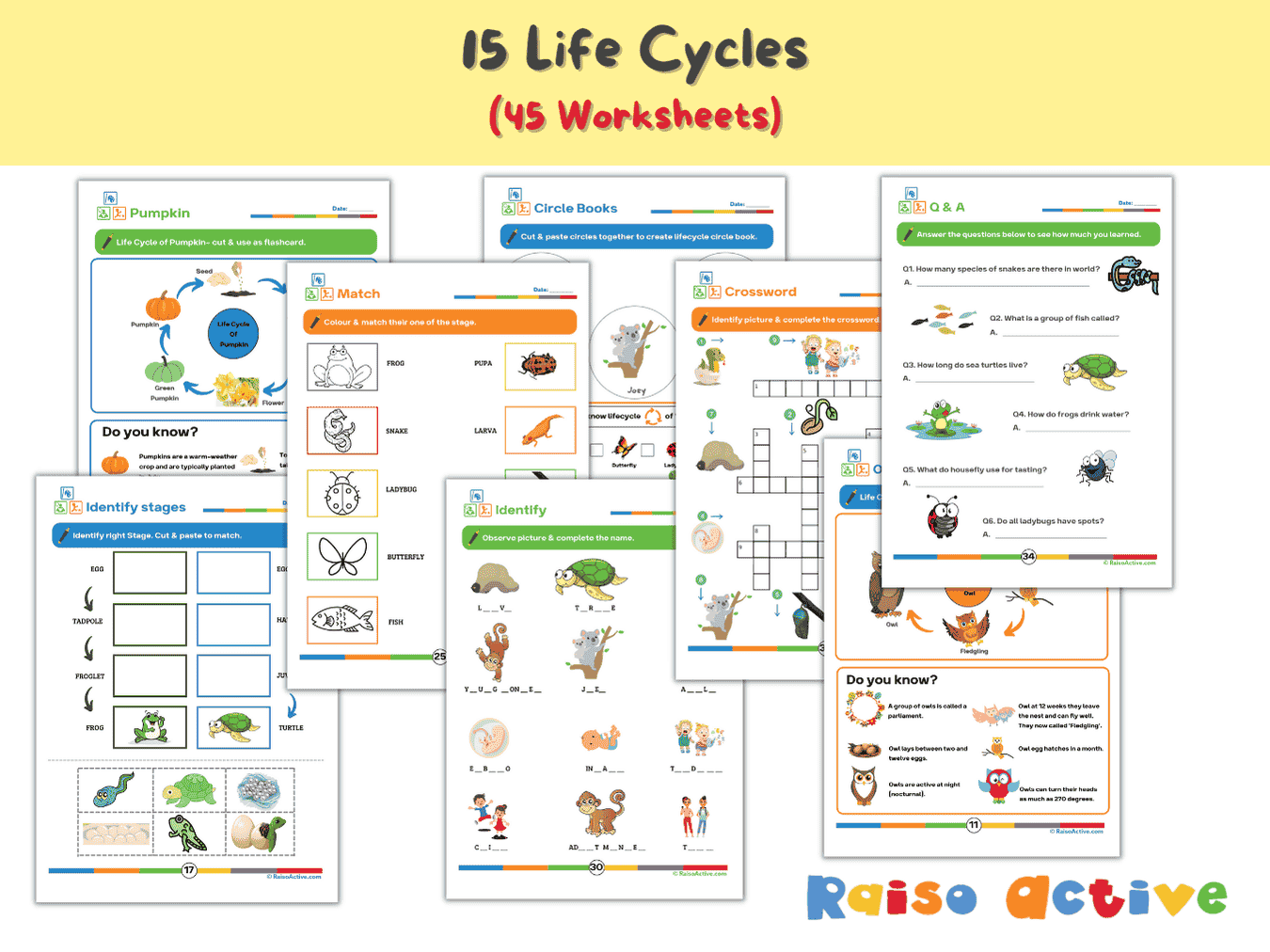
Lifecycles Activity Book & Flashcards for Preschool & Early Elementary
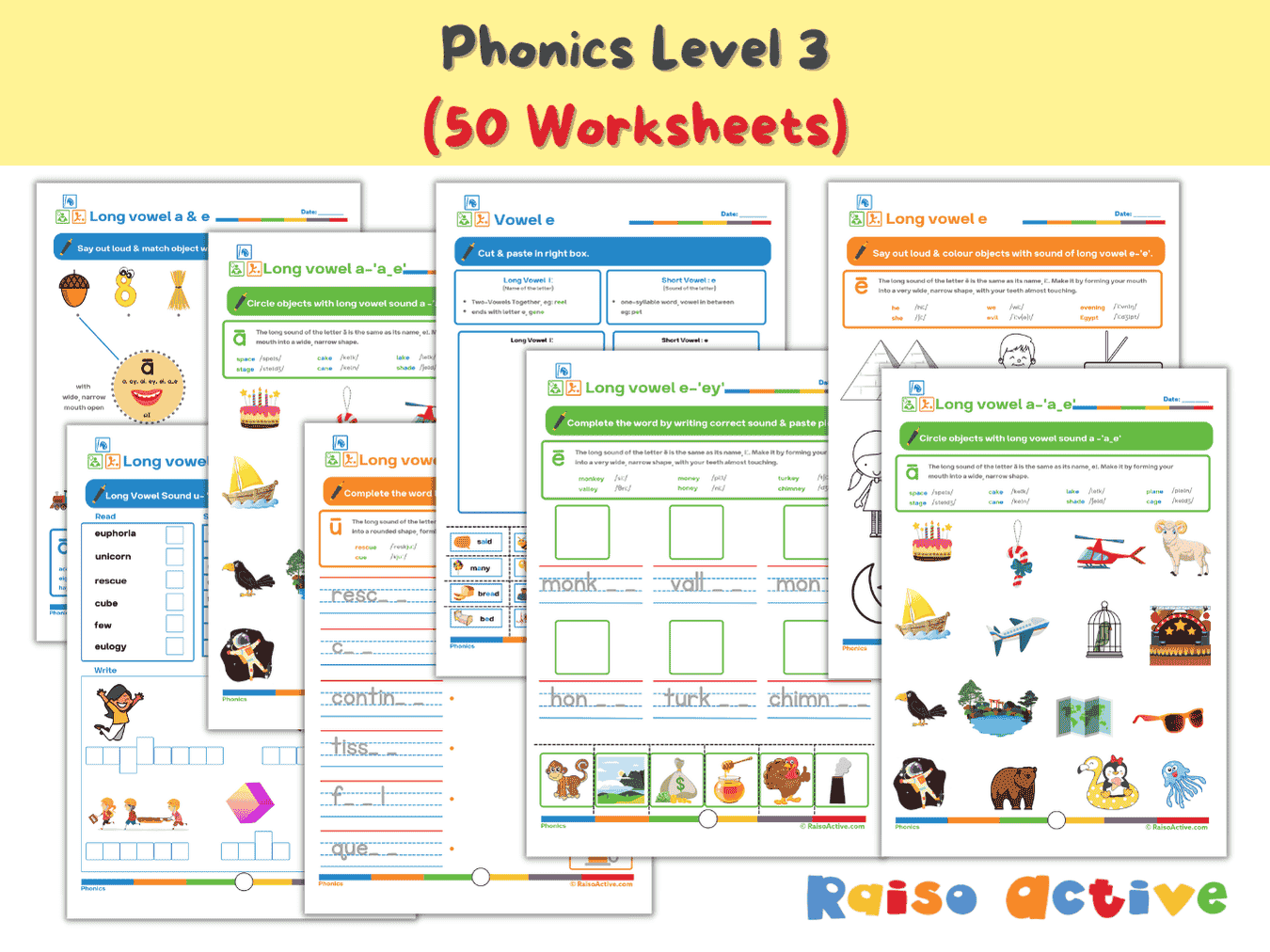
Phonics Level 3 Long Vowels Activity Book for Kindergarten & 1st Grade
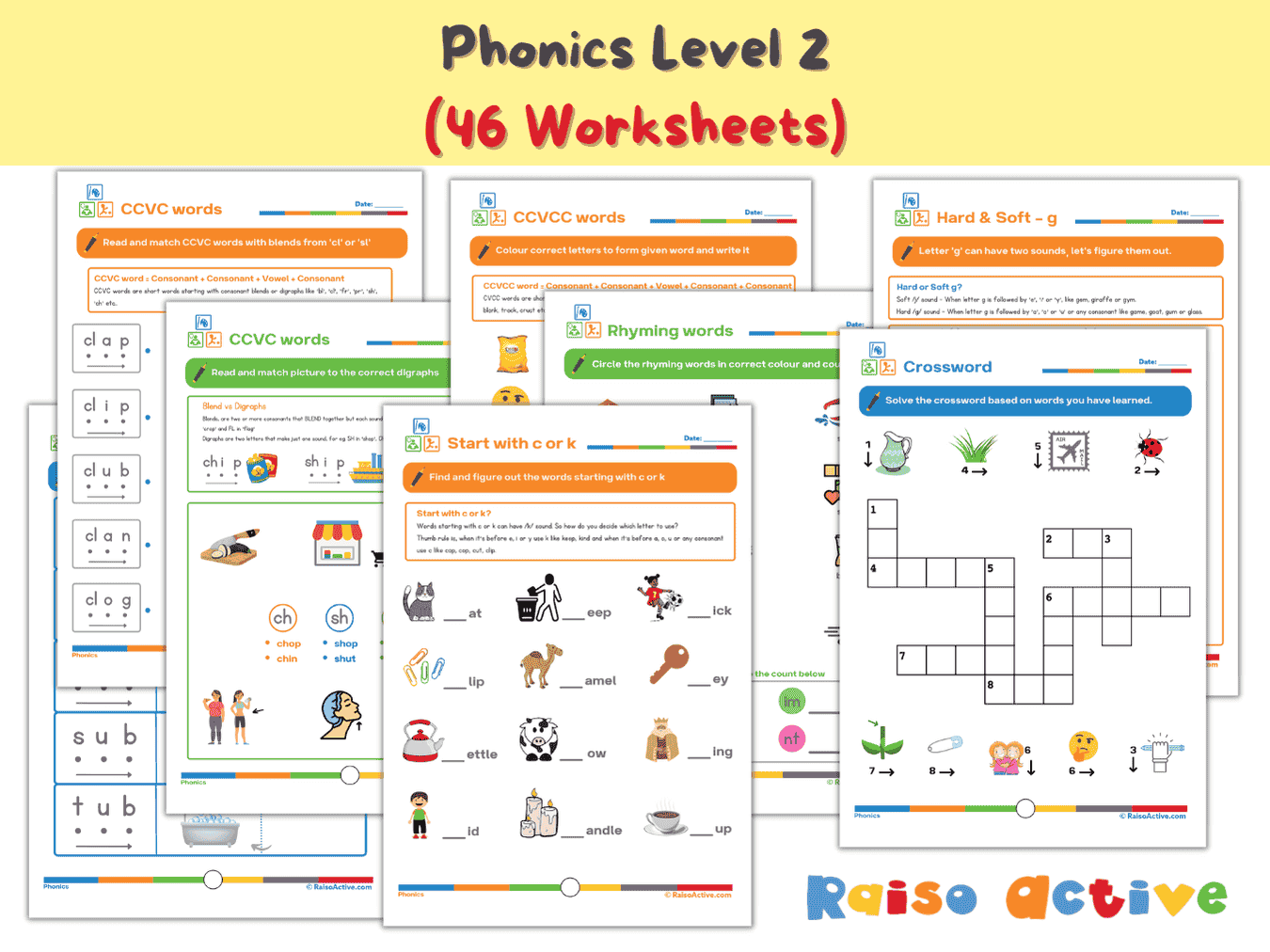
Phonics Level 2 Worksheets: CVC, CCVC, CVCC Word Families & Blends for Early Readers (Ages 4-7)
Guides for parents and teachers
See all guides →Sight Words by Age: The First 50 Words and How to Teach Them Without Flashcard Fatigue
Which sight words to teach first and why, the heart-word method, a read-trace-write-find routine, games, and a by-age table of typical sight-word progress.
How to Teach CVC Blending: A Step-by-Step Method That Works in Two Weeks
A step-by-step method for teaching CVC blending, covering continuous sounds, word families, common errors, and a 14-day plan that most children finish reading CVC words.
Phase 2 Phonics at Home: Sound Order, Blending Games, Worksheets
Phase 2 phonics at home: the five sound sets in order, oral blending, tricky words, a two-week routine, common mistakes, and free worksheets.
Bridging Two Worlds: A Complete Guide to Teaching Heritage Languages Alongside English
A practical guide to raising bilingual children who speak both their heritage language and English with confidence. Research-backed strategies, activities, and tips for Indian families.
Empowering Multilingual Learners: Essential Resources and Strategies for Bilingual and Multilingual Children
Discover research-backed strategies, activities, and free printable resources to support bilingual and multilingual children ages 1-8. Practical tips for Indian families raising confident multilingual learners.
What's the Best Way to Teach Sight Words? A Complete Guide for Parents and Teachers
Discover the most effective methods to teach sight words to young children — flashcards, games, Dolch vs Fry lists, rainbow writing, and how to combine them with phonics.