Free printable worksheets · India
LKG Maths Worksheets
LKG maths worksheets are practice sheets for children aged 4 to 5 in Junior KG that build early number sense before formal sums begin in UKG. They cover recognising and writing numbers 1 to 20, counting objects and matching them to numerals, comparing more and less, sorting by size, naming basic shapes and continuing repeating patterns.
LKG maths is about quantity, not arithmetic. A four-year-old who can chant to twenty may still not know that "seven" means seven things, so the sheets on this page make the child count real pictures, circle a set, and then write the numeral, in that order. Numbers run from 1 to 10 in the first term and 11 to 20 in the second, mirroring most CBSE and ICSE LKG plans. Comparison sheets (more/less, big/small, tall/short, heavy/light) build the vocabulary that word problems later depend on. Shape and pattern pages develop the eye for structure that becomes place value in Class 1. One sheet a day, with the child touching each object as they count, is the right pace.
878+ worksheets · free PDF download · print on A4 or Letter
LKG Maths Worksheets to print
Browse all worksheets for ages 4–5
Clothing Pattern Match Worksheet for Preschoolers
This worksheet has children ages 3-5 study repeating patterns on clothing items — stripes, polka dots, or checks — and match each item to its identical twin, building visual discrimination and early pattern-sequencing skills. Distinguishing between similar-looking patterns also sharpens attention to detail, a skill that later supports letter and word recognition.
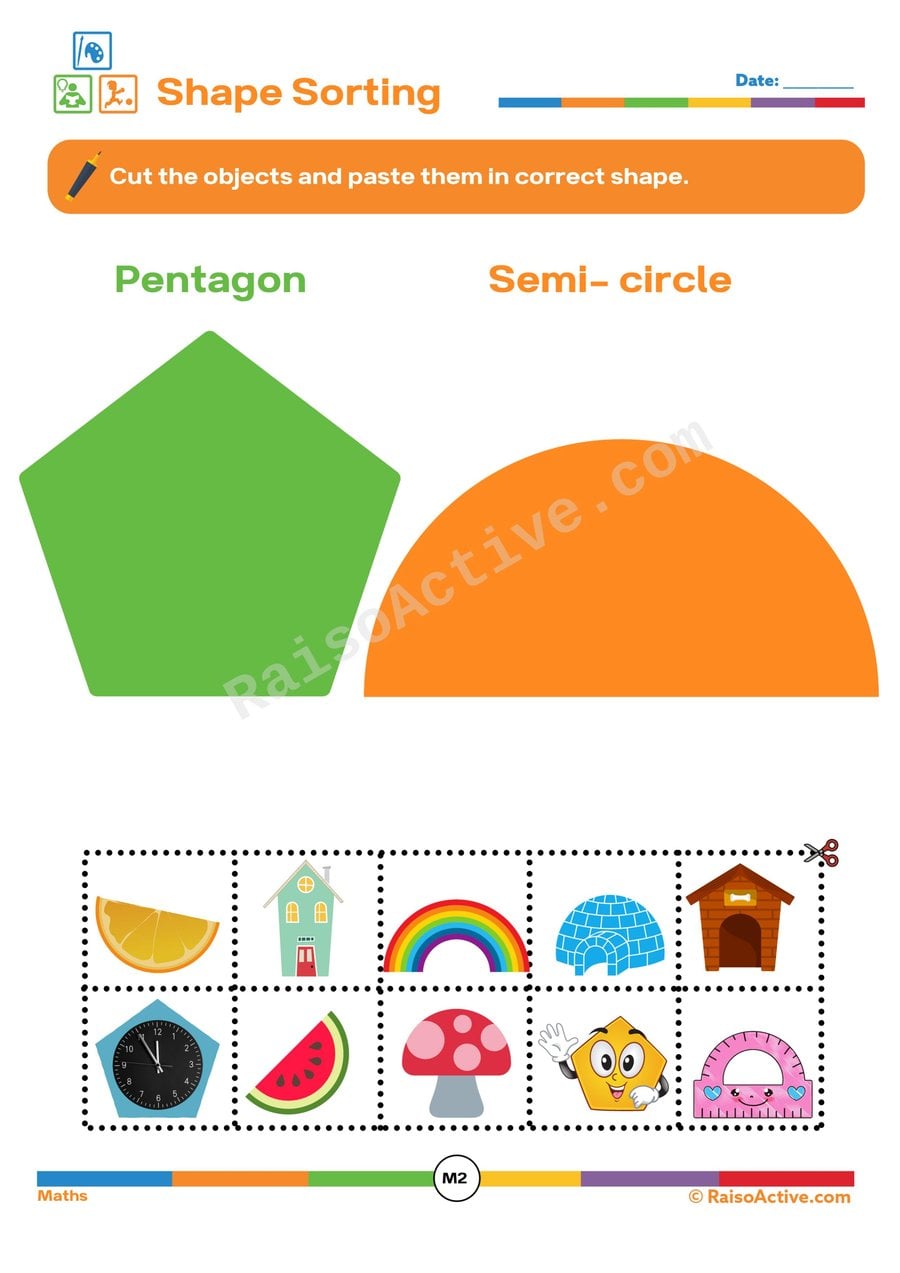
Shape Sorting Fun: Cut and Paste Shapes!
Cutting out shapes and pasting them into matching outlines teaches children ages 3-5 to recognize basic 2D shapes like circles, squares, and triangles by their defining features rather than just their color or size. The cutting and pasting also strengthens the fine motor coordination needed for handwriting later on.
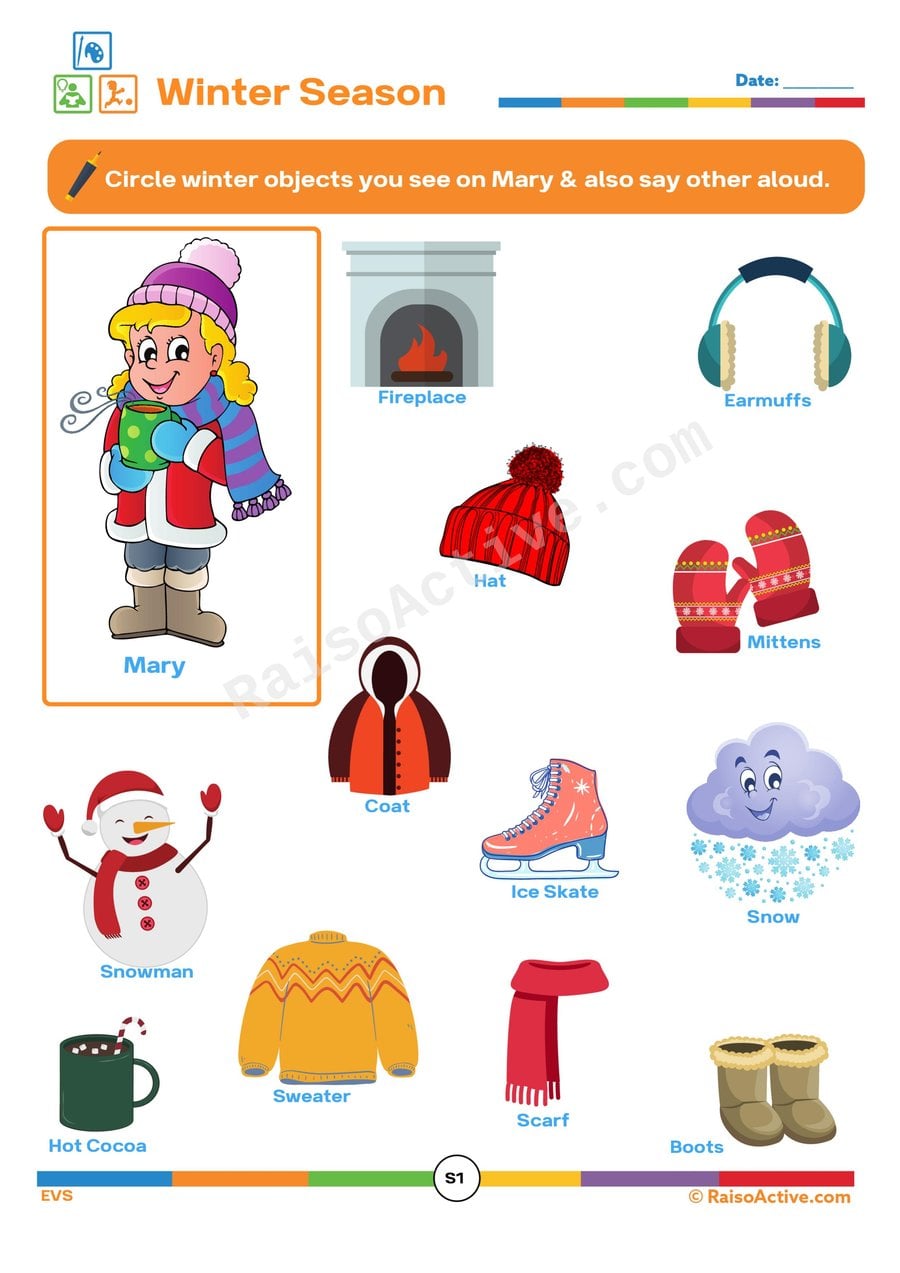
Winter Objects Worksheet: Circle and Say!
Identifying winter-related objects on this worksheet builds vocabulary and seasonal awareness for children ages 3-5, teaching them to associate specific items, like scarves, mittens, and snowflakes, with a particular time of year. Circling objects within a larger picture also sharpens visual scanning skills, requiring children to search carefully rather than glance at the whole image at once.
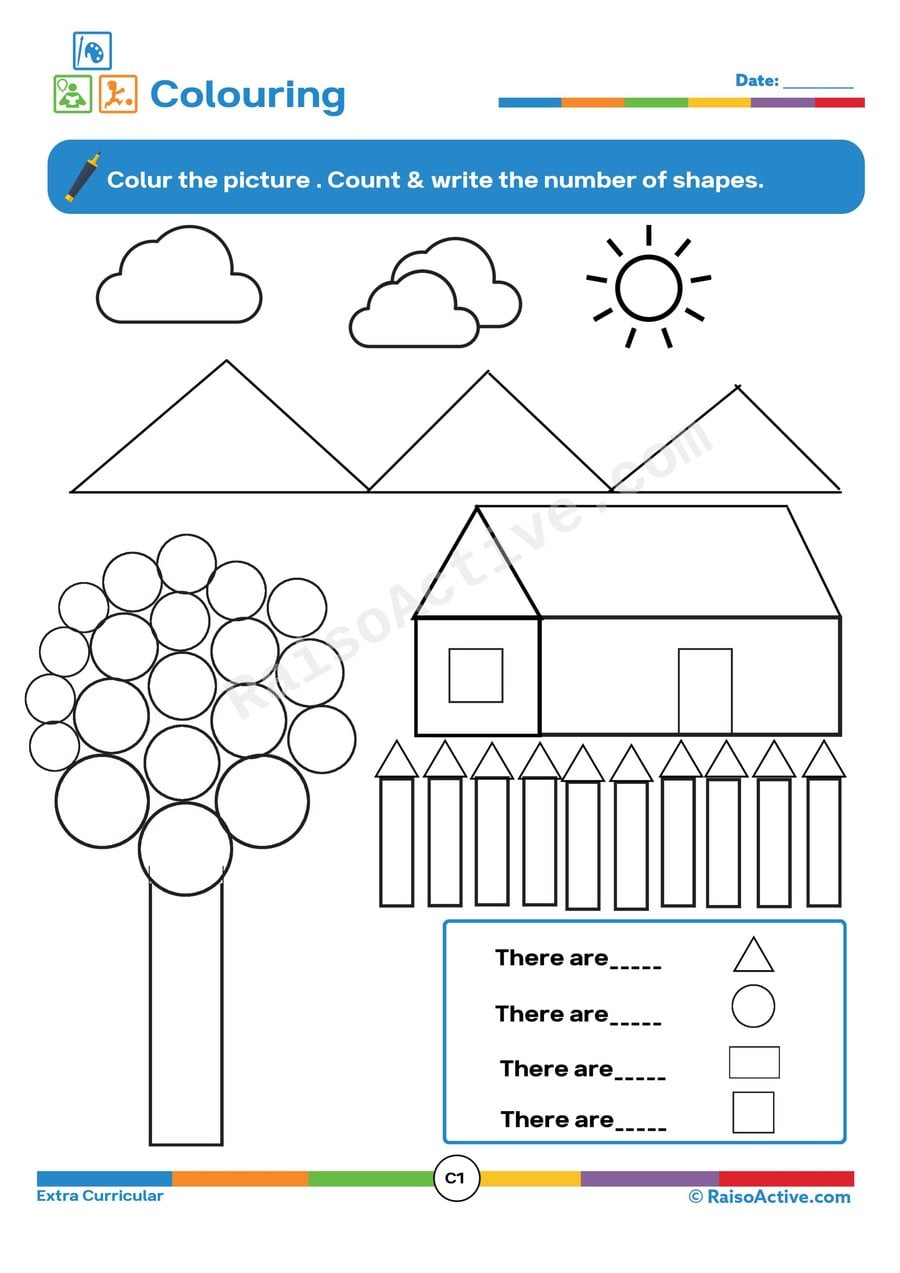
Shape Counting Fun: Count and Color the Shapes!
Preschoolers ages 3-5 combine shape recognition with counting practice by identifying different shapes within a larger picture, coloring them, and then counting how many of each shape appear. This dual task strengthens both geometry vocabulary and one-to-one correspondence as children tally shape totals. Coloring the picture first also builds sustained fine motor control before the counting portion begins.
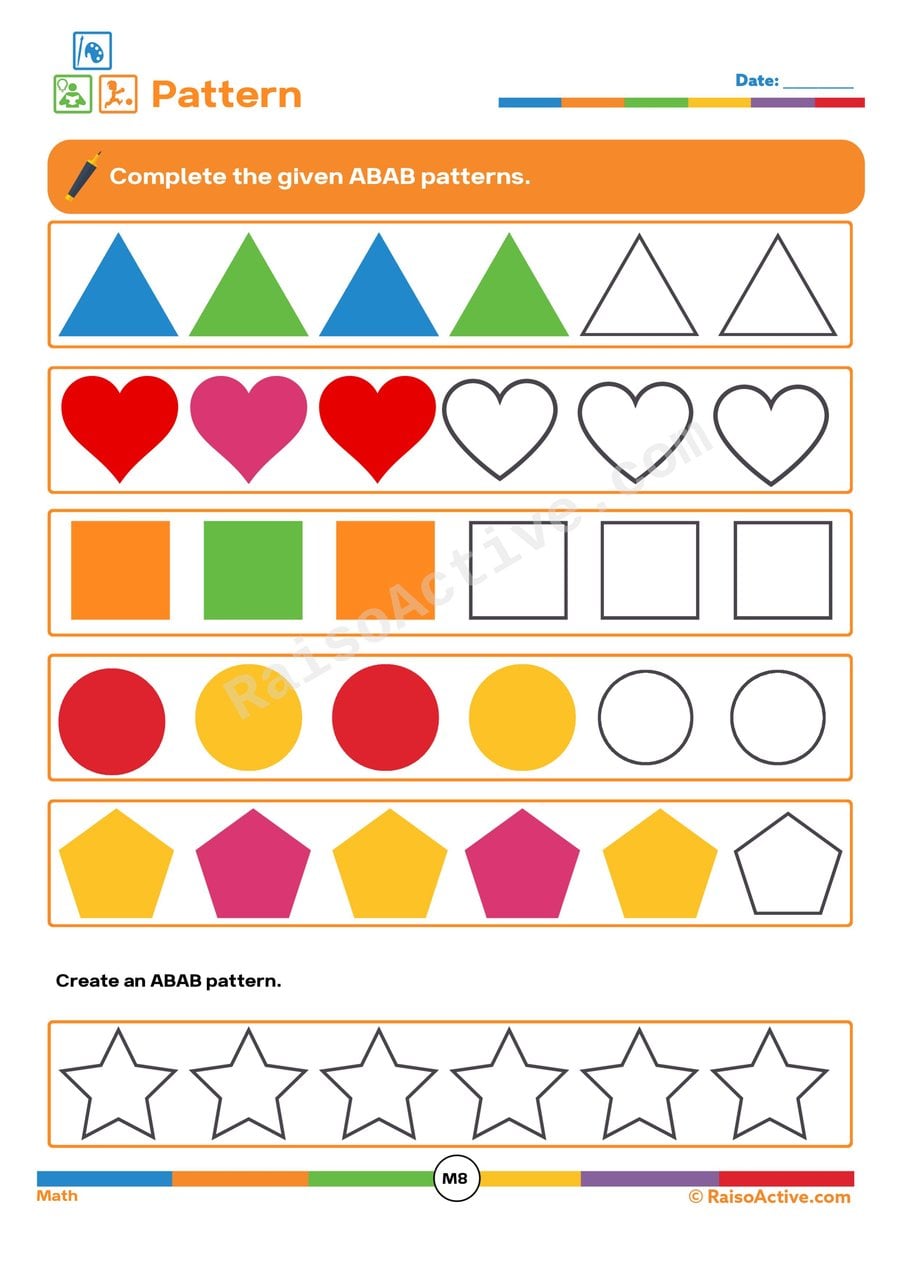
ABAB Pattern Fun: Complete the Shapes Worksheet!
This worksheet builds early algebraic thinking as children ages 3-5 identify and continue ABAB patterns using shapes and colors, then create a pattern of their own using stars. Recognizing that a pattern repeats in a predictable unit is a foundational math skill that later supports understanding sequences, multiplication, and logical prediction, making this simple shape activity more mathematically important than it might first appear.

Elephant Shapes: Fun Sorting Worksheet for Preschoolers!
This playful sorting worksheet has children ages 3-5 use an elephant's 'trunk' (their own hand reaching through a cut circle) to pick and sort shapes, building both shape recognition and simple classification skills. Physically selecting and grouping shapes by type, rather than just naming them on sight, helps solidify the concept that shapes can share a category even when their size or color differs.

Young and Old Animals Worksheet: Circle the Correct Ones!
Distinguishing between young and old animals introduces children ages 3-5 to basic life cycle concepts and comparative observation, asking them to notice visual cues like size and features that indicate an animal's age. This worksheet has children first sort animals by age category and then match young animals to their adult counterparts, layering categorization practice on top of matching skills. Understanding that a puppy grows into a dog or a chick grows into a hen also lays early groundwork for later science topics like animal life cycles and growth.

Light Energy Worksheet for Preschoolers: Identifying Light Sources
Identifying which objects give off light, the sun, a lamp, a flashlight, introduces preschoolers to the basic science idea that light comes from specific sources rather than simply existing everywhere, an early step toward understanding energy. Ages three to five are naturally curious about how they see the world, making this a good moment to connect that curiosity to real vocabulary about light energy.
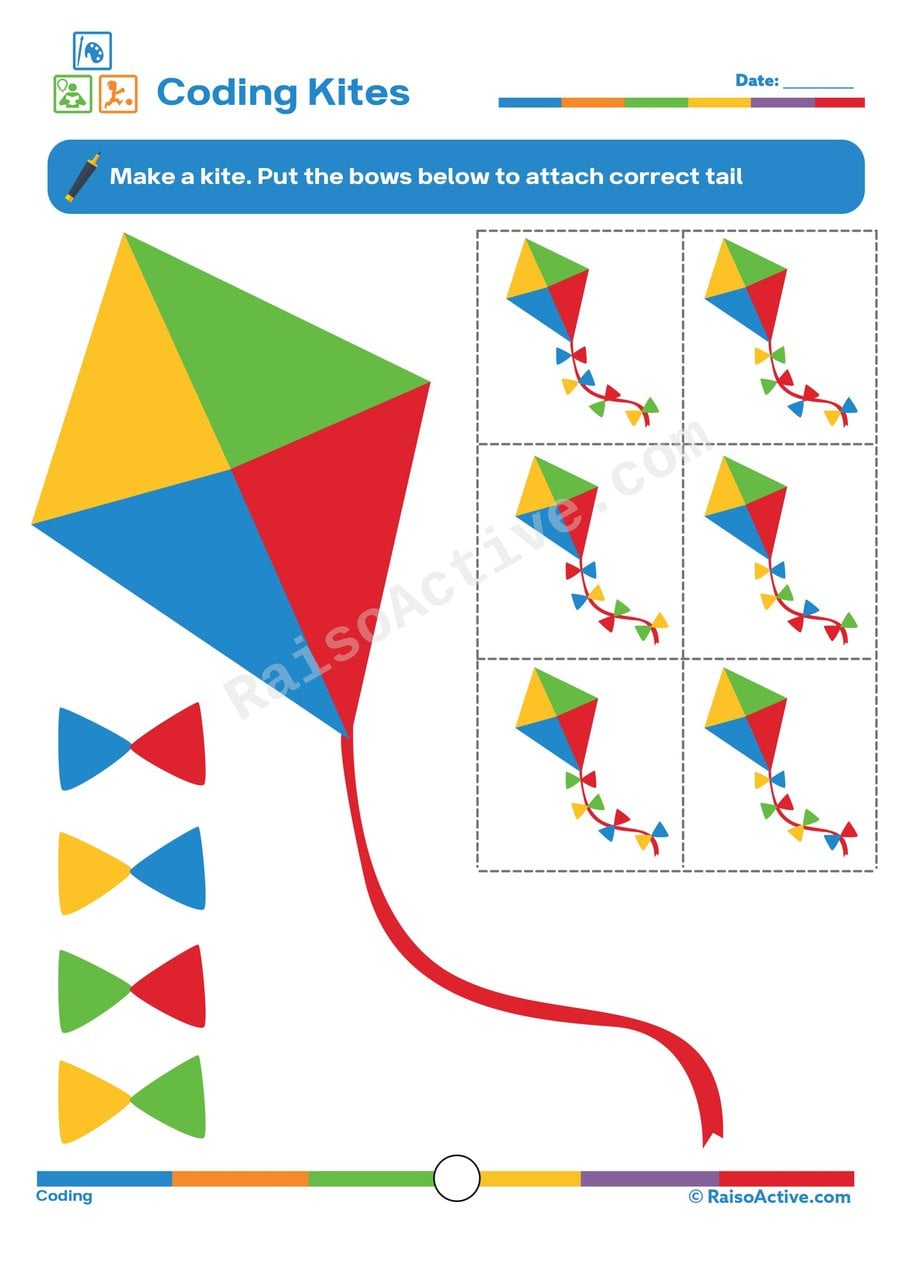
Coding Kites Worksheet: Match the Bows!
By matching each colorful bow to the kite sharing its color pattern, children ages 3-5 practice visual pattern recognition — an early form of the same logical sequencing used in beginner coding concepts. Cutting, matching, and gluing the correct bow also reinforces color-word vocabulary and precise hand-eye coordination.

Match and Write: Fun Phonics Worksheet for Preschoolers
This worksheet combines letter-sound matching with early writing practice, asking children ages 3-5 to connect beginning letters to words and then confirm their choice by circling the matching picture. Working through both a matching and a writing step reinforces the same phonics knowledge in two different formats, which helps concepts stick more firmly than repeating the identical task once. The combination also builds fine motor control through letter writing alongside the phonemic awareness skill of hearing beginning sounds.

Match the Flags Worksheet: Fun Flag Matching Activity for Kids!
This flag-matching worksheet strengthens visual scanning and word recognition as children ages 3-5 compare printed country names on one side of the page to flag images on the other and connect the correct pairs. Because they must scan back and forth between two columns, it also builds the left-to-right tracking skills that support early reading.

Near and Far Worksheet: Identifying and Connecting Objects
This worksheet introduces children ages 3-5 to the comparative spatial concepts of 'near' and 'far' by having them draw connecting lines based on relative distance in a picture. Understanding proximity words builds an early vocabulary foundation for describing the physical world, which later supports map reading and measurement concepts. The connect-the-line format also reinforces visual tracking and following printed instructions accurately.

Number Matching and Counting Worksheet for Preschoolers
This worksheet combines counting, cutting and pasting, and a targeted number-recognition task, finding circles with '5' in the ones place, giving children practice with quantity, fine motor coordination, and number pattern spotting all in one page. For ages three to five, recognizing a specific digit within a larger number, like the '5' in '15' or '25', is early groundwork for understanding place value.
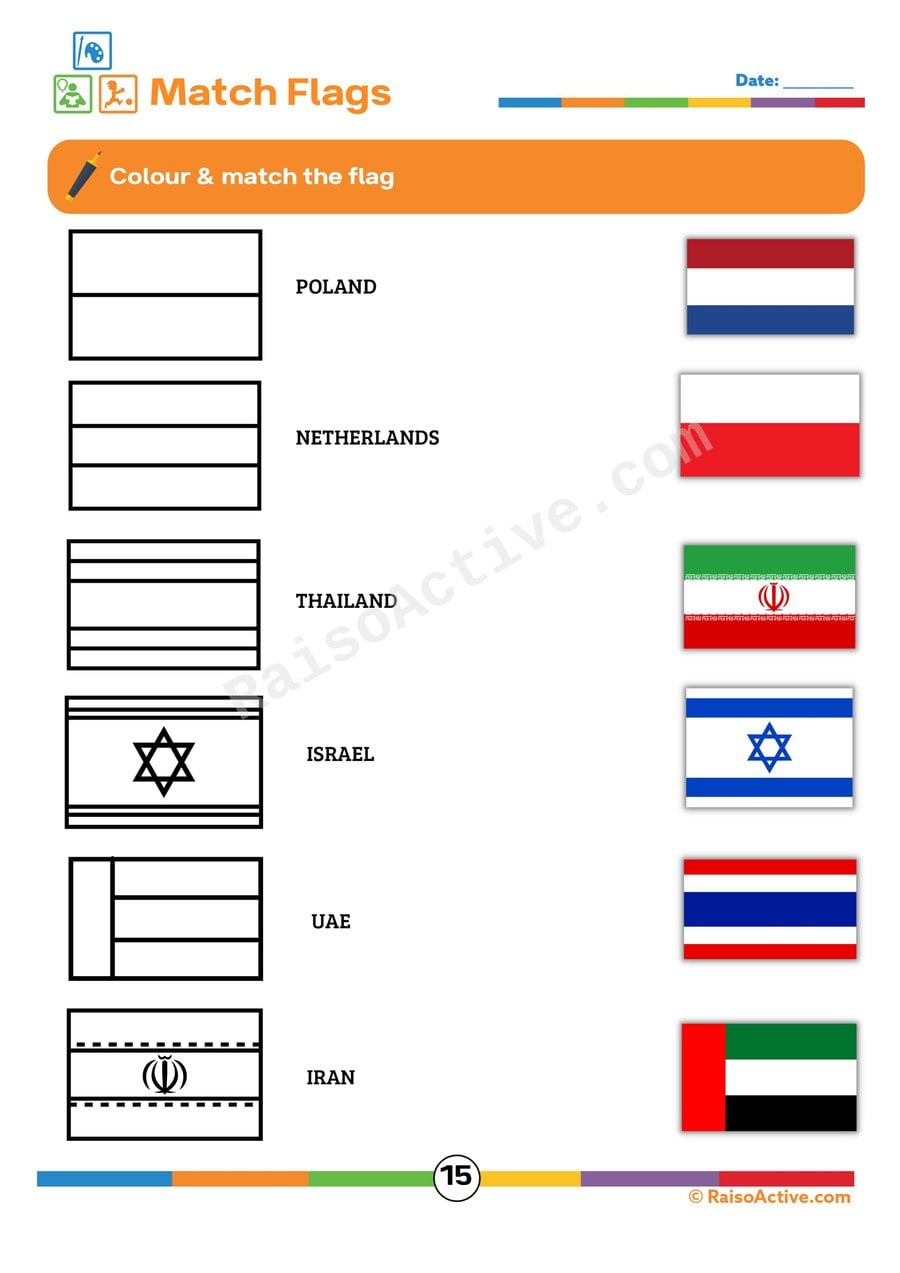
Match the Flags Worksheet: Color and Learn!
This worksheet asks children ages 3-5 to color a set of country flags and then match each one to its printed name, combining fine motor coloring practice with early visual-word association. Matching a colored flag to text also builds pre-reading skills, since children learn to recognize whole words as symbols tied to a picture even before they can sound them out.

Count and Match: Number Names Worksheet for Preschoolers
Children ages 3-5 practice counting groups of objects and then matching that quantity to both its written numeral and its spelled-out number word, connecting three different representations of the same amount. This triple connection between objects, numerals, and number names builds a deeper, more flexible sense of number than counting alone.

Egg Sorting Worksheet: Count and Order the Chicks!
Cutting out and arranging numbered eggs in order builds number sequencing skills for children ages 3-5, requiring them to compare several numbers at once and place them correctly rather than just recognizing a single number in isolation. This hands-on ordering task also reinforces counting fluency, since children benefit from counting aloud as they check their arrangement.

Cleanliness Worksheet: Match Body Parts to Cleaning Tools!
This matching worksheet builds hygiene awareness by asking 3-5 year olds to connect specific body parts — teeth, hands, hair — to the correct cleaning tool for each one, like a toothbrush, soap, or shampoo. That pairing goes beyond simply naming hygiene items; it requires your child to reason about which tool actually does the job for which body part, which is the beginning of understanding personal care routines rather than just memorizing object names.
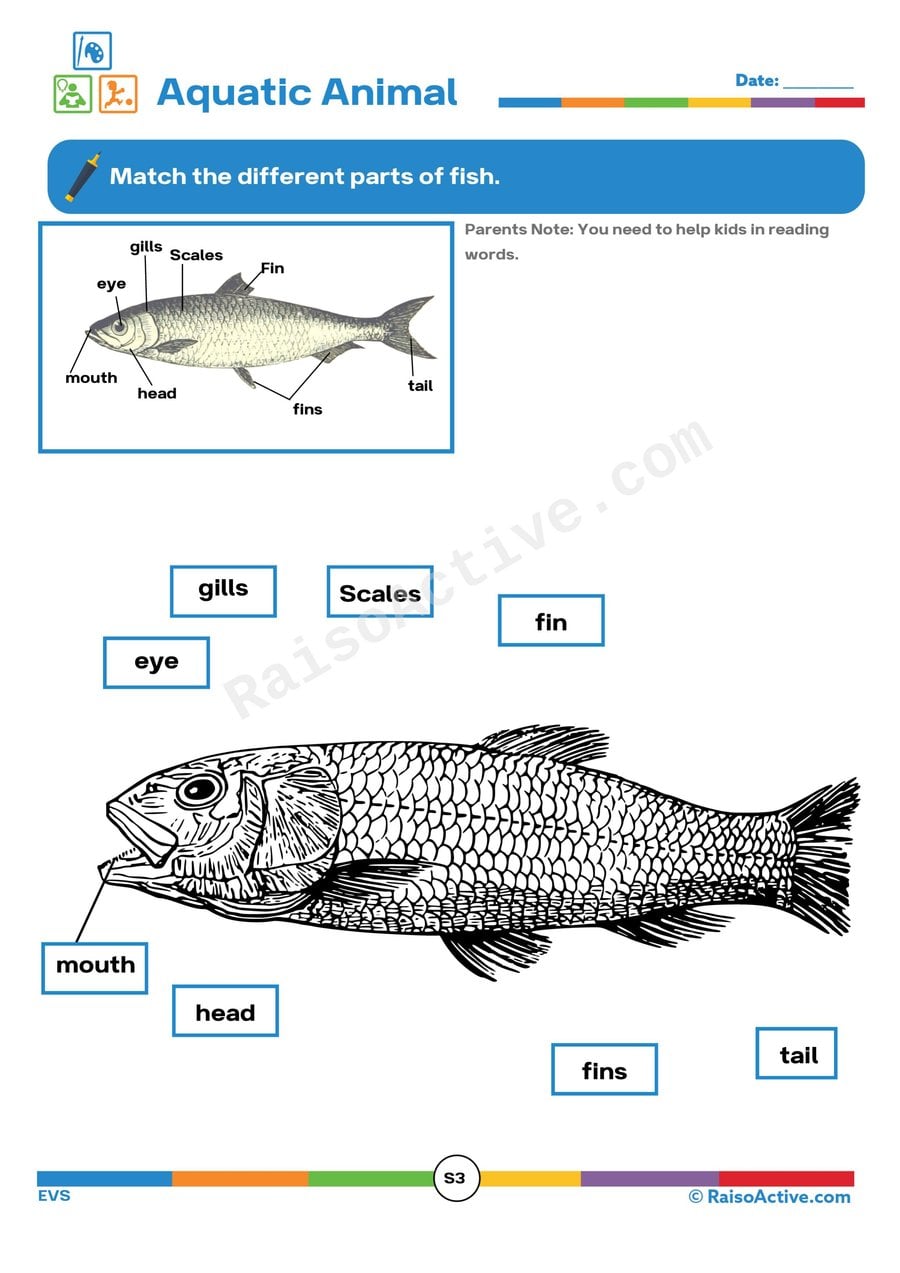
Fish Parts Matching Worksheet for Preschoolers
Preschoolers ages 3-5 learn the specific parts of a fish — like fins, gills, tail, and scales — by drawing lines connecting each written word to the correct location on a fish illustration. This vocabulary-focused matching task builds observational science skills, teaching children to see an animal's individual features rather than one general shape. It also reinforces early word recognition as children connect written labels to visual meaning.
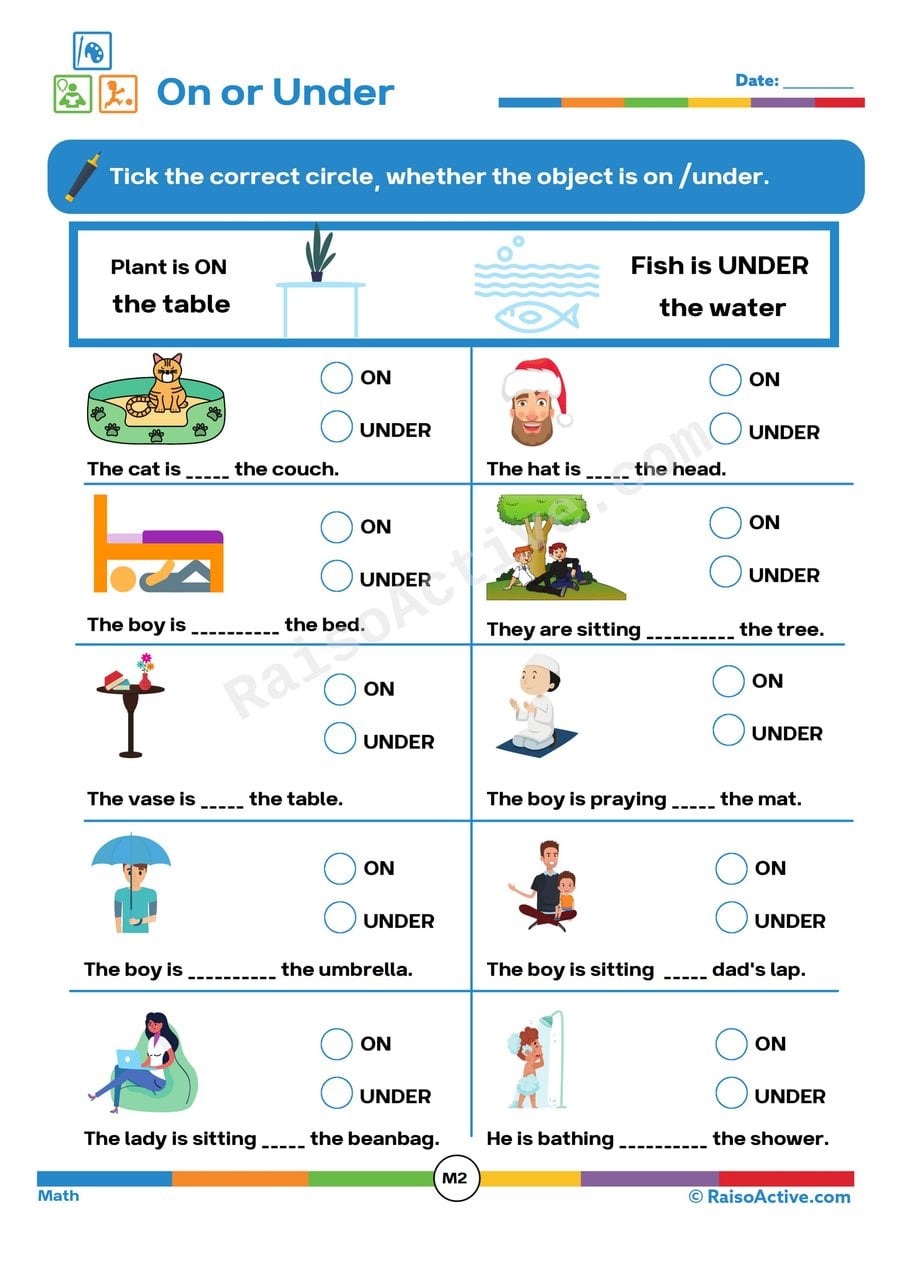
On or Under Worksheet: Where is the Object?
Reading a short sentence describing an object's location and then ticking the picture that matches teaches children ages 3-5 to connect spoken or written prepositions, 'on' and 'under,' to a visual representation, strengthening both listening comprehension and spatial vocabulary. This worksheet requires children to hold a sentence in mind and compare it against a picture, which is a slightly more advanced skill than simply naming a position they can already see. Understanding prepositions like these supports later reading comprehension, since so many simple stories depend on describing where things are.

Match the Fruits to Their Plants Worksheet for Preschoolers
This worksheet helps children ages 3-5 build early plant science knowledge by matching common fruits to the plant or tree they actually grow on, such as an apple to a tree or a strawberry to a low bush. This task moves beyond simply naming fruits into understanding where food comes from, an important first step in connecting nature to the food children eat every day.
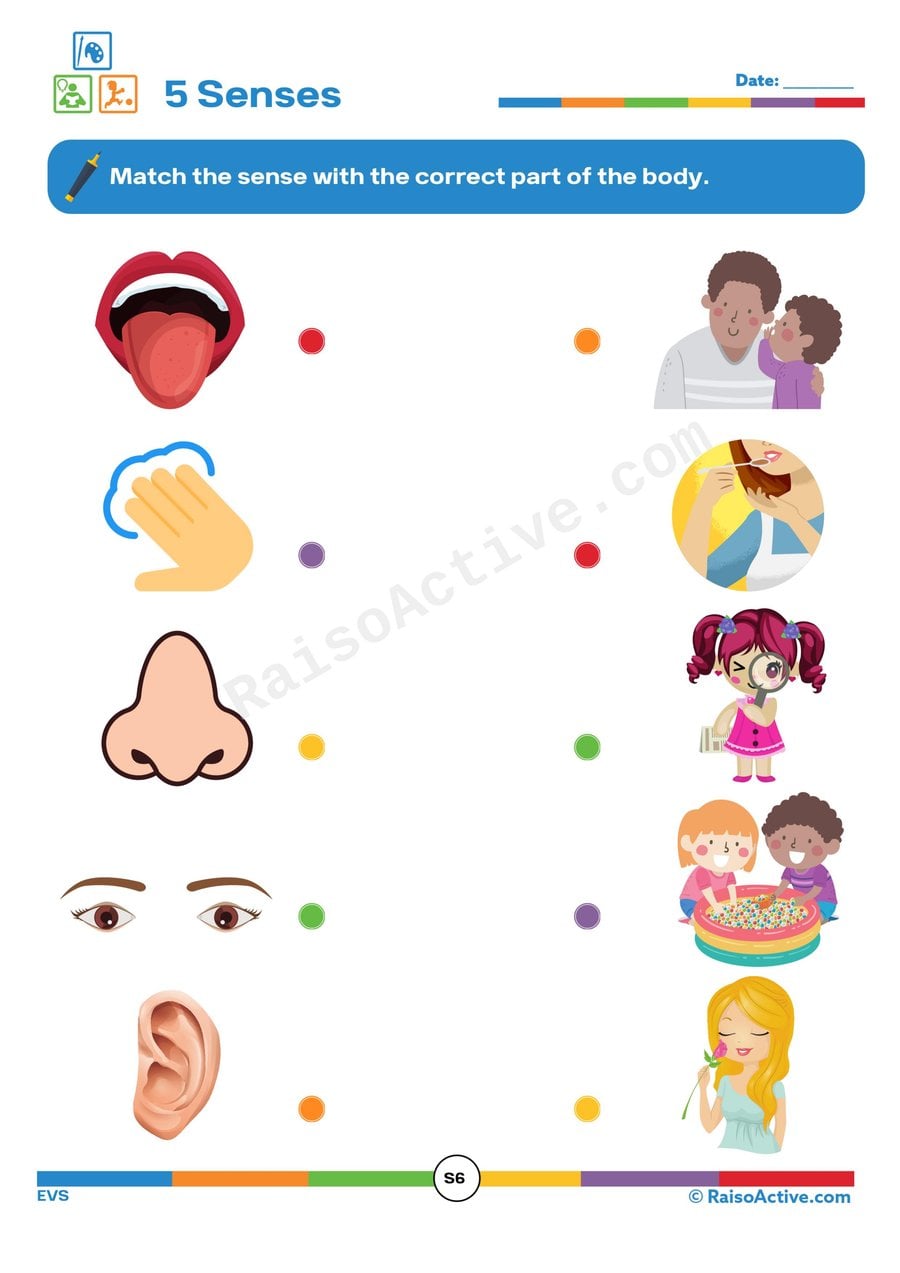
5 Senses Matching Worksheet for Preschoolers
This worksheet introduces children ages 3-5 to the five senses — sight, hearing, smell, taste, and touch — by asking them to match each sense to the body part responsible for it. Understanding that specific body parts are linked to specific senses is an early science concept that builds body awareness and observational vocabulary. Drawing the connecting line for each match also reinforces visual tracking and pencil control.
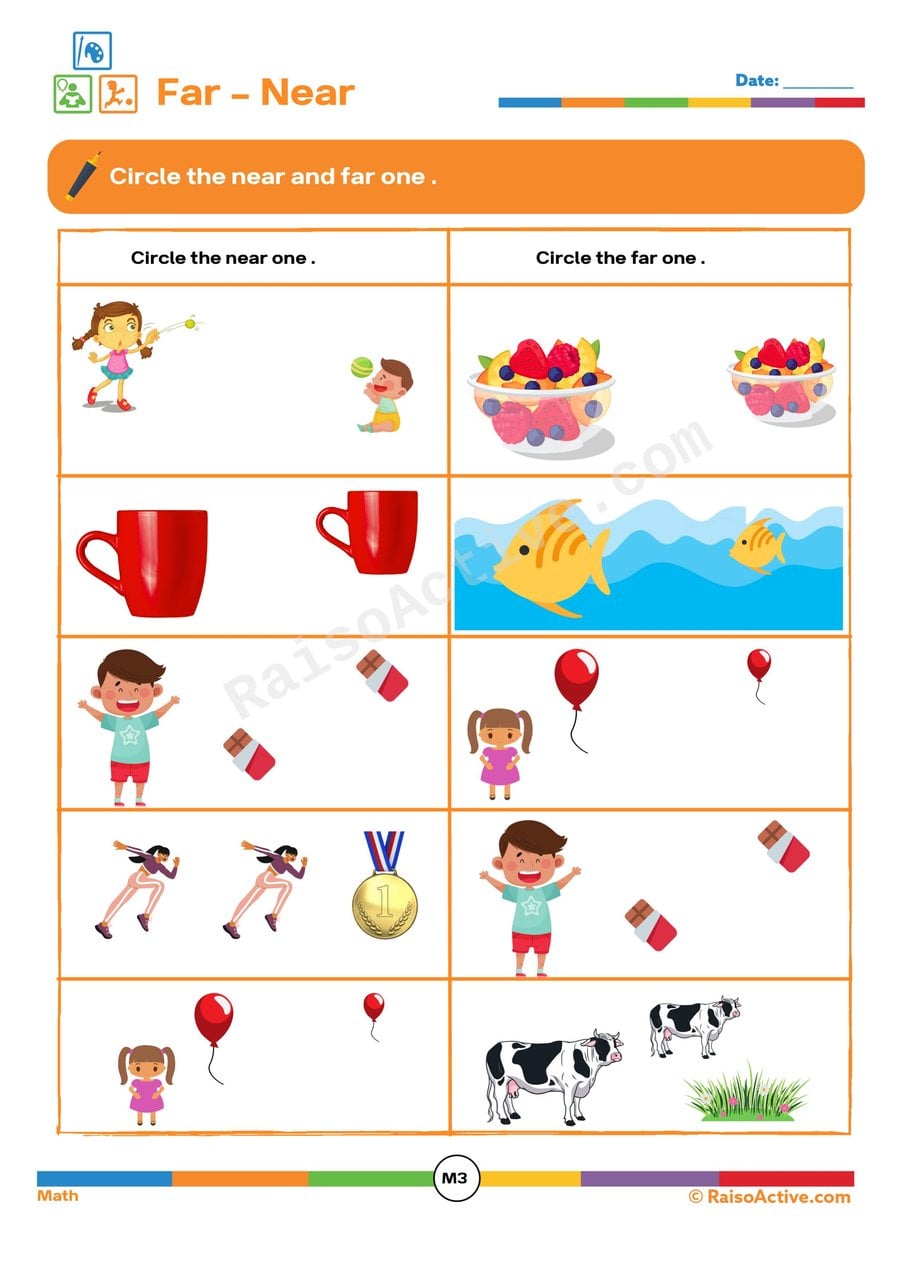
Far and Near Worksheet: Circle the Objects!
Children ages 3-5 build early spatial reasoning by comparing the relative distance of paired objects and deciding which is 'near' and which is 'far,' a foundational concept for understanding position and distance in the world around them. This kind of comparative thinking also supports later math concepts like measurement and estimation.

Front or Behind Sorting Worksheet for Preschoolers
Positional words like 'front' and 'behind' describe relationships between objects rather than the objects themselves, which makes them a genuinely trickier concept for a 3-5 year old than sorting by color or size. Deciding where each picture belongs and sorting it into the right box builds early spatial reasoning that later supports following multi-step directions and understanding maps or diagrams.

Read and Match: Sentence Reading Worksheet for Preschoolers
Reading a sentence aloud and then circling its matching picture strengthens reading comprehension for children ages 3-5, requiring them to hold the meaning of several words in mind at once rather than recognizing them individually. This early comprehension practice builds toward the ability to read a full passage and understand what actually happened, not just decode isolated words.
What your child learns in LKG maths
By the end of LKG a child is expected to count objects to 20 accurately, read and write numerals 1 to 20, match a number to a set, tell which of two groups has more, compare objects by size and length, recognise circle, square, triangle, rectangle and oval, extend an AB or ABC pattern, and sort objects by one attribute.
- Number recognition and writing: 1–10, then 11–20, with tracing before independent writing
- Counting: touch-and-count pictures, count and circle, count and match to a numeral
- Comparison: more and less, big and small, tall and short, long and short, heavy and light
- Shapes: naming and matching 2D shapes, finding shapes in everyday objects
- Patterns and sorting: repeating colour and shape patterns, sorting by colour, size or kind
How to use LKG maths worksheets
Have your child touch each object as they count aloud, then write the numeral. Counting by pointing prevents the common error of racing ahead with the mouth while the finger lags. If a numeral is written backwards, show the starting point once and let them try again on the next sheet rather than correcting mid-row.
Alternate a number sheet with a shape, pattern or comparison sheet across the week so maths stays broader than numerals. Keep small objects (buttons, pasta, bottle caps) next to the worksheet: when a picture count is wrong, redo it with real objects, then return to the page. Ten to fifteen minutes is enough.
Common difficulties in LKG maths
Skipping or double-counting objects is the most frequent problem and disappears with touch counting. Confusing 6 and 9, or 12 and 21, is normal at four and improves with tracing and with saying the number aloud while writing. Children who know 1 to 10 well but stall at the teens benefit from ten-frame style sheets that show a teen number as ten and some more.
Frequently asked questions
What is the LKG maths syllabus?
LKG maths in most Indian schools covers pre-number concepts (big/small, tall/short, more/less, same/different), counting and writing numbers 1 to 20, matching numbers to quantities, 2D shapes, simple patterns, sorting and classification, and sometimes the number names one to ten. Addition and subtraction with symbols are introduced in UKG.
What should an LKG child know in maths by the end of the year?
By the end of LKG a child should count objects to 20, read and write numerals to 20, compare two groups and say which has more, recognise and name basic shapes, copy and extend a simple pattern, sort objects by colour or size, and use comparison words such as bigger, longer and heavier. These match the NCF-FS 2022 numeracy outcomes for ages four to five.
How do I teach numbers 11 to 20 to an LKG child?
Teach teen numbers as "ten and some more". Use a ten-frame or two rows of five objects: fill ten, then add the extra ones and count on from ten. Say the number name and write it together, pointing out that 1 comes first for every teen number. Practise 11 to 15 until secure before moving to 16 to 20, and revisit 1 to 10 sheets in between.
Are number names taught in LKG?
Many CBSE and ICSE schools introduce number names one to ten in the last term of LKG and expect them to be written in UKG. In LKG the focus is on matching the numeral, the quantity and the spoken word; reading the written name is the next step. If your school teaches number names early, pair each numeral sheet with the matching word card.
How many maths worksheets a day should an LKG child do?
One sheet a day, about ten minutes, is plenty. Number sense builds through repeated short practice with real objects, not through volume of paper. If the school sends its own maths homework, use these sheets on weekends for the topic that was shaky during the week, such as teen numbers or shapes.
Are the LKG maths worksheets free?
Yes. Every sheet downloads free as a watermarked PDF after creating an account, with a limit of five downloads a day. An annual subscription removes the watermark and daily limit for the full library of more than 1,000 worksheets and packs, which is the usual choice for teachers printing class sets on A4.

Written by
Hemsweta Jain · Teacher Cheena
MBA and Early Childhood Educator, teaching since 2014 · Founder of RaisoActive, Mumbai
Written and reviewed by Hemsweta Jain (Teacher Cheena), who designs every RaisoActive worksheet.
Last reviewed
Printable packs for ages 4–5
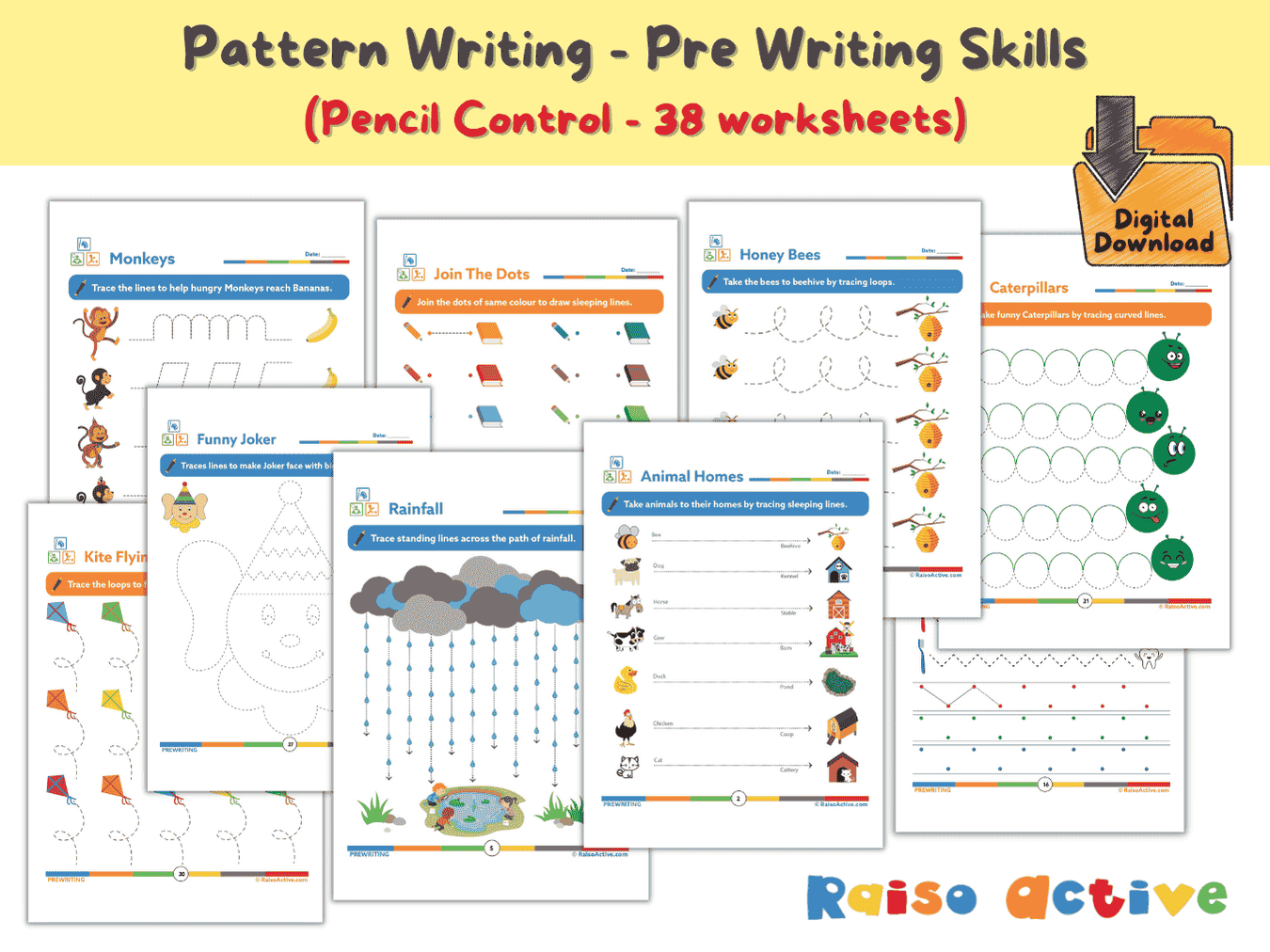
Pattern Writing Pre-writing Skills Activity Book for 3-4 Year Olds
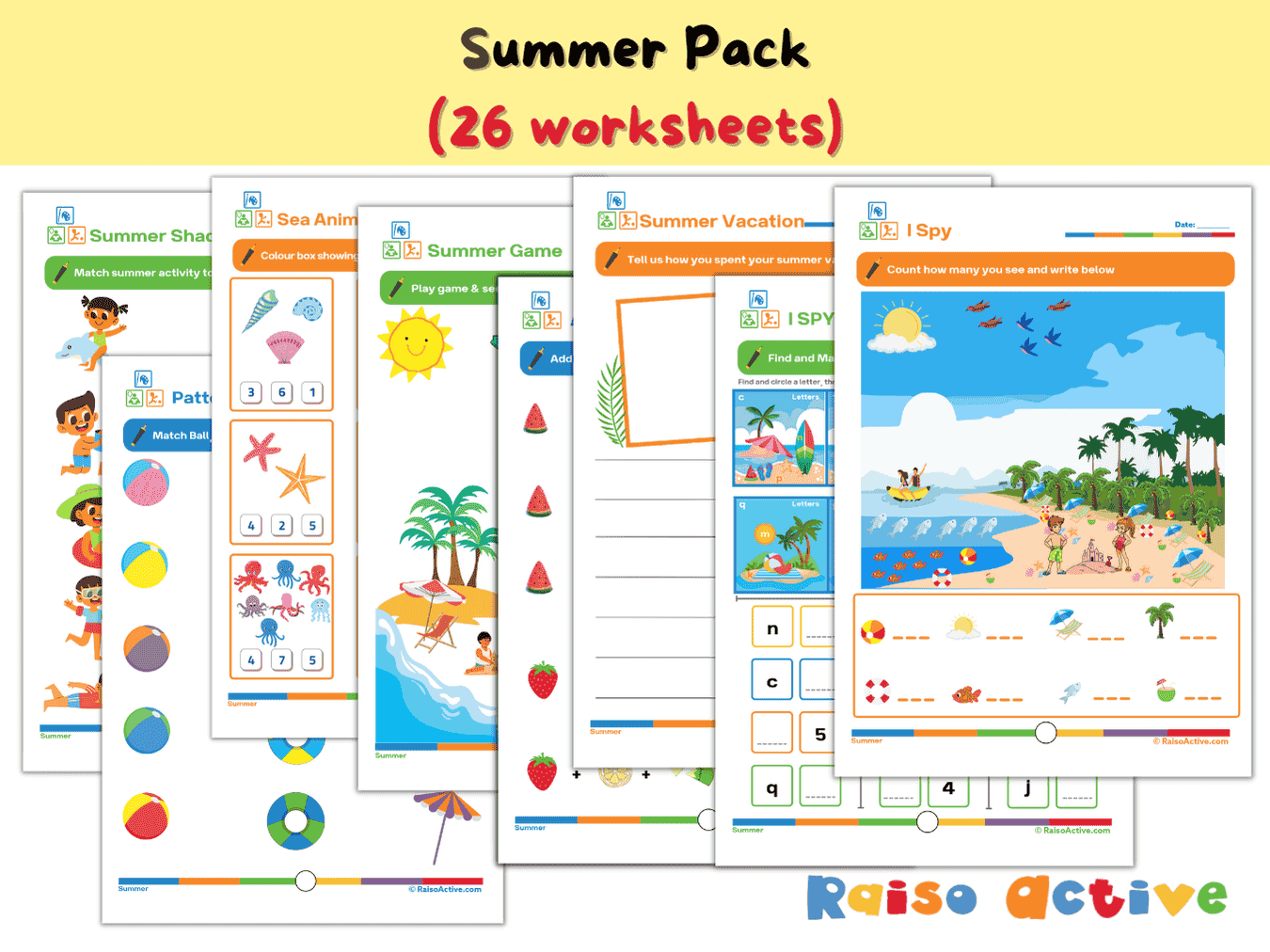
Summer Activity Pack: Math, Literacy, Puzzles & More for Preschool & Kindergarten
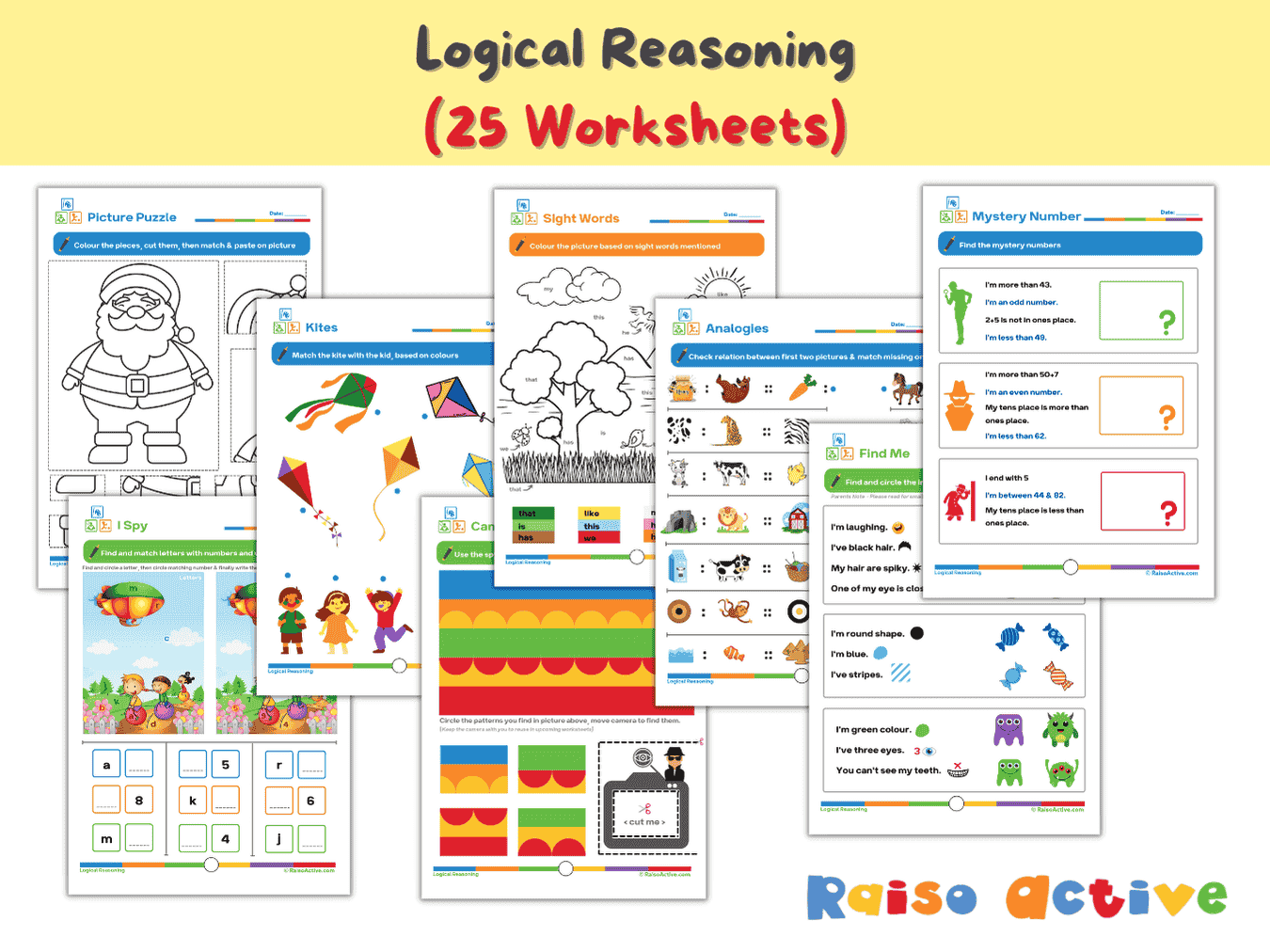
Logical Reasoning Activity Book for Preschool & Kindergarten | Patterns, Puzzles & Analogies
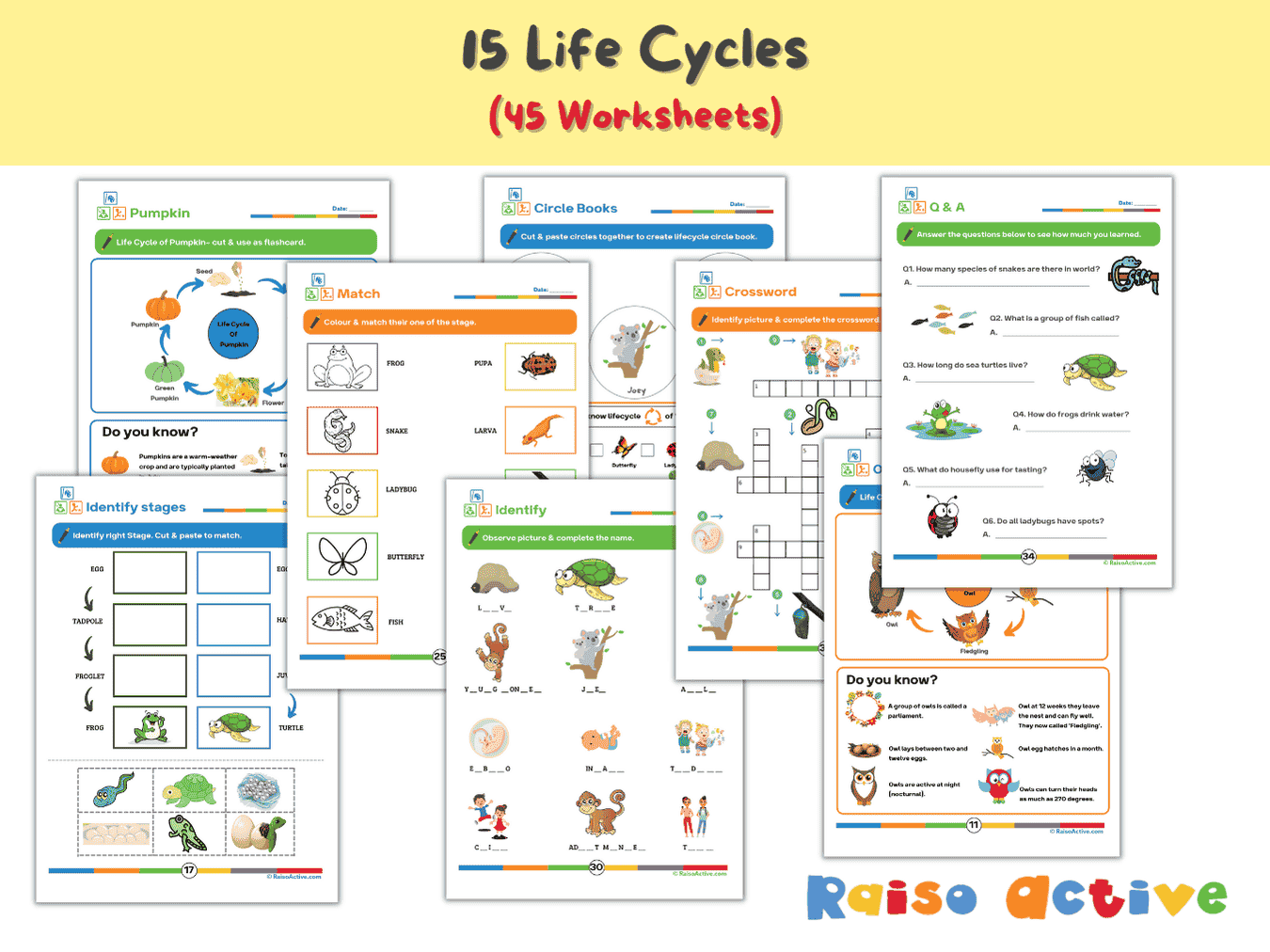
Lifecycles Activity Book & Flashcards for Preschool & Early Elementary
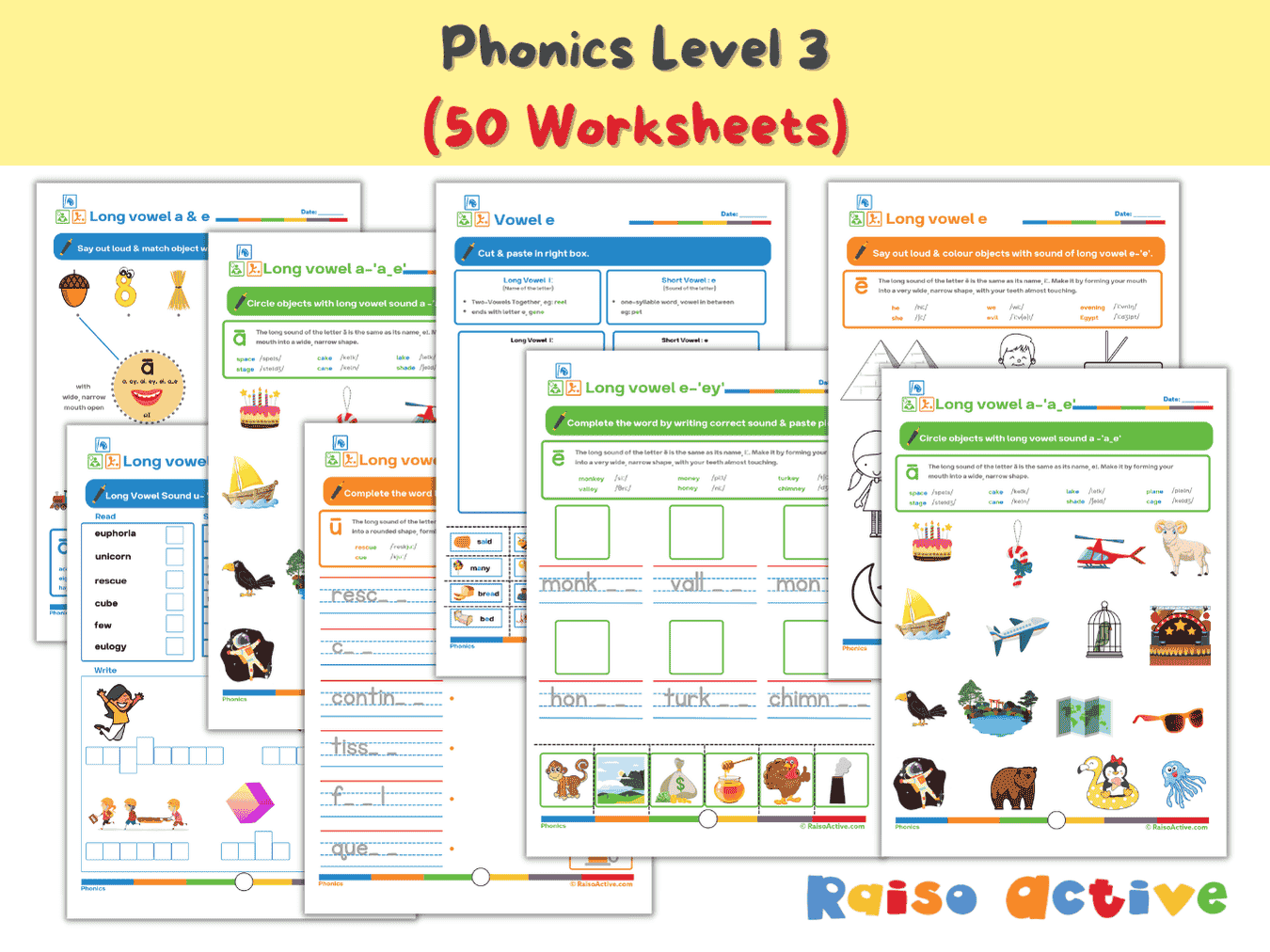
Phonics Level 3 Long Vowels Activity Book for Kindergarten & 1st Grade
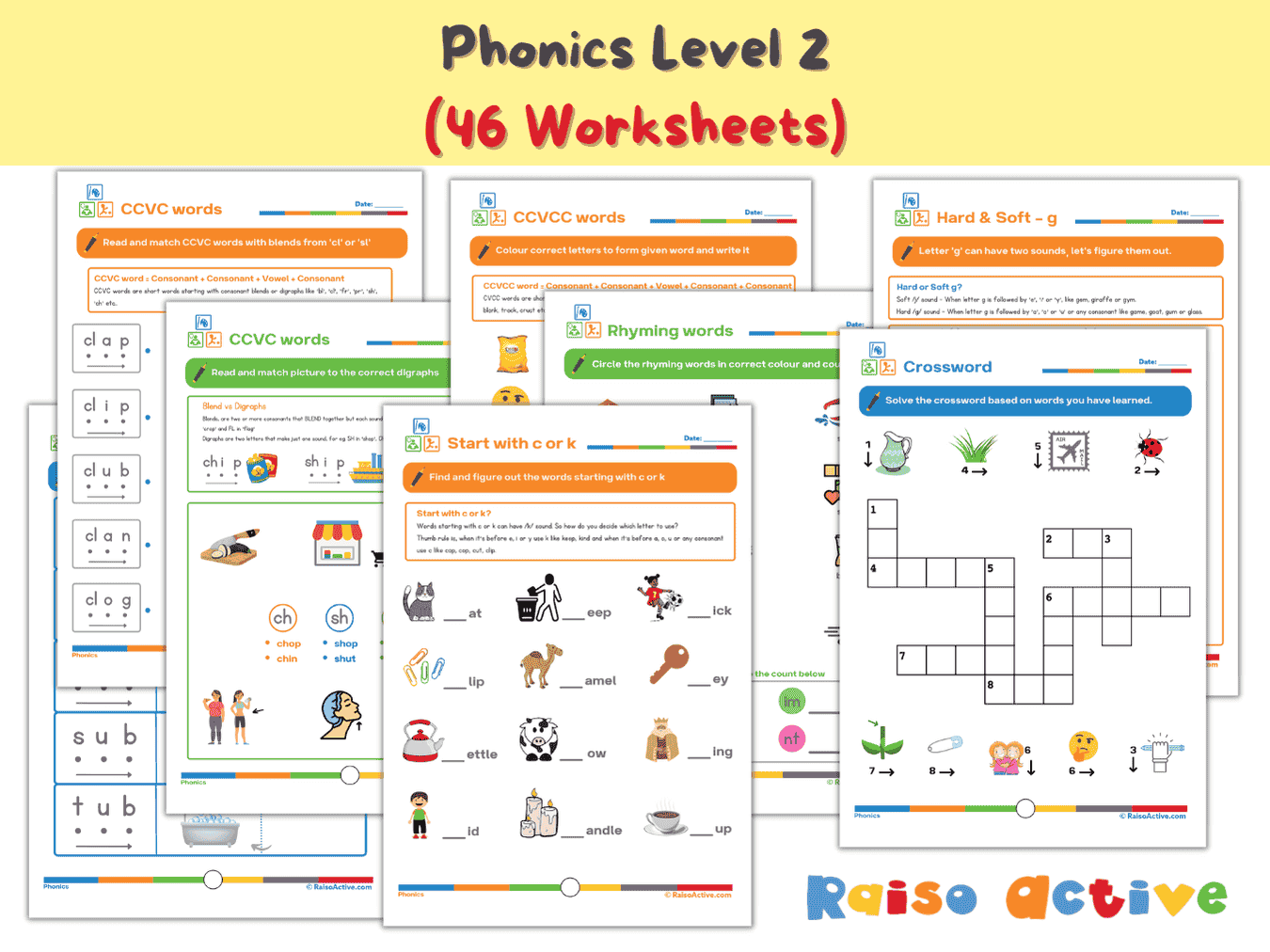
Phonics Level 2 Worksheets: CVC, CCVC, CVCC Word Families & Blends for Early Readers (Ages 4-7)
Guides for parents and teachers
See all guides →Number Formation Rhymes 0–9 and How to Fix Reversals
Original number formation rhymes for 0–9, the correct stroke order for each digit, why 3, 5 and 7 get reversed most often, and multisensory fixes that work.
Pre-Writing Strokes in Order: From Standing Lines to Loops (With Printable Patterns)
The developmental order of pre-writing strokes, from vertical lines to loops, and why practicing them in sequence makes letter formation much easier to learn.
UKG Syllabus Explained: English, Maths and EVS Month by Month
What UKG classes typically cover in English, maths and EVS, month by month, aligned to NEP 2020, with ways to support at home and signs your child is behind.
Coding Activities for Preschoolers: Building Tomorrow's Thinkers Today
Discover 15+ unplugged and screen-based coding activities for preschoolers that build sequencing, logic, and problem-solving skills through play. NEP 2020 aligned.
Christmas and Winter Activities That Combine Fun and Learning: Creating Magical Educational Experiences
Discover Christmas and winter activities that combine festive fun with real learning. Crafts, counting, literacy, and printable worksheets for ages 2 to 8 — perfect for home and school.
Age-Appropriate Halloween Learning Activities: Balancing Spooks and Skills for Young Learners
Discover fun, age-appropriate Halloween learning activities for young children. Spooky crafts, counting games, literacy ideas, and printable worksheets for ages 2 to 8.
Canonical: https://raisoactive.com/worksheets/lkg-maths