ABAB Pattern Fun: Complete the Shapes Worksheet!
This worksheet builds early algebraic thinking as children ages 3-5 identify and continue ABAB patterns using shapes and colors, then create a pattern of their own using stars. Recognizing that a pattern repeats in a predictable unit is a foundational math skill that later supports understanding sequences, multiplication, and logical prediction, making this simple shape activity more mathematically important than it might first appear.
Part of the pack
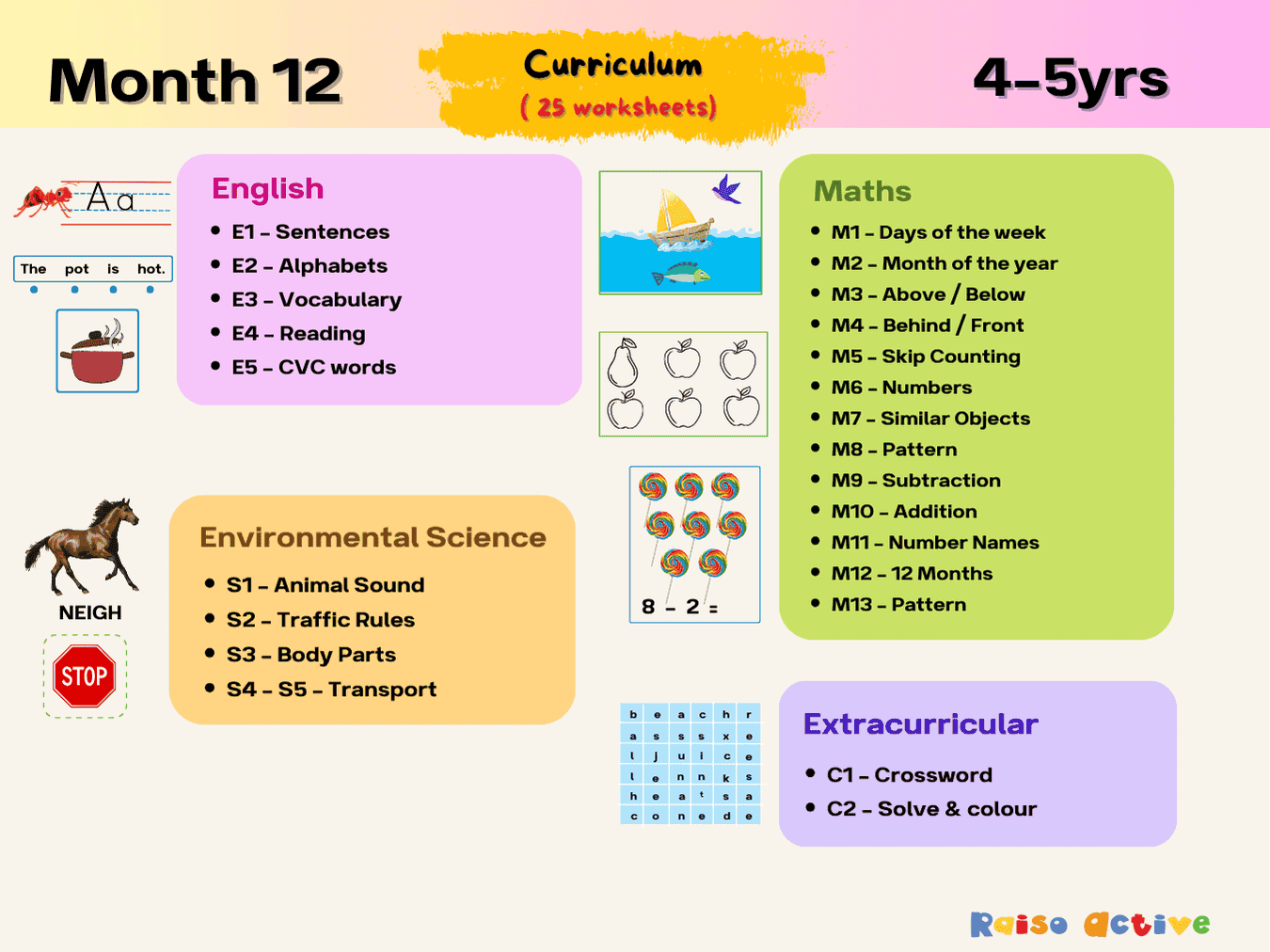
Month 12: Learning & Development | Ages 4-5
This is page 16 of the pack. Ages 4-5 · Pre-KAges 4-5 · ReceptionAges 4-5 · LKGAges 4-5

Made for your child
Counting to 10, made for your child
A maths pack with your child's name in it: pictures that explain, practice at three levels, puzzles and story sums about them. Print a new set whenever they finish.
Make a maths packFree preview · free for members
Curriculum
- Patterns > Patterns
How to use this worksheet
Look at the first pattern row together and name each shape or color out loud in order, like 'triangle, circle, triangle, circle.' Ask your child what shape should come next to continue the pattern, then have them fill it in. Repeat for each pattern row on the page. Finally, have your child create their own ABAB pattern using the stars provided, choosing two colors or designs to alternate.
Materials needed
- Pencil
- Crayons
Extension activities
- 1Use different household objects, like spoons and forks, to build a physical ABAB pattern on the table.
- 2Draw your own ABAB pattern on blank paper and have a friend or sibling continue it.
- 3Create a pattern using body movements, like clap-stomp-clap-stomp.
- 4Look for ABAB patterns in clothing, tiles, or wallpaper around the house.

Written by
Hemsweta Jain · Teacher Cheena
MBA and Early Childhood Educator, teaching since 2014 · Founder of RaisoActive, Mumbai
Every RaisoActive worksheet is designed and checked by the founder before publishing.
Published · Last reviewed
More from Month 12: Learning & Development | Ages 4-5

Penguin Addition Worksheet for Preschoolers: Counting and Circling
Ages 3-5 · Preschool–Pre-KAges 3-5 · Nursery–ReceptionAges 3-5 · Nursery–LKGAges 3-5
Counting groups of penguins, combining them, and circling the correct sum from several options builds early addition fluency for children ages 3-5, using a fun animal theme to keep counting practice engaging.

Vocabulary Worksheet: Circle the Objects That Start with the Letter!
Ages 4-6 · Pre-K–KindergartenAges 4-6 · Reception–Year 1Ages 4-6 · LKG–UKGAges 4-6
This worksheet reinforces letter-sound recognition for children ages 4-6 by presenting a target letter and asking them to identify which pictures in a row begin with that sound. Unlike single-picture beginning sound tasks, scanning an entire row of images and filtering for matches builds sustained visual attention alongside phonics, since children must reject several near-matches before finding the correct ones.
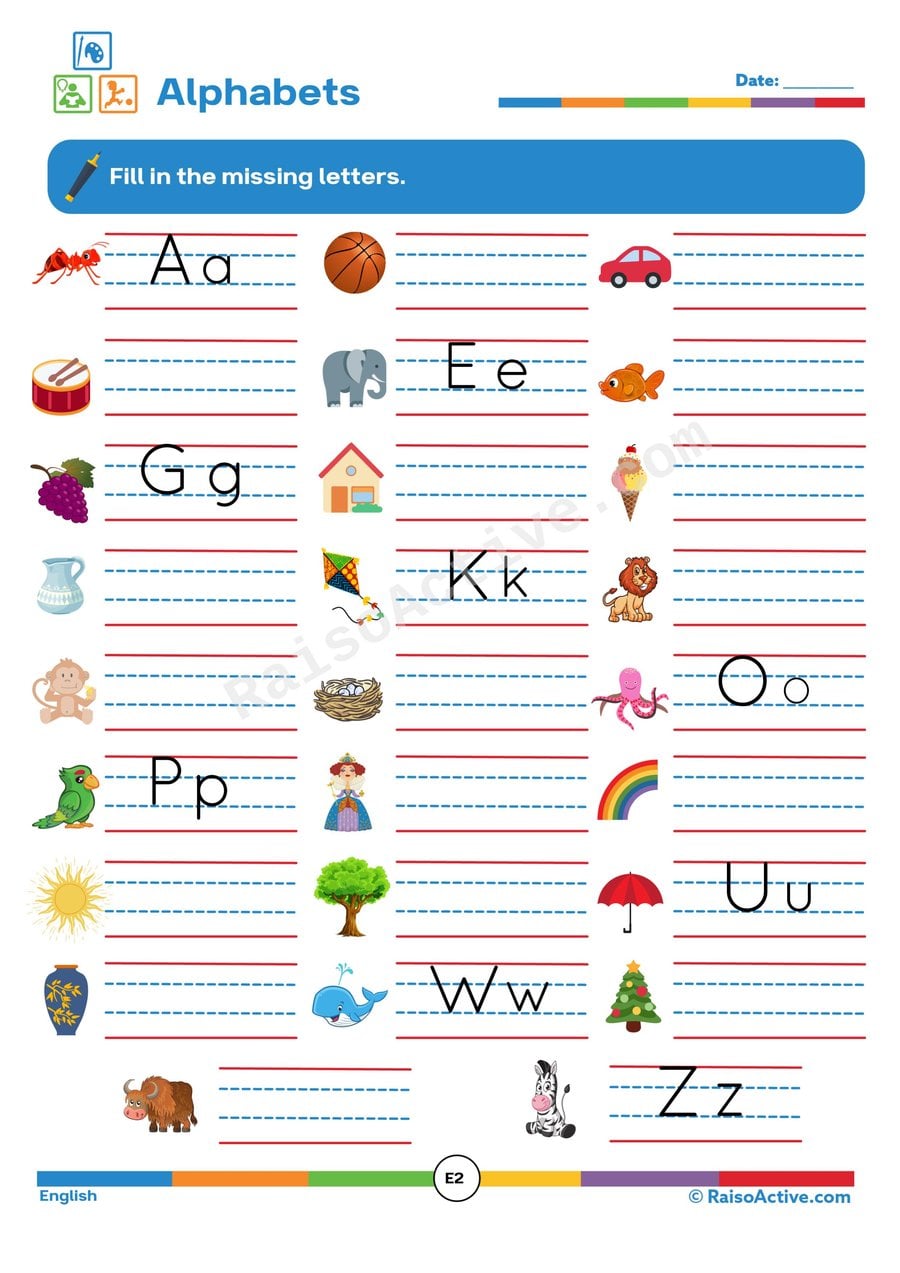
Alphabet Worksheet: Fill in the Missing Letters!
Ages 4-5 · Pre-KAges 4-5 · ReceptionAges 4-5 · LKGAges 4-5
Filling in missing letters within the printed alphabet sequence builds letter recognition and sequencing for children ages 4-5, reinforcing both the order of the alphabet and the shape of each individual letter through handwriting practice.
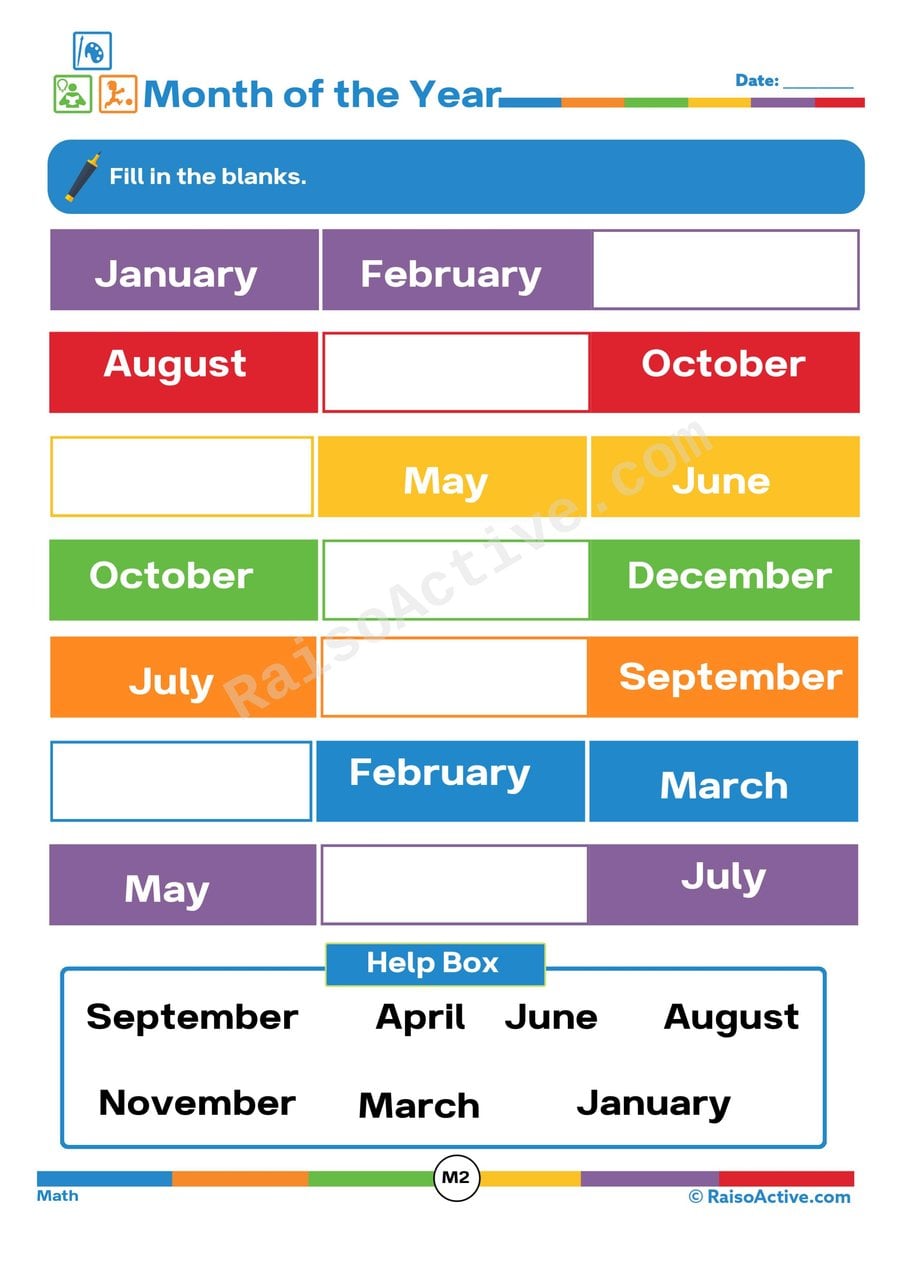
Months of the Year Fill-in-the-Blanks Worksheet
Ages 3-5 · Preschool–Pre-KAges 3-5 · Nursery–ReceptionAges 3-5 · Nursery–LKGAges 3-5
This worksheet introduces children ages 3-5 to the twelve months of the year in order, asking them to fill in missing month names using a reference list. Practicing this longer, less familiar sequence builds memory and early calendar literacy, skills that support understanding birthdays, holidays, and seasons as the year unfolds.

Subtraction Fun: Candy and Treats Worksheet for Kids!
Ages 4-6 · Pre-K–KindergartenAges 4-6 · Reception–Year 1Ages 4-6 · LKG–UKGAges 4-6
This worksheet gives children ages 4-6 concrete practice with subtraction by counting pictured candies and treats, then taking away a stated amount to find the difference. Using a visually appealing, countable context like candy makes the abstract idea of 'taking away' easier to grasp than numbers alone, helping children build the one-to-one counting and comparison skills that subtraction depends on.

Count and Match: Number Names Worksheet for Preschoolers
Ages 3-5 · Preschool–Pre-KAges 3-5 · Nursery–ReceptionAges 3-5 · Nursery–LKGAges 3-5
Children ages 3-5 practice counting groups of objects and then matching that quantity to both its written numeral and its spelled-out number word, connecting three different representations of the same amount. This triple connection between objects, numerals, and number names builds a deeper, more flexible sense of number than counting alone.
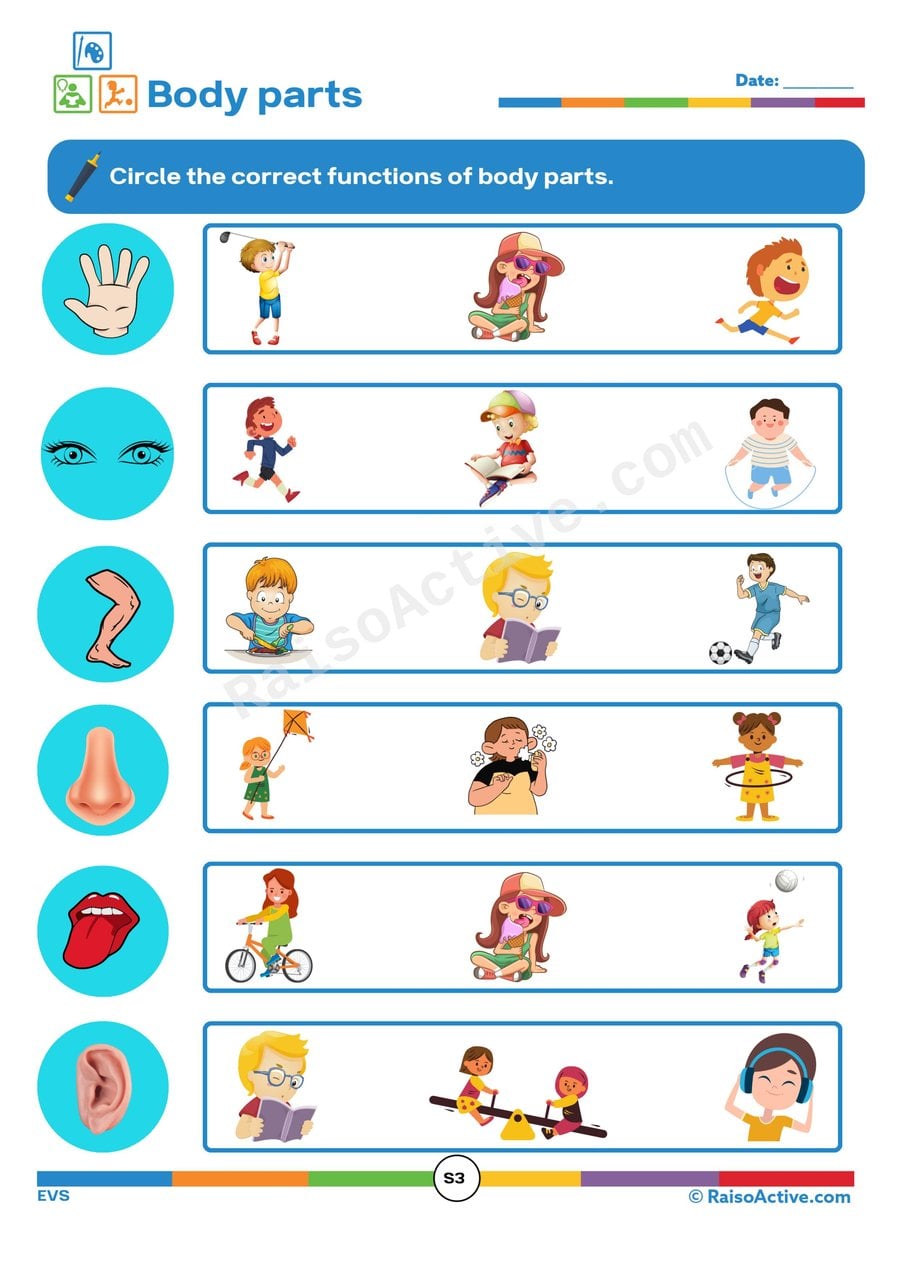
Body Parts Functions Worksheet for Kids
Ages 3-5 · Preschool–Pre-KAges 3-5 · Nursery–ReceptionAges 3-5 · Nursery–LKGAges 3-5
Children ages 3-5 practice connecting specific body parts to their real-world function, like eyes for seeing or ears for hearing, by circling the picture that shows what each body part is used for. This reinforces body awareness and vocabulary while building the reasoning skill of linking a body part to its purpose.

Find the Similar Objects Worksheet for Preschoolers
Ages 3-5 · Preschool–Pre-KAges 3-5 · Nursery–ReceptionAges 3-5 · Nursery–LKGAges 3-5
Comparing a row of objects to find the ones that match and identify the one that's different builds visual discrimination skills for children ages 3-5, an early foundation for noticing the subtle differences between similar-looking letters later in reading.
Related worksheets

Clothing Pattern Match Worksheet for Preschoolers
Ages 3-5 · Preschool–Pre-KAges 3-5 · Nursery–ReceptionAges 3-5 · Nursery–LKGAges 3-5
This worksheet has children ages 3-5 study repeating patterns on clothing items — stripes, polka dots, or checks — and match each item to its identical twin, building visual discrimination and early pattern-sequencing skills. Distinguishing between similar-looking patterns also sharpens attention to detail, a skill that later supports letter and word recognition.

Clothing Pattern Matching Worksheet for Preschoolers
Ages 3-5 · Preschool–Pre-KAges 3-5 · Nursery–ReceptionAges 3-5 · Nursery–LKGAges 3-5
By comparing clothing items and connecting each one to its pattern match, children ages 3-5 build visual discrimination skills, learning to notice fine differences in stripes, dots, or repeated shapes. This close-looking practice supports the same attention-to-detail children will later need to tell similar-looking letters and numbers apart.

Balloon Pattern Matching Worksheet for Preschoolers
Ages 3-5 · Preschool–Pre-KAges 3-5 · Nursery–ReceptionAges 3-5 · Nursery–LKGAges 3-5
This worksheet strengthens pattern recognition in children ages 3-5 by having them study a repeating sequence of colored balloons and locate the matching arrangement elsewhere on the page. Recognizing and reproducing a pattern is an early pre-algebra skill, laying groundwork for later number patterns and logical sequencing.

Pizza Pattern Matching Worksheet for Preschoolers
Ages 4-7 · Pre-K–Grade 1Ages 4-7 · Reception–Year 2Ages 4-7 · LKG–Class 1Ages 4-7
This worksheet helps children practice visual discrimination and pattern recognition by matching pizza slices to complete the whole pizza.

Camera Spy: Find the Patterns Worksheet for Preschoolers
Ages 4-7 · Pre-K–Grade 1Ages 4-7 · Reception–Year 2Ages 4-7 · LKG–Class 1Ages 4-7
This worksheet helps children identify and recognize repeating patterns by using a 'spy camera' to find them.
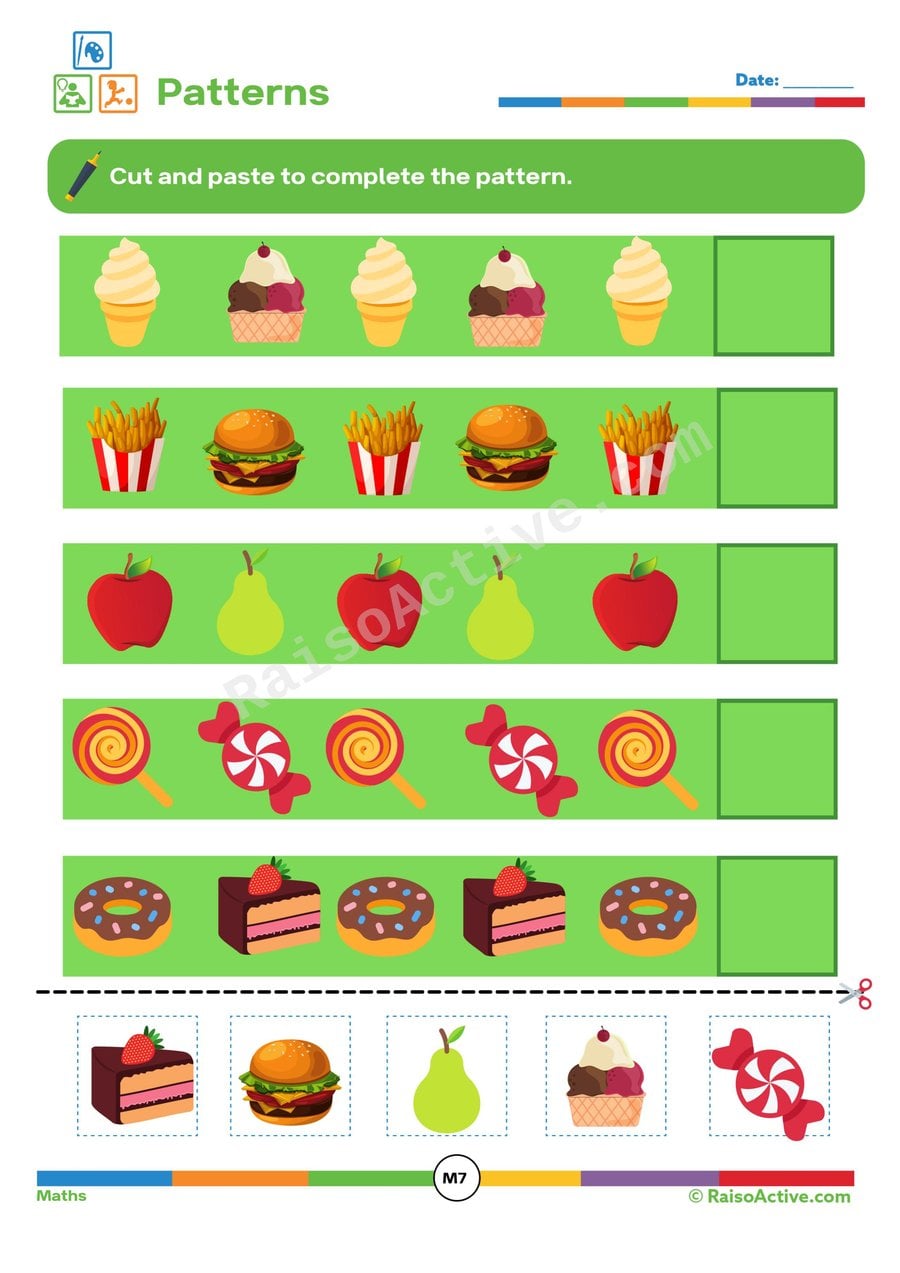
Yummy Food Patterns Worksheet for Preschoolers
Ages 3-5 · Preschool–Pre-KAges 3-5 · Nursery–ReceptionAges 3-5 · Nursery–LKGAges 3-5
This worksheet introduces pattern recognition — a core pre-math skill — by having children identify what food item comes next in a repeating sequence like apple-banana-apple-banana. Spotting and continuing patterns teaches children to predict what comes next based on a rule, an early form of the logical reasoning used later in math and science.

Match the Patterns: Fun Worksheet for Preschoolers
Ages 3-5 · Preschool–Pre-KAges 3-5 · Nursery–ReceptionAges 3-5 · Nursery–LKGAges 3-5
By connecting each picture to its matching pattern, children ages 3-5 practice visual pattern recognition - the ability to notice a repeating sequence of colors, shapes, or objects - which is an early building block for both math reasoning and reading, since reading also relies on recognizing repeated letter patterns. The worksheet also builds fine motor control as children draw connecting lines with a pencil or crayon.

Honeycomb Pattern Matching Worksheet for Preschoolers
Ages 4-7 · Pre-K–Grade 1Ages 4-7 · Reception–Year 2Ages 4-7 · LKG–Class 1Ages 4-7
This worksheet helps children practice pattern recognition and matching skills by cutting out hexagon shapes and matching them to complete a honeycomb.
Guides for this topic
Pre-Writing Strokes in Order: From Standing Lines to Loops (With Printable Patterns)
The developmental order of pre-writing strokes, from vertical lines to loops, and why practicing them in sequence makes letter formation much easier to learn.

Age-Appropriate Problem-Solving Activities: Building Critical Thinkers from the Ground Up
Discover fun, age-appropriate problem-solving activities for children ages 1-8. Build critical thinking, logic, and reasoning skills through play-based learning.

Fostering Creativity in Structured Learning: The Perfect Balance for Young Minds
Learn how to blend creativity with structured learning for children ages 1-8. Practical strategies, activities, and printable worksheets for parents and teachers.
Reviews
Every worksheet for ages 3–5, no watermark
Members download the full library of 1,000+ worksheets and every activity pack without watermarks or daily limits. One year costs ₹999 in India or $20 elsewhere.
See membership plansOr download any worksheet free with a watermark (5 a day).