Vocabulary Worksheet: Circle the Objects That Start with the Letter!
This worksheet reinforces letter-sound recognition for children ages 4-6 by presenting a target letter and asking them to identify which pictures in a row begin with that sound. Unlike single-picture beginning sound tasks, scanning an entire row of images and filtering for matches builds sustained visual attention alongside phonics, since children must reject several near-matches before finding the correct ones.
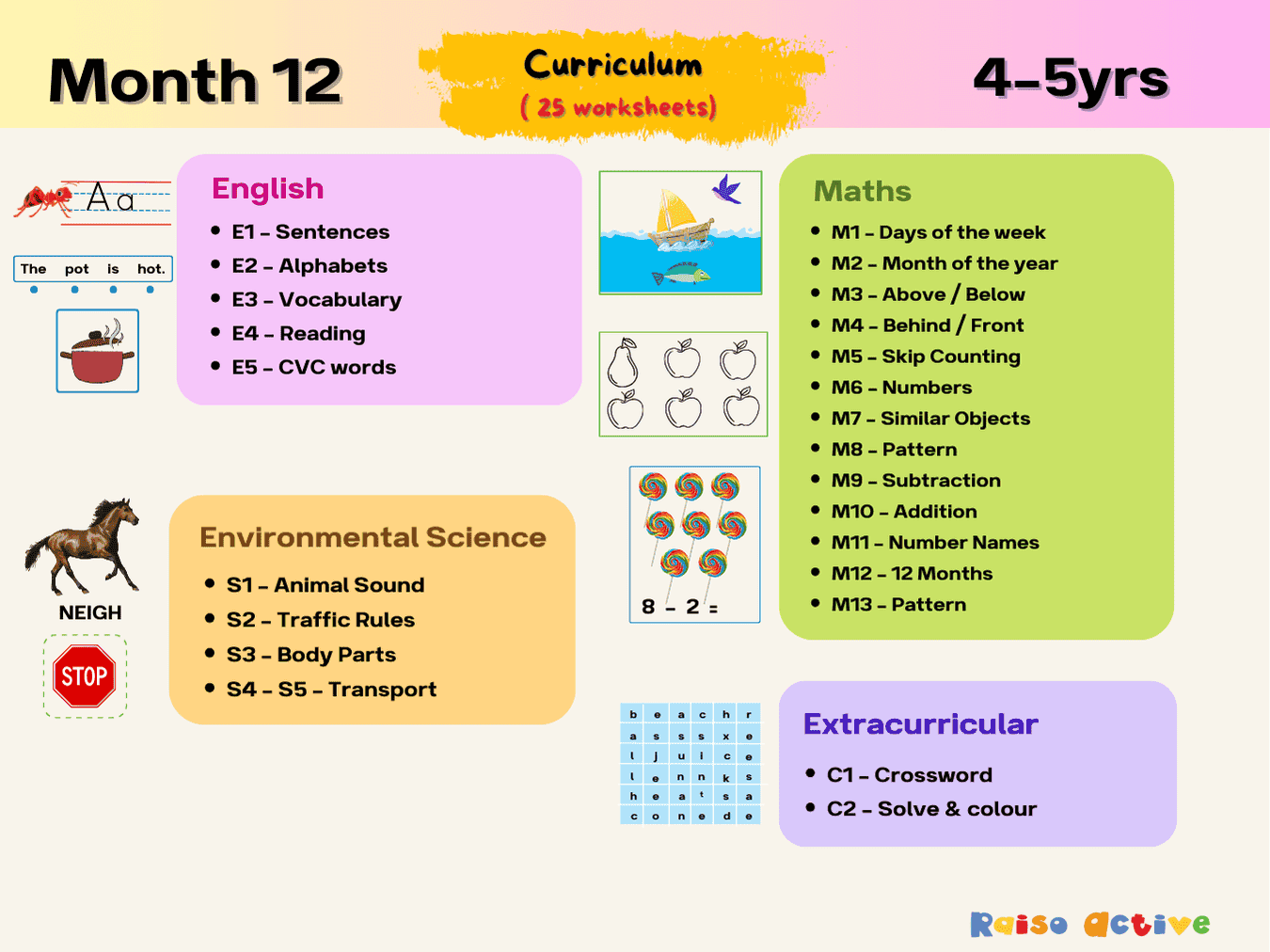
Part of the pack
Month 12: Learning & Development | Ages 4-5
This is page 6 of the pack. Ages 4-5 · Pre-KAges 4-5 · ReceptionAges 4-5 · LKGAges 4-5
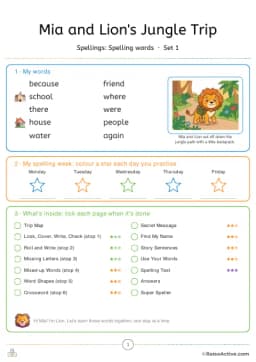
Made for your child
Spelling practice, made for your child
Their own spelling words turned into a pack: trace or look-cover-write-check, roll and write, a secret picture code, a word search, a crossword and a test, with their name in it.
Make a spelling packFree preview · free for members
Or start free: a word search with sight wordsCurriculum
- Phonics - Letter Sounds > Beginning Sounds
How to use this worksheet
Look at the letter shown on the left side of the row and say its sound out loud together. Go through each picture in that row one at a time, naming the object and listening for whether it starts with the target sound. Have your child circle every picture in the row that matches, since there may be more than one correct answer per row. Move through the remaining rows the same way, checking in on each letter sound before scanning the pictures.
Materials needed
- Pencil
- Crayons
Extension activities
- 1Have your child name three more objects, real or imagined, that start with each target letter.
- 2Cut out or draw pictures and sort them into piles by beginning sound.
- 3Turn the completed page into a simple story using the circled objects.
- 4Play a round of 'beginning sound bingo' using household objects as the calling cards.

Written by
Hemsweta Jain · Teacher Cheena
MBA and Early Childhood Educator, teaching since 2014 · Founder of RaisoActive, Mumbai
Every RaisoActive worksheet is designed and checked by the founder before publishing.
Published · Last reviewed
More from Month 12: Learning & Development | Ages 4-5

What Comes Next? Pattern Worksheet for Preschoolers
Ages 3-5 · Preschool–Pre-KAges 3-5 · Nursery–ReceptionAges 3-5 · Nursery–LKGAges 3-5
Identifying a repeating sequence of pictures and circling the one that comes next builds pattern-recognition and visual discrimination skills for children ages 3-5, an early form of logical reasoning that connects to later math concepts like skip counting and multiplication.
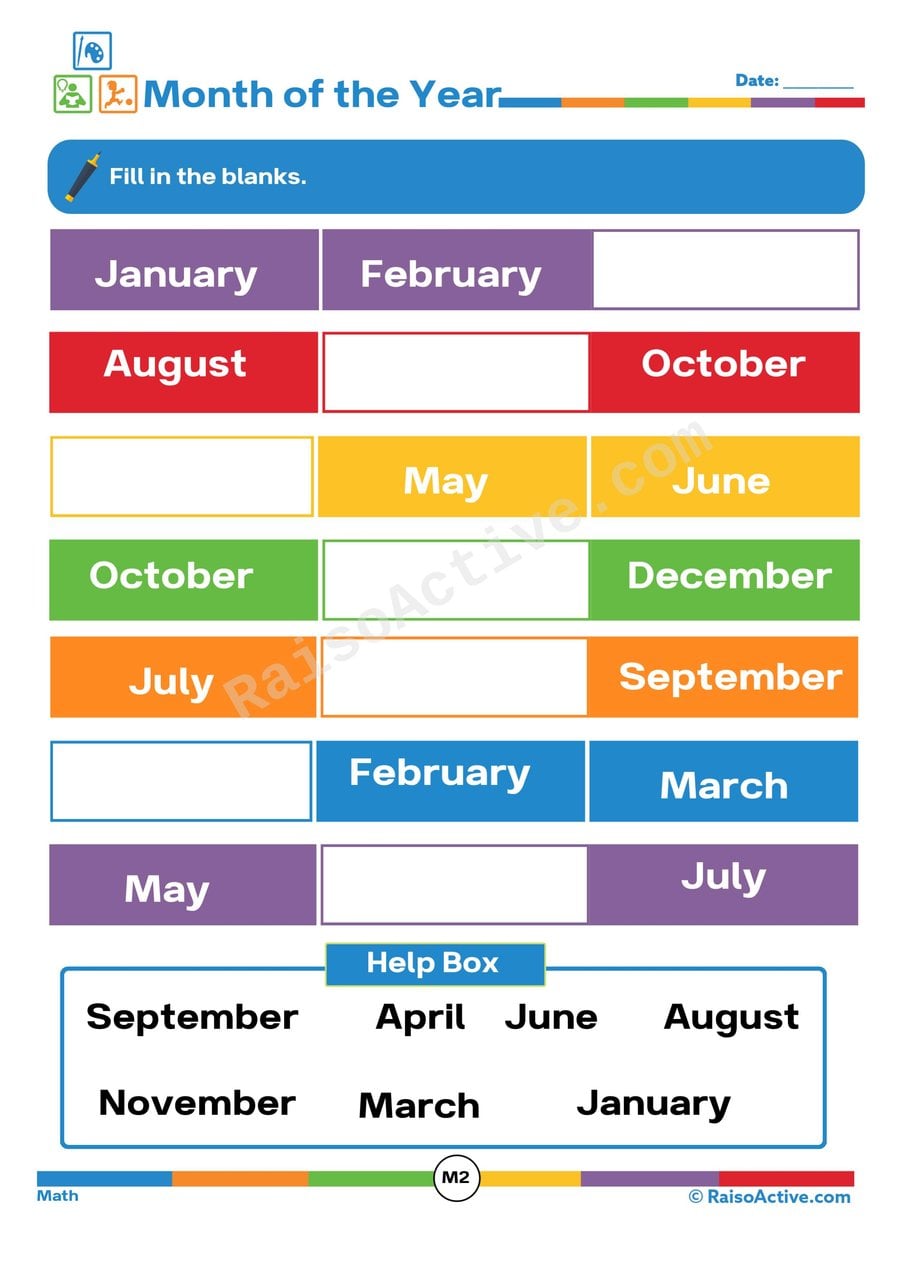
Months of the Year Fill-in-the-Blanks Worksheet
Ages 3-5 · Preschool–Pre-KAges 3-5 · Nursery–ReceptionAges 3-5 · Nursery–LKGAges 3-5
This worksheet introduces children ages 3-5 to the twelve months of the year in order, asking them to fill in missing month names using a reference list. Practicing this longer, less familiar sequence builds memory and early calendar literacy, skills that support understanding birthdays, holidays, and seasons as the year unfolds.

Parent's Guide: Sight Words and CVC Words Activities
Ages 3-5 · Preschool–Pre-KAges 3-5 · Nursery–ReceptionAges 3-5 · Nursery–LKGAges 3-5
This parent's guide offers a set of hands-on activities for children ages 3-5 that build early reading skills through sight word and CVC (consonant-vowel-consonant) word practice, using letter blocks, storytelling, and even a color-mixing experiment to keep learning varied and engaging. Practicing sight words and simple three-letter words together builds the foundation for sounding out and recognizing whole words while reading.

Solve & Color: Fun Addition and Subtraction Worksheet for Kids!
Ages 4-6 · Pre-K–KindergartenAges 4-6 · Reception–Year 1Ages 4-6 · LKG–UKGAges 4-6
This worksheet combines early arithmetic practice with a color-by-number format, as children ages 4-6 solve simple addition and subtraction problems and then use a color key to fill in each shape based on their answer. Because getting the coloring 'right' depends on solving the math correctly, children get built-in, self-checking feedback on their arithmetic while also practicing shape recognition and staying within lines.

Animal Sounds Worksheet: Circle the Correct Sound!
Ages 3-5 · Preschool–Pre-KAges 3-5 · Nursery–ReceptionAges 3-5 · Nursery–LKGAges 3-5
This worksheet strengthens vocabulary and reading readiness for children ages 3-5 by asking them to match each animal picture to the word describing the sound it makes, such as 'moo' for a cow or 'quack' for a duck. Connecting a familiar sound to its written word form is an early step toward reading, since it links spoken vocabulary your child already knows to print they are just beginning to recognize.

Reading Comprehension Worksheet: Matching Sentences to Pictures
Ages 4-6 · Pre-K–KindergartenAges 4-6 · Reception–Year 1Ages 4-6 · LKG–UKGAges 4-6
Children ages 4-6 practice reading short sentences and matching them to the picture that correctly represents their meaning, strengthening reading comprehension by requiring them to understand a sentence rather than just decode its individual words. This skill moves children from word-level reading toward true comprehension of what a sentence describes.
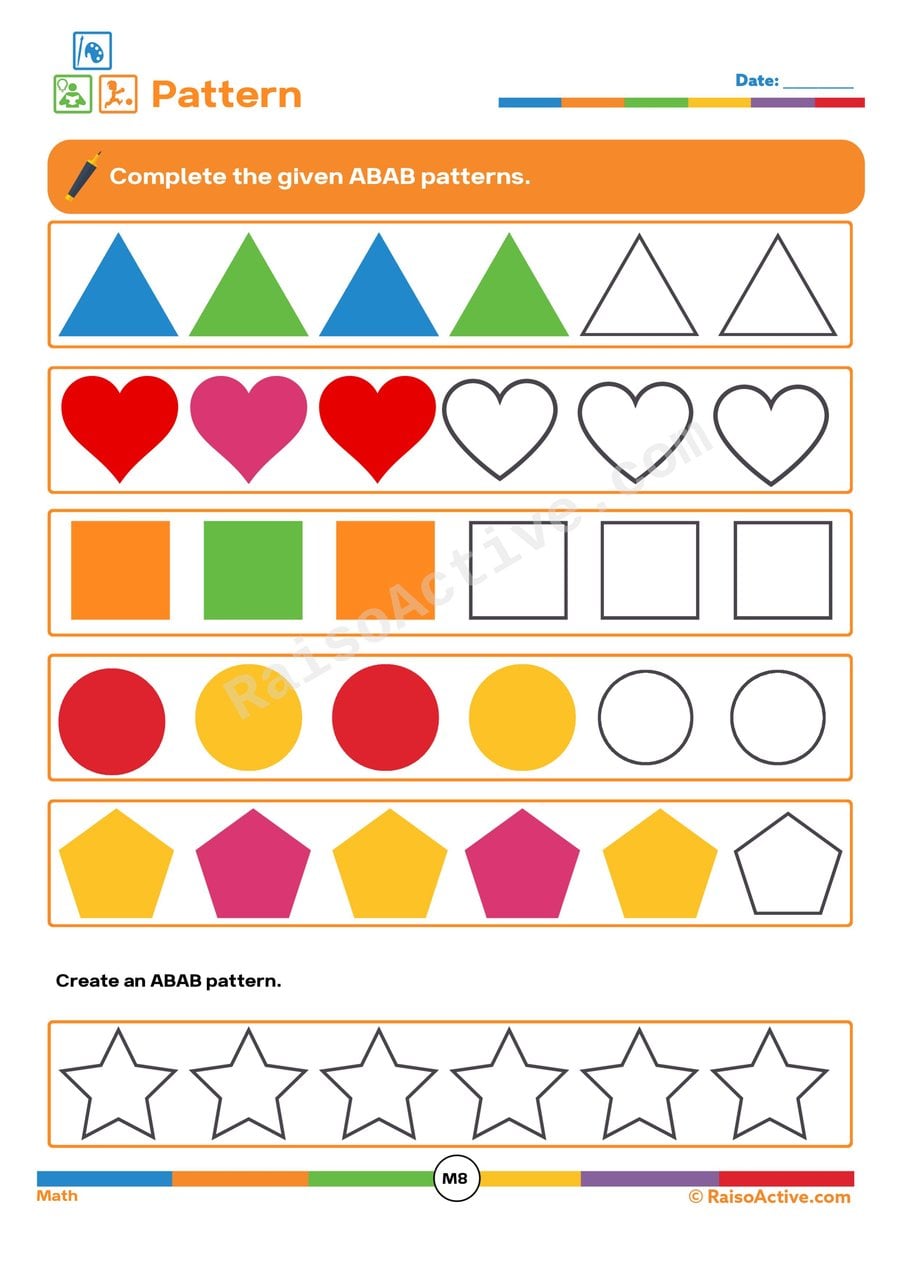
ABAB Pattern Fun: Complete the Shapes Worksheet!
Ages 3-5 · Preschool–Pre-KAges 3-5 · Nursery–ReceptionAges 3-5 · Nursery–LKGAges 3-5
This worksheet builds early algebraic thinking as children ages 3-5 identify and continue ABAB patterns using shapes and colors, then create a pattern of their own using stars. Recognizing that a pattern repeats in a predictable unit is a foundational math skill that later supports understanding sequences, multiplication, and logical prediction, making this simple shape activity more mathematically important than it might first appear.

Skip Counting Adventure: Help Community Helpers! A Fun Math Worksheet
Ages 4-6 · Pre-K–KindergartenAges 4-6 · Reception–Year 1Ages 4-6 · LKG–UKGAges 4-6
Filling in missing numbers while skip counting by 5s and 10s builds a foundation for multiplication and faster counting for children ages 4-6, using a community helpers theme to make the abstract number pattern feel purposeful.
Related worksheets

Letter Recognition Worksheet: Circle the Objects Starting with Y and N!
Ages 3-5 · Preschool–Pre-KAges 3-5 · Nursery–ReceptionAges 3-5 · Nursery–LKGAges 3-5
This worksheet builds letter-sound correspondence for the letters Y and N by having children identify and circle only the pictures whose names begin with those specific sounds. For three- to five-year-olds, practicing two letters side by side, rather than just one, adds a layer of discrimination — children must correctly identify which of two different sounds a word starts with, not just recognize a single target sound.

Vocabulary Worksheet: Circle the Objects That Start with Letters M, K, X, W, and S!
Ages 4-6 · Pre-K–KindergartenAges 4-6 · Reception–Year 1Ages 4-6 · LKG–UKGAges 4-6
This worksheet asks children ages 4-6 to identify pictured objects and circle the ones that begin with a specific target letter — cycling through M, K, X, W, and S — reinforcing beginning sound recognition across a wider range of letters than a single-letter worksheet would. Working across five different letters in one sitting also helps children practice quickly switching their sound-matching strategy from one letter to the next.

Phonics Fun: Circle the Beginning Letter Worksheet for Kids
Ages 4-6 · Pre-K–KindergartenAges 4-6 · Reception–Year 1Ages 4-6 · LKG–UKGAges 4-6
This 'Circle the Beginning Letter' worksheet strengthens phoneme-grapheme correspondence for children ages 4-6, teaching them to connect the sound they hear at the start of a word to its written letter. Naming each picture aloud and choosing among several letter options builds auditory discrimination, a skill that predicts later decoding success. It also reinforces letter recognition by asking children to distinguish the target letter from visually similar distractors.
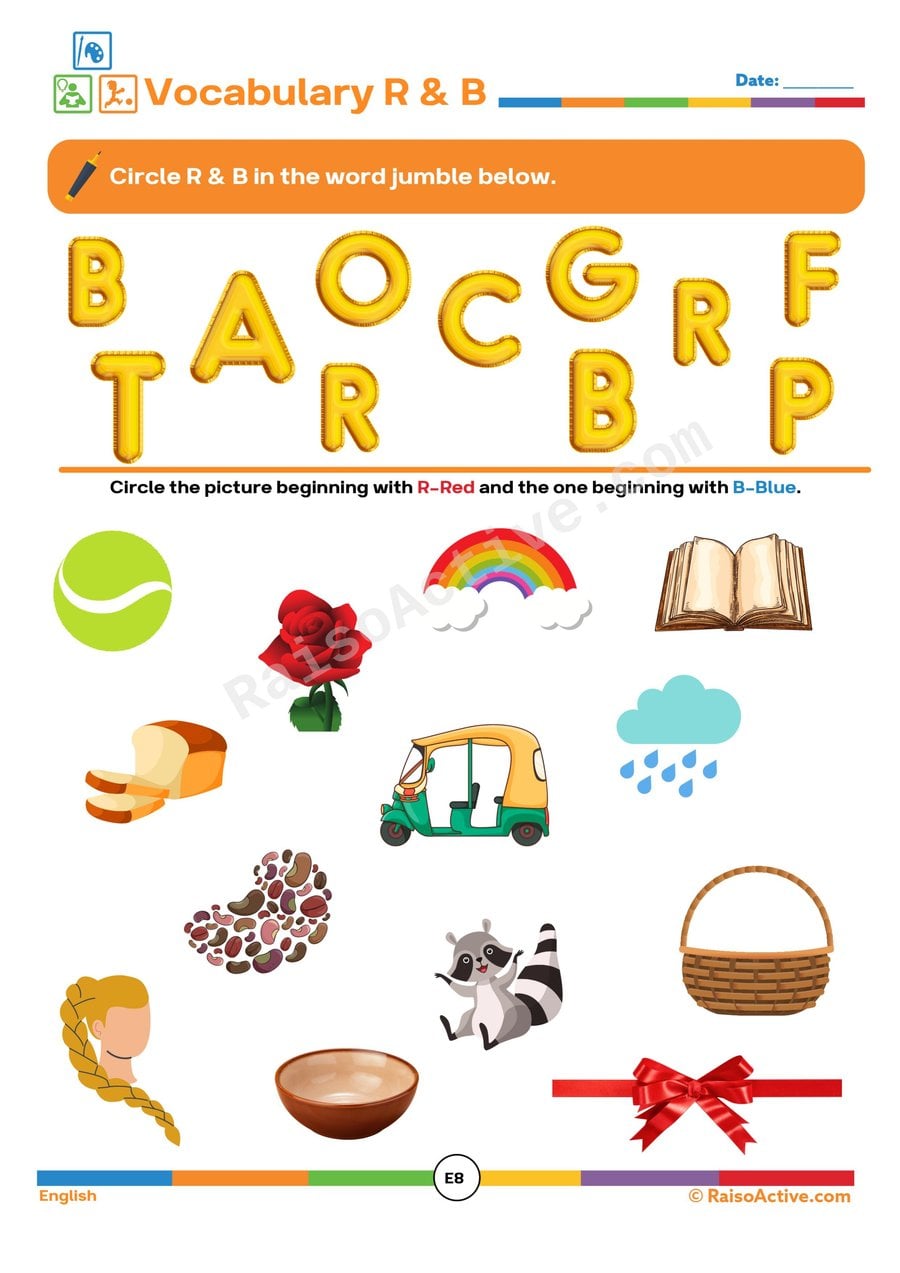
R & B Word Jumble Worksheet for Preschoolers
Ages 4-5 · Pre-KAges 4-5 · ReceptionAges 4-5 · LKGAges 4-5
Circling the letters R and B within a jumbled group of letters sharpens visual discrimination for children ages 4-5, training their eyes to spot a specific letter shape among similar-looking distractions. Pairing this with picture identification for words that start with R and B reinforces beginning-sound recognition, connecting the visual letter search to actual spoken sounds.

Letter Sounds: Color the Letter Worksheet for Preschoolers
Ages 3-5 · Preschool–Pre-KAges 3-5 · Nursery–ReceptionAges 3-5 · Nursery–LKGAges 3-5
Matching a picture — a ball, a cat, a dog — to the letter it starts with asks a 3-5 year old to isolate the very first sound of a word, which is one of the core building blocks of phonemic awareness before formal reading begins. Coloring the matching letter circle adds a low-pressure, motor-skill layer to what's really a listening and sound-matching task.
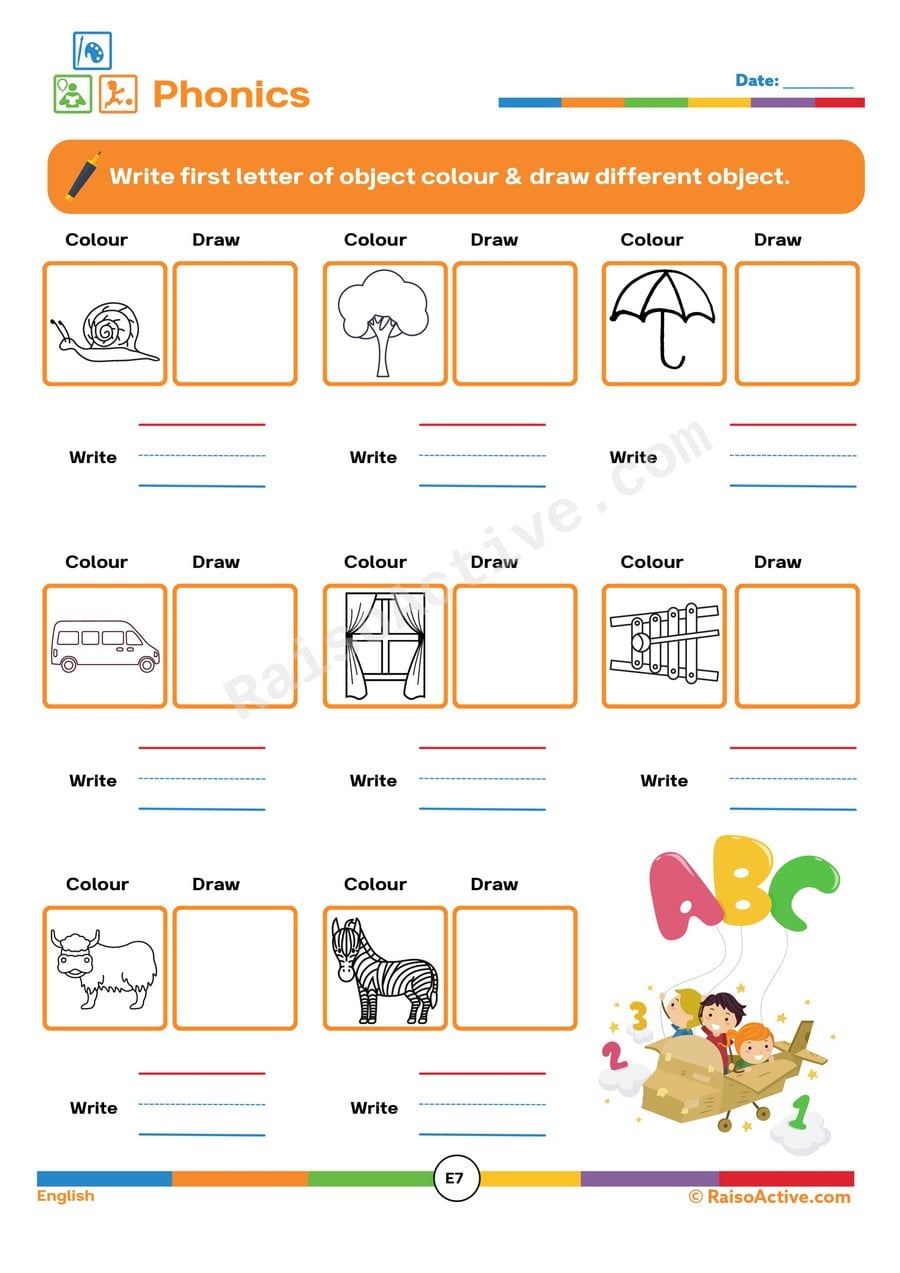
Phonics Fun: Color, Draw, and Write! (Ages 3-5)
Ages 3-5 · Preschool–Pre-KAges 3-5 · Nursery–ReceptionAges 3-5 · Nursery–LKGAges 3-5
Coloring a picture, drawing a related object, and writing its first letter combines three literacy-building tasks in one activity for children ages 3-5 — visual recognition, creative expression, and beginning-sound identification.
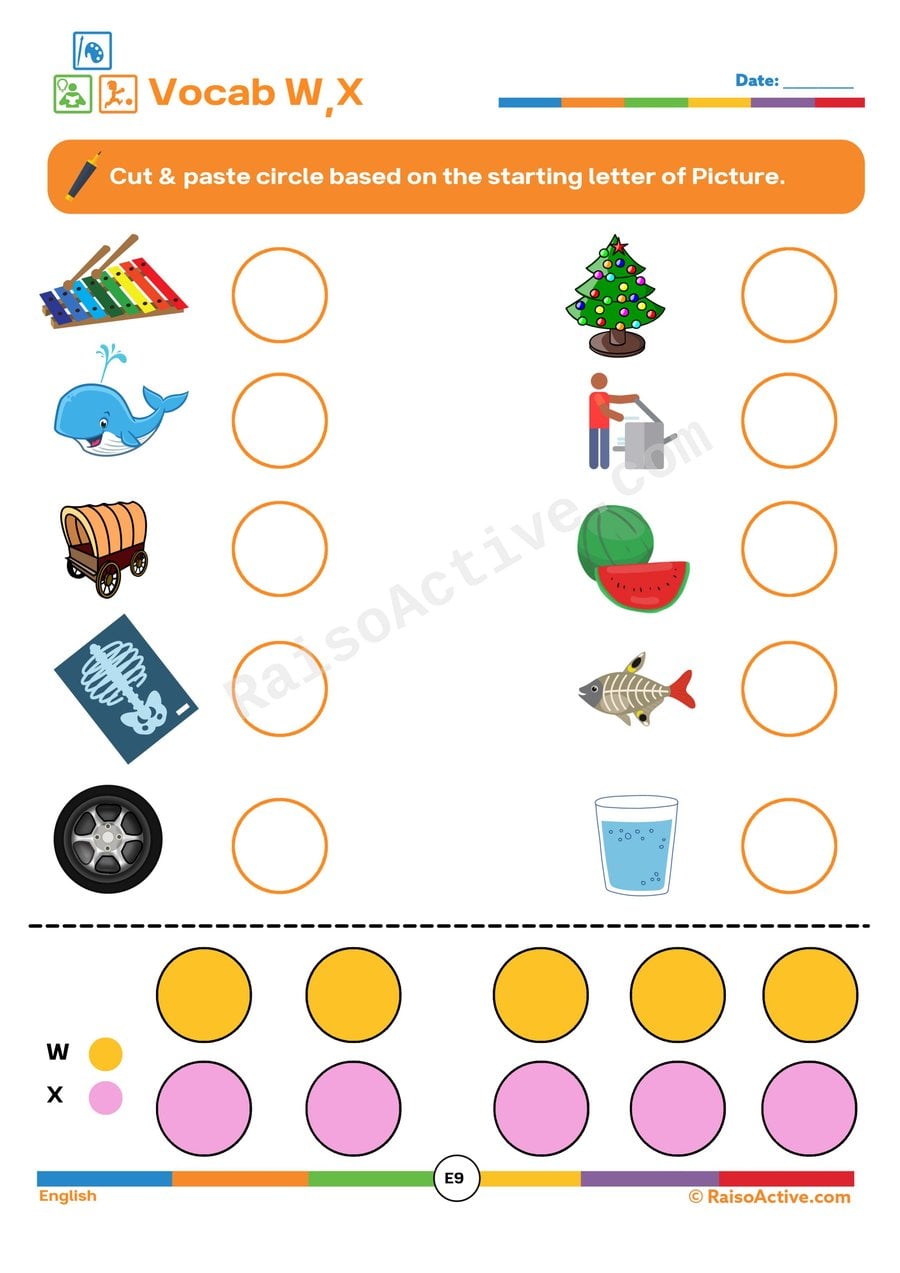
W and X Words Worksheet: Cut and Paste Fun!
Ages 4-5 · Pre-KAges 4-5 · ReceptionAges 4-5 · LKGAges 4-5
Identifying words that start with W and the much rarer letter X gives children practice distinguishing beginning sounds across a wider range of vocabulary, since X-words are less common and require extra attention to hear correctly. For ages four to five, the cut-and-paste format adds a deliberate pause before each answer, helping avoid the rushed guessing that can happen with a quicker matching task.

Phonics Worksheet: Write the First Letter and Draw!
Ages 3-5 · Preschool–Pre-KAges 3-5 · Nursery–ReceptionAges 3-5 · Nursery–LKGAges 3-5
Identifying the first letter of a pictured object's name and writing it down builds phonemic awareness and letter-formation practice for children ages 3-5, while the follow-up drawing task builds creative thinking and fine motor control.
Guides for this topic

Sight Words by Age: The First 50 Words and How to Teach Them Without Flashcard Fatigue
Which sight words to teach first and why, the heart-word method, a read-trace-write-find routine, games, and a by-age table of typical sight-word progress.
How to Teach CVC Blending: A Step-by-Step Method That Works in Two Weeks
A step-by-step method for teaching CVC blending, covering continuous sounds, word families, common errors, and a 14-day plan that most children finish reading CVC words.
Phase 2 Phonics at Home: Sound Order, Blending Games, Worksheets
Phase 2 phonics at home: the five sound sets in order, oral blending, tricky words, a two-week routine, common mistakes, and free worksheets.
Reviews
Every worksheet for ages 4–6, no watermark
Members download the full library of 1,000+ worksheets and every activity pack without watermarks or daily limits. One year costs ₹999 in India or $20 elsewhere.
See membership plansOr download any worksheet free with a watermark (5 a day).