Free printable worksheets · United Kingdom
Reception Phonics Worksheets
Reception phonics worksheets are printable practice sheets for children aged 4 to 5 learning to read with Letters and Sounds Phase 2 and Phase 3 or an equivalent scheme. They cover grapheme–phoneme correspondences in teaching order, oral and written blending, segmenting CVC words for spelling, tricky words such as the, to, I, no and go, and letter formation.
Systematic synthetic phonics is how state primary schools in England teach reading, and Reception is where it begins. Children learn roughly one new grapheme–phoneme correspondence (GPC) a day, in a fixed order that lets them read words almost immediately: after s, a, t and p they can already blend sat, tap and pat. Oral blending comes first, with an adult saying c-a-t and the child hearing cat, before any written blending is attempted. By the spring term most classes have moved into Phase 3 and its digraphs and trigraphs, and a handful of tricky words that cannot be sounded out are taught by sight. The worksheets on this page follow the Phase 2 and 3 order so that every sheet only uses sounds a child has already been taught.
995+ worksheets · free PDF download · print on A4 or Letter
Reception Phonics Worksheets to print
Browse all worksheets for ages 4–5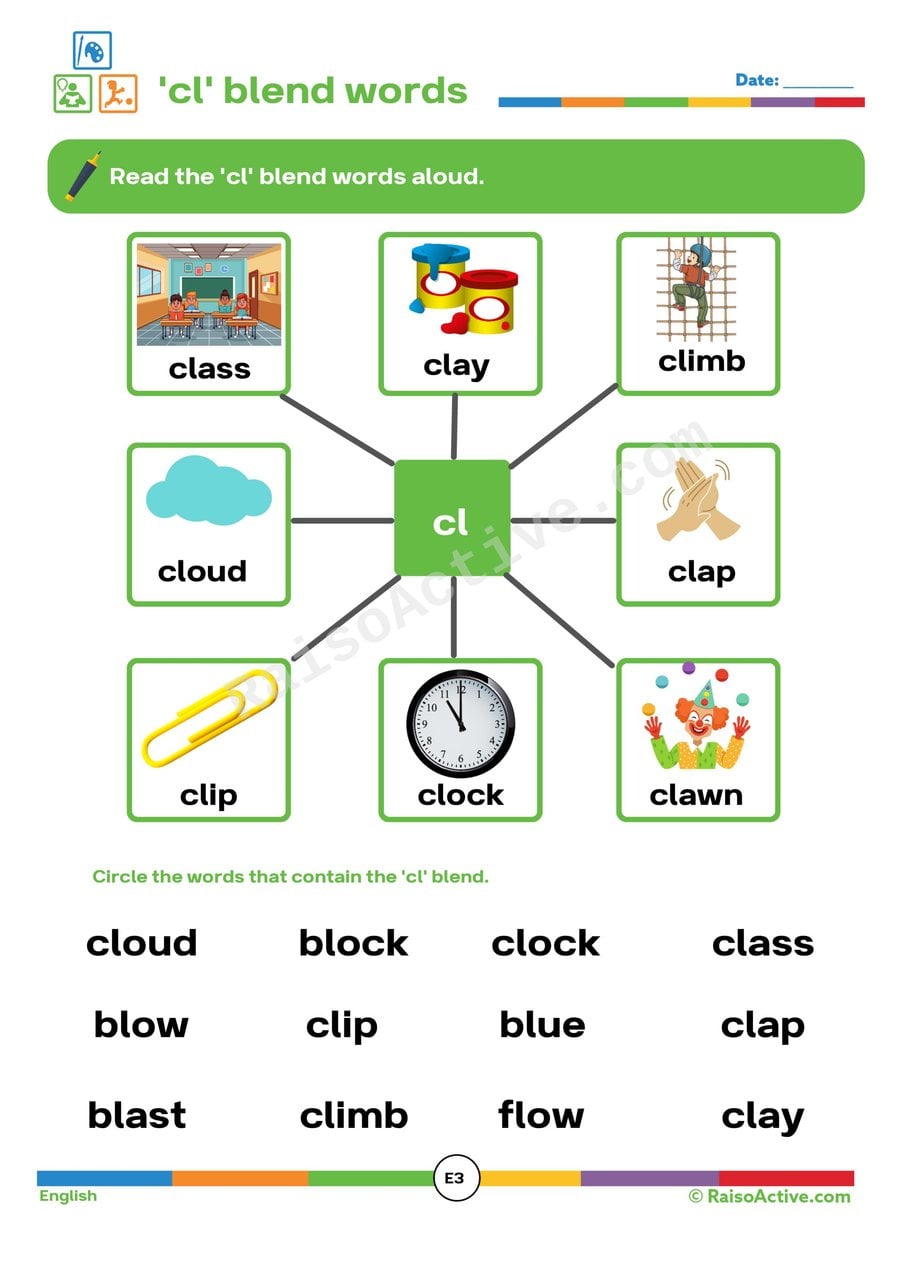
Cl Blend Words Worksheet: Read and Circle!
Reading and circling words that begin with the 'cl' consonant blend helps children ages 4-6 hear that two consonants pressed together, like c and l, still combine into a single connected sound at the start of a word. This is a step up from single-letter phonics, requiring children to blend two consonant sounds smoothly rather than sounding them out separately. Recognizing blends like 'cl' in words such as 'clap' or 'cloud' builds the decoding fluency needed to read longer, less predictable words with confidence.
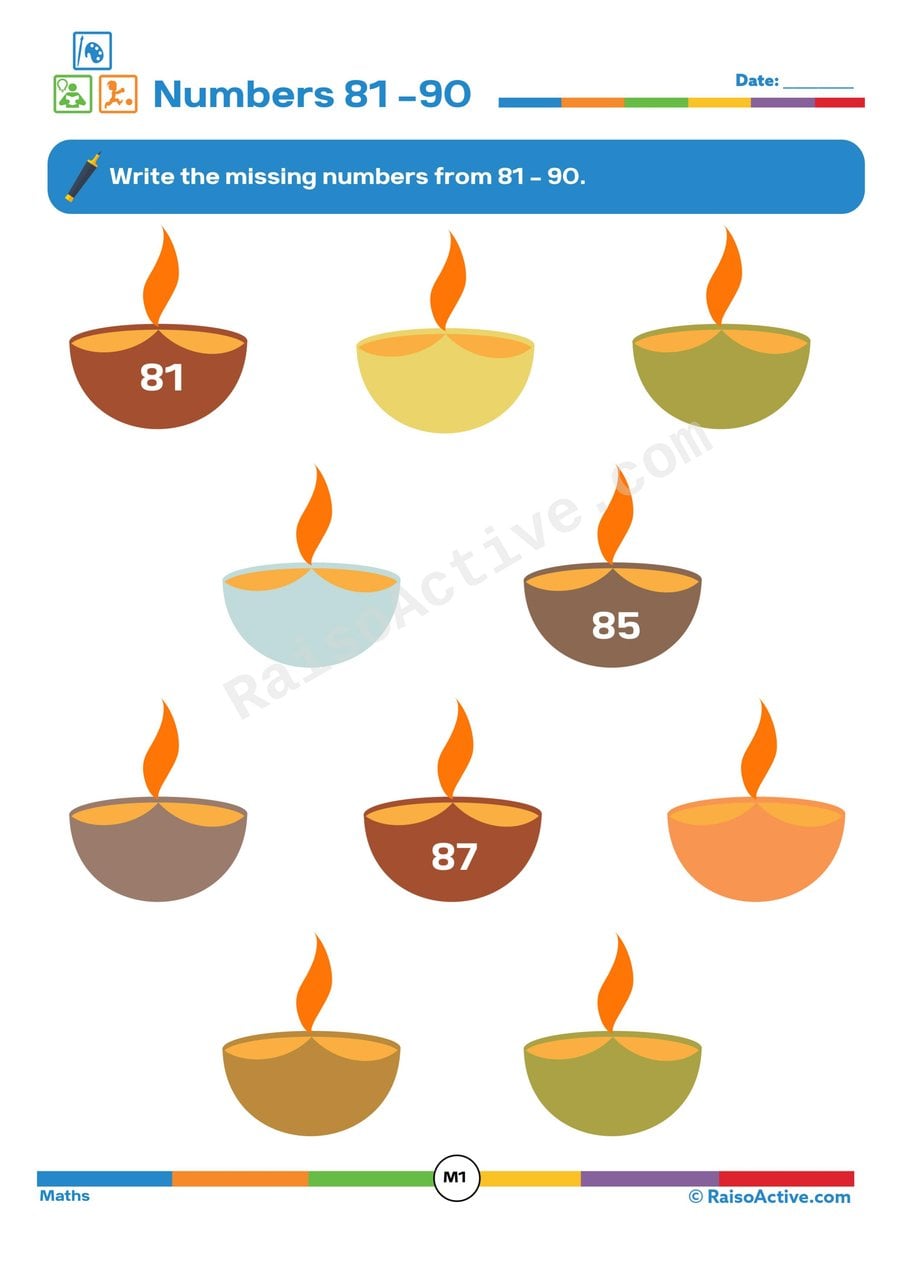
Missing Numbers: Diwali Diyas Worksheet for Kids
Children ages 4-6 practice number sequencing within the 81 to 90 range by identifying and writing missing numbers on a set of Diwali-themed diyas. Working with numbers in the 80s pushes children beyond the more familiar 1-20 range, reinforcing that the same counting pattern continues predictably into higher numbers. This festive theme also connects math practice to a meaningful cultural celebration, making the abstract number work feel relevant.

Punctuation Fun: Practice Using Punctuation Marks!
Choosing the correct punctuation mark to complete a sentence teaches children ages 4-6 that periods, question marks, and other marks change how a sentence should be read and understood, not just how it looks on paper. Matching sentences to their correct punctuation marks reinforces this by requiring children to recognize the tone or purpose of a sentence, whether it's a statement, a question, or an exclamation. This early grammar practice builds the foundation for reading with expression and writing complete, correctly punctuated sentences later on.

Long Vowel 'a' Sound Worksheet: Circle the Pictures!
This worksheet trains children ages 4-6 to listen for the long 'a' sound within words and circle only the pictures whose names contain it, sharpening auditory discrimination skills separate from spelling. Because children must rely purely on listening rather than reading the word, this format builds a stronger, more independent phonemic awareness than sound-and-spelling activities alone.
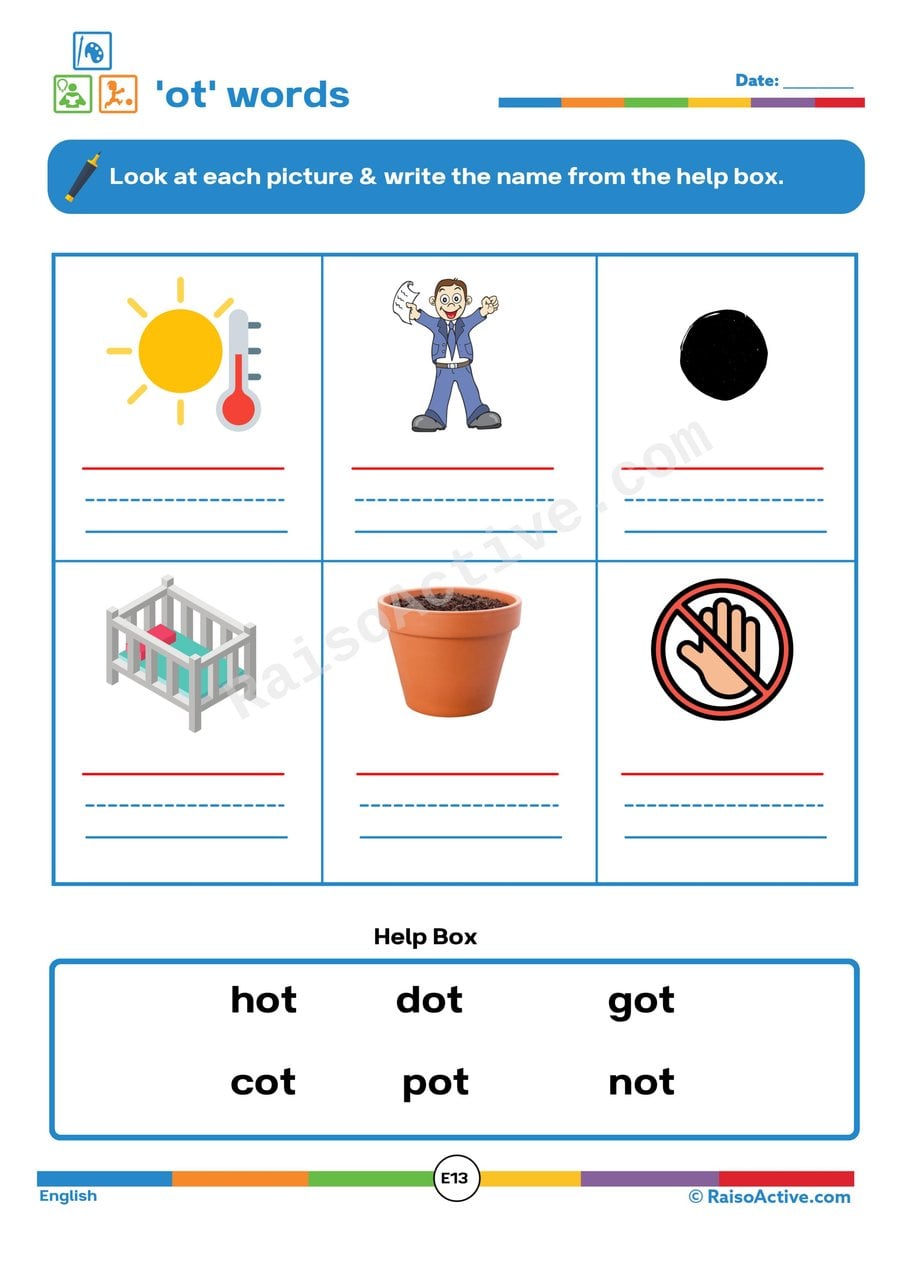
Ot Word Fun: 'ot' Word Worksheet for Early Readers
Children ages 4-6 build phonics fluency by reading and writing CVC words in the 'ot' family, like 'pot', 'dot', and 'hot'. Recognizing this consistent letter pattern teaches early readers that groups of letters make predictable sounds, a key strategy for decoding unfamiliar words independently. Writing the words afterward reinforces the sound-to-letter connection needed for spelling.

Life Cycle Match: Frog, Snake, Ladybug, Butterfly, and Fish Worksheet
This matching worksheet helps children ages 4-6 compare life cycle stages across five very different animals: frogs, snakes, ladybugs, butterflies, and fish. By matching each animal to its correct stage picture, children start to notice that not all animals grow the same way — some hatch from eggs looking like miniature adults, while others go through dramatic transformations like metamorphosis. This comparative thinking builds a deeper foundation in life science than studying just one animal alone.

Sentence Fun: Find the Subject and Predicate Worksheet for Kids!
This worksheet introduces basic sentence structure by teaching children to identify the subject (who or what the sentence is about) and the predicate (what the subject does or is) in simple sentences. For four- to six-year-olds, breaking a sentence into these two core parts is an early foundation for grammar and sentence-writing, helping them understand that every complete sentence needs both a 'who' and a 'what happens.'
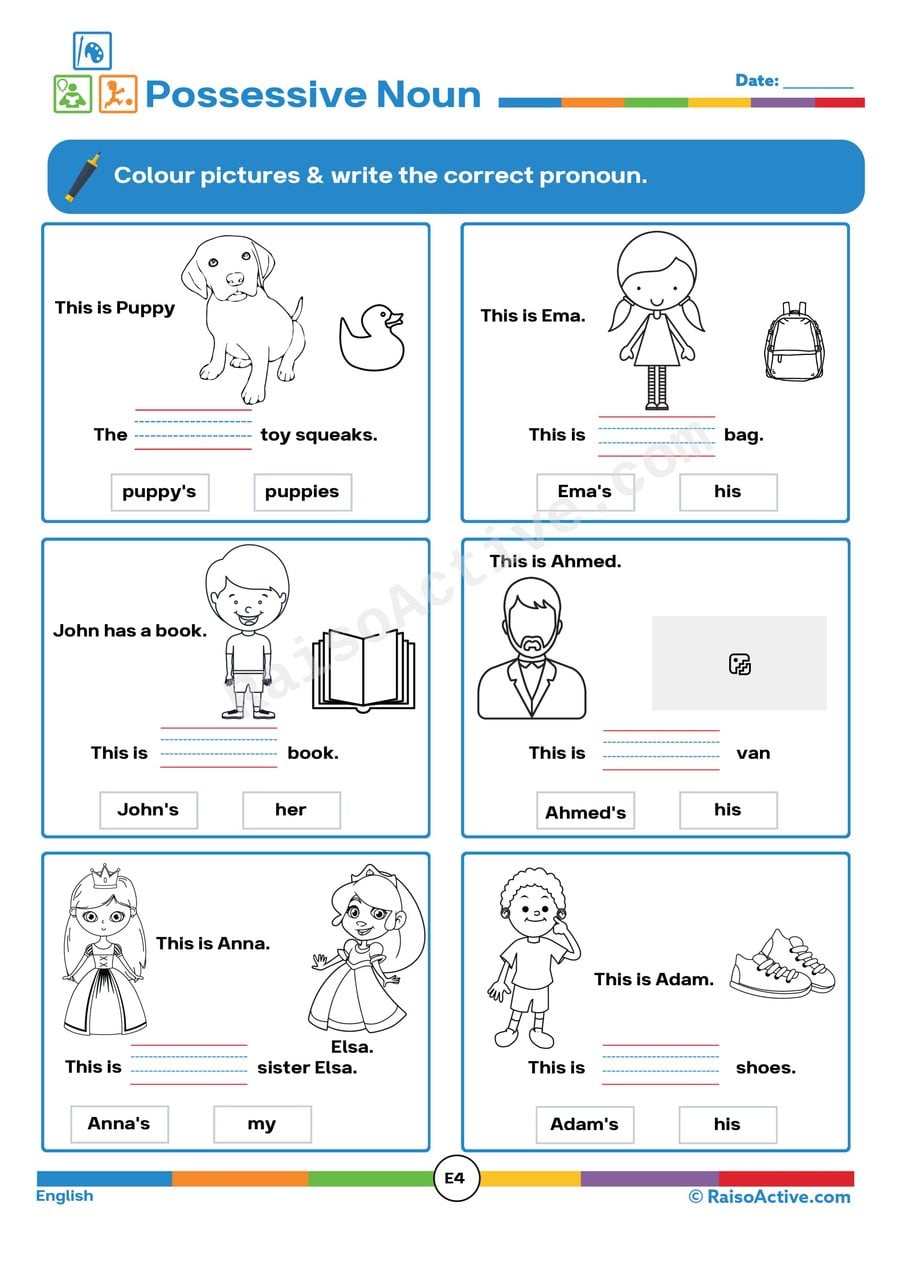
Possessive Nouns Worksheet: Color and Write!
Children ages 4-6 practice forming possessive nouns, learning to add an apostrophe and 's' to show that something belongs to someone, like 'the dog's bone.' This is a specific grammar rule that children will use constantly once they start writing about ownership in their own sentences.

My Favorite Animal: Lifecycle Writing Worksheet for Kids
This writing worksheet asks children ages 4-6 to describe their favorite animal's life cycle using sequencing words like 'first,' 'then,' 'next,' and 'last,' essential building blocks for narrative and informational writing. Choosing their own animal makes the task personally engaging while still requiring them to organize factual information in a logical order. This combination of choice and structure helps children practice both content knowledge and the mechanics of sequential writing.
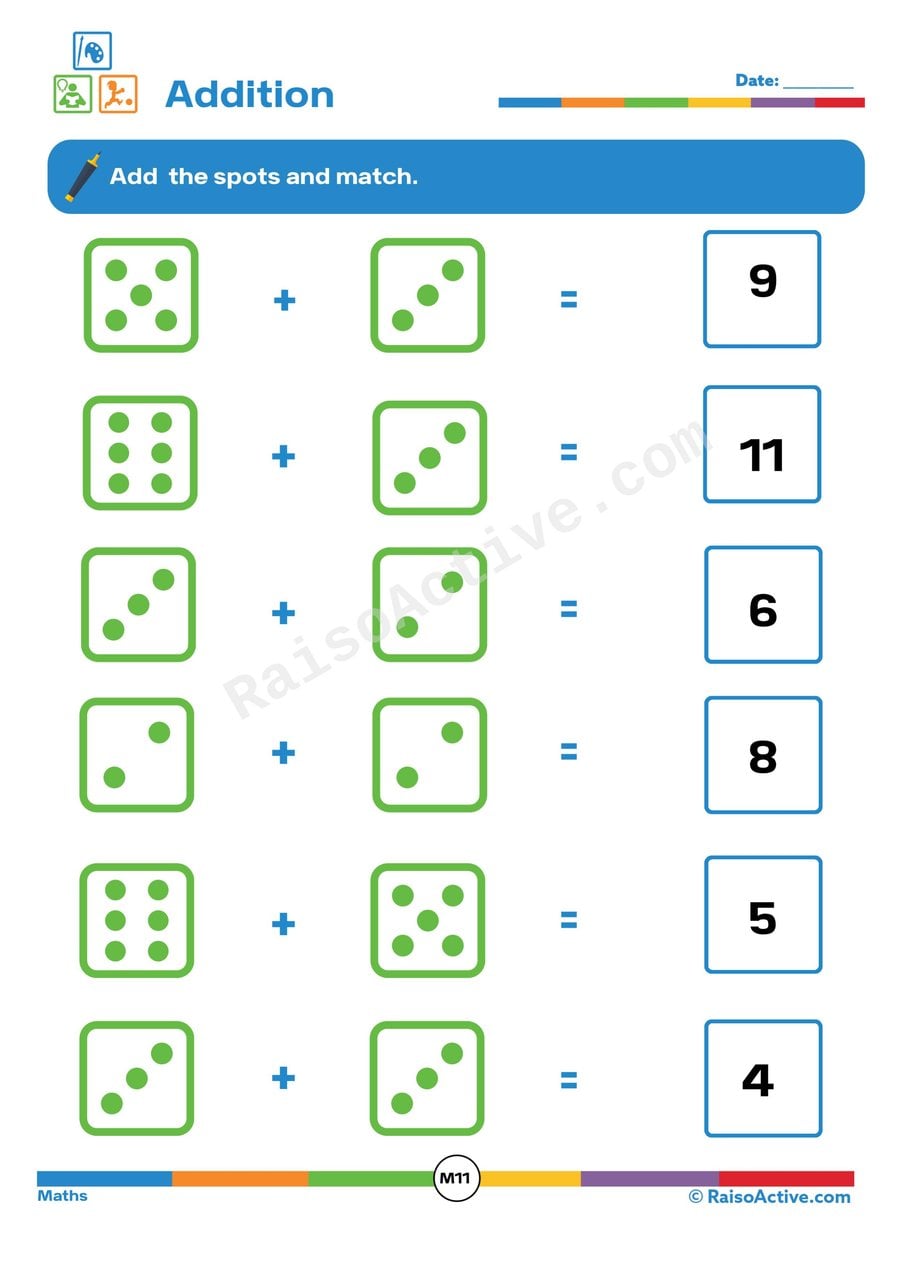
Dice Addition Worksheet: Add the Spots and Match!
This worksheet builds basic addition fluency by having children count the dots on two dice, add the totals together, and match the resulting sum to the correct number. For four- to six-year-olds, using dice as the counting tool adds a layer of subitizing practice — the ability to recognize a small quantity of dots at a glance without counting one by one — which speeds up addition over time.

Writing Numbers 11-16 Worksheet: Trace, Write & Count!
This worksheet moves children ages 4-6 beyond single-digit numbers, giving them structured practice tracing, writing, and counting the numbers 11 through 16. Working with two-digit numbers for the first time helps children understand place value informally, seeing that these numbers are built from a 'ten' plus more. The paired counting section connects each written number to a matching quantity of objects, reinforcing number meaning rather than just symbol recognition.
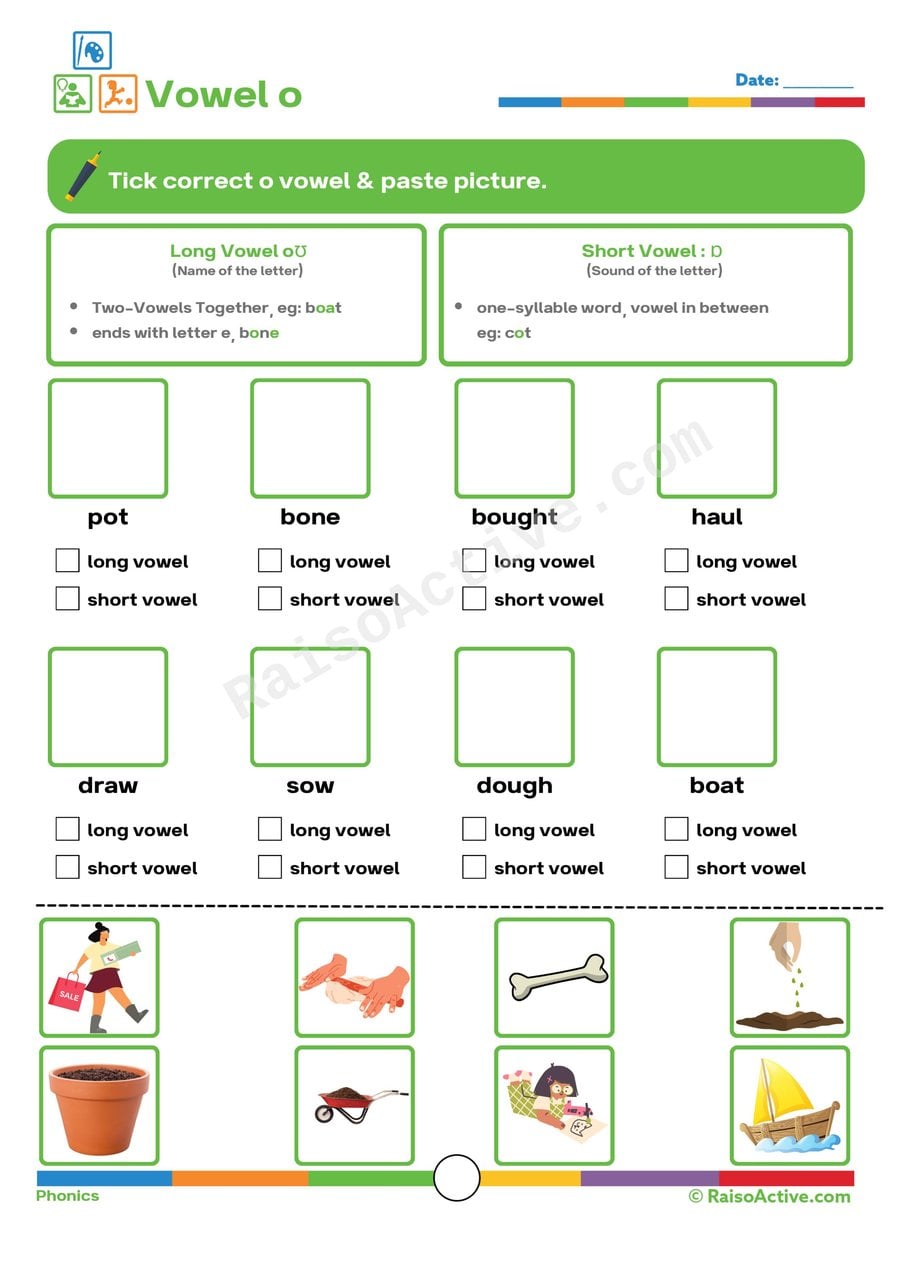
Vowel o Worksheet: Long and Short Vowel Sounds
This matching worksheet builds on early phonemic awareness by asking children ages 4-6 to listen for the long 'o' sound (as in 'boat') versus the short 'o' sound (as in 'dog') and sort accordingly. Cutting and pasting the matching picture adds a fine-motor and visual-matching layer on top of the listening task, so children are practicing several pre-reading skills at once. Recognizing vowel length is a stepping stone toward reading multisyllabic words later on.
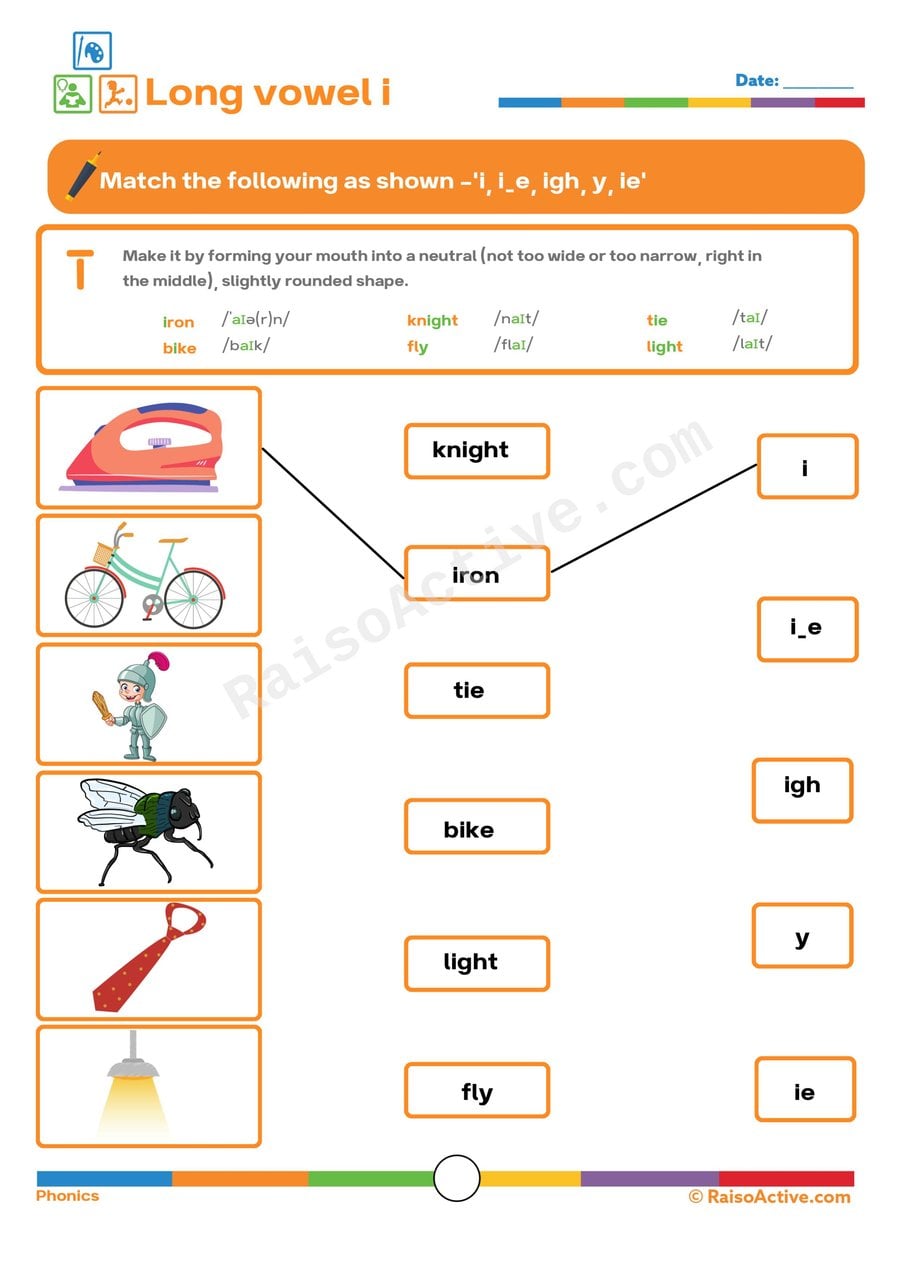
Long Vowel 'i' Matching Worksheet for Kids
This worksheet challenges children ages 4-6 to match pictures with words that share the long 'i' sound but use different spelling patterns, such as 'ie' in 'pie' or a silent 'e' in 'kite,' building awareness that one vowel sound can take multiple written forms. This flexible understanding of spelling patterns is an important step beyond basic phonics, preparing children for the many irregular spellings they'll encounter as readers.

Simple Sentences Worksheet: Rewriting Sentences for Early Readers
Children ages 4-6 practice sentence construction by rearranging scrambled words into a grammatically correct, meaningful sentence, building an understanding of proper word order in English. This hands-on rearranging task teaches children to recognize where a sentence's subject, action, and details belong, a skill they'll use in all future writing.

A or An Worksheet: Fill in the Blanks with Beginning Sounds!
This worksheet teaches children ages 4-6 the grammar rule for choosing between the articles 'a' and 'an,' based on whether the following word starts with a consonant or vowel sound. Applying this rule correctly requires listening carefully to a word's beginning sound rather than just its spelling, which sharpens phonemic awareness alongside grammar knowledge.

Number Names Worksheet: Writing and Matching Numbers 41-50
Writing number names like 'forty-one' through 'fifty' next to their numerals helps children ages 4-6 connect the spoken word for a two-digit number to both its written word form and its digit form, deepening overall number sense in this specific range. This worksheet also revisits missing-number sequencing and color-coded boxes, reinforcing the same number range through several different, related tasks rather than one repetitive drill. Building fluency with number names in the 40s prepares children to confidently read numbers they encounter in daily life, from clocks to price tags.
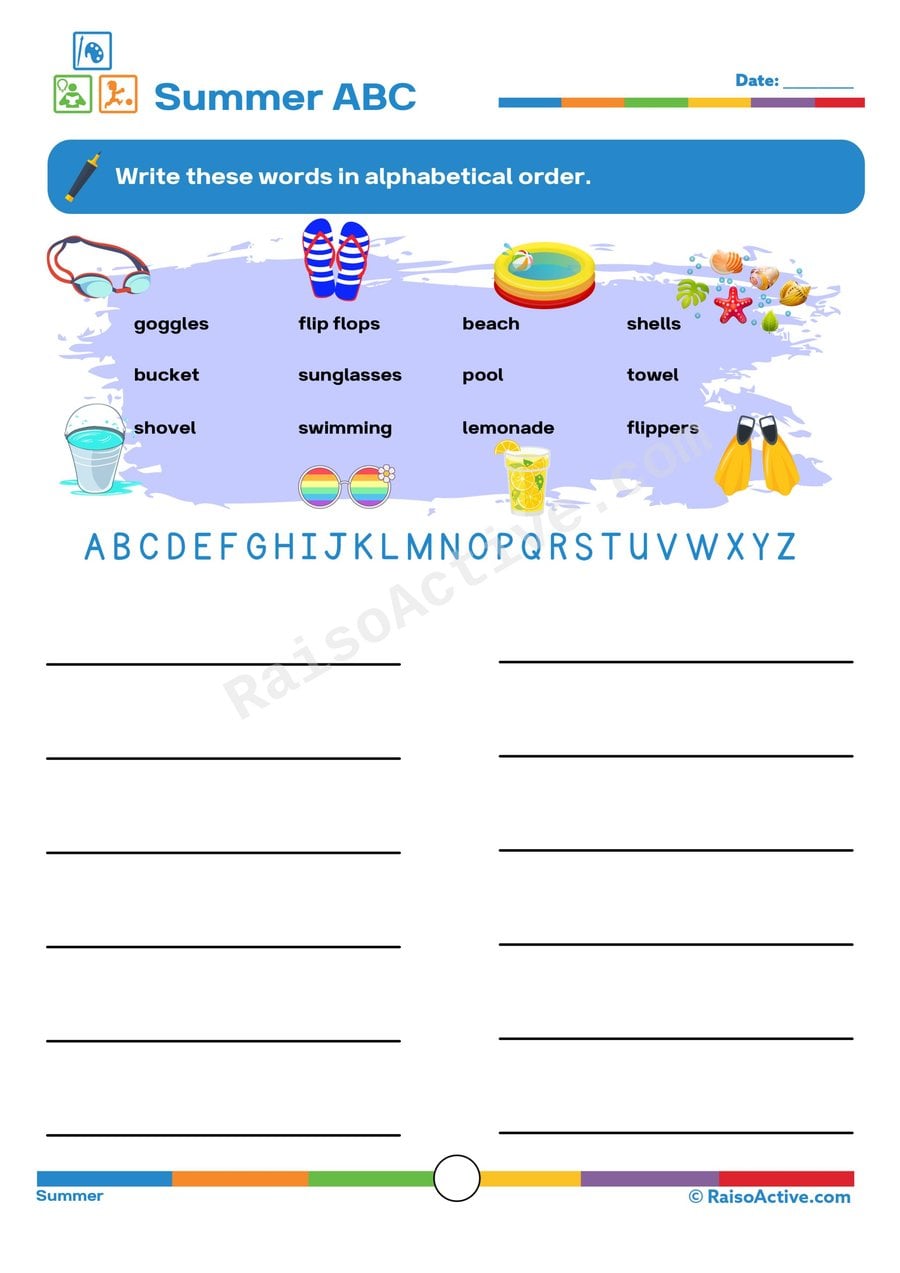
Summer ABC Worksheet: Alphabetical Order Fun!
This worksheet has children ages 4-6 put a new set of summer words into alphabetical order, building on the comparison and sequencing skills involved in matching each word's first letter to its place in the alphabet. Because this task requires holding several words in mind at once and deciding their relative order, it strengthens working memory alongside letter-sequence knowledge. Repeated practice with alphabetizing across different word sets like this one helps the skill become more automatic over time.
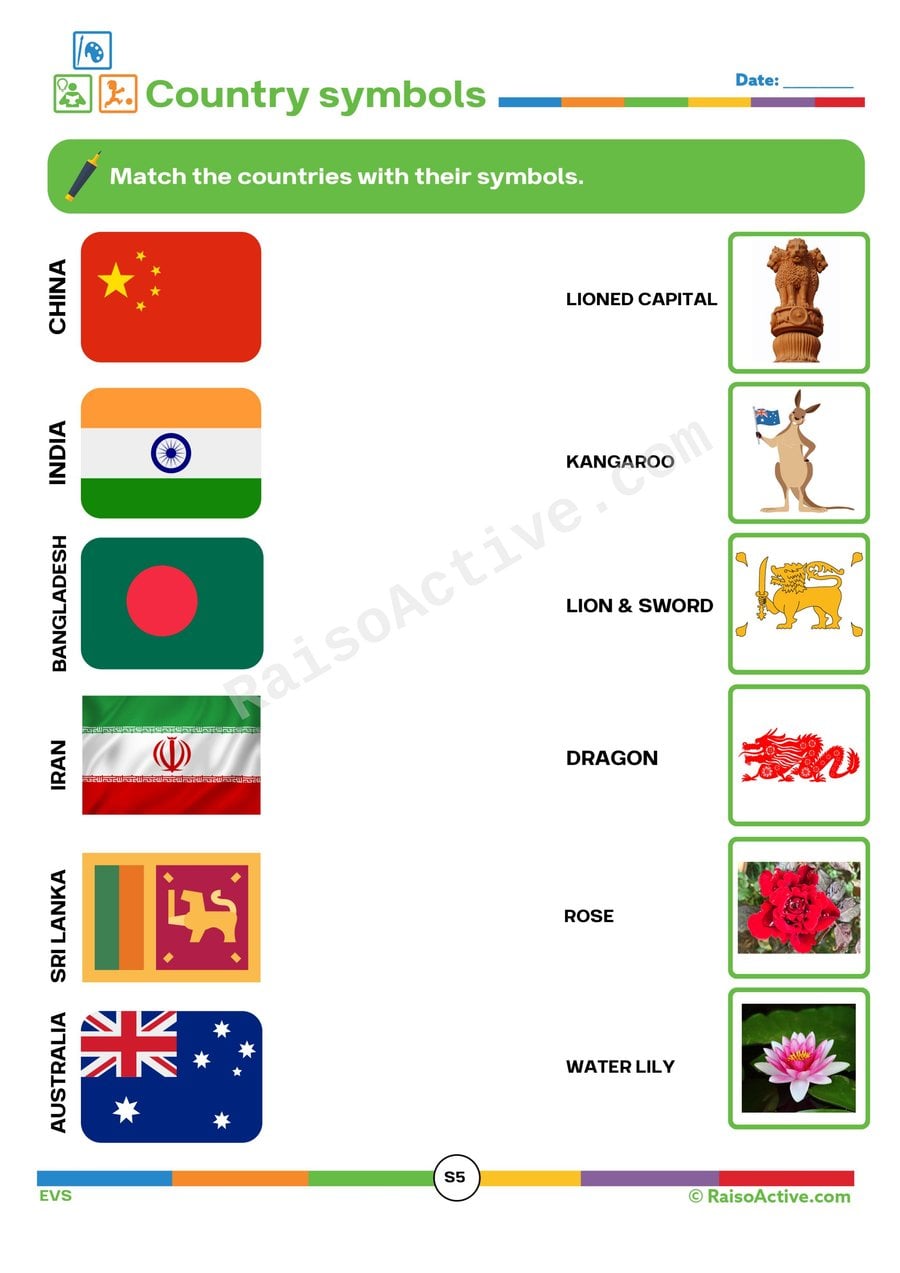
Match the Country Symbols Worksheet for Kids
Matching country flags to their national symbols introduces children ages 4-6 to the idea that countries have their own distinct visual identities, an early and engaging entry point into geography and cultural awareness. This matching task builds visual discrimination, since flags and symbols can share similar colors or shapes that require careful comparison. Learning to associate a flag with a symbol also plants early vocabulary for talking about different countries and cultures around the world.

Pollution Awareness Worksheet for Kids: Circle the Correct Answer!
This worksheet introduces children ages 4-6 to the idea that pollution comes in different forms — air, water, and land — and asks them to connect each type to a picture, building early environmental science vocabulary alongside visual reasoning. Sorting items into recycling categories afterward extends the lesson from simply naming a problem to practicing a real-world solution, which helps young children start to see themselves as capable of taking action. This blend of identification and hands-on sorting suits a preschooler's concrete way of understanding abstract ideas like 'the environment.'

Before Number Worksheet: Practice Number Sequencing!
Practicing 'what comes before' a given number strengthens number sequencing for children ages 4-6, requiring them to think backward through the counting sequence rather than only forward, which is how most early counting practice happens. This backward thinking builds flexibility with numbers that supports later subtraction and number-line reasoning.
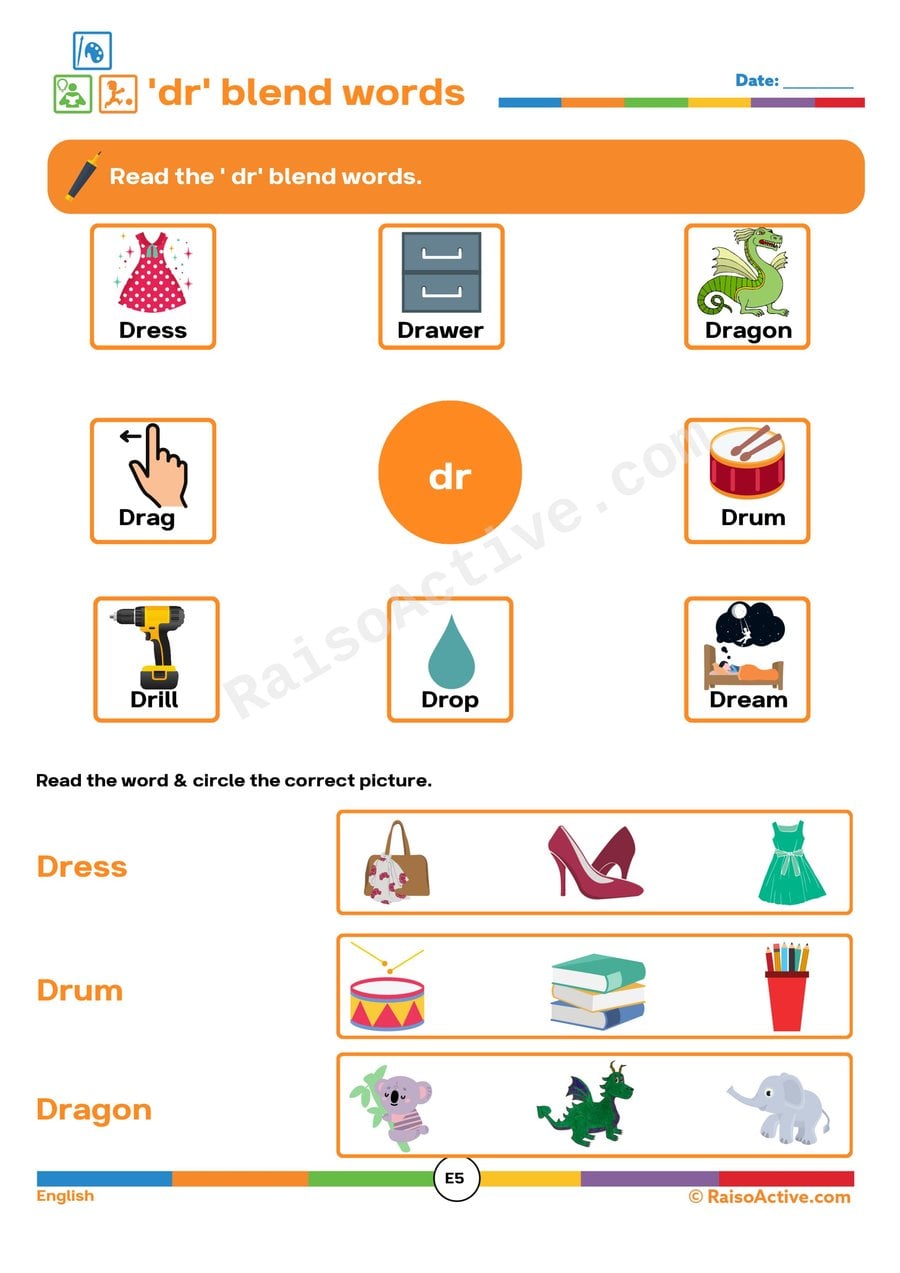
Dr Blend Words Worksheet: Read and Match!
This worksheet focuses on the 'dr' blend, as in 'drum' or 'dress,' asking children to read the word first and then find its matching picture, which reverses the more common picture-first phonics approach and pushes children to truly decode the word rather than guess from an image. For ages four to six, reading the word independently before checking against a picture builds real decoding confidence.

Living Things Worksheet: Identifying Living and Non-Living Things
This worksheet asks 4-6 year olds to sort images into living and non-living categories and then separately identify what living things actually need to survive — air, water, food, and space to grow — which moves beyond simple classification into understanding the defining characteristics of life. That two-part structure (sort, then reason about needs) makes this a solid introduction to basic biology concepts that children will build on in later science classes.

First Letter Fun: Identify and Write! A Fun Vocabulary Worksheet for Kids
This worksheet extends beginning-sound practice for children ages 4-6 slightly further than earlier versions, asking them to independently identify an object's name and write its first letter with less visual support. Isolating and writing initial sounds accurately is a strong predictor of later spelling and reading success, since it requires children to translate an auditory skill into a written one. Repeating this process across multiple pictures builds both vocabulary and growing independence in phonics reasoning.

Sense Organs Worksheet: Circle the Objects We Use!
Children ages 4-6 practice connecting each of the five senses to real objects and experiences, like identifying what they might see, hear, smell, taste, or touch. This builds early science vocabulary and body awareness while reinforcing that different body parts are used to experience the world in different ways.
The Phase 2 and Phase 3 order
Phase 2 is taught in five sets, and the order matters because it front-loads the letters that make the most words. Phase 3 completes the alphabet and adds the digraphs and trigraphs needed to read most simple words. The sets below are the Letters and Sounds sequence; validated schemes use a similar but not identical order, so check the sound mat the school sends home.
- Phase 2 set 1: s a t p; set 2: i n m d; set 3: g o c k; set 4: ck e u r; set 5: h b f ff l ll ss
- Phase 3: j v w x y z zz qu, then ch sh th ng, then ai ee igh oa oo ar or ur ow oi ear air ure er
- Tricky words in Phase 2: the, to, I, no, go, into; in Phase 3: he, she, we, me, be, was, you, they, all, are, my, her
Blending and segmenting
Blending is running sounds together to read: s-a-t becomes sat. Segmenting is the reverse, breaking a spoken word into its sounds in order to spell it. Children need both, and they should practise each orally before they are asked to do it on paper. A good sheet gives the picture, sound buttons under each grapheme, and space to write; a child who can say the sounds but not blend them needs more oral practice, not more worksheets.
How to use these worksheets
Use the pure sound, not the letter name: mmm rather than em, and a short sss rather than suh. Do one new GPC sheet a day at most, and revisit earlier sounds with matching or blending sheets so they stay secure. Keep sessions to five or ten minutes. If the school sends home a sound of the week, choose the sheet that matches it and stop there; getting ahead of the class order tends to confuse rather than help.
Frequently asked questions
What phonics phase should a Reception child be on?
Most Reception classes start Phase 2 in the first half of the autumn term and move into Phase 3 around the spring term, finishing it by summer. Phase 1, which is entirely oral (listening, rhyme, alliteration), runs through Nursery and continues alongside. Schools following a validated scheme other than Letters and Sounds use different names for the same stages, but the content is broadly the same.
What order are phonics sounds taught in Reception?
Letters and Sounds Phase 2 teaches s, a, t, p, then i, n, m, d, then g, o, c, k, then ck, e, u, r, then h, b, f, ff, l, ll, ss. Phase 3 adds j, v, w, x, y, z, zz, qu, the consonant digraphs ch, sh, th, ng, and the vowel digraphs and trigraphs ai, ee, igh, oa, oo, ar, or, ur, ow, oi, ear, air, ure, er. New sounds are introduced at about four a week.
What are tricky words in Reception?
Tricky words are common words that cannot be fully sounded out with the phonics a child has learned so far, such as the, to, I, no, go, into, he, she, we, me, be, was, you and they. Children learn to read them by sight while still noticing which parts are decodable. From Year 1 the National Curriculum calls a similar set common exception words.
What should a child be able to read by the end of Reception?
The Word Reading Early Learning Goal expects a child to say a sound for each letter of the alphabet and at least 10 digraphs, read words consistent with their phonic knowledge by blending, and read aloud simple sentences and books made up of those sounds and a few tricky words. Writing the same sounds and short phrases is the companion Writing goal.
Should I teach letter names or letter sounds first?
Sounds first. Reception phonics teaches the sound each grapheme makes (a as in apple, not ay) because sounds are what a child blends to read. Letter names are useful for spelling aloud and for the alphabet song, and children pick them up alongside, but leading with names is a common cause of blending difficulty. Keep sounds short and pure: t, not tuh.

Written by
Hemsweta Jain · Teacher Cheena
MBA and Early Childhood Educator, teaching since 2014 · Founder of RaisoActive, Mumbai
Written and reviewed by Hemsweta Jain (Teacher Cheena), who designs every RaisoActive worksheet.
Last reviewed
Printable packs for ages 4–5
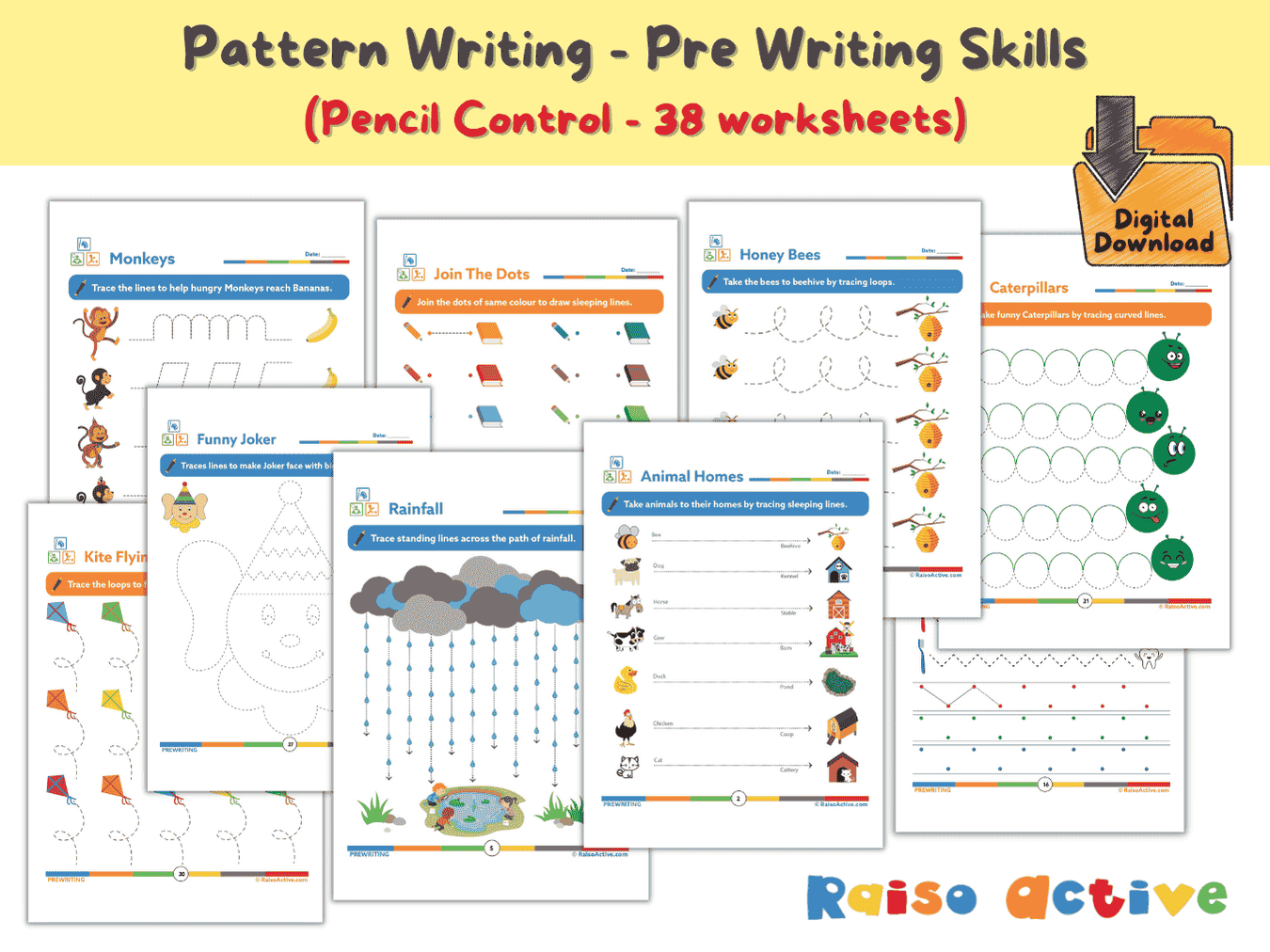
Pattern Writing Pre-writing Skills Activity Book for 3-4 Year Olds
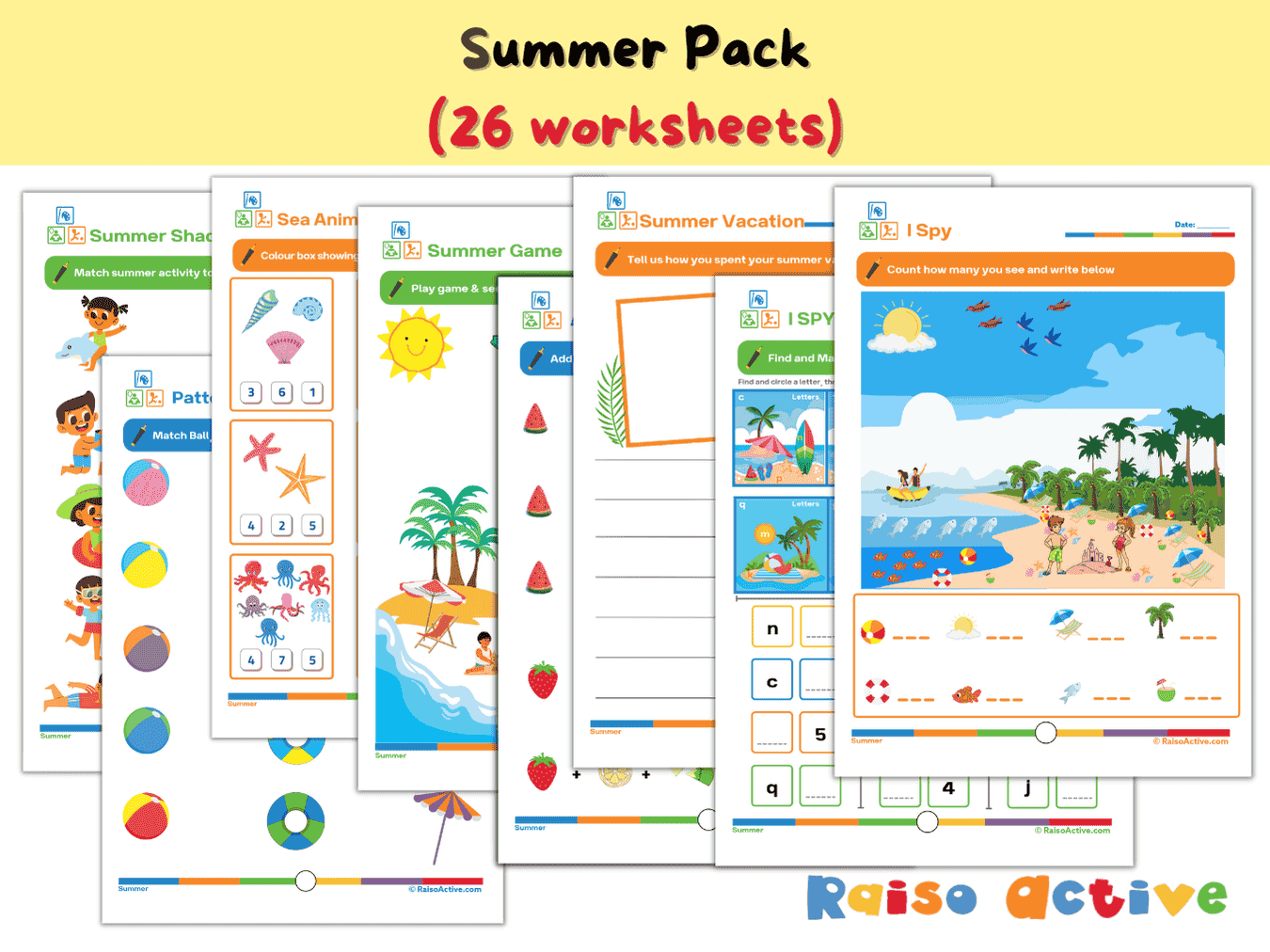
Summer Activity Pack: Math, Literacy, Puzzles & More for Preschool & Kindergarten
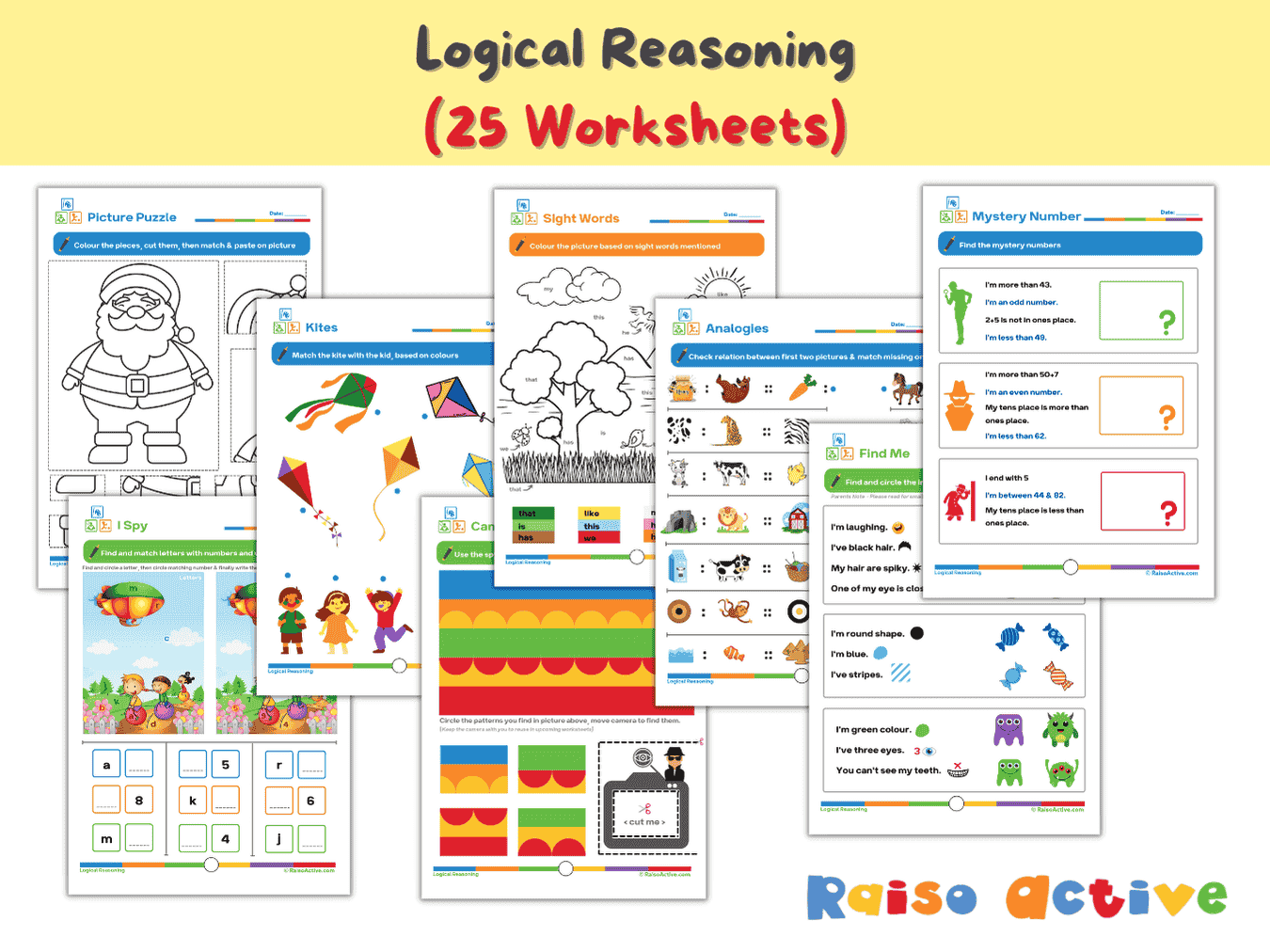
Logical Reasoning Activity Book for Preschool & Kindergarten | Patterns, Puzzles & Analogies
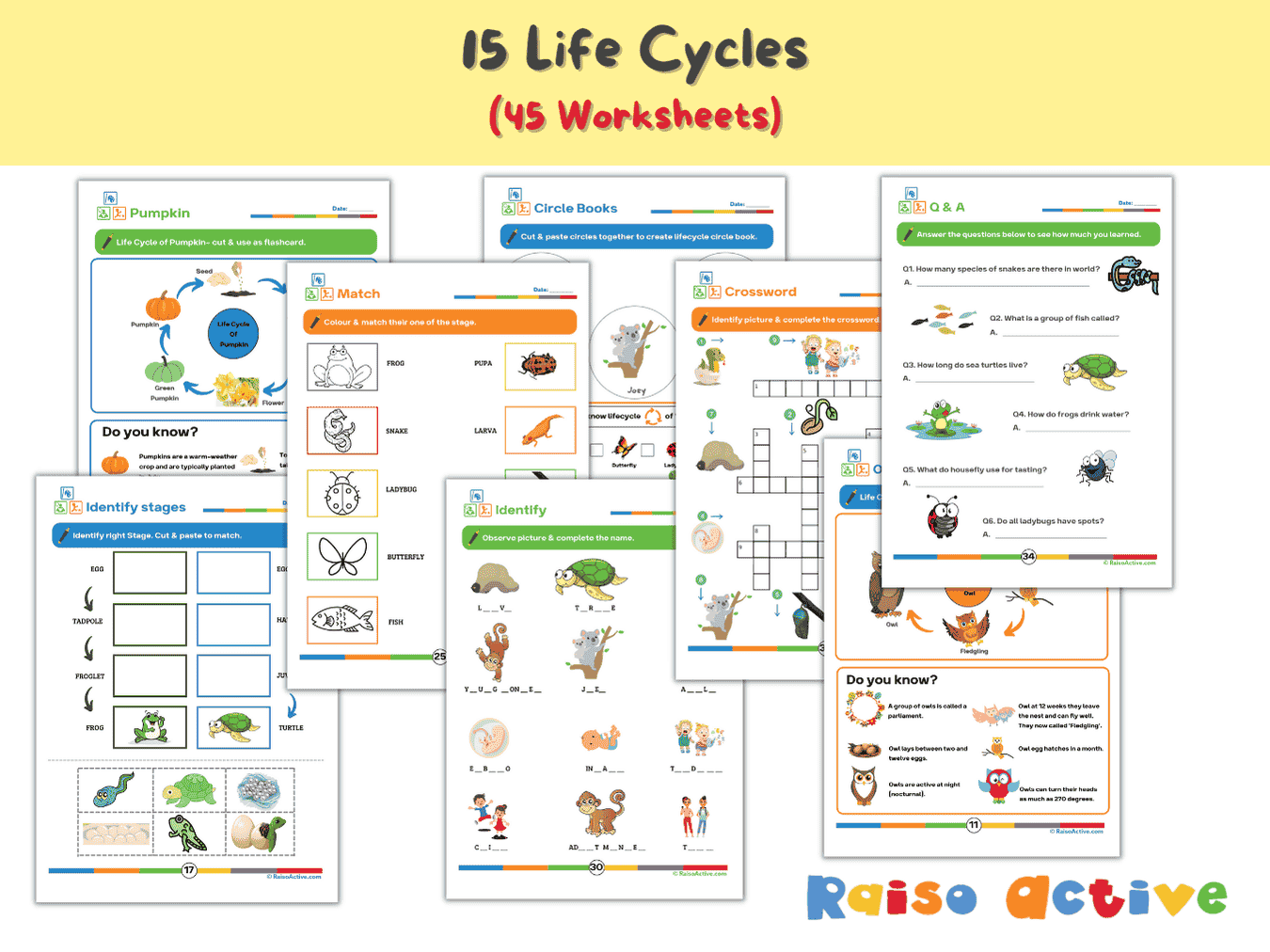
Lifecycles Activity Book & Flashcards for Preschool & Early Elementary
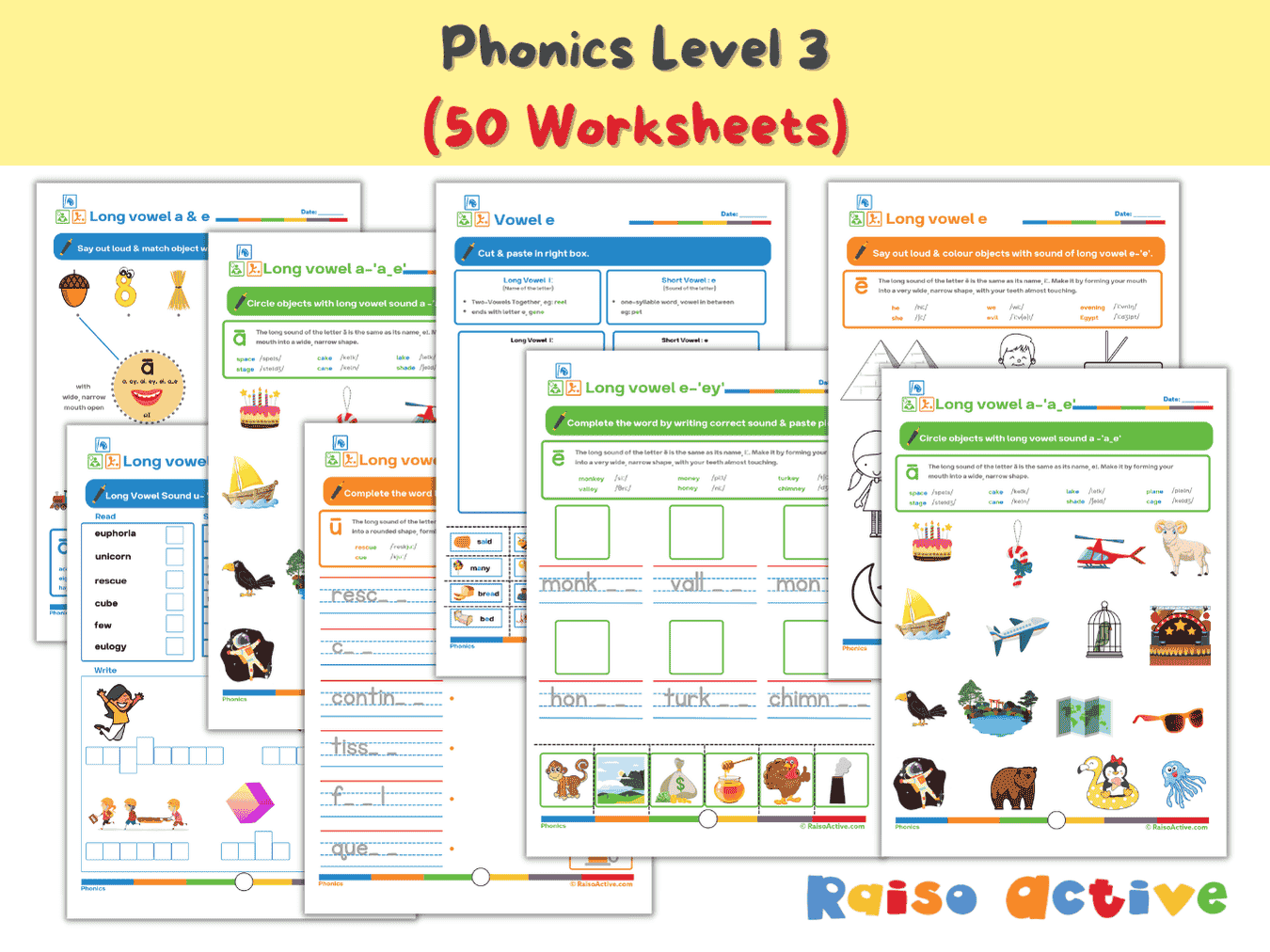
Phonics Level 3 Long Vowels Activity Book for Kindergarten & 1st Grade
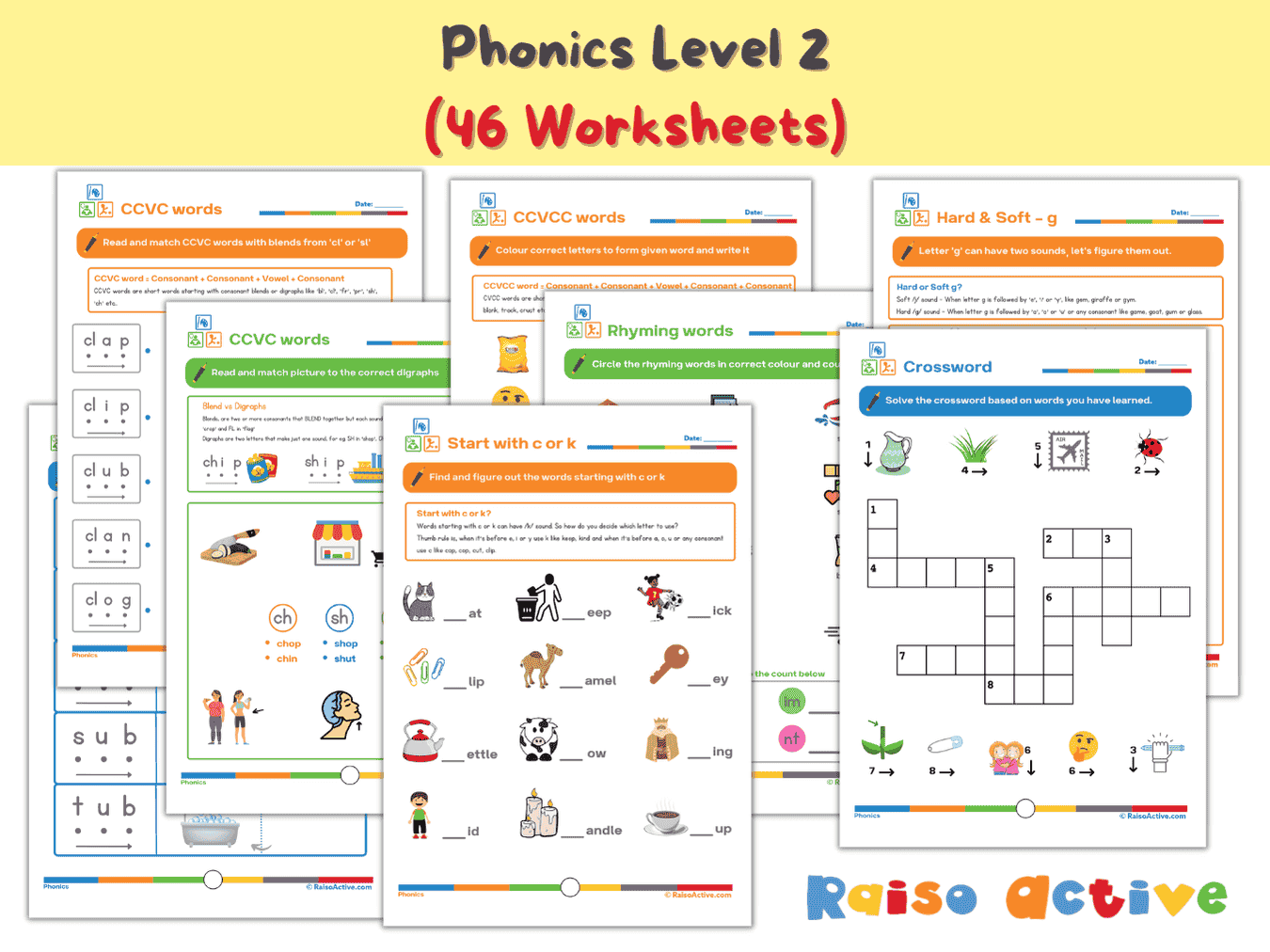
Phonics Level 2 Worksheets: CVC, CCVC, CVCC Word Families & Blends for Early Readers (Ages 4-7)
Guides for parents and teachers
See all guides →Sight Words by Age: The First 50 Words and How to Teach Them Without Flashcard Fatigue
Which sight words to teach first and why, the heart-word method, a read-trace-write-find routine, games, and a by-age table of typical sight-word progress.
How to Teach CVC Blending: A Step-by-Step Method That Works in Two Weeks
A step-by-step method for teaching CVC blending, covering continuous sounds, word families, common errors, and a 14-day plan that most children finish reading CVC words.
Kindergarten Readiness Checklist: 25 Skills to Practice Before the First Day
A kindergarten readiness checklist of 25 literacy, math, motor, self-regulation and self-help skills, with an 8-week summer plan and notes on when not to worry.
Phase 2 Phonics at Home: Sound Order, Blending Games, Worksheets
Phase 2 phonics at home: the five sound sets in order, oral blending, tricky words, a two-week routine, common mistakes, and free worksheets.
Reception Year Explained: EYFS Learning and How to Help at Home
A teacher's plain-English guide to the Reception Year: the seven areas of learning, Early Learning Goals, Phase 2/3 phonics, the RBA and home routines.
UKG Syllabus Explained: English, Maths and EVS Month by Month
What UKG classes typically cover in English, maths and EVS, month by month, aligned to NEP 2020, with ways to support at home and signs your child is behind.
Canonical: https://raisoactive.com/worksheets/reception-phonics