Ch Blend Words Worksheet: Read, Learn, and Circle!
This worksheet focuses children ages 4-6 on recognizing words that begin with the 'ch' digraph, like 'chair' and 'cheese', asking them to read and then circle matching words. Because 'ch' represents a single new sound rather than two blended consonants, mastering it teaches children an important phonics rule: some letter pairs combine to make one brand-new sound entirely.
Part of the pack
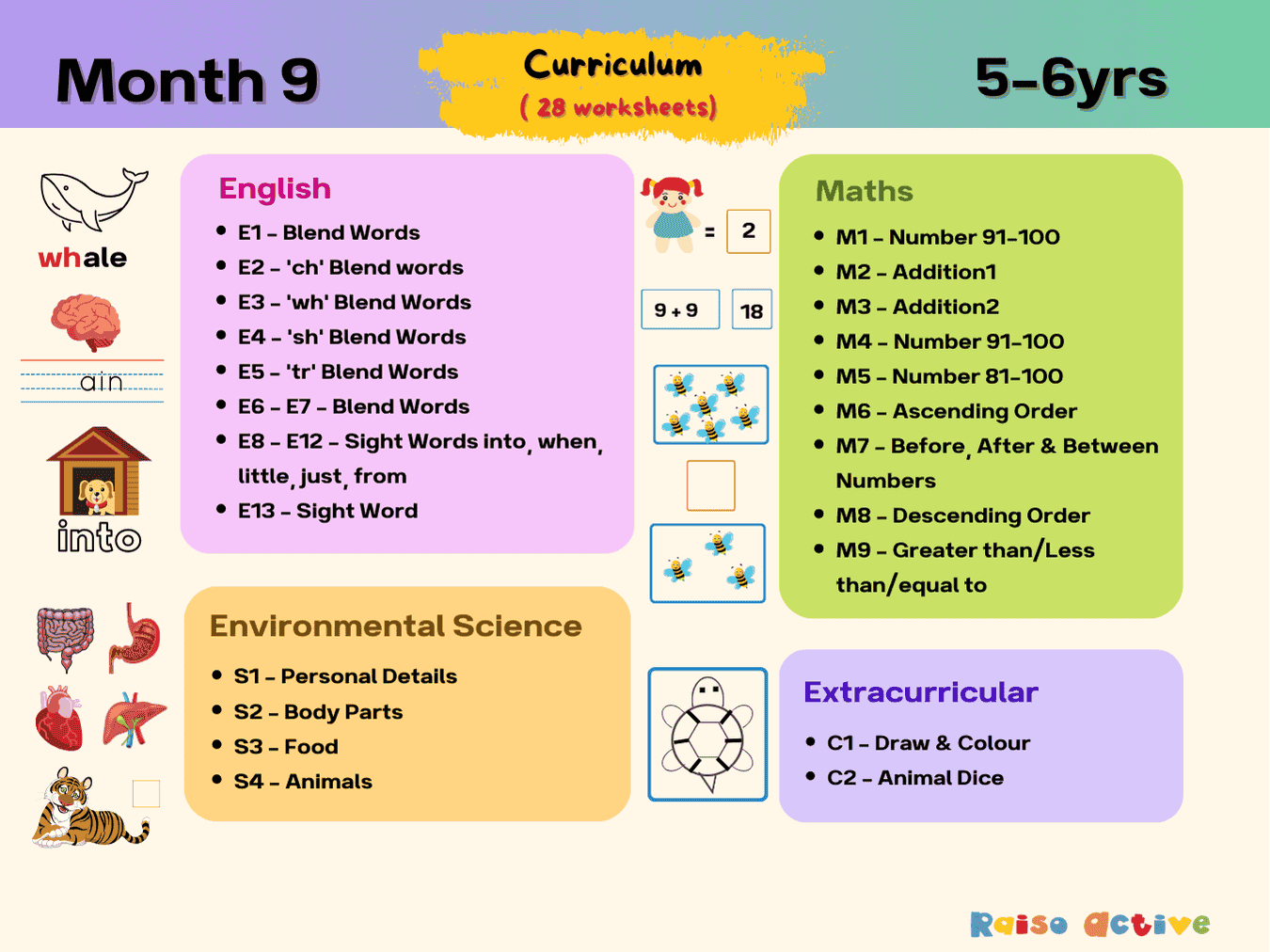
Month 9: Early Learning English Math Science | Ages 5-6
This is page 5 of the pack. Ages 5-6 · KindergartenAges 5-6 · Year 1Ages 5-6 · UKGAges 5-6
Made for your child
Spelling practice, made for your child
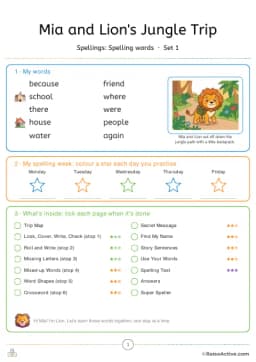
Their own spelling words turned into a pack: trace or look-cover-write-check, roll and write, a secret picture code, a word search, a crossword and a test, with their name in it.
Make a spelling packFree preview · free for members
Or start free: a word search with sight wordsCurriculum
- Phonics - Blends > Consonant Blends
How to use this worksheet
Read each 'ch' word aloud together first, emphasizing the digraph sound clearly at the start. Look at the pictures and the list of words provided below them, and have your child circle every word that begins with 'ch'. Once circled, reread each identified word together to reinforce the sound-symbol connection.
Materials needed
- Pencil
- Crayons
Extension activities
- 1Go on a 'ch' scavenger hunt around the house, finding objects like a chair, a chain, or cheese.
- 2Write a few silly sentences together using multiple 'ch' words in a row.
- 3Practice saying the 'ch' sound alone several times before attaching it to different words.
- 4Create simple flashcards for the circled 'ch' words for repeated quick review.

Written by
Hemsweta Jain · Teacher Cheena
MBA and Early Childhood Educator, teaching since 2014 · Founder of RaisoActive, Mumbai
Every RaisoActive worksheet is designed and checked by the founder before publishing.
Published · Last reviewed
More from Month 9: Early Learning English Math Science | Ages 5-6
Numbers 91-100 Cut and Paste Worksheet
Ages 4-6 · Pre-K–KindergartenAges 4-6 · Reception–Year 1Ages 4-6 · LKG–UKGAges 4-6
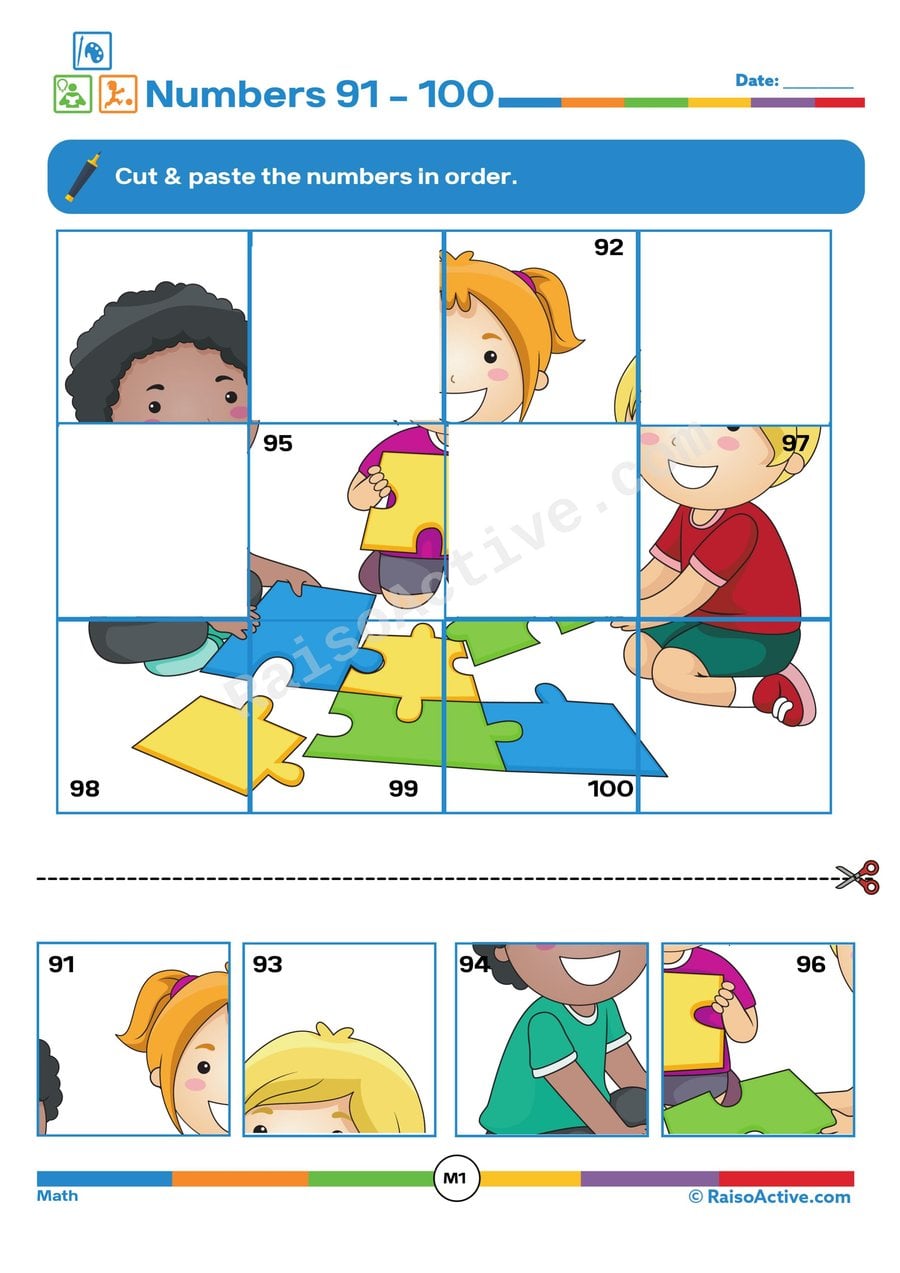
Working with the numbers 91 through 100 pushes children ages 4-6 into two-digit number recognition territory where patterns matter more than memorization, since recognizing that '9' stays constant while the second digit counts up helps children understand place value intuitively. Cutting apart number puzzle pieces and reassembling them in the correct order also demands careful sequencing and attention, since even one misplaced piece throws off the whole sequence. This hands-on, puzzle-based approach to number ordering makes practicing a fairly abstract skill much more concrete and engaging.

Animal Dice: Fun Movement Activity Worksheet for Kids
Ages 3-5 · Preschool–Pre-KAges 3-5 · Nursery–ReceptionAges 3-5 · Nursery–LKGAges 3-5
This hands-on activity combines craft-making with imaginative movement for children ages 3-5, having them build a paper dice and then act out the animal that lands face-up on each roll. Assembling the cube itself builds fine motor and spatial skills, since folding a flat template into a three-dimensional shape requires understanding how the sides connect. The movement portion that follows then builds gross motor skills, body awareness, and imaginative play as children physically embody different animals' distinctive movements, like hopping like a frog or slithering like a snake.
Sports Addition Worksheet for Kids
Ages 4-6 · Pre-K–KindergartenAges 4-6 · Reception–Year 1Ages 4-6 · LKG–UKGAges 4-6
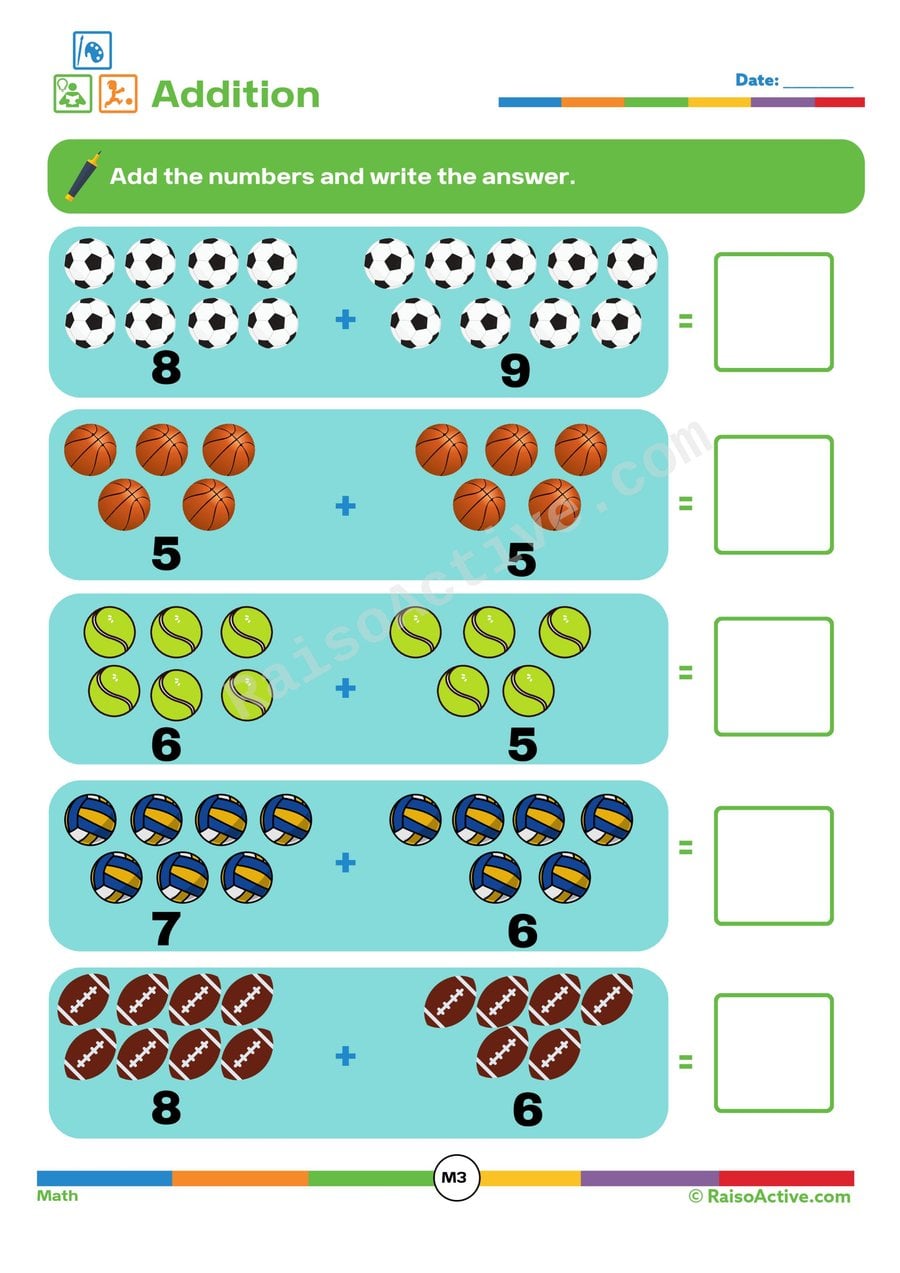
Featuring sports-themed pictures like balls, bats, and trophies, this worksheet gives children ages 4-6 engaging practice with simple addition, counting two separate sets of objects and combining them into a single total. Using a familiar, high-interest theme like sports can help maintain focus during repetitive counting practice, while still building the same foundational addition skills as any other worksheet.

My Personal Details Worksheet: Fill in the Blanks!
Ages 3-5 · Preschool–Pre-KAges 3-5 · Nursery–ReceptionAges 3-5 · Nursery–LKGAges 3-5
This worksheet has children ages 3-5 write their own name, age, and other basic personal information into labeled blanks, building both early writing practice and a sense of personal identity. Learning to write and recognize one's own personal details is a genuinely meaningful, motivating writing task for young children, since it's about themselves rather than an abstract exercise.

Blend Words Worksheet: Practice Blending Sounds with Pictures!
Ages 4-6 · Pre-K–KindergartenAges 4-6 · Reception–Year 1Ages 4-6 · LKG–UKGAges 4-6
This worksheet has children ages 4-6 practice blending two consonant sounds together at the start of a word by looking at a picture, saying the word, and writing in the missing blend to complete it. Unlike simply reading a finished blend word, this fill-in-the-blank format requires your child to actively recall which two letters combine to make the sound they hear, a more demanding skill than recognition alone. Strengthening blend spelling this way builds the foundation needed for more complex multisyllable words later in reading development.
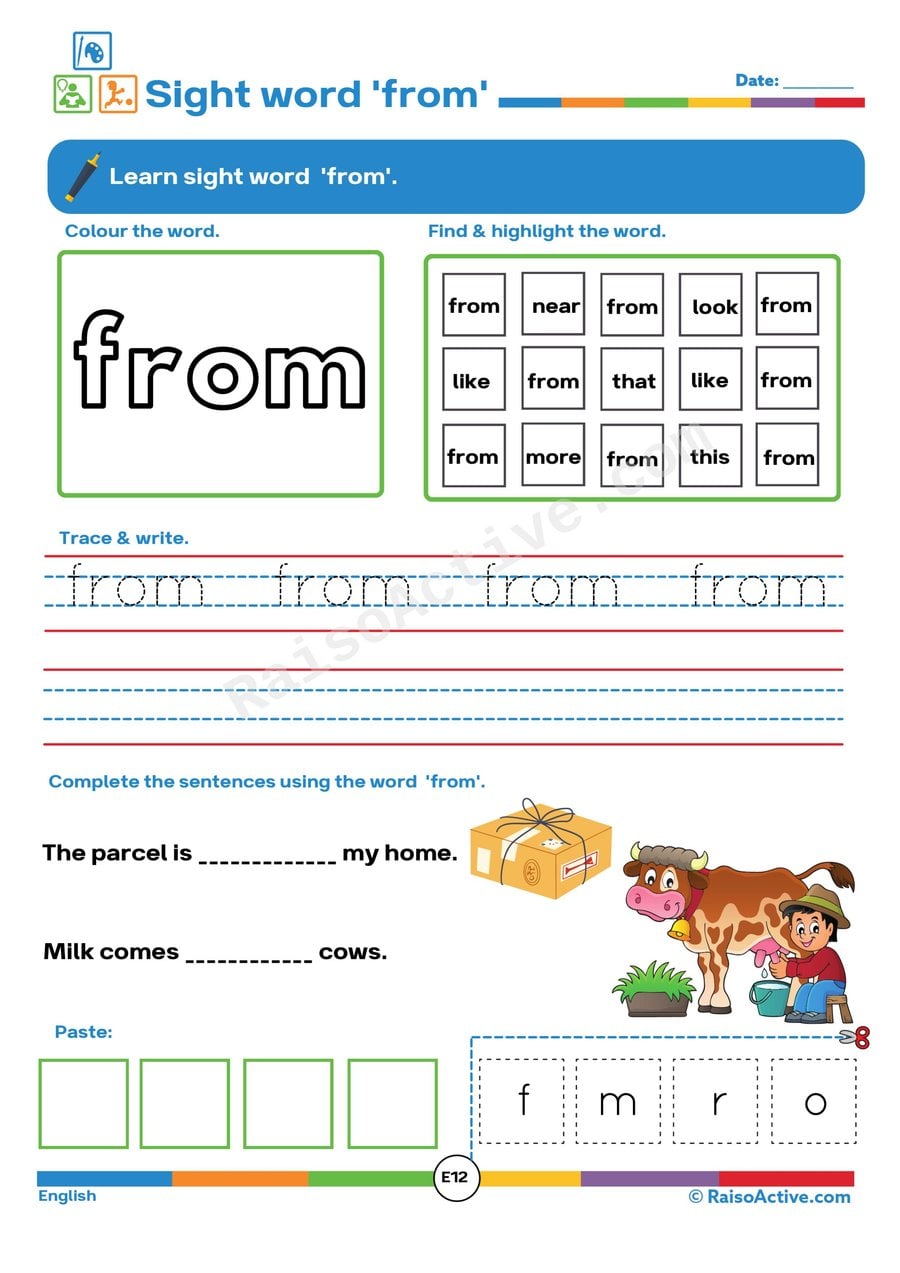
Sight Word 'From' Worksheet: Trace, Find, and Write!
Ages 4-5 · Pre-KAges 4-5 · ReceptionAges 4-5 · LKGAges 4-5
This worksheet targets the sight word 'from' through a five-step sequence of coloring, searching, tracing, writing, and sentence practice, giving children ages 4-5 the repeated, varied exposure needed to recognize this common word instantly rather than sounding it out each time. Because 'from' appears constantly in early reading material, building fluency with it directly supports smoother, more confident reading of simple sentences and books.

Descending Order Worksheet for Kids: Numbers 63-100
Ages 4-6 · Pre-K–KindergartenAges 4-6 · Reception–Year 1Ages 4-6 · LKG–UKGAges 4-6
Arranging numbers from largest to smallest asks children ages 4-6 to apply their counting knowledge in reverse, which is a genuinely different mental skill from counting forward and helps solidify a flexible, deep understanding of number order rather than rote recitation. Working within the 63 to 100 range also pushes children to compare two-digit numbers directly, deciding which of two numbers is bigger based on both digits rather than just the first one. This kind of descending practice complements ascending counting practice and rounds out a child's overall number sense.
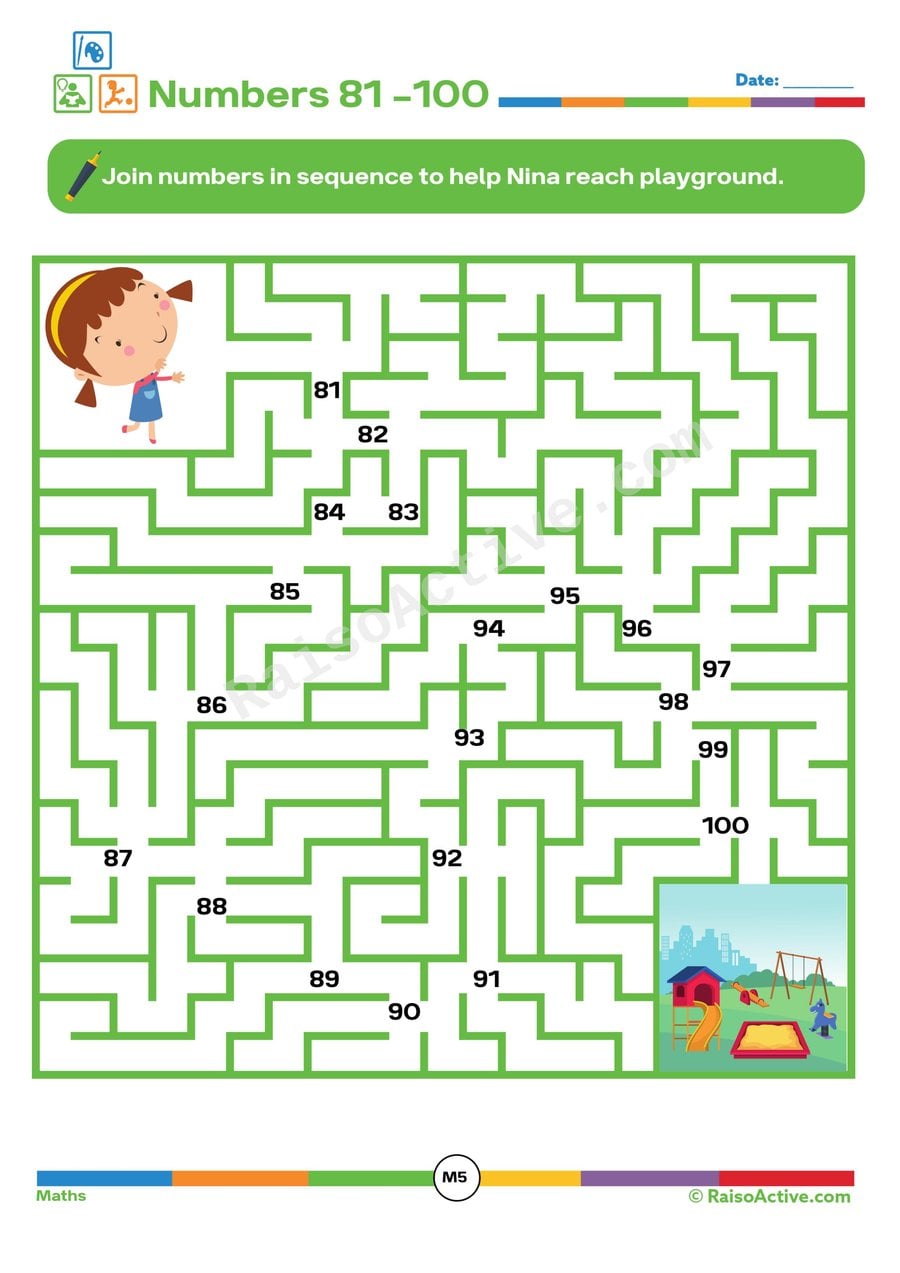
Nina's Playground Maze: Numbers 81-100 Worksheet
Ages 4-6 · Pre-K–KindergartenAges 4-6 · Reception–Year 1Ages 4-6 · LKG–UKGAges 4-6
This maze-style worksheet asks children ages 4-6 to trace a path by joining numbers in sequence from 81 to 100, combining number recognition and counting fluency with the fine motor demands of following a winding path. Because children must find the next correct number among several nearby options rather than simply reciting a memorized sequence, the activity sharpens visual scanning alongside numeracy. Successfully completing a 20-number sequence like this also builds stamina and confidence for handling longer counting ranges without losing track.
Related worksheets

Blend Words Worksheet: Fill in the Blanks with Beginning Blends!
Ages 4-6 · Pre-K–KindergartenAges 4-6 · Reception–Year 1Ages 4-6 · LKG–UKGAges 4-6
Children ages 4-6 practice identifying and writing beginning consonant blends, like 'bl', 'cr', or 'st', by looking at pictures and completing the missing letters to form the full word. This task requires connecting a spoken sound to its written letter combination, deepening phonics skills beyond single-letter sounds into multi-letter blends. Successfully building these words strengthens both spelling and reading fluency.
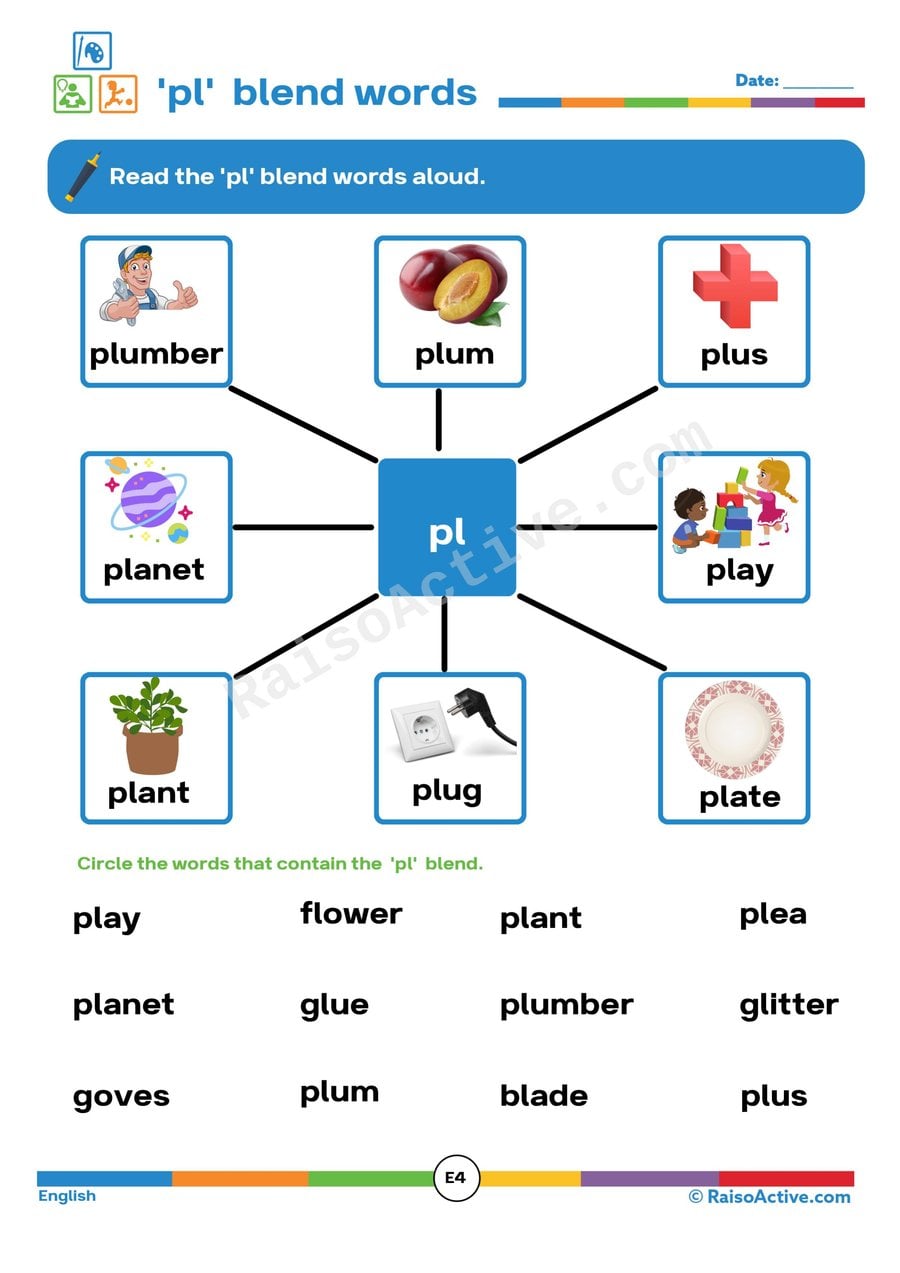
Pl Blend Words Worksheet for Preschoolers
Ages 4-6 · Pre-K–KindergartenAges 4-6 · Reception–Year 1Ages 4-6 · LKG–UKGAges 4-6
This worksheet targets the 'pl' consonant blend, helping children recognize and read words like 'play,' 'plane,' and 'plant' where two consonant sounds combine at the start of a word. For ages 4-6, mastering blends is a key phonics milestone that comes after single letter sounds, since blending two consonants together requires more advanced sound segmentation skills.
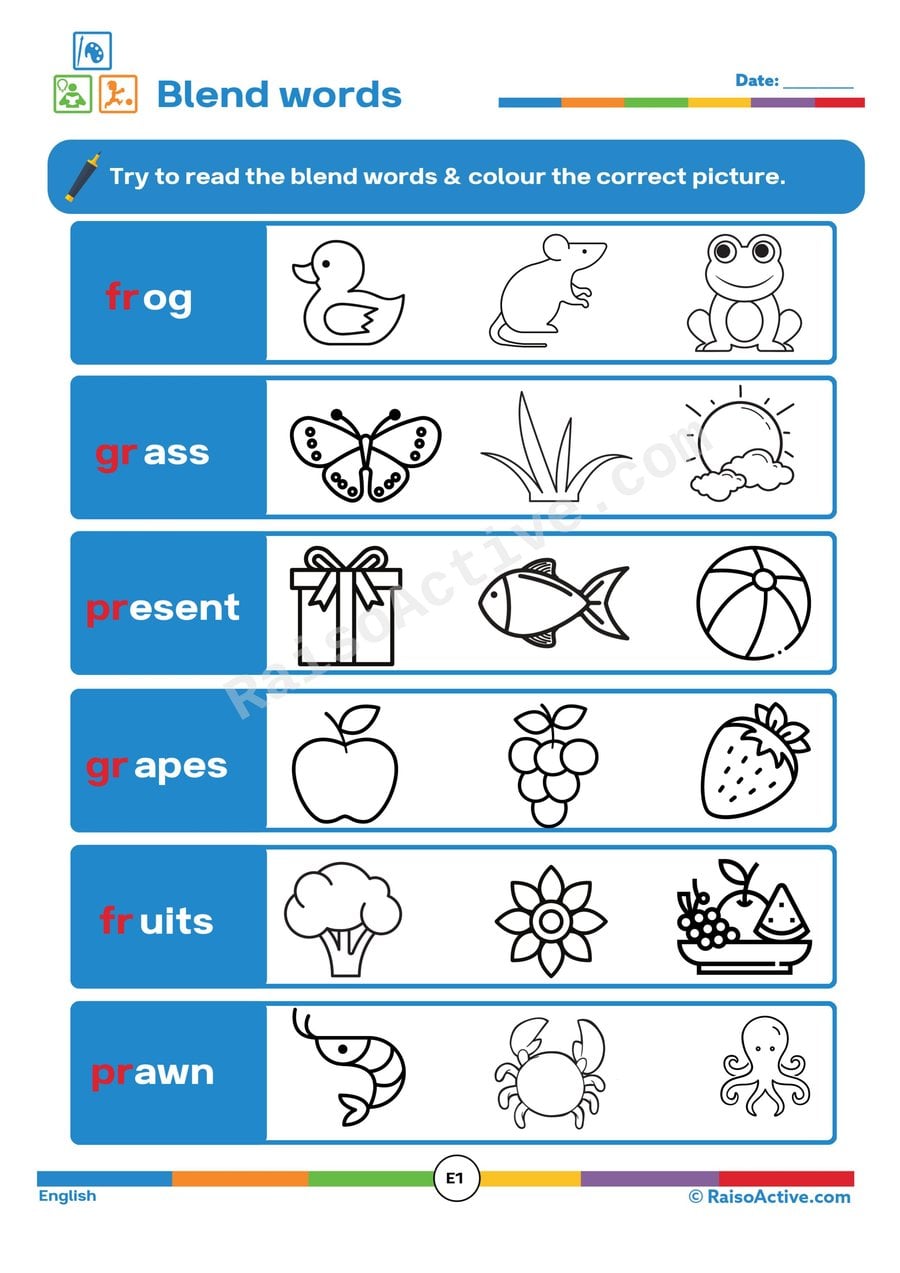
Blend Words Coloring Worksheet for Preschoolers
Ages 4-6 · Pre-K–KindergartenAges 4-6 · Reception–Year 1Ages 4-6 · LKG–UKGAges 4-6
Consonant blends, like 'bl,' 'st,' or 'fr,' require children ages 4-6 to read two consonant sounds together without a vowel between them, which is genuinely more demanding than single-consonant CVC words and represents an important next step in phonics progression. This worksheet asks children to read a blend word and then color the picture that matches it, giving an immediate visual check on whether they decoded the blend correctly. Because coloring is the reward for accurate reading, the activity keeps repeated blend practice feeling engaging rather than repetitive.

Cr Blend Words Worksheet for Preschoolers: Read & Match!
Ages 3-5 · Preschool–Pre-KAges 3-5 · Nursery–ReceptionAges 3-5 · Nursery–LKGAges 3-5
This worksheet has children read words starting with the 'cr' blend, like 'crab' or 'crayon,' and then match each one to its picture, building both decoding skill and the vocabulary connection between a written word and a real object. For ages three to five, hearing and producing the blended 'cr' sound also improves overall speech clarity, since blended consonants are often among the later sounds children master.

Sl Blend Words Worksheet: Read, Identify, and Circle!
Ages 4-6 · Pre-K–KindergartenAges 4-6 · Reception–Year 1Ages 4-6 · LKG–UKGAges 4-6
Reading and circling words that begin with the 'sl' consonant blend helps children ages 4-6 hear that two consonants pressed together, like s and l, still form one connected sound at the start of a word. This is a more advanced phonics skill than single-letter sounds, since children must blend two consonants smoothly rather than separating them. Recognizing blends like 'sl' in words such as 'slide' or 'sled' builds the decoding fluency needed to read longer, less predictable words independently.
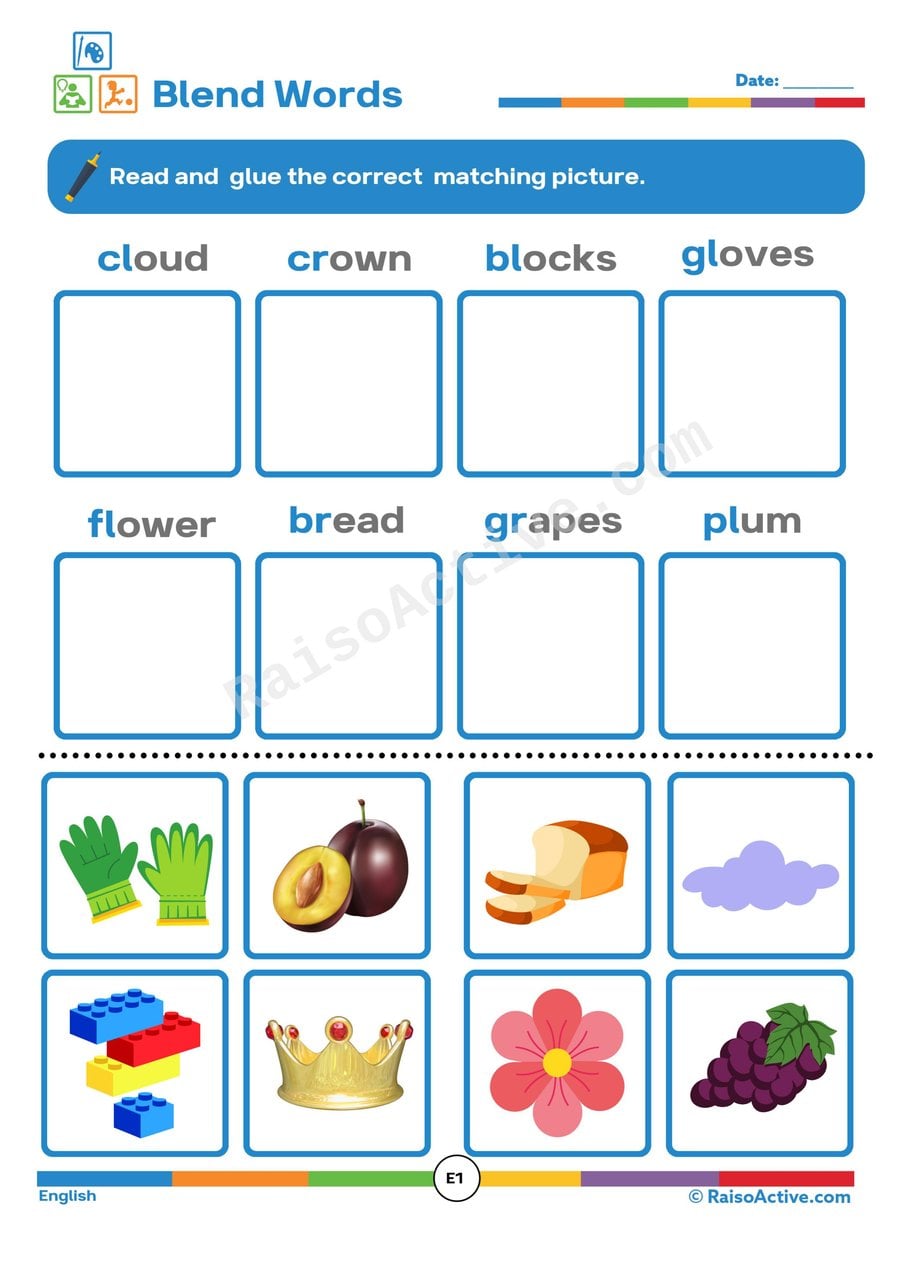
Blend Words Matching Worksheet for Preschoolers
Ages 4-5 · Pre-KAges 4-5 · ReceptionAges 4-5 · LKGAges 4-5
Children ages 4-5 practice reading consonant blend words — words that start with two consonant sounds blended together, like 'bl' or 'st' — and connecting them to the correct picture through a cut-and-paste matching activity. Blends are a step up in difficulty from single beginning sounds, since children must hear and produce two consonant sounds smoothly together, an important milestone on the way to more advanced phonics.
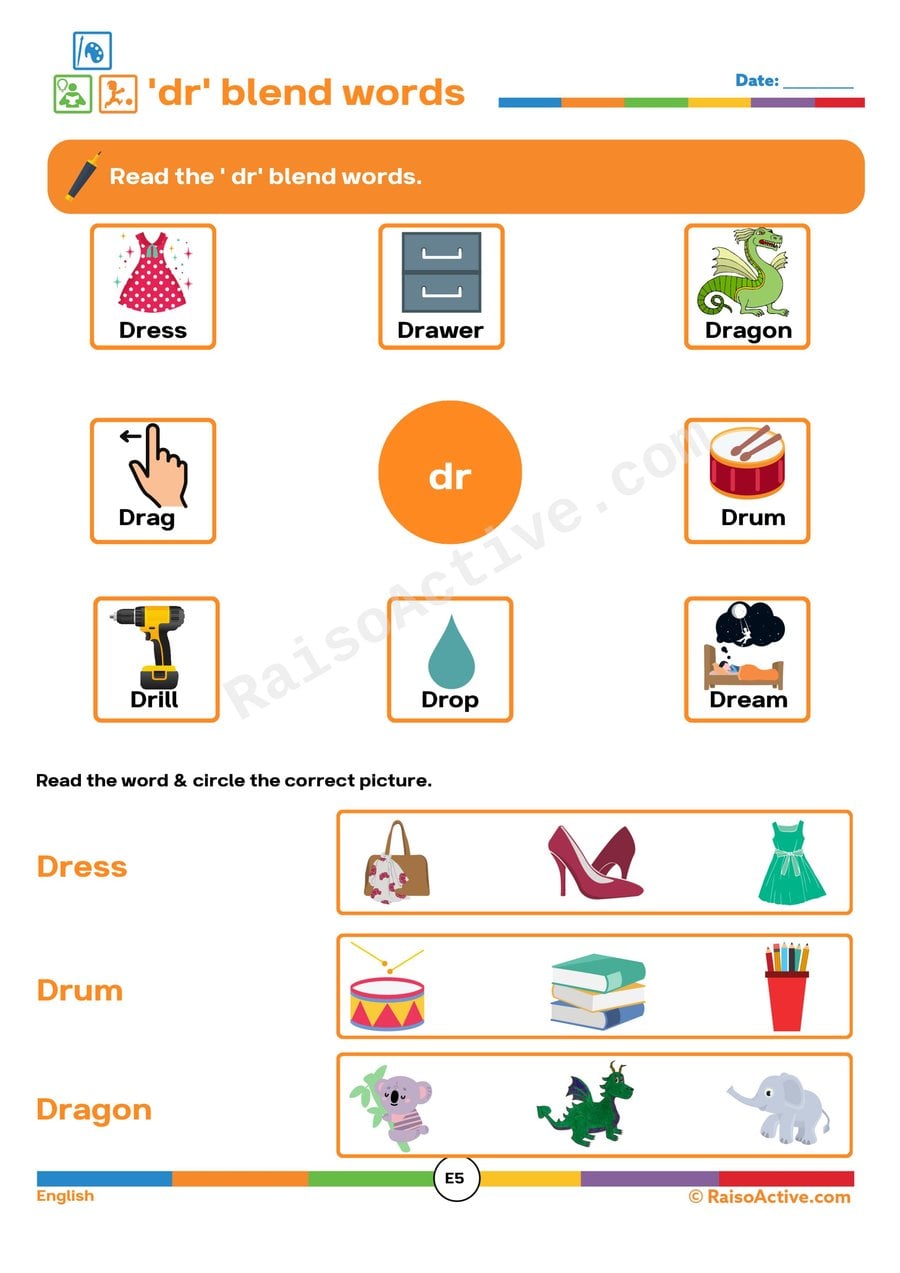
Dr Blend Words Worksheet: Read and Match!
Ages 4-6 · Pre-K–KindergartenAges 4-6 · Reception–Year 1Ages 4-6 · LKG–UKGAges 4-6
This worksheet focuses on the 'dr' blend, as in 'drum' or 'dress,' asking children to read the word first and then find its matching picture, which reverses the more common picture-first phonics approach and pushes children to truly decode the word rather than guess from an image. For ages four to six, reading the word independently before checking against a picture builds real decoding confidence.

Read and Circle: 'br' Blend Words Worksheet for Preschoolers
Ages 3-5 · Preschool–Pre-KAges 3-5 · Nursery–ReceptionAges 3-5 · Nursery–LKGAges 3-5
This worksheet trains children to hear and recognize the 'br' consonant blend at the start of words like 'bread' or 'brush,' building on single-letter phonics toward the more complex blended sounds that make up much of early reading vocabulary. For ages three to five, matching a read word to its picture also reinforces that written letters correspond to real, specific meanings rather than abstract symbols.
Guides for this topic

How to Teach CVC Blending: A Step-by-Step Method That Works in Two Weeks
A step-by-step method for teaching CVC blending, covering continuous sounds, word families, common errors, and a 14-day plan that most children finish reading CVC words.
Phase 2 Phonics at Home: Sound Order, Blending Games, Worksheets
Phase 2 phonics at home: the five sound sets in order, oral blending, tricky words, a two-week routine, common mistakes, and free worksheets.

Reception Year Explained: EYFS Learning and How to Help at Home
A teacher's plain-English guide to the Reception Year: the seven areas of learning, Early Learning Goals, Phase 2/3 phonics, the RBA and home routines.
Reviews
Every worksheet for ages 4–6, no watermark
Members download the full library of 1,000+ worksheets and every activity pack without watermarks or daily limits. One year costs ₹999 in India or $20 elsewhere.
See membership plansOr download any worksheet free with a watermark (5 a day).