Summer ABC Worksheet: Alphabetical Order Fun!
This worksheet has children ages 4-6 put a new set of summer words into alphabetical order, building on the comparison and sequencing skills involved in matching each word's first letter to its place in the alphabet. Because this task requires holding several words in mind at once and deciding their relative order, it strengthens working memory alongside letter-sequence knowledge. Repeated practice with alphabetizing across different word sets like this one helps the skill become more automatic over time.
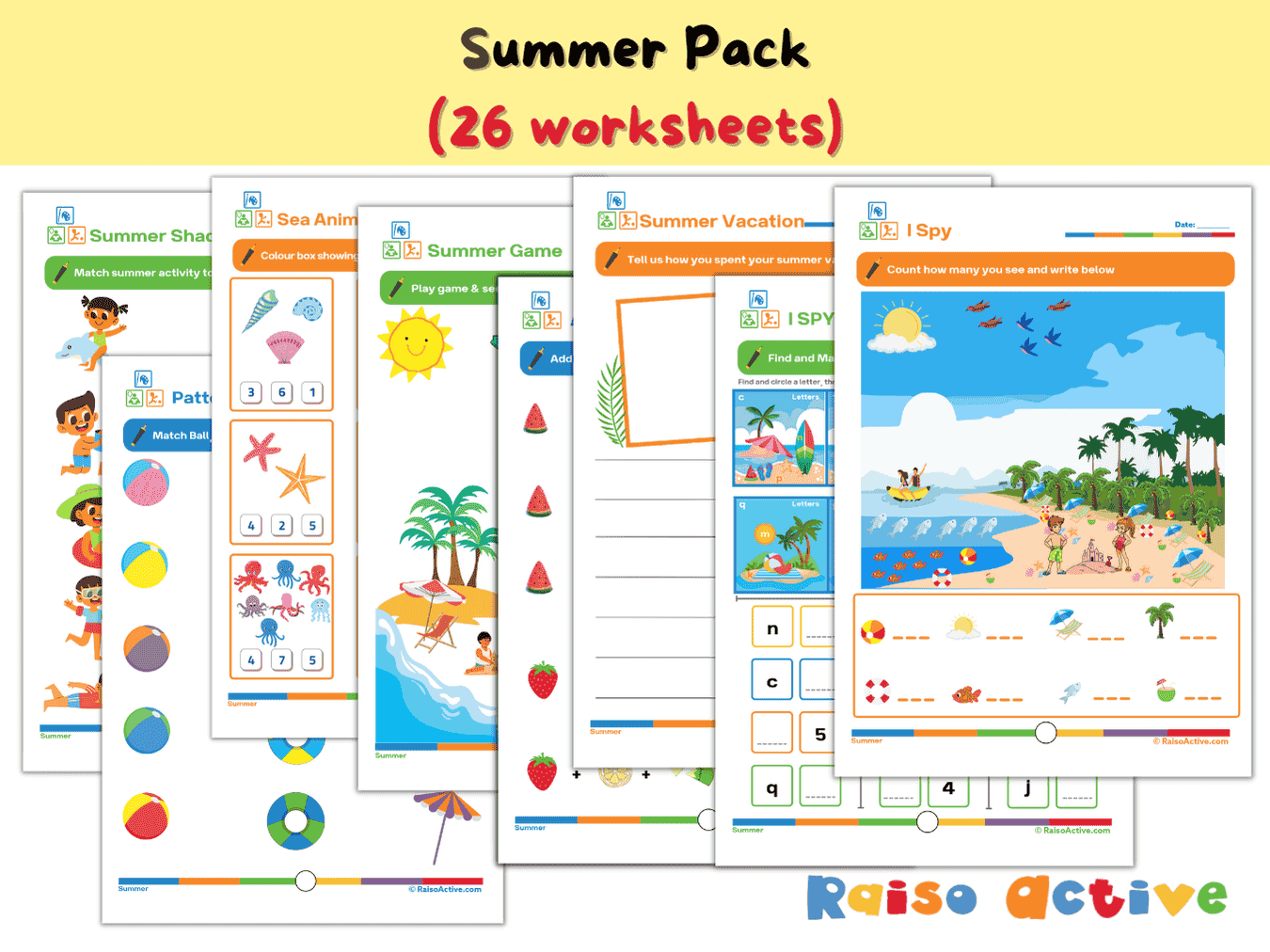
Part of the pack
Summer Activity Pack: Math, Literacy, Puzzles & More for Preschool & Kindergarten
This is page 20 of the pack. Ages 3-7 · Preschool–Grade 1Ages 3-7 · Nursery–Year 2Ages 3-7 · Nursery–Class 1Ages 3-7
Made for your child
A whole activity pack made with their name
60 pages to spot, build, trace and write their own name, plus pages about their favourites, feelings and family. See a free preview with their name.
Make an All About Me packFree preview · free for members
Or start free: a name tracing sheet with their nameCurriculum
- Writing > Letter Tracing A-Z
How to use this worksheet
Read the summer words at the top of the page aloud with your child, pointing to the first letter of each word as you go. Look at the alphabet guide at the bottom of the page together and help your child locate where each word's first letter falls. Guide them to write each word on the lines in the correct alphabetical order, double-checking their choices against the alphabet guide before finishing.
Materials needed
- Pencil
- Eraser
Extension activities
- 1Make a fresh list of summer words your child suggests and practice alphabetizing that new set together.
- 2Play a quick game finding letters of the alphabet in order around the house, like on books or toy letters.
- 3Draw a small picture for each summer word once it's written in order on the lines.
- 4Sing the alphabet song slowly together to reinforce the sequence before starting the worksheet.

Written by
Hemsweta Jain · Teacher Cheena
MBA and Early Childhood Educator, teaching since 2014 · Founder of RaisoActive, Mumbai
Every RaisoActive worksheet is designed and checked by the founder before publishing.
Published · Last reviewed
More from Summer Activity Pack: Math, Literacy, Puzzles & More for Preschool & Kindergarten

I Spy Summer Fun Worksheet: Counting and Identifying Objects!
Ages 3-5 · Preschool–Pre-KAges 3-5 · Nursery–ReceptionAges 3-5 · Nursery–LKGAges 3-5
This 'I Spy Summer Fun' worksheet helps young learners (ages 3-5) master one-to-one correspondence, a crucial foundational math skill, by counting specific summer-themed objects within a busy scene. Children will practice associating a number name with each item they touch or point to, building early number sense and visual discrimination. This activity strengthens their ability to accurately count quantities up to 20, preparing them for more complex mathematical concepts.
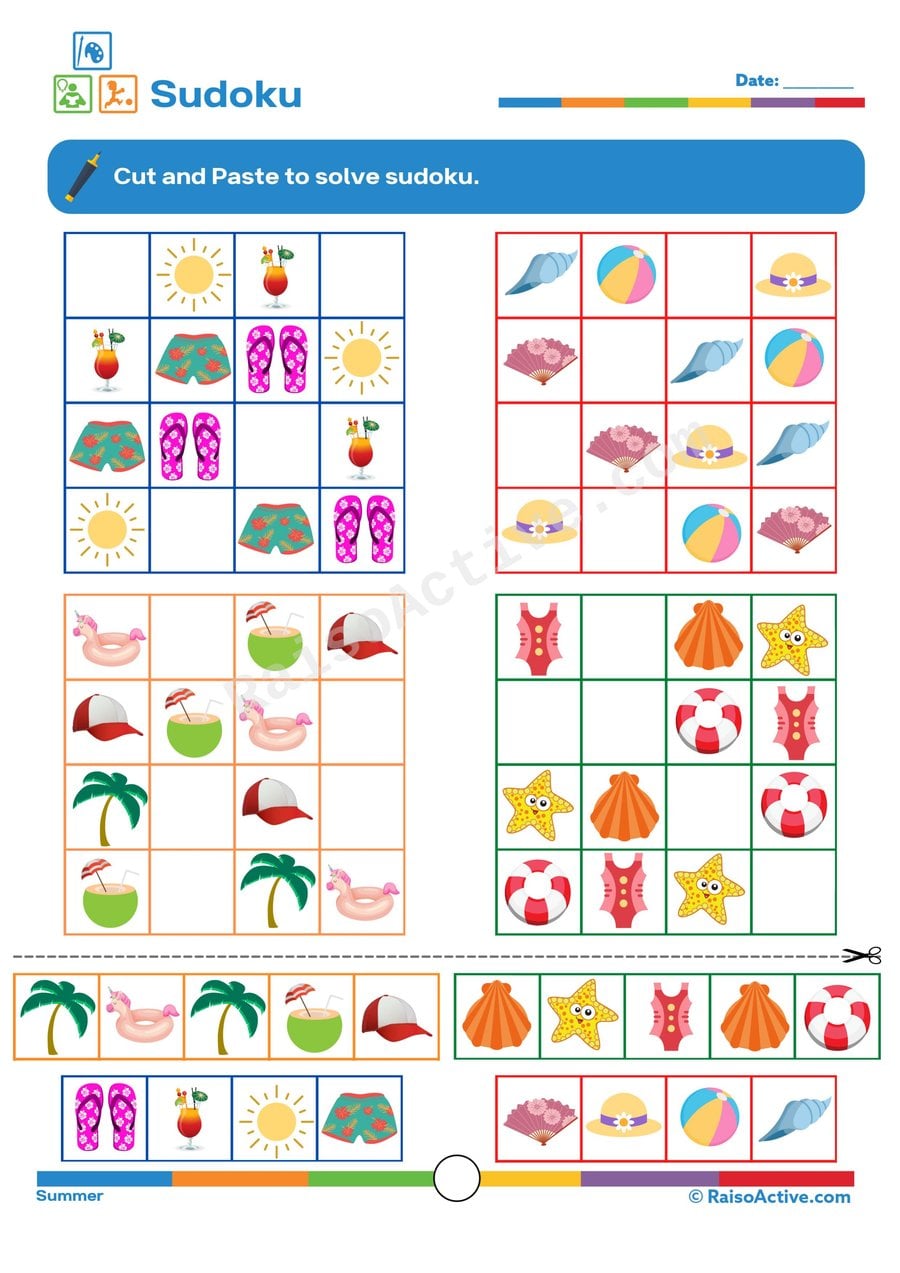
Summer Sudoku: Cut and Paste Worksheet for Kids
Ages 4-6 · Pre-K–KindergartenAges 4-6 · Reception–Year 1Ages 4-6 · LKG–UKGAges 4-6
This worksheet combines cutting and pasting with logical puzzle-solving for children ages 4-6, who must cut out small summer images and paste each one into the correct empty square of a Sudoku grid so no image repeats in any row, column, or smaller square. Beyond the reasoning skills of a typical Sudoku, this version adds scissor practice and precise placement with glue, building fine motor coordination alongside logical thinking. Handling small cut-out pieces and placing them accurately also demands more spatial planning than simply coloring or drawing a picture.
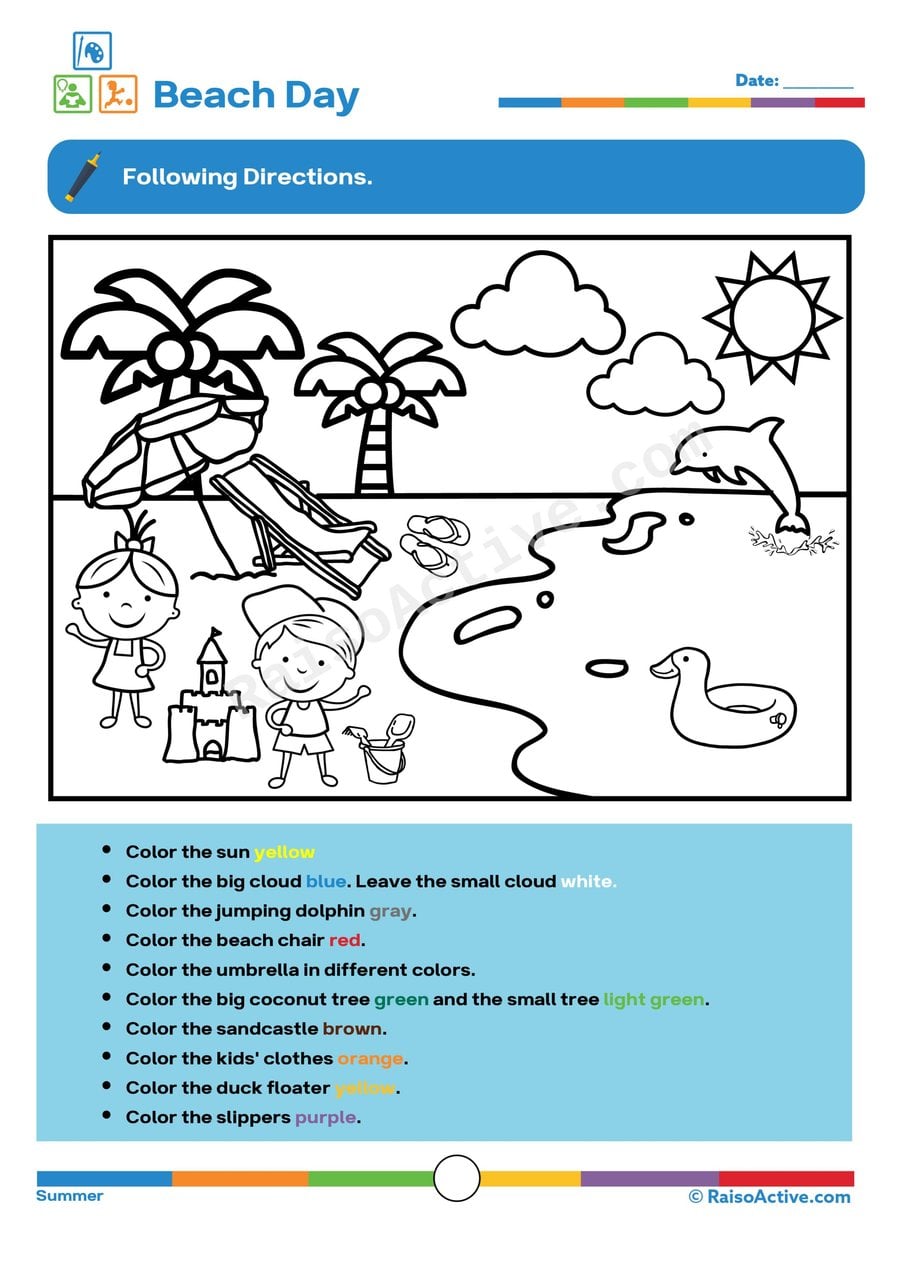
Beach Day Coloring Worksheet for Preschoolers
Ages 3-5 · Preschool–Pre-KAges 3-5 · Nursery–ReceptionAges 3-5 · Nursery–LKGAges 3-5
This worksheet has children ages 3-5 read or listen to specific color instructions, like coloring the sun yellow and a cloud blue, and then apply the correct color to each part of a beach scene. Following multi-part color instructions builds listening comprehension and the ability to hold several separate directions in mind at once, both important readiness skills for classroom instructions. It also reinforces color-word vocabulary and fine motor control as children color within the lines of each shape.

Summer Counting Worksheet: Count and Color Summer Objects!
Ages 3-5 · Preschool–Pre-KAges 3-5 · Nursery–ReceptionAges 3-5 · Nursery–LKGAges 3-5
This worksheet has children ages 3-5 count summer objects arranged in separate boxes and write the matching number below each group, giving repeated practice at connecting a counted quantity to its written numeral across several small sets. Working through multiple separate boxes, rather than one long row, keeps each counting task short and manageable while still building the stamina to repeat the process several times in a row. This structure also helps children generalize the skill of counting and labeling rather than memorizing a single group's answer.
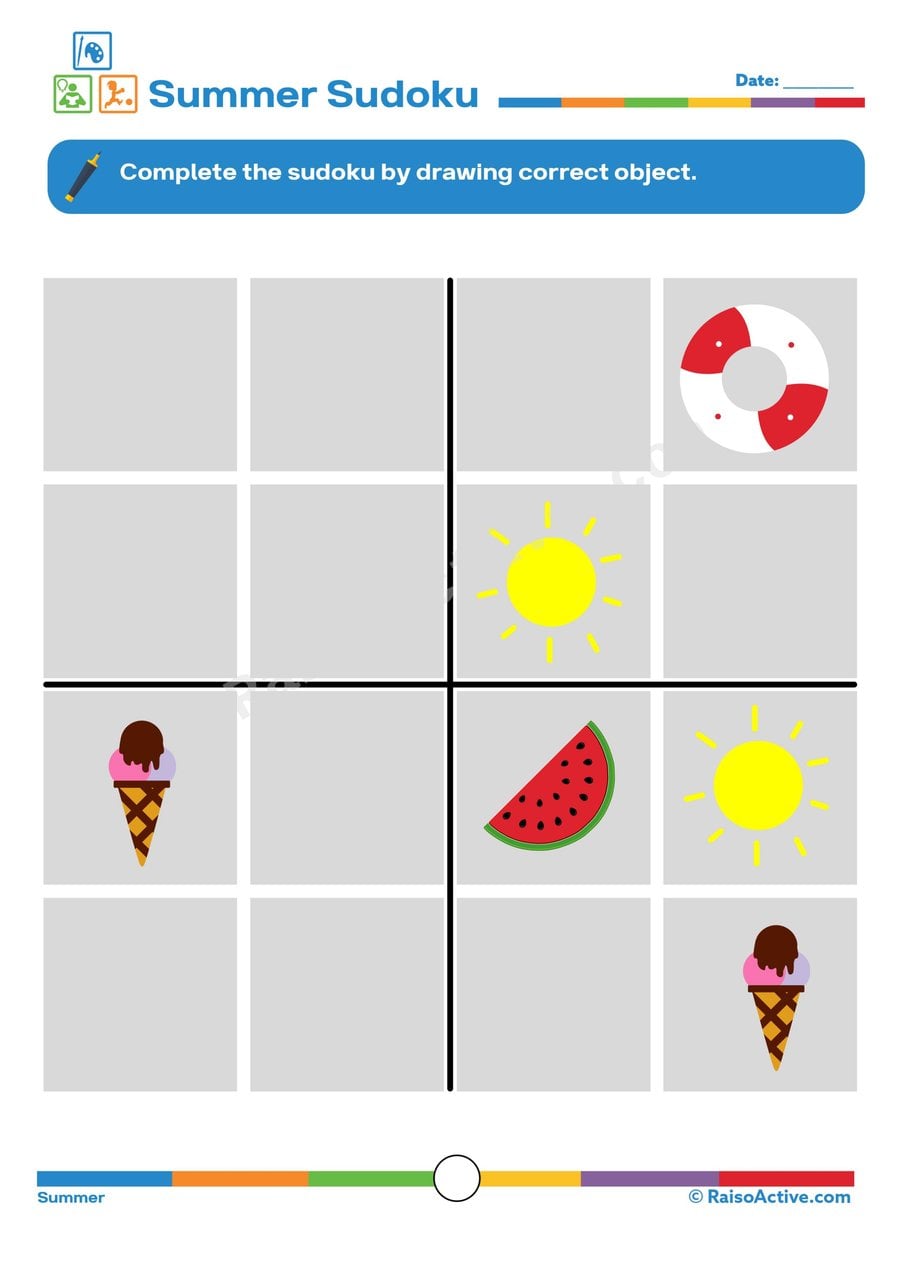
Summer Sudoku Worksheet for Kids
Ages 4-6 · Pre-K–KindergartenAges 4-6 · Reception–Year 1Ages 4-6 · LKG–UKGAges 4-6
This simplified Sudoku puzzle has children ages 4-6 fill empty boxes with summer pictures so each row, column, and small 2x2 square contains every image exactly once, introducing early logical reasoning through visual clues instead of numbers. Because the grid uses a smaller 2x2 structure rather than the larger 3x3 blocks used in classic Sudoku, it's an accessible entry point into the process of elimination that more advanced logic puzzles require. Completing it builds patience and systematic thinking, since guessing randomly rarely works.

Summer Fun: Find, Match, and Write Letters and Numbers Worksheet
Ages 3-5 · Preschool–Pre-KAges 3-5 · Nursery–ReceptionAges 3-5 · Nursery–LKGAges 3-5
This worksheet combines three skills in one activity for children ages 3-5: finding a target letter, matching it to a corresponding number, and then writing the letter independently. Working through find, match, and write in sequence builds sustained attention across multiple steps, which is an important readiness skill for the multi-part instructions children will encounter in kindergarten. It also reinforces both letter recognition and number recognition side by side rather than practicing them separately.

Count the Sea Animals! A Fun Counting Worksheet for Kids
Ages 3-5 · Preschool–Pre-KAges 3-5 · Nursery–ReceptionAges 3-5 · Nursery–LKGAges 3-5
This worksheet has children ages 3-5 count different sea animals grouped in boxes and then identify the matching numeral for each group, strengthening one-to-one correspondence alongside early ocean and marine-life vocabulary. Because each box features a different sea creature, such as fish, crabs, or starfish, children also practice sorting attention between groups rather than counting one long continuous row. This variety keeps the counting task from becoming rote repetition.
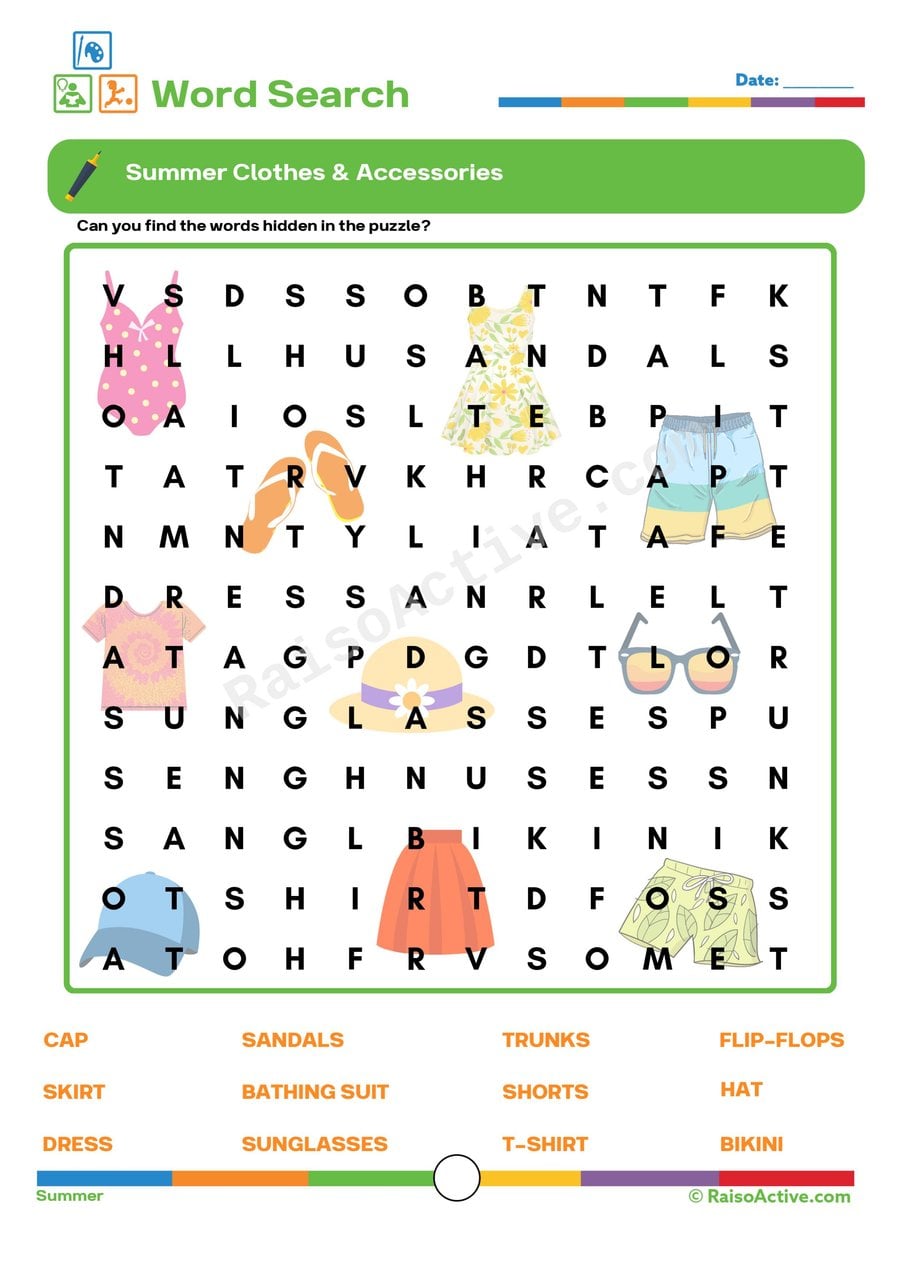
Summer Clothes Word Search Worksheet for Kids
Ages 3-5 · Preschool–Pre-KAges 3-5 · Nursery–ReceptionAges 3-5 · Nursery–LKGAges 3-5
Scanning a letter grid to find whole words — sunhat, swimsuit, sandals — builds visual tracking and left-to-right scanning skills that carry directly over into reading full sentences later. Because every word on this list relates to summer clothing, it also reinforces a themed vocabulary cluster, which research on early reading shows helps new words stick better than unrelated word lists.
Related worksheets

Alphabet U-Z Worksheet: Find the Letter and Count!
Ages 4-6 · Pre-K–KindergartenAges 4-6 · Reception–Year 1Ages 4-6 · LKG–UKGAges 4-6
This worksheet extends alphabet mastery to the less-practiced letters U through Z for children ages 4-6, combining beginning-sound identification with a counting task for each object pictured. Because letters at the end of the alphabet appear less often in early reading material, dedicated practice here helps round out full alphabet fluency, while the counting component keeps numeracy skills active alongside literacy.
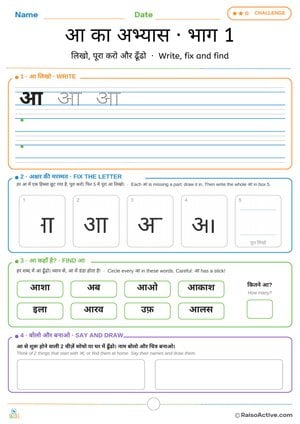
Hindi Letter आ Practice Part 1: Write, Fix and Find | आ का अभ्यास · भाग 1
Ages 3-7 · Preschool–Grade 1Ages 3-7 · Nursery–Year 2Ages 3-7 · Nursery–Class 1Ages 3-7
Children write आ on guide lines, complete four partly drawn letters, circle आ in eight words (while avoiding its look-alike अ), count how many they found, then think of two more words at home that start with आ and draw them.
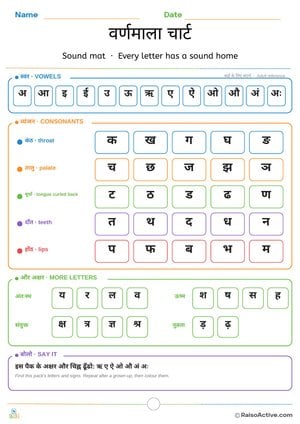
Hindi Varnmala Sound Mat – Hindi Vowels Part 2 Reference Chart | वर्णमाला चार्ट
Ages 3-7 · Preschool–Grade 1Ages 3-7 · Nursery–Year 2Ages 3-7 · Nursery–Class 1Ages 3-7
A reference chart of the vowels and consonants, grouped by where the sound is made (throat, palate, tongue curled back, teeth, lips). In this pack it is used to find and point to ऋ ए ऐ ओ औ अं अः, not to learn every letter at once.
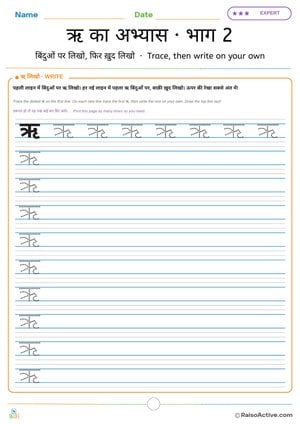
Hindi Letter ऋ (ri) Practice 2: Trace, then Write on Your Own | ऋ का अभ्यास · भाग 2
Ages 5-7 · Kindergarten–Grade 1Ages 5-7 · Year 1–Year 2Ages 5-7 · UKG–Class 1Ages 5-7
An expert page for confident writers: trace the dotted ऋ on the first line, then on each new line trace the first ऋ and write the rest on your own, adding the top line last.

Plant Parts Worksheet: Identify and Label the Parts of a Plant!
Ages 4-6 · Pre-K–KindergartenAges 4-6 · Reception–Year 1Ages 4-6 · LKG–UKGAges 4-6
This worksheet teaches children ages 4-6 to identify and independently label the flower, stem, leaf, and roots of a plant, moving a step beyond simple matching toward recalling vocabulary from memory. Optionally adding pulses or grains to the diagram introduces a tactile, sensory layer that helps reinforce which part is which through touch as well as sight.
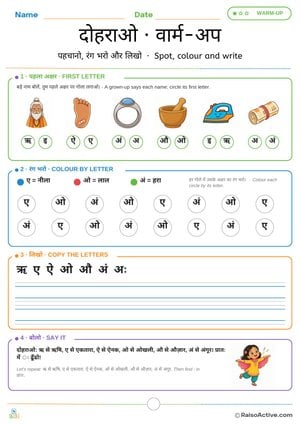
Hindi Vowels Part 2 Revision: Spot, Colour and Write | दोहराओ – वार्म-अप
Ages 3-7 · Preschool–Grade 1Ages 3-7 · Nursery–Year 2Ages 3-7 · Nursery–Class 1Ages 3-7
A warm-up revision: circle the first letter of each picture word, colour circles by letter (ए blue, ओ red, अं green), copy the seven letters and repeat the words ऋषि, एकतारा, ऐनक, ओखली, औज़ार and अंगूर.
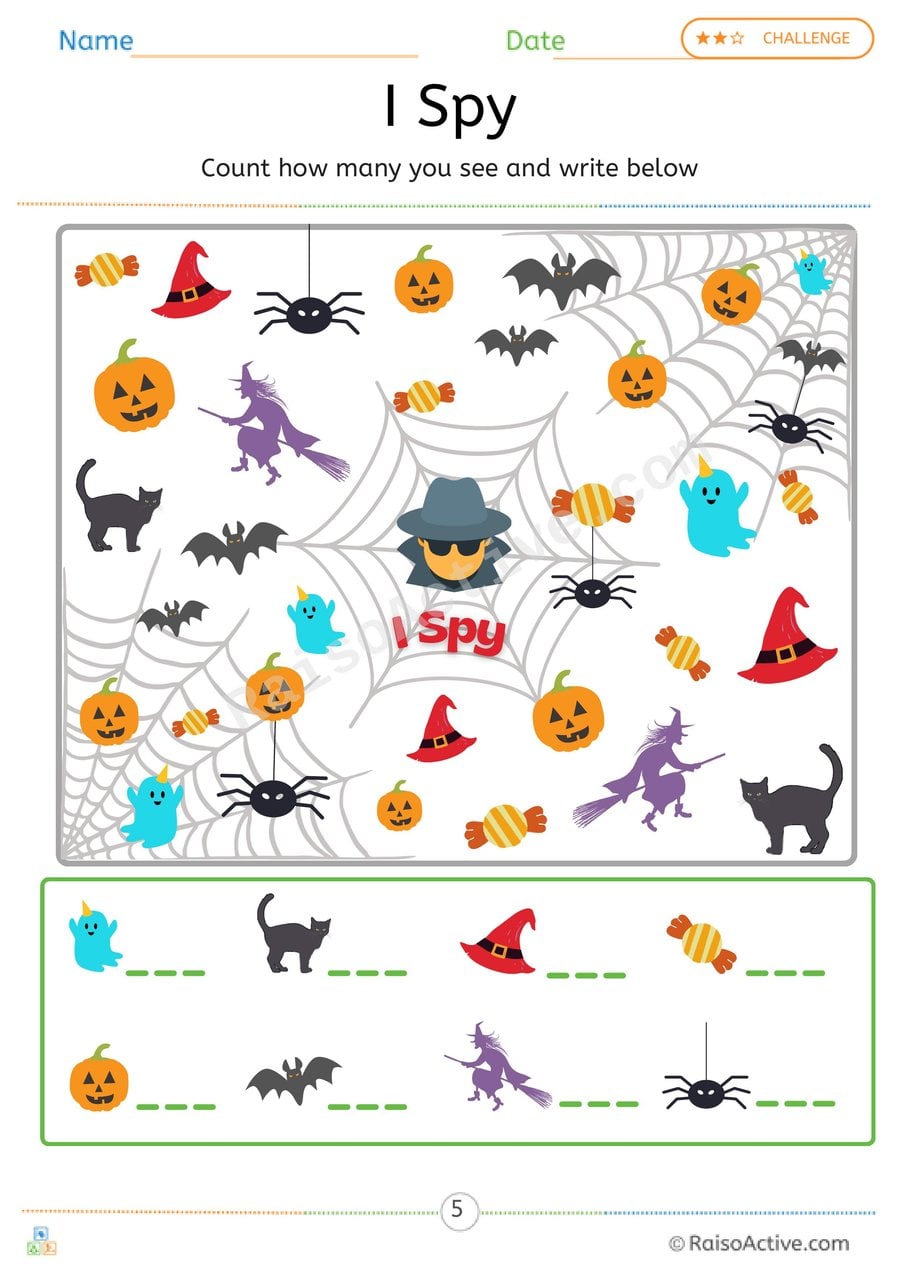
I Spy Halloween Worksheet: Count and Write!
Ages 4-6 · Pre-K–KindergartenAges 4-6 · Reception–Year 1Ages 4-6 · LKG–UKGAges 4-6
This 'I Spy' worksheet has children ages 4-6 scan a busy Halloween scene to count how many of each specific object appear, then write the total as a numeral, combining visual search skills with number-writing practice. Because several object types are mixed together in one picture, children must also stay organized and avoid recounting the same object twice.
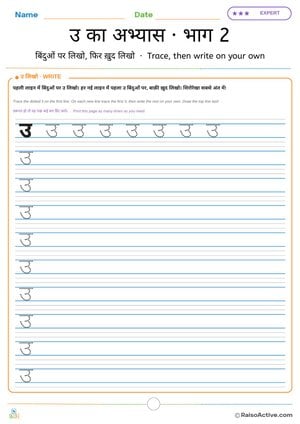
Hindi Letter उ Practice Part 2: Trace and Write on Your Own | उ का अभ्यास · भाग 2
Ages 3-7 · Preschool–Grade 1Ages 3-7 · Nursery–Year 2Ages 3-7 · Nursery–Class 1Ages 3-7
Children build writing fluency by tracing the dotted line उ on the first line and then writing the letter on their own, line after line, as the dotted help fades. The headline (शिरोरेखा) is drawn last, as in Hindi handwriting.
Guides for this topic

Documenting Learning Without Drowning in Data: A Practical Guide for Parents and Teachers
Learn practical ways to document your child's learning without overwhelm. Simple portfolios, observation tips, and printable trackers for ages 1-8.
Bridging Two Worlds: A Complete Guide to Teaching Heritage Languages Alongside English
A practical guide to raising bilingual children who speak both their heritage language and English with confidence. Research-backed strategies, activities, and tips for Indian families.

How to Help Your Child with Letter Reversals: A Complete Guide for Parents and Teachers
Letter reversals are normal until age 7-8. Learn the best multisensory strategies, anchor letter tricks, and activities to help children write b, d, p, and q correctly.
Reviews
Every worksheet for ages 4–6, no watermark
Members download the full library of 1,000+ worksheets and every activity pack without watermarks or daily limits. One year costs ₹999 in India or $20 elsewhere.
See membership plansOr download any worksheet free with a watermark (5 a day).