Sight Word Search and Reading Comprehension Worksheet for Preschoolers
This worksheet combines three literacy skills for children ages 4-6 in one activity: reading a short story and spotting sight words within it, answering comprehension questions about what happened, and finding those same sight words hidden in a word search grid. Practicing the same words across reading, comprehension, and search formats gives children multiple angles of exposure that build genuine reading confidence rather than rote memorization.
Part of the pack
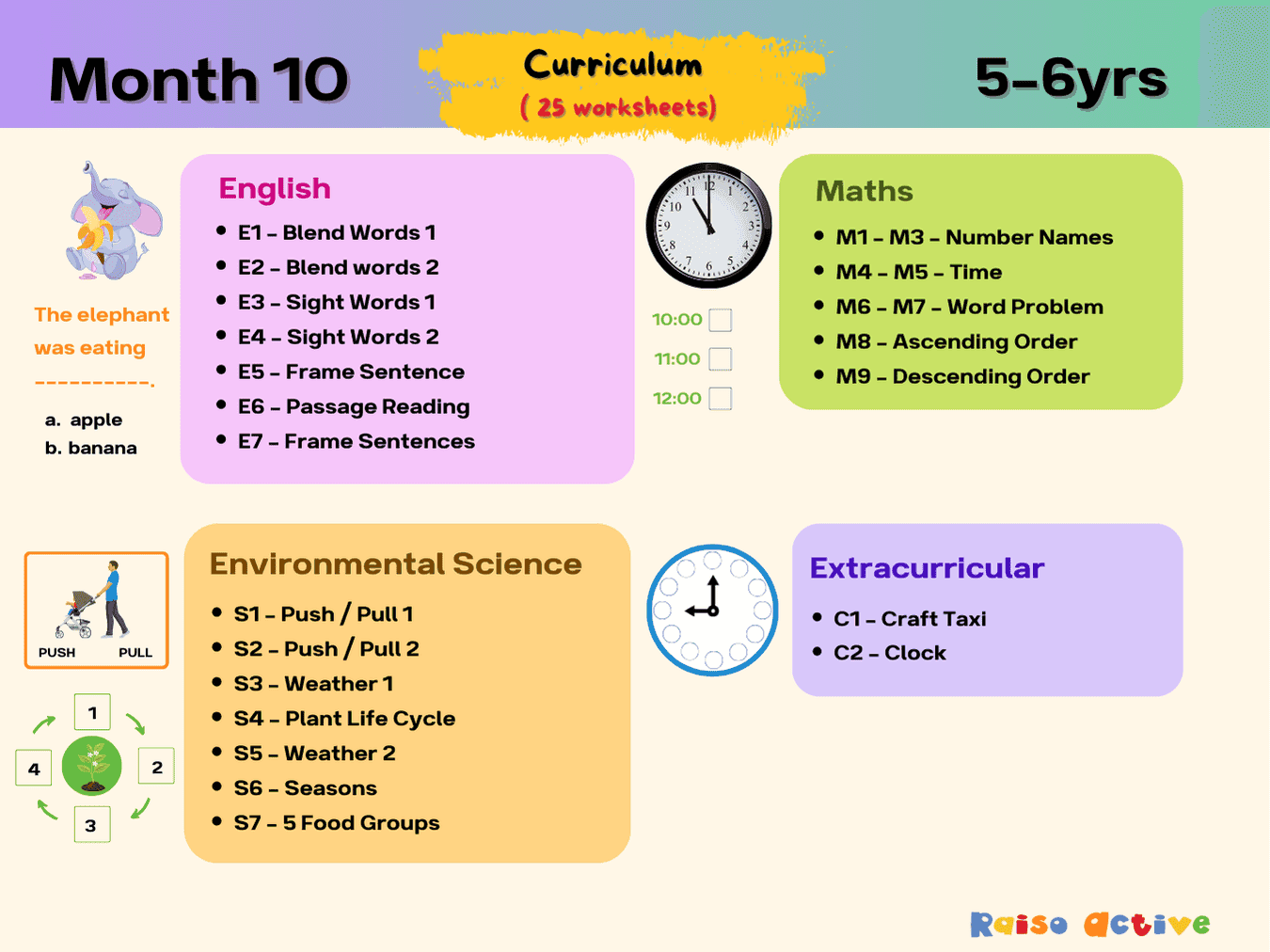
Month 10: Learning & Development | Ages 5-6
This is page 7 of the pack. Ages 5-6 · KindergartenAges 5-6 · Year 1Ages 5-6 · UKGAges 5-6
Made for your child
Spelling practice, made for your child
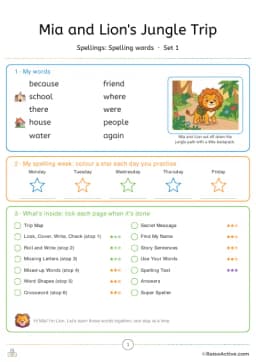
Their own spelling words turned into a pack: trace or look-cover-write-check, roll and write, a secret picture code, a word search, a crossword and a test, with their name in it.
Make a spelling packFree preview · free for members
Or start free: a word search with sight wordsCurriculum
- Fluency > Sight Words
How to use this worksheet
Start by reading the short story together, pointing to and coloring each sight word as you spot it within the text. Next, look at the comprehension questions about the story and talk through the answers together before your child writes or circles their responses. Finally, move to the word search grid and have your child scan row by row, circling each sight word as they find it, checking off the word list as they go.
Materials needed
- Pencil
- Crayons
Extension activities
- 1Write a new sentence using one of the sight words found in the story.
- 2Draw a picture to go along with a favorite part of the story.
- 3Retell the story in your own words without looking at the page, then check the details together.
- 4Time how long it takes to find all the words in the search, then try beating that time on a second attempt.

Written by
Hemsweta Jain · Teacher Cheena
MBA and Early Childhood Educator, teaching since 2014 · Founder of RaisoActive, Mumbai
Every RaisoActive worksheet is designed and checked by the founder before publishing.
Published · Last reviewed
More from Month 10: Learning & Development | Ages 5-6
Time Telling Worksheet: What Time Is It? (3-5)
Ages 3-5 · Preschool–Pre-KAges 3-5 · Nursery–ReceptionAges 3-5 · Nursery–LKGAges 3-5
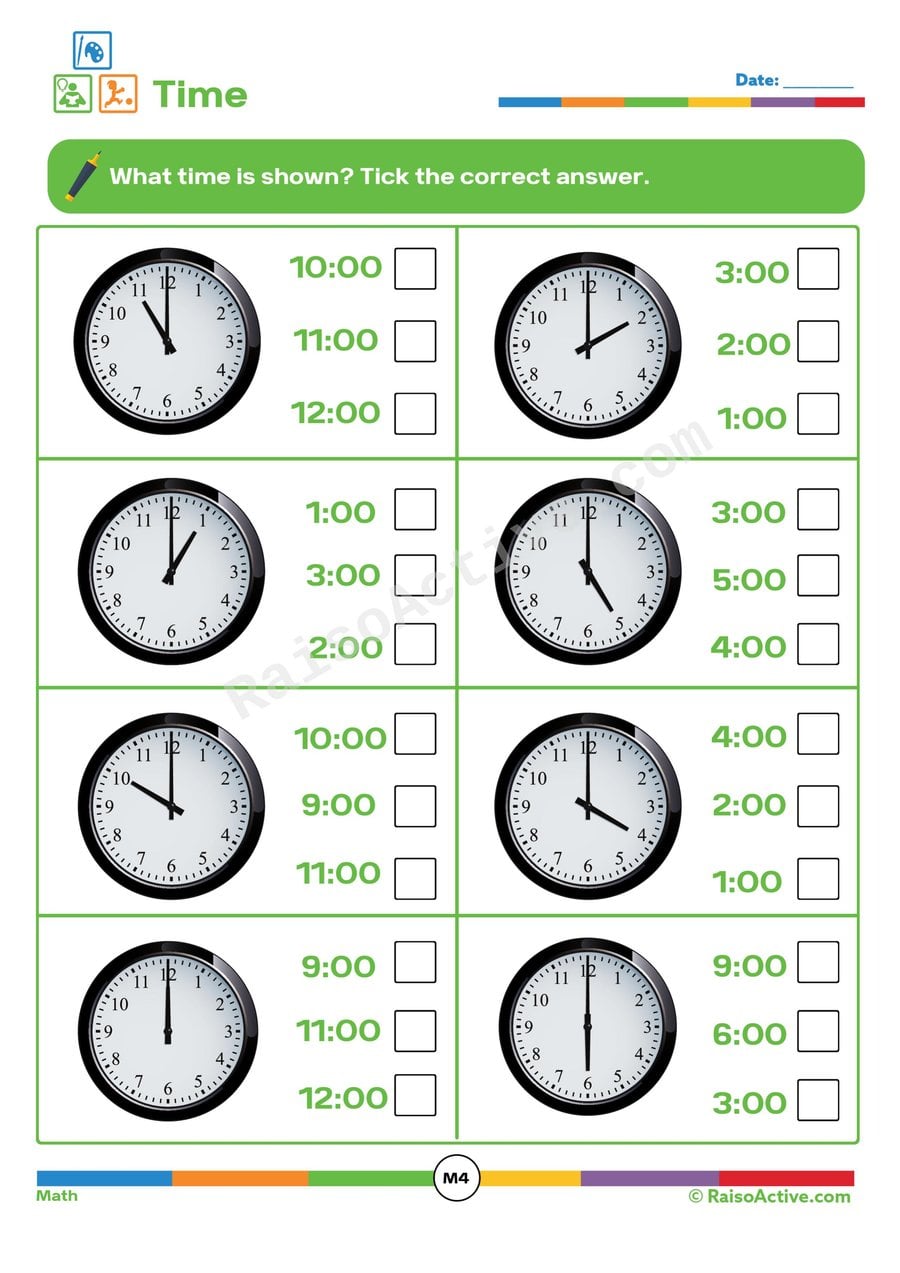
This worksheet introduces children ages 3-5 to analog clock reading at its simplest level, asking them to look at a clock face and choose the correct time from a set of answer options rather than writing it independently. Multiple-choice format lowers the barrier for this genuinely difficult skill, letting younger children build early clock familiarity before they're expected to read time unaided.

Food Group Sorting Worksheet for Kids: Cut and Paste!
Ages 3-5 · Preschool–Pre-KAges 3-5 · Nursery–ReceptionAges 3-5 · Nursery–LKGAges 3-5
Children ages 3-5 learn to sort familiar foods into the five major food groups — vegetables, fruits, dairy, meat and fish, and grains — building an early foundation for understanding balanced nutrition. Cutting and gluing each food item into its correct category also strengthens scissor control and hand-eye coordination alongside the health and classification learning.

Number Names Worksheet: Addition Practice for Kids
Ages 4-6 · Pre-K–KindergartenAges 4-6 · Reception–Year 1Ages 4-6 · LKG–UKGAges 4-6
This worksheet combines addition practice with number-word writing for children ages 4-6, asking them to solve simple addition problems and then spell out the answer using its written name rather than a numeral. Requiring the answer in word form pushes children beyond calculation into applying number vocabulary correctly, reinforcing that 'seven' and '7' represent the same value. This dual task builds both math fluency and early spelling skills together.
Push or Pull Worksheet: Identify Actions!
Ages 3-5 · Preschool–Pre-KAges 3-5 · Nursery–ReceptionAges 3-5 · Nursery–LKGAges 3-5
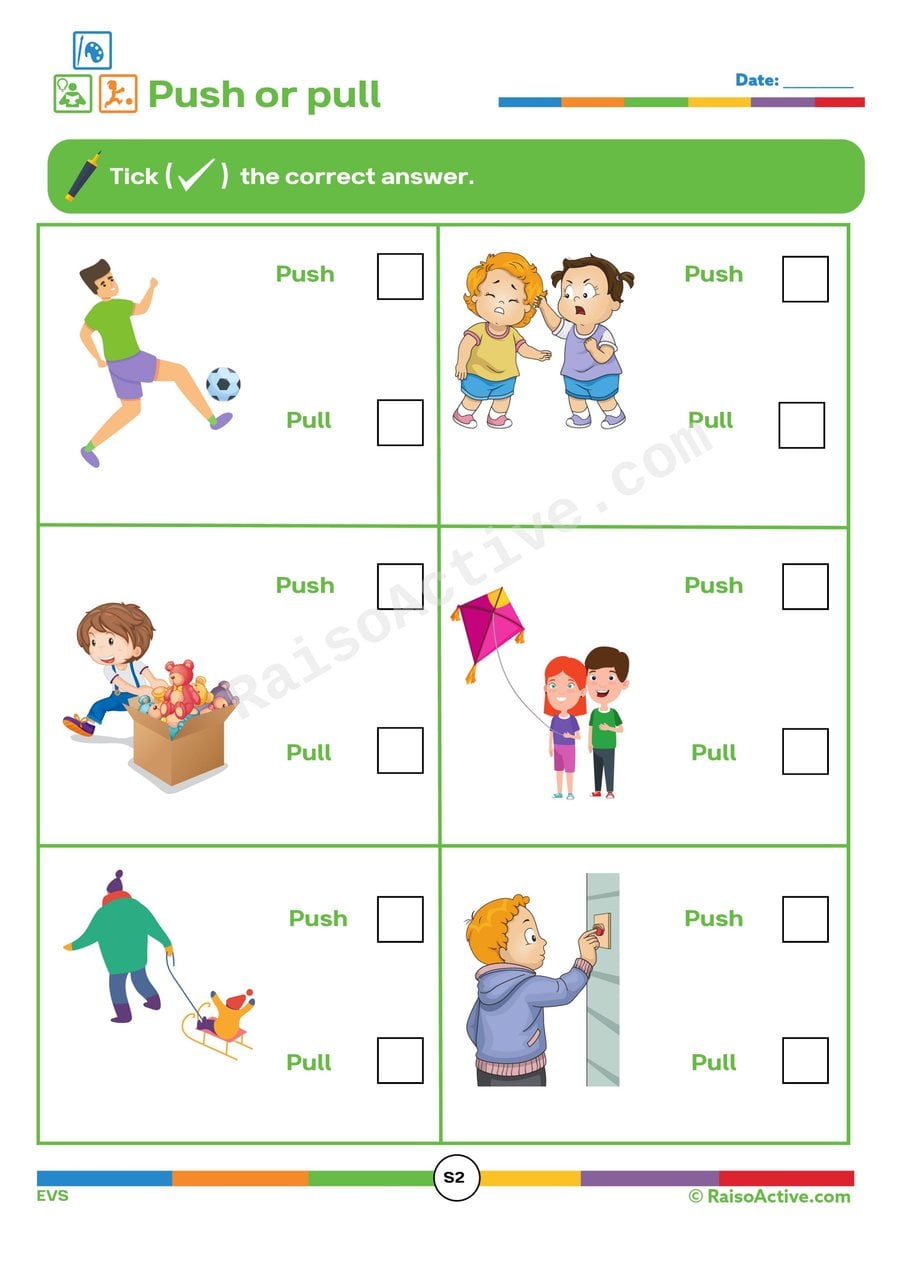
Deciding whether an action shown in a picture is a push or a pull introduces children ages 3-5 to a basic physics concept, force and motion, by having them classify everyday actions like opening a door or pulling a wagon. This early science reasoning requires children to picture the direction an object is moving relative to the person acting on it, which builds spatial thinking alongside scientific vocabulary. Learning to categorize actions this way is a first step toward understanding cause and effect in the physical world.

Sentence Building Fun: Using Words to Create Sentences Worksheet
Ages 4-6 · Pre-K–KindergartenAges 4-6 · Reception–Year 1Ages 4-6 · LKG–UKGAges 4-6
This worksheet helps children ages 4-6 practice constructing complete, grammatically sound sentences by using a set of provided words alongside a picture prompt. Building sentences from a word bank forces children to think about word order and sentence structure directly, rather than just filling in a single blank, which is a meaningful step up in independent writing skill.

Frame a Sentence Worksheet: Building Sentences with Cows!
Ages 4-6 · Pre-K–KindergartenAges 4-6 · Reception–Year 1Ages 4-6 · LKG–UKGAges 4-6
Arranging a set of given words into a complete, correctly ordered sentence teaches children ages 4-6 basic sentence structure, helping them understand that word order changes meaning and that sentences follow predictable patterns like subject before action. Remembering to start with a capital letter and end with a period also reinforces early writing conventions alongside the sentence-building itself. This combination of grammar and mechanics gives children practice with the full process of forming a proper written sentence, not just choosing words.

Number Names Matching Worksheet for Preschoolers
Ages 4-5 · Pre-KAges 4-5 · ReceptionAges 4-5 · LKGAges 4-5
This worksheet layers two skills for children ages 4-5: unscrambling the letters of a number-name word and then matching that word to its correct numeral. Unscrambling requires children to recognize familiar letter sequences, an early word-recognition skill, while matching reinforces that written number words correspond to specific quantities. Together these tasks push number-word literacy a step further than simple copying or tracing.

Blend Words Matching Worksheet: Read and Circle the Picture!
Ages 4-6 · Pre-K–KindergartenAges 4-6 · Reception–Year 1Ages 4-6 · LKG–UKGAges 4-6
This worksheet gives children ages 4-6 further practice reading consonant blend words and connecting them to their matching picture, this time by circling rather than cutting and pasting, which keeps the focus purely on reading and visual scanning. Repeated blend practice across different formats — matching, circling, and later independent writing — helps these two-consonant sounds become automatic rather than something a child has to sound out every time.
Related worksheets

Read and Match: Sight Word Sentences Worksheet for Early Readers
Ages 4-5 · Pre-KAges 4-5 · ReceptionAges 4-5 · LKGAges 4-5
Children ages 4-5 practice reading simple sight-word sentences and matching them to the picture that shows their meaning, building early reading comprehension by connecting printed words directly to what they represent. This bridges the gap between recognizing individual sight words and understanding a full sentence's meaning.

Sight Word 'Did' Worksheet: Read, Trace, and Complete Sentences!
Ages 3-5 · Preschool–Pre-KAges 3-5 · Nursery–ReceptionAges 3-5 · Nursery–LKGAges 3-5
This worksheet strengthens sight-word recognition for children ages 3-5 through repeated exposure to the word 'did' — tracing it, writing it, completing sentences with it, and spelling it by cutting and pasting letters. Because 'did' is a past-tense helper word that doesn't sound out easily, this kind of varied repetition is exactly what builds the instant recognition needed for reading fluency.

Sight Words Coloring Worksheet: 'His', 'My', and 'Her' Fun!
Ages 3-5 · Preschool–Pre-KAges 3-5 · Nursery–ReceptionAges 3-5 · Nursery–LKGAges 3-5
This coloring activity helps children ages 3-5 recognize and internalize the common sight words 'his,' 'my,' and 'her' by following a color-coded key, an approach that builds sight word memory through repeated visual association rather than isolated flashcard drilling. Because sight words like these don't sound out easily using phonics rules, repeated exposure in a fun context like coloring is one of the most effective ways for young children to memorize them. The activity also reinforces fine motor control as children carefully color within the lines of each labeled section.

Sight Word Fun: 'Yes' Word Activities Worksheet for Preschoolers
Ages 3-5 · Preschool–Pre-KAges 3-5 · Nursery–ReceptionAges 3-5 · Nursery–LKGAges 3-5
Practicing the sight word 'yes' through tracing, writing, circling, and underlining gives children ages 3-5 several different ways to encounter the same high-frequency word, which builds the instant word recognition that supports early reading fluency. Repetition across different formats, rather than just one activity, helps the word move from a puzzle to be solved into a word recognized on sight.
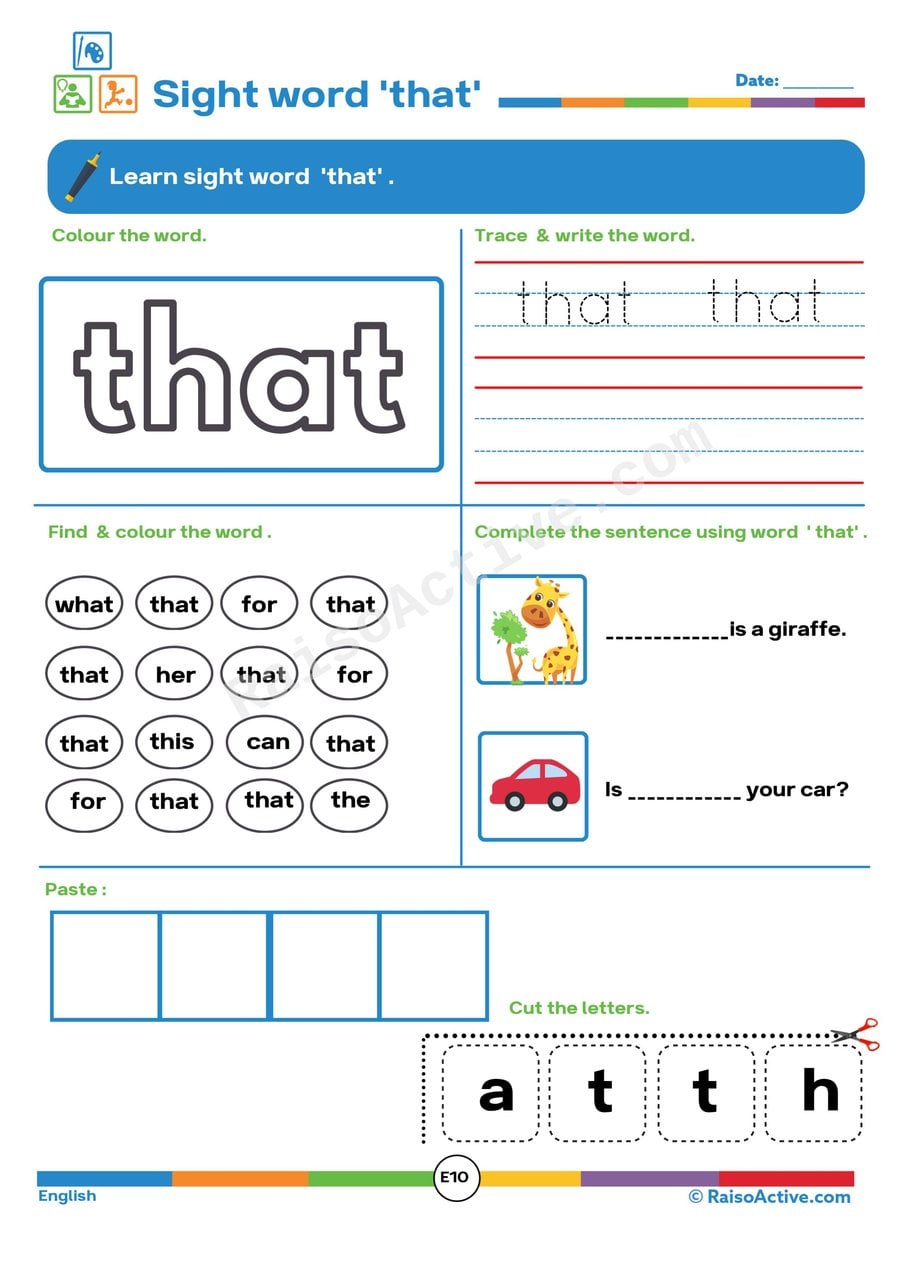
Sight Word 'That' Worksheet: Trace, Find, and Write!
Ages 4-5 · Pre-KAges 4-5 · ReceptionAges 4-5 · LKGAges 4-5
As one of the most frequently used words in early reading texts, 'that' needs to be recognized instantly rather than sounded out letter by letter, and this worksheet gives children ages 4-5 several different ways to practice that recognition. Combining tracing, visual searching, sentence completion, and cutting letters to spell the word reinforces the same target through multiple senses and formats, which strengthens memory retention for tricky sight words.
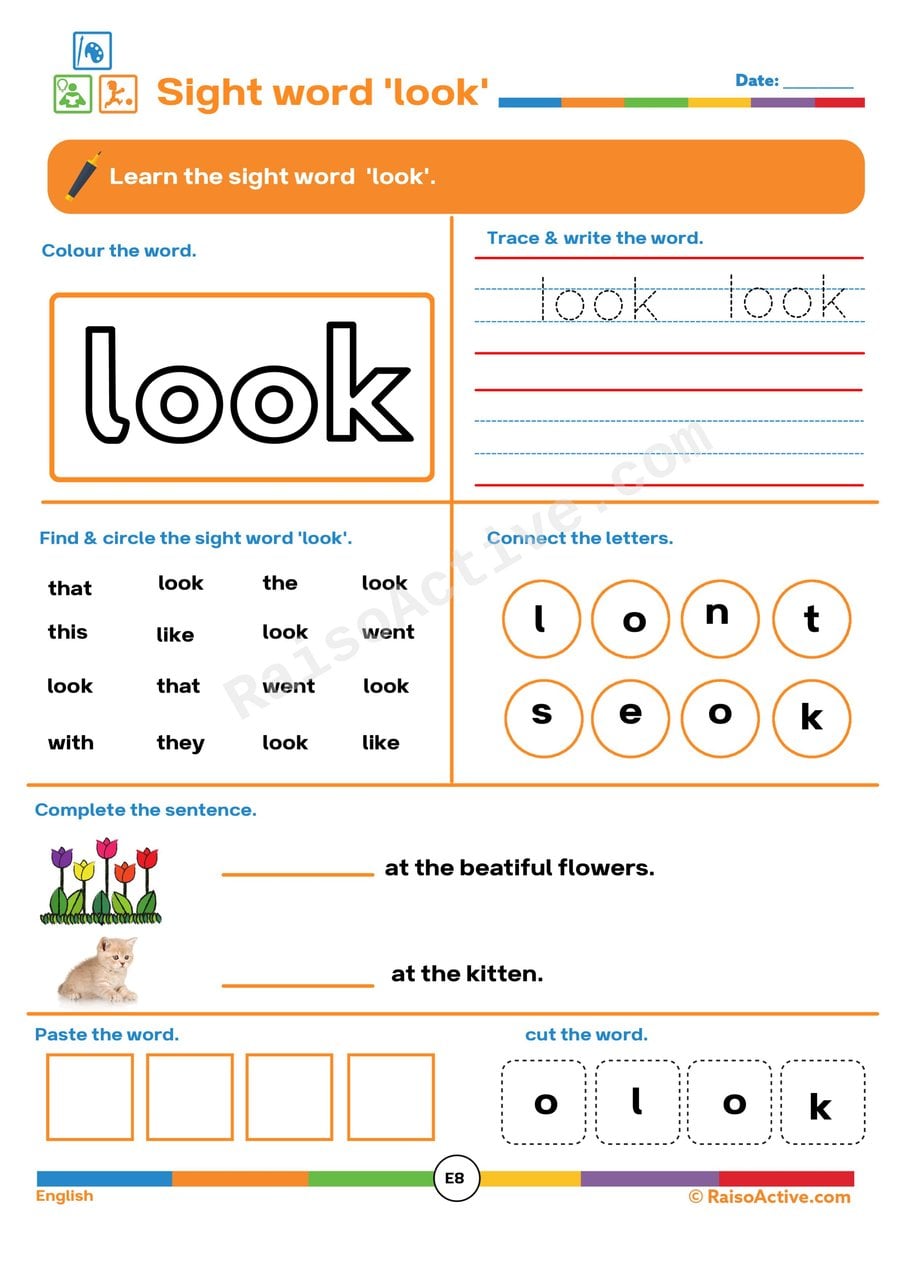
Look! Sight Word 'Look' Worksheet for Preschoolers
Ages 3-5 · Preschool–Pre-KAges 3-5 · Nursery–ReceptionAges 3-5 · Nursery–LKGAges 3-5
This worksheet builds automatic recognition of the sight word 'look' through six different activities — coloring, tracing, finding it in a list, spelling it by connecting letters, completing a sentence, and pasting it — which matters because sight words like 'look' don't sound out easily and have to be memorized by sight through repeated, varied exposure. Hitting the same word from six angles in one sitting is exactly the kind of repetition that turns a word from something your child sounds out slowly into one they recognize instantly.
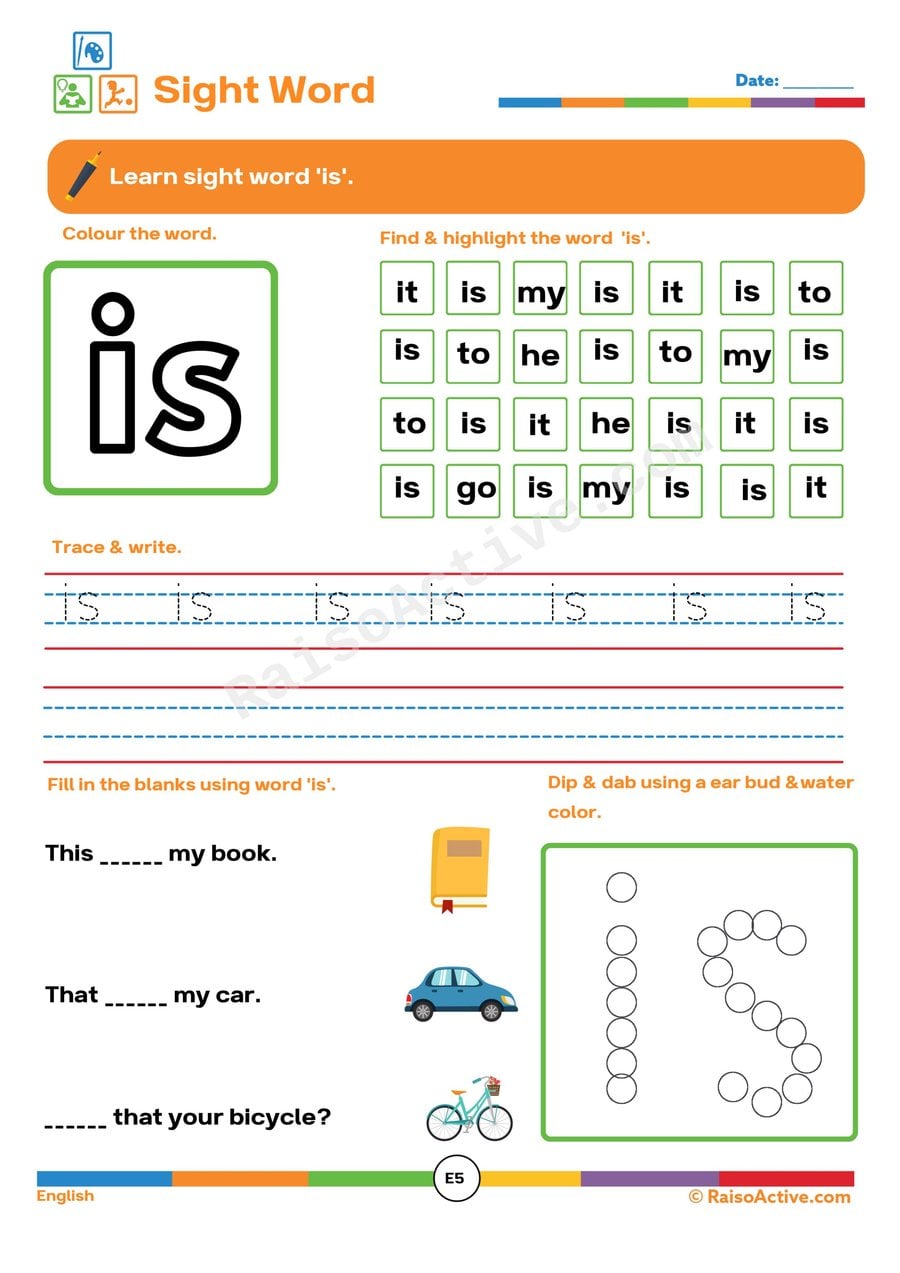
Sight Word 'is' Worksheet: Trace, Find, and Write!
Ages 3-5 · Preschool–Pre-KAges 3-5 · Nursery–ReceptionAges 3-5 · Nursery–LKGAges 3-5
Children ages 3-5 build instant recognition of the high-frequency sight word 'is', practicing it through coloring, tracing, searching, and writing for repeated exposure across multiple formats. As one of the earliest and most common words children encounter in print, quickly recognizing 'is' by sight significantly boosts early reading fluency. Completing fill-in-the-blank sentences also shows children how this small but essential word functions within everyday sentences.

Learn the Sight Word 'Want' Worksheet for Preschoolers
Ages 3-5 · Preschool–Pre-KAges 3-5 · Nursery–ReceptionAges 3-5 · Nursery–LKGAges 3-5
The word 'want' doesn't sound out easily using regular phonics rules, which is exactly why children ages 3-5 need to memorize it by sight as a whole word — a core early reading strategy for high-frequency words. This worksheet builds that sight-word memory through several different tasks: tracing, finding the word among distractors, filling it into a sentence, and reassembling its letters, giving repeated exposure in varied formats rather than one repetitive drill. Mastering common sight words like 'want' dramatically speeds up early reading fluency since these words appear constantly in beginning books.
Guides for this topic

Sight Words by Age: The First 50 Words and How to Teach Them Without Flashcard Fatigue
Which sight words to teach first and why, the heart-word method, a read-trace-write-find routine, games, and a by-age table of typical sight-word progress.
How to Teach CVC Blending: A Step-by-Step Method That Works in Two Weeks
A step-by-step method for teaching CVC blending, covering continuous sounds, word families, common errors, and a 14-day plan that most children finish reading CVC words.
Phase 2 Phonics at Home: Sound Order, Blending Games, Worksheets
Phase 2 phonics at home: the five sound sets in order, oral blending, tricky words, a two-week routine, common mistakes, and free worksheets.
Reviews
Every worksheet for ages 4–6, no watermark
Members download the full library of 1,000+ worksheets and every activity pack without watermarks or daily limits. One year costs ₹999 in India or $20 elsewhere.
See membership plansOr download any worksheet free with a watermark (5 a day).