Abbreviations Worksheet for Kids: Road, Doctor, and More!
This worksheet introduces children ages 4-6 to abbreviations like Rd. for Road and Dr. for Doctor, teaching them that a shortened form can stand in for a longer, familiar word. Recognizing abbreviations is an early vocabulary and reading skill children will meet constantly on street signs, envelopes, and forms.
Part of the pack
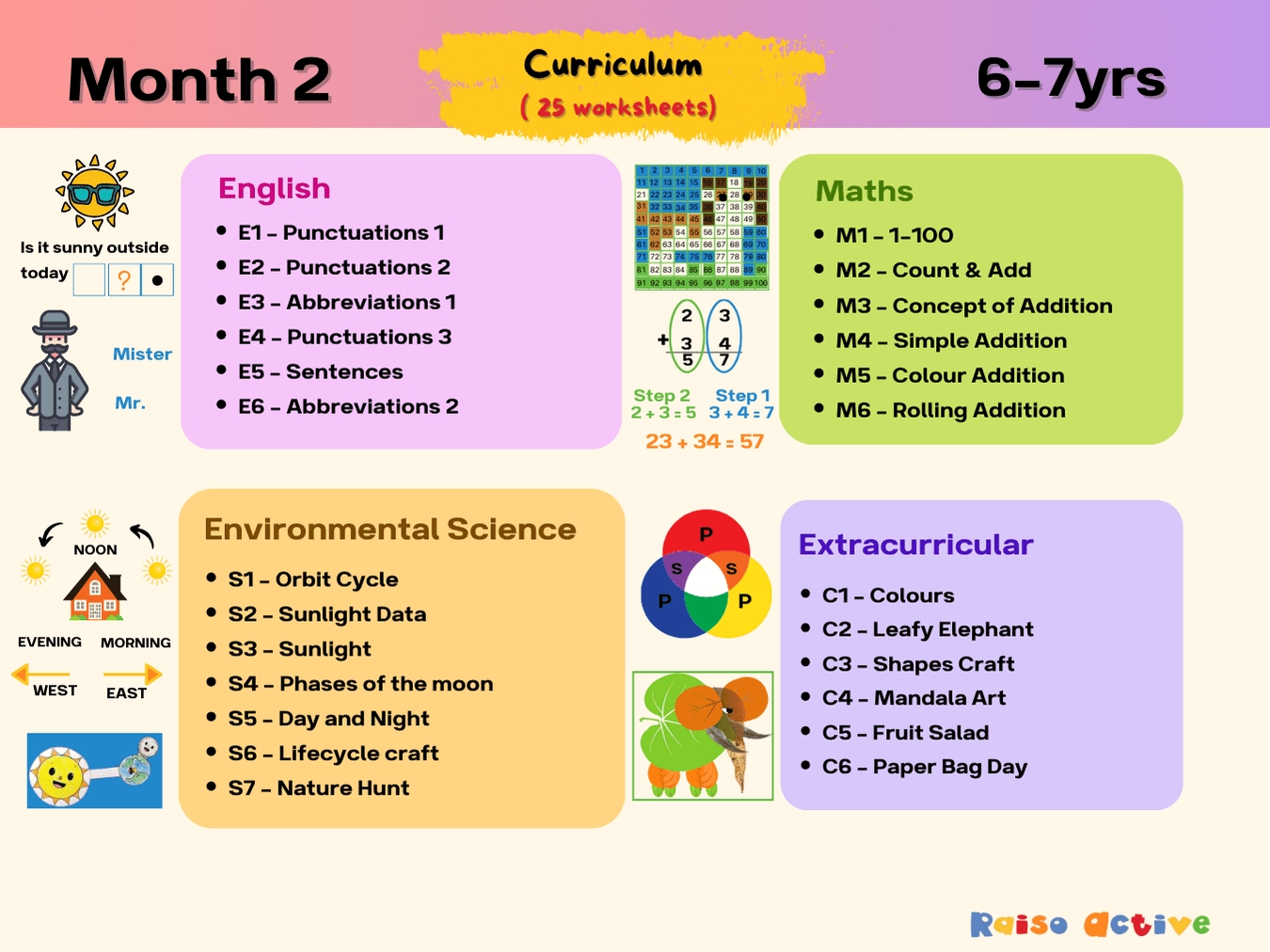
Month 2: Learning & Development | Ages 6-7
This is page 6 of the pack. Ages 6-7 · Grade 1Ages 6-7 · Year 2Ages 6-7 · Class 1Ages 6-7
Made for your child
Spelling practice, made for your child
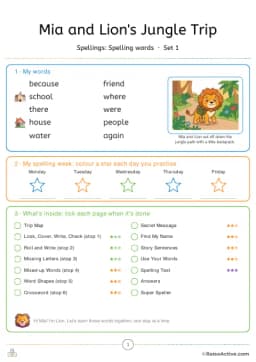
Their own spelling words turned into a pack: trace or look-cover-write-check, roll and write, a secret picture code, a word search, a crossword and a test, with their name in it.
Make a spelling packFree preview · free for members
Or start free: a word search with sight wordsCurriculum
- Grammar > Abbreviations
How to use this worksheet
Start by reading each full word aloud together, then show your child the shortened abbreviation next to it and point out which letters were kept. Have your child write the correct abbreviation next to each word on the list. Once they've matched all the abbreviations, move to the sentences and ask them to rewrite each one, swapping in the correct abbreviation for the full word.
Materials needed
- Pencil
Extension activities
- 1Make a set of flashcards pairing each full word with its abbreviation and quiz each other.
- 2Look for abbreviations on real street signs, letters, or addresses during a walk or car ride.
- 3Search magazines or junk mail together for abbreviations like St., Ave., or Mr. and circle them.
- 4Write a pretend envelope addressed to a family member using abbreviations for street and title.

Written by
Hemsweta Jain · Teacher Cheena
MBA and Early Childhood Educator, teaching since 2014 · Founder of RaisoActive, Mumbai
Every RaisoActive worksheet is designed and checked by the founder before publishing.
Published · Last reviewed
More from Month 2: Learning & Development | Ages 6-7

Day and Night Worksheet for Preschoolers: Observe and Learn!
Ages 3-5 · Preschool–Pre-KAges 3-5 · Nursery–ReceptionAges 3-5 · Nursery–LKGAges 3-5
Children ages 3-5 build foundational science observation skills as they compare what's visible in the sky and what activities happen during day versus night. Completing fill-in-the-blank sentences and true-or-false questions also strengthens early reading comprehension, since children must connect a picture's details to written language rather than just naming what they see.
Simple Addition Worksheet: Color by Sums!
Ages 4-6 · Pre-K–KindergartenAges 4-6 · Reception–Year 1Ages 4-6 · LKG–UKGAges 4-6
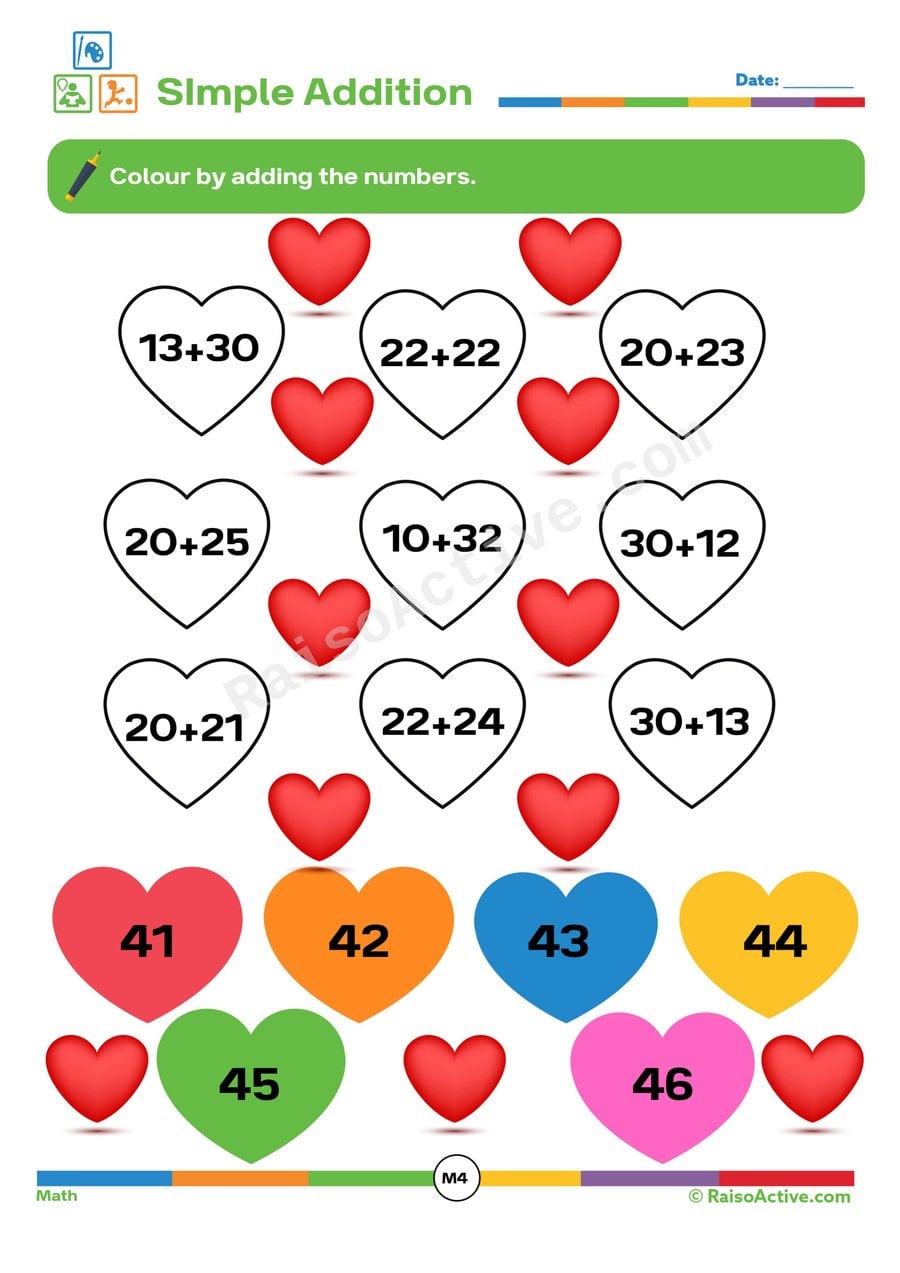
Children ages 4-6 practice quick single-digit addition facts while also following a color key, combining early math fluency with visual attention to detail. Solving each problem before coloring gives an immediate, satisfying way to check their own accuracy as the picture comes together.

Count and Add: Fruits, Vehicles, and Sweets Worksheet for Preschoolers
Ages 3-5 · Preschool–Pre-KAges 3-5 · Nursery–ReceptionAges 3-5 · Nursery–LKGAges 3-5
This worksheet practices counting and basic addition by having children count several different groups of everyday objects — fruits, vehicles, and sweets — and then add the totals together. For three- to five-year-olds, varying the objects being counted across different sections keeps the counting practice fresh while reinforcing that the process of counting and adding works the same way no matter what's being counted.

Color Mixing Fun: A Primary and Secondary Colors Worksheet
Ages 3-5 · Preschool–Pre-KAges 3-5 · Nursery–ReceptionAges 3-5 · Nursery–LKGAges 3-5
This worksheet helps children ages 3-5 understand that the three primary colors, red, yellow, and blue, combine to create secondary colors like orange, green, and purple. Coloring circles and observing how colors combine introduces an early, hands-on science concept about mixing, which also supports color vocabulary used throughout art and everyday description.
Monster Bag Craft: Cut and Paste Worksheet
Ages 3-5 · Preschool–Pre-KAges 3-5 · Nursery–ReceptionAges 3-5 · Nursery–LKGAges 3-5
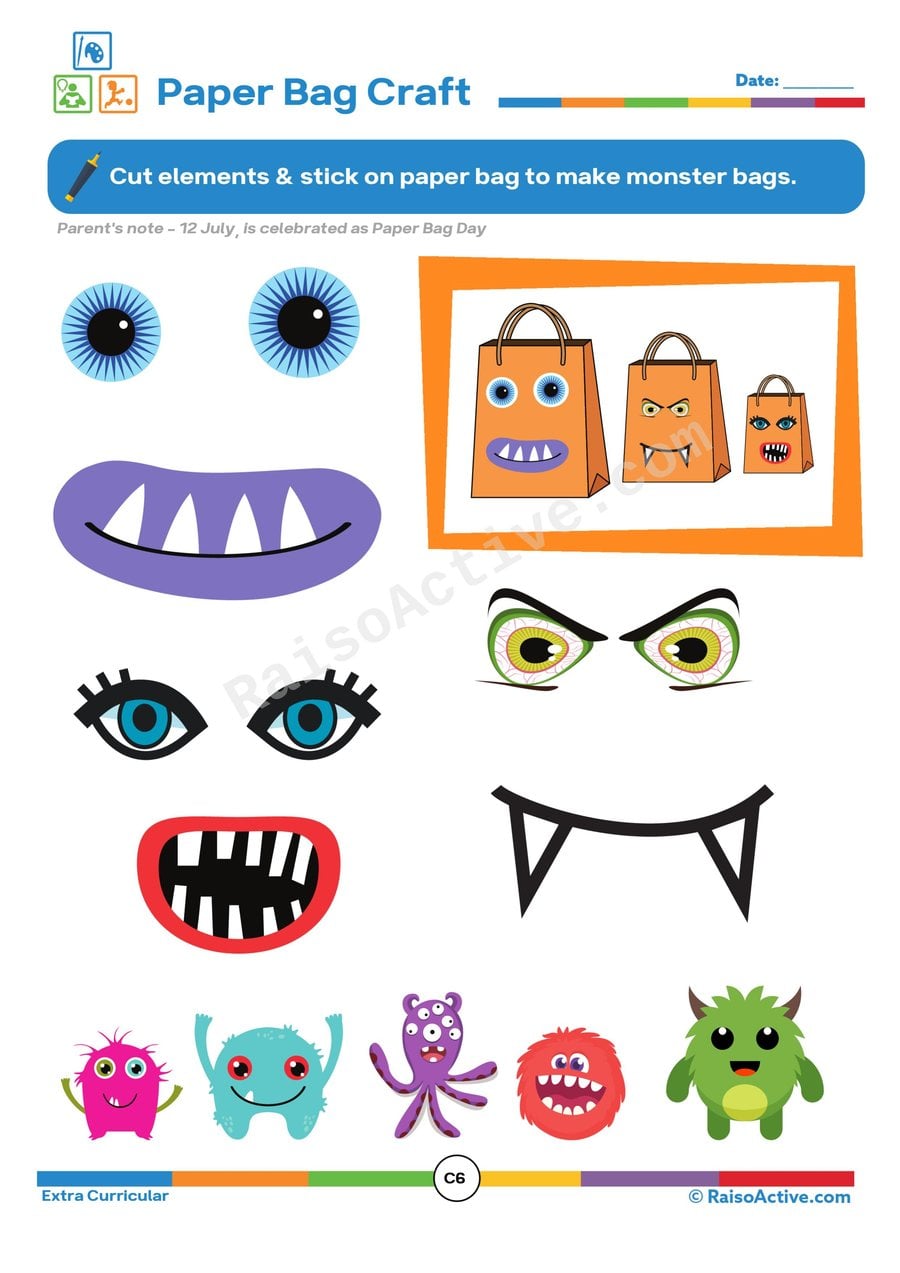
This worksheet builds fine motor skills by having children cut out monster features — eyes, teeth, horns — and glue them onto a paper bag to design their own imaginative monster face. For three- to five-year-olds, the open-ended nature of choosing and arranging the features also encourages creative decision-making, since there's no single correct way to build the monster.
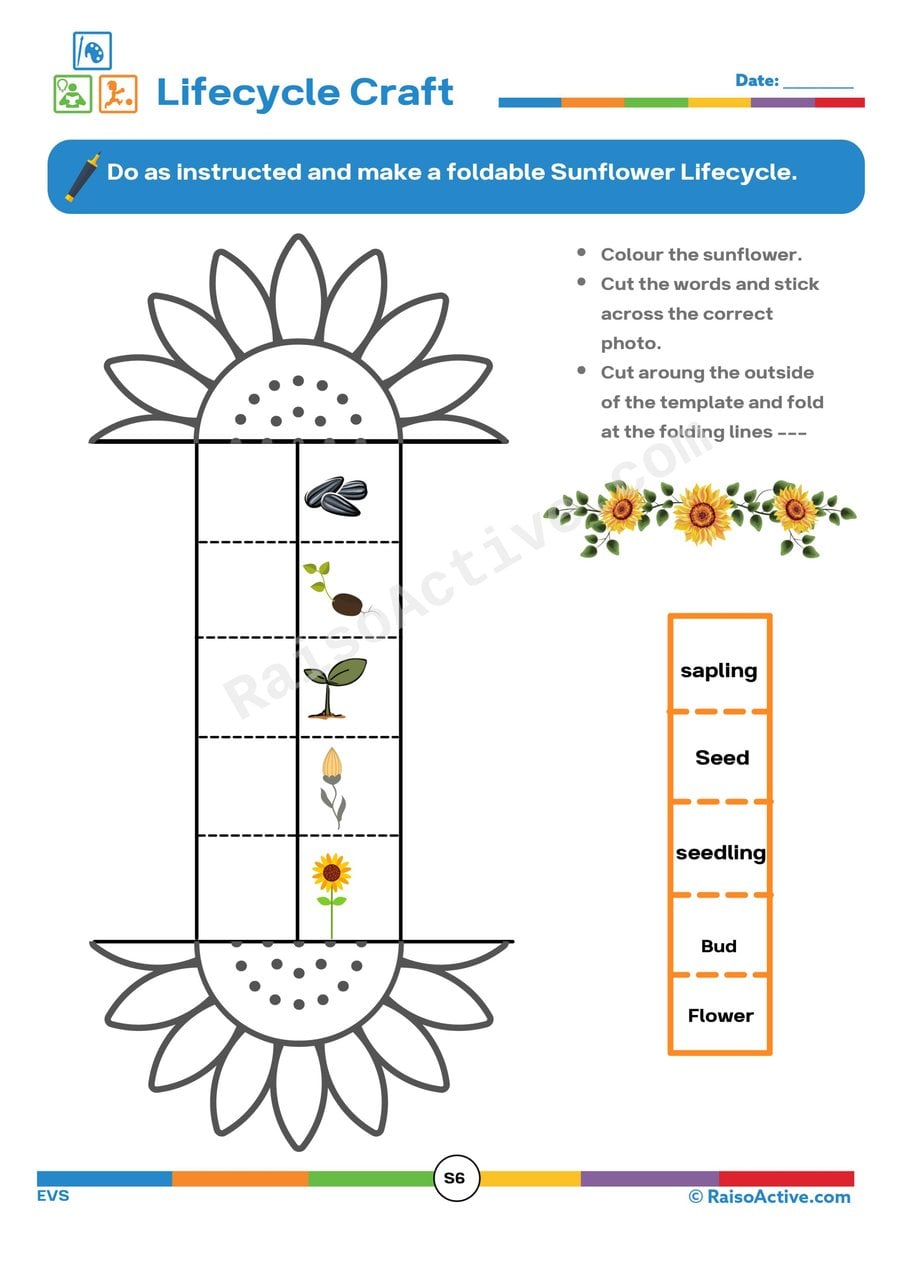
Sunflower Life Cycle Worksheet: Learn and Fold!
Ages 4-6 · Pre-K–KindergartenAges 4-6 · Reception–Year 1Ages 4-6 · LKG–UKGAges 4-6
This worksheet introduces the plant life cycle by walking children through the sequential stages a sunflower passes through — from seed, to sprout, to full bloom — using coloring, labeling, and folding. For four- to six-year-olds, understanding that living things grow through a fixed, ordered set of stages is a foundational science concept that also applies to animals, insects, and their own growth.

Phases of the Moon Worksheet: Trace, Color, and Learn!
Ages 3-5 · Preschool–Pre-KAges 3-5 · Nursery–ReceptionAges 3-5 · Nursery–LKGAges 3-5
This worksheet introduces children ages 3-5 to the changing shapes of the moon by having them trace each phase's outline, say its name aloud, and color it in, connecting a science concept to hands-on tracing practice. Drawing and labeling the phases in a circle afterward reinforces that the moon moves through this same cycle in a repeating, predictable order.

Abbreviations Worksheet: Matching Words and Abbreviations!
Ages 4-6 · Pre-K–KindergartenAges 4-6 · Reception–Year 1Ages 4-6 · LKG–UKGAges 4-6
This worksheet teaches children common abbreviations, like 'Dr.' for Doctor or 'St.' for Street, by having them match each full word to its shortened form. For four- to six-year-olds who are building early reading and writing fluency, recognizing abbreviations is a practical real-world skill, since these shortened forms appear regularly in addresses, titles, and everyday writing.
Related worksheets

Abbreviations Worksheet: Matching and Writing Practice
Ages 4-6 · Pre-K–KindergartenAges 4-6 · Reception–Year 1Ages 4-6 · LKG–UKGAges 4-6
This worksheet introduces children ages 4-6 to common abbreviations — like Mr., Dr., or St. — by having them match each shortened form to the correct sentence context and then write it in correctly. Understanding that some words have a shortened written form is an important early literacy concept, since abbreviations appear constantly in books, signs, and everyday writing. Practicing both matching and writing reinforces the connection between recognizing an abbreviation and producing it correctly from memory.
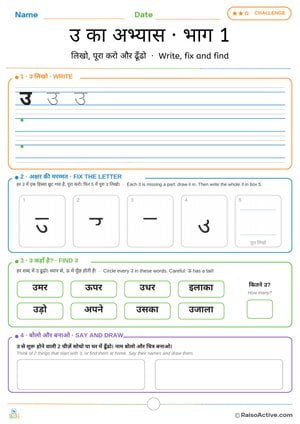
Hindi Letter उ Practice Part 1: Write, Fix and Find | उ का अभ्यास · भाग 1
Ages 3-7 · Preschool–Grade 1Ages 3-7 · Nursery–Year 2Ages 3-7 · Nursery–Class 1Ages 3-7
Children write उ on guide lines, complete four partly drawn letters, circle उ in eight words (while avoiding its look-alike ऊ), count how many they found, then think of two more words at home that start with उ and draw them.
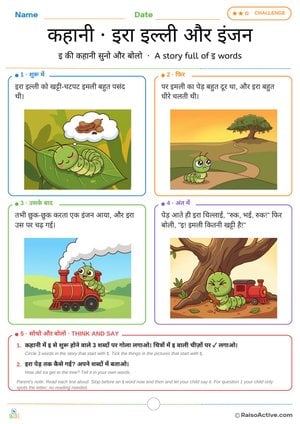
Letter इ Story: Ira Illi and the Engine | कहानी इरा इल्ली और इंजन
Ages 3-7 · Preschool–Grade 1Ages 3-7 · Nursery–Year 2Ages 3-7 · Nursery–Class 1Ages 3-7
Ira the caterpillar loves sour tamarind but the tree is far away, until a chugging engine carries her there. Children listen, look at the four pictures, spot the words that start with इ and retell what happened in their own words.
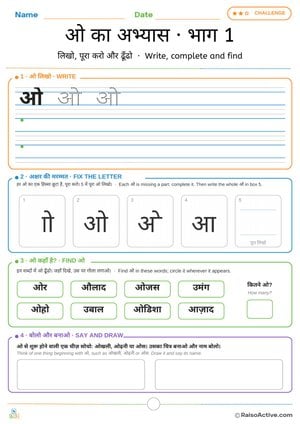
Hindi Letter ओ (o) Practice 1: Write, Fix the Letter and Find | ओ का अभ्यास · भाग 1
Ages 4-7 · Pre-K–Grade 1Ages 4-7 · Reception–Year 2Ages 4-7 · LKG–Class 1Ages 4-7
A challenge page: write ओ between the lines, complete four letters that are each missing a part and then write the whole ओ in box 5, find ओ in words such as ओर, ओजस, ओहो and ओडिशा, and draw a picture. ओ and औ are different vowels; औ has two marks on top and ओ has one.

When Do We Celebrate? Indian Festivals and the Months of the Year
Ages 4-8 · Pre-K–Grade 2Ages 4-8 · Reception–Year 3Ages 4-8 · LKG–Class 2Ages 4-8
Children connect each festival to the month it falls in and learn that some festivals follow the moon, so their dates change each year.
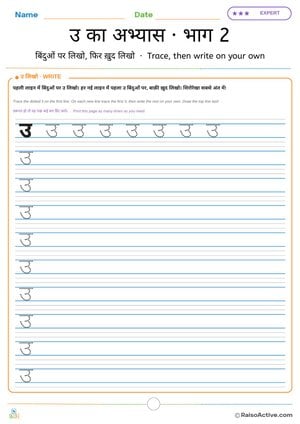
Hindi Letter उ Practice Part 2: Trace and Write on Your Own | उ का अभ्यास · भाग 2
Ages 3-7 · Preschool–Grade 1Ages 3-7 · Nursery–Year 2Ages 3-7 · Nursery–Class 1Ages 3-7
Children build writing fluency by tracing the dotted line उ on the first line and then writing the letter on their own, line after line, as the dotted help fades. The headline (शिरोरेखा) is drawn last, as in Hindi handwriting.

Meera's Garba Night: Navratri Reading Comprehension Story
Ages 4-6 · Pre-K–KindergartenAges 4-6 · Reception–Year 1Ages 4-6 · LKG–UKGAges 4-6
Children listen to or read a short story, recall details by circling answers, write answers using a word bank and explain a simple idea in their own words.
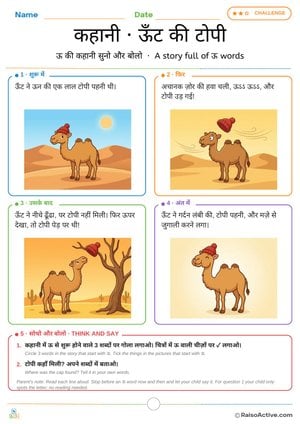
Letter ऊ Story: The Camel's Woolly Cap | कहानी ऊँट की टोपी
Ages 3-7 · Preschool–Grade 1Ages 3-7 · Nursery–Year 2Ages 3-7 · Nursery–Class 1Ages 3-7
A camel's red woolly cap blows away in the desert wind, and he finds it again on a tree. Children listen, look at the four pictures, spot the words that start with ऊ and retell what happened in their own words.
Guides for this topic

Sight Words by Age: The First 50 Words and How to Teach Them Without Flashcard Fatigue
Which sight words to teach first and why, the heart-word method, a read-trace-write-find routine, games, and a by-age table of typical sight-word progress.
How to Teach CVC Blending: A Step-by-Step Method That Works in Two Weeks
A step-by-step method for teaching CVC blending, covering continuous sounds, word families, common errors, and a 14-day plan that most children finish reading CVC words.

Documenting Learning Without Drowning in Data: A Practical Guide for Parents and Teachers
Learn practical ways to document your child's learning without overwhelm. Simple portfolios, observation tips, and printable trackers for ages 1-8.
Reviews
Every worksheet for ages 4–6, no watermark
Members download the full library of 1,000+ worksheets and every activity pack without watermarks or daily limits. One year costs ₹999 in India or $20 elsewhere.
See membership plansOr download any worksheet free with a watermark (5 a day).