Abbreviations Worksheet: Matching Words and Abbreviations!
This worksheet teaches children common abbreviations, like 'Dr.' for Doctor or 'St.' for Street, by having them match each full word to its shortened form. For four- to six-year-olds who are building early reading and writing fluency, recognizing abbreviations is a practical real-world skill, since these shortened forms appear regularly in addresses, titles, and everyday writing.
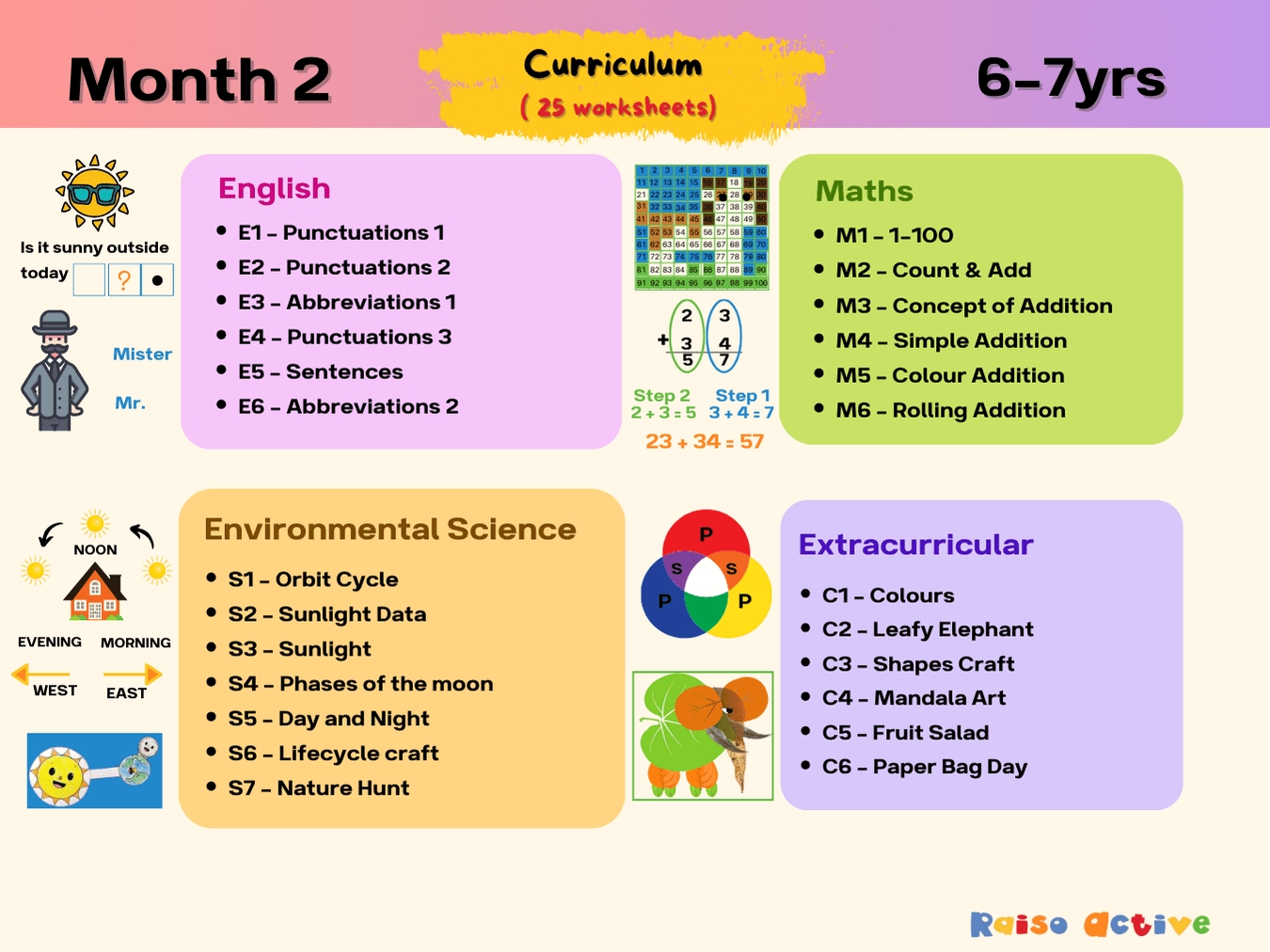
Part of the pack
Month 2: Learning & Development | Ages 6-7
This is page 9 of the pack. Ages 6-7 · Grade 1Ages 6-7 · Year 2Ages 6-7 · Class 1Ages 6-7
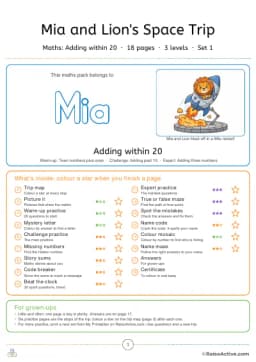
Made for your child
Numbers to 20, made for your child
A maths pack with your child's name in it: pictures that explain, practice at three levels, puzzles and story sums about them. Print a new set whenever they finish.
Make a maths packFree preview · free for members
Curriculum
- Grammar > Abbreviations
How to use this worksheet
Read the first full word aloud together, like 'Mister.' Look at the list of abbreviations and ask your child to find the one that matches, sounding out the letters if needed. Have them draw a line connecting the word to its correct abbreviation. Once all the matches are complete, have your child rewrite one or two of the practice sentences using the correct abbreviations in place of the full words.
Materials needed
- Pencil
Extension activities
- 1Create flashcards pairing each full word with its abbreviation for quick daily review.
- 2Write sentences together using different abbreviations, like addresses with 'St.' or 'Ave.'
- 3Play a matching game with abbreviation pairs, either as cards or written on paper.
- 4Look for real-world examples of abbreviations on envelopes, signs, or calendars.
- 5Practice writing a short pretend address using common abbreviations like 'St.' and 'Apt.'

Written by
Hemsweta Jain · Teacher Cheena
MBA and Early Childhood Educator, teaching since 2014 · Founder of RaisoActive, Mumbai
Every RaisoActive worksheet is designed and checked by the founder before publishing.
Published · Last reviewed
More from Month 2: Learning & Development | Ages 6-7

Parent's Guide: Fun Activities for Early Learning
Ages 3-5 · Preschool–Pre-KAges 3-5 · Nursery–ReceptionAges 3-5 · Nursery–LKGAges 3-5
This parent guide brings together five activities spanning punctuation, moon phases, subject and predicate, the solar system, and counting and addition, giving children ages 3-5 a broad sampler of language arts, science, and math concepts through hands-on materials like Oreo biscuits and a flashlight. Working across such different topics in one guide helps children practice shifting attention between subjects, a skill that supports the more structured subject-switching they'll encounter in school.

Color Mixing Fun: A Primary and Secondary Colors Worksheet
Ages 3-5 · Preschool–Pre-KAges 3-5 · Nursery–ReceptionAges 3-5 · Nursery–LKGAges 3-5
This worksheet helps children ages 3-5 understand that the three primary colors, red, yellow, and blue, combine to create secondary colors like orange, green, and purple. Coloring circles and observing how colors combine introduces an early, hands-on science concept about mixing, which also supports color vocabulary used throughout art and everyday description.
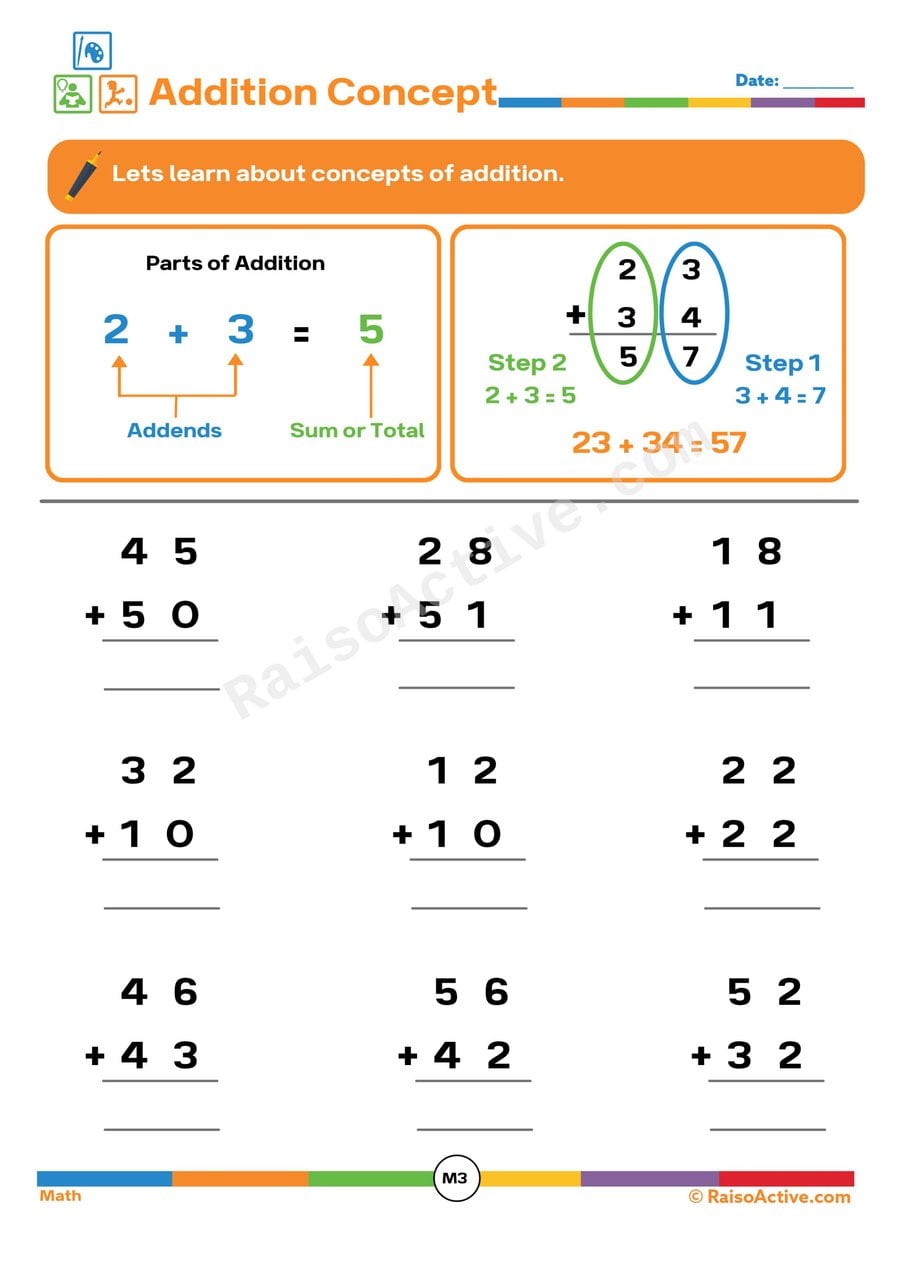
Addition Concepts Worksheet for Preschoolers
Ages 4-6 · Pre-K–KindergartenAges 4-6 · Reception–Year 1Ages 4-6 · LKG–UKGAges 4-6
Preschoolers ages 4-6 build early number sense by visually combining two small groups into one total, the concrete foundation every later addition fact depends on. Seeing objects physically joined together, rather than just numbers on a page, helps children grasp that addition means 'putting together' before they ever memorize a sum.

Sentence Fun: Find the Subject and Predicate Worksheet for Kids!
Ages 4-6 · Pre-K–KindergartenAges 4-6 · Reception–Year 1Ages 4-6 · LKG–UKGAges 4-6
This worksheet introduces basic sentence structure by teaching children to identify the subject (who or what the sentence is about) and the predicate (what the subject does or is) in simple sentences. For four- to six-year-olds, breaking a sentence into these two core parts is an early foundation for grammar and sentence-writing, helping them understand that every complete sentence needs both a 'who' and a 'what happens.'
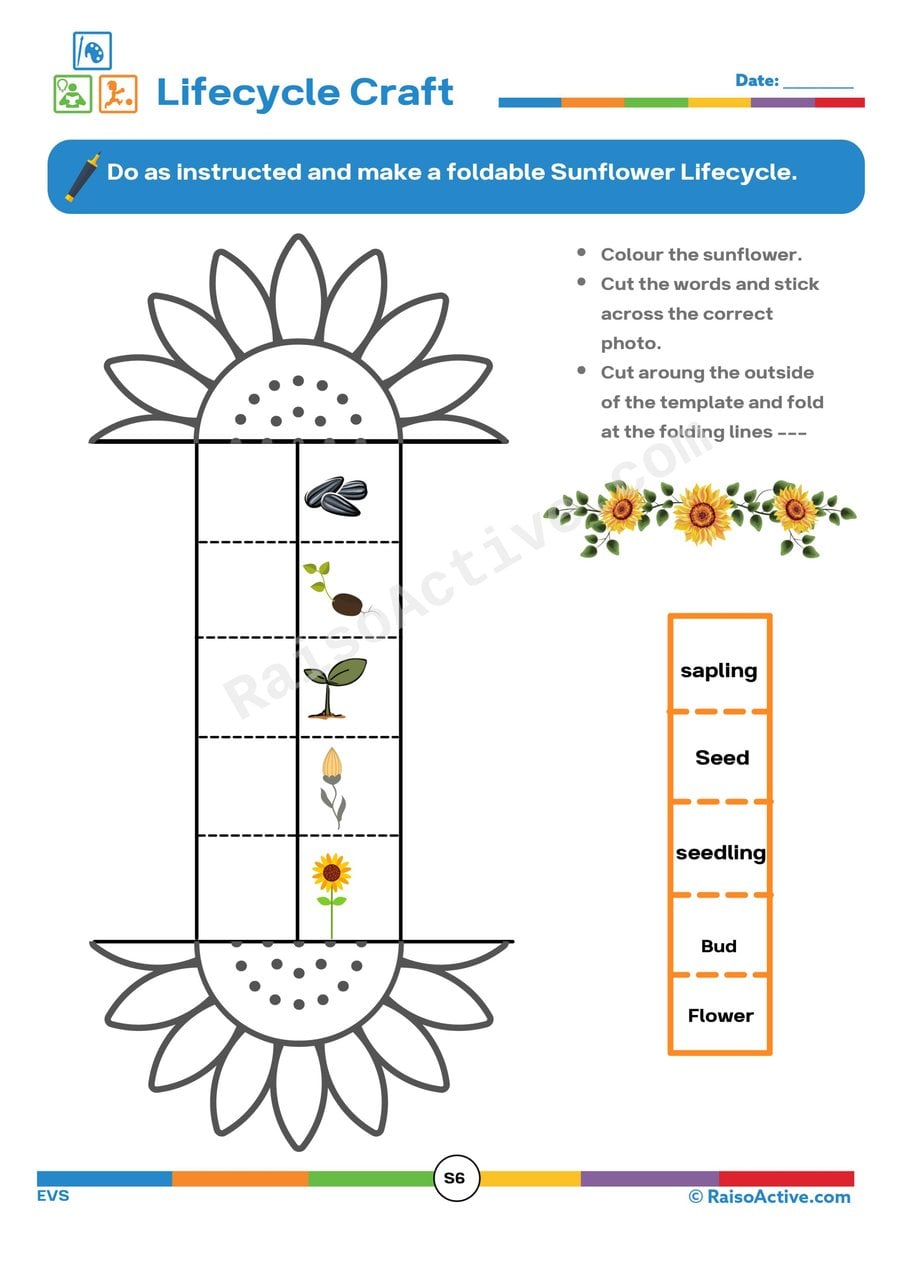
Sunflower Life Cycle Worksheet: Learn and Fold!
Ages 4-6 · Pre-K–KindergartenAges 4-6 · Reception–Year 1Ages 4-6 · LKG–UKGAges 4-6
This worksheet introduces the plant life cycle by walking children through the sequential stages a sunflower passes through — from seed, to sprout, to full bloom — using coloring, labeling, and folding. For four- to six-year-olds, understanding that living things grow through a fixed, ordered set of stages is a foundational science concept that also applies to animals, insects, and their own growth.

Sunlight Data Worksheet: Exploring Seasons and Sunlight Hours!
Ages 3-5 · Preschool–Pre-KAges 3-5 · Nursery–ReceptionAges 3-5 · Nursery–LKGAges 3-5
This worksheet introduces the science concept that daylight hours change with the seasons by having children record estimated sunlight hours for winter and summer dates and compare the two. For three- to five-year-olds, comparing two simple data points side by side is an early introduction to the idea of collecting and reading information, well before formal data or graphing skills are taught.
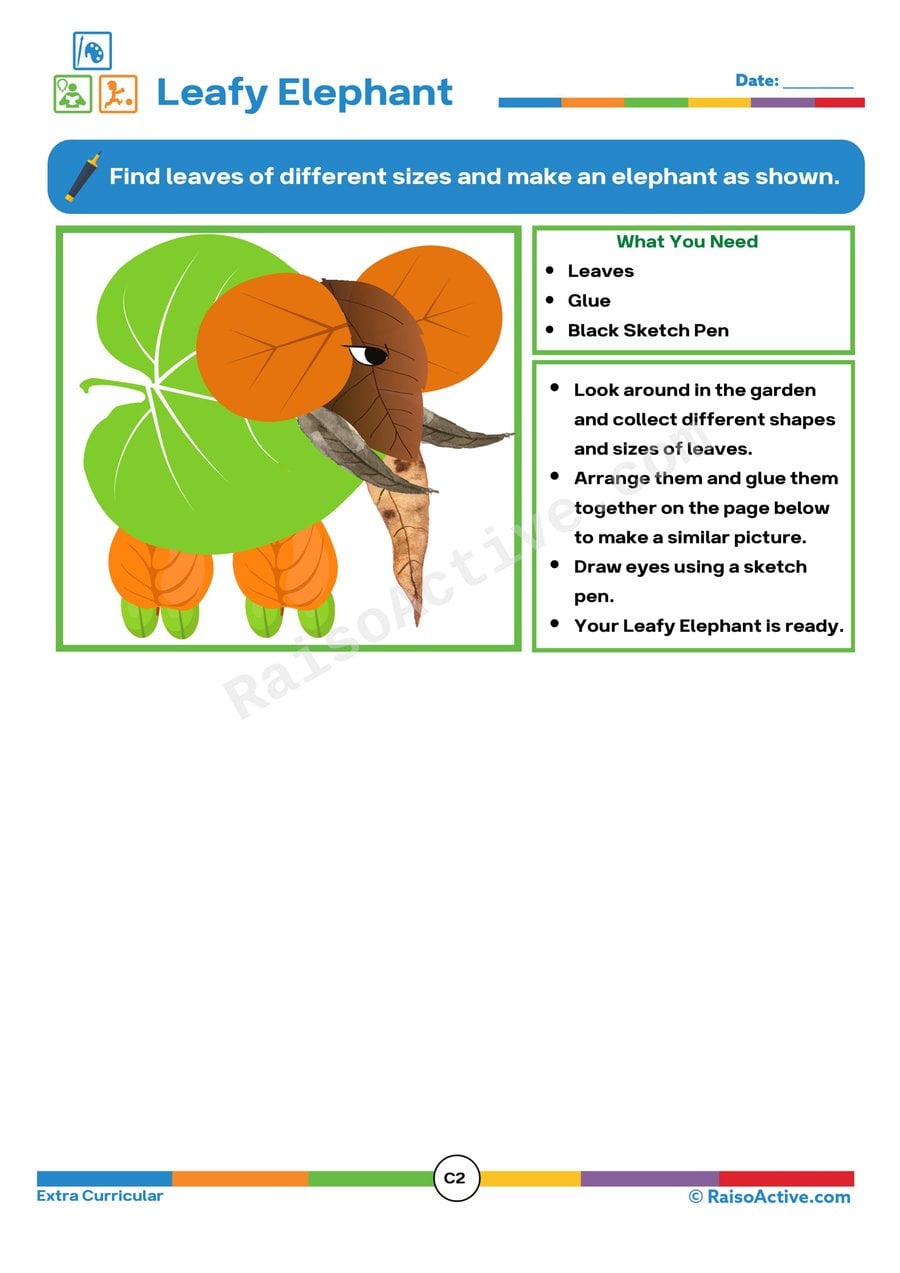
Leafy Elephant Craft Worksheet for Preschoolers
Ages 3-5 · Preschool–Pre-KAges 3-5 · Nursery–ReceptionAges 3-5 · Nursery–LKGAges 3-5
This craft guides children through building an elephant shape entirely out of real leaves, which strengthens fine motor skills and the ability to follow a multi-step visual example while also connecting them to natural materials of different shapes and sizes. For three- to five-year-olds, arranging irregular natural objects into a recognizable picture is a more open-ended fine motor challenge than gluing pre-cut paper shapes, since leaves vary and require some problem-solving to fit together.

Rolling Addition Worksheet for Preschoolers: Dice Game Fun!
Ages 4-6 · Pre-K–KindergartenAges 4-6 · Reception–Year 1Ages 4-6 · LKG–UKGAges 4-6
Rolling two dice and adding the results teaches children ages 4-6 the core idea of addition as combining two quantities into one total, rather than just memorizing number facts. The physical act of rolling builds excitement around math while requiring them to recognize dice pips or numerals, transfer them to paper, and calculate a sum, connecting concrete play to abstract arithmetic.
Related worksheets

Abbreviations Worksheet: Matching and Writing Practice
Ages 4-6 · Pre-K–KindergartenAges 4-6 · Reception–Year 1Ages 4-6 · LKG–UKGAges 4-6
This worksheet introduces children ages 4-6 to common abbreviations — like Mr., Dr., or St. — by having them match each shortened form to the correct sentence context and then write it in correctly. Understanding that some words have a shortened written form is an important early literacy concept, since abbreviations appear constantly in books, signs, and everyday writing. Practicing both matching and writing reinforces the connection between recognizing an abbreviation and producing it correctly from memory.
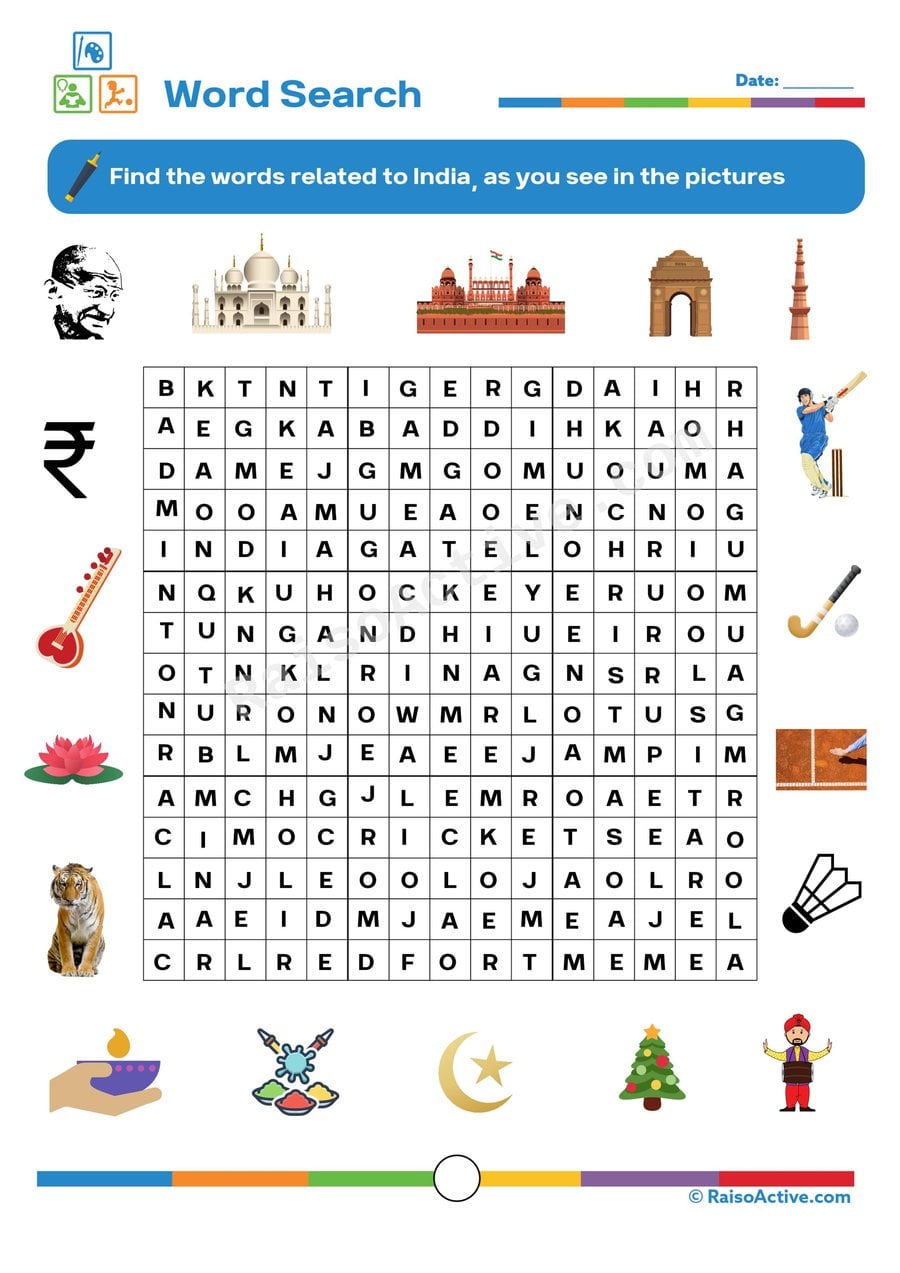
India Word Search Worksheet for Kids
Ages 4-7 · Pre-K–Grade 1Ages 4-7 · Reception–Year 2Ages 4-7 · LKG–Class 1Ages 4-7
Searching a letter grid for words connected to India, such as festival names, foods, or landmarks, builds visual scanning and word-recognition skills in children ages 4-7 while introducing vocabulary tied to Indian culture and geography. Because the target words vary in length and may run in different directions through the grid, children also practice sustained visual attention and letter-sequence tracking, both important pre-reading skills. This worksheet pairs literacy practice with cultural and social studies exposure in a single activity.

Christmas Matching Worksheet for Preschoolers: Find the Identical Objects!
Ages 3-5 · Preschool–Pre-KAges 3-5 · Nursery–ReceptionAges 3-5 · Nursery–LKGAges 3-5
Comparing objects in a row to find the one that exactly matches the first picture builds visual discrimination in children ages 3-5, a skill that requires noticing small differences in shape, color, and detail. This kind of close looking is a direct precursor to letter recognition, since young readers must later tell apart similarly shaped letters like b and d using the same careful visual comparison. The Christmas theme keeps the repetitive matching task feeling festive rather than tedious.
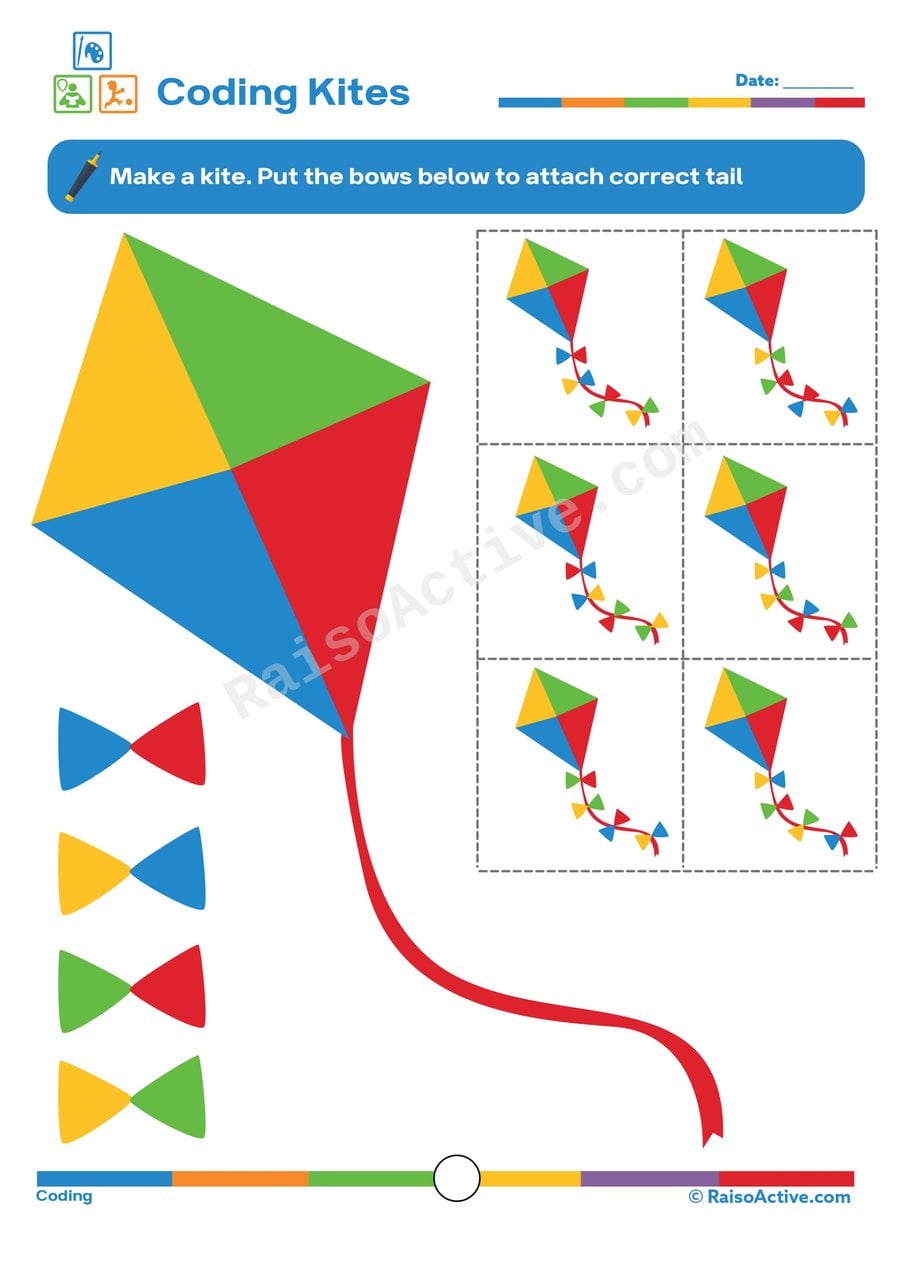
Coding Kites Worksheet: Match the Bows!
Ages 3-5 · Preschool–Pre-KAges 3-5 · Nursery–ReceptionAges 3-5 · Nursery–LKGAges 3-5
This activity sharpens visual observation in children ages 3-5 as they compare color sequences on each kite to a set of loose bows and find the exact match. Careful, systematic comparison — checking each color in order rather than glancing quickly — builds an attention-to-detail habit that transfers directly to early reading and number work.

Navratri Look Closely: Spot the Difference and Shadow Match
Ages 4-6 · Pre-K–KindergartenAges 4-6 · Reception–Year 1Ages 4-6 · LKG–UKGAges 4-6
Children compare two pictures carefully to find what is different and match objects to their shadows by looking at shape.

Meera's Garba Night: Navratri Reading Comprehension Story
Ages 4-6 · Pre-K–KindergartenAges 4-6 · Reception–Year 1Ages 4-6 · LKG–UKGAges 4-6
Children listen to or read a short story, recall details by circling answers, write answers using a word bank and explain a simple idea in their own words.
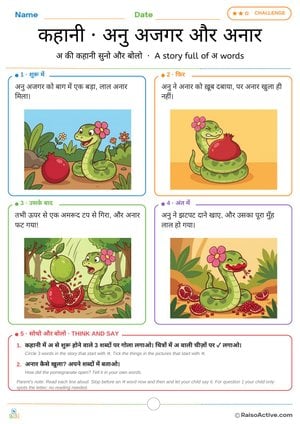
Letter अ Story: Anu Ajgar and the Pomegranate | कहानी अनु अजगर और अनार
Ages 3-7 · Preschool–Grade 1Ages 3-7 · Nursery–Year 2Ages 3-7 · Nursery–Class 1Ages 3-7
Anu the python finds a big red pomegranate in the garden, squeezes it, and a guava falls from the tree and bursts it open. Children listen, look at the four pictures, spot the words that start with अ and retell what happened in their own words.
Hindi Bolo Cards: Cut-Out Speaking Cards for Vowels Part 1 | बोलो कार्ड
Ages 3-7 · Preschool–Grade 1Ages 3-7 · Nursery–Year 2Ages 3-7 · Nursery–Class 1Ages 3-7
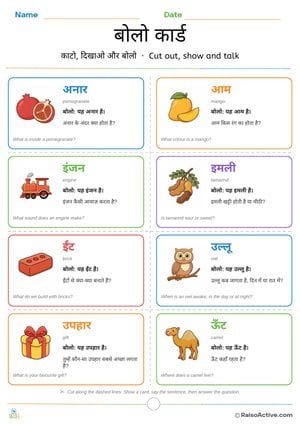
Eight picture cards (अनार, आम, इंजन, इमली, ईंट, उल्लू, उपहार, ऊँट), each with the sentence बोलो: यह ___ है! and a question to talk about, for example what colour is a mango? Children practise speaking in full sentences.
Guides for this topic

Sight Words by Age: The First 50 Words and How to Teach Them Without Flashcard Fatigue
Which sight words to teach first and why, the heart-word method, a read-trace-write-find routine, games, and a by-age table of typical sight-word progress.
How to Teach CVC Blending: A Step-by-Step Method That Works in Two Weeks
A step-by-step method for teaching CVC blending, covering continuous sounds, word families, common errors, and a 14-day plan that most children finish reading CVC words.

Best Worksheets for 3-Year-Olds: What Works and What to Avoid
What works on worksheets for 3-year-olds: short sessions, crayons, tracing lines, matching, cutting, a free weekly plan, and signs one is too advanced.
Reviews
Every worksheet for ages 4–6, no watermark
Members download the full library of 1,000+ worksheets and every activity pack without watermarks or daily limits. One year costs ₹999 in India or $20 elsewhere.
See membership plansOr download any worksheet free with a watermark (5 a day).