Parent's Guide: Fun Activities for Early Learning
This parent guide brings together five activities spanning punctuation, moon phases, subject and predicate, the solar system, and counting and addition, giving children ages 3-5 a broad sampler of language arts, science, and math concepts through hands-on materials like Oreo biscuits and a flashlight. Working across such different topics in one guide helps children practice shifting attention between subjects, a skill that supports the more structured subject-switching they'll encounter in school.
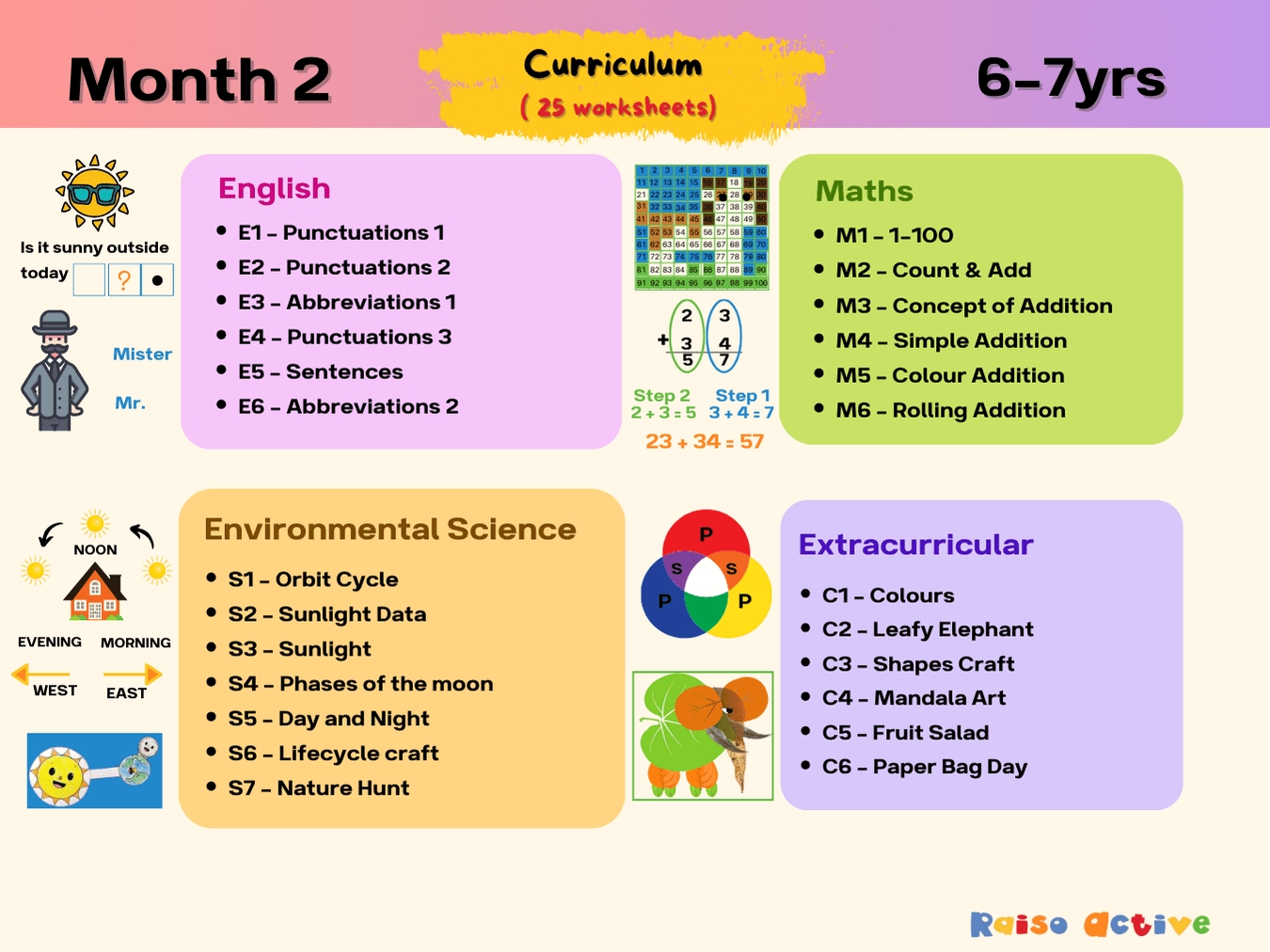
Part of the pack
Month 2: Learning & Development | Ages 6-7
This is page 2 of the pack. Ages 6-7 · Grade 1Ages 6-7 · Year 2Ages 6-7 · Class 1Ages 6-7
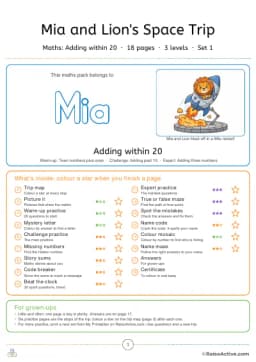
Made for your child
Adding within 10, made for your child
A maths pack with your child's name in it: pictures that explain, practice at three levels, puzzles and story sums about them. Print a new set whenever they finish.
Make a maths packFree preview · free for members
Curriculum
- Addition > Addition Basics
How to use this worksheet
Read through all five activity sections first so you know what materials and setup each one needs. Start with punctuation, reading a story aloud together and pointing out periods, question marks, or exclamation points as you go. Move to the moon phases activity, using Oreo biscuits to recreate each phase by scraping away the cream filling in different amounts. Use the flashlight to demonstrate the solar system activity, showing how light and shadow relate to day and night. Finish with the subject and predicate activity and the counting and addition activity, using bowls and grains as hands-on counters.
Materials needed
- Story books
- Oreo biscuits
- Playdough
- Light bulb or flashlight
- Bowls
- Grains
Extension activities
- 1Read more story books together and identify different punctuation marks as you go.
- 2Research the different planets in the solar system and talk about which one is your child's favorite.
- 3Practice adding more objects into a bowl, counting the total out loud each time.
- 4Go outside at night to look for the moon and compare what you see to the Oreo phases you made.

Written by
Hemsweta Jain · Teacher Cheena
MBA and Early Childhood Educator, teaching since 2014 · Founder of RaisoActive, Mumbai
Every RaisoActive worksheet is designed and checked by the founder before publishing.
Published · Last reviewed
More from Month 2: Learning & Development | Ages 6-7

Day and Night Worksheet for Preschoolers: Observe and Learn!
Ages 3-5 · Preschool–Pre-KAges 3-5 · Nursery–ReceptionAges 3-5 · Nursery–LKGAges 3-5
Children ages 3-5 build foundational science observation skills as they compare what's visible in the sky and what activities happen during day versus night. Completing fill-in-the-blank sentences and true-or-false questions also strengthens early reading comprehension, since children must connect a picture's details to written language rather than just naming what they see.

Sunlight Data Worksheet: Exploring Seasons and Sunlight Hours!
Ages 3-5 · Preschool–Pre-KAges 3-5 · Nursery–ReceptionAges 3-5 · Nursery–LKGAges 3-5
This worksheet introduces the science concept that daylight hours change with the seasons by having children record estimated sunlight hours for winter and summer dates and compare the two. For three- to five-year-olds, comparing two simple data points side by side is an early introduction to the idea of collecting and reading information, well before formal data or graphing skills are taught.
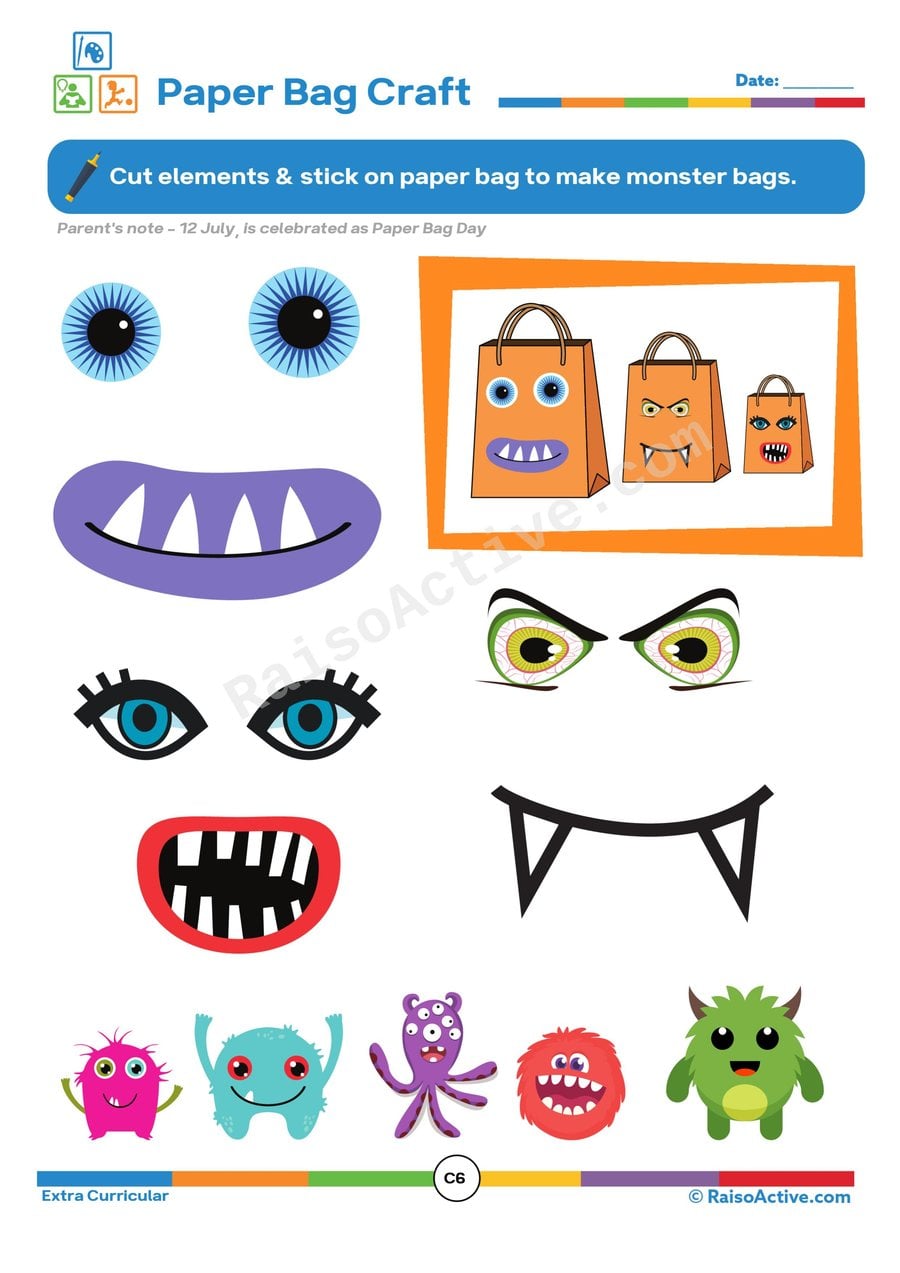
Monster Bag Craft: Cut and Paste Worksheet
Ages 3-5 · Preschool–Pre-KAges 3-5 · Nursery–ReceptionAges 3-5 · Nursery–LKGAges 3-5
This worksheet builds fine motor skills by having children cut out monster features — eyes, teeth, horns — and glue them onto a paper bag to design their own imaginative monster face. For three- to five-year-olds, the open-ended nature of choosing and arranging the features also encourages creative decision-making, since there's no single correct way to build the monster.
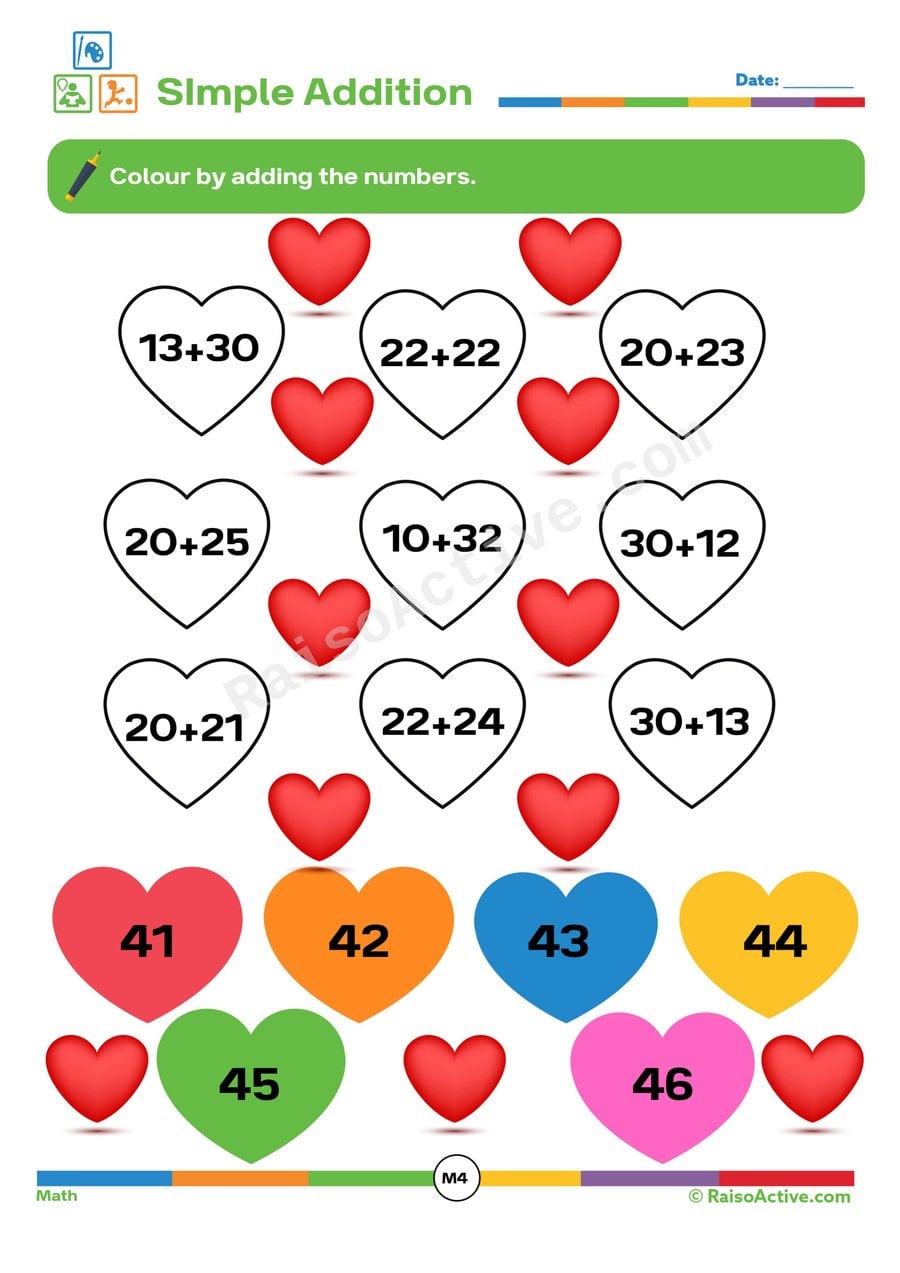
Simple Addition Worksheet: Color by Sums!
Ages 4-6 · Pre-K–KindergartenAges 4-6 · Reception–Year 1Ages 4-6 · LKG–UKGAges 4-6
Children ages 4-6 practice quick single-digit addition facts while also following a color key, combining early math fluency with visual attention to detail. Solving each problem before coloring gives an immediate, satisfying way to check their own accuracy as the picture comes together.

Color Mixing Fun: A Primary and Secondary Colors Worksheet
Ages 3-5 · Preschool–Pre-KAges 3-5 · Nursery–ReceptionAges 3-5 · Nursery–LKGAges 3-5
This worksheet helps children ages 3-5 understand that the three primary colors, red, yellow, and blue, combine to create secondary colors like orange, green, and purple. Coloring circles and observing how colors combine introduces an early, hands-on science concept about mixing, which also supports color vocabulary used throughout art and everyday description.
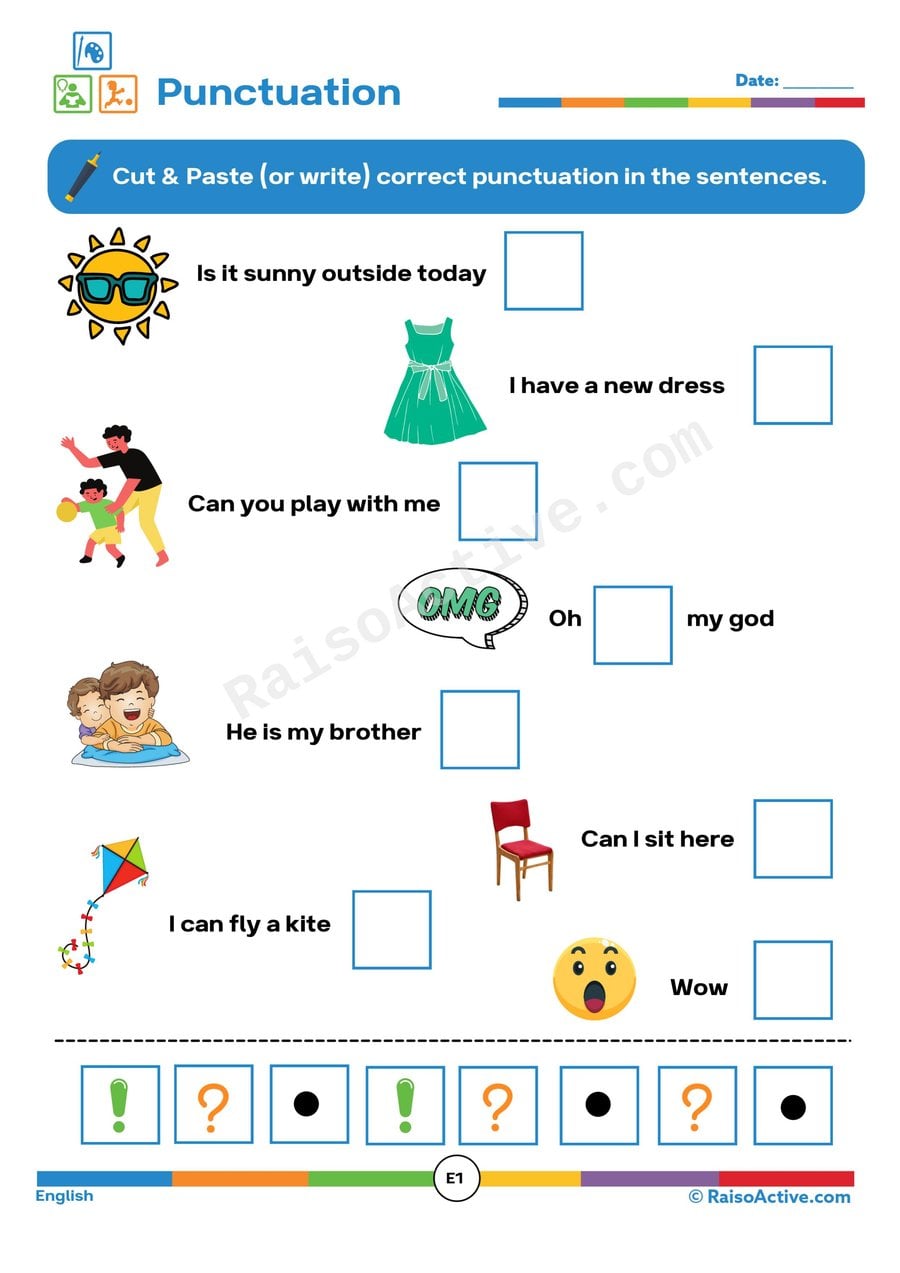
Punctuation Fun: Cut & Paste Punctuation Worksheet
Ages 4-6 · Pre-K–KindergartenAges 4-6 · Reception–Year 1Ages 4-6 · LKG–UKGAges 4-6
This worksheet teaches children to recognize and apply correct end punctuation — periods, question marks, and exclamation points — by reading simple sentences and choosing the punctuation mark that fits each one's tone. For four- to six-year-olds, connecting a sentence's meaning (a statement, a question, an exclamation) to its correct punctuation mark is an early step toward understanding that punctuation changes how a sentence should be read and understood.

Shape Dog Craft: Cut and Assemble a Fun Shapes Worksheet!
Ages 3-5 · Preschool–Pre-KAges 3-5 · Nursery–ReceptionAges 3-5 · Nursery–LKGAges 3-5
This worksheet helps children ages 3-5 recognize and assemble basic shapes, like circles, triangles, and squares, into a recognizable dog, reinforcing shape recognition while also building the fine motor precision needed to cut and place pieces accurately. Following a visual example to combine multiple shapes into one picture also strengthens early spatial reasoning.

Comma Practice Worksheet for Kids: Separating Items in a List!
Ages 4-6 · Pre-K–KindergartenAges 4-6 · Reception–Year 1Ages 4-6 · LKG–UKGAges 4-6
Children ages 4-6 learn exactly where commas belong when writing a list of three or more items in a sentence, a specific punctuation rule that makes their early writing readable to others. Practicing this now, before they start composing longer sentences independently, builds a habit that carries straight into school writing tasks.
Related worksheets

Parent's Guide: Fun Activities for Adjectives, Conjunctions, and More!
Ages 3-5 · Preschool–Pre-KAges 3-5 · Nursery–ReceptionAges 3-5 · Nursery–LKGAges 3-5
This parent's guide bundles hands-on activities around adjectives, conjunctions, measurement, and recycling, giving children ages 3-5 exposure to both language concepts and early science-adjacent skills within everyday, low-prep activities. Combining grammar practice with physical tasks like measuring height or building a planter helps abstract concepts, like what a conjunction is, become grounded in something concrete and memorable.

Parent's Guide: Fun Activities for Letter Recognition, Conversation & More!
Ages 3-5 · Preschool–Pre-KAges 3-5 · Nursery–ReceptionAges 3-5 · Nursery–LKGAges 3-5
This guide is a collection of hands-on activities parents can use to build letter recognition, phonics awareness, basic conversation skills, and spatial vocabulary in three- to five-year-olds through everyday play rather than worksheet drills. Because it's built around games like hiding letters or setting up a pretend shop, it teaches these early literacy and language skills through movement and imagination, which holds young children's attention far longer than seated tasks.

Fun Activities for Kids: Parent's Guide to Learning Through Play
Ages 3-5 · Preschool–Pre-KAges 3-5 · Nursery–ReceptionAges 3-5 · Nursery–LKGAges 3-5
This parent's guide gives caregivers of children ages 3-5 a set of play-based activities focused on phonics and sentence-building, translating early literacy concepts into hands-on games rather than seated worksheet time. Learning through play, such as storytelling or naming body parts during movement, helps young children absorb language concepts without the pressure of a formal lesson. Covering both phonics and sentence-building in one guide gives caregivers flexibility to match the activity to their child's mood and energy level.
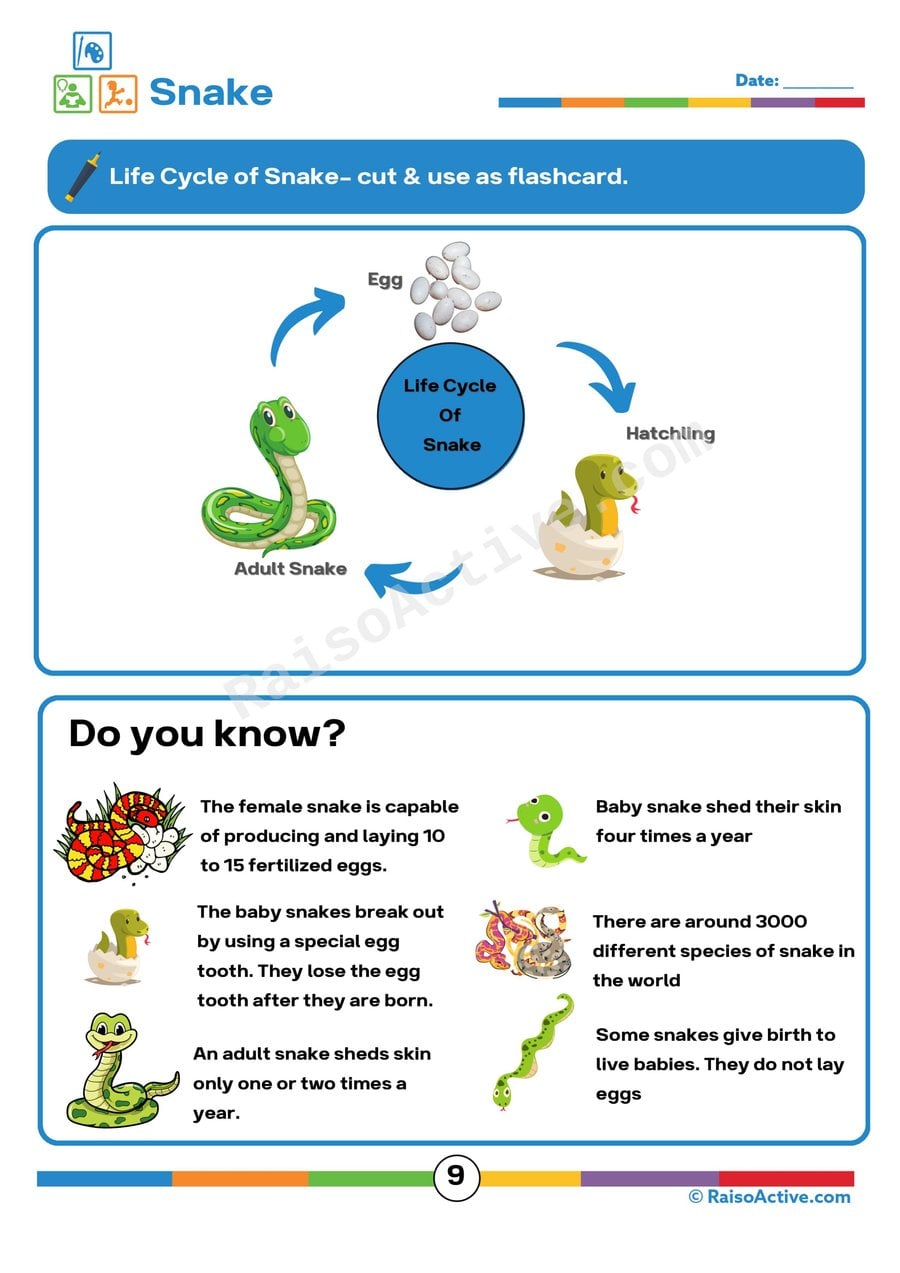
Snake Life Cycle Flashcard Worksheet for Kids
Ages 3-5 · Preschool–Pre-KAges 3-5 · Nursery–ReceptionAges 3-5 · Nursery–LKGAges 3-5
Using flashcards that show each stage of a snake's life, from egg to hatchling to adult, teaches children ages 3-5 the concept of a life cycle, the idea that living things grow and change through a predictable sequence of stages. Cutting out and handling the individual cards also builds fine motor skills, while sequencing them in order afterward reinforces early science reasoning about growth and change over time. Learning about a less commonly studied animal like a snake adds novelty that can spark extra curiosity compared to more familiar life cycle topics.

Squirrel's Acorn Maths: Addition, Comparing and Picture Sudoku Worksheet
Ages 4-8 · Pre-K–Grade 2Ages 4-8 · Reception–Year 3Ages 4-8 · LKG–Class 2Ages 4-8
Children add small groups, compare amounts with >, < and =, and use logic to complete a 4x4 picture sudoku.
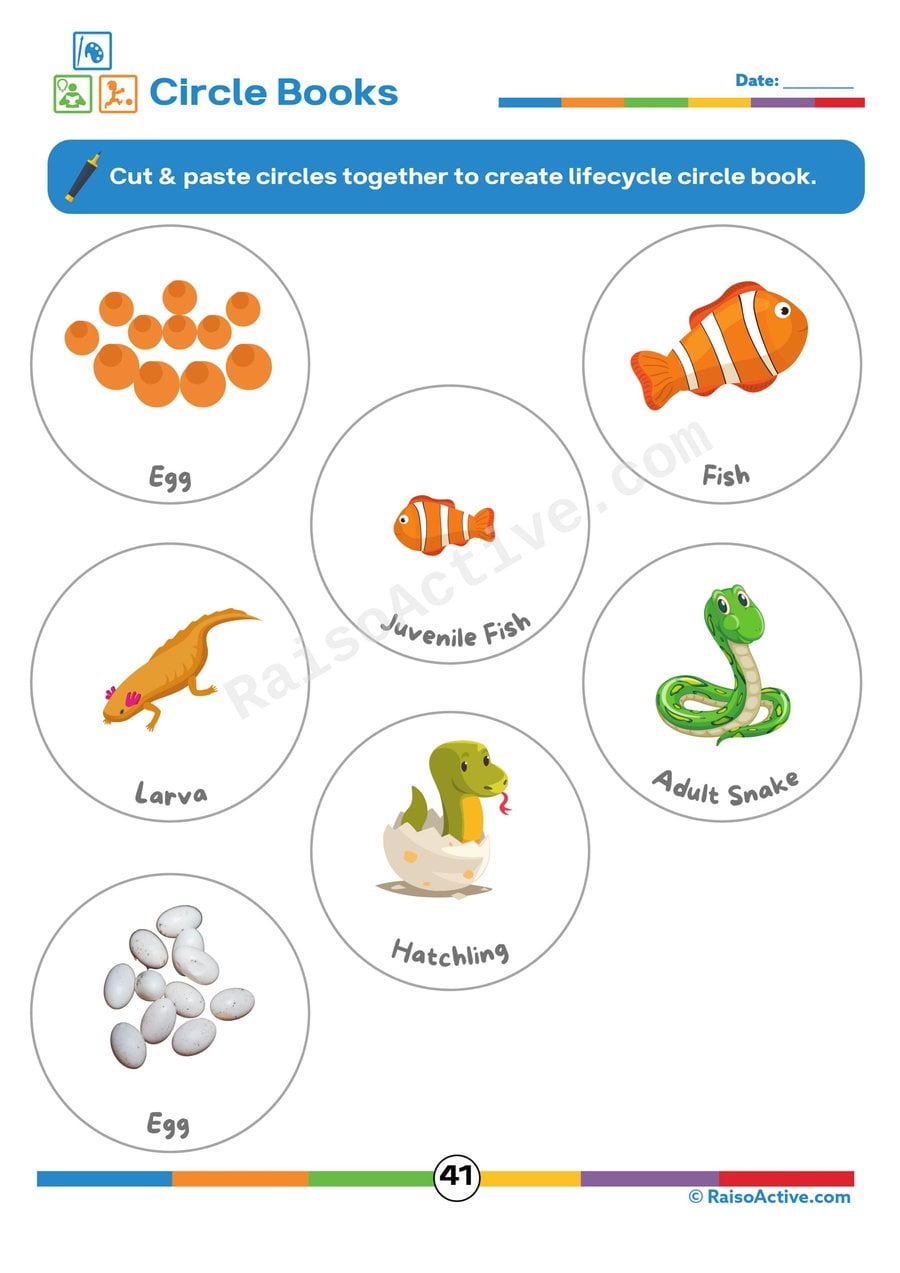
Lifecycle Circle Book: Cut and Paste Worksheet
Ages 3-5 · Preschool–Pre-KAges 3-5 · Nursery–ReceptionAges 3-5 · Nursery–LKGAges 3-5
This worksheet gives children ages 3-5 practice matching pictures to the correct stage of an animal's life cycle while assembling a hands-on circular book. Beyond sequencing, the rotating format helps children internalize that growth is a continuous, repeating process rather than a fixed line from start to finish.
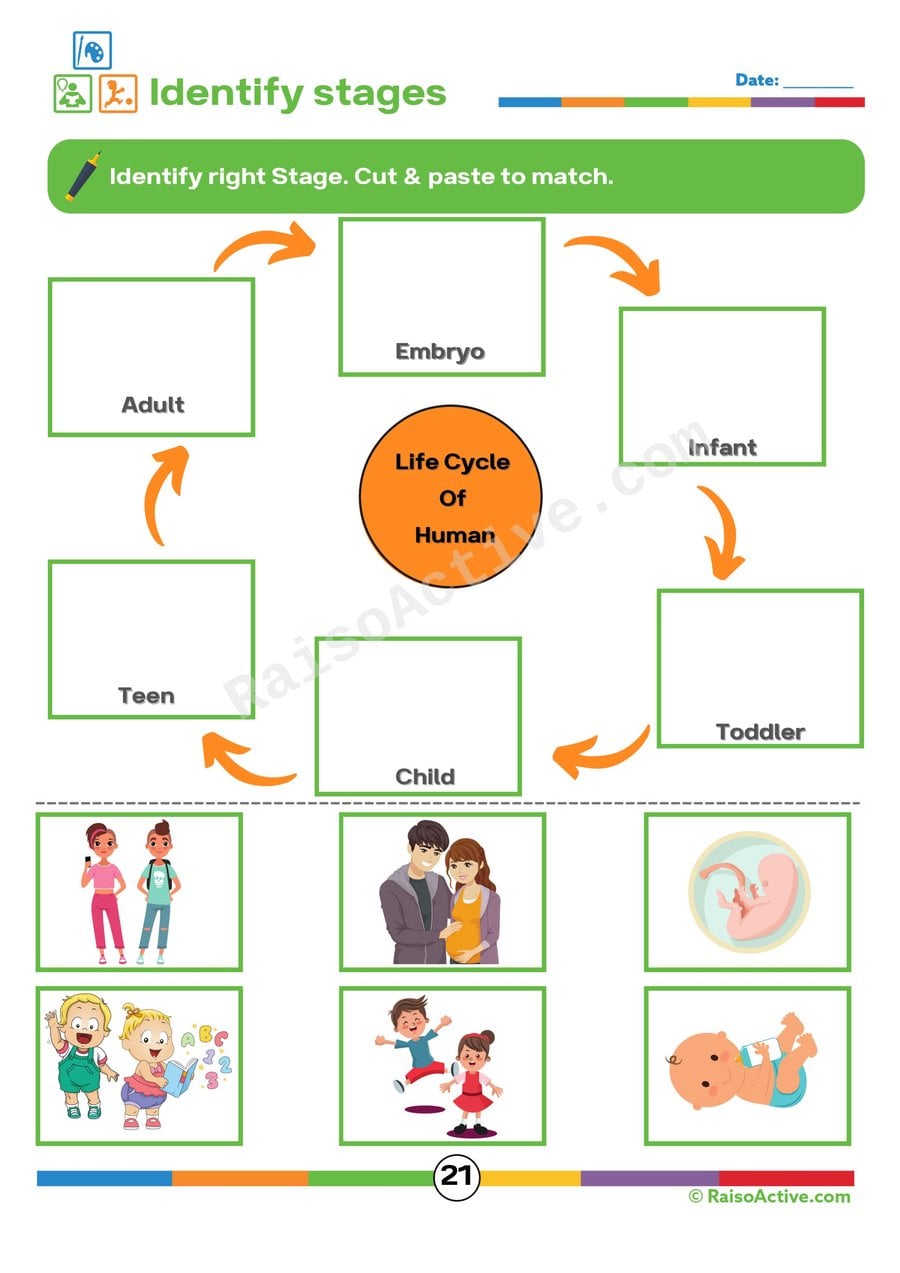
Human Life Cycle Stages Worksheet for Kids
Ages 4-6 · Pre-K–KindergartenAges 4-6 · Reception–Year 1Ages 4-6 · LKG–UKGAges 4-6
This worksheet helps children ages 4-6 understand that people, like animals, grow and change over time by matching pictures to the stages of human development — baby, child, teenager, and adult. It introduces early classification and comparison skills while giving children a concrete way to talk about growth they can observe in their own family.
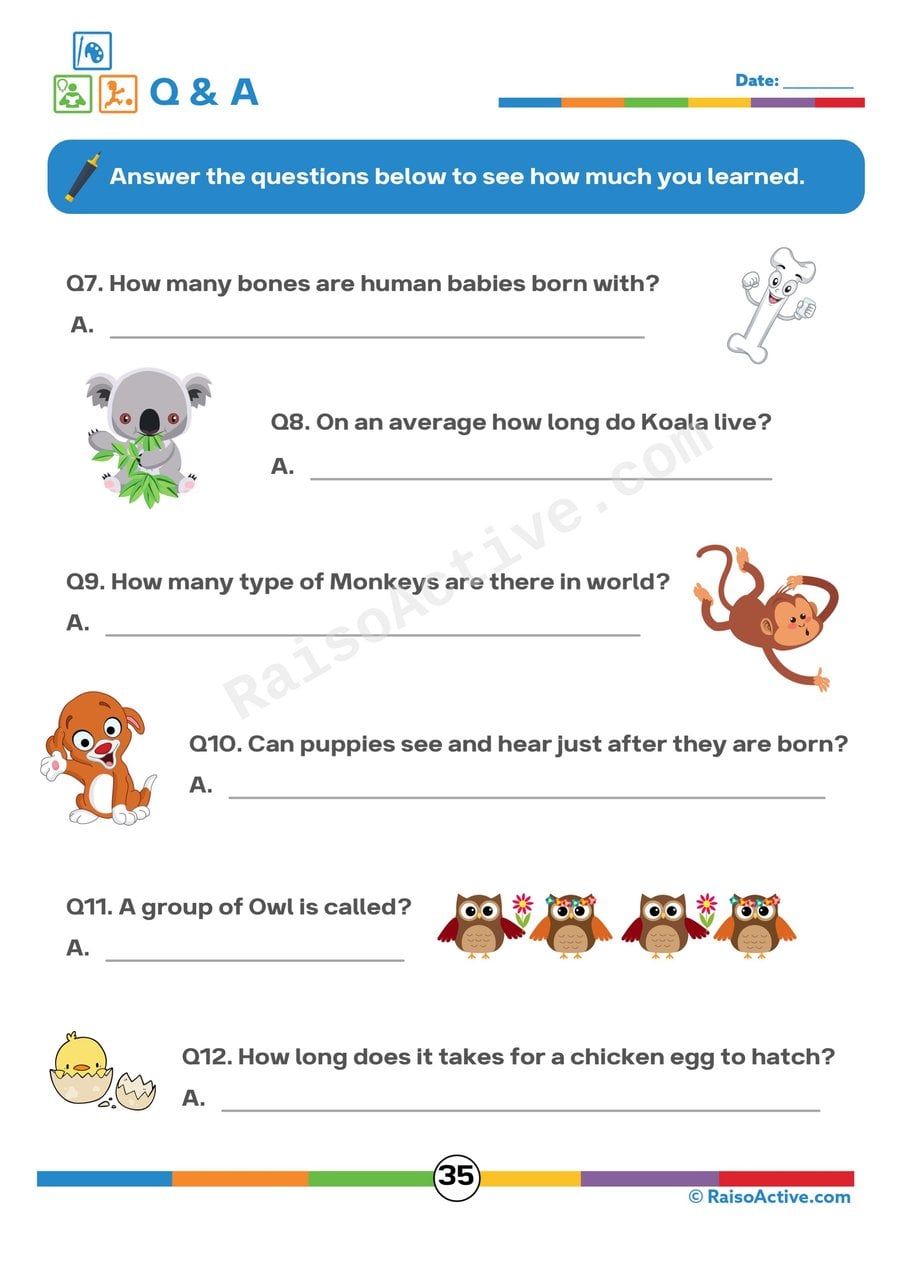
Animal Facts Worksheet for Kids: Fun Q&A!
Ages 3-5 · Preschool–Pre-KAges 3-5 · Nursery–ReceptionAges 3-5 · Nursery–LKGAges 3-5
Children ages 3-5 practice early reading comprehension and recall as they answer simple questions about animal characteristics using picture clues. This worksheet builds the foundational skill of connecting a written question to a visual answer, a key step before children can read fact-based text independently.
Guides for this topic

Documenting Learning Without Drowning in Data: A Practical Guide for Parents and Teachers
Learn practical ways to document your child's learning without overwhelm. Simple portfolios, observation tips, and printable trackers for ages 1-8.

Discovering Wonder: Nature-Based Learning Activities That Captivate Young Children
Explore nature-based learning activities for children ages 2–7 — leaf rubbings, bug hunts, nature journals, and seasonal Indian outdoor ideas that spark wonder.
Hands-On Science Fun: Age-Appropriate Science Activities That Spark Curiosity in Preschoolers
Discover 10+ easy science experiments for preschoolers using Indian household items. Spark curiosity in children ages 2-6 with safe, play-based STEM activities.
Reviews
Every worksheet for ages 3–5, no watermark
Members download the full library of 1,000+ worksheets and every activity pack without watermarks or daily limits. One year costs ₹999 in India or $20 elsewhere.
See membership plansOr download any worksheet free with a watermark (5 a day).