Sunflower Life Cycle Worksheet: Learn and Fold!
This worksheet introduces the plant life cycle by walking children through the sequential stages a sunflower passes through — from seed, to sprout, to full bloom — using coloring, labeling, and folding. For four- to six-year-olds, understanding that living things grow through a fixed, ordered set of stages is a foundational science concept that also applies to animals, insects, and their own growth.
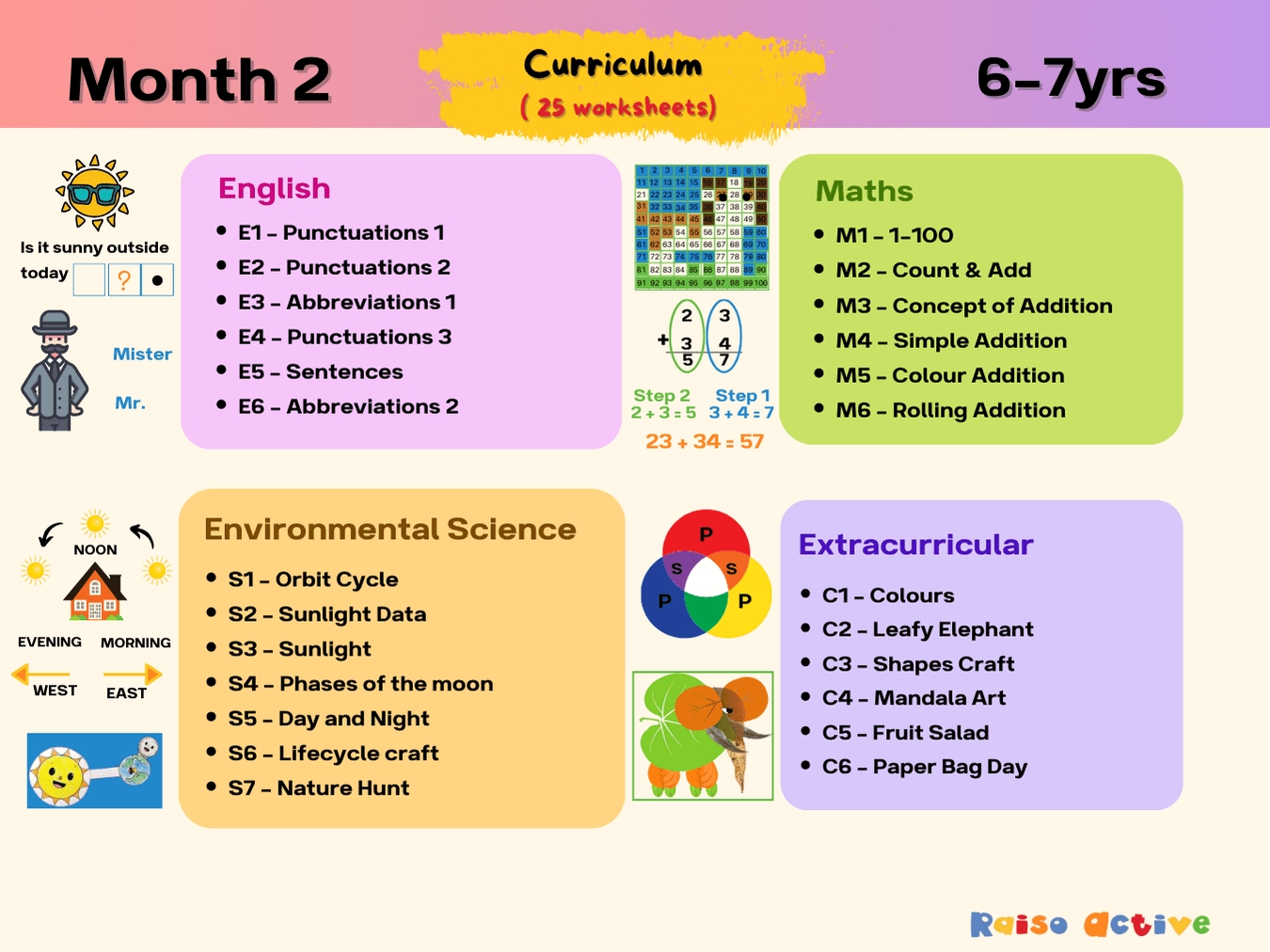
Part of the pack
Month 2: Learning & Development | Ages 6-7
This is page 21 of the pack. Ages 6-7 · Grade 1Ages 6-7 · Year 2Ages 6-7 · Class 1Ages 6-7
Curriculum
- Living Things - Plants > Plant Science
How to use this worksheet
Start by coloring the sunflower stages shown on the page, from seed to flower. Next, cut out the labeled words for each stage and match them to the correct photo, gluing each word beneath its matching picture. Then cut around the outer template as shown, and fold the page along the dotted lines to create a sequential flip-through of the life cycle. Once assembled, flip through the folded stages together, narrating the sunflower's growth from beginning to end.
Materials needed
- Pencil
- Crayons
- Scissors
- Glue (optional)
Extension activities
- 1Plant a real sunflower seed in a cup or garden bed and observe and record its growth over several weeks.
- 2Draw the life cycle of a different plant, like a bean or a tomato, using the same stage-by-stage structure.
- 3Read a book about how plants grow and compare it to the worksheet's stages.
- 4Take a weekly photo of a growing plant at home to build a real-life life cycle sequence.
- 5Act out being a seed that grows into a sunflower, moving your body through each stage.

Written by
Hemsweta Jain · Teacher Cheena
MBA and Early Childhood Educator, teaching since 2014 · Founder of RaisoActive, Mumbai
Every RaisoActive worksheet is designed and checked by the founder before publishing.
Published · Last reviewed
More from Month 2: Learning & Development | Ages 6-7

Orbit Cycle Worksheet: Learn About Earth, Sun, and Moon!
Ages 3-5 · Preschool–Pre-KAges 3-5 · Nursery–ReceptionAges 3-5 · Nursery–LKGAges 3-5
This hands-on craft worksheet introduces children ages 3-5 to the basic idea that the Earth orbits the Sun while the Moon orbits the Earth, an early astronomy concept made concrete through building a working model. Assembling the pieces themselves, rather than just looking at a picture, helps very young children grasp a concept that is otherwise entirely abstract.
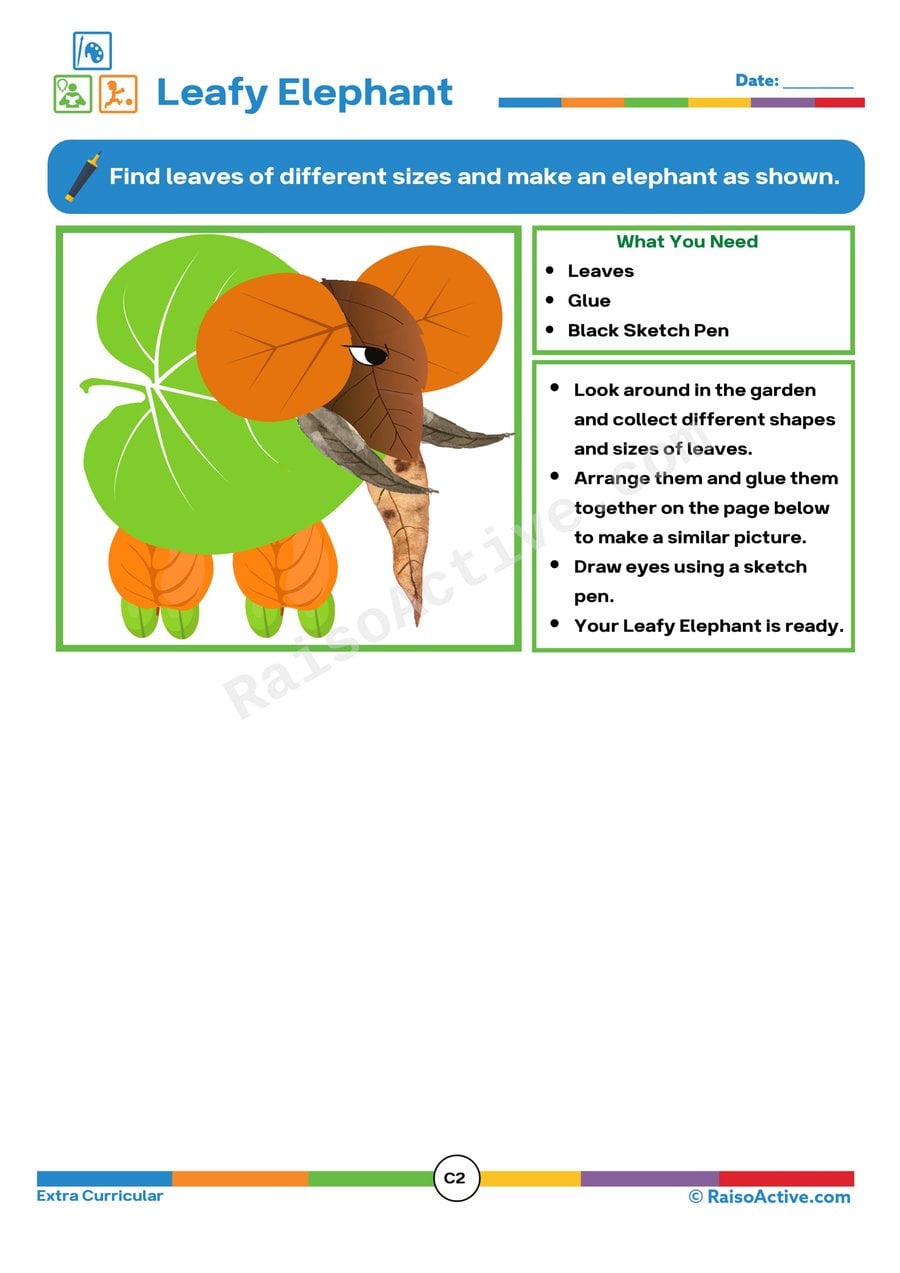
Leafy Elephant Craft Worksheet for Preschoolers
Ages 3-5 · Preschool–Pre-KAges 3-5 · Nursery–ReceptionAges 3-5 · Nursery–LKGAges 3-5
This craft guides children through building an elephant shape entirely out of real leaves, which strengthens fine motor skills and the ability to follow a multi-step visual example while also connecting them to natural materials of different shapes and sizes. For three- to five-year-olds, arranging irregular natural objects into a recognizable picture is a more open-ended fine motor challenge than gluing pre-cut paper shapes, since leaves vary and require some problem-solving to fit together.
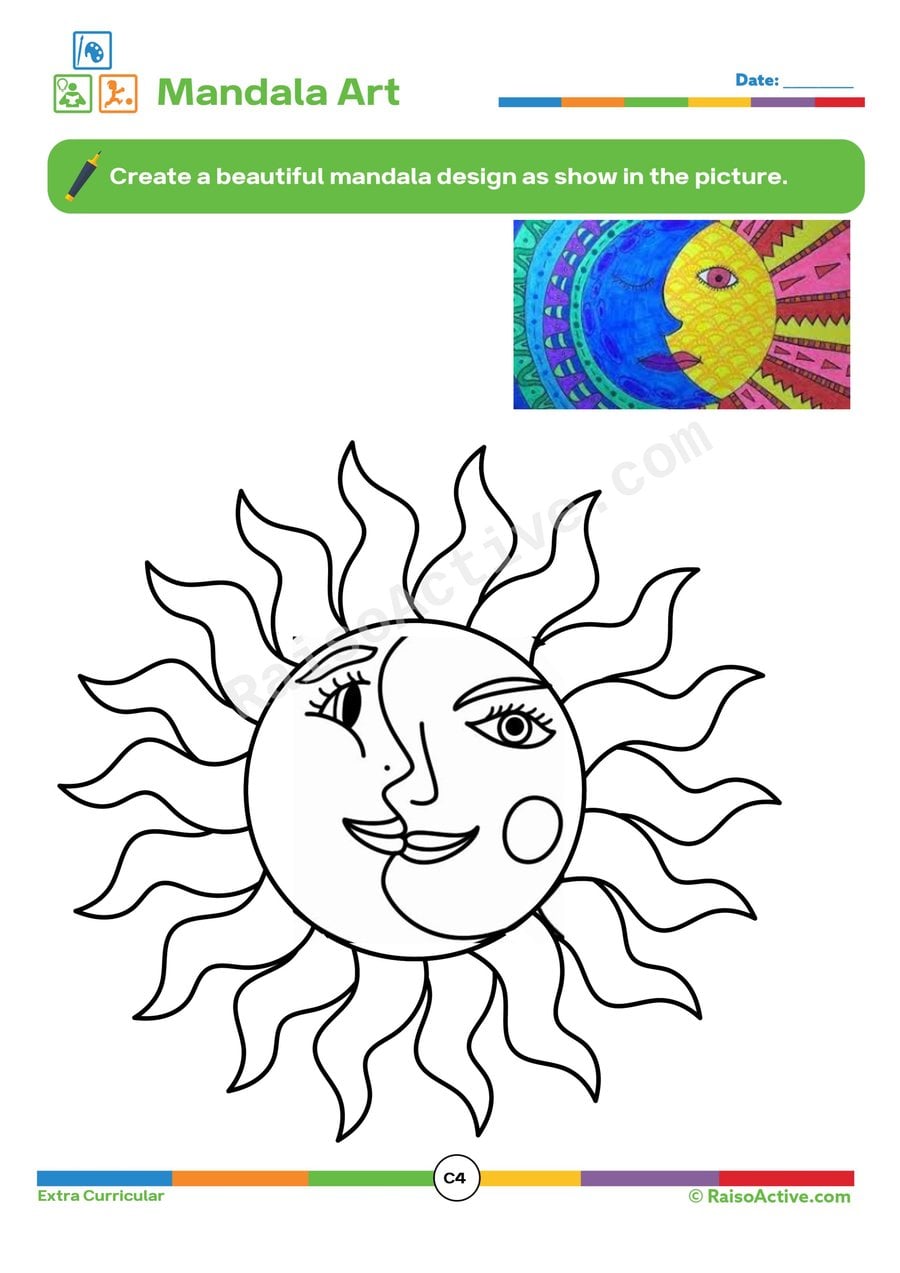
Mandala Art Worksheet: Create a Beautiful Design!
Ages 3-5 · Preschool–Pre-KAges 3-5 · Nursery–ReceptionAges 3-5 · Nursery–LKGAges 3-5
This worksheet builds fine motor control and color choice as children fill in a symmetrical mandala design, a repeating pattern radiating out from a central point. For three- to five-year-olds, coloring a mandala introduces an early sense of symmetry and pattern, since the repeating sections encourage children to notice and often repeat color choices around the design.
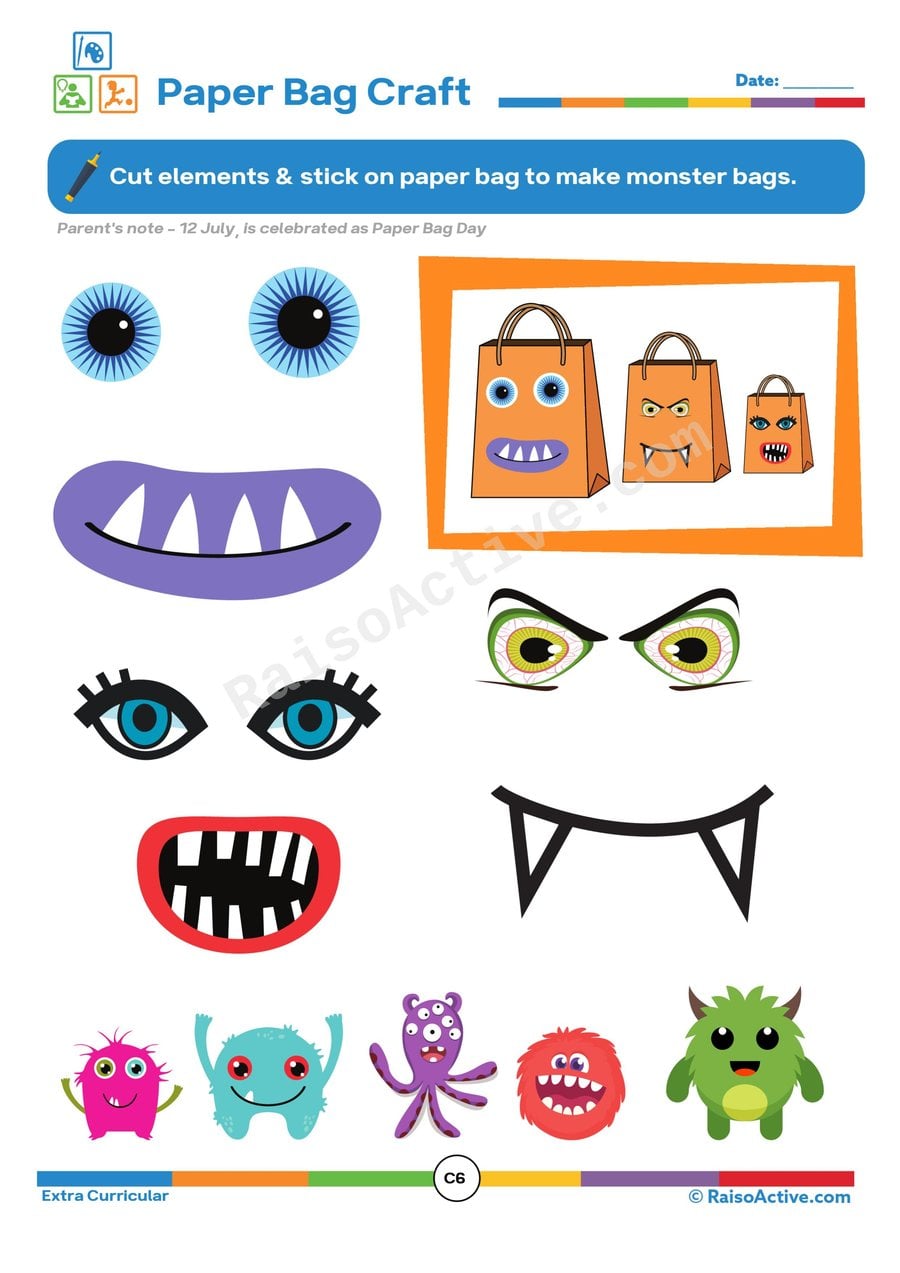
Monster Bag Craft: Cut and Paste Worksheet
Ages 3-5 · Preschool–Pre-KAges 3-5 · Nursery–ReceptionAges 3-5 · Nursery–LKGAges 3-5
This worksheet builds fine motor skills by having children cut out monster features — eyes, teeth, horns — and glue them onto a paper bag to design their own imaginative monster face. For three- to five-year-olds, the open-ended nature of choosing and arranging the features also encourages creative decision-making, since there's no single correct way to build the monster.
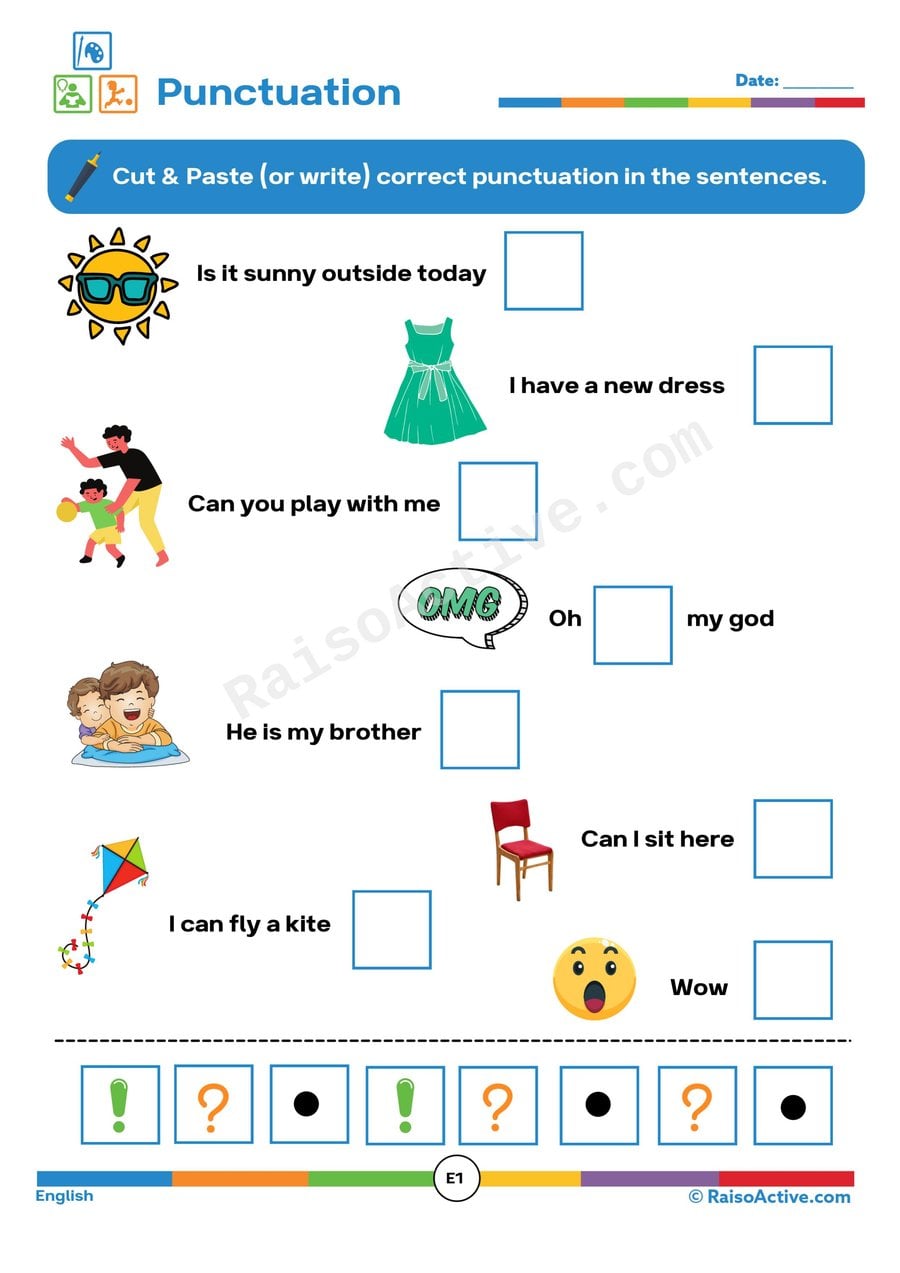
Punctuation Fun: Cut & Paste Punctuation Worksheet
Ages 4-6 · Pre-K–KindergartenAges 4-6 · Reception–Year 1Ages 4-6 · LKG–UKGAges 4-6
This worksheet teaches children to recognize and apply correct end punctuation — periods, question marks, and exclamation points — by reading simple sentences and choosing the punctuation mark that fits each one's tone. For four- to six-year-olds, connecting a sentence's meaning (a statement, a question, an exclamation) to its correct punctuation mark is an early step toward understanding that punctuation changes how a sentence should be read and understood.

Abbreviations Worksheet for Kids: Road, Doctor, and More!
Ages 4-6 · Pre-K–KindergartenAges 4-6 · Reception–Year 1Ages 4-6 · LKG–UKGAges 4-6
This worksheet introduces children ages 4-6 to abbreviations like Rd. for Road and Dr. for Doctor, teaching them that a shortened form can stand in for a longer, familiar word. Recognizing abbreviations is an early vocabulary and reading skill children will meet constantly on street signs, envelopes, and forms.
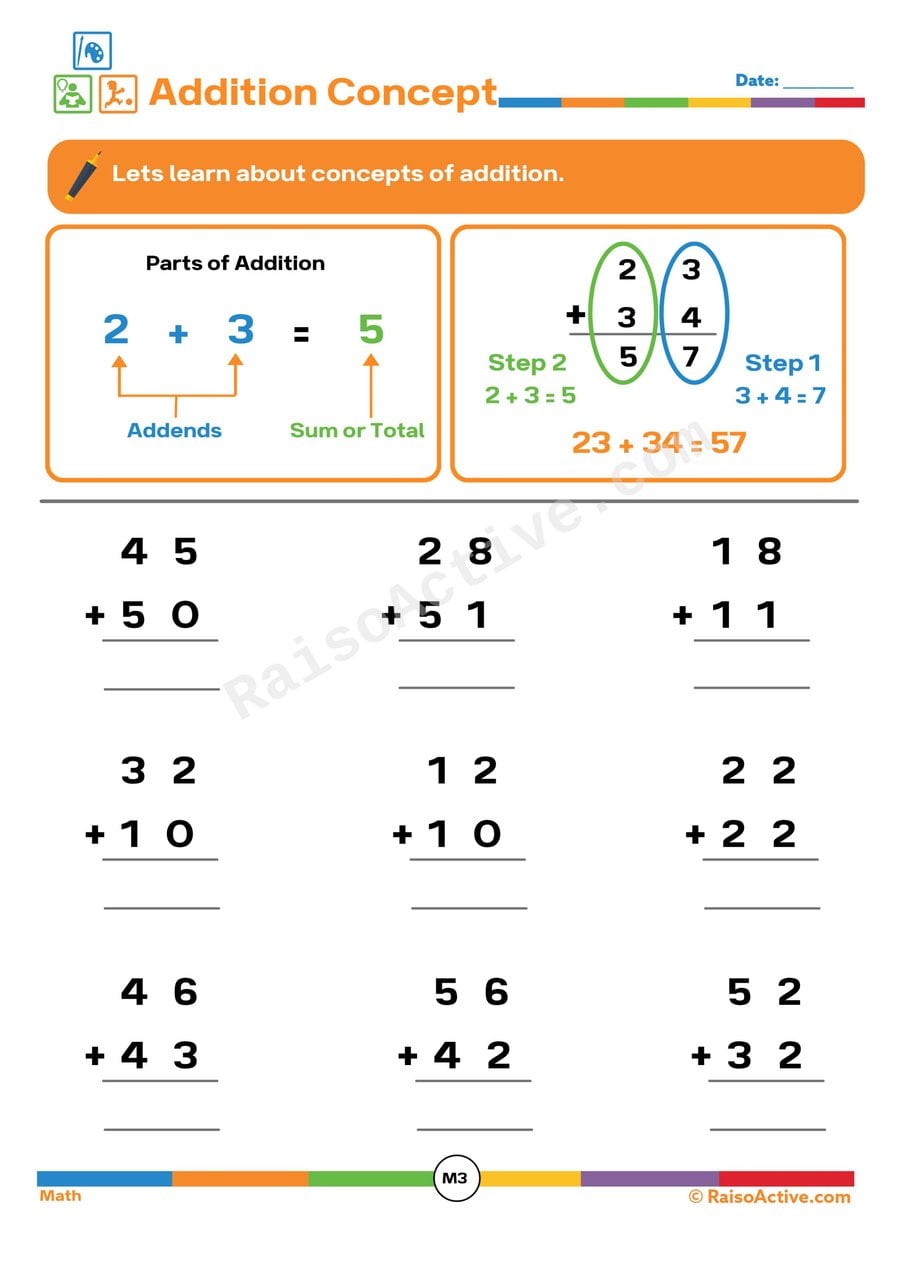
Addition Concepts Worksheet for Preschoolers
Ages 4-6 · Pre-K–KindergartenAges 4-6 · Reception–Year 1Ages 4-6 · LKG–UKGAges 4-6
Preschoolers ages 4-6 build early number sense by visually combining two small groups into one total, the concrete foundation every later addition fact depends on. Seeing objects physically joined together, rather than just numbers on a page, helps children grasp that addition means 'putting together' before they ever memorize a sum.

Phases of the Moon Worksheet: Trace, Color, and Learn!
Ages 3-5 · Preschool–Pre-KAges 3-5 · Nursery–ReceptionAges 3-5 · Nursery–LKGAges 3-5
This worksheet introduces children ages 3-5 to the changing shapes of the moon by having them trace each phase's outline, say its name aloud, and color it in, connecting a science concept to hands-on tracing practice. Drawing and labeling the phases in a circle afterward reinforces that the moon moves through this same cycle in a repeating, predictable order.
Related worksheets
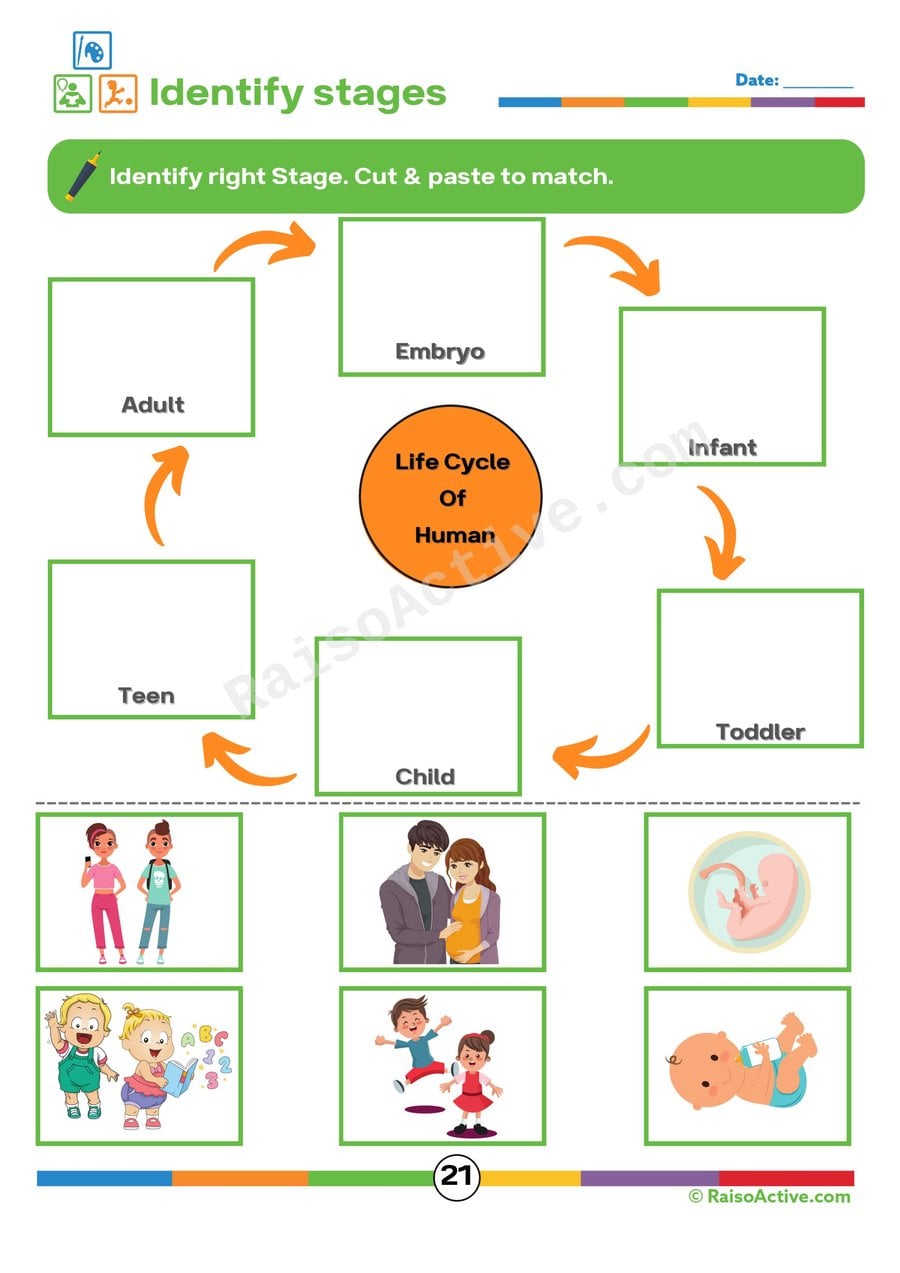
Human Life Cycle Stages Worksheet for Kids
Ages 4-6 · Pre-K–KindergartenAges 4-6 · Reception–Year 1Ages 4-6 · LKG–UKGAges 4-6
This worksheet helps children ages 4-6 understand that people, like animals, grow and change over time by matching pictures to the stages of human development — baby, child, teenager, and adult. It introduces early classification and comparison skills while giving children a concrete way to talk about growth they can observe in their own family.
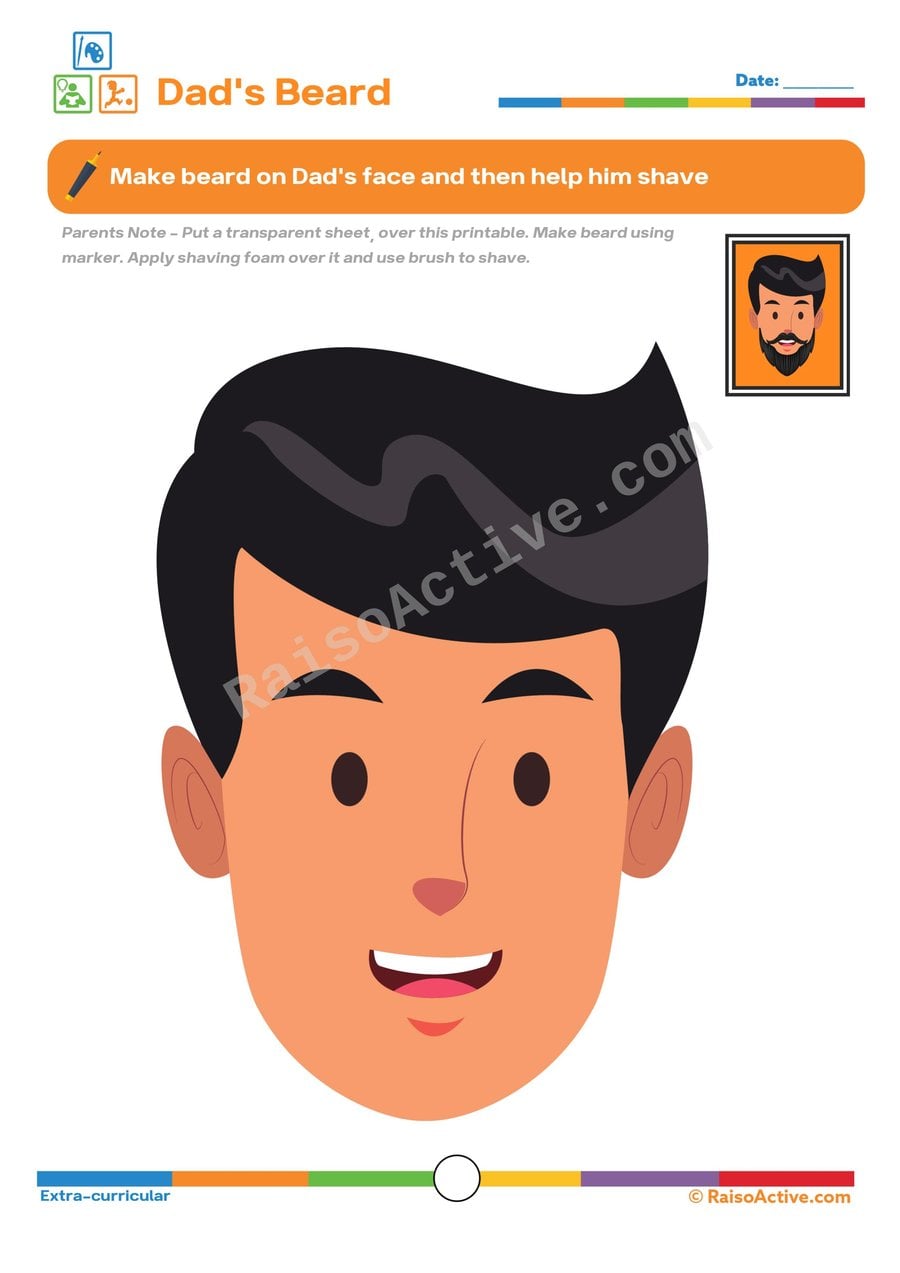
Dad's Beard: A Fun Shaving Activity for Kids!
Ages 3-5 · Preschool–Pre-KAges 3-5 · Nursery–ReceptionAges 3-5 · Nursery–LKGAges 3-5
This playful pretend-shaving activity builds fine motor control and bilateral coordination in children ages 3-5, as they draw a beard with a marker and then 'shave' it away using foam and a brush in careful, controlled strokes. It also introduces a simple science idea — that shaving foam can be applied and removed in layers — while giving children a hands-on, sensory way to imitate an everyday grown-up routine.
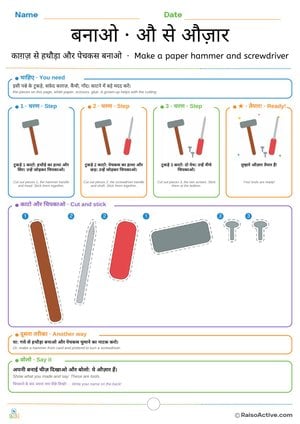
Make a Paper Hammer and Screwdriver: Hindi Letter औ (au) Cut and Stick Craft | बनाओ · औ से औज़ार
Ages 4-7 · Pre-K–Grade 1Ages 4-7 · Reception–Year 2Ages 4-7 · LKG–Class 1Ages 4-7
Children cut out the numbered pieces and stick them in order to make a hammer and a screwdriver with two screws, then show it and say a full sentence about it. It links the letter औ with a real picture word, औज़ार (tools), and practises scissor control and following steps.
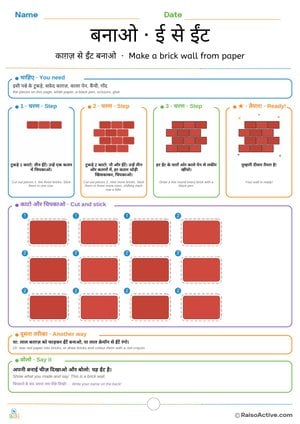
Make a Paper Brick Wall: Hindi Letter ई Craft | बनाओ · ई से ईंट
Ages 3-7 · Preschool–Grade 1Ages 3-7 · Nursery–Year 2Ages 3-7 · Nursery–Class 1Ages 3-7
Children cut out the pieces, put them together following three step pictures and make a paper brick wall. Saying the word ईंट as they make it links the sound ई to something they built themselves.
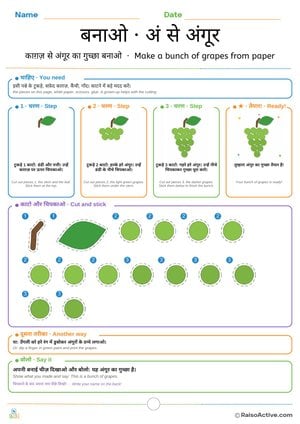
Make a Bunch of Paper Grapes: Hindi Letter अं (am) Cut and Stick Craft | बनाओ · अं से अंगूर
Ages 4-7 · Pre-K–Grade 1Ages 4-7 · Reception–Year 2Ages 4-7 · LKG–Class 1Ages 4-7
Children cut out the numbered pieces and stick them in order to make a bunch of grapes from light and dark green circles, then show it and say a full sentence about it. It links the letter अं with a real picture word, अंगूर, and practises scissor control and following steps.
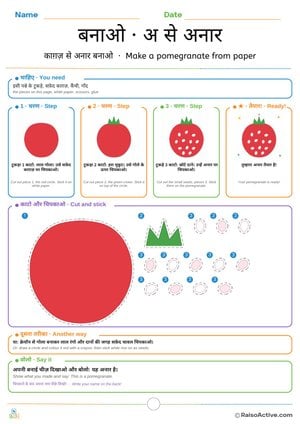
Make a Paper Pomegranate: Hindi Letter अ Craft | बनाओ · अ से अनार
Ages 3-7 · Preschool–Grade 1Ages 3-7 · Nursery–Year 2Ages 3-7 · Nursery–Class 1Ages 3-7
Children cut out the pieces, put them together following three step pictures and make a paper pomegranate. Saying the word अनार as they make it links the sound अ to something they built themselves.
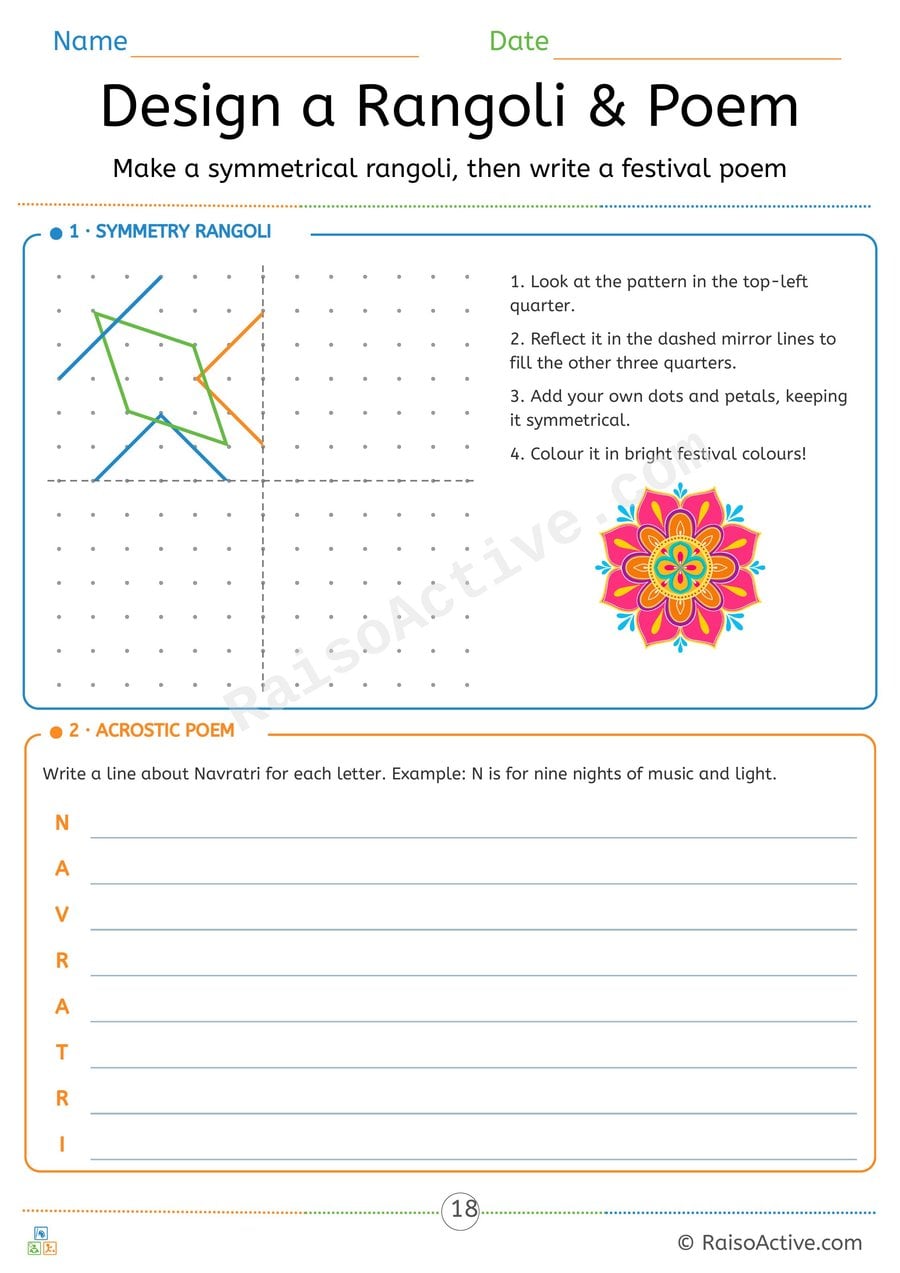
Navratri Symmetry Rangoli and Acrostic Poem
Ages 7-11 · Grade 2–Grade 3Ages 7-11 · Year 3–Year 4Ages 7-11 · Class 2–Class 3Ages 7-11
Children reflect a pattern in two mirror lines to complete a four-way symmetrical rangoli on a dot grid, add their own symmetrical details, and write an acrostic poem with one line for each letter of NAVRATRI.
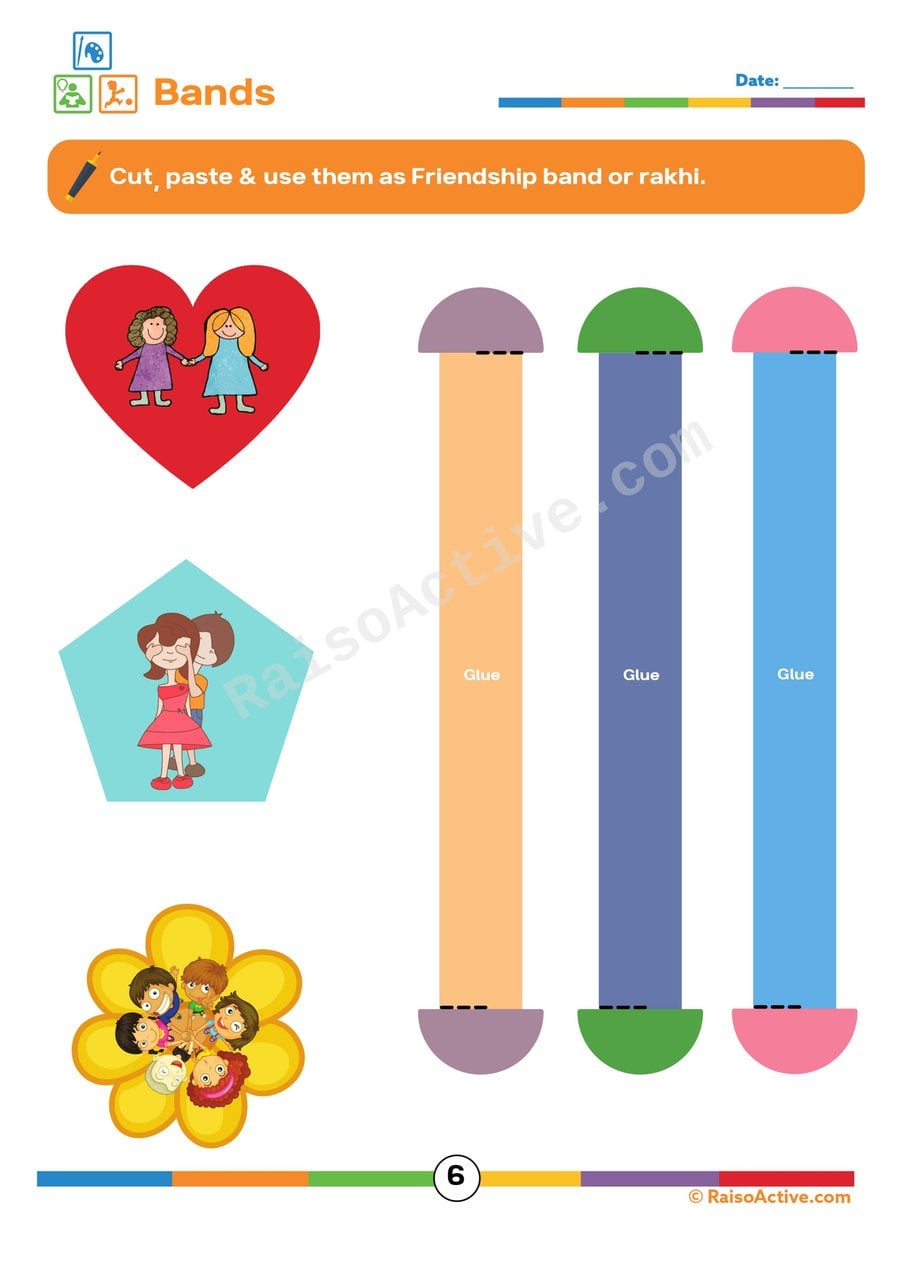
Friendship Band Craft: Cut, Paste, and Create!
Ages 3-5 · Preschool–Pre-KAges 3-5 · Nursery–ReceptionAges 3-5 · Nursery–LKGAges 3-5
This worksheet gives children ages 3-5 additional practice with scissor control and sequential assembly as they cut, join, and decorate their own friendship band or rakhi. Repeating a craft with a new set of shapes reinforces the multi-step process of cutting, arranging, and gluing until it becomes a comfortable, repeatable routine.
Guides for this topic

Discovering Wonder: Nature-Based Learning Activities That Captivate Young Children
Explore nature-based learning activities for children ages 2–7 — leaf rubbings, bug hunts, nature journals, and seasonal Indian outdoor ideas that spark wonder.

Celebrating Diversity: How to Incorporate Cultural Awareness in Learning Activities for Young Children
Practical cultural awareness activities for young children aged 2-8. Explore Indian festivals, world cultures, food, music, and crafts to teach diversity and inclusion.
What Supplies Do You Need for Preschool Learning at Home: The Complete Essential Guide
Discover the essential supplies for preschool learning at home — from crayons and counting blocks to sensory bins. Affordable options available in India for ages 2–6.
Reviews
Every worksheet for ages 4–6, no watermark
Members download the full library of 1,000+ worksheets and every activity pack without watermarks or daily limits. One year costs ₹999 in India or $20 elsewhere.
See membership plansOr download any worksheet free with a watermark (5 a day).