Free printable worksheets · United States
1st Grade English Worksheets (Ages 6–7)
1st Grade english worksheets are practice sheets for children aged 6–7 in First Grade in the US. English covers letter and sound recognition, reading, vocabulary, grammar and writing, building from spoken language toward independent sentences. The sheets on this page cover letter recognition and phonics, reading comprehension, sentence writing and vocabulary and grammar.
First grade pushes reading toward fluency and math toward larger numbers: consonant digraphs, long vowels and silent e appear in decodable passages, while place value work extends to 120 and addition and subtraction move from within 10 to within 20. Six-year-olds read for meaning. The set should cover long vowel spellings such as ai, ee, oa and magic e, short passages with who, what and why questions, three connected sentences with capitals and periods, plurals with s and es, opposites and simple vocabulary, common-word spelling, and handwriting that is now fluent enough not to slow the writing down. A sight word list nearer 100 is typical. Inference and paragraphs are next year's work.
303+ worksheets · free PDF download · print on A4 or Letter
1st Grade English Worksheets to print
Browse all worksheets for ages 6–7
Punctuation Adventure: End Punctuation Worksheet for Kids
Children ages 5-7 practice choosing between periods, question marks, and exclamation points based on the meaning and tone of a sentence, a skill that connects punctuation directly to how a sentence should sound when read aloud. This builds the foundation for expressive, correctly punctuated writing later in school.

Personal Pronouns Worksheet for Kids: Circle and Underline!
Circling the subject pronoun and underlining the object pronoun in each sentence teaches children ages 5-7 to recognize that pronouns play different grammatical roles depending on their position in a sentence, an important step toward more advanced grammar understanding. This careful, close-reading task also builds attention to sentence structure that supports stronger writing later on.
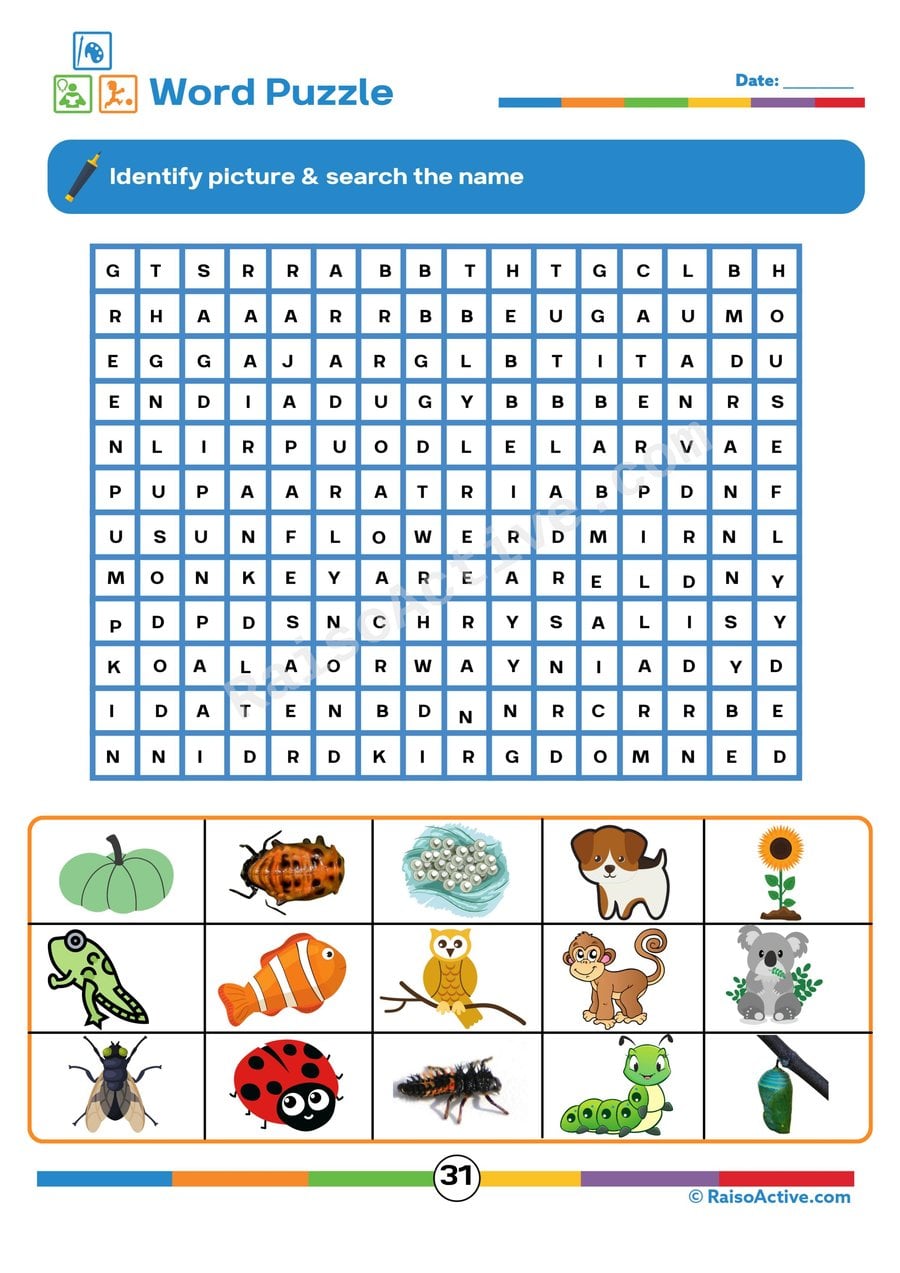
Word Search Worksheet: Find the Hidden Words!
Searching this life cycle-themed word grid strengthens children's letter-by-letter visual scanning and spelling recognition, both essential pre-reading skills for ages 5-7. As they hunt for words tied to animal growth stages — such as egg, larva, or adult — children reinforce life cycle vocabulary while training their eyes to track left-to-right and top-to-bottom across a busy grid. This dual focus on reading mechanics and science content makes the puzzle more valuable than a generic word search.
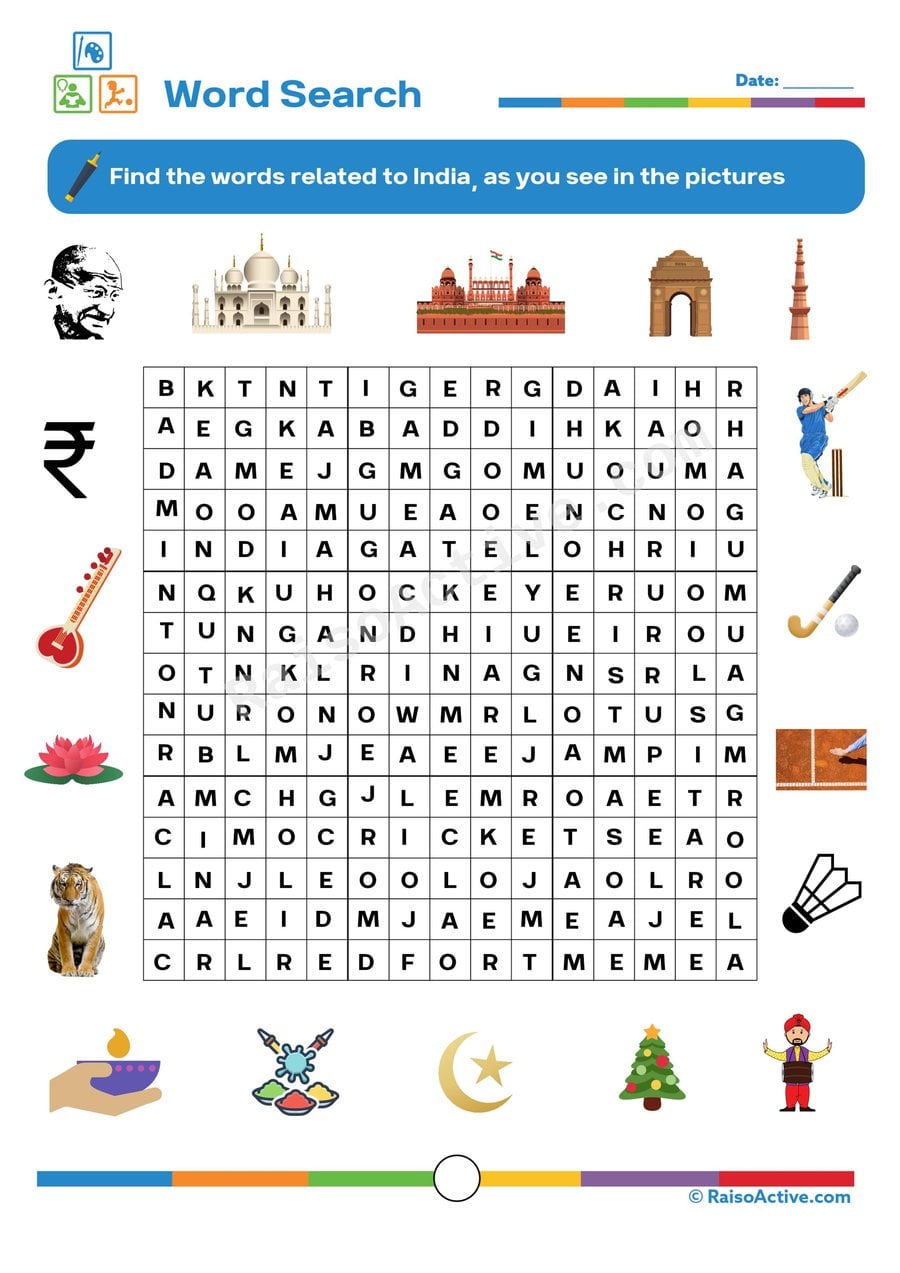
India Word Search Worksheet for Kids
Searching a letter grid for words connected to India, such as festival names, foods, or landmarks, builds visual scanning and word-recognition skills in children ages 4-7 while introducing vocabulary tied to Indian culture and geography. Because the target words vary in length and may run in different directions through the grid, children also practice sustained visual attention and letter-sequence tracking, both important pre-reading skills. This worksheet pairs literacy practice with cultural and social studies exposure in a single activity.
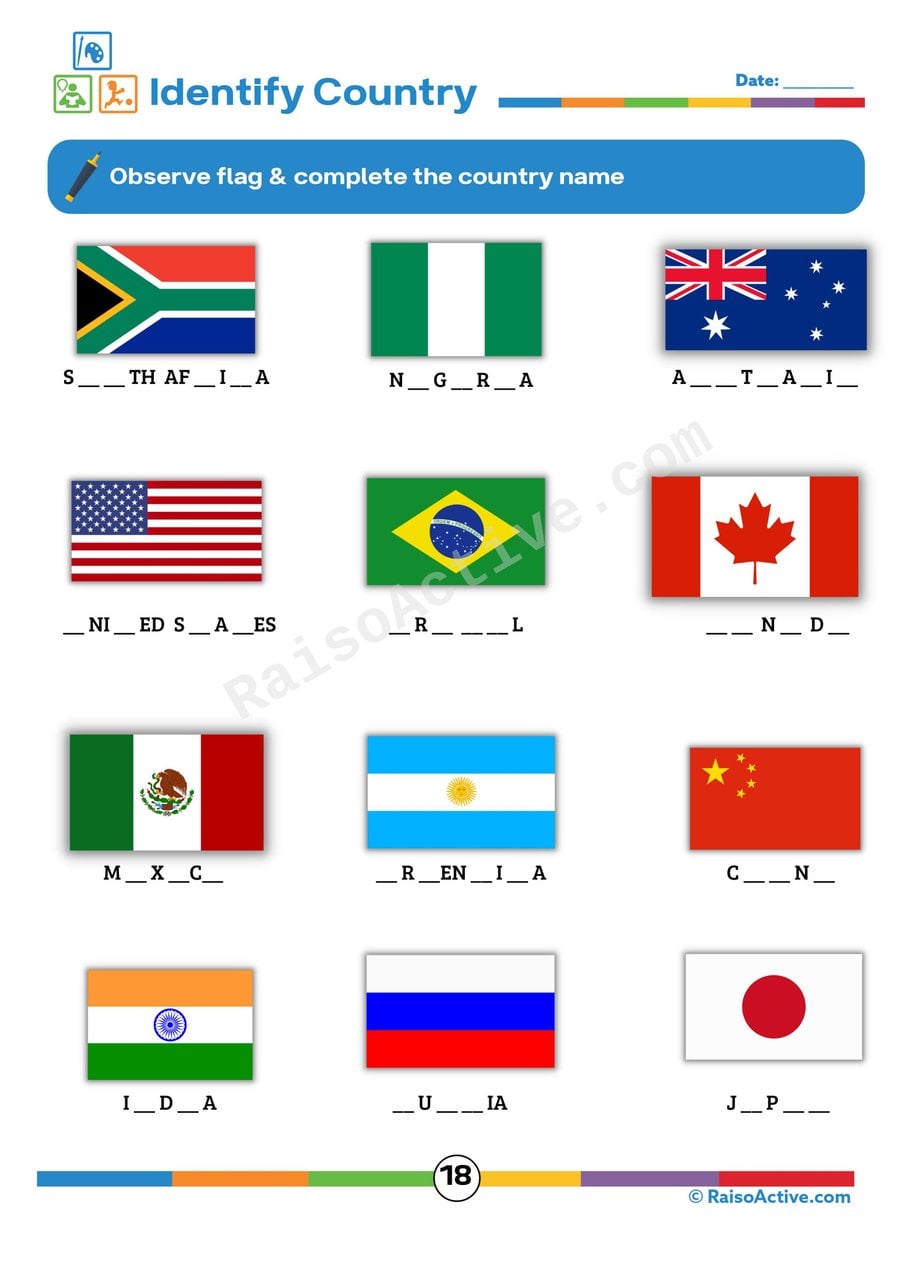
Identify the Country: Flag Matching Worksheet
Filling in the missing letters of each country's name while studying its flag gives children ages 4-7 practice with letter-sound correspondence and spelling patterns, since they must sound out the word and recall which letters are already provided as clues. It also builds early geography knowledge, helping children connect a visual symbol (the flag) to a country's name for the first time. This dual practice of decoding and world knowledge lays groundwork for both literacy and social studies skills.

Sun Safety Worksheet for Kids: Learn About Staying Safe in the Sun!
This worksheet has children ages 4-7 answer questions about sun safety, such as why sunscreen and hats matter, building early health literacy alongside writing practice as they put their understanding into their own words. Because the questions ask children to reason about why certain sun-safety habits matter rather than just label a picture, this worksheet develops early explanatory thinking, a step up from simple factual recall. Practicing writing full answers, even short ones, also builds sentence-forming skills appropriate for this age range.
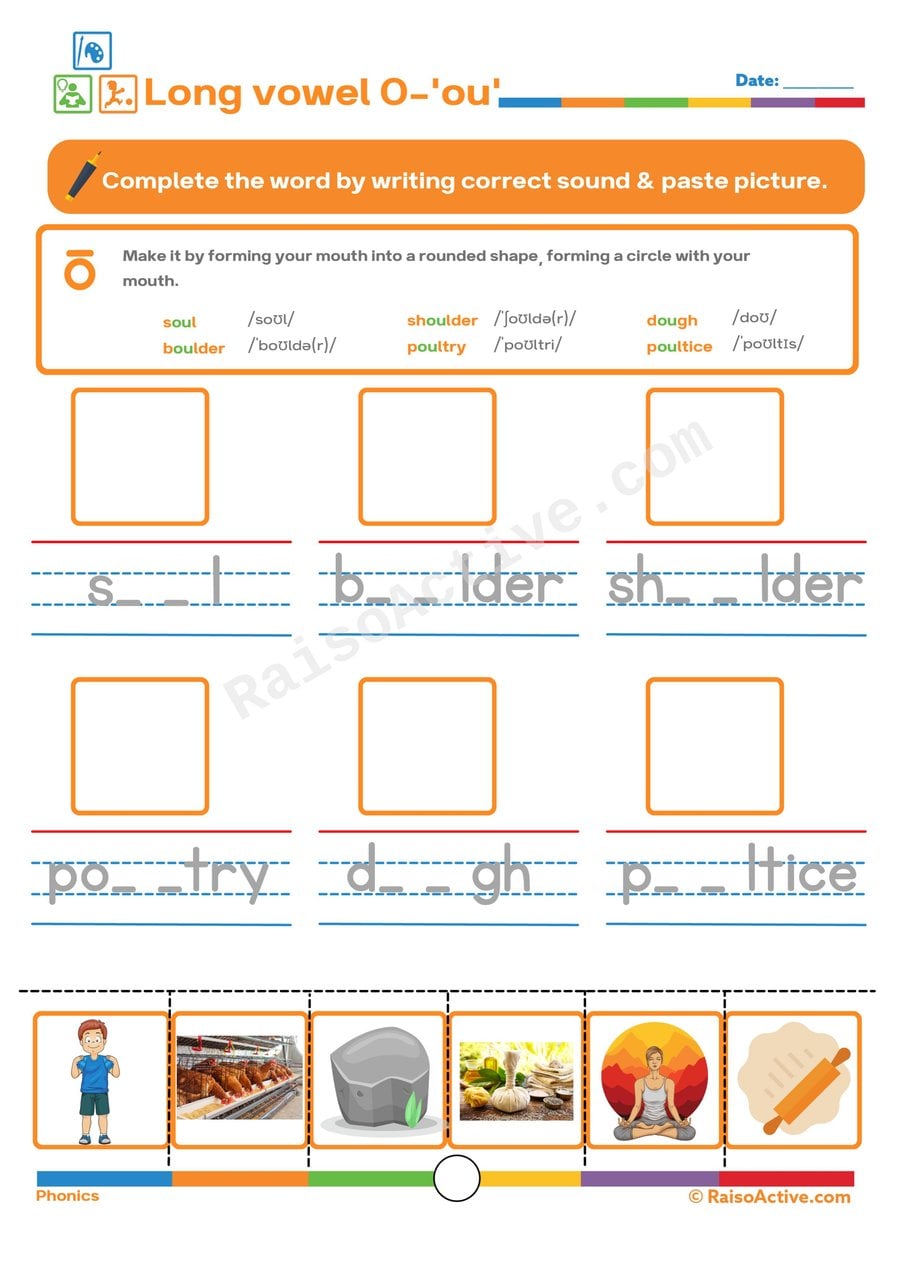
Long Vowel O-'ou' Worksheet: Complete the Words!
This worksheet introduces children ages 4-6 to the 'ou' spelling pattern for the long 'o' sound, as found in words like 'soul' or 'shoulder,' by having them fill in missing letters to complete words and then match each finished word to its picture. Because 'ou' is a less common and less intuitive spelling for the long 'o' sound, this practice builds the flexible spelling awareness needed to recognize the same sound written in unfamiliar ways.
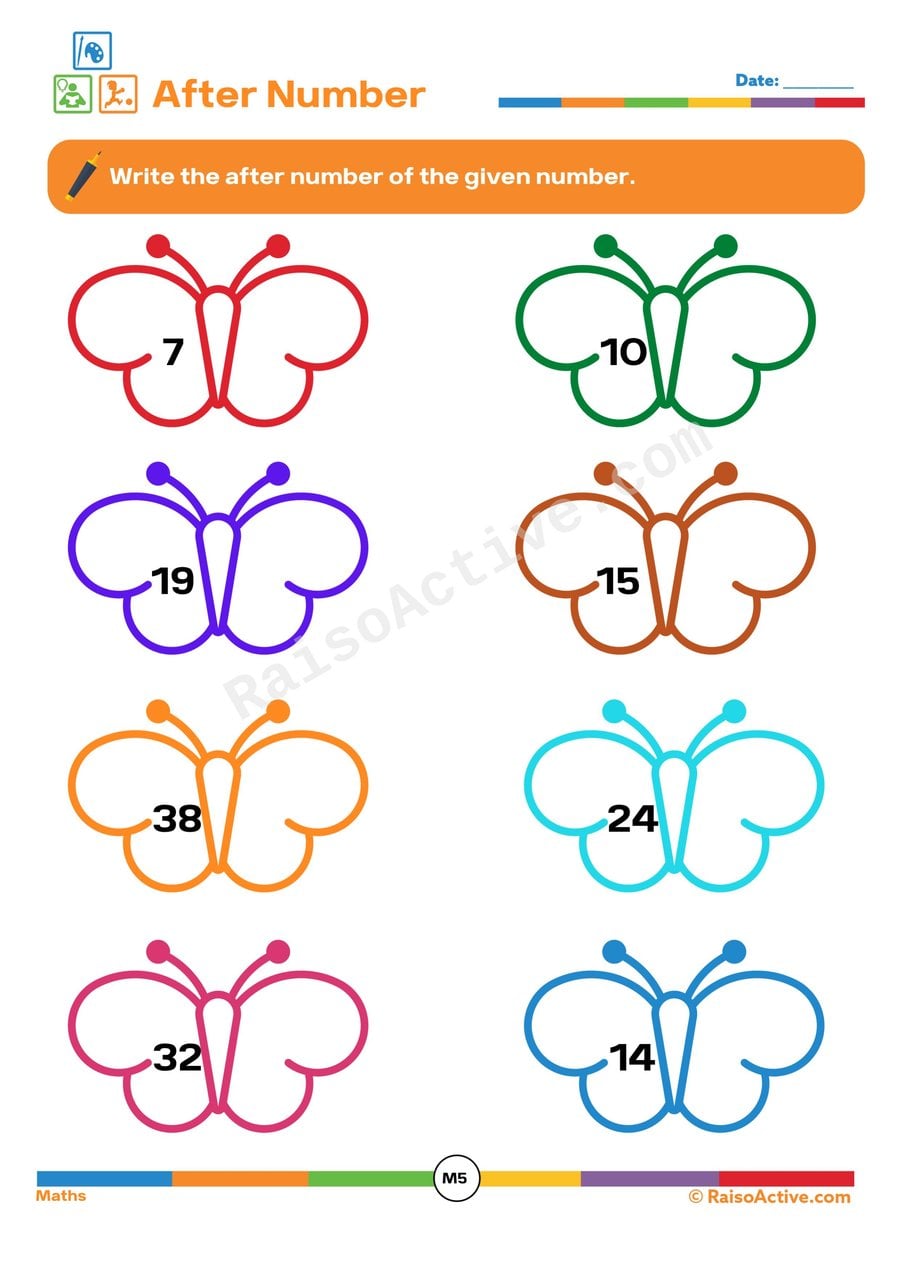
After Number Worksheet: Butterfly Fun!
This worksheet targets a specific early-numeracy milestone: understanding that every number has a number that comes immediately after it in sequence. For ages 4-6, practicing 'what comes next' strengthens the mental number line children rely on for later addition, since knowing that 7 comes after 6 is the foundation of counting on.

Apple Picking Fun: A Reading Comprehension Worksheet for Kids
This worksheet builds early reading comprehension skills in children ages 4-6 by having them read a short story about apple picking and then answer simple questions that check their understanding of what happened. Answering questions after reading, rather than just decoding words, pushes children to hold the story's meaning in mind and recall specific details, a critical skill for all future reading. Coloring an apple afterward gives a relaxing, creative close to the comprehension task.

Number Names Worksheet: Unscramble, Match, and Write Numbers!
This worksheet layers three literacy and numeracy skills together: unscrambling jumbled letters to spell out number names, writing the corresponding numeral, and matching numbers to their written names. For ages 4-6, connecting a numeral like '5' to its written word 'five' bridges math and reading skills, reinforcing that numbers can be represented in more than one way.

Sentence Matching Worksheet: Read and Match the Sentences!
Reading a short sentence and pasting it beneath its matching picture builds reading comprehension for children ages 4-6, requiring them to understand the full meaning of a sentence rather than recognizing isolated words. This task also reinforces fine motor precision as children position and glue a small strip of text accurately within a defined space.

Pollution Awareness Worksheet for Kids: Circle the Correct Answer!
This worksheet introduces children ages 4-6 to the idea that pollution comes in different forms — air, water, and land — and asks them to connect each type to a picture, building early environmental science vocabulary alongside visual reasoning. Sorting items into recycling categories afterward extends the lesson from simply naming a problem to practicing a real-world solution, which helps young children start to see themselves as capable of taking action. This blend of identification and hands-on sorting suits a preschooler's concrete way of understanding abstract ideas like 'the environment.'
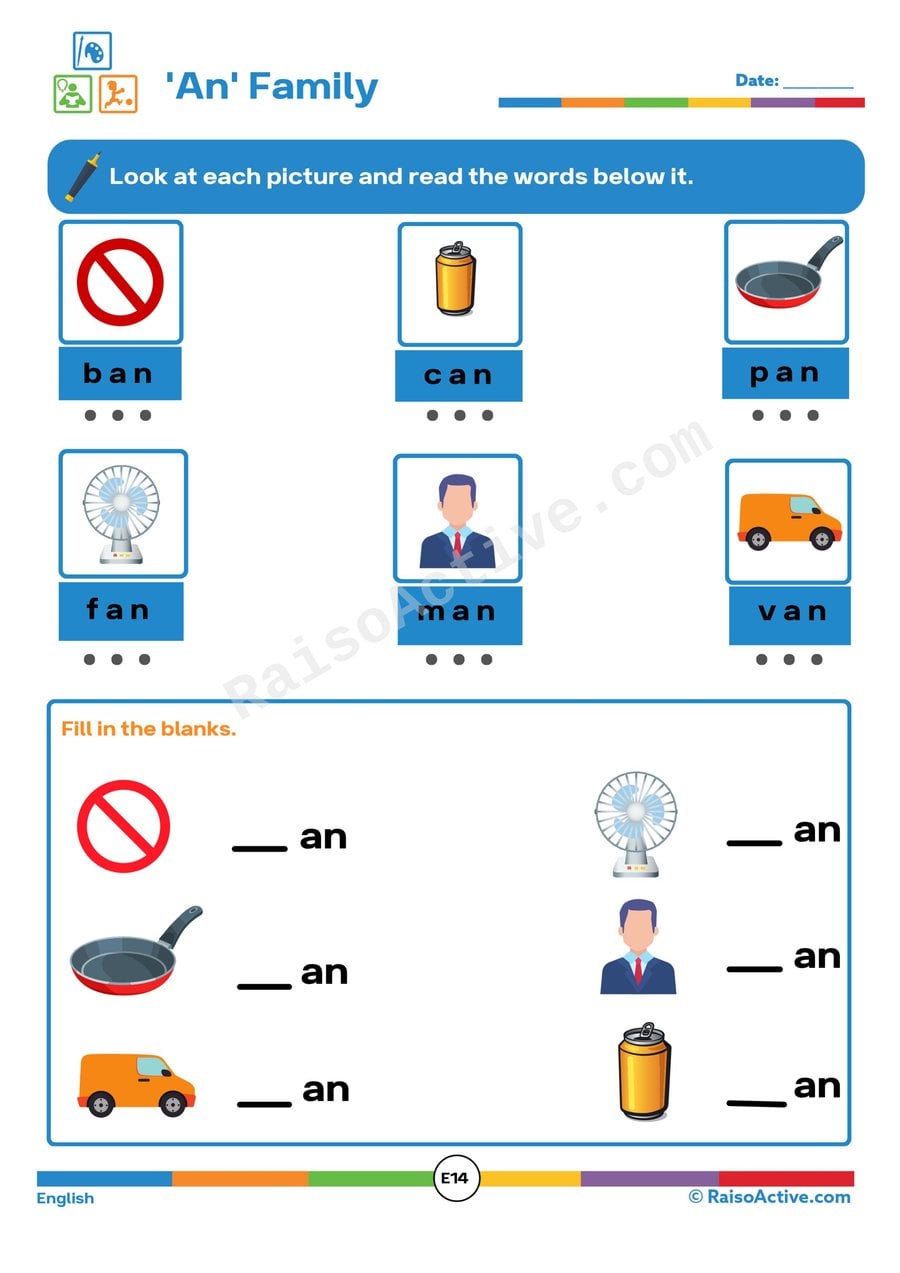
An Family Word Worksheet: Read, Match, and Write!
This worksheet builds on word-family recognition by focusing on 'an' words like can, fan, and man, helping children ages 4-6 see that swapping the first letter of a familiar ending creates a whole new word. Practicing this pattern strengthens decoding skills and builds reading confidence, since children start recognizing chunks of words rather than sounding out every single letter.

Summer Fun: Write Sentences About the Beach! Worksheet
Children ages 4-6 practice translating what they observe in a picture into written sentences, a key step in moving from spoken language to independent writing. Describing a beach scene specifically — people swimming, building sandcastles, or playing in the waves — gives children concrete, familiar content to draw on, which makes the jump to writing less intimidating than an open-ended prompt.

Long Vowel U Sound Worksheet: Complete the Words & Paste Pictures!
This worksheet gives children ages 4-6 another pass at the long 'u' sound, this time completing words and then cutting and pasting a matching picture rather than drawing a connecting line. The physical cut-and-paste step adds an extra confirmation layer, since your child has to actively search through picture choices to find the one that truly matches their completed word, rather than simply glancing between a word and an already-placed picture. Repeating long 'u' practice in this new format helps solidify a sound that many children find more challenging than the other long vowels.
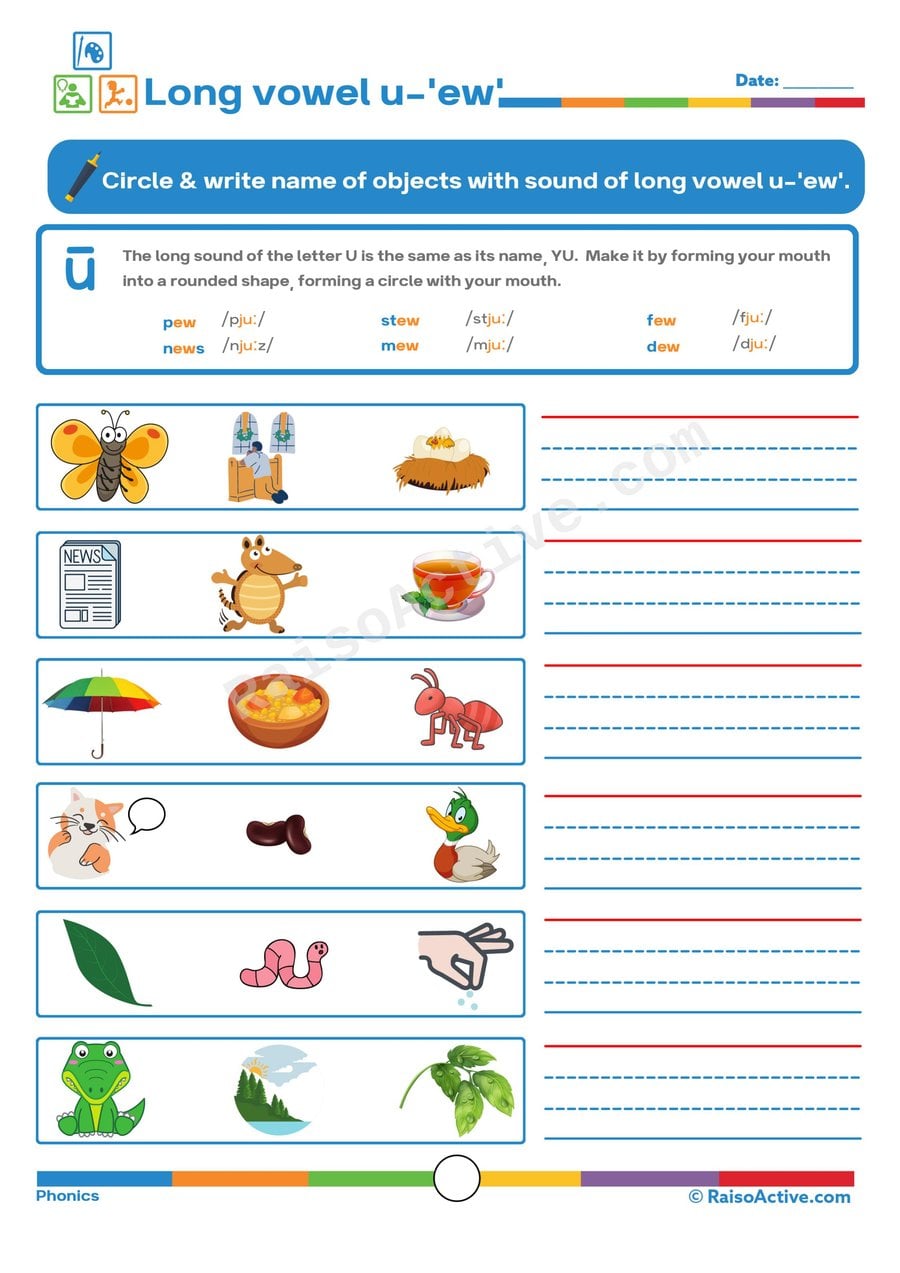
Long Vowel U 'ew' Worksheet: Circle and Write
This worksheet has children ages 4-6 identify pictures whose names contain the long 'u' sound spelled with the letters 'ew,' as in 'few' or 'new,' building awareness of this less common spelling pattern for a sound they may already recognize from simpler spellings. Circling the matching pictures practices listening skills, while writing the words afterward reinforces the specific 'ew' spelling through repeated handwriting. Focusing on a single spelling pattern like 'ew' helps children build pattern recognition they can apply to new, unfamiliar words later.
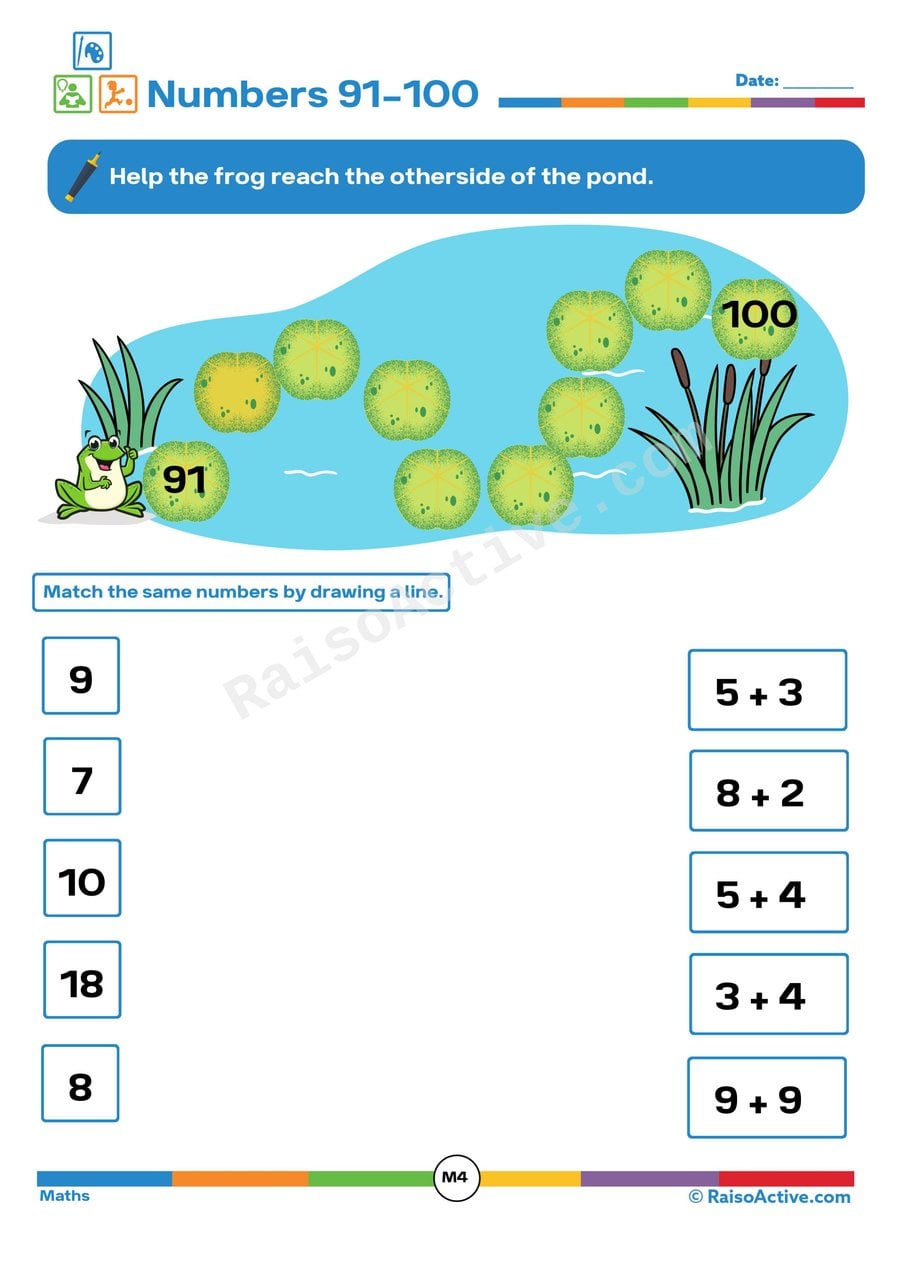
Numbers 91-100 Worksheet: Help the Frog!
Numbers in the 90s are a milestone range for children ages 4-6, since they require holding two-digit number recognition steady while approaching the conceptually significant number 100. This worksheet has children match numbers on lily pads to their corresponding value or sum, reinforcing number recognition within this higher range through a playful matching format. Building fluency with numbers up to 100 lays essential groundwork for place value concepts like tens and ones that children will tackle soon after.
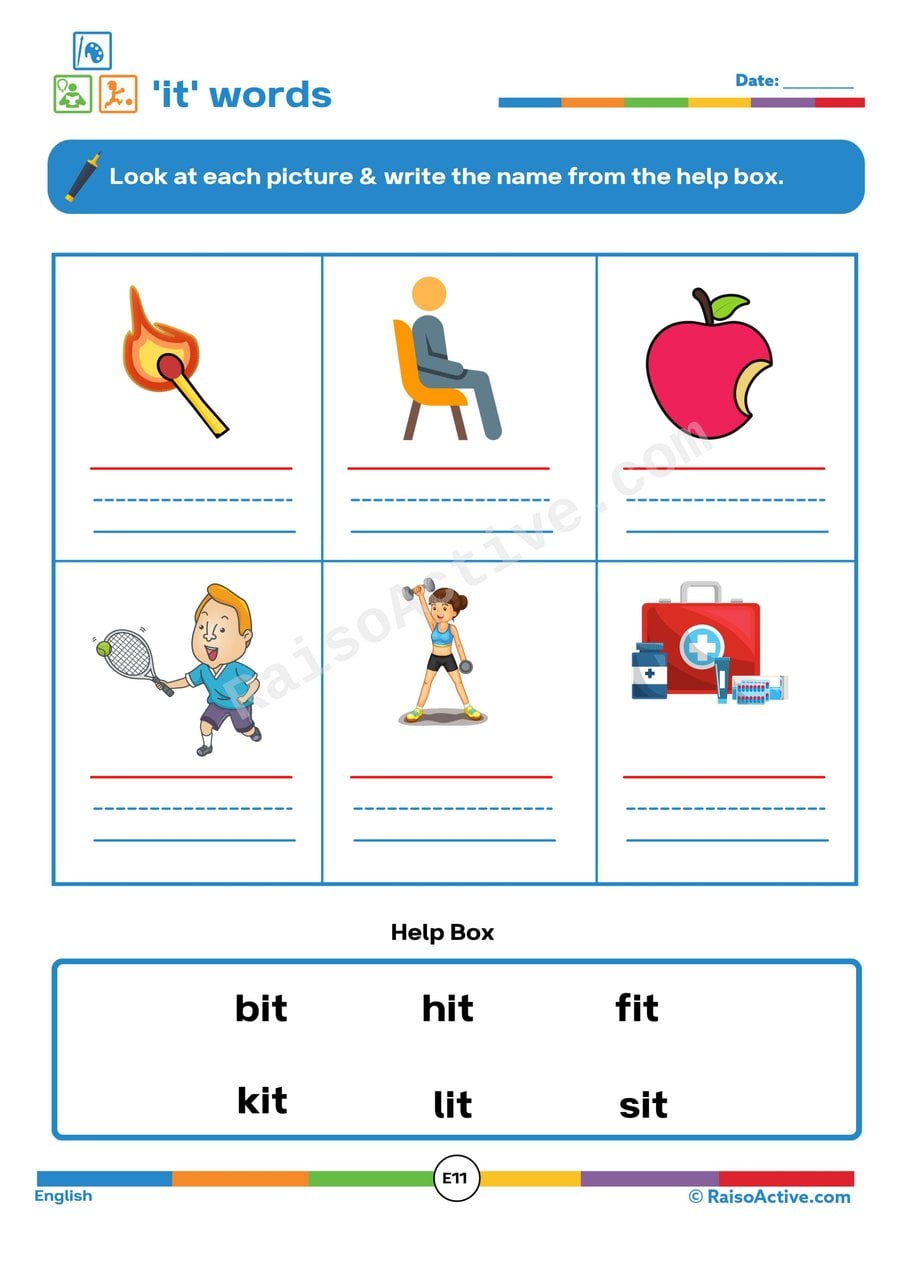
It Words Worksheet: Read and Write 'it' Words!
Children ages 4-6 build phonics fluency by reading and writing CVC words from the 'it' family, such as 'sit', 'bit', and 'fit'. Recognizing this word family pattern teaches children that groups of letters carry predictable, reusable sounds, which speeds up decoding of new words they encounter later. Writing each word after identifying it also reinforces correct spelling and letter sequencing.

Blend Words Worksheet: Circle the Correct Picture!
This worksheet strengthens blending skills for children ages 4-6, asking them to say a consonant blend like 'bl' or 'st' together with different word endings and identify which resulting word matches a picture. Blending two consonant sounds smoothly before adding a vowel is a more advanced phonics skill than single-letter sounds, and this practice directly supports decoding multisyllabic and blended words during independent reading.
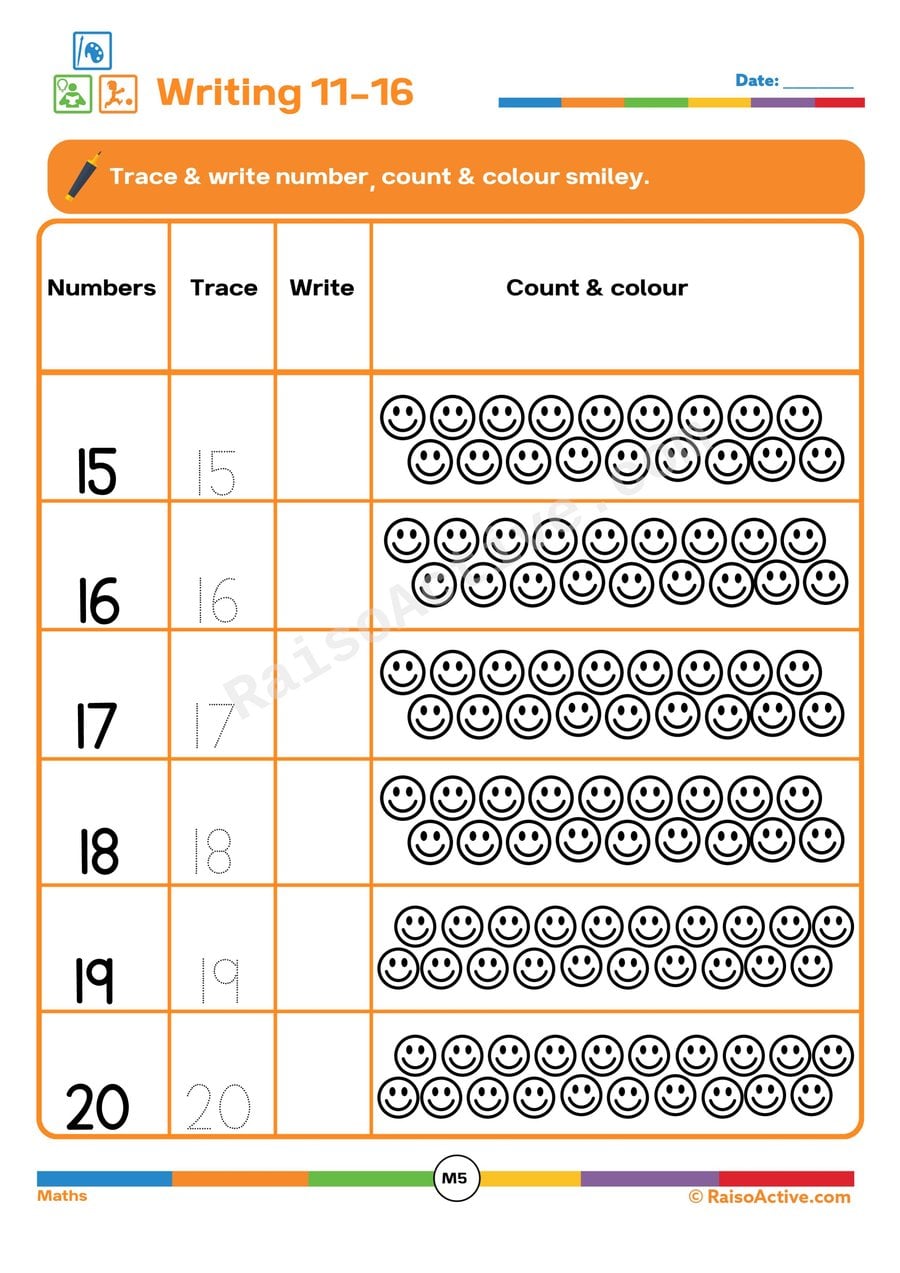
Number Tracing and Counting Worksheet for Kids
This worksheet layers three connected numeracy skills for children ages 4-6: tracing numerals to build correct number formation, writing numbers independently from memory, and counting objects to connect a written numeral to an actual quantity. Number formation practice at this age matters because children often develop habits — like starting a number from the wrong point — that are hard to unlearn later, so guided tracing helps establish correct strokes early. Pairing that with counting smiley faces ensures the numeral isn't just a shape being copied but a quantity being understood.
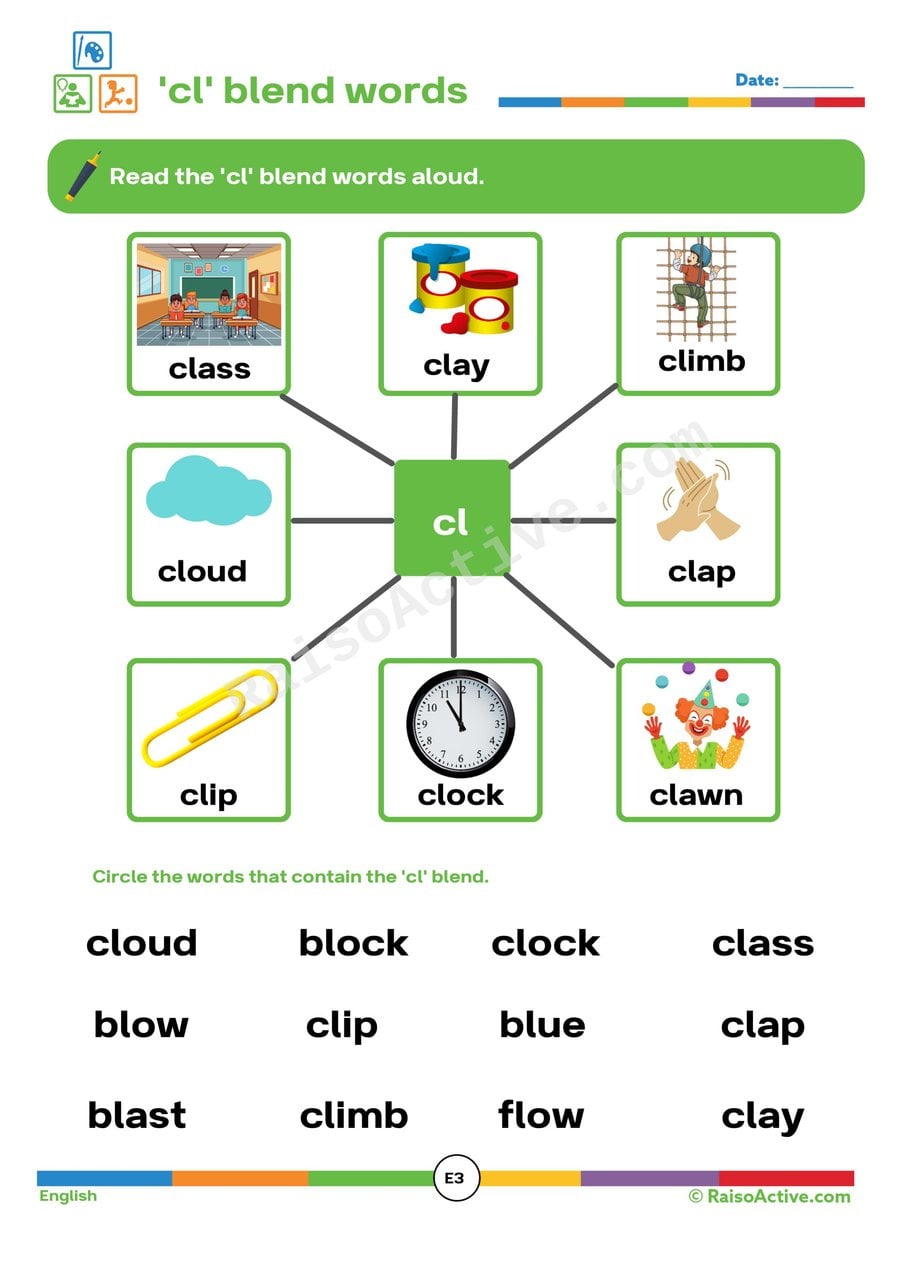
Cl Blend Words Worksheet: Read and Circle!
Reading and circling words that begin with the 'cl' consonant blend helps children ages 4-6 hear that two consonants pressed together, like c and l, still combine into a single connected sound at the start of a word. This is a step up from single-letter phonics, requiring children to blend two consonant sounds smoothly rather than sounding them out separately. Recognizing blends like 'cl' in words such as 'clap' or 'cloud' builds the decoding fluency needed to read longer, less predictable words with confidence.

Sentence Building Worksheet: Write Sentences with Given Words!
Using given words to build a complete sentence teaches children ages 4-6 how word order creates meaning, an essential step toward reading fluency and independent writing. Practicing this skill also reinforces sentence mechanics like starting with a capital letter and ending with a period, which many children this age are just beginning to apply consistently.
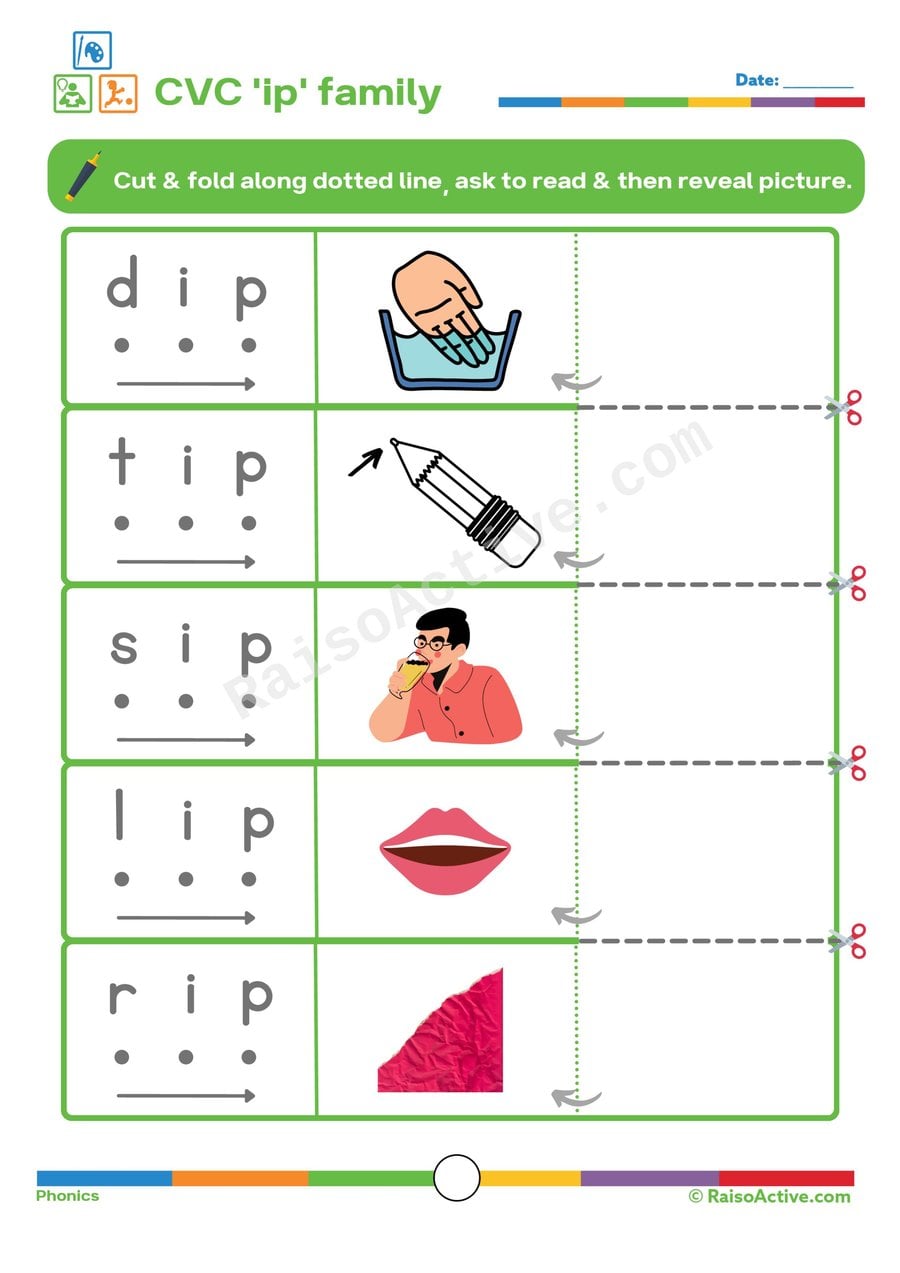
CVC 'ip' Family Worksheet: Read, Match, and Reveal!
This worksheet lets children ages 4-6 practice reading 'ip' family words — dip, tip, sip, lip, and rip — then check their own accuracy by cutting, folding, and revealing a matching picture. Because these words differ only in their first letter, children get repeated, low-effort practice blending sounds while building fluency with a whole family of words at once. The self-checking format encourages independent reading rather than relying on an adult to confirm each answer.

Before, After, and Between Numbers Worksheet for Preschoolers
This worksheet has children ages 4-6 practice identifying which number comes before, after, or between given numbers, writing their answers into the provided spaces. Understanding number sequence and relative position is a core building block of number sense, laying the groundwork for later skills like addition, subtraction, and estimating quantities.
What 1st Grade english worksheets cover
Six-year-olds read for meaning. The set should cover long vowel spellings such as ai, ee, oa and magic e, short passages with who, what and why questions, three connected sentences with capitals and periods, plurals with s and es, opposites and simple vocabulary, common-word spelling, and handwriting that is now fluent enough not to slow the writing down. A sight word list nearer 100 is typical. Inference and paragraphs are next year's work.
- Read words with long vowel spellings like ai, ee and magic e
- Read a short passage and answer who, what and why questions
- Write three connected sentences with capitals and periods
- Add s or es to make plurals
- Spell common words with the correct vowel sound
How to use these worksheets at home or in class
Fifteen to twenty minutes on most school days, split between a decodable passage with questions and a math page, matches what many first grade teachers assign. Keep base-ten blocks or bundled straws nearby so place value stays physical before it becomes purely written.
Start with the sheet that matches what your child can already do, then move one step up. Keep finished sheets in a folder: 1st Grade teachers often ask for evidence of practice, and children like seeing their own progress.
Is your child ready for 1st Grade english work?
A child ready for this stage decodes CVC words automatically, writes a simple sentence with a capital letter and end punctuation, adds and subtracts fluently within 10, and counts and writes numerals confidently to 20.
Frequently asked questions
My six-year-old reads the words but cannot answer questions about the passage. Why?
Decoding is still taking all the attention, so nothing is left for meaning. Shorten the passage, read it twice, and ask the question before the second read so the child knows what to listen for. Retelling in their own words before any written answer helps. If unfamiliar vocabulary is the block, talk through the words first. Comprehension catches up as decoding becomes automatic over the year.
What should a 1st Grade child be able to do in english?
Six-year-olds read for meaning. The set should cover long vowel spellings such as ai, ee, oa and magic e, short passages with who, what and why questions, three connected sentences with capitals and periods, plurals with s and es, opposites and simple vocabulary, common-word spelling, and handwriting that is now fluent enough not to slow the writing down. A sight word list nearer 100 is typical. Inference and paragraphs are next year's work. A child ready for this stage decodes CVC words automatically, writes a simple sentence with a capital letter and end punctuation, adds and subtracts fluently within 10, and counts and writes numerals confidently to 20.
Do these worksheets follow the 1st Grade curriculum?
The sheets cover letter recognition and phonics, reading comprehension, sentence writing and vocabulary and grammar, which sit inside the Common Core Grade 1 (1.OA, 1.NBT, RF.1.3) outcomes for 1st Grade. Year 1 / Year 2 (UK), Class 1 (India) use the same skills at this age, so the sheets also fit families following those programmes.
Are these 1st Grade english worksheets free?
Yes. Each worksheet downloads free as a watermarked PDF once you create an account, with a limit of five a day. An annual membership ($20) removes the watermark and the limit for the whole library of over 1,000 worksheets and every printable pack.

Written by
Hemsweta Jain · Teacher Cheena
MBA and Early Childhood Educator, teaching since 2014 · Founder of RaisoActive, Mumbai
Written and reviewed by Hemsweta Jain (Teacher Cheena), who designs every RaisoActive worksheet.
Last reviewed
Printable packs for ages 6–7
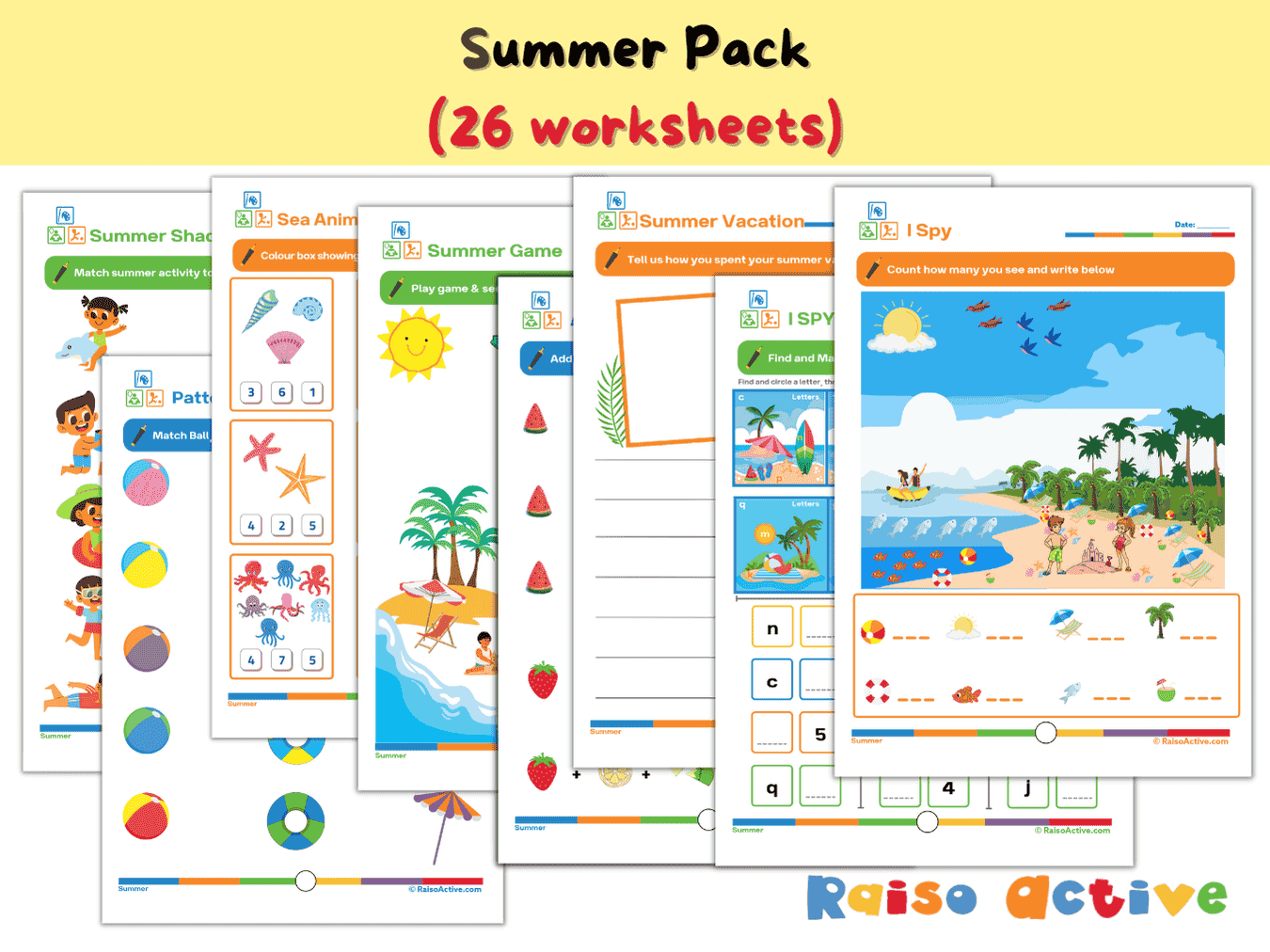
Summer Activity Pack: Math, Literacy, Puzzles & More for Preschool & Kindergarten
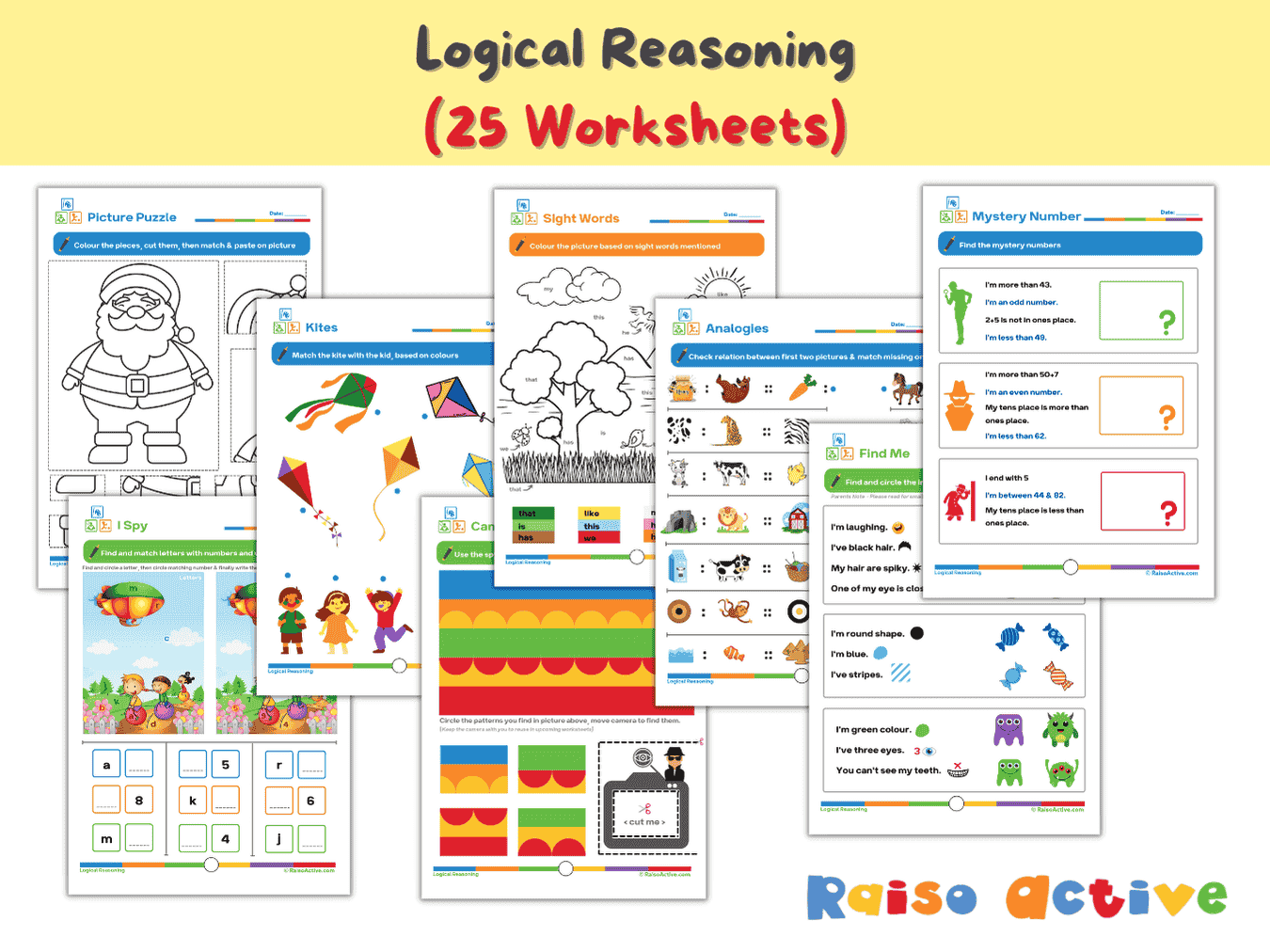
Logical Reasoning Activity Book for Preschool & Kindergarten | Patterns, Puzzles & Analogies
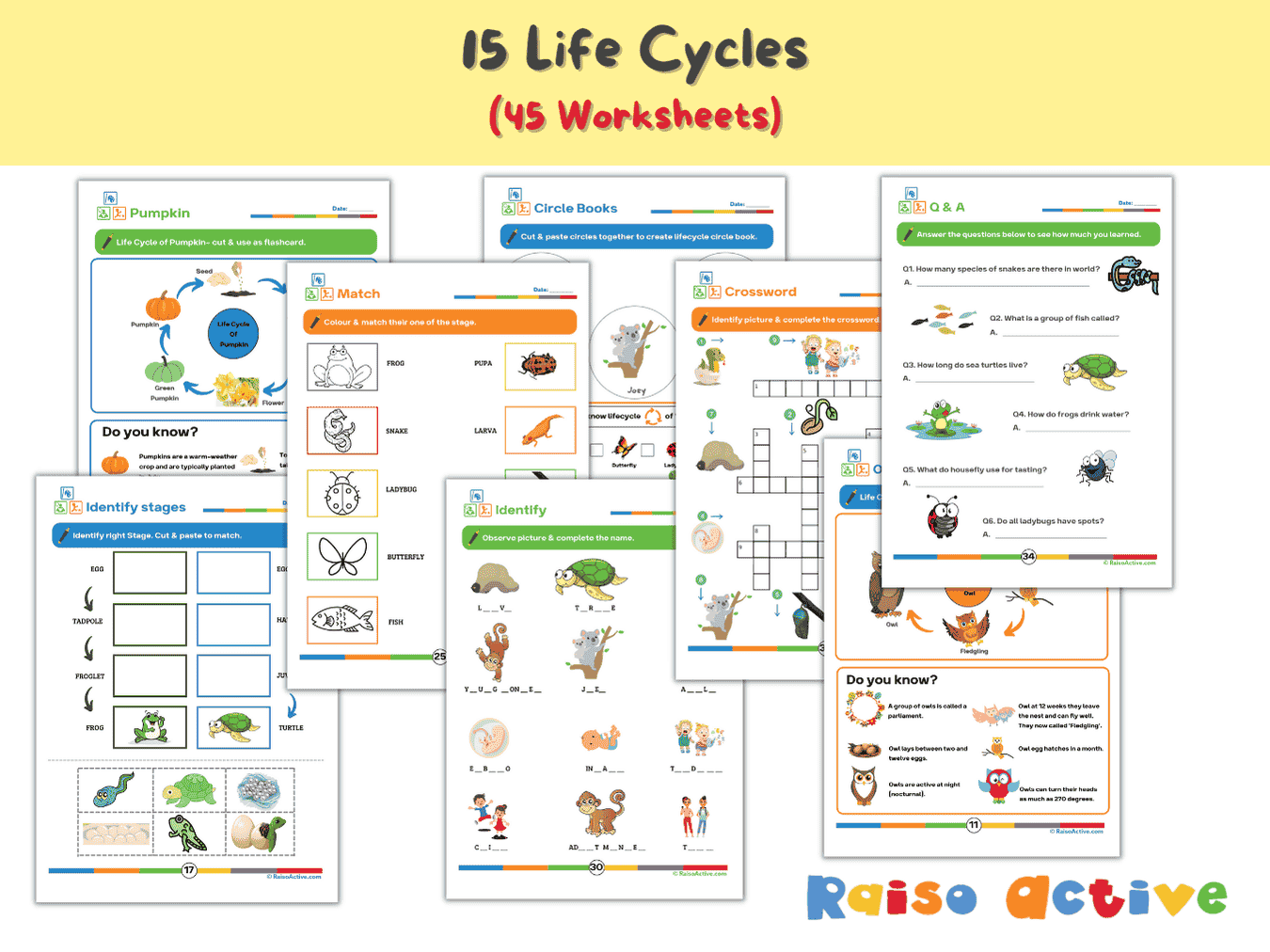
Lifecycles Activity Book & Flashcards for Preschool & Early Elementary
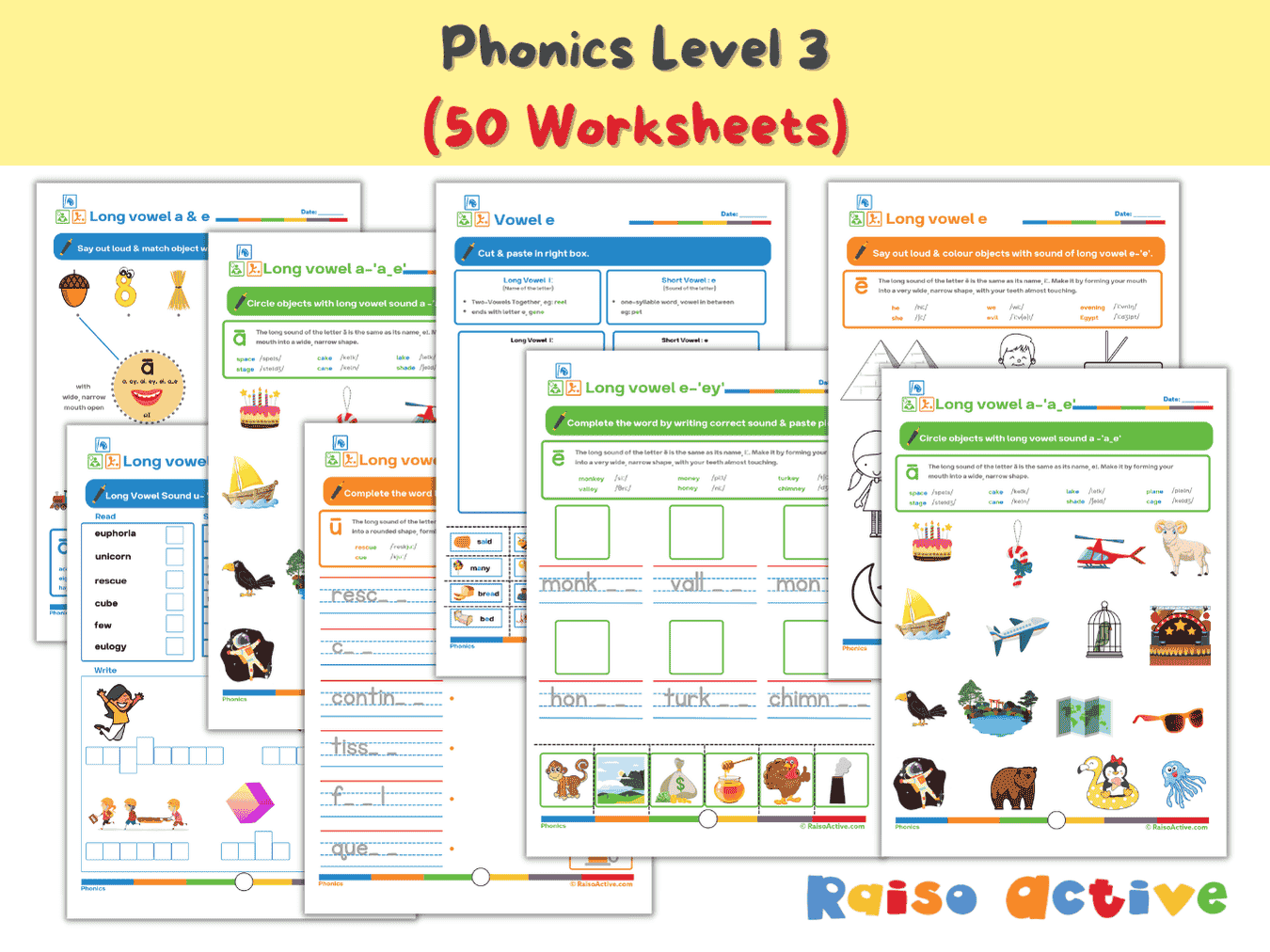
Phonics Level 3 Long Vowels Activity Book for Kindergarten & 1st Grade
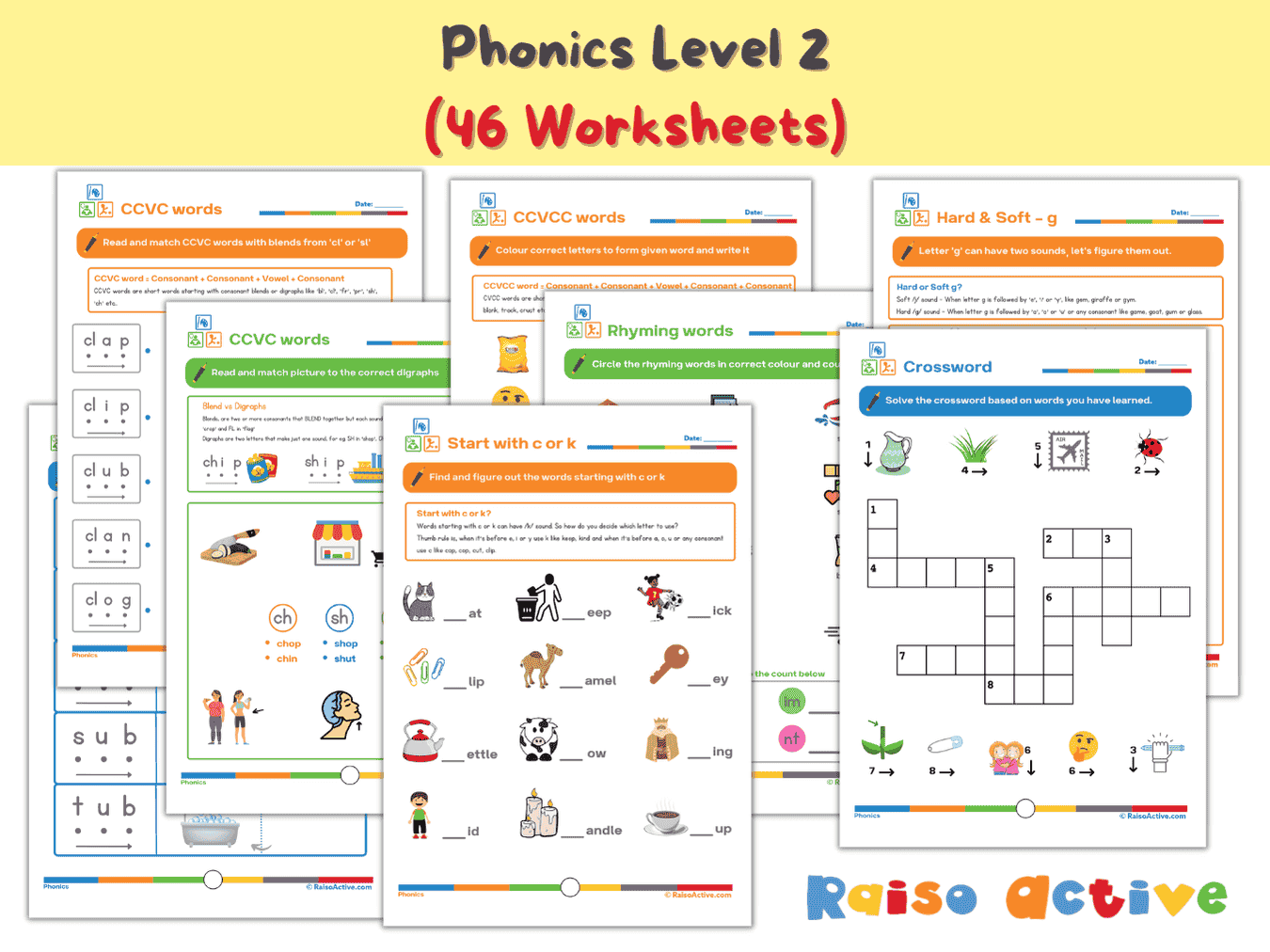
Phonics Level 2 Worksheets: CVC, CCVC, CVCC Word Families & Blends for Early Readers (Ages 4-7)
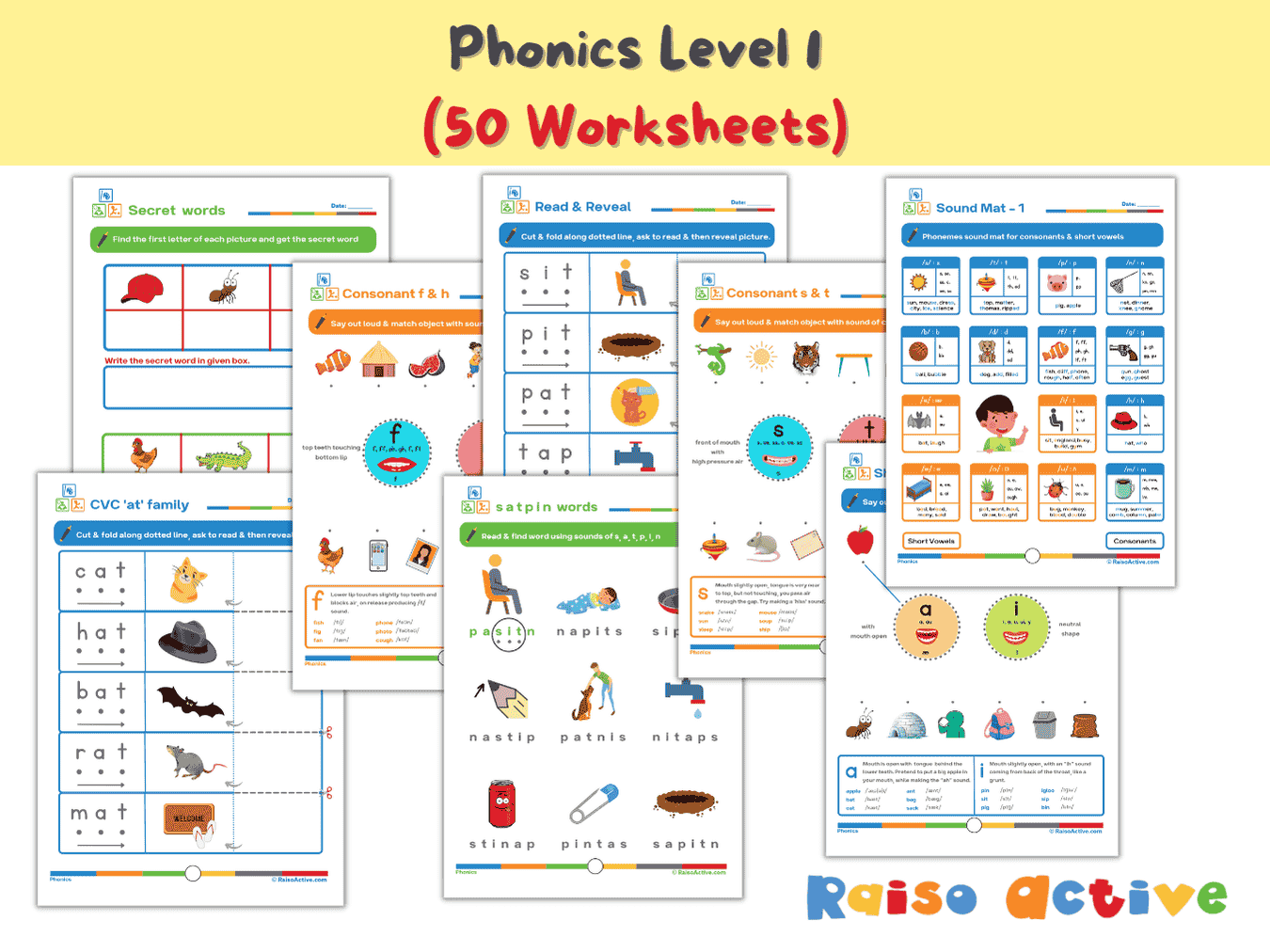
Phonics Level 1 Activity Book: Letter Sounds, Blending & CVC Words for Preschool & Kindergarten
Guides for parents and teachers
See all guides →Sight Words by Age: The First 50 Words and How to Teach Them Without Flashcard Fatigue
Which sight words to teach first and why, the heart-word method, a read-trace-write-find routine, games, and a by-age table of typical sight-word progress.
How to Teach CVC Blending: A Step-by-Step Method That Works in Two Weeks
A step-by-step method for teaching CVC blending, covering continuous sounds, word families, common errors, and a 14-day plan that most children finish reading CVC words.
Phase 2 Phonics at Home: Sound Order, Blending Games, Worksheets
Phase 2 phonics at home: the five sound sets in order, oral blending, tricky words, a two-week routine, common mistakes, and free worksheets.
Reception Year Explained: EYFS Learning and How to Help at Home
A teacher's plain-English guide to the Reception Year: the seven areas of learning, Early Learning Goals, Phase 2/3 phonics, the RBA and home routines.
UKG Syllabus Explained: English, Maths and EVS Month by Month
What UKG classes typically cover in English, maths and EVS, month by month, aligned to NEP 2020, with ways to support at home and signs your child is behind.
Bridging Two Worlds: A Complete Guide to Teaching Heritage Languages Alongside English
A practical guide to raising bilingual children who speak both their heritage language and English with confidence. Research-backed strategies, activities, and tips for Indian families.
Canonical: https://raisoactive.com/worksheets/first-grade-english