Bean Counting Fun: A Sorting Worksheet for Preschoolers!
Children ages 3-5 practice number recognition and one-to-one correspondence by counting out the exact quantity of beans shown on each numeral and physically placing them onto the matching picture. Handling small, individual beans and placing them one at a time reinforces accurate counting far more effectively than counting printed dots, since a misplaced bean is immediately obvious and easy to correct.
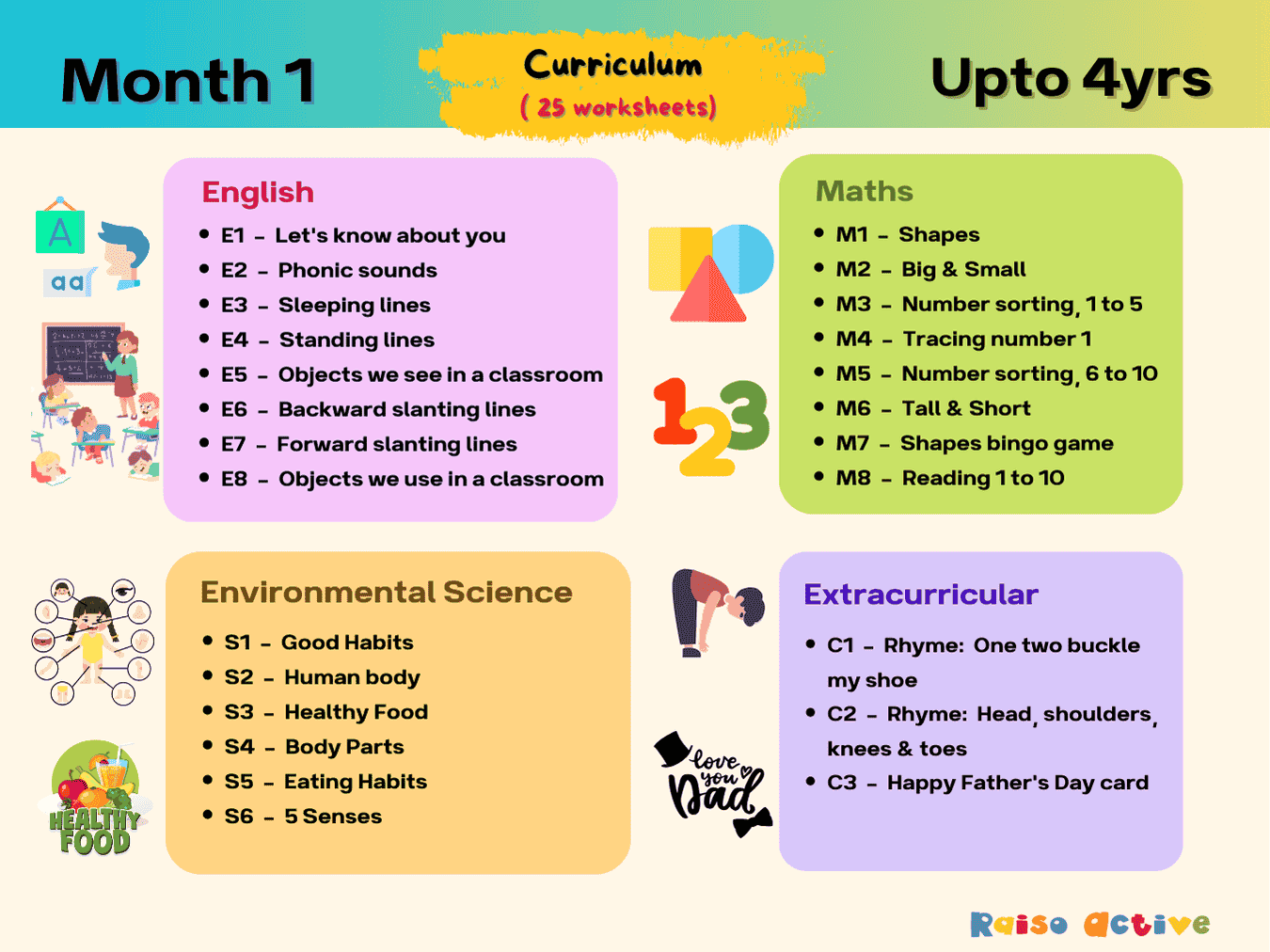
Part of the pack
Month 1: Learning & Development | Ages Up to 4
This is page 14 of the pack. Ages 3-4 · PreschoolAges 3-4 · NurseryAges 3-4

Made for your child
Counting to 10, made for your child
A maths pack with your child's name in it: pictures that explain, practice at three levels, puzzles and story sums about them. Print a new set whenever they finish.
Make a maths packFree preview · free for members
Curriculum
- Counting > Counting Basics
How to use this worksheet
Look at the number printed on each bean-shaped outline and read it aloud together. Have your child count out that exact number of real beans from a small pile, placing one at a time onto the picture while counting aloud. Once the correct number of beans is placed, help your child stick them in place, then move to the next number and repeat, comparing quantities between different numbers as you go.
Materials needed
- Pencil
- Beans
Extension activities
- 1Use real beans, buttons, or pasta pieces to practice counting and sorting into small groups by number.
- 2Draw your own beans on paper and write a number on each, inviting your child to count out matching real objects.
- 3Create a bean collage, gluing beans into a fun picture or pattern while counting how many are used.
- 4Sort a mixed pile of beans by size or color before counting each group.

Written by
Hemsweta Jain · Teacher Cheena
MBA and Early Childhood Educator, teaching since 2014 · Founder of RaisoActive, Mumbai
Every RaisoActive worksheet is designed and checked by the founder before publishing.
Published · Last reviewed
More from Month 1: Learning & Development | Ages Up to 4

Healthy vs. Unhealthy Eating Habits Worksheet for Kids
Ages 3-5 · Preschool–Pre-KAges 3-5 · Nursery–ReceptionAges 3-5 · Nursery–LKGAges 3-5
This worksheet helps children ages 3-5 begin distinguishing between healthy and unhealthy food choices by matching specific foods to a healthy or unhealthy person, building early awareness of how eating habits connect to wellbeing. Making this connection concrete and visual, rather than abstract, gives young children a first foothold in nutrition concepts well before they can understand more detailed health information.

Connect the Dots: Hidden Shape Worksheet for Kids
Ages 3-5 · Preschool–Pre-KAges 3-5 · Nursery–ReceptionAges 3-5 · Nursery–LKGAges 3-5
Children ages 3-5 practice counting in sequence and fine motor line control as they connect numbered dots in order to reveal a hidden shape, combining numeracy with hand-eye coordination in one satisfying activity. The surprise of a shape emerging only once every dot is connected correctly also motivates children to stay careful and accurate rather than rushing through the numbers.

Phonic Sounds Worksheet: Circle the Picture That Starts with the Alphabet Sound!
Ages 4-5 · Pre-KAges 4-5 · ReceptionAges 4-5 · LKGAges 4-5
This worksheet reinforces beginning-sound recognition for children ages 4-5 by presenting a letter at the start of each row and asking them to find the one picture among several that begins with that same sound. Because each row contains multiple pictures, children must test several beginning sounds against the target letter before settling on the correct one, which builds more precise listening skills than simpler one-picture matching tasks. This process also strengthens the letter-sound mapping that underlies early decoding.
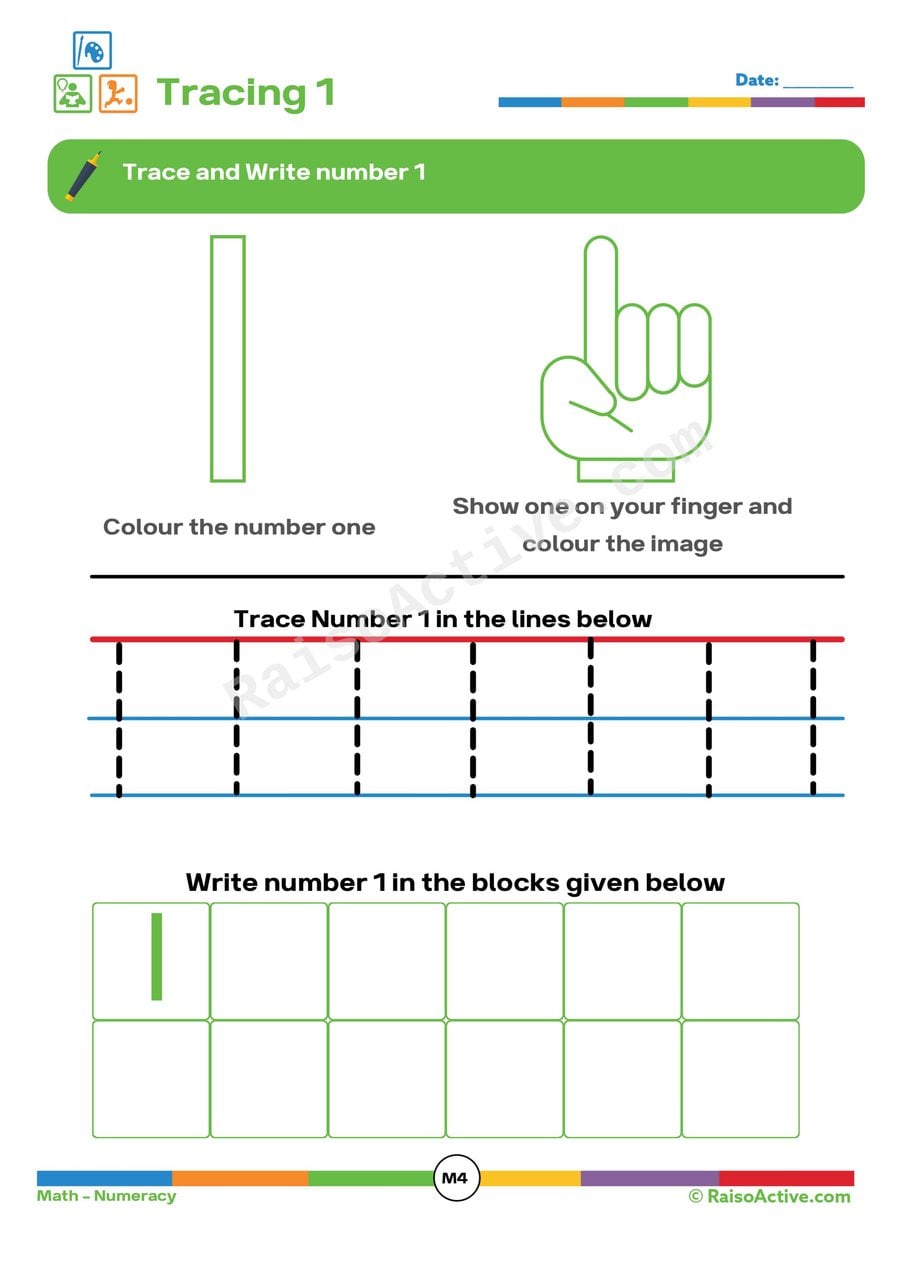
Tracing Number 1 Worksheet for Preschoolers
Ages 3-5 · Preschool–Pre-KAges 3-5 · Nursery–ReceptionAges 3-5 · Nursery–LKGAges 3-5
This tracing worksheet gives children ages 3-5 focused, repetitive practice forming the number 1 through tracing dotted lines, independent writing in provided boxes, and coloring an accompanying image, building the pencil control that precedes confident number writing. Because number 1 is typically the very first numeral children learn to write, getting the stroke direction and starting point correct here sets a strong foundation for writing higher numbers later. Repetition across multiple boxes on the page also builds the muscle memory needed for consistent, automatic number formation.
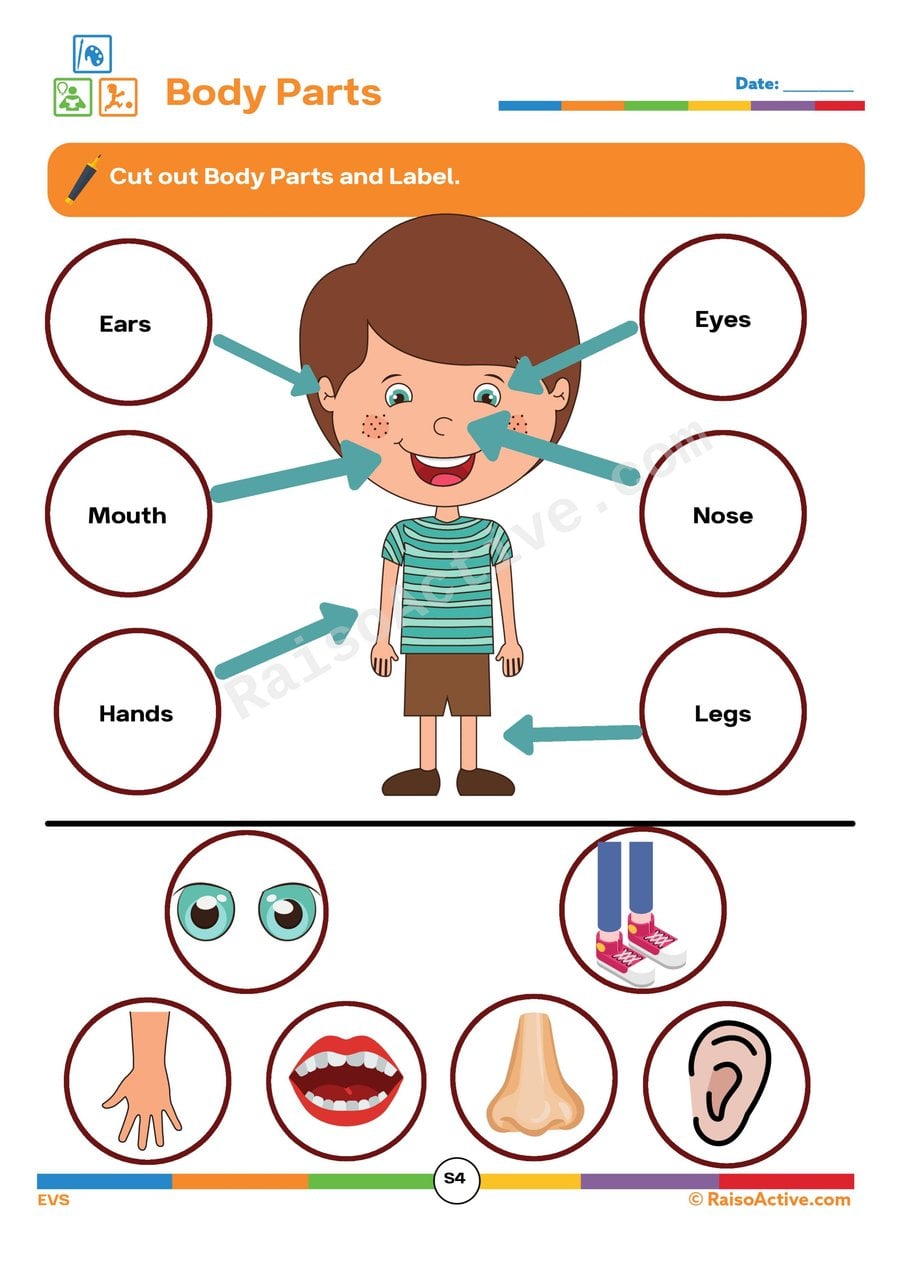
Body Parts Worksheet: Cut and Label!
Ages 3-5 · Preschool–Pre-KAges 3-5 · Nursery–ReceptionAges 3-5 · Nursery–LKGAges 3-5
Cutting out labeled body part images and gluing them onto a figure teaches children ages 3-5 the names and locations of body parts like arms, legs, and ears, connecting spoken vocabulary to a visual, physical location on the body. The cutting and pasting process also strengthens fine motor control, giving this worksheet a combined literacy and hand-strength benefit. Because the body is something children can also touch and point to on themselves, this activity bridges paper-based learning with real, physical self-awareness.

Classroom Vocabulary Worksheet for Kids: Circle and Name!
Ages 3-5 · Preschool–Pre-KAges 3-5 · Nursery–ReceptionAges 3-5 · Nursery–LKGAges 3-5
Circling pictures of common classroom objects and saying their names aloud builds vocabulary and oral language skills in children ages 3-5, helping them connect familiar school items, like a desk, book, or crayon, to their spoken names. This kind of naming practice supports school readiness, since recognizing and labeling classroom objects helps children feel more comfortable and confident in a school environment. Speaking each word aloud, rather than just circling silently, also reinforces pronunciation and word retrieval.

Trace the Standing Lines to Reach the Ice Cream! A Pre-Writing Worksheet
Ages 3-5 · Preschool–Pre-KAges 3-5 · Nursery–ReceptionAges 3-5 · Nursery–LKGAges 3-5
This worksheet builds pencil control in children ages 3-5 by having them trace vertical, 'standing' lines connecting children to their ice cream cones, a companion skill to horizontal line tracing that together forms the basis for writing many letters and numbers. Vertical strokes require a different hand motion than horizontal ones, so practicing both directions gives children a fuller foundation for handwriting readiness.
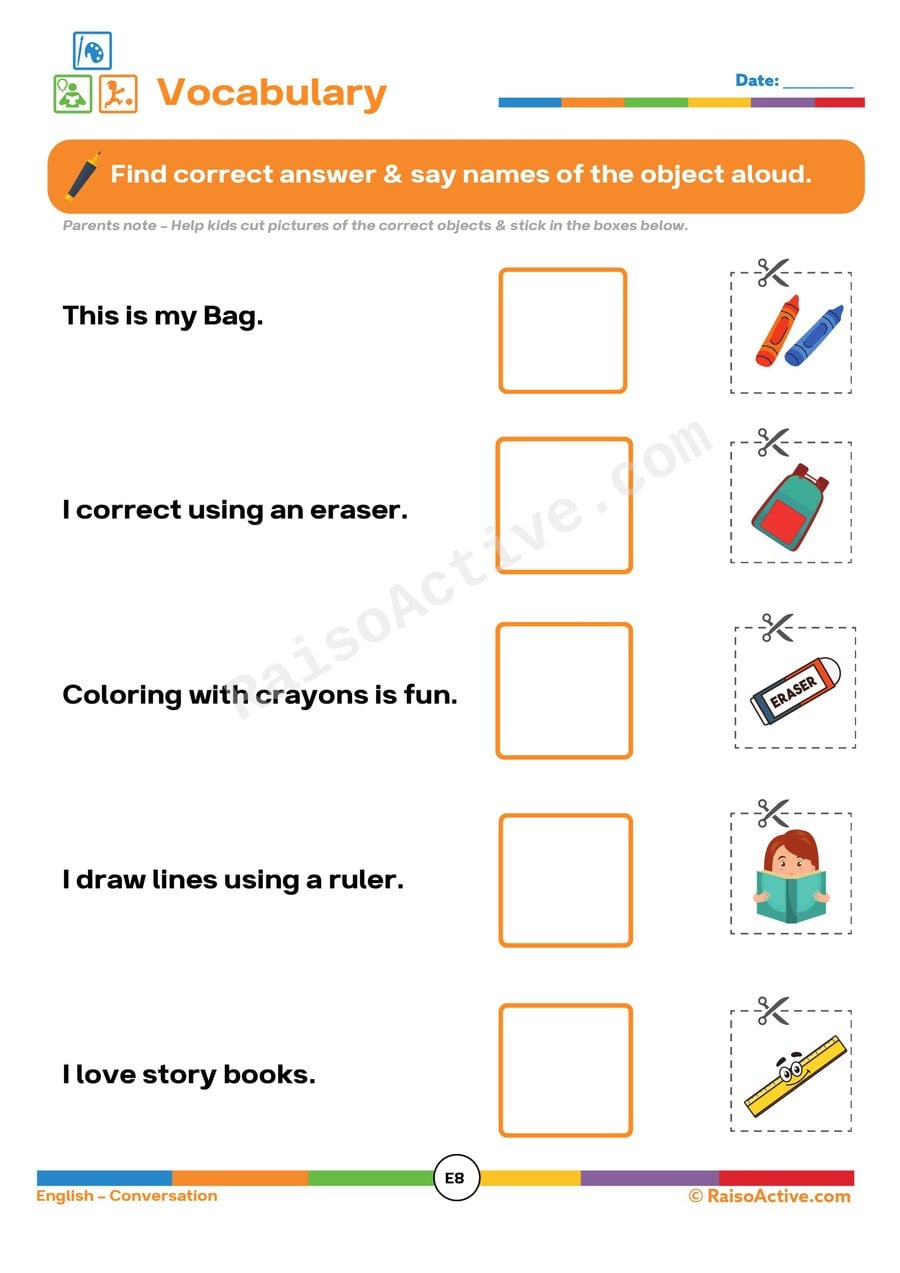
Vocabulary Fun: Match the Pictures! (Ages 3-5)
Ages 3-5 · Preschool–Pre-KAges 3-5 · Nursery–ReceptionAges 3-5 · Nursery–LKGAges 3-5
Cutting out pictures and matching them to sentences builds early reading comprehension in children ages 3-5, since they must listen to or read a sentence and connect its meaning to the correct image rather than just recognizing an isolated word. This combination of cutting, listening, and matching strengthens vocabulary retention because the word is reinforced through multiple senses at once: hearing it, seeing it in print, and seeing its picture. Pasting the correct picture into place also adds fine motor practice to the vocabulary lesson.
Related worksheets
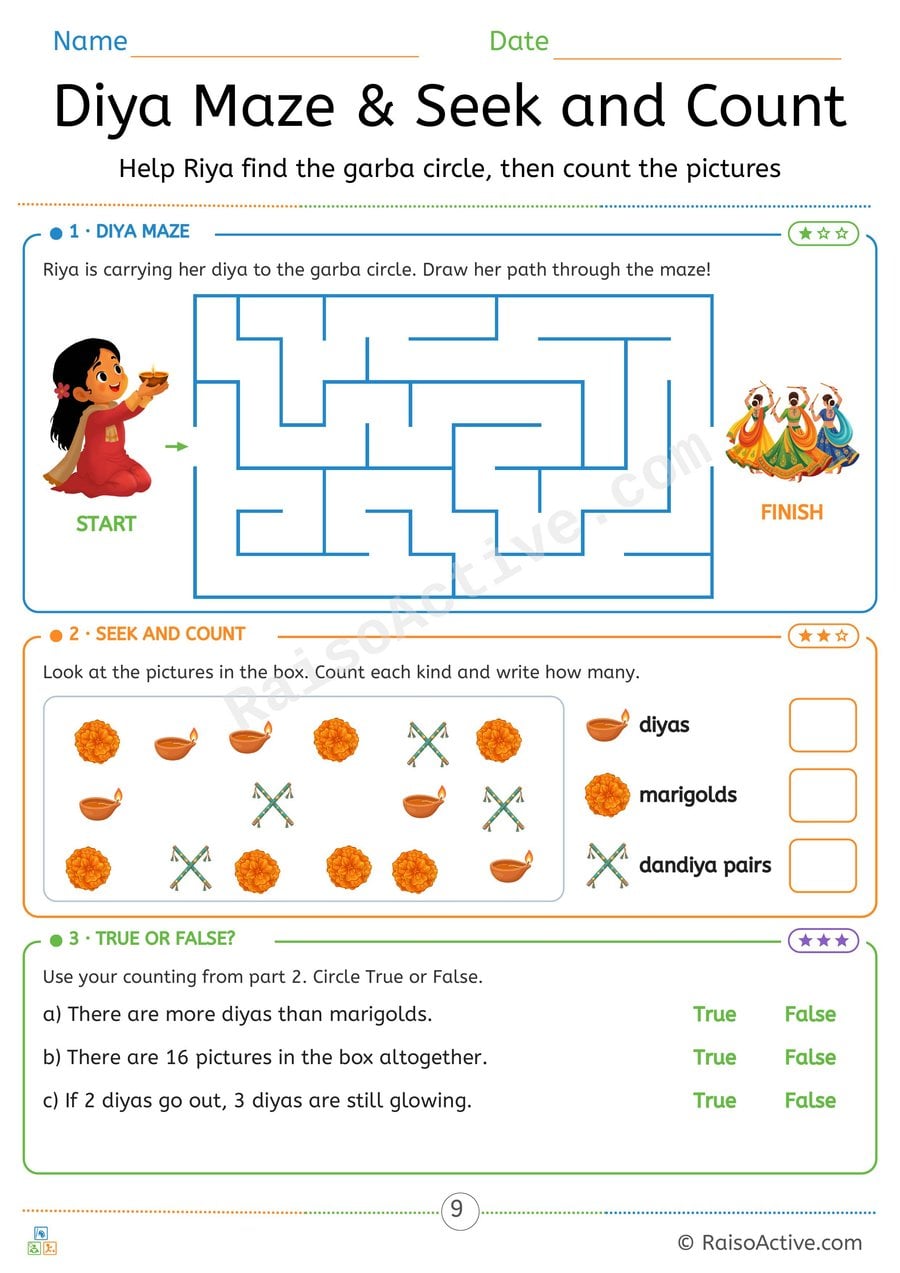
Navratri Diya Maze and Seek-and-Count Worksheet
Ages 4-6 · Pre-K–KindergartenAges 4-6 · Reception–Year 1Ages 4-6 · LKG–UKGAges 4-6
Children plan a path through a maze, count and sort mixed pictures by kind, and use their counts to decide if sentences are true or false.

Color Santa Claus for Christmas! A Fun Coloring Worksheet
Ages 3-5 · Preschool–Pre-KAges 3-5 · Nursery–ReceptionAges 3-5 · Nursery–LKGAges 3-5
This Santa Claus coloring page lets children ages 3-5 practice crayon control and color selection on a large, familiar holiday figure, building confidence with fine motor coloring skills before moving to smaller or more detailed pictures. Choosing colors for Santa's suit, hat, and beard also opens up conversation about the holiday season and familiar seasonal symbols.

Reindeer Craft: Follow Instructions and Create a Festive Decoration!
Ages 3-5 · Preschool–Pre-KAges 3-5 · Nursery–ReceptionAges 3-5 · Nursery–LKGAges 3-5
This multi-step reindeer craft has children ages 3-5 follow a sequence of folding and assembly instructions to build a three-dimensional decoration, strengthening both listening comprehension and the fine motor skills needed to position and attach small pieces accurately. Because each step depends on the one before it, children also practice patience and sequencing, skills that carry over into following any multi-step task.

Rocking Santa Card Craft Worksheet for Preschoolers
Ages 3-5 · Preschool–Pre-KAges 3-5 · Nursery–ReceptionAges 3-5 · Nursery–LKGAges 3-5
This rocking Santa card craft has children ages 3-5 cut out individual shape pieces and assemble them onto a folded card base, combining scissor control with an early understanding of how folding creates movement, since the 'rocking' effect comes from the card's fold. Following the assembly steps in order also reinforces sequencing and attention to visual instructions.

Festive Math Fun: Counting and Addition Worksheet for Kids
Ages 4-6 · Pre-K–KindergartenAges 4-6 · Reception–Year 1Ages 4-6 · LKG–UKGAges 4-6
Children ages 4-6 sharpen counting accuracy and practice basic addition using festive Christmas visuals, including a snowman scene where sums are recorded directly on its body. This worksheet also introduces subtraction-style thinking by having children count what remains after some objects are 'struck out,' giving an early, concrete preview of take-away math.

Pumpkin Patch Maze, Seek and Count and Odd One Out Worksheet
Ages 4-8 · Pre-K–Grade 2Ages 4-8 · Reception–Year 3Ages 4-8 · LKG–Class 2Ages 4-8
Children plan a route through a maze, count small pictures and spot which picture does not belong in a row.

Name That Feeling: Match Meanings, Sort Feeling Families and Pick the Best Word
Ages 7-10 · Grade 2–Grade 3Ages 7-10 · Year 3–Year 4Ages 7-10 · Class 2–Class 3Ages 7-10
Children match words such as proud, nervous and embarrassed to their meanings, sort eleven words into three feeling families, and choose the best feeling word for four short moments.

Gingerbread Man Coloring Worksheet for Preschoolers
Ages 3-5 · Preschool–Pre-KAges 3-5 · Nursery–ReceptionAges 3-5 · Nursery–LKGAges 3-5
This gingerbread man worksheet gives children ages 3-5 practice coloring within a simple, familiar outline while also adding their own decorative details like buttons and a bow, encouraging creative choices within a structured shape. Deciding where to place each decoration also builds early spatial awareness, since buttons and a bow need to be positioned in specific spots on the body.
Guides for this topic

Number Formation Rhymes 0–9 and How to Fix Reversals
Original number formation rhymes for 0–9, the correct stroke order for each digit, why 3, 5 and 7 get reversed most often, and multisensory fixes that work.

Age-Appropriate Problem-Solving Activities: Building Critical Thinkers from the Ground Up
Discover fun, age-appropriate problem-solving activities for children ages 1-8. Build critical thinking, logic, and reasoning skills through play-based learning.

Christmas and Winter Activities That Combine Fun and Learning: Creating Magical Educational Experiences
Discover Christmas and winter activities that combine festive fun with real learning. Crafts, counting, literacy, and printable worksheets for ages 2 to 8 — perfect for home and school.
Reviews
Every worksheet for ages 3–5, no watermark
Members download the full library of 1,000+ worksheets and every activity pack without watermarks or daily limits. One year costs ₹999 in India or $20 elsewhere.
See membership plansOr download any worksheet free with a watermark (5 a day).