Summer Fun Coloring Worksheet for Preschoolers
Children ages 3-5 practice associating specific objects, like sunglasses, ice cream, or a swimsuit, with the summer season, building early seasonal awareness alongside fine motor coloring practice. Recognizing which objects belong to which season is a foundational step toward understanding weather, time, and the changing year.

Part of the pack
Month 11: Learning & Development | Ages Up to 4
This is page 28 of the pack. Ages 2-4 · PreschoolAges 2-4 · NurseryAges 2-4
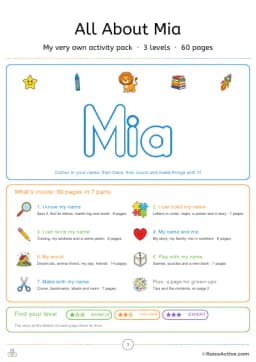
Made for your child
A whole activity pack made with their name
60 pages to spot, build, trace and write their own name, plus pages about their favourites, feelings and family. See a free preview with their name.
Make an All About Me packFree preview · free for members
Or start free: a name tracing sheet with their nameCurriculum
- Earth & Environment > Seasons & Weather
How to use this worksheet
Look at the picture together and talk about each object shown, asking your child whether they think it belongs to summer or another season. Have your child color only the objects they associate with summer, leaving objects from other seasons uncolored. Once finished, review the coloring together and talk about why each colored object fits summer specifically.
Materials needed
- Crayons
- Pencils
Extension activities
- 1Draw a picture of your child's favorite summer activity, like swimming or playing outside.
- 2Talk about what your child likes to do in summer versus winter to compare the seasons.
- 3Go on a summer scavenger hunt around the house, finding real objects that match the season.
- 4Make a simple seasons chart together, sorting pictures of objects into the four seasons.

Written by
Hemsweta Jain · Teacher Cheena
MBA and Early Childhood Educator, teaching since 2014 · Founder of RaisoActive, Mumbai
Every RaisoActive worksheet is designed and checked by the founder before publishing.
Published · Last reviewed
More from Month 11: Learning & Development | Ages Up to 4
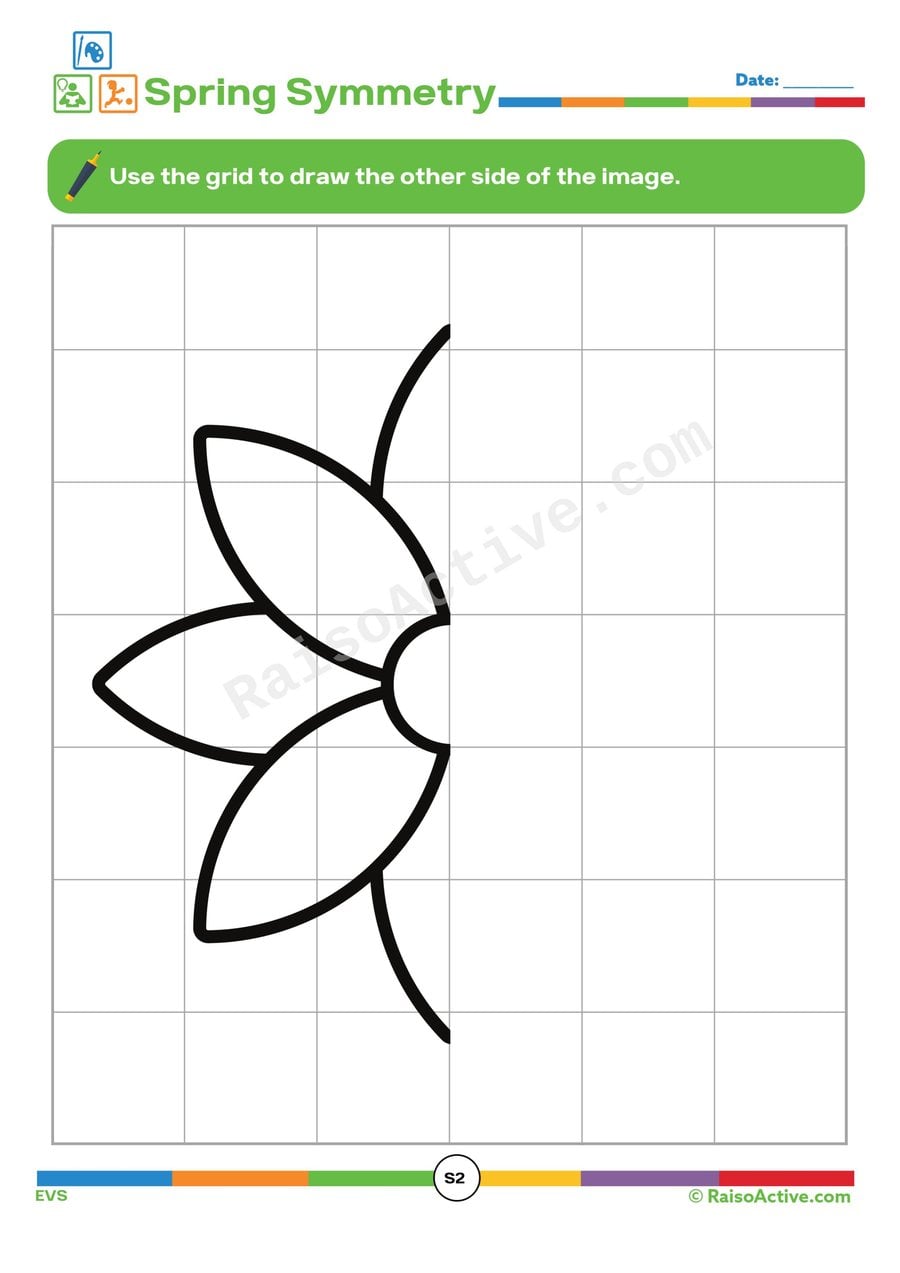
Spring Symmetry Worksheet: Draw the Other Half!
Ages 3-5 · Preschool–Pre-KAges 3-5 · Nursery–ReceptionAges 3-5 · Nursery–LKGAges 3-5
This worksheet introduces children ages 3-5 to the concept of symmetry by having them draw the missing half of a flower using a grid as a visual guide. Replicating a shape on the opposite side of a center line builds spatial reasoning and careful observation, while the drawing itself strengthens pencil control and hand-eye coordination in a way that's more open-ended than simple tracing.
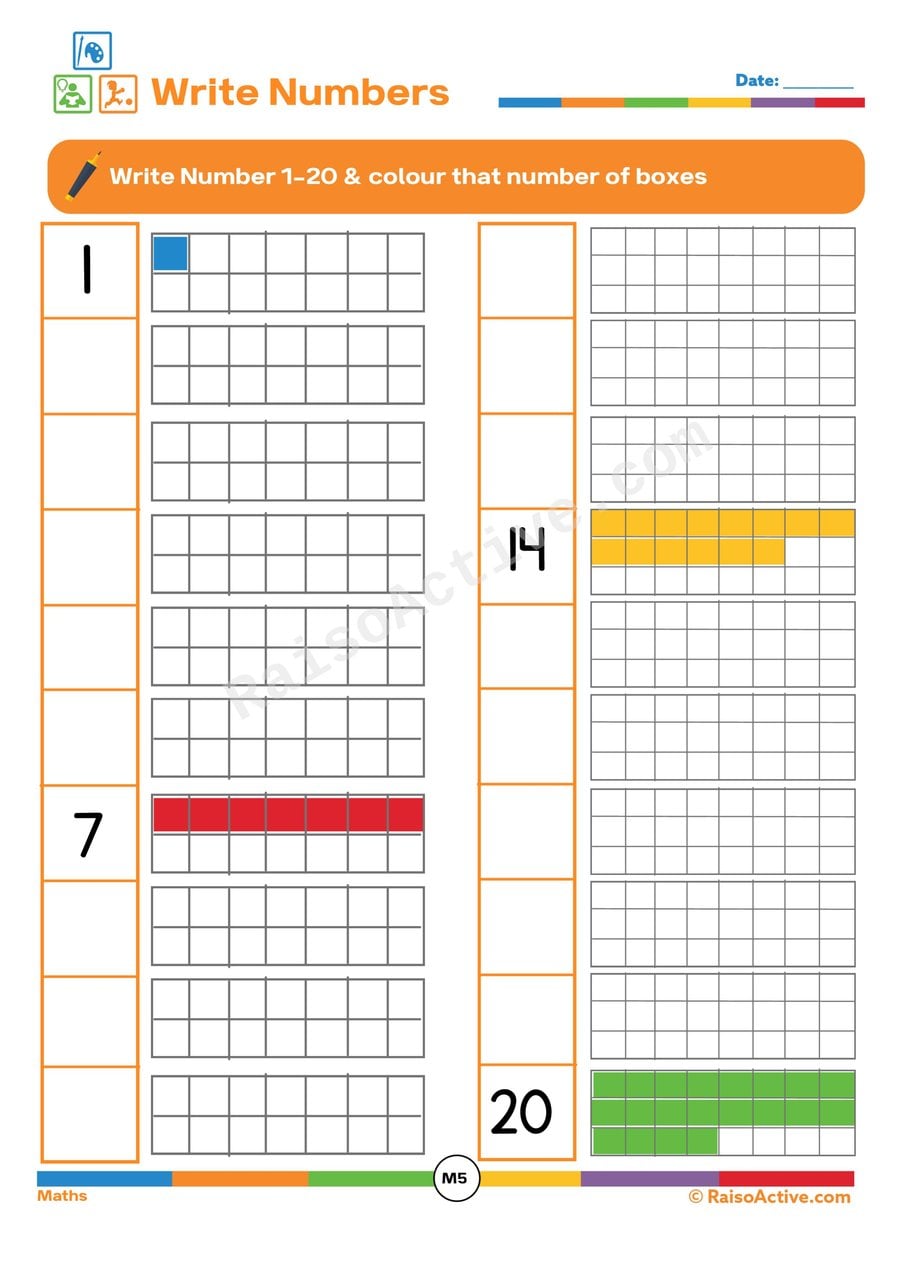
Write and Color Numbers 1-20 Worksheet
Ages 4-6 · Pre-K–KindergartenAges 4-6 · Reception–Year 1Ages 4-6 · LKG–UKGAges 4-6
Children ages 4-6 practice writing numbers from 1 to 20 in sequence while reinforcing quantity recognition by coloring the matching number of boxes for each number, connecting the written numeral to the amount it represents. Extending number writing practice up through 20 supports children moving beyond single digits into the teens and twenties, a range many children find confusing.

Counting Fun: Count and Write the Numbers Worksheet for Kids
Ages 3-5 · Preschool–Pre-KAges 3-5 · Nursery–ReceptionAges 3-5 · Nursery–LKGAges 3-5
This worksheet builds core numeracy for children ages 3-5 through the fundamental skill of one-to-one correspondence — counting a group of objects and writing the numeral that represents the total. This is one of the earliest and most essential math skills, since accurately connecting a counted quantity to a written number underlies every later arithmetic concept.

Before and After Numbers Worksheet for Preschoolers
Ages 3-5 · Preschool–Pre-KAges 3-5 · Nursery–ReceptionAges 3-5 · Nursery–LKGAges 3-5
Identifying which numbers come immediately before or after a given number and physically sorting pictures into place links number sequence recall with the fine motor practice of cutting and pasting, building confidence for children ages 3-5.

Match the Fruits to Their Plants Worksheet for Preschoolers
Ages 3-5 · Preschool–Pre-KAges 3-5 · Nursery–ReceptionAges 3-5 · Nursery–LKGAges 3-5
This worksheet helps children ages 3-5 build early plant science knowledge by matching common fruits to the plant or tree they actually grow on, such as an apple to a tree or a strawberry to a low bush. This task moves beyond simply naming fruits into understanding where food comes from, an important first step in connecting nature to the food children eat every day.

Alphabet U-Z Worksheet: Find the Letter and Count!
Ages 4-6 · Pre-K–KindergartenAges 4-6 · Reception–Year 1Ages 4-6 · LKG–UKGAges 4-6
This worksheet extends alphabet mastery to the less-practiced letters U through Z for children ages 4-6, combining beginning-sound identification with a counting task for each object pictured. Because letters at the end of the alphabet appear less often in early reading material, dedicated practice here helps round out full alphabet fluency, while the counting component keeps numeracy skills active alongside literacy.

Alphabet Adventures: Write the First Letter - A to T Worksheet
Ages 4-5 · Pre-KAges 4-5 · ReceptionAges 4-5 · LKGAges 4-5
This worksheet builds early phonemic awareness in children ages 4-5 by asking them to identify a pictured object, say its name aloud, and isolate the very first sound to write as a letter. Practicing this across a wide range of letters, A through T, gives children repeated exposure to the letter-sound connection that underlies all future reading and spelling. It also strengthens letter formation as children physically write each capital letter.

Animal Babies Matching Worksheet for Preschoolers
Ages 3-5 · Preschool–Pre-KAges 3-5 · Nursery–ReceptionAges 3-5 · Nursery–LKGAges 3-5
Children ages 3-5 practice matching adult animals to their correct babies, like a cow to a calf or a dog to a puppy, building early animal vocabulary and reinforcing the concept that animal babies often have entirely different names from their parents. This kind of family-relationship matching also strengthens visual comparison and reasoning skills.
Related worksheets
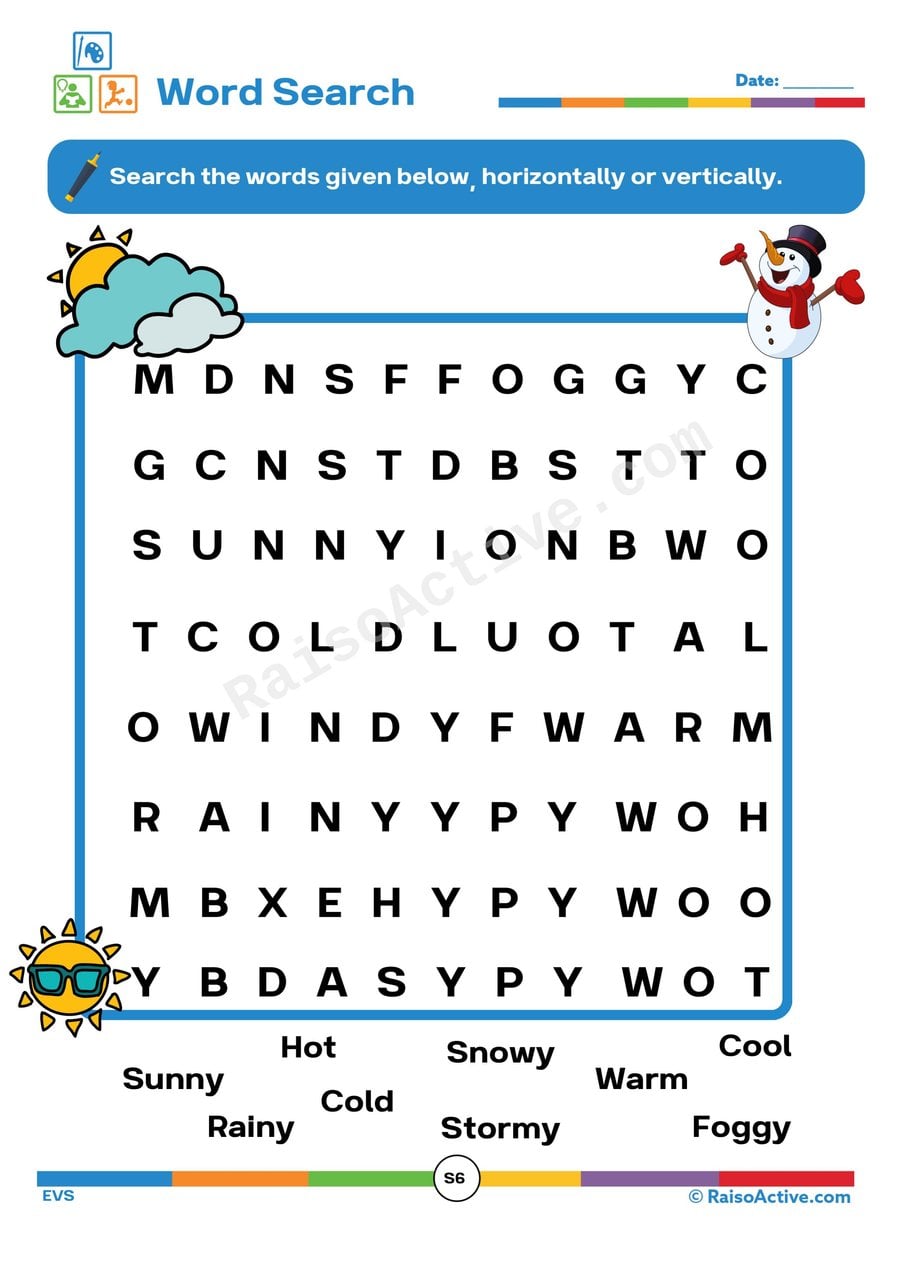
Weather Word Search Worksheet for Kids
Ages 4-6 · Pre-K–KindergartenAges 4-6 · Reception–Year 1Ages 4-6 · LKG–UKGAges 4-6
This word search strengthens children's visual scanning and spelling recognition for ages 4-6 by having them locate weather-related vocabulary — like rain, wind, or cloud — hidden horizontally and vertically within a letter grid. Searching for words in more than one direction adds an extra layer of challenge beyond a simple left-to-right search, training children's eyes to scan more flexibly across a grid. Pairing this puzzle-solving with familiar weather vocabulary also reinforces words children already use to describe daily conditions.

Sun Safety Worksheet for Kids: Learn About Staying Safe in the Sun!
Ages 4-7 · Pre-K–Grade 1Ages 4-7 · Reception–Year 2Ages 4-7 · LKG–Class 1Ages 4-7
This worksheet has children ages 4-7 answer questions about sun safety, such as why sunscreen and hats matter, building early health literacy alongside writing practice as they put their understanding into their own words. Because the questions ask children to reason about why certain sun-safety habits matter rather than just label a picture, this worksheet develops early explanatory thinking, a step up from simple factual recall. Practicing writing full answers, even short ones, also builds sentence-forming skills appropriate for this age range.
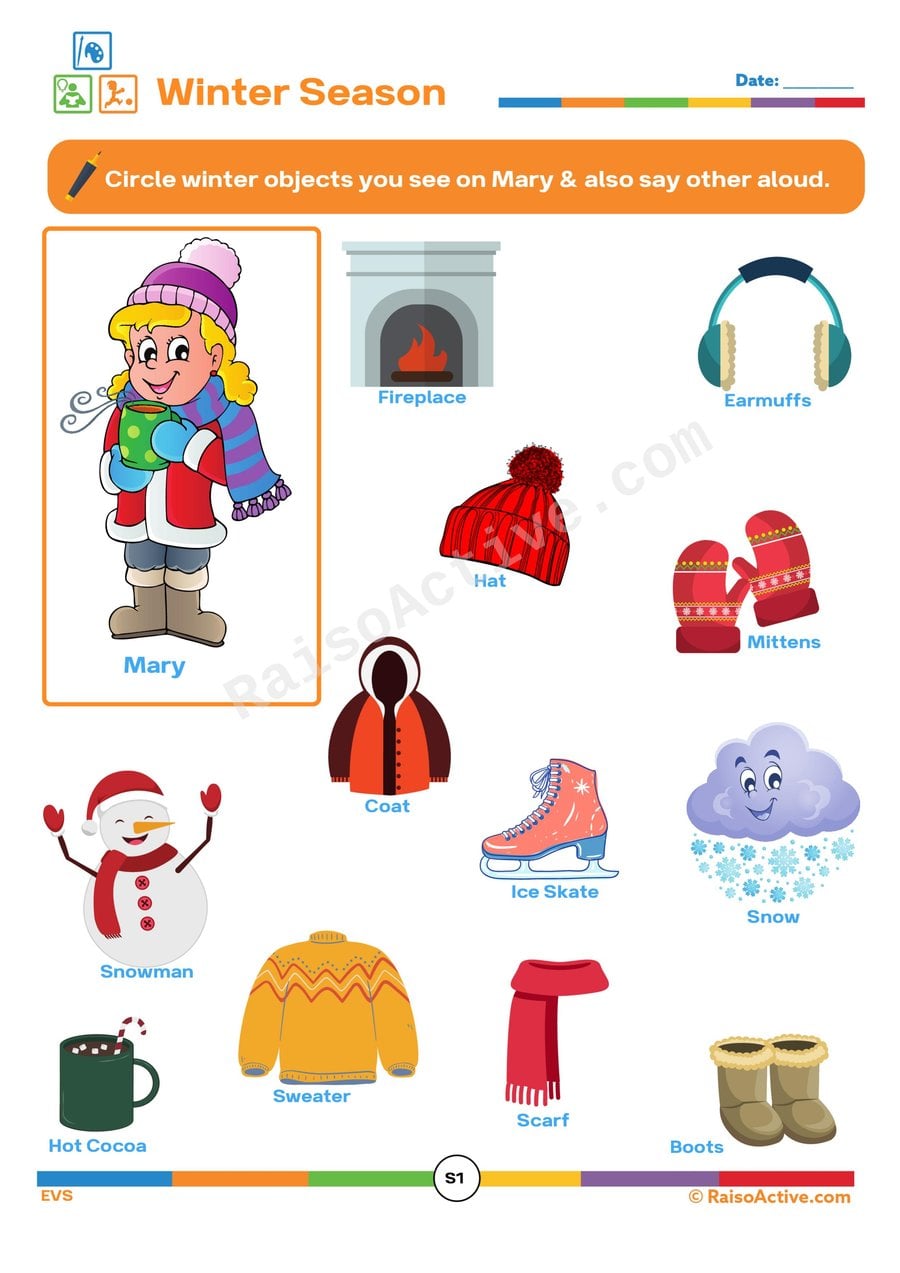
Winter Objects Worksheet: Circle and Say!
Ages 3-5 · Preschool–Pre-KAges 3-5 · Nursery–ReceptionAges 3-5 · Nursery–LKGAges 3-5
Identifying winter-related objects on this worksheet builds vocabulary and seasonal awareness for children ages 3-5, teaching them to associate specific items, like scarves, mittens, and snowflakes, with a particular time of year. Circling objects within a larger picture also sharpens visual scanning skills, requiring children to search carefully rather than glance at the whole image at once.

Weather Worksheet: Match the Weather to the Number!
Ages 3-5 · Preschool–Pre-KAges 3-5 · Nursery–ReceptionAges 3-5 · Nursery–LKGAges 3-5
This matching activity asks children ages 3-5 to connect weather pictures — sun, rain, clouds, snow — to numbered labels, combining early reading of weather vocabulary with number-symbol association. Recognizing that a picture, a word, and a number can all represent the same idea builds the kind of flexible symbolic thinking children will later use in reading and math alike. Weather is also a topic children experience daily, which makes the vocabulary immediately meaningful rather than abstract.
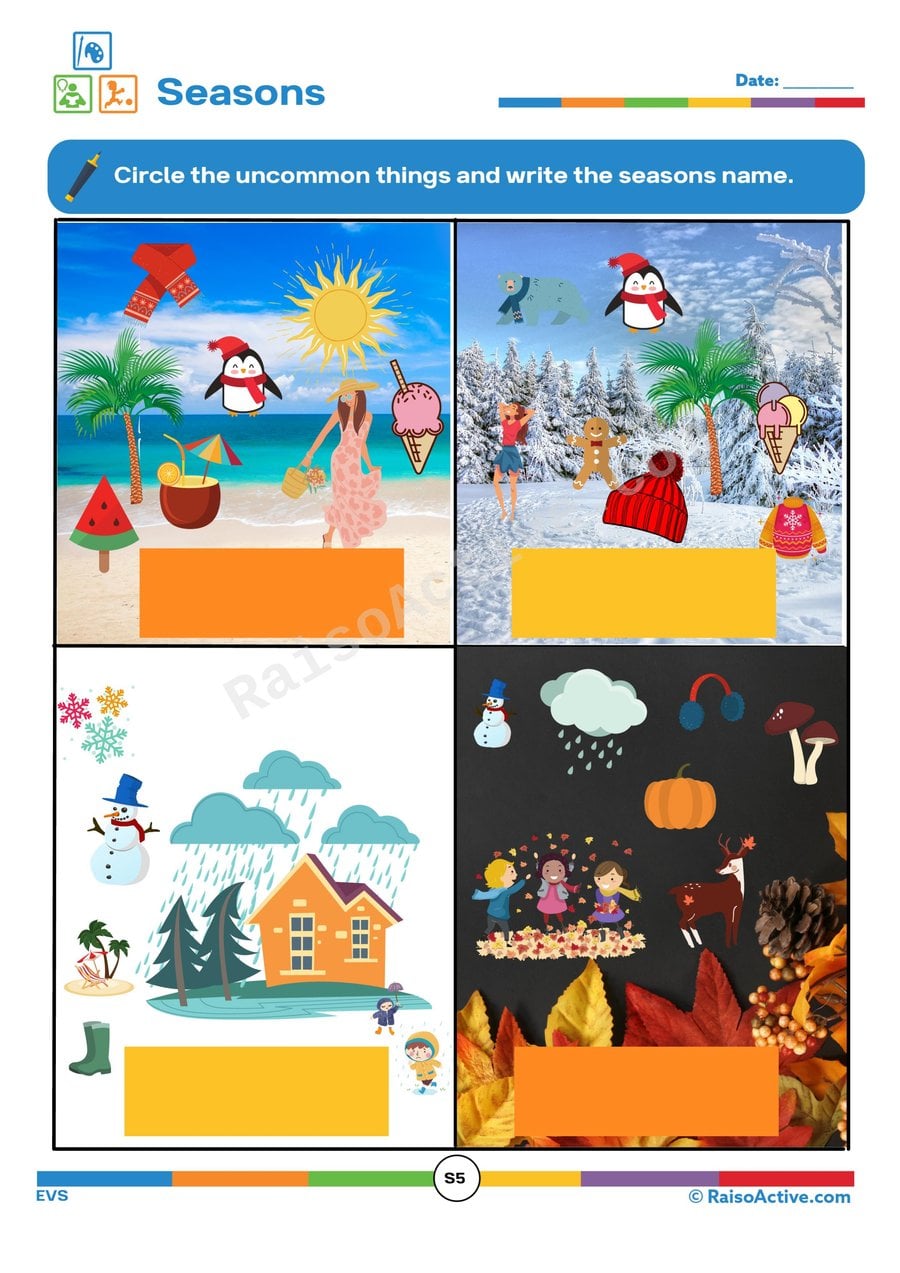
Seasons Worksheet: Circle the Uncommon Things!
Ages 3-5 · Preschool–Pre-KAges 3-5 · Nursery–ReceptionAges 3-5 · Nursery–LKGAges 3-5
This observation activity challenges children ages 3-5 to examine a seasonal scene and identify objects that don't belong, such as a snowman in a summer beach picture, sharpening their critical thinking and attention to seasonal detail. Naming the season afterward requires children to synthesize several visual clues into one overall conclusion rather than just spotting isolated errors. This kind of 'what doesn't fit' reasoning is an early form of the logical thinking used in later science observation and categorization skills.

Weather Color by Number Worksheet for Preschoolers
Ages 3-5 · Preschool–Pre-KAges 3-5 · Nursery–ReceptionAges 3-5 · Nursery–LKGAges 3-5
This color-by-number activity has children ages 3-5 practice matching numerals to a color key while completing a weather-themed picture, combining number recognition with color recognition and the fine motor control needed for careful, contained coloring. Because each numbered section must be colored correctly for the picture to look right, children get immediate visual feedback on whether their number identification was accurate. The weather theme also gives a natural opportunity to talk about the picture's subject once it's revealed.
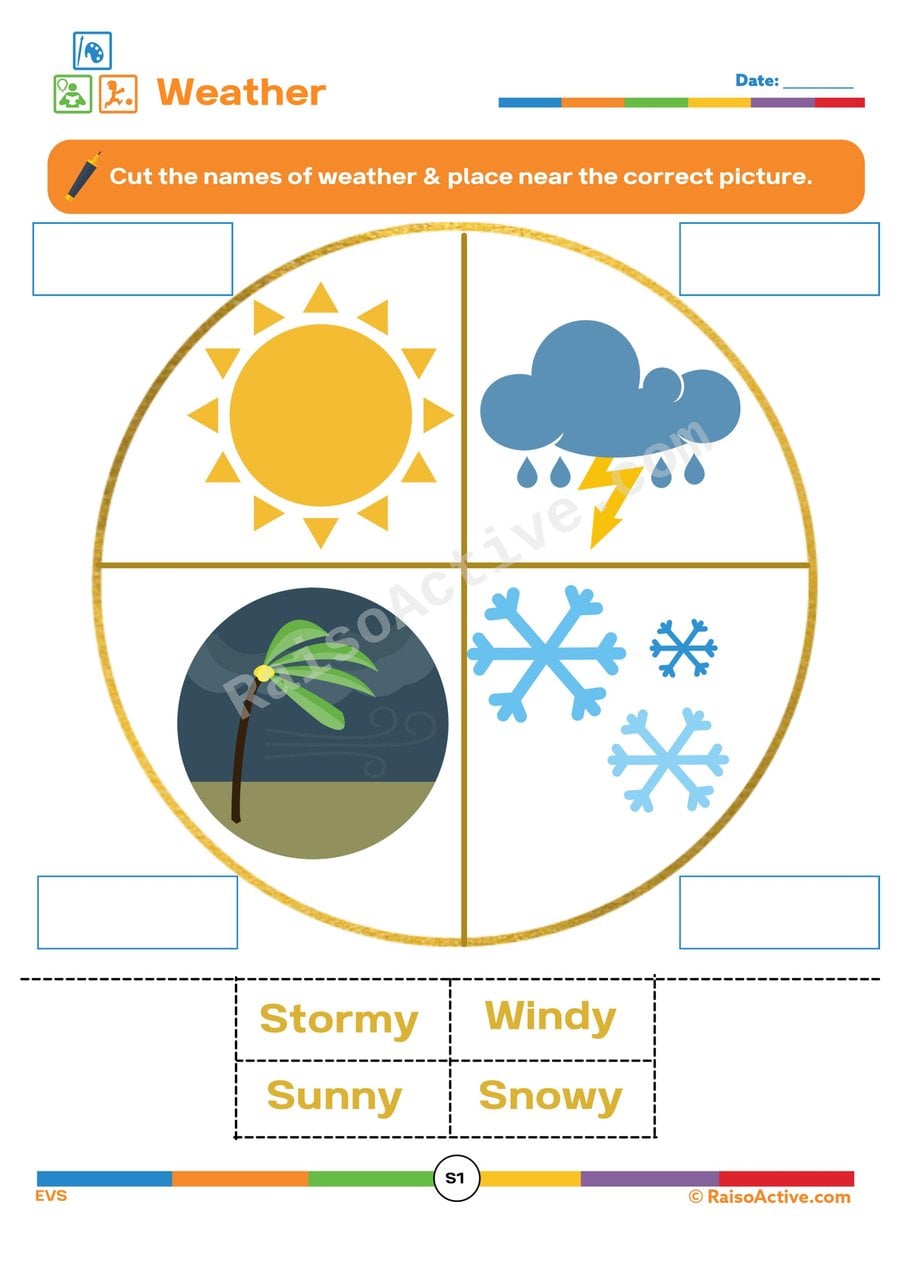
Weather Matching Worksheet for Preschoolers
Ages 3-5 · Preschool–Pre-KAges 3-5 · Nursery–ReceptionAges 3-5 · Nursery–LKGAges 3-5
Cutting out weather name labels and gluing them beside the matching picture teaches children ages 3-5 vocabulary for common weather types, like sunny, rainy, or snowy, while connecting a written word to something they can observe outside every day. Because the labels must be read and correctly matched rather than simply circled, this worksheet also builds early sight-word recognition tied to real, familiar concepts. Weather is something children experience daily, which makes this an especially concrete entry point into word-to-picture matching.

Holi Colour Mixing: Colour the Picture and Mix the Colours
Ages 4-8 · Pre-K–Grade 2Ages 4-8 · Reception–Year 3Ages 4-8 · LKG–Class 2Ages 4-8
Children learn that Holi is the festival of colours that welcomes spring, and discover which colours they get when they mix two primary colours.
Guides for this topic

Best Worksheets for 3-Year-Olds: What Works and What to Avoid
What works on worksheets for 3-year-olds: short sessions, crayons, tracing lines, matching, cutting, a free weekly plan, and signs one is too advanced.
Fostering Creativity in Structured Learning: The Perfect Balance for Young Minds
Learn how to blend creativity with structured learning for children ages 1-8. Practical strategies, activities, and printable worksheets for parents and teachers.
Celebrating Diversity: How to Incorporate Cultural Awareness in Learning Activities for Young Children
Practical cultural awareness activities for young children aged 2-8. Explore Indian festivals, world cultures, food, music, and crafts to teach diversity and inclusion.
Reviews
Every worksheet for ages 3–5, no watermark
Members download the full library of 1,000+ worksheets and every activity pack without watermarks or daily limits. One year costs ₹999 in India or $20 elsewhere.
See membership plansOr download any worksheet free with a watermark (5 a day).