Alphabet Adventures: Write the First Letter - A to T Worksheet
This worksheet builds early phonemic awareness in children ages 4-5 by asking them to identify a pictured object, say its name aloud, and isolate the very first sound to write as a letter. Practicing this across a wide range of letters, A through T, gives children repeated exposure to the letter-sound connection that underlies all future reading and spelling. It also strengthens letter formation as children physically write each capital letter.

Part of the pack
Month 11: Learning & Development | Ages Up to 4
This is page 7 of the pack. Ages 2-4 · PreschoolAges 2-4 · NurseryAges 2-4

Made for your child
A whole activity pack made with their name
60 pages to spot, build, trace and write their own name, plus pages about their favourites, feelings and family. See a free preview with their name.
Make an All About Me packFree preview · free for members
Or start free: a name tracing sheet with their nameCurriculum
- Phonics - Letter Sounds > Beginning Sounds
How to use this worksheet
Go box by box rather than trying to complete the whole page at once. For each picture, ask your child to name what they see, then say the word slowly and stretch out the very first sound, like 'mmm-onkey.' Help them identify which letter makes that sound, and have them write it on the line beneath the picture, checking their letter formation as they go. Take a short break partway through since covering A to T in one sitting is a lot for this age group.
Materials needed
- Pencil
- Eraser
Extension activities
- 1Cut pictures out of an old magazine and sort them by their beginning letter sound.
- 2Play 'I spy something that starts with…' using objects around the house.
- 3Trace each written letter again with a finger in a tray of sand or rice for extra sensory reinforcement.
- 4Make a simple alphabet scrapbook, adding one new picture and letter per day.

Written by
Hemsweta Jain · Teacher Cheena
MBA and Early Childhood Educator, teaching since 2014 · Founder of RaisoActive, Mumbai
Every RaisoActive worksheet is designed and checked by the founder before publishing.
Published · Last reviewed
More from Month 11: Learning & Development | Ages Up to 4

Summer Count: A Fun Counting Worksheet for Preschoolers!
Ages 3-5 · Preschool–Pre-KAges 3-5 · Nursery–ReceptionAges 3-5 · Nursery–LKGAges 3-5
Counting groups of summer-themed objects like sunglasses, beach balls, or ice creams builds one-to-one correspondence for children ages 3-5, and recording the total in writing gives them foundational practice before moving into simple addition.

Help Dad Reach Home! Missing Number Maze Worksheet
Ages 4-6 · Pre-K–KindergartenAges 4-6 · Reception–Year 1Ages 4-6 · LKG–UKGAges 4-6
Filling in missing numbers along a maze path combines number sequencing from 1-20 with the planning skills needed to trace a route from start to finish, giving children ages 4-6 practice in both counting recall and spatial navigation.
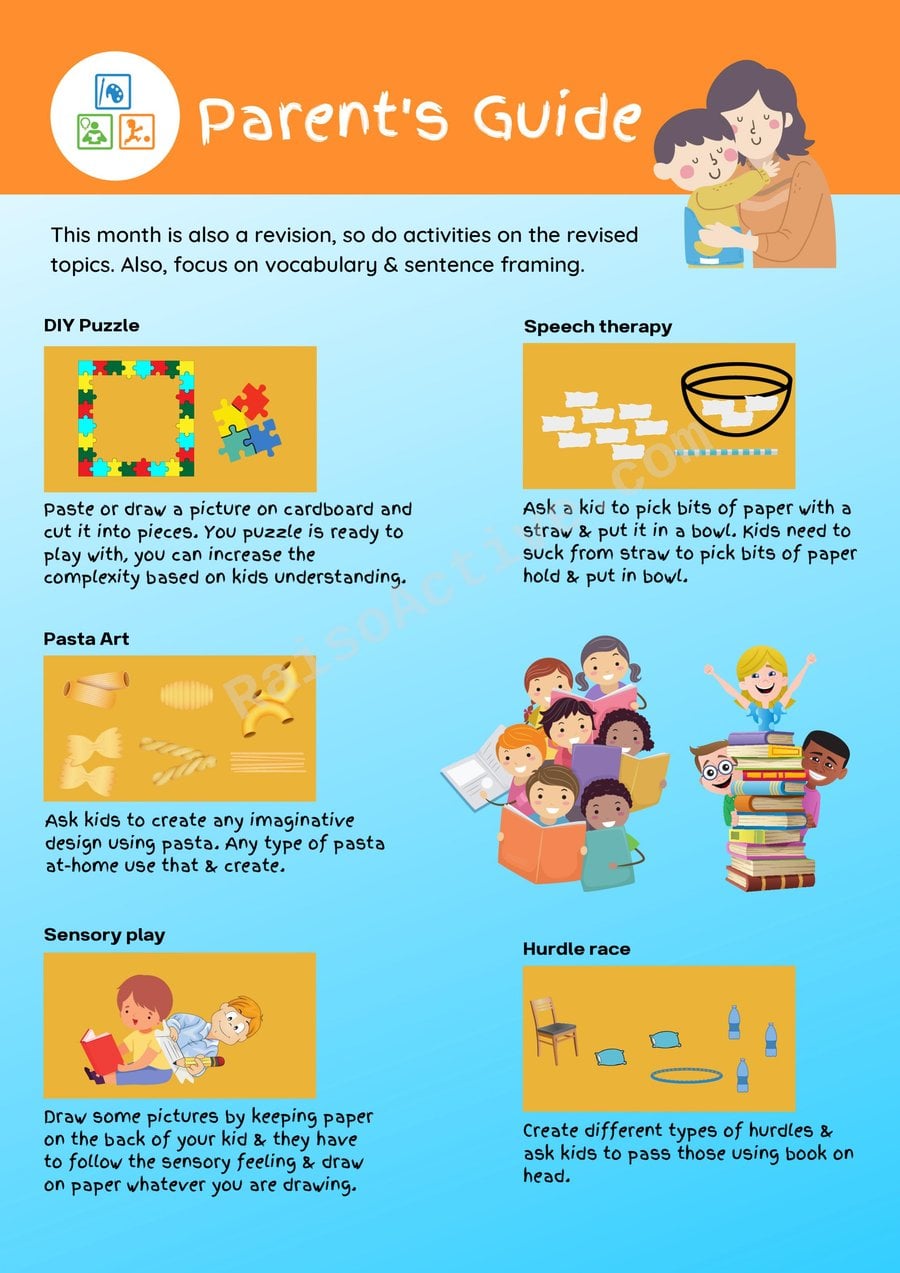
Parent's Guide: Fun Activities for Kids!
Ages 3-5 · Preschool–Pre-KAges 3-5 · Nursery–ReceptionAges 3-5 · Nursery–LKGAges 3-5
This parent's guide brings together a set of simple, no-prep activities that support early literacy, counting, and sequencing skills for children ages 3-5 outside of a single structured worksheet. Because the activities are designed to be adapted to your child's current interests and skill level, they build flexible thinking and real-world application of skills like counting and sequencing, rather than isolated worksheet practice.

Animal Babies Matching Worksheet for Preschoolers
Ages 3-5 · Preschool–Pre-KAges 3-5 · Nursery–ReceptionAges 3-5 · Nursery–LKGAges 3-5
Children ages 3-5 practice matching adult animals to their correct babies, like a cow to a calf or a dog to a puppy, building early animal vocabulary and reinforcing the concept that animal babies often have entirely different names from their parents. This kind of family-relationship matching also strengthens visual comparison and reasoning skills.

Transportation Coloring Worksheet for Preschoolers
Ages 3-5 · Preschool–Pre-KAges 3-5 · Nursery–ReceptionAges 3-5 · Nursery–LKGAges 3-5
This worksheet helps children ages 3-5 practice categorizing vehicles by where they travel — air, water, or land — while strengthening fine motor control through a color-coded coloring task. Following a color key adds a layer of symbolic thinking, since children must hold three rules in mind and apply the correct one to each vehicle. It's a natural bridge between science classification and hands-on art.
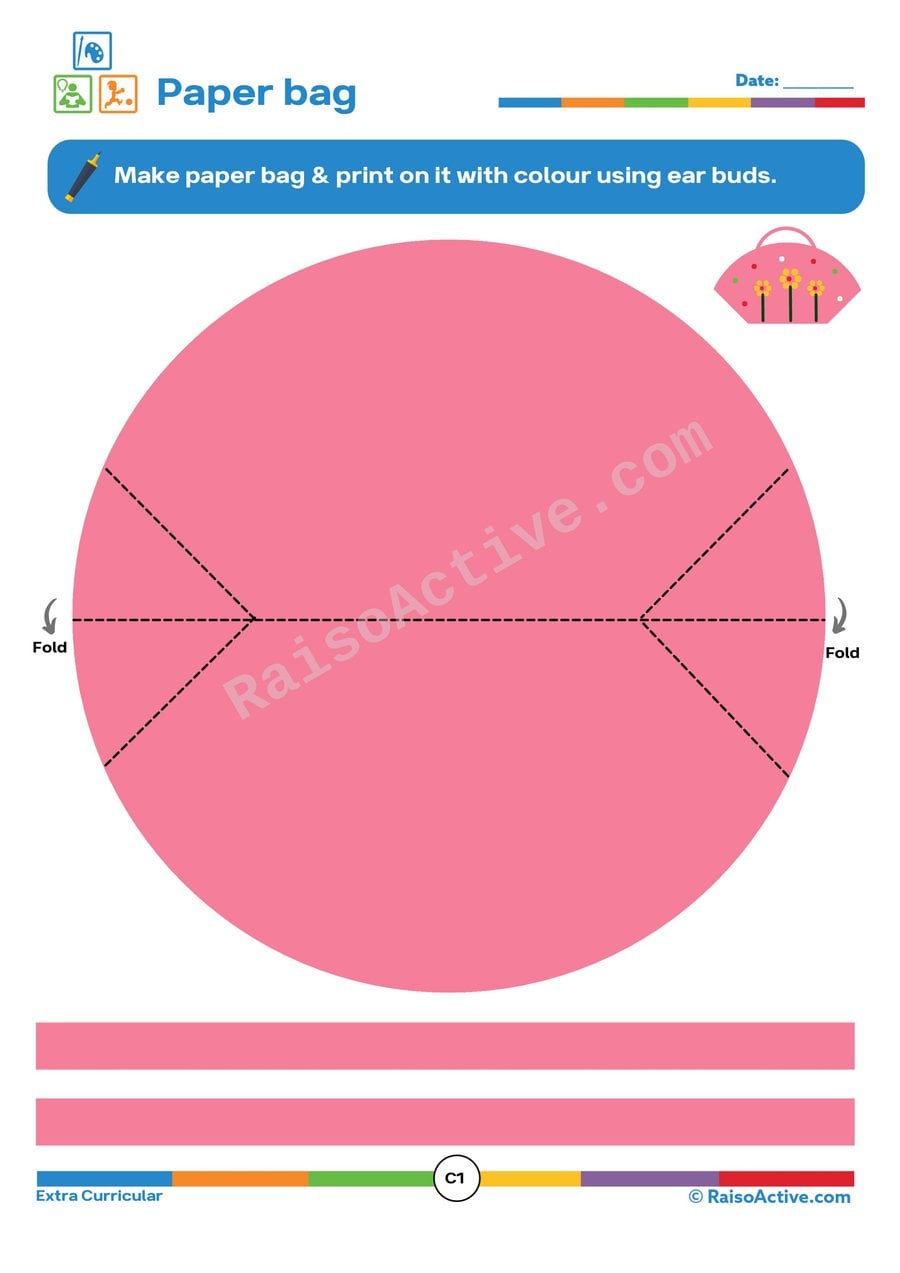
Paper Bag Craft Worksheet for Kids
Ages 3-5 · Preschool–Pre-KAges 3-5 · Nursery–ReceptionAges 3-5 · Nursery–LKGAges 3-5
Children ages 3-5 practice fine motor control and following multi-step craft instructions by folding a paper bag and decorating it using a cotton swab dipped in color, an unusual painting tool that builds hand control and creative expression at the same time. Following each folding and coloring step in order also strengthens early sequencing and listening skills.
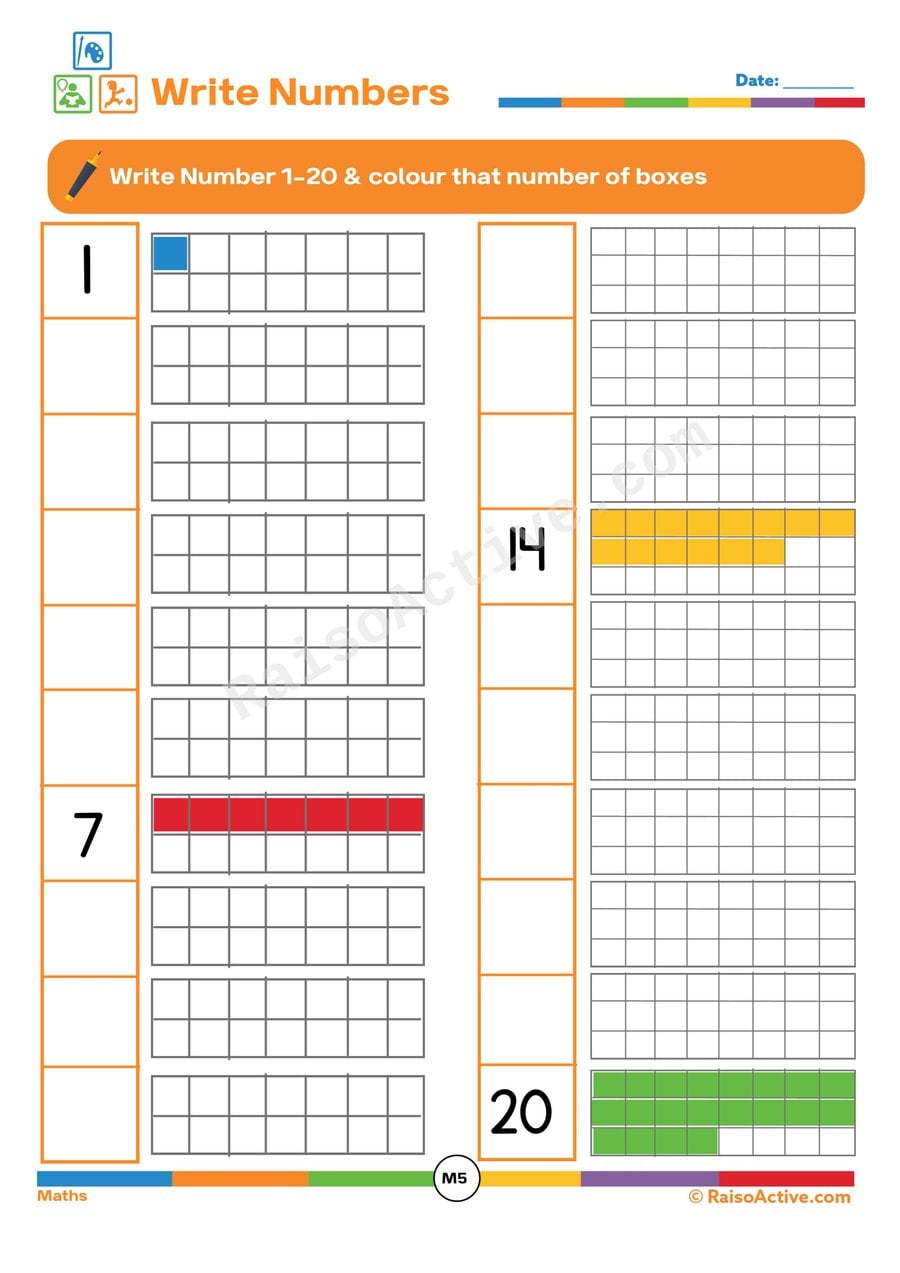
Write and Color Numbers 1-20 Worksheet
Ages 4-6 · Pre-K–KindergartenAges 4-6 · Reception–Year 1Ages 4-6 · LKG–UKGAges 4-6
Children ages 4-6 practice writing numbers from 1 to 20 in sequence while reinforcing quantity recognition by coloring the matching number of boxes for each number, connecting the written numeral to the amount it represents. Extending number writing practice up through 20 supports children moving beyond single digits into the teens and twenties, a range many children find confusing.

Before and After Numbers Worksheet for Preschoolers
Ages 3-5 · Preschool–Pre-KAges 3-5 · Nursery–ReceptionAges 3-5 · Nursery–LKGAges 3-5
Identifying which numbers come immediately before or after a given number and physically sorting pictures into place links number sequence recall with the fine motor practice of cutting and pasting, building confidence for children ages 3-5.
Related worksheets

Say My Sound: Beginning Sounds Worksheet for Preschoolers
Ages 3-5 · Preschool–Pre-KAges 3-5 · Nursery–ReceptionAges 3-5 · Nursery–LKGAges 3-5
This worksheet helps children ages 3-5 identify the beginning sounds of familiar words and match them to the correct letters, an essential early phonics skill for sounding out words later. Coloring each picture after identifying its sound keeps the activity playful while still requiring focused listening.
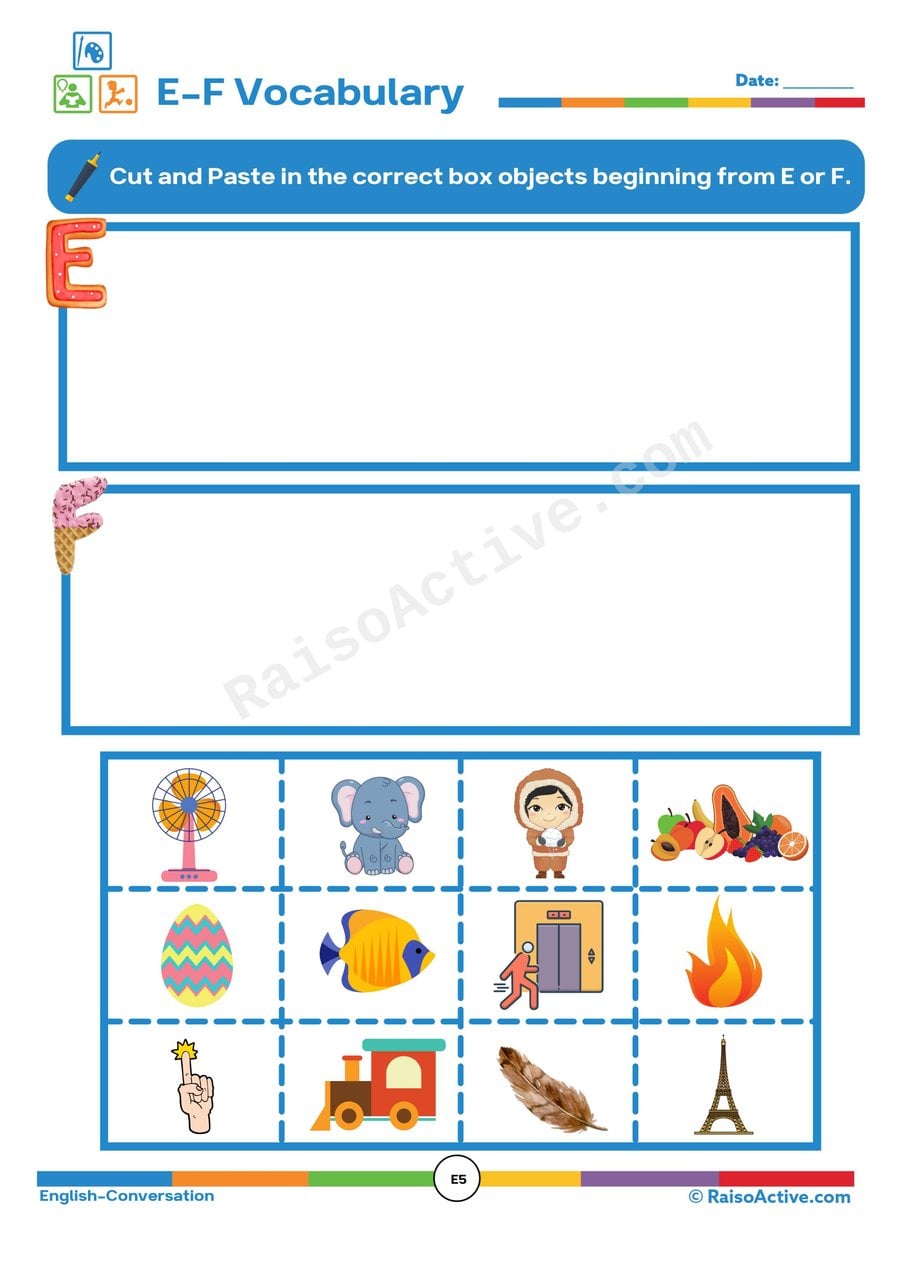
E-F Vocabulary Worksheet: Cut and Paste Fun!
Ages 3-5 · Preschool–Pre-KAges 3-5 · Nursery–ReceptionAges 3-5 · Nursery–LKGAges 3-5
This worksheet builds phonemic awareness and vocabulary as children ages 3-5 sort pictures by their beginning sound, deciding whether each object starts with the letter E or F. Practicing this kind of sound-sorting strengthens the auditory discrimination skills children need before they can reliably match letters to sounds in reading.

Alphabet Adventures: Write the First Letter - Small Alphabet Worksheet
Ages 4-6 · Pre-K–KindergartenAges 4-6 · Reception–Year 1Ages 4-6 · LKG–UKGAges 4-6
This worksheet strengthens phonemic awareness by asking children ages 4-6 to isolate the very first sound in a spoken word and match it to its lowercase letter - a skill that sits at the heart of early decoding and spelling. Because it uses small (lowercase) letters specifically, it also reinforces letter-case recognition, since children encounter lowercase print far more often than capitals once they begin reading books.

First Letter Fun: Identify and Write! A Worksheet for Young Learners
Ages 3-5 · Preschool–Pre-KAges 3-5 · Nursery–ReceptionAges 3-5 · Nursery–LKGAges 3-5
Ages 3-5 are the prime window for phonemic awareness, and this worksheet targets one specific piece of it: isolating the very first sound in a spoken word and mapping it onto a written letter. Each picture forces your child to say the word, listen for the opening sound, and commit a symbol to paper, which is the exact skill that later becomes spelling. It also builds pencil control on single letters rather than whole words, which keeps the writing demand light while the listening demand stays high.

Color the Beginning Sounds: G, D, and P Worksheet for Preschoolers
Ages 3-5 · Preschool–Pre-KAges 3-5 · Nursery–ReceptionAges 3-5 · Nursery–LKGAges 3-5
This worksheet strengthens phonemic awareness by asking children to distinguish between three different beginning sounds, G, D, and P, and color pictures according to which sound they start with. For ages 3-5, sorting by sound rather than simply circling reinforces both listening discrimination and the ability to hold multiple sound categories in mind at once.

Fun Phonics Activities: Letter S Worksheet for Preschoolers
Ages 3-5 · Preschool–Pre-KAges 3-5 · Nursery–ReceptionAges 3-5 · Nursery–LKGAges 3-5
This multi-part activity page immerses preschoolers in the sound and shape of the letter 'S' through drawing, speaking, and playful games rather than a single worksheet task, which research on early phonics shows helps the sound-letter connection stick faster than tracing alone. Ages three to five benefit especially from this variety, since moving between drawing, talking, and active games matches their short attention spans while reinforcing the same target sound from multiple directions.

Phonics Fun: Connect the Letters S-X with Starting Sounds Worksheet
Ages 4-6 · Pre-K–KindergartenAges 4-6 · Reception–Year 1Ages 4-6 · LKG–UKGAges 4-6
Connecting pictures to their correct beginning letter across the range S through X helps children ages 4-6 extend their phonics practice beyond the most common early letters, building broader letter-sound matching skills. This wider range also introduces children to less frequently practiced sounds, rounding out their overall phonemic awareness.
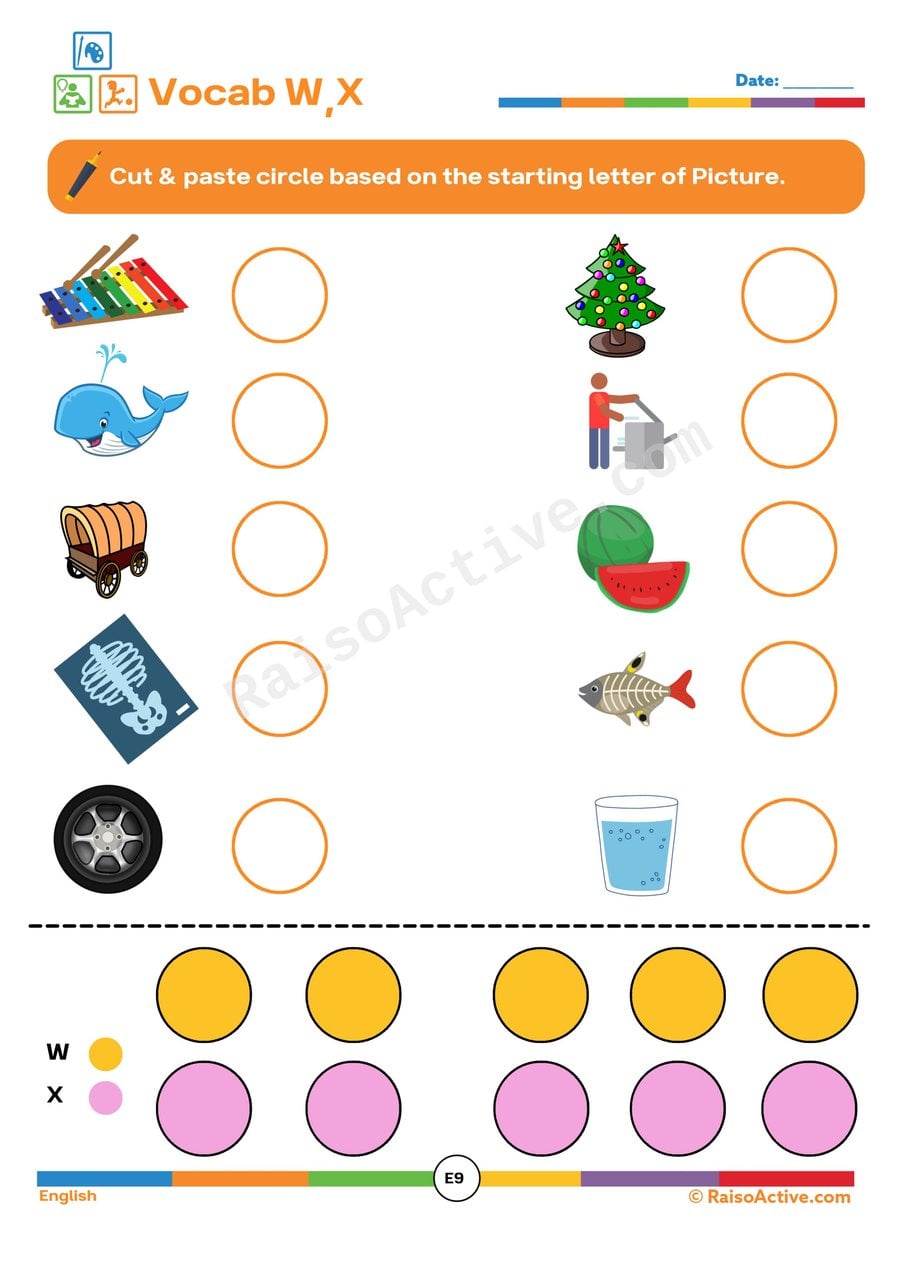
W and X Words Worksheet: Cut and Paste Fun!
Ages 4-5 · Pre-KAges 4-5 · ReceptionAges 4-5 · LKGAges 4-5
Identifying words that start with W and the much rarer letter X gives children practice distinguishing beginning sounds across a wider range of vocabulary, since X-words are less common and require extra attention to hear correctly. For ages four to five, the cut-and-paste format adds a deliberate pause before each answer, helping avoid the rushed guessing that can happen with a quicker matching task.
Guides for this topic

How to Teach CVC Blending: A Step-by-Step Method That Works in Two Weeks
A step-by-step method for teaching CVC blending, covering continuous sounds, word families, common errors, and a 14-day plan that most children finish reading CVC words.
Phase 2 Phonics at Home: Sound Order, Blending Games, Worksheets
Phase 2 phonics at home: the five sound sets in order, oral blending, tricky words, a two-week routine, common mistakes, and free worksheets.

Reception Year Explained: EYFS Learning and How to Help at Home
A teacher's plain-English guide to the Reception Year: the seven areas of learning, Early Learning Goals, Phase 2/3 phonics, the RBA and home routines.
Reviews
Every worksheet for ages 4–5, no watermark
Members download the full library of 1,000+ worksheets and every activity pack without watermarks or daily limits. One year costs ₹999 in India or $20 elsewhere.
See membership plansOr download any worksheet free with a watermark (5 a day).