Free printable worksheets · United Kingdom
Reception Shapes Worksheets (Ages 4–5)
Reception shapes worksheets are practice sheets for children aged 4–5 in Reception in the UK. Shapes worksheets build recognition and naming of common two- and three-dimensional forms, and the ability to sort or match them by their features. The sheets on this page cover naming 2D shapes, matching identical shapes, sorting shapes by attribute and finding shapes in everyday objects.
Reception is the year phonics teaching properly begins, usually with Phase 2 of Letters and Sounds or an equivalent scheme, so a child starts blending sounds such as s, a, t and p into short words within weeks. Number work stays within ten, built through subitising and comparing rather than counting alone. At four to five, shape work turns from naming into describing. A child can say a triangle has three sides and three corners, and that is what worksheets should now ask: count the sides, count the corners, circle every shape with four sides, and sort a mixed set into groups by that rule. Oval, star, heart and hexagon join the list. Solid shapes such as cubes and spheres wait until next year.
959+ worksheets · free PDF download · print on A4 or Letter
Reception Shapes Worksheets to print
Browse all worksheets for ages 4–5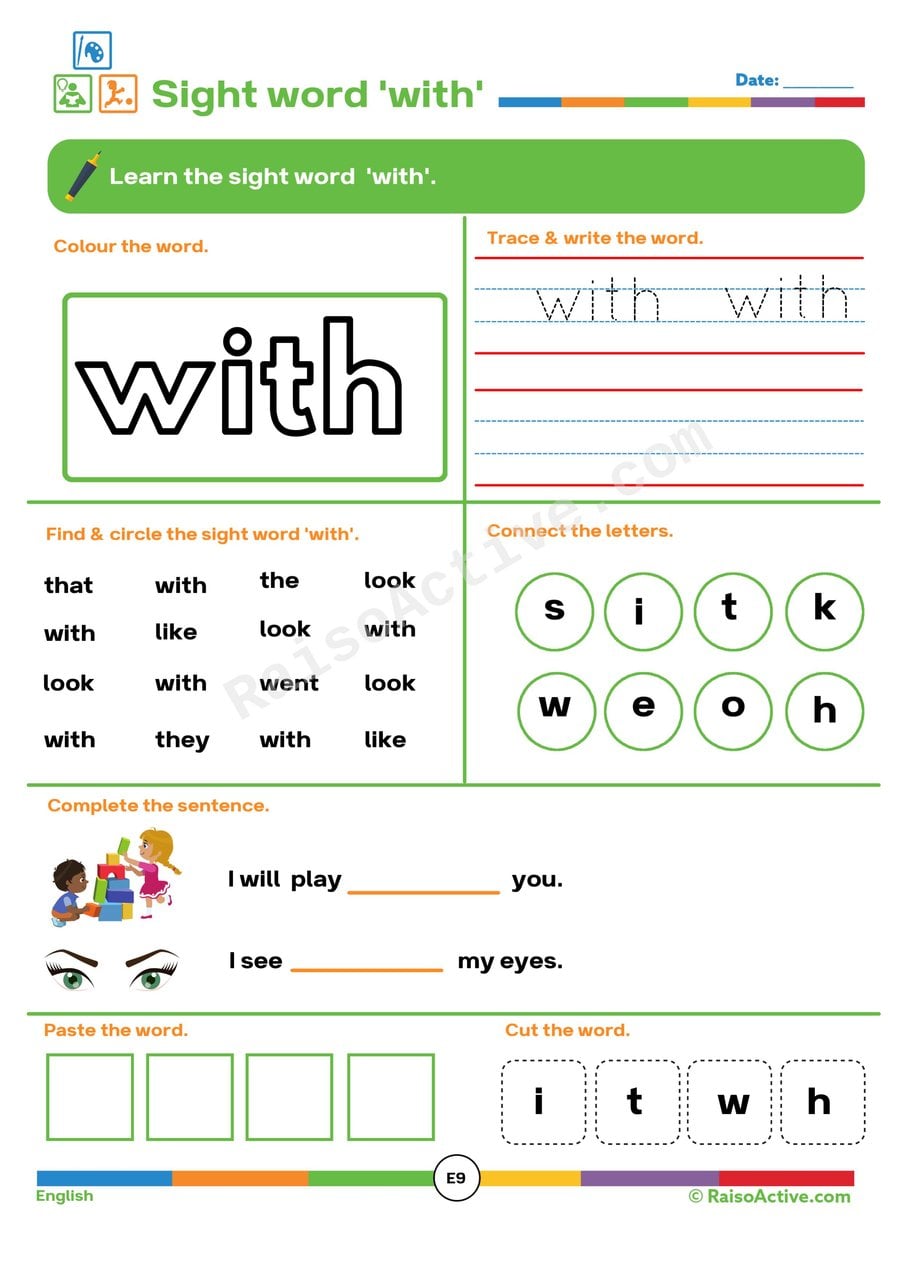
Sight Word 'With' Worksheet: Trace, Write, and Find!
This worksheet gives 4-5 year olds repeated, varied practice with the sight word 'with' — coloring it, tracing and writing it, finding it in a list, completing a sentence, and cutting and pasting it — because sight words like 'with' don't follow simple sound-out rules and need to be recognized instantly by sight rather than decoded each time. That instant recognition is what lets a young reader move smoothly through a sentence instead of stumbling on common connector words.

Learn the Sight Word 'Had' | Fun Reading Worksheet for Preschoolers
Children ages 4-5 build instant recognition of the sight word 'had', another high-frequency word that resists standard phonics decoding and must be memorized visually. This worksheet layers coloring, tracing, writing, grid-searching, and fill-in-the-blank practice, giving the word multiple forms of repeated exposure that solidify memory. Completing sentences with 'had' also shows children how the word is used naturally in storytelling, especially when talking about the past.

Lowercase Letter Matching Worksheet for Preschoolers
This worksheet gives children ages 4-5 practice connecting uppercase letters to their lowercase form by circling the correct match from a set of answer choices, a skill that's essential since most of the reading material children encounter is printed in lowercase. Many lowercase letters look quite different from their uppercase counterpart, so this matching task genuinely tests whether the connection has been learned rather than guessed.

Trace and Write Simple Sentences Worksheet for Preschoolers
Tracing and then writing simple sentences independently helps children ages 4-5 move beyond single-word and letter practice into connected writing, learning that words are separated by spaces and sentences follow a left-to-right flow. This step is an important bridge between early handwriting skills and functional written communication.

Trace and Write Numbers: Sixteen to Twenty Worksheet
This worksheet helps children ages 4-5 practice tracing and writing the number words from sixteen to twenty, completing the teen and early twenty number-word range that builds toward full number fluency to 20. Repeated tracing of these longer words also continues to build the handwriting stamina needed for more complex writing tasks ahead.

Trace and Write the Letter G Worksheet for Preschoolers
This worksheet isolates the uppercase G — a large curve with a small inward hook — so 4-5 year olds can build solid mastery of this one form before later tackling the more complex lowercase g with its descending tail. At this slightly older end of the preschool range, moving from traced copying to independent writing on the same page reflects a meaningful step up in handwriting expectations.

Alphabet Adventures: 'A' and 'B' Picture Sorting Worksheet
This worksheet strengthens phonemic awareness in children ages 4-5 by having them listen for and identify pictures whose names begin with the letters 'A' or 'B,' then sort them accordingly. Focusing on just two letters at a time, rather than the whole alphabet, gives children a manageable, focused way to practice isolating beginning sounds before tackling more letters.
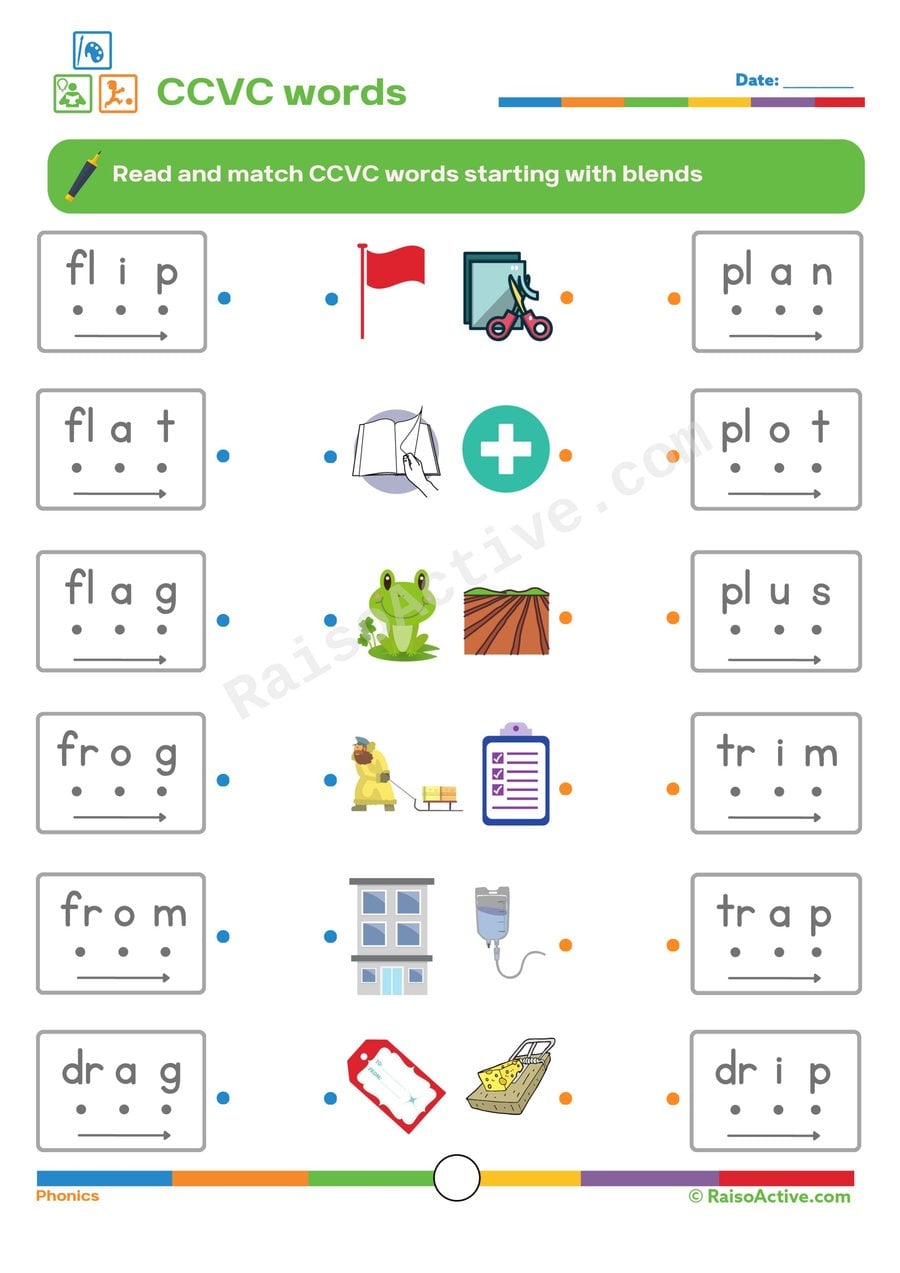
CCVC Word Matching Worksheet: Read and Match!
This worksheet gives children ages 4-5 practice reading and matching CCVC words — words that begin with two blended consonants before a vowel and a final consonant — to their corresponding pictures, reinforcing broader phonics skills beyond basic CVC words. Building comfort with consonant blends at the start of words is an important step up in decoding difficulty that prepares children for the more complex spelling patterns found in early chapter books.
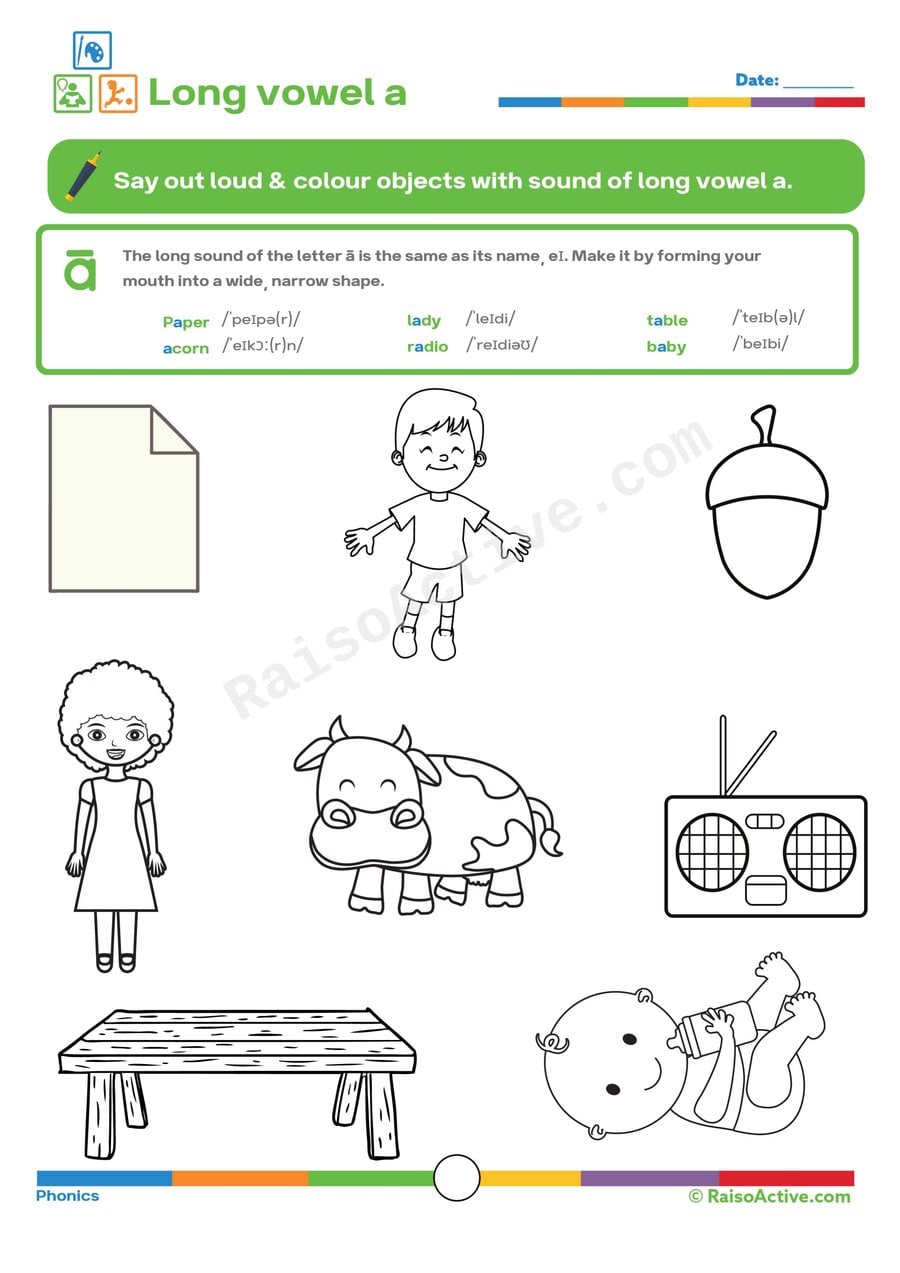
Long Vowel A Coloring Worksheet: Say the Sounds!
This coloring worksheet has children ages 4-5 say each pictured object's name aloud and decide whether it contains the long 'a' sound, as in 'acorn' or 'cake,' before coloring only the matching pictures. Turning a listening task into a coloring activity keeps young children engaged while training their ear to isolate a specific vowel sound within a spoken word - an essential pre-reading skill.

CCVC Word Matching Worksheet: Read, Color, and Match!
This worksheet introduces children ages 4-5 to CCVC words — words that start with two consonants blended together before a vowel, like 'stop' or 'frog' — and asks them to read, color, and match each one to its picture. Because blending two consonants at the start of a word is harder than single-consonant CVC words, this practice stretches decoding skills just beyond the basics while still supporting success through coloring and picture cues.
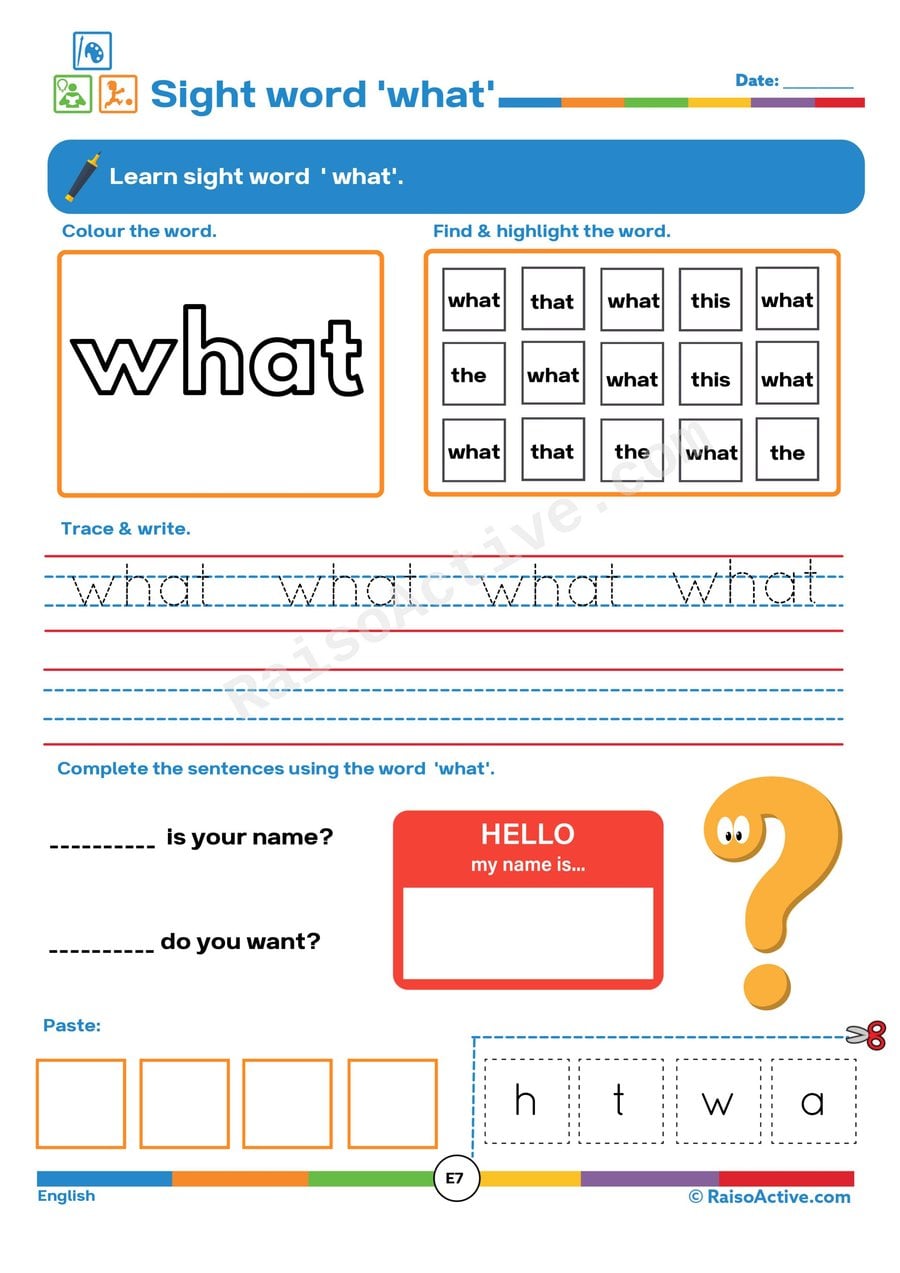
Sight Word 'What' Worksheet: Learn, Trace, and Find!
The word 'what' is a common question word that children ages 4-5 encounter constantly in both spoken conversation and early reading, making it an important addition to their sight word vocabulary. This worksheet builds recognition through several formats — coloring, tracing, word searching, sentence completion, and cut-and-paste spelling — giving the word repeated, varied exposure in a single sitting. Because 'what' is a question word, practicing it in sentences also gives children an early sense of how question structures differ from statement structures.
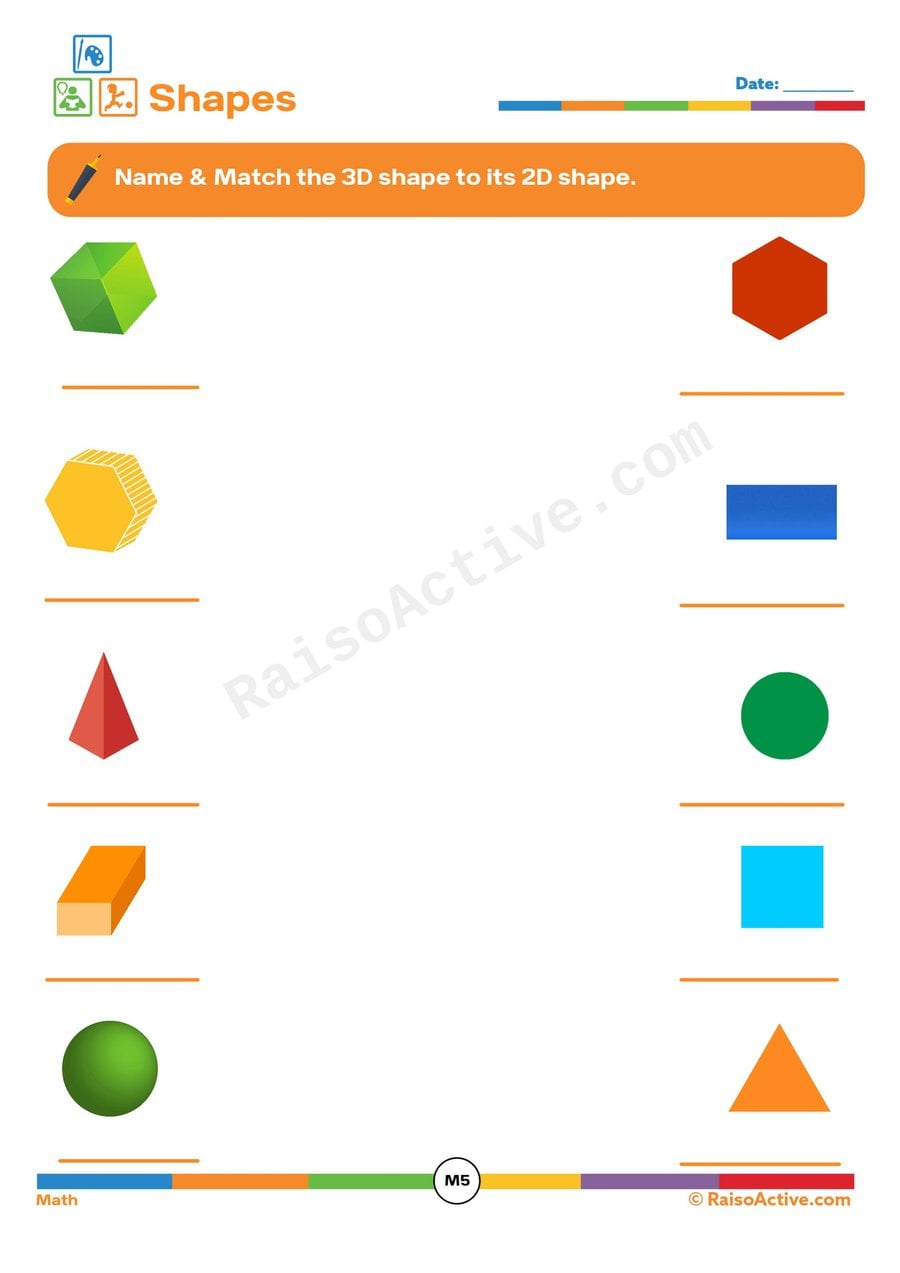
Shape Match: 3D to 2D Shapes Worksheet
This worksheet builds an important geometric connection by asking children to match 3D shapes, like a cube or sphere, to the 2D shape that appears on their flat faces, such as a square or circle. For ages 4-5, understanding that solid shapes are made up of flat shapes is a foundational geometry concept that bridges basic shape recognition with more advanced spatial reasoning.
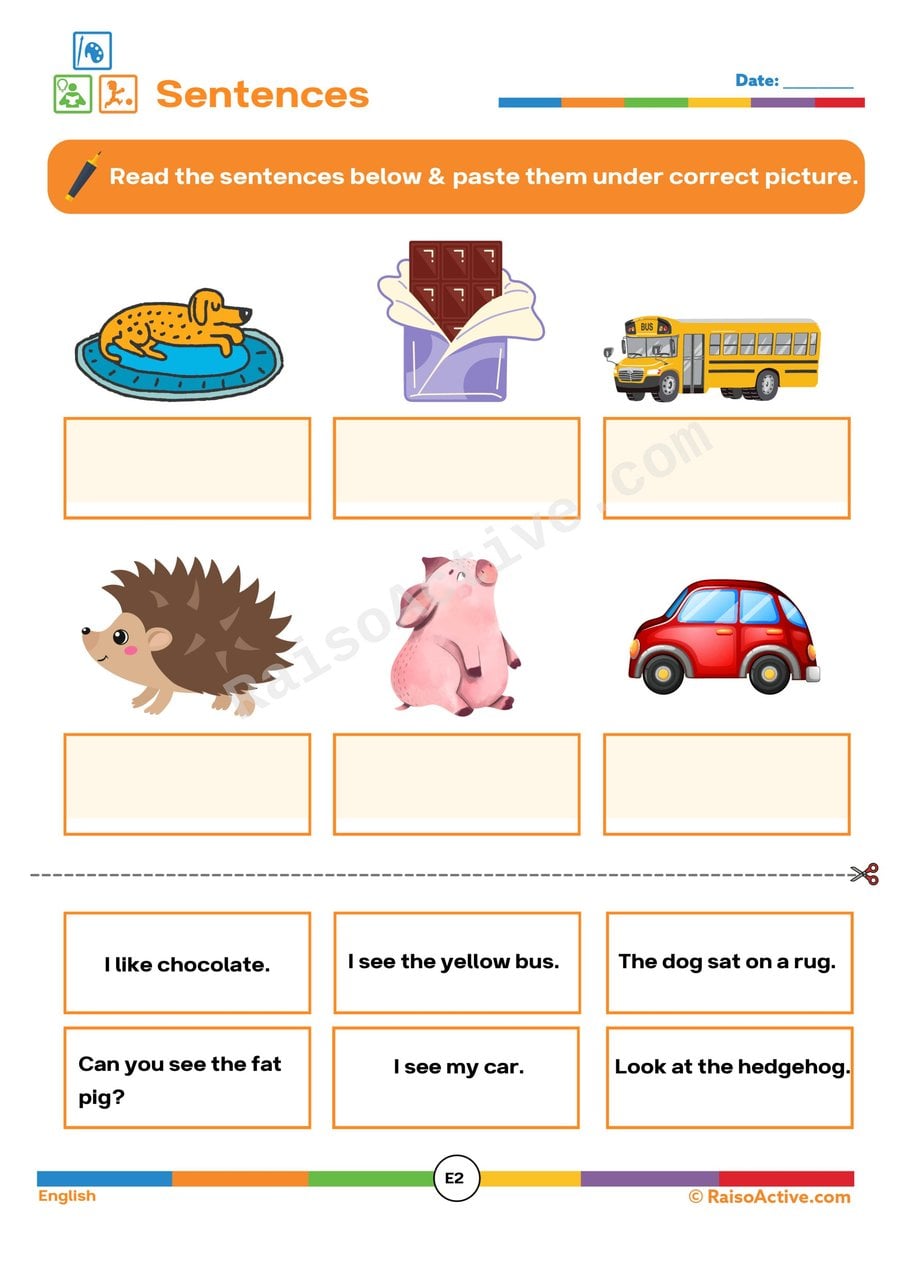
Sentence Matching Worksheet for Early Readers
Matching a written sentence to the picture it describes asks children ages 4-5 to read for meaning rather than just decode individual words, an important step up from single-word reading toward true reading comprehension. This worksheet also builds fine motor and organizational skills through cutting and placing the sentence in the correct spot. Successfully pairing text with image confirms that a child understands what they're reading, not just that they can sound out letters.

Trace and Identify the Letter 'G' Worksheet for Preschoolers
This worksheet helps children ages 4-5 build the pencil control needed to form the letter G while also practicing visual search skills as they locate every G hidden among other letters. Coloring pictures that start with G ties the abstract letter shape to concrete, familiar words, strengthening the letter-sound connection.

I Spy Letters and Numbers Worksheet: Find, Match, and Write!
This worksheet blends letter and number recognition for children ages 4-5, asking them to spot a hidden letter within a picture, find its matching number, and then write both symbols down, combining visual search with early literacy and numeracy in a single activity. Working with letters and numbers side by side reinforces that both are symbols that carry specific meaning and can be found, matched, and recorded.

Lowercase Letter Matching Worksheet for Preschoolers
This worksheet trains children ages 4-5 to connect an uppercase letter to its lowercase counterpart, a skill that's genuinely tricky since many lowercase letters look quite different from their capital form (like G and g, or Q and q). Matching cases correctly is essential groundwork for reading real books and sentences, which are written mostly in lowercase.

CVC 'ad' Family Matching Worksheet for Preschoolers
The 'ad' word family (bad, dad, mad, sad) lets children ages 4-5 practice reading by recognizing a shared spelling pattern rather than sounding out every letter from scratch, which is a major shortcut toward fluent reading. Once a child locks in the 'ad' ending, they can swap just the first letter to read a whole new word almost instantly — a strategy called analogy-based decoding that professional reading programs rely on heavily. This worksheet builds that pattern recognition through reading, matching, and coloring the 'ad' family words.

Phonics Fun: Match the Letter to the Object Worksheet
This worksheet asks children to connect a printed letter to a picture whose name starts with that letter's sound, then reinforces the connection a second time through color-coded circles, a repetition that research on phonics instruction shows helps move sound-letter pairs from short-term recognition into lasting memory. For four and five year olds, this dual task also builds sustained attention across a slightly longer worksheet than a single matching exercise.

Long Vowel 'a' Matching Worksheet for Preschoolers
This matching worksheet gives children ages 4-5 focused practice recognizing the long 'a' sound by connecting pictures to their correctly spelled words, without the added complexity of writing or searching. Because matching removes the writing demand, it's a gentler entry point into long vowel recognition for children who are still building spelling confidence, letting them focus purely on hearing and identifying the sound. This kind of low-pressure, high-repetition matching helps establish the long 'a' sound firmly before your child moves on to writing or spelling it independently.
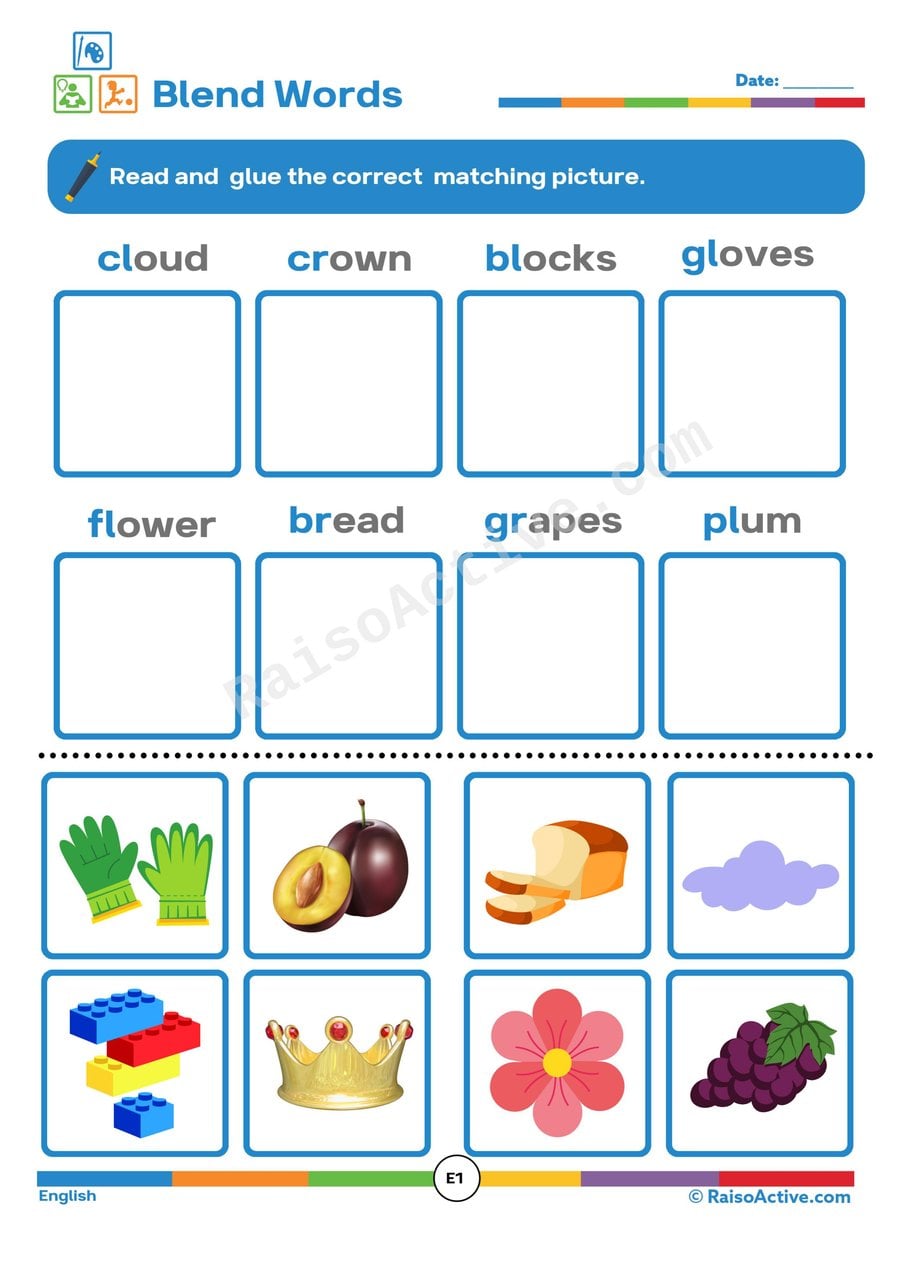
Blend Words Matching Worksheet for Preschoolers
Children ages 4-5 practice reading consonant blend words — words that start with two consonant sounds blended together, like 'bl' or 'st' — and connecting them to the correct picture through a cut-and-paste matching activity. Blends are a step up in difficulty from single beginning sounds, since children must hear and produce two consonant sounds smoothly together, an important milestone on the way to more advanced phonics.

Phonics Fun: Beginning Sound Circle Worksheet for Kids
This worksheet builds phonemic awareness by having children say a picture's name aloud and then circle the letter that makes its beginning sound from a set of options. For four- and five-year-olds, choosing the correct letter from several choices is a step up from simply naming a letter, since it requires isolating just the first sound in a word and matching it to a specific written symbol.
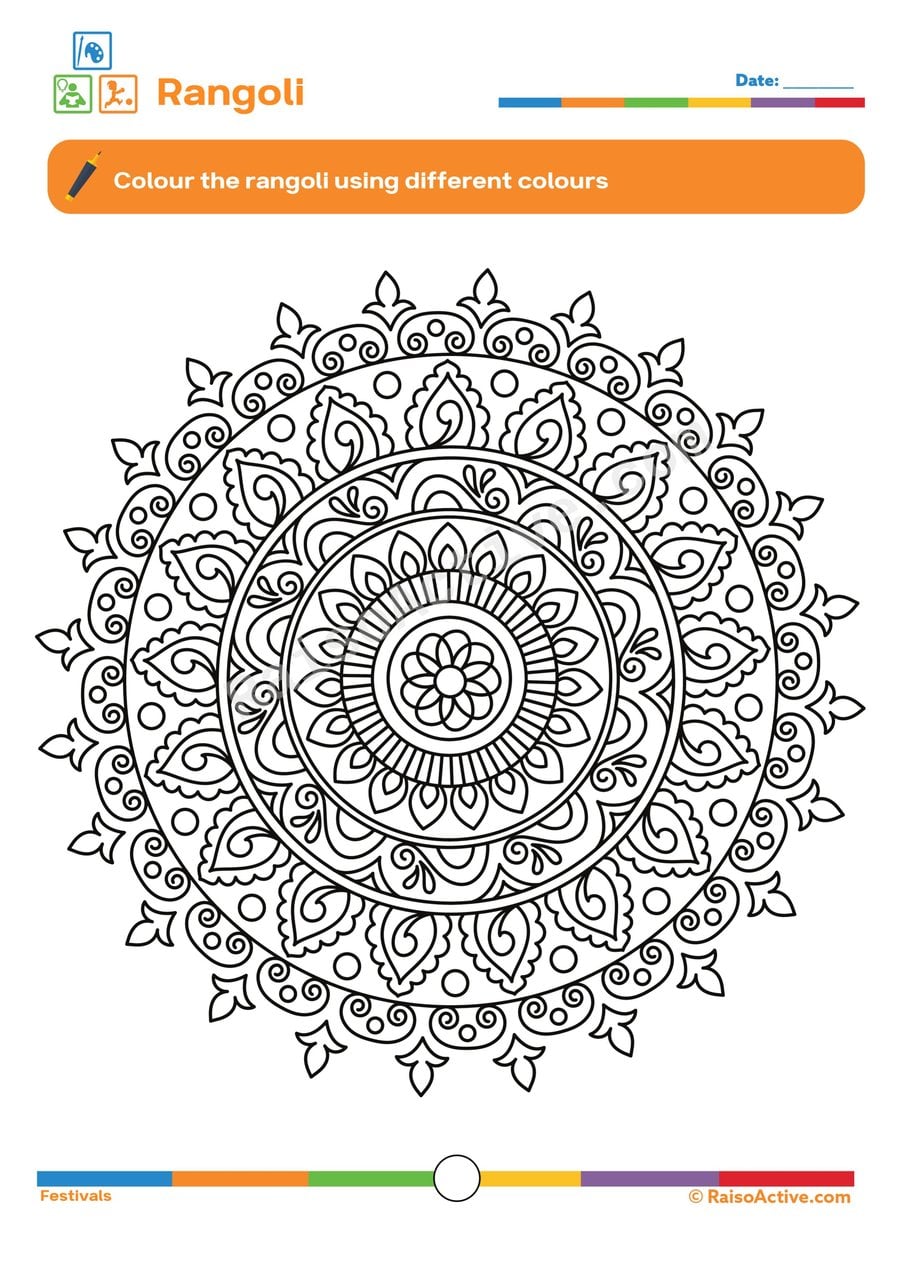
Rangoli Coloring Worksheet for Kids
Children ages 3-6 practice fine motor control and pattern following as they color a symmetrical rangoli design using multiple colors. Because rangoli patterns are built from repeating shapes, this activity also introduces early geometry and symmetry awareness in a hands-on, visual way.

Learn the Sight Word 'Is' - Tracing and Writing Worksheet for Preschoolers
This worksheet helps children ages 4-5 build instant recognition of the sight word 'is' through a layered sequence of tracing, independent writing, sentence fill-in, coloring, and letter-order cut-and-paste practice. Because 'is' can't easily be sounded out using typical phonics rules, repeated multi-format exposure like this is exactly what helps a sight word move into a child's automatic reading vocabulary. Using the word inside real sentence blanks also connects the isolated word to meaningful, functional reading.
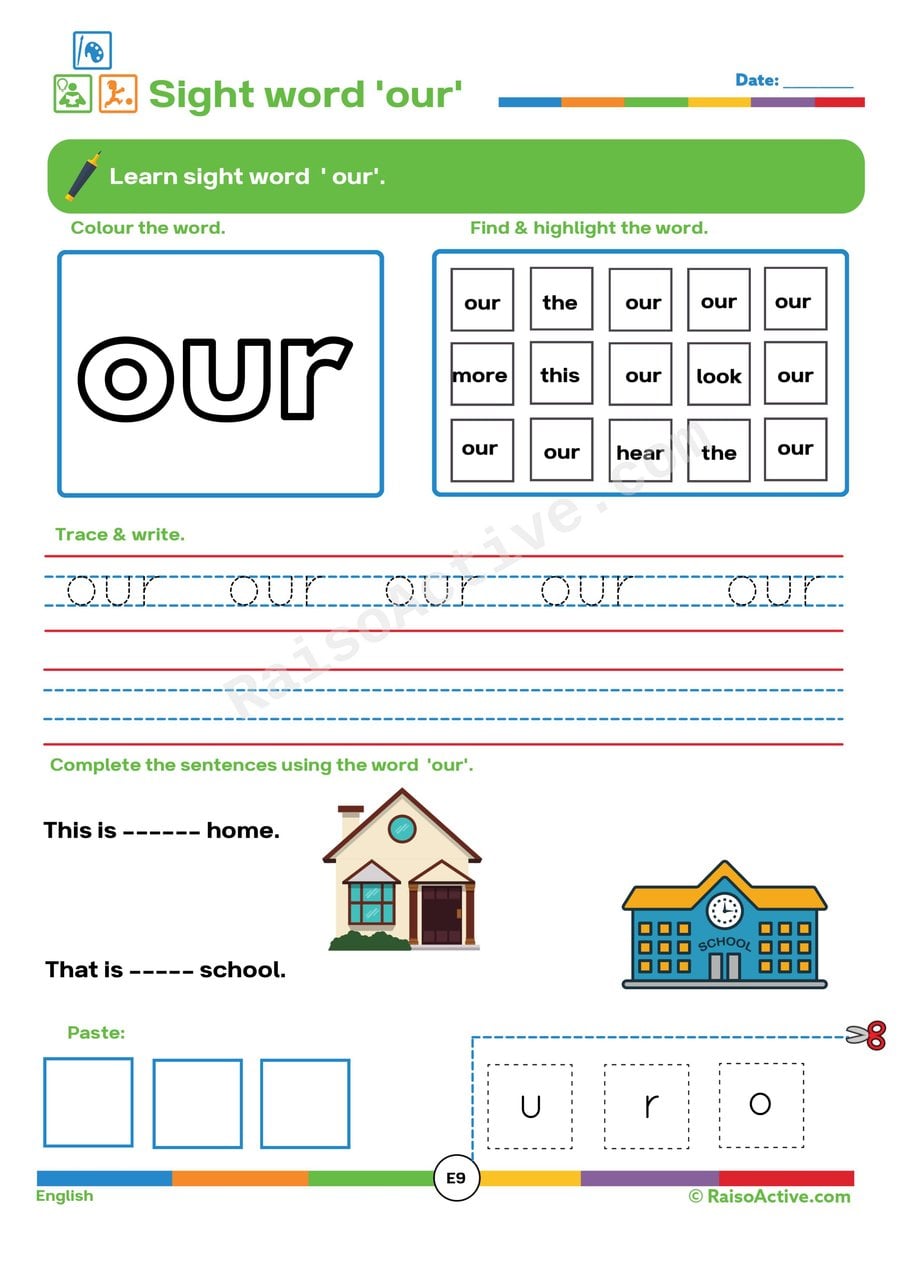
Our Sight Word Fun: Trace, Find, and Paste!
The possessive word 'our' appears often in classroom and family language, and this worksheet gives children ages 4-5 focused, multi-format practice recognizing it — tracing, word searching, sentence completion, and a cut-and-paste spelling activity. Repeated exposure across these different formats is what moves a word from effortful sounding-out into instant sight recognition, which is essential since 'our' doesn't follow predictable phonics rules cleanly. Practicing the word inside full sentences also reinforces its meaning as a word that shows shared ownership, a slightly abstract grammar concept for this age.
What Reception shapes worksheets cover
At four to five, shape work turns from naming into describing. A child can say a triangle has three sides and three corners, and that is what worksheets should now ask: count the sides, count the corners, circle every shape with four sides, and sort a mixed set into groups by that rule. Oval, star, heart and hexagon join the list. Solid shapes such as cubes and spheres wait until next year.
- Count and write the number of sides on a triangle, square and hexagon
- Sort a mixed set into shapes with three sides and four sides
- Name oval, star, heart and hexagon alongside the first four shapes
- Draw a circle and a square freehand from a model
- Recognize a triangle standing on its point as still a triangle
How to use these worksheets at home or in class
A short daily sound-matching or blending sheet paired with one number activity, around ten minutes total, mirrors the classroom rhythm. Say each sound clearly before your child traces or writes it, and keep the pace playful rather than test-like.
Start with the sheet that matches what your child can already do, then move one step up. Keep finished sheets in a folder: Reception teachers often ask for evidence of practice, and children like seeing their own progress.
Is your child ready for Reception shapes work?
A child moving into this stage typically holds a pencil with a developing grip, recognises several letters by sound rather than only by shape, and can count a small group of objects one at a time without skipping any.
Frequently asked questions
My four-year-old knows shape names but cannot draw them. Is that normal?
Yes. Recognizing a shape uses the eyes; drawing one uses the hand, and the hand is behind. Most children at four can copy a circle and a cross, manage a square with wobbly corners, and find the triangle hard because slanting lines are the last strokes to come under control. Tracing sheets with dotted outlines bridge the gap, and a freehand triangle usually appears between five and six.
What should a Reception child be able to do in shapes?
At four to five, shape work turns from naming into describing. A child can say a triangle has three sides and three corners, and that is what worksheets should now ask: count the sides, count the corners, circle every shape with four sides, and sort a mixed set into groups by that rule. Oval, star, heart and hexagon join the list. Solid shapes such as cubes and spheres wait until next year. A child moving into this stage typically holds a pencil with a developing grip, recognises several letters by sound rather than only by shape, and can count a small group of objects one at a time without skipping any.
Do these worksheets follow the Reception curriculum?
The sheets cover naming 2D shapes, matching identical shapes, sorting shapes by attribute and finding shapes in everyday objects, which sit inside the EYFS Early Learning Goals; Letters and Sounds Phase 2–3 outcomes for Reception. Pre-K / Kindergarten (US), LKG (India) use the same skills at this age, so the sheets also fit families following those programmes.
Are these Reception shapes worksheets free?
Yes. Each worksheet downloads free as a watermarked PDF once you create an account, with a limit of five a day. An annual membership ($20) removes the watermark and the limit for the whole library of over 1,000 worksheets and every printable pack.

Written by
Hemsweta Jain · Teacher Cheena
MBA and Early Childhood Educator, teaching since 2014 · Founder of RaisoActive, Mumbai
Written and reviewed by Hemsweta Jain (Teacher Cheena), who designs every RaisoActive worksheet.
Last reviewed
Printable packs for ages 4–5
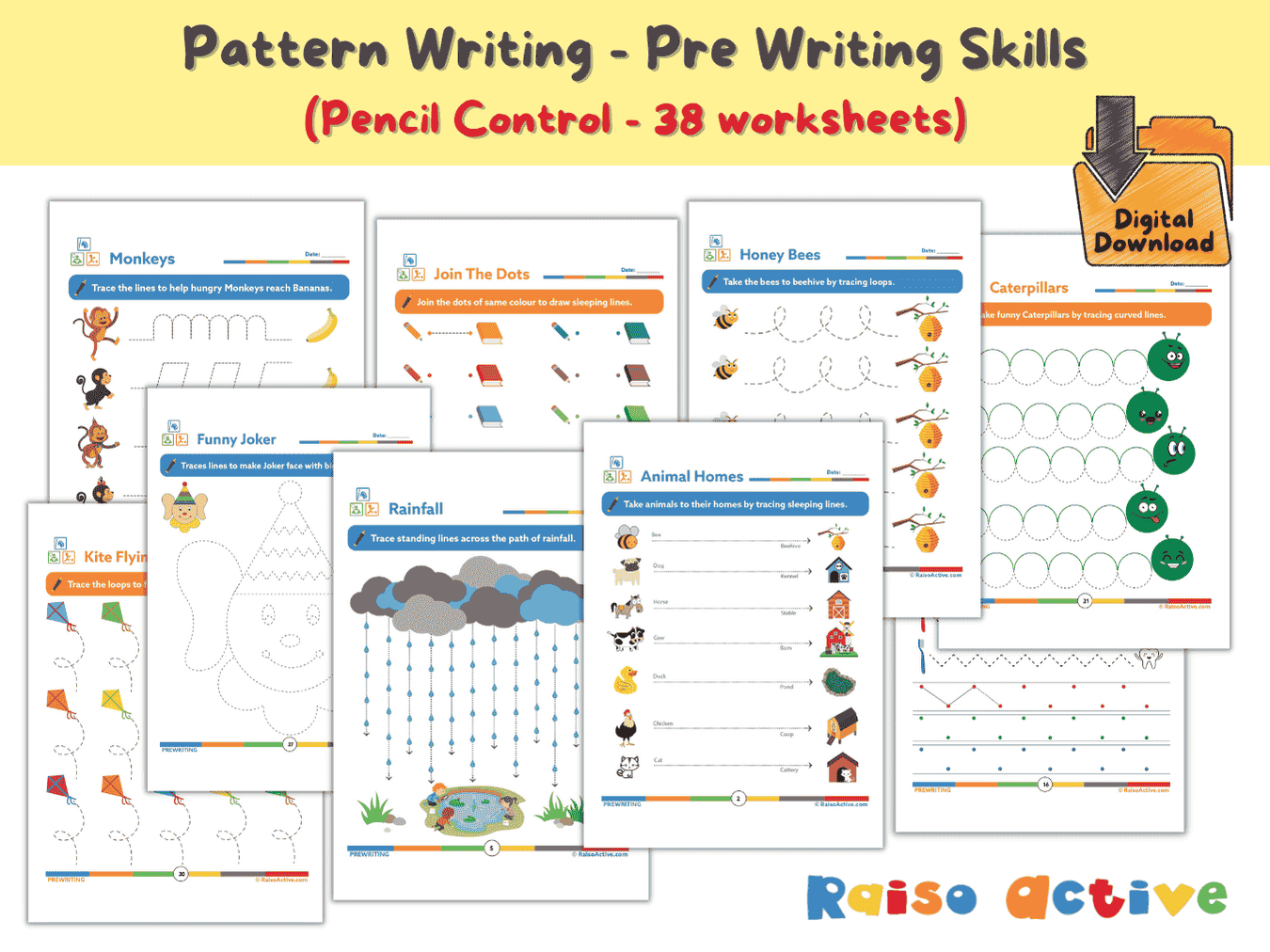
Pattern Writing Pre-writing Skills Activity Book for 3-4 Year Olds
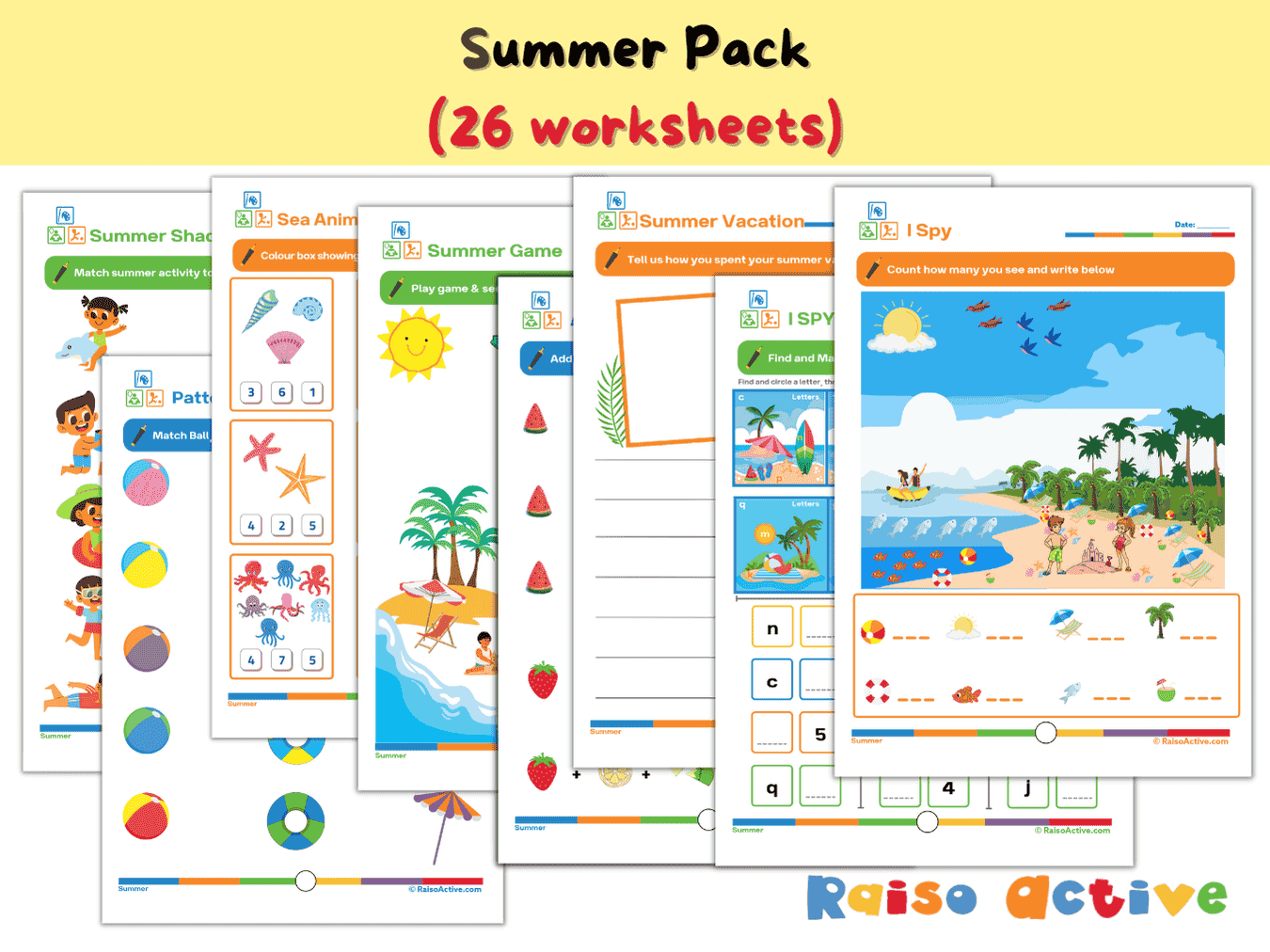
Summer Activity Pack: Math, Literacy, Puzzles & More for Preschool & Kindergarten
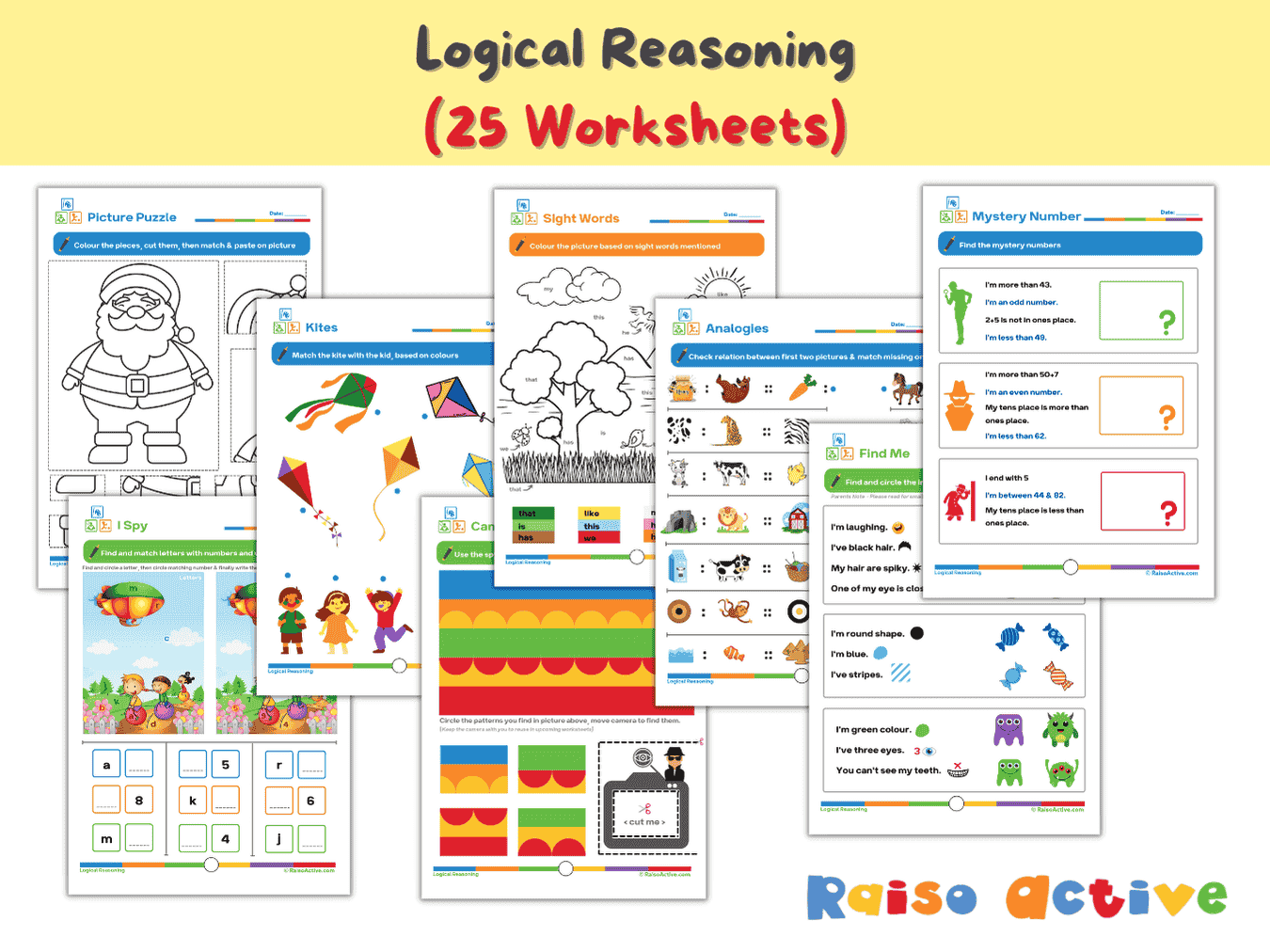
Logical Reasoning Activity Book for Preschool & Kindergarten | Patterns, Puzzles & Analogies
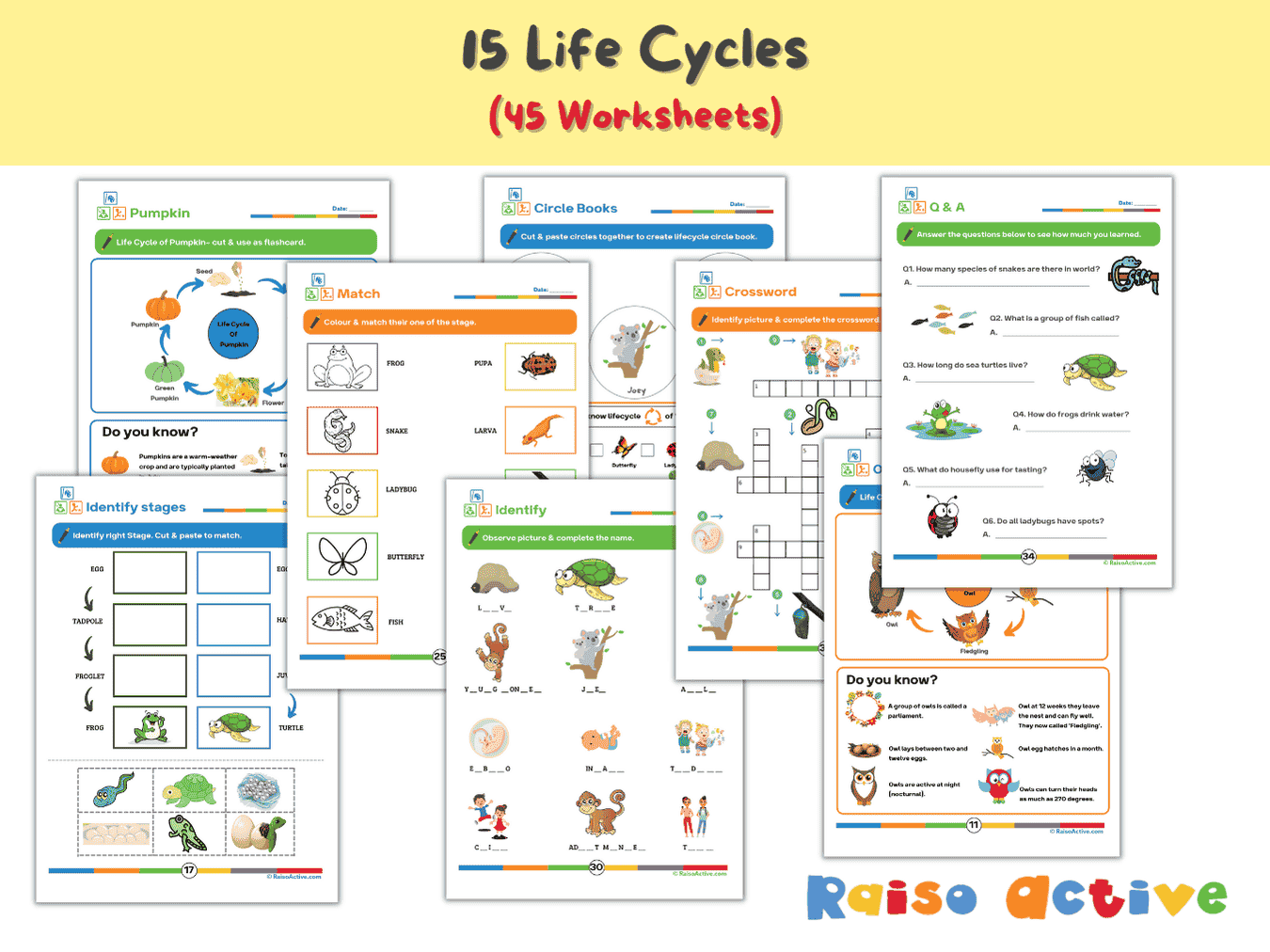
Lifecycles Activity Book & Flashcards for Preschool & Early Elementary
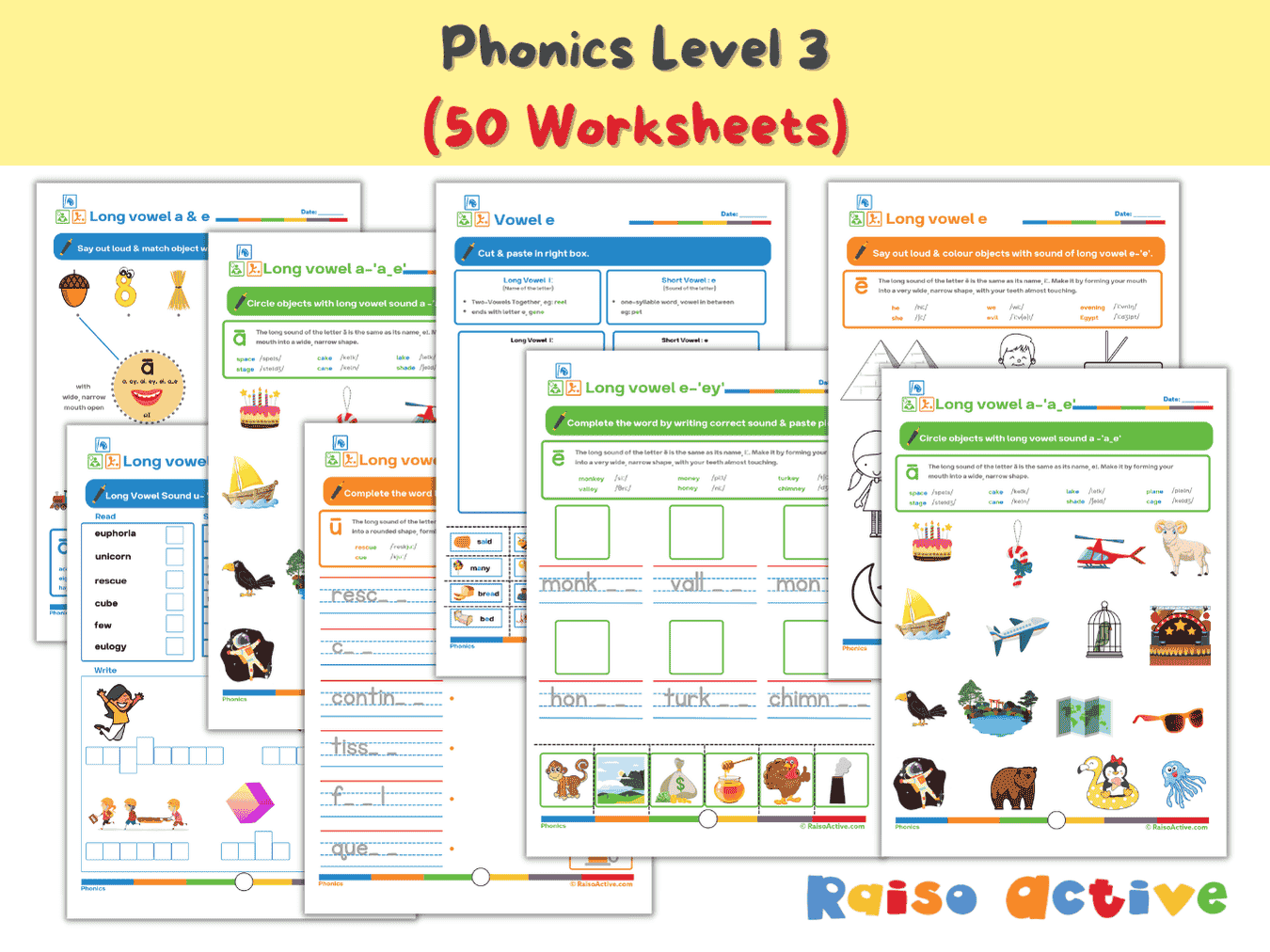
Phonics Level 3 Long Vowels Activity Book for Kindergarten & 1st Grade
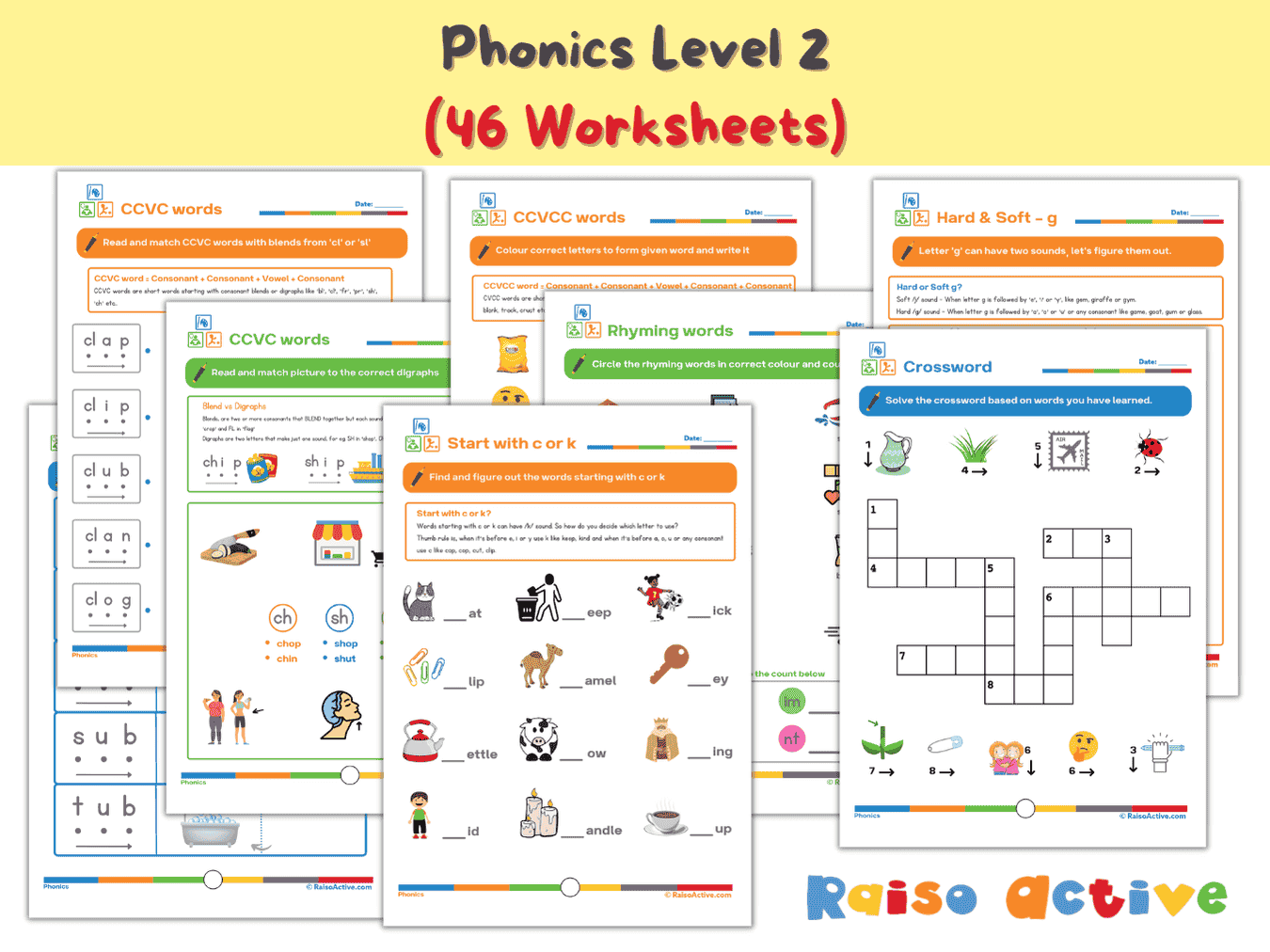
Phonics Level 2 Worksheets: CVC, CCVC, CVCC Word Families & Blends for Early Readers (Ages 4-7)
Guides for parents and teachers
See all guides →UKG Syllabus Explained: English, Maths and EVS Month by Month
What UKG classes typically cover in English, maths and EVS, month by month, aligned to NEP 2020, with ways to support at home and signs your child is behind.
How to Teach Your 3-Year-Old to Recognise Numbers: A Parent's Complete Guide
Help your 3-year-old recognise numbers 1-10 with multi-sensory activities, everyday maths moments, and simple routines. Practical guide with Indian context included.
Canonical: https://raisoactive.com/worksheets/reception-shapes