Free printable worksheets · United Kingdom
EYFS Shapes Worksheets (Ages 3–5)
EYFS shapes worksheets are practice sheets for children aged 3–5 in Early Years Foundation Stage in the UK. Shapes worksheets build recognition and naming of common two- and three-dimensional forms, and the ability to sort or match them by their features. The sheets on this page cover naming 2D shapes, matching identical shapes, sorting shapes by attribute and finding shapes in everyday objects.
The Early Years Foundation Stage spans Nursery and Reception and treats a worksheet as a small supplement to play rather than the main event. Mark making, matching and sorting dominate the Nursery year; Reception adds letter formation, sound matching and counting to ten as phonics teaching begins in earnest. Three-year-olds are collecting names. Circle, square and triangle are usually secure this year, with rectangle arriving late and oval mixed up with circle for a while. A worksheet should ask the child to find every triangle on a busy page, colour all the squares one colour, trace a large shape with thick dotted lines, and say the name aloud each time. Counting sides and sorting by a rule are still ahead.
959+ worksheets · free PDF download · print on A4 or Letter
EYFS Shapes Worksheets to print
Browse all worksheets for ages 3–5
Clothing Pattern Match Worksheet for Preschoolers
This worksheet has children ages 3-5 study repeating patterns on clothing items — stripes, polka dots, or checks — and match each item to its identical twin, building visual discrimination and early pattern-sequencing skills. Distinguishing between similar-looking patterns also sharpens attention to detail, a skill that later supports letter and word recognition.

Octopus Parts Matching Worksheet for Preschoolers
Preschoolers ages 3-5 learn the specific body parts of an octopus — like its tentacles, head, and eyes — by drawing lines to match written labels to the correct part of the image. This vocabulary-building matching task develops early scientific observation skills, teaching children to look closely at an animal's features rather than seeing it as one blob shape. It also reinforces left-to-right label reading paired with visual scanning.

Weather Color by Number Worksheet for Preschoolers
This color-by-number activity has children ages 3-5 practice matching numerals to a color key while completing a weather-themed picture, combining number recognition with color recognition and the fine motor control needed for careful, contained coloring. Because each numbered section must be colored correctly for the picture to look right, children get immediate visual feedback on whether their number identification was accurate. The weather theme also gives a natural opportunity to talk about the picture's subject once it's revealed.

Animal Sounds Worksheet: Circle the Correct Sound!
This worksheet strengthens vocabulary and reading readiness for children ages 3-5 by asking them to match each animal picture to the word describing the sound it makes, such as 'moo' for a cow or 'quack' for a duck. Connecting a familiar sound to its written word form is an early step toward reading, since it links spoken vocabulary your child already knows to print they are just beginning to recognize.

Letter I Tracing Worksheet: Learn to Trace and Identify Words
This worksheet builds recognition and formation of the letter I, both uppercase and lowercase, through tracing practice and identifying pictures of words that start with I, like 'igloo' or 'insect.' For three- to five-year-olds, uppercase I is one of the simplest letter shapes to form, making it a good confidence-building letter even as lowercase i, with its added dot, introduces a slightly trickier two-part stroke.

Letter W Tracing Worksheet for Preschoolers: Practice Writing the Letter W!
W is essentially two V shapes joined together, making it one of the most stroke-heavy letters a preschooler encounters — tracing it builds stamina for multi-stroke letters and reinforces the diagonal-line control introduced by simpler letters like V. Practicing uppercase W and lowercase w at ages 3-5 also helps children notice that lowercase w is just a smaller version of the same repeated zigzag.

Letter C Tracing and Coloring Worksheet for Preschoolers
This worksheet builds handwriting readiness by having children trace the letter C multiple times, while the coloring and picture-matching elements connect the letter's shape to its sound through familiar C words. For ages 3-5, repeating the same letter across tracing and picture activities on one page reinforces recognition from multiple angles in a single sitting.

Weather Worksheet: Circle the Correct Weather Word!
This worksheet strengthens children's early reading skills by having them match weather pictures — like sun, rain, or wind — to the correct written word, building sight recognition of common weather vocabulary for ages 3-5. Circling the matching word rather than just naming the picture aloud pushes children to connect spoken language with printed text, an essential pre-reading skill. Because weather words appear frequently in books and daily conversation, this practice has immediate real-world payoff.
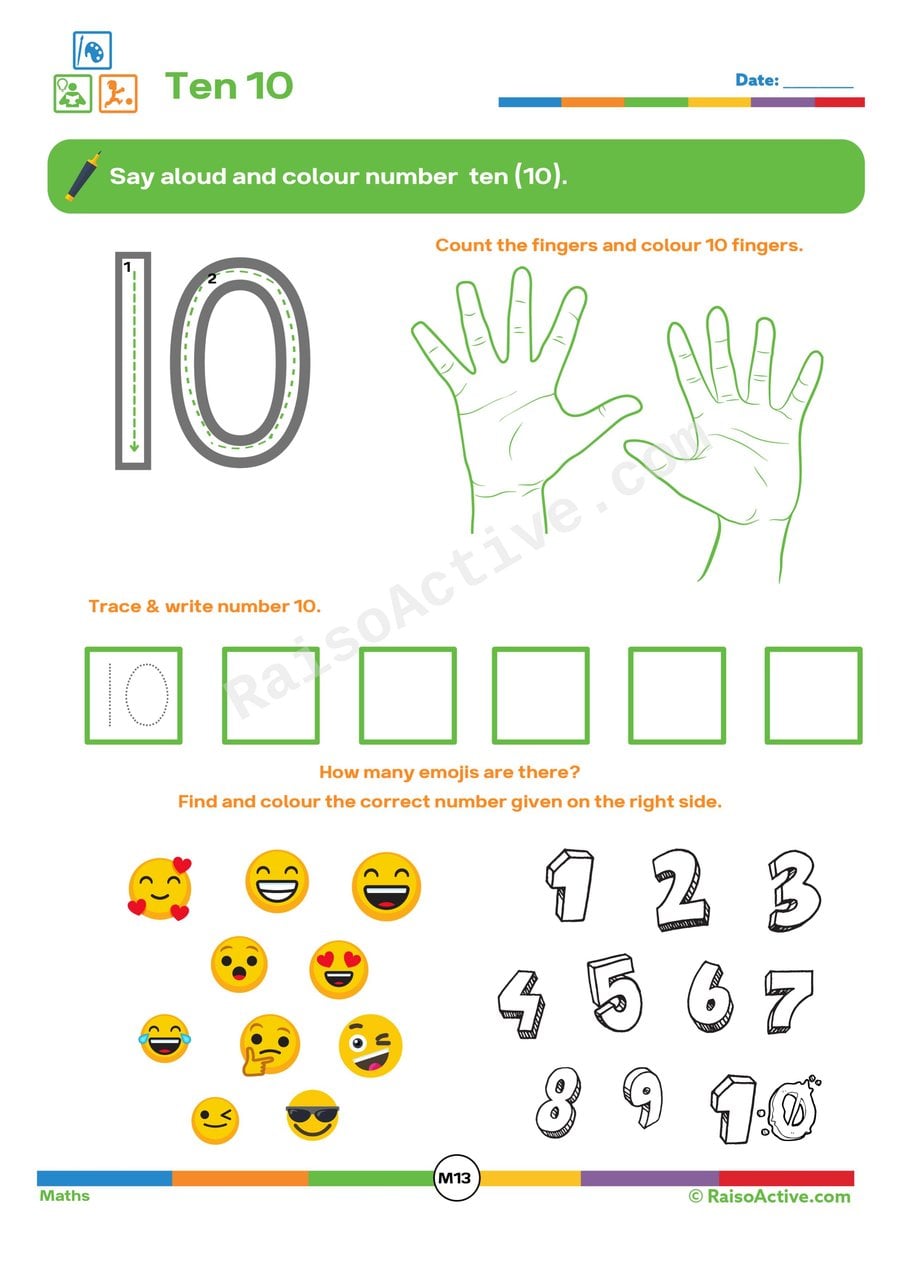
Number 10 Worksheet: Trace, Count, and Color!
Children ages 3-5 practice tracing and writing the two-digit number 10 while reinforcing counting to ten through a hands-based counting activity and a number-recognition search task. This worksheet layers several skills — tracing, counting, and visual recognition — to give children multiple ways to practice the same number.
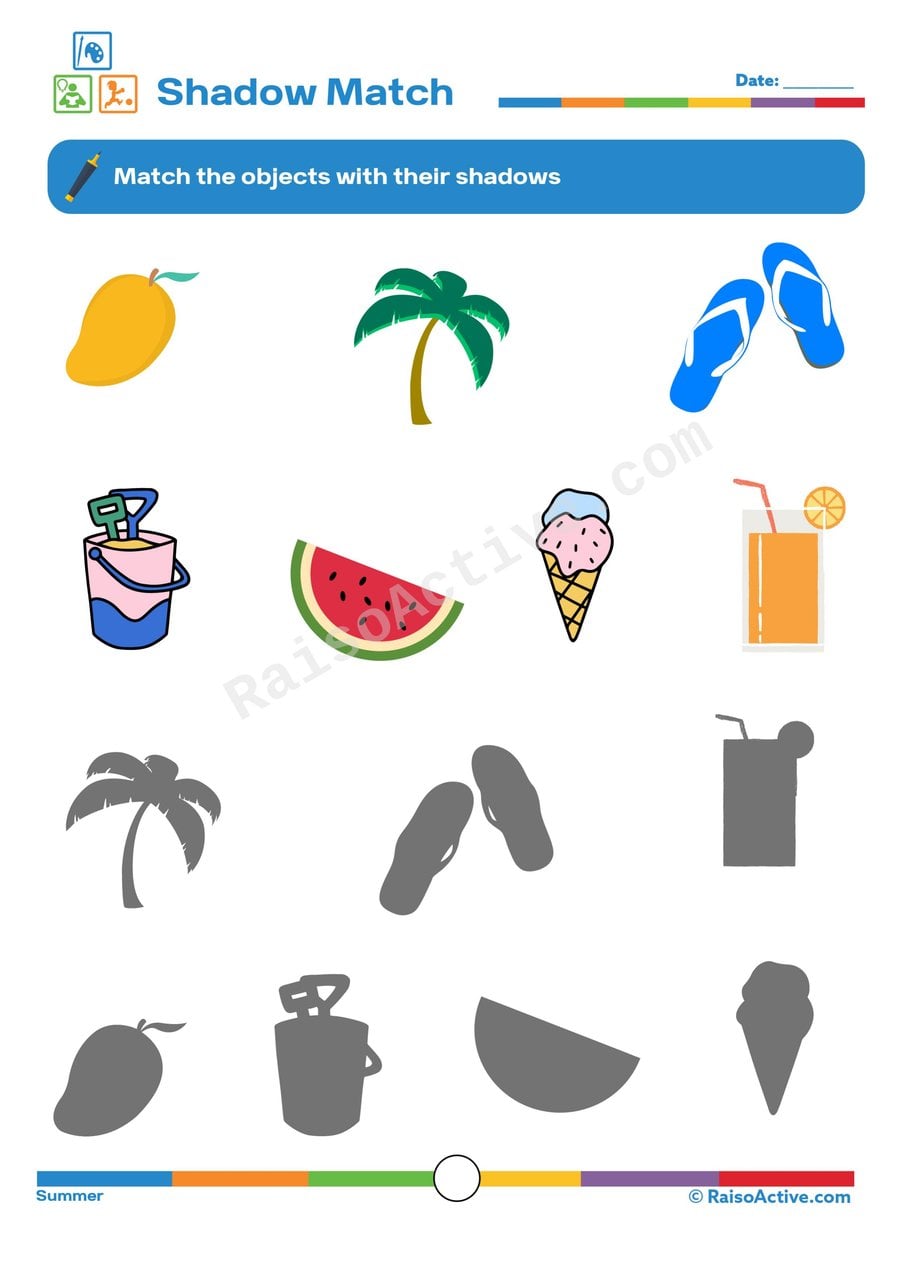
Summer Shadow Match Worksheet for Preschoolers
This worksheet has children ages 3-5 match summer objects to their correct black silhouette shadows, building visual discrimination by focusing on outline and shape rather than color or detail. Because a shadow strips away all the color and texture of an object, leaving only its outline, children must rely purely on shape recognition to make each match, a more demanding visual skill than matching identical pictures. This kind of shape-based reasoning also supports early geometry and spatial awareness.

Trace and Count: Learning the Number Zero Worksheet
This worksheet introduces the more abstract concept of zero by having children trace the numeral and then identify pictures showing an empty or 'zero' quantity, like a basket with no fruit or a jar with no candies. For three- to five-year-olds, zero is often trickier to grasp than other numbers since it represents an absence rather than a countable group, so tracing it alongside visual examples of 'nothing there' helps make the idea concrete.
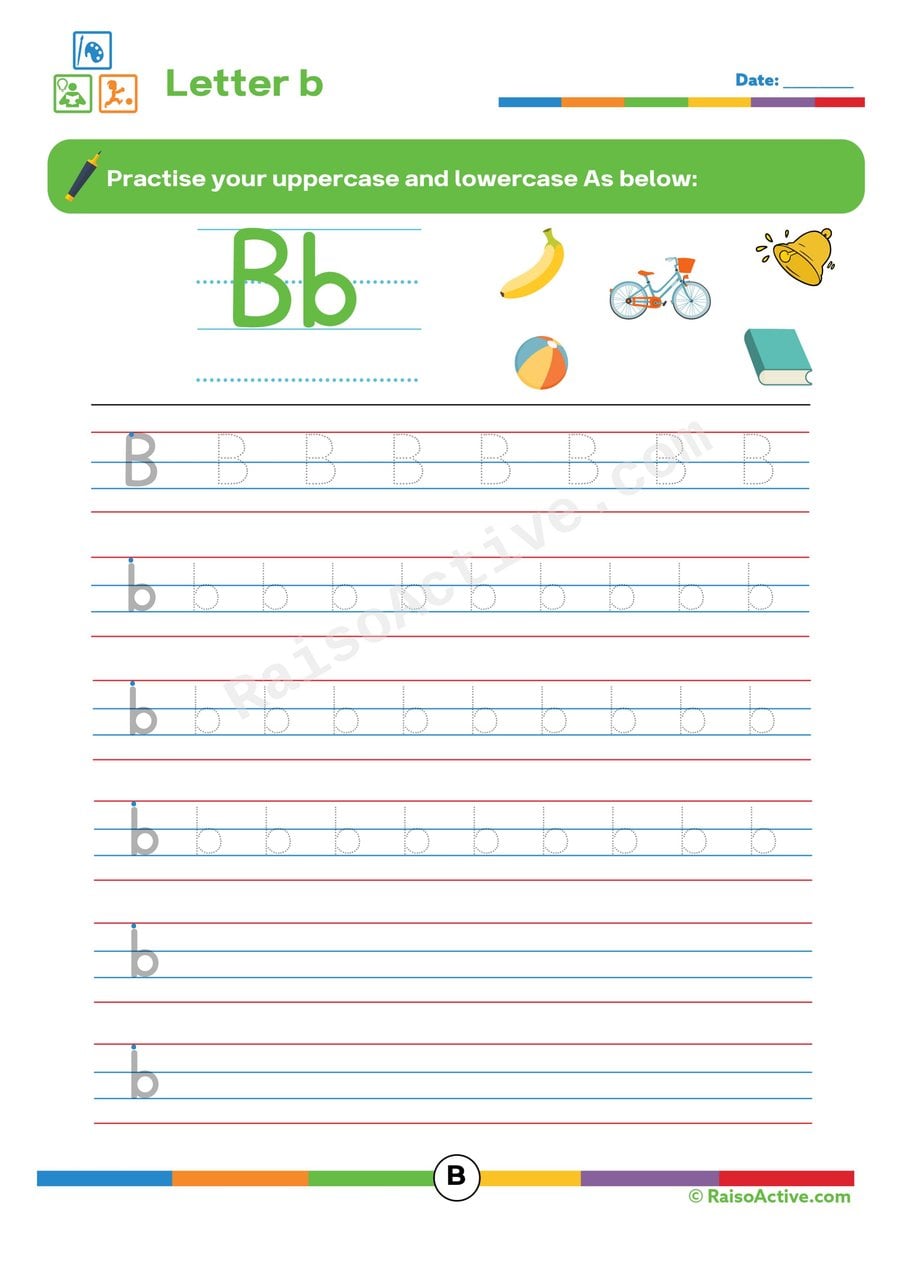
Letter B Tracing Worksheet for Preschoolers
B combines a straight vertical line with two stacked curves on the right side, making it one of the more visually complex letters a preschooler traces, similar in difficulty to R and P. Practicing both uppercase B and lowercase b at ages 3-5 builds the precision needed to keep the two curves separate and roughly equal in size rather than merging into one large loop.

Hard and Soft C Sounds Worksheet for Preschoolers
The letter 'c' makes two entirely different sounds depending on the word — a hard /k/ sound in words like 'cat' and a soft /s/ sound in words like 'city' — and this worksheet helps children ages 3-5 begin to distinguish between the two through a simple, colorful sorting task. Recognizing that a single letter can represent more than one sound is an important step in flexible phonics thinking, since it challenges the assumption that every letter always makes just one sound. Color-coding words by their 'c' sound adds a visual, low-pressure way to practice this genuinely tricky distinction.

Coloring and Matching Fun: Heart, Fish, and Alphabet Worksheet
This multi-part worksheet asks children ages 3-5 to follow a specific coloring instruction and then match letters to objects, building both instruction-following skills and early letter-object association in a single activity. Coloring only the heart red, rather than coloring freely, practices listening comprehension and attention to detail, a skill children need for following classroom directions later on. The letter-matching portion reinforces that letters represent real objects and sounds, an important building block before formal phonics instruction takes over.

Animal Identification Worksheet for Preschoolers: Color the Correct Animal!
Reading or listening to a simple question and then coloring the animal that answers it correctly builds listening comprehension and animal knowledge in children ages 3-5, requiring them to match a spoken clue to the right picture rather than just naming animals they already recognize. This task strengthens the ability to process a question, consider several possible answers, and select the correct one, an early form of reasoning that supports later reading comprehension. The coloring step at the end also adds a satisfying creative reward for correctly identifying each animal.
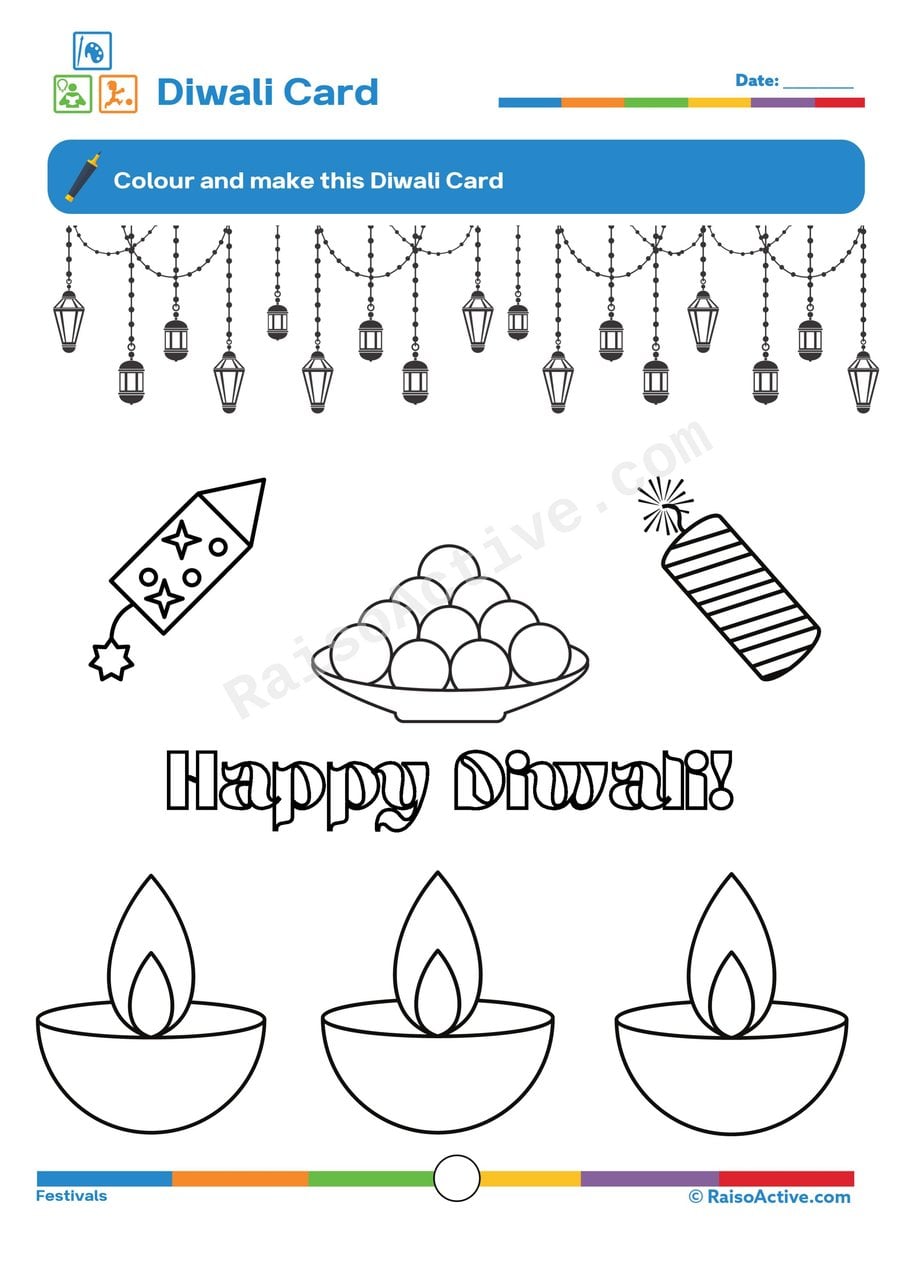
Happy Diwali Coloring Worksheet for Kids
This coloring worksheet helps children ages 3-5 practice fine motor control and color recognition while engaging with Diwali-themed imagery like diyas and rangoli patterns. Coloring detailed festival scenes also builds early cultural awareness, giving children a visual anchor for conversations about the Festival of Lights.

Road Safety Signs Matching Worksheet for Preschoolers
Matching road safety signs teaches 3-5 year olds to recognize specific shapes, colors, and symbols and connect them to their real-world meaning — an early form of symbol literacy that matters well beyond the worksheet, since these are signs your child will actually encounter on walks and car rides. Coloring the signs first, then matching them, reinforces visual recognition through repetition before the matching task asks them to recall each sign's identity without color cues alone.
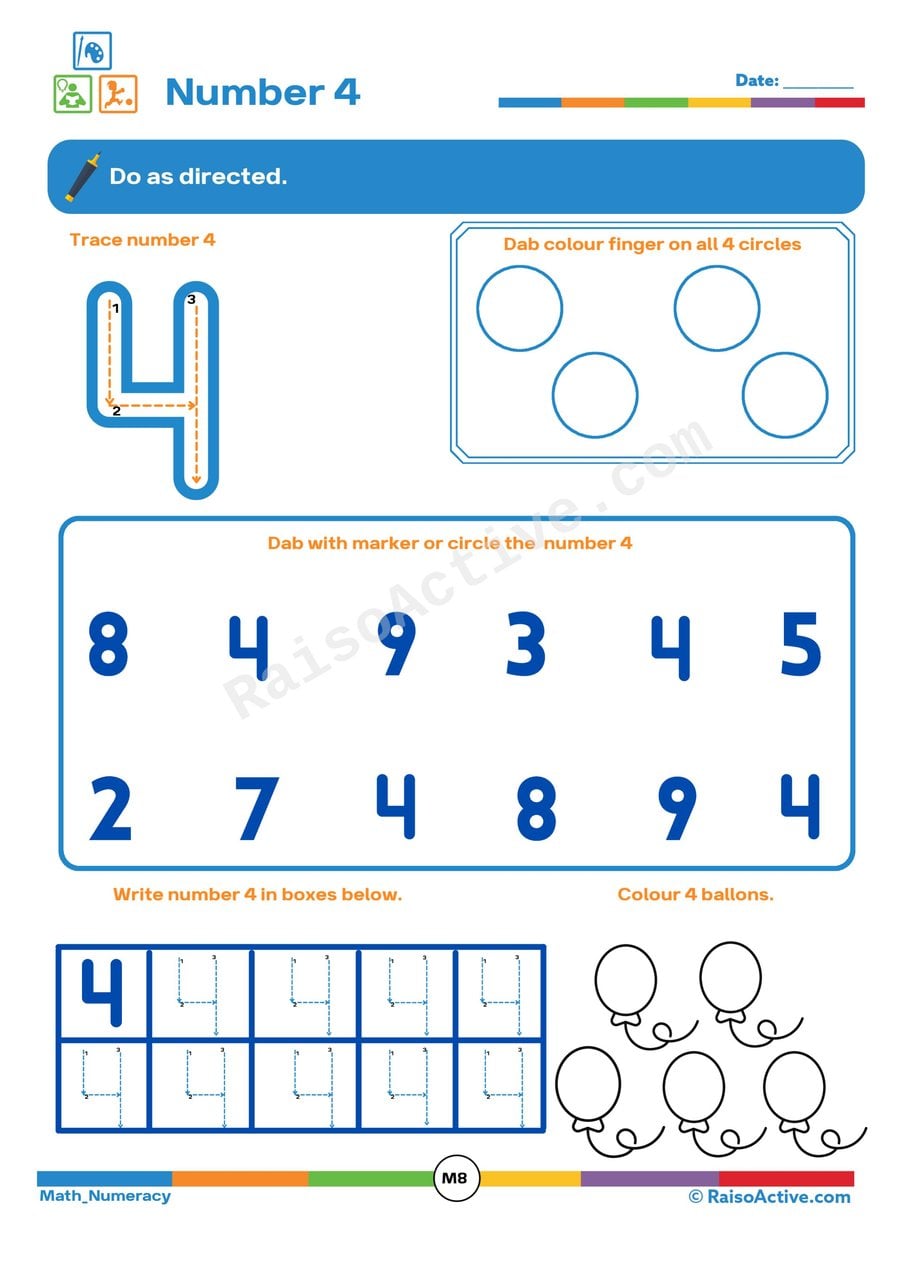
Number 4 Worksheet: Trace, Count, and Write!
This worksheet helps children ages 3-5 learn to recognize, trace, and write the number 4 while practicing counting and matching the number to a quantity across several different activities, including dabbing circles, circling number 4 in a set, and coloring the correct number of balloons. Repeating the same number across so many formats helps solidify both the symbol and the quantity it represents.

Elephant Shapes: Fun Sorting Worksheet for Preschoolers!
This playful sorting worksheet has children ages 3-5 use an elephant's 'trunk' (their own hand reaching through a cut circle) to pick and sort shapes, building both shape recognition and simple classification skills. Physically selecting and grouping shapes by type, rather than just naming them on sight, helps solidify the concept that shapes can share a category even when their size or color differs.

Learn the Sight Word 'My' - Tracing, Coloring, and More!
This worksheet builds sight-word recognition for the possessive word 'my,' one of the earliest words children use to talk about their own belongings and experiences, through tracing, coloring, a word search, and sentence reading. Because possessive words like 'my' appear in nearly every sentence a young child speaks, mastering it in print helps bridge their spoken vocabulary directly into early reading.

Sledge Fun: Trace Slanting Lines to the Snowmen Worksheet
Tracing diagonal lines from a sledge down to waiting snowmen gives children ages 3-5 practice with slanting strokes, a motion that's harder to control than straight up-and-down or side-to-side lines because it requires the wrist to angle and rotate. Mastering this diagonal control now lays groundwork for letters like A, K, X, and Y, which all rely on slanted strokes.

Easter Egg Color Match Worksheet for Preschoolers
Children ages 3-5 practice color recognition and following a visual code as they color Easter eggs to match a key provided at the top of the page. Using a color-coded key rather than free coloring adds an instruction-following element, teaching children to check a reference and apply it consistently across a whole page.

Healthy Eating Worksheet: Fruit Salad and Vegetable Soup!
This matching worksheet helps children ages 3-5 build food vocabulary by identifying pictures of fruits and vegetables and sorting them into the correct category — fruit salad ingredients or vegetable soup ingredients. Learning to classify foods by type, not just by whether they're healthy, supports early categorization skills that apply across many other subjects, from animals to shapes. The cooking-themed framing also connects the sorting task to a familiar, everyday context children may have experienced at home.
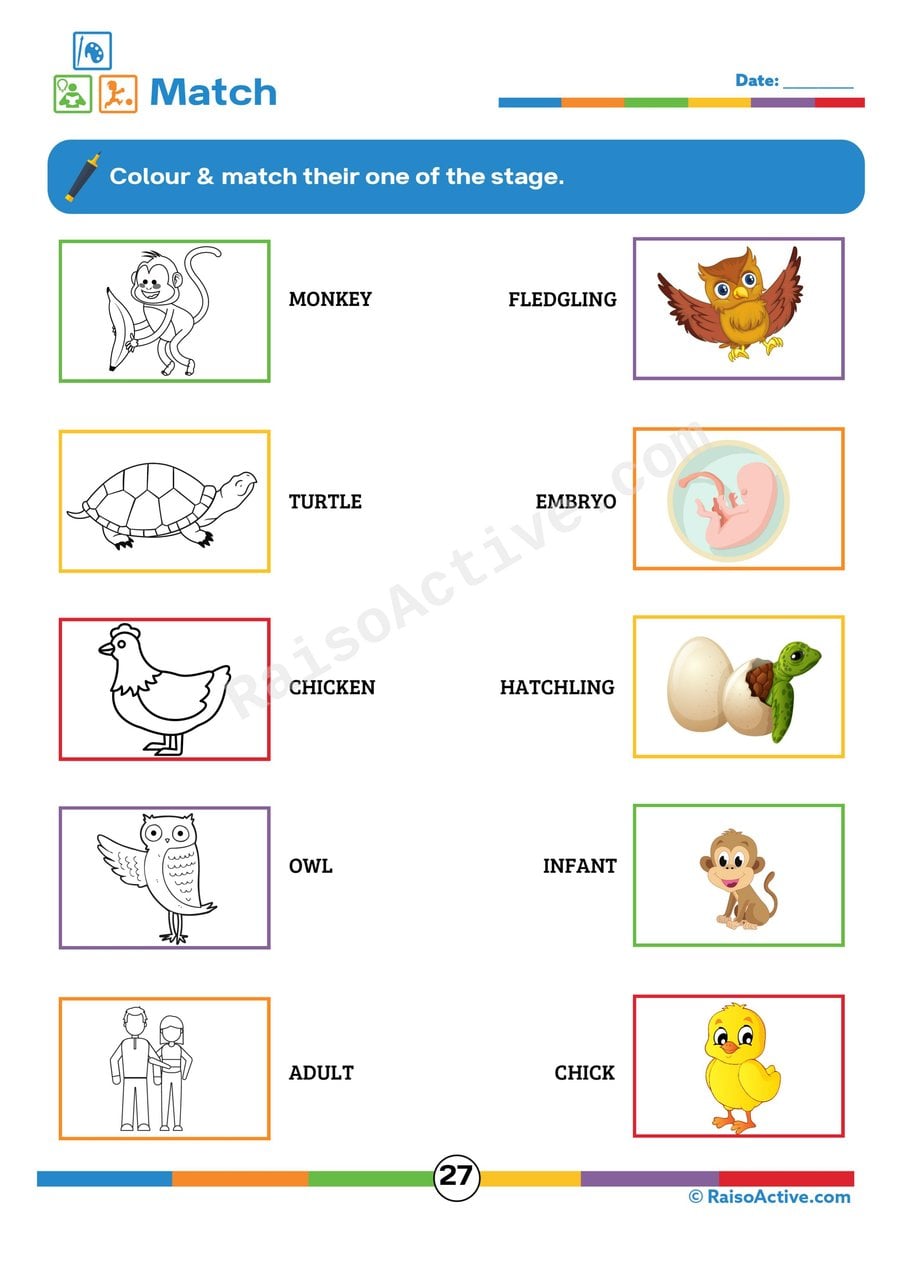
Match the Life Stages: A Fun Worksheet for Kids!
This worksheet has children ages 3-5 match a picture of an animal to the correct life stage shown on the opposite side of the page, reinforcing that living things look different depending on how old they are. Coloring the pictures after matching adds a fine motor component and gives children a reason to look closely at each image a second time.
What EYFS shapes worksheets cover
Three-year-olds are collecting names. Circle, square and triangle are usually secure this year, with rectangle arriving late and oval mixed up with circle for a while. A worksheet should ask the child to find every triangle on a busy page, colour all the squares one colour, trace a large shape with thick dotted lines, and say the name aloud each time. Counting sides and sorting by a rule are still ahead.
- Name circle, square and triangle when shown one at a time
- Colour every triangle on a page of mixed shapes
- Trace a big circle, square and triangle along thick dotted lines
- Find a named shape in a picture of a house or train
How to use these worksheets at home or in class
Five to ten minutes at a table, with an adult alongside to talk through the sheet, is enough at any point in this stage. Use a worksheet to echo something already met through play that week rather than to introduce a brand new idea.
Start with the sheet that matches what your child can already do, then move one step up. Keep finished sheets in a folder: EYFS teachers often ask for evidence of practice, and children like seeing their own progress.
Is your child ready for EYFS shapes work?
Look for a child who can make deliberate marks with a crayon, sit briefly at a table, follow a one-step spoken instruction and show curiosity about letters or numbers seen around the house or classroom.
- Count and write the number of sides on a triangle, square and hexagon
- Sort a mixed set into shapes with three sides and four sides
- Name oval, star, heart and hexagon alongside the first four shapes
Frequently asked questions
Should a three-year-old know the difference between a square and a rectangle?
Not reliably, and it is fine to wait. At three most children call both "square" because they look at the corners and see four of them. The difference is length of sides, which is a comparison the child can start noticing around four. Introduce rectangle as "a stretched square" when it comes up, use a door or a book as the example, and move on without drilling it.
What should a EYFS child be able to do in shapes?
Three-year-olds are collecting names. Circle, square and triangle are usually secure this year, with rectangle arriving late and oval mixed up with circle for a while. A worksheet should ask the child to find every triangle on a busy page, colour all the squares one colour, trace a large shape with thick dotted lines, and say the name aloud each time. Counting sides and sorting by a rule are still ahead. Look for a child who can make deliberate marks with a crayon, sit briefly at a table, follow a one-step spoken instruction and show curiosity about letters or numbers seen around the house or classroom.
Do these worksheets follow the EYFS curriculum?
The sheets cover naming 2D shapes, matching identical shapes, sorting shapes by attribute and finding shapes in everyday objects, which sit inside the EYFS Early Learning Goals (Statutory Framework) outcomes for EYFS. Preschool and Pre-K (US), Nursery and LKG (India) use the same skills at this age, so the sheets also fit families following those programmes.
Are these EYFS shapes worksheets free?
Yes. Each worksheet downloads free as a watermarked PDF once you create an account, with a limit of five a day. An annual membership ($20) removes the watermark and the limit for the whole library of over 1,000 worksheets and every printable pack.

Written by
Hemsweta Jain · Teacher Cheena
MBA and Early Childhood Educator, teaching since 2014 · Founder of RaisoActive, Mumbai
Written and reviewed by Hemsweta Jain (Teacher Cheena), who designs every RaisoActive worksheet.
Last reviewed
Printable packs for ages 3–5
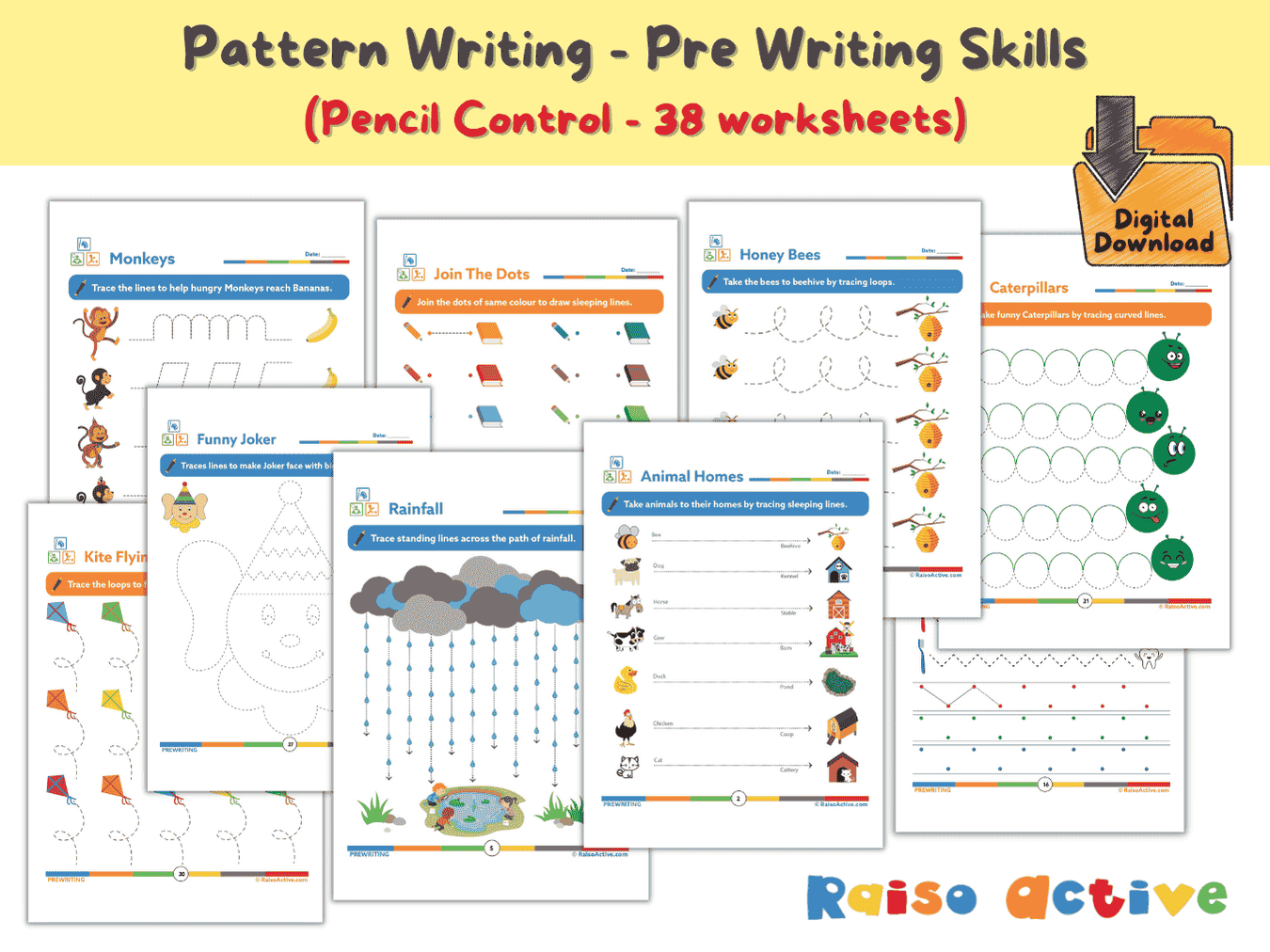
Pattern Writing Pre-writing Skills Activity Book for 3-4 Year Olds
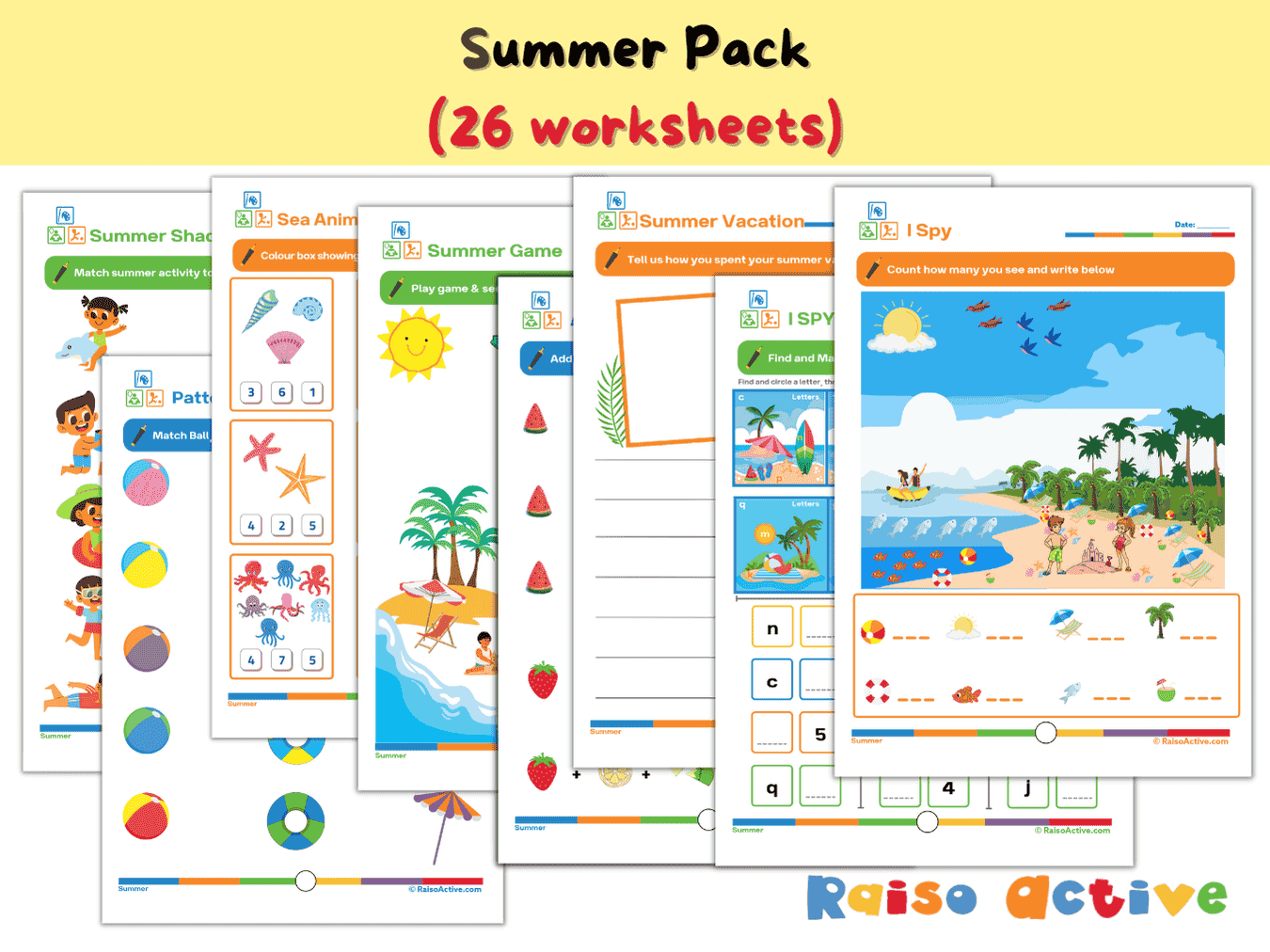
Summer Activity Pack: Math, Literacy, Puzzles & More for Preschool & Kindergarten
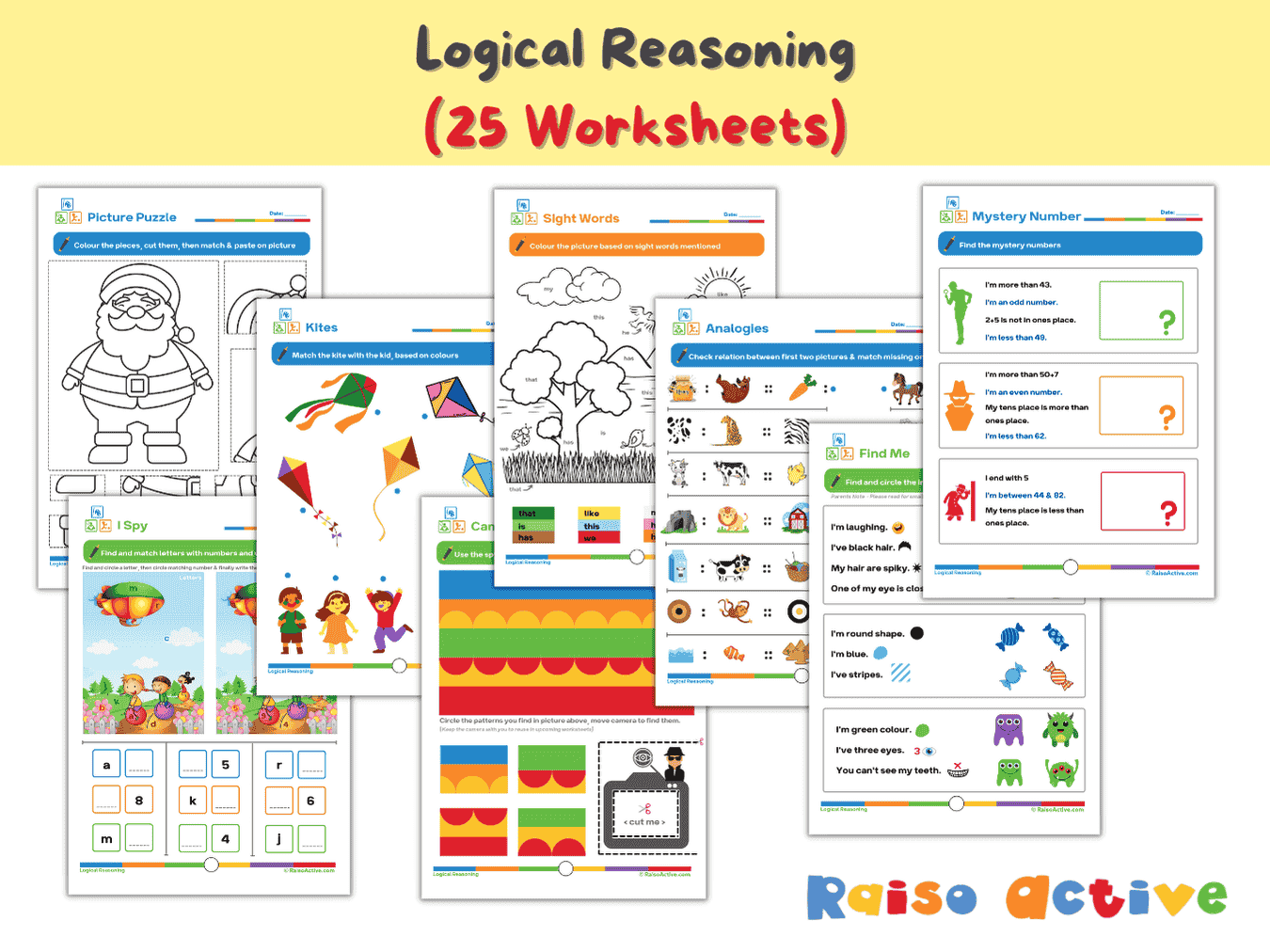
Logical Reasoning Activity Book for Preschool & Kindergarten | Patterns, Puzzles & Analogies
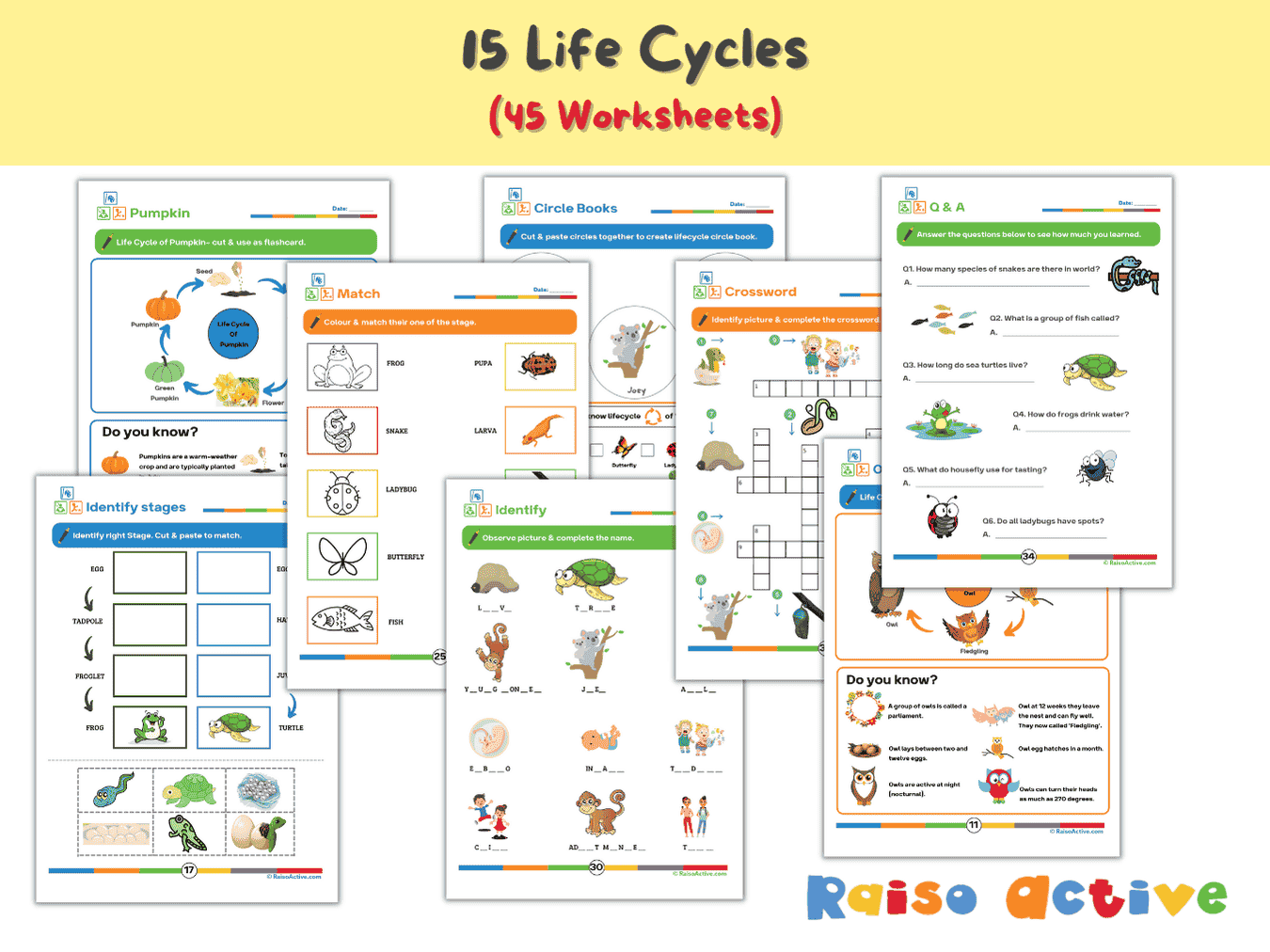
Lifecycles Activity Book & Flashcards for Preschool & Early Elementary
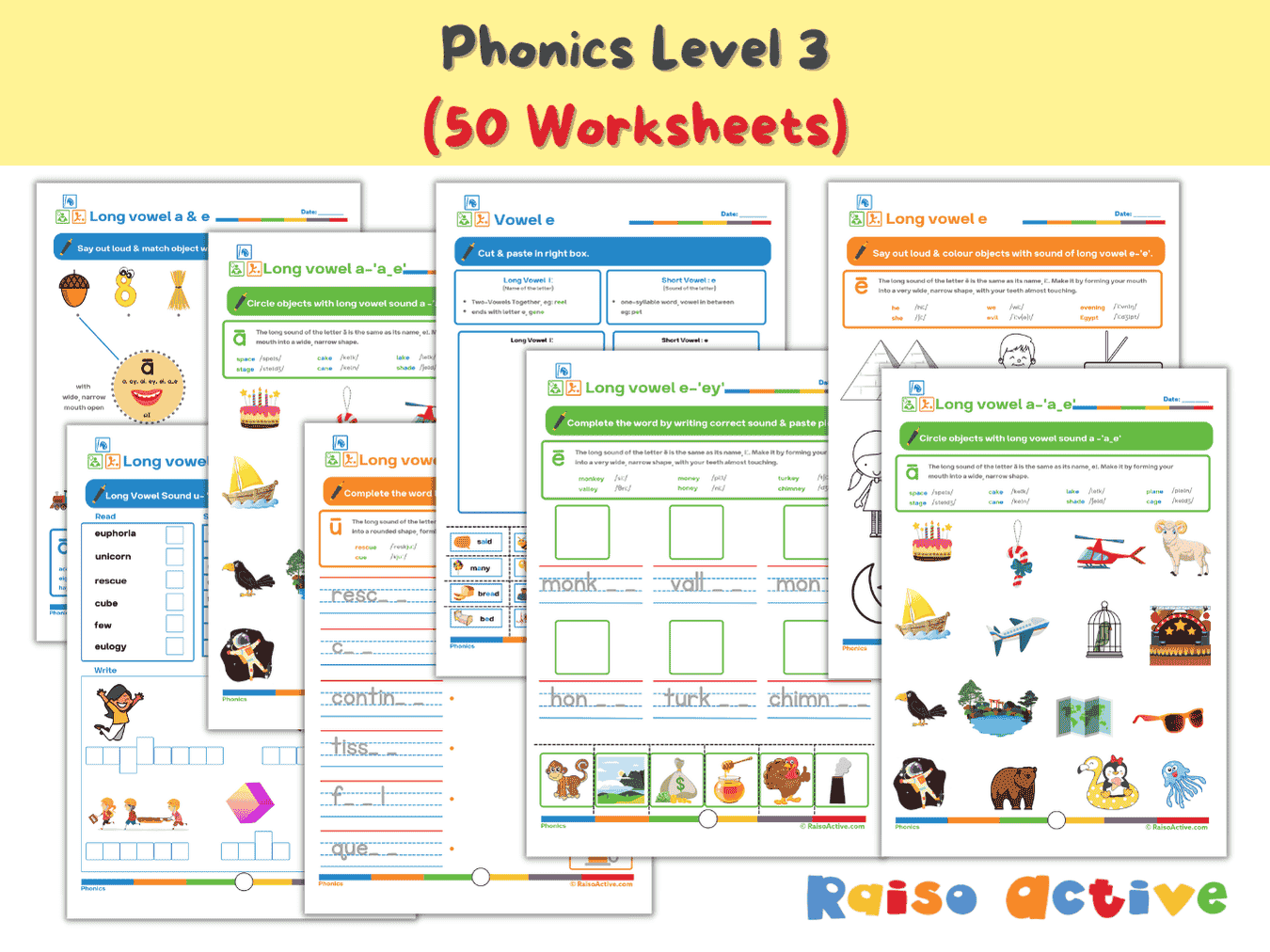
Phonics Level 3 Long Vowels Activity Book for Kindergarten & 1st Grade
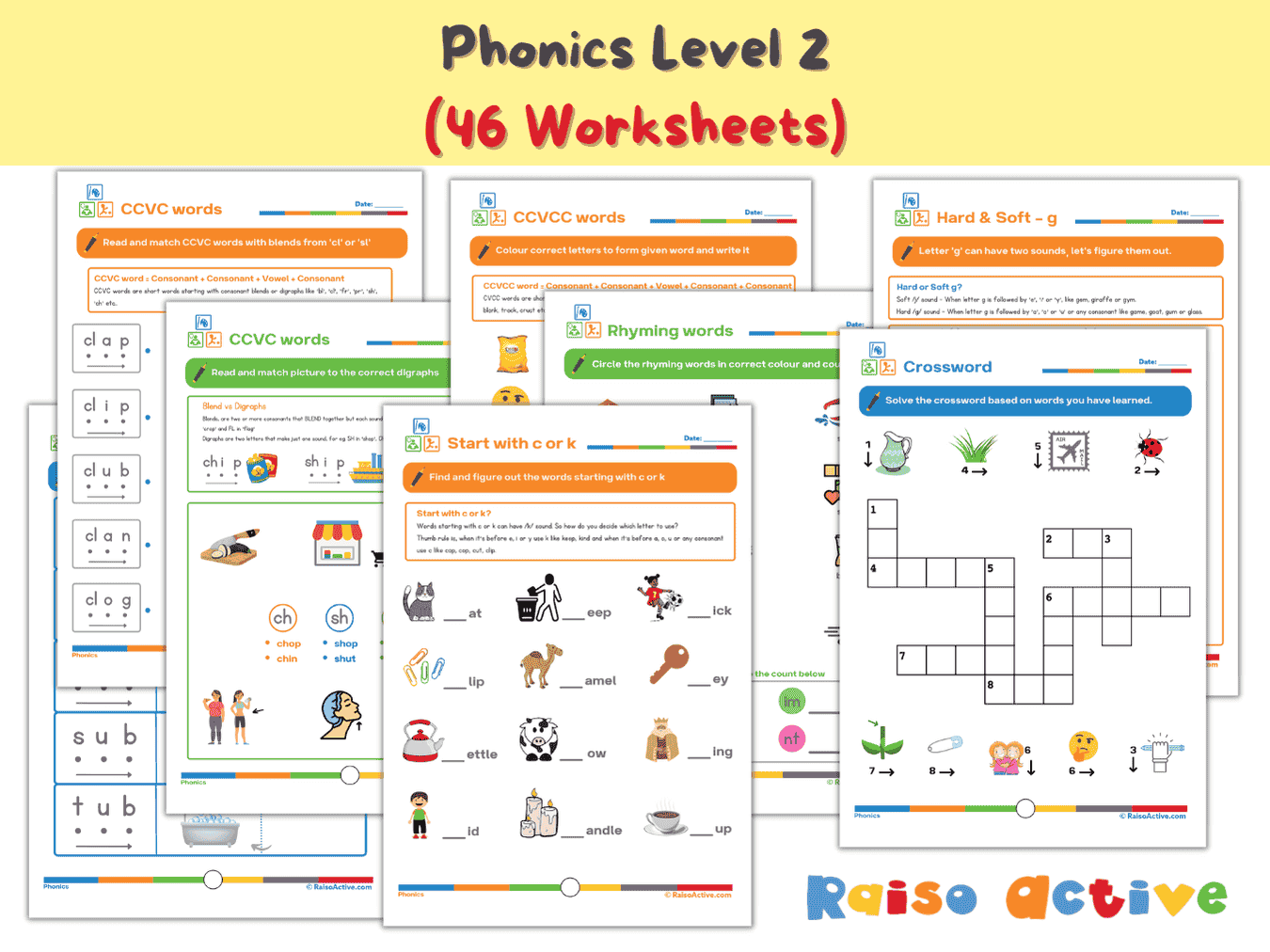
Phonics Level 2 Worksheets: CVC, CCVC, CVCC Word Families & Blends for Early Readers (Ages 4-7)
Guides for parents and teachers
See all guides →UKG Syllabus Explained: English, Maths and EVS Month by Month
What UKG classes typically cover in English, maths and EVS, month by month, aligned to NEP 2020, with ways to support at home and signs your child is behind.
How to Teach Your 3-Year-Old to Recognise Numbers: A Parent's Complete Guide
Help your 3-year-old recognise numbers 1-10 with multi-sensory activities, everyday maths moments, and simple routines. Practical guide with Indian context included.